EP0410323A2 - Immobilisierung von Proteinen und Peptiden auf einem unlöslichen Träger - Google Patents
Immobilisierung von Proteinen und Peptiden auf einem unlöslichen Träger Download PDFInfo
- Publication number
- EP0410323A2 EP0410323A2 EP90113972A EP90113972A EP0410323A2 EP 0410323 A2 EP0410323 A2 EP 0410323A2 EP 90113972 A EP90113972 A EP 90113972A EP 90113972 A EP90113972 A EP 90113972A EP 0410323 A2 EP0410323 A2 EP 0410323A2
- Authority
- EP
- European Patent Office
- Prior art keywords
- protein
- peptide
- polymer
- microporous membrane
- onto
- Prior art date
- Legal status (The legal status is an assumption and is not a legal conclusion. Google has not performed a legal analysis and makes no representation as to the accuracy of the status listed.)
- Withdrawn
Links
Images



Classifications
-
- G—PHYSICS
- G01—MEASURING; TESTING
- G01N—INVESTIGATING OR ANALYSING MATERIALS BY DETERMINING THEIR CHEMICAL OR PHYSICAL PROPERTIES
- G01N33/00—Investigating or analysing materials by specific methods not covered by groups G01N1/00 - G01N31/00
- G01N33/48—Biological material, e.g. blood, urine; Haemocytometers
- G01N33/50—Chemical analysis of biological material, e.g. blood, urine; Testing involving biospecific ligand binding methods; Immunological testing
- G01N33/53—Immunoassay; Biospecific binding assay; Materials therefor
- G01N33/543—Immunoassay; Biospecific binding assay; Materials therefor with an insoluble carrier for immobilising immunochemicals
- G01N33/544—Immunoassay; Biospecific binding assay; Materials therefor with an insoluble carrier for immobilising immunochemicals the carrier being organic
- G01N33/545—Synthetic resin
-
- B—PERFORMING OPERATIONS; TRANSPORTING
- B01—PHYSICAL OR CHEMICAL PROCESSES OR APPARATUS IN GENERAL
- B01D—SEPARATION
- B01D69/00—Semi-permeable membranes for separation processes or apparatus characterised by their form, structure or properties; Manufacturing processes specially adapted therefor
- B01D69/14—Dynamic membranes
- B01D69/141—Heterogeneous membranes, e.g. containing dispersed material; Mixed matrix membranes
-
- C—CHEMISTRY; METALLURGY
- C07—ORGANIC CHEMISTRY
- C07K—PEPTIDES
- C07K1/00—General methods for the preparation of peptides, i.e. processes for the organic chemical preparation of peptides or proteins of any length
- C07K1/12—General methods for the preparation of peptides, i.e. processes for the organic chemical preparation of peptides or proteins of any length by hydrolysis, i.e. solvolysis in general
- C07K1/128—General methods for the preparation of peptides, i.e. processes for the organic chemical preparation of peptides or proteins of any length by hydrolysis, i.e. solvolysis in general sequencing
-
- C—CHEMISTRY; METALLURGY
- C07—ORGANIC CHEMISTRY
- C07K—PEPTIDES
- C07K17/00—Carrier-bound or immobilised peptides; Preparation thereof
- C07K17/02—Peptides being immobilised on, or in, an organic carrier
- C07K17/04—Peptides being immobilised on, or in, an organic carrier entrapped within the carrier, e.g. gel, hollow fibre
-
- G—PHYSICS
- G01—MEASURING; TESTING
- G01N—INVESTIGATING OR ANALYSING MATERIALS BY DETERMINING THEIR CHEMICAL OR PHYSICAL PROPERTIES
- G01N33/00—Investigating or analysing materials by specific methods not covered by groups G01N1/00 - G01N31/00
- G01N33/48—Biological material, e.g. blood, urine; Haemocytometers
- G01N33/50—Chemical analysis of biological material, e.g. blood, urine; Testing involving biospecific ligand binding methods; Immunological testing
- G01N33/53—Immunoassay; Biospecific binding assay; Materials therefor
- G01N33/543—Immunoassay; Biospecific binding assay; Materials therefor with an insoluble carrier for immobilising immunochemicals
- G01N33/54353—Immunoassay; Biospecific binding assay; Materials therefor with an insoluble carrier for immobilising immunochemicals with ligand attached to the carrier via a chemical coupling agent
-
- G—PHYSICS
- G01—MEASURING; TESTING
- G01N—INVESTIGATING OR ANALYSING MATERIALS BY DETERMINING THEIR CHEMICAL OR PHYSICAL PROPERTIES
- G01N33/00—Investigating or analysing materials by specific methods not covered by groups G01N1/00 - G01N31/00
- G01N33/48—Biological material, e.g. blood, urine; Haemocytometers
- G01N33/50—Chemical analysis of biological material, e.g. blood, urine; Testing involving biospecific ligand binding methods; Immunological testing
- G01N33/53—Immunoassay; Biospecific binding assay; Materials therefor
- G01N33/543—Immunoassay; Biospecific binding assay; Materials therefor with an insoluble carrier for immobilising immunochemicals
- G01N33/5436—Immunoassay; Biospecific binding assay; Materials therefor with an insoluble carrier for immobilising immunochemicals with ligand physically entrapped within the solid phase
-
- G—PHYSICS
- G01—MEASURING; TESTING
- G01N—INVESTIGATING OR ANALYSING MATERIALS BY DETERMINING THEIR CHEMICAL OR PHYSICAL PROPERTIES
- G01N33/00—Investigating or analysing materials by specific methods not covered by groups G01N1/00 - G01N31/00
- G01N33/48—Biological material, e.g. blood, urine; Haemocytometers
- G01N33/50—Chemical analysis of biological material, e.g. blood, urine; Testing involving biospecific ligand binding methods; Immunological testing
- G01N33/68—Chemical analysis of biological material, e.g. blood, urine; Testing involving biospecific ligand binding methods; Immunological testing involving proteins, peptides or amino acids
- G01N33/6803—General methods of protein analysis not limited to specific proteins or families of proteins
- G01N33/6818—Sequencing of polypeptides
-
- Y—GENERAL TAGGING OF NEW TECHNOLOGICAL DEVELOPMENTS; GENERAL TAGGING OF CROSS-SECTIONAL TECHNOLOGIES SPANNING OVER SEVERAL SECTIONS OF THE IPC; TECHNICAL SUBJECTS COVERED BY FORMER USPC CROSS-REFERENCE ART COLLECTIONS [XRACs] AND DIGESTS
- Y10—TECHNICAL SUBJECTS COVERED BY FORMER USPC
- Y10S—TECHNICAL SUBJECTS COVERED BY FORMER USPC CROSS-REFERENCE ART COLLECTIONS [XRACs] AND DIGESTS
- Y10S530/00—Chemistry: natural resins or derivatives; peptides or proteins; lignins or reaction products thereof
- Y10S530/81—Carrier - bound or immobilized peptides or proteins and the preparation thereof, e.g. biological cell or cell fragment as carrier
- Y10S530/812—Peptides or proteins is immobilized on, or in, an organic carrier
-
- Y—GENERAL TAGGING OF NEW TECHNOLOGICAL DEVELOPMENTS; GENERAL TAGGING OF CROSS-SECTIONAL TECHNOLOGIES SPANNING OVER SEVERAL SECTIONS OF THE IPC; TECHNICAL SUBJECTS COVERED BY FORMER USPC CROSS-REFERENCE ART COLLECTIONS [XRACs] AND DIGESTS
- Y10—TECHNICAL SUBJECTS COVERED BY FORMER USPC
- Y10S—TECHNICAL SUBJECTS COVERED BY FORMER USPC CROSS-REFERENCE ART COLLECTIONS [XRACs] AND DIGESTS
- Y10S530/00—Chemistry: natural resins or derivatives; peptides or proteins; lignins or reaction products thereof
- Y10S530/81—Carrier - bound or immobilized peptides or proteins and the preparation thereof, e.g. biological cell or cell fragment as carrier
- Y10S530/812—Peptides or proteins is immobilized on, or in, an organic carrier
- Y10S530/815—Carrier is a synthetic polymer
-
- Y—GENERAL TAGGING OF NEW TECHNOLOGICAL DEVELOPMENTS; GENERAL TAGGING OF CROSS-SECTIONAL TECHNOLOGIES SPANNING OVER SEVERAL SECTIONS OF THE IPC; TECHNICAL SUBJECTS COVERED BY FORMER USPC CROSS-REFERENCE ART COLLECTIONS [XRACs] AND DIGESTS
- Y10—TECHNICAL SUBJECTS COVERED BY FORMER USPC
- Y10S—TECHNICAL SUBJECTS COVERED BY FORMER USPC CROSS-REFERENCE ART COLLECTIONS [XRACs] AND DIGESTS
- Y10S530/00—Chemistry: natural resins or derivatives; peptides or proteins; lignins or reaction products thereof
- Y10S530/81—Carrier - bound or immobilized peptides or proteins and the preparation thereof, e.g. biological cell or cell fragment as carrier
- Y10S530/812—Peptides or proteins is immobilized on, or in, an organic carrier
- Y10S530/815—Carrier is a synthetic polymer
- Y10S530/817—Entrapped within the carrier, e.g. gel, hollow fibre
Definitions
- Proteins and peptides are naturally occurring heteropolymers composed of amino acids. Proteins are found in all living cells and function as structural and transport elements, catalytic enzymes and hormones. The order of the amino acids in the protein chain (primary structure) ultimately determines the complex three-dimensional solution structure adopted by a protein that is necessary for active biological function. Research directed towards the structure and function of particular proteins often requires that the primary structure (sequence) be determined.
- the protein is first reacted at its amino terminus with an isothiocyanate (e. g., phenylisothiocyanate, PITC) under basic conditions to form the phenylthiourea.
- anhydrous acid e.g., trifluoracetic acid, TFA
- TFA trifluoracetic acid
- the free ATZ amino acid is extracted, converted to the more stable phenylthiohydantoin (PTH) derivative by treatment with aqueous acid (e. g., 20% v/v aqueous TFA) and identified by chromatographic means (e.g., reverse-phase high pressure liquid chromatography (HPLC) or thin-layer chromatography).
- aqueous acid e. g. 20% v/v aqueous TFA
- chromatographic means e.g., reverse-phase high pressure liquid chromatography (HPLC) or thin-layer chromatography.
- HPLC reverse-phase high pressure liquid chromatography
- TFA thin-layer chromatography
- Contaminating buffer salts and detergents could also be rinsed from the surface without removal of the bound proteins, particularly when using hydrophobic polymer membranes such as polyvinylidene difluoride (PVDF) as the blotting matrix (Pluskal, M., et al ., BioTechniques 4: 272 (1986)).
- PVDF polyvinylidene difluoride
- PVDF membranes for electroblotting and direct sequence analysis by P. Matsudaira ( J. Biol. Chem. 261 :10035 (1987) overcame many of the problems associated with the coated glass-fiber supports.
- This membrane has now emerged as the preferred substrate for electroblotting/sequencing applications and improvements to the original method have already been reported (Xu, Q. and Shively, J. E., Analyt. Biochem. 170 :19 (1988): Speicher, D. W. in Techniques in Protein Chemistry , (1989) Hugli, T., (Eds.), Academic Press, San Diego).
- the base membrane material (polyvinylidene difluoride) is a teflon-like polymer which is both mechanically strong and chemically inert. Protein transfer to the membrane is straightforward. In addition, the surface of the membrane demonstrates high protein binding capacity (up to 170 ⁇ g/cm2). A key advantage is the ability to stain and destain the membrane using general protein dyes. Sequence data has been obtained on proteins detected with Coomassie Blue, Amido Black and reverse staining with Ponceau S (LeGendre, N. and Matsudaira, P., BioTechniques 6 :154 (1988)) .
- Proteins bound to the surfaces of the primary or quaternary amine-modified glass fiber sheets or PVDF membranes are immobilized by non-covalent interactions between protein and surface. The interaction is primarily by hydrophobic and/or weak coulombic attraction.
- protein sequence analysis of samples on these supports could only be performed using adsorptive or gas-phase sequencing chemistries that did not require a covalent linkage between the protein and surface.
- Aebersold, R. et al . J. Biol. Chem.
- This invention pertains to a method for immobilizing peptides or proteins onto a microporous, insoluble support by entrapment within a thin polymer network.
- peptides or proteins are entrapped onto a flat, microporous membrane surface by adsorbing a peptide or protein and a polymer onto the surface of the membrane.
- the microporous membrane should be sufficiently porous to allow liquids and reagents to flow through it.
- the polymer and/or the peptide or protein have functionalized groups which are then crosslinked by means of a crosslinking agent or by photoactivation to thereby produce a polymer network which entraps the peptide or protein therein.
- the protein or peptide may be covalently linked to the cross linked polymer network or may be effectively immobilized within the polymer mesh by means of physical entrapment.
- the peptide or protein and polymer can be simultaneously or sequentially adsorbed onto the membrane surface which can be coated with a crosslinking agent.
- the process provides an efficient and cost effective means of immobilizing proteins and peptides to a solid support for the determination of their primary sequence (by chemical or enzymatic degradation) or for other enzymatic or chemical processes.
- This invention pertains to a method of immobilizing proteins and pep tides onto a flat, microporous membrane surface in a form suitable for sequence analysis or other chemical or enzymatic processes.
- the process involves the formation of a thin polymer network that entraps a protein or peptide which is noncovalently adsorbed onto a flat membrane surface.
- a peptide or protein and a polymer are adsorbed onto a flat membrane surface either simultaneously or sequentially.
- the polymer and/or the peptide or protein contain functional groups which can be crosslinked, to thereby form a polymer network which entraps the peptide or protein for subsequent sequencing or other chemical enzymatic processes.
- the protein or peptide may be covalently linked to the cross linked polymer network or may be effectively immobilized within the polymer mesh by means of physical entrapment. In either case, the polymer network should not interfere with subsequent chemical or enzymatic processes.
- the polymer network should effectively entrap the protein or peptide while still allowing for exposure of the protein and peptides to chemical reagents and solvents employed in sequencing or other chemical or enzymatic processes.
- the polymer network should also be capable of withstanding exposure to the chemical or enzymatic processes involved in protein sequencing.
- the step of crosslinking can be achieved with a cross linking agent or by photoactivation, such as by ultraviolet irradiation.
- a crosslinking agent When a crosslinking agent is used, it can be coated onto the surface of the membrane prior to depositing the peptide or protein and polymer thereon.
- the cross linking agent can be deposited onto the membrane containing the peptide or protein and which can contain the polymer.
- the protein or peptide, crosslinking agent and polymer can be admixed and simultaneously deposited onto the membrane.
- microporous membrane is intended to include thin, flat, flexible sheets which have a uniform continuous porous structure that allows for solvents and reagents to flow through the membrane structure.
- the surface of the membrane can have different functional groups for covalent crosslinking to the polymer network.
- the membranes should be capable of withstanding both chemical and enzymatic protein sequencing processes.
- Several suitable membranes for solid-phase protein sequencing are described in U.S. Patent Application Serial No. 07/212,430, filed June 28, 1988, entitled “Membranes for Solid Phase Protein Seqinencing", Attorney's Docket No. MIL88-05, the teachings of which are incorporated herein by reference.
- suitable flat surfaces include porous membranes or sheets formed from various plastic materials (such as teflon, PVDF, nylon, cellulose acetate, nitrocellulose, polyester, polycarbonate, polysulphone or polystyrene), metals, zeolites, paper, silica, alumina or glass.
- plastic materials such as teflon, PVDF, nylon, cellulose acetate, nitrocellulose, polyester, polycarbonate, polysulphone or polystyrene
- metals zeolites, paper, silica, alumina or glass.
- the protein or peptide entrapping system comprises three parts: a protein or peptide (P); a crosslinking agent (C); and a polymer (R).
- P protein or peptide
- C crosslinking agent
- R polymer
- the sequence in which the three components are deposited onto the membrane can vary depending upon the functional groups to be crosslinked together. It should also be understood that when photoactivation is used to crosslink the polymer, there is no need to employ a crosslinking agent.
- a protein or peptide (P) can be described as a polyfunctional molecule of formula (I):
- Each of the side-chain or terminal functionalities e.g., amine, carboxyl, hydroxyl, thiol, phenol, imidazole, indole
- the N-terminal amino group should preferably not be involved in the entrapping process as it needs to be available for the Edman degradation chemistry.
- the crosslinking agent (C) has the general formula (II): X - L - Y (II)
- X and Y can be the same or different and may be selected from a variety of functional groups capable of reacting under appropriate conditions (known to those skilled in the art) with the polymer (R) and/or the polypeptide or protein (P).
- A is a carboxylic acid activating functionality (e.g. pentafluorophenoxy, p-nitrophenoxy, hydroxbenzotriazole, succinimidoyl or O-acyl urea) .
- carboxylic acid activating functionality e.g. pentafluorophenoxy, p-nitrophenoxy, hydroxbenzotriazole, succinimidoyl or O-acyl urea
- in situ derivatization of the carboxyl functionality with carbodiimide for example may be employed.
- Z can be selected from the group consisting of H, CH3, C2H5, OH, I, Cl, Br, F, NO2, SO3, PO4, and X where X is defined above.
- L may also have the following general formulas (III, IV, V, VI, VII, VIII, IX, X, XI): (M m - B - N n ) r (III) (N n - B - N n ) r (IV) (M m - B - M m ) r (V) (O o - B - O o ) r (VI) (M m - B - O o ) r (VII) (O o - B - M m ) r (VIII) (O o - B - N n ) r (IX) (N n - B - O o ) r (X) (N n - B - M m ) r (XI) wherein M, N, m and n are described above; r is an integer from one to 12; and B being selected from a variety of functionalities, such as: (M) m
- branched polymers such as: having primary, secondary and tertiary amino groups can be used (e.g. polyethyleneimine, PEI).
- PEI polyethyleneimine
- the components C, R and/or P react together to form a three-dimensional polymer network, thereby entrapping the protein or peptide onto the flat, porous surface.
- the flat surface may be inert, or may be chemically derivatized with functional groups (X) as described above which allow for a covalent attachment of the three-dimensional polymer network to the flat surface.
- the immobilization method of this invention can be used to determine the primary sequence of proteins or pep tides. Proteins or peptides to be sequenced can be transferred from a separatory gel and adsorbed onto a microporous membrane surface either by direct blotting or by electroblotting. A polymer matrix is then formed according to the methods of this invention to thereby entrap the protein or peptide onto the surface of the membrane. The amino acid sequence of the immobilized protein or peptide is then determined on the solid phase using manual or automated solid-phase sequencing chemistries. The sequence of a peptide or protein can be determined by a stepwise chemical or enzymatic degradation from either the amino- or carboxy-terminal end. A preferred sequencing process is the Edman degradation method.
- Proteins or peptides immobilized on a microporous membrane according to the methods of this invention can be used in a variety of applications which utilize immobilized proteins.
- immobilized proteins can be used for enzymatic reactions, detection of antibodies, affinity separations, or as an immunoadsorbant.
- the immobilized proteins can also be used for both small and large scale solid-phase applications.
- a very dilute PITC solution in a volatile solvent is first spotted onto the protein adsorbed onto a membrane surface, dried by evaporation and then allowed to react for a few minutes in a basic buffer to achieve partial modification of protein alpha- and epsilon amines as phenylthioureas.
- the protein is then overlayed, first with a solution of DITC (again in a volatile solvent) and then with a basic buffer containing a polyamine polymer (linear or branched), such as polyallylamine or polyethyleneimine and warmed to 40-60°C.
- both the polymer and protein amino groups are covalently crosslinked by the formation of thiourea linkages to DITC.
- the protein is thus covalently entrapped within an extensive (but thin) polymer network that does not elute from the membrane surface during the sequencing chemistry.
- the partial modification of the protein N-terminus and lysine side-chains with PITC allows for the successful identification of these residues during sequencing.
- a solution of protein may be spotted directly onto the membrane and dried down onto the surface by evaporation. Treatment with PITC solution, buffer, DITC solution and polymer solution is then performed as above.
- the polymer solution can be deposited before the DITC crosslinker, or alternatively, the protein can be dissolved in the polymer solution and spotted onto a clean membrane already pre-coated with PITC and DITC solutions as above.
- the crosslinking reaction then occurs as the polymer/protein solution dries out on the heated surface.
- Both PITC and DITC are deposited on the membrane surface by the evaporation of the ethyl acetate, and rap id drying of the solvent is necessary to give an even coating.
- the choice of a suitable solvent is thus set by the requirement of a low boiling point (ethyl acetate, tetrahydrofuran and benzene work well).
- both the buffer and polymer solutions should fully wet the dry PVDF surface, and thus must contain a percentage of organic modifier or other wetting agent.
- the solvent is 50% v/v aqueous methanol because it has the ability to fully wet the dry PVDF surface and yet it will not dissolve either PITC or DITC from the membrane surface.
- the concentrations of PITC, DITC and polymer should be selected so as to maximize the amount of protein that can be covalently immobilized on the surface without forming a polymer layer of sufficient thickness to exclude protein material from exposure to the reagents of the sequencing chemistry or other enzymatic or chemical processes.
- an alternative procedure can be employed to covalently entrap these molecules using the carboxylic acid groups at the C-terminus or the side-chains of aspartic acid and glutamic acid residues.
- a dilute solution of carbodiimide and bi-functional dianiline reagents e.g., diisopropylcarbodiimide and methylenedianiline
- a volatile solvent such as ethyl acetate or THF
- a polycarboxylic acid polymer linear or branched
- Both the polymer and protein carboxyl groups are initially activated by the carbodiimide reagent to give O-acylureas which in turn react with the bi-functional dianiline reagent to yield stable amide linkages.
- the protein thus becomes covalently entrapped within a thin polymer film comprised of the polycarboxylic acid polymer and protein carboxyl groups cross linked by the bi-functional dianiline reagent.
- the protein amino groups (alpha and epsilon) remain fully protonated and are thus essentially unreactive towards the activated carboxyl groups (important for the Edman sequencing chemistry) while the arylamine groups of the bi-functional dianiline compound are still available for the crosslinking reaction.
- the conditions for immobilization can be altered such that the polymer may be deposited before the crosslinker or the protein may be dissolved in the polymer solution and evaporated on to a surface already coated with crosslinker and carbodiimide.
- a dilute solution of polymer functionalized with a mixture of alkyl amines and phenyl azides or benzophenones is deposited by evaporation on a protein or peptide non-covalently adsorbed onto a membrane.
- the polymer coated membrane is then exposed to UV radiation, with concomittant generation of the nitrene radicals of the aryl azides or triplet diradicals of benzophenones.
- the free radicals react randomly with polymer alkyl amines as well as with various protein or peptide functional groups (amines, thiols, phenols, indoles, imidazoles, methylene groups).
- the protein is thus covalently entrapped within the three-dimensional polymer network for subsequent solid-phase sequence analysis.
- concentration of polymer should be chosen so as to maximize the amount of material available for sequencing.
- the protein or peptide may also be mined with the polymer and co-deposited on the membrane surface before UV activation.
- the PVDF transfer membrane was then washed with distilled water (two changes of 200 ml, 10 minutes each, mild agitation), blotted dry with Whatman 3mm filter paper and then thoroughly dried in vacuo for at least 20 min.
- the blotted proteins were visualized by immersing the dry membrane in a solution of 30% v/v methanol containing 0.5% w/v sulforhodamine B.
- the stained membrane was washed briefly with distilled water to remove excess dye and dried in vacuo for at least 20 minutes.
- the stained protein bands were then excised from the sheet using an 8 mm circular die punch or razor blade.
- An 8mm disc of PVDF membrane with a sample of horse heart myoglobin electroblotted onto the membrane surface and stained with sulforhodamine B as in Example 1 was treated as follows. With the disc held at the edge with a pair of fine forceps, 10 ⁇ l of a solution of phenylisothiocyanate (PITC, 10 nmol/ ⁇ l) in ethyl acetate was spotted onto both sides of the membrane disc and allowed to evaporate over 15-20 seconds.
- PITC phenylisothiocyanate
- the disc was then placed on a mylar sheet lying on a metal heat-block at 55°C, 30 ⁇ l of a solution of 50% v/v methanol containing 2% v/v triethylamine pipetted onto the disc surface and the liquid drop let allowed to dry completely over 7-10 minutes. Again with the membrane disc held with a pair of forceps, 10 ⁇ l of 0.5% w/v DITC in ethyl acetate was applied to both sides and allowed to evaporate to dryness over 15-20 seconds.
- the disc was again placed on the mylar sheet heated to 55°C and 30 ⁇ l of 50% v/v methanol containing 2% v/v triethylamine (TEA) and 0.1% w/v polyallylamine hydrochloride (low molecular weight, Aldrich Chemical Corp. ) pipetted onto the surface.
- TAA triethylamine
- polyallylamine hydrochloride low molecular weight, Aldrich Chemical Corp.
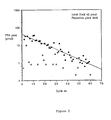
- the polymer-coated membrane disc was then placed directly in the reaction chamber of a MilliGen 6600 proSequencer (Division of Millipore Corp., Burlington, MA) and subjected to 20 cycles of solid-phase Edman degradation as described by Laursen, R. A., et al. (Methods in Protein Sequence Analysis , (1989) Wittman-Leibold, B. (Ed.), p. 61, Springer-Verlag, Berlin).
- the closed circles indicate residues used for regression analysis.
- the opened circles indicate residues (first, Ser, Thr, Cys, Trp, Lys) which are partially destroyed by coupling or sequencing procedures and not included in fitting of the line by regression analysis.
- the initial yield is derived from the intercept of the Y axis and the repetitive yield is calculated by taking the antilog of the slope of the fitted line.
- Control experiments were also performed to demonstrate that the test protein was covalently immobilized on the membrane surface during the sequencing chemistry.
- an identical sample of horse heart myoglobin electroblotted onto PVDF membrane and visualized as in Example 1 was placed directly into the sequencer reaction chamber and subjected to 20 cycles of Edman degradation.
- the above procedure was repeated on identical samples with the omission of either DITC crosslinker or the polyamine polymer. In all these cases no sequence was observed, with an experimental detection limit of approximately 500 fmol.
- An 8 mm disc of PVD membrane with a sample of horse heart myoglobin electroblotted onto the surface and stained with sulforhodamine B as in Example 1 was treated as follows. With the disc held at the edge with a pair of fine forceps, 10 ⁇ l of 0.5% w/v DITC in tetrahydrofuran (THF) was spotted onto both sides of the membrane disc and allowed to evaporate over 15-20 seconds. The disc was then placed on a mylar sheet resting on a metal heat-block at 55°C and 30 ⁇ l of 0.1% w/v polyethyleneimine-18 (PEI-18; 1800 molecular weight) in 50% v/v aqueous methanol pipetted onto the surface.
- PEI-18 polyethyleneimine-18
- An 8 mm disc of PVDF membrane with a sample of bovine beta-lactoglobulin A electroblotted onto the membrane surface and stained with sulforhodamine B as in Example 1 was treated as follows. With the membrane disc held by the edge with a pair of fine forceps, 10 ⁇ l of a solution of ethyl acetate containing 2% v/v diisopropylcarbodiimide and 0.5% w/v methylenedianiline was spotted onto both sides of the disc and allowed to evaporate to dryness over 15-20 seconds.
- the disc was placed on a mylar sheet resting on a heat-block at 55°C and 30 ⁇ l of 50% v/v aqueous 1,4-dioxan containing 0.3% w/v polyacrylic acid (5,000 molecular weight) and 0.1M tetrazole buffer pH 5 with n-methylmorpholine pipetted onto the surface.
- the liquid droplet was allowed to evaporate to dryness over 10 minutes, and the polymer-coated membrane then washed with methanol, water and methanol to remove unbound material.
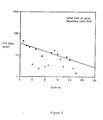
- the washed disc was then subjected to 20 cycles of solid-phase Edman degradation as described above.
- the sequence data is shown in Figure 5.
- the initial sequencing yield was 35 pmol and the repetitive yield 90%.
- A) Preparation of azido benzoid acid p-Aminobenzoic acid was treated with HBr and sodium nitrite in water to give the corresponding azidobenzoic acid in 72% yield. 82 mg recrystallized p-azidobenzoid acid dissolved in 2 ml anhydrous DMF and 90 mg carbonyldiimidazole added. The reaction to produce the activated imidazolide was allowed to proceed for 1 hour at room temperature in darkness and then the solution was added dropwise with vigorous stirring to a solution of 0.22g PEI-150 (10,000 molecular weight) in 3 ml 70% v/v aqueous DMF.
Landscapes
- Health & Medical Sciences (AREA)
- Life Sciences & Earth Sciences (AREA)
- Chemical & Material Sciences (AREA)
- Immunology (AREA)
- Engineering & Computer Science (AREA)
- Molecular Biology (AREA)
- Urology & Nephrology (AREA)
- Hematology (AREA)
- Biomedical Technology (AREA)
- General Health & Medical Sciences (AREA)
- Medicinal Chemistry (AREA)
- Biochemistry (AREA)
- Analytical Chemistry (AREA)
- Physics & Mathematics (AREA)
- Food Science & Technology (AREA)
- General Physics & Mathematics (AREA)
- Organic Chemistry (AREA)
- Biotechnology (AREA)
- Cell Biology (AREA)
- Pathology (AREA)
- Microbiology (AREA)
- Biophysics (AREA)
- Proteomics, Peptides & Aminoacids (AREA)
- Genetics & Genomics (AREA)
- Dispersion Chemistry (AREA)
- Chemical Kinetics & Catalysis (AREA)
- Bioinformatics & Cheminformatics (AREA)
- Bioinformatics & Computational Biology (AREA)
- Peptides Or Proteins (AREA)
- Investigating Or Analysing Biological Materials (AREA)
Applications Claiming Priority (2)
| Application Number | Priority Date | Filing Date | Title |
|---|---|---|---|
| US385711 | 1989-07-26 | ||
| US07/385,711 US5071909A (en) | 1989-07-26 | 1989-07-26 | Immobilization of proteins and peptides on insoluble supports |
Publications (2)
| Publication Number | Publication Date |
|---|---|
| EP0410323A2 true EP0410323A2 (de) | 1991-01-30 |
| EP0410323A3 EP0410323A3 (en) | 1992-04-08 |
Family
ID=23522546
Family Applications (1)
| Application Number | Title | Priority Date | Filing Date |
|---|---|---|---|
| EP19900113972 Withdrawn EP0410323A3 (en) | 1989-07-26 | 1990-07-20 | Immobilization of proteins and peptides on insoluble supports |
Country Status (3)
| Country | Link |
|---|---|
| US (1) | US5071909A (de) |
| EP (1) | EP0410323A3 (de) |
| JP (1) | JPH03141300A (de) |
Cited By (15)
| Publication number | Priority date | Publication date | Assignee | Title |
|---|---|---|---|---|
| EP0408078A3 (en) * | 1989-07-14 | 1992-01-29 | Boehringer Mannheim Gmbh | Method for the preparation of a solid phase coated with an immunologically active substance |
| WO1992019974A1 (en) * | 1991-05-07 | 1992-11-12 | Oxford Glycosystems Limited | Sequencing of oligosaccharides |
| EP0524800A1 (de) * | 1991-07-25 | 1993-01-27 | Advanced Genetic Technologies Corporation | Klebstofformulierung zur Bindung von Proteinen |
| WO1993008471A1 (en) * | 1991-10-25 | 1993-04-29 | Cytech Biomedicals Inc. | Assay methods for biomolecules and solid support thereof |
| EP0561239A1 (de) * | 1992-03-18 | 1993-09-22 | Bayer Ag | Optischer Festphasenbiosensor auf Basis fluoreszenzfarbstoffmarkierter polyionischer Schichten |
| EP0606225A4 (de) * | 1992-07-23 | 1994-11-30 | Hope City | Sequenzierung von auf polytetrafluorethylenträgern immobilisierten proteinen. |
| AU666863B2 (en) * | 1992-07-23 | 1996-02-29 | City Of Hope | Sequencing of protein immobilized of polytetrafluoroethylene supports |
| WO1996010748A1 (en) * | 1994-10-03 | 1996-04-11 | Lifecodes Corporation | Methods and materials for detecting autoimmune antibodies |
| US5541114A (en) * | 1992-07-23 | 1996-07-30 | City Of Hope | Sequencing of protein immobilized on polytetrafluoroethylene supports |
| WO1996032643A1 (en) * | 1995-04-11 | 1996-10-17 | Pall Corporation | Method of detecting biological materials using a polyvinylidene fluoride membrane |
| WO1996037778A1 (de) * | 1995-05-22 | 1996-11-28 | Deutsches Krebsforschungszentrum Stiftung des öffentlichen Rechts | Komplex, enthaltend einen polymeren mediator und ein peptid, zur adsorptiven bindung an trägeroberflächen |
| CN1059354C (zh) * | 1994-12-28 | 2000-12-13 | 中国科学院大连化学物理研究所 | 一种纤维素微孔滤膜及其制备和应用 |
| US6846924B1 (en) * | 1996-01-10 | 2005-01-25 | Sca Hygiene Products Ab | Method of producing an absorbent material, an absorbent material and absorbent articles including the material in question |
| WO2008047095A1 (en) * | 2006-10-16 | 2008-04-24 | Queen Mary & Westfield College | Method |
| EP2306197A4 (de) * | 2008-06-30 | 2011-08-03 | Hipep Lab | Biochip-substrat und verfahren zur herstellung davon |
Families Citing this family (37)
| Publication number | Priority date | Publication date | Assignee | Title |
|---|---|---|---|---|
| JP3093375B2 (ja) * | 1991-11-01 | 2000-10-03 | 株式会社東海メディカルプロダクツ | 抗血栓性物質の固定化方法 |
| US5863985A (en) * | 1995-06-29 | 1999-01-26 | Kinerton Limited | Ionic molecular conjugates of biodegradable polyesters and bioactive polypeptides |
| US6221958B1 (en) | 1993-01-06 | 2001-04-24 | Societe De Conseils De Recherches Et D'applications Scientifiques, Sas | Ionic molecular conjugates of biodegradable polyesters and bioactive polypeptides |
| DK0678018T3 (da) * | 1993-01-06 | 2003-04-28 | Kinerton Ltd | Ion molekylærkonjugater af bionedbrydelige polyestere og bioaktive polypeptider |
| US5672659A (en) * | 1993-01-06 | 1997-09-30 | Kinerton Limited | Ionic molecular conjugates of biodegradable polyesters and bioactive polypeptides |
| US5543054A (en) * | 1993-11-24 | 1996-08-06 | Millipore Corporation | Method and apparatus for covalent immobilization of charge- conjugated carbohydrate molecules |
| US5503933A (en) * | 1994-02-25 | 1996-04-02 | Purdue Research Foundation | Covalently bonded coatings |
| US6030442A (en) * | 1994-05-13 | 2000-02-29 | University Of Cincinnati | Microporous fast response gels and methods of use |
| JP3737516B2 (ja) * | 1995-06-26 | 2006-01-18 | パーセプティブ バイオシステムズ,インコーポレーテッド | 高速自動化連続流、多次元分子選別および分析 |
| US5868704A (en) * | 1995-09-18 | 1999-02-09 | W. L. Gore & Associates, Inc. | Balloon catheter device |
| US6867181B1 (en) | 1997-06-02 | 2005-03-15 | Societe De Conseils De Recherches Et D'applications Scientifiques, S.A.S. | Ionic molecular conjugates of biodegradable polyesters and bioactive polypeptides |
| US6048695A (en) * | 1998-05-04 | 2000-04-11 | Baylor College Of Medicine | Chemically modified nucleic acids and methods for coupling nucleic acids to solid support |
| US6998251B2 (en) * | 2001-01-12 | 2006-02-14 | Syngenta Participations Ag | Nanoporous membrane reactor for miniaturized reactions and enhanced reaction kinetics |
| WO2003056007A1 (fr) * | 2001-12-26 | 2003-07-10 | Canon Kabushiki Kaisha | Materiau de sonde |
| TW575646B (en) * | 2002-09-04 | 2004-02-11 | Sipix Imaging Inc | Novel adhesive and sealing layers for electrophoretic displays |
| US7616374B2 (en) * | 2002-09-23 | 2009-11-10 | Sipix Imaging, Inc. | Electrophoretic displays with improved high temperature performance |
| US9346987B2 (en) * | 2003-01-24 | 2016-05-24 | E Ink California, Llc | Adhesive and sealing layers for electrophoretic displays |
| US7572491B2 (en) * | 2003-01-24 | 2009-08-11 | Sipix Imaging, Inc. | Adhesive and sealing layers for electrophoretic displays |
| CA2821376A1 (en) | 2003-04-16 | 2004-11-04 | The Children's Hospital Of Philadelphia | Magnetically controllable drug and gene delivery stents |
| US9694103B2 (en) | 2003-04-16 | 2017-07-04 | The Children's Hospital Of Philadelphia | Photochemical activation of surfaces for attaching biomaterial |
| US7276283B2 (en) * | 2004-03-24 | 2007-10-02 | Wisconsin Alumni Research Foundation | Plasma-enhanced functionalization of carbon-containing substrates |
| DE102004031258A1 (de) * | 2004-06-29 | 2006-02-09 | Jennissen, Herbert P., Prof. Dr. | Proteinhybride mit polyhydroxyaromatischen Aminosäure-Epitopen |
| US20070055013A1 (en) * | 2005-02-21 | 2007-03-08 | Noriho Kamiya | Substrate and method of immobilizing protein |
| WO2006109311A2 (en) * | 2005-04-15 | 2006-10-19 | Ramot At Tel Aviv University Ltd. | Enzyme-channeling based electrochemical biosensors |
| EP2082869B1 (de) * | 2006-10-27 | 2015-09-16 | Shinji Takeoka | Folienartige polymerstruktur und herstellungsverfahren dafür |
| US8029902B2 (en) * | 2006-12-11 | 2011-10-04 | Wisconsin Alumni Research Foundation | Plasma-enhanced functionalization of substrate surfaces with quaternary ammonium and quaternary phosphonium groups |
| EP2390663B1 (de) | 2007-05-23 | 2013-11-13 | Life Technologies Corporation | Reagenzien, Kits und Verfahren zur Erkennung von biologischen Molekülen durch Energieübertragung aus einem aktivierten chemilumineszenten Trägerstoff in eine Energieannahmefarbstoff |
| WO2014157670A1 (ja) * | 2013-03-29 | 2014-10-02 | 東ソー株式会社 | 液体クロマトグラフィー用カチオン交換体、その製造方法及びその用途 |
| EP3219381A1 (de) * | 2016-03-16 | 2017-09-20 | Fraunhofer-Gesellschaft zur Förderung der angewandten Forschung e.V. | Poröse dünnschichtmembran, verfahren zu ihrer herstellung sowie verwendungsmöglichkeiten |
| AU2018301393B2 (en) | 2017-07-11 | 2025-02-27 | Compass Therapeutics Llc | Agonist antibodies that bind human CD137 and uses thereof |
| WO2019089753A2 (en) | 2017-10-31 | 2019-05-09 | Compass Therapeutics Llc | Cd137 antibodies and pd-1 antagonists and uses thereof |
| EP3713961A2 (de) | 2017-11-20 | 2020-09-30 | Compass Therapeutics LLC | Cd137-antikörper und tumorantigenbindende antikörper sowie deren verwendung |
| FR3079233B1 (fr) * | 2018-03-20 | 2022-04-01 | Alveole | Substrat pour l'impression de proteines |
| US11046769B2 (en) | 2018-11-13 | 2021-06-29 | Compass Therapeutics Llc | Multispecific binding constructs against checkpoint molecules and uses thereof |
| US11918957B2 (en) | 2018-12-12 | 2024-03-05 | Donaldson Company, Inc. | Affinity membrane and method of preparation |
| JP7120695B1 (ja) * | 2022-02-06 | 2022-08-17 | 豊光社テクノロジーズ株式会社 | 樹脂フィルム積層体とその製造方法、及び金属被覆樹脂の製造方法 |
| WO2023149581A1 (ja) * | 2022-02-06 | 2023-08-10 | 豊光社テクノロジーズ株式会社 | 表面処理液、表面処理樹脂及び樹脂フィルム積層体の製造方法 |
Family Cites Families (6)
| Publication number | Priority date | Publication date | Assignee | Title |
|---|---|---|---|---|
| US4169014A (en) * | 1976-08-16 | 1979-09-25 | Amerace Corporation | Method of immobilizing proteinaceous substances |
| US4326009A (en) * | 1977-07-27 | 1982-04-20 | Royer Garfield P | Polymeric particulate carrier |
| US4737544A (en) * | 1982-08-12 | 1988-04-12 | Biospecific Technologies, Inc. | Biospecific polymers |
| EP0160260A3 (de) * | 1984-05-02 | 1986-10-08 | Bayer Ag | Verfahren zur Immobilisierung von biologischem Material |
| JPS6283885A (ja) * | 1985-10-08 | 1987-04-17 | Nitto Electric Ind Co Ltd | 酵素固定膜及びその製造方法 |
| US4757014A (en) * | 1985-11-08 | 1988-07-12 | Minnesota Mining And Manufacturing Company | Immobilization of biologically active protein on a polymeric fibrous support |
-
1989
- 1989-07-26 US US07/385,711 patent/US5071909A/en not_active Expired - Fee Related
-
1990
- 1990-07-20 EP EP19900113972 patent/EP0410323A3/en not_active Withdrawn
- 1990-07-24 JP JP2194113A patent/JPH03141300A/ja active Pending
Cited By (23)
| Publication number | Priority date | Publication date | Assignee | Title |
|---|---|---|---|---|
| EP0408078A3 (en) * | 1989-07-14 | 1992-01-29 | Boehringer Mannheim Gmbh | Method for the preparation of a solid phase coated with an immunologically active substance |
| US5316784A (en) * | 1989-07-14 | 1994-05-31 | Boehringer Mannheim Gmbh | Process for the production of a solid phase matrix coated with an immunologically active substance |
| WO1992019974A1 (en) * | 1991-05-07 | 1992-11-12 | Oxford Glycosystems Limited | Sequencing of oligosaccharides |
| EP0524800A1 (de) * | 1991-07-25 | 1993-01-27 | Advanced Genetic Technologies Corporation | Klebstofformulierung zur Bindung von Proteinen |
| WO1993008471A1 (en) * | 1991-10-25 | 1993-04-29 | Cytech Biomedicals Inc. | Assay methods for biomolecules and solid support thereof |
| US5424219A (en) * | 1991-10-25 | 1995-06-13 | Cytech Biomedical, Inc. | Method of performing assays for biomolecules and solid supports for use in such methods |
| EP0561239A1 (de) * | 1992-03-18 | 1993-09-22 | Bayer Ag | Optischer Festphasenbiosensor auf Basis fluoreszenzfarbstoffmarkierter polyionischer Schichten |
| US5711915A (en) * | 1992-03-18 | 1998-01-27 | Bayer Aktiengesellschaft | Optical solid-phase biosensor based on polyionic layers labelled with fluorescent dyes |
| US5541114A (en) * | 1992-07-23 | 1996-07-30 | City Of Hope | Sequencing of protein immobilized on polytetrafluoroethylene supports |
| AU666863B2 (en) * | 1992-07-23 | 1996-02-29 | City Of Hope | Sequencing of protein immobilized of polytetrafluoroethylene supports |
| EP0606225A4 (de) * | 1992-07-23 | 1994-11-30 | Hope City | Sequenzierung von auf polytetrafluorethylenträgern immobilisierten proteinen. |
| WO1996010748A1 (en) * | 1994-10-03 | 1996-04-11 | Lifecodes Corporation | Methods and materials for detecting autoimmune antibodies |
| CN1059354C (zh) * | 1994-12-28 | 2000-12-13 | 中国科学院大连化学物理研究所 | 一种纤维素微孔滤膜及其制备和应用 |
| WO1996032643A1 (en) * | 1995-04-11 | 1996-10-17 | Pall Corporation | Method of detecting biological materials using a polyvinylidene fluoride membrane |
| GB2313836A (en) * | 1995-04-11 | 1997-12-10 | Pall Corp | Method of detecting biological materials using a polyvinylidene fluoride membrane |
| GB2313836B (en) * | 1995-04-11 | 1999-05-05 | Pall Corp | Method of detecting biological materials using a polyvinylidene fluoride membrane |
| WO1996037778A1 (de) * | 1995-05-22 | 1996-11-28 | Deutsches Krebsforschungszentrum Stiftung des öffentlichen Rechts | Komplex, enthaltend einen polymeren mediator und ein peptid, zur adsorptiven bindung an trägeroberflächen |
| US6846924B1 (en) * | 1996-01-10 | 2005-01-25 | Sca Hygiene Products Ab | Method of producing an absorbent material, an absorbent material and absorbent articles including the material in question |
| WO2008047095A1 (en) * | 2006-10-16 | 2008-04-24 | Queen Mary & Westfield College | Method |
| US8278064B2 (en) | 2006-10-16 | 2012-10-02 | Queen Mary & Westfield College | Method for detecting a protease |
| EP2306197A4 (de) * | 2008-06-30 | 2011-08-03 | Hipep Lab | Biochip-substrat und verfahren zur herstellung davon |
| US8822607B2 (en) | 2008-06-30 | 2014-09-02 | Hipep Laboratories | Biochip substratum and method for production thereof |
| US9857369B2 (en) | 2008-06-30 | 2018-01-02 | Hipep Laboratories | Biochip substratum and method for production thereof |
Also Published As
| Publication number | Publication date |
|---|---|
| JPH03141300A (ja) | 1991-06-17 |
| EP0410323A3 (en) | 1992-04-08 |
| US5071909A (en) | 1991-12-10 |
Similar Documents
| Publication | Publication Date | Title |
|---|---|---|
| US5071909A (en) | Immobilization of proteins and peptides on insoluble supports | |
| US5011861A (en) | Membranes for solid phase protein sequencing | |
| Gershoni et al. | Protein blotting: principles and applications | |
| EP0347755B1 (de) | Ladungsmodifizierte hydrophobe Membranmaterialien und Verfahren zur Herstellung | |
| US5124041A (en) | Biomolecule sample immobilization | |
| Eckerskorn et al. | A new siliconized‐glass fiber as support for protein‐chemical analysis of electroblotted proteins. | |
| US5395498A (en) | Method for separating biological macromolecules and means therfor | |
| CA2092708C (en) | Cationic charge modified microporous membranes | |
| JP5661848B2 (ja) | ウエスタンブロット免疫検出法 | |
| WO2000012575A1 (de) | Verfahren zur herstellung polymerer festphasenträger | |
| US5280078A (en) | Homopolymers and copolymers of acrylamide N-substituted acrylamide or N-substituted methacrylamide solid state cross-linked with polyamines or polyols | |
| JPH03500457A (ja) | ペプチド及び蛋白質の配列決定用修飾ガラス支持体 | |
| Coull et al. | Functionalized membrane supports for covalent protein microsequence analysis | |
| Pappin et al. | Solid-phase sequence analysis of proteins electroblotted or spotted onto polyvinylidene difluoride membranes | |
| US6379515B1 (en) | Process for separating mixtures of substances using capillary affinity gel electrophoresis | |
| US5137765A (en) | Derivatized glass supports for peptide and protein sequencing | |
| US4839231A (en) | Agents and procedures for the transfer of proteins and/or nucleic acids onto a supported receptor surface | |
| US5922608A (en) | Macromolecule sequencing packet and method of use | |
| EP0240586B1 (de) | Nachvernetzte Polymerisat-Gele | |
| Aebersold et al. | N‐terminal and internal sequence determination of microgram amounts of proteins separated by isoelectric focusing in immobilized pH gradients | |
| Choli et al. | Protein blotting followed by microsequencing | |
| Reim et al. | Microsequence analysis of electroblotted proteins: II. Comparison of sequence performance on different types of PVDF membranes | |
| CN114749221B (zh) | 一种蛋白质组学样品前处理装置及其制备方法与应用 | |
| Coull et al. | Development of membrane supports for the solid-phase sequence analysis of proteins and peptides | |
| JPH0727767A (ja) | 被覆担体、その製法、及びその生体分子の固体表面への固定化に対する使用法 |
Legal Events
| Date | Code | Title | Description |
|---|---|---|---|
| PUAI | Public reference made under article 153(3) epc to a published international application that has entered the european phase |
Free format text: ORIGINAL CODE: 0009012 |
|
| AK | Designated contracting states |
Kind code of ref document: A2 Designated state(s): DE FR GB IT NL SE |
|
| PUAL | Search report despatched |
Free format text: ORIGINAL CODE: 0009013 |
|
| AK | Designated contracting states |
Kind code of ref document: A3 Designated state(s): DE FR GB IT NL SE |
|
| 17P | Request for examination filed |
Effective date: 19920729 |
|
| 17Q | First examination report despatched |
Effective date: 19940317 |
|
| GRAH | Despatch of communication of intention to grant a patent |
Free format text: ORIGINAL CODE: EPIDOS IGRA |
|
| RAP1 | Party data changed (applicant data changed or rights of an application transferred) |
Owner name: PERSEPTIVE BIOSYSTEMS, INC. |
|
| STAA | Information on the status of an ep patent application or granted ep patent |
Free format text: STATUS: THE APPLICATION IS DEEMED TO BE WITHDRAWN |
|
| 18D | Application deemed to be withdrawn |
Effective date: 19960723 |