EP0412799B1 - Système de communication téléphonique - Google Patents
Système de communication téléphonique Download PDFInfo
- Publication number
- EP0412799B1 EP0412799B1 EP90308733A EP90308733A EP0412799B1 EP 0412799 B1 EP0412799 B1 EP 0412799B1 EP 90308733 A EP90308733 A EP 90308733A EP 90308733 A EP90308733 A EP 90308733A EP 0412799 B1 EP0412799 B1 EP 0412799B1
- Authority
- EP
- European Patent Office
- Prior art keywords
- message
- processing
- home
- processing unit
- processing means
- Prior art date
- Legal status (The legal status is an assumption and is not a legal conclusion. Google has not performed a legal analysis and makes no representation as to the accuracy of the status listed.)
- Expired - Lifetime
Links
- 230000006854 communication Effects 0.000 title claims abstract description 19
- 238000004891 communication Methods 0.000 title claims abstract description 18
- 238000012545 processing Methods 0.000 claims abstract description 249
- 238000000034 method Methods 0.000 claims description 173
- 230000008569 process Effects 0.000 claims description 148
- 238000012546 transfer Methods 0.000 claims description 20
- 238000003672 processing method Methods 0.000 claims description 2
- 238000004148 unit process Methods 0.000 claims 3
- 230000026676 system process Effects 0.000 claims 1
- 238000004422 calculation algorithm Methods 0.000 description 7
- 239000000872 buffer Substances 0.000 description 4
- 238000012423 maintenance Methods 0.000 description 3
- 238000012552 review Methods 0.000 description 3
- 230000000712 assembly Effects 0.000 description 2
- 238000000429 assembly Methods 0.000 description 2
- 230000008901 benefit Effects 0.000 description 2
- 238000013461 design Methods 0.000 description 2
- 230000004313 glare Effects 0.000 description 2
- 238000012544 monitoring process Methods 0.000 description 2
- 239000000523 sample Substances 0.000 description 2
- 208000003028 Stuttering Diseases 0.000 description 1
- 230000004913 activation Effects 0.000 description 1
- 230000003044 adaptive effect Effects 0.000 description 1
- 238000004364 calculation method Methods 0.000 description 1
- 230000001413 cellular effect Effects 0.000 description 1
- 239000003795 chemical substances by application Substances 0.000 description 1
- 230000006835 compression Effects 0.000 description 1
- 238000007906 compression Methods 0.000 description 1
- 238000004590 computer program Methods 0.000 description 1
- 238000010276 construction Methods 0.000 description 1
- 238000012217 deletion Methods 0.000 description 1
- 230000037430 deletion Effects 0.000 description 1
- 238000001514 detection method Methods 0.000 description 1
- 230000000694 effects Effects 0.000 description 1
- NYPJDWWKZLNGGM-RPWUZVMVSA-N esfenvalerate Chemical compound C=1C([C@@H](C#N)OC(=O)[C@@H](C(C)C)C=2C=CC(Cl)=CC=2)=CC=CC=1OC1=CC=CC=C1 NYPJDWWKZLNGGM-RPWUZVMVSA-N 0.000 description 1
- 230000006870 function Effects 0.000 description 1
- 238000012986 modification Methods 0.000 description 1
- 230000004048 modification Effects 0.000 description 1
- 238000004886 process control Methods 0.000 description 1
- 230000004044 response Effects 0.000 description 1
- 238000005070 sampling Methods 0.000 description 1
- 230000011664 signaling Effects 0.000 description 1
- 238000012360 testing method Methods 0.000 description 1
- 238000013519 translation Methods 0.000 description 1
Images


Classifications
-
- H—ELECTRICITY
- H04—ELECTRIC COMMUNICATION TECHNIQUE
- H04Q—SELECTING
- H04Q11/00—Selecting arrangements for multiplex systems
- H04Q11/04—Selecting arrangements for multiplex systems for time-division multiplexing
- H04Q11/0421—Circuit arrangements therefor
-
- H—ELECTRICITY
- H04—ELECTRIC COMMUNICATION TECHNIQUE
- H04M—TELEPHONIC COMMUNICATION
- H04M3/00—Automatic or semi-automatic exchanges
- H04M3/42—Systems providing special services or facilities to subscribers
- H04M3/50—Centralised arrangements for answering calls; Centralised arrangements for recording messages for absent or busy subscribers ; Centralised arrangements for recording messages
- H04M3/53—Centralised arrangements for recording incoming messages, i.e. mailbox systems
- H04M3/533—Voice mail systems
-
- H—ELECTRICITY
- H04—ELECTRIC COMMUNICATION TECHNIQUE
- H04M—TELEPHONIC COMMUNICATION
- H04M3/00—Automatic or semi-automatic exchanges
- H04M3/42—Systems providing special services or facilities to subscribers
- H04M3/50—Centralised arrangements for answering calls; Centralised arrangements for recording messages for absent or busy subscribers ; Centralised arrangements for recording messages
- H04M3/53—Centralised arrangements for recording incoming messages, i.e. mailbox systems
- H04M3/533—Voice mail systems
- H04M3/53325—Interconnection arrangements between voice mail systems
-
- H—ELECTRICITY
- H04—ELECTRIC COMMUNICATION TECHNIQUE
- H04M—TELEPHONIC COMMUNICATION
- H04M2201/00—Electronic components, circuits, software, systems or apparatus used in telephone systems
- H04M2201/36—Memories
Definitions
- the present invention is directed to a telephone communication system used for handling information such as messages, typically voice mail messages, and, more particularly, is directed to a system that provides a tightly coupled distributed architecture that allows substantially increased efficiency of equipment utilization, increased subscriber capability, modular expansion capability and low access blockage for subscribers and non-subscribers.
- Typical voice mail systems are designed for operation in conjunction with a private business exchange (PBX).
- the typical systems include one or more separate call processing computers dedicated to serving a predetermined set of PBX lines and subscribers.
- Each processor stores the subscriber information for the subscribers assigned to that processor.
- the processors store messages in a common storage accessed over dedicated storage buses.
- Each call processor acts independently and competes for access to the common storage. Because each call processor serves a predetermined set of lines, when a message originator, whether a subscriber or non-subscriber, calls a subscriber and wishes to leave a voice message, if the lines dedicated to the subscriber are busy or if the call processing computer is unavailable for any other reason, the message originator is not allowed to leave a message.
- a processor does not have access to the subscriber information stored in another processor, thereby preventing other processors from handling the call. In like manner, if a subscriber wants to obtain his messages and the limited number of lines to the subscriber's dedicated call processing computer are busy or the processor is unavailable, the subscriber cannot get his messages.
- a prior art system as described above is typified by the system described in U.S. Patent 4,371,752.
- US-A-4400587 shows a method of overflow and diversion re-routing for use in an automatic call distributor system of the type in which an incoming call is assigned to an original gate (i.e. a group of human agents) but in selected circumstances the call is to be re-routed to an alternative gate.
- Re-routing occurs either by directing an incoming call to a previously assigned and stored first choice network number or to a previously assigned and stored alternate network number.
- a message communication system comprises at least first and second message processing means for processing a message by storing and/or playing the message; and switching and control means for dynamically selecting an available one of the message processing means based on availability factors to process the message and routing the message to and/or from the selected message processing means.
- a message processing method using a switching system and at least first and second message processing units connected to the switching system comprises the steps of:
- the present invention allows calls to be processed as long as any message processing unit is available.
- the present invention allows any message processing unit to handle any incoming line and any subscriber.
- a message can be temporarily stored in different positions of the system to improve performance.
- the invention may be arranged to allow the system to store and retrieve any message no matter where stored in the system.
- a message may be permanently stored only once.
- the present invention enables subscriber information to be stored in a manner allowing any message processing unit to have access to that information to process the message and can prevent storage access bottlenecks.
- the present invention can provide a distributed architecture that prevents line blockage and prevents storage blockage.
- the system can handle both voice and data traffic.
- the present invention can provide maximum availability of message processing units by freeing a voice processing unit to handle another call while the voice processing unit storing the message serves the subscriber with respect to that message.
- the invention can increase the equipment utilization efficiency by algorithmically distributing calls to processing units and can allow access to any message through any voice port.
- the present invention can dynamically locate stored messages by algorithmically distributing messages among call processing units.
- a voice processing unit is designated as a home voice processing unit for a subscriber's message.
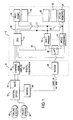
- An incoming call or an access by a subscriber from a central office can be switched to the home VPU by a digital switching system (DSS) under the control of a master control unit (MCU).
- DSS digital switching system
- MCU master control unit
- the master control unit determines that all lines to the home voice processing unit are busy or the home voice processing unit is otherwise unavailable, the master control unit causes the digital switching system to switch the call to another or remote voice processing unit.
- the remote voice processing unit then handles the call by either locally storing a message or retrieving a message from the home voice processing unit storage or elsewhere in the system over an internal network.
- the master control unit communicates with the voice processing units, and among the voice processing units, and among the voice processing units. If out-dialing of the message is necessary, such as when a pager needs to be activated, the master control unit connects the voice processing unit storing the message, whether the home or remote unit, to the central office through the digital switch and the unit places the desired call.
- a hot standby master control unit is provided to take control of the system in the event that the primary master control unit fails.
- the present invention is specifically designed for use with a telephone company central office or for a very large corporate user, however, an exchange such as private business exchange can take advantage of the high availability characteristics of the present invention in situations where high voice traffic exists, such as telephone shopping.
- the distributed architecture allows the system to be configured presently for up to 1536 voice channels, approximately 100,000 mailboxes and over 7,000 hours of voice storage.
- the architecture allows the present invention to simultaneously run multiple applications while keeping the underlying system totally transparent to the end user.
- the caller and/or subscriber can send, reply to or redirect messages at will irrespective of which processing unit stores particular messages or which processing unit is handling the call.
- the various computer programs executed within the distributed architecture are preferably written in the "C" programming language or Intel 386 assembly language and an appendix of the programs executed by the various processors within the distributed architecture is included herewith.
- Each processor in the distributed architecture is preferably using an operating system such as Xenix or Unix System V which allows multiple real time tasks.
- Assignment of an incoming call by the MCU 10 to a VPU occurs over an internal bus or network 28 that includes both a data bus and a voice bus.
- This bus 28 rather than being a traditional bus can be a network of any topology such as a star or token ring.
- Control data and messages between the MCU 10 and VPUs or between the VPUs is routed over the data bus of the internal bus 28 while the voice messages are routed between the VPUs over the voice bus of the internal data bus 28.
- the internal bus 28 be a standard bus such as is provided by an Ethernet.
- the voice and data logical buses can be implemented as a single physical bus over the Ethernet or as separate Ethernets when interprocessor voice or data communication is high.
- a message packet preferably in SMDI format, is sent from the message desk of the central office 30 to MCU 10 optionally through modems 36 and 38.
- the packet contains the message desk identification number, the trunk ID indicating which port of the DSS will receive the call, the called number and the calling number.
- the called number acts as the mailbox address and of course, a translation can occur between the telephone number and a mailbox address.
- the central office 30, after transmitting the SMDI packet places the call on the designated port of the DSS 14.
- DSS 14 when it detects a call, informs the MCU 10 of a call arrival indicating on which port the call has arrived.
- the MCU 10 if a packet arrives prior to a call at the DSS 14, waits for a predetermined time, for example 12 seconds, and if the call does not arrive at the DSS 14, discards the packet. If a call arrives at the DSS 14 without the packet arriving within 6 seconds, a non-typical situation, the call is assigned to the first available VPU and the DSS 14 is switched accordingly.
- the VPU makes the request for the mailbox number, receives the number from the caller and provides the number to the MCU 10 in a phoney SMDI packet.
- the MCU 10 accesses the mailbox database and determines which VPU 16-24 is the home VPU 16 and, if the home VPU 16 is available. The MCU 10 instructs the DSS 14 over a link 44 to route the call to the home VPU 16.
- a conventional T1 channel (time slot) to channel (time slot) connection command is provided to the DSS 14 from the MCU 10 to effect the routing desired.
- the home VPU 16 After the call is switched, the home VPU 16 obtains the relevant subscriber information (including a greeting storage location) from the MCU 10 and then can play a system greeting or a personal greeting recorded by the mailbox owner back through the DSS 14, channel bank 30 and central office 30 to the calling station 40.
- the home voice processing unit 16 then plays a beep signal to the caller indicating that the caller can begin recording a message. Recording stops when the caller hangs up, presses a touch tone key or is silent for a message time out period. The caller can then review, record or send a message or select send options such as marking the message urgent or confidential.
- the VPU 16 After the caller sends the message the VPU 16 stores the message as a file in the VPU 16 and communicates the location of the message back to the MCU 10 which stores the location of the message in the subscriber's message list mailbox file located in the MCU 10. The MCU 10 then disconnects the routing in DSS 14 and sends any necessary message waiting information to the central office 30.
- a more complicated routing determination can be dynamically made using an algorithm which compares all VPUs. Prior to selecting the VPU to handle the call, the MCU 10 can execute a call routing algorithm which determines whether the home VPU 16 or a remote VPU 24 should be selected.
- the placement values P for the VPUs 16-24 are ranked with the highest ranked VPU being the VPU selected to handle the call.
- the weighting factors are also selected to treat the home VPU preferentially, if it is available, has sufficient storage for the message and has an available port. For example, if the weighting factor W1 is set so that the first term, W1*H(I), in the equation is only slightly less than the sum of the remaining terms in the equation, whenever the home VPU has available storage and has an available port, the home VPU will receive the highest call placement value.
- the remote VPU 24 obtains the personal greeting of the subscriber from the home VPU 16 over the internal bus 28 and then plays that personal greeting to the calling station 40 through the DSS 14.
- the remote VPU 24 would then record the caller's message locally in the remote VPU 24 providing the same review and re-record features previously mentioned.
- the remote VPU 24 would inform the MCU 10 that the subscriber has a message stored on a remote VPU 24.
- the MCU 10 would place the location of the message in the subscriber's message list file.
- the system has the capability of informing a subscriber that he has new messages by communicating to the central office 30 using a standard Message Waiting Indication (MWI) packet over SMDI.
- MMI Message Waiting Indication
- the central office should produce a stutter dial tone the next time the subscriber picks up the phone at the called station 42 or light a light on the called station 42.
- the subscriber desiring to obtain his messages would then call their own telephone number (which would result in forwarding to the voice mail system) or dial a local access number in the central office 30 for the voice mail system 6.
- the MCU 10 could perform the routing algorithm previously mentioned to determine which VPU should handle the call. If a system access number is used the subscriber is routed directly to an appropriate VPU which requests the user enter the mailbox number (their own telephone number) and the MCU 10 once again can perform the call routing algorithm.
- the VPU selected is the home VPU 16, it will play the locally stored personal greeting of the subscriber to the subscriber. If the VPU selected is a remote VPU 24, the remote obtains the greeting from the home VPU 16 as previously described and plays it to the subscriber. If the home VPU 16 does not respond to the request for the greeting message, the system greeting is played to the subscriber. This generally indicates to the subscriber that all messages are not available because the home VPU is down. However, because the greeting and log-in procedures take time during which the home VPU could become available and if the system has the alternate call switching capability, the subscriber should continue until the system indicates all messages are not available.
- the subscriber When the subscriber presses the appropriate log-in digit at the calling station, whether the subscriber is at the previously called station 42 or at another location, the subscriber is prompted to enter an appropriate passcode. The subscriber is then led through a series of typical prompts to listen to messages, send messages, etc. If the subscriber wishes to receive his messages, the system will play the messages to the subscriber no matter where the messages are stored.
- the home VPU 16 obtains and examines the list of messages from the MCU 10. If all the messages are on the home VPU 16, the home VPU 16 plays the messages to the subscriber through the DSS 14 and the central office 30. If upon examining the list, as the messages are sent to the subscriber, if at least one message is indicated as being stored on the remote VPU 24, the remote VPU 24 obtains the message over the bus 28.
- the remote VPU 24 can send a message to the MCU 10 indicating that a remote message needs to be processed.
- the MCU 10, based on the availability of the remote VPU 24 and the load on the home VPU 16 can indicate to the home VPU 16 that the home VPU 16 or the remote VPU 24 should process the message.
- the MCU 10 can also communicate back to the home VPU indicating whether the home VPU should obtain the message over bus 28 or whether the processing for this message should be switched to the remote VPU 24.
- the first option in which the home VPU 16 continues processing, operates in a manner similar to the way that the home personal greeting was played to a non-subscriber by a remote VPU 24.
- the home VPU requests over the internal bus 28 that the remote VPU 24 send the remote message to the home VPU 16.
- the home VPU 16 stores the message locally and then plays that message to the subscriber.
- This first option would normally be chosen when the remote has all 24 ports busy or is ranked very low in the selection list computed, using the call placement algorithm at the time the remote message is encountered.
- the second option in the alternate system is selected by the MCU 10 and processing is to be switched, the state of the home VPU 16 during the subscriber's call is transferred over the bus 28 to the remote VPU 24.
- the MCU instructs the DSS to route the call to the remote 24.
- the remote VPU 24 then continues call processing by providing the message to the subscriber through the reconfigured DSS 14 and the central office 30.
- control can be transferred back to the home VPU 16 by sending the state of the remote VPU 16, as to the subscriber's call progress, back to the home VPU 16 over the bus 28 and the MCU 10 switches the DSS 14 back to the original connection arrangement. If the home VPU 16 is not available, the messages are obtained over the bus 28 and provided to the subscriber by the remote VPU 24 until the home VPU 16 becomes available.
- the remote VPU 24 and MCU 10 in call switching, will attempt to transfer control to the home VPU 16 for each message.
- the remote VPU 24 after receiving the message list from the MCU 10, upon examining the first message will indicate to the MCU 10 that a transfer is requested. If the MCU 10 responds with a transfer command, a transfer as previously discussed will occur. If the MCU 10 responds indicating that the remote VPU 24 should process the message, the message is obtained from the home VPU 16 over the bus 28.
- the remote VPU 24 If the remote VPU 24 is examining the list of messages and encounters a message stored in its own storage the remote VPU 24 will play the message to the subscriber as previously discussed. If the remote VPU 24 encounters a message storage record indicating that a message is stored on another remote VPU 20, the remote VPU 24 will attempt to transfer to the other remote VPU 20 on which the message is stored.
- the present invention has the capability of immediately sending the message to the subscriber if this feature is selected by the subscriber. This can apply to all messages or to some subset such as urgent ones.
- the voice processing unit whether it is the remote processing unit 24 or the home processing unit 16 sends a message to the MCU 10 indicating that out-dialing must be effected.
- the MCU 10 examines the state of the DSS 14 to determine which lines to the central office 30 are available, examines the status of the VPU storing the message to determine whether a port is available on the VPU storing the message to be sent and examines the status of the other VPUs.
- the MCU selects an available line (channel) through the DSS 14 and sends that selection to the VPU, either remote 24 or home 16 depending on where the message is stored.
- the VPU examines the selected line to determine whether a call has arrived from the central office 30 using conventional "glare" detection techniques in which the VPU listens for a dial tone on the line to determine if a dial tone is available. If "glare"' is detected (for example, no dial tone) the VPU indicates such to the MCU 10 and the MCU 10 selects another line in the DSS 14 and passes the selection information to the VPU. When an available outgoing line is detected by the VPU, the VPU proceeds to dial the number indicated in the subscriber's database for the urgent message.
- the VPU When an off-hook condition is detected at the number dialed, the VPU, as in the previous process, requests that the subscriber enter an appropriate passcode before the message is played. If the correct passcode is entered, the VPU allows the subscriber to log-in and then the VPU plays the out-dial message through the DSS 14 and the central office 30 if requested.
- the MCU 10 selects the VPU which will place the out-dialed call taking into consideration where the out-dialed message is stored. If the VPU storing the message is available and has sufficient ports, it is selected, otherwise a remote VPU is selected.
- a remote VPU either obtains the message from the storing VPU over the bus 28 or switches the VPU to the storing VPU once the connection is established using the same procedures discussed previously.
- This out-dial process will also access devices other than telephones, such as pagers, for message delivery.
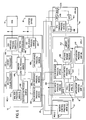
- the processes that are executed by the MCU and VPUs during the above discussed operations will be discussed in more detail with respect to FIGS. 6-9.
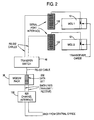
- FIG. 2 illustrates in more detail the components that allow communication between the MCU 10 and a central office 30.
- Messages from the central office 30 are received by a conventional 829 channel interface available from Comfab of Addison, Illinois as Model DST4829BJ.
- This channel interface 100 is connected to a conventional 202 data set modem available from Halmark of Billerica, Mass as model RM16M20255.
- the modem 38 is connected to a transfer switch 48 available from Data Probe of Englewood, New Jersey as Model KAB232R.
- the transfer switch 48 will be activated by the backup MCU 12 to transfer message traffic to the backup MCU 12 whenever the backup MCU 12 detects that the primary MCU 10 is malfunctioning. The method of determining whether a transfer should occur will be discussed in more detail hereinafter.
- the transfer switch 48 is connected to the primary 10 and backup 12 MCUs by conventional serial port interfaces 102.
- FIG. 3 illustrates in more detail the connection arrangement between the VPUs and the digital switch 14.
- a suitable digital switching system with a 1536 by 1536 channel capacity is available from Excel, Inc. of Sagamore Beach, Mass.
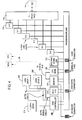
- Each VPU includes the components as illustrated in FIG. 4.
- Each VPU is essentially an IBM AT type computer with special communications cards mounted on the backplane.
- the CPU 200 is based on the Intel 80386 processor and an appropriate unit is available from Sigma Design of Fremont, California as Model No. CPA3820BACX.
- the CPU 200 stores temporary data structures and messages, as well as the VPU control programs that are executing, in a memory unit 202 configured for 8 megabytes of random access memory.
- a suitable memory unit 202 is available from Sigma Design of Fremont, California as Model CMA380K00N while the memory chips for the unit can be obtained from Centon of Wilmington, Mass.
- the CPU 200 has direct access to the memory 202 via a conventional 32 channel bus. Messages are stored on two hard disk drives 204 and 206.
- the hard disk drives each having a 760 megabyte storage capability, can store the same messages and other information using a technique conventionally called mirror image storage. This operation is controlled by the disk controller 208.
- the hard drives 204 and 206 are available from Anthem of Wilmington, Mass. as Maxtor Model No. XT8760E while the disk controller is available from DPT of Maitland, Florida as Model PM301/75.
- a floppy disk drive 210 which is preferably a Fujitsu Model M2553K03A is used for loading the system initially and for any maintenance modifications that need to be performed.
- the MCU 10 and other VPUs are connected to the VPU of FIG. 4 through a conventional Ethernet internal communications link 212 which is available from Excelan of Nashaua, New Hampshire as Model No.
- This internal communication link 212 can be either two physical Ethernets or a single Ethernet with two logical buses thereon. If two physical Ethernets are used, two internal communication link units 212 must be provided.
- the communication between the CPU of the VPU and the DSS 14 is through digital ports 214 to a conventional T1 interface 216 and thereafter to the DSS 14, and this interface 216 is available from Dialogic of Parsippany, New Jersey as Model No. T1DT1124.
- the port line cards 214 are also available from Dialogic as Model No. D41B.
- the port line cards perform a conventional digitizing technique known as ADPCM (Adaptive Delta Pulse Code Modulation) sampling at a rate of approximately 6,000 8-bit samples per second.
- ADPCM Adaptive Delta Pulse Code Modulation
- the digital compression performed using this method allows the CPU 200 to store only four bits of every 8 bit sample. This results in a storage requirement of only 3K bytes per second thereby increasing the capacity of the system.
- the line cards also have the internal capability of producing a beep, detecting a call and monitoring call progress, generating DTMF, detecting DTMF, generating MF, detecting MF, monitoring on and off hook conditions and going on-hook and off-hook.
- the application process interfaces to the line cards using linked library routines that make system calls to voice line card driver routines. Each line card has two 512 byte buffers that are alternately loaded and retrieved in ping pong fashion during call processing. The line card automatically takes care of filling and unloading the buffers over the line.
- the multi-IO unit 216 provides an interface for a video display whenever maintenance of the VPU is necessary.
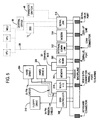
- Each of the master control units 10 and 12 are essentially IBM AT based machines as previously discussed with respect to the VPUs of FIG. 4.
- This system includes a computer 300, memory 302 with at least 4 megabytes of random access memory, hard drives 304 and 306, floppy drive 310 controlled by disk controller 308 and an internal communication link 312 for the internal bus 28.
- the same component manufacturers and model numbers of the VPU are applicable to the corresponding components of the MCU.
- Each MCU additionally contains a conventional modem 314 which allows the system to be accessed by a dial-up access method for maintenance purposes.
- An appropriate modem is available from Western Microtechnology of Burlington, Mass. as U.S. Robotics Model No. 1-0021-00.
- the serial link provides serial connection to the digital switch 14, central office 30 and transfer switch 48.
- the serial link unit 316 is available from Arnet of Arlington, Tennessee as Model No. SP84BKUNITSW.
- the processes illustrated in FIG. 6 are executed by the various processing units previously discussed.
- the processes illustrated in FIG. 6 are represented using descriptive names and program acronyms.
- the master control process 400 has the acronym MOMD.
- the acronyms refer to the corresponding "C" programming language processes or assembler processes.
- the central office interface process 402 examines the message and places an appropriate message in the message buffer for the master control process 400.
- a call arrival (service request) packet arrives from the DSS 14 through DIP 404 to MCP 400.
- the MCP 400 coordinates the two packets (call arrival and SMDI) through the referenced channel in each packet. If MCP 400 receives an SMDI packet without receiving a call arrival packet within 12 seconds, it discards the SMDI packet. If MCP 400 gets a call arrival packet without an SMDI packet within 6 seconds, MCP 400 places the call on the least busy VPU without SMDI information.
- the master control process 400 determines how to route the call through the switch 14 and transmits that information to the DSS interface process 402 which provides an appropriate channel assignment to the DSS 14. This channel assignment is entered on a list in the MCU and includes port assignments for the VPUs. Based on the selection of the voice processing unit the master control process 400 provides a copy of the SMDI packet and the call routing information to a corresponding VPU interface process 406.
- Each interface process described herein essentially translates an information packet from one protocol to another protocol allowing processes with different message formats to interact.
- Each interface process also calls appropriate driver processes through library processes 401.
- the driver routines are conventional routines that can be obtained from the equipment manufacturer or produced by one of ordinary skill in the art.
- the VPU interface process 406 for each one of the VPUs is an individually spawned process of the master control process. This process is a connection oriented process or virtual link process rather than a packet oriented process. In a virtual link process, the process will terminate if the connection to the designated VPU fails. This process is automatically supported by the TCP/IP protocol executed by the processes provided by the net card manufacturers.
- MCP 400 is informed by the operating system and changes the status of the corresponding VPU from available to unavailable. The MCP 400 then periodically tries to restart the interface process as long as the system configuration information indicates the VPU should be online and active. When the interface process successfully executes, the VPU is back on line and the status is changed to available. An appropriate connection protocol and process is available from Excelan.
- the VPU interface process 406 translates buffer messages from the operating system format (Xenix) to the format of the Ethernet internal bus 28.
- the information is transmitted to the appropriate VPU 16 over the bus 28 to an MCU interface process 410 in the appropriate VPU.
- the routing of the messages to the appropriate VPU or MCU process is automatically handled by the TCP/IP protocol using, for example device or process addresses.
- the MCU interface process 410 translates the message into the operating system message format of the VPU and provides it to the VPU control process 412.
- An application process 414 when it detects an incoming call (a ring), requests that the VCP 412 provide a call information packet including the incoming port and the SMDI packet.
- the AP 414 When the AP 414 detects a ringing call, it asks VCP 412 if there is any SMDI packet waiting for a VPU port. If there is, VCP 412 forwards the packet. If not, AP 414 will wait for up to 5 seconds for a packet to arrive. If none arrives, it is handled the same as if no SMDI packet arrived from the central office 30.
- the VPU control process 412 then provides the message to the application process 414.
- the application process 414 can be a voice mail process or some other process used for message processing.
- the application process 414 controls the communication process with the subscriber or caller over the communication ports 214 through the DSS 14 and central office 30 using card driver and other library processes 413.
- MIP 410 add VIP 406 requests from the MCP 400 the subscriber information (a user information structure) which defines the characteristics of the subscribers mail box (greeting length, message length, options etc).
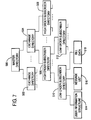
- the master control process 400 maintains a directory structure of such files as illustrated in FIG. 7 and which will be discussed in more detail later.
- the user information structure is obtained by MCP 400, it is transferred through the VIP 406, the MIP 410, the VCP 412 to the appropriate application process 414 and stored in a local cache.
- Several information structures can be stored in the cache at the same time.
- requests for information from the user information structure can be processed locally without accessing the internal bus.
- the cache for user information is a read only cache. Any requests for update are immediately written back. However, the updated information is kept in the cache. Up to five user information structure entries are cached and additional entries needed are not permitted. The cache is emptied at the end of the call. Any request that cannot be serviced by the cache is sent to the MCU.
- the application process 414 plays the appropriate greeting stored on the hard disk for the subscriber as a greeting file identified by the telephone number.
- the application process 414 then records and stores any message, as a message file on the hard disk.
- the application 414 asks VCP 412 for a post office entry in which to store voice data. AP 414 uses this file for message storage and later adds it to the message list for the subscriber.
- a message may be terminated due to several conditions: the caller hangs up, the caller pauses for a predetermined length of time, for example 8 seconds, the message has exceeded the message limit, or a DTMF is detected. If a DTMF signal has been received at the end of a message, call processing then continues allowing the caller to review the message mark it as urgent, etc.
- the application process 414 sends a location storage message to the MCP 400 which creates a message list in a format as illustrated in FIG. 8. When the line finally goes on hook, the application process 414 notifies MCP 400 that the call is finished. MCP 400 accesses the channel assignment list and issues a disconnect command to the DSS 14 for that assignment.
- the application process 414 also indicates whether the message waiting indicator should be turned on or if outdialing is necessary. If the indicator should be turned on, the MCP 404 prepares an appropriate MWI packet and provides it to the CIP 402 which provides the packet to the central office 30.
- the message file for the user includes message records which identify which VPU the message is located on, the file name for the message and whether the message is a new message and whether this is the end of a segmented message.
- the application process 414 obtains the subscriber information from the master control process 400, verifies the passcode and presents the options for message retrieval. Whenever the subscriber logs into the system, the message waiting indication is turned off. Also, any pending outdial requests to the subscriber are detected.
- the application 414 requests from MCP 400 the list of messages as illustrated in FIG. 8.
- the application process 414 will then create a doubly linked list as illustrated in FIG. 9. The doubly linked list is used by the application process to index through the messages as the user desires.
- AP 414 would connect to VIP 424 over the internal bus 28.
- This connection is a request for remote voice data and part of the request is which voice data file is needed. Voice data is sent over the connection in 8k byte segments.
- the remote voice data is cached on the local drive.
- the AP 414 is receiving the data, it is played to the caller. The transfer of data is continued until either the message is played to completion or the message is terminated due to DTMF being received. If the message is terminated before it is complete, the message is removed from the local cache. Entries remain in the local cache as long as they are accessed within a predetermined amount of time, for example 24 hours.
- VTP 424 will not respond to the message transfer request and the application process plays a message to the subscriber that the message is not currently available.
- application process 414 provides the third message 703 to the subscriber off the local hard drive.
- the application process 414 After call disconnection, frees up local storage by deleting any message files to be deleted from the local directory, sends a delete message through MCP 400 to the VCP 412 storing any remote messages to be deleted and sends a message to MCP 400 specifying the remaining messages that need to be removed from the message list. MCP 400 proceeds to remove the messages from the list. When the subscriber finally goes on hook, the application communicates this to the master control process 400. The MCP 400 through DIP 400 instructs the DSS 14 to disconnect the call routing.
- Any message stored in the system can cause outdial notification to be performed and depends on the configuration parameters for the subscriber. If outdial notification needs to be performed, the application 414 issues an outdial request through the appropriate processes to the outdial process 426. ODP 426 maintains a list of pending outdial requests and when they need to be performed.
- the MCP can schedule the request to be performed by the VPU which contains the original message. MCP 400 could issue a request of DSS 14 to connect an outgoing line to the appropriate VPU port. MCP 400 would forward the outdial request through VCP 412 to AP 414 to service the request. The MCP 400 also requests that the VPU storing the message start the application process 414 corresponding to the VPU port designated.
- the application process 414 will examine the port for a dial tone, if a dial tone does not exist the application process will go on hook, the outdial will be aborted and ODP 426 will be informed and the application process 414 will handle the incoming call. The ODP 426 will then reissue the request.
- the application will dial the number specified in the outdial file. If the dialed station does not reply within a certain length of time, for example four rings it reaches a busy line, the attempt is terminated and rescheduled. If the dialed station answers and if the outdial message is to a pager system, the appropriate pager tones are played.
- a greeting message is played indicating a message is awaiting delivery and asking for the passcode. If the correct passcode is given the message is played as previously described. The pending requests are deleted as soon as the subscriber enters the passcode as previously discussed.
- the application 414 performed a pager type message sending operation, the message is maintained on the outdial process message list until the subscriber calls in and gets the message. If the message remains on the list longer than a certain length of time, for example fifteen minutes, the pager will be beeped again. This will continue until the pager has been beeped a predetermined number of times.
- application process 414 Whenever a caller inputs a message into the system that should be distributed to a limited set of the subscribers (a group message), application process 414, in addition to sending the location of the message to the master control process 400 to create an appropriate mailbox message list entry, causes the master control process 400 to activate the distribution process 428.
- the distribution process 428 proceeds to access the group of designated mailboxes in the system and create a message entry for each subscriber referencing the location of the group message. Appropriate message waiting indicator messages are also sent to the central office 30.
- the MCP 400 provides the appropriate list to the application process 414.
- a broadcast message When a message is to be sent to all subscribers, it is called a broadcast message.
- a broadcast message When a broadcast message is created the message is listed in a single system wide broadcast mailbox based on a menu selection by a subscriber. This type of message does not create a message waiting message indicator for the central office 30.
- the application process 414 checks the broadcast mailbox. If a broadcast message exists it is added to the subscribers message list during the log-in process by the voice application.
- the master control process 430 in the hot standby MCU 12 executes all of the processes that the master control process 400 in the primary MCU 10 executes, so that the master control process 430 is ready to take over processing when the MCU 10 fails. This is accomplished by the master control process 400 sending all requests from processes to the master control process 430 through the master control interface process 432. The process 430 then performs appropriate processing with the corresponding interface processes inactivated. During operation, the poll process 436 periodically sends poll requests over the virtual link to the MCU 10. The MCP 400 determines whether each VPU is operating by determining whether a request from the VPU is received every two minutes. The master control process 430 in the hot standby MCU 12 also periodically checks on the operating state of the primary master control unit 10.
- the master control process 430 requesting that the master control process 400 respond to a poll request every thirty seconds. If the master control process 400 does not respond within a predetermined time period, for example, 30 seconds, the master control process 430 requests that the VPUs 16-24 confirm that the primary MCU 10 is malfunctioning.
- the master control unit 12 places a broadcast message on the internal bus 28 using a message protocol, such as UDP available from Excelan. The message is processed by the master control unit check process 434 of each VPU.
- the master control unit check process 434 requests that the VCP 412 poll the MCP and if a reply is not received with 10 seconds the virtual link is considered broken.
- the MCU interface process is a connect oriented process rather than a message oriented process and if the connection between the corresponding VPU interface process 406 and the MCU interface process 410 has failed this polling request will recognize this condition.
- the process 434 responds to the broadcast request of the master control process 430, based on the response to the VCP 412 poll, indicating whether the connection between the VPU and MCU 10 is active. If the master control process 430 receives one indication from any VPU that the primary MCU 10 is functioning properly, the master control process 430 in the hot standby MCU 12 will not take over operation and will try to reestablish a virtual connection to the MCU 10. If the primary MCU 10 has failed each of the MIP processes 410 in the VPUs have also failed.
- MIP 410 When MCUP 434 asks VCP 412 to test the link, if MIP 410 has terminated because of a failed link, MIP 410 will restart and place a message on the bus 28 every ten seconds requesting that the active MCU respond indicating that it is in control. The other VPUs perform the same operation.
- the hot standby master control process 430 when taking over the operation of the failed MCU activates its VPU interface processes 406-408 which respond to the requests by the MIPs 410 indicating that the hot standby 12 has taken control.
- the process 430 also activates the standby CIP 402 process. The activation of this process causes switch 48 to switch to send data to the MCU 12.
- DIP 404 is also started.
- the hot standby 12 then becomes the primary. When the MCU 10 comes back on line, it determines that the hot standby unit 12 is active and controlling, and converts itself into a hot standby unit.
- the MCUs each load the system configuration table designating whether each MCU is a primary and also indicating how many VPUs are configured in the system.
- the primary 10 and standby 12 MCU's immediately begin to try and establish a link virtual between the standby master control process 430 and MIP 432 and MCP 400. The attempt to establish the link will continue for a predetermined time, for example 5 minutes.
- the VPU's also start up but do not know which MCU is the primary. As a result, VCP 412 and MIP 410 begin broadcasting messages on the bus 28 requesting connection to the primary MCU 10.
- the MCU 12 will start its interface processes and respond to the broadcast messages of the VPUs, thereby taking over as the primary. If the configured primary MCU 10 later comes on line it queries the other MCU and determines that it is running as primary and then configures itself as the list standby.
- the master directory 500 has listed therein exchange directories 502 and 504 for each exchange authorized in the system. In a telephone number, excluding the area code, the first three digits of the telephone number are the exchange number. Each exchange directory includes plural high order subscriber directories 506 and 508. The next two digits in the telephone number after the exchange are used to select a high order directory within the high order directory list of the exchange directory. The final two digits are used within the high order directory to select among plural low order subscriber directories 510 and 512.
- the low order subscriber directory lists files for each subscriber in the system corresponding to the low order digits, the last two digits, in the telephone number.
- the lower order subscriber directory lists a user information structure file 514 which stores the information necessary to process a call for a subscriber, a message file 516 which lists the locations of the messages for the user and a bill data file 518 which lists the name and address of the subscriber. If for example the user's telephone number was 555-1122 the 555 exchange directory would be selected from the list in the master directory, the 11 high order subscriber directory would be selected from the exchange directory list and the 22 low order subscriber directory would be selected within the 11 high order directory list.
- the user information structure file 514 for the subscriber or the message list file 516 for the subscriber would be selected as appropriate.
- the mailbox process 418 services requests for creation, deletion and reinitialization of subscribers. This process creates or removes the subscriber directories and asks for mail box data from MCP 414. Requests for the services provided by this process typically come from an administration program, however, the subscriber, through the application process 414 can request this service.
- call switching can be performed.
- a way in which call switching can be performed is to have the master control process execute the MCU save-resume process 420 which sends a packet over the data bus 28 which causes the VPU save and resume process 422 to be executed.
- the VPU save-resume process 402 can save the state of the application process 414 and transfer it to VPU 24.
- the save-resume process 402 executing on VPU 16 transfers all of the current state to VPU 24.
- This state includes all pertinent data structures such as the doubly linked list in Fig. 9 and the stack from the application process 414 which contains among other things the thread of execution and values of parameters which are passed between subroutines in the application process 414.
- the master control process 400 causes the appropriate connections to be made in the digital switch 14. This allows the application process in the VPU 16 to handle another call or application while the other VPU 24 continues call processing where the VPU 16 left off. The caller is completely unaware that the call has been shifted from one call 'processing unit to another.
Landscapes
- Engineering & Computer Science (AREA)
- Signal Processing (AREA)
- Computer Networks & Wireless Communication (AREA)
- Data Exchanges In Wide-Area Networks (AREA)
- Exchange Systems With Centralized Control (AREA)
- Telephone Function (AREA)
- Computer And Data Communications (AREA)
- Sub-Exchange Stations And Push- Button Telephones (AREA)
- Telephonic Communication Services (AREA)
Claims (46)
- Système de communication de message, comprenant au moins des premier et second moyens de traitement de message (16-24) pour traiter un message en stockant et/ou en lisant le message ; caractérisé en ce que le système comprend des moyens de commande et de commutation (10, 14) pour sélectionner, de façon dynamique, un moyen particulier disponible parmi les moyens de traitement de message sur la base de facteurs de disponibilité pour traiter le message et pour acheminer le message vers et/ou en provenance du moyen particulier sélectionné parmi les moyens de traitement de message.
- Système selon la revendication 1, dans lequel les moyens de commande et de commutation comprennent un moyen de commutation (14) pour acheminer le message vers un moyen particulier parmi les moyens de traitement (16-24) ; et un moyen d'acheminement (10) pour commander l'acheminement par le moyen de commutation.
- Système selon la revendication 2, comprenant, de plus, un moyen d'acheminement de secours (12) pour commander l'acheminement lorsque le moyen d'acheminement (10) a une défaillance.
- Système selon la revendication 2 ou la revendication 3, dans lequel le premier moyen de traitement peut envoyer un message stocké, le premier moyen de traitement indiquant au moyen d'acheminement (10) qu'un message stocké a besoin d'être envoyé, le moyen d'acheminement (19) commandant le moyen de commutation (14) pour acheminer le message stocké et le premier moyen de traitement envoyant le message stocké par l'intermédiaire du moyen de commutation (14).
- Système selon l'une quelconque des revendications 1 à 4, dans lequel le premier moyen de traitement stocke le message, le moyen de commande (10) obligeant le second moyen de traitement à traiter le message lorsque le premier moyen de traitement est indisponible, en obtenant le message du premier moyen de traitement.
- Système selon la revendication 5, dans lequel le premier moyen de traitement suspend le fonctionnement tandis que le second moyen de traitement traite le message.
- Système selon la revendication 5, dans lequel le premier moyen de traitement traite un second message tandis que le second moyen de traitement traite le message.
- Système selon la revendication 5, dans lequel un état de traitement de message est transféré du premier moyen de traitement vers le second moyen de traitement.
- Système selon l'une quelconque des revendications précédentes, dans lequel, lorsque le premier moyen de traitement débute le traitement de message et lorsque le second moyen de traitement stocke le message, le moyen de commande (10) oblige le moyen de commutation (14) à modifier l'acheminement du premier moyen de traitement pour le second moyen de traitement et oblige le traitement de message à être transféré du premier vers le second moyen de traitement.
- Système selon l'une quelconque des revendications précédentes, dans lequel le premier moyen de traitement (16) désigne un moyen de traitement domestique pour le message et dans lequel le moyen de commande (10) commande l'acheminement en réponse à celui des moyens de traitement qui est le moyen de traitement domestique, à la disponibilité du moyen de traitement domestique et du second moyen de traitement, au stockage de message disponible sur le moyen de traitement domestique et sur le second moyen de traitement et à la disponibilité des accès de message vers le moyen de traitement domestique et le second moyen de traitement.
- Système selon la revendication 10, dans lequel le moyen de commande (10) effectue l'acheminement selon

- Système selon la revendication 11, dans lequel les pondérations W1 à W3 sont fixées pour sélectionner le moyen de traitement domestique (16) lorsque le moyen de traitement domestique est disponible, possède au moins un accès de message inoccupé et possède un stockage suffisant pour le message.
- Système selon l'une quelconque des revendications précédentes, dans lequel chaque moyen de traitement (16-24) peut traiter plus d'un message en même temps.
- Système selon l'une quelconque des revendications précédentes, comprenant, de plus, un réseau interne (28) relié aux premier et second moyens de traitement (16-24) et au moyen de commande (10, 12), le réseau transportant le message entre les premier et second moyens de traitement et les données entre les moyens de traitement et le moyen de commande.
- Système selon l'une quelconque des revendications précédentes, dans lequel le message est stocké localement dans un moyen particulier des moyens de traitement (16, 24).
- Système selon l'une quelconque des revendications précédentes, dans lequel le message est un message vocal.
- Système selon l'une quelconque des revendications précédentes, dans lequel le second moyen de traitement comprend une mémoire cache de message pour recevoir et pour stocker le message en provenance du premier moyen de traitement.
- Système selon la revendication 17, dans lequel, quand un message diffusé est stocké dans le premier moyen de traitement et qu'un utilisateur accède au second moyen de traitement, le second moyen de traitement obtient le message diffusé en provenance du premier moyen de traitement, stocke le message diffusé dans la mémoire cache et donne le message à l'utilisateur.
- Système selon l'une quelconque des revendications précédentes, dans lequel le système sert au moins à deux utilisateurs, chaque utilisateur ayant une boîte de messages, le moyen de commande stockant des informations de boîte de messages d'utilisateur et envoyant les informations de boîte de message au moyen particulier parmi les moyens de traitement traitant le message.
- Système selon la revendication 19, dans lequel le système traite au moins des premier et second messages stockés dans les moyens de traitement et dans lequel le moyen de commande comprend une liste d'emplacements de stockage de message pour chaque utilisateur indiquant lequel des moyens de traitement stocke les premier et second messages.
- Système selon la revendication 20, dans lequel, lorsque le message doit aller vers chacun des deux utilisateurs, le moyen de traitement qui reçoit le message indique au moyen de commande (10) une identité des utilisateurs, et le moyen de commande ajoute un emplacement du message aux informations de boîte de messages pour chacun des deux utilisateurs.
- Système selon l'une quelconque des revendications précédentes, dans lequel le système est relié à un système de commutation téléphonique et dans lequel le premier moyen de traitement envoie un numéro de téléphone d'un emplacement vers lequel un message stocké est à envoyer par le système de commutation téléphonique.
- Système selon la revendication 20, dans lequel, lorsque le premier moyen de traitement est indisponible, le second moyen de traitement obtient le message stocké en provenance du premier moyen de traitement, et le moyen d'acheminement (10) commande le moyen de commutation (14) pour acheminer le message stocké, en provenance du second moyen de traitement, vers l'emplacement.
- Système selon l'une quelconque des revendications précédentes, comprenant un système de communication de message vocal relié à un système de commutation de central téléphonique, ledit premier moyen de traitement de message (16) comprenant un ordinateur de traitement vocal domestique, possédant des accès vocaux, une mémoire cache de message domestique et un stockage de message local, ledit ordinateur de traitement vocal domestique étant conçu pour traiter des messages vocaux et pour envoyer des messages vocaux vers le système de commutation de central téléphonique et pour recevoir des messages vocaux en provenance de ce dernier, selon les informations de boîte de message, ledit ordinateur de traitement domestique spécifié en tant que domestique pour le traitement, l'envoi et la réception de message d'utilisateurs ; ledit second moyen de traitement de message (24) comprenant un ordinateur de traitement distant, possédant des accès vocaux, une mémoire cache de message distante et un stockage de message local, ledit ordinateur de traitement vocal distant étant conçu pour traiter des messages vocaux et pour envoyer des messages vocaux vers le système de commutation de central téléphonique et pour recevoir des messages vocaux en provenance de ce dernier, selon les informations de boite de message ; ledit moyen de commutation (14) comprenant un système de commutation numérique, relié à l'ordinateur de traitement vocal domestique, à l'ordinateur de traitement distant et au système de commutation de central téléphonique, et étant conçu pour acheminer des messages entre le système de commutation de central téléphonique et lesdits ordinateurs de traitement ; un réseau local ayant un chemin de données et ayant un chemin de message reliant ledit ordinateur de traitement vocal domestique et ledit ordinateur de traitement vocal distant ; ledit moyen de commande (10) comprenant un ordinateur de commande maître, relié audit système de commutation numérique et auxdits ordinateurs de traitement vocaux domestiques et distant par l'intermédiaire dudit chemin de données, ledit ordinateur de commande maître étant conçu pour stocker une boîte de messages ayant les informations de boîte de messages pour chaque utilisateur, les messages listant les informations de boîte de messages pour chaque utilisateur, chaque entrée de liste indiquant lequel des ordinateurs de traitement stocke chaque message d'utilisateur où l'un ou l'autre ordinateur de traitement peut stocker des messages d'utilisateur, et l'ordinateur formant unité de commande maître étant conçu pour commander le traitement par lesdits ordinateurs de traitement et pour l'acheminement de messages vers et en provenance desdits ordinateurs de traitement par l'intermédiaire dudit système de commutation numérique selon P(I) = W1*H(I) + W2*RS(I) + W3*PA(I), où I est un indice spécifiant un desdits ordinateurs de traitement, W1 à W3 sont des pondérations, H est un indicateur indiquant si l'ordinateur particulier des ordinateurs de traitement est l'ordinateur de traitement domestique, RS est une quantité disponible du stockage local pour l'ordinateur particulier des ordinateurs de traitement, PA est un certain nombre d'accès vocaux inoccupés sur l'ordinateur particulier des ordinateurs de traitement, et P est une valeur de placement de message, l'ordinateur particulier parmi les ordinateurs de traitement avec la valeur de placement de message la plus élevée étant sélectionné pour traiter, envoyer et/ou recevoir les messages vocaux, les pondérations étant fixées pour acheminer les messages pour l'utilisateur vers ledit ordinateur de traitement domestique lorsque l'ordinateur de traitement domestique est disponible, possède au moins un accès vocal inoccupé et possède un stockage local suffisant pour les messages, l'ordinateur de commande maître étant conçu pour acheminer des messages d'utilisateurs vers l'ordinateur distant lorsque l'ordinateur domestique n'est pas sélectionné, quand un ordinateur particulier des ordinateurs de traitement stocke un des messages et que l'autre ordinateur des ordinateurs de traitement est sélectionné pour traiter le message particulier des messages, le message est transféré sur le chemin de message et est stocké dans la mémoire cache pour traitement par l'ordinateur de traitement sélectionné si l'ordinateur particulier desdits ordinateurs de traitement est indisponible, le traitement de message étant transféré vers l'ordinateur particulier des ordinateurs de traitement en provenance de l'autre ordinateur des ordinateurs de traitement en même temps que le réacheminement du message s'acheminant par ledit système de commutation numérique si l'ordinateur particulier des ordinateurs de traitement est disponible, l'ordinateur de commande maître étant conçu pour transférer les informations de boîte de messages vers l'ordinateur particulier des ordinateurs de traitement traitant, envoyant ou recevant les messages en provenance de l'utilisateur.
- Procédé de traitement de message utilisant un système de commutation et au moins des première et seconde unités de traitement de message (16-24) reliées au système de commutation (14), caractérisé en ce qu'il comprend les étapes suivantes :a) sélection dynamique d'une unité particulière des unités de traitement de message sur la base de facteurs de disponibilité pour traiter un message ;b) commande du système de commutation (14) pour acheminer le message vers l'unité de traitement de message sélectionnée ; etc) traitement de l'appel par l'unité de traitement de message sélectionnée en stockant et/ou en lisant le message.
- Procédé selon la revendication 25, dans lequel, lorsque la première unité de traitement de message stocke le message et que la première unité de traitement de message est indisponible, l'étape (c) comprend la seconde unité de traitement traitant le message en obtenant le message de la première unité de traitement.
- Procédé selon la revendication 26, dans lequel, pendant l'étape (c), la première unité de traitement suspend le fonctionnement tandis que la seconde unité de traitement traite le message.
- Procédé selon la revendication 26, dans lequel, pendant l'étape (c), la première unité de traitement traite un second message tandis que la seconde unité de traitement traite le message.
- Procédé selon la revendication 26, dans lequel, pendant l'étape (c), un état de traitement de message est transféré de la première unité de traitement vers la seconde unité de traitement.
- Procédé selon l'une quelconque des revendications 26 à 29, dans lequel la seconde unité de traitement de message comprend une mémoire cache de message pour recevoir et pour stocker le message en provenance de la première unité de traitement et dans lequel l'étape (c) comprend le stockage du message obtenu dans la mémoire cache.
- Procédé selon l'une quelconque des revendications 25 à 30, dans lequel l'étape (c) comprend le transfert du traitement de message de la première vers la seconde unité de traitement, lorsque la première unité de traitement débute le traitement de message et lorsque la seconde unité de traitement stocke le message.
- Procédé selon l'une quelconque des revendications 25 à 31, dans lequel l'étape (b) comprend la commande de l'acheminement en réponse à celui des moyens de traitement qui est l'unité de traitement domestique, à la disponibilité des unités de traitement, au stockage de message disponible sur les unités de traitement et à la disponibilité des accès de message vers les unités de traitement.
- Procédé selon la revendication 32, dans lequel l'acheminement est commandé selon

- Procédé selon la revendication 33, dans lequel les pondérations W1 à W3 sont fixées pour sélectionner l'unité de traitement domestique lorsque l'unité de traitement domestique est disponible, possède au moins un accès de message inoccupé et possède un stockage suffisant pour le message.
- Procédé selon l'une quelconque des revendications 25 à 34, dans lequel un réseau, reliant les première et seconde unités de traitement, transporte le message entre unités de traitement.
- Procédé selon l'une quelconque des revendications 25 à 35, dans lequel le message est un message vocal.
- Procédé selon l'une quelconque des revendications 25 à 36, dans lequel l'étape (c) comprend l'envoi des informations de boîte de messages à l'unité particulière sélectionnée parmi les unités de traitement traitant le message.
- Procédé selon l'une quelconque des revendications 25 à 37, dans lequel l'étape (c) comprend le traitement des messages en réponse à une liste d'emplacements de stockage de message pour chaque utilisateur indiquant laquelle desdites unités de traitement stocke les messages.
- Procédé selon l'une quelconque des revendications 25 à 38, dans lequel l'étape (c) comprend l'envoi d'un message stocké par l'intermédiaire du système de commutation.
- Procédé selon la revendication 39, dans lequel l'étape (c) comprend l'envoi d'un numéro de téléphone d'un emplacement vers lequel le message stocké est à envoyer vers le système de commutation téléphonique.
- Procédé selon la revendication 40, dans lequel dans l'étape (c), lorsque la première unité de traitement est indisponible, la seconde unité de traitement obtient le message stocké en provenance de la première unité de traitement, le système de commutation achemine le message stocké de la seconde unité de traitement vers l'emplacement.
- Système selon l'une quelconque des revendications 1 à 24, dans lequel ledit moyen de commande (10) comprend une structure de données comprenant une liste liée d'enregistrements d'emplacement de message, chaque enregistrement comprenant un indicateur d'emplacement de stockage indiquant quelle unité de traitement de message stocke le message et pour commander la commutation par le système de commutation et le transfert de message entre unités par les unités de traitement de message.
- Système selon la revendication 42, dans lequel ladite structure de données comprend un stockage de numéro de téléphone pour stocker un numéro de téléphone d'un emplacement externe vers lequel un message doit être envoyé.
- Système selon la revendication 42 ou 43, dans lequel ladite structure de données comprend une boîte de messages pour chaque utilisateur stockant des emplacements des messages pour cet utilisateur.
- Système selon l'une quelconque des revendications 42 à 44, dans lequel ladite structure de données comprend une mémoire cache accessible par tous les utilisateurs et pour stocker un message diffusé.
- Procédé selon l'une quelconque des revendications 25 à 40, dans lequel les étapes a) et b) comprennent la consultation d'une structure de données comprenant une liste d'enregistrements d'emplacement de message, chaque enregistrement comprenant un emplacement de stockage dans les données indiquant quel moyen de traitement de message stocke le message et pour commander la commutation par le système de commutation et le transfert de message entre unités par les moyens de traitement de message.
Applications Claiming Priority (2)
| Application Number | Priority Date | Filing Date | Title |
|---|---|---|---|
| US393270 | 1982-06-29 | ||
| US07/393,270 US5029199A (en) | 1989-08-10 | 1989-08-10 | Distributed control and storage for a large capacity messaging system |
Publications (3)
| Publication Number | Publication Date |
|---|---|
| EP0412799A2 EP0412799A2 (fr) | 1991-02-13 |
| EP0412799A3 EP0412799A3 (en) | 1992-01-22 |
| EP0412799B1 true EP0412799B1 (fr) | 1996-03-20 |
Family
ID=23554010
Family Applications (1)
| Application Number | Title | Priority Date | Filing Date |
|---|---|---|---|
| EP90308733A Expired - Lifetime EP0412799B1 (fr) | 1989-08-10 | 1990-08-08 | Système de communication téléphonique |
Country Status (10)
| Country | Link |
|---|---|
| US (1) | US5029199A (fr) |
| EP (1) | EP0412799B1 (fr) |
| JP (1) | JP3162360B2 (fr) |
| AT (1) | ATE135867T1 (fr) |
| AU (1) | AU626237B2 (fr) |
| CA (1) | CA2022954C (fr) |
| DE (1) | DE69026004T2 (fr) |
| DK (1) | DK0412799T3 (fr) |
| ES (1) | ES2088976T3 (fr) |
| NZ (1) | NZ234821A (fr) |
Cited By (3)
| Publication number | Priority date | Publication date | Assignee | Title |
|---|---|---|---|---|
| US7646856B2 (en) | 1999-02-26 | 2010-01-12 | At&T Intellectual Property I, L.P. | Region-wide messaging system and methods including validation of transactions |
| US8036345B2 (en) | 2001-12-18 | 2011-10-11 | At&T Intellectual Property I, L.P. | Voice mailbox with management support |
| US8150000B2 (en) | 2002-09-03 | 2012-04-03 | At&T Intellectual Property I, L.P. | Voice mail notification using instant messaging |
Families Citing this family (185)
| Publication number | Priority date | Publication date | Assignee | Title |
|---|---|---|---|---|
| US5163080A (en) * | 1989-02-22 | 1992-11-10 | Amvox, Inc. | Voice messaging |
| US5544347A (en) * | 1990-09-24 | 1996-08-06 | Emc Corporation | Data storage system controlled remote data mirroring with respectively maintained data indices |
| US5193110A (en) * | 1990-10-09 | 1993-03-09 | Boston Technology, Incorporated | Integrated services platform for telephone communication system |
| US5163050A (en) * | 1991-01-23 | 1992-11-10 | Digital Sound Corporation | Configurable parameter dtmf detector |
| US5351276A (en) * | 1991-02-11 | 1994-09-27 | Simpact Associates, Inc. | Digital/audio interactive communication network |
| US5222124A (en) * | 1991-02-28 | 1993-06-22 | Vmc Systems, Inc. | PBX system communications device |
| JP2644096B2 (ja) * | 1991-03-20 | 1997-08-25 | 富士通株式会社 | メールセンタ管理方式 |
| US5805677A (en) * | 1991-07-11 | 1998-09-08 | Sbc Technology Resources, Inc. | Apparatus for facilitating the display of information relating to the origin of a third source caller |
| US5301226A (en) * | 1992-02-05 | 1994-04-05 | Octel Communications Corporation | Voice processing systems connected in a cluster |
| US5278897A (en) * | 1992-03-09 | 1994-01-11 | Rolm Company | Smart internodal transfer for subscriber access in multinode voice messaging systems |
| EP0564669A1 (fr) * | 1992-04-04 | 1993-10-13 | Alcatel SEL Aktiengesellschaft | Réseau de systèmes de stockage de parole et/ou de facsimilé |
| US5864614A (en) * | 1992-04-17 | 1999-01-26 | Bell Atlantic Network Services, Inc. | Intelligent peripheral and network control |
| US5572583A (en) * | 1992-04-17 | 1996-11-05 | Bell Atlantic | Advanced intelligent network with intelligent peripherals interfaced to the integrated services control point |
| US5583920A (en) * | 1992-04-17 | 1996-12-10 | Bell Atlantic | Intelligent peripheral in video dial tone network |
| US5659599A (en) * | 1992-04-21 | 1997-08-19 | Boston Technology, Inc. | Voice mail network and networking method |
| US5493607A (en) * | 1992-04-21 | 1996-02-20 | Boston Technology | Multi-system network addressing |
| US5400393A (en) * | 1992-06-05 | 1995-03-21 | Phonemate, Inc. | Voice mail digital telephone answering device |
| JP3238198B2 (ja) * | 1992-06-26 | 2001-12-10 | 株式会社日立製作所 | スイッチングシステムおよび情報蓄積装置 |
| US5289371A (en) * | 1992-09-11 | 1994-02-22 | Memorylink, Inc. | System and method for routing data and communications |
| US5475748A (en) * | 1992-09-18 | 1995-12-12 | Boston Technology, Inc. | Automatic telephone system with function for multiple out-dialed calls per caller |
| JPH06319005A (ja) * | 1993-01-13 | 1994-11-15 | Canon Inf Syst Inc | メッセージ配信方法及び装置 |
| US5414757A (en) * | 1993-02-02 | 1995-05-09 | Octel Communications Corporation | Voice mail system for news bulletins |
| US5390169A (en) * | 1993-06-11 | 1995-02-14 | At&T Corp. | Routing to intelligence |
| US5392277A (en) * | 1993-06-11 | 1995-02-21 | At&T Corp. | Routing to intelligence |
| US5701462A (en) * | 1993-12-29 | 1997-12-23 | Microsoft Corporation | Distributed file system providing a unified name space with efficient name resolution |
| US5544163A (en) * | 1994-03-08 | 1996-08-06 | Excel, Inc. | Expandable telecommunications system |
| US5642411A (en) * | 1994-04-25 | 1997-06-24 | Illinois Technology Transfer Llc | Anticipatory call distributor |
| US6181703B1 (en) | 1995-09-08 | 2001-01-30 | Sprint Communications Company L. P. | System for managing telecommunications |
| RU2138919C1 (ru) | 1994-05-05 | 1999-09-27 | Спринт Комьюникейшнз Компани Л.П. | Способ, система и устройство управления телефонной связью |
| US5991301A (en) | 1994-05-05 | 1999-11-23 | Sprint Communications Co. L.P. | Broadband telecommunications system |
| US6631133B1 (en) * | 1994-05-05 | 2003-10-07 | Sprint Communications Company L.P. | Broadband telecommunications system |
| US6430195B1 (en) * | 1994-05-05 | 2002-08-06 | Sprint Communications Company L.P. | Broadband telecommunications system interface |
| US5926482A (en) * | 1994-05-05 | 1999-07-20 | Sprint Communications Co. L.P. | Telecommunications apparatus, system, and method with an enhanced signal transfer point |
| US6564321B2 (en) * | 1995-04-28 | 2003-05-13 | Bobo Ii Charles R | Systems and methods for storing, delivering, and managing messages |
| US5588117A (en) * | 1994-05-23 | 1996-12-24 | Hewlett-Packard Company | Sender-selective send/receive order processing on a per message basis |
| US5524139A (en) | 1994-07-15 | 1996-06-04 | Boston Technology, Inc. | System for automatic access to automated telephonic information services |
| CA2154089A1 (fr) | 1994-07-22 | 1996-01-23 | Gerald W. Weare | Transfert d'abonnes telecommande |
| NL9402065A (nl) * | 1994-12-08 | 1996-07-01 | Nederland Ptt | Telecommunicatiesysteem, alsmede telecommunicatiecentrale, alsmede werkwijze. |
| CA2161030A1 (fr) | 1994-10-20 | 1996-04-21 | Anthony Nicholas Deigh | Systeme informatise pour le developpement d'applications dans un environnement donne; le moteur d'execution correspondant |
| US5684862A (en) * | 1995-05-24 | 1997-11-04 | Advance Systems Development Company, L.C. | Telephone voice message store and forward method |
| CA2640593C (fr) * | 1994-10-31 | 2011-01-11 | Worldvoice Inc. | Procede de controle de transmission de message vocaux telephoniques |
| US6173043B1 (en) | 1994-10-31 | 2001-01-09 | Worldvoice Licensing, Inc. | Telephonic voice message transmission control method |
| US5631948A (en) * | 1994-12-05 | 1997-05-20 | Bell Atlantic Network Services, Inc. | Voice mail communication with call blocking |
| US6215858B1 (en) | 1994-12-05 | 2001-04-10 | Bell Atlantic Network Services, Inc. | Analog terminal internet access |
| US5680442A (en) * | 1994-12-05 | 1997-10-21 | Bell Atlantic Network Services, Inc. | Voice mail communication with call blocking |
| US6285745B1 (en) | 1994-12-05 | 2001-09-04 | Bell Atlantic Network Services, Inc. | Analog terminal internet access |
| US5661782A (en) * | 1994-12-05 | 1997-08-26 | Bell Atlantic Network Services, Inc. | Voice mail communication with call blocking |
| US5812639A (en) * | 1994-12-05 | 1998-09-22 | Bell Atlantic Network Services, Inc. | Message communication via common signaling channel |
| CA2171041A1 (fr) | 1995-03-08 | 1996-09-09 | Scott A. Jones | Systeme d'archivage de messages vocaux |
| US5623538A (en) * | 1995-08-30 | 1997-04-22 | Lucent Technologies Inc. | Shared distribution of internal message storage facilities by a plurality of communication terminals |
| US5781615A (en) * | 1995-08-30 | 1998-07-14 | Lucent Technologies Inc. | Fully distributed message storage facilities in a distributed switching system |
| US5699412A (en) * | 1995-09-18 | 1997-12-16 | Intervoice Limited Partnership | Systems and methods for statistical distribution of messages in a message recording system |
| US5905775A (en) * | 1995-09-18 | 1999-05-18 | Intervoice Limited Parternership | Statistical distribution of voice mail messages |
| US5787153A (en) * | 1995-09-29 | 1998-07-28 | Unisys Corporation | System for incremental redistribution of telephony applications computing workload |
| US5657376A (en) * | 1995-10-13 | 1997-08-12 | Glenayre Electronics, Inc. | Architecture for voice messaging systems |
| GB9603582D0 (en) | 1996-02-20 | 1996-04-17 | Hewlett Packard Co | Method of accessing service resource items that are for use in a telecommunications system |
| US5835907A (en) * | 1995-12-20 | 1998-11-10 | Mci Communications Corporation | Emergency PCS system for identification and notification of a subscriber's location |
| US5771468A (en) * | 1996-01-17 | 1998-06-23 | Telefonaktiebolaget L M Ericsson | Multi-purpose base station |
| US5758293A (en) * | 1996-03-06 | 1998-05-26 | Motorola Inc. | Subscriber unit and delivery system for wireless information retrieval |
| US6438218B1 (en) | 1996-04-18 | 2002-08-20 | Robert D. Farris | Internet telephone service |
| US6069890A (en) * | 1996-06-26 | 2000-05-30 | Bell Atlantic Network Services, Inc. | Internet telephone service |
| US5822700A (en) * | 1996-04-18 | 1998-10-13 | Telefonaktiebolaget L M Ericsson | Flow control of short message service messages in a cellular telephone network |
| US6125113A (en) * | 1996-04-18 | 2000-09-26 | Bell Atlantic Network Services, Inc. | Internet telephone service |
| US6154445A (en) | 1996-04-18 | 2000-11-28 | Bell Atlantic Network Services, Inc. | Telephony communication via varied redundant networks |
| GB2312593A (en) | 1996-04-26 | 1997-10-29 | Ibm | Voice mail with remote voice processing |
| JP2947166B2 (ja) * | 1996-04-30 | 1999-09-13 | 日本電気株式会社 | 音声蓄積再生システムの制御方式 |
| JP2828029B2 (ja) * | 1996-05-08 | 1998-11-25 | 日本電気株式会社 | 音声蓄積再生サービス装置 |
| US6052797A (en) * | 1996-05-28 | 2000-04-18 | Emc Corporation | Remotely mirrored data storage system with a count indicative of data consistency |
| US6044444A (en) * | 1996-05-28 | 2000-03-28 | Emc Corporation | Remote data mirroring having preselection of automatic recovery or intervention required when a disruption is detected |
| EP1571815A3 (fr) | 1996-06-03 | 2006-10-04 | WorldVoice Licensing, Inc. | Messagerie téléphonique vocale différee a adressage de réseau et authentification vocale |
| US5890063A (en) * | 1996-06-03 | 1999-03-30 | Ericsson Inc. | Downloading of routing numbers to donor switches within a telecommunications network |
| US6014379A (en) * | 1996-06-26 | 2000-01-11 | Bell Atlantic Network Services, Inc. | Telecommunications custom calling services |
| US6021126A (en) * | 1996-06-26 | 2000-02-01 | Bell Atlantic Network Services, Inc. | Telecommunication number portability |
| US6278718B1 (en) | 1996-08-29 | 2001-08-21 | Excel, Inc. | Distributed network synchronization system |
| US6233318B1 (en) | 1996-11-05 | 2001-05-15 | Comverse Network Systems, Inc. | System for accessing multimedia mailboxes and messages over the internet and via telephone |
| US6115455A (en) * | 1996-11-05 | 2000-09-05 | Boston Technology, Inc. | Method and apparatus for dynamically creating message mailboxes |
| US6002751A (en) * | 1996-11-13 | 1999-12-14 | Siemens Information And Communication Networks, Inc. | System and method for improved mail networking |
| US6667982B2 (en) * | 1996-11-22 | 2003-12-23 | Sprint Communications Company, L.P. | Broadband telecommunications system interface |
| KR100459306B1 (ko) | 1996-11-22 | 2004-12-03 | 스프린트 커뮤니케이숀스 컴파니 리미티드 파트너쉽 | 원격통신 네트워크에서 호출을 전송하기 위한 시스템 및 방법 |
| US5841839A (en) * | 1996-12-06 | 1998-11-24 | Fogg; Shawn D. T. | Integrated telephone switching apparatus for fully integrating multiple business telephone systems with a single voice mail system |
| US6078582A (en) | 1996-12-18 | 2000-06-20 | Bell Atlantic Network Services, Inc. | Internet long distance telephone service |
| GB2320642A (en) * | 1996-12-21 | 1998-06-24 | Ibm | Distributed voice processing system |
| US6724751B1 (en) * | 1996-12-21 | 2004-04-20 | International Business Machines Corporation | Distributed voice processing system |
| US6064653A (en) * | 1997-01-07 | 2000-05-16 | Bell Atlantic Network Services, Inc. | Internetwork gateway to gateway alternative communication |
| US6208717B1 (en) | 1997-03-03 | 2001-03-27 | Unisys Corporation | Method for migrating or altering a messaging system |
| US6137869A (en) | 1997-09-16 | 2000-10-24 | Bell Atlantic Network Services, Inc. | Network session management |
| US6574216B1 (en) | 1997-03-11 | 2003-06-03 | Verizon Services Corp. | Packet data network voice call quality monitoring |
| US6292479B1 (en) | 1997-03-19 | 2001-09-18 | Bell Atlantic Network Services, Inc. | Transport of caller identification information through diverse communication networks |
| US6870827B1 (en) | 1997-03-19 | 2005-03-22 | Verizon Services Corp. | Voice call alternative routing through PSTN and internet networks |
| US6178170B1 (en) | 1997-05-13 | 2001-01-23 | Sprint Communications Company, L. P. | System and method for transporting a call |
| US7003304B1 (en) | 1997-09-19 | 2006-02-21 | Thompson Investment Group, Llc | Paging transceivers and methods for selectively retrieving messages |
| US6259892B1 (en) | 1997-09-19 | 2001-07-10 | Richard J. Helferich | Pager transceiver and methods for performing action on information at desired times |
| US6253061B1 (en) | 1997-09-19 | 2001-06-26 | Richard J. Helferich | Systems and methods for delivering information to a transmitting and receiving device |
| US6636733B1 (en) | 1997-09-19 | 2003-10-21 | Thompson Trust | Wireless messaging method |
| US6826407B1 (en) | 1999-03-29 | 2004-11-30 | Richard J. Helferich | System and method for integrating audio and visual messaging |
| US7023967B1 (en) | 1997-12-04 | 2006-04-04 | Cingular Wireless Ii, Llc | Method and apparatus for voice mail sharing between wired and wireless telephones |
| US6983138B1 (en) * | 1997-12-12 | 2006-01-03 | Richard J. Helferich | User interface for message access |
| US5953729A (en) * | 1997-12-23 | 1999-09-14 | Microsoft Corporation | Using sparse file technology to stage data that will then be stored in remote storage |
| US6888820B1 (en) * | 1998-02-20 | 2005-05-03 | Sprint Communications Company L.P. | System and method for treating a call for call processing |
| US6317484B1 (en) | 1998-04-08 | 2001-11-13 | Mcallister Alexander I. | Personal telephone service with transportable script control of services |
| EP0959605A1 (fr) * | 1998-05-19 | 1999-11-24 | Koninklijke Philips Electronics N.V. | Combiné téléphonique et appareil téléphonique pour faciliter l'accès aux dispositifs répondeurs |
| US6430177B1 (en) | 1998-06-09 | 2002-08-06 | Unisys Corporation | Universal messaging system providing integrated voice, data and fax messaging services to pc/web-based clients, including a content manager for receiving information from content providers and formatting the same into multimedia containers for distribution to web-based clients |
| US6597688B2 (en) | 1998-06-12 | 2003-07-22 | J2 Global Communications, Inc. | Scalable architecture for transmission of messages over a network |
| US6148329A (en) * | 1998-07-20 | 2000-11-14 | Unisys Corporation | Method and system for maintaining the format of messages in a messaging system database |
| US9361243B2 (en) | 1998-07-31 | 2016-06-07 | Kom Networks Inc. | Method and system for providing restricted access to a storage medium |
| US7392234B2 (en) * | 1999-05-18 | 2008-06-24 | Kom, Inc. | Method and system for electronic file lifecycle management |
| US8234477B2 (en) | 1998-07-31 | 2012-07-31 | Kom Networks, Inc. | Method and system for providing restricted access to a storage medium |
| US6792082B1 (en) | 1998-09-11 | 2004-09-14 | Comverse Ltd. | Voice mail system with personal assistant provisioning |
| US6504915B1 (en) | 1998-09-25 | 2003-01-07 | Unisys Corporation | Multiple node messaging system wherein nodes have shared access to message stores of other nodes |
| US6714217B2 (en) | 1998-12-18 | 2004-03-30 | Sprint Communication Company, L.P. | System and method for providing a graphical user interface to, for building, and/or for monitoring a telecommunication network |
| US6597701B1 (en) * | 1998-12-22 | 2003-07-22 | Sprint Communications Company L.P. | System and method for configuring a local service control point with a call processor in an architecture |
| US6496512B1 (en) * | 1998-12-22 | 2002-12-17 | Sprint Communications Company L.P. | System and method for connecting calls with a time division multiplex matrix |
| US7079530B1 (en) * | 1999-02-25 | 2006-07-18 | Sprint Communications Company L.P. | System and method for caching toll free number information |
| AU2177300A (en) * | 1999-02-26 | 2000-09-14 | Bellsouth Intellectual Property Corporation | Methods and systems for determining message routing based on elements of a directory number |
| WO2000051323A1 (fr) | 1999-02-26 | 2000-08-31 | Bellsouth Intellectual Property Corporation | Procedes et systemes de production d'un message dans un systeme de messagerie sans que l'identite de la partie expeditrice soit revelee |
| US6891931B1 (en) | 1999-02-26 | 2005-05-10 | Bellsouth Intellectual Property Corporation | Methods and systems for enabling return to same position in a review of messages in a voice mail system using tag or identifier stored in the voice mail system |
| US6810113B1 (en) | 1999-02-26 | 2004-10-26 | Bellsouth Intellectual Property Corporation | Methods and systems to make spoken name data available |
| US6681257B1 (en) | 1999-02-26 | 2004-01-20 | Bellsouth Intellectual Property Corporation | Methods and system for determining message routing based on elements of a directory number |
| US7184535B1 (en) | 1999-02-26 | 2007-02-27 | Bellsouth Intellectual Property Corporation | Methods and systems for releasing a voice mail system from a communication and further processing the communication |
| US6628761B1 (en) | 1999-02-26 | 2003-09-30 | Bellsouth Intellectual Property Corporation | Methods and systems allowing access to a messaging platform through a visited messaging platform |
| AU3605000A (en) | 1999-02-26 | 2000-09-14 | Bellsouth Intellectual Property Corporation | Methods and systems for enabling a reply call to a voice mail message |
| US7283620B2 (en) | 1999-02-26 | 2007-10-16 | At&T Bls Intellectual Property, Inc. | Systems and methods for originating and sending a voice mail message to an instant messaging platform |
| US6393423B1 (en) | 1999-04-08 | 2002-05-21 | James Francis Goedken | Apparatus and methods for electronic information exchange |
| US6816481B1 (en) * | 1999-04-09 | 2004-11-09 | Sbc Technology Resources, Inc. | Internet caller identification system and method |
| US7103068B1 (en) * | 1999-05-04 | 2006-09-05 | Sprint Communication Company L.P. | System and method for configuring bandwidth transmission rates for call connections |
| US6396909B1 (en) | 1999-05-07 | 2002-05-28 | Unisys Corporation | Inter-system call transfer |
| US6895088B1 (en) | 1999-05-21 | 2005-05-17 | Sprint Communications Company L.P. | System and method for controlling a call processing system |
| KR100331465B1 (ko) * | 1999-10-26 | 2002-04-09 | 서평원 | 네트워크에서 다중 접속 포트 일원화 장치 |
| US6526140B1 (en) * | 1999-11-03 | 2003-02-25 | Tellabs Operations, Inc. | Consolidated voice activity detection and noise estimation |
| US6816497B1 (en) * | 1999-11-05 | 2004-11-09 | Sprint Communications Company, L.P. | System and method for processing a call |
| US6704314B1 (en) * | 1999-12-15 | 2004-03-09 | Sprint Communications Company, L.P. | Method and apparatus to control cell substitution |
| US20010048676A1 (en) * | 2000-01-07 | 2001-12-06 | Ray Jimenez | Methods and apparatus for executing an audio attachment using an audio web retrieval telephone system |
| US6785377B1 (en) * | 2000-01-19 | 2004-08-31 | Sprint Communications Company L.P. | Data calls using both constant bit rate and variable bit rate connections |
| US7327832B1 (en) | 2000-08-11 | 2008-02-05 | Unisys Corporation | Adjunct processing of multi-media functions in a messaging system |
| US7116764B1 (en) | 2000-08-11 | 2006-10-03 | Unisys Corporation | Network interface unit having an embedded services processor |
| US7095828B1 (en) | 2000-08-11 | 2006-08-22 | Unisys Corporation | Distributed network applications platform architecture |
| MXPA03005045A (es) * | 2000-12-08 | 2004-01-29 | Interface Inc | Espaciador de espuma adherente de doble densidad. |
| US7023970B1 (en) * | 2001-01-30 | 2006-04-04 | Cisco Technology, Inc. | Arrangement in a local computer for sending voice messages to a unified communications system |
| US7296066B2 (en) * | 2001-03-04 | 2007-11-13 | Adomo, Inc. | Mobile communication system for a network |
| US7400879B2 (en) * | 2001-03-04 | 2008-07-15 | Adomo, Inc. | Method for conducting mobile communications for a network |
| US7809121B2 (en) * | 2001-06-22 | 2010-10-05 | At&T Intellectual Property I, L.P. | Identification of calling devices dialing a universal number to access a telecommunications relay service center |
| US6590965B1 (en) | 2001-07-31 | 2003-07-08 | Verizon Communications, Inc. | Enhanced voice mail caller ID |
| US7657253B2 (en) * | 2001-11-16 | 2010-02-02 | At&T Mobility Ii Llc | System and method for providing message notification |
| US8660537B2 (en) | 2001-11-16 | 2014-02-25 | At&T Mobility Ii Llc | System for the storage and retrieval of messages |
| US7793334B2 (en) | 2001-11-16 | 2010-09-07 | At&T Mobility Ii Llc | System and method for password protecting a distribution list |
| US7487262B2 (en) * | 2001-11-16 | 2009-02-03 | At & T Mobility Ii, Llc | Methods and systems for routing messages through a communications network based on message content |
| US7549096B2 (en) * | 2001-11-16 | 2009-06-16 | At&T Mobility Ii Llc | Methods and systems for tracking and playing back errors in a communications network |
| US7617328B2 (en) | 2001-11-16 | 2009-11-10 | At&T Mobility Ii Llc | System for translation and communication of messaging protocols into a common protocol |
| US7454195B2 (en) | 2001-11-16 | 2008-11-18 | At&T Mobility Ii, Llc | System for the centralized storage of wireless customer information |
| US20030101060A1 (en) * | 2001-11-29 | 2003-05-29 | Bickley Corine A. | Use of historical data for a voice application interface |
| US7457398B2 (en) * | 2002-01-31 | 2008-11-25 | Comverse, Inc. | Methods and systems for providing voicemail services |
| US6718021B2 (en) * | 2002-02-19 | 2004-04-06 | Sbc Properties, L.P. | Method and system for presenting customized call alerts in a service for internet caller identification |
| US7085554B2 (en) | 2003-01-24 | 2006-08-01 | Common Voices Llc | Subscriber migration system |
| US7248857B1 (en) * | 2004-02-27 | 2007-07-24 | Cingular Wireless Ii, Llc | System and method for enhanced message notification |
| US7277529B1 (en) * | 2003-02-27 | 2007-10-02 | Cingular Wireless Ii, Llc | System and method for voice mail service in an environment having multiple voice mail technology platforms |
| US7698435B1 (en) | 2003-04-15 | 2010-04-13 | Sprint Spectrum L.P. | Distributed interactive media system and method |
| DE10358344A1 (de) | 2003-12-12 | 2005-07-14 | Siemens Ag | Verfahren zum Ersatzschalten von räumlich getrennten Vermittlungssystemen |
| US7885272B2 (en) * | 2004-02-24 | 2011-02-08 | Dialogic Corporation | Remote control of device by telephone or other communication devices |
| US7406696B2 (en) * | 2004-02-24 | 2008-07-29 | Dialogic Corporation | System and method for providing user input information to multiple independent, concurrent applications |
| CA2562559A1 (fr) * | 2004-04-15 | 2005-10-27 | Koninklijke Philips Electronics N.V. | Substrat matrice optique et procede de fabrication d'une structure en relief a haute densite |
| US20050249344A1 (en) * | 2004-05-07 | 2005-11-10 | Sbc Knowledge Ventures, L.P. | Network delivery of personalized caller identification |
| US7584220B2 (en) * | 2004-10-01 | 2009-09-01 | Microsoft Corporation | System and method for determining target failback and target priority for a distributed file system |
| US8838454B1 (en) | 2004-12-10 | 2014-09-16 | Sprint Spectrum L.P. | Transferring voice command platform (VCP) functions and/or grammar together with a call from one VCP to another |
| US7808980B2 (en) * | 2005-02-07 | 2010-10-05 | Avaya Inc. | Integrated multi-media communication system |
| US7321655B2 (en) * | 2005-02-07 | 2008-01-22 | Adomo, Inc. | Caching user information in an integrated communication system |
| US7564954B2 (en) * | 2005-02-07 | 2009-07-21 | Adomo, Inc. | Form-based user interface for controlling messaging |
| US8175233B2 (en) * | 2005-02-07 | 2012-05-08 | Avaya Inc. | Distributed cache system |
| US7346150B2 (en) * | 2005-02-07 | 2008-03-18 | Adomo, Inc. | Controlling messaging actions using form-based user interface |
| US7724880B2 (en) * | 2005-02-07 | 2010-05-25 | Avaya Inc. | Networked voicemail |
| US8233594B2 (en) * | 2005-02-07 | 2012-07-31 | Avaya Inc. | Caching message information in an integrated communication system |
| US20060177011A1 (en) * | 2005-02-07 | 2006-08-10 | Jens Skakkebaek | System and method for providing code on voicemail appliance |
| US8059793B2 (en) * | 2005-02-07 | 2011-11-15 | Avaya Inc. | System and method for voicemail privacy |
| US7330537B2 (en) | 2005-02-07 | 2008-02-12 | Adomo, Inc. | Integrating messaging server directory service with a communication system voice mail message interface |
| US8559605B2 (en) * | 2005-02-07 | 2013-10-15 | Avaya Inc. | Extensible diagnostic tool |
| SE531400C2 (sv) * | 2006-05-10 | 2009-03-24 | Rebtel Networks Ab | Telefonkommunikation |
| US8160212B2 (en) | 2007-02-21 | 2012-04-17 | Avaya Inc. | Voicemail filtering and transcription |
| US8107598B2 (en) * | 2007-02-21 | 2012-01-31 | Avaya Inc. | Voicemail filtering and transcription |
| US8064576B2 (en) | 2007-02-21 | 2011-11-22 | Avaya Inc. | Voicemail filtering and transcription |
| US8488751B2 (en) | 2007-05-11 | 2013-07-16 | Avaya Inc. | Unified messenging system and method |
| US8527956B2 (en) * | 2008-12-23 | 2013-09-03 | International Business Machines Corporation | Workload performance projection via surrogate program analysis for future information handling systems |
| US9135142B2 (en) * | 2008-12-24 | 2015-09-15 | International Business Machines Corporation | Workload performance projection for future information handling systems using microarchitecture dependent data |
| US8238538B2 (en) | 2009-05-28 | 2012-08-07 | Comcast Cable Communications, Llc | Stateful home phone service |
| US8897432B2 (en) | 2010-07-01 | 2014-11-25 | Etherfax, Llc | System and method of remote fax interconnect technology |
| CN112631972B (zh) * | 2020-12-24 | 2022-11-08 | 山东浪潮科学研究院有限公司 | 一种实现设备访问的方法及设备 |
| CN118872257A (zh) | 2022-03-23 | 2024-10-29 | 三星电子株式会社 | 用于检测垃圾呼叫的电子装置及其操作方法 |
Family Cites Families (10)
| Publication number | Priority date | Publication date | Assignee | Title |
|---|---|---|---|---|
| US4221933A (en) * | 1978-12-21 | 1980-09-09 | Cornell Ronald G | Data storage and retrieval structure for a message storage system |
| US4400587A (en) * | 1981-08-25 | 1983-08-23 | Rockwell International Corporation | Overflow and diversion to a foreign switch |
| US4761807A (en) * | 1982-09-29 | 1988-08-02 | Vmx, Inc. | Electronic audio communications system with voice authentication features |
| US4612416A (en) * | 1985-01-22 | 1986-09-16 | At&T Information Systems Inc. | Integrated message service system |
| ATE64508T1 (de) * | 1986-03-21 | 1991-06-15 | Siemens Ag | Verfahren zur verwaltung der von subsystemen auszufuehrenden dienste einer rechnergesteuerten vermittlungsanlage und vorrichtung zur durchfuehrung des verfahrens. |
| US4790003A (en) * | 1987-04-27 | 1988-12-06 | American Telephone And Telegraph Company, At&T Information Systems | Message service system network |
| JP2602847B2 (ja) * | 1987-09-29 | 1997-04-23 | 株式会社日立製作所 | マルチメディアメールシステム |
| US4955054A (en) * | 1988-10-05 | 1990-09-04 | Precision Software Incorporated | Integrated telecommunication system with improved digital voice response |
| US4935954A (en) * | 1988-12-28 | 1990-06-19 | At&T Company | Automated message retrieval system |
| US4933967A (en) * | 1989-06-01 | 1990-06-12 | At&T Company | Automatically-effected move of a subscriber between electronic message service systems in a network |
-
1989
- 1989-08-10 US US07/393,270 patent/US5029199A/en not_active Expired - Lifetime
-
1990
- 1990-08-08 AT AT90308733T patent/ATE135867T1/de not_active IP Right Cessation
- 1990-08-08 NZ NZ234821A patent/NZ234821A/xx unknown
- 1990-08-08 EP EP90308733A patent/EP0412799B1/fr not_active Expired - Lifetime
- 1990-08-08 DE DE69026004T patent/DE69026004T2/de not_active Expired - Fee Related
- 1990-08-08 DK DK90308733.6T patent/DK0412799T3/da active
- 1990-08-08 ES ES90308733T patent/ES2088976T3/es not_active Expired - Lifetime
- 1990-08-09 AU AU60845/90A patent/AU626237B2/en not_active Ceased
- 1990-08-09 CA CA002022954A patent/CA2022954C/fr not_active Expired - Fee Related
- 1990-08-10 JP JP21359390A patent/JP3162360B2/ja not_active Expired - Fee Related
Cited By (4)
| Publication number | Priority date | Publication date | Assignee | Title |
|---|---|---|---|---|
| US7646856B2 (en) | 1999-02-26 | 2010-01-12 | At&T Intellectual Property I, L.P. | Region-wide messaging system and methods including validation of transactions |
| US7933390B2 (en) | 1999-02-26 | 2011-04-26 | At&T Intellectual Property I, L.P. | Region-wide messaging system and methods including validation of transactions |
| US8036345B2 (en) | 2001-12-18 | 2011-10-11 | At&T Intellectual Property I, L.P. | Voice mailbox with management support |
| US8150000B2 (en) | 2002-09-03 | 2012-04-03 | At&T Intellectual Property I, L.P. | Voice mail notification using instant messaging |
Also Published As
| Publication number | Publication date |
|---|---|
| AU6084590A (en) | 1991-02-14 |
| NZ234821A (en) | 1993-11-25 |
| EP0412799A3 (en) | 1992-01-22 |
| EP0412799A2 (fr) | 1991-02-13 |
| DE69026004D1 (de) | 1996-04-25 |
| JP3162360B2 (ja) | 2001-04-25 |
| CA2022954A1 (fr) | 1991-02-11 |
| AU626237B2 (en) | 1992-07-23 |
| US5029199A (en) | 1991-07-02 |
| ES2088976T3 (es) | 1996-10-01 |
| JPH03149949A (ja) | 1991-06-26 |
| CA2022954C (fr) | 1996-03-19 |
| DE69026004T2 (de) | 1996-11-28 |
| ATE135867T1 (de) | 1996-04-15 |
| DK0412799T3 (da) | 1996-08-05 |
Similar Documents
| Publication | Publication Date | Title |
|---|---|---|
| EP0412799B1 (fr) | Système de communication téléphonique | |
| CA2052105C (fr) | Plate-forme d'integration de services pour systeme telephonique | |
| US5909483A (en) | Remote subscriber migration | |
| AU670263B2 (en) | Automated attendant for any combination of PBX, CENTREX and single-line telephones | |
| US4612416A (en) | Integrated message service system | |
| US4646346A (en) | Integrated message service system | |
| JP2644939B2 (ja) | 音声メッセージ/音声応答統合システム | |
| EP0255325B1 (fr) | Transfert d'appel entre un système de service de message et un système de commutation téléphonique | |
| US6002751A (en) | System and method for improved mail networking | |
| EP0527950A1 (fr) | Plate-forme d'ordinateur numerique de prise en charge d'applications de reseau telephonique. | |
| WO1998013993A1 (fr) | Dispositif pour fournir des services de communication | |
| US5905775A (en) | Statistical distribution of voice mail messages | |
| EP0715444A2 (fr) | Application de rappel téléphonique | |
| CA2322123A1 (fr) | Systeme de messagerie vocale | |
| JPH06237296A (ja) | 電子交換機システム | |
| HK1017579B (en) | Server of integrated services for telephone communication system | |
| HK1019837A (en) | Voice mail network | |
| JPH0670355A (ja) | 回線選択方式 |
Legal Events
| Date | Code | Title | Description |
|---|---|---|---|
| PUAI | Public reference made under article 153(3) epc to a published international application that has entered the european phase |
Free format text: ORIGINAL CODE: 0009012 |
|
| AK | Designated contracting states |
Kind code of ref document: A2 Designated state(s): AT BE CH DE DK ES FR GB GR IT LI LU NL SE |
|
| PUAL | Search report despatched |
Free format text: ORIGINAL CODE: 0009013 |
|
| AK | Designated contracting states |
Kind code of ref document: A3 Designated state(s): AT BE CH DE DK ES FR GB GR IT LI LU NL SE |
|
| 17P | Request for examination filed |
Effective date: 19920721 |
|
| 17Q | First examination report despatched |
Effective date: 19940422 |
|
| GRAA | (expected) grant |
Free format text: ORIGINAL CODE: 0009210 |
|
| AK | Designated contracting states |
Kind code of ref document: B1 Designated state(s): AT BE CH DE DK ES FR GB GR IT LI LU NL SE |
|
| PG25 | Lapsed in a contracting state [announced via postgrant information from national office to epo] |
Ref country code: NL Free format text: LAPSE BECAUSE OF FAILURE TO SUBMIT A TRANSLATION OF THE DESCRIPTION OR TO PAY THE FEE WITHIN THE PRESCRIBED TIME-LIMIT Effective date: 19960320 Ref country code: LI Effective date: 19960320 Ref country code: GR Free format text: LAPSE BECAUSE OF FAILURE TO SUBMIT A TRANSLATION OF THE DESCRIPTION OR TO PAY THE FEE WITHIN THE PRESCRIBED TIME-LIMIT Effective date: 19960320 Ref country code: AT Effective date: 19960320 Ref country code: CH Effective date: 19960320 |
|
| REF | Corresponds to: |
Ref document number: 135867 Country of ref document: AT Date of ref document: 19960415 Kind code of ref document: T |
|
| REF | Corresponds to: |
Ref document number: 69026004 Country of ref document: DE Date of ref document: 19960425 |
|
| ITF | It: translation for a ep patent filed | ||
| ET | Fr: translation filed | ||
| REG | Reference to a national code |
Ref country code: ES Ref legal event code: BA2A Ref document number: 2088976 Country of ref document: ES Kind code of ref document: T3 |
|
| REG | Reference to a national code |
Ref country code: DK Ref legal event code: T3 |
|
| GRAH | Despatch of communication of intention to grant a patent |
Free format text: ORIGINAL CODE: EPIDOS IGRA |
|
| NLV1 | Nl: lapsed or annulled due to failure to fulfill the requirements of art. 29p and 29m of the patents act | ||
| REG | Reference to a national code |
Ref country code: CH Ref legal event code: PL |
|
| REG | Reference to a national code |
Ref country code: ES Ref legal event code: FG2A Ref document number: 2088976 Country of ref document: ES Kind code of ref document: T3 |
|
| PGFP | Annual fee paid to national office [announced via postgrant information from national office to epo] |
Ref country code: CH Payment date: 19961022 Year of fee payment: 7 |
|
| REG | Reference to a national code |
Ref country code: ES Ref legal event code: FG2A Ref document number: 2088976 Country of ref document: ES Kind code of ref document: T3 |
|
| PLBE | No opposition filed within time limit |
Free format text: ORIGINAL CODE: 0009261 |
|
| STAA | Information on the status of an ep patent application or granted ep patent |
Free format text: STATUS: NO OPPOSITION FILED WITHIN TIME LIMIT |
|
| 26N | No opposition filed | ||
| PGFP | Annual fee paid to national office [announced via postgrant information from national office to epo] |
Ref country code: DK Payment date: 19990811 Year of fee payment: 10 |
|
| PGFP | Annual fee paid to national office [announced via postgrant information from national office to epo] |
Ref country code: LU Payment date: 19990827 Year of fee payment: 10 |
|
| PGFP | Annual fee paid to national office [announced via postgrant information from national office to epo] |
Ref country code: BE Payment date: 19991013 Year of fee payment: 10 |
|
| PG25 | Lapsed in a contracting state [announced via postgrant information from national office to epo] |
Ref country code: DK Free format text: LAPSE BECAUSE OF NON-PAYMENT OF DUE FEES Effective date: 20000808 Ref country code: LU Free format text: LAPSE BECAUSE OF NON-PAYMENT OF DUE FEES Effective date: 20000808 |
|
| PG25 | Lapsed in a contracting state [announced via postgrant information from national office to epo] |
Ref country code: BE Free format text: LAPSE BECAUSE OF NON-PAYMENT OF DUE FEES Effective date: 20000831 |
|
| BERE | Be: lapsed |
Owner name: BOSTON TECHNOLOGY Effective date: 20000831 |
|
| REG | Reference to a national code |
Ref country code: DK Ref legal event code: EBP |
|
| REG | Reference to a national code |
Ref country code: GB Ref legal event code: IF02 |
|
| PGFP | Annual fee paid to national office [announced via postgrant information from national office to epo] |
Ref country code: ES Payment date: 20050920 Year of fee payment: 16 |
|
| PGFP | Annual fee paid to national office [announced via postgrant information from national office to epo] |
Ref country code: GB Payment date: 20060802 Year of fee payment: 17 |
|
| PGFP | Annual fee paid to national office [announced via postgrant information from national office to epo] |
Ref country code: FR Payment date: 20060808 Year of fee payment: 17 |
|
| PGFP | Annual fee paid to national office [announced via postgrant information from national office to epo] |
Ref country code: DE Payment date: 20060810 Year of fee payment: 17 |
|
| PGFP | Annual fee paid to national office [announced via postgrant information from national office to epo] |
Ref country code: IT Payment date: 20060831 Year of fee payment: 17 |
|
| PGFP | Annual fee paid to national office [announced via postgrant information from national office to epo] |
Ref country code: SE Payment date: 20060804 Year of fee payment: 17 |
|
| EUG | Se: european patent has lapsed | ||
| GBPC | Gb: european patent ceased through non-payment of renewal fee |
Effective date: 20070808 |
|
| PG25 | Lapsed in a contracting state [announced via postgrant information from national office to epo] |
Ref country code: SE Free format text: LAPSE BECAUSE OF NON-PAYMENT OF DUE FEES Effective date: 20070809 |
|
| REG | Reference to a national code |
Ref country code: FR Ref legal event code: ST Effective date: 20080430 |
|
| PG25 | Lapsed in a contracting state [announced via postgrant information from national office to epo] |
Ref country code: DE Free format text: LAPSE BECAUSE OF NON-PAYMENT OF DUE FEES Effective date: 20080301 |
|
| PG25 | Lapsed in a contracting state [announced via postgrant information from national office to epo] |
Ref country code: FR Free format text: LAPSE BECAUSE OF NON-PAYMENT OF DUE FEES Effective date: 20070831 |
|
| REG | Reference to a national code |
Ref country code: ES Ref legal event code: FD2A Effective date: 20070809 |
|
| PG25 | Lapsed in a contracting state [announced via postgrant information from national office to epo] |
Ref country code: GB Free format text: LAPSE BECAUSE OF NON-PAYMENT OF DUE FEES Effective date: 20070808 |
|
| PG25 | Lapsed in a contracting state [announced via postgrant information from national office to epo] |
Ref country code: ES Free format text: LAPSE BECAUSE OF NON-PAYMENT OF DUE FEES Effective date: 20070809 |
|
| PG25 | Lapsed in a contracting state [announced via postgrant information from national office to epo] |
Ref country code: IT Free format text: LAPSE BECAUSE OF NON-PAYMENT OF DUE FEES Effective date: 20070808 |