EP0413216A2 - Photopolymerisierbares Schichtübertragungsmaterial - Google Patents
Photopolymerisierbares Schichtübertragungsmaterial Download PDFInfo
- Publication number
- EP0413216A2 EP0413216A2 EP90114911A EP90114911A EP0413216A2 EP 0413216 A2 EP0413216 A2 EP 0413216A2 EP 90114911 A EP90114911 A EP 90114911A EP 90114911 A EP90114911 A EP 90114911A EP 0413216 A2 EP0413216 A2 EP 0413216A2
- Authority
- EP
- European Patent Office
- Prior art keywords
- layer transfer
- transfer material
- material according
- photopolymerizable
- adhesion promoter
- Prior art date
- Legal status (The legal status is an assumption and is not a legal conclusion. Google has not performed a legal analysis and makes no representation as to the accuracy of the status listed.)
- Withdrawn
Links
- 0 OC(c(nc1C*2)n[n]1C1=C2*=CCC1)=O Chemical compound OC(c(nc1C*2)n[n]1C1=C2*=CCC1)=O 0.000 description 1
Classifications
-
- G—PHYSICS
- G03—PHOTOGRAPHY; CINEMATOGRAPHY; ANALOGOUS TECHNIQUES USING WAVES OTHER THAN OPTICAL WAVES; ELECTROGRAPHY; HOLOGRAPHY
- G03F—PHOTOMECHANICAL PRODUCTION OF TEXTURED OR PATTERNED SURFACES, e.g. FOR PRINTING, FOR PROCESSING OF SEMICONDUCTOR DEVICES; MATERIALS THEREFOR; ORIGINALS THEREFOR; APPARATUS SPECIALLY ADAPTED THEREFOR
- G03F7/00—Photomechanical, e.g. photolithographic, production of textured or patterned surfaces, e.g. printing surfaces; Materials therefor, e.g. comprising photoresists; Apparatus specially adapted therefor
- G03F7/004—Photosensitive materials
- G03F7/085—Photosensitive compositions characterised by adhesion-promoting non-macromolecular additives
Definitions
- the invention relates to a photopolymerizable layer transfer material which has improved adhesion in aqueous plating and etching baths, in particular a photoresist film which can be developed in aqueous alkaline developer solutions for the production of printed circuits.
- Printed circuits can be made by transferring a photosensitive layer transfer material from a temporary support to a metallic substrate, preferably copper-clad epoxy resin material, using temperature and pressure. After exposure of the photosensitive layer through an imagewise template, in the case of negative resists, the unexposed areas are removed with a developer solution. In the case of layer-transfer materials which can be developed in an alkaline manner, an aqueous soda solution is usually used as the developer solution. The exposed metal surface can then be permanently modified, e.g. through galvanic metal deposition. If there is poor adhesion between the layer transfer material and the metal surface, the layer transfer material is infiltrated by the plating solution and metal is deposited even at those points where such is undesirable. This results in edge blurring, in extreme cases short circuits between adjacent conductor tracks can occur.
- adhesion promoters e.g. Benzotriazole (DE-A-2063571, US-A-3645772) and a number of its derivatives (DE-A-3600442, EP-A-247549, US-A-4680249, US-A-4710262, JP 61223836, JP 62278541) mentioned.
- adhesion improvers e.g. Benzotriazole (DE-A-2063571, US-A-3645772) and a number of its derivatives (DE-A-3600442, EP-A-247549, US-A-4680249, US-A-4710262, JP 61223836, JP 62278541).
- the improvement in liability created by these connections is not sufficient.
- the triazole compounds previously used as adhesion improvers have a considerable disadvantage, especially if they are used in photoresist films which can be developed in alkaline water: If the circuit boards are stored for a few days to weeks during the manufacturing process between lamination and development, this occurs, especially at temperatures above normal room temperature and high humidity, on the metal surface to form a layer resistant to the developer solution (hereinafter referred to as a residual layer), which makes further processing of the plates impossible. This problem is with all aqueous-alkaline developable layer transfer materials are latent.
- it is a layer transfer material which is used in aqueous alkaline solutions, e.g. in aqueous sodium carbonate solution can be developed.
- Suitable compounds (d) to be used according to the invention are those which are soluble in aqueous alkaline solution.
- a suitable criterion is solubility in an aqueous solution which contains 1 part by weight of sodium carbonate per 100 parts by weight of solution.
- Compounds whose solubility in the 1% sodium carbonate solution described above at 25 ° C. is at least 0.05% by weight are particularly suitable for use in the photopolymerizable layer transfer materials according to the invention. Preference is given to compounds which have a solubility of at least 0.1% by weight under the stated conditions, particularly preferably those which have a solubility of at least 0.2% by weight.
- the tricyclic heteroaromatic compounds suitable as adhesion promoters (d) preferably have a structure of the general formula (I) in which X is CH or N, Y is O, S or NR 1 and R 1 is H, alkyl, for example having 1 to 6 carbon atoms, such as methyl, ethyl, propyl, butyl, cyclohexyl or aryl, for example phenyl.
- adhesion promoters according to the invention (d) are those of the formulas (II) and (III)
- the tricyclic heteroromatic compounds (d) used as adhesion promoters are generally in the layer transfer materials according to the invention in a concentration of 0.01 to 5% by weight, preferably 0.1 to 2% by weight and particularly preferably 0.2 to 1 % By weight, based on the total weight of the photopolymerizable layer transfer material. It is also possible and advantageous in individual cases to use mixtures of the compounds to be used according to the invention.
- Suitable film-forming polymers for use as binders are water-insoluble but water-insoluble or at least dispersible polymeric binders, in particular copolymers containing carboxyl groups or containing carboxylic anhydride groups, such as styrene / maleic anhydride.
- Copolymers styrene / maleic acid half-ester copolymers, alkyl (meth) acrylate / (meth) acrylic acid copolymers, copolymers of styrene, alkyl (meth) acrylates and (meth) acrylic acid and optionally other monomers (see, inter alia, DE-B-20 27 467, DE-A -22 05 146, EP-A-49 504 or DE-A-27 36 058) or copolymers which contain copolymerized acrylic acid and / or methacrylic acid, hydrophobic comonomers and N-vinylamides, as described, for example, in DE-A-34 47 356 are described.
- Such copolymers can contain, for example, 10 to 50% by weight of a vinylamide, such as N-vinylformamide, N-vinyl acetamide, N-vinyl-N-methylacetamide or N-vinyl lactams, such as N-vinyl pyrrolidone and / or N-vinyl caprolactam, 5 to 30% by weight % Acrylic acid and / or methacrylic acid and 30 to 80% by weight of at least one hydrophobic comonomer which, as such, forms copolymerized homopolymers insoluble in water and aqueous alkaline solutions.
- a vinylamide such as N-vinylformamide, N-vinyl acetamide, N-vinyl-N-methylacetamide or N-vinyl lactams, such as N-vinyl pyrrolidone and / or N-vinyl caprolactam
- Acrylic acid and / or methacrylic acid and 30 to 80% by weight of
- hydrophobic comonomers examples include: vinyl aromatics, such as Styrene, substituted styrenes which are substituted in the side chain or in the core, for example by alkyl groups or halogen atoms, such as ⁇ -methylstyrene, p-methylstyrene and the like, vinyl acetate and the esters of acrylic acid and methacrylic acid, in particular the acrylates and methacrylates of straight-chain or branched monoalkanols , preferably with 1 to 4 carbon atoms, among which the methyl methacrylate is particularly favorable.
- vinyl aromatics such as Styrene
- substituted styrenes which are substituted in the side chain or in the core, for example by alkyl groups or halogen atoms, such as ⁇ -methylstyrene, p-methylstyrene and the like
- vinyl acetate and the esters of acrylic acid and methacrylic acid in particular the acrylates and methacryl
- the copolymer can contain one or more of the hydrophobic comonomers in copolymerized form, it being possible for the proportion of the hydrophobic comonomer units in the copolymer to be 30 to 80% by weight, preferably 40 to 70% by weight, based on the copolymer.
- copolymers for use as a polymeric binder in the light-sensitive layer transfer materials include N-vinyl lactam / (meth) acrylic acid / methyl methacrylate copolymers or N-vinyl lactam / (meth) acrylic acid / styrene copolymers.
- these copolymers can contain the comonomers, for example in amounts of 25 to 35% by weight of N-vinylcaprolactam and / or N-vinylpyrrolidone, 5 to 15% by weight of (meth) acrylic acid and 55 to 65% by weight of hydrophobic Comonomers, each based on the copolymer, contained in copolymerized form.
- polymeric binders examples include styrene (meth) acrylic acid / methyl methacrylate / ethyl acrylate copolymers which contain, for example, 10 to 40% styrene, 20 to 30% methacrylic acid, 5 to 50% methyl methacrylate and 0 to 50% ethyl acrylate in copolymerized form.
- styrene (meth) acrylic acid / methyl methacrylate / ethyl acrylate copolymers which contain, for example, 10 to 40% styrene, 20 to 30% methacrylic acid, 5 to 50% methyl methacrylate and 0 to 50% ethyl acrylate in copolymerized form.
- the type and amount of the comonomers for the copolymers (a) to be used are selected within the general framework given above such that the copolymers are film-forming and meet the requirements placed on them with regard to their solubility or dispersibility. If appropriate, mixtures of suitable carboxyl-containing copolymers can also be used.
- the copolymers to be used as a polymeric binder can be prepared by copolymerization of the comonomers, for example in solution, by the known and customary polymerization methods.
- solution polymerization e.g. lower alkanols, ketones, esters and the like, such as methanol, acetone, methyl ethyl ketone, ethyl acetate etc., as solvents.
- the usual free-radical initiators such as, for example, azobisisobutyronitrile, benzoyl peroxide and the like, are suitable as polymerization initiators.
- the film-forming polymers (a) used as binders are generally present in the photopolymerizable layer transfer material in an amount of from 40 to 90% by weight, preferably from 50 to 70% by weight, based on the total weight of the photopolymerizable layer transfer material.
- the usual photopolymerizable monomers can be used as organic compounds (b) with at least two double bonds capable of addition polymerization, preferably those with boiling points above 100 ° C. and molecular weights ⁇ 1000.
- the representatives of the photopolymerizable monomers include, in particular, the derivatives of (meth) acrylic acid and very particularly the (meth) acrylic acid esters.
- Examples include the di- and tri (meth) acrylates of ethylene glycol, diethylene glycol, triethylene glycol or polyethylene glycols with a molecular weight of up to about 500, 1,2-propanediol, 1,3-propanediol, polypropylene glycols with a molecular weight of up to about 500, 1.4 -Butanediol, 1,1,1-trimethylolpropane, 2,2-dimethylpropanediol, glycerin or pentaerythritol; eg pentaerythritol tetra (meth) acrylate, glucose tri- or tetra- (meth) acrylate.
- the organic compounds which are compatible with the binder and have at least two double bonds capable of addition polymerization can optionally be partially, generally in minor amounts of up to about 30% by weight of the total amount of component (b), by organic compounds having only one double bond capable of addition polymerization to be replaced.
- the monoacrylates and monomethacrylates of are suitable as such Diols and polyols mentioned, such as ethylene glycol, di-, tri- or tetraethylene glycol mono (meth) acrylate, propanediol mono (meth) acrylate and butanediol mono (meth) acrylate and the (meth) acrylates of monoalkanols, especially those with 1 to 20 carbon atoms.
- the allyl compounds and other vinyl compounds may also be mentioned as photopolymerizable monomers, such as, for example, N-vinylpyrrolidone, N-vinylcaprolactam, vinyl acetate, vinyl propionate, (meth) acrylamide, N-methylol ( meth) acrylamide, the bisether of ethylene glycol and N-methylol- (meth) acrylamide, vinyl carbamates and bisacrylamidoacetic acid.
- photopolymerizable monomers such as, for example, N-vinylpyrrolidone, N-vinylcaprolactam, vinyl acetate, vinyl propionate, (meth) acrylamide, N-methylol ( meth) acrylamide, the bisether of ethylene glycol and N-methylol- (meth) acrylamide, vinyl carbamates and bisacrylamidoacetic acid.
- Suitable ethylenically unsaturated, photopolymerizable compounds for the light-sensitive recording layers according to the invention are also the monomeric urethane acrylates or methacrylates with two or more acryloyl and / or methacryloyl groups.
- Such monomeric urethane (meth) acrylates can be obtained, for example, by reacting aliphatic di- or polyols with organic diisocyanates in an OH: NCO equivalent ratio of about 1: 2 and then reacting the free isocyanate groups of the reaction product obtained with suitable acryloyl and / or methacryloyl Compounds, for example hydroxyalkyl (meth) acrylates.
- Suitable aliphatic di- or polyols include the di- and polyhydroxy compounds mentioned above in connection with the di- and tri (meth) acrylates;
- organic diisocyanates include hexamethylene diisocyanate, tolylene diisocyanate, isophorone diisocyanate and the like;
- Hydroxyalkyl (meth) acrylates are, for example, hydroxyethyl (meth) acrylate, propanediol mono (meth) acrylate or butanediol mono (meth) acrylate.
- Monomers with two or more acryloyl and / or methacryloyl groups are also suitable and advantageous.
- Suitable di- and polyglycidyl compounds are in particular the di- and polyglycidyl ethers of polyhydric phenols, for example bisphenol A or the substitution products of bisphenol A.
- Examples of such monomers containing acryloyl and / or methacryloyl groups are the reaction products of bisphenol A bisglycidyl ether with acrylic and / or methacrylic acid in a molar ratio of about 1: 2.
- the compounds (b) with at least two double bonds capable of addition polymerization which may optionally be partially replaced by an organic compound with only one double bond capable of addition polymerization, are expediently chosen such that they are used with the film-forming agents used as binders Polymers (a) are compatible.
- the photopolymerizable monomers are present in a concentration of 10 to 60% by weight, preferably 20 to 40% by weight, based on the total weight of the photopolymerizable layer transfer material.
- Suitable photoinitiators or photoinitiator systems (c) for the photopolymerizable layer transfer materials are the photoinitiators or photoinitiator systems which are customary and known per se for photosensitive, photopolymerizable recording materials. Examples include: benzoin, benzoin ethers, especially benzoin alkyl ethers, substituted benzoin, alkyl ethers of substituted benzoin, such as e.g.
- acylphosphine oxide compounds known and effective as photoinitiators, e.g.
- 2,4,6-trimethylbenzoyldiarylphosphine oxide Benzophenone, derivatives of benzophenone, 4,4'-dimethylaminobenzophenone, derivatives of Michler's ketone; Anthraquinone and substituted anthraquinones; aryl substituted imidazoles or their derivatives, e.g. 2,4,5-triarylimidazole dimers; Thioxanthone derivatives and the acridine or phenacin derivatives effective as photoinitiators.
- Examples of initiator systems are combinations of the initiators mentioned with sensitization aids or activators, such as, in particular, tertiary amines.
- Typical examples of such initiator systems are combinations of benzophenone or benzophenone derivatives with tertiary amines, e.g. Michler's ketone, triethanolamine or dimethylaminobenzoic acid ethyl ester, or mixtures of a thioxanthone derivative, a tertiary amine or a hexaarylbisimidazole derivative.
- the photoinitiators or photoinitiator systems (c) are contained in the photopolymerizable layer transfer material in an amount of 0.01 to 10% by weight, preferably 0.5 to 5% by weight.
- additives and auxiliaries (e) which may be used and which may be present in the photopolymerizable layer transfer material according to the invention include, for example, inhibitors against thermal polymerization, dyes and / or pigments, photochromic compounds or systems, sensitometric regulators, plasticizers, Leveling agents, matting or lubricants and the like into consideration.
- Suitable polymerization inhibitors are, for example, hydroquinone, hydroquinone derivatives, 2,6-di-t-butyl-p-cresol, nitrophenols, N-nitrosoamines, such as N-nitrosodi phenylamine or the salts of N-nitrosocyclohexylhydroxylamine.
- dyes and / or pigments which can act both as a contrast agent and to strengthen the layer include Brilliant Green Dye (CI 42 040), Viktoria-Reinblau FGA, Viktoria-Reinblau BO (CI 42 595), Viktoria-Blau B (CI 44 045), rhodamine 6 G (CI 45 160), triphenylmethane dyes, naphthalimide dyes and 3'-phenyl-7-dimethylamino-2,2'-spiro-di- (2H-1-benzopyran).
- Photochromic systems that change their color reversibly or irreversibly when exposed to actinic light without interfering with the photopolymerization process are, for example, leuco dyes together with suitable activators.
- leuco dyes are the leuco bases of the triphenylmethane dyes, such as crystal violet leuco base and malachite green leuco base, leuco basic blue, leuco pararosaniline, leuko patent blue A or V; Rhodamine B base is also suitable.
- Suitable activators for these photochromic compounds include organic halogen compounds which release halogen radicals when exposed to actinic light, or hexaarylbisimidazoles.
- the sensitometric regulators include compounds such as 9-nitroanthracene, 10,10'-bisanthrone, phenazinium, phenoxazinium, acridinium or phenothiazinium dyes, especially in combination with mild reducing agents such as thiourea, anethole, salts of N-nitrosocyclohexylhydroxylamine, 1 , 3-dinitrobenzenes and the like.
- mild reducing agents such as thiourea, anethole, salts of N-nitrosocyclohexylhydroxylamine, 1 , 3-dinitrobenzenes and the like.
- the known low-molecular or high-molecular esters such as phthalates or adipates, toluenesulfonamide or tricresyl phosphate, can serve as plasticizers.
- the additives and / or auxiliary substances are present in the photopolymerizable layer transfer materials in the effective amounts known and known for these substances. However, their amount should generally not exceed 30% by weight, preferably 20% by weight, based on the photopolymerizable layer transfer material.
- the mixing ratio in which the individual components are contained in the photopolymerizable layer transfer material is generally chosen so that the layer transfer material is not only developable in an aqueous-alkaline medium, but is advantageously also solid and not tacky at room temperature and has good film-forming properties.
- the composition is also selected so that the photosensitive recording layer is easy to laminate and can be transferred to a substrate using pressure and, if appropriate, heat.
- layer thicknesses of the light-sensitive recording layer are usually set in the range from approximately 1 to 50 ⁇ m.
- plastic films or foils in particular polyester films, are used as carrier materials, which have moderate adhesion to the light-sensitive recording layer and after laminating or laminating the photopolymerizable recording layer onto a substrate thereof - before or after exposure with actinic light - can be peeled off.
- the side of the photopolymerizable layer transfer material according to the invention facing away from the carrier can be covered with a cover film, e.g. made of polyolefins, such as polyethylene or polypropylene.
- a cover film e.g. made of polyolefins, such as polyethylene or polypropylene.
- the photopolymerizable layer transfer material according to the invention can be prepared in a manner known per se and customarily by producing a homogeneous mixture of the components forming the photopolymerizable layer transfer material and applying this mixture in layers on the support, optionally provided with an intermediate layer.
- the components of the photopolymerizable layer transfer material can be purely mechanical in a suitable mixing device, e.g. a mixer or extruder, mix homogeneously and form this mixture, for example by extrusion, calendering or pressing, to form a layer of the desired thickness, which is then laminated or laminated onto the carrier.
- the photopolymerizable layer transfer materials are preferably prepared by dissolving the components of the photopolymerizable layer transfer material in a suitable solvent or solvent mixture and applying this solution to the support in the desired layer thickness by casting, dipping, spraying or other known application techniques. The solvent is then removed in a conventional manner and the photopolymerizable layer transfer material is dried.
- suitable solvents for mixing the components and applying the photopolymerizable layer transfer material to the support include lower alcohols, ketones or esters, e.g. Methanol, acetone, methyl ethyl ketone, ethyl acetate and the like, and mixtures thereof. If desired, a cover layer or cover film can then be applied to the photopolymerizable layer transfer material.
- the photopolymerizable layer transfer material according to the invention is advantageously suitable for the production of resist patterns according to the methods known and customary for this.
- the photopolymerizable layer transfer material is exposed imagewise to actinic light after the layer transfer to the substrate to be protected, the usual light sources being actinic Light such as, for example, UV fluorescent tubes, high, medium or low pressure mercury lamps, superactinic fluorescent tubes, xenon pulse lamps, but also UV lasers, argon lasers and the like are suitable.
- the wavelength emitted by the light sources should generally be between 230 and 450 nm, preferably between 300 and 420 nm, and should in particular be matched to the self-absorption of the photoinitiator contained in the photopolymerizable layer transfer material.
- the imagewise exposure to the actinic light triggers a photopolymerization in the exposed areas of the layer transfer material, which leads to crosslinking in the exposed layer areas and thus to a differentiation in solubility between the exposed and unexposed layer areas.
- the resist pattern is developed by washing out the unexposed, uncrosslinked areas of the layer transfer material with an aqueous alkaline developer solution. Developing can be done by washing, spraying, rubbing, brushing, etc. Suitable developer solutions are aqueous alkaline solutions which, in order to adjust the most favorable pH, generally in the range from 8 to 14, preferably in the range from about 9 to 13, have alkaline substances, such as e.g.
- Borax disodium hydrogen phosphate, soda, alkali hydroxides or organic bases, such as di- or triethanolamine dissolved in water
- the aqueous alkaline developer solutions can also contain buffer salts, e.g. contain water-soluble alkali phosphates, silicates, borates, acetates or benzoates.
- Wetting agents preferably anionic wetting agents, and optionally water-soluble polymers, such as e.g. Sodium carboxymethyl cellulose, polyvinyl alcohol, polysodium acrylate and the like can also be used.
- the layer transfer materials according to the invention are generally washed out with purely aqueous-alkaline developer solutions, it is of course in principle possible, although not necessary, that the aqueous-alkaline developer solutions also contain small amounts of water-soluble organic solvents, such as e.g. aliphatic alcohols, acetone or tetrahydrofuran.
- water-soluble organic solvents such as e.g. aliphatic alcohols, acetone or tetrahydrofuran.
- the photopolymerizable layer transfer materials according to the invention are notable for excellent adhesion to metallic surfaces.
- the high level of adhesion also remains in aqueous process baths, especially in the plating solutions commonly used in the manufacture of printed circuits. This means that even fine image elements can be reproduced reliably and reliably.
- the stripping time of the exposed layer transfer material by the invention to be used in aqueous alkaline solution soluble tricyclic heteroaromatic compounds reduced.
- Another significant advantage of the tricyclic heteroaromatic compounds to be used according to the invention is that the formation of residual layers is completely prevented when laminated metallic substrates are stored.
- the resist layer was then exposed in a Riston® PC printer (manufacturer: EI: Du Pont de Nemours) using a test negative. After exposure, the polyester film was peeled off and the resist was developed in 1% sodium carbonate solution for 30 seconds.
- the circuit board substrate For the permanent structuring of the circuit board substrate, it was placed in a tin bath after the usual pretreatment steps such as cleaning and etching, and a 38 ⁇ m thick tin layer was electrodeposited on the parts of the metal surface not protected by the resist. The exposed resist was then removed in 3% strength KOH solution at 50 ° C., it taking 35 seconds to remove the resist completely.
- edge sharpness of the electroplated conductor tracks was then assessed under a microscope using the following grading scale: grade evaluation 1 sharp edges 2nd uneven edges at individual points, where the resist is infiltrated by up to 5 ⁇ m 3rd Uneven edges on the entire printed circuit board, on which the resist is infiltrated by up to 5 ⁇ m 4th Infiltration> 5 ⁇ m 5 Short circuits between adjacent traces
- the resists were laminated to printed circuit board substrates and stored for 10 days at 27 ° C. and 65% relative air humidity. Then it was developed and etched. The residual layer was measured as the proportion of the surface (in%) that can no longer be etched.
- the resists of Examples 1a and 1b had no residual layer under the specified conditions.
- Example 1a was repeated, but the addition of the compounds of the formula (II) or (III) according to the invention was dispensed with.
- the test was carried out as in Example 1. The following results were obtained: Stripping time: 50 seconds Edge sharpness: grade 5 Remaining layer: 100%
Landscapes
- Physics & Mathematics (AREA)
- Spectroscopy & Molecular Physics (AREA)
- General Physics & Mathematics (AREA)
- Manufacturing Of Printed Circuit Boards (AREA)
- Polymerisation Methods In General (AREA)
Abstract
Diese photopolymerisierbaren Schichtübertragungsmaterialien bestehen aus mindestens einem filmbildenden Polymerisat als Bindemittel, mindestens einer mit dem Bindemittel verträglichen organischen Verbindung mit mindestens zwei zur Additionspolymerisation befähigten Doppelbindungen, die gegebenenfalls teilsweise durch eine organische Verbindung mit nur einer zur Additionspolymerisation befähigten Doppelbindung ersetzt sein kann, einem Photoinitiator oder Photoinitiatorsystem, einem Haftungsvermittler und gegebenenfalls üblichen Zusatz- und Hilfsstoffen, wobei als Haftungsvermittler eine tricyclische heteroaromatischen Verbindung, die in wäßrig-alkalischer Lösung löslich ist, eingesetzt wird.
Diese photopolymerisierbaren Schichtübertragungsmaterialien eignen sich zur Herstellung gedruckter Schaltungen.
Description
- Die Erfindung betrifft ein photopolymerisierbares Schichtübertragungsmaterial, das verbesserte Haftung in wäßrigen Plattier- und Ätzbädern aufweist, insbesondere einen in wäßrig-alkalischen Entwicklerlösungen entwickelbaren Photoresistfilm zur Herstellung gedruckter Schaltungen.
- Gedruckte Schaltungen können hergestellt werden, indem ein photoempfindliches Schichtübertragungsmaterial unter Anwendung von Temperatur und Druck von einem temporären Träger auf ein metallisches Substrat, vorzugsweise mit Kupfer kaschiertes Epoxidharzmaterial, übertragen wird. Nach Belichtung der photoempfindlichen Schicht durch eine bildmäßige Vorlage werden, im Fall von Negativresisten, die unbelichteteten Bereiche mit einer Entwicklerlösung entfernt. Bei wäprig-alkalisch entwickelbaren Schichtübertragungsmaterialien dient als Entwicklerlösung meist eine wäßrige Sodalösung. Die freiliegende Metalloberfläche kann dann permanent modifiziert werden, z.B. durch galvanische Metallabscheidung. Bei schlechter Haftung zwischen Schichtübertragungsmaterial und Metalloberfläche kommt es dabei zu einer Unterwanderung des Schichtübertragungsmaterials durch die Plattierlösung und zu einer Metallabscheidung auch an den Stellen, an denen eine solche unerwünscht ist. Dadurch wird eine Kantenunschärfe bewirkt, in extremen Fällen kann es zu Kurzschlüssen zwischen benachbarten Leiterbahnen kommen.
- zur Lösung dieses Problems wurde vorgeschlagen, dem Schichtübertragungsmaterial geeignete Haftungsverbesserer zuzusetzen. Als solche Haftungsverbesserer wurden z.B. Benztriazol (DE-A-2063571, US-A-3645772) und eine Reihe seiner Derivate (DE-A-3600442, EP-A-247549, US-A-4680249, US-A-4710262, JP 61223836, JP 62278541) erwähnt. Die durch diese Verbindungen erzeugte Haftungsverbesserung reicht jedoch in vielen Fällen nicht aus.
- Die bisher als Haftungsverbesserer verwendeten Triazolverbindungen weisen einen erheblichen Nachteil auf, insbesondere wenn sie in wäßrig-alkalisch entwickelbaren Photoresistfilmen eingesetzt werden: Werden die Leiterplatten während des Herstellungsprozesses zwischen Laminieren und Entwickeln einige Tage bis Wochen gelagert, kommt es, insbesondere bei Temperaturen über der normalen Raumtemperatur und hoher Luftfeuchtigkeit, an der Metalloberfläche zur Ausbildung einer gegen die Entwicklerlösung resistenten Schicht (im folgenden als Restschicht bezeichnet), die eine weitere Verarbeitung der Platten unmöglich macht. Dieses Problem ist bei allen wäßrig-alkalisch entwickelbaren Schichtübertragungsmaterialien latent vorhanden.
- Überraschenderweise gelingt es, die Haftung zwischen Metall und Schichtübertragungsmaterial erheblich zu verbessern und gleichzeitig die Ausbildung von Restschicht vollständig zu verhindern, wenn als Haftvermittler alkalilösliche, tricyclische heteroaromatische Verbindungen verwendet werden.
- Gegenstand der vorliegenden Erfindung ist ein photopolymerisierbares Schichtübertragungsmaterial, bestehend aus
- (a) mindestens einem filmbildenden Polymerisat als Bindemittel,
- (b) mindestens einer mit dem Bindemittel verträglichen organischen Verbindung mit mindestens zwei zur Additionspolymerisation befähigten Doppelbindungen, die gegebenenfalls teilweise durch eine organische Verbindung mit nur einer zur Additionspolymerisation befähigten Doppelbindung ersetzt sein kann,
- (c) einem Photoinitiator oder Photoinitiatorsystem,
- (d) einem Haftungsvermittler und
- (e) gegebenenfalls üblichen zusatz- und Hilfsstoffen,
- Insbesondere handelt es sich um ein Schichtübertragungsmaterial, das in wäßrig-alkalischen Lösungen, z.B. in wäßriger Natriumcarbonatlösung, entwickelt werden kann.
- Als erfindungsgemäß einzusetzende Verbindungen (d) eignen sich solche, die in wäßrig-alkalischer Lösung löslich sind. Ein geeignetes Kriterium ist die Löslichkeit in einer wäßrigen Lösung, die auf 100 Gew.-Teile Lösung 1 Gew.-Teil Natriumcarbonat enthält. Für die Verwendung in den erfindungsgemäßen photopolymerisierbaren Schichtübertragungsmaterialien sind vor allem solche Verbindungen geeignet, deren Löslichkeit in der oben beschriebenen 1 %igen Natriumcarbonatlösung bei 25°C mindestens 0,05 Gew.-% beträgt. Bevorzugt werden Verbindungen, die unter den angegebenen Bedingungen eine Löslichkeit von mindestens 0,1 Gew.-%, besonders bevorzugt solche, die eine Löslichkeit von mindestens 0,2 Gew.-% aufweisen.
- Die als Haftungsvermittler (d) geeigneten tricyclischen heteroaromatischen Verbindungen weisen vorzugsweise eine Struktur der allgemeinen Formel (I)
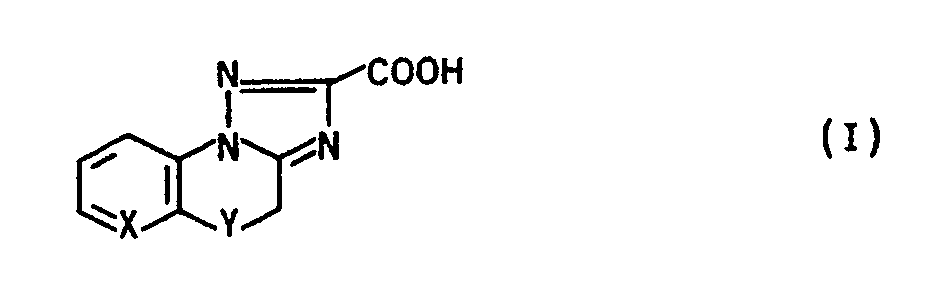
- Diese Verbindungen können beispielsweise nach den Herstellvorschriften in Helv. Chim. Acta 70 (1987), 2118-29, synthetisiert werden.
- Beispiele für besonders bevorzugte erfindungsgemäße Haftungsvermittler (d) sind solche der Formeln (II) und (III)

- Die als Haftungsvermittler verwendeten tricyclischen heteroromatischen Verbindungen (d) sind in den erfindungsgemäßen Schichtübertragungsmaterialien im allgemeinen in einer Konzentration von 0,01 bis 5 Gew.-% bevorzugt von 0,1 bis 2 Gew.-% und besonders bevorzugt von 0,2 bis 1 Gew.-%, bezogen auf das Gesamtgewicht des photopolymerisierbaren Schichtübertragungsmaterials, enthalten. Es ist auch möglich und in einzelnen Fällen vorteilhaft, Gemische der erfindungsgemäß zu verwendenden Verbindungen einzusetzen.
- zu den anderen Aufbaukomponenten des erfindungsgemäßen Schichtübertragungsmaterials ist im einzelnen folgendes auszuführen.
- (a) Als für die Verwendung als Bindemittel geeignete filmbildende polymerisate (a) kommen in Wasser unlösliche, in wäßrig-alkalischen Lösungen jedoch lösliche oder zumindest dispergierbare polymere Bindemittel, insbesondere carboxylgruppenhaltige oder Carbonsäureanhydrid-Gruppen enthaltende Copolymerisate in Betracht, wie z.B. Styrol/Maleinsäureanhydrid-Copolymerisate, Styrol/Maleinsäure halbester-Copolymerisate, Alkyl(meth)acrylat/(Meth)acrylsäure-Copolymerisate, Copolymerisate aus Styrol, Alkyl(meth)acrylaten und (Meth)acrylsäure sowie gegebenenfalls anderen Monomeren (vgl. u.a. DE-B-20 27 467, DE-A-22 05 146, EP-A-49 504 oder DE-A-27 36 058) oder Copolymerisate, die Acrylsäure und/oder Methacrylsäure, hydrophobe Comonomere und N-Vinylamide einpolymerisiert enthalten, wie sie beispielsweise in DE-A-34 47 356 beschrieben sind. Derartige Copolymerisate können beispielsweise 10 bis 50 Gew.% eines Vinylamids, wie z.B. N-Vinylformamid, N-Vinylacetamid, N-Vinyl-N-Methylacetamid oder N-Vinyllactame, wie N-Vinylpyrrolidon und/oder N-Vinylcaprolactam, 5 bis 30 Gew.% Acrylsäure und/oder Methacrylsäure sowie 30 bis 80 Gew.% mindestens eines hydrophoben Comonomeren, welches als solches in Wasser und wäßrig-alkalischen Lösungen unlösliche Homopolymerisate bildet, einpolymerisiert enthalten.
- Als Beispiele für die letztgenannten hydrophoben Comonomeren seien genannt: Vinylaromaten, wie z.B. Styrol, substituierte Styrole, die in der Seitenkette oder im Kern beispielsweise durch Alkylgruppen oder Halogenatome substituiert sind, wie α-Methylstyrol, p-Methylstyrol und dergleichen, Vinylacetat sowie die Ester der Acrylsäure und Methacrylsäure, insbesondere die Acrylate und Methacrylate von geradkettigen oder verzweigten Monoalkanolen, vorzugsweise mit 1 bis 4 C-Atomen, wobei hierunter unter anderem das Methylmethacrylat besonders günstig ist. Das Copolymerisat kann ein oder mehrere der hydrophoben Comonomeren einpolymerisiert enthalten, wobei der Anteil der hydrophoben Comonomer-Einheiten in dem Copolymerisat 30 bis 80 Gew.% vorzugsweise 40 bis 70 Gew.%, bezogen auf das Copolymerisat, betragen kann.
- Beispiele für Copolymerisate für den Einsatz als polymeres Bindemittel in den lichtempfindlichen Schichtübertragungsmaterialien sind u.a. N-Vinyllactam/(Meth)acrylsäure/Methylmethacrylat-Copolymerisate oder N-Vinyllactam/(Meth)acrylsäure/Styrol-Copolymerisate. In einer typischen Ausführungsform können diese Copolymerisate die Comonomeren beispielsweise in Mengen von 25 bis 35 Gew.% an N-Vinylcaprolactam und/oder N-Vinylpyrrolidon, 5 bis 15 Gew.% an (Meth)acrylsäure und 55 bis 65 Gew.% an hydrophoben Comonomeren, jeweils bezogen auf das Copolymerisat, einpolymerisiert enthalten.
- Beispiele für weitere geeignete polymere Bindemittel (a) sind Styrol(Meth)acrylsäure/Methylmethacrylat/Ethylacrylat-Copolymerisate, die z.B. 10 bis 40 % Styrol, 20 bis 30 % Methacrylsäure, 5 bis 50 % Methylmethacrylat und 0 bis 50 % Ethylacrylat einpolymerisiert enthalten.
- Die Comonomeren für die einzusetzenden Copolymerisate (a) werden nach Art und Menge in dem vorstehend angegebenen allgemeinen Rahmen so ausgewählt, daß die Copolymerisate filmbildend sind und die an sie gestellten Forderungen bezüglich ihrer Löslichkeit bzw. Dispergierbarkeit erfüllen. Gegebenenfalls können auch Gemische geeigneter carboxylgruppenhaltiger Copolymerisate eingesetzt werden.
- Die als polymeres Bindemittel einzusetzenden Copolymerisate können nach den an sich bekannten und üblichen Polymerisationsmethoden durch Copolymerisation der Comonomeren, beispielsweise in Lösung, hergestellt werden. Für die Lösungspolymerisation eignen sich z.B. niedere Alkanole, Ketone, Ester und ähnliche, wie Methanol, Aceton, Methylethylketon, Ethylacetat etc., als Lösungsmittel. Als Polymerisationsinitiatoren kommen die üblichen radikalischen Starter, wie beispielsweise Azobisisobutyronitril, Benzoylperoxid und dergleichen in Betracht.
- Die als Bindemittel verwendeten filmbildenden Polymerisate (a) sind in dem photopolymerisierbaren Schichtübertragungsmaterial im allgemeinen in einer Menge von 40 bis 90 Gew.-%, vorzugsweise von 50 bis 70 Gew.-%, bezogen auf das Gesamtgewicht des photopolymerisierbaren Schichtübertragungsmaterials, enthalten.
- (b) Als organische Verbindungen (b) mit mindestens zwei zur Additionspolymerisation befähigten Doppelbindungen können die üblichen photopolymerisierbaren Monomeren verwendet werden, bevorzugt solche mit Siedepunkten über 100°C und Molekulargewichten < 1000.
- Als Vertreter für die photopolymerisierbaren Monomeren seien insbesondere die Derivate der (Meth)acrylsäure und ganz besonders die (Meth)acrylsäureester genannt. Beispiele hierfür sind die Di- und Tri(meth)acrylate von Ethylenglykol, Diethylenglykol, Triethylenglykol oder Polyethylenglykolen mit einem Molekulargewicht bis etwa 500, 1,2-Propandiol, 1,3-Propandiol, Polypropylenglykolen mit einem Molekulargewicht bis etwa 500, 1,4-Butandiol, 1,1,1-Trimethylolpropan, 2,2-Dimethylpropandiol, Glycerin oder Pentaerythrit; z.B. Pentaerythrittetra(meth)acrylat, Glucosetri- oder tetra-(meth)acrylat. Die mit dem Bindemittel verträglichen organischen Verbindungen mit mindesens zwei zur Additionspolymerisation befähigten Doppelbindungen können gegebenenfalls teilweise, im allgemeinen in untergeordneten Mengen von bis zu etwa 30 Gew.-% der Gesamtmenge der Komponente (b), durch organische Verbindungen mit nur einer zur Additionspolymerisation befähigten Doppelbindung ersetzt sein. Als solche eignen sich beispielsweise die Monoacrylate und Monomethacrylate der genannten Diole und Polyole, wie z.B. Ethylenglykol-, Di-, Tri- oder Tetraethylenglykolmono(meth)acrylat, Propandiol-mono(meth)acrylat und Butandiol-mono(meth)acrylat und die (Meth)acrylate von Monoalkanolen, insbesondere von solchen mit 1 bis 20 C-Atomen. Neben den bevorzugten Acrylaten und Methacrylaten der vorstehend genannten Art seien als photopolymerisierbare Monomere auch die Allyl-Verbindungen und andere Vinyl-Verbindungen genannt, wie z.B. N-Vinylpyrrolidon, N-Vinylcaprolactam, Vinylacetat, Vinylpropionat, (Meth)acrylamid, N-Methylol-(meth)acrylamid, der Bisether des Ethylenglykols und N-Methylol-(meth)acrylamids, Vinylcarbamate und Bisacrylamidoessigsäure.
- Geeignete ethylenisch ungesättigte, photopolymerisierbare Verbindungen für die erfindungsgemäßen lichtempfindlichen Aufzeichnungsschichten sind auch die monomeren Urethanacrylate bzw. -methacrylate mit zwei oder mehr Acryloyl- und/oder Methacryloyl-Gruppen. Solche monomeren Urethan(meth)acrylate können beispielsweise erhalten werden durch Umsetzung von aliphatischen Di- oder Polyolen mit organischen Diisocyanaten in einem Äquivalentverhältnis OH:NCO von etwa 1:2 und anschließende Umsetzung der freien Isocyanatgruppen des erhaltenen Reaktionsproduktes mit geeigneten Acryloyl- und/oder Methacryloyl-Verbindungen, beispielsweise Hydroxyalkyl-(meth)acrylaten. Als aliphatische Di- oder Polyole kommen unter anderem die vorstehend im zusammenhang mit den Di- und Tri(meth)acrylaten genannten Di- und Polyhydroxy-Verbindungen in Betracht; als Beispiele für organische Diisocyanate seien Hexamethylendiisocyanat, Toluylendiisocyanat, Isophorondiisocyanat und ähnliche genannt; Hydroxyalkyl(meth)acrylate sind beispielsweise Hydroxyethyl-(meth)acrylat, Propandiol-mono(meth)acrylat oder Butandiol-mono(meth)acrylat. Ebenso geeignet und vorteilhaft sind Monomere mit zwei oder mehr Acryloyl- und/oder Methacryloyl-Gruppen, wie sie beispielsweise erhalten werden können durch Umsetzung von Di- oder Polyglycidylverbindungen mit Acrylsäure und/oder Methacrylsäure. Als Di- und Polyglycidylverbindungen kommen hier insbesondere die Di- und Polyglycidylether mehrwertiger Phenole, beispielsweise des Bisphenols A oder der Substitutionsprodukte von Bisphenol A, in Betracht. Beispielhaft für solche Acryloyl- und/oder Methacryloyl-Gruppen enthaltenden Monomeren seien die Umsetzungsprodukte des Bisphenol A-bisglycidylethers mit Acryl- und/oder Methacrylsäure im molaren Verhältnis von etwa 1:2 hervorgehoben.
- Die Verbindungen (b) mit mindestens zwei zur Additionspolymerisation befähigten Doppelbindungen die gegebenenfalls teilweise durch eine organische Verbindung mit nur einer zur Additionspolymerisation befähigten Doppelbindung ersetzt sein kann, werden zweckmäßigerweise so gewählt, daß sie mit den als Bindemittel verwendeten filmbildenden Polymerisaten (a) verträglich sind. Im allgemeinen sind die photopolymerisierbaren Monomeren in einer Konzentration von 10 bis 60 Gew.-%, bevorzugt von 20 bis 40 Gew.-%, bezogen auf das Gesamtgewicht des photopolymerisierbaren Schichtübertragungsmaterials, enthalten.
- (c) Als Photoinitiatoren oder Photoinitiatorsysteme (c) für die photopolymerisierbaren Schichtübertragungsmaterialien kommen die für lichtempfindliche, photopolymerisierbare Aufzeichnungsmaterialien üblichen und an sich bekannten Photoinitiatoren bzw. Photoinitiatorsysteme in Betracht. Beispielhaft seien hierfür genannt: Benzoin, Benzoinether, insbesondere Benzoinalkylether, substituierte Benzoine, Alkylether von substituierten Benzoinen, wie z.B. α-Methylbenzoinalkylether oder α-Hydroxymethylbenzoinalkylether; Benzile, Benzilketale, insbesondere Benzildimethylketal, Benzilmethylethylketal oder Benzilmethylbenzylketal; die als Photoinitiator bekannten und wirksamen Acylphosphinoxid-Verbindungen, wie z.B. 2,4,6-Trimethylbenzoyldiarylphosphinoxid; Benzophenon, Derivate des Benzophenons, 4,4′-Dimethylaminobenzophenon, Derivate von Michler's Keton; Anthrachinon und substituierte Anthrachinone; arylsubstituierte Imidazole oder deren Derivate, wie z.B. 2,4,5-Triarylimidazoldimere; Thioxanthonderivate und die als Photoinitiatoren wirksamen Acridin- oder Phenacin-Derivate. Beispiele für Initiatorsysteme sind Kombinationen der genannten Initiatoren mit Sensibilisierungshilfsmitteln oder Aktivatoren, wie insbesondere tertiären Aminen.
- Typische Beispiele für solche Initiatorsysteme sind Kombinationen aus Benzophenon oder Benzophenonderivaten mit tertitären Aminen, z.B. Michlers Keton, Triethanolamin oder Dimethylaminobenzoesäureethylester, oder Gemische aus einem Thioxanthonderivat, einem tertiären Amin oder einem Hexaarylbisimidazol-Derivat. Die Photoinitiatoren oder photoinitiatorsysteme (c) sind in dem photopolymerisierbaren Schichtübertragungsmaterial in einer Menge von 0,01 bis 10 Gew.-%, bevorzugt von 0,5 bis 5 Gew.-% enthalten.
- (e) Als weitere gegebenenfalls mitzuverwendende Zusatz- und Hilfsstoffe (e), die in dem erfindungsgemäßen photopolymerisierbaren Schichtübertragungsmaterial enthalten sein können, kommen z.B. Inhibitoren gegen die thermische Polymerisation, Farbstoffe und/oder Pigmente, photochrome Verbindungen bzw. Systeme, sensitometrische Regler, Weichmacher, Verlaufshilfsmittel, Mattierungs- oder Gleitmittel und dergleichen in Betracht. Geeignete Polymerisationsinhibitoren sind z.B. Hydrochinon, Hydrochinon-Derivate, 2,6-Di-t.-butyl-p-cresol, Nitrophenole, N-Nitrosoamine, wie N-Nitrosodi phenylamin oder die Salze des N-Nitrosocyclohexylhydroxylamins. Beispiele für Farbstoffe und/oder Pigmente, die sowohl als Kontrastmittel als auch schichtverfestigend wirken können, sind u.a. Brilliant Green Dye (C.I. 42 040), Viktoria-Reinblau FGA, Viktoria-Reinblau BO (C.I. 42 595), Viktoria-Blau B (C.I. 44 045), Rhodamin 6 G (C.I. 45 160), Triphenylmethanfarbstoffe, Naphthalimidfarbstoffe und 3′-Phenyl-7-dimethylamino-2,2′-spiro-di-(2H-1-benzopyran). Photochrome Systeme, die bei Belichtung mit aktinischem Licht reversibel oder irreversibel ihre Farbe ändern, ohne hierbei den Photopolymerisationsprozeß zu stören, sind z.B. Leukofarbstoffe zusammen mit geeigneten Aktivatoren. Als Beispiele für Leukofarbstoffe seien die Leukobasen der Triphenylmethanfarbstoffe, wie Kristallviolett-Leukobase und Malachitgrün-Leukobase, Leuko-Basischblau, Leuko-Pararosanilin, Leuko-Patentblau A oder V genannt; ferner kommt auch Rhodamin B-Base in Betracht. Als Aktivatoren für diese photochromen Verbindungen kommen u.a. organische Halogenverbindungen, die bei Belichtung mit aktinischem Licht Halogenradikale abspalten, oder Hexaarylbisimidazole in Betracht. Zu den sensitometrischen Reglern gehören Verbindungen wie z.B. 9-Nitroanthracen, 10,10′-Bisanthron, Phenazinium-, Phenoxazinium-, Acridinium- oder Phenothiazinium-Farbstoffe, insbesondere in Kombination mit milden Reduktionsmitteln wie Thioharnstoff, Anethol, Salzen des N-Nitrosocyclohexylhydroxylamins, 1,3-Dinitrobenzole und ähnliche. Als Weichmacher können die an sich bekannten und üblichen niedermolekularen oder hochmolekularen Ester, wie Phthalate oder Adipate, Toluolsulfonamid oder Tricresylphosphat, dienen. Die Zusatz- und/oder Hilfsstoffe sind in den photopolymerisierbaren Schichtübertragungsmaterialien in den für diese Stoffe üblichen und bekannten wirksamen Mengen vorhanden. Ihre Menge sollte jedoch im allgemeinen 30 Gew.%, vorzugsweise 20 Gew.%, bezogen auf photopolymerisierbares Schichtübertragungsmaterial nicht überschreiten.
- Das Mischungsverhältnis, in dem die einzelnen Komponenten im photopolymerisierbaren Schichtübertragungsmaterial enthalten sind, wird im allgemeinen so gewählt, daß das Schichtübertragungsmaterial nicht nur wäßrig-alkalisch entwickelbar, sondern vorteilhafterweise auch bei Raumtemperatur fest und nicht klebrig ist und gute Filmbildungseigenschaften besitzt. Für den Einsatz der erfindungsgemäßen lichtempfindlichen Schichtübertragungsmaterialien als Photoresistfilm wird die zusammensetzung darüber hinaus so gewählt, daß die lichtempfindliche Aufzeichnungsschicht gut laminierbar und unter Anwendung von Druck sowie gegebenenfalls Wärme auf ein Substrat übertragbar ist. Für die Herstellung von Resistmustern werden üblicherweise Schichtdicken der lichtempfindlichen Aufzeichnungsschicht im Bereich von etwa 1 bis 50 µm eingestellt.
- Für Schichtübertragungsmaterialien finden als Trägermaterialien vorzugsweise Kunststoff-Filme oder -Folien, insbesondere Polyester-Folien, Verwendung, die eine mäßige Haftung zu der lichtempfindlichen Aufzeichnungsschicht haben und nach dem Auflaminieren bzw. Aufkaschieren der photopolymerisierbaren Aufzeichnungsschicht auf ein Substrat von dieser - vor oder nach der Belichtung mit aktinischem Licht - abgezogen werden können.
- Die dem Träger abgewandte Seite des erfindungsgemäßen photopolymerisierbaren Schichtübertragungsmaterials kann mit einer Deckfolie, z.B. aus Polyolefinen, wie Polyethylen oder Polypropylen, abgedeckt werden.
- Die Herstellung des erfindungsgemäßen photopolymerisierbaren Schichtübertragungsmaterials kann in an sich bekannter und üblicher Weise durch Herstellung einer homogenen Mischung der das photopolymerisierbare Schichtübertragungsmaterial bildenden Komponenten und schichtförmiges Aufbringen dieser Mischung auf den - gegebenenfalls mit einer Zwischenschicht versehenen - Träger erfolgen. Beispielsweise kann man die Komponenten des photopolymerisierbaren Schichtübertragungsmaterials rein mechanisch in einer geeigneten Mischvorrichtung, z.B. einem Mischer oder Extruder, homogen vermischen und diese Mischung, beispielsweise durch Extrudieren, Kalandrieren oder Pressen, zu einer Schicht der gewünschten Dicke formen, die dann auf den Träger auflaminiert bzw. aufkaschiert wird. Vorzugsweise werden die photopolymerisierbaren Schichtübertragungsmaterialien jedoch hergestellt, indem man die Komponenten des photopolymerisierbaren Schichtübertragungsmaterials in einem geeigneten Lösungsmittel oder Lösungsmittelgemisch löst und diese Lösung durch Gießen, Tauchen, Sprühen oder andere bekannte Auftragstechniken in der gewünschten Schichtstärke auf den Träger aufbringt. Anschließend wird das Lösungsmittel in üblicher Weise entfernt und das photopolymerisierbare Schichtübertragungsmaterial getrocknet. Geeignete Lösungsmittel für das Mischen der Komponenten und Aufbringen des photopolymerisierbaren Schichtübertragungsmaterials auf den Träger sind u.a. niedere Alkohole, Ketone oder Ester, wie z.B. Methanol, Aceton, Methylethylketon, Ethylacetat und ähnliche, sowie Mischungen hiervon. Anschließend kann auf das photopolymerisierbare Schichtübertragungsmaterial gewünschtenfalls noch eine Deckschicht oder Deckfolie aufgebracht werden.
- Das erfindungsgemäße photopolymerisierbare Schichtübertragungsmaterial eignet sich in vorteilhafter Weise für die Herstellung von Resistmustern nach den hierfür an sich bekannten und üblichen Verfahren. Hierzu wird das photopolymerisierbare Schichtübertragungsmaterial nach der Schichtübertragung auf das zu schützende Substrat bildmäßig mit aktinischem Licht belichtet, wobei sich hierfür die üblichen Lichtquellen von aktinischem Licht, wie beispielsweise UV-Fluoreszenzröhren, Quecksilberhoch-, -mittel- oder -niederdruckstrahler, superaktinische Leuchtstoffröhren, Xenon-Impulslampen, aber auch UV-Laser, Argonlaser und ähnliche, eignen. Die von den Lichtquellen emittierte Wellenlänge soll im allgemeinen zwischen 230 und 450 nm, bevorzugt zwischen 300 und 420 nm, liegen und insbesondere auf die Eigenabsorption des im photopolymerisierbaren Schichtübertragungsmaterial enthaltenen Photoinitiators abgestimmt sein.
- Durch die bildmäßige Belichtung mit dem aktinischen Licht wird in den belichteten Bereichen des Schichtübertragungsmaterials eine Photopolymerisation ausgelöst, die zu einer Vernetzung in den belichteten Schichtbereichen und damit zu einer Löslichkeitsdifferenzierung zwischen den belichteten und unbelichteten Schichtbereichen führt. Nach der bildmäßigen Belichtung wird das Resistmuster durch Auswaschen der unbelichteten, unvernetzten Bereiche des Schichtübertragungsmaterials mit einer wäßrig-alkalischen Entwicklerlösung entwickelt. Das Entwickeln kann durch Waschen, Sprühen, Reiben, Bürsten etc. erfolgen. Als Entwicklerlösungen kommen wäßrig-alkalische Lösungen in Betracht, die zur Einstellung des günstigsten pH-Wertes, im allgemeinen im Bereich von 8 bis 14, vorzugsweise im Bereich von etwa 9 bis 13, alkalisch reagierende Substanzen, wie z.B. Borax, Dinatriumhydrogenphosphat, Soda, Alkalihydroxide oder organische Basen, wie Di- oder Triethanolamin in Wasser gelöst, enthalten. Die wäßrig-alkalischen Entwicklerlösungen können auch Puffersalze, z.B. wasserlösliche Alkaliphosphate, -silikate, -borate, -acetate oder -benzoate enthalten. Als weitere Bestandteile der Entwicklerlösungen können Netzmittel, vorzugsweise anionische Netzmittel, und gegebenenfalls wasserlösliche Polymere, wie z.B. Natriumcarboxymethylcellulose, Polyvinylalkohol, Polynatriumacrylat und dergleichen, mitverwendet werden. Obwohl die erfindungsgemäßen Schichtübertragungsmaterialien im allgemeinen mit rein wäßrig-alkalischen Entwicklerlösungen ausgewaschen werden, ist es selbstverständlich grundsätzlich möglich, wenn auch nicht erforderlich, daß die wäßrig-alkalischen Entwicklerlösungen auch noch geringe zusätze an wasserlöslichen organischen Lösungsmitteln, wie z.B. aliphatischen Alkoholen, Aceton oder Tetrahydrofuran, enthalten.
- Die erfindungsgemäßen photopolymerisierbaren Schichtübertragungsmaterialien zeichnen sich durch eine hervorragende Haftung zu metallischen Oberflächen aus. Das hohe Haftungsniveau bleibt auch in wäßrigen Prozeßbädern, insbesondere in den bei der Herstellung von gedruckten Schaltungen üblicherweise verwendeten Plattierlösungen erhalten. Dadurch lassen sich auch feine Bildelemente vorlagengetreu und sicher reproduzieren. Trotz der guten Haftung wird die Entschichtungszeit des belichteten Schichtübertragungsmaterials durch die erfindungsgemäß einzusetzenden in wäßrig-alkalischer Lösung löslichen tricyclischen heteroaromatischen Verbindungen reduziert. Ein weiterer erheblicher Vorteil der erfindungsgemäß zu verwendenden tricyclischen heteroaromatischen Verbindungen besteht darin, daß die Ausbildung von Restschicht bei Lagerung laminierter metallischer Substrate vollständig verhindert wird.
- Die Erfindung wird durch die nachstehenden Beispiele näher erläutert. Die in den Beispielen genannten Teile und Prozente beziehen sich, sofern nicht anders angegeben, auf das Gewicht.
- Zur Herstellung eines Photoresistfilms wurden Gießlösungen durch Mischen der folgenden Komponenten hergestellt:

- Diese Gießlösungen wurden so auf eine 23 µm starke Polyethylenterephthalatfolie aufgebracht, daß nach dem Ablüften und Trocknen (90°C, 5 Minuten) eine Trockenschichtdicke der photopolymerisierbaren Schicht von 38 µm resultierte. Die photopolymerisierbaren Schichten wurde mit einer 30 µm starken Polyethylenfolie abgedeckt. Danach wurde der Folienverbund aus Polyesterfolie, photopolymerisierbarer Schicht und Polyethylenfolie auf eine Rolle gewickelt. Zur Prüfung wurde die Polyethylenfolie abgezogen und der Resistfilm mit der photoempfindlichen Schicht zum Kupfer auf die kupferkaschierte oberfläche eines Leiterplattensubstrats übertragen (105°C, 1,5 m/Minute). Danach wurde die Resistschicht in einem Riston® PC-Printer (Hersteller: E.I: Du Pont de Nemours) durch ein Testnegativ belichtet. Nach der Belichtung wurde die Polyesterfolie abgezogen und der Resist 30 Sekunden in 1 %iger Sodalösung entwickelt.
- Zur permanenten Strukturierung des Leiterplattensubstrats wurde dieses nach den üblichen Vorbehandlungsschritten wie Reinigung und Anätzen in ein Zinnbad eingebracht, und an den nicht vom Resist geschützten Teilen der Metalloberfläche eine 38 µm starke Zinnschicht galvanisch abgeschieden. Danach wurde der belichtete Resist in 3 %iger KOH-Lösung bei 50°C entfernt, wobei bis zur vollständigen Entfernung des Resists 35 Sekunden nötig waren. Die Kantenschärfe der galvanisch abgeschiedenen Leiterbahnen wurde dann unter einem Mikroskop nach folgender Notenskala beurteilt:
Note Beurteilung 1 scharfe Kanten 2 an einzelnen Stellen unruhige Kanten, an denen der Resist bis zu 5 µm unterwandert ist 3 auf der gesamten Leiterplatte unruhige Kanten, an denen der Resist bis zu 5 µm unterwandert ist 4 Unterwanderungen > 5 µm 5 Kurzschlüsse zwischen benachbarten Leiterbahnen - In beiden Fällen wurde die Kantenschärfe mit Note 1 beurteilt.
- Zur Restschichtprüfung wurden die Resiste auf Leiterplattensubstrate laminiert und 10 Tage bei 27°C und 65 % relativer Luftfeuchte gelagert. Danach wurde entwickelt und angeätzt. Die Restschicht wurde gemessen als der Anteil der Oberfläche (in %), der nicht mehr angeätzt werden kann. Die Resiste der Beispiele 1a und 1b wiesen unter den angegebenen Bedingungen keine Restschicht auf.
- Beispiel 1a wurde wiederholt, jedoch wurde auf den Zusatz der erfindungsgemäßen Verbindungen der Formel (II) bzw. (III) verzichtet. Die Prüfung erfolgte wie in Beispiel 1. Dabei wurden folgende Ergebnisse erhalten:
Entschichtungszeit: 50 Sekunden
Kantenschärfe: Note 5
Restschicht: 100%
Claims (8)
1. Photopolymerisierbares Schichtübertragungsmaterial, bestehend aus
(a) mindestens einem filmbildenden Polymerisat als Bindemittel, (b) mindestens einer mit dem Bindemittel verträglichen organischen Verbindung mit mindestens zwei zur Additionspolymerisation befähigten Doppelbindungen, die gegebenenfalls teilweise durch eine organische Verbindung mit nur einer zur Additionspolymerisation befähigten Doppelbindung ersetzt sein kann,
(c) einem Photoinitiator oder Photoinitiatorsystem,
(d) einem Haftungsvermittler und
(e) gegebenenfalls üblichen Zusatz- und Hilfsstoffen,
dadurch gekennzeichnet, daß als Haftungsvermittler (d) eine tricyclische heteroaromatische Verbindung, die in wäßrig-alkalischer Lösung löslich ist, eingesetzt wird.
(a) mindestens einem filmbildenden Polymerisat als Bindemittel, (b) mindestens einer mit dem Bindemittel verträglichen organischen Verbindung mit mindestens zwei zur Additionspolymerisation befähigten Doppelbindungen, die gegebenenfalls teilweise durch eine organische Verbindung mit nur einer zur Additionspolymerisation befähigten Doppelbindung ersetzt sein kann,
(c) einem Photoinitiator oder Photoinitiatorsystem,
(d) einem Haftungsvermittler und
(e) gegebenenfalls üblichen Zusatz- und Hilfsstoffen,
dadurch gekennzeichnet, daß als Haftungsvermittler (d) eine tricyclische heteroaromatische Verbindung, die in wäßrig-alkalischer Lösung löslich ist, eingesetzt wird.
2. Schichtübertragungsmaterial nach Anspruch 1, dadurch gekennzeichnet, daß es in wäßrig-alkalischen Lösungen entwickelt werden kann.
3. Schichtübertragungsmaterial nach Anspruch 1, dadurch gekennzeichnet, daß die als Haftungsvermittler verwendete tricyclische heteroaromatische Verbindung in einer 1 gew.%igen wäßrigen Natriumcarbonat-Lösung bei 25°C eine Löslichkeit von mindestens 0,05 Gew.% aufweist.
4. Schichtübertragungsmaterial nach Anspruch 1, dadurch gekennzeichnet, daß als Haftungsvermittler (d) eine Verbindung der allgemeinen Formel (I)

worin X für CH oder H, Y für O, S oder NR¹ und R¹ für H, Alkyl oder Aryl stehen, oder einer damit tautomeren Formel davon eingesetzt wird.
5. Schichtübertragungsmaterial nach einem der vorhergehenden Ansprüche, dadurch gekennzeichnet, daß als Haftungsvermittler (d) eine Verbindung der Formeln

eingesetzt wird.
6. Schichtübertragungsmaterial nach Anspruch 1, dadurch gekennzeichnet, daß als Bindemittel ein Copolymerisat aus mindestens einem sauren Monomer und mindestens einem hydrophoben Monomer verwendet wird.
7. Schichtübertragungsmaterial nach Anspruch 6, dadurch gekennzeichnet, daß als saures Monomer Acrylsäure oder Methacrylsäure verwendet wird.
8. Schichtübertragungsmaterial nach Anspruch 6 oder 7, dadurch gekennzeichnet, daß die hydrophoben Monomeren aus der Gruppe der Acrylate, Methacrylate und Styrole ausgewählt werden.
Applications Claiming Priority (2)
| Application Number | Priority Date | Filing Date | Title |
|---|---|---|---|
| DE3926708A DE3926708A1 (de) | 1989-08-12 | 1989-08-12 | Photopolymerisierbares schichtuebertragungsmaterial |
| DE3926708 | 1989-08-12 |
Publications (2)
| Publication Number | Publication Date |
|---|---|
| EP0413216A2 true EP0413216A2 (de) | 1991-02-20 |
| EP0413216A3 EP0413216A3 (en) | 1991-06-26 |
Family
ID=6387021
Family Applications (1)
| Application Number | Title | Priority Date | Filing Date |
|---|---|---|---|
| EP19900114911 Withdrawn EP0413216A3 (en) | 1989-08-12 | 1990-08-03 | Photopolymerizable transfer material |
Country Status (4)
| Country | Link |
|---|---|
| US (1) | US5114831A (de) |
| EP (1) | EP0413216A3 (de) |
| JP (1) | JPH03163105A (de) |
| DE (1) | DE3926708A1 (de) |
Cited By (2)
| Publication number | Priority date | Publication date | Assignee | Title |
|---|---|---|---|---|
| EP0706091A1 (de) * | 1994-09-30 | 1996-04-10 | Hercules Incorporated | Flüssiger Photoresist |
| WO2001009099A3 (de) * | 1999-08-03 | 2001-06-07 | Stn Atlas Elektronik Gmbh | Haftvermittler |
Families Citing this family (3)
| Publication number | Priority date | Publication date | Assignee | Title |
|---|---|---|---|---|
| DE19944908A1 (de) * | 1999-09-10 | 2001-04-12 | Atotech Deutschland Gmbh | Verfahren zum Bilden eines Leitermusters auf dielektrischen Substraten |
| KR100698813B1 (ko) * | 2000-04-03 | 2007-03-23 | 미쓰비시 가가꾸 가부시키가이샤 | 적층체, 접착 방법 및 활성 에너지선-경화성 조성물 |
| CN1304506C (zh) * | 2004-11-22 | 2007-03-14 | 中国化工建设总公司常州涂料化工研究院 | 用于转移涂装的紫外光固化涂料 |
Family Cites Families (11)
| Publication number | Priority date | Publication date | Assignee | Title |
|---|---|---|---|---|
| US3622334A (en) * | 1969-12-31 | 1971-11-23 | Du Pont | Photopolymerizable compositions and elements containing heterocyclic nitrogen-containing compounds |
| DE2027467C3 (de) * | 1970-06-04 | 1974-08-15 | Kalle Ag, 6202 Wiesbaden-Biebrich | Photopolymerisierbare Kopiermasse |
| US3645772A (en) * | 1970-06-30 | 1972-02-29 | Du Pont | Process for improving bonding of a photoresist to copper |
| US3887450A (en) * | 1971-02-04 | 1975-06-03 | Dynachem Corp | Photopolymerizable compositions containing polymeric binding agents |
| US3953309A (en) * | 1972-12-14 | 1976-04-27 | Dynachem Corporation | Polymerization compositions and processes having polymeric binding agents |
| ZA757987B (en) * | 1975-12-23 | 1976-12-29 | Dynachem Corp | Adhesion promoters for polymerizable films |
| SU941918A1 (ru) * | 1976-08-10 | 1982-07-07 | Предприятие П/Я Г-4444 | Сухой пленочный фоторезист |
| US4268610A (en) * | 1979-11-05 | 1981-05-19 | Hercules Incorporated | Photoresist formulations |
| CA1170887A (en) * | 1980-10-06 | 1984-07-17 | Gary C. Briney | Aqueous developable photopolymerizable elements |
| JPS61166541A (ja) * | 1985-01-19 | 1986-07-28 | Fuotopori Ouka Kk | 光重合性組成物 |
| US4680249A (en) * | 1986-05-28 | 1987-07-14 | E. I. Du Pont De Nemours And Company | Photopolymerizable composition containing carboxy benzotriazole |
-
1989
- 1989-08-12 DE DE3926708A patent/DE3926708A1/de not_active Withdrawn
-
1990
- 1990-07-25 JP JP2195088A patent/JPH03163105A/ja active Pending
- 1990-08-02 US US07/562,568 patent/US5114831A/en not_active Expired - Fee Related
- 1990-08-03 EP EP19900114911 patent/EP0413216A3/de not_active Withdrawn
Cited By (2)
| Publication number | Priority date | Publication date | Assignee | Title |
|---|---|---|---|---|
| EP0706091A1 (de) * | 1994-09-30 | 1996-04-10 | Hercules Incorporated | Flüssiger Photoresist |
| WO2001009099A3 (de) * | 1999-08-03 | 2001-06-07 | Stn Atlas Elektronik Gmbh | Haftvermittler |
Also Published As
| Publication number | Publication date |
|---|---|
| DE3926708A1 (de) | 1991-02-14 |
| US5114831A (en) | 1992-05-19 |
| EP0413216A3 (en) | 1991-06-26 |
| JPH03163105A (ja) | 1991-07-15 |
Similar Documents
| Publication | Publication Date | Title |
|---|---|---|
| EP0280979B1 (de) | Lichtempfindliches Aufzeichnungsmaterial mit erhöhter Flexibilität | |
| EP0071789B2 (de) | Für die Herstellung von Photoresistschichten geeignetes Schichtübertragungsmaterial | |
| EP0248424B1 (de) | Lichtempfindliches Aufzeichnungselement | |
| DE2027467B2 (de) | Photopolymerisierbare Kopiermasse | |
| EP0065285A2 (de) | Durch Strahlung polymerisierbares Gemisch und damit hergestelltes Kopiermaterial | |
| DE3600442A1 (de) | Photopolymerisierbare masse | |
| DE3741926A1 (de) | Photopolymerisierbare zusammensetzung | |
| EP0003804B1 (de) | Photopolymerisierbares Gemisch, das einen Monoazofarbstoff enthält | |
| EP0249857A2 (de) | Lichtempfindliches Aufzeichnungselement | |
| EP0311926A2 (de) | Photopolymerisierbares Gemisch | |
| DE2517656B2 (de) | Photopolymerisierbares Gemisch und dieses enthaltendes Aufzeichnungsmaterial | |
| EP0373438A2 (de) | Photoresistfilm mit löslicher Zwischenschicht | |
| EP0248395B1 (de) | Lichtempfindliches Aufzeichnungselement | |
| DE2558813C2 (de) | Lichtempfindliches Gemisch mit synergistischem Initiatorsystem | |
| EP0186844B1 (de) | Lichtempfindliches Aufzeichnungselement | |
| EP0413216A2 (de) | Photopolymerisierbares Schichtübertragungsmaterial | |
| DE3924811A1 (de) | Pfropfpolymerisat mit ungesaettigten seitenketten, dieses enthaltendes lichtempfindliches gemisch sowie daraus hergestelltes aufzeichnungsmaterial | |
| EP0355335B1 (de) | Lichtempfindliches Aufzeichnungsmaterial, dessen Verwendung und dafür geeignete neue Leukoverbindung | |
| EP0194440B1 (de) | Lichtempfindliches Aufzeichnungselement | |
| EP0329009A2 (de) | Lichtempfindliche, negativ arbeitende Aufzeichnungsschicht | |
| EP0388770A2 (de) | Photopolymerisierbares Schichtübertragungsmaterial | |
| DE3842448A1 (de) | Lichtempfindliches aufzeichnungselement | |
| DE3805706A1 (de) | Durch strahlung polymerisierbares gemisch und daraus hergestelltes aufzeichnungsmaterial | |
| DE3909248A1 (de) | Lichtempfindliche zubereitung und verfahren zur herstellung von photoresisten und druckplatten | |
| EP0395983A2 (de) | Photopolymerisierbares Schichtübertragungsmaterial |
Legal Events
| Date | Code | Title | Description |
|---|---|---|---|
| PUAI | Public reference made under article 153(3) epc to a published international application that has entered the european phase |
Free format text: ORIGINAL CODE: 0009012 |
|
| AK | Designated contracting states |
Kind code of ref document: A2 Designated state(s): BE DE FR GB IT NL |
|
| 17P | Request for examination filed |
Effective date: 19901227 |
|
| PUAL | Search report despatched |
Free format text: ORIGINAL CODE: 0009013 |
|
| AK | Designated contracting states |
Kind code of ref document: A3 Designated state(s): BE DE FR GB IT NL |
|
| STAA | Information on the status of an ep patent application or granted ep patent |
Free format text: STATUS: THE APPLICATION HAS BEEN WITHDRAWN |
|
| 18W | Application withdrawn |
Withdrawal date: 19930616 |