EP0414848B1 - Bioverträgliche materialien, enthaltend albuminbindende farbstoffe - Google Patents
Bioverträgliche materialien, enthaltend albuminbindende farbstoffe Download PDFInfo
- Publication number
- EP0414848B1 EP0414848B1 EP90902885A EP90902885A EP0414848B1 EP 0414848 B1 EP0414848 B1 EP 0414848B1 EP 90902885 A EP90902885 A EP 90902885A EP 90902885 A EP90902885 A EP 90902885A EP 0414848 B1 EP0414848 B1 EP 0414848B1
- Authority
- EP
- European Patent Office
- Prior art keywords
- albumin
- polymeric body
- prosthetic device
- dye
- binding dye
- Prior art date
- Legal status (The legal status is an assumption and is not a legal conclusion. Google has not performed a legal analysis and makes no representation as to the accuracy of the status listed.)
- Expired - Lifetime
Links
- 102000009027 Albumins Human genes 0.000 title claims abstract description 99
- 108010088751 Albumins Proteins 0.000 title claims abstract description 99
- 238000009739 binding Methods 0.000 title claims abstract description 48
- 239000000975 dye Substances 0.000 title claims description 72
- 239000000560 biocompatible material Substances 0.000 title 1
- 238000000034 method Methods 0.000 claims abstract description 24
- 239000012530 fluid Substances 0.000 claims abstract description 19
- 238000000576 coating method Methods 0.000 claims abstract description 12
- 239000011248 coating agent Substances 0.000 claims abstract description 11
- 239000007787 solid Substances 0.000 claims abstract description 10
- 229920002635 polyurethane Polymers 0.000 claims description 54
- 239000004814 polyurethane Substances 0.000 claims description 54
- 229920002307 Dextran Polymers 0.000 claims description 31
- 210000004369 blood Anatomy 0.000 claims description 18
- 239000008280 blood Substances 0.000 claims description 18
- -1 Evans Blue Chemical compound 0.000 claims description 17
- 125000003118 aryl group Chemical group 0.000 claims description 17
- 239000000203 mixture Substances 0.000 claims description 12
- WPYMKLBDIGXBTP-UHFFFAOYSA-N benzoic acid Chemical compound OC(=O)C1=CC=CC=C1 WPYMKLBDIGXBTP-UHFFFAOYSA-N 0.000 claims description 10
- 150000004676 glycans Chemical class 0.000 claims description 10
- 229920001282 polysaccharide Polymers 0.000 claims description 10
- 239000005017 polysaccharide Substances 0.000 claims description 10
- VZPXDCIISFTYOM-UHFFFAOYSA-K trisodium;1-amino-4-[4-[[4-chloro-6-(3-sulfonatoanilino)-1,3,5-triazin-2-yl]amino]-3-sulfonatoanilino]-9,10-dioxoanthracene-2-sulfonate Chemical compound [Na+].[Na+].[Na+].C1=2C(=O)C3=CC=CC=C3C(=O)C=2C(N)=C(S([O-])(=O)=O)C=C1NC(C=C1S([O-])(=O)=O)=CC=C1NC(N=1)=NC(Cl)=NC=1NC1=CC=CC(S([O-])(=O)=O)=C1 VZPXDCIISFTYOM-UHFFFAOYSA-K 0.000 claims description 10
- 229920000515 polycarbonate Polymers 0.000 claims description 8
- 239000004417 polycarbonate Substances 0.000 claims description 8
- LSNNMFCWUKXFEE-UHFFFAOYSA-M Bisulfite Chemical compound OS([O-])=O LSNNMFCWUKXFEE-UHFFFAOYSA-M 0.000 claims description 7
- 239000000980 acid dye Substances 0.000 claims description 7
- 125000000664 diazo group Chemical group [N-]=[N+]=[*] 0.000 claims description 7
- 150000003839 salts Chemical class 0.000 claims description 7
- 229920002379 silicone rubber Polymers 0.000 claims description 7
- ABIUHPWEYMSGSR-UHFFFAOYSA-N bromocresol purple Chemical compound BrC1=C(O)C(C)=CC(C2(C3=CC=CC=C3S(=O)(=O)O2)C=2C=C(Br)C(O)=C(C)C=2)=C1 ABIUHPWEYMSGSR-UHFFFAOYSA-N 0.000 claims description 6
- 229920001971 elastomer Polymers 0.000 claims description 6
- RTLULCVBFCRQKI-UHFFFAOYSA-N 1-amino-4-[3-[(4,6-dichloro-1,3,5-triazin-2-yl)amino]-4-sulfoanilino]-9,10-dioxoanthracene-2-sulfonic acid Chemical compound C1=2C(=O)C3=CC=CC=C3C(=O)C=2C(N)=C(S(O)(=O)=O)C=C1NC(C=1)=CC=C(S(O)(=O)=O)C=1NC1=NC(Cl)=NC(Cl)=N1 RTLULCVBFCRQKI-UHFFFAOYSA-N 0.000 claims description 5
- 239000005711 Benzoic acid Substances 0.000 claims description 5
- FRPHFZCDPYBUAU-UHFFFAOYSA-N Bromocresolgreen Chemical compound CC1=C(Br)C(O)=C(Br)C=C1C1(C=2C(=C(Br)C(O)=C(Br)C=2)C)C2=CC=CC=C2S(=O)(=O)O1 FRPHFZCDPYBUAU-UHFFFAOYSA-N 0.000 claims description 5
- GLNADSQYFUSGOU-GPTZEZBUSA-J Trypan blue Chemical compound [Na+].[Na+].[Na+].[Na+].C1=C(S([O-])(=O)=O)C=C2C=C(S([O-])(=O)=O)C(/N=N/C3=CC=C(C=C3C)C=3C=C(C(=CC=3)\N=N\C=3C(=CC4=CC(=CC(N)=C4C=3O)S([O-])(=O)=O)S([O-])(=O)=O)C)=C(O)C2=C1N GLNADSQYFUSGOU-GPTZEZBUSA-J 0.000 claims description 5
- 235000010233 benzoic acid Nutrition 0.000 claims description 5
- STZCRXQWRGQSJD-GEEYTBSJSA-M methyl orange Chemical compound [Na+].C1=CC(N(C)C)=CC=C1\N=N\C1=CC=C(S([O-])(=O)=O)C=C1 STZCRXQWRGQSJD-GEEYTBSJSA-M 0.000 claims description 5
- 229940012189 methyl orange Drugs 0.000 claims description 5
- 230000002792 vascular Effects 0.000 claims description 5
- 229920000570 polyether Polymers 0.000 claims description 4
- 102000008100 Human Serum Albumin Human genes 0.000 claims description 3
- 108091006905 Human Serum Albumin Proteins 0.000 claims description 3
- 239000004721 Polyphenylene oxide Substances 0.000 claims description 3
- 210000001175 cerebrospinal fluid Anatomy 0.000 claims description 3
- 239000000806 elastomer Substances 0.000 claims description 3
- 210000003709 heart valve Anatomy 0.000 claims description 3
- 210000002751 lymph Anatomy 0.000 claims description 3
- 210000003296 saliva Anatomy 0.000 claims description 3
- 210000001138 tear Anatomy 0.000 claims description 3
- 239000010409 thin film Substances 0.000 claims description 3
- 210000002700 urine Anatomy 0.000 claims description 3
- 229920003169 water-soluble polymer Polymers 0.000 claims description 3
- 239000011324 bead Substances 0.000 claims description 2
- 239000002775 capsule Substances 0.000 claims 1
- 239000000463 material Substances 0.000 description 50
- FZWBNHMXJMCXLU-BLAUPYHCSA-N isomaltotriose Chemical compound O[C@@H]1[C@@H](O)[C@H](O)[C@@H](CO)O[C@@H]1OC[C@@H]1[C@@H](O)[C@H](O)[C@@H](O)[C@@H](OC[C@@H](O)[C@@H](O)[C@H](O)[C@@H](O)C=O)O1 FZWBNHMXJMCXLU-BLAUPYHCSA-N 0.000 description 28
- 229920000642 polymer Polymers 0.000 description 26
- 102000004169 proteins and genes Human genes 0.000 description 17
- 108090000623 proteins and genes Proteins 0.000 description 17
- 239000000126 substance Substances 0.000 description 11
- 241000894006 Bacteria Species 0.000 description 9
- 230000001464 adherent effect Effects 0.000 description 8
- 239000002904 solvent Substances 0.000 description 8
- XLYOFNOQVPJJNP-UHFFFAOYSA-N water Substances O XLYOFNOQVPJJNP-UHFFFAOYSA-N 0.000 description 8
- FAPWRFPIFSIZLT-UHFFFAOYSA-M Sodium chloride Chemical compound [Na+].[Cl-] FAPWRFPIFSIZLT-UHFFFAOYSA-M 0.000 description 7
- 238000002474 experimental method Methods 0.000 description 7
- 239000011521 glass Substances 0.000 description 7
- 239000000243 solution Substances 0.000 description 7
- PEDCQBHIVMGVHV-UHFFFAOYSA-N Glycerine Chemical compound OCC(O)CO PEDCQBHIVMGVHV-UHFFFAOYSA-N 0.000 description 6
- HTTJABKRGRZYRN-UHFFFAOYSA-N Heparin Chemical compound OC1C(NC(=O)C)C(O)OC(COS(O)(=O)=O)C1OC1C(OS(O)(=O)=O)C(O)C(OC2C(C(OS(O)(=O)=O)C(OC3C(C(O)C(O)C(O3)C(O)=O)OS(O)(=O)=O)C(CO)O2)NS(O)(=O)=O)C(C(O)=O)O1 HTTJABKRGRZYRN-UHFFFAOYSA-N 0.000 description 6
- 239000003146 anticoagulant agent Substances 0.000 description 6
- 229940127219 anticoagulant drug Drugs 0.000 description 6
- 239000003153 chemical reaction reagent Substances 0.000 description 6
- 230000035602 clotting Effects 0.000 description 6
- 239000000499 gel Substances 0.000 description 6
- 229920000669 heparin Polymers 0.000 description 6
- 229960002897 heparin Drugs 0.000 description 6
- 229920006264 polyurethane film Polymers 0.000 description 6
- 206010053567 Coagulopathies Diseases 0.000 description 5
- 238000001212 derivatisation Methods 0.000 description 5
- 238000001727 in vivo Methods 0.000 description 5
- 229920001296 polysiloxane Polymers 0.000 description 5
- 239000000523 sample Substances 0.000 description 5
- 238000002415 sodium dodecyl sulfate polyacrylamide gel electrophoresis Methods 0.000 description 5
- 238000005406 washing Methods 0.000 description 5
- 102000004506 Blood Proteins Human genes 0.000 description 4
- 108010017384 Blood Proteins Proteins 0.000 description 4
- MHABMANUFPZXEB-UHFFFAOYSA-N O-demethyl-aloesaponarin I Natural products O=C1C2=CC=CC(O)=C2C(=O)C2=C1C=C(O)C(C(O)=O)=C2C MHABMANUFPZXEB-UHFFFAOYSA-N 0.000 description 4
- 244000052616 bacterial pathogen Species 0.000 description 4
- 239000012620 biological material Substances 0.000 description 4
- 238000001962 electrophoresis Methods 0.000 description 4
- 239000012847 fine chemical Substances 0.000 description 4
- 230000003993 interaction Effects 0.000 description 4
- 239000012567 medical material Substances 0.000 description 4
- 238000002360 preparation method Methods 0.000 description 4
- 239000011780 sodium chloride Substances 0.000 description 4
- 238000001179 sorption measurement Methods 0.000 description 4
- 230000002885 thrombogenetic effect Effects 0.000 description 4
- DGVVWUTYPXICAM-UHFFFAOYSA-N β‐Mercaptoethanol Chemical compound OCCS DGVVWUTYPXICAM-UHFFFAOYSA-N 0.000 description 4
- OKKJLVBELUTLKV-UHFFFAOYSA-N Methanol Chemical compound OC OKKJLVBELUTLKV-UHFFFAOYSA-N 0.000 description 3
- ZMXDDKWLCZADIW-UHFFFAOYSA-N N,N-Dimethylformamide Chemical compound CN(C)C=O ZMXDDKWLCZADIW-UHFFFAOYSA-N 0.000 description 3
- DBMJMQXJHONAFJ-UHFFFAOYSA-M Sodium laurylsulphate Chemical compound [Na+].CCCCCCCCCCCCOS([O-])(=O)=O DBMJMQXJHONAFJ-UHFFFAOYSA-M 0.000 description 3
- 241000191963 Staphylococcus epidermidis Species 0.000 description 3
- 230000015572 biosynthetic process Effects 0.000 description 3
- 230000017531 blood circulation Effects 0.000 description 3
- 230000000694 effects Effects 0.000 description 3
- 239000010408 film Substances 0.000 description 3
- 239000007943 implant Substances 0.000 description 3
- 208000015181 infectious disease Diseases 0.000 description 3
- 230000004048 modification Effects 0.000 description 3
- 238000012986 modification Methods 0.000 description 3
- 229920003023 plastic Polymers 0.000 description 3
- 239000004033 plastic Substances 0.000 description 3
- 229920002401 polyacrylamide Polymers 0.000 description 3
- LMDZBCPBFSXMTL-UHFFFAOYSA-N 1-ethyl-3-(3-dimethylaminopropyl)carbodiimide Chemical compound CCN=C=NCCCN(C)C LMDZBCPBFSXMTL-UHFFFAOYSA-N 0.000 description 2
- QKNYBSVHEMOAJP-UHFFFAOYSA-N 2-amino-2-(hydroxymethyl)propane-1,3-diol;hydron;chloride Chemical compound Cl.OCC(N)(CO)CO QKNYBSVHEMOAJP-UHFFFAOYSA-N 0.000 description 2
- IJRKANNOPXMZSG-SSPAHAAFSA-N 2-hydroxypropane-1,2,3-tricarboxylic acid;(2r,3s,4r,5r)-2,3,4,5,6-pentahydroxyhexanal Chemical compound OC[C@@H](O)[C@@H](O)[C@H](O)[C@@H](O)C=O.OC(=O)CC(O)(C(O)=O)CC(O)=O IJRKANNOPXMZSG-SSPAHAAFSA-N 0.000 description 2
- 238000000035 BCA protein assay Methods 0.000 description 2
- 229920002799 BoPET Polymers 0.000 description 2
- LFQSCWFLJHTTHZ-UHFFFAOYSA-N Ethanol Chemical compound CCO LFQSCWFLJHTTHZ-UHFFFAOYSA-N 0.000 description 2
- 239000005041 Mylar™ Substances 0.000 description 2
- FXHOOIRPVKKKFG-UHFFFAOYSA-N N,N-Dimethylacetamide Chemical compound CN(C)C(C)=O FXHOOIRPVKKKFG-UHFFFAOYSA-N 0.000 description 2
- 239000004698 Polyethylene Substances 0.000 description 2
- 239000004743 Polypropylene Substances 0.000 description 2
- 229910052783 alkali metal Inorganic materials 0.000 description 2
- 229910052784 alkaline earth metal Inorganic materials 0.000 description 2
- 150000001412 amines Chemical group 0.000 description 2
- 125000003277 amino group Chemical group 0.000 description 2
- 230000002965 anti-thrombogenic effect Effects 0.000 description 2
- 238000003556 assay Methods 0.000 description 2
- 230000001580 bacterial effect Effects 0.000 description 2
- 239000007853 buffer solution Substances 0.000 description 2
- 239000007822 coupling agent Substances 0.000 description 2
- 230000006378 damage Effects 0.000 description 2
- 238000004925 denaturation Methods 0.000 description 2
- 230000036425 denaturation Effects 0.000 description 2
- ZUOUZKKEUPVFJK-UHFFFAOYSA-N diphenyl Chemical group C1=CC=CC=C1C1=CC=CC=C1 ZUOUZKKEUPVFJK-UHFFFAOYSA-N 0.000 description 2
- LOKCTEFSRHRXRJ-UHFFFAOYSA-I dipotassium trisodium dihydrogen phosphate hydrogen phosphate dichloride Chemical compound P(=O)(O)(O)[O-].[K+].P(=O)(O)([O-])[O-].[Na+].[Na+].[Cl-].[K+].[Cl-].[Na+] LOKCTEFSRHRXRJ-UHFFFAOYSA-I 0.000 description 2
- 210000003989 endothelium vascular Anatomy 0.000 description 2
- 230000000642 iatrogenic effect Effects 0.000 description 2
- 238000010348 incorporation Methods 0.000 description 2
- 230000002757 inflammatory effect Effects 0.000 description 2
- 238000001802 infusion Methods 0.000 description 2
- 239000012633 leachable Substances 0.000 description 2
- 238000005259 measurement Methods 0.000 description 2
- 239000002609 medium Substances 0.000 description 2
- 210000000056 organ Anatomy 0.000 description 2
- 210000001539 phagocyte Anatomy 0.000 description 2
- 239000002953 phosphate buffered saline Substances 0.000 description 2
- 229920000728 polyester Polymers 0.000 description 2
- 229920000573 polyethylene Polymers 0.000 description 2
- 229920001155 polypropylene Polymers 0.000 description 2
- 239000004945 silicone rubber Substances 0.000 description 2
- 238000002798 spectrophotometry method Methods 0.000 description 2
- 239000000758 substrate Substances 0.000 description 2
- 229920002994 synthetic fiber Polymers 0.000 description 2
- 238000012360 testing method Methods 0.000 description 2
- 210000001519 tissue Anatomy 0.000 description 2
- IYZXGLGVLYBKAI-UHFFFAOYSA-N 1-amino-4-[4-[[4-chloro-6-(4-sulfoanilino)-1,3,5-triazin-2-yl]amino]-3-sulfoanilino]-9,10-dioxoanthracene-2-sulfonic acid Chemical compound C1=2C(=O)C3=CC=CC=C3C(=O)C=2C(N)=C(S(O)(=O)=O)C=C1NC(C=C1S(O)(=O)=O)=CC=C1NC(N=1)=NC(Cl)=NC=1NC1=CC=C(S(O)(=O)=O)C=C1 IYZXGLGVLYBKAI-UHFFFAOYSA-N 0.000 description 1
- JPWRLUYULZUVRH-UHFFFAOYSA-N 1-hydroxynaphthalene-2,7-disulfonic acid Chemical compound C1=C(S(O)(=O)=O)C=C2C(O)=C(S(O)(=O)=O)C=CC2=C1 JPWRLUYULZUVRH-UHFFFAOYSA-N 0.000 description 1
- FZWBNHMXJMCXLU-UHFFFAOYSA-N 2,3,4,5-tetrahydroxy-6-[3,4,5-trihydroxy-6-[[3,4,5-trihydroxy-6-(hydroxymethyl)oxan-2-yl]oxymethyl]oxan-2-yl]oxyhexanal Chemical compound OC1C(O)C(O)C(CO)OC1OCC1C(O)C(O)C(O)C(OCC(O)C(O)C(O)C(O)C=O)O1 FZWBNHMXJMCXLU-UHFFFAOYSA-N 0.000 description 1
- ZFRBZRZEKIOGQI-UHFFFAOYSA-N 4-amino-5-hydroxynaphthalene-1,3-disulfonic acid Chemical compound C1=CC(O)=C2C(N)=C(S(O)(=O)=O)C=C(S(O)(=O)=O)C2=C1 ZFRBZRZEKIOGQI-UHFFFAOYSA-N 0.000 description 1
- NALREUIWICQLPS-UHFFFAOYSA-N 7-imino-n,n-dimethylphenothiazin-3-amine;hydrochloride Chemical compound [Cl-].C1=C(N)C=C2SC3=CC(=[N+](C)C)C=CC3=NC2=C1 NALREUIWICQLPS-UHFFFAOYSA-N 0.000 description 1
- 102000015081 Blood Coagulation Factors Human genes 0.000 description 1
- 108010039209 Blood Coagulation Factors Proteins 0.000 description 1
- 241000282465 Canis Species 0.000 description 1
- 125000002353 D-glucosyl group Chemical group C1([C@H](O)[C@@H](O)[C@H](O)[C@H](O1)CO)* 0.000 description 1
- 102000009123 Fibrin Human genes 0.000 description 1
- 108010073385 Fibrin Proteins 0.000 description 1
- BWGVNKXGVNDBDI-UHFFFAOYSA-N Fibrin monomer Chemical compound CNC(=O)CNC(=O)CN BWGVNKXGVNDBDI-UHFFFAOYSA-N 0.000 description 1
- 206010018691 Granuloma Diseases 0.000 description 1
- 206010019663 Hepatic failure Diseases 0.000 description 1
- 102000003839 Human Proteins Human genes 0.000 description 1
- 108090000144 Human Proteins Proteins 0.000 description 1
- 206010061218 Inflammation Diseases 0.000 description 1
- 241001465754 Metazoa Species 0.000 description 1
- 229920000881 Modified starch Polymers 0.000 description 1
- 239000006057 Non-nutritive feed additive Substances 0.000 description 1
- CTQNGGLPUBDAKN-UHFFFAOYSA-N O-Xylene Chemical compound CC1=CC=CC=C1C CTQNGGLPUBDAKN-UHFFFAOYSA-N 0.000 description 1
- 239000006087 Silane Coupling Agent Substances 0.000 description 1
- 241000295644 Staphylococcaceae Species 0.000 description 1
- 208000007536 Thrombosis Diseases 0.000 description 1
- 238000010521 absorption reaction Methods 0.000 description 1
- 238000009825 accumulation Methods 0.000 description 1
- 239000004480 active ingredient Substances 0.000 description 1
- 239000000853 adhesive Substances 0.000 description 1
- 230000001070 adhesive effect Effects 0.000 description 1
- 229920000615 alginic acid Polymers 0.000 description 1
- 235000010443 alginic acid Nutrition 0.000 description 1
- 230000002152 alkylating effect Effects 0.000 description 1
- 150000001408 amides Chemical class 0.000 description 1
- 238000004458 analytical method Methods 0.000 description 1
- 239000012736 aqueous medium Substances 0.000 description 1
- 230000008901 benefit Effects 0.000 description 1
- 230000002146 bilateral effect Effects 0.000 description 1
- 230000004071 biological effect Effects 0.000 description 1
- 235000010290 biphenyl Nutrition 0.000 description 1
- 229920000402 bisphenol A polycarbonate polymer Polymers 0.000 description 1
- 229920001400 block copolymer Polymers 0.000 description 1
- 230000023555 blood coagulation Effects 0.000 description 1
- 239000003114 blood coagulation factor Substances 0.000 description 1
- 210000004204 blood vessel Anatomy 0.000 description 1
- 210000004556 brain Anatomy 0.000 description 1
- 230000001680 brushing effect Effects 0.000 description 1
- 239000003054 catalyst Substances 0.000 description 1
- 210000004027 cell Anatomy 0.000 description 1
- 230000001413 cellular effect Effects 0.000 description 1
- 229920002678 cellulose Polymers 0.000 description 1
- 235000010980 cellulose Nutrition 0.000 description 1
- 239000000919 ceramic Substances 0.000 description 1
- 239000003795 chemical substances by application Substances 0.000 description 1
- 238000004587 chromatography analysis Methods 0.000 description 1
- YKCWQPZFAFZLBI-UHFFFAOYSA-N cibacron blue Chemical compound C1=2C(=O)C3=CC=CC=C3C(=O)C=2C(N)=C(S(O)(=O)=O)C=C1NC(C=C1S(O)(=O)=O)=CC=C1NC(N=1)=NC(Cl)=NC=1NC1=CC=CC=C1S(O)(=O)=O YKCWQPZFAFZLBI-UHFFFAOYSA-N 0.000 description 1
- 230000015271 coagulation Effects 0.000 description 1
- 238000005345 coagulation Methods 0.000 description 1
- 230000000295 complement effect Effects 0.000 description 1
- NKLPQNGYXWVELD-UHFFFAOYSA-M coomassie brilliant blue Chemical compound [Na+].C1=CC(OCC)=CC=C1NC1=CC=C(C(=C2C=CC(C=C2)=[N+](CC)CC=2C=C(C=CC=2)S([O-])(=O)=O)C=2C=CC(=CC=2)N(CC)CC=2C=C(C=CC=2)S([O-])(=O)=O)C=C1 NKLPQNGYXWVELD-UHFFFAOYSA-M 0.000 description 1
- 230000008021 deposition Effects 0.000 description 1
- 238000011161 development Methods 0.000 description 1
- 229940119744 dextran 40 Drugs 0.000 description 1
- 229940119742 dextran 75 Drugs 0.000 description 1
- MXCPYJZDGPQDRA-UHFFFAOYSA-N dialuminum;2-acetyloxybenzoic acid;oxygen(2-) Chemical compound [O-2].[O-2].[O-2].[Al+3].[Al+3].CC(=O)OC1=CC=CC=C1C(O)=O MXCPYJZDGPQDRA-UHFFFAOYSA-N 0.000 description 1
- 150000004985 diamines Chemical class 0.000 description 1
- KIQKWYUGPPFMBV-UHFFFAOYSA-N diisocyanatomethane Chemical compound O=C=NCN=C=O KIQKWYUGPPFMBV-UHFFFAOYSA-N 0.000 description 1
- 230000003292 diminished effect Effects 0.000 description 1
- 150000002009 diols Chemical class 0.000 description 1
- 238000003618 dip coating Methods 0.000 description 1
- 238000007598 dipping method Methods 0.000 description 1
- 229940079593 drug Drugs 0.000 description 1
- 239000003814 drug Substances 0.000 description 1
- 238000001035 drying Methods 0.000 description 1
- 230000003628 erosive effect Effects 0.000 description 1
- 229950003499 fibrin Drugs 0.000 description 1
- 239000012467 final product Substances 0.000 description 1
- 238000001502 gel electrophoresis Methods 0.000 description 1
- 238000001631 haemodialysis Methods 0.000 description 1
- 230000000322 hemodialysis Effects 0.000 description 1
- 239000012510 hollow fiber Substances 0.000 description 1
- 229930195733 hydrocarbon Natural products 0.000 description 1
- 150000002430 hydrocarbons Chemical class 0.000 description 1
- 239000000017 hydrogel Substances 0.000 description 1
- 238000002513 implantation Methods 0.000 description 1
- 238000000338 in vitro Methods 0.000 description 1
- 238000011534 incubation Methods 0.000 description 1
- 230000001524 infective effect Effects 0.000 description 1
- 210000004969 inflammatory cell Anatomy 0.000 description 1
- 230000004054 inflammatory process Effects 0.000 description 1
- 230000028709 inflammatory response Effects 0.000 description 1
- 210000003734 kidney Anatomy 0.000 description 1
- 230000003902 lesion Effects 0.000 description 1
- 208000007903 liver failure Diseases 0.000 description 1
- 231100000835 liver failure Toxicity 0.000 description 1
- 230000007774 longterm Effects 0.000 description 1
- 229910052751 metal Inorganic materials 0.000 description 1
- 239000002184 metal Substances 0.000 description 1
- 150000002739 metals Chemical class 0.000 description 1
- 239000003094 microcapsule Substances 0.000 description 1
- 238000002156 mixing Methods 0.000 description 1
- 235000019426 modified starch Nutrition 0.000 description 1
- 239000000178 monomer Substances 0.000 description 1
- 230000000877 morphologic effect Effects 0.000 description 1
- 230000001453 nonthrombogenic effect Effects 0.000 description 1
- 231100000252 nontoxic Toxicity 0.000 description 1
- 230000003000 nontoxic effect Effects 0.000 description 1
- 229920001778 nylon Polymers 0.000 description 1
- 230000003287 optical effect Effects 0.000 description 1
- 150000001282 organosilanes Chemical class 0.000 description 1
- 239000002245 particle Substances 0.000 description 1
- 239000012466 permeate Substances 0.000 description 1
- 238000002616 plasmapheresis Methods 0.000 description 1
- 239000002861 polymer material Substances 0.000 description 1
- 229920000193 polymethacrylate Polymers 0.000 description 1
- 229920001184 polypeptide Polymers 0.000 description 1
- 229920000909 polytetrahydrofuran Polymers 0.000 description 1
- 229920002451 polyvinyl alcohol Polymers 0.000 description 1
- 235000019422 polyvinyl alcohol Nutrition 0.000 description 1
- 229920000915 polyvinyl chloride Polymers 0.000 description 1
- 229920000036 polyvinylpyrrolidone Polymers 0.000 description 1
- 235000013855 polyvinylpyrrolidone Nutrition 0.000 description 1
- 230000008569 process Effects 0.000 description 1
- 102000004196 processed proteins & peptides Human genes 0.000 description 1
- 108090000765 processed proteins & peptides Proteins 0.000 description 1
- 230000002947 procoagulating effect Effects 0.000 description 1
- 230000000770 proinflammatory effect Effects 0.000 description 1
- 210000001243 pseudopodia Anatomy 0.000 description 1
- 210000005227 renal system Anatomy 0.000 description 1
- 229920005989 resin Polymers 0.000 description 1
- 239000011347 resin Substances 0.000 description 1
- 239000012723 sample buffer Substances 0.000 description 1
- 229920000260 silastic Polymers 0.000 description 1
- 229920005573 silicon-containing polymer Polymers 0.000 description 1
- 235000019333 sodium laurylsulphate Nutrition 0.000 description 1
- STZCRXQWRGQSJD-UHFFFAOYSA-M sodium;4-[[4-(dimethylamino)phenyl]diazenyl]benzenesulfonate Chemical compound [Na+].C1=CC(N(C)C)=CC=C1N=NC1=CC=C(S([O-])(=O)=O)C=C1 STZCRXQWRGQSJD-UHFFFAOYSA-M 0.000 description 1
- 238000007614 solvation Methods 0.000 description 1
- 239000011877 solvent mixture Substances 0.000 description 1
- 230000002269 spontaneous effect Effects 0.000 description 1
- 238000005507 spraying Methods 0.000 description 1
- 230000007480 spreading Effects 0.000 description 1
- 239000003381 stabilizer Substances 0.000 description 1
- 230000000638 stimulation Effects 0.000 description 1
- 238000001356 surgical procedure Methods 0.000 description 1
- 239000000725 suspension Substances 0.000 description 1
- 239000012209 synthetic fiber Substances 0.000 description 1
- 239000012085 test solution Substances 0.000 description 1
- 231100000331 toxic Toxicity 0.000 description 1
- 230000002588 toxic effect Effects 0.000 description 1
- GPQCSCQDQNXQSV-UHFFFAOYSA-N tridodecylazanium;chloride Chemical compound Cl.CCCCCCCCCCCCN(CCCCCCCCCCCC)CCCCCCCCCCCC GPQCSCQDQNXQSV-UHFFFAOYSA-N 0.000 description 1
- 230000035899 viability Effects 0.000 description 1
- 239000008096 xylene Substances 0.000 description 1
Images

Classifications
-
- A—HUMAN NECESSITIES
- A61—MEDICAL OR VETERINARY SCIENCE; HYGIENE
- A61L—METHODS OR APPARATUS FOR STERILISING MATERIALS OR OBJECTS IN GENERAL; DISINFECTION, STERILISATION OR DEODORISATION OF AIR; CHEMICAL ASPECTS OF BANDAGES, DRESSINGS, ABSORBENT PADS OR SURGICAL ARTICLES; MATERIALS FOR BANDAGES, DRESSINGS, ABSORBENT PADS OR SURGICAL ARTICLES
- A61L33/00—Antithrombogenic treatment of surgical articles, e.g. sutures, catheters, prostheses, or of articles for the manipulation or conditioning of blood; Materials for such treatment
- A61L33/06—Use of macromolecular materials
- A61L33/12—Polypeptides, proteins or derivatives thereof, e.g. degradation products thereof
- A61L33/128—Other specific proteins or polypeptides not covered by A61L33/122 - A61L33/126
-
- Y—GENERAL TAGGING OF NEW TECHNOLOGICAL DEVELOPMENTS; GENERAL TAGGING OF CROSS-SECTIONAL TECHNOLOGIES SPANNING OVER SEVERAL SECTIONS OF THE IPC; TECHNICAL SUBJECTS COVERED BY FORMER USPC CROSS-REFERENCE ART COLLECTIONS [XRACs] AND DIGESTS
- Y10—TECHNICAL SUBJECTS COVERED BY FORMER USPC
- Y10S—TECHNICAL SUBJECTS COVERED BY FORMER USPC CROSS-REFERENCE ART COLLECTIONS [XRACs] AND DIGESTS
- Y10S623/00—Prosthesis, i.e. artificial body members, parts thereof, or aids and accessories therefor
- Y10S623/92—Method or apparatus for preparing or treating prosthetic
-
- Y—GENERAL TAGGING OF NEW TECHNOLOGICAL DEVELOPMENTS; GENERAL TAGGING OF CROSS-SECTIONAL TECHNOLOGIES SPANNING OVER SEVERAL SECTIONS OF THE IPC; TECHNICAL SUBJECTS COVERED BY FORMER USPC CROSS-REFERENCE ART COLLECTIONS [XRACs] AND DIGESTS
- Y10—TECHNICAL SUBJECTS COVERED BY FORMER USPC
- Y10S—TECHNICAL SUBJECTS COVERED BY FORMER USPC CROSS-REFERENCE ART COLLECTIONS [XRACs] AND DIGESTS
- Y10S623/00—Prosthesis, i.e. artificial body members, parts thereof, or aids and accessories therefor
- Y10S623/92—Method or apparatus for preparing or treating prosthetic
- Y10S623/921—Blood vessel
Definitions
- the present invention relates generally to polymeric materials having increased ability to bind albumin from a physiological fluid containing albumin, and more particularly to biomaterials used as components of medical devices comprising said polymeric materials.
- Implantable medical devices made of various materials may cause a number of iatrogenic effects in patients.
- catheters, artificial heart valves, artificial joints, shunts, implanted leads for electrical stimulation devices, and vascular grafts can serve as foci for infection of the body. Infection is promoted by the tendency of bacterial organisms to adhere to the surfaces of implantable devices and, while adherent, to resist destruction by phagocytic cells that normally would destroy these organisms.
- catheters, vascular grafts and other implantable devices also tend to serve as a nidus, or focus, for the formation of thrombi (blood clots).
- thrombi blood clots
- the surfaces of the implanted materials may activate non-cellular plasma clotting factors.
- platelets which adhere to the surfaces of these materials become activated and form thrombi.
- the procoagulant activities of many materials can prevent their use in vivo , or can greatly diminish their useful lifetime, as in the case of vascular access devices such as catheters.
- materials which are chemically inert may act as foci for the formation of inflammatory lesions such as granulomas, resulting, in many cases, in the necessity for removal of the implanted device.
- Quaternary amines have been bound to polymer surfaces, followed by the binding of heparin thereto.
- H. M. Grotta disclosed a method in U.S. Patent No. 3,846,353 in which heparin is complexed with a quaternary amine prior to coating the complex onto the polymer surface.
- Both the Leininger et al. and Grotta methods have the disadvantage of being non-permanent or leachable systems; i.e. the heparin would gradually be lost from the polymer material into the surrounding medium.
- ionically bound systems have limited viability due to the instability of the anticoagulant. See Solomon et al., U.S. Patent No. 4.600,652.
- the biologically active ingredient such as an anticoagulant or an agent which might suppress inflammatory response or bacterial adherence
- the biologically active ingredient retains its activity in an essentially permanent and non-leachable fashion when the material is exposed to a physiological fluid for extended periods.
- Albumin is the predominant plasma protein, readily soluble in water and in constant contact with the luminal surface of the vascular endothelium.
- the vascular endothelium itself imparts several desirable characteristics to the walls of blood vessels, including diminished tendency to promote coagulation, reduced attractiveness for inflammatory, phagocytic cells, and increased ability to resist colonization by pathogenic bacteria.
- albumin does not promote clotting nor attract inflammatory cells. It would be desirable to coat the surfaces of medical devices with albumin, thereby imparting these same characteristics to the surfaces of biomaterials. Therefore, there is a need for procedures to selectively adsorb albumin to the surface of implantable devices in order to yield implantable materials with these desirable characteristics.
- Coating surfaces with albumin apparently reduces their thrombogenicity, although the reasons for this effect remain unknown. See T. H. Maugh II, Science , 217 , 1129 (1982). Workers have investigated numerous ways to attract albumin to polymer surfaces. For example, D. J. Lyman of the University of Utah has sought to synthesize new or altered polymers that have an intrinsic attraction for albumin. Lyman has worked primarily with block copolymers of polyethers and polyurethanes. See T. H. Maugh, supra . Additionally, R. E. Eberhart and M. Munro of the University of Texas have found that alkylating polyurethane with C16-C18 hydrocarbons results in polymers with very high selectivity for albumin in blood. See T. H. Maugh, supra .
- the conjugate which comprises a coupling agent such as 1-ethyl-3-dimethylaminopropyl carbodiimide (EDC), forms amide linkages between the heparin and protein.
- a coupling agent such as 1-ethyl-3-dimethylaminopropyl carbodiimide (EDC)
- EDC 1-ethyl-3-dimethylaminopropyl carbodiimide
- a disadvantage of prior attempts to attract and/or to bind albumin to polymeric surfaces has been the tendency of components of the substrate material to denature or disrupt the noncovalent structure of the albumin. Such conformational changes can cause a loss of biological activity of the protein. Protein denaturation can also be induced by the changes in temperature and pH which are encountered in albumin-binding reactions. Furthermore, like the soluble albumin which circulates in the plasma, albumin irreversibly bound to a surface is susceptible to ultimate destruction, thereby negating any advantageous effects the bound albumin might have imparted to the surface.
- the present invention provides biocompatible prosthetic devices comprising polymeric materials which incorporate certain dyes as disclosed herein that have a high and selective affinity for albumin when exposed to a fluid containing albumin, such as a physiolgical fluid.
- a biocompatible prosthetic device comprising a solid polymeric body incorporating an amount of an albumin-binding dye effective to form a coating of endogenous albumin on the device when the device is in contact with a physiological fluid containing albumin.
- the albumin-binding dye preferably comprises an aromatic albumin-binding dye which comprises a diazo dye, a sulfonic acid dye, or the physiologically-acceptable salts thereof.
- the albumin-binding dye is present in a conjugate also comprising a physiologically-acceptable, high molecular weight, water-soluble polysaccharide such as dextran.
- a polymeric body which comprises the dye/polymer conjugate in an amount effective to bind albumin to the surface of the polymeric body.
- the polymeric body may be formed into a thin film, a tube, or the like.
- the present invention further provides a method of increasing the albumin-binding ability of a prosthetic device.
- the "derivatized" materials of the present invention apparently do not denature the albumin protein upon its adsorption to the materials. Additionally, prosthetic devices made of the present materials are markedly less thrombogenic and attract fewer platelets than devices made of commonly used medical materials. Furthermore, the surfaces of the present devices accumulate fewer adherent bacteria than devices which do not incorporate the dyes or dye/polymer conjugates disclosed herein.
- endogenous albumin refers to the albumin which is normally present in a physiological fluid, such as the human serum albumin present in human blood.
- a physiological fluid such as the human serum albumin present in human blood.
- the present "derivatized” materials can also be used to bind albumin from synthetic solutions, thereby precoating the polymeric body with albumin prior to its introduction into a body cavity or contacting it with a physiological fluid ex vivo .
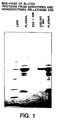
- Figure 1 depicts an SDS-polyacrylamide gel electrophoretogram showing proteins eluted from polyurethane derivatized according to the present method and from non-derivatized polyurethane.
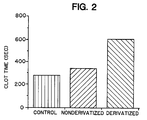
- Figure 2 depicts the clotting time of whole blood in "control" glass tubes, in tubes coated with polyurethane derivatized according to the present method, and in tubes coated with non-derivatized polyurethane.
- Figure 3 depicts an SDS-polyacrylamide gel electrophoretogram of proteins eluted from catheters prepared from polyurethane derivatized according to the present method and from non-derivatized polyurethane.
- the catheters had been previously implanted 24 hours in a mongrel dog.
- the present invention provides a biocompatible implantable prosthetic device which is implantable or which may contact physiological fluids ex vivo .
- biocompatible means that the device is compatible with living tissue or systems by being non-toxic, non-thrombogenic, and non-provoking of inflammation.
- a "prosthetic device” is intended to mean any artificial part or device which replaces or augments a part of a living body. Examples of prosthetic devices which the present invention is intended to encompass include artificial hearts, implantable drug infusion pumps, artificial kidneys, heart valves, vascular grafts, blood oxygenators, catheters, soft or hard tissue substitutes, coatings for sutures, and the like.
- the present invention also encompasses polymeric bodies which are contacted with physiological fluids external to the body ( ex vivo ). These bodies may be used in medical devices for hemodialysis, treatment of hepatic failure, plasmapheresis, blood access, and the like. Examples of such polymeric bodies include thin films, tubes, hollow fibers, beds of beads or other shaped particles (packed or fluidized), microcapsules (coated or encapsulated), and the like.
- the biocompatible prosthetic device of the present invention comprises a solid, shaped, polymeric body.
- the polymeric material from which the body may be formed includes any high molecular weight, physiologically compatible (i.e., free from toxic catalysts, stabilizers, processing aids, or the like), polymer.
- the polymeric materials especially useful in the present invention are polyurethanes; silicone elastomers; and polycarbonates.
- Other polymeric materials which may be useful in the present invention include polypropylenes, polyethylenes, polyvinyl chlorides, polyesters, nylons, cellulosics, polyvinyl pyrrolidones, polymethacrylates and polyvinyl alcohols.
- polyurethanes suitable for use in the present invention are the elastomeric, segmented polyether polyurethanes derived from repeating units of polytetramethylene ether glycol and a mixture of methylene diisocyanate and a diol (or diamine) coupler.
- PellethaneTM polytetramethylene ether glycol
- methylene diisocyanate a diol (or diamine) coupler.
- silicone elastomers useful in the present invention are the medical grade elastomers commercially available under the designation SilasticTM from Dow Corning Corp., Midland, Mich., in Clean Grades Soft, Medium, and Firm. Another medical grade elastomer is available in paste form under the designation Medical Adhesive, silicone Type A from Dow Corning Corp.
- polycarbonates useful in the present invention are included the bisphenol A polycarbonates.
- One such polycarbonate is sold commercially under the designation LexanTM by General Electric, Pittsfield, Mass.
- LexanTM General Electric, Pittsfield, Mass.
- a commercially available silicone rubber/polycarbonate copolymer suitable for use in the present invention is MEM 213, available from General Electric, Pittsfield, Mass.
- the present method of modifying materials with albumin-binding dyes is not limited to modification of polymeric materials; similar modification procedures can be carried out on a number of implantable materials, including ceramics, metals, cellulosics, natural and synthetic fibers, and the like.
- the solid polymeric body of the present invention comprises an albumin-binding dye.
- the albumin-binding dye comprises an aromatic albumin-binding dye.
- the aromatic albumin-binding dye preferably comprises a diazo dye; a physiologically-acceptable alkali metal salt, alkaline earth metal salt, or amine salt of said diazo dye; a sulfonic acid dye; a physiologically-acceptable alkali metal salt, alkaline earth metal salt, or amine salt of said sulfonic acid dye; or mixtures thereof.
- Aromatic albumin-binding dyes particularly useful in the present invention include Reactive Blue 2 (1-Amino-4[[4-[[4-chloro-6-[[3(or 4)-sulfophenyl]amino]-1,3,5-triazin-2-yl]amino]-3-sulfophenyl]amino]-9,10-dihydro-9,10-dioxo-2-anthracenesulfonic acid), available from Sigma Chemical Company, St.
- the albumin-binding dye is preferably integrally contained within and throughout the polymeric body as well as on its surface.
- the dye may be chemically bound to the surface of the solid polymeric body, thereby modifying only the surface of the implant.
- a preferred embodiment of the derivatization of polymers with albumin-binding dyes determines the way in which the albumin associates with the dye. In order to bind, but not to substantially denature the albumin, it is preferable to situate or space the dye some distance from the surface of the polymeric material. Therefore, a preferred embodiment of the present invention includes a polymeric body comprising a conjugate comprising a physiologically acceptable high molecular weight, water-soluble polymer such as a polysaccharide or a polypeptide comprising at least one albumin-binding dye, as defined above. A water-soluble polysaccharide is utilized in order to maximize the extent of surface exposure of the molecules of the albumin-binding dye and their ability to subsequently interact with albumin.
- a commercially available polysaccharide suitable for use in the present invention is dextran, available from Sigma Chemical Company, St. Louis, Missouri.
- a dextran may be generally defined as a polysaccharide containing a backbone of D-glucose units linked predominantly ⁇ -D(1->6).
- Dextran with an average molecular weight of 40,000 designated as "Dextran 40" is commercially available as Gentran 40TM from Baxter Travenol Laboratories, Deerfield, Illinois; as LMDTM from Abbott Laboratories, North Chicago, Illinois; and as Rheomacrodex from Pharmacia Fine Chemicals, Uppsala, Sweden.
- Dextran 75 Dextran with an average molecular weight of 75,000, designated "Dextran 75" is commercially available as Gentran 75TM from Baxter Travenol Laboratories, Deerfield, Illinois; and as Macrodex from Pharmacia Fine Chemicals, Uppsala, Sweden.
- Blue Dextran A commercially-available, pre-mixed form of the conjugate of the present invention is marketed under the designation Blue Dextran by Pharmacia Fine Chemicals, Uppsala, Sweden, and is also commercially available under the same tradename from Sigma Chemical Company, St. Louis, Missouri.
- Blue Dextran is prepared from dextran with an average molecular weight of about 2 x 10⁶ and incorporates approximately 0.1 mmol of the dye Reactive Blue 2 per gram of dextran.
- biocompatible, water-soluble polysaccharides which can be conjugated to albumin-binding dyes are also useful in the present invention. These include alginates, modified celluloses, modified starches, and the like.
- the dye/polymer conjugate is incorporated into the bulk polymeric material, as defined above, thereby presenting a high concentration of the desired dye at the surface of the bulk polymeric material. A substantial number of the total dye molecules are exposed to the extent that they can bind albumin without substantial denaturation of the bound protein.
- the dye/polymer conjugate can be dissolved in a solution of the bulk polymer or prepolymer in an appropriate solvent. Solvents useful in the present invention include N,N-dimethylacetamide (DMAC) and dimethyl formamide.
- the derivatized polymeric material of the present invention will be prepared from a dye/polymer conjugate, a bulk polymer, and a solvent, present respectively in an initial weight ratio of about 1:0.5-2:20, more preferably about 1:0.25-4:40, and most preferably about 1:0.25-6:60.
- An advantage of this preferred embodiment of the present invention is that the derivatization of the finished material is durable and pervasive. Thus, materials prepared as described herein will retain modified surface characteristics for prolonged periods during in vivo or ex vivo implantation. Furthermore, because the dye permeates the entire material (rather than just being present on the surface), erosion of the original surface will not destroy the unique albumin-binding properties of these materials.
- the dye/polymer conjugate may be chemically or ionically bound to the surface of the solid polymeric body, thereby modifying only the surface of the implant. This can be accomplished by dipping, spraying or brushing a solution of the conjugate onto the surface of the polymer and removing the solvent under suitable conditions.
- the albumin-binding dye or its conjugates may be chemically reacted with monomers or polymers of implant materials to produce a final product in which the dye is an integral part of the finished polymer. Such a derivatization procedure may involve the use of chemical couplers.
- organosilane couplers have been described by Arkles, "Silane Coupling Agent Chemistry", pages 54-55, Petrarch Systems, Bristol, Pennsylvania, the disclosure of which is incorporated herein by reference.
- the present invention promotes the binding of albumin to a biocompatible prosthetic device when the device is in contact with a physiological fluid containing albumin. Such contact may occur in vitro ( ex vivo ) or in vivo .
- physiological fluids with which the prosthetic device of the present invention may come into contact include blood, lymph, saliva, urine, tears, and cerebro-spinal fluid.
- a derivatized polyurethane was prepared by dissolving 0.32 g of Blue Dextran (Pharmacia Fine Chemicals, Uppsala, Sweden) in 1.5 ml of pure water. This mixture was then added to 20 g of N,N-dimethylacetamide (DMAC) (Fisher Scientific Company, Pittsburg, Pa.). To this Blue Dextran/solvent mixture, 1.0 g of PellethaneTM 2363-55D polyurethane (Dow Chemical Company, Midland, Michigan) was added. The mixture was shaken overnight to allow solvation of the polyurethane. The solvated Blue Dextran/polyurethane mixture was then cast on a Mylar release sheet and dried overnight at 50°C to remove the solvent.
- the weight of the resultant polyurethane/Blue Dextran compound was found to total at least 96% that of the non-solvent components initially added.
- the resulting derivatized polyurethane film was then tested as described below for protein adsorption, selectivity for albumin, thrombogenicity, interactions with platelets in whole, flowing blood, and adherence of pathogenic bacteria.
- Sample discs were cut out of the derivatized polyurethane film prepared as in Part A above and out of non-derivatized polyurethane film.
- the surface area of each disk was 1.57 cm2.
- the derivatized and non-derivatized control discs were soaked in whole human plasma at 25°C for 3 mins.
- the plasma had previously been collected in acid citrate dextrose (ACD) anticoagulant, heated to 56°C for 30 mins to inactivate complement, and stored at -20°C.
- ACD acid citrate dextrose
- the discs were then washed in three changes of isotonic NaCl solution, with more than 10,000 volumes of solution used in each wash, for a total wash time of 15 mins.
- Sample discs each having a surface area of 1.57 cm2 were cut out of derivatized and non-derivatized polyurethane films prepared as in Part A above.
- the discs were soaked in human serum albumin (25g/100ml) at 25°C for 3 mins., then washed in three changes of isotonic NaCl solution, with more than 10,000 volumes used in each wash, for a total wash time of 15 mins.
- Sample discs each having a surface area of 1.57 cm2 were cut out of derivatized and non-derivatized polyurethane films prepared as in Part A above. The discs were soaked in whole human plasma at 25°C for 3 mins., then washed as in Part D, above.
- SDS-PAGE Sodium dodecyl sulphate-polyacrylamide gel electrophoresis
- the buffer solution consisted of 62.5 mM Tris-HCl; 5% 2-mercaptoethanol (Sigma Chemical Company, St. Louis, Missouri); 10% glycerol (Sigma); and 2.3% sodium dodecyl sulphate (SDS) (Sigma) in water.
- SDS-polyacrylamide gel electrophoresis SDS-polyacrylamide gel electrophoresis (SDS-PAGE) was then performed on 50 lambda of buffer solution containing the eluted proteins. Following electrophoresis, the gel was stained with Coomassie Brilliant Blue GTM (Sigma), and the identity of the eluted proteins determined by reference to molecular weight standards included on the gel.
- Figure 2 depicts the clotting time in seconds of the three types of material tested: control (glass tubes), non-derivatized polyurethane, and derivatized polyurethane.
- control glass tubes
- non-derivatized polyurethane non-derivatized polyurethane
- derivatized polyurethane The results depicted in Figure 2 indicate that polyurethane derivatized with Blue Dextran conjugate resists clotting for a significantly greater length of time than non-derivatized polyurethane.
- Catheters were prepared from the derivatized polyurethane prepared according to Part A above and from non-derivatized polyurethane.
- the catheters were inserted in a Baumgartner apparatus constructed according to H. R. Baumgartner, "The Role of Blood Flow in Platelet Adhesion, Fibrin Deposition, and Formation of Mural Thrombi," Microvasc. Res ., 5 , 167-179 (1973).
- whole citrate-anticoagulated blood maintained at 37°C, is pumped through a chamber containing the material to be tested.
- blood flow was maintained at a rate of 140 ml/min and a shear rate of 800 sec ⁇ 1.
- the temperature of the blood was maintained at 37°C.
- the catheters of derivatized and non-derivatized polyurethane were placed within the chamber of the Baumgartner apparatus and, after exposure to blood flow at the conditions described above for five mins, removed, fixed and stained.
- Adherent Platelets per mm2 Control 1 17,900 2 18,900 3 26,500 4 28,600 avg. 2 3,000 Derivatized 1 162 2 108 3 54 4 0 avg. 8 1* * p ⁇ 0.0001 (Student's "t" test, two-tailed).
- Catheters prepared from control (non-derivatized) and from derivatized polyurethane according to Part A above were implanted in a mongrel dog in order to investigate the accumulation of plasma proteins after 24 hours. Both catheters were surgically implanted as bilateral femoral bypasses in the anesthetized dog. Twenty-four hours after surgery, the animal was sacrificed, the catheters removed, and the loosely adherent proteins removed by washing with saline. The polyurethane catheters were then treated with 62.5 mM Tris-HCl; 5% 2-mercaptoethanol (Sigma Chemical Company, St. Louis, Missouri); 10% glycerol (Sigma); and 2.3% sodium dodecyl sulphate (SDS) (Sigma) in water. The eluate was subjected to standard SDS-polyacrylamide gel electrophoresis.
- SDS sodium dodecyl sulphate
- Figure 3 depicts the SDS-polyacrylamide gel electrophoretogram of proteins eluted from the catheters.
- the results of this experiment indicate that a large number of plasma proteins remained adherent to the polyurethane catheter material.
- the polyurethane derivatized with Blue Dextran had very few visible protein bands, the predominant one being canine albumin, which is slightly smaller than the human protein shown in Figure 1.
- the outer two lanes contain the same molecular weight standards shown on the gel in Figure 1.
- the tendency of pathogenic bacteria to adhere to various non-derivatized polymeric materials and to derivatized PellethaneTM 55D polyurethane prepared according to Part A above was estimated by measuring the numbers of adherent Staphylococcus epidermidis , the most frequent cause of infections associated with implanted devices.
- S. epidermidis isolated from a patient with an infected catheter, were grown overnight in Brain Heart Infusion (Gibco, Inc., Grand Island, N.Y.). The bacteria were concentrated centrifugally and washed three times in phosphate buffered saline.
- the bacteria were resuspended to a concentration of 7x10⁶/ml, and small pieces of each of the polymers listed in Table 4 below, affixed to glass slides, were immersed in the bacteria suspension with gentle mixing for 30 mins at 25°C. The slides were then washed with four changes of 1,000 volumes of phosphate buffered saline, dried, fixed in methanol, and stained with Giemsa Stain (Sigma Chemical Co., St. Louis, Missouri).
- Table 4 below lists the number of adherent bacteria per square mm of each of the various polymeric materials tested. None of the polymeric materials included in Table 4 was derivatized except for PellethaneTM 55D, as noted. The results listed in Table 4 indicate that whereas large numbers of bacteria adhered to the non-derivatized polyurethane, very few Staphylococci remained associated with the Blue Dextran-derivatized polyurethane.
- Blue Dextran was also incorporated into SilasticTM MDX-4-4210 silicone elastomer (Dow Corning, Midland, Michigan) and LexanTM polycarbonate (General Electric, Pittsfield, Mass.). Blue Dextran was incorporated into the Silastic as follows: 1.2 g Blue Dextran was mixed with 2.0 g water. This mixture was then added to 4.3 g of SilasticTM MDX-4-4210 prior to curing. Incorporation of the Blue Dextran into polycarbonate was accomplished by dissolving 0.44 g Blue Dextran in 1.58 g water and 34.65 g DMAC. 0.68 g LexanTM was then dissolved in this solvent system, cast on a Mylar release sheet, and dried overnight at 50°C.
- Reactive Blue 2 dye also commercially available as Cibacron Blue
- PellethaneTM 55D Upjohn
- the following amounts were used: 1.0 g dye, 1.10 g PellethaneTM 55D, 1.5 g water and 27 g DMAC (Fisher Scientific, Pittsburg, Pa.).
- Reactive Blue 2 dye was also chemically bonded to the surface of a BiomerTM film (Ethicon).
- the film was plasma treated with ammonium-generating reactive amine groups in order to place the amine groups on the surface of the film, and the dye was then chemically bonded to these reactive groups.
- Reactive Blue 2 dye was also attached to the surfaces of BiomerTM (Ethicon, Somerville, N.J.), EstaneTM 5701 (B. F. Goodrich, Cleveland, Ohio), and SilasticTM (Dow Corning, Midland, Mich.) using tridodecylammonium chloride (TDMAC) as a coupling agent.
- TDMAC tridodecylammonium chloride
- the dye and TDMAC were added to ethanol, and the dye-TDMAC complex was then swelled into the surfaces of the BiomerTM and EstaneTM 5701.
- silicone the Reactive Blue 2 dye and TDMAC were added to xylene, and the dye-TDMAC complex was then swelled into the silicone surface.
Landscapes
- Health & Medical Sciences (AREA)
- Animal Behavior & Ethology (AREA)
- Veterinary Medicine (AREA)
- Engineering & Computer Science (AREA)
- Hematology (AREA)
- Surgery (AREA)
- Epidemiology (AREA)
- Materials Engineering (AREA)
- General Health & Medical Sciences (AREA)
- Life Sciences & Earth Sciences (AREA)
- Public Health (AREA)
- Chemical & Material Sciences (AREA)
- Materials For Medical Uses (AREA)
- Medicinal Preparation (AREA)
- Peptides Or Proteins (AREA)
- Medicines That Contain Protein Lipid Enzymes And Other Medicines (AREA)
Claims (34)
- Biokompatible prothetische Vorrichtung, umfassend einen festen polymeren Körper, der einen Anteil eines Albumin-bindenden Farbstoffes enthält, der zur Ausbildung eines Überzugs aus endogenem Albumin auf der Vorrichtung wirksam ist, wenn diese -Vorrichtung in Kontakt mit einer Albumin enthaltenden physiologischen Flüssigkeit ist.
- Biokompatible prothetische Vorrichtung nach Anspruch 1, wobei der Albumin-bindende Farbstoff einen aromatischen Albumin-bindenden Farbstoff umfaßt.
- Biokompatible prothetische Vorrichtung nach Anspruch 2, wobei der aromatische Albumin-bindende Farbstoff einen Diazofarbstoff, einen Sulfonsäurefarbstoff oder deren physiologisch annehmbare Salze umfaßt.
- Biokompatible prothetische Vorrichtung nach Anspruch 3, wobei der aromatische Albumin-bindende Farbstoff aus der aus Reaktivblau 2, Evans-Blau, Trypan-Blau, Bromcresol-Grün, Bromcresol-Purpur, Methylorange, 2-(4'-Hydroxyazobenzol)-benzoesäure, Procion-Rot HE 3B und Gemischen dieser bestehenden Gruppe ausgewählt ist.
- Biokompatible prothetische Vorrichtung nach Anspruch 1, wobei der polymere Körper ein Konjugat umfaßt, welches den Albumin-bindenden Farbstoff und ein physiologisch annehmbares wasserlösliches Polysaccharid enthält.
- Biokompatible prothetische Vorrichtung nach Anspruch 5, wobei das Polysaccharid Dextran umfaßt.
- Biokompatible prothetische Vorrichtung nach Anspruch 6, wobei der Albumin-bindende Farbstoff einen aromatischen Albumin-bindenden Farbstoff umfaßt.
- Biokompatible prothetische Vorrichtung nach Anspruch 7, wobei der aromatische Albumin-bindende Farbstoff einen Diazofarbstoff, einen Sulfonsäurefarbstoff oder physiologisch annehmbare Salze dieser umfaßt.
- Biokompatible prothetische Vorrichtung nach Anspruch 8, wobei der aromatische Albumin-bindende Farbstoff aus der aus Reaktivblau 2, Evans-Blau, Trypan-Blau, Bromcresol-Grün, Bromcresol-Purpur, Methylorange, 2-(4'-Hydroxyazobenzol)-benzoesäure, Procion-Rot HE 3B und Gemischen dieser bestehenden Gruppe ausgewählt ist.
- Biokompatible prothetische Vorrichtung nach Anspruch 1, wobei der feste polymere Körper ein Polyurethan, ein Silicon-Elastomer, ein Polycarbonat oder Gemische dieser umfaßt.
- Biokompatible prothetische Vorrichtung nach Anspruch 10, wobei das Polyurethan ein Polyetherpolyurethan umfaßt.
- Biokompatible prothetische Vorrichtung nach Anspruch 10, wobei das Silicon-Elastomer ein Elastomer für medizinischen Gebrauch umfaßt.
- Biokompatible prothetische Vorrichtung nach Anspruch 1, wobei das endogene Albumin menschliches Serumalbumin ist.
- Biokompatible prothetische Vorrichtung nach Anspruch 1, wobei die Vorrichtung ein Katheter ist.
- Biokompatible prothetische Vorrichtung nach Anspruch 1, wobei die Vorrichtung eine Herzklappe ist.
- Biokompatible prothetische Vorrichtung nach Anspruch 1, wobei die Vorrichtung ein Gefäßtransplantat ist.
- Biokompatible prothetische Vorrichtung nach Anspruch 1, wobei die physiologische Flüssigkeit Blut, Lymphe, Speichel, Urin, Tränenflüssigkeit oder Cerebrospinalflüssigkeit ist.
- Polymerer Körper, der einen Anteil eines Konjugats enthält, welches umfaßt:a) einen Albumin-bindenden Farbstoff undb) ein physiologisch annehmbares wasserlösliches Polymer,wobei der Anteil des Konjugats wirksam zum Binden von Albumin an eine Oberfläche des polymeren Körpers ist.
- Polymerer Körper nach Anspruch 18, wobei das physiologisch annehmbare wasserlösliche Polymer ein Polysaccharid umfaßt.
- Polymerer Körper nach Anspruch 19, wobei das Polysaccharid Dextran umfaßt.
- Polymerer Körper nach Anspruch 18, wobei der polymere Körper einen Überzug auf einer biokompatiblen prothetischen Vorrichtung darstellt.
- Polymerer Körper nach Anspruch 18, wobei der polymere Körper zu einer biokompatiblen prothetischen Vorrichtung vergossen oder verformt ist.
- Polymerer Körper nach Anspruch 18, wobei der polymere Körper ein dünner Film ist.
- Polymerer Körper nach Anspruch 18, wobei der polymere Körper ein Rohr ist.
- Polymerer Körper nach Anspruch 18, wobei der polymere Körper in Form von Körnern vorliegt.
- Polymerer Körper nach Anspruch 18, wobei der polymere Körper ein Überzug auf einer Kapsel ist.
- Polymerer Körper nach Anspruch 18, wobei der Albumin-bindende Farbstoff einen aromatischen Albumin-bindenden Farbstoff umfaßt.
- Polymerer Körper nach Anspruch 27, wobei der aromatische Albumin-bindende Farbstoff einen Diazofarbstoff, einen Sulfonsäurefarbstoff oder physiologisch annehmbare Salze dieser umfaßt.
- Polymerer Körper nach Anspruch 28, wobei der aromatische Albumin-bindende Farbstoff aus der aus Reaktivblau 2, Evans-Blau, Trypan-Blau, Bromcresol-Grün, Bromcresol-Purpur, Methylorange, 2-(4'-Hydroxyazobenzol]-benzoesäure, Procion-Rot HE 3B und Gemischen dieser bestehenden Gruppe ausgewählt ist.
- Verfahren zum Erhöhen der Albumin-Bindefähigkeit einer prothetischen Vorrichtung, die einen festen polymeren Körper umfaßt, wobei die Methode die Stufea) des Einverleibens eines Anteils eines Albumin-bindenden Farbstoffes in den festen polymeren Körper umfaßt,wobei der Anteil des Albumin-bindenden Farbstoffes wirksam ist, einen Überzug aus endogenem Albumin auf einer Oberfläche des polymeren Körpers auszubilden, wenn die Oberfläche in Kontakt mit einer Albumin enthaltenden physiologischen Flüssigkeit steht.
- Verfahren nach Anspruch 30, wobei der Albumin-bindende Farbstoff einen aromatischen Albumin-bindenden Farbstoff umfaßt.
- Verfahren nach Anspruch 31, wobei der aromatische Albumin-bindende Farbstoff einen Diazofarbstoff, einen Sulfonsäurefarbstoff oder physiologisch annehmbare Salze dieser umfaßt.
- Verfahren nach Anspruch 32, wobei der aromatische Albumin-bindende Farbstoff aus der aus Reaktivblau 2, Evans-Blau, Trypan-Blau, Bromcresol-Grün, Bromcresol-Purpur, Methylorange, 2-(4'-Hydroxyazobenzol)-benzoesäure, Procion-Rot HE 3B und Gemischen dieser bestehenden Gruppe ausgewählt ist.
- Verfahren nach Anspruch 30, wobei die physiologische Flüssigkeit Blut, Lymphe, Speichel, Urin, Tränenflüssigkeit oder Cerebrospinalflüssigkeit ist.
Applications Claiming Priority (3)
| Application Number | Priority Date | Filing Date | Title |
|---|---|---|---|
| US07/296,496 US5073171A (en) | 1989-01-12 | 1989-01-12 | Biocompatible materials comprising albumin-binding dyes |
| US296496 | 1989-01-12 | ||
| PCT/US1990/000236 WO1990007950A1 (en) | 1989-01-12 | 1990-01-12 | Biocompatible materials comprising albumin-binding dyes |
Publications (3)
| Publication Number | Publication Date |
|---|---|
| EP0414848A1 EP0414848A1 (de) | 1991-03-06 |
| EP0414848A4 EP0414848A4 (en) | 1992-12-16 |
| EP0414848B1 true EP0414848B1 (de) | 1995-10-11 |
Family
ID=23142246
Family Applications (1)
| Application Number | Title | Priority Date | Filing Date |
|---|---|---|---|
| EP90902885A Expired - Lifetime EP0414848B1 (de) | 1989-01-12 | 1990-01-12 | Bioverträgliche materialien, enthaltend albuminbindende farbstoffe |
Country Status (7)
| Country | Link |
|---|---|
| US (1) | US5073171A (de) |
| EP (1) | EP0414848B1 (de) |
| AT (1) | ATE128878T1 (de) |
| AU (1) | AU627553B2 (de) |
| CA (1) | CA2007559C (de) |
| DE (1) | DE69022930T2 (de) |
| WO (1) | WO1990007950A1 (de) |
Cited By (5)
| Publication number | Priority date | Publication date | Assignee | Title |
|---|---|---|---|---|
| US7347850B2 (en) | 1998-08-14 | 2008-03-25 | Incept Llc | Adhesion barriers applicable by minimally invasive surgery and methods of use thereof |
| US7592418B2 (en) | 1996-09-23 | 2009-09-22 | Incept Llc | Biocompatible crosslinked polymers with visualization agents |
| US8003705B2 (en) | 1996-09-23 | 2011-08-23 | Incept Llc | Biocompatible hydrogels made with small molecule precursors |
| US8535705B2 (en) | 1998-12-04 | 2013-09-17 | Incept, Llc | Biocompatible polymers and hydrogels and methods of use |
| US10011624B2 (en) | 2014-12-24 | 2018-07-03 | Lg Chem, Ltd. | Transition metal compound having heteroatom, catalyst composition including the same and preparation method of polymer using the catalyst composition |
Families Citing this family (28)
| Publication number | Priority date | Publication date | Assignee | Title |
|---|---|---|---|---|
| US5234912A (en) * | 1989-02-14 | 1993-08-10 | Incyte Pharmaceuticals, Inc. | Pharmaceutical compositions comprising recombinant BPI proteins and a lipid carrier and uses thereof |
| FR2683911B1 (fr) * | 1991-11-15 | 1995-02-03 | Clonatec | Reactif de diagnostic, ses applications dans un procede pour la determination qualitative et quantitative rapide d'un analyte dans un fluide a tester et dispositif pour la mise en óoeuvre dudit procede. |
| US5281212A (en) * | 1992-02-18 | 1994-01-25 | Angeion Corporation | Laser catheter with monitor and dissolvable tip |
| US5344455A (en) * | 1992-10-30 | 1994-09-06 | Medtronic, Inc. | Graft polymer articles having bioactive surfaces |
| US5509932A (en) * | 1993-04-08 | 1996-04-23 | Keogh; James R. | Fixed tissue medical devices comprising albumin-binding dyes |
| WO1995006473A2 (en) * | 1993-09-01 | 1995-03-09 | Nippon Kayaku Kabushiki Kaisha | Medical use of polysulfonic acid compound |
| US5562729A (en) * | 1994-11-01 | 1996-10-08 | Biocontrol Technology, Inc. | Heart valve |
| US6465525B1 (en) * | 1998-03-18 | 2002-10-15 | Surmodics, Inc. | Latent reactive blood compatible agents |
| FI981257A7 (fi) * | 1998-06-03 | 1999-12-04 | Salonen Eeva Marjatta | Användning av ämnen som förhindrar tilltäppning och förfarande för att förhindra tilltäppning i medicinska ventilationstuber |
| US7604663B1 (en) | 1999-12-30 | 2009-10-20 | St. Jude Medical, Inc. | Medical devices with polymer/inorganic substrate composites |
| JP2003079647A (ja) * | 2001-09-10 | 2003-03-18 | Yasuyoshi Uchida | 血管治療用器具 |
| WO2003061711A2 (en) * | 2002-01-16 | 2003-07-31 | Visen Medical, Inc. | Chromophore probes for optical imaging |
| WO2004037308A1 (en) * | 2002-10-23 | 2004-05-06 | Cosmix Molecular Biolog Gmbh | Method for modulating the surface characteristics of a device |
| US8603345B2 (en) * | 2003-02-13 | 2013-12-10 | Becton, Dickinson And Company | Devices for component removal during blood collection, and uses thereof |
| US8153706B2 (en) | 2004-10-25 | 2012-04-10 | Hewlett-Packard Development Company, L.P. | Polymeric colorants having pigment and dye components and corresponding ink compositions |
| CA2621137C (en) * | 2005-09-02 | 2014-07-29 | Visen Medical, Inc. | Biocompatible n,n-disubstituted sulfonamide-containing fluorescent dye labels |
| EP1934202B1 (de) * | 2005-09-02 | 2019-01-09 | Visen Medical, Inc. | Nah-infrarot-fluorophore, die sich von nicotinsäure und picolinsäure ableiten |
| US7947256B2 (en) * | 2005-09-02 | 2011-05-24 | Visen Medical, Inc. | Biocompatible fluorescent imaging agents |
| US7868059B2 (en) * | 2007-07-27 | 2011-01-11 | Hewlett-Packard Development Company, L.P. | Polymerizable dye-monomer conjugates for encapsulating pigment particles |
| US9370324B2 (en) | 2008-11-05 | 2016-06-21 | Fresenius Medical Care Holdings, Inc. | Hemodialysis patient data acquisition, management and analysis system |
| US9194792B2 (en) * | 2010-09-07 | 2015-11-24 | Fresenius Medical Care Holdings, Inc. | Blood chamber for an optical blood monitoring system |
| US8743354B2 (en) | 2010-09-07 | 2014-06-03 | Fresenius Medical Care Holdings, Inc. | Shrouded sensor clip assembly and blood chamber for an optical blood monitoring system |
| US9173988B2 (en) | 2010-11-17 | 2015-11-03 | Fresenius Medical Care Holdings, Inc. | Sensor clip assembly for an optical monitoring system |
| CN103347550A (zh) | 2010-11-17 | 2013-10-09 | 弗雷泽纽斯医疗保健控股公司 | 用于光学监视系统的传感器夹组件 |
| USD725261S1 (en) | 2012-02-24 | 2015-03-24 | Fresenius Medical Care Holdings, Inc. | Blood flow chamber |
| WO2014126908A1 (en) * | 2013-02-13 | 2014-08-21 | Smith & Nephew, Inc | Impact resistant medical instruments, implants and methods |
| US9474834B2 (en) * | 2014-04-11 | 2016-10-25 | Abbott Cardiovascular Systems Inc. | Stent with albumin coating for enhanced thromboresistance |
| USD799031S1 (en) | 2015-09-09 | 2017-10-03 | Fresenius Medical Care Holdings, Inc. | Blood flow chamber with directional arrow |
Citations (1)
| Publication number | Priority date | Publication date | Assignee | Title |
|---|---|---|---|---|
| JPS54118698A (en) * | 1978-03-07 | 1979-09-14 | Unitika Ltd | Antithrombus medical treatment material and its preparation |
Family Cites Families (41)
| Publication number | Priority date | Publication date | Assignee | Title |
|---|---|---|---|---|
| US2084399A (en) * | 1935-12-12 | 1937-06-22 | Du Pont | Polymerization process |
| GB795250A (en) * | 1955-06-29 | 1958-05-21 | Ici Ltd | Polymeric compositions |
| US3137671A (en) * | 1958-03-18 | 1964-06-16 | Ciba Ltd | Process for the production of colored polyurethane plastics |
| US3325436A (en) * | 1963-04-01 | 1967-06-13 | Dow Chemical Co | Bacteria-resistant latices containing alpha-alpha'-azobis(chloroformamidine) |
| US3453194A (en) * | 1966-08-03 | 1969-07-01 | Dow Corning | Anticoagulant surfaces produced by radiation grafting heparin to a silicone substrate |
| US3617344A (en) * | 1966-08-05 | 1971-11-02 | Us Health Education & Welfare | Nonthrombogenic plastic surfaces and preparation thereof |
| US3585647A (en) * | 1968-04-25 | 1971-06-22 | Baxter Laboratories Inc | Antithrombogenic article and process |
| BE758183A (fr) * | 1969-12-08 | 1971-04-01 | Baxter Laboratories Inc | Substance antithrombogenique contenant des sels quaternaires dephosphonium |
| US3677800A (en) * | 1970-03-18 | 1972-07-18 | Gen Electric | Anti-thrombogenic coatings and products |
| US3625745A (en) * | 1970-03-18 | 1971-12-07 | Gen Electric | Antithrombogenic article and process |
| US3846353A (en) * | 1970-06-08 | 1974-11-05 | Department Of Health Education | Nonthrombogenic plastic material and method for making the same |
| US3673612A (en) * | 1970-08-28 | 1972-07-04 | Massachusetts Inst Technology | Non-thrombogenic materials and methods for their preparation |
| DE2143217A1 (de) * | 1971-08-28 | 1973-03-01 | Fuehr Juergen Dr Med | In den menschlichen koerper einpflanzbare kuenstliche organe, organteile, organabschnitte od. dgl. mit einem immunisierungsschutz und verfahren zu deren herstellung |
| US3888833A (en) * | 1972-05-30 | 1975-06-10 | Upjohn Co | Method for binding antithrombotic or anticlotting substances to a susceptible material involving the use of an aromatic sulfonyl nitrene |
| US3826678A (en) * | 1972-06-06 | 1974-07-30 | Atomic Energy Commission | Method for preparation of biocompatible and biofunctional materials and product thereof |
| SE415275B (sv) * | 1972-10-11 | 1980-09-22 | Devex Sa | Anvendning av tunna, fullt genomsynliga skikt av palladium eller platina pa ytor av plastmaterial i kontakt med vevnadsodlingar |
| US3987797A (en) * | 1974-02-25 | 1976-10-26 | Ethicon, Inc. | Antimicrobial sutures |
| US4152411A (en) * | 1977-07-27 | 1979-05-01 | Akzona Incorporated | High specific activity labeled substances |
| US4167045A (en) * | 1977-08-26 | 1979-09-11 | Interface Biomedical Laboratories Corp. | Cardiac and vascular prostheses |
| JPS5439983A (en) * | 1977-09-05 | 1979-03-28 | Hiroyuki Sumi | Antithrombotic material |
| US4273873A (en) * | 1977-10-25 | 1981-06-16 | Unitika Ltd. | Preparation of antithrombogenic polymeric materials |
| JPS54135823A (en) * | 1978-04-14 | 1979-10-22 | Toyo Ink Mfg Co Ltd | Pigment paste for coloring polyurethane |
| JPS559656A (en) * | 1978-07-07 | 1980-01-23 | Achilles Corp | Stabilized polyurethane elastomer composition |
| US4378224A (en) * | 1980-09-19 | 1983-03-29 | Nimni Marcel E | Coating for bioprosthetic device and method of making same |
| JPS57117561A (en) * | 1981-01-14 | 1982-07-22 | Kuraray Co Ltd | Stabilized polyurethane composition |
| JPS57117560A (en) * | 1981-01-14 | 1982-07-22 | Kuraray Co Ltd | Polyurethane composition with light stability |
| JPS57119950A (en) * | 1981-01-19 | 1982-07-26 | Kuraray Co Ltd | Light-resistant polyurethane composition |
| US4526714A (en) * | 1982-12-13 | 1985-07-02 | Cordis Europa N.V. | Conjugates of anticoagulant and protein |
| JPS58136351A (ja) * | 1982-02-10 | 1983-08-13 | 旭化成株式会社 | アニオン性ポリマーを含有するセルロース系組成物およびその製造法 |
| US4536179A (en) * | 1982-09-24 | 1985-08-20 | University Of Minnesota | Implantable catheters with non-adherent contacting polymer surfaces |
| US4676975A (en) * | 1984-12-07 | 1987-06-30 | Becton, Dickinson And Company | Thermoplastic polyurethane anticoagulant alloy coating |
| US4600652A (en) * | 1985-04-01 | 1986-07-15 | Warner-Lambert Company | Permanently bonded antithrombogenic polyurethane surface |
| US4795475A (en) * | 1985-08-09 | 1989-01-03 | Walker Michael M | Prosthesis utilizing salt-forming oxyacids for bone fixation |
| US4879109A (en) * | 1986-05-15 | 1989-11-07 | Emory University | Method for treating burns |
| US4895566A (en) * | 1986-07-25 | 1990-01-23 | C. R. Bard, Inc. | Coating medical devices with cationic antibiotics |
| US4979959A (en) * | 1986-10-17 | 1990-12-25 | Bio-Metric Systems, Inc. | Biocompatible coating for solid surfaces |
| JPH0715472B2 (ja) * | 1987-01-19 | 1995-02-22 | 積水化学工業株式会社 | アルブミン吸着用担体 |
| JPS63261164A (ja) * | 1987-04-17 | 1988-10-27 | Fuji Photo Film Co Ltd | アルブミン分析用乾式分析要素 |
| EP0290642B1 (de) * | 1987-05-12 | 1993-11-03 | Mittermayer, Christian, Dr. med. | Verfahren zur Besiedlung einer Polymeroberfläche mit menschlichen Gefässinnenhautzellen |
| US4880788A (en) * | 1987-10-30 | 1989-11-14 | Baylor College Of Medicine | Method for preventing and treating thrombosis |
| US4933178A (en) * | 1988-10-07 | 1990-06-12 | Biointerface Technologies, Inc. | Metal-based antimicrobial coating |
-
1989
- 1989-01-12 US US07/296,496 patent/US5073171A/en not_active Expired - Fee Related
-
1990
- 1990-01-11 CA CA002007559A patent/CA2007559C/en not_active Expired - Fee Related
- 1990-01-12 AT AT90902885T patent/ATE128878T1/de not_active IP Right Cessation
- 1990-01-12 WO PCT/US1990/000236 patent/WO1990007950A1/en not_active Ceased
- 1990-01-12 AU AU50419/90A patent/AU627553B2/en not_active Ceased
- 1990-01-12 DE DE69022930T patent/DE69022930T2/de not_active Expired - Fee Related
- 1990-01-12 EP EP90902885A patent/EP0414848B1/de not_active Expired - Lifetime
Patent Citations (1)
| Publication number | Priority date | Publication date | Assignee | Title |
|---|---|---|---|---|
| JPS54118698A (en) * | 1978-03-07 | 1979-09-14 | Unitika Ltd | Antithrombus medical treatment material and its preparation |
Cited By (5)
| Publication number | Priority date | Publication date | Assignee | Title |
|---|---|---|---|---|
| US7592418B2 (en) | 1996-09-23 | 2009-09-22 | Incept Llc | Biocompatible crosslinked polymers with visualization agents |
| US8003705B2 (en) | 1996-09-23 | 2011-08-23 | Incept Llc | Biocompatible hydrogels made with small molecule precursors |
| US7347850B2 (en) | 1998-08-14 | 2008-03-25 | Incept Llc | Adhesion barriers applicable by minimally invasive surgery and methods of use thereof |
| US8535705B2 (en) | 1998-12-04 | 2013-09-17 | Incept, Llc | Biocompatible polymers and hydrogels and methods of use |
| US10011624B2 (en) | 2014-12-24 | 2018-07-03 | Lg Chem, Ltd. | Transition metal compound having heteroatom, catalyst composition including the same and preparation method of polymer using the catalyst composition |
Also Published As
| Publication number | Publication date |
|---|---|
| AU5041990A (en) | 1990-08-13 |
| DE69022930T2 (de) | 1996-05-15 |
| US5073171A (en) | 1991-12-17 |
| DE69022930D1 (de) | 1995-11-16 |
| CA2007559A1 (en) | 1990-07-12 |
| ATE128878T1 (de) | 1995-10-15 |
| CA2007559C (en) | 2001-10-02 |
| EP0414848A4 (en) | 1992-12-16 |
| EP0414848A1 (de) | 1991-03-06 |
| AU627553B2 (en) | 1992-08-27 |
| WO1990007950A1 (en) | 1990-07-26 |
Similar Documents
| Publication | Publication Date | Title |
|---|---|---|
| EP0414848B1 (de) | Bioverträgliche materialien, enthaltend albuminbindende farbstoffe | |
| US6143354A (en) | One-step method for attachment of biomolecules to substrate surfaces | |
| EP0941740B1 (de) | Befestigung von Biomolekülen an Oberflächen von medizinischen Geräten | |
| JP2691854B2 (ja) | 生体活性表面を有する物、抗血栓性かつ感染抵抗性のもの及び皮下埋設可能な物に生体活性表面を与える方法。 | |
| US6270788B1 (en) | Implantable medical device | |
| EP0826382B1 (de) | Befestigung von Biomolekülen | |
| US6303179B1 (en) | Method for attachment of biomolecules to surfaces through amine-functional groups | |
| US5925552A (en) | Method for attachment of biomolecules to medical devices surfaces | |
| US5821343A (en) | Oxidative method for attachment of biomolecules to surfaces of medical devices | |
| EP1035871B1 (de) | Verfahren zur oxidativen bindung von glycoproteinen und glycopeptiden an oberflächen von medizinischen artikeln | |
| Hsu | Principles of heparin-coating techniques | |
| Keogh et al. | Biocompatibility of sulphonated polyurethane surfaces | |
| Bruck et al. | Evaluation of biocompatible materials | |
| EP0781089B1 (de) | Thromboseresistente oberflächenbehandlung von biomaterialien | |
| WO1996008149A9 (en) | Thromboresistant surface treatment for biomaterials | |
| Wilson | Hemocompatible polymers: preparation and properties | |
| JPH0523391A (ja) | 抗トロンボゲン性表面、その製法及びその材料 | |
| JP2010069306A (ja) | 組換えヒト血清アルブミンを用いた生体材料 | |
| Keogh et al. | Albumin affinity biomaterial surfaces | |
| Leininger | Polymers as Surgical Implants | |
| Kim et al. | Hemocompatible Polymers | |
| Kim et al. | Negative Cilia Concept for | |
| Pitt | United States Patent po |
Legal Events
| Date | Code | Title | Description |
|---|---|---|---|
| PUAI | Public reference made under article 153(3) epc to a published international application that has entered the european phase |
Free format text: ORIGINAL CODE: 0009012 |
|
| 17P | Request for examination filed |
Effective date: 19901221 |
|
| AK | Designated contracting states |
Kind code of ref document: A1 Designated state(s): AT BE CH DE DK ES FR GB IT LI LU NL SE |
|
| A4 | Supplementary search report drawn up and despatched |
Effective date: 19921026 |
|
| AK | Designated contracting states |
Kind code of ref document: A4 Designated state(s): AT BE CH DE DK ES FR GB IT LI LU NL SE |
|
| 17Q | First examination report despatched |
Effective date: 19941115 |
|
| GRAA | (expected) grant |
Free format text: ORIGINAL CODE: 0009210 |
|
| AK | Designated contracting states |
Kind code of ref document: B1 Designated state(s): AT BE CH DE DK ES FR GB IT LI LU NL SE |
|
| PG25 | Lapsed in a contracting state [announced via postgrant information from national office to epo] |
Ref country code: LI Effective date: 19951011 Ref country code: DK Effective date: 19951011 Ref country code: CH Effective date: 19951011 Ref country code: BE Effective date: 19951011 Ref country code: AT Effective date: 19951011 |
|
| REF | Corresponds to: |
Ref document number: 128878 Country of ref document: AT Date of ref document: 19951015 Kind code of ref document: T |
|
| REF | Corresponds to: |
Ref document number: 69022930 Country of ref document: DE Date of ref document: 19951116 |
|
| PGFP | Annual fee paid to national office [announced via postgrant information from national office to epo] |
Ref country code: BE Payment date: 19951229 Year of fee payment: 7 |
|
| PGFP | Annual fee paid to national office [announced via postgrant information from national office to epo] |
Ref country code: DK Payment date: 19960102 Year of fee payment: 7 |
|
| ITF | It: translation for a ep patent filed | ||
| PG25 | Lapsed in a contracting state [announced via postgrant information from national office to epo] |
Ref country code: ES Free format text: LAPSE BECAUSE OF FAILURE TO SUBMIT A TRANSLATION OF THE DESCRIPTION OR TO PAY THE FEE WITHIN THE PRESCRIBED TIME-LIMIT Effective date: 19960122 |
|
| PGFP | Annual fee paid to national office [announced via postgrant information from national office to epo] |
Ref country code: CH Payment date: 19960123 Year of fee payment: 7 |
|
| ET | Fr: translation filed | ||
| NLUE | Nl: licence registered with regard to european patents |
Effective date: 19960104 |
|
| REG | Reference to a national code |
Ref country code: CH Ref legal event code: PL |
|
| PLBE | No opposition filed within time limit |
Free format text: ORIGINAL CODE: 0009261 |
|
| STAA | Information on the status of an ep patent application or granted ep patent |
Free format text: STATUS: NO OPPOSITION FILED WITHIN TIME LIMIT |
|
| 26N | No opposition filed | ||
| PGFP | Annual fee paid to national office [announced via postgrant information from national office to epo] |
Ref country code: LU Payment date: 19961201 Year of fee payment: 8 |
|
| PGFP | Annual fee paid to national office [announced via postgrant information from national office to epo] |
Ref country code: GB Payment date: 19961222 Year of fee payment: 8 |
|
| PGFP | Annual fee paid to national office [announced via postgrant information from national office to epo] |
Ref country code: ES Payment date: 19970124 Year of fee payment: 8 |
|
| NLUE | Nl: licence registered with regard to european patents |
Effective date: 19970707 |
|
| NLXE | Nl: other communications concerning ep-patents (part 3 heading xe) |
Free format text: THE REGISTER LICENCE FILED ON 19960104 UNDER DEED NUMBER 32183 HAS BEEN TERMINATED ON 19970707 UNDER DEED NUMBER 33840 |
|
| PG25 | Lapsed in a contracting state [announced via postgrant information from national office to epo] |
Ref country code: LU Free format text: LAPSE BECAUSE OF NON-PAYMENT OF DUE FEES Effective date: 19980112 Ref country code: GB Free format text: LAPSE BECAUSE OF NON-PAYMENT OF DUE FEES Effective date: 19980112 |
|
| GBPC | Gb: european patent ceased through non-payment of renewal fee |
Effective date: 19980112 |
|
| PGFP | Annual fee paid to national office [announced via postgrant information from national office to epo] |
Ref country code: DE Payment date: 20020103 Year of fee payment: 13 Ref country code: SE Payment date: 20020103 Year of fee payment: 13 Ref country code: FR Payment date: 20020103 Year of fee payment: 13 |
|
| PGFP | Annual fee paid to national office [announced via postgrant information from national office to epo] |
Ref country code: NL Payment date: 20020107 Year of fee payment: 13 |
|
| PG25 | Lapsed in a contracting state [announced via postgrant information from national office to epo] |
Ref country code: SE Free format text: LAPSE BECAUSE OF NON-PAYMENT OF DUE FEES Effective date: 20030113 |
|
| PG25 | Lapsed in a contracting state [announced via postgrant information from national office to epo] |
Ref country code: NL Free format text: LAPSE BECAUSE OF NON-PAYMENT OF DUE FEES Effective date: 20030801 Ref country code: DE Free format text: LAPSE BECAUSE OF NON-PAYMENT OF DUE FEES Effective date: 20030801 |
|
| EUG | Se: european patent has lapsed | ||
| PG25 | Lapsed in a contracting state [announced via postgrant information from national office to epo] |
Ref country code: FR Free format text: LAPSE BECAUSE OF NON-PAYMENT OF DUE FEES Effective date: 20030930 |
|
| NLV4 | Nl: lapsed or anulled due to non-payment of the annual fee |
Effective date: 20030801 |
|
| REG | Reference to a national code |
Ref country code: FR Ref legal event code: ST |
|
| PG25 | Lapsed in a contracting state [announced via postgrant information from national office to epo] |
Ref country code: IT Free format text: LAPSE BECAUSE OF NON-PAYMENT OF DUE FEES;WARNING: LAPSES OF ITALIAN PATENTS WITH EFFECTIVE DATE BEFORE 2007 MAY HAVE OCCURRED AT ANY TIME BEFORE 2007. THE CORRECT EFFECTIVE DATE MAY BE DIFFERENT FROM THE ONE RECORDED. Effective date: 20050112 |