EP0416304B1 - Chromverbindungen und ihre Verwendung - Google Patents
Chromverbindungen und ihre Verwendung Download PDFInfo
- Publication number
- EP0416304B1 EP0416304B1 EP90115225A EP90115225A EP0416304B1 EP 0416304 B1 EP0416304 B1 EP 0416304B1 EP 90115225 A EP90115225 A EP 90115225A EP 90115225 A EP90115225 A EP 90115225A EP 0416304 B1 EP0416304 B1 EP 0416304B1
- Authority
- EP
- European Patent Office
- Prior art keywords
- chromium
- compound
- solution
- catalyst
- product
- Prior art date
- Legal status (The legal status is an assumption and is not a legal conclusion. Google has not performed a legal analysis and makes no representation as to the accuracy of the status listed.)
- Expired - Lifetime
Links
- 150000001845 chromium compounds Chemical class 0.000 title claims description 41
- 239000011651 chromium Substances 0.000 claims abstract description 63
- 239000002904 solvent Substances 0.000 claims abstract description 61
- 150000001875 compounds Chemical class 0.000 claims abstract description 55
- 229910052751 metal Inorganic materials 0.000 claims abstract description 45
- 239000002184 metal Substances 0.000 claims abstract description 45
- 239000000203 mixture Substances 0.000 claims abstract description 43
- RTZKZFJDLAIYFH-UHFFFAOYSA-N Diethyl ether Chemical compound CCOCC RTZKZFJDLAIYFH-UHFFFAOYSA-N 0.000 claims abstract description 38
- -1 for example Chemical class 0.000 claims abstract description 36
- 150000001408 amides Chemical class 0.000 claims abstract description 28
- 150000001336 alkenes Chemical class 0.000 claims abstract description 23
- SCCNXKACLAJZAP-UHFFFAOYSA-N chromium(3+);pyrrol-1-ide Chemical class [Cr+3].C=1C=C[N-]C=1.C=1C=C[N-]C=1.C=1C=C[N-]C=1 SCCNXKACLAJZAP-UHFFFAOYSA-N 0.000 claims abstract description 23
- 229910052804 chromium Inorganic materials 0.000 claims abstract description 21
- VYZAMTAEIAYCRO-UHFFFAOYSA-N Chromium Chemical compound [Cr] VYZAMTAEIAYCRO-UHFFFAOYSA-N 0.000 claims abstract description 20
- 150000001844 chromium Chemical class 0.000 claims abstract description 16
- 229910052809 inorganic oxide Inorganic materials 0.000 claims abstract description 7
- YXFVVABEGXRONW-UHFFFAOYSA-N Toluene Chemical compound CC1=CC=CC=C1 YXFVVABEGXRONW-UHFFFAOYSA-N 0.000 claims description 110
- 239000003054 catalyst Substances 0.000 claims description 91
- WYURNTSHIVDZCO-UHFFFAOYSA-N Tetrahydrofuran Chemical compound C1CCOC1 WYURNTSHIVDZCO-UHFFFAOYSA-N 0.000 claims description 84
- 238000000034 method Methods 0.000 claims description 58
- VOITXYVAKOUIBA-UHFFFAOYSA-N triethylaluminium Chemical compound CC[Al](CC)CC VOITXYVAKOUIBA-UHFFFAOYSA-N 0.000 claims description 50
- YLQBMQCUIZJEEH-UHFFFAOYSA-N tetrahydrofuran Natural products C=1C=COC=1 YLQBMQCUIZJEEH-UHFFFAOYSA-N 0.000 claims description 43
- 239000007787 solid Substances 0.000 claims description 37
- 238000006116 polymerization reaction Methods 0.000 claims description 32
- 238000006243 chemical reaction Methods 0.000 claims description 30
- 239000011734 sodium Substances 0.000 claims description 29
- VGGSQFUCUMXWEO-UHFFFAOYSA-N Ethene Chemical compound C=C VGGSQFUCUMXWEO-UHFFFAOYSA-N 0.000 claims description 22
- 239000005977 Ethylene Substances 0.000 claims description 22
- 239000011541 reaction mixture Substances 0.000 claims description 22
- XTHFKEDIFFGKHM-UHFFFAOYSA-N Dimethoxyethane Chemical compound COCCOC XTHFKEDIFFGKHM-UHFFFAOYSA-N 0.000 claims description 20
- 239000002841 Lewis acid Substances 0.000 claims description 20
- KAESVJOAVNADME-UHFFFAOYSA-N Pyrrole Chemical compound C=1C=CNC=1 KAESVJOAVNADME-UHFFFAOYSA-N 0.000 claims description 20
- 150000007517 lewis acids Chemical class 0.000 claims description 20
- 230000003213 activating effect Effects 0.000 claims description 19
- 125000000217 alkyl group Chemical group 0.000 claims description 19
- MFTDDEGCJOYPMG-UHFFFAOYSA-N sodium;pyrrol-1-ide Chemical compound [Na+].C=1C=C[N-]C=1 MFTDDEGCJOYPMG-UHFFFAOYSA-N 0.000 claims description 17
- 238000005829 trimerization reaction Methods 0.000 claims description 17
- XBWRJSSJWDOUSJ-UHFFFAOYSA-L chromium(ii) chloride Chemical group Cl[Cr]Cl XBWRJSSJWDOUSJ-UHFFFAOYSA-L 0.000 claims description 16
- 229910021554 Chromium(II) chloride Inorganic materials 0.000 claims description 15
- JRZJOMJEPLMPRA-UHFFFAOYSA-N olefin Natural products CCCCCCCC=C JRZJOMJEPLMPRA-UHFFFAOYSA-N 0.000 claims description 12
- 125000004432 carbon atom Chemical group C* 0.000 claims description 11
- 229940109126 chromous chloride Drugs 0.000 claims description 10
- 239000011636 chromium(III) chloride Substances 0.000 claims description 9
- 239000007788 liquid Substances 0.000 claims description 9
- 238000010992 reflux Methods 0.000 claims description 9
- QSWDMMVNRMROPK-UHFFFAOYSA-K chromium(3+) trichloride Chemical compound [Cl-].[Cl-].[Cl-].[Cr+3] QSWDMMVNRMROPK-UHFFFAOYSA-K 0.000 claims description 8
- 238000002156 mixing Methods 0.000 claims description 8
- 239000006227 byproduct Substances 0.000 claims description 7
- 239000003446 ligand Substances 0.000 claims description 7
- 229960000359 chromic chloride Drugs 0.000 claims description 6
- 235000007831 chromium(III) chloride Nutrition 0.000 claims description 6
- PAPNRQCYSFBWDI-UHFFFAOYSA-N 2,5-Dimethyl-1H-pyrrole Chemical compound CC1=CC=C(C)N1 PAPNRQCYSFBWDI-UHFFFAOYSA-N 0.000 claims description 5
- 239000002002 slurry Substances 0.000 claims description 5
- 239000012265 solid product Substances 0.000 claims description 5
- 150000001491 aromatic compounds Chemical class 0.000 claims description 4
- 238000004519 manufacturing process Methods 0.000 claims description 4
- 229910021556 Chromium(III) chloride Inorganic materials 0.000 claims description 3
- 150000001412 amines Chemical class 0.000 claims description 3
- OUYLXVQKVBXUGW-UHFFFAOYSA-N 2,3-dimethyl-1h-pyrrole Chemical compound CC=1C=CNC=1C OUYLXVQKVBXUGW-UHFFFAOYSA-N 0.000 claims description 2
- 150000007824 aliphatic compounds Chemical group 0.000 claims description 2
- 229910052783 alkali metal Inorganic materials 0.000 claims description 2
- 229910052784 alkaline earth metal Inorganic materials 0.000 claims description 2
- ILRRQNADMUWWFW-UHFFFAOYSA-K aluminium phosphate Chemical group O1[Al]2OP1(=O)O2 ILRRQNADMUWWFW-UHFFFAOYSA-K 0.000 claims description 2
- 150000003233 pyrroles Chemical class 0.000 claims description 2
- 125000003718 tetrahydrofuranyl group Chemical group 0.000 claims 3
- LJAOOBNHPFKCDR-UHFFFAOYSA-K chromium(3+) trichloride hexahydrate Chemical compound O.O.O.O.O.O.[Cl-].[Cl-].[Cl-].[Cr+3] LJAOOBNHPFKCDR-UHFFFAOYSA-K 0.000 claims 2
- 125000000389 2-pyrrolyl group Chemical group [H]N1C([*])=C([H])C([H])=C1[H] 0.000 claims 1
- 229940001007 aluminium phosphate Drugs 0.000 claims 1
- 229910000147 aluminium phosphate Inorganic materials 0.000 claims 1
- 125000001033 ether group Chemical group 0.000 claims 1
- 239000012454 non-polar solvent Substances 0.000 claims 1
- 230000000379 polymerizing effect Effects 0.000 claims 1
- FZHAPNGMFPVSLP-UHFFFAOYSA-N silanamine Chemical class [SiH3]N FZHAPNGMFPVSLP-UHFFFAOYSA-N 0.000 claims 1
- JLTRXTDYQLMHGR-UHFFFAOYSA-N trimethylaluminium Chemical compound C[Al](C)C JLTRXTDYQLMHGR-UHFFFAOYSA-N 0.000 claims 1
- 239000000047 product Substances 0.000 description 95
- OFBQJSOFQDEBGM-UHFFFAOYSA-N Pentane Chemical compound CCCCC OFBQJSOFQDEBGM-UHFFFAOYSA-N 0.000 description 58
- IJGRMHOSHXDMSA-UHFFFAOYSA-N Atomic nitrogen Chemical compound N#N IJGRMHOSHXDMSA-UHFFFAOYSA-N 0.000 description 50
- 239000013078 crystal Substances 0.000 description 42
- VLKZOEOYAKHREP-UHFFFAOYSA-N n-Hexane Chemical compound CCCCCC VLKZOEOYAKHREP-UHFFFAOYSA-N 0.000 description 40
- VYPSYNLAJGMNEJ-UHFFFAOYSA-N Silicium dioxide Chemical compound O=[Si]=O VYPSYNLAJGMNEJ-UHFFFAOYSA-N 0.000 description 30
- NNPPMTNAJDCUHE-UHFFFAOYSA-N isobutane Chemical group CC(C)C NNPPMTNAJDCUHE-UHFFFAOYSA-N 0.000 description 28
- 229910052757 nitrogen Inorganic materials 0.000 description 25
- 239000000376 reactant Substances 0.000 description 20
- 230000015572 biosynthetic process Effects 0.000 description 17
- IMNFDUFMRHMDMM-UHFFFAOYSA-N N-Heptane Chemical compound CCCCCCC IMNFDUFMRHMDMM-UHFFFAOYSA-N 0.000 description 16
- 125000004429 atom Chemical group 0.000 description 16
- 238000004090 dissolution Methods 0.000 description 16
- PNEYBMLMFCGWSK-UHFFFAOYSA-N aluminium oxide Inorganic materials [O-2].[O-2].[O-2].[Al+3].[Al+3] PNEYBMLMFCGWSK-UHFFFAOYSA-N 0.000 description 14
- 239000001282 iso-butane Substances 0.000 description 14
- 238000010926 purge Methods 0.000 description 14
- 239000000377 silicon dioxide Substances 0.000 description 13
- UHOVQNZJYSORNB-UHFFFAOYSA-N Benzene Chemical compound C1=CC=CC=C1 UHOVQNZJYSORNB-UHFFFAOYSA-N 0.000 description 9
- OKKJLVBELUTLKV-UHFFFAOYSA-N Methanol Chemical compound OC OKKJLVBELUTLKV-UHFFFAOYSA-N 0.000 description 9
- 230000000694 effects Effects 0.000 description 9
- 238000002360 preparation method Methods 0.000 description 9
- 229930195733 hydrocarbon Natural products 0.000 description 8
- 150000002430 hydrocarbons Chemical class 0.000 description 8
- 231100000614 poison Toxicity 0.000 description 8
- 239000002574 poison Substances 0.000 description 8
- LIKMAJRDDDTEIG-UHFFFAOYSA-N 1-hexene Chemical compound CCCCC=C LIKMAJRDDDTEIG-UHFFFAOYSA-N 0.000 description 7
- 239000004215 Carbon black (E152) Substances 0.000 description 7
- 239000007795 chemical reaction product Substances 0.000 description 7
- KVNYFPKFSJIPBJ-UHFFFAOYSA-N 1,2-diethylbenzene Chemical compound CCC1=CC=CC=C1CC KVNYFPKFSJIPBJ-UHFFFAOYSA-N 0.000 description 6
- 238000004458 analytical method Methods 0.000 description 6
- 229910052681 coesite Inorganic materials 0.000 description 6
- 229910052906 cristobalite Inorganic materials 0.000 description 6
- 239000001257 hydrogen Substances 0.000 description 6
- 229910052739 hydrogen Inorganic materials 0.000 description 6
- 239000000463 material Substances 0.000 description 6
- 238000000746 purification Methods 0.000 description 6
- 150000003839 salts Chemical class 0.000 description 6
- 229910052682 stishovite Inorganic materials 0.000 description 6
- 229910052905 tridymite Inorganic materials 0.000 description 6
- UFHFLCQGNIYNRP-UHFFFAOYSA-N Hydrogen Chemical compound [H][H] UFHFLCQGNIYNRP-UHFFFAOYSA-N 0.000 description 5
- DGAQECJNVWCQMB-PUAWFVPOSA-M Ilexoside XXIX Chemical compound C[C@@H]1CC[C@@]2(CC[C@@]3(C(=CC[C@H]4[C@]3(CC[C@@H]5[C@@]4(CC[C@@H](C5(C)C)OS(=O)(=O)[O-])C)C)[C@@H]2[C@]1(C)O)C)C(=O)O[C@H]6[C@@H]([C@H]([C@@H]([C@H](O6)CO)O)O)O.[Na+] DGAQECJNVWCQMB-PUAWFVPOSA-M 0.000 description 5
- 238000002425 crystallisation Methods 0.000 description 5
- 230000008025 crystallization Effects 0.000 description 5
- 150000002170 ethers Chemical class 0.000 description 5
- 229940052303 ethers for general anesthesia Drugs 0.000 description 5
- 238000001914 filtration Methods 0.000 description 5
- 125000004435 hydrogen atom Chemical group [H]* 0.000 description 5
- 150000003254 radicals Chemical class 0.000 description 5
- 229910052708 sodium Inorganic materials 0.000 description 5
- HFDVRLIODXPAHB-UHFFFAOYSA-N 1-tetradecene Chemical compound CCCCCCCCCCCCC=C HFDVRLIODXPAHB-UHFFFAOYSA-N 0.000 description 4
- FAPWRFPIFSIZLT-UHFFFAOYSA-M Sodium chloride Chemical compound [Na+].[Cl-] FAPWRFPIFSIZLT-UHFFFAOYSA-M 0.000 description 4
- 238000010521 absorption reaction Methods 0.000 description 4
- 125000001931 aliphatic group Chemical group 0.000 description 4
- 229910052593 corundum Inorganic materials 0.000 description 4
- 238000013480 data collection Methods 0.000 description 4
- 239000011521 glass Substances 0.000 description 4
- ZGEGCLOFRBLKSE-UHFFFAOYSA-N methylene hexane Natural products CCCCCC=C ZGEGCLOFRBLKSE-UHFFFAOYSA-N 0.000 description 4
- 239000000178 monomer Substances 0.000 description 4
- QJGQUHMNIGDVPM-UHFFFAOYSA-N nitrogen group Chemical group [N] QJGQUHMNIGDVPM-UHFFFAOYSA-N 0.000 description 4
- YWAKXRMUMFPDSH-UHFFFAOYSA-N pentene Chemical compound CCCC=C YWAKXRMUMFPDSH-UHFFFAOYSA-N 0.000 description 4
- 239000003495 polar organic solvent Substances 0.000 description 4
- 230000035484 reaction time Effects 0.000 description 4
- 238000004467 single crystal X-ray diffraction Methods 0.000 description 4
- 229910001845 yogo sapphire Inorganic materials 0.000 description 4
- KWKAKUADMBZCLK-UHFFFAOYSA-N 1-octene Chemical compound CCCCCCC=C KWKAKUADMBZCLK-UHFFFAOYSA-N 0.000 description 3
- CSCPPACGZOOCGX-UHFFFAOYSA-N Acetone Chemical compound CC(C)=O CSCPPACGZOOCGX-UHFFFAOYSA-N 0.000 description 3
- WEVYAHXRMPXWCK-UHFFFAOYSA-N Acetonitrile Chemical compound CC#N WEVYAHXRMPXWCK-UHFFFAOYSA-N 0.000 description 3
- QMMFVYPAHWMCMS-UHFFFAOYSA-N Dimethyl sulfide Chemical compound CSC QMMFVYPAHWMCMS-UHFFFAOYSA-N 0.000 description 3
- LFQSCWFLJHTTHZ-UHFFFAOYSA-N Ethanol Chemical compound CCO LFQSCWFLJHTTHZ-UHFFFAOYSA-N 0.000 description 3
- XEKOWRVHYACXOJ-UHFFFAOYSA-N Ethyl acetate Chemical compound CCOC(C)=O XEKOWRVHYACXOJ-UHFFFAOYSA-N 0.000 description 3
- ZMXDDKWLCZADIW-UHFFFAOYSA-N N,N-Dimethylformamide Chemical compound CN(C)C=O ZMXDDKWLCZADIW-UHFFFAOYSA-N 0.000 description 3
- 125000002015 acyclic group Chemical group 0.000 description 3
- 125000005234 alkyl aluminium group Chemical group 0.000 description 3
- 150000001450 anions Chemical class 0.000 description 3
- 125000003118 aryl group Chemical group 0.000 description 3
- QVGXLLKOCUKJST-UHFFFAOYSA-N atomic oxygen Chemical compound [O] QVGXLLKOCUKJST-UHFFFAOYSA-N 0.000 description 3
- 230000008901 benefit Effects 0.000 description 3
- 230000003197 catalytic effect Effects 0.000 description 3
- 125000004122 cyclic group Chemical group 0.000 description 3
- 239000003085 diluting agent Substances 0.000 description 3
- 239000006185 dispersion Substances 0.000 description 3
- 150000002431 hydrogen Chemical class 0.000 description 3
- 229910052500 inorganic mineral Inorganic materials 0.000 description 3
- 235000010755 mineral Nutrition 0.000 description 3
- 239000011707 mineral Substances 0.000 description 3
- AFFLGGQVNFXPEV-UHFFFAOYSA-N n-decene Natural products CCCCCCCCC=C AFFLGGQVNFXPEV-UHFFFAOYSA-N 0.000 description 3
- 229920000642 polymer Polymers 0.000 description 3
- PXIPVTKHYLBLMZ-UHFFFAOYSA-N sodium azide Substances [Na+].[N-]=[N+]=[N-] PXIPVTKHYLBLMZ-UHFFFAOYSA-N 0.000 description 3
- GJGGEAHURAMCDT-UHFFFAOYSA-N sodium;2,5-dimethylpyrrol-1-ide Chemical compound [Na+].CC1=CC=C(C)[N-]1 GJGGEAHURAMCDT-UHFFFAOYSA-N 0.000 description 3
- 235000015096 spirit Nutrition 0.000 description 3
- GWEVSGVZZGPLCZ-UHFFFAOYSA-N titanium dioxide Inorganic materials O=[Ti]=O GWEVSGVZZGPLCZ-UHFFFAOYSA-N 0.000 description 3
- FLBAYUMRQUHISI-UHFFFAOYSA-N 1,8-naphthyridine Chemical compound N1=CC=CC2=CC=CN=C21 FLBAYUMRQUHISI-UHFFFAOYSA-N 0.000 description 2
- VXNZUUAINFGPBY-UHFFFAOYSA-N 1-Butene Chemical compound CCC=C VXNZUUAINFGPBY-UHFFFAOYSA-N 0.000 description 2
- SPURMHFLEKVAAS-UHFFFAOYSA-N 1-docosene Chemical compound CCCCCCCCCCCCCCCCCCCCC=C SPURMHFLEKVAAS-UHFFFAOYSA-N 0.000 description 2
- HPYNZHMRTTWQTB-UHFFFAOYSA-N 2,3-dimethylpyridine Chemical compound CC1=CC=CN=C1C HPYNZHMRTTWQTB-UHFFFAOYSA-N 0.000 description 2
- ZWEHNKRNPOVVGH-UHFFFAOYSA-N 2-Butanone Chemical compound CCC(C)=O ZWEHNKRNPOVVGH-UHFFFAOYSA-N 0.000 description 2
- RYPKRALMXUUNKS-UHFFFAOYSA-N 2-Hexene Natural products CCCC=CC RYPKRALMXUUNKS-UHFFFAOYSA-N 0.000 description 2
- PAYRUJLWNCNPSJ-UHFFFAOYSA-N Aniline Chemical compound NC1=CC=CC=C1 PAYRUJLWNCNPSJ-UHFFFAOYSA-N 0.000 description 2
- XKRFYHLGVUSROY-UHFFFAOYSA-N Argon Chemical compound [Ar] XKRFYHLGVUSROY-UHFFFAOYSA-N 0.000 description 2
- XDTMQSROBMDMFD-UHFFFAOYSA-N Cyclohexane Chemical compound C1CCCCC1 XDTMQSROBMDMFD-UHFFFAOYSA-N 0.000 description 2
- IAZDPXIOMUYVGZ-UHFFFAOYSA-N Dimethylsulphoxide Chemical compound CS(C)=O IAZDPXIOMUYVGZ-UHFFFAOYSA-N 0.000 description 2
- ATHHXGZTWNVVOU-UHFFFAOYSA-N N-methylformamide Chemical compound CNC=O ATHHXGZTWNVVOU-UHFFFAOYSA-N 0.000 description 2
- CTQNGGLPUBDAKN-UHFFFAOYSA-N O-Xylene Chemical compound CC1=CC=CC=C1C CTQNGGLPUBDAKN-UHFFFAOYSA-N 0.000 description 2
- 239000004698 Polyethylene Substances 0.000 description 2
- JUJWROOIHBZHMG-UHFFFAOYSA-N Pyridine Chemical compound C1=CC=NC=C1 JUJWROOIHBZHMG-UHFFFAOYSA-N 0.000 description 2
- NINIDFKCEFEMDL-UHFFFAOYSA-N Sulfur Chemical compound [S] NINIDFKCEFEMDL-UHFFFAOYSA-N 0.000 description 2
- YTPLMLYBLZKORZ-UHFFFAOYSA-N Thiophene Chemical compound C=1C=CSC=1 YTPLMLYBLZKORZ-UHFFFAOYSA-N 0.000 description 2
- IAQRGUVFOMOMEM-UHFFFAOYSA-N but-2-ene Chemical compound CC=CC IAQRGUVFOMOMEM-UHFFFAOYSA-N 0.000 description 2
- OSGAYBCDTDRGGQ-UHFFFAOYSA-L calcium sulfate Chemical compound [Ca+2].[O-]S([O-])(=O)=O OSGAYBCDTDRGGQ-UHFFFAOYSA-L 0.000 description 2
- 229910052799 carbon Inorganic materials 0.000 description 2
- 239000003153 chemical reaction reagent Substances 0.000 description 2
- 239000007810 chemical reaction solvent Substances 0.000 description 2
- UZEDIBTVIIJELN-UHFFFAOYSA-N chromium(2+) Chemical compound [Cr+2] UZEDIBTVIIJELN-UHFFFAOYSA-N 0.000 description 2
- 229920001577 copolymer Polymers 0.000 description 2
- 239000000706 filtrate Substances 0.000 description 2
- 238000001640 fractional crystallisation Methods 0.000 description 2
- 150000004820 halides Chemical class 0.000 description 2
- FFUAGWLWBBFQJT-UHFFFAOYSA-N hexamethyldisilazane Chemical compound C[Si](C)(C)N[Si](C)(C)C FFUAGWLWBBFQJT-UHFFFAOYSA-N 0.000 description 2
- 238000011065 in-situ storage Methods 0.000 description 2
- 238000002955 isolation Methods 0.000 description 2
- 239000012263 liquid product Substances 0.000 description 2
- ZCSHNCUQKCANBX-UHFFFAOYSA-N lithium diisopropylamide Chemical compound [Li+].CC(C)[N-]C(C)C ZCSHNCUQKCANBX-UHFFFAOYSA-N 0.000 description 2
- LQNUZADURLCDLV-UHFFFAOYSA-N nitrobenzene Chemical compound [O-][N+](=O)C1=CC=CC=C1 LQNUZADURLCDLV-UHFFFAOYSA-N 0.000 description 2
- 239000001301 oxygen Substances 0.000 description 2
- 229910052760 oxygen Inorganic materials 0.000 description 2
- QMMOXUPEWRXHJS-UHFFFAOYSA-N pentene-2 Natural products CCC=CC QMMOXUPEWRXHJS-UHFFFAOYSA-N 0.000 description 2
- 230000000737 periodic effect Effects 0.000 description 2
- 229920000573 polyethylene Polymers 0.000 description 2
- 239000002685 polymerization catalyst Substances 0.000 description 2
- 238000001556 precipitation Methods 0.000 description 2
- 239000011780 sodium chloride Substances 0.000 description 2
- 229910052717 sulfur Inorganic materials 0.000 description 2
- 239000011593 sulfur Substances 0.000 description 2
- 239000013638 trimer Substances 0.000 description 2
- RYHBNJHYFVUHQT-UHFFFAOYSA-N 1,4-Dioxane Chemical compound C1COCCO1 RYHBNJHYFVUHQT-UHFFFAOYSA-N 0.000 description 1
- MNZAKDODWSQONA-UHFFFAOYSA-N 1-dibutylphosphorylbutane Chemical compound CCCCP(=O)(CCCC)CCCC MNZAKDODWSQONA-UHFFFAOYSA-N 0.000 description 1
- AIRDAQWFQTYLKT-UHFFFAOYSA-N 2,5-dimethyl-1h-pyrrole;sodium Chemical compound [Na].CC1=CC=C(C)N1 AIRDAQWFQTYLKT-UHFFFAOYSA-N 0.000 description 1
- OTTZHAVKAVGASB-HYXAFXHYSA-N 2-Heptene Chemical compound CCCC\C=C/C OTTZHAVKAVGASB-HYXAFXHYSA-N 0.000 description 1
- CMAOLVNGLTWICC-UHFFFAOYSA-N 2-fluoro-5-methylbenzonitrile Chemical compound CC1=CC=C(F)C(C#N)=C1 CMAOLVNGLTWICC-UHFFFAOYSA-N 0.000 description 1
- OTTZHAVKAVGASB-UHFFFAOYSA-N 2-heptene Natural products CCCCC=CC OTTZHAVKAVGASB-UHFFFAOYSA-N 0.000 description 1
- OJFOWGWQOFZNNJ-UHFFFAOYSA-N 3,4-dimethyl-1h-pyrrole Chemical compound CC1=CNC=C1C OJFOWGWQOFZNNJ-UHFFFAOYSA-N 0.000 description 1
- ZQDPJFUHLCOCRG-UHFFFAOYSA-N 3-hexene Chemical compound CCC=CCC ZQDPJFUHLCOCRG-UHFFFAOYSA-N 0.000 description 1
- OKTJSMMVPCPJKN-UHFFFAOYSA-N Carbon Chemical compound [C] OKTJSMMVPCPJKN-UHFFFAOYSA-N 0.000 description 1
- VEXZGXHMUGYJMC-UHFFFAOYSA-M Chloride anion Chemical compound [Cl-] VEXZGXHMUGYJMC-UHFFFAOYSA-M 0.000 description 1
- 229910021562 Chromium(II) fluoride Inorganic materials 0.000 description 1
- 229920000089 Cyclic olefin copolymer Polymers 0.000 description 1
- 239000004593 Epoxy Substances 0.000 description 1
- VQTUBCCKSQIDNK-UHFFFAOYSA-N Isobutene Chemical group CC(C)=C VQTUBCCKSQIDNK-UHFFFAOYSA-N 0.000 description 1
- 229910017665 NH4HF2 Inorganic materials 0.000 description 1
- NBIIXXVUZAFLBC-UHFFFAOYSA-N Phosphoric acid Chemical compound OP(O)(O)=O NBIIXXVUZAFLBC-UHFFFAOYSA-N 0.000 description 1
- XBDQKXXYIPTUBI-UHFFFAOYSA-M Propionate Chemical compound CCC([O-])=O XBDQKXXYIPTUBI-UHFFFAOYSA-M 0.000 description 1
- 229910000831 Steel Inorganic materials 0.000 description 1
- WGLPBDUCMAPZCE-UHFFFAOYSA-N Trioxochromium Chemical compound O=[Cr](=O)=O WGLPBDUCMAPZCE-UHFFFAOYSA-N 0.000 description 1
- 229910052770 Uranium Inorganic materials 0.000 description 1
- DFRNJVLHJQPZCC-UHFFFAOYSA-N [Cs+].C=1C=C[N-]C=1 Chemical compound [Cs+].C=1C=C[N-]C=1 DFRNJVLHJQPZCC-UHFFFAOYSA-N 0.000 description 1
- OSRZBEINPQFWDH-UHFFFAOYSA-L [I-].[I-].O=[Cr++]=O Chemical compound [I-].[I-].O=[Cr++]=O OSRZBEINPQFWDH-UHFFFAOYSA-L 0.000 description 1
- IKHGUXGNUITLKF-XPULMUKRSA-N acetaldehyde Chemical compound [14CH]([14CH3])=O IKHGUXGNUITLKF-XPULMUKRSA-N 0.000 description 1
- KXKVLQRXCPHEJC-UHFFFAOYSA-N acetic acid trimethyl ester Natural products COC(C)=O KXKVLQRXCPHEJC-UHFFFAOYSA-N 0.000 description 1
- 150000001340 alkali metals Chemical class 0.000 description 1
- 150000001342 alkaline earth metals Chemical class 0.000 description 1
- 125000003545 alkoxy group Chemical group 0.000 description 1
- 229910052786 argon Inorganic materials 0.000 description 1
- 150000004945 aromatic hydrocarbons Chemical class 0.000 description 1
- 150000008378 aryl ethers Chemical class 0.000 description 1
- 238000009835 boiling Methods 0.000 description 1
- 230000005587 bubbling Effects 0.000 description 1
- 238000001354 calcination Methods 0.000 description 1
- 150000001721 carbon Chemical group 0.000 description 1
- QGJOPFRUJISHPQ-NJFSPNSNSA-N carbon disulfide-14c Chemical compound S=[14C]=S QGJOPFRUJISHPQ-NJFSPNSNSA-N 0.000 description 1
- 239000011203 carbon fibre reinforced carbon Substances 0.000 description 1
- 150000001768 cations Chemical class 0.000 description 1
- 150000001805 chlorine compounds Chemical group 0.000 description 1
- 229910000423 chromium oxide Inorganic materials 0.000 description 1
- XZQOHYZUWTWZBL-UHFFFAOYSA-L chromium(ii) bromide Chemical compound [Cr+2].[Br-].[Br-] XZQOHYZUWTWZBL-UHFFFAOYSA-L 0.000 description 1
- RNFYGEKNFJULJY-UHFFFAOYSA-L chromium(ii) fluoride Chemical compound [F-].[F-].[Cr+2] RNFYGEKNFJULJY-UHFFFAOYSA-L 0.000 description 1
- UZDWIWGMKWZEPE-UHFFFAOYSA-K chromium(iii) bromide Chemical compound [Cr+3].[Br-].[Br-].[Br-] UZDWIWGMKWZEPE-UHFFFAOYSA-K 0.000 description 1
- QPDLRYXFENXPPC-UHFFFAOYSA-N chromium;1h-pyrrole Chemical compound [Cr].C=1C=CNC=1 QPDLRYXFENXPPC-UHFFFAOYSA-N 0.000 description 1
- 239000003086 colorant Substances 0.000 description 1
- 239000012612 commercial material Substances 0.000 description 1
- 150000004696 coordination complex Chemical class 0.000 description 1
- 238000010908 decantation Methods 0.000 description 1
- 229960004132 diethyl ether Drugs 0.000 description 1
- CQYBWJYIKCZXCN-UHFFFAOYSA-N diethylaluminum Chemical compound CC[Al]CC CQYBWJYIKCZXCN-UHFFFAOYSA-N 0.000 description 1
- SBZXBUIDTXKZTM-UHFFFAOYSA-N diglyme Chemical compound COCCOCCOC SBZXBUIDTXKZTM-UHFFFAOYSA-N 0.000 description 1
- BMSDTRMGXCBBBH-UHFFFAOYSA-L diiodochromium Chemical compound [Cr+2].[I-].[I-] BMSDTRMGXCBBBH-UHFFFAOYSA-L 0.000 description 1
- HSUGRBWQSSZJOP-RTWAWAEBSA-N diltiazem Chemical compound C1=CC(OC)=CC=C1[C@H]1[C@@H](OC(C)=O)C(=O)N(CCN(C)C)C2=CC=CC=C2S1 HSUGRBWQSSZJOP-RTWAWAEBSA-N 0.000 description 1
- XNMQEEKYCVKGBD-UHFFFAOYSA-N dimethylacetylene Natural products CC#CC XNMQEEKYCVKGBD-UHFFFAOYSA-N 0.000 description 1
- AASUFOVSZUIILF-UHFFFAOYSA-N diphenylmethanone;sodium Chemical compound [Na].C=1C=CC=CC=1C(=O)C1=CC=CC=C1 AASUFOVSZUIILF-UHFFFAOYSA-N 0.000 description 1
- 238000004821 distillation Methods 0.000 description 1
- 238000009826 distribution Methods 0.000 description 1
- 150000002148 esters Chemical class 0.000 description 1
- 238000001704 evaporation Methods 0.000 description 1
- 230000008020 evaporation Effects 0.000 description 1
- 238000002474 experimental method Methods 0.000 description 1
- 238000011049 filling Methods 0.000 description 1
- 239000007789 gas Substances 0.000 description 1
- 238000004817 gas chromatography Methods 0.000 description 1
- 238000002290 gas chromatography-mass spectrometry Methods 0.000 description 1
- WZHKDGJSXCTSCK-UHFFFAOYSA-N hept-3-ene Chemical compound CCCC=CCC WZHKDGJSXCTSCK-UHFFFAOYSA-N 0.000 description 1
- UQEAIHBTYFGYIE-UHFFFAOYSA-N hexamethyldisiloxane Chemical compound C[Si](C)(C)O[Si](C)(C)C UQEAIHBTYFGYIE-UHFFFAOYSA-N 0.000 description 1
- 125000004836 hexamethylene group Chemical class [H]C([H])([*:2])C([H])([H])C([H])([H])C([H])([H])C([H])([H])C([H])([H])[*:1] 0.000 description 1
- GNOIPBMMFNIUFM-UHFFFAOYSA-N hexamethylphosphoric triamide Chemical compound CN(C)P(=O)(N(C)C)N(C)C GNOIPBMMFNIUFM-UHFFFAOYSA-N 0.000 description 1
- 229920001519 homopolymer Polymers 0.000 description 1
- 238000009396 hybridization Methods 0.000 description 1
- BHEPBYXIRTUNPN-UHFFFAOYSA-N hydridophosphorus(.) (triplet) Chemical compound [PH] BHEPBYXIRTUNPN-UHFFFAOYSA-N 0.000 description 1
- 125000001183 hydrocarbyl group Chemical group 0.000 description 1
- 239000003701 inert diluent Substances 0.000 description 1
- 150000002576 ketones Chemical class 0.000 description 1
- AHNJTQYTRPXLLG-UHFFFAOYSA-N lithium;diethylazanide Chemical compound [Li+].CC[N-]CC AHNJTQYTRPXLLG-UHFFFAOYSA-N 0.000 description 1
- YDGSUPBDGKOGQT-UHFFFAOYSA-N lithium;dimethylazanide Chemical compound [Li+].C[N-]C YDGSUPBDGKOGQT-UHFFFAOYSA-N 0.000 description 1
- GHTQTHLNYUEMQK-UHFFFAOYSA-N lithium;pyrrol-1-ide Chemical compound [Li]N1C=CC=C1 GHTQTHLNYUEMQK-UHFFFAOYSA-N 0.000 description 1
- 238000011068 loading method Methods 0.000 description 1
- 239000002480 mineral oil Substances 0.000 description 1
- 235000010446 mineral oil Nutrition 0.000 description 1
- VGIVLIHKENZQHQ-UHFFFAOYSA-N n,n,n',n'-tetramethylmethanediamine Chemical compound CN(C)CN(C)C VGIVLIHKENZQHQ-UHFFFAOYSA-N 0.000 description 1
- TVMXDCGIABBOFY-UHFFFAOYSA-N n-Octanol Natural products CCCCCCCC TVMXDCGIABBOFY-UHFFFAOYSA-N 0.000 description 1
- XVDBWWRIXBMVJV-UHFFFAOYSA-N n-[bis(dimethylamino)phosphanyl]-n-methylmethanamine Chemical compound CN(C)P(N(C)C)N(C)C XVDBWWRIXBMVJV-UHFFFAOYSA-N 0.000 description 1
- 150000002825 nitriles Chemical class 0.000 description 1
- LYGJENNIWJXYER-UHFFFAOYSA-N nitromethane Chemical compound C[N+]([O-])=O LYGJENNIWJXYER-UHFFFAOYSA-N 0.000 description 1
- 239000003960 organic solvent Substances 0.000 description 1
- 230000003647 oxidation Effects 0.000 description 1
- 238000007254 oxidation reaction Methods 0.000 description 1
- 239000012188 paraffin wax Substances 0.000 description 1
- 239000002245 particle Substances 0.000 description 1
- 229920000098 polyolefin Polymers 0.000 description 1
- YWIWIWKNPYGWLT-UHFFFAOYSA-N potassium;pyrrol-1-ide Chemical compound [K+].C=1C=C[N-]C=1 YWIWIWKNPYGWLT-UHFFFAOYSA-N 0.000 description 1
- 239000002244 precipitate Substances 0.000 description 1
- 150000003141 primary amines Chemical class 0.000 description 1
- UMJSCPRVCHMLSP-UHFFFAOYSA-N pyridine Natural products COC1=CC=CN=C1 UMJSCPRVCHMLSP-UHFFFAOYSA-N 0.000 description 1
- 150000003222 pyridines Chemical class 0.000 description 1
- HNJBEVLQSNELDL-UHFFFAOYSA-N pyrrolidin-2-one Chemical compound O=C1CCCN1 HNJBEVLQSNELDL-UHFFFAOYSA-N 0.000 description 1
- 125000000168 pyrrolyl group Chemical group 0.000 description 1
- 239000010453 quartz Substances 0.000 description 1
- 230000009257 reactivity Effects 0.000 description 1
- 238000005070 sampling Methods 0.000 description 1
- 229930195734 saturated hydrocarbon Natural products 0.000 description 1
- 150000003335 secondary amines Chemical class 0.000 description 1
- 238000000926 separation method Methods 0.000 description 1
- WRIKHQLVHPKCJU-UHFFFAOYSA-N sodium bis(trimethylsilyl)amide Chemical compound C[Si](C)(C)N([Na])[Si](C)(C)C WRIKHQLVHPKCJU-UHFFFAOYSA-N 0.000 description 1
- VSYCUXURPINEGQ-UHFFFAOYSA-N sodium;indol-1-ide Chemical compound C1=CC=C2N([Na])C=CC2=C1 VSYCUXURPINEGQ-UHFFFAOYSA-N 0.000 description 1
- 239000011949 solid catalyst Substances 0.000 description 1
- 239000011343 solid material Substances 0.000 description 1
- 239000010959 steel Substances 0.000 description 1
- 239000000126 substance Substances 0.000 description 1
- HXJUTPCZVOIRIF-UHFFFAOYSA-N sulfolane Chemical compound O=S1(=O)CCCC1 HXJUTPCZVOIRIF-UHFFFAOYSA-N 0.000 description 1
- 150000003467 sulfuric acid derivatives Chemical class 0.000 description 1
- 239000000725 suspension Substances 0.000 description 1
- 229920001897 terpolymer Polymers 0.000 description 1
- 229930192474 thiophene Natural products 0.000 description 1
- ZCUFMDLYAMJYST-UHFFFAOYSA-N thorium dioxide Chemical compound O=[Th]=O ZCUFMDLYAMJYST-UHFFFAOYSA-N 0.000 description 1
- 125000003944 tolyl group Chemical group 0.000 description 1
- 231100000765 toxin Toxicity 0.000 description 1
- 239000003053 toxin Substances 0.000 description 1
- 108700012359 toxins Proteins 0.000 description 1
- BDZBKCUKTQZUTL-UHFFFAOYSA-N triethyl phosphite Chemical compound CCOP(OCC)OCC BDZBKCUKTQZUTL-UHFFFAOYSA-N 0.000 description 1
- RXJKFRMDXUJTEX-UHFFFAOYSA-N triethylphosphine Chemical compound CCP(CC)CC RXJKFRMDXUJTEX-UHFFFAOYSA-N 0.000 description 1
- FTBATIJJKIIOTP-UHFFFAOYSA-K trifluorochromium Chemical compound F[Cr](F)F FTBATIJJKIIOTP-UHFFFAOYSA-K 0.000 description 1
- YFNKIDBQEZZDLK-UHFFFAOYSA-N triglyme Chemical compound COCCOCCOCCOC YFNKIDBQEZZDLK-UHFFFAOYSA-N 0.000 description 1
- 238000013022 venting Methods 0.000 description 1
- 239000001993 wax Substances 0.000 description 1
- 238000005303 weighing Methods 0.000 description 1
Images




Classifications
-
- B—PERFORMING OPERATIONS; TRANSPORTING
- B01—PHYSICAL OR CHEMICAL PROCESSES OR APPARATUS IN GENERAL
- B01J—CHEMICAL OR PHYSICAL PROCESSES, e.g. CATALYSIS OR COLLOID CHEMISTRY; THEIR RELEVANT APPARATUS
- B01J31/00—Catalysts comprising hydrides, coordination complexes or organic compounds
- B01J31/16—Catalysts comprising hydrides, coordination complexes or organic compounds containing coordination complexes
- B01J31/22—Organic complexes
- B01J31/2204—Organic complexes the ligands containing oxygen or sulfur as complexing atoms
- B01J31/2208—Oxygen, e.g. acetylacetonates
-
- C—CHEMISTRY; METALLURGY
- C07—ORGANIC CHEMISTRY
- C07F—ACYCLIC, CARBOCYCLIC OR HETEROCYCLIC COMPOUNDS CONTAINING ELEMENTS OTHER THAN CARBON, HYDROGEN, HALOGEN, OXYGEN, NITROGEN, SULFUR, SELENIUM OR TELLURIUM
- C07F11/00—Compounds containing elements of Groups 6 or 16 of the Periodic Table
-
- B—PERFORMING OPERATIONS; TRANSPORTING
- B01—PHYSICAL OR CHEMICAL PROCESSES OR APPARATUS IN GENERAL
- B01J—CHEMICAL OR PHYSICAL PROCESSES, e.g. CATALYSIS OR COLLOID CHEMISTRY; THEIR RELEVANT APPARATUS
- B01J23/00—Catalysts comprising metals or metal oxides or hydroxides, not provided for in group B01J21/00
- B01J23/16—Catalysts comprising metals or metal oxides or hydroxides, not provided for in group B01J21/00 of arsenic, antimony, bismuth, vanadium, niobium, tantalum, polonium, chromium, molybdenum, tungsten, manganese, technetium or rhenium
- B01J23/24—Chromium, molybdenum or tungsten
- B01J23/26—Chromium
-
- B—PERFORMING OPERATIONS; TRANSPORTING
- B01—PHYSICAL OR CHEMICAL PROCESSES OR APPARATUS IN GENERAL
- B01J—CHEMICAL OR PHYSICAL PROCESSES, e.g. CATALYSIS OR COLLOID CHEMISTRY; THEIR RELEVANT APPARATUS
- B01J31/00—Catalysts comprising hydrides, coordination complexes or organic compounds
- B01J31/16—Catalysts comprising hydrides, coordination complexes or organic compounds containing coordination complexes
- B01J31/1616—Coordination complexes, e.g. organometallic complexes, immobilised on an inorganic support, e.g. ship-in-a-bottle type catalysts
-
- B—PERFORMING OPERATIONS; TRANSPORTING
- B01—PHYSICAL OR CHEMICAL PROCESSES OR APPARATUS IN GENERAL
- B01J—CHEMICAL OR PHYSICAL PROCESSES, e.g. CATALYSIS OR COLLOID CHEMISTRY; THEIR RELEVANT APPARATUS
- B01J31/00—Catalysts comprising hydrides, coordination complexes or organic compounds
- B01J31/16—Catalysts comprising hydrides, coordination complexes or organic compounds containing coordination complexes
- B01J31/18—Catalysts comprising hydrides, coordination complexes or organic compounds containing coordination complexes containing nitrogen, phosphorus, arsenic or antimony as complexing atoms, e.g. in pyridine ligands, or in resonance therewith, e.g. in isocyanide ligands C=N-R or as complexed central atoms
- B01J31/1805—Catalysts comprising hydrides, coordination complexes or organic compounds containing coordination complexes containing nitrogen, phosphorus, arsenic or antimony as complexing atoms, e.g. in pyridine ligands, or in resonance therewith, e.g. in isocyanide ligands C=N-R or as complexed central atoms the ligands containing nitrogen
- B01J31/181—Cyclic ligands, including e.g. non-condensed polycyclic ligands, comprising at least one complexing nitrogen atom as ring member, e.g. pyridine
-
- B—PERFORMING OPERATIONS; TRANSPORTING
- B01—PHYSICAL OR CHEMICAL PROCESSES OR APPARATUS IN GENERAL
- B01J—CHEMICAL OR PHYSICAL PROCESSES, e.g. CATALYSIS OR COLLOID CHEMISTRY; THEIR RELEVANT APPARATUS
- B01J37/00—Processes, in general, for preparing catalysts; Processes, in general, for activation of catalysts
- B01J37/02—Impregnation, coating or precipitation
- B01J37/0201—Impregnation
- B01J37/0203—Impregnation the impregnation liquid containing organic compounds
-
- C—CHEMISTRY; METALLURGY
- C07—ORGANIC CHEMISTRY
- C07C—ACYCLIC OR CARBOCYCLIC COMPOUNDS
- C07C2/00—Preparation of hydrocarbons from hydrocarbons containing a smaller number of carbon atoms
- C07C2/02—Preparation of hydrocarbons from hydrocarbons containing a smaller number of carbon atoms by addition between unsaturated hydrocarbons
- C07C2/04—Preparation of hydrocarbons from hydrocarbons containing a smaller number of carbon atoms by addition between unsaturated hydrocarbons by oligomerisation of well-defined unsaturated hydrocarbons without ring formation
- C07C2/06—Preparation of hydrocarbons from hydrocarbons containing a smaller number of carbon atoms by addition between unsaturated hydrocarbons by oligomerisation of well-defined unsaturated hydrocarbons without ring formation of alkenes, i.e. acyclic hydrocarbons having only one carbon-to-carbon double bond
- C07C2/08—Catalytic processes
- C07C2/26—Catalytic processes with hydrides or organic compounds
- C07C2/32—Catalytic processes with hydrides or organic compounds as complexes, e.g. acetyl-acetonates
-
- C—CHEMISTRY; METALLURGY
- C07—ORGANIC CHEMISTRY
- C07F—ACYCLIC, CARBOCYCLIC OR HETEROCYCLIC COMPOUNDS CONTAINING ELEMENTS OTHER THAN CARBON, HYDROGEN, HALOGEN, OXYGEN, NITROGEN, SULFUR, SELENIUM OR TELLURIUM
- C07F11/00—Compounds containing elements of Groups 6 or 16 of the Periodic Table
- C07F11/005—Compounds containing elements of Groups 6 or 16 of the Periodic Table compounds without a metal-carbon linkage
-
- C—CHEMISTRY; METALLURGY
- C08—ORGANIC MACROMOLECULAR COMPOUNDS; THEIR PREPARATION OR CHEMICAL WORKING-UP; COMPOSITIONS BASED THEREON
- C08F—MACROMOLECULAR COMPOUNDS OBTAINED BY REACTIONS ONLY INVOLVING CARBON-TO-CARBON UNSATURATED BONDS
- C08F10/00—Homopolymers and copolymers of unsaturated aliphatic hydrocarbons having only one carbon-to-carbon double bond
-
- B—PERFORMING OPERATIONS; TRANSPORTING
- B01—PHYSICAL OR CHEMICAL PROCESSES OR APPARATUS IN GENERAL
- B01J—CHEMICAL OR PHYSICAL PROCESSES, e.g. CATALYSIS OR COLLOID CHEMISTRY; THEIR RELEVANT APPARATUS
- B01J2231/00—Catalytic reactions performed with catalysts classified in B01J31/00
- B01J2231/20—Olefin oligomerisation or telomerisation
-
- B—PERFORMING OPERATIONS; TRANSPORTING
- B01—PHYSICAL OR CHEMICAL PROCESSES OR APPARATUS IN GENERAL
- B01J—CHEMICAL OR PHYSICAL PROCESSES, e.g. CATALYSIS OR COLLOID CHEMISTRY; THEIR RELEVANT APPARATUS
- B01J2531/00—Additional information regarding catalytic systems classified in B01J31/00
- B01J2531/02—Compositional aspects of complexes used, e.g. polynuclearity
- B01J2531/0213—Complexes without C-metal linkages
- B01J2531/0216—Bi- or polynuclear complexes, i.e. comprising two or more metal coordination centres, without metal-metal bonds, e.g. Cp(Lx)Zr-imidazole-Zr(Lx)Cp
-
- B—PERFORMING OPERATIONS; TRANSPORTING
- B01—PHYSICAL OR CHEMICAL PROCESSES OR APPARATUS IN GENERAL
- B01J—CHEMICAL OR PHYSICAL PROCESSES, e.g. CATALYSIS OR COLLOID CHEMISTRY; THEIR RELEVANT APPARATUS
- B01J2531/00—Additional information regarding catalytic systems classified in B01J31/00
- B01J2531/60—Complexes comprising metals of Group VI (VIA or VIB) as the central metal
- B01J2531/62—Chromium
-
- B—PERFORMING OPERATIONS; TRANSPORTING
- B01—PHYSICAL OR CHEMICAL PROCESSES OR APPARATUS IN GENERAL
- B01J—CHEMICAL OR PHYSICAL PROCESSES, e.g. CATALYSIS OR COLLOID CHEMISTRY; THEIR RELEVANT APPARATUS
- B01J31/00—Catalysts comprising hydrides, coordination complexes or organic compounds
- B01J31/02—Catalysts comprising hydrides, coordination complexes or organic compounds containing organic compounds or metal hydrides
- B01J31/12—Catalysts comprising hydrides, coordination complexes or organic compounds containing organic compounds or metal hydrides containing organo-metallic compounds or metal hydrides
- B01J31/14—Catalysts comprising hydrides, coordination complexes or organic compounds containing organic compounds or metal hydrides containing organo-metallic compounds or metal hydrides of aluminium or boron
- B01J31/143—Catalysts comprising hydrides, coordination complexes or organic compounds containing organic compounds or metal hydrides containing organo-metallic compounds or metal hydrides of aluminium or boron of aluminium
-
- C—CHEMISTRY; METALLURGY
- C07—ORGANIC CHEMISTRY
- C07C—ACYCLIC OR CARBOCYCLIC COMPOUNDS
- C07C2531/00—Catalysts comprising hydrides, coordination complexes or organic compounds
- C07C2531/02—Catalysts comprising hydrides, coordination complexes or organic compounds containing organic compounds or metal hydrides
- C07C2531/12—Catalysts comprising hydrides, coordination complexes or organic compounds containing organic compounds or metal hydrides containing organo-metallic compounds or metal hydrides
-
- C—CHEMISTRY; METALLURGY
- C07—ORGANIC CHEMISTRY
- C07C—ACYCLIC OR CARBOCYCLIC COMPOUNDS
- C07C2531/00—Catalysts comprising hydrides, coordination complexes or organic compounds
- C07C2531/16—Catalysts comprising hydrides, coordination complexes or organic compounds containing coordination complexes
- C07C2531/22—Organic complexes
-
- C—CHEMISTRY; METALLURGY
- C08—ORGANIC MACROMOLECULAR COMPOUNDS; THEIR PREPARATION OR CHEMICAL WORKING-UP; COMPOSITIONS BASED THEREON
- C08F—MACROMOLECULAR COMPOUNDS OBTAINED BY REACTIONS ONLY INVOLVING CARBON-TO-CARBON UNSATURATED BONDS
- C08F2410/00—Features related to the catalyst preparation, the catalyst use or to the deactivation of the catalyst
- C08F2410/03—Multinuclear procatalyst, i.e. containing two or more metals, being different or not
-
- Y—GENERAL TAGGING OF NEW TECHNOLOGICAL DEVELOPMENTS; GENERAL TAGGING OF CROSS-SECTIONAL TECHNOLOGIES SPANNING OVER SEVERAL SECTIONS OF THE IPC; TECHNICAL SUBJECTS COVERED BY FORMER USPC CROSS-REFERENCE ART COLLECTIONS [XRACs] AND DIGESTS
- Y02—TECHNOLOGIES OR APPLICATIONS FOR MITIGATION OR ADAPTATION AGAINST CLIMATE CHANGE
- Y02P—CLIMATE CHANGE MITIGATION TECHNOLOGIES IN THE PRODUCTION OR PROCESSING OF GOODS
- Y02P20/00—Technologies relating to chemical industry
- Y02P20/50—Improvements relating to the production of bulk chemicals
Definitions
- This invention relates to chromium compounds, to their use as catalysts to trimerize and/or polymerise olefins. This invention also relates to a process to prepare these novel chromium compounds.
- chromium oxide catalysts have been a dominant factor in the production of olefin polymers, such as polyethylene or copolymers of ethylene and hexene. These catalysts can be used in a variety of polymerization processes. However, most known chromium compounds must be supported to be catalytically active. Furthermore, most supported chromium compounds are useful only for olefin polymerization. If an olefin copolymer is desired, the polymerization process becomes more complex in that two different monomers must be fed to the polymerization reactor.
- Olefin trimerization catalysts are also known in the art, but usually lack selectivity to a desired product and also have a low product yield.
- olefin trimerization if done efficiently, is a process to provide useful olefins, which in turn, can be further trimerized or, optionally, incorporated into a polymerization process.
- Chromium compounds carrying a pyrrolyl residue are known from Z. anorg. allg. Chemie 384 , 136-146 (1971), where D. Tille summarized general features of preparing these compounds.
- a process for preparing the Cr compounds by refluxing a chromium salt in the presence of a metal amide and an electron pair donor solvent is not reported.
- novel chromium-containing compounds are prepared from a reaction mixture comprising a chromium salt, a metal amide, and any electron pair donor solvent, such as, for example, an ether, wherein these reactants are refluxed.
- this chromium-containing compound can be used, either supported or unsupported, to trimerize or polymerize olefins.
- inventive chromium compounds which can be used preferably for olefin trimerization and, optionally, olefin polymerization, can be produced by forming a reaction mixture comprising a chromium salt, a metal amide, and any electron pair donor solvent, such as, for example, an ether.
- inventive chromium compounds are referred to by a variety of interchangeable names, such as inventive or novel chromium compound(s), chromium complex(es), chromium pyrrole complex(es) and/or chromium pyrrolide.
- the chromium salt can be one or more organic or inorganic chromium salts, wherein the chromium oxidation state is from 0 to 6.
- chromium metal is included in this definition of a chromium salt.
- the chromium salt will have a formula of CrX n , wherein X can be the same or different and can be any organic or inorganic radical, and n is an integer from 1 to 6.
- Exemplary organic radicals can have from about 1 to about 20 carbon atoms, and are selected from alkoxy, ester, ketone, and/or amido radicals.
- the organic radicals can be straight-chained or branched, cyclic or acyclic, aromatic or aliphatic, and can be made of mixed aliphatic, aromatic, and/or cycloaliphatic groups.
- Exemplary inorganic radicals include, but are not limited to halides, sulfates, and/or oxides.
- the chromium salt is a halide, such as, for example chromous bromide, chromic bromide, chromous iodide, chromic iodide, chromous fluoride, chromic fluoride, chromous chloride, chromic chloride, and mixtures thereof.
- the chromium salt is a chloride, such as, for example chromous chloride and/or chromic chloride, due to simple separation of the reaction by-products such as, for example, sodium chloride, as well as relatively low cost.
- the metal amide can be any metal amide that will react a chromium salt to form a chromium-amido complex.
- the metal amide can be any heteroleptic or homoleptic metal complex or salt, wherein the amide radical can be any nitrogen-containing organic radical.
- the metal amide can be either affirmatively added to the reaction, or generated in-situ.
- the metal amide will have from about 1 to about 20 carbon atoms.
- Exemplary metal amides include, but are not limited to, primary and/or secondary amines, any alkali metal (Group IA, and including hydrogen, of the Periodic Table) amide and/or any alkaline earth metal (Group IIA of the Periodic Table) amide.
- the hydrocarbyl portion of the salt of the metal amide is selected from the group consisting of straight chain or branched, cyclic or acyclic, aromatic or aliphatic, and mixtures of two or more thereof.
- the metal amide is selected from a Group IA, and including hydrogen, or Group IIA metal amide, due to ease of reaction with chromium halides.
- Exemplary preferred metal amides include, but are not limited to, lithium dimethylamide, lithium diethylamide, lithium diisopropylamide, lithium dicyclohexylamide, sodium bis(trimethylsilyl)amide, sodium indolide, sodium pyrrolide, and mixtures of two or more thereof.
- the metal amide is a pyrrolide.
- a pyrrolide is defined as a compound comprising a 5-membered, nitrogen-containing heterocycle, such as, for example, pyrrole, derivatives of pyrrole, and mixtures thereof.
- Exemplary pyrrolides are selected from the group consisting of hydrogen pyrrolide (pyrrole), lithium pyrrolide, sodium pyrrolide, potassium pyrrolide, cesium pyrrolide, and/or the salts of substituted pyrrolides, because of high reactivity and activity with the other reactants.
- Examples of salts of substituted pyrrolides include, but are not limited to sodium 2,5-dimethyl pyrrolide and/or 3,4-dimethyl pyrrolide.
- the metal amide is a pyrrolide ligand
- the resultant chromium compound is a chromium pyrrolide.
- the electron pair donor solvent can be any electron pair donor solvent to affect a reaction between the chromium salt and the metal amide. While not wishing to be bound by theory, it is believed that the electron pair donor solvent can be a reaction solvent, as well as a possible reactant. Exemplary electron pair donor solvents include, but are not limited to, nitrogen-, oxygen-, phosphorous-, and/or sulfur-containing compounds and/or ethers.
- Exemplary nitrogen-containing compounds include, but are not limited to nitriles, such as, for example, acetonitrile; amines, such as, for example, pyridine, and/or derivatives of pyridine; and/or amides. Additional exemplary nitrogen-containing compounds include, but are not limited to, nitromethane, dimethylpyridine, dimethylformamide, N-methylformamide, aniline, nitrobenzene, tetramethyldiaminomethane, hexamethyldisilazane, and/or pyrrolidone.
- oxygen-containing compounds include, but are not limited to, acetone, ethyl acetate, methyl acetate, methanol, ethanol, ethyl methyl ketone, acetaldehyde, furan, and/or hexamethyldisiloxane.
- Exemplary phosphorous-containing compounds include, but are not limited to, hexamethylphosphoramide, hexamethylphosphorous triamide, triethylphosphite, tributylphosphine oxide, and/or triethylphosphine.
- Exemplary sulfur-containing compounds include, but are not limited to, carbon disulfide, dimethylsulfoxide, tetramethylene sulfone, thiophene, and/or dimethylsulfide or mixtures thereof.
- the ether as one particular electron pair donor solvent in the reaction mixture can be one or more ether compounds to effect a reaction between the chromium salt and the metal amide. While not wishing to be bound by theory, it is believed that the ether can be a reaction solvent, as well as a possible reactant.
- the ether can be any aliphatic and/or aromatic compound containing an R-O-R functionality, wherein the R groups can be the same or different, but preferably is not hydrogen.
- Preferred ethers are aliphatic ethers, for safety reasons in that aromatic ethers are human toxins.
- the preferred ethers are those which facilitate a reaction between a chromium halide and a Group IA or Group IIA metal pyrrolide, and also can be easily removed from the reaction mixture.
- Exemplary compounds include, but are not limited to, tetrahydrofuran, dioxane, diethylether, dimethoxyethane (glyme), diglyme, triglyme, and mixtures of two or more thereof.
- the ether is selected from tetrahydrofuran, derivatives of tetrahydrofuran, dimethoxyethane, derivatives of dimethoxyethane, and mixtures thereof, for the reasons given above, as well as the reason that the preferred salt of an amine is soluble in these ethers.
- the amount of each reactant used to prepare one or more of the novel chromium compounds can vary, based on the desired chromium compound product. Any amount of each reactant can be used to produce the novel chromium compounds, depending on the desired product. Different reaction stoichiometries can produce different chromium compounds. For example, the reaction of about one mole of chromium (II) with about two moles of sodium pyrrolide can produce different products than reacting about one mole of chromium (II) with an excess of sodium pyrrolide. Furthermore, as stated earlier, selection of different, although similar reactants, can produce different products. For example, using either tetrahydrofuran or dimethoxyethane can result in a different reaction product.
- the three reactants can be combined in any manner under conditions suitable to form a solution comprising one or more of the inventive chromium compounds.
- the reaction preferably occurs in the absence of oxygen and therefore under an inert, such as, for example, nitrogen and/or argon.
- the reaction pressure can be any pressure sufficient to maintain the reactants in a liquid state. Generally, pressure within the range of from about atmospheric pressure to about three atmospheres are acceptable. For ease of operation atmospheric pressure is generally employed.
- the reaction temperature solvent is at the boiling point of the solvent and the reaction mixture is refluxed for a period of time.
- reaction time can be any amount of time necessary for the reaction to occur. Depending on the reactants, as well as the reaction temperature and pressure, reaction time can vary from about 1 minute to about 1 week. Usually, reaction time ranges from about 3 hours to about 5 days. Under optimum conditions, the reaction time can be within the range of from about 3 to about 48 hours.
- a solid reaction product can be recovered by any method known in the art.
- the reaction mixture first is filtered to remove any reaction by-products such as, for example, salts, like sodium chloride, prior to any other treatment.
- any reaction by-products such as, for example, salts, like sodium chloride
- removal of any reaction by-products is not necessary, such removal preferably is done in order to expedite later purification of the chromium product.
- one exemplary method to recover a solid reaction product is to remove the excess ether as an electron pair donor solvent, from the reaction mixture.
- the excess electron pair donor solvent such as, for example an ether
- Exemplary electron pair donor solvent, such as, for example an ether removal methods include, but are not limited to, slow evaporation, under vacuum and/or a nitrogen purge.
- the reaction mixture can be filtered and then vacuum dried.
- the reaction mixture is heated slowly and maintained at temperature within the range of about 10° to about 300°C, preferably about 25° to about 200°C, under a vacuum, for safety, to remove the excess electron pair donor solvent, such as, for example an ether.
- the resultant solid reaction product is one or more of the inventive chromium compounds.
- the reaction mixture can be filtered to remove any solid reaction by-product solids and the filtered reaction mixture can be contacted with a non-polar organic solvent.
- Addition of a non-polar organic solvent causes one or more of the inventive chromium compounds to form a solid precipitate.
- Exemplary non-polar organic solvents include, but are not limited to, pentane, hexane, cyclohexane, heptene, and mixtures thereof. Most preferably pentane is added to the filtered reaction mixture because of the availability and ease of use.
- the precipitated inventive chromium compounds can be recovered by any method known in the art. The simplest procedure to recover the inventive precipitated chromium compounds is by filtration.
- reaction mixture and the resultant solid reaction products are kept in an oxygen-free atmosphere at all times.
- an inert atmosphere such as, for example, nitrogen, is the ambient.
- Numerous chromium compounds can be prepared in accordance to the invention, by varying the reactants and/or the quantity of each reactant employed.
- the recovered, novel chromium compound or compounds can be used for olefin trimerization and/or polymerization without further purification.
- the chromium compound can be purified in accordance with any method known in the art.
- one of the simplest purification procedures is to wash the recovered solid with a non-polar organic solvent such as, for example, toluene.
- a non-polar aliphatic organic solvent is used for best results.
- Exemplary wash solvents include, but are not limited to, pentane, hexane, cyclohexane, heptane, and mixtures thereof. Most preferably, pentane is the wash solvent.
- the inventive chromium compounds can be used as a supported and/or unsupported catalyst for olefin trimerization and/or polymerization.
- a supported chromium catalyst can be prepared according to any method known in the art. Any support useful to support chromium catalyst can be used. Exemplary catalyst supports include, but are not limited to, inorganic oxides, either alone or in combination, phosphated inorganic oxides, and mixtures thereof.
- supports selected from the group consisting of silica, silica-alumina, alumina, fluorided alumina, silated alumina, thoria, aluminophosphate, aluminum phosphate, phosphated silica, phosphated alumina, silica-titania, coprecipitated silica/titania, and mixtures, thereof, fluorided/silated alumina, being presently preferred, as well as any one or more of these supports which can contain chromium.
- the presently most preferred catalyst support is because of the greatest trimerization activity, is aluminophosphate, as disclosed in U.S. Patent 4,364,855 (1982), herein incorporated by reference.
- the supported chromium catalyst system can be prepared according to any method known in the art.
- the reaction mixture which preferably has been filtered to remove any particulate reaction by-products and contains one or more of the novel chromium pyrrolide compounds, is combined and thoroughly contacted with a catalyst support.
- Excess electron pair donor solvent such as, for example an ether, does not have to be removed prior to contacting the catalyst support.
- a solid chromium pyrrolide compound can be re-dissolved in an electron pair donor solvent, such as, for example an ether, if desired.
- the chromium pyrrolide/ether solution is usually a blue or blue/green color, although other colors can be observed.
- the catalyst support usually is insoluble in the ether/chromium pyrrolide complex solution, said ether being the electron pair donor solvent. Any excess of the chromium pyrrolide in relation to the catalyst support is sufficient. However, usually, at least about 5 grams of chromium pyrrolide compound per gram of catalyst support is sufficient. Preferably about 0.001 to about 1 grams of chromium pyrrolide compound per gram of support, and most preferably about 0.01 to about 0.5 grams of chromium pyrrolide compound per gram of support is used for best support loading and most efficient use of the reagents. This mixture can be contacted and mixed at any time, temperature, and pressure to thoroughly contact the chromium pyrrolide compound and support.
- Mixing times can be up to about 24 hours, preferably about 5 seconds to about 10 hours, and most preferably about 5 seconds to about 8 hours. Longer times usually provide no additional benefit and shorter times can be insufficient for thorough contacting.
- an activating compound usually as a solution of one or more Lewis acids and/or metal alkyls, preferably in a hydrocarbon solvent, is added to the support/chromium pyrrolide mixture.
- a Lewis acid is defined as any compound that is an electron acceptor.
- the activating compound is a compound that can be considered both a Lewis acid and a metal alkyl.
- Preferred activating compounds which are both a metal alkyl and a Lewis acid include, but are not limited to, alkylaluminum compounds, derivatives of alkylaluminum compounds, halogenated alkylaluminum compounds, and mixtures thereof.
- Exemplary compounds include, but are not limited to, triethylaluminum, diethylaluminum, ethylaluminum sesquichloride, and mixtures thereof.
- the most preferred alkylaluminum compound is triethylaluminum, for best results in catalyst activity.
- the hydrocarbon solvent can be any hydrocarbon that will dissolve the Lewis acid.
- Preferred hydrocarbons include, but are not limited to, aromatic compounds having from about 6 to about 50 carbon atoms per molecule.
- the hydrocarbon solvent is toluene, for ease of removal and minimal interference with the resultant catalyst.
- any amount of activating compound, such as a metal alkyl and/or a Lewis acid is sufficient to activate and/or react with the chromium pyrrolide catalyst.
- about 1 to about 100 grams of activating compound, such as a metal alkyl and/or a Lewis acid per gram of chromium pyrrolide, and most preferably about 5 to about 30 grams of activating compound, such as a metal alkyl and/or a Lewis acid per gram of chromium pyrrolide are used, for best catalyst activity.
- the amount of Lewis acid employed can vary with the catalyst support used.
- the support is silica and/or alumina
- too much activating compound, such as a metal alkyl and/or a Lewis acid can decrease catalyst activity.
- a similar amount of activating compound, such as a metal alkyl and/or a Lewis acid used with an aluminophosphate support does not always significantly decrease catalyst activity.
- the mixture of chromium pyrrolide, catalyst support, and activating compound, such as a metal alkyl and/or a Lewis acid are mixed and/or contacted under a dry, inert atmosphere at all times.
- Any pressure can be used during the contacting; for ease of use, atmospheric pressure is preferred.
- Any temperature can be used during the contacting; for ease of use, room temperature, or ambient temperature, is preferred.
- Some care should be taken during the mixing, so as not to destroy the physical integrity of the chromium pyrrolide, catalyst support, and resultant supported catalyst.
- the three-component mixture can be contacted for any amount of time sufficient to prepare and activate a chromium catalyst. Usually times in the range of about one minute to about one week are sufficient.
- times in the range of about 30 minutes to about 24 hours are used, and most preferably times in the range of about one hour to about 12 hours are used. Too short of mixing times can result in incomplete contacting and too long of mixing times will not provide any additional catalytic benefit.
- An alternative, and presently preferred, method to produce a supported catalyst is to combine one or more solid, inventive chromium pyrrolide compounds with a hydrocarbon solvent, as disclosed earlier, such as, for example, toluene, and a activating compound, such as a metal alkyl and/or an activating compound, as disclosed earlier, such as a solution of one or more Lewis acids and/or metal alkyls, preferably in a hydrocarbon solvent such as, for example, triethylaluminum.
- a hydrocarbon solvent such as, for example, triethylaluminum
- times of about one minute to about one week, preferably about one hour to about 24 hours, and most preferably within the range of about three hours to about 12 hours are used.
- ambient temperatures and pressures are used. Usually, a brown solution will result.
- a support is added to the solution and stirred to thoroughly contact the solution and support.
- the quantity of support is any amount sufficient to support the chromium pyrrolide compound. Generally, the amount of support necessary is the same as that disclosed in the previous exemplary process.
- Any suitable pressure and temperature can be used, although ambient temperature and pressure are preferred for ease of use.
- the mixing and/or contacting time is within the range of about 30 minutes to about one week, preferably from about 3 hours to about 48 hours. Most preferably, the mixing and/or contacting time is within the range of about 5 hours to about 24 hours, to maximize efficiency and result in a thoroughly contacted support.
- the solution then can be filtered to recover a solid catalytic product.
- the catalytic product as with the reactants and reactions, is preferably kept under an inert atmosphere to maintain chemical stability.
- chromium compound such as, for example, a chromium pyrrolide
- olefins can be trimerized or polymerized in the presence of one or more of the inventive homogeneous chromium compounds, a saturated hydrocarbon as a diluent, and an activating compound such as a solution of one or more Lewis acids and/or metal alkyls, preferably in a hydrocarbon solvent.
- hydrogen can be added to the reactor to accelerate the reaction.
- Reactants applicable for use in polymerization with the catalyst and processes of this invention are olefinic compounds which can polymerize, i.e., react the same or with other olefinic compounds.
- Catalyst of the invention can be used to polymerize at least one linear or branched mono-1-olefin having about 2 to about 8 carbon atoms.
- Exemplary compounds include, but are not limited to, ethylene, propylene, 1-butene, 1-pentene, 1-hexene, 1-octene, and mixtures thereof.
- Reactants applicable for use in the trimerization process i.e., the combination of any three olefins, of this invention are olefinic compounds which can a) self-react, i.e., trimerize, to give useful products such as, for example, the self reaction of ethylene can give one hexene; and/or b) olefinic compounds which can react with other olefinic compounds, i.e., co-trimerize, to give useful products such as, for example, co-trimerization of ethylene plus hexene can give one decene and/or 1-tetradecene, co-trimerization of ethylene and 1-butene gives one octene, or 1-decene and ethylene can give 1-tetradecene and/or 1-docosene.
- trimerize olefinic compounds which can a) self-react, i.e., trimerize, to give useful products such as, for example, the
- Suitable trimerizable olefinic compounds are those compounds having from about 2 to about 30 carbon atoms per molecule and having at least one olefinic double bond.
- Exemplary compounds include, but are not limited to acyclic and cyclic olefins such as, for example, ethylene, propylene, 1-butene, 2-butene, isobutylene, 1-pentene, 2-pentene, 1-hexene, 2-hexene, 3-hexene, 1-heptene, 2-heptene, 3-heptene, the four normal octenes, the four normal nonenes, and mixtures of any two or more thereof.
- acyclic and cyclic olefins such as, for example, ethylene, propylene, 1-butene, 2-butene, isobutylene, 1-pentene, 2-pentene, 1-hexene, 2-hexene, 3-hexene, 1-heptene, 2-heptene,
- branched and/or cyclic olefins are used as reactants, while not wishing to be bound by theory, it is believed that steric hindrance could hinder the trimerization process. Therefore, the branched and/or cyclic portion(s) of the olefin should be distant from the carbon-carbon double bond.
- the reaction products i.e., trimers and/or polymers
- Contacting of the monomer or monomers with the catalyst system can be effected by any manner known in the art of solid catalyst.
- One convenient method is to suspend the catalyst system in an organic medium and to agitate the mixture to maintain the catalyst system in suspension throughout the trimerization and/or polymerization process.
- Other known contacting methods such as fluidized bed, gravitating bed, and fixed bed can also be employed.
- hydrogen can be added to the reactor to accelerate the reaction.
- the catalyst systems of this invention are particularly suitable for use in slurry trimerization and/or polymerizations.
- the slurry process is generally carried out in an inert diluent (medium), such as a paraffin, cycloparaffin, or aromatic hydrocarbon.
- an inert diluent such as a paraffin, cycloparaffin, or aromatic hydrocarbon.
- One exemplary reactor diluent is isobutane.
- a temperature in the range of about 60° to about 110°C is employed.
- the olefinic and/or polymeric products of this invention have established utility in a wide variety of application such as, for example, as monomers for use in the preparation of homopolymers, copolymers, and/or terpolymers.
- the polymeric products of this invention have established utility in a wide variety of application such as for example, polyethylene.
- THF Tetrahydrofuran
- benzene diethylbenzene
- DME Dimethoxyethane
- Pyrrole Aldrich, 98%) was vacuum distilled over sodium, then degassed via nitrogen purge.
- 2,5-Dimethylpyrrole was dried with calcium sulfate and vacuum distilled.
- Sodium 2,5-dimethylpyrrol (NaC 6 H 8 N) was prepared by reacting 2,3-dimethylpyrrole with an excess of sodium (40% by weight dispersion in mineral spirits) in refluxing tetrahydrofuran under nitrogen.
- Sodium pyrrolide was prepared by reacting pyrrole with an equivalent molar amount (1:1) of NaH (Aldrich, 60% by weight in mineral oil) or sodium (40% dispersion by weight in mineral spirits) in dimethoxyethane or tetrahydrofuran (THF) at ambient temperature under nitrogen.
- Triethylaluminum (TEA) (Aldrich 1.0M, hexanes and 1.9M Toluene) was used as received.
- Ketjen Grade B alumina Al 2 O 3
- Davison 952 silica SiO 2
- Fluorided-alumina F/Al 2 O 3 , 15 wt% F was prepared by the addition of a solution of NH 4 HF 2 in methanol to Ketjen Grade B alumina.
- the aluminophosphate (AlPO 4 ) used in the following experiments was made as described in McDaniel et al, U.S. Patent No. 4,364,855 (1982).
- the supports were activated by placing up to 25g into a fritted quartz tube, fluidizing with air and calcining at 700°C, except for P/SiO 2 at 350°C, for 3 hours. The air stream was switched to nitrogen until the support cooled to ambient temperature.
- Chromium pyrrolide complexes were typically prepared from anhydrous chromium (II or III) chloride and sodium pyrrolide as follows:
- a typical synthetic procedure useful to prepare chromium pyrrolide complexes was that of reacting the chromium chlorides with sodium pyrrolide (NaC 4 H 4 N, also referred to as NaPy) in refluxing tetrahydrofuran (THF).
- NaC 4 H 4 N sodium pyrrolide
- THF refluxing tetrahydrofuran
- a molar reactant stoichiometry of 1CrCl 2 and 2NaPy resulted in the isolation of a polymeric material, Product II, as the major product and a pentanuclear complex, Product I, (Cr 5 (NC 4 H 4 ) 10 (OC 4 H 8 ) 4 ), as the minor product, see Equation 1.
- the reaction mixture was filtered (medium porosity frit) and the filtrate was used for fractional crystallization of both ⁇ Cr(NC 4 H 4 ) 4 ⁇ Na ⁇ 2 ⁇ 2OC 4 H 8 , Product III, and ⁇ Cr(C 4 H 4 N) 5 (OC 4 H 8 ) ⁇ Na ⁇ 2 ⁇ 4OC 4 H 8 , Product IV, through the addition of pentane.
- Product III crystallized as translucent orange/ red crystals followed by Product IV as translucent purple crystals.
- Product IV is believed to result from the presence of chromic chloride in the chromous chloride reagent (Alfa, chromium (II) chloride, anhydrous, contains 5-10% by weight CrCl 3 ) used in the preparation.
- chromous chloride reagent Alfa, chromium (II) chloride, anhydrous, contains 5-10% by weight CrCl 3
- the reaction product obtained from sodium pyrrolide and CrCl 3 was the most preferred in the preparation of an active catalyst.
- Pyrrole (7.0ml/100.9mmole) was mixed with NaH (4.2g of 60%, about 105 mmole) in dimethoxyethane at ambient temperature until bubbling ceased.
- Chromic chloride (5.33g/33.7mmole) was added to the solution at ambient temperature.
- the reaction mixture was refluxed under nitrogen for five hours, see Equation 3. This resulted in a dark green solution.
- the solution was filtered (medium porosity frit) and stripped of solvent under vacuum and pumped dry under vacuum for 12 hours.
- the resultant chromium pyrrolide complex was a green solid, Product V. It was used in the preparation of an active catalyst without further purification.
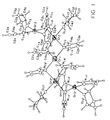
- Tables I - V list the resultant parameters used to generate the molecular structures shown in Figure 1 and Figure 2.
- a single crystal x-ray structure was obtained for Cr(NC 4 H 4 ) 4 , a portion of Product III and shown in Figure 3.
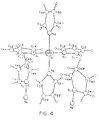
- a single crystal x-ray structure was obtained for [Na] 2 [Cr(NC 4 H 4 ) 4 ] ⁇ 2(OC 4 H 8 ), Product III and shown in Figure 4.
- the description of the single-crystal sample and mounting used for the data collection are as follows:
- Tables VI-X list the resultant parameters used to generate the molecular structures shown in Figure 3 and Figure 4.
- Table VI. Atomic Coordinates for Nonhydrogen Atoms in Crystalline ⁇ Na ⁇ 2 ⁇ Cr(NC 4 H 4 ) 4 ⁇ - 2 OC 4 H 8 a Atom Type b Fractional Coordinates Equivalent Isotropic Thermal Parameter B, ⁇ 2 x 10 c 10 4 x 10 4 y 10 4 z Anion Cr 8 d 2982(1) 2588 d 58(1) N 1 1981(4) 2924(2) 3183(2) 56(1) N 2 8 d 4343(3) 2588 d 52(1) N 3 8 d 1612(3) 2588 d 78(2) C 11 3241(5) 2958(3) 3888(3) 65(2) C 12 4224(6) 2768(3) 3587(3) 73(2) C 13 3513(7) 2638(4) 4146(3) 82(2) C 14 2894(7) 2734(4) 3884(3) 76(2) C 21 987(5) 4884(3) 2926(3) 68(1) C 22 582(4) 5753(3) 2766(3)
- Anisotropic Thermal Parameters of Nonhydrogen Atoms in Crystalline ⁇ Na ⁇ 2 ⁇ Cr(NC 4 H 4 ) 4 ⁇ - 2 OC 4 H 8 a , b Atom Type c Anisotropic Thermal Parameter ( ⁇ x 10) B 11 B 22 B 33 B 12 B 13 B 23 Anion Cr 64(1) 34(1) 55(1) 8 d 15(1) 8 d N 1 69(2) 44(2) 56(2) 6(1) 12(1) 6(1) N 2 64(3) 39(2) 56(3) 8 d 16(2) 8 d N 3 65(3) 38(2) 187(4) 8 d 14(3) 8 d C 11 78(3) 58(2) 78(3) -6(2) 18(2) 2(2) C 12 78(3) 62(3) 84(3) 4(2) 7(2) -8(2) C 13 183(4) 79(3) 58(3) 22(3) -8(3) 8(2) C 14 86(3) 86(3) 58(3) 16(3) 16(2) 5(2) C 21 66(2) 45(2) 78(3) -2(2) 15(2) -6(2) C 22 68(3) 38(2) 185(4) -7(2) 27(2) -9(2) C
- Atomic Coordinates for Hydrogen Atoms in Crystalline ⁇ Na ⁇ 2 ⁇ Cr(N 4 H 4 ) 4 ⁇ - 2 OC 4 H 8 a Atom Type b
- Hydrogen atoms were included in the structure factor calculations as idealized atoms (assuming sp 2 - or sp 3 -
- the isotropic thermal parameter of each hydrogen atom was fixed at 1.2 times the equivalent isotropic thermal parameter of the carbon atom to which it is covalently bonded.
- Hydrogen atoms are labeled with the same numerical subscripts as the carbon atoms to which they are covalently bonded with an additional literal subscript (a or b) where necessary to distinguish between hydrogens bonded to the same carbon. Table IX.
- Type b Angle deg. N 1 CrN 2 92.5(1) N 1 C 11 C 12 110.5(5) N 1 CrN 3 87.5(1) C 11 C 12 C 13 107.3(5) N 1 CrN 1' c 175.1(2) C 12 C 13 C 14 106.4(5) N 2 CrN 3 180.0(-) d N 1 C 14 C 13 110.9(5) N 2 C 21 C 22 110.2(4) CrN 1 C 11 127.5(3) C 21 C 22 C 22' c 106.8(3) CrN 1 C 14 127.1(4) N 3 C 31 C 32 109.1(6) C 11 N 1 C 14 104.9(4) C 31 C 32 C 32' c 107.5(5) CrN 2 C 21 127.0(2) C 21 N 2 C 21' c 106.0(5) CrN 3 C 31 126.7(3) C 31 N 3 C 31' c 106.7(6) a
- the numbers in parentheses are the estimated standard deviations in the last significant digit.
- b Atoms are labeled in agreement with Figure 1.
- c Atom labeled with a prime(') are related to nonprimed atoms by the symmetry operation -x, y, 1 ⁇ 2-z.
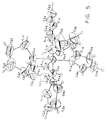
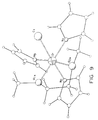
- Tables XI - XV list the resultant parameters used to generate the molecular structures shown in Figure 5 and Figure 6.
- the product obtained from the reaction of sodium 2,5-dimethylpyrrolide and CrCl 2 used in the preparation of an active catalyst was a light blue solid, Product VI.
- 2,5-Dimethylpyrrole (5.0ml/49.1mmole) was mixed with excess sodium (40% dispersion in mineral spirits) in tetrahydrofuran (125ml) at ambient temperature. The mixture was refluxed 12 hours under nitrogen then filtered to remove excess sodium.
- the sodium 2,5-dimethylpyrrolide was used in-situ and combined with chromous chloride (3.03g/24.7mmole) at ambient temperature. The reaction mixture was refluxed under nitrogen for 48 hours.
- the gray-green solution was filtered (medium porosity frit) at ambient temperature and stripped of solvent under vacuum, then pumped dry under vacuum for 12 hours resulting in a gray/green solid. This grey/green solid was then washed with pentane resulting in a light blue solid, Product VI, which was collected by filtration. Product VI was used in the preparation of an active catalyst without further purification.
- the actual charging of the reactor was accomplished by the following method. After purging the reactor at 100°C with a stream of nitrogen for at least 15 minutes, the reactor temperature was lowered to 90°C and a preweighed amount of supported chromium pyrrolide catalyst was charged against a slight countercurrent of nitrogen. One liter of isobutane was then charged to the reactor and finally the reactor pressurized with ethylene.
- the ethylene consumed was determined using a precalibrated ethylene flow meter. Samples of the liquid product mixture were taken after 30 minute run time without depressurizing the reactor. This was done by filling to 200-300 psig a steel sampling cylinder adapted to the reactor with a dip tube fitted with a fritted tip extending into the bottom of the reactor vessel. Samples taken this way were analyzed by gas chromatography and gas chromatography-mass spectrometry. Selectivities were normalized to 100%. Solid products were obtained by venting the reactor to atmosphere, separating by decantation of the liquids from the solid material.
- the solids were then dried at 100°C in a vacuum oven and weighed, The yield of solid product was obtained by weighing the combined solid and catalyst residues and subtracting from this the preweighed catalyst charge. The yield of volatile products was obtained by subtracting the yield of solid products from the grams of ethylene consumed as recorded by the flow meter.
- Activity typically ranged from 300-1500 g product/g catalyst/hour calculated for 30 minute run time, as shown in Table XVI.
- the product obtained typically was represented by 97-99.5% by weight liquids and 0.5-3% by weight polymer (wax).
- the liquid fraction was typically 85% hexenes, 11% decenes, 2% tetradecences, based on the total weight of the liquid fraction.
- the balance of the liquid product mixture was a trace level distribution of olefins typically totalling about 1-2% by weight of the product mixture, see Table XVII.
- Active catalysts were prepared from the chromium pyrrolide complexes as follows. All toluene and/or pentane rinses used about 15 to about 30mls of liquid.
- 0.3143g of the catalyst was charged directly to the reactor for polymerization.
- 1.0ml of a 0.5% TEA in heptanes solution was charged to the reactor after the catalyst charge but before the isobutane (reactor solvent) charge to purge feedstock poisons.
- Run 6 0.071g of Product V (prepared in THF solvent), which was heated to 80°C for 4 hours under nitrogen flush to remove residual THF, was slurried with 15ml toluene at ambient temperature. 2.0ml of a 1M TEA in hexanes solution was added to the solution and stirred for 1 hour. The formation of a brown solution and the complete dissolution of Product V resulted immediately upon TEA addition. SiO 2 (2.52g) was added to the solution and stirred for an additional 2 minutes. The supported catalyst was filtered from the solution as a brown solid, rinsed twice with toluene, and then twice with pentane. All of the catalyst was charged directly to the reactor for polymerization.
- Run 7 0.103g of Product II (prepared in THF solvent) was slurried with 15ml toluene at ambient temperature. 1.0ml of a 1.9M TEA in toluene solution was added to the solution and stirred for 10 minutes. The formation of a brown solution and the complete dissolution of Product II resulted immediately upon TEA addition. Al 2 O 3 (2.27g) was added to the solution and stirred for an additional 2 minutes. The supported catalyst was filtered from the solution as a brown solid, rinsed twice with toluene, and then twice with pentane. 1.2926g of the catalyst was charged directly to the reactor for polymerization.
- Run 8 0.120g of Product I (prepared in THF solvent) was slurried with 15ml toluene at ambient temperature. 2.0ml of a 1M TEA in hexanes solution was added to the solution and stirred for 2 days. The formation of a brown solution and the complete dissolution of Product I resulted immediately upon TEA addition. SiO 2 (1.0g) was added to the solution and stirred for an additional 3 weeks. The supported catalyst was filtered from the solution as a brown solid, rinsed twice with toluene, and then twice with pentane. All of the catalyst was charged directly to the reactor for polymerization.
- Run 12 0.073g of Product V (prepared in THF solvent), which was heated to 80°C for 4 hours under nitrogen flush to remove residual THF, was slurried with 15ml toluene at ambient temperature. 6.0ml of a 1M TEA in hexanes solution was added and the solution stirred for 24 hours. The formation of a brown solution and the complete dissolution of Product V resulted immediately upon TEA addition. P/SiO 2 (7.0g) was added to the solution and stirred for an additional 24 hours which nearly decolorized it. The supported catalyst was filtered from the solution as a brown solid, rinsed twice with toluene, and then twice with pentane. 2.85g of catalyst was charged directly to the reactor for polymerization.
- Run 13 0.125g of Product II was slurried with 15ml diethylbenzene at ambient temperature. 9.0ml of a 1M TEA in hexanes solution was added to the solution and stirred for 8 hours. The formation of a brown solution and the complete dissolution of Product II resulted immediately upon TEA addition. F/Al 2 O 3 (2.0g) was added to the solution and stirred for an additional 12 hours. The supported catalyst was filtered from the solution as a brown solid, rinsed twice with toluene, and then twice with pentane. 0.5477g of catalyst was charged directly to the reactor for polymerization.
- Run 14 0.125g of Product VI was slurried with 15ml toluene at ambient temperature. 1.5ml of a 1M TEA in hexanes solution was added and the solution stirred for 10 minutes. The formation of a red/brown solution and the complete dissolution of Product VI resulted immediately upon TEA addition. SiO 2 (2.0g) was added to the solution and stirred for an additional 1 minute which nearly decolorized it. The supported silica catalyst was filtered from the solution as a red/brown solid, rinsed twice with toluene, and then twice with pentane. All of the catalyst was charged directly to the reactor for polymerization.
- 0.4609g of the catalyst was charged directly to the reactor for polymerization. 3.0ml of a 0.5% TEA in heptanes solution was charged to the reactor after the catalyst charge but before the isobutane (reactor solvent) charge to purge feedstock poisons.
- Run 17 0.1610g of Product I was charged directly to the reactor at 90°C. The reactor was charged with 1 liter isobutane and pressurized to 550 psig with ethylene. No ethylene consumption was detected, therefore 50 psig of dihydrogen was charged to the reactor which did not initiate ethylene consumption. Ethylene consumption was initiated after 2.0ml of 1M TEA in hexanes solution was charged.
- Run 18 0.3528g of Product VI was charged directly to the reactor at 90°C.
- the reactor was charged with 1 liter isobutane and pressurized to 550 psig with ethylene. No ethylene consumption was detected, therefore 2.0ml of a 1M TEA in hexanes solution was charged which did initiate ethylene consumption.
- Run 19 0.3482g of Product VI was charged directly to the reactor at 90°C.
- the reactor was also charged with 2.0ml of a 1M TEA in hexanes solution prior to a 1 liter isobutane charge.
- the reactor was then pressurized to 550 psig with ethylene. No ethylene consumption was detected, therefore 30 psi of dihydrogen was charged to the reactor which initiated ethylene consumption.
- DME dimethoxyethane
- Table XVI show that the inventive chromium compounds can be used either supported (Runs 1-16, 20) or unsupported (Runs 17-19) to polymerize and/or trimerize olefins. Furthermore, conditions can be varied to increase the amount of trimer product (Runs 1-5 and 9) or to have a higher yield of solid, or polymer, product (Runs 6, 7, and 13). Runs 1, 3, and 20 demonstrate that high activities are attainable.
- Tables XVIII - XXII list the resultant parameters used to generate the molecular structures shown in Figure 7 and Figure 8.
Landscapes
- Chemical & Material Sciences (AREA)
- Organic Chemistry (AREA)
- Chemical Kinetics & Catalysis (AREA)
- Materials Engineering (AREA)
- Engineering & Computer Science (AREA)
- Inorganic Chemistry (AREA)
- Medicinal Chemistry (AREA)
- Polymers & Plastics (AREA)
- Health & Medical Sciences (AREA)
- Transition And Organic Metals Composition Catalysts For Addition Polymerization (AREA)
- Organic Low-Molecular-Weight Compounds And Preparation Thereof (AREA)
- Catalysts (AREA)
- Polymerization Catalysts (AREA)
- Addition Polymer Or Copolymer, Post-Treatments, Or Chemical Modifications (AREA)
- Nitrogen Condensed Heterocyclic Rings (AREA)
- Polymerisation Methods In General (AREA)
- Low-Molecular Organic Synthesis Reactions Using Catalysts (AREA)
Claims (47)
- Verfahren zur Herstellung von Chromverbindungen, gekennzeichnet durch Rückflußkochen eines Gemisches, das ein Chromsalz, ein Metallamid und ein Elektronenpaardonator-Lösungsmittel enthält.
- Verfahren nach Anspruch 1, wobei das Rückflußkochen für eine Zeitspanne von 1 Minute bis 1 Woche erfolgt.
- Verfahren nach Anspruch 1 oder 2, wobei das Chromsalz unter Chromsäuren, Chromhalogeniden und Gemischen davon ausgewählt wird.
- Verfahren nach Anspruch 3, wobei das Chromhalogenid unter Chrom(II)-chlorid, Chrom(III)-chlorid und Gemischen davon ausgewählt wird.
- Verfahren nach einem der Ansprüche 1 bis 4, wobei das Metallamid unter Alkalimetallamidsalzen, Erdalkalimetallamidsalzen, Silylamidsalzen und Gemischen davon ausgewählt wird.
- Verfahren nach einem der Ansprüche 1 bis 5, wobei das Metallamid 1 bis 20 Kohlenstoffatome aufweist.
- Verfahren nach einem der Ansprüche 1 bis 6, wobei es sich beim Metallamid um eine ungesättigte Verbindung handelt.
- Verfahren nach einem der Ansprüche 1 bis 7, wobei es sich beim Metallamid um eine aromatische Verbindung handelt.
- Verfahren nach Anspruch 1, wobei das Metallamid mindestens einen Aminliganden, der unter Pyrrolliganden, Derivaten von Pyrrolliganden und Gemischen davon ausgewählt ist, aufweist.
- Verfahren nach einem der Ansprüche 1 bis 9, wobei das Metallamid im Elektronenpaardonator-Lösungsmittel löslich ist.
- Verfahren nach einem der Ansprüche 1 bis 10, wobei das Elektronenpaardonator-Lösungsmittel 2 bis 20 Kohlenstoffatome aufweist.
- Verfahren nach einem der Ansprüche 1 bis 11, wobei es sich beim Elektronenpaardonator-Lösungsmittel um eine aliphatische Verbindung handelt.
- Verfahren nach einem der Ansprüche 1 bis 12, wobei es sich beim Elektronenpaardonator-Lösungsmittel um einen Ether, der unter Tetrahydrofuran, Derivaten von Tetrahydrofuran, Dimethoxyethan, Derivaten von Dimethoxyethan und Gemischen davon ausgewählt ist, handelt.
- Verfahren nach einem der Ansprüche 1 bis 13, wobei nach Beendigung der Umsetzung die Flüssigkeit zur Entfernung von etwaigen Reaktionsnebenprodukten filtriert wird.
- Verfahren nach Anspruch 14, wobei die auf diese Weise filtrierte Flüssigkeit zur Bildung eines Feststoffs behandelt wird.
- Verfahren nach Anspruch 15, wobei die auf diese Weise filtrierte Flüssigkeit langsam eingedampft wird.
- Verfahren nach Anspruch 15, wobei die auf diese Weise filtrierte Flüssigkeit mit einem nicht-polaren Lösungsmittel behandelt wird.
- Verfahren nach einem der Ansprüche 1, 2 und 14-17, wobei das Reaktionsgemisch etwa 1 Mol Chrom(II)-chlorid, etwa 2 Mol Natriumpyrrol und Tetrahydrofuran enthält.
- Verfahren nach einem der Ansprüche 1, 2 und 14-17, wobei das Reaktionsgemisch etwa 1 Mol Chrom(II)-chlorid, einen Überschuß an Natriumpyrrol und einen Überschuß an Tetrahydrofuran enthält.
- Verfahren nach einem der Ansprüche 1, 2 und 14-17, wobei das Reaktionsgemisch etwa 1 Mol Chrom(III)-chlorid, etwa 3 Mol Natriumpyrrol und einen Überschuß an Dimethoxyethan enthält.
- Verfahren nach einem der Ansprüche 1, 2 und 14-17, wobei das Reaktionsgemisch etwa 1 Mol Chrom(II)-chlorid, einen Überschuß an Dimethylpyrrol und einen Überschuß an Tetrahydrofuran enthält.
- Verfahren nach einem der Ansprüche 1 bis 21, ferner umfassend die Umsetzung der erhaltenen Chromverbindung mit mindestens einer aktivierenden Verbindung, die unter Metallalkylen und Lewis-Säuren ausgewählt ist, unter Bildung eines Katalysators.
- Verfahren nach Anspruch 1 bis 21, ferner umfassend die Umsetzung der erhaltenen Chromverbindung mit mindestens einer aktivierenden Verbindung, die unter Metallalkylen und Lewis-Säuren ausgewählt ist, die anschließende Zugabe eines anorganischen Oxids als Träger und die Gewinnung eines festen Katalysatorprodukts.
- Verfahren nach einem der Ansprüche 1 bis 21, ferner umfassend das Vermischen des die Chromverbindung enthaltenden Reaktionsgemisches mit einem anorganischen Oxid unter Bildung einer Aufschlämmung, die Zugabe von mindestens einer aktivierenden Verbindung, die unter Metallalkylen und Lewis-Säuren ausgewählt ist, und die Gewinnung eines festen Katalysatorprodukts.
- Verfahren nach Anspruch 23 oder 24, wobei die aktivierende Verbindung in einer aromatischen Verbindung, vorzugsweise Toluol, gelöst wird.
- Verfahren nach einem der Ansprüche 22 bis 25, wobei es sich bei der aktivierenden Verbindung um eine Trialkylaluminiumverbindung und insbesondere um Triethylaluminium handelt.
- Verfahren nach einem der Ansprüche 22 bis 26, wobei es sich bei der Chromverbindung um ein Chrompyrrolid handelt.
- Verfahren nach einem der Ansprüche 23 bis 27, wobei es sich beim anorganischen Oxid um Aluminiumphosphat handelt.
- Chromverbindung der allgemeinen Formel I
{[Crm(C4H4N)n] (OC4H8)p [Na]q} (I)
worin m, n, p und q die folgenden Bedeutungen haben:m n p q 5 10 4 0 1 4 0 0 1 4 2 2 1 5 1 0 1 5 5 2 - Verbindung nach Anspruch 29 der Formel
Cr5(C4H4N)10(OC4H8)4.
- Verbindung nach Anspruch 29 der Formel
[Cr(C4H4N)4].
- Verbindung nach Anspruch 29 der Formel
[Cr(C4H4N)4] [Na]2x2 (OC4H8).
- Verbindung nach Anspruch 29 der Formel
[Cr(C4H4N)5(OC4H8)].
- Verbindung nach Anspruch 29 der Formel
[Cr(C4H4N)5(OC4H8)][Na]2x4(OC4H8).
- Zusammensetzung, enthaltend mindestens eine der Chromverbindungen (I) nach Anspruch 29.
- Zusammensetzung nach Anspruch 35, wobei die Chromverbindung auf ein anorganisches Oxid als Träger aufgebracht ist.
- Zusammensetzung nach Anspruch 35 oder 36, ferner umfassend eine aktivierende Verbindung, die unter Metallalkylen und Lewis-Säuren ausgewählt ist.
- Zusammensetzung nach Anspruch 37, wobei es sich beim Metallalkyl um Trialkylaluminium und vorzugsweise um Triethylaluminium handelt.
- Verwendung der Chromverbindungen oder der die Chromverbindungen enthaltenden Zusammensetzungen nach einem der Ansprüche 29 bis 38 zur Polymerisation und/oder Trimerisation von Olefinen.
- Verwendung nach Anspruch 39, wobei das Olefin 2 bis 30 Kohlenstoffatome aufweist.
- Verwendung nach Anspruch 40, wobei es sich beim Olefin um Ethylen handelt.
- Verwendung nach einem der Ansprüche 39 bis 41, wobei die Polymersisation und/oder die Trimerisation in Gegenwart einer aktivierenden Verbindung, die unter Metallalkylen und Lewis-Säuren ausgewählt ist, durchgeführt wird.
- Verfahren nach einem der Ansprüche 1 bis 28, wobei CrCl2 und Natriumpyrrolid (NaC4H4N) in einem Molverhältnis von 1:2 in unter Rückfluß siedendem Tetrahydrofuran (THF) unter Bildung von Cr5(C4H4N)10(C4H8O)4 umgesetzt werden.
- Verfahren nach einem der Ansprüche 1 bis 28, wobei CrCl2 und Natriumpyrrolid in unter Rückfluß siedendem THF unter Bildung von [Cr(C4H4N)4][Na]2 · 2 C4H8O und [Cr(C4H4N)5(C4H8O)][Na]2 · 4 C4H8O umgesetzt werden,wobei das Natriumpyrrolid in molarem Überschuß gegenüber CrCl2 eingesetzt wird.
- Verfahren nach einem der Ansprüche 1 bis 28, wobei CrCl3 und Natriumpyrrolid in einem Molverhältnis von 1:3 in unter Rückfluß siedendem Dimethoxyethan (DME) umgesetzt werden.
- Verfahren nach einem der Ansprüche 1 bis 28, wobei CrCl2 und 2,5-Dimethylpyrrolid in einem Molverhältnis von 1:2 in unter Rückfluß siedendem (THF) umgesetzt werden.
- Verfahren zur Herstellung der Zusammensetzung nach einem der Ansprüche 35 bis 38, wobei mindestens eine der Chromverbindungen von Anspruch 29, die nach dem Verfahren gemäß einem der Ansprüche 1 bis 28 und 43 bis 46 erhätlich ist, mit einem Metallalkyl, wie Trimethylaluminium, vermischt wird.
Applications Claiming Priority (4)
| Application Number | Priority Date | Filing Date | Title |
|---|---|---|---|
| US39268889A | 1989-08-10 | 1989-08-10 | |
| US45455489A | 1989-12-21 | 1989-12-21 | |
| US454554 | 1989-12-21 | ||
| US392688 | 1989-12-21 |
Publications (3)
| Publication Number | Publication Date |
|---|---|
| EP0416304A2 EP0416304A2 (de) | 1991-03-13 |
| EP0416304A3 EP0416304A3 (en) | 1991-04-03 |
| EP0416304B1 true EP0416304B1 (de) | 1997-03-12 |
Family
ID=27013989
Family Applications (1)
| Application Number | Title | Priority Date | Filing Date |
|---|---|---|---|
| EP90115225A Expired - Lifetime EP0416304B1 (de) | 1989-08-10 | 1990-08-08 | Chromverbindungen und ihre Verwendung |
Country Status (22)
| Country | Link |
|---|---|
| EP (1) | EP0416304B1 (de) |
| JP (2) | JP2735682B2 (de) |
| KR (2) | KR0156738B1 (de) |
| AT (1) | ATE150027T1 (de) |
| AU (1) | AU610782B1 (de) |
| CA (1) | CA2020509C (de) |
| CZ (1) | CZ283274B6 (de) |
| DD (1) | DD299442A5 (de) |
| DE (1) | DE69030146T2 (de) |
| DK (1) | DK0416304T3 (de) |
| DZ (1) | DZ1439A1 (de) |
| EG (1) | EG18825A (de) |
| ES (1) | ES2098233T3 (de) |
| FI (1) | FI100182B (de) |
| GR (1) | GR3023468T3 (de) |
| HU (1) | HU219604B (de) |
| MY (1) | MY109630A (de) |
| NO (1) | NO301484B1 (de) |
| PH (1) | PH31471A (de) |
| PL (1) | PL166803B1 (de) |
| RU (1) | RU2102142C1 (de) |
| SK (1) | SK392990A3 (de) |
Cited By (2)
| Publication number | Priority date | Publication date | Assignee | Title |
|---|---|---|---|---|
| US7414006B2 (en) | 2005-03-09 | 2008-08-19 | Exxonmobil Chemical Patents Inc. | Methods for oligomerizing olefins |
| US7425661B2 (en) | 2005-03-09 | 2008-09-16 | Exxonmobil Chemicals Patents Inc. | Methods for oligomerizing olefins |
Families Citing this family (28)
| Publication number | Priority date | Publication date | Assignee | Title |
|---|---|---|---|---|
| CA2020509C (en) * | 1989-08-10 | 1998-04-28 | William K. Reagen | Chromium compounds and uses thereof |
| EP0548805B1 (de) * | 1991-12-18 | 1997-03-05 | Phillips Petroleum Company | Verfahren zur Herstellung von Polymerisationskatalysator |
| SG112883A1 (en) * | 1992-09-17 | 2005-07-28 | Mitsubishi Chem Corp | Method for oligomerizing an alpha-olefin |
| CA2087578C (en) * | 1993-01-19 | 1998-10-27 | William Kevin Reagen | Preparing catalyst for olefin polymerization |
| KR100271582B1 (ko) * | 1993-02-04 | 2000-11-15 | 린다 에스 잘리 | 올 레핀의 삼량체화, 올리고머화 및/또는 중합화방법, 및 이를 위한 촉매 시스템의 제조 방법 |
| TW354300B (en) * | 1993-02-17 | 1999-03-11 | Mitsubishi Chem Corp | Process for producing <alpha>-olefin oligomers |
| TW279167B (de) * | 1993-03-12 | 1996-06-21 | Sumitomo Chemical Co | |
| US5543375A (en) * | 1994-02-18 | 1996-08-06 | Phillips Petroleum Company | Olefin production |
| CA2134503C (en) * | 1994-02-18 | 2001-04-10 | Mark E. Lashier | Olefin production |
| MX9604090A (es) * | 1994-03-15 | 1997-12-31 | Du Pont | Polimerizacion de radicales en crecimiento de monomeros de vinilo. |
| JP3613642B2 (ja) | 1994-09-05 | 2005-01-26 | 住友化学株式会社 | 1−ヘキセンの製造方法 |
| KR100414008B1 (ko) * | 1995-03-02 | 2004-04-29 | 미쓰비시 가가꾸 가부시키가이샤 | α-올레핀올리고머의제조방법 |
| US5708102A (en) * | 1995-03-03 | 1998-01-13 | E. I. Du Pont De Nemours And Company | Living radical polymerization of vinyl monomers |
| GB2308755B (en) * | 1995-12-28 | 1997-12-17 | Yazaki Corp | Half-fitting prevention connector |
| US5780698A (en) * | 1997-03-31 | 1998-07-14 | Chevron Chemical Company | Olefin oligomerization catalyst and process employing and preparing same |
| US20040210083A1 (en) | 2003-04-17 | 2004-10-21 | De Kraker Abraham Robert | Process for production of essentially chloride-free calcium sulfonate |
| WO2008081644A1 (ja) * | 2006-12-28 | 2008-07-10 | Mitsubishi Chemical Corporation | α-オレフィン低重合体の製造方法及びピロール化合物の保管方法 |
| US8138348B2 (en) | 2007-01-08 | 2012-03-20 | Exxonmobil Chemical Patents Inc. | Methods for oligomerizing olefins with chromium pyridine mono-oxazoline catalysts |
| WO2008085659A1 (en) | 2007-01-08 | 2008-07-17 | Exxonmobil Chemical Patents Inc. | Methods for oligomerizing olefins with chromium pyridine ether catalysts |
| US8067609B2 (en) | 2007-01-08 | 2011-11-29 | Exxonmobil Chemical Patents Inc. | Methods for oligomerizing olefins with chromium pyridine thioether catalysts |
| CN102164672A (zh) | 2008-10-31 | 2011-08-24 | 切弗朗菲利浦化学公司 | 低聚催化剂系统和低聚烯烃的方法 |
| US8471085B2 (en) | 2008-10-31 | 2013-06-25 | Chevron Phillips Chemical Company Lp | Oligomerization catalyst system and process for oligomerizing olefins |
| RU2412002C1 (ru) * | 2009-07-13 | 2011-02-20 | ОТКРЫТОЕ АКЦИОНЕРНОЕ ОБЩЕСТВО "СИБУР Холдинг" | Способ получения каталитической системы для олигомеризации олефинов и способ олигомеризации олефинов |
| KR101483247B1 (ko) * | 2013-04-23 | 2015-01-16 | 주식회사 엘지화학 | 폴리올레핀 중합용 촉매의 제조 방법 및 폴리올레핀 제조방법 |
| US20180186708A1 (en) | 2016-12-29 | 2018-07-05 | Chevron Phillips Chemical Company Lp | Ethylene Oligomerization Processes |
| US10604457B2 (en) | 2016-12-29 | 2020-03-31 | Chevron Phillips Chemical Company Lp | Ethylene oligomerization processes |
| US10407360B2 (en) | 2017-12-22 | 2019-09-10 | Chevron Phillips Chemical Company Lp | Ethylene oligomerization processes |
| CN114728277A (zh) * | 2019-09-09 | 2022-07-08 | 阿卜杜拉国王科技大学 | 用于烯烃齐聚的mof催化剂 |
Family Cites Families (5)
| Publication number | Priority date | Publication date | Assignee | Title |
|---|---|---|---|---|
| NL135065C (de) * | 1965-05-14 | |||
| US4364855A (en) * | 1980-12-31 | 1982-12-21 | Phillips Petroleum Company | Production of aluminum phosphate from concentrated mass |
| US4454293A (en) * | 1981-11-20 | 1984-06-12 | Phillips Petroleum Company | Polymerization using partially hydrolyzed silicate treatment of catalyst support |
| CA2021410C (en) * | 1989-08-10 | 1998-06-02 | William Kevin Reagen | Process for olefin polymerization |
| CA2020509C (en) * | 1989-08-10 | 1998-04-28 | William K. Reagen | Chromium compounds and uses thereof |
-
1990
- 1990-07-05 CA CA002020509A patent/CA2020509C/en not_active Expired - Fee Related
- 1990-08-06 PH PH40972A patent/PH31471A/en unknown
- 1990-08-08 DE DE69030146T patent/DE69030146T2/de not_active Expired - Fee Related
- 1990-08-08 AU AU60296/90A patent/AU610782B1/en not_active Ceased
- 1990-08-08 DZ DZ900148A patent/DZ1439A1/fr active
- 1990-08-08 ES ES90115225T patent/ES2098233T3/es not_active Expired - Lifetime
- 1990-08-08 EP EP90115225A patent/EP0416304B1/de not_active Expired - Lifetime
- 1990-08-08 AT AT90115225T patent/ATE150027T1/de not_active IP Right Cessation
- 1990-08-08 DK DK90115225.6T patent/DK0416304T3/da active
- 1990-08-09 FI FI903952A patent/FI100182B/fi not_active IP Right Cessation
- 1990-08-09 CZ CS903929A patent/CZ283274B6/cs not_active IP Right Cessation
- 1990-08-09 RU SU4831051A patent/RU2102142C1/ru not_active IP Right Cessation
- 1990-08-09 KR KR1019900012250A patent/KR0156738B1/ko not_active Expired - Fee Related
- 1990-08-09 NO NO903516A patent/NO301484B1/no not_active IP Right Cessation
- 1990-08-09 HU HU947/90A patent/HU219604B/hu not_active IP Right Cessation
- 1990-08-09 SK SK3929-90A patent/SK392990A3/sk unknown
- 1990-08-10 MY MYPI90001342A patent/MY109630A/en unknown
- 1990-08-10 DD DD90343370A patent/DD299442A5/de unknown
- 1990-08-10 JP JP2213607A patent/JP2735682B2/ja not_active Expired - Fee Related
- 1990-08-10 PL PL90286477A patent/PL166803B1/pl unknown
- 1990-09-11 EG EG47590A patent/EG18825A/xx active
-
1996
- 1996-08-20 JP JP8218806A patent/JP2793573B2/ja not_active Expired - Fee Related
-
1997
- 1997-05-16 GR GR970401117T patent/GR3023468T3/el unknown
-
1998
- 1998-04-28 KR KR1019980015040A patent/KR0156842B1/ko not_active Expired - Fee Related
Non-Patent Citations (2)
| Title |
|---|
| PREPRINTS AMERICAN CHEMICAL SOCIETY, vol. 34, no. 3, August 1989; W.K. REAGEN, pp. 583-588 * |
| PYRROLES, part 1, R.A. Jones (ed.); John Wiley & Sons; p. 428 * |
Cited By (2)
| Publication number | Priority date | Publication date | Assignee | Title |
|---|---|---|---|---|
| US7414006B2 (en) | 2005-03-09 | 2008-08-19 | Exxonmobil Chemical Patents Inc. | Methods for oligomerizing olefins |
| US7425661B2 (en) | 2005-03-09 | 2008-09-16 | Exxonmobil Chemicals Patents Inc. | Methods for oligomerizing olefins |
Also Published As
Similar Documents
| Publication | Publication Date | Title |
|---|---|---|
| EP0416304B1 (de) | Chromverbindungen und ihre Verwendung | |
| US5288823A (en) | Chromium compounds and uses thereof | |
| US5523507A (en) | Process of trimerizing and oligomerizing olefins using chromium compounds | |
| US5786431A (en) | Process for olefin polymerization | |
| US5331104A (en) | Chromium compounds and uses thereof | |
| EP0608447B1 (de) | Verfahren zur Herstellung eines Olefinpolymerisationskatalysator | |
| US5438027A (en) | Chromium compounds and uses thereof | |
| EP0417477B1 (de) | Verfahren zur Polymerisation von Olefinen | |
| RU2104088C1 (ru) | Способ получения каталитической системы для тримеризации, олигомеризации или полимеризации олефинов (варианты) и способ тримеризации, олигомеризации или полимеризации олефинов с использованием полученной каталитической системы | |
| PL173367B1 (pl) | Sposób wytwarzania układu katalitycznego | |
| CZ286970B6 (cs) | Způsob polymerace olefinů |
Legal Events
| Date | Code | Title | Description |
|---|---|---|---|
| PUAI | Public reference made under article 153(3) epc to a published international application that has entered the european phase |
Free format text: ORIGINAL CODE: 0009012 |
|
| PUAL | Search report despatched |
Free format text: ORIGINAL CODE: 0009013 |
|
| AK | Designated contracting states |
Kind code of ref document: A2 Designated state(s): AT BE CH DE DK ES FR GB GR IT LI LU NL SE |
|
| AK | Designated contracting states |
Kind code of ref document: A3 Designated state(s): AT BE CH DE DK ES FR GB GR IT LI LU NL SE |
|
| 17P | Request for examination filed |
Effective date: 19910904 |
|
| 17Q | First examination report despatched |
Effective date: 19940117 |
|
| GRAG | Despatch of communication of intention to grant |
Free format text: ORIGINAL CODE: EPIDOS AGRA |
|
| GRAH | Despatch of communication of intention to grant a patent |
Free format text: ORIGINAL CODE: EPIDOS IGRA |
|
| GRAH | Despatch of communication of intention to grant a patent |
Free format text: ORIGINAL CODE: EPIDOS IGRA |
|
| GRAA | (expected) grant |
Free format text: ORIGINAL CODE: 0009210 |
|
| AK | Designated contracting states |
Kind code of ref document: B1 Designated state(s): AT BE CH DE DK ES FR GB GR IT LI LU NL SE |
|
| REF | Corresponds to: |
Ref document number: 150027 Country of ref document: AT Date of ref document: 19970315 Kind code of ref document: T |
|
| REG | Reference to a national code |
Ref country code: CH Ref legal event code: EP Ref country code: CH Ref legal event code: NV Representative=s name: KIRKER & CIE SA |
|
| ITF | It: translation for a ep patent filed | ||
| REF | Corresponds to: |
Ref document number: 69030146 Country of ref document: DE Date of ref document: 19970417 |
|
| REG | Reference to a national code |
Ref country code: DK Ref legal event code: T3 |
|
| REG | Reference to a national code |
Ref country code: ES Ref legal event code: FG2A Ref document number: 2098233 Country of ref document: ES Kind code of ref document: T3 |
|
| ET | Fr: translation filed | ||
| REG | Reference to a national code |
Ref country code: GR Ref legal event code: FG4A Free format text: 3023468 |
|
| PLBE | No opposition filed within time limit |
Free format text: ORIGINAL CODE: 0009261 |
|
| STAA | Information on the status of an ep patent application or granted ep patent |
Free format text: STATUS: NO OPPOSITION FILED WITHIN TIME LIMIT |
|
| 26N | No opposition filed | ||
| REG | Reference to a national code |
Ref country code: GB Ref legal event code: IF02 |
|
| PGFP | Annual fee paid to national office [announced via postgrant information from national office to epo] |
Ref country code: LU Payment date: 20020918 Year of fee payment: 13 |
|
| PGFP | Annual fee paid to national office [announced via postgrant information from national office to epo] |
Ref country code: AT Payment date: 20030630 Year of fee payment: 14 |
|
| PGFP | Annual fee paid to national office [announced via postgrant information from national office to epo] |
Ref country code: DK Payment date: 20030704 Year of fee payment: 14 |
|
| PGFP | Annual fee paid to national office [announced via postgrant information from national office to epo] |
Ref country code: GR Payment date: 20030722 Year of fee payment: 14 |
|
| PGFP | Annual fee paid to national office [announced via postgrant information from national office to epo] |
Ref country code: SE Payment date: 20030805 Year of fee payment: 14 |
|
| PG25 | Lapsed in a contracting state [announced via postgrant information from national office to epo] |
Ref country code: LU Free format text: LAPSE BECAUSE OF NON-PAYMENT OF DUE FEES Effective date: 20030808 |
|
| PG25 | Lapsed in a contracting state [announced via postgrant information from national office to epo] |
Ref country code: AT Free format text: LAPSE BECAUSE OF NON-PAYMENT OF DUE FEES Effective date: 20040808 |
|
| PG25 | Lapsed in a contracting state [announced via postgrant information from national office to epo] |
Ref country code: SE Free format text: LAPSE BECAUSE OF NON-PAYMENT OF DUE FEES Effective date: 20040809 |
|
| PG25 | Lapsed in a contracting state [announced via postgrant information from national office to epo] |
Ref country code: DK Free format text: LAPSE BECAUSE OF NON-PAYMENT OF DUE FEES Effective date: 20040831 |
|
| PG25 | Lapsed in a contracting state [announced via postgrant information from national office to epo] |
Ref country code: GR Free format text: LAPSE BECAUSE OF NON-PAYMENT OF DUE FEES Effective date: 20050303 |
|
| EUG | Se: european patent has lapsed | ||
| REG | Reference to a national code |
Ref country code: DK Ref legal event code: EBP |
|
| PGFP | Annual fee paid to national office [announced via postgrant information from national office to epo] |
Ref country code: GB Payment date: 20050707 Year of fee payment: 16 |
|
| PGFP | Annual fee paid to national office [announced via postgrant information from national office to epo] |
Ref country code: NL Payment date: 20050712 Year of fee payment: 16 |
|
| PGFP | Annual fee paid to national office [announced via postgrant information from national office to epo] |
Ref country code: FR Payment date: 20050804 Year of fee payment: 16 |
|
| PGFP | Annual fee paid to national office [announced via postgrant information from national office to epo] |
Ref country code: BE Payment date: 20050826 Year of fee payment: 16 |
|
| PGFP | Annual fee paid to national office [announced via postgrant information from national office to epo] |
Ref country code: ES Payment date: 20050829 Year of fee payment: 16 |
|
| PGFP | Annual fee paid to national office [announced via postgrant information from national office to epo] |
Ref country code: DE Payment date: 20050831 Year of fee payment: 16 |
|
| PGFP | Annual fee paid to national office [announced via postgrant information from national office to epo] |
Ref country code: CH Payment date: 20050927 Year of fee payment: 16 |
|
| PG25 | Lapsed in a contracting state [announced via postgrant information from national office to epo] |
Ref country code: CH Free format text: LAPSE BECAUSE OF NON-PAYMENT OF DUE FEES Effective date: 20060831 Ref country code: LI Free format text: LAPSE BECAUSE OF NON-PAYMENT OF DUE FEES Effective date: 20060831 Ref country code: BE Free format text: LAPSE BECAUSE OF NON-PAYMENT OF DUE FEES Effective date: 20060831 |
|
| PGFP | Annual fee paid to national office [announced via postgrant information from national office to epo] |
Ref country code: IT Payment date: 20060831 Year of fee payment: 17 |
|
| PG25 | Lapsed in a contracting state [announced via postgrant information from national office to epo] |
Ref country code: NL Free format text: LAPSE BECAUSE OF NON-PAYMENT OF DUE FEES Effective date: 20070301 Ref country code: DE Free format text: LAPSE BECAUSE OF NON-PAYMENT OF DUE FEES Effective date: 20070301 |
|
| REG | Reference to a national code |
Ref country code: CH Ref legal event code: PL |
|
| GBPC | Gb: european patent ceased through non-payment of renewal fee |
Effective date: 20060808 |
|
| NLV4 | Nl: lapsed or anulled due to non-payment of the annual fee |
Effective date: 20070301 |
|
| REG | Reference to a national code |
Ref country code: FR Ref legal event code: ST Effective date: 20070430 |
|
| REG | Reference to a national code |
Ref country code: ES Ref legal event code: FD2A Effective date: 20060809 |
|
| PG25 | Lapsed in a contracting state [announced via postgrant information from national office to epo] |
Ref country code: GB Free format text: LAPSE BECAUSE OF NON-PAYMENT OF DUE FEES Effective date: 20060808 |
|
| BERE | Be: lapsed |
Owner name: *PHILLIPS PETROLEUM CY Effective date: 20060831 |
|
| PG25 | Lapsed in a contracting state [announced via postgrant information from national office to epo] |
Ref country code: ES Free format text: LAPSE BECAUSE OF NON-PAYMENT OF DUE FEES Effective date: 20060809 |
|
| PG25 | Lapsed in a contracting state [announced via postgrant information from national office to epo] |
Ref country code: FR Free format text: LAPSE BECAUSE OF NON-PAYMENT OF DUE FEES Effective date: 20060831 |
|
| PG25 | Lapsed in a contracting state [announced via postgrant information from national office to epo] |
Ref country code: IT Free format text: LAPSE BECAUSE OF NON-PAYMENT OF DUE FEES Effective date: 20070808 |