EP0417572A2 - Délivrance prolongée de médicaments à base de petites molécules hydrosolubles - Google Patents
Délivrance prolongée de médicaments à base de petites molécules hydrosolubles Download PDFInfo
- Publication number
- EP0417572A2 EP0417572A2 EP90116768A EP90116768A EP0417572A2 EP 0417572 A2 EP0417572 A2 EP 0417572A2 EP 90116768 A EP90116768 A EP 90116768A EP 90116768 A EP90116768 A EP 90116768A EP 0417572 A2 EP0417572 A2 EP 0417572A2
- Authority
- EP
- European Patent Office
- Prior art keywords
- release
- molecules
- polymer
- matrix
- biologically active
- Prior art date
- Legal status (The legal status is an assumption and is not a legal conclusion. Google has not performed a legal analysis and makes no representation as to the accuracy of the status listed.)
- Granted
Links
Images



Classifications
-
- A—HUMAN NECESSITIES
- A61—MEDICAL OR VETERINARY SCIENCE; HYGIENE
- A61K—PREPARATIONS FOR MEDICAL, DENTAL OR TOILETRY PURPOSES
- A61K9/00—Medicinal preparations characterised by special physical form
- A61K9/0012—Galenical forms characterised by the site of application
- A61K9/0019—Injectable compositions; Intramuscular, intravenous, arterial, subcutaneous administration; Compositions to be administered through the skin in an invasive manner
- A61K9/0024—Solid, semi-solid or solidifying implants, which are implanted or injected in body tissue
-
- A—HUMAN NECESSITIES
- A61—MEDICAL OR VETERINARY SCIENCE; HYGIENE
- A61K—PREPARATIONS FOR MEDICAL, DENTAL OR TOILETRY PURPOSES
- A61K9/00—Medicinal preparations characterised by special physical form
- A61K9/0012—Galenical forms characterised by the site of application
- A61K9/0085—Brain, e.g. brain implants; Spinal cord
-
- A—HUMAN NECESSITIES
- A61—MEDICAL OR VETERINARY SCIENCE; HYGIENE
- A61K—PREPARATIONS FOR MEDICAL, DENTAL OR TOILETRY PURPOSES
- A61K9/00—Medicinal preparations characterised by special physical form
- A61K9/20—Pills, tablets, discs, rods
- A61K9/2004—Excipients; Inactive ingredients
- A61K9/2022—Organic macromolecular compounds
- A61K9/2027—Organic macromolecular compounds obtained by reactions only involving carbon-to-carbon unsaturated bonds, e.g. polyvinyl pyrrolidone, poly(meth)acrylates
-
- A—HUMAN NECESSITIES
- A61—MEDICAL OR VETERINARY SCIENCE; HYGIENE
- A61K—PREPARATIONS FOR MEDICAL, DENTAL OR TOILETRY PURPOSES
- A61K9/00—Medicinal preparations characterised by special physical form
- A61K9/20—Pills, tablets, discs, rods
- A61K9/2072—Pills, tablets, discs, rods characterised by shape, structure or size; Tablets with holes, special break lines or identification marks; Partially coated tablets; Disintegrating flat shaped forms
-
- A—HUMAN NECESSITIES
- A61—MEDICAL OR VETERINARY SCIENCE; HYGIENE
- A61K—PREPARATIONS FOR MEDICAL, DENTAL OR TOILETRY PURPOSES
- A61K9/00—Medicinal preparations characterised by special physical form
- A61K9/20—Pills, tablets, discs, rods
- A61K9/2072—Pills, tablets, discs, rods characterised by shape, structure or size; Tablets with holes, special break lines or identification marks; Partially coated tablets; Disintegrating flat shaped forms
- A61K9/2086—Layered tablets, e.g. bilayer tablets; Tablets of the type inert core-active coat
-
- A—HUMAN NECESSITIES
- A61—MEDICAL OR VETERINARY SCIENCE; HYGIENE
- A61K—PREPARATIONS FOR MEDICAL, DENTAL OR TOILETRY PURPOSES
- A61K9/00—Medicinal preparations characterised by special physical form
- A61K9/20—Pills, tablets, discs, rods
- A61K9/28—Dragees; Coated pills or tablets, e.g. with film or compression coating
- A61K9/2806—Coating materials
- A61K9/2833—Organic macromolecular compounds
- A61K9/284—Organic macromolecular compounds obtained by reactions only involving carbon-to-carbon unsaturated bonds, e.g. polyvinyl pyrrolidone
Definitions
- the present invention is an extension of, and improvement on, the invention described and claimed in European patent application 88 10 69 35.5/290891, in turn corresponding to US S.N. 07/043 695 meanwhile issued into US-patent 488366.
- This invention is generally in the field of drug delivery devices for the controlled release of small, water-soluble molecules.
- the disclosed system is a polymeric composition useful for the controlled and continuous delivery of biologically active drugs from a non-erodible, hydrophobic polymer matrix device.
- the prior art discloses sustained or controlled-release of drugs of low molecular weight from polymeric devices, but such drugs were primarily molecules which were either insoluble or almost insoluble in water.
- U.S.S.N. 07/043,695 describes several examples in which dopamine and L-Dopa are released from ethylene vinyl acetate polymeric devices.
- dopamine a substance readily soluble in water, is very rapidly released at a non-linear rate when no coating surrounds the loaded polymer core. Linearity was only obtained when a nonpenetrable barrier was formed around the polymer core and a hole in the coating permitted the solution to have access to the loaded core of the device.
- the need to form a barrier around a loaded core greatly limits the use of such devices, largely because the absolute amount of drug that can be released from such a device is relatively small, generally insufficient for clinical use.
- Another object of the present invention is to provide a small polymeric device that can release a relatively large amount of low molecular weight, water soluble drug.
- Insoluble polymer matrixes can be defined in any shape, size and drug content.
- biocompatible polymers are used so that the device is implantable.
- the device is made by modifying prior art devices based on diffusion of fluid into a polymeric matrix containing, dispersed biologically active molecules to yield a polymer device which can be placed in a fluid environment, so that fluid is absorbed by the device and the water soluble molecules diffuse into the fluid environment, leaving behind pores and channels, where the rate of diffusion is limited by an impermeable coating over a portion of the polymeric matrix and/or by adjusting the drug loading to produce the number and size of pores and channels to the surface of the polymeric matrix yielding the desired release rate of the biologically active molecules.
- the device is characterized by several distinguishing features: a mechanism usually associated with macromolecular release which is applicable to small, water soluble molecules and controlled, long term linear release of small, water-soluble molecules in large quantities.
- Polymers such as ethylene vinyl acetate copolymer are manufactured into a continuous drug delivery system for small molecules which are water-soluble.
- Water-soluble as used herein is defined as soluble in water to a degree which is greater than “almost insoluble”, as defined in the Merck Index ("The Merck Index, 10th Edition", Merck & Co., Rahway, N.J., 1983).
- the device is a matrix-system.
- matrix as used herein is defined as a polymeric carrier matrix that is biocompatible and sufficiently resistant to chemical and/or physical destruction by the environment of use such that the matrix remains essentially intact throughout the release period.
- the polymer matrices should be biocompatible, plastically deformable, have limited water sorptivity, and be to a limited extent permeable to the passage of small, aqueous-soluble molecules.
- aqueous as used herein includes biological fluids, saline and physiological buffer solutions.
- Polymeric materials suitable for forming the matrix include the naturally occurring and commercially available polymers, such as acyl substituted cellulose acetates and alkyl derivatives thereof; partially and completely hydrolyzed alkylene-vinyl acetate copolymers, unplasticized polyvinyl chloride, crosslinked homo- and copolymers of polyvinyl acetate, crosslinked polyesters of acrylic and methacrylate; polyvinyl alkyl ethers; polyvinyl fluoride, silicone; polycarbonate, polyurethane; polyamide, polysulphones; styrene acrylonitrile copolymers, crosslinked poly(ethylene oxide); poly(alkylenes); poly(vinyl imidazole); poly(esters); poly(ethylene terephthalate); and chlorosulphonated polyolefines.
- polymers such as acyl substituted cellulose acetates and alkyl derivatives thereof; partially and completely hydrolyzed alkylene-vinyl acetate copoly
- the polymeric material useful for forming the matrix is the ethylene-vinyl acetate copolymer (EVA) commercially available from Dupont (Elvax 40W).
- EVA ethylene-vinyl acetate copolymer
- Techniques for preparation of these copolymers are disclosed in US Patent Nos 2,200,429; 2,398,785; and 2,947,735, in British Patent Nos. 589,927 and 582,093, and in Crystalline Olefin Polymers , edited by Raff, R.A.V., and Doak, V.W., Part II, pages 261 to 266, (Interscience Publishers Inc., New York 1964).
- L-DOPA controlled, long term release of L-DOPA.
- the devices were prepared by a modification of the method of preparation described by Rhine et al., "Polymers for sustained macromolecule release: procedure to fabricate reproducible delivery systems and control release kinetics", J. Pharmaceutical Sciences , 69(3), 265-270 (1980), and U.S. Patent No. 4,391,797 to Folkman and Langer).
- L-DOPA was used as a test substance since it has a m.w. of 197.19 and a water solubility of 66 mg/40 ml ("The Merck Index, 10th Edition", Merck & Co., Rahway, N.J., 1983).
- the delivery device is a two-phase system which is manufactured using standard techniques such as blending, mixing or the equivalent thereof, following selection of the biologically active material to be delivered and an appropriate polymer for formation of the matrix.
- the general method which was modified to fabricate the device of the present invention is that of solvent casting as disclosed by Siegel and Langer, "Controlled release of polypeptides and other macromolecules", Pharmaceutical Research 1, 2-10 (1984). Briefly, the drug, for example, L-DOPA, is mixed with the polymer, EVA, in a solvent, methylene chloride, the mixture is charged into a frozen mold, and freeze-dried under vacuum.
- the prior art method was altered to prevent channel and pore formation, thus reducing the accessibility of the fluids to the loaded core of the polymer and extending the period in which release of the drug takes place.
- the alterations of the fabrication method considered desirable included the following steps: 1. reduction of relative solvent quantity used for mixing the drug with the polymer (EVA), 2. substantially eliminating freeze-drying, and 3. application of vacuum during the entire evaporation phase. The amount of solvent was reduced since rapidly evaporating solvent might contribute to pore-formation. This was a particular concern when the polymer was then dried by freezing (-20°C).
- the polymer crystallization induced by freezing was only limited to the step where the glass mold was charged with liquid matrix containing dispersed drug particles and lasted for only a few minutes or hours.
- the evaporation phase was performed at room temperature in order to reduce pore formation in the core of the polymer. Pore formation occurs more readily when the slab remains at -20°C for several days, as is standard in the prior art. It is also advantageous to conduct the evaporation step under vacuum at room temperature to provide further significant reductions in pore formation.
- a two-phase system can be manufactured for delivering a physiologically effective amount of a small (less than 1000 m.w.) and water-soluble pharmacologically active molecule.
- a small (less than 1000 m.w.) and water-soluble pharmacologically active molecule can be implanted in animals and humans to produce a localized or systemic effect.
- composition formed by the method described above consists of a two-phase system having an interpenetrating phase of an agglomerate of a plurality of clusters of small, water-soluble molecules that form at higher loading of the polymer a network of substantially contiguous particles in the polymeric matrix phase.
- Ethylene vinyl acetate copolymer (EVA) was washed and slabs containing 50%, 55%, 60%, 65%, 70%, 75% or 80% (w/w) L-DOPA (Sigma, St. Louis, MO) were prepared according to the following procedure: The polymer was first dissolved in a minimum amount of methylene chloride solvent at 37°C for 24 hrs. An L-DOPA suspension was thoroughly mixed with the liquified polymer and cast in a frozen rectangular glass mold at -60°C, followed by evaporation as described above. Vacuum was applied until the sample solidified. Rectangular samples were then cut out of the raw slabs.
- quadruplicate samples of either loaded polymer matrix surrounded completely by a non-permeable barrier or an unloaded (blank) polymer without L-DOPA was prepared.
- the non-permeable coat was initially applied to reduce diffusion, thereby extending the time window of linear release.
- the following samples were prepared in quadruplicates: (a) a non-coated polymer to obtain maximum release quantity, (b) a coated polymer where all sides were sealed except for one face of the slab, to combine high release quantity with linearity, or (c) polymers which were fully coated with the exception of a pore through which the medium could gain access to the loaded core. In the non-coated polymers, however, the quantity of release was expected to be maximum.
- the solidified polymer was coated with an impermeable polymer barrier in such a way that various polymer geometries were obtained for purposes of comparisons of release characteristics.
- the matrix was first impaled on a 30 gauge syringe needle. The matrix was immersed in liquid nitrogen for 10 to 15 seconds and then immersed in a 20% (w/v) solution of EVAc in methylene chloride. The coated matrix was held under house vacuum for several hours and the procedure was repeated. When the needle was removed from the twice coated matrix, a pinhole cavity remained in the otherwise impermeable coating.
- the thickness of this impermeable coating was calculated to be approximately 500-700 ⁇ m.
- the procedure was identical except that the matrix wads not fully immersed in the polymer solution.
- Fully coated polymer matrices were produced by i) pouring a thin film of 10% (w/v) EVAc/methylene chloride into a level mold on dry ice, ii) waiting 10 to 15 minutes for this bottom layer to freeze completely, iii) placing EVAC/dopamine matrices on top of this pure EVAC layer, and iv) carefully pouring a second film of 10% EVAC/methylene chloride into the dry ice temperature mold.
- the mass of eVAc in each layer was adjusted to obtain a 500-700 ⁇ m thick coating on each face of the matrix.
- This sandwich matrix was evaporated for two days at -20°C and two days at room temperature under house vacuum. Fully coated devices were obtained by cutting around the encapsulated matrix.
- Quadruplicates of these devices were then separately incubated in vials containing a 150 mM NaCl, 0.2% EDTA (as antioxidant) solution, and maintained on an Orbitron oscillating platform (Boekel Industries, PA) in a 37°C oven.
- In vitro release was monitored by spectrophotometric analysis at 280 nm of the bathing solution, which was replaced each time a measurement was taken. Quantification of dopamine levels was based on comparison to a standard solution curve.
- the identity of the compound released at various time points was confirmed as greater than 99.9% dopamine by use of High Performance Liquid Chromatography (HPLC) analysis using an Allex 100A pump; a 20 ⁇ l sample Rheodyne loop; a 3 ⁇ m HR-80 column (ESA, Bedford, MA.); and an ESA 5100A coulometric detector with an inline conditioning cell.
- the mobile phase consisted of sodium phosphate, 0.6 g/L; heptane sulfonic acid, 350 mg/L; EDTA, 80 mg/L; and methanol, 5% v/v; pH 4.2.
- the flow rate was 1.8 ml/min. Chromatograms for dopamine, dihyroxyphenylacetic acid (DOPAC) and homovanillic acid (HVA) were completed within 12 minutes.
- DOPAC dihyroxyphenylacetic acid
- HVA homovanillic acid
- Quadruplicates of the L-DOPA containing polymer devices were individually immersed in glass scintillation vials containing 20 ml of 150 mM NaCl, 0.2% EDTA solution (as antioxidant) and then incubated at 37°C on a light protected oscillating platform.
- L-DOPA release was determined in bi-weekly intervals by spectrophotometric analysis (OD 280), replacing the bathing solution each time measurements were taken to avoid saturation of the solution. The release rate was calculated by comparison to spectrophotometric evaluation of known standards and the authenticity of L-DOPA was confirmed at various time points using high performance liquid chromatography (HPLC). The polymer itself or possible breakdown products resulted in no appreciable absorption at 280 nm.
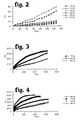
- Figures 2-4 The results are shown in Figures 2-4, indicating that controlled-release of L-DOPA was achieved for long time periods under all conditions.
- Figure 2 is a graph showing the cumulative L-DOPA release from polymers which were surrounded by a non-permeable coat containing a 2 mm hole.
- Figure 3 is a graph showing the cumulative L-DOPA release from polymers which were surrounded by a non-permeable coat on all but one side of the slab.
- Figure 4 is a graph showing the cumulative L-DOPA release from polymers which were not surrounded by a coat, showing linear release of L-DOPA.
- Figure 5 demonstrates the cumulative in vitro release of dopamine from a variety of polymer configurations. This cumulative release was directly proportional to the square root of time, suggesting that diffusion of the encapsulated solute from the polymer was the rate limiting step in the release process. Since release of dopamine from the device was totally eliminated by coating with a thin layer of EVAc, the EVAc must be impermeable to the dopamine. Therefore, release of dopamine from the polymer must occur through a network of interconnected, aqueous pores, as shown in Figure 6.
- Figure 6 is a schematic cross-section of the dopamine/copolymer devices of Figure 5 showing the solid particles (dark) of dopamine encapsulated in a continuous polymer phase. Although the polymer phase is impermeable to the encapsulated molecules, release occurs as water enters the pore space, dissolving the solid particles. Molecules counter diffuse out of the polymer through the pore network created by dissolution.
- biodegradable polymers such as polyanhydrides
- microspheres miniature spherical copolymer devices, 10-500 ⁇ m in diameter
- polymer/dopamine or other substances
- an appropriate external electromagnetic field can control the release rate.
- Variations of this technology allow controlled, sustained release of almost any biologically active substance, including dopamine, effective in the treatment of a variety of disorders, as well as proteins, including disorders of the nervous system such as those involving missing lysosomal enzymes or defective enzymes in such storage diseases as Tay Sachs Disease.
Landscapes
- Health & Medical Sciences (AREA)
- Public Health (AREA)
- Veterinary Medicine (AREA)
- Chemical & Material Sciences (AREA)
- Medicinal Chemistry (AREA)
- Pharmacology & Pharmacy (AREA)
- Epidemiology (AREA)
- Life Sciences & Earth Sciences (AREA)
- Animal Behavior & Ethology (AREA)
- General Health & Medical Sciences (AREA)
- Engineering & Computer Science (AREA)
- Bioinformatics & Cheminformatics (AREA)
- Biomedical Technology (AREA)
- Neurosurgery (AREA)
- Dermatology (AREA)
- Neurology (AREA)
- Orthopedic Medicine & Surgery (AREA)
- Psychology (AREA)
- Medicinal Preparation (AREA)
- Acyclic And Carbocyclic Compounds In Medicinal Compositions (AREA)
- Organic Low-Molecular-Weight Compounds And Preparation Thereof (AREA)
Applications Claiming Priority (2)
| Application Number | Priority Date | Filing Date | Title |
|---|---|---|---|
| US407418 | 1989-09-14 | ||
| US07/407,418 US5114719A (en) | 1987-04-29 | 1989-09-14 | Extended drug delivery of small, water-soluble molecules |
Publications (3)
| Publication Number | Publication Date |
|---|---|
| EP0417572A2 true EP0417572A2 (fr) | 1991-03-20 |
| EP0417572A3 EP0417572A3 (en) | 1991-06-12 |
| EP0417572B1 EP0417572B1 (fr) | 1996-08-07 |
Family
ID=23612002
Family Applications (1)
| Application Number | Title | Priority Date | Filing Date |
|---|---|---|---|
| EP90116768A Expired - Lifetime EP0417572B1 (fr) | 1989-09-14 | 1990-08-31 | Délivrance prolongée de médicaments à base de petites molécules hydrosolubles |
Country Status (6)
| Country | Link |
|---|---|
| US (1) | US5114719A (fr) |
| EP (1) | EP0417572B1 (fr) |
| AT (1) | ATE141047T1 (fr) |
| DE (1) | DE69028011T2 (fr) |
| DK (1) | DK0417572T3 (fr) |
| ES (1) | ES2093625T3 (fr) |
Cited By (6)
| Publication number | Priority date | Publication date | Assignee | Title |
|---|---|---|---|---|
| WO1993001286A3 (fr) * | 1991-06-28 | 1993-04-01 | Massachusetts Inst Technology | Therapie localisee utilisant des oligonucleotides |
| WO1993009765A1 (fr) * | 1991-11-19 | 1993-05-27 | Brian Gregory Amsden | Diffusion de medicaments par un systeme osmotique a base de polymeres |
| US5593974A (en) * | 1991-06-28 | 1997-01-14 | Massachusetts Institute Of Technology | Localized oligonucleotide therapy |
| EP0572932A3 (en) * | 1992-06-02 | 1997-01-15 | Bard Inc C R | Method and implant device for long term delivery of drugs |
| US6083521A (en) * | 1993-08-27 | 2000-07-04 | Novartis Ag | Polymeric matrices and their uses in pharmaceutical compositions |
| CN105380909A (zh) * | 2015-12-25 | 2016-03-09 | 武汉回盛生物科技有限公司 | 一种氟苯尼考可溶性粉及其制备方法 |
Families Citing this family (80)
| Publication number | Priority date | Publication date | Assignee | Title |
|---|---|---|---|---|
| US5601835A (en) * | 1987-04-29 | 1997-02-11 | Massachusetts Institute Of Technology | Polymeric device for controlled drug delivery to the CNS |
| US6515009B1 (en) | 1991-09-27 | 2003-02-04 | Neorx Corporation | Therapeutic inhibitor of vascular smooth muscle cells |
| US5811447A (en) * | 1993-01-28 | 1998-09-22 | Neorx Corporation | Therapeutic inhibitor of vascular smooth muscle cells |
| US6395494B1 (en) * | 1993-05-13 | 2002-05-28 | Neorx Corporation | Method to determine TGF-β |
| US6251920B1 (en) | 1993-05-13 | 2001-06-26 | Neorx Corporation | Prevention and treatment of cardiovascular pathologies |
| US5770609A (en) * | 1993-01-28 | 1998-06-23 | Neorx Corporation | Prevention and treatment of cardiovascular pathologies |
| US6306421B1 (en) | 1992-09-25 | 2001-10-23 | Neorx Corporation | Therapeutic inhibitor of vascular smooth muscle cells |
| US5383873A (en) * | 1992-12-09 | 1995-01-24 | Regents Of The University Of Minnesota | Smooth muscle chemical pacemaker |
| US5981568A (en) * | 1993-01-28 | 1999-11-09 | Neorx Corporation | Therapeutic inhibitor of vascular smooth muscle cells |
| US6491938B2 (en) | 1993-05-13 | 2002-12-10 | Neorx Corporation | Therapeutic inhibitor of vascular smooth muscle cells |
| US5595722A (en) * | 1993-01-28 | 1997-01-21 | Neorx Corporation | Method for identifying an agent which increases TGF-beta levels |
| US6663881B2 (en) | 1993-01-28 | 2003-12-16 | Neorx Corporation | Therapeutic inhibitor of vascular smooth muscle cells |
| US5538733A (en) * | 1994-07-07 | 1996-07-23 | Willmar Poultry Company, Inc. | Method of priming an immune response in a one-day old animal |
| US5626862A (en) | 1994-08-02 | 1997-05-06 | Massachusetts Institute Of Technology | Controlled local delivery of chemotherapeutic agents for treating solid tumors |
| IL112834A (en) * | 1995-03-01 | 2000-12-06 | Yeda Res & Dev | Pharmaceutical compositions for controlled release of soluble receptors |
| US6416714B1 (en) | 1995-04-25 | 2002-07-09 | Discovery Partners International, Inc. | Remotely programmable matrices with memories |
| US6329139B1 (en) | 1995-04-25 | 2001-12-11 | Discovery Partners International | Automated sorting system for matrices with memory |
| US6331273B1 (en) | 1995-04-25 | 2001-12-18 | Discovery Partners International | Remotely programmable matrices with memories |
| US5751629A (en) * | 1995-04-25 | 1998-05-12 | Irori | Remotely programmable matrices with memories |
| US5874214A (en) | 1995-04-25 | 1999-02-23 | Irori | Remotely programmable matrices with memories |
| US6017496A (en) | 1995-06-07 | 2000-01-25 | Irori | Matrices with memories and uses thereof |
| CA2223595C (fr) * | 1995-06-07 | 2008-08-05 | Neorx Corporation | Prevention et traitement de pathologies cardio-vasculaires au moyen d'analogues de tamoxifene |
| SE9601421D0 (sv) * | 1996-04-12 | 1996-04-12 | Astra Ab | New composition |
| CA2277220A1 (fr) * | 1997-01-10 | 1998-07-16 | Abbott Laboratories | Comprime pour liberation regulee d'agents actifs |
| US6117911A (en) * | 1997-04-11 | 2000-09-12 | Neorx Corporation | Compounds and therapies for the prevention of vascular and non-vascular pathologies |
| WO1999055396A1 (fr) * | 1998-04-27 | 1999-11-04 | Surmodics, Inc. | Revetement destine a liberer des agents bioactifs |
| US6319510B1 (en) | 1999-04-20 | 2001-11-20 | Alayne Yates | Gum pad for delivery of medication to mucosal tissues |
| US6682754B2 (en) | 1999-11-24 | 2004-01-27 | Willmar Poultry Company, Inc. | Ovo delivery of an immunogen containing implant |
| JP2004520088A (ja) | 2000-08-15 | 2004-07-08 | サーモディックス,インコーポレイティド | 薬剤混和マトリックス |
| EP1343548B1 (fr) * | 2000-11-28 | 2012-03-28 | Boston Scientific Limited | Procede et appareil pour distribuer un produit therapeutique a partir d'une matrice de distribution |
| US6613083B2 (en) | 2001-05-02 | 2003-09-02 | Eckhard Alt | Stent device and method |
| CA2470636A1 (fr) * | 2001-12-20 | 2003-07-03 | Pharmacia Corporation | Formes dosifiees a liberation soutenue d'ordre zero et procede de production associe |
| US8685427B2 (en) * | 2002-07-31 | 2014-04-01 | Boston Scientific Scimed, Inc. | Controlled drug delivery |
| US8133501B2 (en) | 2002-02-08 | 2012-03-13 | Boston Scientific Scimed, Inc. | Implantable or insertable medical devices for controlled drug delivery |
| SI2561860T1 (en) * | 2002-05-31 | 2018-05-31 | Titan Pharmaceuticals, Inc. | An implantable polymeric device for prolonged release of buprenorphine |
| US20030232087A1 (en) * | 2002-06-18 | 2003-12-18 | Lawin Laurie R. | Bioactive agent release coating with aromatic poly(meth)acrylates |
| US7097850B2 (en) * | 2002-06-18 | 2006-08-29 | Surmodics, Inc. | Bioactive agent release coating and controlled humidity method |
| US8920826B2 (en) * | 2002-07-31 | 2014-12-30 | Boston Scientific Scimed, Inc. | Medical imaging reference devices |
| US8105652B2 (en) * | 2002-10-24 | 2012-01-31 | Massachusetts Institute Of Technology | Methods of making decomposable thin films of polyelectrolytes and uses thereof |
| US20040111144A1 (en) * | 2002-12-06 | 2004-06-10 | Lawin Laurie R. | Barriers for polymeric coatings |
| PT1610791E (pt) * | 2003-03-31 | 2011-05-23 | Titan Pharmaceuticals Inc | Dispositivo polim?rico implant?vel para liberta??o sustentada de agonista da dopamina |
| CA2524271C (fr) * | 2003-05-02 | 2012-09-04 | Surmodics, Inc. | Dispositif de relargage d'agent bioactif a liberation controlee |
| US8246974B2 (en) * | 2003-05-02 | 2012-08-21 | Surmodics, Inc. | Medical devices and methods for producing the same |
| WO2004110458A1 (fr) * | 2003-05-16 | 2004-12-23 | Board Of Regents, The University Of Texas System | Enantiomeres de phenothiazine utiles comme agents de prevention de la perte osseuse |
| US20100285087A1 (en) * | 2003-05-16 | 2010-11-11 | The University Of Texas | Single phenothiazine enantiomers as agents for the prevention of bone loss |
| CA2526101A1 (fr) * | 2003-05-30 | 2004-12-23 | Titan Pharmaceuticals, Inc. | Dispositif polymere implantable pour la liberation prolongee de nalmefene |
| US20060083772A1 (en) * | 2004-04-06 | 2006-04-20 | Dewitt David M | Coating compositions for bioactive agents |
| JP2007532187A (ja) * | 2004-04-06 | 2007-11-15 | サーモディクス,インコーポレイティド | 生物活性物質のためのコーティング組成物 |
| WO2006078320A2 (fr) * | 2004-08-04 | 2006-07-27 | Brookwood Pharmaceuticals, Inc. | Procede de production de systemes d'administration, et systemes d'administration |
| WO2008157372A2 (fr) | 2007-06-14 | 2008-12-24 | Massachusetts Institute Of Technology | Films auto-assemblés pour protéine et applications d'administration de médicament |
| WO2009085952A1 (fr) | 2007-12-20 | 2009-07-09 | Brookwood Pharmaceuticals, Inc. | Procédé pour préparer des microparticules ayant un faible volume de solvant résiduel |
| WO2010021973A2 (fr) * | 2008-08-17 | 2010-02-25 | Massachusetts Institute Of Technology | Administration contrôlée d’agents bioactifs à partir de films décomposables |
| EP2547332B1 (fr) | 2010-03-16 | 2018-08-29 | Titan Pharmaceuticals, Inc. | Dispositifs implantables hétérogènes pour la délivrance de médicaments |
| US8476221B2 (en) | 2011-03-18 | 2013-07-02 | Halimed Pharmaceuticals, Inc. | Methods and compositions for the treatment of metabolic disorders |
| EP2841056A4 (fr) | 2012-04-23 | 2015-09-16 | Massachusetts Inst Technology | Particules enrobées couche par couche stables |
| MX351261B (es) | 2012-06-01 | 2017-10-06 | Surmodics Inc | Aparato y método para recubrir catéteres con globo. |
| US9827401B2 (en) | 2012-06-01 | 2017-11-28 | Surmodics, Inc. | Apparatus and methods for coating medical devices |
| WO2014134029A1 (fr) | 2013-02-26 | 2014-09-04 | Massachusetts Institute Of Technology | Particules d'acide nucléique, procédés et leur utilisation |
| US9463244B2 (en) | 2013-03-15 | 2016-10-11 | Massachusetts Institute Of Technology | Compositions and methods for nucleic acid delivery |
| US11918695B2 (en) | 2014-05-09 | 2024-03-05 | Yale University | Topical formulation of hyperbranched polymer-coated particles |
| ES2966886T3 (es) | 2014-05-09 | 2024-04-24 | Univ Yale | Partículas recubiertas con poliglicerol hiperramificado y métodos de elaboración y uso de las mismas |
| US9956323B2 (en) | 2014-12-18 | 2018-05-01 | Cook Medical Technologies Llc | Medical devices for local bioactive delivery |
| US20200308590A1 (en) | 2016-02-16 | 2020-10-01 | Yale University | Compositions and methods for treatment of cystic fibrosis |
| JP2019508037A (ja) | 2016-02-16 | 2019-03-28 | イェール ユニバーシティーYale Universit | 標的化遺伝子編集を増強するための組成物およびその使用方法 |
| JP6934019B2 (ja) | 2016-05-12 | 2021-09-08 | メルク・シャープ・アンド・ドーム・コーポレーションMerck Sharp & Dohme Corp. | 抗ウイルス薬を送達するための薬物送達システム |
| WO2018187493A1 (fr) | 2017-04-04 | 2018-10-11 | Yale University | Compositions et procédés d'administration in utero |
| WO2019089567A1 (fr) | 2017-10-30 | 2019-05-09 | Massachusetts Institute Of Technology | Nanoparticules couche par couche pour une thérapie par cytokines dans le traitement du cancer |
| US20210189431A1 (en) | 2018-08-10 | 2021-06-24 | Yale University | Compositions and methods for embryonic gene editing in vitro |
| WO2020081279A1 (fr) * | 2018-10-17 | 2020-04-23 | Dow Global Technologies Llc | Composition de revêtement, tissu revêtu, procédé de fabrication d'un tissu revêtu, et article fabriqué à partir du tissu revêtu |
| WO2020112816A1 (fr) | 2018-11-29 | 2020-06-04 | Surmodics, Inc. | Appareil et méthodes de revêtement de dispositifs médicaux |
| US11819590B2 (en) | 2019-05-13 | 2023-11-21 | Surmodics, Inc. | Apparatus and methods for coating medical devices |
| WO2021002984A1 (fr) | 2019-05-30 | 2021-01-07 | Massachusetts Institute Of Technology | Micro-aiguilles d'hydrogel fonctionnalisées par de l'acide nucléique peptidique pour l'échantillonnage et la détection d'acides nucléiques fluides interstitiels |
| WO2020257776A1 (fr) | 2019-06-21 | 2020-12-24 | Yale University | Compositions d'acides nucléiques peptidiques ayant des segments de liaison de type hoogsteen modifiés et leurs procédés d'utilisation |
| WO2020257779A1 (fr) | 2019-06-21 | 2020-12-24 | Yale University | Compositions pna à gamma-hydroxyméthyle modifiée et leurs procédés d'utilisation |
| US12496357B2 (en) | 2019-07-31 | 2025-12-16 | Yale University | Compositions and methods for treating sickle cell disease |
| US10758329B1 (en) | 2019-08-20 | 2020-09-01 | Raymond L. Wright, III | Hydrating mouth guard |
| US12496612B2 (en) | 2021-01-08 | 2025-12-16 | Surmodics, Inc. | Coating application system and methods for coating rotatable medical devices |
| US20240279687A1 (en) | 2021-06-07 | 2024-08-22 | Yale University | Peptide nucleic acids for spatiotemporal control of crispr-cas binding |
| GB202307563D0 (en) | 2023-05-19 | 2023-07-05 | Univ King Abdullah Sci & Tech | Methods and compositions |
| WO2025024693A1 (fr) | 2023-07-25 | 2025-01-30 | Massachusetts Institute Of Technology | Compositions et procédés de traitement de troubles d'expansion de répétition trinucléotidique associés à fan1 |
Family Cites Families (24)
| Publication number | Priority date | Publication date | Assignee | Title |
|---|---|---|---|---|
| US153896A (en) * | 1874-08-11 | Improvement in argand-burners | ||
| DE1215291B (de) * | 1961-04-07 | 1966-04-28 | Blendax Werke Schneider Co | Einrichtung an in Laengsrichtung geteilten, aufklappbaren Giessformen fuer wachsaehnliche Massen |
| US3518150A (en) * | 1966-09-27 | 1970-06-30 | Philip G Patch | Devices for bonding thermoplastic filaments |
| US3887699A (en) * | 1969-03-24 | 1975-06-03 | Seymour Yolles | Biodegradable polymeric article for dispensing drugs |
| US3625214A (en) * | 1970-05-18 | 1971-12-07 | Alza Corp | Drug-delivery device |
| US3948254A (en) * | 1971-11-08 | 1976-04-06 | Alza Corporation | Novel drug delivery device |
| US4351337A (en) * | 1973-05-17 | 1982-09-28 | Arthur D. Little, Inc. | Biodegradable, implantable drug delivery device, and process for preparing and using the same |
| US3851648A (en) * | 1973-10-11 | 1974-12-03 | Mead Johnson & Co | Zero-order release device |
| US3976071A (en) * | 1974-01-07 | 1976-08-24 | Dynatech Corporation | Methods of improving control of release rates and products useful in same |
| US3965255A (en) * | 1974-05-01 | 1976-06-22 | E. E. Eljim Ecology Ltd. | Controlled drug releasing preparations |
| US4034758A (en) * | 1975-09-08 | 1977-07-12 | Alza Corporation | Osmotic therapeutic system for administering medicament |
| US4008719A (en) * | 1976-02-02 | 1977-02-22 | Alza Corporation | Osmotic system having laminar arrangement for programming delivery of active agent |
| US4016880A (en) * | 1976-03-04 | 1977-04-12 | Alza Corporation | Osmotically driven active agent dispenser |
| US4391797A (en) * | 1977-01-05 | 1983-07-05 | The Children's Hospital Medical Center | Systems for the controlled release of macromolecules |
| US4278087A (en) * | 1980-04-28 | 1981-07-14 | Alza Corporation | Device with integrated operations for controlling release of agent |
| US4675189A (en) * | 1980-11-18 | 1987-06-23 | Syntex (U.S.A.) Inc. | Microencapsulation of water soluble active polypeptides |
| JPS57130914A (en) * | 1981-02-04 | 1982-08-13 | Agency Of Ind Science & Technol | Prolongation of activity retention |
| US4475916A (en) * | 1982-03-18 | 1984-10-09 | Merck & Co., Inc. | Osmotic drug delivery system |
| NL8401912A (nl) * | 1984-06-15 | 1986-01-02 | Tno | Met aktieve stof beladen biodegradeerbare polymeersubstraten, geschikt voor het gecontroleerd afgeven van de aktieve stof door middel van een membraan. |
| FR2573307B1 (fr) * | 1984-11-22 | 1988-06-10 | Virbac Ctre Rech Biolog | Implants anabolisants a liberation prolongee |
| DE3689650T2 (de) * | 1985-12-17 | 1994-05-26 | United States Surgical Corp | Bioresorbierbare Polymere von hohem Molekulargewicht und Implantate davon. |
| US4761289A (en) * | 1986-10-10 | 1988-08-02 | International Minerals & Chemical Corp. | Sustained release implant and method for preparing same |
| US4883666A (en) * | 1987-04-29 | 1989-11-28 | Massachusetts Institute Of Technology | Controlled drug delivery system for treatment of neural disorders |
| EP0303306B1 (fr) * | 1987-08-08 | 1993-03-10 | Akzo N.V. | Implant contraceptif |
-
1989
- 1989-09-14 US US07/407,418 patent/US5114719A/en not_active Expired - Lifetime
-
1990
- 1990-08-31 AT AT90116768T patent/ATE141047T1/de not_active IP Right Cessation
- 1990-08-31 ES ES90116768T patent/ES2093625T3/es not_active Expired - Lifetime
- 1990-08-31 DK DK90116768.4T patent/DK0417572T3/da active
- 1990-08-31 DE DE69028011T patent/DE69028011T2/de not_active Expired - Lifetime
- 1990-08-31 EP EP90116768A patent/EP0417572B1/fr not_active Expired - Lifetime
Cited By (10)
| Publication number | Priority date | Publication date | Assignee | Title |
|---|---|---|---|---|
| WO1993001286A3 (fr) * | 1991-06-28 | 1993-04-01 | Massachusetts Inst Technology | Therapie localisee utilisant des oligonucleotides |
| US5593974A (en) * | 1991-06-28 | 1997-01-14 | Massachusetts Institute Of Technology | Localized oligonucleotide therapy |
| WO1993009765A1 (fr) * | 1991-11-19 | 1993-05-27 | Brian Gregory Amsden | Diffusion de medicaments par un systeme osmotique a base de polymeres |
| US5302397A (en) * | 1991-11-19 | 1994-04-12 | Amsden Brian G | Polymer-based drug delivery system |
| US5626877A (en) * | 1991-11-19 | 1997-05-06 | Amsden; Brian G. | Polymer-based drug delivery system |
| EP0572932A3 (en) * | 1992-06-02 | 1997-01-15 | Bard Inc C R | Method and implant device for long term delivery of drugs |
| US6083521A (en) * | 1993-08-27 | 2000-07-04 | Novartis Ag | Polymeric matrices and their uses in pharmaceutical compositions |
| US6262127B1 (en) | 1993-08-27 | 2001-07-17 | Novartis Ag | Polymeric matrices and their uses in pharmaceutical compositions |
| CN105380909A (zh) * | 2015-12-25 | 2016-03-09 | 武汉回盛生物科技有限公司 | 一种氟苯尼考可溶性粉及其制备方法 |
| CN105380909B (zh) * | 2015-12-25 | 2018-07-17 | 武汉回盛生物科技股份有限公司 | 一种氟苯尼考可溶性粉及其制备方法 |
Also Published As
| Publication number | Publication date |
|---|---|
| EP0417572B1 (fr) | 1996-08-07 |
| US5114719A (en) | 1992-05-19 |
| EP0417572A3 (en) | 1991-06-12 |
| DK0417572T3 (da) | 1996-09-02 |
| DE69028011D1 (de) | 1996-09-12 |
| DE69028011T2 (de) | 1997-01-23 |
| ES2093625T3 (es) | 1997-01-01 |
| ATE141047T1 (de) | 1996-08-15 |
Similar Documents
| Publication | Publication Date | Title |
|---|---|---|
| US5114719A (en) | Extended drug delivery of small, water-soluble molecules | |
| Dang et al. | Morphological characterization of polyanhydride biodegradable implant Gliadel® during in vitro and in vivo erosion using scanning electron microscopy | |
| EP0766538B1 (fr) | Implant sous-cutane | |
| US4591496A (en) | Process for making systems for the controlled release of macromolecules | |
| EP1711159B1 (fr) | Implants solides contenant un block copolymere, pour la liberation controlee de gonadotrophines | |
| EP0516141B1 (fr) | Composition pharmaceutique à libération controlée à propriétés bioadhésives | |
| EP0169821B1 (fr) | Dispositif de distribution pour la libération d'ordre zéro d'un principe actif dans un liquide de dissolution et son procédé de préparation | |
| EP1263416B1 (fr) | Microparticules comprimees pour injection seche | |
| US5571525A (en) | Erosion rate modifier for use in bioerodible drug delivery devices and method of use | |
| JP5170723B2 (ja) | 活性薬剤の制御放出用錠剤 | |
| Willmott et al. | Adriamycin‐loaded albumin microspheres: Preparation, in vivo distribution and release in the rat | |
| Bhardwaj et al. | Controlling acute inflammation with fast releasing dexamethasone-PLGA microsphere/PVA hydrogel composites for implantable devices | |
| Brown et al. | Controlled release of insulin from polymer matrices: in vitro kinetics | |
| Freese et al. | Controlled release of dopamine from a polymeric brain implant: in vitro characterization | |
| Heller | Bioerodible systems | |
| US8454997B2 (en) | Solid dose micro implant | |
| Blanco et al. | Bupivacaine-loaded comatrix formed by albumin microspheres included in a poly (lactide-co-glycolide) film: in vivo biocompatibility and drug release studies | |
| Vachon et al. | Physico-chemical evaluation of acetylsalicylic acid-Eudragit® RS100 microspheres prepared using a solvent-partition method | |
| Islam | Study of Steroidal Drug delivery from Biodegradable Polymeric systems using in situ formation of implants for parenteral administration | |
| WO2003051328A1 (fr) | Micro implant a dose solide | |
| JPS6163613A (ja) | 顆粒状に調整された徐放性製剤 | |
| Langer | Polymeric delivery systems | |
| AU2773292A (en) | Peroral drug delivery system | |
| Mayberg et al. | Sustained release of acetylcholine in rat hippocampus using a polyanhydride drug‐delivery system | |
| WO2000074709A2 (fr) | Microspheres de polyester biodegradables modifiees pour la stabilisation et l'amelioration du profil de liberation de medicaments encapsules dans ces microspheres |
Legal Events
| Date | Code | Title | Description |
|---|---|---|---|
| PUAI | Public reference made under article 153(3) epc to a published international application that has entered the european phase |
Free format text: ORIGINAL CODE: 0009012 |
|
| AK | Designated contracting states |
Kind code of ref document: A2 Designated state(s): AT BE CH DE DK ES FR GB IT LI NL SE |
|
| PUAL | Search report despatched |
Free format text: ORIGINAL CODE: 0009013 |
|
| AK | Designated contracting states |
Kind code of ref document: A3 Designated state(s): AT BE CH DE DK ES FR GB IT LI NL SE |
|
| 17P | Request for examination filed |
Effective date: 19911206 |
|
| 17Q | First examination report despatched |
Effective date: 19930212 |
|
| RAP1 | Party data changed (applicant data changed or rights of an application transferred) |
Owner name: MASSACHUSETTS INSTITUTE OF TECHNOLOGY |
|
| GRAH | Despatch of communication of intention to grant a patent |
Free format text: ORIGINAL CODE: EPIDOS IGRA |
|
| GRAH | Despatch of communication of intention to grant a patent |
Free format text: ORIGINAL CODE: EPIDOS IGRA |
|
| GRAA | (expected) grant |
Free format text: ORIGINAL CODE: 0009210 |
|
| AK | Designated contracting states |
Kind code of ref document: B1 Designated state(s): AT BE CH DE DK ES FR GB IT LI NL SE |
|
| REF | Corresponds to: |
Ref document number: 141047 Country of ref document: AT Date of ref document: 19960815 Kind code of ref document: T |
|
| REG | Reference to a national code |
Ref country code: CH Ref legal event code: NV Representative=s name: KIRKER & CIE SA |
|
| REG | Reference to a national code |
Ref country code: DK Ref legal event code: T3 |
|
| REF | Corresponds to: |
Ref document number: 69028011 Country of ref document: DE Date of ref document: 19960912 |
|
| ITF | It: translation for a ep patent filed | ||
| ET | Fr: translation filed |
Free format text: CORRECTIONS |
|
| REG | Reference to a national code |
Ref country code: ES Ref legal event code: FG2A Ref document number: 2093625 Country of ref document: ES Kind code of ref document: T3 |
|
| PLBE | No opposition filed within time limit |
Free format text: ORIGINAL CODE: 0009261 |
|
| STAA | Information on the status of an ep patent application or granted ep patent |
Free format text: STATUS: NO OPPOSITION FILED WITHIN TIME LIMIT |
|
| 26N | No opposition filed | ||
| REG | Reference to a national code |
Ref country code: GB Ref legal event code: IF02 |
|
| PGFP | Annual fee paid to national office [announced via postgrant information from national office to epo] |
Ref country code: FR Payment date: 20090817 Year of fee payment: 20 Ref country code: ES Payment date: 20090826 Year of fee payment: 20 Ref country code: DK Payment date: 20090827 Year of fee payment: 20 |
|
| PGFP | Annual fee paid to national office [announced via postgrant information from national office to epo] |
Ref country code: CH Payment date: 20090825 Year of fee payment: 20 Ref country code: GB Payment date: 20090825 Year of fee payment: 20 Ref country code: NL Payment date: 20090824 Year of fee payment: 20 Ref country code: SE Payment date: 20090827 Year of fee payment: 20 Ref country code: AT Payment date: 20090803 Year of fee payment: 20 |
|
| PGFP | Annual fee paid to national office [announced via postgrant information from national office to epo] |
Ref country code: DE Payment date: 20090827 Year of fee payment: 20 |
|
| PGFP | Annual fee paid to national office [announced via postgrant information from national office to epo] |
Ref country code: BE Payment date: 20090915 Year of fee payment: 20 |
|
| PGFP | Annual fee paid to national office [announced via postgrant information from national office to epo] |
Ref country code: IT Payment date: 20090827 Year of fee payment: 20 |
|
| BE20 | Be: patent expired |
Owner name: MASSACHUSETTS *INSTITUTE OF TECHNOLOGY Effective date: 20100831 |
|
| REG | Reference to a national code |
Ref country code: NL Ref legal event code: V4 Effective date: 20100831 |
|
| REG | Reference to a national code |
Ref country code: CH Ref legal event code: PL |
|
| REG | Reference to a national code |
Ref country code: DK Ref legal event code: EUP |
|
| REG | Reference to a national code |
Ref country code: GB Ref legal event code: PE20 Expiry date: 20100830 |
|
| REG | Reference to a national code |
Ref country code: ES Ref legal event code: FD2A Effective date: 20100901 |
|
| PG25 | Lapsed in a contracting state [announced via postgrant information from national office to epo] |
Ref country code: NL Free format text: LAPSE BECAUSE OF EXPIRATION OF PROTECTION Effective date: 20100831 |
|
| EUG | Se: european patent has lapsed | ||
| PG25 | Lapsed in a contracting state [announced via postgrant information from national office to epo] |
Ref country code: GB Free format text: LAPSE BECAUSE OF EXPIRATION OF PROTECTION Effective date: 20100830 |
|
| PG25 | Lapsed in a contracting state [announced via postgrant information from national office to epo] |
Ref country code: DE Free format text: LAPSE BECAUSE OF EXPIRATION OF PROTECTION Effective date: 20100831 |