EP0418626A2 - Protéines fusionnées, et leur production - Google Patents
Protéines fusionnées, et leur production Download PDFInfo
- Publication number
- EP0418626A2 EP0418626A2 EP19900116878 EP90116878A EP0418626A2 EP 0418626 A2 EP0418626 A2 EP 0418626A2 EP 19900116878 EP19900116878 EP 19900116878 EP 90116878 A EP90116878 A EP 90116878A EP 0418626 A2 EP0418626 A2 EP 0418626A2
- Authority
- EP
- European Patent Office
- Prior art keywords
- protein
- fused protein
- heat
- labile enterotoxin
- subunit
- Prior art date
- Legal status (The legal status is an assumption and is not a legal conclusion. Google has not performed a legal analysis and makes no representation as to the accuracy of the status listed.)
- Granted
Links
Images








Classifications
-
- C—CHEMISTRY; METALLURGY
- C07—ORGANIC CHEMISTRY
- C07K—PEPTIDES
- C07K14/00—Peptides having more than 20 amino acids; Gastrins; Somatostatins; Melanotropins; Derivatives thereof
- C07K14/195—Peptides having more than 20 amino acids; Gastrins; Somatostatins; Melanotropins; Derivatives thereof from bacteria
- C07K14/24—Peptides having more than 20 amino acids; Gastrins; Somatostatins; Melanotropins; Derivatives thereof from bacteria from Enterobacteriaceae (F), e.g. Citrobacter, Serratia, Proteus, Providencia, Morganella, Yersinia
- C07K14/245—Escherichia (G)
-
- C—CHEMISTRY; METALLURGY
- C07—ORGANIC CHEMISTRY
- C07K—PEPTIDES
- C07K14/00—Peptides having more than 20 amino acids; Gastrins; Somatostatins; Melanotropins; Derivatives thereof
- C07K14/005—Peptides having more than 20 amino acids; Gastrins; Somatostatins; Melanotropins; Derivatives thereof from viruses
-
- A—HUMAN NECESSITIES
- A61—MEDICAL OR VETERINARY SCIENCE; HYGIENE
- A61K—PREPARATIONS FOR MEDICAL, DENTAL OR TOILETRY PURPOSES
- A61K39/00—Medicinal preparations containing antigens or antibodies
-
- C—CHEMISTRY; METALLURGY
- C07—ORGANIC CHEMISTRY
- C07K—PEPTIDES
- C07K2319/00—Fusion polypeptide
-
- C—CHEMISTRY; METALLURGY
- C07—ORGANIC CHEMISTRY
- C07K—PEPTIDES
- C07K2319/00—Fusion polypeptide
- C07K2319/40—Fusion polypeptide containing a tag for immunodetection, or an epitope for immunisation
-
- C—CHEMISTRY; METALLURGY
- C07—ORGANIC CHEMISTRY
- C07K—PEPTIDES
- C07K2319/00—Fusion polypeptide
- C07K2319/55—Fusion polypeptide containing a fusion with a toxin, e.g. diphteria toxin
-
- C—CHEMISTRY; METALLURGY
- C12—BIOCHEMISTRY; BEER; SPIRITS; WINE; VINEGAR; MICROBIOLOGY; ENZYMOLOGY; MUTATION OR GENETIC ENGINEERING
- C12N—MICROORGANISMS OR ENZYMES; COMPOSITIONS THEREOF; PROPAGATING, PRESERVING, OR MAINTAINING MICROORGANISMS; MUTATION OR GENETIC ENGINEERING; CULTURE MEDIA
- C12N2710/00—MICROORGANISMS OR ENZYMES; COMPOSITIONS THEREOF; PROPAGATING, PRESERVING, OR MAINTAINING MICROORGANISMS; MUTATION OR GENETIC ENGINEERING; CULTURE MEDIA dsDNA viruses
- C12N2710/00011—Details
- C12N2710/16011—Herpesviridae
- C12N2710/16611—Simplexvirus, e.g. human herpesvirus 1, 2
- C12N2710/16622—New viral proteins or individual genes, new structural or functional aspects of known viral proteins or genes
-
- Y—GENERAL TAGGING OF NEW TECHNOLOGICAL DEVELOPMENTS; GENERAL TAGGING OF CROSS-SECTIONAL TECHNOLOGIES SPANNING OVER SEVERAL SECTIONS OF THE IPC; TECHNICAL SUBJECTS COVERED BY FORMER USPC CROSS-REFERENCE ART COLLECTIONS [XRACs] AND DIGESTS
- Y02—TECHNOLOGIES OR APPLICATIONS FOR MITIGATION OR ADAPTATION AGAINST CLIMATE CHANGE
- Y02A—TECHNOLOGIES FOR ADAPTATION TO CLIMATE CHANGE
- Y02A50/00—TECHNOLOGIES FOR ADAPTATION TO CLIMATE CHANGE in human health protection, e.g. against extreme weather
- Y02A50/30—Against vector-borne diseases, e.g. mosquito-borne, fly-borne, tick-borne or waterborne diseases whose impact is exacerbated by climate change
Definitions
- the present invention relates to techniques for producing fused proteins useful as immunogens for therapeutic and preventive vaccines and techniques for bioactive fused protein useful for treatment of various diseases by expressing genes for fused proteins of heat-labile enterotoxin B subunit (LTB) and a protein heterologous to heat-labile enterotoxin (LT), using recombinant techniques.
- LTB heat-labile enterotoxin B subunit
- LT heat-labile enterotoxin
- the present inventors have conducted investigations. As a result, the present inventors have discovered that fused protein obtained by combining LTB with a heterologous protein by genetic engineering techniques can attain this object.
- the present invention relates to (1) a fused protein obtained by combining LTB with a protein heterologous to LT by genetic engineering techniques, (2) a recombinant DNA segment containing a nucleotide sequence coding for the fused protein described in (1), (3) a transformant harboring the recombinant DNA segment described in (2), (4) a method for producing the fused protein described in (1) which comprises cultivating the transformant described in (3), producing and accumulating the fused protein in a culture, and collecting the fused protein.
- the fused protein comprises heat-labile enterotoxin B subunit (LTB) and a protein which is heterologous to heat-labile enterotoxin (heterologous protein).
- LTB heat-labile enterotoxin B subunit
- heterologous protein a protein which is heterologous to heat-labile enterotoxin
- the heterologous protein includes, for example, antigens (proteins or polypeptides) used for vaccines, and bioactive substances (proteins or polypeptides).
- the antigens used for vaccines include antigens of viruses whose hosts are animals, such as antigens of herpesviruses including herpes simplex virus (HSV), varicella-zoster virus (VZV) and cytomegalovirus (CMV); antigens of retroviurses including human immunodeficiency virus (HIV) and adult T cell leukemia virus (HTLV-I); antigens of hepadonaviruses including hepatitis B virus (HBV); antigens of togaviruses including non-A, non-B hepatitis virus (HCV and HEV) and Japanese encephalitis virus; antigens of picornaviruses including hepatitis A virus (HAV); antigens of orthomyxoviruses including influenza virus; antigens of parvoviruses, antigens of papovaviruses; antigens of adenoviruses; antigens of poxviruses; antigens of reoviruses
- the bioactive substances include (e.g. an animal other than human, a plant or a microorganism) foreign or human-derived bioactive peptides and proteins such as hormones including insulin, human growth hormone, gonadotropin, inhibin, prolactin; enzymes including serratiopeptidase; cytokines including interferon (IFN), IFN- ⁇ , IFN- ⁇ , IFN- ⁇ , interleukin (IL), IL-1, IL-2, IL-3, IL-4, IL-5, IL-6, IL-7, granular colony stimulating factor, granular macrophage colony stimulating factor, macrophage colony stimulating factor and erythropoietin; and growth factors including basic fibloblast growth factor and epidermal cell growth factor.
- IFN interferon
- IFN- ⁇ interleukin
- IL interleukin
- IL-1 interleukin
- IL-2 interleukin
- IL-3 interleukin
- IL-7 interleuk
- the protein heterologous to heat-labile enterotoxin may be fused with heat-labile enterotoxin through a linker.
- Linkers for use in the present invention can comprise one amino acid residue or a peptide residue comprising 2 to about 30 amino acid residues (preferably one amino acid residue or a peptide chain comprising 2 to about 10 amino acid residues) selected from G, A, V, L, I, S, T, C, M, E, D, K, R, H, F, Y, W, P, N and Q.
- HSV surface protein which is an HSV antigen with LTB
- glycoproteins gD and gB lacking transmembrane domains are advantageously used.
- gD and gB genes of various HSV-1 strains such as HSV-1 strain Miyama. Antigenic fragments of the proteins expressed by such genes are also included.
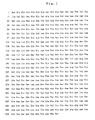
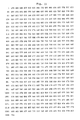
- the gD include a polypeptide having the amino acid sequence shown in Fig. 1 (surface protein gD of HSV-1 strain Miyama, Japanese Patent Application No. 63-180114/1988). The essential portion of this amino acid sequence is from Lys of No. 26 to Ala of No. 302.
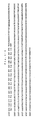
- the DNAs containing the nucleotide sequence coding for this gD gene include a DNA having a nucleotide sequence corresponding to the nucleotide sequence shown in Fig. 2. The portion from No. 186 to No.
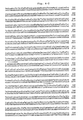
- Examples of the gB include a polypeptide having the amino acid sequence shown in Fig. 3 (surface protein gB of HSV-1 strain Miyama, Japanese Patent Application No. 1-158238/1989 filed on June 22, 1989 and Japanese Patent Application No. 1-308941/1989 filed on November 30, 1989).
- the essential portion thereof is from Ala of No. 1 to Asp of No. 293.
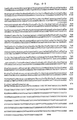
- Examples of the DNAs containing the nucleotide sequence coding for this gB gene include a DNA having a nucleotide sequence corresponding to the nucleotide sequence shown in Fig. 4.
- the portion from No. 341 to No. 1219 thereof corresponds to the essential portion.
- additions, deletions and substitutions of nucleotides may be made so long as the protein produced by the gene will still by functional.
- the gB genes further include, for example, genes having the nucleotide sequences and the amino acid sequences deduced therefrom shown in Fig. 5 [surface protein gB of HSV-1 strain KOS, D. J. Bzik et al., Virology , 133, 301 (1984)] and Fig. 6 [surface protein gB of HSV-1 strain F, P. E. Pellet et al., J. Virol. , 53 , 243 (1985)].
- the LTB genes are combined with these genes, preferably with the truncated gD or gB gene lacking the coding regions of the transmembrane domains, whereby the fused protein genes can be constructed.
- LTB gene can be used as long as it codes for an LTB active substance, and includes functional fragment thereof.
- the LTB active substance may be any LTB as long as it has LTB activity, namely the adjuvant activity.
- examples of such substances include natural LTB produced in enterotoxigenic Escherichia coli separated from humans or pigs, recombinant LTB produced by recombinant technology and their related substances.
- B subunit (LThB) of LT produced in enterotoxigenic E . coli separated from humans (LTh) is preferable.
- the LTB described above and the related substances thereof are proteins, they may have sugar chains or not.
- DNAs coding for LTB used for the present invention there can be used any DNA segment coding for LTB produced by enterotoxigenic E . coli .
- the DNAs may be natural ones or synthetic ones, and may be a LTB gene or a portion thereof.
- a DNA segment coding for LTB used for the present invention may be prepared from plasmid pJYL2299 containing LTh gene [T. Yamamoto and T. Yokota, J . Bacteriol ., 143 , 652 (1980)] using appropriate restriction enzymes.
- DNAs coding for LThB may be prepared in large amount by amplification of the subcloning plasmid in E . coli .
- the recombinant DNA segment (expression plasmid) containing the nucleotide sequence coding for the fused protein (I) or (II) of the present invention can be prepared, for example, by the following processes.
- any vector for example, plasmid
- any vector may be used as long as it can be replicated in an eucaryotic cell as a host.
- yeast examples of such vectors include pSH19 [S. Harashima et al., Mol. Cell. Biol. , 4 . 771 (1984)] and PSH19-1 (European Patent Publication No. 0235430), and a vehicle for expression of foreign genes is obtained by inserting a promoter therein.
- the host is an animal cell
- the vehicle for expression of foreign genes is obtained, for example, by inserting an SV40-derived promoter, a retrovirus promoter or the like in pBR322.
- any promoter is usable as long as the promoter is suitable for expression in the host used for the gene expression.
- the host is yeast, it is preferred that a GLD (GAPDH) promoter, a PHO5 promoter, a PGK promoter, an ADH promoter, a PHO81 promoter and the like are used.
- GLD GLD
- PHO5 promoter a promoter for expression in yeast
- PGK a promoter for expression in the host used for the gene expression
- ADH promoter a PHO81 promoter and the like
- the host is an animal cell, an SV40-derived promoter, a retrovirus promoter and the like are preferably used.
- the promoters can be prepared enzymatically from the corresponding genes. They can also be chemically synthesized.
- the eucaryotic cell is transformed.
- the host includes, for example, yeast and animal cells.
- yeast examples include Saccharomyces cerevisiae AH22R ⁇ , NA87-11A and DKD-5D and Schizosaccharomyces pombe ATCC38399 (h ⁇ leul-32) and THl68(h90 ade6-M210 ural leul) [M. Kishida and C. Shimada, Current Genetics , 10 , 443(1986)].
- animal cells examples include adherent cells such as monkey COS-7 cell, monkey Vero cell, Chinese hamster ovary (CHO) cell, mouse L cell and human FL cell, and non-adherent cells such as mouse myelomacell (such as SP2/0), mouse YAC-1 cell, mouse methA cell, mouse P388 cell and mouse EL-4 cell.
- adherent cells such as monkey COS-7 cell, monkey Vero cell, Chinese hamster ovary (CHO) cell, mouse L cell and human FL cell
- non-adherent cells such as mouse myelomacell (such as SP2/0), mouse YAC-1 cell, mouse methA cell, mouse P388 cell and mouse EL-4 cell.
- the transformation of the yeast is carried out according to, for example, the method described in Proc. Natl. Acad. Sci. U.S.A. , 75 , 1929 (1978).
- the transformation of the animal cell is carried out according to, for example, the method described in Virology , 52 , 456 (1973).
- transformants thus obtained are cultivated by per se known methods.
- Burkholder minimum medium K. L. Bostian et al., Proc. Nati. Acad. Sci. U.S.A. , 77, 4505 (1980)] as a medium.
- the pH of the medium is preferably adjusted to about 5 to 8.
- the cultivation is usually carried out at about 20 to 35 o C for about 24 to 72 hours, with aeration or agitation if necessary.
- the medium for example, about 5 to 20% fetal calf serum-containing MEM medium [ Science , 122 , 501 (1952)], DMEM medium [ Virology , 8 , 396 (1959)], RPMI1640 medium [ The Journal of the American Medical Association , 199 , 519 (1967)] and 199 medium [ Proceeding of the Society for the Biological Medicine , 73 , l (1950)].
- the pH is preferably about 6 to 8.
- the cultivation is usually carried out at about 30 to 40 o C for about 15 to 60 hours, with aeration or agitation if necessary.
- the fused proteins having both the HSV surface antigenicity and the LTB activity can be separated and purified by appropriate combinations of per se known separating and purifying methods.
- These known separating and purifying methods include methods utilizing a solubility such as salt precipitation and solvent precipitation, methods mainly utilizing a difference in molecular weight such as dialysis, ultrafitration, gel filtration and SDS-polyacrylamide gel electrophoresis, methods utilizing a difference in electric charge such as ion-exchange column chromatography, methods utilizing specific affinity such as affinity chromatography, methods utilizing a difference in hydrophobicity such as reverse-phase high performance liquid chromatography and methods utilizing a difference in isoelectric point such as isoelectro focusing electrophoresis.
- ion-exchange chromatography For the separation of fused proteins having both the HSV surface antigenicity and the LTB activity, a combination of ion-exchange chromatography and gel permeation chromatography.
- fillers for ion exchange chromatography cationic exchange resins using a sulfo-group as an exchanging group such as ST-Toyopearl 650 M (Toyo Soda, Japan) are preferable.
- Sovents for equilibriation of columns include 20 mM phosphate buffer (pH 5.8), and eluate solvents include 20 mM phosphate buffer containing 0 to 1 M NaCl (pH 5.8).
- porous particles such as Sephacryl 5-300HR (TM) which may isolate a protein of about 1Xl04 to 5X10⁶ molecular weight, are preferable.
- solvents for gel permeation chromatography 5 to 20 mM phosphate buffer containing 0.5 to 1.5 % NaCl (pH 6.8 to 7.2) is preferable.
- the fused protein can be purified as described above so that it is substantially free of contaminants. This fused protein can then be administered therapeutically.
- the fused protein of a heterologous protein other than HSV surface antigen protein and LTB can be prepared using a gene (DNA) coding for that heterologous protein in lieu of the HSV surface antigen protein gene, according to the methods described above.
- the antigen protein-LTB fused proteins and bioactive protein-LTB fused proteins are remarkably efficient for targetting to nasal mucosa tissues as compared with unfused proteins.
- LTB has not only binding activity specific to glycolipids on mucosal epidermal cell membranes but also activity to enhance the abosorption of a coexistent protein through mucosal tissues. The activity increases in case that LTB is fused with an objective protein.
- the antigen protein-LTB fused protein can induce immune response efficiently through nasal mucosa tissues, and the bioactive protein-LTB can enhance the absorption of the bioactive protein through nasal mucosa tissues.
- the antigen protein-LTB fused protein can be administered pernasally as well as intramuscularly, subcutaneously or intracutaneously, as vaccines for prevention or treatment of infection of viruses, pathogenic protozoas or pathogenic bacteria.
- the bioactive protein-LTB fused protein can be administered pernasally.
- the per vaginam administration of an HSV antigen-LTB fused protein is also efficient. One would administer a therapeutically effective amount of the fused protein. This can be determined empirically. Typical dosages would range from 1 ⁇ g to 1 mg per body.
- DNA Deoxyribonucleic acid A : Adenine T : Thymine G : Guanine SDS : Sodium dodecyl sulfate Gly : Glycine (G) Ala : Alanine (A) Val : Valine (V) Leu : Leucine (L) Ile : Isoleucine (I) Ser : Serine (S) Thr : Threonine (T) Cys : Cysteine (C) 1/2 Cys: Half cysteine Met : Methionine (M) Glu : Glutamic acid (E) Asp : Aspartic acid (D) Lys : Lysine (K) Arg : Arginine (R) His : Histidine (H) Phe : Phenylalanine (F) Tyr : Tyrosine (Y) Trp : Tryptophan (W) Pro : Proline (P) Asn : Asparagine (N) Gln : Glutamine (Q
- amino acid sequence may be modified, namely there may be addition, elimination or substitution by a different amino acid(s).
- functional fragments of the proteins may also be used.
- Transformant CHO-HDT-2-35 obtained in Example 6 described below and harboring plasmid pHDTdhfr2 was deposited with the Fermentation Research Institute, Agency of Industrial Science and Technology, Ministry of International Trade and Industry, Japan (FRI) under the accession number FERM BP-2590 on September 8, 1989. This microorganism was also deposited with the Institute for Fermentation, Osaka, Japan (IFO) under the accession number IFO 50209 on August 24, 1989.
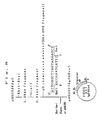
- a DNA coding for the 20 amino acid residues from the N-terminus of gD, namely the 73-bp DNA fragment shown in Fig. 7 was chemically synthesized, and inserted into vector pUC8 digested with BamHI and HindIII.
- the resulting pUC8 BamHI-HindIII73 was digested with BamHI and NcoI to obtain a 73-bp fragment.
- a NcoI-SacI DNA fragment of about 1.28 kb was obtained from cloning plasmid pUC18gD having an HindIII-NruI fragment [plasmid pHSD BJ-1 (IFO 14730, FERM BP-1784 origin] of about 1.4 kb containing the gD-coding region of HSV.
- the plasmid vector pHSG396SgD (Reference Example 1) having the HSV-1 strain Miyama gD gene was digested with restriction enzymes XhoI and XbaI to obtain a DNA fragment of about 1.35 kb, followed by further digestion with restriction enzyme HinfI to obtain an XhoI-HinfI fragment of about 0.91 kb.
- the plasmid pHSG397SgD ⁇ Hinf shown in Reference Example 2 was digested with restriction enzymes XhoI and SacI, and then T4 DNA polymerase was allowed to react on the digest to obtain a fragment of about 0.9 kb containing the truncated gD gene, both ends of the fragment being flush.
- plasmid pTB399 Japanese Patent Unexamined Publication No. 61-63282/1986; R. Sasada et al., Cell Structure and Function , 12 , 205 (1987)] was digested with restriction enzymes EcoRI and BglII, and then T4 DNA polymerase was allowed to react on the digest to obtain a fragment of about 3.9 kb both ends of which are flush. The resulting fragment was reacted with the above fragment containing truncated gD in the presence of T4 DNA ligase to obtain expression plasmid pHSD209.
- CHO cell DHFR ⁇ strain [G. Urlaub and L. A. Chasim, Proc. Natl. Acad. Sci. U.S.A. , 77 , 4216-4220 (1980)] was transformed by the calcium phosphate method [C. M. Gorman et al, Science , 221 , 551-553 (1983)] to obtain a transformant which was converted to DHFR+.
- the resulting transformant CHO-HSD-1-7 was cultivated in Dulbecco MEM medium (Gibco) containing 10% fetal calf serum (Whittaker M. A. Bioproducts) so as to become confluent. Then, the medium was exchanged for a methionine-free medium, and 25 ⁇ Ci/ml of 35S-methionine was added thereto, followed by cultivation overnight.
- the truncated gD fraction purified with the above Butyl-Toyopearl column was dialyzed against distilled water, followed by filtration for sterilization to obtain 14 ml of a purified truncated gD sample (536 ⁇ g/ml).
- the sample was subjected to SDS-polyacrylamide slab electrophoresis according to Laemmli's method [ Nature , 227 , 680 (1970)], and then to silver staining.
- the truncated gD protein was composed of molecules from 43,000 daltons to 30,000 daltons.
- pHSG397SgD ⁇ Hinf described in Reference Example 2 was digested with HinfI to obtain a DNA fragment of about 0.95 kb. The termini of the fragment were changed flush with a Klenow fragment, and NheI linkers were linked thereto, followed by digestion with NheI. The resulting fragment was further digested with EcoRI to isolate an EcoRI-NheI fragment of about 0.9 kb coding for truncated gD.
- Plasmid pJYL2299 containing E . coli heat-labile toxin gene [T. Yamamoto et al., J . Bacteriol. , 148, 983 (1981)] was digested with restriction enzyme HindIII to obtain a fragment of 0.77 kb containing B subunit. The resulting fragment was reacted with a digest of pBR322 with HindIII to obtain subcloning plasmid pBRLThB. The obtained plasmid was digested with restriction enzyme SacI, followed by reaction with T4 DNA polymerase and addition of NheI linker (pCGCTAGCG) (Pharmacia) using T4 DNA ligase to obtain plasmid pBRLThB-N.
- the plasmid was digested with restriction enzymes DraI and HindIII to obtain a DNA fragment of about 0.59 kb.
- DraI and HindIII restriction enzymes DraI and HindIII to obtain a DNA fragment of about 0.59 kb.
- BglII linker pGAAGATCTTC
- NEB T4 DNA ligase
- a fragment of about 2.8 kb comprising a gD-LThB fused protein gene which was obtained by digesting pHDT201 with SalI and HindIII was reacted with a fragment of about 4.5 kb which was obtained by digesting dihydrofolate reductase (DHFR) gene expression plasmid pTB348 (Refer to Japanese Patent Unexamined Publication 63282/1986) with SalI and HindIII to obtain plasmid pHDTdhfr2 (Fig. 10).
- DHFR dihydrofolate reductase
- the plasmid pHDTdhfr2 constructed in Example 5 was introduced into CHO cell DHFR ⁇ strain by the calcium phosphate method similar to Example 2, to obtain a transformant which was converted to DHFR+.
- the resulting transformant CHO-HDT-2-35 (IFO 50209, FERM BP-2590) was cultivated by a similar method to Example 2, and then was isotope-labeled with 35S-methionine, followed by immunoprecipitation of the gene product using a rabbit anti HSV-1 antibody and a goat anti choleratoxin antibody (LIST BIOLOGICAL LABORATORIES).
- the plasmid pHDT201 constructed in Example 5 was digested with restriction enzyme SalI and EcoRI to obtain a fragment of about 3.9 kb containing a fused gene composed of truncated gD and LThB.
- the truncated gD expression plasmid pHSDneol Japanese Patent Application No. 2-177258/1990
- the neomycin-resistant gene was digested with SalI and EcoRI to obtain a fragment of about 4.4 kb containing the neomycin-resistant gene.
- mouse myeloma cell Sp2/0-Agl4 (Dainippon pharmaceutical) was transformed by electroporation using a Gene Pulser (Bio-Rad), followed by cultivation in RPMI1640 medium (Gibco) containing 200 ⁇ g/ml of G418 (Gibco) and 10% fetal calf serum to obtain G418-resistant transformants.
- a culture supernatant of the transformants was screened according to an enzyme immunoassay by a sandwich method using a microplate (Nunc) coated with rabbit anti-HSV-1 serum (Dakopatt) and biotinyl ani-HSV-1 & -2 antibody (Chemicon) to obtain clones in which truncated gD was expressed.
- Sp-neo-HDT-13-71 relatively high in expression amount was cultivated in serum-free medium ASF104 (Ajinomoto), and 1 ml of a supernatant thereof was concentrated by Molcut (Millipore). Then, Laemmli buffer was added thereto to 50 ⁇ l, followed by heating at 100 o C for 5 minutes. After cooling, SDS-polyacrylamide gel electrophoresis was conducted, and further the western blotting was carried out using rabbit anti-HSV-1 serum (Dakopatt) and goatanti-cholera toxin serum. As a result, a band recognized by both of the antibodies was specifically detected.
- Transformant Sp-neo-HDT-13-71 obtairted in Example 8 was suspended in serum-free medium ASF1O4 (Ajinomoto) and cultivated at 37 o C for 4 to 7 days in the presence of 5% CO2.
- the culture was centrifuged at 4,000 rpm for 20 minutes with Hitachi CR26H centrifuge (Type 30 rotor) to give a culture supernatant (5.5 l).
- the supernatant was dialyzed against 20 mM phosphate buffer (pH 5.8) and filtered with No. 2 filter paper (Advantech Toyo).
- the filtrate was poured into a column (bed volume: 540 ml; ⁇ 4.1 x 41 cm) charged with Sp-Toyopearl 650M (Toso) equilibrated with 20 mM phosphate buffer (pH 5.8).
- the column was washed with 20 mM phosphate buffer (pH 5.8), and then t-gD-LThB was eluted with a gradient of 0 to 1 M NaCl (total 4 l).
- the t-gD-LThB fractions eluted by about 0.2 to 0.35 M NaCl were concentrated to a volume of 8.3 ml by ultrafiltration (Amicon, YM10), and the concentrate was subjected to a column (bed volume: 198 ml; ⁇ 1.6 x 98.5 cm) charged with Sephacryl S-300HR (Pharmacia) equilibrated with phosphate-buffered saline (PBS).
- the t-gD-LThB fractions were concentrated by ultrafiltration (Amicon, YM10) to obtain a purified sample (1.7,25 mg/0.845 ml).
- t-gD-LThB obtained in Example 10 was administered in an amount of 16 ⁇ l/mouse to the internal nares of BALB/c mice (female, 8 weeks old, Charles River). After 5 weeks, blood was collected and serum sample was prepared. The internal nares were washed with PBS several times to give a washing. The anti-HSV antibodies in these samples were determined by the following method.
- the plate was washed 6 times with PBS-Tween, and then 100 ⁇ l of a 100- to 1,000-fold dilution of a peroxidase-labeled anti-mouse IgG antibody or anti-mouse IgA antibody (Zymed Laboratories) was added to each well, followed by incubation at room temperature for 30 minutes.
- the plate was washed 6 times with PBS-Tween, and then 100 ⁇ 1 of a substrate solution [2 mg/ml o-phenylenediamine/0.02% H2O2/0.1 M citrate buffer (pH 4.5)] was added to each well, followed by reaction for 10 minutes. After 200 ⁇ l of 2 N sulfuric acid was added to each well to terminate color development, absorbance was measured at 492 nm.
Landscapes
- Chemical & Material Sciences (AREA)
- Health & Medical Sciences (AREA)
- Organic Chemistry (AREA)
- Life Sciences & Earth Sciences (AREA)
- Medicinal Chemistry (AREA)
- Biophysics (AREA)
- General Health & Medical Sciences (AREA)
- Genetics & Genomics (AREA)
- Biochemistry (AREA)
- Molecular Biology (AREA)
- Proteomics, Peptides & Aminoacids (AREA)
- Gastroenterology & Hepatology (AREA)
- Virology (AREA)
- Preparation Of Compounds By Using Micro-Organisms (AREA)
- Peptides Or Proteins (AREA)
- Medicines Containing Antibodies Or Antigens For Use As Internal Diagnostic Agents (AREA)
- Micro-Organisms Or Cultivation Processes Thereof (AREA)
Priority Applications (1)
| Application Number | Priority Date | Filing Date | Title |
|---|---|---|---|
| AT90116878T ATE99331T1 (de) | 1989-09-08 | 1990-09-03 | Fusionsproteine und herstellung davon. |
Applications Claiming Priority (2)
| Application Number | Priority Date | Filing Date | Title |
|---|---|---|---|
| JP23372889 | 1989-09-08 | ||
| JP233728/89 | 1989-09-08 |
Publications (3)
| Publication Number | Publication Date |
|---|---|
| EP0418626A2 true EP0418626A2 (fr) | 1991-03-27 |
| EP0418626A3 EP0418626A3 (en) | 1991-09-25 |
| EP0418626B1 EP0418626B1 (fr) | 1993-12-29 |
Family
ID=16959644
Family Applications (1)
| Application Number | Title | Priority Date | Filing Date |
|---|---|---|---|
| EP90116878A Expired - Lifetime EP0418626B1 (fr) | 1989-09-08 | 1990-09-03 | Protéines fusionnées, et leur production |
Country Status (5)
| Country | Link |
|---|---|
| EP (1) | EP0418626B1 (fr) |
| JP (1) | JPH03178995A (fr) |
| AT (1) | ATE99331T1 (fr) |
| CA (1) | CA2024918A1 (fr) |
| DE (1) | DE69005572T2 (fr) |
Cited By (7)
| Publication number | Priority date | Publication date | Assignee | Title |
|---|---|---|---|---|
| EP0474453A3 (en) * | 1990-09-03 | 1992-04-22 | Takeda Chemical Industries, Ltd. | Pharmaceutical composition comprising an active peptide or protein and a heat-labile enterotoxin b and its mucous use |
| WO1995005194A1 (fr) * | 1993-08-12 | 1995-02-23 | Medeva Holdings B.V. | Composition vaccinale |
| WO1995010301A1 (fr) * | 1993-10-08 | 1995-04-20 | Duotol Ab | Agent d'induction d'immunotolerance |
| WO1996016178A1 (fr) * | 1994-11-17 | 1996-05-30 | Maxim Pharmaceuticals, Inc. | Immunogenes pour stimuler l'immunite des muqueuses |
| WO1997005267A3 (fr) * | 1995-07-26 | 1997-04-24 | Maxim Pharmaceuticals | Apport de polynucleotides dans les muqueuses |
| WO1998039032A1 (fr) * | 1997-03-06 | 1998-09-11 | Centro De Ingenieria Genetica Y Biotecnologia (Cigb) | Formulations immunostimulantes a usage vaccinal |
| CN100334212C (zh) * | 2005-07-25 | 2007-08-29 | 华东理工大学 | 一种用于原核分泌、融合表达大肠杆菌热敏毒素b亚单位的载体 |
Families Citing this family (1)
| Publication number | Priority date | Publication date | Assignee | Title |
|---|---|---|---|---|
| JP4623625B2 (ja) | 2003-07-24 | 2011-02-02 | 株式会社AMBiS | ヘテロ型5量体組換えワクチン |
Family Cites Families (4)
| Publication number | Priority date | Publication date | Assignee | Title |
|---|---|---|---|---|
| IL78775A (en) * | 1985-05-15 | 1992-06-21 | Biotech Australia Pty Ltd | Oral vaccines |
| US5109113A (en) * | 1986-05-02 | 1992-04-28 | Genentech, Inc. | Membrane anchor fusion polypeptides |
| US5112749A (en) * | 1987-10-02 | 1992-05-12 | Praxis Biologics, Inc. | Vaccines for the malaria circumsporozoite protein |
| WO1990006366A1 (fr) * | 1988-12-07 | 1990-06-14 | University Of Leicester | Proteines de fusion a sous-unite b de toxine thermolabile |
-
1990
- 1990-09-03 DE DE90116878T patent/DE69005572T2/de not_active Expired - Fee Related
- 1990-09-03 AT AT90116878T patent/ATE99331T1/de active
- 1990-09-03 EP EP90116878A patent/EP0418626B1/fr not_active Expired - Lifetime
- 1990-09-07 JP JP2235613A patent/JPH03178995A/ja active Pending
- 1990-09-07 CA CA002024918A patent/CA2024918A1/fr not_active Abandoned
Cited By (11)
| Publication number | Priority date | Publication date | Assignee | Title |
|---|---|---|---|---|
| EP0474453A3 (en) * | 1990-09-03 | 1992-04-22 | Takeda Chemical Industries, Ltd. | Pharmaceutical composition comprising an active peptide or protein and a heat-labile enterotoxin b and its mucous use |
| US5554378A (en) * | 1990-09-03 | 1996-09-10 | Takeda Chemical Industries, Ltd. | Pharmaceutical composition and its mucosal use |
| WO1995005194A1 (fr) * | 1993-08-12 | 1995-02-23 | Medeva Holdings B.V. | Composition vaccinale |
| AU674983B2 (en) * | 1993-08-12 | 1997-01-16 | Medeva Holdings B.V. | Vaccine compositions |
| US6129922A (en) * | 1993-08-12 | 2000-10-10 | Medeva Holdings B.V. | Methods for adjuvant free hepatitis A virus vaccination |
| US6699480B2 (en) | 1993-08-12 | 2004-03-02 | Medeva Holdings Bv | Vaccine compositions |
| WO1995010301A1 (fr) * | 1993-10-08 | 1995-04-20 | Duotol Ab | Agent d'induction d'immunotolerance |
| WO1996016178A1 (fr) * | 1994-11-17 | 1996-05-30 | Maxim Pharmaceuticals, Inc. | Immunogenes pour stimuler l'immunite des muqueuses |
| WO1997005267A3 (fr) * | 1995-07-26 | 1997-04-24 | Maxim Pharmaceuticals | Apport de polynucleotides dans les muqueuses |
| WO1998039032A1 (fr) * | 1997-03-06 | 1998-09-11 | Centro De Ingenieria Genetica Y Biotecnologia (Cigb) | Formulations immunostimulantes a usage vaccinal |
| CN100334212C (zh) * | 2005-07-25 | 2007-08-29 | 华东理工大学 | 一种用于原核分泌、融合表达大肠杆菌热敏毒素b亚单位的载体 |
Also Published As
| Publication number | Publication date |
|---|---|
| DE69005572D1 (de) | 1994-02-10 |
| DE69005572T2 (de) | 1994-04-07 |
| EP0418626A3 (en) | 1991-09-25 |
| ATE99331T1 (de) | 1994-01-15 |
| EP0418626B1 (fr) | 1993-12-29 |
| CA2024918A1 (fr) | 1991-03-09 |
| JPH03178995A (ja) | 1991-08-02 |
Similar Documents
| Publication | Publication Date | Title |
|---|---|---|
| CA2020668C (fr) | Proteines fusionnees ou hybrides comprenant de la lymphokine et un antigene viral | |
| US5241053A (en) | Fused proteins comprising glycoprotein gD of HSV-1 and LTB | |
| JP2597542B2 (ja) | 水痘−帯状疱疹ウイルスに対するワクチン | |
| AU669843B2 (en) | Repressors of the trans-activating function of papillomavirus E2 proteins | |
| JP4541539B2 (ja) | 内因性遺伝子活性化によるエリスロポエチンの製造 | |
| KR100641969B1 (ko) | 내인성 유전자 활성화에 의한 에리트로포이에틴의제조방법 | |
| US20050033025A1 (en) | Polyepitopic protein fragments of the E6 and E7 proteins of HPV, their production and their use particularly in vaccination | |
| AU2019349036A1 (en) | Immune composition, preparation method therefor, and application thereof | |
| JPH09500013A (ja) | カチオン性脂質による遺伝子免疫 | |
| US5098704A (en) | Hepatitis surface antigen particle vaccine | |
| CN117886902A (zh) | 改良的呼吸道合胞病毒融合f蛋白突变体及其应用 | |
| EP0374044A2 (fr) | TGF bêta 1/bêta2: un facteur de croissance transformant-bêta chimère | |
| EP0418626B1 (fr) | Protéines fusionnées, et leur production | |
| CN106480070B (zh) | 一种用于展示目的多肽的多肽载体及其用途 | |
| JP4317786B2 (ja) | gp350/220非スプライシング変異体 | |
| CA2170882A1 (fr) | Vecteur pour therapie genique du foie | |
| Madej et al. | Purification and characterization of Epstein-Barr virus gp340/220 produced by a bovine papillomavirus virus expression vector system | |
| Goldschmidts et al. | A restricted component of the Epstein-Barr virus early antigen complex is structurally related to ribonucleotide reductase | |
| US7214532B2 (en) | Methods for identifying human cell lines useful for endogenous gene activation, isolated human cell lines identified thereby, and uses thereof | |
| WO2024017682A1 (fr) | Immunogènes du vrs | |
| CN120365380A (zh) | 一种嵌合设计的eb病毒抗原及其应用 | |
| JP3123719B2 (ja) | 蛋白質およびその製造法 | |
| JP2574146B2 (ja) | ポリペプチド発現ベクタ−、該ベクタ−で形質転換した宿主及び該宿主によるポリペプチドの製造法 | |
| JPH03232897A (ja) | ポリペプチドおよびその製造法 | |
| JP3143114B2 (ja) | シゾサッカロミセス・ポンベによるウイルス蛋白質の生産 |
Legal Events
| Date | Code | Title | Description |
|---|---|---|---|
| PUAI | Public reference made under article 153(3) epc to a published international application that has entered the european phase |
Free format text: ORIGINAL CODE: 0009012 |
|
| AK | Designated contracting states |
Kind code of ref document: A2 Designated state(s): AT BE CH DE DK ES FR GB GR IT LI LU NL SE |
|
| PUAL | Search report despatched |
Free format text: ORIGINAL CODE: 0009013 |
|
| AK | Designated contracting states |
Kind code of ref document: A3 Designated state(s): AT BE CH DE DK ES FR GB GR IT LI LU NL SE |
|
| 17P | Request for examination filed |
Effective date: 19911207 |
|
| RAP3 | Party data changed (applicant data changed or rights of an application transferred) |
Owner name: TAKEDA CHEMICAL INDUSTRIES, LTD. |
|
| 17Q | First examination report despatched |
Effective date: 19920225 |
|
| GRAA | (expected) grant |
Free format text: ORIGINAL CODE: 0009210 |
|
| AK | Designated contracting states |
Kind code of ref document: B1 Designated state(s): AT BE CH DE DK ES FR GB GR IT LI LU NL SE |
|
| PG25 | Lapsed in a contracting state [announced via postgrant information from national office to epo] |
Ref country code: AT Effective date: 19931229 Ref country code: DK Effective date: 19931229 Ref country code: BE Effective date: 19931229 Ref country code: ES Free format text: THE PATENT HAS BEEN ANNULLED BY A DECISION OF A NATIONAL AUTHORITY Effective date: 19931229 Ref country code: GR Free format text: LAPSE BECAUSE OF FAILURE TO SUBMIT A TRANSLATION OF THE DESCRIPTION OR TO PAY THE FEE WITHIN THE PRESCRIBED TIME-LIMIT Effective date: 19931229 Ref country code: SE Effective date: 19931229 Ref country code: NL Effective date: 19931229 |
|
| REF | Corresponds to: |
Ref document number: 99331 Country of ref document: AT Date of ref document: 19940115 Kind code of ref document: T |
|
| ITF | It: translation for a ep patent filed | ||
| ET | Fr: translation filed | ||
| REF | Corresponds to: |
Ref document number: 69005572 Country of ref document: DE Date of ref document: 19940210 |
|
| REG | Reference to a national code |
Ref country code: AT Ref legal event code: RER Ref document number: 90116878 Country of ref document: AT Kind code of ref document: T |
|
| NLV1 | Nl: lapsed or annulled due to failure to fulfill the requirements of art. 29p and 29m of the patents act | ||
| PG25 | Lapsed in a contracting state [announced via postgrant information from national office to epo] |
Ref country code: LU Free format text: LAPSE BECAUSE OF NON-PAYMENT OF DUE FEES Effective date: 19940930 |
|
| PLBE | No opposition filed within time limit |
Free format text: ORIGINAL CODE: 0009261 |
|
| STAA | Information on the status of an ep patent application or granted ep patent |
Free format text: STATUS: NO OPPOSITION FILED WITHIN TIME LIMIT |
|
| REG | Reference to a national code |
Ref country code: AT Ref legal event code: ESZA Ref document number: 99311 Country of ref document: AT Kind code of ref document: T Free format text: PRODUCT NAME: CEFTIBUTEN Spc suppl protection certif: SZ 17/1994 Filing date: 19940928 |
|
| 26N | No opposition filed | ||
| PGFP | Annual fee paid to national office [announced via postgrant information from national office to epo] |
Ref country code: GB Payment date: 19960827 Year of fee payment: 7 |
|
| PGFP | Annual fee paid to national office [announced via postgrant information from national office to epo] |
Ref country code: FR Payment date: 19960828 Year of fee payment: 7 |
|
| PGFP | Annual fee paid to national office [announced via postgrant information from national office to epo] |
Ref country code: CH Payment date: 19960913 Year of fee payment: 7 |
|
| PGFP | Annual fee paid to national office [announced via postgrant information from national office to epo] |
Ref country code: DE Payment date: 19961030 Year of fee payment: 7 |
|
| PG25 | Lapsed in a contracting state [announced via postgrant information from national office to epo] |
Ref country code: GB Free format text: LAPSE BECAUSE OF NON-PAYMENT OF DUE FEES Effective date: 19970903 |
|
| PG25 | Lapsed in a contracting state [announced via postgrant information from national office to epo] |
Ref country code: CH Free format text: LAPSE BECAUSE OF NON-PAYMENT OF DUE FEES Effective date: 19970930 Ref country code: FR Free format text: THE PATENT HAS BEEN ANNULLED BY A DECISION OF A NATIONAL AUTHORITY Effective date: 19970930 Ref country code: LI Free format text: LAPSE BECAUSE OF NON-PAYMENT OF DUE FEES Effective date: 19970930 |
|
| GBPC | Gb: european patent ceased through non-payment of renewal fee |
Effective date: 19970903 |
|
| REG | Reference to a national code |
Ref country code: CH Ref legal event code: PL |
|
| PG25 | Lapsed in a contracting state [announced via postgrant information from national office to epo] |
Ref country code: DE Free format text: LAPSE BECAUSE OF NON-PAYMENT OF DUE FEES Effective date: 19980603 |
|
| REG | Reference to a national code |
Ref country code: FR Ref legal event code: ST |
|
| PG25 | Lapsed in a contracting state [announced via postgrant information from national office to epo] |
Ref country code: IT Free format text: LAPSE BECAUSE OF NON-PAYMENT OF DUE FEES Effective date: 20050903 |