EP0423771A2 - Utilisation de L-sucres pour la fabrication de compositions laxatives - Google Patents
Utilisation de L-sucres pour la fabrication de compositions laxatives Download PDFInfo
- Publication number
- EP0423771A2 EP0423771A2 EP90119935A EP90119935A EP0423771A2 EP 0423771 A2 EP0423771 A2 EP 0423771A2 EP 90119935 A EP90119935 A EP 90119935A EP 90119935 A EP90119935 A EP 90119935A EP 0423771 A2 EP0423771 A2 EP 0423771A2
- Authority
- EP
- European Patent Office
- Prior art keywords
- glucose
- composition
- laxative
- subjects
- sugars
- Prior art date
- Legal status (The legal status is an assumption and is not a legal conclusion. Google has not performed a legal analysis and makes no representation as to the accuracy of the status listed.)
- Granted
Links
Images





Classifications
-
- A—HUMAN NECESSITIES
- A61—MEDICAL OR VETERINARY SCIENCE; HYGIENE
- A61K—PREPARATIONS FOR MEDICAL, DENTAL OR TOILETRY PURPOSES
- A61K31/00—Medicinal preparations containing organic active ingredients
- A61K31/70—Carbohydrates; Sugars; Derivatives thereof
- A61K31/7004—Monosaccharides having only carbon, hydrogen and oxygen atoms
-
- A—HUMAN NECESSITIES
- A23—FOODS OR FOODSTUFFS; TREATMENT THEREOF, NOT COVERED BY OTHER CLASSES
- A23L—FOODS, FOODSTUFFS OR NON-ALCOHOLIC BEVERAGES, NOT OTHERWISE PROVIDED FOR; PREPARATION OR TREATMENT THEREOF
- A23L27/00—Spices; Flavouring agents or condiments; Artificial sweetening agents; Table salts; Dietetic salt substitutes; Preparation or treatment thereof
- A23L27/30—Artificial sweetening agents
- A23L27/33—Artificial sweetening agents containing sugars or derivatives
- A23L27/38—L-sugars
-
- A—HUMAN NECESSITIES
- A61—MEDICAL OR VETERINARY SCIENCE; HYGIENE
- A61P—SPECIFIC THERAPEUTIC ACTIVITY OF CHEMICAL COMPOUNDS OR MEDICINAL PREPARATIONS
- A61P1/00—Drugs for disorders of the alimentary tract or the digestive system
- A61P1/10—Laxatives
-
- A—HUMAN NECESSITIES
- A61—MEDICAL OR VETERINARY SCIENCE; HYGIENE
- A61P—SPECIFIC THERAPEUTIC ACTIVITY OF CHEMICAL COMPOUNDS OR MEDICINAL PREPARATIONS
- A61P1/00—Drugs for disorders of the alimentary tract or the digestive system
- A61P1/12—Antidiarrhoeals
Definitions
- the present invention relates to a novel monosaccharide sweetener which is capable of acting as a laxative when administered in dose-effective amounts.
- the present invention also contemplates monosaccharides with laxative properties which have a natural carbohydrate structure.
- the present invention contemplates a monosaccharide capable of producing laxative effects in humans and having the advantages of being only minimally absorbed from the intestine; and having osmotic laxative and stool softening effects on the small bowel and colon.
- the present invention allows for improved laxative formulations with increased palatability and better dosing for all age groups.
- the present invention can be used to induce mild laxation six to ten hours after ingestion.
- constipation has been defined as less than one bowel movement per week.
- Other components of constipation include difficulties with defecation and stool hardness.
- constipation and diarrhea or painful constipation are symptoms of one of the most common ailments in medicine and in the practice of gastroenterology--the irritable bowel syndrome.
- the constipation is believed to be due to altered colonic motility, but neural and hormonal abnormalities and psychosocial stresses may also contribute to the syndrome.
- constipation Other common and accepted causes of constipation include: endocrine disorders such as diabetes, hypothyroidism, and hyper/hypocalcemia; spinal and head injuries which disrupt the parasympathetic nerve circuits to the colon; anal canal or rectal contraction abnormalities; pelvic floor abnormalities preventing proper angulation for defecation; neuromuscular disorders such as intestinal pseudo-obstruction and colonic inertia.
- Encopresis is a constipation problem in pediatrics. Constipation also is a major concern of the elderly populations who are sedentary, who may have inadequate dicts, and who take numerous medications which may interfere with normal bowel function.
- Treatment of common and typical constipation takes the form of time honored remedies ranging from mineral oil to castor oil to fiber and bran. Treatments have been empirical because the mechanisms and causes of constipation are still poorly understood.
- the four major classes of laxatives which can be used in the treatment of constipation are: osmotic laxatives, bulking agents, stimulant agents, and stool softeners.
- the osmotic laxatives are saline cathartics and include compounds such as lactulose, golytely or colyte, mannitol or mannose, or magnesium citrate.
- Lactulose is available as a component of the commercial product Chronulac, a non-absorbable synthetic disaccharide (lactulose, 10 g; plus galactose, 2.2 g; and lactose 1.2 g per dose).
- Chronulac is poorly absorbed and reaches the colon virtually unchanged where it is broken down by colonic bacteria to volatile fatty acids. Production of these fatty acids results in a slight acidification in the intestine and results in increased osmotic pressure. In turn, this causes an increase in stool water content and stool softening.
- Chronulac often takes 24-28 hours to work. Three percent of a dose generally appears in the urine. A major side effect is excessive gas. Chronulac is available by prescription and only in syrup form. Usual doses are 30-40 gm three to four times a day.
- Golytely and colyte are balanced electrolyte solutions plus polyethylene glycol. Their primary use is to prepare the colon for barium enema studies and for colonoscopy. Polyethylene glycol is not absorbed and causes an osmotic diarrhea. The electrolytes are absorbed to maintain the body's fluid balance during intense laxation. These solutions are advantageous in that the colon is thoroughly cleansed and no explosive gases are produced which would become problematic if polypectomy is planned. The major disadvantage is that patients must drink 4 liters of the solution in 3-4 hours and many patients are unable to do so or find this very unpleasant because of bloating and nausea.
- Mannitol or mannose agents are poorly absorbed carbohydrates, but are seldom used because enough carbohydrate does get absorbed to present an osmotic load to the kidney resulting in diuresis. Gas formation makes polypectomy dangerous.
- Magnesium citrate is a lemon-like flavored liquid which is an effective laxative when more vigorous laxation is needed.
- Bulking agents include fiber products (such as Metamucil) and Perdiem. Increases in stool weight, stimulation of colonic motility and increases in stool water have been described after using these agents. Bulking agents are the preferred products used by most gastroenterologists for common constipation or for the constipation associated with the irritable bowel syndrome. However, almost all patients complain of the nucilagenous consistency of metamucil-type preparations. Many new products have been developed to cover-up the fiber nature of these preparations but none have been particularly successful. The product is also unsatisfactory for patients wiht esophageal or gastric motility disorders. These patients have trouble swallowing and experience bloating, distention and increased gas after ingestion.
- perdiem is an effective product since it provides the bran psyllium in a well-tolerated granular form.
- administration of Perdiem is unusual in that the crystals (one teaspoon) are supposed to be swallowed dry.
- Perdiem can also be used with senna. The senna adds a laxative to the fiber for the patient with more severe constipation.
- Stimulant agents include phenolphthalein-containing laxatives, castor oil and Dulcolax.
- Phenolphthalein-containing laxatives e.g., Exlax/Correctal
- Gastroenterologists and knowledgable physicians warn against these products, however, because they are relatively habit forming. It is noted that while the causes of constipation are many in most people the cause is unknown. Because constipation is a recurring problem, most people take phenolphthalein products recurrently.
- Caster oil is a well-known stimulant cathartic.
- the active ingredient in castor oil is ricinoleic acid.
- Castor oil is a very potent cathartic which often causes abdominal cramping and severe diarrhea. Most patients complain about the taste and the abdominal pain induced by castor oil.
- Dulcolax bisacodyl is a very effective stimulant laxative which is available in tablet or suppository form. Minimal amounts of bisacodyl are absorbed.
- Stool softeners also known as emollients are epitomized by Colace (dioctyl sodium sulfosuccinate), an agent which may be purchased over the counter to soften stools. Most gastroenterologists do not prescribe these compounds because they are relatively ineffective, particularly in the patients with more than mild constipation.
- the bulking agents are generally preferred to the softening agents.
- Mineral oil is also in the group of softeners but has toxicities such as interference with absorption of essential fatty acids and the well-known possibility of aspiration and lipid pneumonitis. Thus most physicians do not prescribe mineral oil.
- the present invention contemplates the administration of monosaccharides, and in particular, L-sugars, as laxatives with considerable advantages relative to the previously discussed classes of laxatives, all of which have various undesirable side effects as described above.
- L-sugars are sweet tasting, vary in caloric content, and can readily be combined with other foodstuffs.
- the first scientifically designed study of the sweetness of L-sugars appears to be that of R.S. Shallenberger, T.E. Acree and C.Y. Lee, Nature 221 : 555 (1969), who compared the relative sweetness of the D- and L-enantiomorphs of several sugars, including L-glucose, L-mannose, and L-galactose.
- L-sugars can act as osmotic laxatives similar to lactulose, but the L-sugar can be formulated and administered in a more convenient and palatable form, such as a candy bar.
- Lactulose for example, is available only as a liquid. The L-sugar produces less gas than lactulose, but can produce a lactulose-like effect. The L-sugar would be considered "more natural" than lactulose and the onset of action moire rapid.
- L-sugars are poorly absorbed in the human body, and therefore, have an advantage over mannitol, mannose and magnesium citrate in that there is little or no diuretic effect as found when using mannose or mannitol and no danger of magnesium exposure from use of magnesium citrate.
- Barium enema prep kits use Dulcolax (bisacodyl) and enemas or the Colyte-type formulas to cleanse the bowel before barium X-rays.
- An appropriate larger dose of L-glucose may be capable of producing a "cleansing" of the bowel.
- the convenience and palatability of L-sugars would make them superior to bisacodyl and more palatable than drinking four liters of a high salt liquid over the course of 3-4 hours, e.g., Colyte.
- L-sugars have several advantages over the bulking agents currently in use. They can be prepared in a more palatable foodstuff than such products as Perdiem, with its peculiar granular consistency, and Metamucil, with its mucilagenous consistency. L-sugars also would have increased effectiveness and convenience (e.g., as a candy bar) over the prior-utilized products.
- L-sugars In using L-sugars rather than a stimulant agent, patients would avoid the potential harmful effects of recurrent exposure to phenolphthalein. L-sugars allow for more palatable forms of the laxative created in comparison wiht Exlax and castor oil, and avoids the cramping associated with castor oil and bisacodyl.
- L-sugars are more advantageous than the stool softeners currently in use in that they have no sodium or calcium content than, e.g. the Colace and Surfak preparations, respectively.
- the present invention relates to a composition for providing stool bulking and laxation comprising a laxative effective amount of L-monosaccharide sugar and an acceptable carrier.
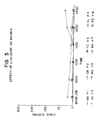
- Fig. 1 is a graphical representation of the effect of L-glucose on the perception of gastric volume in human subjects.
- the present invention contemplates a method of treating constipation and constipation-related illnesses. This method is achieved by employing a therapeutic range of a monosaccharide L-sugar in a laxative formulation.
- L-sugars have been found to be capable of providing mild to moderate laxation at lower doses for mold to moderate constipation problems through a putative osmotic mechanism. At higher doses L-sugars can provide cathartic effects needed to treat severe constipation or to cleanse the bowel for radiographic studies, surgical or endoscopic procedures.
- L-sugars uniquely possess the characteristics which make them effective laxative agents laxative to previously described osmotic laxatives, bulking agents, stimulant agents and stool softeners.
- the L-sugars such as L-fructose, L-mannose, L-sorbose, L-gulose, and preferably, L-glucose are L-sugar sweeteners which are capable of causing laxative effects and/or soft stools (defined as the ability to initiate bowel movement) when ingested in amounts corresponding to a reasonable daily ingestion of a sweetener.
- L-glucose is employed as a laxative agent of choice.
- L-glucose is approximately as sweet as sucrose with no other objectionable taste or mouth feel.
- L-glucose is a bulking sweetener and can be substituted for sucrose and dextrose in a wide variety of food formulations such as candy, cakes, chewing gum, breathmints, pharmaceutical compositions, liquids, solids, suppositories, alone and in combination with various other sugars, syrups, foodstuffs, confections, baking goods, and flavorings, without necessitating any large changes in recipe.
- L-glucose is metabolized in humans to a small extent (Table II).
- the sweetener is excreted unconverted in the urine and feces.
- L-glucose is of comparable sweetness to sucrose rather large amounts may be ingested in the normal diet.
- L-glucose can also be excreted in the feces, resulting in high osmotic pressure in the large intestine accompanying the accumulation of water soluble material which in turn would result in excessive water transport into the intestines, leading to laxative effects, e.g. loose or soft stools.
- L-glucose is also not significantly metabolized in intestinal flora. If there were significant metabolism by the body, flatulence could accompany its use, and the metabolic products in turn might be metabolized or assimilated by humans.
- L-glucose does not have detrimental physiological, toxicological, or genetic effects. L-glucose also undergoes the browning reaction to develop appropriate flavors when heated or baked. L-glucose is readily crystallized, since crystallinity often is needed to impart the correct mouth feel to a given foodstuff.
- L-glucose as employed in a laxative form exhibits minimal absorption from the intestine, has a unique action on the small bowel and colon as an osmotic laxative, acts as a mild laxative, has the capability for use in a variety of laxatives from softeners to cathartics, can be used in improved laxative formulations with increased palatability and better dosing for all age groups (e.g., infants, children, adolescents, adults, the elderly), and promotes rapid onset of laxation action (approximately 6-10 hours after ingestion instead of 2-3 days).
- the present invention contemplates a method of treating constipation and constipation-related illness with a laxative effective amount of L-sugars such as L-fructose, L-mannose, L-sorbose, L-gulose and in particular, L-glucose.
- L-sugars such as L-fructose, L-mannose, L-sorbose, L-gulose and in particular, L-glucose.
- the present invention contemplates a foodstuff, liquid, solid, pharmaceutical composition, crystal or powdered formulation administered in a dosage adjusted to provide the optimum laxative effective or laxative therapeutic response. For example, from about 6-12 grams of L-glucose once or twice per day can be administered to achieve satisfactory results in adults, i.e., for effecting increased bowel movement.
- the active compound may be administered in a convenient manner such as by oral administration.
- a standard body weight of 70 kg is typically used for adult males.
- a value of 58 kg body weight is used for women, a value of 58 kg body weight is used.
- weights of 40 kg, 20 kg, and 10 kg, respectively are used.
- a therapeutic unit dosage range of 1 gram to about 3 grams of L-glucose can be recommended for softening the hardness of the stool.
- the preferred dosage of L-sugars can be in the range of about 1 gram to about 24 grams over a time period of 6-10 hours depending on the specific effect required and the age of the individual being treated.
- Effectiveness is a dose-response situation with lower doses exerting a milder (or stool softening) effect, and higher doses exerting a more intense laxative effect.
- the higher (e.g., 24 gram) dose can be used for those individuals requiring a more rapid or intense laxative effect.
- the present invention contemplates liquid compositions with an effective amount of L-glucose, i.e., juices, sodas, syrups, or other types of digestible liquids and further contemplates solid compositions, such as powders or crystalline formulations.
- L-glucose i.e., juices, sodas, syrups, or other types of digestible liquids
- solid compositions such as powders or crystalline formulations.
- L-glucose can be prepared in a solid formulation and employed in premeasured packets, e.g., 6 g/packet or in jars which can be measured with an enclosed scoop or a standard teaspoon. In the powdered form a rounded teaspoon of L-glucose is about 5 g and the crystal form is about 7.5 g.
- This dosage form can be mixed with juices, sodas, syrups, or other types of beverages in which it would add sweetness.
- the premeasured packets can also contain added flavor (e.g., cherry, strawberry, orange, etc.) and can be mixed with water to make a palatable laxative drink.
- a premixed packet of L-glucose is contemplated with chocolate flavour for addition to milk. Further, a premixed packet of L-glucose can be added with semi-solid food for young children.
- the juices contemplated herein can be fruit juices such as juice of orange, pear, apple, grapefruit, apricot, grape, lemon and mixtures thereof as well a reconstituted juices, i.e, juices concentrated by evaporating a significant amount of their water content and subsequently diluted to their usual strength by the addition of water.
- the juices herein can contain from 5% to 100% fruit juices.
- the sodas contemplated herein include clear carbonated beverages such as cola, cider-like soft drinks and ginger ale as well as carbonated beverages containing fruit juices.
- the syrups contemplated herein can include chocolate syrup and other flavored syrups, and caramel, corn or maple syrups.
- the present invention also contemplates semi-solid compositions, containing laxative effective amounts of L-sugars, such as applesauces, unflavored and flavored puddings (e.g., chocolate, vanilla) and gelatin-based preparations specifically prepared for institutional use (i.e., hospitals and nursing homes).
- L-sugars such as applesauces, unflavored and flavored puddings (e.g., chocolate, vanilla) and gelatin-based preparations specifically prepared for institutional use (i.e., hospitals and nursing homes).
- concentrations would range from 0.025 gm/mL (6 gm/240 mL) to 0.1 gm/mL (12 gm/120 mL).
- 12 g of L-glucose diluted in 240 ml of water administered to human subjects can produce negligible upper gastrointestinal tract symptoms, mild abdominal gas/flatus, and consistent and mild laxation within 24 hours by reports of diarrhea in 5 of 8 subjects, with most of these subjects reporting diarrhea within 12 hours.
- the present invention contemplates foodstuffs, e.g. candy bars, wafers, containing L-glucose and other high intensity sweeteners to improve sweetener properties in a "food-type" matrix.
- These foodstuffs can typically contain from about 6 grams to about 12 grams of L-glucose per foodstuff.
- versatility is also an advantage in this form and many possibilities exist.
- a food or wafer matrix with 24 gm of L-sugar per about 30 grams to about 50 grams with perforations in the matrix to allow more accurate dosing.
- Other foodstuff formulations provide 6 grams to 12 grams of L-glucose per unit and are either individually wrapped or are packaged in a multi-use container. A 6 to 12 gram per unit formulation would allow titration of the stool softening or laxation dose to obtain a desired effect ("1 or 2 units as needed").
- the present invention further contemplates pharmaceutical compositions including oral solutions or suspensions of L-sugars in a flavored base, or encapsulated tablets of L-sugars in a flavored base.
- This dosage form can contain, for example, a solution of from about 0.01 g to about 0.6 g of L-glucose per ml of solution.
- a liquid formulation of the invention can be prescribed as "one or two tablespoonfuls once or twice daily for constipation".
- the pharmaceutical compositions of the present invention can also be in the form of suppositories (e.g., cocoa butter, glycerin, or polyethylene-based).
- the present invention also contemplates an enema solution utilizing L-sugars in a dosage form for laxation effective treatment such as a buffered solution containing from about 6 grams to about 12 grams of L-glucose per 120 mL of solution.
- L-glucose When L-glucose was given to six human subjects in a preliminary study, mold gastrointestinal (GI) symptoms were present, including a laxative effect. Also, L-glucose was only partially recovered in urine and stool. Therefore, a more comprehensive study was designed to evaluate metabolism and elimination of L-glucose.
- GI gastrointestinal
- Total urine and stool were collected at baseline and for the next 7 days. Blood samples were collected at designated time points for the first 24 hours. Breath CO2 was sampled at the time of blood collection as well as once daily for the remaining 6 days. Subjects completed a questionnaire at various time points throughout the study to rate the intensity of physiological and GI symptoms including taste/aftertaste, nausea, stomach volume, hunger, abdominal pain, belching, bloating, gas/flatus, vomiting, and heartburn. Subjects also reported the number of stools and episodes of diarrhea (defined qualitatively was watery, loose, unformed or liquid stool) experienced each day. The quantitative clinical definition of diarrhea is stool weight which exceeds 200 gm/day.
- L-glucose was perceived by the subjects to have a pleasant taste with a mean score of 3.1 on a scale of 1 (pleasant) to 10 (unpleasant). Only one subject reported an aftertaste (scored as "5") for the L-glucose solution.
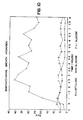
- Mold abdominal gas/flatus resulted after ingestion of L-glucose (Fig. 6 and 7).
- Four to eight subjects reported gas/flatus within 4 hours of drinking the L-glucose solution.
- five of the eight subjects reported some degree of flatulence ranging on the severity scale from 1 to 9; however, the mean score was 1.5, indicating that most of the subjects experienced only minimal levels of gas/flatus.
- the mean score was 1.5, indicating that most of the subjects experienced only minimal levels of gas/flatus.
- At 24 hours only three of the subjects reported flatus and one subject continued to report low levels of gas/flatus through day 5.
- Subjects were randomly assigned to three groups and received either L-glucose, sorbitol, or D-glucose in a food matrix. Following a normal breakfast at 7:00 a.m., the food product (containing 24 g of test compound) were ingested at approximately 10:00 a.m. consecutively for 3 days. Toleration was monitored by completion of a daily symptom record. This record allowed each subject to evaluate the degree of gastrointestinal (GI) effects including gas, bowel nmovements, stool characteristics, stomach fullness, cramps, and their interference with daily routine for the preceding 24 hours by use of the following six-point scale:
- GI gastrointestinal
- the laxative effect of these compounds were calculated using a separate scoring system based on stool frequency, characteristics, and urgency such that a score over 31 signified laxation.
- Subjects were asked to complete three-day trials in which they ingested a single solution of the following on day 2: 1) lactulose (12g/240 ml), 2) D-glucose (12g/240 ml), or 3) L-glucose (12 g/240 ml).
- Physiological and GI symptoms were monitored on all three days of each trial. On the evening of day 1 of each trial, subjects consumed a low carbohydrate meal and then refrained from food until 8 hours after consumption of the test solution.
- Test solutions were ingested the following morning between 7:00 and 10:00 a.m. Breath samples were collected before and at 30 minute intervals for eight hours after ingestion of the solution.
- Physiological effects were monitored simultaneously through a symptom questionnaire completed at each breath collection interval.
- Breath samples were tested for hydrogen (H2) concentration.
- H2 concentration A rise in breath H2 concentration over baseline after ingestion of a test compound is indicative of malabsorption.
- Subjects were given lactulose during the first trial of verify that they possessed colonic bacteria capable of producing H2 from a malabsorbed carbohydrate source.
- L-glucose resulted in a laxation effect as indicated by laxation scores of 10.9 for L-glucose, 4.3 for lactulose, and 2.4 for D-glucose (Fig. 11). Subjects reported that L-glucose caused a substantial change in stool consistency and slight changes in stool frequency (time between stools) and number of stools/day.
Landscapes
- Health & Medical Sciences (AREA)
- Life Sciences & Earth Sciences (AREA)
- Chemical & Material Sciences (AREA)
- Veterinary Medicine (AREA)
- Medicinal Chemistry (AREA)
- Pharmacology & Pharmacy (AREA)
- Engineering & Computer Science (AREA)
- Animal Behavior & Ethology (AREA)
- General Health & Medical Sciences (AREA)
- Public Health (AREA)
- Bioinformatics & Cheminformatics (AREA)
- Food Science & Technology (AREA)
- Molecular Biology (AREA)
- Chemical Kinetics & Catalysis (AREA)
- General Chemical & Material Sciences (AREA)
- Nuclear Medicine, Radiotherapy & Molecular Imaging (AREA)
- Organic Chemistry (AREA)
- Proteomics, Peptides & Aminoacids (AREA)
- Nutrition Science (AREA)
- Epidemiology (AREA)
- Polymers & Plastics (AREA)
- Pharmaceuticals Containing Other Organic And Inorganic Compounds (AREA)
- Medicines Containing Plant Substances (AREA)
- Saccharide Compounds (AREA)
- Outer Garments And Coats (AREA)
- Detergent Compositions (AREA)
- Chemical Or Physical Treatment Of Fibers (AREA)
Applications Claiming Priority (2)
| Application Number | Priority Date | Filing Date | Title |
|---|---|---|---|
| US07/422,694 US5219573A (en) | 1989-10-17 | 1989-10-17 | L-sugar laxatives |
| US422694 | 1989-10-17 |
Publications (3)
| Publication Number | Publication Date |
|---|---|
| EP0423771A2 true EP0423771A2 (fr) | 1991-04-24 |
| EP0423771A3 EP0423771A3 (en) | 1991-11-27 |
| EP0423771B1 EP0423771B1 (fr) | 1994-06-29 |
Family
ID=23675960
Family Applications (1)
| Application Number | Title | Priority Date | Filing Date |
|---|---|---|---|
| EP90119935A Expired - Lifetime EP0423771B1 (fr) | 1989-10-17 | 1990-10-17 | Utilisation de L-sucres pour la fabrication de compositions laxatives |
Country Status (13)
| Country | Link |
|---|---|
| US (1) | US5219573A (fr) |
| EP (1) | EP0423771B1 (fr) |
| JP (1) | JP3065648B2 (fr) |
| AT (1) | ATE107860T1 (fr) |
| AU (1) | AU640175B2 (fr) |
| CA (1) | CA2027831C (fr) |
| DE (1) | DE69010301T2 (fr) |
| ES (1) | ES2055270T3 (fr) |
| IE (1) | IE72475B1 (fr) |
| IL (1) | IL96020A (fr) |
| NO (1) | NO904495L (fr) |
| NZ (1) | NZ235698A (fr) |
| ZA (1) | ZA908302B (fr) |
Cited By (8)
| Publication number | Priority date | Publication date | Assignee | Title |
|---|---|---|---|---|
| RU2163484C1 (ru) * | 2000-03-30 | 2001-02-27 | Сибирский медицинский университет | Лекарственное средство и способ коррекции дискинезии желчевыводящей системы и тонкой кишки |
| EP1337264A4 (fr) * | 2000-10-13 | 2005-03-30 | E Z Em Inc | Systeme, preparation et necessaire pour une alimentation dietetique, et methode de preparation d'un individu pour une activite predeterminee |
| WO2010141751A1 (fr) | 2009-06-03 | 2010-12-09 | Axcan Pharma Inc. | Agent de nettoyage du côlon à base de l-sucre et ses utilisations |
| WO2011149471A1 (fr) * | 2010-05-27 | 2011-12-01 | Clutter Kenton A | Méthode de prévention/traitement d'une constipation induite post-opératoire |
| EP2309878A4 (fr) * | 2008-07-09 | 2011-12-28 | Gen Hospital Corp | Purgatifs alimentaires |
| IT201700028220A1 (it) * | 2017-03-14 | 2018-09-14 | Pharmaxima S R L | Sciroppo lassativo |
| US10449165B2 (en) | 2014-04-29 | 2019-10-22 | Colonaryconcepts Llc | Foods, systems, methods, and kits for providing electrolyte replacement |
| AU2024287244B1 (en) * | 2024-12-28 | 2025-08-21 | Lai, Meng Hong MR | A device for relieving constipation and its preparation method |
Families Citing this family (18)
| Publication number | Priority date | Publication date | Assignee | Title |
|---|---|---|---|---|
| JP2711759B2 (ja) * | 1990-10-24 | 1998-02-10 | エスエス製薬 株式会社 | 止瀉剤組成物 |
| US5449663A (en) * | 1993-06-11 | 1995-09-12 | Bicher; Haim I. | Antineoplastic compositions |
| US5710183A (en) * | 1995-07-14 | 1998-01-20 | Halow; George M. | Laxative/antidiarrheal composition comprising polyethylene glycol and fiber bulking agent |
| US6447763B1 (en) * | 1998-06-12 | 2002-09-10 | Ian L. Gordon | Method and system for production and collection of lavage induced stool (LIS) for chemical and biologic tests of cells |
| US6287719B1 (en) | 1998-06-15 | 2001-09-11 | Eveready Battery Company, Inc. | Battery including a non-aqueous multi-cell spiral-wound electrode assembly |
| AUPS088702A0 (en) * | 2002-03-04 | 2002-03-28 | Borody, Thomas Julius | Electrolyte purgative |
| US20040071779A1 (en) * | 2002-10-09 | 2004-04-15 | Keiser Dale Arthur | Gelled laxative compositions |
| US6996500B2 (en) * | 2002-10-30 | 2006-02-07 | Hewlett-Packard Development Company, L.P. | Method for communicating diagnostic data |
| US7049319B2 (en) * | 2003-09-23 | 2006-05-23 | Semaan Abboud | Colon cleansing composition and method |
| US20050255170A1 (en) * | 2004-05-13 | 2005-11-17 | Post Sarah S | Large volume enema |
| US20060247180A1 (en) * | 2005-04-29 | 2006-11-02 | Bergey James L | Purgative composition and uses thereof |
| WO2006118562A1 (fr) * | 2005-04-29 | 2006-11-09 | Inkine Pharmaceutical Company, Inc. | Composition purgative et utilisations |
| KR100749229B1 (ko) * | 2005-04-29 | 2007-08-13 | (주)아모레퍼시픽 | 당 및 당알콜을 함유하는 변비개선용 조성물 |
| US8147445B2 (en) | 2005-06-14 | 2012-04-03 | C.B. Fleet Company Inc. | Enema dispenser |
| US9101160B2 (en) | 2005-11-23 | 2015-08-11 | The Coca-Cola Company | Condiments with high-potency sweetener |
| US8017168B2 (en) | 2006-11-02 | 2011-09-13 | The Coca-Cola Company | High-potency sweetener composition with rubisco protein, rubiscolin, rubiscolin derivatives, ace inhibitory peptides, and combinations thereof, and compositions sweetened therewith |
| WO2014131024A2 (fr) * | 2013-02-25 | 2014-08-28 | Synergy Pharmaceuticals Inc. | Agonistes de la guanylate cyclase et applications associées |
| WO2025085413A1 (fr) * | 2023-10-16 | 2025-04-24 | Mars, Incorporated | Procédés de production de sucre l et compositions associées |
Family Cites Families (4)
| Publication number | Priority date | Publication date | Assignee | Title |
|---|---|---|---|---|
| US4262032A (en) * | 1976-05-04 | 1981-04-14 | Biospherics Incorporated | Sweetened edible formulations |
| US4470975A (en) * | 1977-10-21 | 1984-09-11 | The Johns Hopkins University | Method and composition for the elimination of water from an animal body |
| CA1238577A (fr) * | 1983-05-24 | 1988-06-28 | Gilbert V. Levin | Methode de lutte contre le gain de poids |
| CA1324529C (fr) * | 1987-09-15 | 1993-11-23 | Tatsuhiko Kan | Aliment liquide comprenant de la polydextrose et des oligosaccharides |
-
1989
- 1989-10-17 US US07/422,694 patent/US5219573A/en not_active Expired - Lifetime
-
1990
- 1990-10-16 IE IE369990A patent/IE72475B1/en not_active IP Right Cessation
- 1990-10-16 AU AU64797/90A patent/AU640175B2/en not_active Expired
- 1990-10-16 IL IL9602090A patent/IL96020A/en not_active IP Right Cessation
- 1990-10-16 NZ NZ235698A patent/NZ235698A/en unknown
- 1990-10-17 AT AT90119935T patent/ATE107860T1/de not_active IP Right Cessation
- 1990-10-17 ES ES90119935T patent/ES2055270T3/es not_active Expired - Lifetime
- 1990-10-17 CA CA002027831A patent/CA2027831C/fr not_active Expired - Lifetime
- 1990-10-17 NO NO90904495A patent/NO904495L/no unknown
- 1990-10-17 EP EP90119935A patent/EP0423771B1/fr not_active Expired - Lifetime
- 1990-10-17 DE DE69010301T patent/DE69010301T2/de not_active Expired - Lifetime
- 1990-10-17 JP JP2278842A patent/JP3065648B2/ja not_active Expired - Fee Related
- 1990-10-17 ZA ZA908302A patent/ZA908302B/xx unknown
Cited By (19)
| Publication number | Priority date | Publication date | Assignee | Title |
|---|---|---|---|---|
| RU2163484C1 (ru) * | 2000-03-30 | 2001-02-27 | Сибирский медицинский университет | Лекарственное средство и способ коррекции дискинезии желчевыводящей системы и тонкой кишки |
| EP1337264A4 (fr) * | 2000-10-13 | 2005-03-30 | E Z Em Inc | Systeme, preparation et necessaire pour une alimentation dietetique, et methode de preparation d'un individu pour une activite predeterminee |
| US7282223B2 (en) | 2000-10-13 | 2007-10-16 | E-Z-Em, Inc. | Nutritional dietary kit for use in preparing an individual for gastrointestinal procedure |
| US10507217B2 (en) | 2008-07-09 | 2019-12-17 | The General Hospital Corporation | Methods and compositions for bowel cleansing before a medical procedure |
| EP3326472A1 (fr) * | 2008-07-09 | 2018-05-30 | The General Hospital Corporation | Purgatifs diététiques |
| EP2309878A4 (fr) * | 2008-07-09 | 2011-12-28 | Gen Hospital Corp | Purgatifs alimentaires |
| US9655919B2 (en) | 2008-07-09 | 2017-05-23 | The General Hospital Corporation | Methods and compositions for bowel cleansing before a medical procedure |
| US8618067B2 (en) | 2009-06-03 | 2013-12-31 | Aptalis Pharma Us, Inc. | L-sugar colon cleansing agent and uses thereof |
| EP2657243A1 (fr) * | 2009-06-03 | 2013-10-30 | Aptalis Pharma Canada, Inc. | Agent de nettoyage du côlon au moyen de L-sucre et son utilisation |
| RU2536691C2 (ru) * | 2009-06-03 | 2014-12-27 | Апталис Фарма ЮЭс, Инк. | L-сахарный агент, очищающий толстую кишку, и его применение |
| AU2010256491B2 (en) * | 2009-06-03 | 2015-02-05 | Aptalis Pharma Us, Inc. | L-sugar colon cleansing agent and uses thereof |
| CN104434936A (zh) * | 2009-06-03 | 2015-03-25 | 美国阿普塔利斯制药公司 | L-糖结肠清洁剂及其应用 |
| US8470983B2 (en) | 2009-06-03 | 2013-06-25 | Aptalis Pharma Canada Inc. | L-sugar colon cleansing agent and uses thereof |
| WO2010141751A1 (fr) | 2009-06-03 | 2010-12-09 | Axcan Pharma Inc. | Agent de nettoyage du côlon à base de l-sucre et ses utilisations |
| WO2011149471A1 (fr) * | 2010-05-27 | 2011-12-01 | Clutter Kenton A | Méthode de prévention/traitement d'une constipation induite post-opératoire |
| US10449165B2 (en) | 2014-04-29 | 2019-10-22 | Colonaryconcepts Llc | Foods, systems, methods, and kits for providing electrolyte replacement |
| IT201700028220A1 (it) * | 2017-03-14 | 2018-09-14 | Pharmaxima S R L | Sciroppo lassativo |
| WO2018167655A1 (fr) * | 2017-03-14 | 2018-09-20 | Pharmaxima S.R.L. | Sirop laxatif |
| AU2024287244B1 (en) * | 2024-12-28 | 2025-08-21 | Lai, Meng Hong MR | A device for relieving constipation and its preparation method |
Also Published As
| Publication number | Publication date |
|---|---|
| IE72475B1 (en) | 1997-04-23 |
| NO904495L (no) | 1991-04-18 |
| EP0423771B1 (fr) | 1994-06-29 |
| AU640175B2 (en) | 1993-08-19 |
| CA2027831A1 (fr) | 1991-04-18 |
| JP3065648B2 (ja) | 2000-07-17 |
| US5219573A (en) | 1993-06-15 |
| DE69010301T2 (de) | 1994-12-01 |
| AU6479790A (en) | 1991-04-26 |
| CA2027831C (fr) | 2001-04-03 |
| IL96020A0 (en) | 1991-07-18 |
| IE903699A1 (en) | 1991-04-24 |
| ZA908302B (en) | 1991-08-28 |
| JPH03223215A (ja) | 1991-10-02 |
| ES2055270T3 (es) | 1994-08-16 |
| NO904495D0 (no) | 1990-10-17 |
| NZ235698A (en) | 1991-12-23 |
| ATE107860T1 (de) | 1994-07-15 |
| DE69010301D1 (de) | 1994-08-04 |
| IL96020A (en) | 1995-03-30 |
| EP0423771A3 (en) | 1991-11-27 |
Similar Documents
| Publication | Publication Date | Title |
|---|---|---|
| EP0423771B1 (fr) | Utilisation de L-sucres pour la fabrication de compositions laxatives | |
| AU2002364298B2 (en) | Stimulation of the immune system with polydextrose | |
| JPH07242539A (ja) | 緩下効果を有する組成物 | |
| EP1125507A1 (fr) | Produits d' inuline possédant des propriétés nutritionelles améliorées | |
| JP3110005B2 (ja) | 低カロリーシロップ | |
| EP1492801A1 (fr) | Procedes et compositions permettant d'alterer le profil de l'effet edulcorant de la sucralose | |
| WO1993020718A1 (fr) | Composition alimentaire inhibant la formation de produits de putrefaction intestinale | |
| WO2013067424A1 (fr) | Formulations de prunes à pruneau concentrées et de prébiotiques comme laxatifs et compléments alimentaires | |
| AU627431B2 (en) | Psyllium-containing filling compositions and methods | |
| US7147883B1 (en) | Compositions containing at least one polyol and inulin characterized by reduced tendencies of the at least one polyol to induce acute diarrhea | |
| US20080044493A1 (en) | Agent For Ameliorating The Maximum Passage Time Through Digestive Tract, Agent For Ameliorating Passage Time Through Digestive Tract And Preventive For Colon Cancer | |
| HATA et al. | Effects of soybean oligosaccharides on human digestive organs estimation of fifty percent effective dose and maximum non-effective dose based on diarrhea | |
| US5143728A (en) | Psyllium-containing filling compositions and methods | |
| CN106714582A (zh) | 慢消化性持续型能量补充剂 | |
| US20100183774A1 (en) | Glucosamine as a food and beverage additive | |
| US4476121A (en) | Bowel evacuant and method of treating constipation | |
| JPH0342876B2 (fr) | ||
| US20070259094A1 (en) | N-acetylglucosamine as a food and beverage additive | |
| US20170028005A1 (en) | Natural sweetener | |
| JP4601091B2 (ja) | 環状オリゴ糖 | |
| JPH09505824A (ja) | 便秘の治療におけるジメチコーンの使用 | |
| US5500190A (en) | Anion exchange resin compositions containing almond paste for taste improvement | |
| KR100221396B1 (ko) | 미감이 개선된, 질경이와 콜레스티라민의 조성물 | |
| EP3687314B1 (fr) | Composition pour le traitement de la constipation | |
| JPS60112720A (ja) | 肝臓疾患治療効果を有する薬剤 |
Legal Events
| Date | Code | Title | Description |
|---|---|---|---|
| PUAI | Public reference made under article 153(3) epc to a published international application that has entered the european phase |
Free format text: ORIGINAL CODE: 0009012 |
|
| AK | Designated contracting states |
Kind code of ref document: A2 Designated state(s): AT BE CH DE DK ES FR GB GR IT LI LU NL SE |
|
| PUAL | Search report despatched |
Free format text: ORIGINAL CODE: 0009013 |
|
| AK | Designated contracting states |
Kind code of ref document: A3 Designated state(s): AT BE CH DE DK ES FR GB GR IT LI LU NL SE |
|
| 17P | Request for examination filed |
Effective date: 19920403 |
|
| 17Q | First examination report despatched |
Effective date: 19930316 |
|
| GRAA | (expected) grant |
Free format text: ORIGINAL CODE: 0009210 |
|
| AK | Designated contracting states |
Kind code of ref document: B1 Designated state(s): AT BE CH DE DK ES FR GB GR IT LI LU NL SE |
|
| PG25 | Lapsed in a contracting state [announced via postgrant information from national office to epo] |
Ref country code: DK Effective date: 19940629 Ref country code: GR Free format text: LAPSE BECAUSE OF FAILURE TO SUBMIT A TRANSLATION OF THE DESCRIPTION OR TO PAY THE FEE WITHIN THE PRESCRIBED TIME-LIMIT Effective date: 19940629 Ref country code: AT Effective date: 19940629 Ref country code: LI Effective date: 19940629 Ref country code: CH Effective date: 19940629 |
|
| REF | Corresponds to: |
Ref document number: 107860 Country of ref document: AT Date of ref document: 19940715 Kind code of ref document: T |
|
| REF | Corresponds to: |
Ref document number: 69010301 Country of ref document: DE Date of ref document: 19940804 |
|
| REG | Reference to a national code |
Ref country code: ES Ref legal event code: FG2A Ref document number: 2055270 Country of ref document: ES Kind code of ref document: T3 |
|
| ET | Fr: translation filed | ||
| ITF | It: translation for a ep patent filed | ||
| PG25 | Lapsed in a contracting state [announced via postgrant information from national office to epo] |
Ref country code: SE Effective date: 19940929 |
|
| REG | Reference to a national code |
Ref country code: CH Ref legal event code: PL |
|
| PG25 | Lapsed in a contracting state [announced via postgrant information from national office to epo] |
Ref country code: LU Free format text: LAPSE BECAUSE OF NON-PAYMENT OF DUE FEES Effective date: 19941031 |
|
| PLBE | No opposition filed within time limit |
Free format text: ORIGINAL CODE: 0009261 |
|
| STAA | Information on the status of an ep patent application or granted ep patent |
Free format text: STATUS: NO OPPOSITION FILED WITHIN TIME LIMIT |
|
| 26N | No opposition filed | ||
| REG | Reference to a national code |
Ref country code: GB Ref legal event code: IF02 |
|
| PGFP | Annual fee paid to national office [announced via postgrant information from national office to epo] |
Ref country code: DE Payment date: 20091028 Year of fee payment: 20 Ref country code: ES Payment date: 20091026 Year of fee payment: 20 |
|
| PGFP | Annual fee paid to national office [announced via postgrant information from national office to epo] |
Ref country code: NL Payment date: 20091024 Year of fee payment: 20 |
|
| PGFP | Annual fee paid to national office [announced via postgrant information from national office to epo] |
Ref country code: FR Payment date: 20091029 Year of fee payment: 20 Ref country code: GB Payment date: 20091026 Year of fee payment: 20 Ref country code: IT Payment date: 20091027 Year of fee payment: 20 |
|
| PGFP | Annual fee paid to national office [announced via postgrant information from national office to epo] |
Ref country code: BE Payment date: 20091201 Year of fee payment: 20 |
|
| REG | Reference to a national code |
Ref country code: NL Ref legal event code: V4 Effective date: 20101017 |
|
| BE20 | Be: patent expired |
Owner name: *HERSHEY FOODS CORP. Effective date: 20101017 |
|
| REG | Reference to a national code |
Ref country code: GB Ref legal event code: PE20 Expiry date: 20101016 |
|
| PG25 | Lapsed in a contracting state [announced via postgrant information from national office to epo] |
Ref country code: NL Free format text: LAPSE BECAUSE OF EXPIRATION OF PROTECTION Effective date: 20101017 |
|
| REG | Reference to a national code |
Ref country code: ES Ref legal event code: FD2A Effective date: 20110228 |
|
| PG25 | Lapsed in a contracting state [announced via postgrant information from national office to epo] |
Ref country code: GB Free format text: LAPSE BECAUSE OF EXPIRATION OF PROTECTION Effective date: 20101016 |
|
| PG25 | Lapsed in a contracting state [announced via postgrant information from national office to epo] |
Ref country code: ES Free format text: LAPSE BECAUSE OF EXPIRATION OF PROTECTION Effective date: 20101018 |
|
| PG25 | Lapsed in a contracting state [announced via postgrant information from national office to epo] |
Ref country code: DE Free format text: LAPSE BECAUSE OF EXPIRATION OF PROTECTION Effective date: 20101017 |