EP0424082A2 - Zur Herstellung von Keramik geeignete Organosilicium-Bor-Polymere - Google Patents
Zur Herstellung von Keramik geeignete Organosilicium-Bor-Polymere Download PDFInfo
- Publication number
- EP0424082A2 EP0424082A2 EP90311309A EP90311309A EP0424082A2 EP 0424082 A2 EP0424082 A2 EP 0424082A2 EP 90311309 A EP90311309 A EP 90311309A EP 90311309 A EP90311309 A EP 90311309A EP 0424082 A2 EP0424082 A2 EP 0424082A2
- Authority
- EP
- European Patent Office
- Prior art keywords
- polymer
- preceramic polymer
- borane
- preceramic
- ceramic
- Prior art date
- Legal status (The legal status is an assumption and is not a legal conclusion. Google has not performed a legal analysis and makes no representation as to the accuracy of the status listed.)
- Withdrawn
Links
- 229920000642 polymer Polymers 0.000 title claims abstract description 63
- 229910052796 boron Inorganic materials 0.000 title description 22
- UORVGPXVDQYIDP-UHFFFAOYSA-N borane Chemical compound B UORVGPXVDQYIDP-UHFFFAOYSA-N 0.000 claims abstract description 58
- 229910000085 borane Inorganic materials 0.000 claims abstract description 33
- 229910007991 Si-N Inorganic materials 0.000 claims abstract description 15
- 229910006294 Si—N Inorganic materials 0.000 claims abstract description 15
- 125000000524 functional group Chemical group 0.000 claims abstract description 11
- 239000003960 organic solvent Substances 0.000 claims abstract description 11
- 229920001558 organosilicon polymer Polymers 0.000 claims abstract description 7
- 239000000919 ceramic Substances 0.000 claims description 57
- 239000000047 product Substances 0.000 claims description 45
- QGZKDVFQNNGYKY-UHFFFAOYSA-N Ammonia Chemical compound N QGZKDVFQNNGYKY-UHFFFAOYSA-N 0.000 claims description 42
- 238000000197 pyrolysis Methods 0.000 claims description 33
- 239000000203 mixture Substances 0.000 claims description 25
- QMMFVYPAHWMCMS-UHFFFAOYSA-N Dimethyl sulfide Chemical compound CSC QMMFVYPAHWMCMS-UHFFFAOYSA-N 0.000 claims description 19
- 229920001709 polysilazane Polymers 0.000 claims description 18
- 125000004432 carbon atom Chemical group C* 0.000 claims description 16
- 229910021529 ammonia Inorganic materials 0.000 claims description 15
- 125000000217 alkyl group Chemical group 0.000 claims description 14
- 229910052739 hydrogen Inorganic materials 0.000 claims description 13
- 239000002879 Lewis base Substances 0.000 claims description 11
- 150000007527 lewis bases Chemical class 0.000 claims description 11
- 238000005915 ammonolysis reaction Methods 0.000 claims description 9
- 125000001424 substituent group Chemical group 0.000 claims description 9
- YWWDBCBWQNCYNR-UHFFFAOYSA-N trimethylphosphine Chemical compound CP(C)C YWWDBCBWQNCYNR-UHFFFAOYSA-N 0.000 claims description 6
- 125000003342 alkenyl group Chemical group 0.000 claims description 4
- 125000003118 aryl group Chemical group 0.000 claims description 4
- 125000000753 cycloalkyl group Chemical group 0.000 claims description 4
- LIKFHECYJZWXFJ-UHFFFAOYSA-N dimethyldichlorosilane Chemical compound C[Si](C)(Cl)Cl LIKFHECYJZWXFJ-UHFFFAOYSA-N 0.000 claims description 4
- 125000005842 heteroatom Chemical group 0.000 claims description 4
- 125000000962 organic group Chemical group 0.000 claims description 4
- 125000006519 CCH3 Chemical group 0.000 claims description 3
- ZMANZCXQSJIPKH-UHFFFAOYSA-N Triethylamine Chemical compound CCN(CC)CC ZMANZCXQSJIPKH-UHFFFAOYSA-N 0.000 claims description 3
- BUMGIEFFCMBQDG-UHFFFAOYSA-N dichlorosilicon Chemical compound Cl[Si]Cl BUMGIEFFCMBQDG-UHFFFAOYSA-N 0.000 claims description 3
- 238000004519 manufacturing process Methods 0.000 claims description 3
- BPLUKJNHPBNVQL-UHFFFAOYSA-N triphenylarsine Chemical compound C1=CC=CC=C1[As](C=1C=CC=CC=1)C1=CC=CC=C1 BPLUKJNHPBNVQL-UHFFFAOYSA-N 0.000 claims description 3
- 239000002253 acid Substances 0.000 claims description 2
- 150000003863 ammonium salts Chemical class 0.000 claims description 2
- 238000007669 thermal treatment Methods 0.000 claims description 2
- KKAXNAVSOBXHTE-UHFFFAOYSA-N boranamine Chemical class NB KKAXNAVSOBXHTE-UHFFFAOYSA-N 0.000 claims 1
- 239000007795 chemical reaction product Substances 0.000 claims 1
- 239000011261 inert gas Substances 0.000 claims 1
- 239000000376 reactant Substances 0.000 abstract description 8
- 238000002156 mixing Methods 0.000 abstract description 2
- YXFVVABEGXRONW-UHFFFAOYSA-N Toluene Chemical compound CC1=CC=CC=C1 YXFVVABEGXRONW-UHFFFAOYSA-N 0.000 description 76
- XKRFYHLGVUSROY-UHFFFAOYSA-N Argon Chemical compound [Ar] XKRFYHLGVUSROY-UHFFFAOYSA-N 0.000 description 32
- 229910052581 Si3N4 Inorganic materials 0.000 description 23
- 238000006243 chemical reaction Methods 0.000 description 23
- 238000010992 reflux Methods 0.000 description 20
- 229910052786 argon Inorganic materials 0.000 description 16
- 239000000835 fiber Substances 0.000 description 16
- 238000002411 thermogravimetry Methods 0.000 description 16
- 239000003921 oil Substances 0.000 description 15
- 239000007789 gas Substances 0.000 description 14
- 125000002496 methyl group Chemical group [H]C([H])([H])* 0.000 description 14
- 229910052757 nitrogen Inorganic materials 0.000 description 14
- IJGRMHOSHXDMSA-UHFFFAOYSA-N Atomic nitrogen Chemical compound N#N IJGRMHOSHXDMSA-UHFFFAOYSA-N 0.000 description 12
- ZOXJGFHDIHLPTG-UHFFFAOYSA-N Boron Chemical compound [B] ZOXJGFHDIHLPTG-UHFFFAOYSA-N 0.000 description 12
- 239000007787 solid Substances 0.000 description 11
- RTZKZFJDLAIYFH-UHFFFAOYSA-N Diethyl ether Chemical compound CCOCC RTZKZFJDLAIYFH-UHFFFAOYSA-N 0.000 description 10
- 229910052799 carbon Inorganic materials 0.000 description 9
- 239000000463 material Substances 0.000 description 9
- 229910052710 silicon Inorganic materials 0.000 description 9
- 239000000843 powder Substances 0.000 description 8
- 230000015572 biosynthetic process Effects 0.000 description 7
- 229910010293 ceramic material Inorganic materials 0.000 description 7
- UHOVQNZJYSORNB-UHFFFAOYSA-N Benzene Chemical compound C1=CC=CC=C1 UHOVQNZJYSORNB-UHFFFAOYSA-N 0.000 description 6
- 238000000034 method Methods 0.000 description 6
- 229910000069 nitrogen hydride Inorganic materials 0.000 description 6
- 239000002243 precursor Substances 0.000 description 6
- 239000003039 volatile agent Substances 0.000 description 6
- 239000011230 binding agent Substances 0.000 description 5
- 238000002474 experimental method Methods 0.000 description 5
- 238000002329 infrared spectrum Methods 0.000 description 5
- 229910052582 BN Inorganic materials 0.000 description 4
- PZNSFCLAULLKQX-UHFFFAOYSA-N Boron nitride Chemical compound N#B PZNSFCLAULLKQX-UHFFFAOYSA-N 0.000 description 4
- 238000002360 preparation method Methods 0.000 description 4
- 239000011541 reaction mixture Substances 0.000 description 4
- HBMJWWWQQXIZIP-UHFFFAOYSA-N silicon carbide Chemical compound [Si+]#[C-] HBMJWWWQQXIZIP-UHFFFAOYSA-N 0.000 description 4
- 229910010271 silicon carbide Inorganic materials 0.000 description 4
- 239000002904 solvent Substances 0.000 description 4
- OKTJSMMVPCPJKN-UHFFFAOYSA-N Carbon Chemical compound [C] OKTJSMMVPCPJKN-UHFFFAOYSA-N 0.000 description 3
- 102100028675 DNA polymerase subunit gamma-2, mitochondrial Human genes 0.000 description 3
- 101000837415 Homo sapiens DNA polymerase subunit gamma-2, mitochondrial Proteins 0.000 description 3
- XUIMIQQOPSSXEZ-UHFFFAOYSA-N Silicon Chemical compound [Si] XUIMIQQOPSSXEZ-UHFFFAOYSA-N 0.000 description 3
- 238000005524 ceramic coating Methods 0.000 description 3
- 238000000576 coating method Methods 0.000 description 3
- 239000002131 composite material Substances 0.000 description 3
- 150000001875 compounds Chemical class 0.000 description 3
- 230000003247 decreasing effect Effects 0.000 description 3
- 230000007062 hydrolysis Effects 0.000 description 3
- 238000006460 hydrolysis reaction Methods 0.000 description 3
- 239000010703 silicon Substances 0.000 description 3
- HQVNEWCFYHHQES-UHFFFAOYSA-N silicon nitride Chemical compound N12[Si]34N5[Si]62N3[Si]51N64 HQVNEWCFYHHQES-UHFFFAOYSA-N 0.000 description 3
- 229910052717 sulfur Inorganic materials 0.000 description 3
- 238000005160 1H NMR spectroscopy Methods 0.000 description 2
- 238000005133 29Si NMR spectroscopy Methods 0.000 description 2
- NLXLAEXVIDQMFP-UHFFFAOYSA-N Ammonia chloride Chemical compound [NH4+].[Cl-] NLXLAEXVIDQMFP-UHFFFAOYSA-N 0.000 description 2
- 229910052580 B4C Inorganic materials 0.000 description 2
- VYPSYNLAJGMNEJ-UHFFFAOYSA-N Silicium dioxide Chemical compound O=[Si]=O VYPSYNLAJGMNEJ-UHFFFAOYSA-N 0.000 description 2
- TVJORGWKNPGCDW-UHFFFAOYSA-N aminoboron Chemical compound N[B] TVJORGWKNPGCDW-UHFFFAOYSA-N 0.000 description 2
- 238000004458 analytical method Methods 0.000 description 2
- 125000004429 atom Chemical group 0.000 description 2
- UHOVQNZJYSORNB-MZWXYZOWSA-N benzene-d6 Chemical compound [2H]C1=C([2H])C([2H])=C([2H])C([2H])=C1[2H] UHOVQNZJYSORNB-MZWXYZOWSA-N 0.000 description 2
- 238000001897 boron-11 nuclear magnetic resonance spectrum Methods 0.000 description 2
- 239000011248 coating agent Substances 0.000 description 2
- 230000007423 decrease Effects 0.000 description 2
- AASUFOVSZUIILF-UHFFFAOYSA-N diphenylmethanone;sodium Chemical compound [Na].C=1C=CC=CC=1C(=O)C1=CC=CC=C1 AASUFOVSZUIILF-UHFFFAOYSA-N 0.000 description 2
- 238000010438 heat treatment Methods 0.000 description 2
- 230000000977 initiatory effect Effects 0.000 description 2
- 239000007788 liquid Substances 0.000 description 2
- 239000011159 matrix material Substances 0.000 description 2
- 229910052751 metal Inorganic materials 0.000 description 2
- 239000002184 metal Substances 0.000 description 2
- JLUFWMXJHAVVNN-UHFFFAOYSA-N methyltrichlorosilane Chemical compound C[Si](Cl)(Cl)Cl JLUFWMXJHAVVNN-UHFFFAOYSA-N 0.000 description 2
- 150000004767 nitrides Chemical class 0.000 description 2
- 125000004433 nitrogen atom Chemical group N* 0.000 description 2
- 230000003647 oxidation Effects 0.000 description 2
- 238000007254 oxidation reaction Methods 0.000 description 2
- 229910052760 oxygen Inorganic materials 0.000 description 2
- 230000008569 process Effects 0.000 description 2
- 230000035484 reaction time Effects 0.000 description 2
- 230000035939 shock Effects 0.000 description 2
- 238000005245 sintering Methods 0.000 description 2
- 239000012265 solid product Substances 0.000 description 2
- 238000001228 spectrum Methods 0.000 description 2
- 239000007858 starting material Substances 0.000 description 2
- 238000003756 stirring Methods 0.000 description 2
- 239000006188 syrup Substances 0.000 description 2
- 235000020357 syrup Nutrition 0.000 description 2
- 239000010409 thin film Substances 0.000 description 2
- 238000004607 11B NMR spectroscopy Methods 0.000 description 1
- 238000001644 13C nuclear magnetic resonance spectroscopy Methods 0.000 description 1
- -1 AlB12 Chemical compound 0.000 description 1
- 229910015245 B4Si Inorganic materials 0.000 description 1
- 229910015844 BCl3 Inorganic materials 0.000 description 1
- 239000005046 Chlorosilane Substances 0.000 description 1
- FYYHWMGAXLPEAU-UHFFFAOYSA-N Magnesium Chemical compound [Mg] FYYHWMGAXLPEAU-UHFFFAOYSA-N 0.000 description 1
- CTQNGGLPUBDAKN-UHFFFAOYSA-N O-Xylene Chemical compound CC1=CC=CC=C1C CTQNGGLPUBDAKN-UHFFFAOYSA-N 0.000 description 1
- 229910003910 SiCl4 Inorganic materials 0.000 description 1
- BLRPTPMANUNPDV-UHFFFAOYSA-N Silane Chemical compound [SiH4] BLRPTPMANUNPDV-UHFFFAOYSA-N 0.000 description 1
- 238000002441 X-ray diffraction Methods 0.000 description 1
- JXOOCQBAIRXOGG-UHFFFAOYSA-N [B].[B].[B].[B].[B].[B].[B].[B].[B].[B].[B].[B].[Al] Chemical compound [B].[B].[B].[B].[B].[B].[B].[B].[B].[B].[B].[B].[Al] JXOOCQBAIRXOGG-UHFFFAOYSA-N 0.000 description 1
- CFOAUMXQOCBWNJ-UHFFFAOYSA-N [B].[Si] Chemical compound [B].[Si] CFOAUMXQOCBWNJ-UHFFFAOYSA-N 0.000 description 1
- 150000007513 acids Chemical class 0.000 description 1
- 235000019270 ammonium chloride Nutrition 0.000 description 1
- 230000004888 barrier function Effects 0.000 description 1
- 238000005452 bending Methods 0.000 description 1
- INAHAJYZKVIDIZ-UHFFFAOYSA-N boron carbide Chemical compound B12B3B4C32B41 INAHAJYZKVIDIZ-UHFFFAOYSA-N 0.000 description 1
- 150000001639 boron compounds Chemical class 0.000 description 1
- 244000309464 bull Species 0.000 description 1
- 150000001721 carbon Chemical class 0.000 description 1
- CREMABGTGYGIQB-UHFFFAOYSA-N carbon carbon Chemical compound C.C CREMABGTGYGIQB-UHFFFAOYSA-N 0.000 description 1
- 239000011203 carbon fibre reinforced carbon Substances 0.000 description 1
- 239000012700 ceramic precursor Substances 0.000 description 1
- CETPSERCERDGAM-UHFFFAOYSA-N ceric oxide Chemical class O=[Ce]=O CETPSERCERDGAM-UHFFFAOYSA-N 0.000 description 1
- 238000012512 characterization method Methods 0.000 description 1
- 239000007810 chemical reaction solvent Substances 0.000 description 1
- 238000005229 chemical vapour deposition Methods 0.000 description 1
- KOPOQZFJUQMUML-UHFFFAOYSA-N chlorosilane Chemical class Cl[SiH3] KOPOQZFJUQMUML-UHFFFAOYSA-N 0.000 description 1
- 238000005056 compaction Methods 0.000 description 1
- 239000000470 constituent Substances 0.000 description 1
- 229920006037 cross link polymer Polymers 0.000 description 1
- 125000004122 cyclic group Chemical group 0.000 description 1
- 230000002950 deficient Effects 0.000 description 1
- 230000001066 destructive effect Effects 0.000 description 1
- KTQYJQFGNYHXMB-UHFFFAOYSA-N dichloro(methyl)silicon Chemical compound C[Si](Cl)Cl KTQYJQFGNYHXMB-UHFFFAOYSA-N 0.000 description 1
- KZHJGOXRZJKJNY-UHFFFAOYSA-N dioxosilane;oxo(oxoalumanyloxy)alumane Chemical compound O=[Si]=O.O=[Si]=O.O=[Al]O[Al]=O.O=[Al]O[Al]=O.O=[Al]O[Al]=O KZHJGOXRZJKJNY-UHFFFAOYSA-N 0.000 description 1
- 238000011038 discontinuous diafiltration by volume reduction Methods 0.000 description 1
- 238000000921 elemental analysis Methods 0.000 description 1
- 238000005516 engineering process Methods 0.000 description 1
- 230000007717 exclusion Effects 0.000 description 1
- 239000010408 film Substances 0.000 description 1
- 239000000706 filtrate Substances 0.000 description 1
- 238000001914 filtration Methods 0.000 description 1
- 239000005350 fused silica glass Substances 0.000 description 1
- 238000001879 gelation Methods 0.000 description 1
- 229910052736 halogen Inorganic materials 0.000 description 1
- 150000002367 halogens Chemical class 0.000 description 1
- 238000007731 hot pressing Methods 0.000 description 1
- 238000011065 in-situ storage Methods 0.000 description 1
- 238000001764 infiltration Methods 0.000 description 1
- 230000008595 infiltration Effects 0.000 description 1
- 239000012212 insulator Substances 0.000 description 1
- 229910052749 magnesium Inorganic materials 0.000 description 1
- 239000011777 magnesium Substances 0.000 description 1
- 238000002844 melting Methods 0.000 description 1
- QSHDDOUJBYECFT-UHFFFAOYSA-N mercury Chemical compound [Hg] QSHDDOUJBYECFT-UHFFFAOYSA-N 0.000 description 1
- 229910052753 mercury Inorganic materials 0.000 description 1
- 150000002739 metals Chemical class 0.000 description 1
- 239000005048 methyldichlorosilane Substances 0.000 description 1
- 238000012986 modification Methods 0.000 description 1
- 230000004048 modification Effects 0.000 description 1
- 229910052863 mullite Inorganic materials 0.000 description 1
- 150000001367 organochlorosilanes Chemical class 0.000 description 1
- 150000003961 organosilicon compounds Chemical group 0.000 description 1
- 230000036961 partial effect Effects 0.000 description 1
- 238000002161 passivation Methods 0.000 description 1
- 239000008188 pellet Substances 0.000 description 1
- 230000000704 physical effect Effects 0.000 description 1
- 239000012704 polymeric precursor Substances 0.000 description 1
- 230000001681 protective effect Effects 0.000 description 1
- 238000000425 proton nuclear magnetic resonance spectrum Methods 0.000 description 1
- 239000010453 quartz Substances 0.000 description 1
- 230000009257 reactivity Effects 0.000 description 1
- 230000002829 reductive effect Effects 0.000 description 1
- 230000000717 retained effect Effects 0.000 description 1
- 150000003839 salts Chemical class 0.000 description 1
- 229920006298 saran Polymers 0.000 description 1
- 150000004756 silanes Chemical class 0.000 description 1
- 229910021332 silicide Inorganic materials 0.000 description 1
- FDNAPBUWERUEDA-UHFFFAOYSA-N silicon tetrachloride Chemical compound Cl[Si](Cl)(Cl)Cl FDNAPBUWERUEDA-UHFFFAOYSA-N 0.000 description 1
- 238000004611 spectroscopical analysis Methods 0.000 description 1
- 238000009987 spinning Methods 0.000 description 1
- 229910001220 stainless steel Inorganic materials 0.000 description 1
- 239000010935 stainless steel Substances 0.000 description 1
- 239000000126 substance Substances 0.000 description 1
- 239000013589 supplement Substances 0.000 description 1
- 238000003786 synthesis reaction Methods 0.000 description 1
- CZDYPVPMEAXLPK-UHFFFAOYSA-N tetramethylsilane Chemical compound C[Si](C)(C)C CZDYPVPMEAXLPK-UHFFFAOYSA-N 0.000 description 1
- 229910052723 transition metal Inorganic materials 0.000 description 1
- 150000003624 transition metals Chemical class 0.000 description 1
- FAQYAMRNWDIXMY-UHFFFAOYSA-N trichloroborane Chemical compound ClB(Cl)Cl FAQYAMRNWDIXMY-UHFFFAOYSA-N 0.000 description 1
- 238000010626 work up procedure Methods 0.000 description 1
- 239000008096 xylene Substances 0.000 description 1
Images









Classifications
-
- C—CHEMISTRY; METALLURGY
- C08—ORGANIC MACROMOLECULAR COMPOUNDS; THEIR PREPARATION OR CHEMICAL WORKING-UP; COMPOSITIONS BASED THEREON
- C08G—MACROMOLECULAR COMPOUNDS OBTAINED OTHERWISE THAN BY REACTIONS ONLY INVOLVING UNSATURATED CARBON-TO-CARBON BONDS
- C08G77/00—Macromolecular compounds obtained by reactions forming a linkage containing silicon with or without sulfur, nitrogen, oxygen or carbon in the main chain of the macromolecule
- C08G77/60—Macromolecular compounds obtained by reactions forming a linkage containing silicon with or without sulfur, nitrogen, oxygen or carbon in the main chain of the macromolecule in which all the silicon atoms are connected by linkages other than oxygen atoms
-
- C—CHEMISTRY; METALLURGY
- C04—CEMENTS; CONCRETE; ARTIFICIAL STONE; CERAMICS; REFRACTORIES
- C04B—LIME, MAGNESIA; SLAG; CEMENTS; COMPOSITIONS THEREOF, e.g. MORTARS, CONCRETE OR LIKE BUILDING MATERIALS; ARTIFICIAL STONE; CERAMICS; REFRACTORIES; TREATMENT OF NATURAL STONE
- C04B35/00—Shaped ceramic products characterised by their composition; Ceramics compositions; Processing powders of inorganic compounds preparatory to the manufacturing of ceramic products
- C04B35/515—Shaped ceramic products characterised by their composition; Ceramics compositions; Processing powders of inorganic compounds preparatory to the manufacturing of ceramic products based on non-oxide ceramics
- C04B35/58—Shaped ceramic products characterised by their composition; Ceramics compositions; Processing powders of inorganic compounds preparatory to the manufacturing of ceramic products based on non-oxide ceramics based on borides, nitrides, i.e. nitrides, oxynitrides, carbonitrides or oxycarbonitrides or silicides
- C04B35/584—Shaped ceramic products characterised by their composition; Ceramics compositions; Processing powders of inorganic compounds preparatory to the manufacturing of ceramic products based on non-oxide ceramics based on borides, nitrides, i.e. nitrides, oxynitrides, carbonitrides or oxycarbonitrides or silicides based on silicon nitride
- C04B35/589—Shaped ceramic products characterised by their composition; Ceramics compositions; Processing powders of inorganic compounds preparatory to the manufacturing of ceramic products based on non-oxide ceramics based on borides, nitrides, i.e. nitrides, oxynitrides, carbonitrides or oxycarbonitrides or silicides based on silicon nitride obtained from Si-containing polymer precursors or organosilicon monomers
-
- C—CHEMISTRY; METALLURGY
- C08—ORGANIC MACROMOLECULAR COMPOUNDS; THEIR PREPARATION OR CHEMICAL WORKING-UP; COMPOSITIONS BASED THEREON
- C08G—MACROMOLECULAR COMPOUNDS OBTAINED OTHERWISE THAN BY REACTIONS ONLY INVOLVING UNSATURATED CARBON-TO-CARBON BONDS
- C08G79/00—Macromolecular compounds obtained by reactions forming a linkage containing atoms other than silicon, sulfur, nitrogen, oxygen, and carbon with or without the latter elements in the main chain of the macromolecule
-
- C—CHEMISTRY; METALLURGY
- C08—ORGANIC MACROMOLECULAR COMPOUNDS; THEIR PREPARATION OR CHEMICAL WORKING-UP; COMPOSITIONS BASED THEREON
- C08L—COMPOSITIONS OF MACROMOLECULAR COMPOUNDS
- C08L83/00—Compositions of macromolecular compounds obtained by reactions forming in the main chain of the macromolecule a linkage containing silicon with or without sulfur, nitrogen, oxygen or carbon only; Compositions of derivatives of such polymers
- C08L83/16—Compositions of macromolecular compounds obtained by reactions forming in the main chain of the macromolecule a linkage containing silicon with or without sulfur, nitrogen, oxygen or carbon only; Compositions of derivatives of such polymers in which all the silicon atoms are connected by linkages other than oxygen atoms
Definitions
- This invention is directed to using organosilicon polymers having a plurality of Si-H and/or Si-N functional groups, preferably organopolysilazanes, and boranes to form organosilicon-boron polymeric precursors whose pyrolysis will result in borosilicon ceramics, preferably borosilicon nitride ceramics.
- Uses for such polymers include among others: formation into complex shapes and subsequent pyrolysis to give a ceramic material of the same shape; spinning into continuous fibers whose subsequent pyrolysis yields ceramic fibers; as a matrix material for carbon or ceramic fibers, or as a binder for ceramic powders (with subsequent pyrolysis to form a ceramic body); oxidation-resistant coating on otherwise oxidizable materials (such as carbon-carbon composites), after the polymer coating is made it can be pyrolyzed to give the resistant ceramic coating; infiltration of porous ceramic bodies such as ones obtained from reaction-sintered silicon nitride by the polymer itself (if liquid) or by a solution of the polymer with subsequent pyrolysis to form a ceramic resulting in better strength, oxidation resistance, etc.
- the preceramic polymer is to be used in the fabrication of ceramic fibers or ceramic coatings or as a binder for ceramic powders or as a matrix in ceramic composites it should be fusible and/or soluble in an organic solvent.
- the material need not be soluble or fusible.
- its pyrolysis should result in the evolution of as small an amount of volatiles as possible and leave behind a ceramic residue in as high a yield as possible.
- Boron nitride has high thermal stability (mp 2730 o C), excellent high temperature strength, superior thermal shock resistance and is chemically inert and resistant to molten metals. Furthermore, it is a high resistance eIectrical insulator and it exhibits high thermal conductivity.
- BN/Si3N4 blends are of interest. They have been prepared by chemical vapor deposition using SiCl4/B2H6/NH3/H2 (Hirai, T., et al., in "Emergent Process Methods For High-Technology Ceramics", Materials Science Research, vol. 17, Davis, R.F., et al., eds., Plenum, New York, 1984, pp. 347-358) and SiH4/B2H6/N2 (Nakahigashi, T., et al., Shinku , 31 :789 (1980); Chem. Abstr. 110 81199m) as source gases.
- the fracture toughness of the deposited thin films improved dramatically at Si contents greater than 10 atom percent while their hardness gradually decreased as the Si content increased from 0 to 48 atom percent.
- a polymer precursor for such silicon nitride/boron nitride blends that can be readily formed and is stable at room temperature. Additionally, it, preferably, should be a processible precursor, i.e., one that is soluble in organic solvents and/or fusible. Furthermore, the ceramic precursor should give a high yield (greater than 60%) of ceramic residue on pyrolysis. High ceramic yields minimize both shrinkage on pyrolysis and the destructive effect of evolved volatiles on the ceramic microstructure. It would also be useful to have a preceramic organosilicon-boron polymer that can be formed using readily available compounds.
- Such preceramic polymers can, under appropriate conditions, give a ceramic material that would be useful: (1) in the preparation of ceramic fibers; (2) in the preparation of ceramic coatings, particularly on otherwise oxidizable materials and as a passivation barrier between ceramic interfaces; (3) as binders for fabricating shaped articles from ceramic powders, (e.g., Si3N4, BN, SiC, etc.); (4) as a sintering aid; and (5) in forming into shaped bodies whose subsequent pyrolysis gives a ceramic material of the same shape.
- ceramic powders e.g., Si3N4, BN, SiC, etc.
- organosilicon-boron preceramic polymer prepared by reacting an organosilicon oligomer or polymer having a plurality of Si-H or Si-N functional groups with a borane wherein the molar ratio of organosilicon polymer repeat unit to borane is 15 or less, more preferably 10 or less.
- the organosilicon oligomer or polymer is preferably an oligosilazane or polysilazane having a plurality of Si-H and/or Si-N functional groups. More preferably, it is a oligosilazane of the type [R1R2SiNR3] n , wherein R1, R2, and R3 are H or an organic substituent and R1, R2 and R3 may all be the same or different, and n is greater than 1.
- the organic group is a lower alkyl group having from 1 to about 8 carbon atoms, a substituted or unsubstituted cycloalkyl group having from 3 to about 8 carbon atoms, a substituted or unsubstituted alkenyl group having from 2 to about 8 carbon atoms, or a substituted or unsubstituted lower aryl group having from 6 to about 10 carbon atoms.
- the substituents can be a lower alkyl group or a heteroatom (e.g., O, N, S, etc.).
- the borane can be one with 3, 2 or 1 H substituents per B.
- a H3B ⁇ Lewis base complex diborane, B2H6, a RBH2 ⁇ Lewis base complex, an alkylborane, R2B2H4, wherein R is an alkyl group, a R1R2NBH2 ⁇ Lewis base complex, wherein R1 and R2 are defined the same as above, and an uncomplexed aminoborane are preferred.
- the borane is more preferably a H3B ⁇ Lewis base complex.
- An organosilicon-boron preceramic polymer can be prepared by reacting an organosilicon oligomer or polymer having a plurality of Si-H or Si-N functional groups with a borane wherein the molar ratio of organosilicon compound repeat unit to borane is 15 or less, more preferably 10 or less.
- this preceramic polymer produces a boron-silicon ceramic having a ceramic yield of 60% or greater upon pyrolysis.
- the preceramic polymer is a processible precursor, and is preferably soluble in organic solvents.
- the organosilicon oligomer or polymer is preferably an organic oligosilazane or polysilazane having a plurality of Si-H and Si-N functional groups. More preferably, it is an oligosilazane or polysilazane of the type [R1R2SiNR3] n , wherein R1, R2, and R3 are H or an organic substituent and n is greater than 1.
- the organic group is a lower alkyl group having from 1 to about 8 carbon atoms, a substituted or unsubstituted cycloalkyl group having from 3 to about 8 carbon atoms, a substituted or unsubstituted alkenyl group having from 2 to about 8 carbon atoms, or a substituted or unsubstituted lower aryl group having from 6 to about 10 carbon atoms.
- the substituents can be a lower alkyl group or a heteroatom (e.g., O, N, S, etc.).
- the silazane used is preferably a cyclosilazane. More preferably, it is a cyclosilazane of the formula [R1HSiNH] n , [H2SiNH] n or [R1R2SiNH] n . Most preferably it is [R1HSiNH] n .
- R1 or R2 is a lower alkyl group. More preferably, it is a methyl group. Mixtures of various silazanes can also be used.
- R3 and R4 are defined the same as R1 and R2, but both R3 and R4 are not the same as R1 and R2 and n′ is defined as n but may be different than n.
- the borane can be one with 3, 2 or 1 H substituents per B.
- a H3B ⁇ Lewis base complex, diborane, B2H6, a RBH2 ⁇ Lewis base complex, an alkylborane, R2B2H4, wherein R is an alkyl group, a R1R2NBH2 ⁇ Lewis base complex, wherein R1 and R2 are defined the same as above, and an uncomplexed aminoborane are preferred.
- the borane is more preferably a H3B ⁇ Lewis base complex.
- organosilicon oligomer or polymer and the borane may be reacted in an organic solvent in which they are both soluble.
- the solvent can readily be determined by the skilled artisan based upon the present disclosure based upon the particular reactants used. Alternatively, a solvent need not be used.
- the amounts of organosilicon oligomer or polymer and borane can vary over a wide range. However, the molar ratio of organosilicon repeat unit to borane should be 15 or less, preferably 10 or less.
- the reactions are easily carried out.
- the Si-H and/or Si-N containing organosilicon oligomer or polymer and the borane are combined in a suitable organic solvent.
- the reaction can begin at room temperature or with some heating.
- the reaction is carried out under an inert atmosphere.
- the initiation of the reaction is evidenced by gas evolution.
- the mixture is stirred until this initial gas evolution ceases, and is then heated slowly to reflux. It is stirred at reflux until the product is formed. Typically, this takes about 1 hour or less in the case of [R1HSiNH] n silazanes. If a gel forms, the product has been heated too much and reflux should be stopped earlier.
- the specific time at reflux can vary, however, depending upon the reactants, but it can readily be determined empirically by the skilled artisan based upon this disclosure.
- a predetermined amount of an oligosilazane or polysilazane e.g., the oligosilazane oil obtained by the ammonolysis of methyldichlorosilane, in a suitable organic solvent, a borane, e.g., a 2 M toluene solution of H3B ⁇ S(CH3)2, and (optionally) extra toluene in a reaction vessel, for example, a three-necked round-bottomed flask equipped with a reflux condenser topped with a nitrogen inlet/outlet tube leading to a Schlenk line, a rubber septum and a magnetic stir-bar, under an inert atmosphere, for example, an atmosphere of dry nitrogen.
- the initiation of the reaction is evidenced by gas evolution.
- gas evolution begins immediately at room temperature.
- the mixture is then stirred until the initial gas evolution ceases (e.g., ca. 15 minutes for the 30-60 mmol (CH3SiHNH) n scale used).
- the resulting mixture is then heated slowly to the reflux temperature and stirred at reflux until the product is formed, typically 1 hour.
- the product when the CH3SiHNH/BH3 molar ratio was 20, the product was a viscous oil with a cryoscopic molecular weight (in benzene) of 390.
- the ceramic yield of this material under pyrolysis in an argon stream was only 52%.
- the ratio of reactants used was 10
- the highly viscous oil produced had an average molecular weight of 520 and a ceramic yield in argon of greater than 60%.
- Use of a ratio of 4 in this reaction resulted in a soft, low-melting solid, average molecular weight 800, with a ceramic yield under pyrolysis in argon of 83%.
- Additional flexibility in the resultant product can be obtained by using mixtures of Si-H and/or Si-N containing organosilicon oligomers or polymers, preferably organosilazane oligomers or polymers.
- organosilicon oligomers or polymers preferably organosilazane oligomers or polymers.
- 1:1, 2:1 and 3:1 molar mixtures of CH3SiHCl2 and CH3SiCl3 can be coammonolyzed.
- the resulting organosilazane oils are treated with a borane, H3B ⁇ S(CH3)2, using 10:1, 4:1 and 2:1 (CH3SiHNH+CH3SiNH 1.5 )/BH3 molar ratios.
- the 10:1 ratio product was an oil that solidified after 10 hours in vacuo. The other products were solids.
- oligosilazanes or polysilazanes and mixtures of such can be modified by thermal treatment or by treatment with protic strong acids or ammonium salts at temperatures ranging from 25 o C to 250 o C.
- reaction times when longer reaction times are used when the reaction is carried out in toluene at reflux, or when higher reaction temperatures are used (xylene solution at reflux), the reaction does proceed, slowly in the first instance, rather more rapidly in the second.
- such changes in heating, reflux time, and solvent used can be determined empirically.
- the present preceramic polymers can be used as binders for fabricating shaped articles (bars) from ceramic powders (e.g., Si3N4, BN, SiC).
- ceramic powders e.g., Si3N4, BN, SiC
- the "preceramic" polymer does double duty: as a binder and, since it contains boron, as a sintering aid.
- the synthesis of Si3N4/BN blend powders by the described procedure should be very practical.
- soluble preceramic polymers also can be used as starting materials for Si3N4/BN coatings on ceramic fibers and on oxidizable articles such as carbon/carbon composites.
- long fibers can be drawn from very concentrated syrups of the solid preceramic polymer in organic solvent, e.g., in toluene. Pyrolysis of these fibers in a stream of ammonia, without a further cure step, resulted in the formation of ceramic fibers that are solid and have a smooth surface.
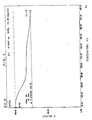
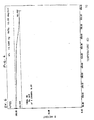
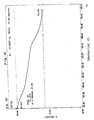
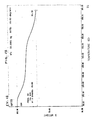
- Thermogravimetric analyses were performed using a Perkin-Elmer TGS-2 System. All samples were heated from 50 o C to 950 o C at 10 o C per minute. Larger scale bulk pyrolyses were carried out in a Lindberg Model 59344 tube furnace with a Eurotherm controller. The samples were placed in a fused silica boat in a 1.5 inch o.d. quartz tube and heated from 25 o C to 1000 o C at 5 o C per minute in a stream of argon or ammonia; they were held at 1000 o C for 2 hours.
- the reaction was carried out as follows.
- a one liter, three-necked flask was equipped with an overhead mechanical stirrer, a cold (-78 o C) condenser leading to a mercury bubbler and a septum and was flame-dried unde a strong flow of nitrogen ("standard reaction apparatus").
- Diethyl ether 350 ml, distilled from sodium benzophenone
- 32.1 g (0.279 mol) of CH3SiHCl2 distilled from metallic magnesium
- reaction mixture was allowed to warm to room temperature and the cold condenser was replaced by an air condenser in order to allow the unconverted ammonia to escape as the reaction mixture was stirred for another 4 hours.
- Filtration (in a dry box) of the reaction mixture 350 ml. medium-frit funnel) removed the precipitated ammonium chloride. The latter was washed with four 75 ml portions of ether.
- the combined filtrates were trap-to-trap distilled (room temperature/0.03 mmHg) into a cold trap to remove the diethyl ether.
- the residue, (CH3SiHNH) n was a clear, mobile liquid (11.63 g, 70% yield).
- the reaction can also be carried out as described above using THF as the reaction solvent.
- Table 3 lists the results of the elemental analyses of the borasilazanes for C, H, N, B and Si.
- the spectroscopic data were indicative of the presence of the various constituent groups, Si-CH3, Si-H, B-H, N-H, but provided no useful information about the structure of borasilazanes.
- a polymer bar was pressed from 3.42 g of product HP55 (Example 6), of dimensions 3.84 x 1.32 x 0.69 cm and with a density of 0.98 g cm ⁇ 3. Pyrolysis in an argon stream gave a ceramic bar of the same rectangular shape, 3.0 g (88% ceramic yield), of dimensions 3.00 x 1.03 x 0.55 cm (50% volume reduction), with a density of 1.76 g cm ⁇ 3. The bar was fairly strong.
- the borasilazane of Example 6 could be used to make ceramic fibers.
- a solution of this borasilazane in toluene prepared as described above was evaporated to remove most of the toluene, leaving a tacky solid. Fibers up to 100 cm in length could be drawn from this material by sticking a stirring rod into it and withdrawing it rapidly. When these fibers were fired in a stream of ammonia to 1000 o C, white ceramic fibers were obtained.
- a scanning electron microscope picture of the cross-section and surface of such a fiber shows that the fiber has, for the most part, a smooth surface and that it is solid all the way through.
Landscapes
- Chemical & Material Sciences (AREA)
- Organic Chemistry (AREA)
- Engineering & Computer Science (AREA)
- Medicinal Chemistry (AREA)
- Polymers & Plastics (AREA)
- Chemical Kinetics & Catalysis (AREA)
- Health & Medical Sciences (AREA)
- Ceramic Engineering (AREA)
- Manufacturing & Machinery (AREA)
- Materials Engineering (AREA)
- Structural Engineering (AREA)
- Ceramic Products (AREA)
- Polymers With Sulfur, Phosphorus Or Metals In The Main Chain (AREA)
- Silicon Polymers (AREA)
Applications Claiming Priority (2)
| Application Number | Priority Date | Filing Date | Title |
|---|---|---|---|
| US07/421,586 US5171736A (en) | 1989-10-16 | 1989-10-16 | Preceramic organosilicon-boron polymers |
| US421586 | 1989-10-16 |
Publications (2)
| Publication Number | Publication Date |
|---|---|
| EP0424082A2 true EP0424082A2 (de) | 1991-04-24 |
| EP0424082A3 EP0424082A3 (en) | 1991-07-10 |
Family
ID=23671177
Family Applications (1)
| Application Number | Title | Priority Date | Filing Date |
|---|---|---|---|
| EP19900311309 Withdrawn EP0424082A3 (en) | 1989-10-16 | 1990-10-16 | Preceramic organosilicon-boron polymers |
Country Status (4)
| Country | Link |
|---|---|
| US (1) | US5171736A (de) |
| EP (1) | EP0424082A3 (de) |
| JP (1) | JPH03221531A (de) |
| CA (1) | CA2027669A1 (de) |
Cited By (10)
| Publication number | Priority date | Publication date | Assignee | Title |
|---|---|---|---|---|
| EP0536698A1 (de) * | 1991-10-07 | 1993-04-14 | Lanxide Technology Company, Lp | Präkeramische Bor-enthaltende Polymere |
| EP0549225A1 (de) * | 1991-12-20 | 1993-06-30 | Dow Corning Corporation | Mit Bor modifizierte härtbare Hydropolysilazanpolymere |
| US5405982A (en) * | 1992-12-08 | 1995-04-11 | Bayer Ag | Polymeric borosilazanes and aluminosilazanes, a process for their preparation and their use |
| US5436084A (en) * | 1994-04-05 | 1995-07-25 | Dow Corning Corporation | Electronic coatings using filled borosilazanes |
| WO1996006813A1 (de) * | 1994-08-30 | 1996-03-07 | MAX-PLANCK-Gesellschaft zur Förderung der Wissenschaften e.V. | Herstellung keramischer materialien über die hydroborierung von silylcarbodiimiden |
| US5567832A (en) * | 1993-05-03 | 1996-10-22 | Bayer Ag | Polymeric multinary azanes, methods for their preparation and their use |
| EP0819720A1 (de) * | 1996-07-15 | 1998-01-21 | Bayer Ag | Polymere Silaborocarboazane, ein Verfahren zu deren Herstellung und deren Verwendung |
| US5866705A (en) * | 1996-07-15 | 1999-02-02 | Bayer Aktiengesellschaft | Polymeric silaborocarboazanes, a process for their preparation and their use |
| US5912047A (en) * | 1993-03-25 | 1999-06-15 | Dow Corning Corporation | Borosilicate electronic coatings |
| EP1713577A4 (de) * | 2003-11-20 | 2008-05-28 | Sigma Aldrich Co | Hitzehärtende polysilazanpolymere zur verwendung in chromatographischen systemen und anwendungen |
Families Citing this family (9)
| Publication number | Priority date | Publication date | Assignee | Title |
|---|---|---|---|---|
| DE4107108A1 (de) * | 1991-03-06 | 1992-09-10 | Bayer Ag | Siliciumbornitridkeramik und vorlaeuferverbindungen, verfahren zu deren herstellung sowie deren verwendung |
| JP3596910B2 (ja) * | 1993-06-14 | 2004-12-02 | 新原 ▲晧▼一 | セラミックス多孔体及びその製造方法 |
| DE19954079B4 (de) * | 1999-11-10 | 2006-08-24 | Deutsche Institute für Textil- und Faserforschung Stuttgart Institut für Chemiefasern | Verfahren zur Herstellung nichtoxidischer, amorpher oder kristalliner Keramikfasern |
| WO2004011472A2 (en) * | 2002-07-25 | 2004-02-05 | The Board Of Trustees Of The University Of Illinois | Method of hydroborating alcohols and reducing functional groups using a recyclable fluorous borane-sulfide |
| US8710169B2 (en) | 2012-01-18 | 2014-04-29 | United Technologies Corporation | Method of treating a preceramic material |
| RU2624442C1 (ru) * | 2016-04-06 | 2017-07-04 | Акционерное общество "Государственный Ордена Трудового Красного Знамени научно-исследовательский институт химии и технологии элементоорганических соединений" (АО "ГНИИХТЭОС") | Способ получения олигоборсилазанов |
| CN112573928B (zh) * | 2019-09-27 | 2023-01-13 | 郑州大学 | 一种含硼聚合物先驱体陶瓷的制备方法 |
| CN112250874B (zh) * | 2020-10-28 | 2022-02-18 | 浙江华茂航天科技股份有限公司 | 一种聚硼碳硅烷的制备方法 |
| CN116875200A (zh) * | 2023-07-20 | 2023-10-13 | 山西历久弥新科技有限公司 | 一种耐腐蚀含气凝胶的双组份胶体复合材料及其制备方法 |
Family Cites Families (19)
| Publication number | Priority date | Publication date | Assignee | Title |
|---|---|---|---|---|
| US3108985A (en) * | 1960-11-02 | 1963-10-29 | Dow Corning | Polysiloxane polymer with a calcined volatile-free filler |
| DE2218960A1 (de) * | 1972-04-19 | 1973-11-08 | Bayer Ag | Formkoerper aus mogenen mischungen von siliciumcarbid und siliciumnitrid und verfahren zu ihrer erstellung |
| DE2243527A1 (de) * | 1972-09-05 | 1974-04-18 | Bayer Ag | Formkoerper aus homogenen mischungen von siliciumcarbid und siliciumnitrid und verfahren zu ihrer herstellung |
| US4310651A (en) * | 1979-03-26 | 1982-01-12 | Dow Corning Corporation | Method for preparing silicon carbide |
| US4404153A (en) * | 1981-01-15 | 1983-09-13 | Dow Corning Corporation | Process for the preparation of poly(disilyl)silazane polymers and the polymers therefrom |
| US4312970A (en) * | 1981-02-20 | 1982-01-26 | Dow Corning Corporation | Silazane polymers from {R'3 Si}2 NH and organochlorosilanes |
| US4482669A (en) * | 1984-01-19 | 1984-11-13 | Massachusetts Institute Of Technology | Preceramic organosilazane polymers |
| US4611035A (en) * | 1984-02-10 | 1986-09-09 | Minnesota Mining And Manufacturing Company | Polyhydridosilanes and their conversion to pyropolymers |
| US4645807A (en) * | 1985-07-18 | 1987-02-24 | Massachusetts Institute Of Technology | Method for forming new preceramic polymers for SiC and Si3 N4 /SiC systems |
| US4650837A (en) * | 1985-09-30 | 1987-03-17 | Massachusetts Institute Of Technology | Method for converting Si-H containing polycarbosilanes to new and useful preceramic polymers and ceramic materials |
| US4639501A (en) * | 1985-09-04 | 1987-01-27 | Massachusetts Institute Of Technology | Method for forming new preceramic polymers containing silicon |
| US4719273A (en) * | 1985-09-04 | 1988-01-12 | Massachusetts Institute Of Technology | Method for forming new preceramic polymers containing silicon |
| US4705837A (en) * | 1986-04-08 | 1987-11-10 | Massachusetts Institute Of Technology | Method for converting Si-H containing polysiloxanes to new and useful preceramic polymers and ceramic materials |
| US4720532A (en) * | 1986-08-22 | 1988-01-19 | Massachusetts Institute Of Technology | Organopolysilazane precursors to silicon nitride-rich mixed SiC/Si3 N4 |
| US4730026A (en) * | 1986-09-30 | 1988-03-08 | E. I. Du Pont De Nemours And Company | Cross-linked organosilazane polymers |
| US4743662A (en) * | 1986-11-03 | 1988-05-10 | Dow Corning Corporation | Infusible preceramic polymers via plasma treatment |
| US4780337A (en) * | 1986-12-29 | 1988-10-25 | Massachusetts Institute Of Technology | Hybrid polymers derived from Si-H containing organosilicon polymers and unsaturated metal alkoxides |
| US5030744A (en) * | 1989-03-23 | 1991-07-09 | Tonen Corporation | Polyborosilazane and process for producing same |
| US5128286A (en) * | 1989-06-20 | 1992-07-07 | Tonen Corporation | Boron-containing, silicon nitride-based ceramic shaped body |
-
1989
- 1989-10-16 US US07/421,586 patent/US5171736A/en not_active Expired - Fee Related
-
1990
- 1990-10-15 CA CA002027669A patent/CA2027669A1/en not_active Abandoned
- 1990-10-16 JP JP2277602A patent/JPH03221531A/ja active Pending
- 1990-10-16 EP EP19900311309 patent/EP0424082A3/en not_active Withdrawn
Cited By (14)
| Publication number | Priority date | Publication date | Assignee | Title |
|---|---|---|---|---|
| EP0536698A1 (de) * | 1991-10-07 | 1993-04-14 | Lanxide Technology Company, Lp | Präkeramische Bor-enthaltende Polymere |
| EP0549225A1 (de) * | 1991-12-20 | 1993-06-30 | Dow Corning Corporation | Mit Bor modifizierte härtbare Hydropolysilazanpolymere |
| US5405982A (en) * | 1992-12-08 | 1995-04-11 | Bayer Ag | Polymeric borosilazanes and aluminosilazanes, a process for their preparation and their use |
| US5912047A (en) * | 1993-03-25 | 1999-06-15 | Dow Corning Corporation | Borosilicate electronic coatings |
| US5567832A (en) * | 1993-05-03 | 1996-10-22 | Bayer Ag | Polymeric multinary azanes, methods for their preparation and their use |
| US5436084A (en) * | 1994-04-05 | 1995-07-25 | Dow Corning Corporation | Electronic coatings using filled borosilazanes |
| WO1996006813A1 (de) * | 1994-08-30 | 1996-03-07 | MAX-PLANCK-Gesellschaft zur Förderung der Wissenschaften e.V. | Herstellung keramischer materialien über die hydroborierung von silylcarbodiimiden |
| EP0819720A1 (de) * | 1996-07-15 | 1998-01-21 | Bayer Ag | Polymere Silaborocarboazane, ein Verfahren zu deren Herstellung und deren Verwendung |
| US5866705A (en) * | 1996-07-15 | 1999-02-02 | Bayer Aktiengesellschaft | Polymeric silaborocarboazanes, a process for their preparation and their use |
| EP1713577A4 (de) * | 2003-11-20 | 2008-05-28 | Sigma Aldrich Co | Hitzehärtende polysilazanpolymere zur verwendung in chromatographischen systemen und anwendungen |
| US7815864B2 (en) | 2003-11-20 | 2010-10-19 | Sigma-Aldrich Co. | Polysilazane thermosetting polymers for use in chromatographic systems and applications |
| US7875738B2 (en) | 2003-11-20 | 2011-01-25 | Sigma-Aldrich Co. | Polysilazane thermosetting polymers for use in chromatographic systems and applications |
| US8088350B2 (en) | 2003-11-20 | 2012-01-03 | Sigma-Aldrich Co. Llc | Polysilazane thermosetting polymers for use in chromatographic systems and applications |
| US8092770B2 (en) | 2003-11-20 | 2012-01-10 | Sigma-Aldrich Co. Llc | Polysilazane thermosetting polymers for use in chromatographic systems and applications |
Also Published As
| Publication number | Publication date |
|---|---|
| US5171736A (en) | 1992-12-15 |
| EP0424082A3 (en) | 1991-07-10 |
| CA2027669A1 (en) | 1991-04-17 |
| JPH03221531A (ja) | 1991-09-30 |
Similar Documents
| Publication | Publication Date | Title |
|---|---|---|
| US5171736A (en) | Preceramic organosilicon-boron polymers | |
| Seyferth et al. | Borasilazane polymeric precursors for borosilicon nitride | |
| EP0259366B1 (de) | Polysilasane und verwandte verbindungen, verfahren und verwendungen | |
| US4689252A (en) | Polysilazane composition which can crosslink in the presence of a metal compound catalyzing a hydrosilylation reaction | |
| Liu et al. | Dehydrocoupling of ammonia and silanes catalyzed by dimethyltitanocene | |
| US4537942A (en) | Polyhydridosilanes and their conversion to pyropolymers | |
| US5750643A (en) | Dehydrocoupling treatment and hydrosilylation of silicon-containing polymers, and compounds and articles produced thereby | |
| US4722988A (en) | Organopolysilazane composition containing free radical generators and capable of being crosslinked by an energy input | |
| US5128494A (en) | Hydridosiloxanes as precursors to ceramic products | |
| EP0153008B1 (de) | In Keramik umsetzbare Organosilazan-Polymere | |
| US5322913A (en) | Polysilazanes and related compositions, processes and uses | |
| EP0536698B1 (de) | Präkeramische Bor-enthaltende Polymere | |
| US4611035A (en) | Polyhydridosilanes and their conversion to pyropolymers | |
| CA2189985A1 (en) | Ceramic materials fabricated from hydridosiloxane-based ceramic precursors and metal and/or ceramic powders | |
| US4656300A (en) | Process for a thermal treatment of a polysilazane containing .tbd.SiH groups and .tbd.Si--NH-- groups | |
| US4704444A (en) | Polyhydridosilanes and their conversion to pyropolymers | |
| US4952715A (en) | Polysilazanes and related compositions, processes and uses | |
| US5010158A (en) | Process for preparing polysiloxazane compositions and the products formed thereby | |
| JP2651464B2 (ja) | 改質ポリシラザン、その製造方法及びその用途 | |
| US5246738A (en) | Hydridosiloxanes as precursors to ceramic products | |
| US5319121A (en) | Hydridosiloxanes as precursors to ceramic products | |
| EP0266912B1 (de) | Präkeramische Polymere aus cyclischen Silazanen und halogenierten Disilanen und eine Methode zu ihrer Darstellung | |
| US4681860A (en) | Ceramic materials from polycarbosilanes | |
| US5070116A (en) | Preceramic organosilicon-metal carbonyl polymers | |
| CA1241973A (en) | Ceramic materials from polycarbosilanes |
Legal Events
| Date | Code | Title | Description |
|---|---|---|---|
| PUAI | Public reference made under article 153(3) epc to a published international application that has entered the european phase |
Free format text: ORIGINAL CODE: 0009012 |
|
| AK | Designated contracting states |
Kind code of ref document: A2 Designated state(s): AT BE CH DE DK ES FR GB GR IT LI LU NL SE |
|
| PUAL | Search report despatched |
Free format text: ORIGINAL CODE: 0009013 |
|
| AK | Designated contracting states |
Kind code of ref document: A3 Designated state(s): AT BE CH DE DK ES FR GB GR IT LI LU NL SE |
|
| 17P | Request for examination filed |
Effective date: 19920110 |
|
| 17Q | First examination report despatched |
Effective date: 19930607 |
|
| STAA | Information on the status of an ep patent application or granted ep patent |
Free format text: STATUS: THE APPLICATION IS DEEMED TO BE WITHDRAWN |
|
| 18D | Application deemed to be withdrawn |
Effective date: 19931218 |