EP0425403A2 - MÀ©thode informatisée pour retraiter les commandes atelier par analyse des articles - Google Patents
MÀ©thode informatisée pour retraiter les commandes atelier par analyse des articles Download PDFInfo
- Publication number
- EP0425403A2 EP0425403A2 EP90480116A EP90480116A EP0425403A2 EP 0425403 A2 EP0425403 A2 EP 0425403A2 EP 90480116 A EP90480116 A EP 90480116A EP 90480116 A EP90480116 A EP 90480116A EP 0425403 A2 EP0425403 A2 EP 0425403A2
- Authority
- EP
- European Patent Office
- Prior art keywords
- item
- component
- work
- orders
- work order
- Prior art date
- Legal status (The legal status is an assumption and is not a legal conclusion. Google has not performed a legal analysis and makes no representation as to the accuracy of the status listed.)
- Ceased
Links
Images
Classifications
-
- G—PHYSICS
- G06—COMPUTING OR CALCULATING; COUNTING
- G06Q—INFORMATION AND COMMUNICATION TECHNOLOGY [ICT] SPECIALLY ADAPTED FOR ADMINISTRATIVE, COMMERCIAL, FINANCIAL, MANAGERIAL OR SUPERVISORY PURPOSES; SYSTEMS OR METHODS SPECIALLY ADAPTED FOR ADMINISTRATIVE, COMMERCIAL, FINANCIAL, MANAGERIAL OR SUPERVISORY PURPOSES, NOT OTHERWISE PROVIDED FOR
- G06Q10/00—Administration; Management
- G06Q10/06—Resources, workflows, human or project management; Enterprise or organisation planning; Enterprise or organisation modelling
Definitions
- the present invention generally relates to a computer based method for handling re-work shop orders by item analysis; appropriate components to be used in the re-work shop orders are identified once defective components are also identified.
- the method includes steps for identifying replacement components after determining the engineering change (EC) level, alternate components, if any, and the location of the components for availability.
- EC engineering change
- re-work orders are received from the customers for faulty components, they have to be first sorted for fault diagnosis through appropriate tests. Once the tests identify the cause of the defect, the appropriate replacement item needs to be defined. If the defective item needs to be changed, a search needs to be made as to the current EC (engineering change) level and the assigned part number, if different from the previ ous number. If an alternate part number has been assigned, those have to be identified. Once it is identified, the location and availability of the part has to be determined.
- What is needed is a system that will automatically identify the replacement components based on current engineering change levels and identify the availability of replacement component(s) and their location.
- the automated system should also provide allocations based on availability and let the user know of the projected delivery date for start of re-work orders based on component/item ship leadtime.
- Planning systems such as IBM's COPICS product provide the capability for engineering change affectivity that identifies when an engineering change will need to be implemented. However, they do not have the capability to identify changed component number given the old component number.
- the production monitoring and control module within IBM's COPICS product provides the capability to determine the quantity of order completion. The physical capability of testing re-work orders and determining the defects in the re-work orders is considered as part of the manufacturing shop floor systems.
- MRP material requirement planning
- the subject invention facilitates the capability for shop re-work orders to be effectively scheduled, knowing the time and location of item availability that is needed to correct the problem found in the re-work shop orders.
- the system automatically identifies alternate components or items that can be used in the shop orders and provides realistic shipping dates so that the re-work shop orders can be scheduled. If components or items are not available, the system provides feedback to the material planning system to re-plan items using traditional material planning systems such as the MAP (material requirement planning) systems and provide projected shipping dates so that re-work orders can be scheduled.
- MAP material requirement planning
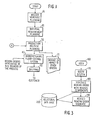
- the key parts of the system includes Master Schedule Planning 10, where items are planned at the completed item level, a Material Requirement Planning (MRP) system 20, where completed item requirements are exploded into sub-components and planned, and the Production Release Planning System 30, where shop orders planned at the material requirement planning level are set for releasing to the shop floor.
- MRP Material Requirement Planning
- the next part of the system, the manufacturing floor control system 40 is the segment of the process where re-work orders are introduced and where the scheduling of the orders takes place. This is the segment of the process which is addressed by the present invention.
- the next block is the Shipping segment 50 where items are shipped to the customer as in any corporate enterprise.
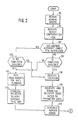
- Figure 2 illustrates the logic of the component identification system when re-work orders are introduced as part of the floor control system 40.
- the logic described involves analysis of the database to identify if an alternate component or item has been identified for the defective component or item. If so, the system identifies the component or item and checks for availability. If the component or item is not available, the system requests the component or item in question to be re-planned as part of the next material planning cycle 20.
- the process begins at function block 60 where re-work orders are received.
- Defective components or items are identified in function block 70.
- the faulty components or items are first diagnosed for the cause of the defects. This process will vary from item to item depending on the item and the process associated with it.
- decision block 80 a test is made to determine whether the item in question has been changed or superseded by another alternate item due to any engineering change. If it has not changed, a check is made in decision block 90 to determine if the item is available for use. If an alternate item has been defined, a test is made in decision block 100 to determine if the new item is available in inventory. If either the original item or the alternate item is available, the location of availability is determined from the inventory database, as indicated by function block 130.
- the user would query against a host database such as IBM Corporation's COPICS product or that of similar products. If the item in question is available, the parameter data associated with the item would provide information regarding the availability. This is indicated by function block 140. If the item(s) are not available, they have to be re-planned in a process such as MRP as shown in Figure 1 at block 20. Such MRP systems will project component availability through an interface to traditional purchasing systems. More specifically, feedback to the MRP system is provided to the MRP system to post the requirements for material planning in function block 110. The MRP system then establishes a delivery schedule in function block 120.
- a host database such as IBM Corporation's COPICS product or that of similar products.
- the rework shop orders can be scheduled, as indicated in function block 150.
- the connector A indicates feedback to the production release planning system 30 in Figure 1.
- the production release planning system generates and displays to the user a report of impact to other orders at 35.
- Figure 3 illustrates the key parts of the system from the user point of view.
- the key parts are the database 200 and the query system 170.
- the database can be any of several products currently available, but for the purpose of the preferred embodiment, IBM Corporation's Database 2 (DB2) is used.
- DB2 is a relational database system, but it will be understood by those skilled in the art that other databases, including hierarchical databases, could be used.
- General information on IBM's DB2 can be had with reference to publication GC26-4073-2 published by IBM Corporation.
- the query system can be an expert system, but for purposes of the preferred embodiment of this invention, IBM's structured extended executor (REXX) language is used. A description of the REXX language is provided in "Virtual Machine/Systems Product, System Product Interpreter User's Guide", Release 4, publication SC24-5238-2, published by IBM Corporation.
- REXX structured extended executor
- the user 160 can query the current status, completion date and the priority sequence of any job in question using the query system 170.
- the query system 170 interfaces with the Schedule re-work order with revised component/item module 180 which accesses the database 200 and arrives at the revised schedule.
- the block 180 reflects the essence of the logic as illustrated in Figure 2.
- the database 200 as defined has the capability to capture the decision variables tasted and the results obtained for each test.
- the user can access the results using the query facility at a later date, if needed, and obtain an output in the form of a revised order sequence for dispatch block 190. This enhances the analysis capability of future test data. This also provides an additional enhancement to the system.
- the decision making capability to define the correct component or item based on revisions or alternatives that might have superceded an existing component or item due to engineering changes provides the artificial intelligence to the system.
Landscapes
- Engineering & Computer Science (AREA)
- Business, Economics & Management (AREA)
- Human Resources & Organizations (AREA)
- Economics (AREA)
- Strategic Management (AREA)
- Entrepreneurship & Innovation (AREA)
- Operations Research (AREA)
- Physics & Mathematics (AREA)
- Educational Administration (AREA)
- Marketing (AREA)
- Development Economics (AREA)
- Quality & Reliability (AREA)
- Tourism & Hospitality (AREA)
- Game Theory and Decision Science (AREA)
- General Business, Economics & Management (AREA)
- General Physics & Mathematics (AREA)
- Theoretical Computer Science (AREA)
- General Factory Administration (AREA)
- Multi-Process Working Machines And Systems (AREA)
- Management, Administration, Business Operations System, And Electronic Commerce (AREA)
Applications Claiming Priority (2)
| Application Number | Priority Date | Filing Date | Title |
|---|---|---|---|
| US42561289A | 1989-10-23 | 1989-10-23 | |
| US425612 | 1989-10-23 |
Publications (2)
| Publication Number | Publication Date |
|---|---|
| EP0425403A2 true EP0425403A2 (fr) | 1991-05-02 |
| EP0425403A3 EP0425403A3 (en) | 1991-12-27 |
Family
ID=23687300
Family Applications (1)
| Application Number | Title | Priority Date | Filing Date |
|---|---|---|---|
| EP19900480116 Ceased EP0425403A3 (en) | 1989-10-23 | 1990-08-14 | A computer based method for handling re-work shop orders by item analysis |
Country Status (2)
| Country | Link |
|---|---|
| EP (1) | EP0425403A3 (fr) |
| JP (1) | JPH03136755A (fr) |
Cited By (1)
| Publication number | Priority date | Publication date | Assignee | Title |
|---|---|---|---|---|
| US10402763B2 (en) | 2014-12-11 | 2019-09-03 | Lenovo Enterprise Solutions (Singapore) Pte. Ltd | Total manufacturing planning management control system |
Family Cites Families (3)
| Publication number | Priority date | Publication date | Assignee | Title |
|---|---|---|---|---|
| US4591983A (en) * | 1984-07-09 | 1986-05-27 | Teknowledge, Inc. | Hierarchical knowledge system |
| US4646238A (en) * | 1984-10-26 | 1987-02-24 | Analog Devices, Inc. | Material requirements planning system and procedures for use in process industries |
| US4887206A (en) * | 1987-12-29 | 1989-12-12 | International Business Machines Corporation | Automated system for estimating impact on inventory cost due to an engineering change to a component |
-
1990
- 1990-08-14 EP EP19900480116 patent/EP0425403A3/en not_active Ceased
- 1990-09-07 JP JP2235956A patent/JPH03136755A/ja active Pending
Cited By (1)
| Publication number | Priority date | Publication date | Assignee | Title |
|---|---|---|---|---|
| US10402763B2 (en) | 2014-12-11 | 2019-09-03 | Lenovo Enterprise Solutions (Singapore) Pte. Ltd | Total manufacturing planning management control system |
Also Published As
| Publication number | Publication date |
|---|---|
| JPH03136755A (ja) | 1991-06-11 |
| EP0425403A3 (en) | 1991-12-27 |
Similar Documents
| Publication | Publication Date | Title |
|---|---|---|
| US5315509A (en) | Artificial intelligence system for item analysis for rework shop orders | |
| US5099431A (en) | Automated re-work shop order scheduling system | |
| US7895047B2 (en) | Computerized predictive maintenance system and method | |
| US4887206A (en) | Automated system for estimating impact on inventory cost due to an engineering change to a component | |
| US4866628A (en) | Automated production dispatch system with feedback control | |
| EP0323383A2 (fr) | Système automatisé pour l'évaluation fine des frais d'inventaire dus aux fluctuations de la demande | |
| US6820038B1 (en) | Component provisioning or issuance in a maintenance, repair or overhaul environment | |
| Khadem | Efficacy of lean metrics in evaluating the performance of manufacturing system | |
| US9043008B2 (en) | Modeling defect management and product handling during the manufacturing process | |
| CA2425803C (fr) | Systeme et procede d'execution d'une maintenance preventive fondee sur une maintenance preventive cible | |
| EP0425403A2 (fr) | MÀ©thode informatisée pour retraiter les commandes atelier par analyse des articles | |
| Nelsen et al. | Quality glossary | |
| JPH03136753A (ja) | 技術変更実施用自動化システム及び方法 | |
| JP2006235872A (ja) | プロジェクト管理装置 | |
| JPH01196664A (ja) | 部品への技術変更による在庫コストに対するインパクトを推定する自動システム | |
| AU2005337460B2 (en) | Parts marking system and method | |
| Leung et al. | The Carroll–Hung method for component reliability mapping in aircraft maintenance | |
| Bandyopadhyay | QS-9000 handbook: a guide to registration and audit | |
| CN118172013A (zh) | 工装物料的管理方法及装置 | |
| WO2025238647A1 (fr) | Agent d'exécution de production et de maintenant intelligent et interactif | |
| Kastritis | An object-oriented model for a manufacturing resource planning system | |
| DeToma et al. | A software metrics program | |
| Shah | Functional specification definition for manufacturing resource planning software | |
| Poorman | The Delco Remy Approach to Developing Quality Measurement Methods | |
| Parameswaran | Development of shop floor control system |
Legal Events
| Date | Code | Title | Description |
|---|---|---|---|
| PUAI | Public reference made under article 153(3) epc to a published international application that has entered the european phase |
Free format text: ORIGINAL CODE: 0009012 |
|
| 17P | Request for examination filed |
Effective date: 19901213 |
|
| AK | Designated contracting states |
Kind code of ref document: A2 Designated state(s): DE FR GB |
|
| PUAL | Search report despatched |
Free format text: ORIGINAL CODE: 0009013 |
|
| AK | Designated contracting states |
Kind code of ref document: A3 Designated state(s): DE FR GB |
|
| 17Q | First examination report despatched |
Effective date: 19940830 |
|
| GRAG | Despatch of communication of intention to grant |
Free format text: ORIGINAL CODE: EPIDOS AGRA |
|
| STAA | Information on the status of an ep patent application or granted ep patent |
Free format text: STATUS: THE APPLICATION HAS BEEN REFUSED |
|
| 18R | Application refused |
Effective date: 19961130 |