EP0425420A2 - ProcÀ©dé et dispositif pour traiter des objets persistants dans un système de programmation orienté objet - Google Patents
ProcÀ©dé et dispositif pour traiter des objets persistants dans un système de programmation orienté objet Download PDFInfo
- Publication number
- EP0425420A2 EP0425420A2 EP90480155A EP90480155A EP0425420A2 EP 0425420 A2 EP0425420 A2 EP 0425420A2 EP 90480155 A EP90480155 A EP 90480155A EP 90480155 A EP90480155 A EP 90480155A EP 0425420 A2 EP0425420 A2 EP 0425420A2
- Authority
- EP
- European Patent Office
- Prior art keywords
- storage device
- data storage
- designated object
- persistent
- designated
- Prior art date
- Legal status (The legal status is an assumption and is not a legal conclusion. Google has not performed a legal analysis and makes no representation as to the accuracy of the status listed.)
- Ceased
Links
Images






Classifications
-
- G—PHYSICS
- G06—COMPUTING OR CALCULATING; COUNTING
- G06F—ELECTRIC DIGITAL DATA PROCESSING
- G06F9/00—Arrangements for program control, e.g. control units
- G06F9/06—Arrangements for program control, e.g. control units using stored programs, i.e. using an internal store of processing equipment to receive or retain programs
- G06F9/44—Arrangements for executing specific programs
- G06F9/448—Execution paradigms, e.g. implementations of programming paradigms
- G06F9/4488—Object-oriented
- G06F9/4493—Object persistence
-
- G—PHYSICS
- G06—COMPUTING OR CALCULATING; COUNTING
- G06F—ELECTRIC DIGITAL DATA PROCESSING
- G06F16/00—Information retrieval; Database structures therefor; File system structures therefor
- G06F16/20—Information retrieval; Database structures therefor; File system structures therefor of structured data, e.g. relational data
- G06F16/28—Databases characterised by their database models, e.g. relational or object models
- G06F16/289—Object oriented databases
-
- Y—GENERAL TAGGING OF NEW TECHNOLOGICAL DEVELOPMENTS; GENERAL TAGGING OF CROSS-SECTIONAL TECHNOLOGIES SPANNING OVER SEVERAL SECTIONS OF THE IPC; TECHNICAL SUBJECTS COVERED BY FORMER USPC CROSS-REFERENCE ART COLLECTIONS [XRACs] AND DIGESTS
- Y10—TECHNICAL SUBJECTS COVERED BY FORMER USPC
- Y10S—TECHNICAL SUBJECTS COVERED BY FORMER USPC CROSS-REFERENCE ART COLLECTIONS [XRACs] AND DIGESTS
- Y10S707/00—Data processing: database and file management or data structures
- Y10S707/99941—Database schema or data structure
- Y10S707/99944—Object-oriented database structure
-
- Y—GENERAL TAGGING OF NEW TECHNOLOGICAL DEVELOPMENTS; GENERAL TAGGING OF CROSS-SECTIONAL TECHNOLOGIES SPANNING OVER SEVERAL SECTIONS OF THE IPC; TECHNICAL SUBJECTS COVERED BY FORMER USPC CROSS-REFERENCE ART COLLECTIONS [XRACs] AND DIGESTS
- Y10—TECHNICAL SUBJECTS COVERED BY FORMER USPC
- Y10S—TECHNICAL SUBJECTS COVERED BY FORMER USPC CROSS-REFERENCE ART COLLECTIONS [XRACs] AND DIGESTS
- Y10S707/00—Data processing: database and file management or data structures
- Y10S707/99951—File or database maintenance
- Y10S707/99952—Coherency, e.g. same view to multiple users
Definitions
- This invention relates to an object oriented programming system, and more particularly to an apparatus and process for handling objects which are stored in nonvolatile memory in an object oriented programming system.
- Object Oriented Programming systems and processes have been the subject of much investigation and interest in state of the art data processing environments.
- Object Oriented Programming is a computer program packaging technique which provides reusable and easily expandable programs.
- object oriented programs are reusable and expandable as new requirements arise.
- object oriented programming has received increased attention and investigation.
- Object oriented programming systems are composed of a large number of "objects".
- An object is a data structure and a set of operations or functions that can access that data structure.
- the data structure may be represented as a "frame”.
- the frame has many "slots", each of which contains an "attribute” of the data in the slot.
- the attribute may be a primitive (i.e. an integer or string) or an Object Reference which is a pointer to another object's instance or instances (defined below).
- Each operation (function) that can access the data structure is called a "method".
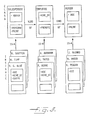
- Figure 1 illustrates a schematic representation of an object in which a frame is encapsulated within its methods.
- Figure 2 illustrates an example of an object, in which the data structure relates to employee data, and a number of methods surround this data structure. One method, for example, obtains the age of an employee.
- Each defined object will usually be manifested in a number of instances. Each instance contains the particular data structure for a particular example of the object. For example, an object for individual employee named Joyce Smith is an instance of the "employee" object.
- Object oriented programming systems provide two primary characteristics which allow flexible and reusable programs to be developed. These characteristics are referred to as "encapsulation” and "inheritance”. As may be seen from Figure 1, the frame is encapsulated by its methods (functions). A wall of code has been placed around each piece of data. All access to the frame is handled by the surrounding methods. Data independence is thereby provided because an object's data structure is accessed only by its methods. Only the associated methods know the internal data structure. This ensures data integrity.
- Figure 3 illustrates the inheritance property.
- the objects are illustrated as rectangles rather than as circles, with the object name at the top of a rectangle, the frame below the object name and the methods below the frame.
- three object classes are illustrated for "salesperson", “employee” and "person”, where a salesperson is a "kind of” employee, which is a "kind of” person.
- salesperson is a subclass of employee and employee is the superclass of salesperson.
- employee is the subclass of person and person is the superclass of employee.
- Each class shown includes three instances.
- B. Soutter, W. Tipp and B. G. Blue are salespersons.
- B. Abraham, K. Yates and R. Moore are employees.
- J. McEnro, R. Nader and R. Reagan are persons. In other words, an instance is related to its class by an "is a" relation.
- Each subclass "inherits" the frame and methods of its superclass.
- a salesperson frame inherits age and hire date objects from the employee superclass as well as promote methods.
- Salesperson also includes a unique quota attribute and a pay commission method.
- Each instance can access all methods and frames of its superclass, so that, for example, B. G. Blue can be promoted.
- a high level routine requests an object to perform one of its methods by sending the object a "message" telling the object what to do.
- the receiving object responds to the message by choosing the method that implements the message name, executing this method and then returning control to the calling high level routine, along with the results of the method.
- an object oriented programming system typically runs on a data processor which includes volatile memory, i.e., memory which is erased or overwritten when a session is terminated or when power is removed from the data processor, and nonvolatile memory such as direct access storage devices (DASD-disk files) or tape files in which data is permanently stored.
- volatile memory i.e., memory which is erased or overwritten when a session is terminated or when power is removed from the data processor
- nonvolatile memory such as direct access storage devices (DASD-disk files) or tape files in which data is permanently stored.
- RAM Random Access Memory
- the nonvolatile memory is often referred to as a "database”.
- database refers to any physical, nonvolatile data storage medium rather than to a particular database technology or product.
- object oriented programming systems include temporary objects, which are only used during a particular session and may be destroyed thereafter, and permanent objects which must survive a particular run time session for later use. Temporary objects are typically stored in RAM, while permanent objects must be stored in the database. Permanent objects are often called “persistent" objects.
- the persistent class includes all methods necessary for ensuring that a persistent object is handled properly. Any object which must survive a run-time session may inherit from the persistent class. According to the basic concepts of object oriented programming systems, an object which inherits from the persistent class automatically becomes a persistent object.
- At least two methods are associated with the persistent class of objects. These methods are the “Materialize” and “Dematerialize” methods.
- the “Materialize” method automatically retrieves a persistent object from nonvolatile memory (the database) and places it into volatile memory (RAM) if the persistent object cannot be located in RAM. If the persistent object cannot be located in the database, a failure indicator is provided.
- the "Dematerialize” method removes an object from volatile memory and automatically performs predetermined actions on the corresponding object in nonvolatile memory depending on whether changes have been made to the object while it was in volatile memory.
- a test is first made to see if any changes have been made to the persistent object in RAM, after it was read from the database. If not, the persistent object is removed from RAM memory. If the persistent object was newly created, and does not currently exist in the database, the persistent object is written into the database and removed from RAM. Also, if changes were made to the persistent object, the changed persistent object is written into the database in place of the existing persistent object, and removed from RAM. Finally, if the persistent object is to be deleted, it is deleted from RAM and the database.
- the persistent object class provides a simple interface process and apparatus for automatically handling persistent objects in an object oriented programming system, with minimal overhead. Data integrity of the system is thereby preserved.
- the persistent class allows persistent objects in the database to automatically appear in RAM whenever referenced, and ensures that the database automatically reflects any changes which had been made to the RAM copy of the object.
- a persistent data interface for an object oriented programming system is thereby provided.
- a persistent data interface for a conventionally programmed computer system according to the present invention may also be provided.
- work is accomplished by sending action request messages to an object which contains (encapsulates) data.
- the object will perform the requested action on the data according to its predefined methods.
- the requestor of the action need not know what the actual data looks like or how the object manipulates it.
- An object's class defines the types and meanings of the data and the action requests (messages) that the object will honor.
- the individual objects containing data are called instances of the class.
- Classes generally relate to real-world things. For example, "Parts" may be a class.
- the data elements (slots) of a part might be a part number, a status and a part type.
- the instances of this class represent individual parts, each with its own part number, status, and type information.
- the programs performing the requested actions are called methods of the class.
- Object classes can be defined to be subclasses of other classes. Subclasses inherit all the data characteristics and methods of the parent class. They can add additional data and methods, and they can override (redefine) any data elements or methods of the parent class. While most messages are sent to object instances, the message that requests that a new instance be created is sent to an object class. The class will cause a new instance to be created and will return an object identifier by which that object will be known.
- the sender of an action request message need not know the exact class of the object to which it is sending the message. As long as the target object either defines a method to handle the message or has a parent class that defines such a method, then the message will be handled using the data in the object instance and the method in its class or its parent class. In fact, it need not be an immediate parent, but may be a parent's parent, etc.
- the sender of the method need only have the object ID of the receiving object. This property of object oriented systems is called "inheritance". The inheritance property is used in the present invention.
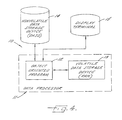
- the system 10 includes a data processor 11 which may be a mainframe computer, minicomputer or personal computer. For large databases having multiple users, a mainframe computer is typically employed.
- the data processor 10 includes a volatile data storage device 13 , typically random access memory (RAM) for providing a working store for active data and intermediate results. Data in RAM 13 is erased when power to the data processor 11 is removed or a new user session is begun.
- System 10 also includes a nonvolatile data storage device 14 for permanent storage of objects.
- Device 14 may be a direct access storage device (DASD-a disk file) a tape file, an erasable optical disk or other well known device.
- DASD-a disk file direct access storage device
- Nonvolatile data storage device 14 will also be referred to herein as a “database”. Volatile data storage device 13 will also be referred to as “memory”.
- CRT cathode ray tube
- An object oriented operating program 12 is also included in data processor 11 .
- Object oriented operating program 12 may be programmed in object oriented languages such as "C” or “Smalltalk” or variations thereof, or in conventional programming languages such as FORTRAN or COBOL.
- object oriented operating program 12 is well known to those skilled in the art of object oriented programming systems, and will only be described generally below.
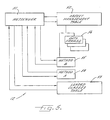
- object oriented program 12 includes three primary components: a Messenger 51 , an Object Management Table 52 and a Loaded Classes Table 53 .
- the Messenger 51 controls communication between calling and called messages, Object Management Table 52 and Loaded Classes Table 53 .
- Object Management Table 52 contains a list of pointers to all active object instances.
- the Loaded Classes Table 53 contains a list of pointers to all methods of active object classes.
- Method A sends a message to Method B by calling Messenger 51 .
- the message contains (1) an object reference of the instance to receive the message, (2) the method the object instance is requested to perform on the data it encapsulates, and (3) any parameters needed by the receiving method.
- Messenger 51 obtains a pointer to the data frame 56 of the instance object specified by Method A, by searching Object Management Table 52 for the instance object. If the specified instance object cannot be found, Object Management Table 52 adds the instance object to the table and calls the instance to materialize its data from the database. Once in the instance table, Object Management Table 52 returns the pointer to the materialized instance object.
- Messenger 51 then obtains the address of Method B from the Loaded Classes Table 53 . If the instance's class is not loaded, the Loaded Classes Table 53 will load it at this time to materialize its data.
- the Loaded Classes Table 53 searches for the specified method (Method B) and returns the address of the method to Messenger 51 .
- the Messenger 51 then calls Method B, passing it a system data area and the parameters from the call made by Method A including the pointer.
- Method B accesses the data frame 56 using the pointer.
- Method B then returns control to the Messenger 51 which returns control to Method A.
- Persistent and non-persistent objects are manipulated by object oriented operating program 12 when they are stored in RAM 13 . However, at the conclusion of a run-time session, persistent objects must be automatically stored in database 14 , whereas non-persistent objects may simply be erased from RAM 13. Moreover, persistent objects must automatically appear in RAM 13 wherever they are referenced by object oriented operating program 12 , and any changes which have been made to a persistent object in RAM 13 must also be made to the persistent object in database 14 .
- Prior art object oriented programming systems do not provide any automatic way for objects to be persistent.
- the system programmer had to develop unique methods which read an object from and write the object to the database.
- users of an object had to decide when to move the object into and out of the database.
- a persistent object class is provided to support all required operations for maintaining integrity of persistent objects.
- Any object which is desired to be persistent will be arranged to inherit from the persistent object class of the present invention.
- all persistent objects are children of the persistent object parent. Accordingly, objects become persistent simply by inheriting from the persistent class.
- Children of the persistent class need only define a few deferred methods, whose use is taken care of automatically by the persistent class methods.
- the Persistent Class of the present invention includes two methods which are used by a message to retrieve objects from and update objects within the database. These methods are the Materialize and Dematerialize methods. Deferred methods are also defined to fully implement the automatic persistent data interface. As is well known to those having skill in the art, a deferred method is defined by a class but is only implemented by descendants (children) of the class. The function of the deferred method is precisely specified by the Persistent Class of the present invention, although it is implemented by children of the Persistent Class.
- the Persistent Class methods are:
- the Dematerialize method expects three deferred methods to be defined by each child class, namely: the DB_Update, DB_Delete, and the DB_Insert methods.
- the Dematerialize method When the Dematerialize method is invoked by a message, it in turn determines which of the three deferred methods to invoke.
- Each deferred method will encapsulate all the database access code needed to either Update, Delete, or Insert the object into the database.
- the Materialize method expects a deferred method to be defined by each child class, namely: the DB_Select method.
- the Materialize method invokes the DB_Select method of the specified child object.
- This DB_Select method will encapsulate all the database access code needed to fill in the frame previously allocated by the object oriented operating program.
- This deferred method contains the low-level code necessary to actually delete a specific instance from the database.
- This deferred method contains the low-level code necessary to actually insert a specific instance into the database.
- This deferred method contains the low-level code necessary to retrieve a specific instance from the database.
- This deferred method contains the low-level code necessary to actually update a specific instance in the database.
- This method is used by clients of an instance which desire to delete the instance. It simply sets the Demat_State to 'delete' as appropriate.
- This instance attribute is used as a state indicator of the instance. It has four states:
- the instance is to be deleted from the database and removed from memory when it is dematerialized.
- the instance is to be inserted into the database and removed from memory when it is dematerialized.
- the instance is to be removed from memory when it is dematerialized.
- the database copy of this instance is to remain unchanged.
- the instance is to updated in the database and removed from memory when it is dematerialized.
- Last Update-Time-Stamp This attribute is the Last Update-Time-Stamp. It is used to provide lock protection of the instance in a multi-user database. Every time the instance is dematerialized, the value of Last_Update_DTS of the instance in RAM is checked against the Last_Update_DTS of the instance in the database. If they match, then the dematerialization will be allowed to proceed. If they are different, then the instance was updated after the present in-memory copy was made and the Dematerialize is not allowed.
- This method is used by methods of a persistent instance which desire to modify the persistent instance. It simply sets the Demat_State to 'update' as appropriate.
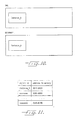
- Example 1 describes the Materialize method, when the referenced object is in the database but not in RAM (also referred to as "memory").
- Example 2 describes the Materialize method, when the referenced object is not in the database and must be created.
- Example 3 describes the Dematerialize method when no changes have been made to the referenced object while in RAM.
- Example 4 describes the Dematerialize method for a newly created persistent object.
- Example 5 describes the Dematerialize method when a persistent object has ben modified in RAM.
- Example 6 describes the Dematerialize method when a persistent object is deleted from the database.
- Instance_A of object type Class_A, already in memory, which has an object reference (abbreviated OREF) to another instance called Instance_B, of object type Class_B.
- OREF object reference
- Instance_B of object type Class_B.
- Class_A and Class_B to inherit from the Persistent Class of the present invention.
- Class_A is a "person" type
- Instance_A is an instance of this type. That is, Instance_A is a person.
- Class_B is a "door” type
- Instance_B is an instance of this type. That is, Instance_B is a door.
- Instance_A a person, knows about Instance_B, a door.
- Each Example will demonstrate how Instance_B (the door) is automatically manipulated by the Persistent Class as driven by a message from Instance_A (the person).
- database is used to refer to nonvolatile data storage device 14 ( Figure 4).
- RAM or “memory” are used to refer to a volatile data storage device 13 ( Figure 4). It will be understood by those having skill in the art that the particular addresses shown in the "address in memory” column of Figures 7, 9, 11, 13, 16, 19 and 22 are arbitrary and are provided for illustration only.
- Instance_A sends a message to Instance_B using the OREF it contains of type Instance_B's class. Additionally, Instance_B is not currently in memory, but rather in the database. Instance_A's message to Instance_B will succeed because of the automatic materialization provided to all classes which inherit from the persistent class.
- Instance_A sends a message to Instance_B using the OREF it contains of type Instance_B's class. Additionally, Instance_B is not currently in memory, nor is it in the database ( Figure 10). Instance_A's message to Instance_B will fail because there is no object which has that particular object id either in memory nor in the database. In this case, it is highly probable that Instance_B has been deleted without Instance_A's knowledge.
- the following Appendix contains a pseudo code listing of an implementation of the Persistent Class of the present invention in an object oriented computer system.
- the pseudo code listing is designed to operate with IBM's well-known Structured Query Language (SQL), described for example in a publication entitled “IBM Database 2 Version 2 SQL Reference Release 1", IBM publication number SC26-4380-0, the disclosure of which is incorporated herein by reference.
- SQL Structured Query Language
Landscapes
- Engineering & Computer Science (AREA)
- Theoretical Computer Science (AREA)
- Databases & Information Systems (AREA)
- Software Systems (AREA)
- Physics & Mathematics (AREA)
- General Engineering & Computer Science (AREA)
- General Physics & Mathematics (AREA)
- Data Mining & Analysis (AREA)
- Information Retrieval, Db Structures And Fs Structures Therefor (AREA)
- Devices For Executing Special Programs (AREA)
- Stored Programmes (AREA)
Applications Claiming Priority (2)
| Application Number | Priority Date | Filing Date | Title |
|---|---|---|---|
| US42582489A | 1989-10-23 | 1989-10-23 | |
| US425824 | 1989-10-23 |
Publications (2)
| Publication Number | Publication Date |
|---|---|
| EP0425420A2 true EP0425420A2 (fr) | 1991-05-02 |
| EP0425420A3 EP0425420A3 (en) | 1992-09-23 |
Family
ID=23688181
Family Applications (1)
| Application Number | Title | Priority Date | Filing Date |
|---|---|---|---|
| EP19900480155 Ceased EP0425420A3 (en) | 1989-10-23 | 1990-10-09 | Process and apparatus for handling persistent objects in an object oriented programming system |
Country Status (3)
| Country | Link |
|---|---|
| US (1) | US5247669A (fr) |
| EP (1) | EP0425420A3 (fr) |
| JP (1) | JPH0833862B2 (fr) |
Cited By (15)
| Publication number | Priority date | Publication date | Assignee | Title |
|---|---|---|---|---|
| EP0483036A3 (en) * | 1990-10-24 | 1993-03-10 | International Business Machines Corporation | Data structure within object oriented computing environment |
| WO1995019001A1 (fr) * | 1994-01-05 | 1995-07-13 | Apple Computer, Inc. | Moyen de mise a jour pour module de gestion d'elements de stockage d'ordinateurs |
| US5528261A (en) * | 1992-06-09 | 1996-06-18 | Apple Computer, Inc. | Operating system software architecture and methods for supporting color processing |
| US5590334A (en) * | 1994-03-30 | 1996-12-31 | Apple Computer, Inc | Object oriented message passing system and method |
| GB2309326A (en) * | 1996-01-22 | 1997-07-23 | Ibm | An objectbase of persistent application objects |
| US5652879A (en) * | 1993-05-12 | 1997-07-29 | Apple Computer, Inc. | Dynamic value mechanism for computer storage container manager enabling access of objects by multiple application programs |
| WO1997042573A1 (fr) * | 1996-05-07 | 1997-11-13 | Electronic Data Systems Corporation | Methode et systeme prenant en charge des objets persistants |
| WO1998010346A1 (fr) * | 1996-09-03 | 1998-03-12 | Honeywell Inc. | Segment de memoire permanent pour objets-images dynamiques |
| US5822590A (en) * | 1991-10-31 | 1998-10-13 | Texas Instruments Incorporated | dbX: a persistent programming language model |
| US5857207A (en) * | 1993-05-12 | 1999-01-05 | Apple Computer, Inc. | Storage manager for computer system |
| US5873097A (en) * | 1993-05-12 | 1999-02-16 | Apple Computer, Inc. | Update mechanism for computer storage container manager |
| WO2000070443A3 (fr) * | 1999-05-17 | 2001-02-22 | Sun Microsystems Inc | Facilitation de la collecte d'informations parasites lors du controle des versions d'objet destine aux calculs dimensionnels dans l'espace et le temps |
| EP0851345A3 (fr) * | 1996-12-09 | 2003-04-09 | Microsoft Corporation | Procédé et système pour la persistence automatique des fenêtres dans un environnement de fenêtrage |
| EP0817026A3 (fr) * | 1996-07-01 | 2005-04-13 | Sun Microsystems, Inc. | Procédé et appareil de stockage des objets persistants dans un réseau d'objets distribué |
| US6958190B2 (en) | 1997-04-18 | 2005-10-25 | Magna Interior Systems Inc. | Decorative automotive interior trim articles with cast integral light stable covering and process for making the same |
Families Citing this family (61)
| Publication number | Priority date | Publication date | Assignee | Title |
|---|---|---|---|---|
| EP0562822B1 (fr) * | 1992-03-24 | 2000-06-07 | Canon Kabushiki Kaisha | Méthode de gestion d'une structure de données contenant à la fois des données persistentes et transitoires |
| US5404525A (en) * | 1992-09-30 | 1995-04-04 | International Business Machines Corporation | Efficient method router that supports multiple simultaneous object versions |
| JP2597460B2 (ja) * | 1992-11-12 | 1997-04-09 | インターナショナル・ビジネス・マシーンズ・コーポレイション | 複合データ構造を生成及び記憶する方法及び装置 |
| US5603030A (en) * | 1993-01-07 | 1997-02-11 | Microsoft Corporation | Method and system for destruction of objects using multiple destructor functions in an object-oriented computer system |
| US5394523A (en) * | 1993-01-22 | 1995-02-28 | Taligent, Inc. | Polymorphic graphic device |
| US5613099A (en) * | 1993-02-17 | 1997-03-18 | International Business Machines Corporation | Persistent object storage system with modifiable group skeletal formats |
| US5640546A (en) * | 1993-02-23 | 1997-06-17 | Network Programs, Inc. | Composition of systems of objects by interlocking coordination, projection, and distribution |
| US5797007A (en) * | 1993-06-14 | 1998-08-18 | International Business Machines Corporation | Persistent object storage system with default object encoder/decoder |
| US5581761A (en) * | 1993-07-20 | 1996-12-03 | Sun Microsystems, Inc. | Methods and apparatus for providing an extensible set of auxiliary services for objects in an object-oriented system |
| JP2986051B2 (ja) * | 1993-08-04 | 1999-12-06 | インターナショナル・ビジネス・マシーンズ・コーポレイション | オブジェクト指向コンピュータ・システム及びオブジェクト実行方法 |
| WO1995012848A1 (fr) * | 1993-11-03 | 1995-05-11 | Eo, Inc. | Procede d'initialisation de reprise |
| US5623657A (en) * | 1993-12-30 | 1997-04-22 | International Business Machines Corporation | System for processing application programs including a language independent context management technique |
| FR2717280B1 (fr) * | 1994-03-10 | 1996-04-05 | Bull Sa | Procédé de gestion de l'héritage multiple d'objets persistants et partagés. |
| CA2202614A1 (fr) * | 1994-10-25 | 1996-05-02 | Taligent, Inc. | Systeme oriente objets destine a gerer des fenetres |
| US5692183A (en) * | 1995-03-31 | 1997-11-25 | Sun Microsystems, Inc. | Methods and apparatus for providing transparent persistence in a distributed object operating environment |
| US5727203A (en) * | 1995-03-31 | 1998-03-10 | Sun Microsystems, Inc. | Methods and apparatus for managing a database in a distributed object operating environment using persistent and transient cache |
| US6715148B1 (en) | 1995-04-03 | 2004-03-30 | International Business Machines Corporation | Efficient method router that supports multiple simultaneous object versions |
| US5778387A (en) * | 1995-05-19 | 1998-07-07 | Sprint Communications Co., L.P. | Database automated recovery system |
| US5845289A (en) * | 1995-06-07 | 1998-12-01 | International Business Machines Corporation | Methodology for generating object structures for accessing conventional, non-object-oriented business applications |
| US5732263A (en) * | 1995-10-03 | 1998-03-24 | International Business Machines Corporation | Systems, methods and computer program products for generating and validating user defined object classes in an object oriented programming environment after build time |
| US5822587A (en) * | 1995-10-20 | 1998-10-13 | Design Intelligence, Inc. | Method and system for implementing software objects |
| US6128771A (en) * | 1996-02-09 | 2000-10-03 | Sun Microsystems, Inc. | System and method for automatically modifying database access methods to insert database object handling instructions |
| US6269407B1 (en) | 1996-03-14 | 2001-07-31 | International Business Machines Corporation | Method and system for data filtering within an object-oriented data |
| US5870753A (en) * | 1996-03-20 | 1999-02-09 | International Business Machines Corporation | Method and apparatus for enabling a persistent metastate for objects in an object oriented environment |
| US5870742A (en) * | 1996-03-20 | 1999-02-09 | International Business Machines Corporation | Method and apparatus for enabling persistent attributes in an object oriented environment |
| US5715413A (en) * | 1996-06-25 | 1998-02-03 | International Business Machines Corporation | Dragging and dropping with an instantiation object |
| US5787413A (en) * | 1996-07-29 | 1998-07-28 | International Business Machines Corporation | C++ classes for a digital library |
| US6219717B1 (en) | 1996-11-20 | 2001-04-17 | Merrill Lynch & Co., Inc. | Method and apparatus for implementing object transparent invocation |
| US6097708A (en) * | 1996-12-31 | 2000-08-01 | Ericsson Inc. | Frequency assigning method for an eight cell frequency re-use plan providing cellular communications system without adjacent frequency channels |
| US5905987A (en) | 1997-03-19 | 1999-05-18 | Microsoft Corporation | Method, data structure, and computer program product for object state storage in a repository |
| US6263492B1 (en) * | 1997-06-06 | 2001-07-17 | Microsoft Corporation | Run time object layout model with object type that differs from the derived object type in the class structure at design time and the ability to store the optimized run time object layout model |
| US6125364A (en) * | 1997-11-06 | 2000-09-26 | International Business Machines Corporation | Flexible object persistence framework using data cursor objects loaded from superclasses |
| US6070168A (en) * | 1997-12-31 | 2000-05-30 | Nortel Networks Corporation | Platform-independent object memory manager |
| KR100280820B1 (ko) | 1998-03-19 | 2001-02-01 | 정선종 | C++ 객체지향 프로그래밍 시스템에서의 객체에 영속성부여 방법 |
| DE19819205A1 (de) * | 1998-04-29 | 1999-11-04 | Siemens Ag | Datenhaltungssystem für persistente Daten |
| US6351751B1 (en) * | 1998-05-14 | 2002-02-26 | Sun Microsystems, Inc. | Persistent storage managers for configuring client/server environments |
| JP4135220B2 (ja) * | 1998-07-01 | 2008-08-20 | 株式会社デンソー | 車両用電子制御装置 |
| US6792606B2 (en) | 1998-07-17 | 2004-09-14 | International Business Machines Corporation | Method and apparatus for object persistence |
| US6769124B1 (en) * | 1998-07-22 | 2004-07-27 | Cisco Technology, Inc. | Persistent storage of information objects |
| US6505211B1 (en) | 1999-01-26 | 2003-01-07 | International Business Machines Corporation | Method for providing for persistence of java classes where the persistence semantics may be orthogonal to the class definition |
| US7069540B1 (en) | 2001-07-02 | 2006-06-27 | Unisys Corporation | COM persistence model |
| JP2003173246A (ja) * | 2001-12-05 | 2003-06-20 | Ricoh Co Ltd | デバイス情報収集方法、プログラム、サーバ装置及び記憶媒体 |
| US8291375B2 (en) * | 2004-03-29 | 2012-10-16 | Sybase, Inc. | Attribute-based component programming system and methodology for object-oriented languages |
| US9287086B2 (en) | 2010-04-26 | 2016-03-15 | Advanced Energy Industries, Inc. | System, method and apparatus for controlling ion energy distribution |
| US9767988B2 (en) | 2010-08-29 | 2017-09-19 | Advanced Energy Industries, Inc. | Method of controlling the switched mode ion energy distribution system |
| US11615941B2 (en) | 2009-05-01 | 2023-03-28 | Advanced Energy Industries, Inc. | System, method, and apparatus for controlling ion energy distribution in plasma processing systems |
| US9435029B2 (en) | 2010-08-29 | 2016-09-06 | Advanced Energy Industries, Inc. | Wafer chucking system for advanced plasma ion energy processing systems |
| US9309594B2 (en) | 2010-04-26 | 2016-04-12 | Advanced Energy Industries, Inc. | System, method and apparatus for controlling ion energy distribution of a projected plasma |
| US9362089B2 (en) | 2010-08-29 | 2016-06-07 | Advanced Energy Industries, Inc. | Method of controlling the switched mode ion energy distribution system |
| KR101909571B1 (ko) | 2012-08-28 | 2018-10-19 | 어드밴스드 에너지 인더스트리즈 인코포레이티드 | 넓은 다이내믹 레인지 이온 에너지 바이어스 제어; 고속 이온 에너지 스위칭; 이온 에너지 제어와 펄스동작 바이어스 서플라이; 및 가상 전면 패널 |
| US9685297B2 (en) | 2012-08-28 | 2017-06-20 | Advanced Energy Industries, Inc. | Systems and methods for monitoring faults, anomalies, and other characteristics of a switched mode ion energy distribution system |
| US9210790B2 (en) | 2012-08-28 | 2015-12-08 | Advanced Energy Industries, Inc. | Systems and methods for calibrating a switched mode ion energy distribution system |
| US12505986B2 (en) | 2017-11-17 | 2025-12-23 | Advanced Energy Industries, Inc. | Synchronization of plasma processing components |
| US11437221B2 (en) | 2017-11-17 | 2022-09-06 | Advanced Energy Industries, Inc. | Spatial monitoring and control of plasma processing environments |
| JP7289313B2 (ja) | 2017-11-17 | 2023-06-09 | エーイーエス グローバル ホールディングス, プライベート リミテッド | プラズマ処理のためのイオンバイアス電圧の空間的および時間的制御 |
| CN114339353B (zh) * | 2021-12-31 | 2023-09-29 | 晶晨半导体科技(北京)有限公司 | 音视频同步方法和装置及电子设备和计算机可读存储介质 |
| US12046448B2 (en) | 2022-01-26 | 2024-07-23 | Advanced Energy Industries, Inc. | Active switch on time control for bias supply |
| US11670487B1 (en) | 2022-01-26 | 2023-06-06 | Advanced Energy Industries, Inc. | Bias supply control and data processing |
| US11942309B2 (en) | 2022-01-26 | 2024-03-26 | Advanced Energy Industries, Inc. | Bias supply with resonant switching |
| US11978613B2 (en) | 2022-09-01 | 2024-05-07 | Advanced Energy Industries, Inc. | Transition control in a bias supply |
| US12567572B2 (en) | 2023-07-11 | 2026-03-03 | Advanced Energy Industries, Inc. | Plasma behaviors predicted by current measurements during asymmetric bias waveform application |
Family Cites Families (16)
| Publication number | Priority date | Publication date | Assignee | Title |
|---|---|---|---|---|
| US4509119A (en) * | 1982-06-24 | 1985-04-02 | International Business Machines Corporation | Method for managing a buffer pool referenced by batch and interactive processes |
| US4506326A (en) * | 1983-02-28 | 1985-03-19 | International Business Machines Corporation | Apparatus and method for synthesizing a query for accessing a relational data base |
| US4631664A (en) * | 1983-07-19 | 1986-12-23 | Bachman Information Systems, Inc. | Partnership data base management system and method |
| US4604686A (en) * | 1984-01-27 | 1986-08-05 | Martin Marietta Corporation | Associative data access method (ADAM) and its means of implementation |
| US4642762A (en) * | 1984-05-25 | 1987-02-10 | American Chemical Society | Storage and retrieval of generic chemical structure representations |
| US4791550A (en) * | 1985-02-13 | 1988-12-13 | Rational | Higher order language-directed computer |
| US4769772A (en) * | 1985-02-28 | 1988-09-06 | Honeywell Bull, Inc. | Automated query optimization method using both global and parallel local optimizations for materialization access planning for distributed databases |
| US4747072A (en) * | 1985-08-13 | 1988-05-24 | Fairchild Camera And Instrument Corporation | Pattern addressable memory |
| US4814971A (en) * | 1985-09-11 | 1989-03-21 | Texas Instruments Incorporated | Virtual memory recovery system using persistent roots for selective garbage collection and sibling page timestamping for defining checkpoint state |
| JPS62115533A (ja) * | 1985-11-15 | 1987-05-27 | Fujitsu Ltd | 知識処理システム |
| JPS62219124A (ja) * | 1986-03-20 | 1987-09-26 | Fujitsu Ltd | デ−タベ−スにおける項目属性遺伝処理方式 |
| US4821220A (en) * | 1986-07-25 | 1989-04-11 | Tektronix, Inc. | System for animating program operation and displaying time-based relationships |
| US4841433A (en) * | 1986-11-26 | 1989-06-20 | American Telephone And Telegraph Company, At&T Bell Laboratories | Method and apparatus for accessing data from data attribute tables |
| US4811199A (en) * | 1987-05-08 | 1989-03-07 | Kuechler William L | System for storing and manipulating information in an information base |
| US4853843A (en) * | 1987-12-18 | 1989-08-01 | Tektronix, Inc. | System for merging virtual partitions of a distributed database |
| US4989132A (en) * | 1988-10-24 | 1991-01-29 | Eastman Kodak Company | Object-oriented, logic, and database programming tool with garbage collection |
-
1990
- 1990-08-23 JP JP2220128A patent/JPH0833862B2/ja not_active Expired - Fee Related
- 1990-10-09 EP EP19900480155 patent/EP0425420A3/en not_active Ceased
-
1993
- 1993-01-06 US US08/001,210 patent/US5247669A/en not_active Expired - Lifetime
Non-Patent Citations (3)
| Title |
|---|
| COMPUTER vol. 21, no. 12, December 1988, pages 57 - 69; D.L. DETLEFS ET AL.: 'Inheritance of Synchronization and Recovery Properties in Avalon/C++' * |
| SOFTWARE PRACTICE & EXPERIENCE. vol. 19, no. 8, August 1989, CHICHESTER GB pages 719 - 739; A. STRAW ET AL.: 'Object Management in a Persistent Smalltalk System' * |
| THE COMPUTER JOURNAL. vol. 32, no. 4, August 1989, LONDON GB pages 323 - 332; G.N. DIXON ET AL.: 'The treatment of Persistent Objects in Arjuna' * |
Cited By (21)
| Publication number | Priority date | Publication date | Assignee | Title |
|---|---|---|---|---|
| EP0483036A3 (en) * | 1990-10-24 | 1993-03-10 | International Business Machines Corporation | Data structure within object oriented computing environment |
| US5822590A (en) * | 1991-10-31 | 1998-10-13 | Texas Instruments Incorporated | dbX: a persistent programming language model |
| US5528261A (en) * | 1992-06-09 | 1996-06-18 | Apple Computer, Inc. | Operating system software architecture and methods for supporting color processing |
| US5870764A (en) * | 1993-05-12 | 1999-02-09 | Apple Computer, Inc. | Method of managing a data structure for concurrent serial and parallel revision of a work |
| US5652879A (en) * | 1993-05-12 | 1997-07-29 | Apple Computer, Inc. | Dynamic value mechanism for computer storage container manager enabling access of objects by multiple application programs |
| US5857207A (en) * | 1993-05-12 | 1999-01-05 | Apple Computer, Inc. | Storage manager for computer system |
| US5873097A (en) * | 1993-05-12 | 1999-02-16 | Apple Computer, Inc. | Update mechanism for computer storage container manager |
| WO1995019001A1 (fr) * | 1994-01-05 | 1995-07-13 | Apple Computer, Inc. | Moyen de mise a jour pour module de gestion d'elements de stockage d'ordinateurs |
| US5590334A (en) * | 1994-03-30 | 1996-12-31 | Apple Computer, Inc | Object oriented message passing system and method |
| GB2309326B (en) * | 1996-01-22 | 2000-09-20 | Ibm | An objectbase of persistent application objects |
| GB2309326A (en) * | 1996-01-22 | 1997-07-23 | Ibm | An objectbase of persistent application objects |
| WO1997042573A1 (fr) * | 1996-05-07 | 1997-11-13 | Electronic Data Systems Corporation | Methode et systeme prenant en charge des objets persistants |
| EP0817026A3 (fr) * | 1996-07-01 | 2005-04-13 | Sun Microsystems, Inc. | Procédé et appareil de stockage des objets persistants dans un réseau d'objets distribué |
| AU720816B2 (en) * | 1996-09-03 | 2000-06-15 | Honeywell Inc. | Persistent heap for dynamic picture objects |
| WO1998010346A1 (fr) * | 1996-09-03 | 1998-03-12 | Honeywell Inc. | Segment de memoire permanent pour objets-images dynamiques |
| EP0851345A3 (fr) * | 1996-12-09 | 2003-04-09 | Microsoft Corporation | Procédé et système pour la persistence automatique des fenêtres dans un environnement de fenêtrage |
| EP1517234A3 (fr) * | 1996-12-09 | 2005-03-30 | Microsoft Corporation | Procédé et système pour la persistence automatique des composants dans un environnement de fenêtrage |
| US6958190B2 (en) | 1997-04-18 | 2005-10-25 | Magna Interior Systems Inc. | Decorative automotive interior trim articles with cast integral light stable covering and process for making the same |
| US7247382B2 (en) | 1997-04-18 | 2007-07-24 | Magna Interior Systems Inc. | Decorative automotive interior trim articles with cast integral light stable covering and process for making the same |
| WO2000070443A3 (fr) * | 1999-05-17 | 2001-02-22 | Sun Microsystems Inc | Facilitation de la collecte d'informations parasites lors du controle des versions d'objet destine aux calculs dimensionnels dans l'espace et le temps |
| US6247027B1 (en) | 1999-05-17 | 2001-06-12 | Sun Microsystems, Inc. | Facilitating garbage collection during object versioning for space and time dimensional computing |
Also Published As
| Publication number | Publication date |
|---|---|
| JPH03137730A (ja) | 1991-06-12 |
| EP0425420A3 (en) | 1992-09-23 |
| JPH0833862B2 (ja) | 1996-03-29 |
| US5247669A (en) | 1993-09-21 |
Similar Documents
| Publication | Publication Date | Title |
|---|---|---|
| US5247669A (en) | Persistent data interface for an object oriented programming system | |
| EP0425412B1 (fr) | Procédé et dispositif pour traiter des interrogations utilisant beaucoup de temps et qui sont réutilisables dans un système de gestion de base de données orienté objet | |
| EP0425415B1 (fr) | Processus et dispositif pour préserver l'intégrité de données d'une base de données | |
| EP0425421B1 (fr) | Procédé et dispositif pour manipuler une séquence illimitée de données dans un système de programmation orienté objet | |
| US6601023B1 (en) | Method for impact analysis of a model | |
| US6243709B1 (en) | Method and apparatus for loading stored procedures in a database corresponding to object-oriented data dependencies | |
| USRE39285E1 (en) | Method and system for dynamically generating object connections | |
| EP0817101B1 (fr) | Méthode et système pour accéder uniformément à des services de répertoires multiples | |
| JP2531846B2 (ja) | オブジェクト指向デ―タベ―ス管理システム及び方法 | |
| US6219666B1 (en) | Autonomous transactions in a database system | |
| EP2341453A2 (fr) | Contexte d'édition de graphes d'objet et procédés d'utilisation | |
| US5896532A (en) | Objects with run-time classes and methods of making them | |
| US5488721A (en) | System and method for applying visitor lock and persistent lock flags to control units of work boundaries in an object oriented environment | |
| US7451434B1 (en) | Programming with shared objects in a shared memory | |
| US20030233632A1 (en) | Automatically generated client application source code using database table definitions | |
| US6859919B1 (en) | Object modeling tool with meta model semantic registry (rules) a meta data manager for object(s) properties an object/property interface for instance(s) of objects/properties received via object/property interface of the object factory registry | |
| US5410702A (en) | Slot objects for an object oriented programming system | |
| EP1040432B1 (fr) | Procede et appareil de chargement de procedures stockees dans une base de donnees correspondant a des dependances de donnees orientees objet | |
| Antonis | Dynamic Attribute Addition through the use of Metaclasses |
Legal Events
| Date | Code | Title | Description |
|---|---|---|---|
| PUAI | Public reference made under article 153(3) epc to a published international application that has entered the european phase |
Free format text: ORIGINAL CODE: 0009012 |
|
| 17P | Request for examination filed |
Effective date: 19901213 |
|
| AK | Designated contracting states |
Kind code of ref document: A2 Designated state(s): DE FR GB |
|
| PUAL | Search report despatched |
Free format text: ORIGINAL CODE: 0009013 |
|
| AK | Designated contracting states |
Kind code of ref document: A3 Designated state(s): DE FR GB |
|
| 17Q | First examination report despatched |
Effective date: 19950412 |
|
| GRAG | Despatch of communication of intention to grant |
Free format text: ORIGINAL CODE: EPIDOS AGRA |
|
| STAA | Information on the status of an ep patent application or granted ep patent |
Free format text: STATUS: THE APPLICATION HAS BEEN REFUSED |
|
| 18R | Application refused |
Effective date: 19990102 |