EP0430754A1 - Rostfreie Formgedächtnislegierung und Verfahren zu ihrer Herstellung - Google Patents
Rostfreie Formgedächtnislegierung und Verfahren zu ihrer Herstellung Download PDFInfo
- Publication number
- EP0430754A1 EP0430754A1 EP90403251A EP90403251A EP0430754A1 EP 0430754 A1 EP0430754 A1 EP 0430754A1 EP 90403251 A EP90403251 A EP 90403251A EP 90403251 A EP90403251 A EP 90403251A EP 0430754 A1 EP0430754 A1 EP 0430754A1
- Authority
- EP
- European Patent Office
- Prior art keywords
- temperature
- alloy
- shape memory
- stainless
- annealing
- Prior art date
- Legal status (The legal status is an assumption and is not a legal conclusion. Google has not performed a legal analysis and makes no representation as to the accuracy of the status listed.)
- Granted
Links
Images
Classifications
-
- C—CHEMISTRY; METALLURGY
- C22—METALLURGY; FERROUS OR NON-FERROUS ALLOYS; TREATMENT OF ALLOYS OR NON-FERROUS METALS
- C22C—ALLOYS
- C22C38/00—Ferrous alloys, e.g. steel alloys
- C22C38/18—Ferrous alloys, e.g. steel alloys containing chromium
- C22C38/38—Ferrous alloys, e.g. steel alloys containing chromium with more than 1.5% by weight of manganese
Definitions
- the present invention relates to a stainless iron-based alloy having a so-called shape memory effect consisting, after a mechanical deformation determined when cold, in recovering the initial shape by heating, said shape memory alloy being produced for the production products such as sheets, wires, profiles used in particular in industrial applications such as tube fittings, sleeves, clamping rings and collars.
- the present invention also relates to a process for the preparation of such an alloy.
- Shape memory metal alloys have been known for many years and have long been considered solely as laboratory products, their cost of development not making it possible to envisage industrial development.
- the shape memory effect is a phenomenon linked to the modification, in the alloy, of an initial austenitic phase ⁇ into a martensitic phase ⁇ , modification generated in a temperature interval determined by a determined mechanical deformation.
- the temperature range in which the phase ⁇ can be created is limited to a temperature interval [M s , M f ] in which M s is the start temperature of the trans martensitic formation and M f the temperature at the end of the martensitic transformation, the temperature range generally being between + 100 ° C and - 50 ° C.
- the mechanical deformation can be partially or totally erased, after heating of the deformed alloy, to a temperature comprised in a temperature range in which the martensite phase ⁇ becomes again an austenitic phase ⁇ , temperature range limited to an interval [A s , A f ] in which A s is the temperature at the start of the martensite reversion and A f is the temperature at the end of the martensite reversion, temperature range between 50 ° C and 300 ° C.
- the shape memory effect is obtained by promoting the formation of martensite ⁇ during mechanical deformations.
- An intrinsic stacking fault in the face centered cubic structure of the ⁇ phase is considered to generate a hexagonal phase or ⁇ phase, the transition from a ⁇ phase to a ⁇ phase being obtained by the movement of a partial Schockley dislocation. both of them crystalline planes.
- the alloy is composed of: - 20 to 40% manganese, - 3.5 to 8% silicon, - one or more components such as chromium, nickel, cobalt, in a content of less than 10%, - less than 2% molybdenum, - and less than 1% of carbon, aluminum and copper.
- phase ⁇ generating the shape memory effect can only be induced with manganese contents greater than 20% and that beyond a content in manganese of 40%, a phase other than the ⁇ phase predominates with a loss of the memory effect, and, on the other hand, that silicon promotes the creation of the ⁇ phase, the values of the silicon contents greater than 8% resulting in difficulties in developing the alloy and a loss of the machinability qualities of said alloy.
- chromium which improves the obtaining of the ⁇ phase also creates intermellic compounds with low melting point, which causes with contents greater than 10% a great difficulty in developing the 'alloy.
- the chromium contents remain below 5%.
- the quoted value range of the manganese contents is from 20 to 40%, it is noted that the average value of the manganese contents of the alloys studied and grouped in a table representing examples of composition, is of the order of 30 %. In addition, contrary to the teaching disclosed, it is also possible to obtain a phase ⁇ in an iron-based alloy when the manganese content is less than 20% by weight.
- the alloy described in Japanese patent application No. 60.249957 is not a stainless alloy, and the arguments stated with regard to the contents given show that it is not possible to obtain a stainless alloy with such a composition .
- Such an alloy contains a large proportion of nickel and cobalt which are strategic materials, whose prices, fluctuating, dominate the costs of developing this alloy.
- nickel when added in a content greater than 5% by weight, increases the energy of stacking failure, while elements such as manganese in a proportion less than 14.8% and silicon reduce this energy, on the other hand, nitrogen is introduced only as an additional alloying element, in a proportion corresponding to an order of magnitude of residual impurity the.
- Another shape memory alloy is described in Japanese patent application No. 63.216946.
- one, which may be stainless contains chromium, silicon, 27.4% of manganese, and gives the alloy a recovery rate of 60%.
- the subject of the invention is a stainless iron-based alloy having a so-called total shape memory effect consisting, after a mechanical deformation determined when cold, in recovering the initial shape by heating, characterized in that its weight composition is the next one : - 9 to 13% chromium, - 15 to 25% manganese, - 3 to 6% of silicon, - the remainder being iron and residual impurities resulting from the fusion of the materials necessary for the preparation, the proportions of the elements having to satisfy the relationship: 1.43 (% Si) + 1 (% Cr) ⁇ 17.
- the alloy additionally contains, in its weight composition, a nitrogen content of between 0 and 0.3% by weight, the proportions of the elements having to satisfy the relationship: 1.43 (% Si) + 1 (% Cr) ⁇ 19.5 ⁇ 0.66 (% Mn) + 29 (% N).
- the alloy additionally contains, in its weight composition, a nickel element content of between 0 and 5% by weight, the proportions of the elements must satisfy the relationship: 1.43 (% Si) + 1 (% Cr) ⁇ 19.5 ⁇ 0.66 (% Mn) +29 (% N) +2.1 (% Ni).
- the range of chromium contents is determined to protect the alloy against corrosion, that is to make it stainless, and manganese is the main element favoring the creation of the martensitic phase ⁇ .
- silicon reduces the energy of stacking fault in the austenitic phase ⁇ .
- silicon in the presence of chromium improves the corrosion resistance of the alloy when its content is greater than or equal to 3%.
- Nitrogen which it has been noted that the solubility limit in the alloy is approximately 0.3%, greatly increases the elastic limit of the alloy and thus promotes the appearance of the ⁇ phase.
- the high solubility of nitrogen in the alloy is linked to the presence in said alloy of a relatively high manganese content.
- Nitrogen also has the advantage of delaying the precipitation of intermetallic compounds such as the ⁇ phase, and of allowing the addition of chromium in sufficient content to give the alloy good resistance to corrosion.
- nickel substituted for manganese in proportions of less than 5%, does not increase the stacking fault energy and improves the ductility of the alloy.
- Nitrogen and nickel limit the creation of the weakening ⁇ phase and consequently reduce the brittleness of the alloy, while retaining its shape memory properties.
- the invention contrary to the teaching given in Japanese patent application No. 60.249957, allows an alloy to be obtained whose chromium content is greater than 6%, the chromium content between 9 and 13% giving to the alloy a stainless character.
- the present invention also relates to a process for the preparation of such an iron-based stainless alloy having a shape memory effect, from ingots produced by casting, characterized in that said ingots are subjected to different physical and mechanical transformation stages including: - forging dishes at a temperature between 1150 and 1250 ° C, - a correction for the elimination of surface defects, - at least one hot rolling at a temperature between 1000 and 1200 ° C with a reduction rate greater than 70%, - at least one annealing at a temperature above 900 ° C for a time between 1 and 30 minutes, after each hot rolling, - at least one cold rolling with a reduction rate of more than 50%, - And at least one annealing at a temperature between 900 and 1100 ° C for a time between 1 and 30 minutes.
- - hot rolling is carried out at a temperature equal to 1100 ° C
- the annealing, after each hot rolling is carried out at a temperature equal to 1000 ° C. for 20 minutes
- - Annealing after each cold rolling is carried out at a temperature equal to 1000 ° C for 20 minutes.
- the alloy according to the invention is a stainless iron-based alloy, called shape memory.
- This alloy has a shape memory effect, that is to say that after mechanical deformation at room temperature, the alloy fully or partially recovers its initial shape after heating to a temperature within a determined temperature range, favoring the formation of the austenitic phase ⁇ , with a face-centered cubic crystal structure.
- the alloy according to the invention is produced from cast ingots whose weight composition is as follows: - 22% manganese, - 12% chromium, - 5% silicon.
- the ingots undergo according to the process of the invention, forging at 1200 ° C. into dishes of 15mm x 100mm x length.
- the dishes are then ground to a thickness of 14mm to eliminate surface defects.
- the plates are subjected after forging, to a hot rolling at 1100 ° C in four stages so as to obtain sheets 1.5 mm thick, then to an annealing at 1000 ° C for 20 minutes and finally to one or several cold rolling, respectively followed by annealing at 1000 ° C for 20 minutes.
- Knowing the temperature of the embrittling phases has made it possible to determine a suitable casting treatment cycle so as to obtain a malleable alloy.
- the alloy according to the invention does not contain phase ⁇ .
- Phase ⁇ is generated in the alloy by mechanical deformation of it at room temperature.
- the ambient temperature is included in the temperature range in which the phase ⁇ can be created.
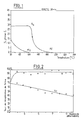
- FIG. 1 represents a reversion curve for the phase ⁇ .
- the reversion of the phase ⁇ is carried out in the interval [A s , A f ] in which A s is the temperature of the beginning of the martensite reversion and A f is the temperature of the end of the martensite reversion.
- This interval is little different from 100 ° C with A s very little different from 100 ° C and A f very little different from 200 ° C.
- M s the temperature at the start of the martensitic transformation, M s, is very little different from 90 ° C, and the temperature at the end of the martensitic transformation M f is below ambient temperature. After a few cycles, M s decreases (M s very little different from 50 ° C).
- test specimens produced for highlighting deformations due to the shape memory effect have the following dimensions: 1.5mm x 8mm x 95mm
- Deformation in bending by bending on a cylinder or in tension is carried out on each test piece, and the test piece after deformation is placed in ovens whose temperature varies from 50 ° C to 50 ° C between room temperature and 500 ° C .
- the deformation is calculated after returning to ambient temperature, and it is found that the recovery of the form is carried out between 50 and 250 ° C.
- test piece is subjected to a series of deformation-rise cycles in temperature.
- the test piece is deformed at room temperature with a constant deformation temperature, then heated to 1000 ° C and cooled in air.
- FIG. 2 represents a curve of the rates of deformation and shape recovery over several successive cycles (R) and a curve of the rates of deformation and shape recovery accumulated over several cycles (RC).
- the two recovery rates are close to 70%.
- the form recovery rate remains constant and equal to approximately 95%, while the cumulative form recovery rate decreases.
- the recovery rate of the test piece being 94%, we can consider that the memory effect is total.
- the recovery rate of 94% is obtained with initial deformation rates of between 0.7% and 3.6%, and the recovery of the initial shape takes place essentially between room temperature and 300 ° C.
- the ingots 10, 11 and 12 are given as an indication and show that the memory effect is improved when the point M s is located just below ambient temperature.
- the limit value of the manganese content ie 25% by weight in the weight composition is defined by the fact that above this value, with at least 9% chromium and / or nickel, it is difficult to obtain a shape memory effect, large enough to be industrially exploitable.
- the ingot 13 also given as an indication shows that an improvement in the effect of memory is obtained by the addition of silicon. This effect is materialized both on the recovery rate, after three cycles of form recovery (R), and after a recovery of cumulative form over ten cycles (RC).
- Ingots 3 and 4 show that nickel can be added in small quantities, 2 and 4% to improve the ductility of the alloy without degrading the properties of the memory effect.
- Ingot 5 shows the positive effect of nitrogen on shape recovery in the case of a shape recovery cycle (96%) and in the case of several cumulative shape recovery cycles (45%).
- the production process according to the invention makes it possible to obtain a malleable alloy which has a total shape memory effect for a deformation of approximately 3% per cycle, as indicated in the column Def. of Table II and which can be used industrially.
- the shape memory alloy thus produced can be produced for the production of products such as sheets, wires or profiles used in particular in industrial applications such as tube fittings, sleeves, clamping rings or collars .
Landscapes
- Chemical & Material Sciences (AREA)
- Engineering & Computer Science (AREA)
- Materials Engineering (AREA)
- Mechanical Engineering (AREA)
- Metallurgy (AREA)
- Organic Chemistry (AREA)
- Heat Treatment Of Steel (AREA)
- Metal Extraction Processes (AREA)
- Forging (AREA)
- Materials For Medical Uses (AREA)
- Coating With Molten Metal (AREA)
- Resistance Heating (AREA)
- Conductive Materials (AREA)
Priority Applications (1)
| Application Number | Priority Date | Filing Date | Title |
|---|---|---|---|
| AT90403251T ATE101878T1 (de) | 1989-11-22 | 1990-11-16 | Rostfreie formgedaechtnislegierung und verfahren zu ihrer herstellung. |
Applications Claiming Priority (2)
| Application Number | Priority Date | Filing Date | Title |
|---|---|---|---|
| FR8915341 | 1989-11-22 | ||
| FR8915341A FR2654748B1 (fr) | 1989-11-22 | 1989-11-22 | Alliage inoxydable a memoire de forme et procede d'elaboration d'un tel alliage. |
Publications (2)
| Publication Number | Publication Date |
|---|---|
| EP0430754A1 true EP0430754A1 (de) | 1991-06-05 |
| EP0430754B1 EP0430754B1 (de) | 1994-02-23 |
Family
ID=9387662
Family Applications (1)
| Application Number | Title | Priority Date | Filing Date |
|---|---|---|---|
| EP90403251A Expired - Lifetime EP0430754B1 (de) | 1989-11-22 | 1990-11-16 | Rostfreie Formgedächtnislegierung und Verfahren zu ihrer Herstellung |
Country Status (8)
| Country | Link |
|---|---|
| US (1) | US5173131A (de) |
| EP (1) | EP0430754B1 (de) |
| AT (1) | ATE101878T1 (de) |
| CA (1) | CA2030501C (de) |
| DE (1) | DE69006830T2 (de) |
| DK (1) | DK0430754T3 (de) |
| ES (1) | ES2051487T3 (de) |
| FR (1) | FR2654748B1 (de) |
Cited By (2)
| Publication number | Priority date | Publication date | Assignee | Title |
|---|---|---|---|---|
| EP2194154A1 (de) * | 2008-12-04 | 2010-06-09 | Daido Tokushuko Kabushiki Kaisha | Zweiwege Formwiederherstellungslegierung |
| CN110983152A (zh) * | 2019-12-27 | 2020-04-10 | 燕山大学 | 一种Fe-Mn-Si-Cr-Ni基形状记忆合金及其制备方法 |
Families Citing this family (10)
| Publication number | Priority date | Publication date | Assignee | Title |
|---|---|---|---|---|
| WO1997003215A1 (en) * | 1995-07-11 | 1997-01-30 | Kari Martti Ullakko | Iron-based shape memory and vibration damping alloys containing nitrogen |
| FI982407A0 (fi) | 1998-03-03 | 1998-11-06 | Adaptamat Tech Oy | Toimielimet ja laitteet |
| US6149742A (en) * | 1998-05-26 | 2000-11-21 | Lockheed Martin Corporation | Process for conditioning shape memory alloys |
| RU2169205C1 (ru) * | 2000-03-27 | 2001-06-20 | Открытое акционерное общество "КАМАЗ" | Нержавеющая сталь |
| CN1128244C (zh) * | 2000-10-26 | 2003-11-19 | 艾默生电气(中国)投资有限公司 | 含Cr和N铁锰硅基形状记忆合金及其训练方法 |
| JP3950963B2 (ja) * | 2002-12-18 | 2007-08-01 | 独立行政法人物質・材料研究機構 | NbC添加Fe−Mn−Si系形状記憶合金の加工熱処理法 |
| DE602006017881D1 (de) * | 2005-11-09 | 2010-12-09 | Japan Science & Tech Agency | Auf eisen basierende legierung mit formgedächtniseigenschaft und superelastizität und herstellungsverfahren dafür |
| US20080235920A1 (en) * | 2007-03-29 | 2008-10-02 | Dimart, Llc | Beach clamp |
| CN108486488A (zh) * | 2018-03-22 | 2018-09-04 | 南京工业大学 | 一种低Mn含量的Fe基形状记忆合金及制备方法 |
| DE102019109719A1 (de) * | 2019-04-12 | 2020-10-15 | Thyssenkrupp Steel Europe Ag | Verfahren zur Herstellung eines Formgedächtnis-Bauteils mit Umwandlungsfunktionalität |
Citations (7)
| Publication number | Priority date | Publication date | Assignee | Title |
|---|---|---|---|---|
| GB439045A (en) * | 1934-05-28 | 1935-11-28 | Deutsche Edelstahlwerke Ag | An improved chromium manganese steel alloy |
| DE692327C (de) * | 1934-05-24 | 1940-06-17 | Edelstahlwerke Akt Ges Deutsch | Chrom-Mangan-Silizium-Stahl |
| DE692732C (de) * | 1934-05-24 | 1940-06-26 | Edelstahlwerke Akt Ges Deutsch | Stahllegierung fuer Gegenstaende, die eine hohe Zunderbestaendigkeit besitzen muessen |
| DE864405C (de) * | 1935-04-09 | 1953-01-26 | Stahlwerke Roechling Buderus A | Eisenlegierung fuer Zwecke, fuer welche bislang Silber oder Neusilber verwendet wird |
| EP0176272A1 (de) * | 1984-09-07 | 1986-04-02 | Nippon Steel Corporation | Formgedächtnislegierung und Verfahren zu ihrer Herstellung |
| JPS63216946A (ja) * | 1987-03-04 | 1988-09-09 | Sumitomo Metal Ind Ltd | 形状記憶合金 |
| EP0336157A1 (de) * | 1988-04-05 | 1989-10-11 | Nkk Corporation | Formgedächtnislegierung auf Eisenbasis mit vortrefflichen Formgedächtniseigenschaften und sehr guter Korrosionsbeständigkeit |
Family Cites Families (1)
| Publication number | Priority date | Publication date | Assignee | Title |
|---|---|---|---|---|
| US5032195A (en) * | 1989-03-02 | 1991-07-16 | Korea Institute Of Science And Technology | FE-base shape memory alloy |
-
1989
- 1989-11-22 FR FR8915341A patent/FR2654748B1/fr not_active Expired - Lifetime
-
1990
- 1990-11-16 ES ES90403251T patent/ES2051487T3/es not_active Expired - Lifetime
- 1990-11-16 EP EP90403251A patent/EP0430754B1/de not_active Expired - Lifetime
- 1990-11-16 DE DE69006830T patent/DE69006830T2/de not_active Expired - Fee Related
- 1990-11-16 DK DK90403251.3T patent/DK0430754T3/da active
- 1990-11-16 AT AT90403251T patent/ATE101878T1/de not_active IP Right Cessation
- 1990-11-21 CA CA002030501A patent/CA2030501C/fr not_active Expired - Fee Related
- 1990-11-21 US US07/617,032 patent/US5173131A/en not_active Expired - Fee Related
Patent Citations (7)
| Publication number | Priority date | Publication date | Assignee | Title |
|---|---|---|---|---|
| DE692327C (de) * | 1934-05-24 | 1940-06-17 | Edelstahlwerke Akt Ges Deutsch | Chrom-Mangan-Silizium-Stahl |
| DE692732C (de) * | 1934-05-24 | 1940-06-26 | Edelstahlwerke Akt Ges Deutsch | Stahllegierung fuer Gegenstaende, die eine hohe Zunderbestaendigkeit besitzen muessen |
| GB439045A (en) * | 1934-05-28 | 1935-11-28 | Deutsche Edelstahlwerke Ag | An improved chromium manganese steel alloy |
| DE864405C (de) * | 1935-04-09 | 1953-01-26 | Stahlwerke Roechling Buderus A | Eisenlegierung fuer Zwecke, fuer welche bislang Silber oder Neusilber verwendet wird |
| EP0176272A1 (de) * | 1984-09-07 | 1986-04-02 | Nippon Steel Corporation | Formgedächtnislegierung und Verfahren zu ihrer Herstellung |
| JPS63216946A (ja) * | 1987-03-04 | 1988-09-09 | Sumitomo Metal Ind Ltd | 形状記憶合金 |
| EP0336157A1 (de) * | 1988-04-05 | 1989-10-11 | Nkk Corporation | Formgedächtnislegierung auf Eisenbasis mit vortrefflichen Formgedächtniseigenschaften und sehr guter Korrosionsbeständigkeit |
Cited By (2)
| Publication number | Priority date | Publication date | Assignee | Title |
|---|---|---|---|---|
| EP2194154A1 (de) * | 2008-12-04 | 2010-06-09 | Daido Tokushuko Kabushiki Kaisha | Zweiwege Formwiederherstellungslegierung |
| CN110983152A (zh) * | 2019-12-27 | 2020-04-10 | 燕山大学 | 一种Fe-Mn-Si-Cr-Ni基形状记忆合金及其制备方法 |
Also Published As
| Publication number | Publication date |
|---|---|
| ES2051487T3 (es) | 1994-06-16 |
| DE69006830T2 (de) | 1994-09-29 |
| FR2654748B1 (fr) | 1992-03-20 |
| FR2654748A1 (fr) | 1991-05-24 |
| DK0430754T3 (da) | 1994-03-28 |
| DE69006830D1 (de) | 1994-03-31 |
| ATE101878T1 (de) | 1994-03-15 |
| CA2030501C (fr) | 1999-12-28 |
| CA2030501A1 (fr) | 1991-05-23 |
| EP0430754B1 (de) | 1994-02-23 |
| US5173131A (en) | 1992-12-22 |
Similar Documents
| Publication | Publication Date | Title |
|---|---|---|
| EP0430754B1 (de) | Rostfreie Formgedächtnislegierung und Verfahren zu ihrer Herstellung | |
| FR2477179A1 (fr) | Acier inoxydable austenitique contenant du cuivre et de l'azote et ses applications a l'obtention de bandes, tubes, barres ou tiges | |
| FR2704869A1 (fr) | Alliage amélioré Ti-6Al-4V, à comportement balistique, procédé de préparation et application. | |
| EP0792944A1 (de) | Stahl, geeignet für die Herstellung von Spritzgussformen für plastische Werkstoffe | |
| CA2467681C (fr) | Bandes en alliage d'aluminium pour echangeurs thermiques | |
| EP0362086B1 (de) | Verfahren zur Herstellung von Werkstücken aus einer Aluminium-Legierung, welche bei einem längeren Verbleib auf höheren Temperaturen eine gute Ermüdungsbeständigkeit beibehält | |
| EP1153396B1 (de) | Verfahren zur herstellung von dünnen elementen aus zirkonlegierung und nach dem verfahren hergestellte plättchen | |
| FR2816959A1 (fr) | Procede pour fabriquer une bande ou une piece decoupee dans une bande en acier maraging laminee a froid | |
| EP0931844B1 (de) | Martensit-aushärtender Stahl ohne Kobalt | |
| FR2849061A1 (fr) | Alliage fer-nickel a tres faible coefficient de dilatation thermique pour la fabrication de masques d'ombres | |
| EP1287171B1 (de) | Ausscheidungsgehärtete fe-ni-legierung zur herstellung eines leitergitters für integrierte schaltungen und herstellungsverfahren | |
| EP0845544B1 (de) | Stahlprodukt aus bainitischem Stahl sowie Verfahren zur Herstellung des Stahlproduktes | |
| EP0493218B1 (de) | Förderkette | |
| EP0388283A1 (de) | Rostfreier ferritischer Stahl und Verfahren zur Herstellung dieses Stahls | |
| JP2613466B2 (ja) | 焼付硬化性に優れたアルミニウム合金板の製造方法 | |
| CA2292742A1 (fr) | Composition d'acier a outils | |
| FR2473554A1 (fr) | Procede de traitement thermo-mecanique de toles ou de feuillards d'acier inoxydable ferritique et produits obtenus | |
| EP0935007B1 (de) | Martensitaushärtender Stahl ohne Kobalt und ohne Titan | |
| JPH03229824A (ja) | 磁気特性の優れたFe―Al合金軟磁性薄板の製造方法 | |
| WO1985004906A1 (fr) | Procede de fabrication de barres ou de fil machine en acier et produits correspondants | |
| FR2507210A1 (fr) | Procede de fabrication d'une tole d'aluminium de limite elastique elevee | |
| JPS62185852A (ja) | 電気ヒ−タ用発熱線およびその製造方法 | |
| EP0526330B1 (de) | Verfahren zum Herstellen dünnwandiger Rohre, Stahl zum Herstellen dieser Rohre und nach diesem Verfahren hergestellte Rohre für Fahrradrahmen | |
| EP0703298A1 (de) | Verfahren zum Herstellen von Stählen guter Verformbar- und Formbeständigkeit | |
| EP1347071B1 (de) | Kalt bearbeitetes aluminiumberuhigtes Stahlband und Verfahren zur Herstellung von Verpackungsstahl aus diesem Band |
Legal Events
| Date | Code | Title | Description |
|---|---|---|---|
| PUAI | Public reference made under article 153(3) epc to a published international application that has entered the european phase |
Free format text: ORIGINAL CODE: 0009012 |
|
| AK | Designated contracting states |
Kind code of ref document: A1 Designated state(s): AT BE CH DE DK ES FR GB GR IT LI LU NL SE |
|
| 17P | Request for examination filed |
Effective date: 19910424 |
|
| 17Q | First examination report despatched |
Effective date: 19930223 |
|
| RAP1 | Party data changed (applicant data changed or rights of an application transferred) |
Owner name: UGINE S.A. |
|
| GRAA | (expected) grant |
Free format text: ORIGINAL CODE: 0009210 |
|
| AK | Designated contracting states |
Kind code of ref document: B1 Designated state(s): AT BE CH DE DK ES FR GB GR IT LI LU NL SE |
|
| REF | Corresponds to: |
Ref document number: 101878 Country of ref document: AT Date of ref document: 19940315 Kind code of ref document: T |
|
| GBT | Gb: translation of ep patent filed (gb section 77(6)(a)/1977) |
Effective date: 19940221 |
|
| REG | Reference to a national code |
Ref country code: DK Ref legal event code: T3 |
|
| REF | Corresponds to: |
Ref document number: 69006830 Country of ref document: DE Date of ref document: 19940331 |
|
| ITF | It: translation for a ep patent filed | ||
| REG | Reference to a national code |
Ref country code: ES Ref legal event code: FG2A Ref document number: 2051487 Country of ref document: ES Kind code of ref document: T3 |
|
| REG | Reference to a national code |
Ref country code: GR Ref legal event code: FG4A Free format text: 3011864 |
|
| PLBE | No opposition filed within time limit |
Free format text: ORIGINAL CODE: 0009261 |
|
| STAA | Information on the status of an ep patent application or granted ep patent |
Free format text: STATUS: NO OPPOSITION FILED WITHIN TIME LIMIT |
|
| EAL | Se: european patent in force in sweden |
Ref document number: 90403251.3 |
|
| 26N | No opposition filed | ||
| REG | Reference to a national code |
Ref country code: GB Ref legal event code: IF02 |
|
| PGFP | Annual fee paid to national office [announced via postgrant information from national office to epo] |
Ref country code: CH Payment date: 20021015 Year of fee payment: 13 |
|
| PGFP | Annual fee paid to national office [announced via postgrant information from national office to epo] |
Ref country code: SE Payment date: 20021018 Year of fee payment: 13 Ref country code: AT Payment date: 20021018 Year of fee payment: 13 |
|
| PGFP | Annual fee paid to national office [announced via postgrant information from national office to epo] |
Ref country code: NL Payment date: 20021021 Year of fee payment: 13 Ref country code: DK Payment date: 20021021 Year of fee payment: 13 |
|
| PGFP | Annual fee paid to national office [announced via postgrant information from national office to epo] |
Ref country code: ES Payment date: 20021023 Year of fee payment: 13 |
|
| PGFP | Annual fee paid to national office [announced via postgrant information from national office to epo] |
Ref country code: GR Payment date: 20021024 Year of fee payment: 13 |
|
| PGFP | Annual fee paid to national office [announced via postgrant information from national office to epo] |
Ref country code: GB Payment date: 20021108 Year of fee payment: 13 Ref country code: DE Payment date: 20021108 Year of fee payment: 13 |
|
| PGFP | Annual fee paid to national office [announced via postgrant information from national office to epo] |
Ref country code: FR Payment date: 20021115 Year of fee payment: 13 |
|
| PGFP | Annual fee paid to national office [announced via postgrant information from national office to epo] |
Ref country code: LU Payment date: 20021119 Year of fee payment: 13 |
|
| PGFP | Annual fee paid to national office [announced via postgrant information from national office to epo] |
Ref country code: BE Payment date: 20021212 Year of fee payment: 13 |
|
| PG25 | Lapsed in a contracting state [announced via postgrant information from national office to epo] |
Ref country code: LU Free format text: LAPSE BECAUSE OF NON-PAYMENT OF DUE FEES Effective date: 20031116 Ref country code: GB Free format text: LAPSE BECAUSE OF NON-PAYMENT OF DUE FEES Effective date: 20031116 Ref country code: AT Free format text: LAPSE BECAUSE OF NON-PAYMENT OF DUE FEES Effective date: 20031116 |
|
| PG25 | Lapsed in a contracting state [announced via postgrant information from national office to epo] |
Ref country code: SE Free format text: LAPSE BECAUSE OF NON-PAYMENT OF DUE FEES Effective date: 20031117 Ref country code: ES Free format text: LAPSE BECAUSE OF NON-PAYMENT OF DUE FEES Effective date: 20031117 |
|
| PG25 | Lapsed in a contracting state [announced via postgrant information from national office to epo] |
Ref country code: LI Free format text: LAPSE BECAUSE OF NON-PAYMENT OF DUE FEES Effective date: 20031130 Ref country code: CH Free format text: LAPSE BECAUSE OF NON-PAYMENT OF DUE FEES Effective date: 20031130 Ref country code: BE Free format text: LAPSE BECAUSE OF NON-PAYMENT OF DUE FEES Effective date: 20031130 |
|
| PG25 | Lapsed in a contracting state [announced via postgrant information from national office to epo] |
Ref country code: DK Free format text: LAPSE BECAUSE OF NON-PAYMENT OF DUE FEES Effective date: 20031201 |
|
| BERE | Be: lapsed |
Owner name: S.A. *UGINE Effective date: 20031130 |
|
| PG25 | Lapsed in a contracting state [announced via postgrant information from national office to epo] |
Ref country code: NL Free format text: LAPSE BECAUSE OF NON-PAYMENT OF DUE FEES Effective date: 20040601 |
|
| PG25 | Lapsed in a contracting state [announced via postgrant information from national office to epo] |
Ref country code: DE Free format text: LAPSE BECAUSE OF NON-PAYMENT OF DUE FEES Effective date: 20040602 |
|
| PG25 | Lapsed in a contracting state [announced via postgrant information from national office to epo] |
Ref country code: GR Free format text: LAPSE BECAUSE OF NON-PAYMENT OF DUE FEES Effective date: 20040603 |
|
| EUG | Se: european patent has lapsed | ||
| REG | Reference to a national code |
Ref country code: DK Ref legal event code: EBP |
|
| GBPC | Gb: european patent ceased through non-payment of renewal fee |
Effective date: 20031116 |
|
| REG | Reference to a national code |
Ref country code: CH Ref legal event code: PL |
|
| PG25 | Lapsed in a contracting state [announced via postgrant information from national office to epo] |
Ref country code: FR Free format text: LAPSE BECAUSE OF NON-PAYMENT OF DUE FEES Effective date: 20040730 |
|
| NLV4 | Nl: lapsed or anulled due to non-payment of the annual fee |
Effective date: 20040601 |
|
| REG | Reference to a national code |
Ref country code: FR Ref legal event code: ST |
|
| REG | Reference to a national code |
Ref country code: ES Ref legal event code: FD2A Effective date: 20031117 |
|
| PG25 | Lapsed in a contracting state [announced via postgrant information from national office to epo] |
Ref country code: IT Free format text: LAPSE BECAUSE OF NON-PAYMENT OF DUE FEES;WARNING: LAPSES OF ITALIAN PATENTS WITH EFFECTIVE DATE BEFORE 2007 MAY HAVE OCCURRED AT ANY TIME BEFORE 2007. THE CORRECT EFFECTIVE DATE MAY BE DIFFERENT FROM THE ONE RECORDED. Effective date: 20051116 |