EP0430828B1 - Sulphonierte Copolyester mit Siloxaneinheiten - Google Patents
Sulphonierte Copolyester mit Siloxaneinheiten Download PDFInfo
- Publication number
- EP0430828B1 EP0430828B1 EP90420503A EP90420503A EP0430828B1 EP 0430828 B1 EP0430828 B1 EP 0430828B1 EP 90420503 A EP90420503 A EP 90420503A EP 90420503 A EP90420503 A EP 90420503A EP 0430828 B1 EP0430828 B1 EP 0430828B1
- Authority
- EP
- European Patent Office
- Prior art keywords
- units
- siliconized
- groups
- oxysulphonyl
- sulphonated
- Prior art date
- Legal status (The legal status is an assumption and is not a legal conclusion. Google has not performed a legal analysis and makes no representation as to the accuracy of the status listed.)
- Expired - Lifetime
Links
- -1 siloxane units Chemical group 0.000 title claims abstract description 99
- 229920001634 Copolyester Polymers 0.000 title claims abstract description 55
- 150000001875 compounds Chemical class 0.000 claims abstract description 30
- XUIMIQQOPSSXEZ-UHFFFAOYSA-N Silicon Chemical group [Si] XUIMIQQOPSSXEZ-UHFFFAOYSA-N 0.000 claims abstract description 15
- 229910052710 silicon Inorganic materials 0.000 claims abstract description 14
- 125000000217 alkyl group Chemical group 0.000 claims abstract description 10
- 125000001931 aliphatic group Chemical group 0.000 claims abstract description 5
- 125000000753 cycloalkyl group Chemical group 0.000 claims abstract description 5
- 125000005842 heteroatom Chemical group 0.000 claims abstract description 4
- 239000004215 Carbon black (E152) Substances 0.000 claims abstract description 3
- 125000000524 functional group Chemical group 0.000 claims abstract description 3
- 229930195733 hydrocarbon Natural products 0.000 claims abstract description 3
- 229910052757 nitrogen Inorganic materials 0.000 claims abstract description 3
- 229910052760 oxygen Inorganic materials 0.000 claims abstract description 3
- 150000002009 diols Chemical class 0.000 claims description 38
- LYCAIKOWRPUZTN-UHFFFAOYSA-N Ethylene glycol Chemical compound OCCO LYCAIKOWRPUZTN-UHFFFAOYSA-N 0.000 claims description 19
- 150000001991 dicarboxylic acids Chemical class 0.000 claims description 12
- 239000003054 catalyst Substances 0.000 claims description 9
- 150000002148 esters Chemical class 0.000 claims description 9
- 238000006068 polycondensation reaction Methods 0.000 claims description 8
- 239000010703 silicon Substances 0.000 claims description 8
- 239000002253 acid Substances 0.000 claims description 6
- 150000004820 halides Chemical class 0.000 claims description 6
- WGCNASOHLSPBMP-UHFFFAOYSA-N hydroxyacetaldehyde Natural products OCC=O WGCNASOHLSPBMP-UHFFFAOYSA-N 0.000 claims description 6
- OFOBLEOULBTSOW-UHFFFAOYSA-N Malonic acid Chemical compound OC(=O)CC(O)=O OFOBLEOULBTSOW-UHFFFAOYSA-N 0.000 claims description 5
- 238000000034 method Methods 0.000 claims description 5
- QGZKDVFQNNGYKY-UHFFFAOYSA-O Ammonium Chemical compound [NH4+] QGZKDVFQNNGYKY-UHFFFAOYSA-O 0.000 claims description 4
- 229910052784 alkaline earth metal Inorganic materials 0.000 claims description 3
- 125000004453 alkoxycarbonyl group Chemical group 0.000 claims description 3
- 125000002887 hydroxy group Chemical group [H]O* 0.000 claims description 3
- PUPZLCDOIYMWBV-UHFFFAOYSA-N (+/-)-1,3-Butanediol Chemical compound CC(O)CCO PUPZLCDOIYMWBV-UHFFFAOYSA-N 0.000 claims description 2
- 150000001342 alkaline earth metals Chemical class 0.000 claims description 2
- 230000015572 biosynthetic process Effects 0.000 claims description 2
- 230000032050 esterification Effects 0.000 claims description 2
- 238000005886 esterification reaction Methods 0.000 claims description 2
- 125000004997 halocarbonyl group Chemical group 0.000 claims description 2
- 125000004435 hydrogen atom Chemical group [H]* 0.000 claims description 2
- QQVIHTHCMHWDBS-UHFFFAOYSA-L isophthalate(2-) Chemical compound [O-]C(=O)C1=CC=CC(C([O-])=O)=C1 QQVIHTHCMHWDBS-UHFFFAOYSA-L 0.000 claims description 2
- KYTZHLUVELPASH-UHFFFAOYSA-N naphthalene-1,2-dicarboxylic acid Chemical group C1=CC=CC2=C(C(O)=O)C(C(=O)O)=CC=C21 KYTZHLUVELPASH-UHFFFAOYSA-N 0.000 claims description 2
- 125000001453 quaternary ammonium group Chemical group 0.000 claims description 2
- 238000005809 transesterification reaction Methods 0.000 claims description 2
- YZTJKOLMWJNVFH-UHFFFAOYSA-N 2-sulfobenzene-1,3-dicarboxylic acid Chemical class OC(=O)C1=CC=CC(C(O)=O)=C1S(O)(=O)=O YZTJKOLMWJNVFH-UHFFFAOYSA-N 0.000 claims 1
- 229910052783 alkali metal Inorganic materials 0.000 claims 1
- 150000001340 alkali metals Chemical class 0.000 claims 1
- 125000005373 siloxane group Chemical group [SiH2](O*)* 0.000 claims 1
- KKEYFWRCBNTPAC-UHFFFAOYSA-L terephthalate(2-) Chemical compound [O-]C(=O)C1=CC=C(C([O-])=O)C=C1 KKEYFWRCBNTPAC-UHFFFAOYSA-L 0.000 claims 1
- 238000000576 coating method Methods 0.000 abstract description 6
- 229920006267 polyester film Polymers 0.000 abstract description 6
- 239000011248 coating agent Substances 0.000 abstract description 5
- 239000007864 aqueous solution Substances 0.000 abstract 1
- 239000006185 dispersion Substances 0.000 abstract 1
- 229920001296 polysiloxane Polymers 0.000 description 16
- WOZVHXUHUFLZGK-UHFFFAOYSA-N dimethyl terephthalate Chemical compound COC(=O)C1=CC=C(C(=O)OC)C=C1 WOZVHXUHUFLZGK-UHFFFAOYSA-N 0.000 description 14
- 229920000728 polyester Polymers 0.000 description 13
- 229920000642 polymer Polymers 0.000 description 8
- 125000004432 carbon atom Chemical group C* 0.000 description 7
- VNGOYPQMJFJDLV-UHFFFAOYSA-N dimethyl benzene-1,3-dicarboxylate Chemical compound COC(=O)C1=CC=CC(C(=O)OC)=C1 VNGOYPQMJFJDLV-UHFFFAOYSA-N 0.000 description 7
- 239000011734 sodium Substances 0.000 description 6
- 125000004429 atom Chemical group 0.000 description 5
- 238000006243 chemical reaction Methods 0.000 description 5
- 239000000203 mixture Substances 0.000 description 5
- 239000000178 monomer Substances 0.000 description 5
- 238000002360 preparation method Methods 0.000 description 5
- MTHSVFCYNBDYFN-UHFFFAOYSA-N diethylene glycol Chemical compound OCCOCCO MTHSVFCYNBDYFN-UHFFFAOYSA-N 0.000 description 4
- 238000005227 gel permeation chromatography Methods 0.000 description 4
- QQVIHTHCMHWDBS-UHFFFAOYSA-N isophthalic acid Chemical compound OC(=O)C1=CC=CC(C(O)=O)=C1 QQVIHTHCMHWDBS-UHFFFAOYSA-N 0.000 description 4
- 125000000325 methylidene group Chemical group [H]C([H])=* 0.000 description 4
- 239000003921 oil Substances 0.000 description 4
- BASFCYQUMIYNBI-UHFFFAOYSA-N platinum Chemical compound [Pt] BASFCYQUMIYNBI-UHFFFAOYSA-N 0.000 description 4
- VGGSQFUCUMXWEO-UHFFFAOYSA-N Ethene Chemical compound C=C VGGSQFUCUMXWEO-UHFFFAOYSA-N 0.000 description 3
- OKKJLVBELUTLKV-UHFFFAOYSA-N Methanol Chemical compound OC OKKJLVBELUTLKV-UHFFFAOYSA-N 0.000 description 3
- SECXISVLQFMRJM-UHFFFAOYSA-N N-Methylpyrrolidone Chemical compound CN1CCCC1=O SECXISVLQFMRJM-UHFFFAOYSA-N 0.000 description 3
- 238000004821 distillation Methods 0.000 description 3
- XLYOFNOQVPJJNP-UHFFFAOYSA-N water Substances O XLYOFNOQVPJJNP-UHFFFAOYSA-N 0.000 description 3
- IJGRMHOSHXDMSA-UHFFFAOYSA-N Atomic nitrogen Chemical compound N#N IJGRMHOSHXDMSA-UHFFFAOYSA-N 0.000 description 2
- CPELXLSAUQHCOX-UHFFFAOYSA-M Bromide Chemical compound [Br-] CPELXLSAUQHCOX-UHFFFAOYSA-M 0.000 description 2
- RTZKZFJDLAIYFH-UHFFFAOYSA-N Diethyl ether Chemical compound CCOCC RTZKZFJDLAIYFH-UHFFFAOYSA-N 0.000 description 2
- 229920003171 Poly (ethylene oxide) Polymers 0.000 description 2
- RTAQQCXQSZGOHL-UHFFFAOYSA-N Titanium Chemical compound [Ti] RTAQQCXQSZGOHL-UHFFFAOYSA-N 0.000 description 2
- 150000007513 acids Chemical class 0.000 description 2
- 125000003710 aryl alkyl group Chemical group 0.000 description 2
- 125000001246 bromo group Chemical group Br* 0.000 description 2
- 239000003153 chemical reaction reagent Substances 0.000 description 2
- 125000001309 chloro group Chemical group Cl* 0.000 description 2
- 239000004205 dimethyl polysiloxane Substances 0.000 description 2
- 235000013870 dimethyl polysiloxane Nutrition 0.000 description 2
- KZTYYGOKRVBIMI-UHFFFAOYSA-N diphenyl sulfone Chemical compound C=1C=CC=CC=1S(=O)(=O)C1=CC=CC=C1 KZTYYGOKRVBIMI-UHFFFAOYSA-N 0.000 description 2
- 150000002170 ethers Chemical class 0.000 description 2
- 238000011156 evaluation Methods 0.000 description 2
- 239000000835 fiber Substances 0.000 description 2
- 150000002334 glycols Chemical class 0.000 description 2
- 159000000011 group IA salts Chemical class 0.000 description 2
- 239000012071 phase Substances 0.000 description 2
- 229910052697 platinum Inorganic materials 0.000 description 2
- 229920000435 poly(dimethylsiloxane) Polymers 0.000 description 2
- 238000003756 stirring Methods 0.000 description 2
- 239000000126 substance Substances 0.000 description 2
- VZSRBBMJRBPUNF-UHFFFAOYSA-N 2-(2,3-dihydro-1H-inden-2-ylamino)-N-[3-oxo-3-(2,4,6,7-tetrahydrotriazolo[4,5-c]pyridin-5-yl)propyl]pyrimidine-5-carboxamide Chemical compound C1C(CC2=CC=CC=C12)NC1=NC=C(C=N1)C(=O)NCCC(N1CC2=C(CC1)NN=N2)=O VZSRBBMJRBPUNF-UHFFFAOYSA-N 0.000 description 1
- 125000000094 2-phenylethyl group Chemical group [H]C1=C([H])C([H])=C(C([H])=C1[H])C([H])([H])C([H])([H])* 0.000 description 1
- RAADBCJYJHQQBI-UHFFFAOYSA-N 2-sulfoterephthalic acid Chemical class OC(=O)C1=CC=C(C(O)=O)C(S(O)(=O)=O)=C1 RAADBCJYJHQQBI-UHFFFAOYSA-N 0.000 description 1
- 0 C*1(CC1)N(C)* Chemical compound C*1(CC1)N(C)* 0.000 description 1
- VEXZGXHMUGYJMC-UHFFFAOYSA-M Chloride anion Chemical compound [Cl-] VEXZGXHMUGYJMC-UHFFFAOYSA-M 0.000 description 1
- LFQSCWFLJHTTHZ-UHFFFAOYSA-N Ethanol Chemical compound CCO LFQSCWFLJHTTHZ-UHFFFAOYSA-N 0.000 description 1
- 239000005977 Ethylene Substances 0.000 description 1
- ALQSHHUCVQOPAS-UHFFFAOYSA-N Pentane-1,5-diol Chemical compound OCCCCCO ALQSHHUCVQOPAS-UHFFFAOYSA-N 0.000 description 1
- 239000004698 Polyethylene Substances 0.000 description 1
- 239000004793 Polystyrene Substances 0.000 description 1
- ORLQHILJRHBSAY-UHFFFAOYSA-N [1-(hydroxymethyl)cyclohexyl]methanol Chemical compound OCC1(CO)CCCCC1 ORLQHILJRHBSAY-UHFFFAOYSA-N 0.000 description 1
- CIUQDSCDWFSTQR-UHFFFAOYSA-N [C]1=CC=CC=C1 Chemical compound [C]1=CC=CC=C1 CIUQDSCDWFSTQR-UHFFFAOYSA-N 0.000 description 1
- 150000001279 adipic acids Chemical class 0.000 description 1
- 150000001298 alcohols Chemical class 0.000 description 1
- 239000003513 alkali Substances 0.000 description 1
- 125000005907 alkyl ester group Chemical group 0.000 description 1
- 125000002947 alkylene group Chemical group 0.000 description 1
- 125000001118 alkylidene group Chemical group 0.000 description 1
- 239000007900 aqueous suspension Substances 0.000 description 1
- 125000003118 aryl group Chemical group 0.000 description 1
- 238000003556 assay Methods 0.000 description 1
- QVGXLLKOCUKJST-UHFFFAOYSA-N atomic oxygen Chemical compound [O] QVGXLLKOCUKJST-UHFFFAOYSA-N 0.000 description 1
- 239000000981 basic dye Substances 0.000 description 1
- WERYXYBDKMZEQL-UHFFFAOYSA-N butane-1,4-diol Chemical compound OCCCCO WERYXYBDKMZEQL-UHFFFAOYSA-N 0.000 description 1
- 150000001768 cations Chemical class 0.000 description 1
- 239000007795 chemical reaction product Substances 0.000 description 1
- 239000008199 coating composition Substances 0.000 description 1
- 230000003750 conditioning effect Effects 0.000 description 1
- 125000002993 cycloalkylene group Chemical group 0.000 description 1
- 125000001511 cyclopentyl group Chemical group [H]C1([H])C([H])([H])C([H])([H])C([H])(*)C1([H])[H] 0.000 description 1
- 230000008021 deposition Effects 0.000 description 1
- 125000001142 dicarboxylic acid group Chemical group 0.000 description 1
- 125000006840 diphenylmethane group Chemical group 0.000 description 1
- 239000000975 dye Substances 0.000 description 1
- 239000000839 emulsion Substances 0.000 description 1
- FYIBGDKNYYMMAG-UHFFFAOYSA-N ethane-1,2-diol;terephthalic acid Chemical compound OCCO.OC(=O)C1=CC=C(C(O)=O)C=C1 FYIBGDKNYYMMAG-UHFFFAOYSA-N 0.000 description 1
- 125000001495 ethyl group Chemical group [H]C([H])([H])C([H])([H])* 0.000 description 1
- 125000000816 ethylene group Chemical group [H]C([H])([*:1])C([H])([H])[*:2] 0.000 description 1
- 125000000219 ethylidene group Chemical group [H]C(=[*])C([H])([H])[H] 0.000 description 1
- 230000009477 glass transition Effects 0.000 description 1
- 150000002311 glutaric acids Chemical class 0.000 description 1
- 125000004356 hydroxy functional group Chemical group O* 0.000 description 1
- 238000010952 in-situ formation Methods 0.000 description 1
- 125000000959 isobutyl group Chemical group [H]C([H])([H])C([H])(C([H])([H])[H])C([H])([H])* 0.000 description 1
- 150000002531 isophthalic acids Chemical class 0.000 description 1
- 125000001449 isopropyl group Chemical group [H]C([H])([H])C([H])(*)C([H])([H])[H] 0.000 description 1
- 150000002576 ketones Chemical class 0.000 description 1
- 239000007788 liquid Substances 0.000 description 1
- 238000011068 loading method Methods 0.000 description 1
- 238000004519 manufacturing process Methods 0.000 description 1
- 238000005259 measurement Methods 0.000 description 1
- 238000006140 methanolysis reaction Methods 0.000 description 1
- 125000004108 n-butyl group Chemical group [H]C([H])([H])C([H])([H])C([H])([H])C([H])([H])* 0.000 description 1
- 125000000740 n-pentyl group Chemical group [H]C([H])([H])C([H])([H])C([H])([H])C([H])([H])C([H])([H])* 0.000 description 1
- 125000004123 n-propyl group Chemical group [H]C([H])([H])C([H])([H])C([H])([H])* 0.000 description 1
- SLCVBVWXLSEKPL-UHFFFAOYSA-N neopentyl glycol Chemical compound OCC(C)(C)CO SLCVBVWXLSEKPL-UHFFFAOYSA-N 0.000 description 1
- 229940117969 neopentyl glycol Drugs 0.000 description 1
- BDJRBEYXGGNYIS-UHFFFAOYSA-N nonanedioic acid Chemical compound OC(=O)CCCCCCCC(O)=O BDJRBEYXGGNYIS-UHFFFAOYSA-N 0.000 description 1
- 150000002894 organic compounds Chemical class 0.000 description 1
- 125000000962 organic group Chemical group 0.000 description 1
- 150000003961 organosilicon compounds Chemical class 0.000 description 1
- 125000006353 oxyethylene group Chemical group 0.000 description 1
- 239000001301 oxygen Substances 0.000 description 1
- 125000001997 phenyl group Chemical group [H]C1=C([H])C([H])=C(*)C([H])=C1[H] 0.000 description 1
- 229920000412 polyarylene Polymers 0.000 description 1
- 229920000573 polyethylene Polymers 0.000 description 1
- 229920002223 polystyrene Polymers 0.000 description 1
- 238000003822 preparative gas chromatography Methods 0.000 description 1
- 239000000047 product Substances 0.000 description 1
- YPFDHNVEDLHUCE-UHFFFAOYSA-N propane-1,3-diol Chemical compound OCCCO YPFDHNVEDLHUCE-UHFFFAOYSA-N 0.000 description 1
- OSFBJERFMQCEQY-UHFFFAOYSA-N propylidene Chemical group [CH]CC OSFBJERFMQCEQY-UHFFFAOYSA-N 0.000 description 1
- 150000003254 radicals Chemical class 0.000 description 1
- 239000011541 reaction mixture Substances 0.000 description 1
- 230000000306 recurrent effect Effects 0.000 description 1
- 230000001105 regulatory effect Effects 0.000 description 1
- 150000003330 sebacic acids Chemical class 0.000 description 1
- 238000010517 secondary reaction Methods 0.000 description 1
- 239000007787 solid Substances 0.000 description 1
- 239000000243 solution Substances 0.000 description 1
- 229910001220 stainless steel Inorganic materials 0.000 description 1
- 239000010935 stainless steel Substances 0.000 description 1
- 150000003442 suberic acids Chemical class 0.000 description 1
- 150000003444 succinic acids Chemical class 0.000 description 1
- 125000000020 sulfo group Chemical group O=S(=O)([*])O[H] 0.000 description 1
- 125000001174 sulfone group Chemical group 0.000 description 1
- 239000000725 suspension Substances 0.000 description 1
- 238000003786 synthesis reaction Methods 0.000 description 1
- 150000003504 terephthalic acids Chemical class 0.000 description 1
- 238000012360 testing method Methods 0.000 description 1
- 239000010936 titanium Substances 0.000 description 1
- 229910052719 titanium Inorganic materials 0.000 description 1
- 238000012546 transfer Methods 0.000 description 1
- 230000007704 transition Effects 0.000 description 1
- 238000004876 x-ray fluorescence Methods 0.000 description 1
Classifications
-
- C—CHEMISTRY; METALLURGY
- C08—ORGANIC MACROMOLECULAR COMPOUNDS; THEIR PREPARATION OR CHEMICAL WORKING-UP; COMPOSITIONS BASED THEREON
- C08G—MACROMOLECULAR COMPOUNDS OBTAINED OTHERWISE THAN BY REACTIONS ONLY INVOLVING UNSATURATED CARBON-TO-CARBON BONDS
- C08G63/00—Macromolecular compounds obtained by reactions forming a carboxylic ester link in the main chain of the macromolecule
- C08G63/68—Polyesters containing atoms other than carbon, hydrogen and oxygen
- C08G63/695—Polyesters containing atoms other than carbon, hydrogen and oxygen containing silicon
- C08G63/6954—Polyesters containing atoms other than carbon, hydrogen and oxygen containing silicon derived from polxycarboxylic acids and polyhydroxy compounds
- C08G63/6956—Dicarboxylic acids and dihydroxy compounds
-
- C—CHEMISTRY; METALLURGY
- C08—ORGANIC MACROMOLECULAR COMPOUNDS; THEIR PREPARATION OR CHEMICAL WORKING-UP; COMPOSITIONS BASED THEREON
- C08G—MACROMOLECULAR COMPOUNDS OBTAINED OTHERWISE THAN BY REACTIONS ONLY INVOLVING UNSATURATED CARBON-TO-CARBON BONDS
- C08G77/00—Macromolecular compounds obtained by reactions forming a linkage containing silicon with or without sulfur, nitrogen, oxygen or carbon in the main chain of the macromolecule
- C08G77/42—Block-or graft-polymers containing polysiloxane sequences
- C08G77/445—Block-or graft-polymers containing polysiloxane sequences containing polyester sequences
-
- C—CHEMISTRY; METALLURGY
- C08—ORGANIC MACROMOLECULAR COMPOUNDS; THEIR PREPARATION OR CHEMICAL WORKING-UP; COMPOSITIONS BASED THEREON
- C08J—WORKING-UP; GENERAL PROCESSES OF COMPOUNDING; AFTER-TREATMENT NOT COVERED BY SUBCLASSES C08B, C08C, C08F, C08G or C08H
- C08J7/00—Chemical treatment or coating of shaped articles made of macromolecular substances
- C08J7/04—Coating
- C08J7/0427—Coating with only one layer of a composition containing a polymer binder
-
- C—CHEMISTRY; METALLURGY
- C08—ORGANIC MACROMOLECULAR COMPOUNDS; THEIR PREPARATION OR CHEMICAL WORKING-UP; COMPOSITIONS BASED THEREON
- C08J—WORKING-UP; GENERAL PROCESSES OF COMPOUNDING; AFTER-TREATMENT NOT COVERED BY SUBCLASSES C08B, C08C, C08F, C08G or C08H
- C08J7/00—Chemical treatment or coating of shaped articles made of macromolecular substances
- C08J7/04—Coating
- C08J7/043—Improving the adhesiveness of the coatings per se, e.g. forming primers
-
- C—CHEMISTRY; METALLURGY
- C08—ORGANIC MACROMOLECULAR COMPOUNDS; THEIR PREPARATION OR CHEMICAL WORKING-UP; COMPOSITIONS BASED THEREON
- C08J—WORKING-UP; GENERAL PROCESSES OF COMPOUNDING; AFTER-TREATMENT NOT COVERED BY SUBCLASSES C08B, C08C, C08F, C08G or C08H
- C08J2367/00—Characterised by the use of polyesters obtained by reactions forming a carboxylic ester link in the main chain; Derivatives of such polymers
- C08J2367/02—Polyesters derived from dicarboxylic acids and dihydroxy compounds
-
- C—CHEMISTRY; METALLURGY
- C08—ORGANIC MACROMOLECULAR COMPOUNDS; THEIR PREPARATION OR CHEMICAL WORKING-UP; COMPOSITIONS BASED THEREON
- C08J—WORKING-UP; GENERAL PROCESSES OF COMPOUNDING; AFTER-TREATMENT NOT COVERED BY SUBCLASSES C08B, C08C, C08F, C08G or C08H
- C08J2467/00—Characterised by the use of polyesters obtained by reactions forming a carboxylic ester link in the main chain; Derivatives of such polymers
Definitions
- the subject of the present invention is water-dispersible copolyesters with oxysulfonyl groups and siloxane units which can be used in particular for coating shaped objects based on linear polyesters, such as films and fibers.
- Linear copolyesters with oxysulfonyl groups with siloxane units are known which can be used to obtain fibers with improved dye affinity vis-à-vis basic dyes.
- Such copolyesters have been described in the Japanese patent application published under the number 61/124 625. They are characterized by the presence in their chains of 0.5 to 2 mole%, based on the total of unsulfonated dicarboxylic acid units and non-silicone, of 5-isophthalate units and by a content by weight of polysiloxane units of between 1 and 20%.
- the polysiloxane units are introduced into the copolyester chain from polysiloxanediols or from compounds (ethers, esters) releasing polysiloxanediols during the process for obtaining the copolyesters.
- polyester films it is sought to modify the surface properties of the film without modifying the structure of the polyester which constitutes it so as to retain its mechanical properties.
- polyester films intended for the manufacture of magnetic tapes good sliding properties without modifying the chemical structure of the polyester.
- One of the means which makes it possible to achieve such an objective lies in the deposition on the surface of the films of a coating capable of giving it new surface properties. This coating must meet various requirements, in particular with regard to its ease of implementation, its thermal stability under the conditions for obtaining the films, its adhesion to polyester films.
- Aqueous coating compositions are particularly sought after.
- the copolyesters with oxysulfonyl groups and with polysiloxane units described in the abovementioned Japanese patent application do not meet the requirements noted above, so that the industry is looking for polymers capable of being deposited on the surface of polyester films in the form of aqueous compositions, having good adhesion to polyester support films, thermally stable under filming conditions and giving said polyester support films good sliding properties.
- the present invention specifically relates to sulfonated copolyesters containing siloxane units which meet these various requirements.
- copolyesters with oxysulfonyl groups and with siloxane units according to the present invention will hereinafter be referred to as silicone sulfonated copolyesters for reasons of convenience. They are obtained according to the usual processes for the preparation of linear polyesters from at least one dicarboxylic acid or its derivatives (esters of lower aliphatic alcohols, halides), from at least one diol, from at least one dicarboxylic acid and / or a diol carrying one or more oxysulfonyl groups and at least one difunctional compound (diacid, diol, acid-alcohol) containing siloxane units.
- the term “lower alcohol” and “aliphatic or lower alkoxy radical” will be used hereinafter to denote alcohols and radicals containing from 1 to 4 carbon atoms.
- the dicarboxylic acids which can be used to obtain the silicone sulfonated copolyesters according to the present invention can be saturated aliphatic diacids containing from 4 to 15 carbon atoms such as adipic, succinic, sebacic, azelaic, glutaric or suberic acids or diacids aromatics such as the acids usually used for the preparation of linear polyesters; as such, there may be mentioned, as nonlimiting examples, terephthalic, isophthalic, phthalic, naphthalenedicarboxylic-2,5, naphthalenedicarboxylic-2,7, diphenyldicarboxylic-4,4 ', bis-hydroxycarbonyl-4,4' diphenylsulfone .
- aromatic diacids use is preferably made of aromatic diacids alone or in admixture with one another or associated with a minor amount of one or more alkanedicarboxylic acids, the aromatic dicarboxylic acids preferably representing at least 80 mol% of the total of the free diacids of oxysulfonyl groups.
- Terephthalic and / or isophthalic acids are particularly suitable.
- the diols which can be used for the preparation of the copolyesters according to the invention are those usually used for obtaining linear polyesters. Mention may be made, by way of examples, of alkanediols such as ethylene glycol, propanediol-1,3, butanediol-1,4, butanediol-1,3, dimétyl-2,2 propanediol -1,3 , pentanediol-1,5, polyoxylalkylenediols such as di-, tri-, tetra-, decaoxyethylene glycols, cycloalkane diols, diols with cycloalkylene groups such as cyclohexanedimethanol-4,4 '.
- alkanediols such as ethylene glycol, propanediol-1,3, butanediol-1,4, butanediol-1,3, dimétyl-2,2 propanediol -1,
- diols can be used alone or as a mixture.
- the lower alkanediols are used alone or as a mixture with one another and optionally combined with more carbon-condensed diols such as neopentylglycol, cyclohexanedimethanol and polyoxyethylene glycols.
- the presence in the chain of the copolyesters according to the invention of units derived from polyoxyalkylene glycols, of formula Ho [(CH 2) x O] H n2 in which x is an integer from 2 to 4 and n2 an integer from 2 to 10 and in particular of those of formula H0 (CH2CH2 - 0) n2H- proves advantageous to lower their viscoelasticity.
- the former preferably represent at least 50 mol% of the total mixture of so-called diols.
- the copolyesters according to the invention comprise at least 80 mol% of ethylene glycol terephthalate, isophthalate or naphthalene dicarboxylate units based on 100 moles of units derived from diols.
- the oxysulfonyl groups of formula (II) are introduced into the polyester via a difunctional compound with an oxysulfonyl group, capable of reacting with diacids and / or diols during polycondensation.
- dicarboxylic acids or diols containing one or more oxysulfonyl groups can be used, preferably in the form of alkaline salts.
- Q more specifically represents a phenyl radical or a combination of 2 or more of 2 ortho or pericondensed phenyl radicals or of two or more phenyl groups linked together by inert groups such as alkylidene (propylidene) radicals or ether, ketone, sulfone groups.
- dicarboxylic acids with oxysulfonyl groups mention may be made of hydroxysulfonylterephthalic acids; hydroxysulfonylisophthalic (in particular, 5-isophalic acid); hydroxysulfonylorthophthalic; hydroxysulfonyl-4, naphthalene-dicarboxylic-2,7; hydroxysulfonyldiphenyl-dicarboxylic-4,4 '; hydroxysulfonyl di-hydroxycarbonyl-4,4 'diphenylsulfones;hydroxysulfonyldihydroxycarbonyl-4,4'diphenylmethanes; isophthalic acid (hydroxysulfonylphenoxy) - 5, isophthalic acid (hydroxysulfonylpropoxy) - 5.
- hydroxysulfonylterephthalic acids hydroxysulfonylisophthalic (in particular, 5-isophalic acid); hydroxy
- the dicarboxylic acids with oxysulfonyl groups can be used in their acid form or, preferably, in the form of their derivatives (halides or lower alkyl esters) capable of generating polyesters.
- halides or lower alkyl esters halides or lower alkyl esters
- methyl diesters are used.
- the sulfonic group (s) of the diacid or of its derivatives is (are) preferably in the form of alkaline salts.
- the difunctional compounds of formulas (IV) are known products which can be prepared by the usual routes for the synthesis of organosilicon compounds. It is possible, for example, to react a compound with siloxane units and with terminal hydrogenosilyl groups with a functional organic compound with ethylenic unsaturation, in the presence of platinum or alternatively to bring an organo dialkylmonochlorosilane with functional group into contact with a polysiloxanediol or its ether derivatives. 'lower alkyl.
- the sulfonated copolyesters containing siloxane units according to the invention can be obtained by the usual methods for obtaining linear polyesters known to those skilled in the art.
- one or more dicarboxylic acids or derivatives esters, lower alkyl, halides
- at least one diol, at least one difunctional compound with oxysulfonyl group (s) and at least one compound of formula (IV) in the presence of the usual catalysts for esterification or transesterifications
- polycondensation is carried out in the presence of the usual catalysts.
- the temperature and pressure conditions are those generally implemented for each of the two stages, so the first stage can be carried out at a temperature between approximately 150 and 250 ° C. and the second between 210 and 280 ° C., the sub- reaction products being continuously removed by distillation under reduced pressure; preferably the first and second stages are carried out at temperatures between 180 and 200 ° C respectively and between 220 and 250 ° C.
- the respective amounts of the various monomers constituting the final copolyester used depend on the properties desired for the latter. Generally, the amount of difunctional compound with oxysulfonyl group, expressed in moles per 100 moles of non-sulfonated and non-silicone difunctional compound of the same nature must be sufficient to give the final copolyester a hydrophilic nature such that it can be easily dispersed in water, giving stable aqueous suspensions.
- the amount of monomer containing an oxysulfonyl group is between 7 and 20%.
- the amount of difunctional compound with siloxane units depends on the silicon content desired for the final polymer, ex-award in percentage by weight of silicon relative to the silicone sulfonated copolyester.
- the silicon content is determined as a function of the properties sought for the final polymer and in particular of its physicochemical surface properties. In general, it is sought to introduce from 0.05 to 5% by weight of silicon in the copolyester and, preferably, from 0.1 to 2.5% by weight.
- the quantity of difunctional monomers containing siloxane units used to achieve this objective must also take account of the degree of conversion of said monomer and / or of secondary reactions which are variable according to the reaction conditions. This quantity can be easily determined in each particular case by means of simple tests. In general, it is advantageous to use an excess of difunctional compound with siloxane units relative to the stoichiometric quantity theoretically necessary to achieve the desired level of silicon.
- the total quantity of diols alkylene glycol and, where appropriate, diol with oxysulfonyl group (s) and / or diol with siloxane units, is at least close to the stoichiometric quantity, that is to say close to 1 mole of diols per mole of diacid (s); however, it is preferred to use an excess of diol (s) relative to the diacid (s).
- the amount of alkylenediol (s) used is between 1.5 and 3 moles per mole of diacid (s).
- copolyesters of the present invention those which present in their chain a plurality of polyoxylkylene units, and more particularly of polyoxyethyne units of formula: - [O - CH2 - CH2] n2 - in which n2 is an integer between 2 and 10, are particularly advantageous.
- the presence of such patterns makes it possible to modify the viscoelastic properties of the copolyester and consequently to favorably influence the adhesion properties of coatings based on the copolyesters according to the invention to conventional linear polyesters.
- the silicone sulfonated copolyesters which are the subject of the present application can therefore preferably contain an effective amount of a polyoxyalkylene diol and in particular of a polyoxyethylene glycol to modify the viscoelastic properties thereof.
- an amount of polyoxyalkylene diol representing from 1% by weight to 40% by weight of copolyester and, preferably from 5% by weight to 25% by weight, is suitable.
- polyoxyalkylene diol units into the chain of silicone sulfonated copolyesters can be obtained by using an adequate quantity of a preformed polyoxyalkylene diol or by its in situ formation from an alkylene glycol by virtue of the choice of the conditions of reaction and polycondensation which are well known to those skilled in the art (for example: temperature, excess glycol, acidity of the medium).
- the silicone sulfonated copolyesters which constitute the subject of the present invention can be advantageously used for coating polyester films and in particular films of polyethylene terephatalate.
- n is equal to 12.13, as follows: 0.059 moles (67.88 g) of a polydimethylsiloxane oil with terminal hydrogenodimethylsilyl groups comprising 12.13 dimethylsilyloxy units are introduced into a 3-tube flask equipped with an agitator, a condenser and a thermometer. The contents of the flask are brought to 80 ° C. under a stream of nitrogen by means of an oil bath, then 5 parts per million of platinum are introduced, with stirring, relative to the polysiloxane oil and then 0.118 mol ( 22.7 g) of methyl allylbenzoate in 25 min. The temperature of the reaction mass is then brought to 120 ° C. in 15 mm; it is kept at this temperature for 20 min. The assay of the Si H functions shows that all of the polysiloxane oil has reacted.
- copolyester (A) The properties of the copolyester (A) are shown in Tables I to IV below.
- the following quantities of reagents were loaded:
- the properties of the copolyester (PB) thus obtained are shown in Tables I to IV below.
- Example n ° 2 is reproduced here by loading the following quantities of reagents: DMT: 1,280 g DMI: 329 g DMIS Na: 329 g EG: 1130 ml Catalyst: 0.35 g Compound (B): 61 g (0.036 mole)
- the properties of the copolyester (PB1) thus obtained are shown in Tables I to IV below.
- Example n ° 2 is reproduced here by introducing twice as little of compound (B): DMT: 1,301 g (6.7 moles) DMI: 354 g (1.823 mole) DMIS Na: 334 g (1.127 mole) EG: 1,353 ml (24 moles) Catalyst: 0.35 g Compound (B): 30.50 g (0.0179 mole)
- the properties of the copolyester (PB2) thus obtained are shown in Tables I to IV below.
- Example 1 The procedure is as in Example 1, using a polysiloxane compound (C) of formula similar to that of (A) but of which n is equal to 13.72 and of diethylene glycol (DEG) in order to modify its viscoelasticity.
- C polysiloxane compound of formula similar to that of (A) but of which n is equal to 13.72 and of diethylene glycol (DEG) in order to modify its viscoelasticity.
- Example No. 1 is reproduced here in which (A) has been replaced by (C) by increasing the amount of polysiloxane compound (C).
Landscapes
- Chemical & Material Sciences (AREA)
- Health & Medical Sciences (AREA)
- Chemical Kinetics & Catalysis (AREA)
- Medicinal Chemistry (AREA)
- Polymers & Plastics (AREA)
- Organic Chemistry (AREA)
- Silicon Polymers (AREA)
- Polyesters Or Polycarbonates (AREA)
Claims (14)
- Lineare, in Wasser dispergierbare Copolyester, die von wenigstens einer Dicarbonsäure und wenigstens einem aliphatischen Diol abgeleitet sind und eine Vielzahl von Wiederholungseinheiten mit Oxysulfonylgruppen und von Siloxaneinheiten enthalten, dadurch gekennzeichnet, daßa) die Anzahl der Wiederholungseinheiten mit Oxysulfonylgruppen wenigstens 7 beträgt im Verhältnis zu 100 Wiederholungseinheiten, die von nicht sulfonierten und nicht silikonhaltigen Dicarbonsäuren abgeleitet sind, wenn die Wiederholungseinheiten mit Oxysulfonylgruppen sich von Dicarbonsäuren mit Oxysulfonylgruppen ableiten, oder im Verhältnis zu 100 Wiederholungseinheiten, die von nicht sulfonierten und nicht silikonhaltigen Diolen abgeleitet sind, wenn die Wiederholungseinheiten mit Oxysulfonylgruppen sich von Diolen mit Oxysulfonylgruppen ableiten.b) die Siloxaneinheiten folgender allgemeiner Formel entsprechen:
 - R₁, R₂, R₃, R₄, gleich oder verschieden, für Alkyl-, Cycloalkyl-, Arylalkylgruppen stehen,- A ein divalenter Kohlenwasserstoffrest ist, der mit einer Kohlenstoff-Siliciumbindung an das benachbarte Siliciumatom gebunden ist, der keine aliphatische Unsättigung aufweist und der ein Heteroatom aus der aus O, Si, N gebildeten Gruppe enthalten kann,- Z und Z₁, gleich oder verschieden, für die divalenten funktionellen Gruppen -O- und
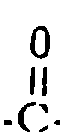 - n eine ganze Zahl oder ein Bruch zwischen 5 und 200 ist.
 - Sulfonierte lineare Silikoncopolyester nach Anspruch 1, dadurch gekennzeichnet, daß sie eine Vielzahl von Oxysulfonylgruppen mit folgender allgemeiner Formel enthalten:
-(SO₃)n1 M (II)
in der:- n₁ gleich 1 oder 2 ist- M für ein Wasserstoffatom, ein Alkali- oder Erdalkalimetall, ein Ammoniumkation, ein quartäres Ammoniumkation steht. - Sulfonierte lineare Silikoncopolyester nach irgendeinem der Ansprüche 1 bis 2, dadurch gekennzeichnet, daß die von den Dicarbonsäuren abgeleiteten Teilstücke ohne Oxysulfonylgruppen, die sie enthalten, zu mindestens 80 Mol-% aus Einheiten bestehen, die von aromatischen Dicarbonsäuren abgeleitet sind.
- Sulfonierte lineare Silikoncopolyester nach Anspruch 3, dadurch gekennzeichnet, daß die von aromatischen Dicarbonsäuren abgeleiteten Teilstücke zu der Gruppe der Terephthalsäure-, Isophthalsäure-, Naphthalindicarbonsäurereste gehören.
- Sulfonierte lineare Silikoncopolyester nach irgendeinem der Ansprüche 1 bis 4, dadurch gekennzeichnet, daß sie zu wenigstens 50 Mol-% aus Teilstücken bestehen, die von niedrigen aliphatischen Diolen abgeleitet sind, im Verhältnis zur Gesamtzahl der von Diolen abgeleiteten Teilstücke ohne Oxysulfonyl- und Siloxangruppen.
- Sulfonierte lineare Silikoncopolyester nach Anspruch 5, dadurch gekennzeichnet, daß die von niedrigen alkandiolen abgeleiteten Teilstücke Ethylenoxygruppen sind.
- Sulfonierte lineare Silikoncopolyester nach irgendeinem der Ansprüche 1 bis 6, dadurch gekennzeichnet, daß sie 7 bis 20 Mol-% Wiederholungseinheiten mit einer Oxysulfonylgruppe enthalten, im Verhältnis zur Gesamtzahl der Wiederholungseinheiten gleicher Beschaffenheit, die nicht sulfoniert und nicht silikonhaltig sind.
- Sulfonierte lineare Silikoncopolyester nach irgendeinem der Ansprüche 1 bis 7, dadurch gekennzeichnet, daß sie eine Vielzahl von Wiederholungseinheiten mit Oxysulfonylgruppen enthalten, die von bifunktionellen Verbindungen mit folgender allgemeiner Formel abgeleitet sind:
 - M und n₁ die schon angegebene Bedeutung haben,- Q ein polyvalenter aromatischer Rest ist;- X und Y Hydroxycarbonylreste oder Derivate sind: Ester niedriger aliphatische Alkohole oder Säurehalogenide.
 - Sulfonierte lineare Silikoncopolyester nach Anspruch 8, dadurch gekennzeichnet, daß sie eine Vielzahl von Teilstücken aufweisen, die von den Hydroxysulfonylisophthalsäuren oder von ihren Estern und Halogeniden abgeleitet sind.
- Sulfonierte lineare Silikoncopolyester nach Anspruch 9, dadurch gekennzeichnet, daß sie eine Vielzahl von Teilstücken aufweisen, die von der 5-Natriumsulfoisophthalsäure abgeleitet sind.
- Sulfonierte lineare Silikoncopolyester nach irgendeinem der Ansprüche 1 bis 10, dadurch gekennzeichnet, daß sie eine so große Anzahl von Teilstücken mit der Formel (I) enthalten, daß ihr gewichtmäßiger Gehalt an Silicium zwischen 0,05 und 5% liegt.
- Sulfonierte lineare Silikoncopolyester nach irgendeinem der Ansprüche 1 bis 10, dadurch gekennzeichnet, daß sie zu 1 bis 40 Gew.% aus Polyoxyalkyleneinheiten mit folgender allgemeiner Formel bestehen:
-[O-(CH₂)x-]n2
in der x für eine ganze Zahl von 2 bis 4 und n₂ für eine ganze Zahl von 2 bis 10 steht. - Sulfonierte lineare Silikoncopolyester nach Anspruch 12, dadurch gekennzeichnet, daß die Polyoxyalkyleneinheiten Polyoxyethylengruppen sind.
- Verfahren zur Herstellung der sulfonierten Silikoncopolyester nach irgendeinem der Ansprüche 1 bis 13, dadurch gekennzeichnet, daß man in einem ersten Schritt wenigstens eine Dicarbonsäure oder ihre Derivate, die zur Bildung eines Esters führen, mit wenigstens einem Glykol, wenigstens einer bifunktionellen estererzeugenden Verbindung mit Oxysulfonylgruppe(n) und wenigstens einer bifunktionellen Verbindung mit folgender alilgemeiner Formel reagieren läßt:
 - R₁, R₂, R₃, R₄, A und n die vorher angegebene Bedeutung haben,- Z' und Z'', gleich oder verschieden, für eine Hydroxylgruppe, eine Hydroxycarbonylgruppe, eine niedrige Alkoxycarbonylgruppe, eine Halogencarbonylgruppe steht, und zwar in Gegenwart eines gewöhnlichen Umesterungs- oder Veresterungskatalysators, daß man dann in einem zweiten Schritt zur Polykondensation der im ersten Schritt gebildeten Oligomere übergeht, und zwar in Gegenwart eines Polykondensationskatalysators.
Applications Claiming Priority (2)
| Application Number | Priority Date | Filing Date | Title |
|---|---|---|---|
| FR8915531 | 1989-11-21 | ||
| FR8915531A FR2654733B1 (fr) | 1989-11-21 | 1989-11-21 | Copolyesters sulfones a motifs siloxanes. |
Publications (2)
| Publication Number | Publication Date |
|---|---|
| EP0430828A1 EP0430828A1 (de) | 1991-06-05 |
| EP0430828B1 true EP0430828B1 (de) | 1996-01-24 |
Family
ID=9387786
Family Applications (1)
| Application Number | Title | Priority Date | Filing Date |
|---|---|---|---|
| EP90420503A Expired - Lifetime EP0430828B1 (de) | 1989-11-21 | 1990-11-20 | Sulphonierte Copolyester mit Siloxaneinheiten |
Country Status (7)
| Country | Link |
|---|---|
| EP (1) | EP0430828B1 (de) |
| AT (1) | ATE133433T1 (de) |
| DE (1) | DE69025044T2 (de) |
| DK (1) | DK0430828T3 (de) |
| ES (1) | ES2085343T3 (de) |
| FR (1) | FR2654733B1 (de) |
| GR (1) | GR3019370T3 (de) |
Families Citing this family (5)
| Publication number | Priority date | Publication date | Assignee | Title |
|---|---|---|---|---|
| FR2688509A1 (fr) * | 1992-03-13 | 1993-09-17 | Rhone Poulenc Fibres | Copolymere polyester/polydiorganosiloxane, composition contenant ce polymere et procedes de fabrication de ce copolymere et cette composition. |
| FR2728915B1 (fr) * | 1994-12-30 | 1997-01-31 | Rhone Poulenc Chimie | Copolyesters sulfones a motifs polyorganosiloxanes comme agents d'encollage textile et procede d'encollage de fils ou de fibres textiles a l'aide desdits agents |
| DE19915612A1 (de) * | 1999-04-07 | 2000-10-12 | Beiersdorf Ag | Siliconmodifizierte sulfonierte Kammpolymere und Zubereitungen, insbesondere haarkosmetische Zubereitungen auf der Grundlage von solchen siliconmodifizierten sulfonierten Kammpolmyeren |
| DE19943421A1 (de) * | 1999-09-08 | 2001-03-15 | Beiersdorf Ag | Siliconmodifizierte sulfonierte Kammpolymere mit ausgewähltem Lithium-Natrium-Verhältnis und Zubereitungen, insbesondere haarkosmetische Zubereitungen auf der Grundlage solcher Kammpolymeren |
| FR2808684A1 (fr) * | 2000-05-09 | 2001-11-16 | Oreal | Composition cosmetique ou pharmaceutique comprenant une phase aqueuse, un oligomere copolyester terephtalique et un copolyester sulfone a motifs polyorganosiloxanes, procede de traitement et utilisation |
Family Cites Families (6)
| Publication number | Priority date | Publication date | Assignee | Title |
|---|---|---|---|---|
| JPS5883332A (ja) * | 1981-11-10 | 1983-05-19 | Hitachi Maxell Ltd | 磁気記録媒体 |
| US4496704A (en) * | 1983-03-07 | 1985-01-29 | The Goodyear Tire & Rubber Company | High slip polyester films containing siloxane units |
| JPS6112914A (ja) * | 1984-06-25 | 1986-01-21 | Nippon Ester Co Ltd | 撥水性ポリエステル繊維 |
| DE3427208C2 (de) * | 1984-07-24 | 1986-06-05 | BYK-Chemie GmbH, 4230 Wesel | Lacke und Formmassen mit einem den Verlauf fördernden und die Gleitfähigkeit erhöhenden Gehalt an Siloxanen und die Verwendung solcher Siloxane als Zusatzmittel für Lacke und Formmassen |
| JPS61179227A (ja) * | 1985-02-01 | 1986-08-11 | Daicel Chem Ind Ltd | ポリエステル共重合体 |
| US4937277A (en) * | 1988-05-16 | 1990-06-26 | Rhone-Poulenc Specialty Chemicals, L.P. | Alkoxylated silicon polymers |
-
1989
- 1989-11-21 FR FR8915531A patent/FR2654733B1/fr not_active Expired - Fee Related
-
1990
- 1990-11-20 EP EP90420503A patent/EP0430828B1/de not_active Expired - Lifetime
- 1990-11-20 AT AT90420503T patent/ATE133433T1/de not_active IP Right Cessation
- 1990-11-20 ES ES90420503T patent/ES2085343T3/es not_active Expired - Lifetime
- 1990-11-20 DK DK90420503.6T patent/DK0430828T3/da active
- 1990-11-20 DE DE69025044T patent/DE69025044T2/de not_active Expired - Fee Related
-
1996
- 1996-03-20 GR GR960400770T patent/GR3019370T3/el unknown
Also Published As
| Publication number | Publication date |
|---|---|
| FR2654733A1 (fr) | 1991-05-24 |
| FR2654733B1 (fr) | 1993-12-31 |
| EP0430828A1 (de) | 1991-06-05 |
| DE69025044T2 (de) | 1996-08-22 |
| GR3019370T3 (en) | 1996-06-30 |
| DK0430828T3 (da) | 1996-02-12 |
| ATE133433T1 (de) | 1996-02-15 |
| ES2085343T3 (es) | 1996-06-01 |
| DE69025044D1 (de) | 1996-03-07 |
Similar Documents
| Publication | Publication Date | Title |
|---|---|---|
| US3701815A (en) | Thermoplastic siloxane-polyester block copolymers | |
| JP2603399B2 (ja) | 親水性シリコン−改質ポリエステル樹脂の製造方法 | |
| PL183136B1 (pl) | Funkcjonalizowane poliorganosiloksany i sposób wytwarzania funkcjonalizowanych poliorganosiloksanów | |
| JPH10251407A (ja) | シリコーン化合物及びその製造方法 | |
| EP0728793A1 (de) | Verfahren zur Herstellung von Polyorganosiloxanharz, evtl. alkoxyliert, durch nicht-hydrolytische Kondensation | |
| US6194596B1 (en) | Polysiloxanes containing carbonate groups and modified with linear polyesters and their use as additives in coatings | |
| EP0430828B1 (de) | Sulphonierte Copolyester mit Siloxaneinheiten | |
| JPH03170530A (ja) | 片末端分岐状アミノアルキル基封鎖オルガノポリシロキサン及びその製造方法 | |
| JP2002012668A (ja) | アルキルメチルシロキサンジメチルシリコーンポリアルキレンオキシド共重合体 | |
| EP0755960A1 (de) | Polyfunktionelle perhalogenierte Polyorganosiloxane und Verfahren zu deren Herstellung | |
| JPS63243089A (ja) | オルガノシリコーンスルホコハク酸塩及びその製法 | |
| JP3652151B2 (ja) | 硬化性ポリメチルシルセスキオキサンの製造方法 | |
| JP3801208B2 (ja) | 硬化性ポリメチルシルセスキオキサン組成物 | |
| FR2802540A1 (fr) | Procede de preparation de polyorganosiloxanes par polymerisation catalysee par un systeme catalytique a base d'acide triflique ou de derives de l'acide triflique | |
| CA2182110C (fr) | Polyorganosiloxanes perhalogenes et leurs procedes d'obtention | |
| US3976676A (en) | Polysiloxane compounds containing hydroxyl groups | |
| JP2615799B2 (ja) | ウレタン化ポリシロキサンの製造方法 | |
| FR2616152A1 (fr) | Nouveaux polysilanes, polysilanes modifies correspondants, leur preparation et leur application dans des compositions reticulables | |
| JP2001504859A (ja) | 高純度枝分かれアルキルシルセスキオキサン液体 | |
| US4308366A (en) | Polycondensation of hydroxysilylated polysiloxanes | |
| JP7636130B2 (ja) | パーフルオロポリエーテルブロックと(メタ)アクリロイル基とを有するオルガノポリシロキサン、及びその製造方法 | |
| KR100977236B1 (ko) | 아미노알킬폴리실록산의 제조 방법 | |
| FR2634769A1 (fr) | Diorganopolysiloxane a fonction thioalkylacrylate | |
| JP3032673B2 (ja) | 合成樹脂含有塗料用改質剤 | |
| EP0502022B1 (de) | Polyesterverbundfolien |
Legal Events
| Date | Code | Title | Description |
|---|---|---|---|
| PUAI | Public reference made under article 153(3) epc to a published international application that has entered the european phase |
Free format text: ORIGINAL CODE: 0009012 |
|
| AK | Designated contracting states |
Kind code of ref document: A1 Designated state(s): AT BE CH DE DK ES FR GB GR IT LI LU NL SE |
|
| 17P | Request for examination filed |
Effective date: 19911015 |
|
| 17Q | First examination report despatched |
Effective date: 19940406 |
|
| GRAA | (expected) grant |
Free format text: ORIGINAL CODE: 0009210 |
|
| AK | Designated contracting states |
Kind code of ref document: B1 Designated state(s): AT BE CH DE DK ES FR GB GR IT LI LU NL SE |
|
| REF | Corresponds to: |
Ref document number: 133433 Country of ref document: AT Date of ref document: 19960215 Kind code of ref document: T |
|
| ITF | It: translation for a ep patent filed | ||
| REG | Reference to a national code |
Ref country code: DK Ref legal event code: T3 |
|
| REF | Corresponds to: |
Ref document number: 69025044 Country of ref document: DE Date of ref document: 19960307 |
|
| REG | Reference to a national code |
Ref country code: CH Ref legal event code: NV Representative=s name: KIRKER & CIE SA |
|
| GBT | Gb: translation of ep patent filed (gb section 77(6)(a)/1977) |
Effective date: 19960220 |
|
| REG | Reference to a national code |
Ref country code: GR Ref legal event code: FG4A Free format text: 3019370 |
|
| REG | Reference to a national code |
Ref country code: ES Ref legal event code: FG2A Ref document number: 2085343 Country of ref document: ES Kind code of ref document: T3 |
|
| PLBE | No opposition filed within time limit |
Free format text: ORIGINAL CODE: 0009261 |
|
| STAA | Information on the status of an ep patent application or granted ep patent |
Free format text: STATUS: NO OPPOSITION FILED WITHIN TIME LIMIT |
|
| 26N | No opposition filed | ||
| REG | Reference to a national code |
Ref country code: GB Ref legal event code: IF02 |
|
| PGFP | Annual fee paid to national office [announced via postgrant information from national office to epo] |
Ref country code: SE Payment date: 20021106 Year of fee payment: 13 |
|
| PGFP | Annual fee paid to national office [announced via postgrant information from national office to epo] |
Ref country code: FR Payment date: 20021108 Year of fee payment: 13 |
|
| PGFP | Annual fee paid to national office [announced via postgrant information from national office to epo] |
Ref country code: DK Payment date: 20021113 Year of fee payment: 13 Ref country code: AT Payment date: 20021113 Year of fee payment: 13 |
|
| PGFP | Annual fee paid to national office [announced via postgrant information from national office to epo] |
Ref country code: GB Payment date: 20021120 Year of fee payment: 13 |
|
| PGFP | Annual fee paid to national office [announced via postgrant information from national office to epo] |
Ref country code: DE Payment date: 20021121 Year of fee payment: 13 |
|
| PGFP | Annual fee paid to national office [announced via postgrant information from national office to epo] |
Ref country code: LU Payment date: 20021127 Year of fee payment: 13 Ref country code: ES Payment date: 20021127 Year of fee payment: 13 |
|
| PGFP | Annual fee paid to national office [announced via postgrant information from national office to epo] |
Ref country code: GR Payment date: 20021128 Year of fee payment: 13 |
|
| PGFP | Annual fee paid to national office [announced via postgrant information from national office to epo] |
Ref country code: NL Payment date: 20021129 Year of fee payment: 13 Ref country code: CH Payment date: 20021129 Year of fee payment: 13 |
|
| PGFP | Annual fee paid to national office [announced via postgrant information from national office to epo] |
Ref country code: BE Payment date: 20030117 Year of fee payment: 13 |
|
| PG25 | Lapsed in a contracting state [announced via postgrant information from national office to epo] |
Ref country code: LU Free format text: LAPSE BECAUSE OF NON-PAYMENT OF DUE FEES Effective date: 20031120 Ref country code: GB Free format text: LAPSE BECAUSE OF NON-PAYMENT OF DUE FEES Effective date: 20031120 Ref country code: AT Free format text: LAPSE BECAUSE OF NON-PAYMENT OF DUE FEES Effective date: 20031120 |
|
| PG25 | Lapsed in a contracting state [announced via postgrant information from national office to epo] |
Ref country code: SE Free format text: LAPSE BECAUSE OF NON-PAYMENT OF DUE FEES Effective date: 20031121 Ref country code: ES Free format text: LAPSE BECAUSE OF NON-PAYMENT OF DUE FEES Effective date: 20031121 |
|
| PG25 | Lapsed in a contracting state [announced via postgrant information from national office to epo] |
Ref country code: LI Free format text: LAPSE BECAUSE OF NON-PAYMENT OF DUE FEES Effective date: 20031130 Ref country code: CH Free format text: LAPSE BECAUSE OF NON-PAYMENT OF DUE FEES Effective date: 20031130 Ref country code: BE Free format text: LAPSE BECAUSE OF NON-PAYMENT OF DUE FEES Effective date: 20031130 |
|
| PG25 | Lapsed in a contracting state [announced via postgrant information from national office to epo] |
Ref country code: DK Free format text: LAPSE BECAUSE OF NON-PAYMENT OF DUE FEES Effective date: 20031201 |
|
| BERE | Be: lapsed |
Owner name: *RHONE-POULENC CHIMIE Effective date: 20031130 |
|
| PG25 | Lapsed in a contracting state [announced via postgrant information from national office to epo] |
Ref country code: NL Free format text: LAPSE BECAUSE OF NON-PAYMENT OF DUE FEES Effective date: 20040601 |
|
| PG25 | Lapsed in a contracting state [announced via postgrant information from national office to epo] |
Ref country code: DE Free format text: LAPSE BECAUSE OF NON-PAYMENT OF DUE FEES Effective date: 20040602 |
|
| PG25 | Lapsed in a contracting state [announced via postgrant information from national office to epo] |
Ref country code: GR Free format text: LAPSE BECAUSE OF NON-PAYMENT OF DUE FEES Effective date: 20040603 |
|
| EUG | Se: european patent has lapsed | ||
| REG | Reference to a national code |
Ref country code: DK Ref legal event code: EBP |
|
| GBPC | Gb: european patent ceased through non-payment of renewal fee |
Effective date: 20031120 |
|
| REG | Reference to a national code |
Ref country code: CH Ref legal event code: PL |
|
| PG25 | Lapsed in a contracting state [announced via postgrant information from national office to epo] |
Ref country code: FR Free format text: LAPSE BECAUSE OF NON-PAYMENT OF DUE FEES Effective date: 20040730 |
|
| NLV4 | Nl: lapsed or anulled due to non-payment of the annual fee |
Effective date: 20040601 |
|
| REG | Reference to a national code |
Ref country code: FR Ref legal event code: ST |
|
| REG | Reference to a national code |
Ref country code: ES Ref legal event code: FD2A Effective date: 20031121 |
|
| PG25 | Lapsed in a contracting state [announced via postgrant information from national office to epo] |
Ref country code: IT Free format text: LAPSE BECAUSE OF NON-PAYMENT OF DUE FEES;WARNING: LAPSES OF ITALIAN PATENTS WITH EFFECTIVE DATE BEFORE 2007 MAY HAVE OCCURRED AT ANY TIME BEFORE 2007. THE CORRECT EFFECTIVE DATE MAY BE DIFFERENT FROM THE ONE RECORDED. Effective date: 20051120 |