EP0430968B1 - Verbindungen, zusammensetzungen und verfahren zum binden von bio-affektions-substanzen an oberflächenmembranen von bioteilchen - Google Patents
Verbindungen, zusammensetzungen und verfahren zum binden von bio-affektions-substanzen an oberflächenmembranen von bioteilchen Download PDFInfo
- Publication number
- EP0430968B1 EP0430968B1 EP89908564A EP89908564A EP0430968B1 EP 0430968 B1 EP0430968 B1 EP 0430968B1 EP 89908564 A EP89908564 A EP 89908564A EP 89908564 A EP89908564 A EP 89908564A EP 0430968 B1 EP0430968 B1 EP 0430968B1
- Authority
- EP
- European Patent Office
- Prior art keywords
- alkyl
- cells
- compounds
- cell
- compound
- Prior art date
- Legal status (The legal status is an assumption and is not a legal conclusion. Google has not performed a legal analysis and makes no representation as to the accuracy of the status listed.)
- Expired - Lifetime
Links
Images



Classifications
-
- C—CHEMISTRY; METALLURGY
- C07—ORGANIC CHEMISTRY
- C07D—HETEROCYCLIC COMPOUNDS
- C07D209/00—Heterocyclic compounds containing five-membered rings, condensed with other rings, with one nitrogen atom as the only ring hetero atom
- C07D209/02—Heterocyclic compounds containing five-membered rings, condensed with other rings, with one nitrogen atom as the only ring hetero atom condensed with one carbocyclic ring
- C07D209/04—Indoles; Hydrogenated indoles
- C07D209/08—Indoles; Hydrogenated indoles with only hydrogen atoms or radicals containing only hydrogen and carbon atoms, directly attached to carbon atoms of the hetero ring
-
- A—HUMAN NECESSITIES
- A61—MEDICAL OR VETERINARY SCIENCE; HYGIENE
- A61K—PREPARATIONS FOR MEDICAL, DENTAL OR TOILETRY PURPOSES
- A61K41/00—Medicinal preparations obtained by treating materials with wave energy or particle radiation ; Therapies using these preparations
- A61K41/0085—Mossbauer effect therapy based on mossbauer effect of a material, i.e. re-emission of gamma rays after absorption of gamma rays by the material; selective radiation therapy, i.e. involving re-emission of ionizing radiation upon exposure to a first ionizing radiation
-
- A—HUMAN NECESSITIES
- A61—MEDICAL OR VETERINARY SCIENCE; HYGIENE
- A61K—PREPARATIONS FOR MEDICAL, DENTAL OR TOILETRY PURPOSES
- A61K47/00—Medicinal preparations characterised by the non-active ingredients used, e.g. carriers or inert additives; Targeting or modifying agents chemically bound to the active ingredient
- A61K47/50—Medicinal preparations characterised by the non-active ingredients used, e.g. carriers or inert additives; Targeting or modifying agents chemically bound to the active ingredient the non-active ingredient being chemically bound to the active ingredient, e.g. polymer-drug conjugates
- A61K47/51—Medicinal preparations characterised by the non-active ingredients used, e.g. carriers or inert additives; Targeting or modifying agents chemically bound to the active ingredient the non-active ingredient being chemically bound to the active ingredient, e.g. polymer-drug conjugates the non-active ingredient being a modifying agent
- A61K47/56—Medicinal preparations characterised by the non-active ingredients used, e.g. carriers or inert additives; Targeting or modifying agents chemically bound to the active ingredient the non-active ingredient being chemically bound to the active ingredient, e.g. polymer-drug conjugates the non-active ingredient being a modifying agent the modifying agent being an organic macromolecular compound, e.g. an oligomeric, polymeric or dendrimeric molecule
- A61K47/59—Medicinal preparations characterised by the non-active ingredients used, e.g. carriers or inert additives; Targeting or modifying agents chemically bound to the active ingredient the non-active ingredient being chemically bound to the active ingredient, e.g. polymer-drug conjugates the non-active ingredient being a modifying agent the modifying agent being an organic macromolecular compound, e.g. an oligomeric, polymeric or dendrimeric molecule obtained otherwise than by reactions only involving carbon-to-carbon unsaturated bonds, e.g. polyureas or polyurethanes
- A61K47/60—Medicinal preparations characterised by the non-active ingredients used, e.g. carriers or inert additives; Targeting or modifying agents chemically bound to the active ingredient the non-active ingredient being chemically bound to the active ingredient, e.g. polymer-drug conjugates the non-active ingredient being a modifying agent the modifying agent being an organic macromolecular compound, e.g. an oligomeric, polymeric or dendrimeric molecule obtained otherwise than by reactions only involving carbon-to-carbon unsaturated bonds, e.g. polyureas or polyurethanes the organic macromolecular compound being a polyoxyalkylene oligomer, polymer or dendrimer, e.g. PEG, PPG, PEO or polyglycerol
-
- A—HUMAN NECESSITIES
- A61—MEDICAL OR VETERINARY SCIENCE; HYGIENE
- A61K—PREPARATIONS FOR MEDICAL, DENTAL OR TOILETRY PURPOSES
- A61K47/00—Medicinal preparations characterised by the non-active ingredients used, e.g. carriers or inert additives; Targeting or modifying agents chemically bound to the active ingredient
- A61K47/50—Medicinal preparations characterised by the non-active ingredients used, e.g. carriers or inert additives; Targeting or modifying agents chemically bound to the active ingredient the non-active ingredient being chemically bound to the active ingredient, e.g. polymer-drug conjugates
- A61K47/69—Medicinal preparations characterised by the non-active ingredients used, e.g. carriers or inert additives; Targeting or modifying agents chemically bound to the active ingredient the non-active ingredient being chemically bound to the active ingredient, e.g. polymer-drug conjugates the conjugate being characterised by physical or galenical forms, e.g. emulsion, particle, inclusion complex, stent or kit
- A61K47/6901—Conjugates being cells, cell fragments, viruses, ghosts, red blood cells or viral vectors
-
- A—HUMAN NECESSITIES
- A61—MEDICAL OR VETERINARY SCIENCE; HYGIENE
- A61K—PREPARATIONS FOR MEDICAL, DENTAL OR TOILETRY PURPOSES
- A61K49/00—Preparations for testing in vivo
- A61K49/0002—General or multifunctional contrast agents, e.g. chelated agents
-
- A—HUMAN NECESSITIES
- A61—MEDICAL OR VETERINARY SCIENCE; HYGIENE
- A61K—PREPARATIONS FOR MEDICAL, DENTAL OR TOILETRY PURPOSES
- A61K49/00—Preparations for testing in vivo
- A61K49/001—Preparation for luminescence or biological staining
- A61K49/0013—Luminescence
- A61K49/0017—Fluorescence in vivo
- A61K49/0019—Fluorescence in vivo characterised by the fluorescent group, e.g. oligomeric, polymeric or dendritic molecules
- A61K49/0021—Fluorescence in vivo characterised by the fluorescent group, e.g. oligomeric, polymeric or dendritic molecules the fluorescent group being a small organic molecule
- A61K49/0026—Acridine dyes
-
- A—HUMAN NECESSITIES
- A61—MEDICAL OR VETERINARY SCIENCE; HYGIENE
- A61K—PREPARATIONS FOR MEDICAL, DENTAL OR TOILETRY PURPOSES
- A61K49/00—Preparations for testing in vivo
- A61K49/001—Preparation for luminescence or biological staining
- A61K49/0013—Luminescence
- A61K49/0017—Fluorescence in vivo
- A61K49/0019—Fluorescence in vivo characterised by the fluorescent group, e.g. oligomeric, polymeric or dendritic molecules
- A61K49/0021—Fluorescence in vivo characterised by the fluorescent group, e.g. oligomeric, polymeric or dendritic molecules the fluorescent group being a small organic molecule
- A61K49/0032—Methine dyes, e.g. cyanine dyes
-
- A—HUMAN NECESSITIES
- A61—MEDICAL OR VETERINARY SCIENCE; HYGIENE
- A61K—PREPARATIONS FOR MEDICAL, DENTAL OR TOILETRY PURPOSES
- A61K49/00—Preparations for testing in vivo
- A61K49/001—Preparation for luminescence or biological staining
- A61K49/0013—Luminescence
- A61K49/0017—Fluorescence in vivo
- A61K49/005—Fluorescence in vivo characterised by the carrier molecule carrying the fluorescent agent
- A61K49/0052—Small organic molecules
-
- A—HUMAN NECESSITIES
- A61—MEDICAL OR VETERINARY SCIENCE; HYGIENE
- A61K—PREPARATIONS FOR MEDICAL, DENTAL OR TOILETRY PURPOSES
- A61K49/00—Preparations for testing in vivo
- A61K49/06—Nuclear magnetic resonance [NMR] contrast preparations; Magnetic resonance imaging [MRI] contrast preparations
-
- A—HUMAN NECESSITIES
- A61—MEDICAL OR VETERINARY SCIENCE; HYGIENE
- A61K—PREPARATIONS FOR MEDICAL, DENTAL OR TOILETRY PURPOSES
- A61K49/00—Preparations for testing in vivo
- A61K49/06—Nuclear magnetic resonance [NMR] contrast preparations; Magnetic resonance imaging [MRI] contrast preparations
- A61K49/18—Nuclear magnetic resonance [NMR] contrast preparations; Magnetic resonance imaging [MRI] contrast preparations characterised by a special physical form, e.g. emulsions, microcapsules, liposomes
-
- A—HUMAN NECESSITIES
- A61—MEDICAL OR VETERINARY SCIENCE; HYGIENE
- A61K—PREPARATIONS FOR MEDICAL, DENTAL OR TOILETRY PURPOSES
- A61K49/00—Preparations for testing in vivo
- A61K49/06—Nuclear magnetic resonance [NMR] contrast preparations; Magnetic resonance imaging [MRI] contrast preparations
- A61K49/18—Nuclear magnetic resonance [NMR] contrast preparations; Magnetic resonance imaging [MRI] contrast preparations characterised by a special physical form, e.g. emulsions, microcapsules, liposomes
- A61K49/1896—Nuclear magnetic resonance [NMR] contrast preparations; Magnetic resonance imaging [MRI] contrast preparations characterised by a special physical form, e.g. emulsions, microcapsules, liposomes not provided for elsewhere, e.g. cells, viruses, ghosts, red blood cells, virus capsides
-
- A—HUMAN NECESSITIES
- A61—MEDICAL OR VETERINARY SCIENCE; HYGIENE
- A61K—PREPARATIONS FOR MEDICAL, DENTAL OR TOILETRY PURPOSES
- A61K51/00—Preparations containing radioactive substances for use in therapy or testing in vivo
- A61K51/02—Preparations containing radioactive substances for use in therapy or testing in vivo characterised by the carrier, i.e. characterised by the agent or material covalently linked or complexing the radioactive nucleus
- A61K51/04—Organic compounds
- A61K51/0497—Organic compounds conjugates with a carrier being an organic compounds
-
- A—HUMAN NECESSITIES
- A61—MEDICAL OR VETERINARY SCIENCE; HYGIENE
- A61K—PREPARATIONS FOR MEDICAL, DENTAL OR TOILETRY PURPOSES
- A61K51/00—Preparations containing radioactive substances for use in therapy or testing in vivo
- A61K51/12—Preparations containing radioactive substances for use in therapy or testing in vivo characterised by a special physical form, e.g. emulsion, microcapsules, liposomes, characterized by a special physical form, e.g. emulsions, dispersions, microcapsules
- A61K51/1258—Pills, tablets, lozenges
-
- A—HUMAN NECESSITIES
- A61—MEDICAL OR VETERINARY SCIENCE; HYGIENE
- A61P—SPECIFIC THERAPEUTIC ACTIVITY OF CHEMICAL COMPOUNDS OR MEDICINAL PREPARATIONS
- A61P31/00—Antiinfectives, i.e. antibiotics, antiseptics, chemotherapeutics
-
- A—HUMAN NECESSITIES
- A61—MEDICAL OR VETERINARY SCIENCE; HYGIENE
- A61P—SPECIFIC THERAPEUTIC ACTIVITY OF CHEMICAL COMPOUNDS OR MEDICINAL PREPARATIONS
- A61P35/00—Antineoplastic agents
-
- C—CHEMISTRY; METALLURGY
- C07—ORGANIC CHEMISTRY
- C07C—ACYCLIC OR CARBOCYCLIC COMPOUNDS
- C07C229/00—Compounds containing amino and carboxyl groups bound to the same carbon skeleton
- C07C229/02—Compounds containing amino and carboxyl groups bound to the same carbon skeleton having amino and carboxyl groups bound to acyclic carbon atoms of the same carbon skeleton
- C07C229/04—Compounds containing amino and carboxyl groups bound to the same carbon skeleton having amino and carboxyl groups bound to acyclic carbon atoms of the same carbon skeleton the carbon skeleton being acyclic and saturated
- C07C229/06—Compounds containing amino and carboxyl groups bound to the same carbon skeleton having amino and carboxyl groups bound to acyclic carbon atoms of the same carbon skeleton the carbon skeleton being acyclic and saturated having only one amino and one carboxyl group bound to the carbon skeleton
- C07C229/10—Compounds containing amino and carboxyl groups bound to the same carbon skeleton having amino and carboxyl groups bound to acyclic carbon atoms of the same carbon skeleton the carbon skeleton being acyclic and saturated having only one amino and one carboxyl group bound to the carbon skeleton the nitrogen atom of the amino group being further bound to acyclic carbon atoms or to carbon atoms of rings other than six-membered aromatic rings
- C07C229/16—Compounds containing amino and carboxyl groups bound to the same carbon skeleton having amino and carboxyl groups bound to acyclic carbon atoms of the same carbon skeleton the carbon skeleton being acyclic and saturated having only one amino and one carboxyl group bound to the carbon skeleton the nitrogen atom of the amino group being further bound to acyclic carbon atoms or to carbon atoms of rings other than six-membered aromatic rings to carbon atoms of hydrocarbon radicals substituted by amino or carboxyl groups, e.g. ethylenediamine-tetra-acetic acid, iminodiacetic acids
-
- C—CHEMISTRY; METALLURGY
- C07—ORGANIC CHEMISTRY
- C07D—HETEROCYCLIC COMPOUNDS
- C07D219/00—Heterocyclic compounds containing acridine or hydrogenated acridine ring systems
- C07D219/04—Heterocyclic compounds containing acridine or hydrogenated acridine ring systems with hetero atoms or with carbon atoms having three bonds to hetero atoms with at the most one bond to halogen, e.g. ester or nitrile radicals, directly attached to carbon atoms of the ring system
- C07D219/08—Nitrogen atoms
-
- C—CHEMISTRY; METALLURGY
- C07—ORGANIC CHEMISTRY
- C07D—HETEROCYCLIC COMPOUNDS
- C07D263/00—Heterocyclic compounds containing 1,3-oxazole or hydrogenated 1,3-oxazole rings
- C07D263/52—Heterocyclic compounds containing 1,3-oxazole or hydrogenated 1,3-oxazole rings condensed with carbocyclic rings or ring systems
- C07D263/62—Heterocyclic compounds containing 1,3-oxazole or hydrogenated 1,3-oxazole rings condensed with carbocyclic rings or ring systems having two or more ring systems containing condensed 1,3-oxazole rings
-
- C—CHEMISTRY; METALLURGY
- C08—ORGANIC MACROMOLECULAR COMPOUNDS; THEIR PREPARATION OR CHEMICAL WORKING-UP; COMPOSITIONS BASED THEREON
- C08B—POLYSACCHARIDES; DERIVATIVES THEREOF
- C08B37/00—Preparation of polysaccharides not provided for in groups C08B1/00 - C08B35/00; Derivatives thereof
- C08B37/006—Heteroglycans, i.e. polysaccharides having more than one sugar residue in the main chain in either alternating or less regular sequence; Gellans; Succinoglycans; Arabinogalactans; Tragacanth or gum tragacanth or traganth from Astragalus; Gum Karaya from Sterculia urens; Gum Ghatti from Anogeissus latifolia; Derivatives thereof
- C08B37/0063—Glycosaminoglycans or mucopolysaccharides, e.g. keratan sulfate; Derivatives thereof, e.g. fucoidan
- C08B37/0075—Heparin; Heparan sulfate; Derivatives thereof, e.g. heparosan; Purification or extraction methods thereof
-
- A—HUMAN NECESSITIES
- A61—MEDICAL OR VETERINARY SCIENCE; HYGIENE
- A61K—PREPARATIONS FOR MEDICAL, DENTAL OR TOILETRY PURPOSES
- A61K2121/00—Preparations for use in therapy
-
- A—HUMAN NECESSITIES
- A61—MEDICAL OR VETERINARY SCIENCE; HYGIENE
- A61K—PREPARATIONS FOR MEDICAL, DENTAL OR TOILETRY PURPOSES
- A61K2123/00—Preparations for testing in vivo
Definitions
- the present invention relates to compositions for binding bio-affecting substances, diagnostic agents, to the surface membrane of viable bio-particles, including eukaryotic prokaryotic cells and viruses, without producing appreciable detrimental effects on morphology or physiological function of the bio-particle to which the compounds are bound.
- Fluorescent labeling techniques using a wide range of fluorochromes have been reported, such as cyanine derivatives, U.S. Patent No. 4,343,782, fluorescein isothiocyanate, Butcher et al., J. Immunol. Methods , 37 , 109-21 (1980) and Butcher et al., J. Immunol. Methods , 37 , 97-108 (1980) and fluoroscein or rhodamine having a single, relatively long aliphatic hydrocarbon substituent, Wanda et.al., J. Histochem. Cytochem. , 30, 1297-1300 (1982).
- the imaging techniques do not result in membrane binding but rather the imaging complex is taken up into the cell and binds to the reticulum of the cell.
- the chelating agent e.g., oxine, tropolone or merc
- the detectable metal ion is taken into the cell, isotopic decay can more easily result in radiation damage to the cell's genetic material.
- European Patent application Serial No. 86103694.5 published October 22, 1986, (Published Application No. 0,198257) describes a method for the selective irradiation of biological materials, particularly tissues, cells or cell components, in which the Mossbauer absorption frequency of a component of the material to be irradiated is determined and the material is then irradiated with gamma radiation of the corresponding Mossbauer absorption frequency with internal conversion and emission of gamma radiation and/or Auger electrons.
- the method is disclosed as being useful for selective radiation therapy providing selective tissue damage or mecrosis, e.g., in cancer therapy, and for differentiating between diseased and healthy tissues.
- Mossbauer isotopes are administered parenterally but are not selectively delivered to the tumor cells. It is believed that the selectivity in tumor cell kill will be achieved either through differences in absorption wavelengths of Mossbauer atoms within tumor cells and normal cells or by specifically focusing the absorbed radiation at the tumor itself.
- One of the major goals of any pharmaceutical development is to provide drug therapy which is totally specific for a target cell type or disease site.
- the compounds used are antagonists or agonists where specific receptors are found on cells to which therapy is directed and lower levels or affinities on other cell types.
- the drug is specifically taken up by cells at the disease site or metabolized at the disease site in a way which is different from the matabolism at non-disease sites.
- the monoclonals injected are foreign protein and often results in the generation of antibodies by the patient against the therapeutic molecule. Furthermore, specificity of binding is often a problem and non-specific toxicity is the result. Antigen shedding or modulation is equally problematic for this methodology, as well as limited capability to enter poorly vascularized tumors. In general, a methodology which could deliver a desired therapeutic effect specifically to tumor sites, is a desirable attribute for a pharmaceutical substance.
- bio-affecting compounds specifically diagnostic agents may be reproducibly bound to the surface membrane of cells, both eukaryotic and prokaryotic, and to viruses with sufficient affinity to prevent dissociation of the compound from the membrane and without adversely affecting the normal functioning of the cell or virus.
- compositions having the capability of binding in the lipid phase of the surface membrane of viable bioparticles having a physiological function such cells or viruses.
- compositions comprise a bio-affecting moiety, specifically a diagnostic agent, and at least one hydrocarbon substituent selected so that the compound is sufficiently non-polar as to have a surface membrane retention coefficient of at least 90 over 24 hours in saline containing 10 percent serum and further selected so that the compound solubility determination factor of the compound has no more than a 20% change over a two hour time period in the binding medium of choice.
- Suitable compounds are those of the formula R - B - R 1 , wherein B represents the bio-affecting moiety and R and/or R 1 represent relatively long chain hydrocarbon substituents or "tails" that impart the requisite lipophilicity to the compounds, R and R 1 being different.
- the number of linear carbons in the hydrocarbon tail(s) of the compounds of the invention is an important factor in achieving binding of the compounds of the invention to surface membranes of prokaryotic or eukaryotic cells or viruses.
- cyanine derivatives as diagnostic agents indicates that hydrocarbon tails of less than 3 carbons causes the cyanine to penetrate the plasma membrane and the nuclear membrane of cells resulting in staining of RNA and DNA. If carbon tails have a length greater than 3 carbons and less than 12 carbons, the compound no longer binds RNA and DNA but responds to membrane potential and enters the mitocondria (U.S. Patent No. 4,343,782 to Shapiro and U.S. Patent No. 4,424,201 to Valinsky, T. J.
- a composition for binding, to the surface membrane of a viable bioparticle such as a carrier cell or virus capable of physiological function, a bio-affecting moiety which is a diagnostic agent said composition comprising a compound of the formula R-B-R 1 , wherein B represents said diagnostic agent and R and R 1 are different and represent substituents independently selected from the group of hydrogen, alkyl, alkenyl, alkynyl, alkaryl or aralkyl, the hydrocarbon chains of which are linear or branched, said substituents being unsubstituted or substituted with one or more non-polar functional groups, one of R and R 1 having at least 12 linear carbon atoms and the sum of the linear carbon atoms in R and R 1 totalling at least 23, and a compatible binding medium in which said compound is dissolved, said medium being iso-osmotic for the bio-particle to which the compound is to be bound.
- the binding media which may be used in the practice of this invention include sugars, sugar-
- the invention may be used for preparing a carrier cell bearing a bio-affecting moiety capable of reproducibly exerting a site-specific predetermined effect, i.e. a diagnostic effect, in vivo .
- the desired effect may be exerted, for example, directly on a carrier cell, or on a cell group comprising such carrier cell.
- the preparative method essentially involves contacting a compound of the formula R-B-R 1 with the carrier cell or virus in the presence of a medium of the type described above, under conditions causing binding of the compound to the carrier cell or virus.
- the preparative method of the invention occurs without appreciably diminishing viability of the carrier cell or virus, or otherwise adversely affecting the desired physiological function thereof.
- a site-specific predetermined effect in vivo may be achieved by exposure of the target site to a bio-affecting moiety capable of producing the desired effect.
- the method involves providing a carrier cell or virus to which is bound a compound of the formula R-B-R 1 and delivering the bound carrier cell or virus to the site where the bio-affecting moiety is to produce its intended effect.
- the present invention possesses a number of advantages as compared with tie above-discussed prior art particularly with respect to applications involving cell binding.
- the compounds of the invention are bound to carrier cells in such a way as to place the bio-affecting substituent on the exterior of the cell.
- this provides a distinct advantage versus prior art techniques for binding bio-affecting substances to cells, in which the bio-affecting substance is caused to penetrate beyond the plasma membrane and into the cytoplasm or mitochondria.
- radio-isotope labeling for example, placement of Indium or Technetium on the outside of the plasma membrane lowers the probability that emitted gamma radiation will pass through the nucleus of the cell, thus reducing the risk of undesired mutation or cell death.
- monoclonal antibodies, lectins, agonists or antagonists to tissue receptors, glycosaminoglycans, sialic acids or other such molecules may be placed on the exterior surface of the cell to alter the migration patterns of the cell. While some biomolecules such as glycosaminoglycans and sialic acids may affect specific migration routes, others like monoclonal antibodies, agonists or antagonists to tissue receptors, or lectins may effect the retention time of a cell at a specific site.
- a further notable advantage is that binding of the compounds of the invention to carrier cells occurs in the lipids. This is significant because binding in lipids reduces the chance of interfering with the important functional domains of a cell membrane which lie in the discrete protein portions and not in the more extensive lipid regions. Those prior art procedures for delivering bio-affecting substances to cells which involve binding to proteins and cell receptors often result in diminished functional capacity, as noted above.
- the lipid regions comprise the vast majority of the surface area of the cell, it is possible to place larger numbers of lipid binding compounds into the plasma membrane.
- the compounds of the invention are incorporated into membrane lipids, they are generally insoluble in normal physiological salts. Accordingly, once the compounds are bound to the membrane, they are effectively trapped there and cannot dissociate easily Consequently, the compounds do not leak from the cells, and when a labeled cell encounters another cell or membrane, the compound is not transferred from cell to cell.
- Binding in the membrane lipids is also advantageous in that the bound compounds are generally non-immunogenic.
- the immune system does not respond as readily to changes in the lipid regions of the cell membrane as to changes in the protein portion.
- the compounds of the invention would not be expected to generate a humoral or cellular immune response against them.
- viable bioparticle capable of physiological function is used herein to refer to any viable cell or membrane-containing virus.
- the term "cell” includes prokaryotic cells, such as bacteria, as well as nucleated eukaryotic cells, such as white blood cells, various tumor cells, and mammalian cells in culture, e.g., chinese hamster ovary cells, yeast, and non-nucleated cells, such as red blood cells, red blood cell ghosts and platelets.
- prokaryotic cells such as bacteria
- nucleated eukaryotic cells such as white blood cells, various tumor cells, and mammalian cells in culture, e.g., chinese hamster ovary cells, yeast, and non-nucleated cells, such as red blood cells, red blood cell ghosts and platelets.
- bio-affecting substance and bio-affecting moiety are used interchangeably herein to refer to a wide variety of different substances useful in the diagnostic treatment of humans or animals.
- the diagnostic applications of the compounds include, for example, determination or detection of a physiological condition or state by an in vivo or in vitro test. Derivatives of such substances having long hydrocarbon tails, as described in further detail below, may be beneficially used in any of these general categories of application.
- the compounds of the invention effectively serve as reporter molecules which may be detectable from outside the body, or may require removal of a body fluid or biopsy for analysis in vitro , the former procedure, allowing for non-surgical assessment of a physiological condition, may be preferred.
- the compounds of the invention exhibit no appreciable cytotoxic effect on the carrier cell, nor otherwise produce any appreciable detrimental effect on desired cell function.
- the diagnostic agents comprising the compounds of the invention may be selected from diverse classes of substances that are detectable by various analytical procedures known to those skilled in the art.
- One such class of substances suitable for diagnostic application includes those in which the bio-affecting moiety is a fluorescent compound.
- a composition comprising such a compound in a solvent of the type described herein may be readily applied to carrier cells so that the compound is bound to the plasma membrane of the cells. The cells are then rendered fluorescent, and are thus detectable ex vivo , thereby providing some indication about in vivo activity of the cell.
- Such fluorescent compounds are preferably cyanine dyes and their derivatives, including, e.g., oxacarbocyanine, indocarbocyanine, thiocarbocyanine, or acridine dyes and derivatives thereof.
- Other useful fluorescent compounds include, for example, styrlpyridine, anthraquinone, coumarin, xanthene, phenoxazine, phenothiazine, or diphenylhexatriene dyes and derivatives thereof.
- the fluorescent moieities preferably have a positive charge which helps in incorporation and retention in the plasma membrane.
- chelating substances complexed with metals, which may be directly or indirectly detectable.
- the chelate-metal complex may comprise an isotope selected from the transition metal series whose atomic number is from 21-49, such as Indium-111 or Technetium-99m.
- Such complexes may be bound to the cell plasma membrane rendering it radioactive, so as to permit imaging using a gamma camera after injection of the labeled cells into the body.
- Chelating substances may also be complexed with an ionic species of metal which is indirectly detectable, e.g., by reason of certain effects produced thereby at the site of interest.
- Complexes of paramagnetic elements are capable of influencing the relaxation times of nearby nuclei, which is detectable by magnetic resonance imaging (MRI).
- MRI magnetic resonance imaging
- Chelate-metal complexes comprising a metal ion selected from the transition metal series whose atomic number is from 21-29, the lanthanide series whose atomic number is 59-66 and the actinide series whose atomic number is 91, may be suitable for such purpose.
- Radioisotopic atoms may also be used, if desired, in diagnostic applications of this invention.
- a radioisotope such as 125 I, 131 I, 14 C, 3 H, 32 P, 35 S, 75 Se may be substituted for the more abundant but non-radioactive form of the naturally occuring atom present in the bio-affecting moiety or the hydrocarbon tail portion of the compound.
- Isotopes having non-zero spin states may also be introduced into the compounds of the invention, so as to make their presence detectable using MRI techniques.
- the bio-affecting moiety may also be in the form of a ligand capable of binding to receptors on cells within target organs.
- a ligand capable of binding to receptors on cells within target organs.
- Compounds containing such ligands, when bound to cells, would enable the migration of cells to be directed to specific organ sites.
- the bio-affecting moieties are used in the form of derivatives which enable binding to the plasma membrane of carrier cells.
- These derivatives are compounds of the formula R-B-R 1 wherein B represents a bio-affecting moiety and R and R 1 represent different substituents independently selected from the group of hydrogen, alkyl, alkenyl, alkynyl, alkaryl or aralkyl, the hydrocarbon chains of which are linear or branched, the substituents being unsubstituted or substituted with one or more non-polar functional groups, one of R and R 1 having at least 12 linear carbon atoms and the sum of the linear carbon atoms in R and R 1 totalling at least 23.
- the R and/or R 1 groups are so selected that the plasma membrane retention coefficient of the compound (as described below) is at least 90 over 24 hours in saline containing 10% serum, and that the compound solubility determination factor of the compound has no more than a 20% change over a two hour time period in the binding medium of choice.
- a preferred class of fluorescent compounds within the scope of the invention are cyanine derivatives of the formula
- Another preferred class of fluorescent compounds within the scope of the invention are acridine derivatives of the formula
- a further preferred class of compounds within the scope of the invention are chelating agents of the formula
- a chelating agent having the formula: , n being a number from 0 to 2; m being a number from 0 to 2; and p being either 0 or 1, wherein R 1 , R 2 , R 3 and R 4 independently represent substituents selected from the group of: H, CH 2 COOH C 1 -C 30 alkyl, C 1 -C 30 alkenyl, C 1 -C 30 alkynyl, and unsubstituted or substituted aryl or aralkyl, said last-mentioned substituents being selected from hydroxyl, halogen, thiol, C 1 -C 30 alkyl, C 1 -C 30 alkenyl, C 1 -C 30 alkynyl or aryl or aralkyl; O-(C 1 -C 30 alkyl, alkenyl or alkynyl); S-(C 1 -C 30 alkyl, alkenyl or alkynyl); NH(C 1 -C
- chelating agents of the following formulae:
- chelating substance of the formula wherein n is 0 or 2; m is 1 or 2; X represents CH or N; one of R 1 or R 2 is CH 2 CO 2 H and the other of R 1 or R 2 represents a substituent selected from the group of alkyl, alkenyl, alkynyl, aralky or alkaryl, or CH 2 -C 6 H 4 -NHCO-(alkyl, alkenyl, alkynyl, aralkyl, alkaryl), the hydrocarbon chain of which is linear or branched and contains at least 23 linear carbon atoms.
- Chelating agents of this formula are preferably complexed with Indium.
- various other lipophilic chelating derivatives may be used in the practice of this invention, if desired.
- a number of different synthetic routes may be used in preparing derivatives of bio-affecting substances having the formula R-B-R 1 , as described above. These include:
- Oxacarbocyanine derivatives may be prepared as shown in scheme 1 below.
- 2-Methylbenzoxazole (commercially available) is alkylated with an alkyliodide (R'I) as described by J. Sims et al., Biochemistry , 13 , 3315-3330, 1974 to give (1) which is reacted further with N,N'-diphenylformamidine (commercially available), by a method analogous to that described in U.S. Pat. 2,647,054 , to give (2).
- Compounds (3) and (4) are prepared by the method of J. Sondermann, Liebigs Ann. Chem. , 749 , 183-197, 1971.
- Suitable rhodamine B derivatives may be prepared as described by P.M. Keller et al., J. Cell. Sci. , 28 , 167-177, 1977. This procedure is illustrated in scheme 3 and involves esterification of rhodamine B (9) (commercially available) with a lipophilic alcohol (ROH), via its acid chloride.
- ROH lipophilic alcohol
- Scheme 4 illustrates two methods (a) and (b) for preparing aminopolycarboxylic acid-type chelators, e.g., ethylenediamine tetraacetic acid (EDTA), with lipophilic tails (R) which should be capable of complexing a wide range of metal cations.
- aminopolycarboxylic acid-type chelators e.g., ethylenediamine tetraacetic acid (EDTA)
- EDTA ethylenediamine tetraacetic acid
- R lipophilic tails
- Compound (12) may be synthesized by a procedure analogous to that described by W. C. Eckelman et al., J. Pharm. Sci. 64 , 704, 1975. This procedure involves alkylation of diethylenetriamine (10) (commercially available) with an alkylbromide (RBr), followed by treatment with HBr to give (11). Intermediate (11) is then reacted with sodium chloroacetate to yield (12).
- (17) may be converted to chelator (19) by a method analogous to that of R.O. Neiurinckx et al., J. Nuc. Med. , 28 , 191-202, 1987, which involves treatment of (17) with 2,3-butanedione monoxime (commercially available) followed by reduction of the diimine with sodium borohydride.
- (17) may be converted to chelator (20) by a procedure analogous to that described in U.S. Patent 4,444,690 , which involves reaction of (17) with chloroacetyl chloride followed by reaction with sodium thiobenzoate, after which cleavage of the benzoyl groups is effected with alkali.
- the activated ester (24) of an acid with a lipophilic tail, R is formed and undergoes a nucleophilic displacement reaction at the ester carbonyl with the amino group of a protein.
- the activated ester may be N-hydroxysuccinimide, trichlorophenol or p-nitrophenol and is usually formed by coupling of the acid and alcohol with dicyclohexylcarbodiimide.
- the carbohydrate side chain may be selectively oxidized by chemical or enzymatic means and the resulting aldehyde functionality reacted with a lipophilic amine to form a Schiff base derivative.
- the Schiff base derivative could then be reduced with sodium borohydride or sodium cyanoborohydride to form a more stable adduct if required. This procedure would be analogous to the one described in European Patent 0088695 A2.
- Syntheses of N-acetyl-D-neuraminic acid derivatives with lipophilic tails may be prepared by a procedure analogous to that described by H. Ogura et al., Carbo. Res. , 158 , 37-51, 1986, as shown in scheme 9.
- Compound (26) prepared by H. Ogura et al. from N-acetyl- -D-neuraminic acid (25) (from edible bird nest) by reaction with acidic methanol and then acetyl chloride, may undergo a Koenigs-Knorr reaction with a lipophilic alcohol, ROH, to give (27) as a mixture of ⁇ and ⁇ anomers, which upon treatment with sodium hydroxide to cleave the methylester and O-acetates should furnish lipophilic derivatives (28).
- Suitable hexarin derivates may be prepared using a procedure analogous to that described by S. Hirano and W. Ohashi, Carbo. Res. , 59, 285-288, 1977, which involves reacting N-desulphated heparin with a lipophilic anhydride to give an N-acyl derivative.
- the nature of the hydrocarbon tails substituted on the compounds of the invention are important to the success of binding the bio-affecting moiety to the plasma membrane of the cell.
- the linear number of carbons should be 23 or greater.
- one of the tails must have a linear length of at least 12 carbons, with the sum of the linear carbon atoms in the hydrocarbon tails being at least 23.
- the membrane retention coefficient should be at least 90. In other words, at least 90% of the compound being tested must be retained over a 24 hour period. The procedure for determining the membrane retention coefficient is exemplified hereinbelow.
- the compounds of the invention must be capable of binding to the carrier cells without appeciable toxocity to the carrier cells.
- cytotoxicity cells are exposed to a compound of the invention at a variety of concentrations, including zero concentration. The cells are then exposed to trypan blue or propidium iodide (Celada, F. and Rotman, B., Proc. Natl. Acad. Sci. , 57 , 630, 1967). These dyes are normally excluded by a living cell and only permeate the membrane of a dead cell. After the appropriate incubation time the cells are examined with a microscope or a flow cytometer and the percentage of stained cells (percent dead) is determined. A compound is acceptable for the applications described herein, only if the cytotoxicity is less than 10% at the concentrations of compound used for cell binding. All the compounds specifically exemplified hereinbelow satisfy this criterion.
- Binding of the compounds of the invention to carrier cells should also exert no appreciable detrimental effect on desired cell functions. Since the practice of this invention utilizes cells as carrier vehicles, it is important that binding of the compounds of the invention to cells, does not alter cell functions which are important to their ability to perform as carriers. For example, it may be important for the labeled cell to divide in order for it to perform in a given application. On the other hand, the compound used may alter some function having no effect on the division potential or other performance requirement of the cell for the contemplated application. Hence, such compounds may be considered to be without appreciable detrimental effect on cell function for purpose of its use in this invention. Procedures are exemplified below for determining the effect on cell functions of potential importance to the practice of this invention, produced by compounds of the invention.
- the cell binding medium must (i) be at an iso-osmotic concentration as to not cause shrinkage or swelling and possible damage to the cells and (ii) allow for the compounds of the invention to be solubilized in such a manner that they are available at consistent concentrations to incorporate into the plasma membrane of the cells.
- the compounds of the invention have a lipophilic nature which allows them to become embedded into the plasma membrane of the cell and remain there in a stable manner.
- the very characteristics which allow the compounds of this invention to be used in cell labeling namely, tendency to orient themselves preferably in the non-polar environment of the membrane and not transfer via the surrounding ionic media to neighboring cells, creates the problem of the application of such compounds to the cells in a manner which allows for reproducible binding.
- Solubility time course experiments have shown that the compounds which serve to stably label the plasma membrane when solubilized in ionic solutions, (e.g., phosphate buffered saline, culture medium, etc.) tend either to form micelles or aggregates which can be precipitated. Consequently, the concentration of such compounds in a form adequate for binding to the plasma membrane is decreased and time dependent, thus resulting in reduced incorporation of the compound into the plasma membrane.
- such binding as a results occurs in a non-consistent manner.
- the iso-osmotic characterization of the binding medium may be performed using commercially available instrumentation (Osmette, Precision Instruments, Sudbury, Mass.). This instrumentation precisely measures freezing point depression of a given solution, which provides information as to the concentration or osmotic pressure of the solution.
- An iso-osmotic solution will support a given cell without having any effect on its volume.
- Osmolarities of solutions which will support mammalian cells normally range between 260 and 340 milliosmols. By these measurements the concentration of a given solution, which can be used to apply the compounds of this invention, can be adjusted such that an iso-osmotic solution is obtained.
- the binding medium should also be isotonic for the bioparticle to which the compound is to be bound.
- the second criterion for selection of a suitable medium for binding of said compounds requires experimental evaluation of the actual stability of said compounds in a given medium and can be characterized by compound solubility determination (CSD).
- CSD compound solubility determination
- the compound is prepared in an ethanol stock at a concentration of 2 x 10 -3 M.
- Ten milliliters of a working solution is prepared from the ethanol stock so that a final concentration of 1 to 4 x 10 -5 M is obtained.
- One milliliter of this solution is then aliquoted into each of six 1.5 ml micro-centrifuge tubes.
- One tube is microfuged at 10,000 x g at time points equal to 0, 15, 30, 45, 60, and 120 minutes.
- a 100 ul aliquot is removed from the supernatant and diluted into 3.0 ml of ethanol for each time point sample.
- Fluorescent compound concentrations in the supernatants over the 2 hour time point can be determined by observing the fluorescence units obtained from a spectrofluorometer using the peak excitation and emission wavelengths for the compound of interest.
- the same experimental procedure is applicable and the results can be determined by using beta or gamma counters.
- the amount of the compound of the invention in the supernatant of said iso-osmotic solution at each time point is compared to a sample of such compound using ethanol as a solvent, which, although not suitable for labeling cells, serves to allow for the maximum compound solubility (total).
- the percent solubility of the compound is determined in each of the composition formulations, and is monitored over the 2 hour time course. Any composition formulation which shows more than a 20% deviation over the 2 hour time points will not provide for reproducible binding to the plasma membrane by the compound of interest.
- the concentration of the compound of the invention used to bind to the plasma membrane of cells Several factors enter into the determination of the concentration of the compound of the invention used to bind to the plasma membrane of cells.
- the intended effect to be produced by the compound, the cell type being labeled, and the method of detection are primary considerations.
- fluorescent compounds for example, to follow cell growth or divison, the highest concentration possible is desired which will not cause quenching of said compounds and which will allow for a large dynamic range between labeled and non-labeled cell types. There is, however, an upper limit to the excessive incorporation of the compound into the plasma membrane.
- concentration ranges from 1 x 10 -6 M to 1 x 10 -5 M allow for the monitoring of at least 6 cell divisions of the population while concentrations in excess of 4 x 10 -5 M have been shown to produce some cytotoxic effect on certain cell types being labeled.
- the determination of the concentration of the compounds for application to the plasma membrane is primarily dependent on the sensitivity of the method of detection and correspondingly the energy of the radio-isotope being used.
- the time required for labeled cells to reach their target site also becomes important and in the ideal situation a balance exists between all of these factors.
- the goal is to incorporate enough of the radio-binding compound to allow for detection of the location of the labeled cells once they have reached the location of interest, while minimizing the amount of radiation exposure to the patient.
- compositions of the invention will now be described with reference to particular diagnostic and therapeutic applications.
- Fluorescent compounds of this invention are applied to carrier cells in the absence of serum and other lipid-containing materials.
- Cells are removed from the body or taken from culture and washed to be free of serum. They are suspended in a composition of the invention which includes the iso-osmotic regulating agent but not in ionic solutions and an appropriate concentration of the fluorescent compound (10 -5 to 10 -7 M). Binding of the compound to the cells is generally complete within ten minutes and the binding reaction is stopped with the addition of autologous or heterologous serum. The cells are then washed in serum containing media (5-10% v/v) and placed into culture or injected into the animal, depending on the application.
- Another method involves suspension of the fluorescent compound in saline to allow for micelle formation.
- the cells are then placed into the resulting suspension and the phagocytic cells (for example, monocytes, macrophages and neutrophils) will preferentially become labeled. In this way, it is possible to selectively direct the stain to the phagocytic cells.
- phagocytic cells for example, monocytes, macrophages and neutrophils
- Binding of a fluorochrome to transplanted bone marrow cells in the manner just described allows the determination of whether the cells migrate to a specific site of hematopoesis and, after detection at such site, whether cell division occurs there.
- a fraction of the donor's cells are subjected to density gradient sedimentation and the mononuclear cells are isolated, washed and labeled with the non-ionic application of fluorescent compound.
- the washed fluorescently labeled cells are injected into the recipient intravenously. At periodic intervals (2-4 hours) blood is removed by venipuncture and the percent of labeled cells is determined, e.g., using flow cytometry.
- the rate of disappearance of the cells from the circulation is a measure of the speed at which the cells are homing to centers of hematopoeitic activity.
- bone marrow aspirates are taken at weekly intervals and then subjected to density gradient sedimentation.
- the mononuclear population obtained by this method is then exposed to a "cocktail" of monoclonal antibodies which bind to myeloid cells and are labeled with a fluorescent color different from the tracking compound.
- monoclonal fluorescence and flow cytometry it is then possible to determine the fluorescent intensity of the tracking dye on those cells which are of myeloid origin. If the intensity of the tracking dye on the myeloid cells diminishes with time, then a growth rate can be determined for these cells.
- Another application of the fluorescent-labeled cells is in chemosensitivity testing.
- the cells are dispersed and labeled with a fluorescent compound of the invention.
- the cells are then placed into wells and the fluorescence intensity of the cells is determined, e.g., by quantitative cytometry. As the cells divide, the fluorescence intensity will diminish and this loss of fluorescence can be determined with a cytometer at various intervals after placing the cells in culture.
- the rate of loss of fluorescence in the presence or absence of varying concentrations of a chemotherapeutic drug is a measure of cytostasis caused by the drug.
- a dye exclusion test can be used simultaneously to determine the level of cytotoxicity.
- the tracking dye is green fluorescing
- the red dye propidium iodide could be used for cytotoxicity measurements.
- monoclonal antibodies which specifically bind tumor cells in combination with the dyes just described to monitor cytostasis and cytotoxicity oil tumor cells and normal cells independently.
- Fluorescent-labeled cells may also be used in monitoring the fate of transfused red blood cells to determine whether the patient is experiencing post-surgical bleeding, or whether there is an autoimmune hemolysis.
- an aliquot of the red cells to be transfused is labeled with the fluorescent form of the tracking dye.
- the fluorescent cells are transfused with the remainder of non-fluorescent cells and immediately post-surgery a blood sample is taken, e.g., by venipuncture.
- the percent fluorescent cells may be determined using flow cytometry or fluorometry. At periodic intervals additional blood samples are taken and the percent labeled cells is determined. If the patient is experiencing post surgical bleeding, the ratio of fluorescent to non-fluorescent cells will not change even though the hematocrit may be dropping. If the patient is experiencing autoimmune hemolysis, the ratio of fluorescent to non-fluorescent cells will drop because the antibody will be directed only against the transfused cells.
- the compounds of this invention which have the capacity of binding to the lipid phase of the membrane and to chelate Indium-111 or Technetium-99m, or other radio-imaging atoms, are first bound to the radioactive ion to form a stable complex.
- the complex is separated from the free radioisotope, then transferred to an iso-osmolar solvent that is non-ionic.
- the cells are placed together with the chelator-radioisotope complex in this solvent and the complex is then bound to the cell membrane.
- the binding reaction is stopped with autologous or heterologous serum.
- the cells (or viruses) are washed free of unbound chelator-radioisotope complex and the cells (or viruses) are ready to be injected into the animal and the final location detected using a gamma camera.
- Such compounds may be used to locate the site of occult infection via binding to a neutrophil, the primary phagocytic leukocyte of the blood.
- leukocytes are isolated from the individual's blood. These cells are then labeled with Indium or Technetium, generally as described above, and injected intravenously. Within the next 48 hours, the radioactive-labeled neutrophils migrate to the site of the infection where the gamma emission can be detected using a gamma camera.
- a platelet may be tracked to the site of fresh plaque on arterial walls or to a thrombus.
- platelets When attempting to locate the site of plaque formation in a symptomatic, or asymptomatic individual, platelets are isolated from the individual's blood using standard gradient techniques. These cells are then labeled with Indium or Technetium, as described, and injected intravenously.
- a suitable procedure for binding compound of the type described herein to platelets is provided in the aforementioned U.S. Patent application Serial No. 925,192.
- the radioactive labeled platelets migrate to the site of the plaque formation on arterial walls, where the gamma emission can be detected using a gamma camera.
- a tumor infiltrating lymphocyte may be isolated from a primary lesion, expanded in Il-2, labeled with a tracking radioisotopic form of a compound of the invention and the washed cells are injected intravenously.
- the assumption is made that a tumor infiltrating lymphocyte is at the tumor site because of an ability to detect the presence of tumor cells and then migrate to that site.
- the frequency of tumor tracking lymphocytes in circulation is very low, and by using the lymphocytes found in the primary tumor, advantage is taken of the body's own mechanism to concentrate these tracking cells.
- These cells are grown in the presence of a lymphocyte specific growth factor (Il-2) and in the presence of tumor cells.
- Il-2 lymphocyte specific growth factor
- lymphocytes expands their number so that a portion of these cells is radioactively labeled and injected while the remainder is placed into dimethyl sulfoxide (DMSO) and serum and frozen at liquid nitrogen temperatures for preservation.
- DMSO dimethyl sulfoxide
- These frozen cells can be thawed, radioactively labeled and injected periodically, and thereafter imaged using gamma imaging techniques to locate the position of metastatic lesions.
- radioactive metal ions While it is possible to use chelators to bind to radioactive metal ions, it is also possible to make fluorescent or non-fluorescent compounds of the formula R-B-R 1 , wherein radio-isotopic atoms are constituitive to the molecule.
- radioactive iodine, carbon, nitrogen, sulphur, phosphorus or selenium may be incorporated into the compounds of the invention.
- Compounds emitting gamma rays of sufficient energy may be detected using gamma scintigraphy. For these radionuclides, all of the applications discussed above under the heading radio-imaging can likewise be accomplished. If the isotope is a low energy non-penetrating beta emitter, then the compound can be used in research applications using standard beta counting techniques.
- the compounds of this invention which have the capability of binding to the lipid phase of the membrane and to chelate Gadolinium or other MRI contrast enhancing agents, are first bound to the ionic species of the selected metal to form a complex.
- the complex is separated from the free MRI contrast agents and then transferred to an iso-osmolar solvent that is non-ionic.
- the cells to be tracked are introduced into the solvent containing the chelator-ion complex, which becomes bound to the plasma membrane of the cells.
- the binding reaction is stopped with autologous or heterlogous serum and the washed cells are ready for use in magnetic resonance imaging applications.
- Compounds of the type just described enable detection of the site of occult infection.
- leukocytes When attempting to locate the site of occult infection in a symptomatic individual, leukocytes are isolated from the individuals' blood. These cells are then labeled with a chelator-gadolinium complex, as described, and injected intravenously. Within the next 48 hours, the contrast agent labeled neutrophils migrate to the site of the infection where they can be detected by magnetic resonance imaging.
- a platelet may be tracked to the site of fresh plaque on arterial walls or thrombus.
- platelets When attempting to locate the site of plaque formation in a symptomatic, or an asymptomatic individual, platelets are isolated from the individual's blood using standard gradient techniques. These cells are then labeled with a chelator-gadolinium complex, as described, and injected intravenously. Within the next 48 hours, the contrast agent labeled platelets migrate to the site of the plaque formation on arterial walls, where they can be detected by magnetic resonance imaging.
- a tumor infiltrating lymphocyte may be isolated from a primary lesion, expanded in Il-2, labeled with a magnetic resonance sensitive isotope and injected intravenously.
- the assumption is made that tumor infiltrating lymphocytes are at the primary tumor site because of an ability to detect the presence of tumor cells and that they are capable of migrating to the site of a metastasis.
- the frequency of tumor tracking lymphocytes in circulation is very low and by using the lymphocytes found in the primary tumor, use is made of the body's own mechanism to concentrate these tracking cells.
- Il-2 lymphocyte specific growth factor
- lymphocytes expands their number so that a portion of these cells are isotopically labeled and injected while the remainder are placed into DMSO and serum and frozen at liquid nitrogen temperatures for preservation. These frozen cells can be thawed, isotopically labeled and injected at many intervals after the initial growth period. The labeled tumor infiltrating lymphocytes are then injected, whereby they migrate to the site of metastatic tumors and can be detected by magnetic resonance imaging.
- the compounds of the invention incorporate proteinaceous substances, including proteins, glycoproteins, lipoproteins or peptides as the bio-affecting moiety.
- proteinaceous substances including proteins, glycoproteins, lipoproteins or peptides as the bio-affecting moiety.
- These compounds are formulated containing the iso-osmotic regulator which is compatible with their solvation and cell viability.
- the cells are placed into the cell binding medium whereupon the hydrocarbon chains of said compounds become embedded into the plasma membrane and place the protein onto the surface of a specific cell type.
- the procedure just described may be used to bind monoclonal antibody to human fibrin to the surface of a tracking cell, e.g., red cell.
- a tracking cell e.g., red cell.
- the antibody-bound red cell is then isotopically labeled, as described above, using the radio-imaging compounds or the magnetic resonance imaging compounds.
- This doubly labeled (anti-fibrin + isotope) cell may be injected into a patient whereby the cell migrates to the site of a fibrin clot and can be imaged using standard gamma scintography or nuclear imaging.
- a monoclonal antibody to human cell surface tumor antigens may be bound to the surface of a tracking cell, e.g., monocyte or lymphocyte.
- the resultant cell is then isotopically labeled, as described above, using the radio-imaging compounds or the magnetic resonance imaging compounds.
- This doubly labeled (anti-tumor cell + isotope) cell is injected into a patient whereby the cell tracks to the site of a tumor and can be imaged using standard gamma scintography or MRI.
- R-tPA-R 1 In another application of this technology (R-tPA-R 1 ) is applied to the surface of a tracking cell (e.g., red cell).
- a tracking cell e.g., red cell.
- the sane cell is then isotopically labeled as described above using the radio-imaging compounds or the magnetic resonance imaging compounds.
- This doubly labeled (tPA + isotope) is injected into a patient whereby the cell tracks to the site of a fibrin clot and can be imaged using using standard gamma scintigraphy or nuclear imaging.
- cells To measure the effect of compounds of the invention on cell growth rate, cells must be first exposed to varying concentrations of a selected compound.
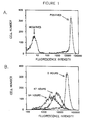
- DiO-Cl4-(3) bound cells were placed into the incubator in complete culture media (DMEM High Glucose + 20% FBS) and analyzed daily using flow cytometric techniques. The instrument was aligned daily and intensity settings reproduced using fluorescent microbead standards. From each fluorescence profile the mean fluorescence intensity and standard deviation were determined. A decrease in the fluorescence intensity is observed as a result of these determinations ( Figure 1B).
- NK-cell lymphocyte
- Another cell function which is important in certain applications of the invention is the ability of a lymphocyte (NK-cell) to recognize, bind to and kill a target tumor cell.
- NK-cell lymphocyte
- the standard assay for cell mediated cytotoxicity (Brunner, K. T., Mauel, J., Cerottini, J. C., Chapuis, B., Immunol. , 14 , 181, 1968) is to label the target cells with 51 Cr and wash the cells free of all unbound 51 Cr.
- the effector cells are placed in contact with the target cells at varying ratios and when the target cells are killed by the effector cells, the 51 Cr is released from the cell into the medium.
- the level of cytotoxic kill is correlated to the amount of 51 Cr released into the medium, as determined by a gamma counter.
- the Cr 51 release is measured for unlabeled cells, labeled effector cells and labeled target cells.
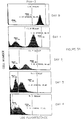
- the results of such measurements using DiOCl4(3) labeled and unlabeled Yac-1 targets is shown in Figures 3 and 4.
- Values for effector/target ratios of 50:1, 25:1, 12:1 and 6:1 of both Poly/I:C and saline treated effectors to unstained Yac-1 targets are represented on the x-axis.
- Values of % kill for the same ratios of Poly I:C and saline treated effectors to stained Yac-1 targets are represented on the y-axis.
- Ninety-five percent confidence intervals are represented by the dashed lines.
- chromium release (% cytotoxicity) is the same whether the targets are stained with DiOCl4(3) or unstained.
- Values for % kill by Cr(51) release calculated for DiO-Cl4-(3) labeled Yac-1 targets and non-labeled Poly I:C treated NK-preps are represented on the x-axis.
- the percent kill by chromium release given on the y-axis represent values obtained using non-stained Yac-1 targets and DiO-Cl4-(3) stained Poly I:C treated NK-preps. Samples were taken at times of 1, 2, 3 and 4 hours for both sample sets. E/T ratios used were 50, 25, 12, 6, 3, and 1.5 to 1.
- Figure 4 shows that the chromium release (% cytotoxicity) is the same whether the target cells or the effector cells are stained.
- the above described cell mediated cytotoxicity assay demonstrates that the cell labeling does not affect the ability of the effector cell to find, bind or kill the target cell. It is possible that some other function not tested may be affected, but since the functions of interest were unaffected, it may be concluded that there were no appreciable adverse effects on the function of cell mediated cytotoxicity.
- the membrane retention coefficient provides information regarding how well a given compound is retained in the plasma membrane of a carrier cell and is determined as described below.
- red blood cell ghosts for use as a model membrane is achieved by centrifuging whole blood at 300 x g for 15 minutes, removal of the plasma and resuspension of the cell pellet in 0.83% (weight to volume) ammonium chloride.
- the ghosts are pelleted from the ammonium chloride by centrifuging at 10,000 x g for 10 minutes. This ammonium chloride washing procedure is repeated a minimum of five times to insure that complete release of hemoglobin from the cells has occured.
- the ghosts are labeled with the compound in question at a concentration allowing for detection of the labeled ghosts by instrumental analysis or fluorescent microscopic methods, and at a concentration which would be used to label cells for a specific application as described above.
- the supernatant is aspirated and the red cell ghost pellet is resuspended in 1.0 ml of the PBS-FBS, which is once again sampled as described above. This procedure is repeated at least six times, allowing for detection of rapidly released compounds and is monitored after times equal or greater than 24 hours to allow for the detection of more slowly released compounds.
- the 20 ul aliquots are extracted into 3.0 ml of n-butanol by shaking. The samples are centrifuged at 3000 x g to remove membrane debris and the butanol fractions are assayed for compound concentration.
- Fluorescent compounds are assayed in this manner using peak excitation and emission wavelengths for the particular compounds being assayed to determine the fluorescence units for each sample. Radiolabeled compounds do not require butanol extraction and could be assayed directly using beta or gamma counting instrumentation.
- the determination of the amount of compound present in each sample as described above allows for the calculation of the MRC for each washing or fixed time point.
- the value is obtained by the following formula: ((C T - C S )/ C T ) *100 where C T represents the amount of compound present (in units determined by the method used to assay the compound) in the total sample and C S represents the amount of compound present in the supernatant sample for that particular time point.
- the comparison of the MRC values defines criteria for identification of the compounds of this invention, these criteria being: 1) the MRC values determined for each washing steps should have a value of at least about 90 and 2) the percent difference between MRC values over at least a 24 hour time period should be less than about 10%.
- tissue culture cells in this example Yac-1 cells, at a concentration of approximately 1 x 10 7 /ml are labeled with 4 x 10 -6 M of the compound of choice in iso-osmotic sucrose solution for 10 minutes. Staining was terminated with an equal amount of FBS and the cells were washed three times and resuspended in complete tissue culture media. Equal numbers of labeled and non-labeled Yac-1 cells were placed into culture flasks at a density of 4 x 10 5 cells/ml in 20 ml of fluid.
- ICTA intercellular compound transfer analysis
- the cells were cultured for 4 days at 37°C in a 5% CO 2 atmosphere. An aliquot of each culture to be tested is removed daily for flow cytometric analysis. Percent labeled and fluorescence intensity was determined. The exciting and detection wavelengths for analysis are selected on the basis of the individual properties of the compound being tested.
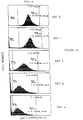
- a fluorescence histogram was generated for each of three test compounds and examples of such histograms are seen in Figure 5.
- each histogram contains two populations: the left most population represents the non-labeled cells which were added into the culture, and the right hand population represents the compound labeled cells of the culture. If the labeled and non-labeled cells are placed in culture at a 1:1 ratio the percentage of cells represented in either of the peaks should be approximately 50%. It is important to monitor three attributes of the histograms over time: 1) the mean intensity of the positive or labeled population, 2) the mean autofluorescence intensity of the non-labeled population and 3) the percentage of positive or labeled cells in the culture.
- FIG. 5B shows that the fluorescent intensity of non-labeled cells (left peak) is significantly increased over Day 0, indicating that 3,n-propyl-3'n-tetradecyloxcarbocyanine iodide (PKH/CMPD-1) leaks out of labeled cells. This is further evidence by a single peak on Day 2.
- PSH/CMPD-1 3,n-propyl-3'n-tetradecyloxcarbocyanine iodide
- Fluorescent compounds usable in this invention have the following characteristics: 1) the percentage of cells in the labeled population over time does not significantly differ from tile value obtained at time zero, 2) the mean intensity of the non-labeled population does not significantly increase over time, and 3) the mean intensity of the labeled population decreases in a manner which correlates with the growth characteristics of the cells. 3-n-propyl-3'-n-docosanyloxacarbocyanine iodide satisfies these criteria, as is evidenced by the histogram of Figure 5C. Particularly noteworthy in Figure 5C is the total separation of stained and unstained cell peaks for the five days of the experiment. Furthermore, the percent stained did not change appreciably. From Table 1 above, a percent change in MRC of 1.46% is reported for this compound indicating very stable binding to the plasma membrane. Additionally, the fluorescence intensity of labeled cells decreased daily as the cells divide.
- the 3-n-pentyl-3'-n-octadecyloxacarbocyanine iodide was prepared following essentially the same procedure used in Example 4a, with the following amounts of reagents; 2-( ⁇ -Acetonilido)vinyl-1-benzoxazolium n-pentyl iodide (0.476 g, 1 mmol), 3-n-octadecyl-2-methylbenzoxazolium-4-chlorobenzene sulphonate (0.578 g, 1 mmol), triethylamine (0.40 ml) and ethanol (15 ml).
- the 3-n-propyl-3'-n-docosanyloxacarbocyanine iodide was prepared following essentially the same procedure used in Example 4a, with the following amounts of reagents; 2-( -Acetonilido)vinyl-1-benzoxazolium-n-propyl iodide (0.45 g, 1 mmol), 3-n-docosanyl-2-methylbenzoxazolium 4-chlorobenzene-sulphonate (0.633 g, 1 mmol), triethylamine (0.40 ml) and ethanol (15 ml).
- a solution of acridine orange (free base, 75% dye content) (71 mgs, 0.200 mmol) and n-hexacosanyl-4-chlorobenzenesulphonate (110 mgs, 0.200 mmol) in xylene (5 ml) is heated at reflux (oil bath temp 150°C) for 24 h.
- the mixture is allowed to cool to room temperature and the xylene removed under high vacuum overnight.
- the solid residue is taken up in ethanol (10 ml) and saturated potassium iodide solution (10 ml) followed by water (10 ml) is added.
- the resulting solution is extracted with methylene chloride and the extract dried over magnesium sulphate, filtered and concentrated to give a crude product.
- the present invention may be used to advantage in the study of viruses.
- viruses Currently, it is extremely difficult to track viruses within model systems to determine the location in vivo where viral replication or pooling takes place.
- reporter molecules into the lipids of membrane viruses, using both the fluorescent and radio-imaging procedures outlined hereinbelow.
- the virus HIV-I AIDS
- viruses could be labeled with the Indium or Iodine (gamma-emitting) forms of the compounds of this invention and washed free of unbound radio-active compounds.
- the labeled virus would then be injected and the animal imaged using a gamma camera.
- the viruses were also labeled with a fluorescent form of the compounds of this invention, then the gamma imaging could be used to identify which organ is the reservoir for the virus and the organ could be removed, disaggregated into single cell suspension and the cells containing the viruses could be identified on the basis of the fluorescence using flow cytometry or quantitative microscopy.
- This invention is, therefore, not limited to the embodiments specifically described and exemplified, but is capable of variation and modification without department from the scope of the appended claims.
Landscapes
- Health & Medical Sciences (AREA)
- Chemical & Material Sciences (AREA)
- Life Sciences & Earth Sciences (AREA)
- General Health & Medical Sciences (AREA)
- Organic Chemistry (AREA)
- Animal Behavior & Ethology (AREA)
- Public Health (AREA)
- Veterinary Medicine (AREA)
- Epidemiology (AREA)
- Medicinal Chemistry (AREA)
- Engineering & Computer Science (AREA)
- Pharmacology & Pharmacy (AREA)
- Nuclear Medicine, Radiotherapy & Molecular Imaging (AREA)
- Biomedical Technology (AREA)
- Radiology & Medical Imaging (AREA)
- Hematology (AREA)
- Physics & Mathematics (AREA)
- Optics & Photonics (AREA)
- Chemical Kinetics & Catalysis (AREA)
- Virology (AREA)
- Bioinformatics & Cheminformatics (AREA)
- Molecular Biology (AREA)
- Biochemistry (AREA)
- General Chemical & Material Sciences (AREA)
- Proteomics, Peptides & Aminoacids (AREA)
- Materials Engineering (AREA)
- Polymers & Plastics (AREA)
- Cell Biology (AREA)
- Dispersion Chemistry (AREA)
- Oncology (AREA)
- Communicable Diseases (AREA)
- Medicines Containing Antibodies Or Antigens For Use As Internal Diagnostic Agents (AREA)
- Materials For Medical Uses (AREA)
- Medicines That Contain Protein Lipid Enzymes And Other Medicines (AREA)
- Treatments Of Macromolecular Shaped Articles (AREA)
- Adhesives Or Adhesive Processes (AREA)
- Pharmaceuticals Containing Other Organic And Inorganic Compounds (AREA)
- Indole Compounds (AREA)
- Organic Low-Molecular-Weight Compounds And Preparation Thereof (AREA)
- Peptides Or Proteins (AREA)
Claims (9)
- Zusammensetzung zum Binden eines Diagnostikums an die Oberflächenmembran eines lebens- und, zur Ausübung einer physiologischen Funktion fähigen Bioteilchens, dadurch gekennzeichnet, daß diese Zusammensetzung folgendes umfaßt: eine Verbindung der Formel R-B-R1, in welcher B dieses Diagnostikum darstellt und R und R1 unterschiedlich sind und Substituenten darstellen, die unabhängig voneinander aus der Gruppe Wasserstoff, Alkyl, Alkenyl, Alkinyl, Alkaryl oder Aralkyl mit jeweils geradkettigen oder verzweigten Kohlenwasserstoffketten ausgewählt sind, wobei diese Substituenten gegebenenfalls durch eine oder mehrere nichtpolare funktionelle Gruppen substituiert sind, wobei einer der Substituenten R und R1 mindestens 12 geradkettige Kohlenstoffatome hat und wobei die Summe der geradkettigen Kohlenstoffatome in R und R1 zumindest 23 beträgt, sowie ein verträgliches Bindungsmedium, in dem diese Verbindung gelöst ist, wobei dieses Medium mit dem Bioteilchen, an das die Verbindung gebunden werden soll, iso-osmotisch ist.
- Zusammensetzung nach Anspruch 1, dadurch gekennzeichnet, daß das Medium über iso-osmotische Eigenschaften zwischen 260 mOs und 340 mOs verfügt und mit dem Bioteilchen, an das die Verbindung gebunden werden soll, isotonisch ist.
- Zusammensetzung nach Anspruch 1 oder 2, dadurch gekennzeichnet, daß das Medium aus der Gruppe bestehend aus einem Zucker, einem Zuckeralkohol, einer Aminosäure, einem Puffer nach Good oder einer Kombination daraus ausgewählt ist.
- Zusammensetzung nach einem der Ansprüche 1 bis 3, dadurch gekennzeichnet, daß das Diagnostikum ein Radioisotop umfaßt.
- Zusammensetzung nach Anspruch 4, dadurch gekennzeichnet, daß der Radioisotop-Bestandteil des Diagnostikums aus der Gruppe radioaktiver Wasserstoff, radioaktiver Kohlenstoff, radioaktiver Stickstoff, radioaktiver Phosphor, radioaktives Fluor, radioaktives Chlor, radioaktives Jod, radioaktiver Schwefel und radioaktives Selen ausgewählt ist.
- Zusammensetzung nach einem der Ansprüche 1 bis 5, dadurch gekennzeichnet, daß der Substituent R oder R1 ein Radioisotop umfaßt.
- Zusammensetzung nach Anspruch 6, dadurch gekennzeichnet, daß der Radioisotop aus der Gruppe radioaktiver Wasserstoff, radioaktiver Kohlenstoff, radioaktiver Stickstoff, radioaktiver Phosphor, radioaktives Fluor, radioaktives Chlor, radioaktives Jod, radioaktiver Schwefel und radioaktives Seien ausgewählt ist.
- Zusammensetzung nach Anspruch 1, dadurch gekennzeichnet, daß die Verbindung die Formel
 aufweist, in welcher R und R1 verschieden sind und Substituenten darstellen, die unabhängig voneinander aus der Gruppe Wasserstoff, Alkyl, Alkenyl, Alkinyl, Alkaryl oder Aralkyl ausgewählt sind, wobei deren Kohlenwasserstoffketten 1 bis 30 Kohlenstoffatome aufweisen und geradkettig oder verzweigt sind, wobei die Substituenten gegebenenfalls durch eine oder mehrere nichtpolare funktionelle Gruppen substituiert sind, wobei einer der Substituenten R oder R1 mindestens 12 geradkettige Kohlenstoffatome aufweist, und wobei die Summe der geradkettigen Kohlenstoffatome in R und R1 mindestens 23 beträgt;X und X1 gleich oder verschieden sein können und O, S, C(CH3)2 oder Se darstellen;Y ein aus der Gruppe -CH=, -CH=CH-CH=, -CH=CH-CH=CH-CH= oder -CH=CH-CH=CH-CH=CH-CH= ausgewähltes Brückenglied darstellt;Z einen aus der Gruppe H, Alkyl, OH, NH2, COOH, CONH2, SO3H, SO2NH2, CONH-Alkyl, CON-(Alkyl)2, NH-Acyl, -O-Alkyl, NH-Alkyl oder N(Alkyl)2, SH, S-Alkyl, NO2 oder Halogen ausgewählten Substituenten darstellt, wobei die Alkylgruppen diese Z-Substituenten mit 1 bis 3 Kohlenstoffatomen umfassen;und A ein biologisch kompatibles Anion darstellt.
 - Zusammensetzung nach Anspruch 1, dadurch gekennzeichnet, daß die Verbindung die Formel
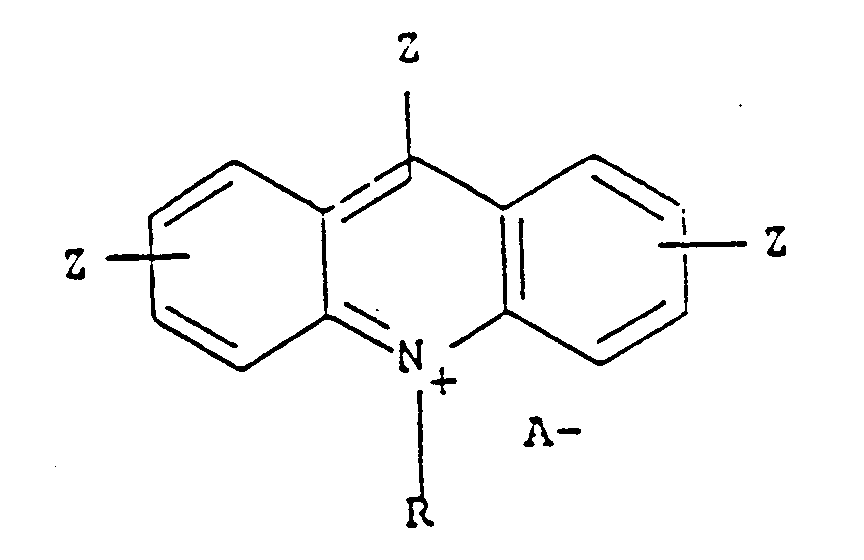 aufweist, in welcher R einen aus der Gruppe Alkyl, Alkenyl, Alkinyl, Alkaryl oder Aralkyl mit einer jeweils geradkettigen oder verzweigten Kohlenwasserstoffkette ausgewählten Substituenten darstellt, wobei dieser Substituent gegebenenfalls durch eine oder mehrere nichtpolare funktionelle Gruppen substituiert ist und mindestens 23 geradkettige Kohlenstoffatome aufweist;Z einen aus der Gruppe H, Alkyl, OH, NH2, COOH, CONH2, SO3H, SO2NH2, CONH-Alkyl, CON-(Alkyl)2, NH-Acyl, -O-Alkyl, NH-Alkyl oder N(Alkyl)2, SH, S-Alkyl, NO2 oder Halogen ausgewählten Substituenten darstellt, wobei die Alkylgruppen diese Z-Substituenten mit 1 bis 3 Kohlenstoffatomen umfassen; undA ein biologisch kompatibles Anion darstellt.
Applications Claiming Priority (3)
| Application Number | Priority Date | Filing Date | Title |
|---|---|---|---|
| US18919288A | 1988-05-02 | 1988-05-02 | |
| US189192 | 1988-05-02 | ||
| PCT/US1989/000087 WO1989010758A1 (en) | 1988-05-02 | 1989-01-10 | Compounds, compositions and method for binding bio-affecting substances to surface membranes of bio-particles |
Publications (3)
| Publication Number | Publication Date |
|---|---|
| EP0430968A1 EP0430968A1 (de) | 1991-06-12 |
| EP0430968A4 EP0430968A4 (en) | 1993-10-20 |
| EP0430968B1 true EP0430968B1 (de) | 1996-11-20 |
Family
ID=22696320
Family Applications (1)
| Application Number | Title | Priority Date | Filing Date |
|---|---|---|---|
| EP89908564A Expired - Lifetime EP0430968B1 (de) | 1988-05-02 | 1989-01-10 | Verbindungen, zusammensetzungen und verfahren zum binden von bio-affektions-substanzen an oberflächenmembranen von bioteilchen |
Country Status (9)
| Country | Link |
|---|---|
| US (2) | US5667764A (de) |
| EP (1) | EP0430968B1 (de) |
| JP (1) | JP3038339B2 (de) |
| AT (1) | ATE145337T1 (de) |
| AU (1) | AU641361B2 (de) |
| CA (1) | CA1336272C (de) |
| DE (1) | DE68927479T2 (de) |
| IL (1) | IL90030A (de) |
| WO (1) | WO1989010758A1 (de) |
Families Citing this family (100)
| Publication number | Priority date | Publication date | Assignee | Title |
|---|---|---|---|---|
| ATE145337T1 (de) * | 1988-05-02 | 1996-12-15 | Phanos Tech Inc | Verbindungen, zusammensetzungen und verfahren zum binden von bio-affektions-substanzen an oberflächenmembranen von bioteilchen |
| US5562894A (en) * | 1991-08-09 | 1996-10-08 | Regents Of The University Of California | Amino-acyl-type and catecholamine-type contrast agents for MRI |
| US6515009B1 (en) | 1991-09-27 | 2003-02-04 | Neorx Corporation | Therapeutic inhibitor of vascular smooth muscle cells |
| US5811447A (en) | 1993-01-28 | 1998-09-22 | Neorx Corporation | Therapeutic inhibitor of vascular smooth muscle cells |
| EP0643706A1 (de) * | 1991-11-27 | 1995-03-22 | Zynaxis Inc. | Verbindungen, zusammensetzungen und methoden um biologisch aktive substanzen anoberfl chenmembrane von biopartikeln zu binden |
| US7166423B1 (en) | 1992-10-21 | 2007-01-23 | Miltenyi Biotec Gmbh | Direct selection of cells by secretion product |
| CA2472404A1 (en) * | 1993-07-19 | 1995-02-02 | Angiotech Pharmaceuticals, Inc. | Combination of stent and anti-angiogenic factor |
| US20030203976A1 (en) | 1993-07-19 | 2003-10-30 | William L. Hunter | Anti-angiogenic compositions and methods of use |
| EP1118325B2 (de) * | 1993-07-29 | 2010-01-06 | The United States of America, represented by the Secretary, Department of Health and Human Services | Verwendung von Paclitaxel und seinen Derivaten zur Herstellung eines Medikaments für die Behandlung von Restenose |
| US5480901A (en) * | 1994-10-07 | 1996-01-02 | Zynaxis, Inc. | Method for reducing unwanted cellular adhesions |
| DE4445065A1 (de) * | 1994-12-07 | 1996-06-13 | Diagnostikforschung Inst | Verfahren zur In-vivo-Diagnostik mittels NIR-Strahlung |
| JPH10510540A (ja) | 1994-12-12 | 1998-10-13 | オメロス メディカル システムズ,インコーポレーテッド | 灌注用溶液並びに疼痛、炎症及びけいれんの抑制法 |
| US20040127884A1 (en) * | 1994-12-12 | 2004-07-01 | Omeros Corporation | Vascular irrigation solution and method for inhibition of pain, inflammation, spasm and restenosis |
| US6492332B1 (en) | 1995-12-12 | 2002-12-10 | Omeros Corporation | Irrigation solution and methods for inhibition of tumor cell adhesion, pain and inflammation |
| US6774278B1 (en) * | 1995-06-07 | 2004-08-10 | Cook Incorporated | Coated implantable medical device |
| US7611533B2 (en) | 1995-06-07 | 2009-11-03 | Cook Incorporated | Coated implantable medical device |
| US7550005B2 (en) | 1995-06-07 | 2009-06-23 | Cook Incorporated | Coated implantable medical device |
| US7846202B2 (en) * | 1995-06-07 | 2010-12-07 | Cook Incorporated | Coated implantable medical device |
| US7896914B2 (en) | 1995-06-07 | 2011-03-01 | Cook Incorporated | Coated implantable medical device |
| US7867275B2 (en) | 1995-06-07 | 2011-01-11 | Cook Incorporated | Coated implantable medical device method |
| DE19539409C2 (de) * | 1995-10-11 | 1999-02-18 | Diagnostikforschung Inst | Kontrastmittel für die Nahinfrarot-Diagnostik |
| US5804389A (en) * | 1995-12-29 | 1998-09-08 | Phanos Technologies, Inc. | Method for detecting abnormal epithelial cell shedding |
| EP0881227A1 (de) * | 1996-10-22 | 1998-12-02 | Daikin Industries, Limited | Ganglioside mit fluoreszierend markierten ceramidanteilen |
| US6117099A (en) | 1996-10-23 | 2000-09-12 | In-Line Diagnostics Corporation | System and method for noninvasive hemodynamic measurements in hemodialysis shunts |
| US20030157187A1 (en) * | 1996-12-02 | 2003-08-21 | Angiotech Pharmaceuticals, Inc. | Compositions and methods for treating or preventing inflammatory diseases |
| US6515016B2 (en) | 1996-12-02 | 2003-02-04 | Angiotech Pharmaceuticals, Inc. | Composition and methods of paclitaxel for treating psoriasis |
| US6495579B1 (en) | 1996-12-02 | 2002-12-17 | Angiotech Pharmaceuticals, Inc. | Method for treating multiple sclerosis |
| GB9705521D0 (en) | 1997-03-18 | 1997-05-07 | Univ Sheffield | The use of mononuclear phagocytes in the vivo imaging of hypoxic/ischaemic tissue |
| US6273913B1 (en) | 1997-04-18 | 2001-08-14 | Cordis Corporation | Modified stent useful for delivery of drugs along stent strut |
| AU7563798A (en) * | 1997-04-30 | 1998-11-24 | Emory University | Methods and compositions for administering dna to mucosal surfaces |
| US20030220234A1 (en) | 1998-11-02 | 2003-11-27 | Selvaraj Naicker | Deuterated cyclosporine analogs and their use as immunodulating agents |
| US8974363B2 (en) * | 1997-12-11 | 2015-03-10 | Provectus Pharmatech, Inc. | Topical medicaments and methods for photodynamic treatment of disease |
| US6221425B1 (en) | 1998-01-30 | 2001-04-24 | Advanced Cardiovascular Systems, Inc. | Lubricious hydrophilic coating for an intracorporeal medical device |
| US7208010B2 (en) | 2000-10-16 | 2007-04-24 | Conor Medsystems, Inc. | Expandable medical device for delivery of beneficial agent |
| US7208011B2 (en) | 2001-08-20 | 2007-04-24 | Conor Medsystems, Inc. | Implantable medical device with drug filled holes |
| US6241762B1 (en) | 1998-03-30 | 2001-06-05 | Conor Medsystems, Inc. | Expandable medical device with ductile hinges |
| US20090117199A1 (en) * | 1998-08-06 | 2009-05-07 | Scott Timothy C | Method of treatment of cancer |
| US8557298B2 (en) | 1998-08-06 | 2013-10-15 | Provectus Pharmatech, Inc. | Medicaments for chemotherapeutic treatment of disease |
| TW570805B (en) * | 1998-09-01 | 2004-01-11 | Hoffmann La Roche | Water-soluble pharmaceutical composition in an ionic complex |
| US7067144B2 (en) * | 1998-10-20 | 2006-06-27 | Omeros Corporation | Compositions and methods for systemic inhibition of cartilage degradation |
| AU1932900A (en) | 1998-12-04 | 2000-06-26 | Medivas, Llc | Methods for detection of vulnerable plaques using a detectable lipid-avid agent |
| US20050171594A1 (en) * | 1998-12-31 | 2005-08-04 | Angiotech International Ag | Stent grafts with bioactive coatings |
| US20020065546A1 (en) * | 1998-12-31 | 2002-05-30 | Machan Lindsay S. | Stent grafts with bioactive coatings |
| US6695830B2 (en) * | 1999-01-15 | 2004-02-24 | Scimed Life Systems, Inc. | Method for delivering medication into an arterial wall for prevention of restenosis |
| US6333347B1 (en) | 1999-01-29 | 2001-12-25 | Angiotech Pharmaceuticals & Advanced Research Tech | Intrapericardial delivery of anti-microtubule agents |
| DE19905094C1 (de) * | 1999-02-01 | 2000-10-12 | Schering Ag | Gadolinium (III)-Komplexe sowie ihre Verwendung für Zweischritt Strahlentherapieformen und diese enthaltende pharmazeutische Mittel |
| US6290673B1 (en) | 1999-05-20 | 2001-09-18 | Conor Medsystems, Inc. | Expandable medical device delivery system and method |
| CA2273609A1 (en) * | 1999-06-04 | 2000-12-04 | Resolution Pharmaceuticals Inc. | Radiopharmaceuticals and methods for imaging |
| AU775373B2 (en) | 1999-10-01 | 2004-07-29 | Immunogen, Inc. | Compositions and methods for treating cancer using immunoconjugates and chemotherapeutic agents |
| US7897140B2 (en) | 1999-12-23 | 2011-03-01 | Health Research, Inc. | Multi DTPA conjugated tetrapyrollic compounds for phototherapeutic contrast agents |
| US7166719B2 (en) | 2002-06-27 | 2007-01-23 | Health Research, Inc. | Fluorinated photosensitizers related to chlorins and bacteriochlorins for photodynamic therapy |
| AU2001245424B2 (en) | 2000-03-03 | 2005-08-18 | Phanos Technologies, Inc. | Fluorescent membrane intercalating probes and methods for their use |
| IT1318401B1 (it) * | 2000-03-17 | 2003-08-25 | Indena Spa | Derivati di n-desacetiltiocolchicina e composizioni farmaceutiche cheli contengono. |
| US8236048B2 (en) | 2000-05-12 | 2012-08-07 | Cordis Corporation | Drug/drug delivery systems for the prevention and treatment of vascular disease |
| US7300662B2 (en) | 2000-05-12 | 2007-11-27 | Cordis Corporation | Drug/drug delivery systems for the prevention and treatment of vascular disease |
| CA2424029C (en) | 2000-09-29 | 2008-01-29 | Cordis Corporation | Coated medical devices |
| DE60133053T2 (de) | 2000-10-16 | 2009-02-26 | Conor Medsystems, Inc., Menlo Park | Ausdehnbare medizinische Vorrichtung zur Abgabe eines nützlichen Agens |
| US6764507B2 (en) | 2000-10-16 | 2004-07-20 | Conor Medsystems, Inc. | Expandable medical device with improved spatial distribution |
| US6964680B2 (en) | 2001-02-05 | 2005-11-15 | Conor Medsystems, Inc. | Expandable medical device with tapered hinge |
| US20040073294A1 (en) | 2002-09-20 | 2004-04-15 | Conor Medsystems, Inc. | Method and apparatus for loading a beneficial agent into an expandable medical device |
| WO2002080885A1 (en) * | 2001-04-03 | 2002-10-17 | University Of Florida | Detoxification and decontamination using nanotechnology therapy |
| US6977171B1 (en) | 2001-04-03 | 2005-12-20 | University Of Florida | Detoxification and decontamination using nanotechnology therapy |
| US6613083B2 (en) | 2001-05-02 | 2003-09-02 | Eckhard Alt | Stent device and method |
| US9157875B2 (en) * | 2001-05-16 | 2015-10-13 | Benjamin P. Warner | Drug development and manufacturing |
| US20030031627A1 (en) * | 2001-07-31 | 2003-02-13 | Mallinckrodt Inc. | Internal image antibodies for optical imaging and therapy |
| US7056338B2 (en) | 2003-03-28 | 2006-06-06 | Conor Medsystems, Inc. | Therapeutic agent delivery device with controlled therapeutic agent release rates |
| US7842083B2 (en) | 2001-08-20 | 2010-11-30 | Innovational Holdings, Llc. | Expandable medical device with improved spatial distribution |
| US6761878B2 (en) * | 2001-10-17 | 2004-07-13 | Mallinckrodt, Inc. | Pathological tissue detection and treatment employing targeted benzoindole optical agents |
| US20030105300A1 (en) * | 2001-10-17 | 2003-06-05 | Mallinckrodt Inc. | Tumor targeted photodiagnostic-phototherapeutic agents |
| MXPA04003625A (es) | 2001-10-19 | 2004-12-02 | Sotechnika Inc | Sintesis de analogos de ciclosporina. |
| US6723851B2 (en) | 2001-10-31 | 2004-04-20 | Quest Diagnostics Investment Incorporated | Chemiluminescent compounds and use thereof |
| AU2003249742A1 (en) | 2002-07-02 | 2004-01-23 | Health Research, Inc. | Efficient synthesis of pyropheophorbide a and its derivatives |
| DK1521603T3 (da) | 2002-07-12 | 2011-04-18 | Cook Inc | Coated medicinsk anordning |
| US20060134001A1 (en) * | 2002-07-12 | 2006-06-22 | Frangioni John V | Conjugated infrared fluorescent substances for detection of cell death |
| GB0217556D0 (en) * | 2002-07-30 | 2002-09-11 | Amersham Biosciences Uk Ltd | Site-specific labelling of proteins using cyanine dye reporters |
| CA2505576A1 (en) * | 2002-11-08 | 2004-05-27 | Conor Medsystems, Inc. | Expandable medical device and method for treating chronic total occlusions with local delivery of an angiogenic factor |
| AU2003300022A1 (en) * | 2002-12-30 | 2004-07-29 | Angiotech International Ag | Silk-containing stent graft |
| EP1610823B1 (de) | 2003-03-28 | 2011-09-28 | Innovational Holdings, LLC | Implantierbares medizinprodukt mit kontinuierlichem mittel-konzentrationsgefälle |
| US7169179B2 (en) | 2003-06-05 | 2007-01-30 | Conor Medsystems, Inc. | Drug delivery device and method for bi-directional drug delivery |
| US7057100B2 (en) * | 2003-06-26 | 2006-06-06 | The J.C. Robinson Seed Co. | Inbred corn line W23129 |
| US7785653B2 (en) | 2003-09-22 | 2010-08-31 | Innovational Holdings Llc | Method and apparatus for loading a beneficial agent into an expandable medical device |
| US20050070602A1 (en) * | 2003-09-30 | 2005-03-31 | Jen-Wei Chiao | Method of modulating immune response by administration of immuno-activation agent |
| WO2005044142A2 (en) * | 2003-11-10 | 2005-05-19 | Angiotech International Ag | Intravascular devices and fibrosis-inducing agents |
| US20050208095A1 (en) * | 2003-11-20 | 2005-09-22 | Angiotech International Ag | Polymer compositions and methods for their use |
| US10858384B2 (en) | 2004-03-22 | 2020-12-08 | Kode Biotech Limited | Synthetic molecule constructs |
| USD516723S1 (en) | 2004-07-06 | 2006-03-07 | Conor Medsystems, Inc. | Stent wall structure |
| DE602005025911D1 (de) | 2004-11-22 | 2011-02-24 | Ge Healthcare As | Kontrastmittel für eine extrazelluläre matrix |
| AU2005234696B2 (en) * | 2005-11-18 | 2012-02-16 | Phanos Technologies, Inc. | Fluorescent membrane intercalating probes and methods for their use |
| US20100203637A1 (en) * | 2006-09-06 | 2010-08-12 | Elena Korchagina | Fluorescent cell markers |
| ES2530862T3 (es) | 2007-02-07 | 2015-03-06 | Cook Medical Technologies Llc | Revestimientos de dispositivos médicos para liberar un agente terapéutico a diferentes velocidades |
| WO2009152440A1 (en) * | 2008-06-13 | 2009-12-17 | Cedars-Sinai Medical Center | Small molecule ligand-drug conjugates for targeted cancer therapy |
| CN107252489A (zh) | 2009-04-13 | 2017-10-17 | 法国健康和医学研究院 | Hpv颗粒及其用途 |
| WO2013119877A1 (en) | 2012-02-07 | 2013-08-15 | Aura Biosciences, Inc. | Virion-derived nanospheres for selective delivery of therapeutic and diagnostic agents to cancer cells |
| EP3046583B1 (de) | 2013-09-18 | 2019-02-13 | Aura Biosciences, Inc. | Virusähnliche partikelkonjugate zur behandlung von tumoren |
| EP3259862B1 (de) * | 2015-02-20 | 2020-05-27 | Telefonaktiebolaget LM Ericsson (publ) | Steuerung von funkverbindungen in einem mobilfunknetz |
| US10099961B2 (en) | 2015-08-12 | 2018-10-16 | United States Gypsum Company | Fluorescent building product and related detection method |
| JP2018532801A (ja) | 2015-10-30 | 2018-11-08 | ザ ユナイテッド ステイツ オブ アメリカ, アズ リプレゼンテッド バイ ザ セクレタリー, デパートメント オブ ヘルス アンド ヒューマン サービシーズ | 標的化がん療法 |
| US12427208B2 (en) | 2016-04-01 | 2025-09-30 | University Of Cincinnati | Iodinated phenolic lipids and methods and cosolvent systems for iodination of phenolic lipids |
| IL269986B2 (en) | 2017-04-12 | 2024-06-01 | Aura Biosciences Inc | Targeted combination therapy |
| US10859505B2 (en) * | 2018-01-26 | 2020-12-08 | Gemological Institute Of America, Inc. (Gia) | Fluorescence box for gemological applications |
Citations (7)
| Publication number | Priority date | Publication date | Assignee | Title |
|---|---|---|---|---|
| US4622420A (en) * | 1980-03-18 | 1986-11-11 | The Regents Of The University Of California | Chelating agents and method |
| FR2601000A1 (fr) * | 1986-07-03 | 1988-01-08 | Centre Nat Rech Scient | Procede de radio-iodation de gangliosides par voie enzymatique |
| EP0263059A2 (de) * | 1986-09-26 | 1988-04-06 | Schering Aktiengesellschaft | Amid-Komplexe |
| EP0327365A2 (de) * | 1988-02-03 | 1989-08-09 | Hybritech Incorporated | Modifizierte Haptene, nützlich als bildformendes Agens und als Arzneimittel |
| WO1989011877A2 (en) * | 1988-06-10 | 1989-12-14 | Neorx Corporation | Conjugates for bone imaging and bone cancer therapy |
| WO1990002334A1 (en) * | 1988-08-31 | 1990-03-08 | Zynaxis Technologies, Inc. | Reagents and methods for determination of analytes |
| EP0365412A1 (de) * | 1988-10-14 | 1990-04-25 | Guerbet S.A. | Zyklische, Stickstoff enthaltende Liganden, ihre Metallkomplexe, diese enthaltende Diagnostik-Mittel und Verfahren zur Herstellung der Liganden |
Family Cites Families (59)
| Publication number | Priority date | Publication date | Assignee | Title |
|---|---|---|---|---|
| US925445A (en) * | 1907-10-25 | 1909-06-22 | Alfred James Bartlett | Boomerang. |
| US925429A (en) * | 1908-03-13 | 1909-06-15 | Chadeloid Chemical Co | Finish-remover and process of making the same. |
| US2647054A (en) * | 1951-02-21 | 1953-07-28 | Du Pont | Photographic emulsions containing sensitizing dyes |
| GB723316A (en) * | 1951-06-11 | 1955-02-09 | Frederick Charles Bersworth | Substituted alkylene polyamine acetic acid compounds |
| FR1477402A (fr) * | 1959-06-30 | 1967-04-21 | Commercial Solvents Corp | Amines et leur procédé de préparation |
| US3228904A (en) * | 1962-05-03 | 1966-01-11 | Goodrich Co B F | Stabilization of synthetic polymers |
| US3352791A (en) * | 1965-01-22 | 1967-11-14 | American Cyanamid Co | Generation of light by the reaction of peroxide with heterocyclic derivatives |
| DE1251764B (de) * | 1965-08-18 | 1967-10-12 | C H Boehnnger Sohn Ingelheim/ Rhein | Verfahren zur Herstellung von antimikrobiell wirksamen 12 3,4-Tetra hydro 9 -ammo acridmiumverbmdungen |
| JPS565981B1 (de) * | 1969-03-07 | 1981-02-07 | ||
| JPS4931895B1 (de) * | 1969-05-17 | 1974-08-26 | ||
| US3673410A (en) * | 1969-06-25 | 1972-06-27 | John H Waite | Method of examination of cell samples using a radioactively tagged dye |
| BE754191R (fr) * | 1969-07-30 | 1971-02-01 | American Cyanamid Co | Procede de preparation d'isocyanates |
| US3916069A (en) * | 1973-04-02 | 1975-10-28 | Minnesota Mining & Mfg | Reduced styryl/cyanine dye |
| US4110116A (en) * | 1973-06-18 | 1978-08-29 | Minnesota Mining And Manufacturing Company | Fogged direct positive silver halide emulsion containing a cyanine dye having at least one benzoxazole or benzothiazole nucleus substituted with halogen atoms |
| US4074046A (en) * | 1974-01-21 | 1978-02-14 | American Cyanamid Company | Process for azoles (ring closure of nitro compounds) |
| GB1523965A (en) * | 1976-03-19 | 1978-09-06 | Ici Ltd | Pharmaceutical compositions containing steroids |
| US4343782A (en) * | 1978-04-20 | 1982-08-10 | Shapiro Howard M | Cytological assay procedure |
| US4232000A (en) * | 1978-06-28 | 1980-11-04 | The Procter & Gamble Company | Radioactive scanning agents with stabilizer |
| US4232121A (en) * | 1978-09-25 | 1980-11-04 | Eastman Kodak Company | Process for selecting methine dyes which inhibit cell growth |
| DE2962152D1 (en) * | 1978-10-18 | 1982-03-25 | Ciba Geigy Ag | Substituted 1,11-diamino undecanes, processes for their preparation and their use |
| US4424201A (en) * | 1978-11-28 | 1984-01-03 | Rockefeller University | Employment of a mereyanine dye for the detection of malignant leukocytic cells |
| US4352751A (en) * | 1979-09-10 | 1982-10-05 | Analytical Radiation Corporation | Species-linked diamine triacetic acids and their chelates |
| US4400370A (en) * | 1980-03-12 | 1983-08-23 | Lawrence Kass | Metachromatic dye sorption means for differential determination of leukocytes |
| EP0047470B1 (de) * | 1980-09-02 | 1985-04-24 | Fuji Photo Film Co., Ltd. | Verfahren zur immunochemischen Bestimmung |
| DE3105778A1 (de) * | 1981-02-17 | 1982-09-02 | Bayer Ag, 5090 Leverkusen | Verfahren zur herstellung von trimethinfarbstoffen |
| US4500509A (en) * | 1981-03-11 | 1985-02-19 | Lawrence Kass | Metachromatic dye sorption and fluorescent light emmisive means for differential determination of developmental stages of neutrophilic granulocytic cells and other leukocytes |
| DE3129906C3 (de) * | 1981-07-24 | 1996-12-19 | Schering Ag | Paramagnetische Komplexsalze, deren Herstellung und Mittel zur Verwendung bei der NMR-Diagnostik |
| US4471113A (en) * | 1982-02-03 | 1984-09-11 | The United States Of America As Represented By The Department Of Energy | Prodrugs based on phospholipid-nucleoside conjugates |
| US4867973A (en) * | 1984-08-31 | 1989-09-19 | Cytogen Corporation | Antibody-therapeutic agent conjugates |
| US4649151A (en) * | 1982-09-27 | 1987-03-10 | Health Research, Inc. | Drugs comprising porphyrins |
| DE3238353A1 (de) * | 1982-10-15 | 1984-04-19 | Max Planck Gesellschaft zur Förderung der Wissenschaften e.V., 3400 Göttingen | Verfahren zur simultanen quantitativen bestimmung der blutzellen und reagenz hierfuer |
| US4555396A (en) * | 1982-12-22 | 1985-11-26 | Eastman Kodak Company | Use of pyrylium and thiapyrylium compounds as biological stains |
| US4501728A (en) * | 1983-01-06 | 1985-02-26 | Technology Unlimited, Inc. | Masking of liposomes from RES recognition |
| US4652519A (en) * | 1983-02-03 | 1987-03-24 | Yeda Research And Development Company Limited | Bifunctional chelating agents and process for their production |
| US4582700A (en) * | 1983-09-01 | 1986-04-15 | Mallinckrodt, Inc. | Products and processes |
| US4670545A (en) * | 1984-05-11 | 1987-06-02 | University Patents, Inc. | Chelating agents for technetium-99M |
| US4714606A (en) * | 1984-05-15 | 1987-12-22 | Cytocolor Incorporated | Method of staining and identifying cells and compositions thereof |
| US4748129A (en) * | 1984-08-28 | 1988-05-31 | Snytex (U.S.A.) Inc. | Assay method employing fluorescent cell incorporative dye |
| US4689292A (en) * | 1984-11-11 | 1987-08-25 | Konishiroku Photo Industry Co., Ltd. | Silver halide photographic radiography light-sensitive material |
| US4751219A (en) * | 1985-02-05 | 1988-06-14 | Nederlandse Centrale Organisatie Voor Toegepast-Natuur-Wetenschappelijk Onderzoek | Synthetic glycolipides, a process for the preparation thereof and several uses for these synthetic glycolipides |
| US5223263A (en) * | 1988-07-07 | 1993-06-29 | Vical, Inc. | Liponucleotide-containing liposomes |
| US4815447A (en) * | 1985-03-19 | 1989-03-28 | Mills Randell L | Mossbauer cancer therapy |
| DE3509822A1 (de) * | 1985-03-19 | 1986-09-25 | Bayer Ag, 5090 Leverkusen | Aminobernsteinsaeurederivate und ihre verwendung als emulgatoren fuer polymerdispersionen |
| US4762701A (en) * | 1986-10-31 | 1988-08-09 | Smithkline Beckman Corporation | In vivo cellular tracking |
| US4859584A (en) * | 1986-10-31 | 1989-08-22 | Smithkline Beckman Corporation | Cell growth rate determination by measurement of changes in cyanine dye levels in plasma membranes |
| US4783401A (en) * | 1986-10-31 | 1988-11-08 | Smithkline Beckman Corporation | Viable cell labelling |
| US4775625A (en) * | 1986-11-21 | 1988-10-04 | The Medical College Of Wisconsin, Inc. | Inactivating enveloped viruses with a merocyanine dye |
| US4906749A (en) * | 1987-06-30 | 1990-03-06 | Viomedics Inc. | Cyclic anhydride derivatives of chromophors |
| FI884721A7 (fi) * | 1987-10-15 | 1989-04-16 | Moskovsky Gosudarstvenny Univ | Fluorijohdannnaisten käyttö varjoaineina |
| EP0396626A1 (de) * | 1988-01-19 | 1990-11-14 | Board Of Regents, The University Of Texas System | Glycoside, sie enthaltende liposome und ihre verwendung |
| ATE145337T1 (de) * | 1988-05-02 | 1996-12-15 | Phanos Tech Inc | Verbindungen, zusammensetzungen und verfahren zum binden von bio-affektions-substanzen an oberflächenmembranen von bioteilchen |
| US4906750A (en) * | 1988-06-08 | 1990-03-06 | Eastman Kodak Company | Sulfoalkyl benzoxazoleinylidene butenylidene thiobarbituric acid derivatives |
| CA1341373C (en) * | 1988-06-24 | 2002-07-02 | Roberta C. Cheng | Macrocyclic bifunctional chelants, complexes thereof and their antibody conjugates |
| DE68924783T2 (de) * | 1988-09-30 | 1996-03-28 | Neorx Corp | Wässrige additivsysteme, verfahren und polymerteilchen. |
| US5194654A (en) * | 1989-11-22 | 1993-03-16 | Vical, Inc. | Lipid derivatives of phosphonoacids for liposomal incorporation and method of use |
| US5264618A (en) * | 1990-04-19 | 1993-11-23 | Vical, Inc. | Cationic lipids for intracellular delivery of biologically active molecules |
| WO1991017424A1 (en) * | 1990-05-03 | 1991-11-14 | Vical, Inc. | Intracellular delivery of biologically active substances by means of self-assembling lipid complexes |
| US5149794A (en) * | 1990-11-01 | 1992-09-22 | State Of Oregon | Covalent lipid-drug conjugates for drug targeting |
| FR2669633B1 (fr) * | 1990-11-23 | 1993-01-22 | Adir | Nouveaux derives de la benzoselenazolinone, leur procede de preparation et les compositions pharmaceutiques qui les contiennent. |
-
1989
- 1989-01-10 AT AT89908564T patent/ATE145337T1/de not_active IP Right Cessation
- 1989-01-10 EP EP89908564A patent/EP0430968B1/de not_active Expired - Lifetime
- 1989-01-10 DE DE68927479T patent/DE68927479T2/de not_active Expired - Lifetime
- 1989-01-10 JP JP01507960A patent/JP3038339B2/ja not_active Expired - Lifetime
- 1989-01-10 WO PCT/US1989/000087 patent/WO1989010758A1/en not_active Ceased
- 1989-01-10 AU AU39685/89A patent/AU641361B2/en not_active Ceased
- 1989-04-19 IL IL9003089A patent/IL90030A/en not_active IP Right Cessation
- 1989-04-27 CA CA000598007A patent/CA1336272C/en not_active Expired - Fee Related
-
1992
- 1992-05-15 US US07/884,432 patent/US5667764A/en not_active Expired - Lifetime
- 1992-12-01 US US07/984,269 patent/US5665328A/en not_active Expired - Lifetime
Patent Citations (7)
| Publication number | Priority date | Publication date | Assignee | Title |
|---|---|---|---|---|
| US4622420A (en) * | 1980-03-18 | 1986-11-11 | The Regents Of The University Of California | Chelating agents and method |
| FR2601000A1 (fr) * | 1986-07-03 | 1988-01-08 | Centre Nat Rech Scient | Procede de radio-iodation de gangliosides par voie enzymatique |
| EP0263059A2 (de) * | 1986-09-26 | 1988-04-06 | Schering Aktiengesellschaft | Amid-Komplexe |
| EP0327365A2 (de) * | 1988-02-03 | 1989-08-09 | Hybritech Incorporated | Modifizierte Haptene, nützlich als bildformendes Agens und als Arzneimittel |
| WO1989011877A2 (en) * | 1988-06-10 | 1989-12-14 | Neorx Corporation | Conjugates for bone imaging and bone cancer therapy |
| WO1990002334A1 (en) * | 1988-08-31 | 1990-03-08 | Zynaxis Technologies, Inc. | Reagents and methods for determination of analytes |
| EP0365412A1 (de) * | 1988-10-14 | 1990-04-25 | Guerbet S.A. | Zyklische, Stickstoff enthaltende Liganden, ihre Metallkomplexe, diese enthaltende Diagnostik-Mittel und Verfahren zur Herstellung der Liganden |
Non-Patent Citations (1)
| Title |
|---|
| JOURNAL OF CELL BIOLOGY, vol. 103, July 1986, New York, NY (US); M.G. HONIG et al., pp. 171-187 * |
Also Published As
| Publication number | Publication date |
|---|---|
| EP0430968A1 (de) | 1991-06-12 |
| JPH04502755A (ja) | 1992-05-21 |
| DE68927479D1 (de) | 1997-01-02 |
| IL90030A (en) | 1995-12-08 |
| US5667764A (en) | 1997-09-16 |
| EP0430968A4 (en) | 1993-10-20 |
| IL90030A0 (en) | 1989-12-15 |
| CA1336272C (en) | 1995-07-11 |
| AU641361B2 (en) | 1993-09-23 |
| WO1989010758A1 (en) | 1989-11-16 |
| ATE145337T1 (de) | 1996-12-15 |
| JP3038339B2 (ja) | 2000-05-08 |
| AU3968589A (en) | 1989-11-29 |
| US5665328A (en) | 1997-09-09 |
| DE68927479T2 (de) | 1997-04-03 |
Similar Documents
| Publication | Publication Date | Title |
|---|---|---|
| EP0430968B1 (de) | Verbindungen, zusammensetzungen und verfahren zum binden von bio-affektions-substanzen an oberflächenmembranen von bioteilchen | |
| JP4095847B2 (ja) | バイオ作用性物質をバイオ粒子表面膜へ結合するための化合物、組成、および方法 | |
| CA1294545C (en) | In vivo cellular tracking | |
| US4859584A (en) | Cell growth rate determination by measurement of changes in cyanine dye levels in plasma membranes | |
| US5928627A (en) | Fluorescent chelates as visual tissue specific imaging agents | |
| US5804161A (en) | Contrast agents | |
| EP0266194A2 (de) | Lebensfähige Zelle-Markierung | |
| EP0430719B1 (de) | Verbindungen und Reagenzien zur Bestimmung von Retikulozyten | |
| DE69332741T2 (de) | Nachweis von hypoxia | |
| Kitamura et al. | Serial quantitative image analysis and confocal microscopy of hepatic uptake, intracellular distribution and biliary secretion of a fluorescent bile acid analog in rat hepatocyte doublets | |
| Becker et al. | Tracking of leukocyte recruitment into tissues of mice by in situ labeling of blood cells with the fluorescent dye CFDA SE | |
| EP4496599A2 (de) | Sonden für zelluläre seneszenz | |
| KR20140054284A (ko) | 18f-당류-폴레이트들 | |
| Thakur et al. | Evaluation of indium-111-2-mercaptopyridine-N-oxide for labeling leukocytes in plasma: a kit preparation | |
| EP0998946A1 (de) | Non-Porphyrin Verbindungen zur Anwendung wie Diagnostica und/oder Pharmaca | |
| Loeffler et al. | In vivo localization of lymphocytes labelled with low concentrations of Hoechst 33342 | |
| US4348375A (en) | Radioassay process and compositions useful therein | |
| US4474746A (en) | Diagnostic radiopharmaceuticals for localization in target tissues exhibiting a regional pH shift relative to surrounding tissues | |
| TW202211925A (zh) | 利用改質單糖化合物標記多細胞生物的真核細胞的方法 | |
| Chopra | Abbreviated name:[64 Cu] DO3A-xy-ACR Synonym: Agent Category: Compound | |
| Goedemans et al. | Diagnostic compositions containing a chelate of radioactive indium and 8-hydroxyquinoline |
Legal Events
| Date | Code | Title | Description |
|---|---|---|---|
| PUAI | Public reference made under article 153(3) epc to a published international application that has entered the european phase |
Free format text: ORIGINAL CODE: 0009012 |
|
| 17P | Request for examination filed |
Effective date: 19901101 |
|
| AK | Designated contracting states |
Kind code of ref document: A1 Designated state(s): AT BE CH DE FR GB IT LI LU NL SE |
|
| A4 | Supplementary search report drawn up and despatched |
Effective date: 19930827 |
|
| AK | Designated contracting states |
Kind code of ref document: A4 Designated state(s): AT BE CH DE FR GB IT LI LU NL SE |
|
| 17Q | First examination report despatched |
Effective date: 19940224 |
|
| RAP1 | Party data changed (applicant data changed or rights of an application transferred) |
Owner name: ZYNAXIS INC. |
|
| GRAH | Despatch of communication of intention to grant a patent |
Free format text: ORIGINAL CODE: EPIDOS IGRA |
|
| RAP1 | Party data changed (applicant data changed or rights of an application transferred) |
Owner name: PHANOS TECHNOLOGIES, INC. |
|
| GRAH | Despatch of communication of intention to grant a patent |
Free format text: ORIGINAL CODE: EPIDOS IGRA |
|
| GRAA | (expected) grant |
Free format text: ORIGINAL CODE: 0009210 |
|
| AK | Designated contracting states |
Kind code of ref document: B1 Designated state(s): AT BE CH DE FR GB IT LI LU NL SE |
|
| REF | Corresponds to: |
Ref document number: 145337 Country of ref document: AT Date of ref document: 19961215 Kind code of ref document: T |
|
| REF | Corresponds to: |
Ref document number: 68927479 Country of ref document: DE Date of ref document: 19970102 |
|
| REG | Reference to a national code |
Ref country code: CH Ref legal event code: NV Representative=s name: ISLER & PEDRAZZINI AG |
|
| ITF | It: translation for a ep patent filed | ||
| ET | Fr: translation filed | ||
| PLBE | No opposition filed within time limit |
Free format text: ORIGINAL CODE: 0009261 |
|
| STAA | Information on the status of an ep patent application or granted ep patent |
Free format text: STATUS: NO OPPOSITION FILED WITHIN TIME LIMIT |
|
| 26N | No opposition filed | ||
| REG | Reference to a national code |
Ref country code: GB Ref legal event code: IF02 |
|
| REG | Reference to a national code |
Ref country code: CH Ref legal event code: PCAR Free format text: ISLER & PEDRAZZINI AG;POSTFACH 1772;8027 ZUERICH (CH) |
|
| PGFP | Annual fee paid to national office [announced via postgrant information from national office to epo] |
Ref country code: CH Payment date: 20080116 Year of fee payment: 20 |
|
| PGFP | Annual fee paid to national office [announced via postgrant information from national office to epo] |
Ref country code: GB Payment date: 20080109 Year of fee payment: 20 Ref country code: IT Payment date: 20080128 Year of fee payment: 20 Ref country code: NL Payment date: 20080103 Year of fee payment: 20 Ref country code: LU Payment date: 20080114 Year of fee payment: 20 Ref country code: SE Payment date: 20080104 Year of fee payment: 20 Ref country code: DE Payment date: 20080104 Year of fee payment: 20 |
|
| PGFP | Annual fee paid to national office [announced via postgrant information from national office to epo] |
Ref country code: AT Payment date: 20080114 Year of fee payment: 20 |
|
| PGFP | Annual fee paid to national office [announced via postgrant information from national office to epo] |
Ref country code: FR Payment date: 20080108 Year of fee payment: 20 |
|
| PGFP | Annual fee paid to national office [announced via postgrant information from national office to epo] |
Ref country code: BE Payment date: 20080403 Year of fee payment: 20 |
|
| REG | Reference to a national code |
Ref country code: CH Ref legal event code: PL |
|
| REG | Reference to a national code |
Ref country code: GB Ref legal event code: PE20 Expiry date: 20090109 |
|
| NLV7 | Nl: ceased due to reaching the maximum lifetime of a patent |
Effective date: 20090110 |
|
| EUG | Se: european patent has lapsed | ||
| PG25 | Lapsed in a contracting state [announced via postgrant information from national office to epo] |
Ref country code: NL Free format text: LAPSE BECAUSE OF EXPIRATION OF PROTECTION Effective date: 20090110 |
|
| PG25 | Lapsed in a contracting state [announced via postgrant information from national office to epo] |
Ref country code: GB Free format text: LAPSE BECAUSE OF EXPIRATION OF PROTECTION Effective date: 20090109 |