EP0435165B1 - Elektrophotographische Platte - Google Patents
Elektrophotographische Platte Download PDFInfo
- Publication number
- EP0435165B1 EP0435165B1 EP90124894A EP90124894A EP0435165B1 EP 0435165 B1 EP0435165 B1 EP 0435165B1 EP 90124894 A EP90124894 A EP 90124894A EP 90124894 A EP90124894 A EP 90124894A EP 0435165 B1 EP0435165 B1 EP 0435165B1
- Authority
- EP
- European Patent Office
- Prior art keywords
- group
- formula
- substituents
- compound
- electrophotographic photoreceptor
- Prior art date
- Legal status (The legal status is an assumption and is not a legal conclusion. Google has not performed a legal analysis and makes no representation as to the accuracy of the status listed.)
- Expired - Lifetime
Links
Images

Classifications
-
- G—PHYSICS
- G03—PHOTOGRAPHY; CINEMATOGRAPHY; ANALOGOUS TECHNIQUES USING WAVES OTHER THAN OPTICAL WAVES; ELECTROGRAPHY; HOLOGRAPHY
- G03G—ELECTROGRAPHY; ELECTROPHOTOGRAPHY; MAGNETOGRAPHY
- G03G5/00—Recording-members for original recording by exposure, e.g. to light, to heat or to electrons; Manufacture thereof; Selection of materials therefor
- G03G5/02—Charge-receiving layers
- G03G5/04—Photoconductive layers; Charge-generation layers or charge-transporting layers; Additives therefor; Binders therefor
- G03G5/06—Photoconductive layers; Charge-generation layers or charge-transporting layers; Additives therefor; Binders therefor characterised by the photoconductive material being organic
- G03G5/0601—Acyclic or carbocyclic compounds
- G03G5/0612—Acyclic or carbocyclic compounds containing nitrogen
- G03G5/0614—Amines
- G03G5/06142—Amines arylamine
- G03G5/06144—Amines arylamine diamine
Definitions
- This invention relates to a highly sensitive electrophotographic photoreceptor having a photosensitive layer comprising a specific arylamine compound as photoconductive material.
- inorganic photoconductive materials such as selenium, cadmium sulfide and zinc oxide have been widely used in the photosensitive layers of the electrophotographic photoreceptors.
- selenium and cadmium sulfide are required to be recovered as toxic substances.
- selenium is crystallized by heat and thus is inferior in the heat resistance.
- Cadmium sulfide and zinc oxide are inferior in the moisture resistance.
- Zinc oxide has a drawback that it is poor in the printing resistance.
- the organic photoconductive materials have many advantages over the inorganic materials. For example, they are light in weight and easy to fabricate into films, and they can be easily manufactured into photoreceptors or into transparent photoreceptors depending upon the type of the material.
- a polymer photoconductive compound such as polyvinyl carbazole may be employed. Otherwise, a low molecular weight photoconductive compound may be used as dispersed or dissolved in a binder polymer.
- an organic low molecular weight photoconductive compound it is possible to select as a binder a polymer excellent in the film-forming property, flexibility and adhesive property, whereby a photoreceptor excellent in the mechanical property can readily be obtained.
- a binder a polymer excellent in the film-forming property, flexibility and adhesive property, whereby a photoreceptor excellent in the mechanical property can readily be obtained.
- hydrazone compounds and stilbene compounds but also triarylamine compounds have been studied (US Patents 3.180,730, 3,387,973, 4,123,269 and 4,127,412).
- the present inventors have conducted extensive researches for organic low molecular weight photoconductive compounds capable of presenting electrophotographic photoreceptors having high durability and high sensitivity over the entire wavelength range of the visible light region and as a result, have found that certain specific arylamine compounds are suitable for this purpose.
- the present invention has been accomplished on the basis of this discovery.
- the present invention provides an electrophotographic photoreceptor comprising an electrically conductive support and a photosensitive layer formed thereon, wherein said photosensitive layer contains an arylamine compound of the formula (I): wherein each of Ar1, Ar, Ar3 and Ar4 which may be the same or different, is an aryl group which may have substituents, or a heterocyclic group which may have substituents, each of R1, R, R3, R4, R5 and R6 which may be the same or different, is a hydrogen atom, a hydroxyl group, a halogen atom, an alkyl group which may have substituents, an alkoxy group which may have substituents, or a phenyl group which may have substituents, and each of R7 and R8 which may be the same or different, is a hydrogen atom, a halogen atom, an alkyl group which may have substituents, or an alkoxy group which may have substituents.
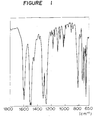
- Figure 1 is an infrared absorption spectrum of the arylamine compound obtained in Preparation Example 3.
- Figure 2 is a graph showing the changes in the spectral sensitivities of the photoreceptors obtained in the same manner as in Example 3 and in Comparative Examples 4 to 6, by lines A, B, C and D, respectively.
- the electrophotographic photoreceptor of the present invention contains the arylamine compound of the above formula (I) in the photosensitive layer.
- each of Ar1, Ar, Ar3 and Ar4 which may be the same or different, is an aryl group such as a phenyl group, a naphthyl group, an anthryl group or a pyrenyl group; or a heterocyclic group such as a pyrrolyl group, a thiophenyl group or a furyl group.
- An aryl group is preferred, and particularly preferred is a phenyl group.
- R1, R, R3, R4, R5 and R6 which may be the same or different, is a hydrogen atom; a hydroxyl group; a halogen atom such as a chlorine atom, a bromine atom or an iodine atom; an alkyl group such as a methyl group, an ethyl group, a propyl group, a butyl group or a hexyl group; an alkoxy group such as a methoxy group, an ethoxy group or a butoxy group; or a phenyl group.
- Particularly preferred is a hydrogen atom or a methyl group.
- Each of R7 and R8 which may be the same or different, is a hydrogen atom; a halogen atom such as a chlorine atom, a bromine atom or an iodine atom; an alkyl group such as a methyl group, an ethyl group, a propyl group, a butyl group or a hexyl group; or an alkoxy group such as a methoxy group, an ethoxy group or a butoxy group.
- a hydrogen atom and a methyl group are particularly preferred.
- the aryl group and the heterocyclic group for Ar1, Ar, Ar3 and Ar4, the alkyl group, the alkoxy group and the phenyl group for R1, R, R3, R4, R5 and R6, and the alkyl group and the alkoxy group for R7 and R8, may have substituents.
- the substituents include, for example, a hydroxyl group; a halogen atom such as a chlorine atom, a bromine atom or an iodine atom; an alkyl group such as a methyl group, an ethyl group, a propyl group, a butyl group or a hexyl group; an alkoxy group such as a methoxy group, an ethoxyl group or a butoxy group; an aralkyl group such as a benzyl group, a naphthylmethyl group or a phenethyl group; an aryloxy group such as a phenoxy group or tolyloxy group; an aryloxy group such as a benzyloxy group or a phenethyloxy group; an aryl group such as a phenyl group or a naphthyl group; a dialkylamino group such as a dimethylamino group or a diethyla
- the arylamine compound of the above formula (I) can be produced by a known method.
- a method may be mentioned wherein a starting material ketone is condensed by reaction with an aldehyde or a ketone, followed by a reductive reaction of the double bond, or by an addition reaction, and then by a reaction of the carbonyl group, to obtain the desired compound.
- a ketone and an aldehyde or ketone represented by the following formulas (II) and, (III) are reacted in a known organic solvent inert to the reaction, such as ethyl ether, benzene, methanol or ethanol, in the presence of a basic catalyst such as sodium hydroxide, sodium carbonate, sodium methoxide, sodium amide, potassium cyanide, sodium acetate, piperidine or diethylamine, or an acidic catalyst such as hydrogen chloride, zinc chloride, potassium hydrogensulfite, to obtain a compound of the formula (IV).
- a basic catalyst such as sodium hydroxide, sodium carbonate, sodium methoxide, sodium amide, potassium cyanide, sodium acetate, piperidine or diethylamine
- an acidic catalyst such as hydrogen chloride, zinc chloride, potassium hydrogensulfite
- the compound of the formula (IV) is subjected to a reductive reaction of the double bond or an addition reaction, or subjected to a reaction of a ketonic moiety.
- a reaction of the double bond or the reaction of the ketonic moiety may be conducted first. Described hereinafter is a case wherein the reaction of the double bond is conducted first.
- a catalyst such as palladium black, colloide palladium, colloide rhodium or Raney nickel (neutralized) in a known organic solvent inert to the reaction, such as methanol, ethanol, cyclohexane, dioxane, tetra
- the compound of the formula (IV) may be reacted with a Grignard reagent or an organic metal reagent in a known organic solvent inert to the reaction, such as diethyl ether or tetrahydrofuran, or with a hydrogen halide or a halogen such as chlorine, bromine or iodine, to obtain a compound of the formula (V).
- a Grignard reagent or an organic metal reagent in a known organic solvent inert such as diethyl ether or tetrahydrofuran
- a hydrogen halide or a halogen such as chlorine, bromine or iodine
- the reaction of the ketonic moiety may be divided into two i.e. a reductive reaction and a nucleophilic reaction to the ketonic moiety.
- the reductive reaction may further be divided into two i.e. a reaction to convert the ketonic to a secondary alcohol, and a reaction to convert the ketone directly to a methylene group.
- the compound of the formula (V) is treated by a reducing agent such as lithium aluminum hydride or sodium borohydride in a known organic solvent inert to the reaction, such as tetrahydrofuran or dioxane, to obtain a compound of the formula (I).
- a reducing agent such as lithium aluminum hydride or sodium borohydride in a known organic solvent inert to the reaction, such as tetrahydrofuran or dioxane
- the compound of the formula (V) may be reacted with Raney nickel as a catalyst in an aqueous ethanol solution, or reacted with sodium borohydride and a borontrifluoride/ethyl ether complex, in tetrahydrofuran, or reacted with trifluoroacetic acid and sodium borohydride, in methylene chloride, to obtain a compound of the formula (I).
- the compound of the formula (V) is reacted with a Grignard reagent or an organic metal reagent in a known organic solvent inert to the reaction , such as diethyl ether or tetrahydrofuran, to obtain a compound of the formula (I).
- a Grignard reagent or an organic metal reagent in a known organic solvent inert such as diethyl ether or tetrahydrofuran
- the electrophotographic photoreceptor of the present invention has a photosensitive layer containing one or more of the arylamine compounds of the formula (I).
- the arylamine compound of the formula (I) exhibits excellent properties as an organic photoconductive material. Especially when used as a carrier transport material, it gives a photoreceptor having high sensitivity and excellent durability.
- the photosensitive layer of the electrophotographic photoreceptor of the present invention may be any one of such types.
- the following types may be mentioned:
- a known hydrazone compound or stilbene compound having excellent properties as a carrier transport material may be incorporated together with the arylamine compound of the formula (I).
- the arylamine compound of the formula (I) when used in a carrier transport layer of a photosensitive layer which comprises two layers of the carrier transport layer and a carrier generation layer, it is possible to obtain a photoreceptor having particularly high sensitivity and low residual potential and which has excellent durability such that even when used repeatedly, the change in the surface potential, the deterioration of the sensitivity or the accumulation of the residual potential is small.
- the electrophotographic photoreceptor of the present invention can be prepared in accordance with a usual method by dissolving the arylamine compound of the formula (I) together with the binder in a suitable solvent, adding photoconductive particles capable of generating an electric charge carrier at an extremely high efficiency upon absorption of light, a sensitizing dye, an electron attracting compound, a plasticizer, a pigment or other additives, as the case requires, to obtain a coating solution, and then applying such a coating solution on an electrically conductive support, followed by drying to form a photosensitive layer having a thickness of from a few ⁇ m to a few tens ⁇ m.
- the photosensitive layer comprising two layers of the carrier generation layer and the carrier transport layer can be prepared either by applying the above mentioned coating solution of the carrier generation layer, or forming a carrier generation layer on the carrier transport layer obtained by coating the above mentioned coating solution.
- the solvent useful for the preparation of the coating solution is a solvent capable of dissolving the arylamine, for example, an ether such as tetrahydrofuran or 1,4-dioxane; a ketone such as methyl ethyl ketone or cyclohexanone; an aromatic hydrocarbon such as toluene or xylene; an aprotic polar solvent such as N,N-dimethylformamide, acetonitrile, N-methyl pyrrolidone; an ester such as ethyl acetate, methyl formate or methyl cellosolve acetate; or a chlorinated hydrocarbon such as dichloroethane or chloroform.
- an ether such as tetrahydrofuran or 1,4-dioxane
- a ketone such as methyl ethyl ketone or cyclohexanone
- an aromatic hydrocarbon such as toluene or xylene
- the binder may be a polymer or copolymer of a vinyl compound such as styrene, vinyl acetate, vinyl chloride, an acrylate, a methacrylate or butadiene, or various polymers compatible with a styrene compound, such as polyvinyl acetal, polycarbonate, polyester, polysulfone, polyphenyleneoxide, polyurethane, cellulose ester, cellulose ether, a phenoxy resin, a silicone resin and an epoxy resin.
- the binder is used usually in an amount within a range of from 0.5 to 30 times by weight, preferably from 0.7 to 10 times by weight, relative to the arylamine compound.
- the photoconductive particles, dyes, pigments or electron attracting compounds to be added to the photosensitive layer may be those well known in the art.
- the photoconductive particles capable of generating charge carriers at an extremely high efficiency upon absorption of light include inorganic photoconductive particles such as selenium-tellurium alloy, selenium-arsenic alloy and a cadmium sulfide and amorphous silicon; and organic photoconductive particles such as metal-containing phthalocyanine, perynone dyes, thioindigo dyes, quinacridone, perylene dyes, anthraquinone dyes, azo dyes, bisazo dyes, trisazo dyes, tetrakisazo dyes and cyanine dyes.
- the dyes include, for example, triphenylmethane dyes such as Methyl Violet, Brilliant Green and Crystal Violet; thiazine dyes such as Methylene Blue; quinone dyes such as Quinizalin and cyanine dyes as well as pyrilium salts, thiapyrilium salts and benzopyrilium salts.
- triphenylmethane dyes such as Methyl Violet, Brilliant Green and Crystal Violet
- thiazine dyes such as Methylene Blue
- quinone dyes such as Quinizalin and cyanine dyes as well as pyrilium salts, thiapyrilium salts and benzopyrilium salts.
- the electron attracting compound capable of forming a carrier transport complex together with the arylamine compound includes quinones such as chloranil, 2,3-dichloro-1,4-naphthoquinone, 1-nitroanthraquinone, 1-chloro-5-nitroanthraquinone, 2-chloroanthraquinone and phenanthrenequinone; aldehydes such as 4-nitrobenzaldehyde; ketones such as 9-benzoylanthracene, indanedione, 3,5-dinitrobenzophenone, 2,4,7-trinitrofluorenone, 2,4,5,7-tetranitrofluorenone and 3,3',5,5'-tetranitrobenzophenone; acid anhydrides such as phthalic anhydride and 4-chloronaphthalic anhydride; cyano compounds such as tetracyanoethylene, terephthalal malononitrile, 9-anthrylmethylidene malonitrile, 4-nitro
- the photosensitive layer of the electrophotographic photoreceptor according to this invention may contain a well-known plasticizer for the improvement of the film-forming properties, flexibility and mechanical strength.
- the plasticizer to be added to the above coating solution for this purpose may be a phthalic ester, a phosphoric ester, an epoxy compound, a chlorinated paraffin, a chlorinated fatty acid ester or an aromatic compound such as methylnaphthalene.
- the coating solution may be of the above described composition, but photoconductive particles, dyes, pigments, electron attracting compounds and the like may be eliminated or added in a small amount.
- the carrier generation layer in this case includes a layer prepared by forming the above mentioned photoconductive particles into a film by means of e.g. vapor position, and a thin layer prepared by applying a coating solution which is obtained by dissolving or dispersing the photoconductive particles and optionally a binder polymer as well as an organic photoconductive material, a dye and an electron attracting compound in a solvent, and drying it.
- the photoreceptor thus formed may further have an adhesive layer, an intermediate layer, a transparent insulation layer or the like, as the case requires.
- the electrically conductive support on which the photosensitive layer is formed any material which is commonly used for electrophotographic photoreceptors, can be employed. Specifically, a drum or sheet of a metal such as aluminum, stainless steel or copper, or a laminate of foils of such metals, or a vapor-deposition product of such metals, may be mentioned. Further, a plastic film, a plastic drum, paper or a paper tube electrified by coating a conductive material such as metal powder, carbon black, copper iodide or a polymer electrolyte together with an appropriate binder, may be mentioned. Further, an electrically conductive plastic sheet or dram containing a conductive substance such as metal powder, carbon black or carbon fiber, may be mentioned.
- the electrophotographic photoreceptor of the present invention has a very high sensitivity and a small residual potential which is likely to cause fogging, and it has a feature of excellent durability since the accumulation of the residual potential due to repeated use and fluctuations in the surface potential and in the sensitivity are minimum as the light-fatigue is minimum.
- This compound was found to be a carbonyl compound having the following structural formula, by the following values of elemental analysis, by the mass spectrometric analysis and the infrared absorption spectrum.
- This compound was found to be an arylamine compound of the following formula by the following values of elemental analysis, the mass spectrometric analysis and the infrared absorption spectrum ( Figure 1).
- 1.4 parts of a bisazo dye having the above formula, 0.7 part of a polyvinyl butylal resin (#6000/C, manufactured by Denki Kagaku Kogyo K.K.) and 0.7 part of a phenoxy resin (PKHH, registered trademark, manufactured by Union Carbide Company) were dispersed and pulverized in 44 parts of methyl ethyl ketone and 15 parts of 4-methoxy-4-methylpentanone-2 by a sandgrinder.
- This dispersion was coated by a wire bar on an aluminum layer vapor-deposited on a polyester film having a thickness of 75 ⁇ m so that the weight after drying would be 0.7 g/m, followed by drying to form a carrier generation layer.
- a polycarbonate Upirone E2000, registered trademark, manufactured by Mitsubishi Gas Kagaku K.K.
- the sensitivity i.e. the half-decay exposure intensity was measured and found to be 0.60 lux ⁇ sec.
- the half-decay exposure intensity was determined by firstly charging the photoreceptor in a dark place with corona discharge at -5.2 KV, then subjecting it to exposure to incandescent light, and measuring the exposure intensity required until the surface potential decayed to one-half of the initial surface potential.
- this photoreceptor is excellent in the spectral sensitivity over the entire wavelength region of visible light.
- a photoreceptor was produced in the same manner as Example 1 except that a bisazo dye of the following formula was used instead of the bisazo dye used in Example 1, and the sensitivity was measured in the same manner as in Example 1 and found to be 1.10 lux ⁇ sec.
- Electrophotographic photoreceptors were produced in the same manner as in Example 1 except that arylamine compounds as identified in Table 1 prepared in the same manner as in Preparation Example 3 were used instead of the arylamine compound used in Example 1 and the bisazo dye used in Example 1 was used for the carrier generation layer, and their sensitivities are shown in the following Table.
- Electrophotographic photoreceptors were prepared in the same manner as in Example 1 except that arylamine compounds as identified in Table 2 were used instead of the arylamine compound used in Example 1. Each electrophotographic photoreceptor was charged in a dark place with corona discharge at -5.2 KV, whereby the surface potential was measured as the initial surface potential. Then, after measuring the sensitivity in the same manner as in Example 1, it was subjected to adequate exposure (50 lux ⁇ sec), whereby the surface potential as the residual potential was obtained. The results are shown in Table 2 together with the results of the measurement with respect to the electrophotographic photoreceptor of Example 3.
- n 1 or 2
- n 5
- a compound wherein n is 5 shows numerical values inferior in both the sensitivity and the residual potential as compared with the compounds of the present invention.
Landscapes
- Physics & Mathematics (AREA)
- General Physics & Mathematics (AREA)
- Photoreceptors In Electrophotography (AREA)
Claims (8)
- Elektrophotographischer Photoaufnehmer, umfassend einen elektrisch leitenden Träger und eine darauf ausgebildete, photoempfindliche Schicht, wobei die photoempfindliche Schicht als Ladungs-Transportmaterial eine Arylamin-Verbindung der Formel (I) enthält:

- Elektrophotogrphischer Photoaufnehmer nach Anspruch 1, worin in Formel (I) jedes von Ar¹, Ar, Ar³ und Ar⁴ eine gegebenenfalls substituierte Arylgruppe ist.
- Elektrophotographischer Photoaufnehmer nach Anspruch 2, worin in Formel (I) jedes von Ar¹, Ar, Ar³ und Ar⁴ eine Phenylgruppe ist, die entweder unsubstituiert oder durch eine Alkylgruppe oder eine Alkoxygruppe substituiert ist.
- Elektrophotographischer Photoaufnehmer nach Anspruch 1, worin in Formel (I) jedes von R¹, R, R³, R⁴, R⁵ und R⁶ ein Wasserstoffatom oder eine Methylgruppe ist.
- Elektrophotographischer Photoaufnehmer nach Anspruch 1, worin in Formel (I) jedes von R⁷ und R⁸ ein Wasserstoffatom oder eine Methylgruppe ist.
- Elektrophotographischer Photoaufnehmer nach Anspruch 1, worin die photoempfindliche Schicht weiter ein Träger erzeugendes Material und/oder eine Verbindung enthält, die zur Bildung eines Ladungs-Übertragungskomplexes mit der Arylamin-Verbindung der Formel (I) in der Lage ist.
- Elektrophotographischer Photoaufnehmer nach Anspruch 6, worin das Träger erzeugende Material mindestens eines ist, ausgewählt aus der Gruppe bestehend aus anorganischen photoleitenden Teilchen, organischen photoleitenden Teilchen und sensibilisierenden Farbstoffen.
- Elektrophotographischer Photoaufnehmer nach Anspruch 6, worin die photoempfindliche Schicht eine Träger erzeugende Schicht, die das Träger erzeugende Material als die Hauptkomponente enthält, und eine Träger-Transportschicht umfaßt, die die Arylamin-Verbindung der Formel (I) und ein Binderharz enthält.
Applications Claiming Priority (2)
| Application Number | Priority Date | Filing Date | Title |
|---|---|---|---|
| JP1343215A JPH03203739A (ja) | 1989-12-29 | 1989-12-29 | 電子写真用感光体 |
| JP343215/89 | 1989-12-29 |
Publications (2)
| Publication Number | Publication Date |
|---|---|
| EP0435165A1 EP0435165A1 (de) | 1991-07-03 |
| EP0435165B1 true EP0435165B1 (de) | 1996-05-22 |
Family
ID=18359805
Family Applications (1)
| Application Number | Title | Priority Date | Filing Date |
|---|---|---|---|
| EP90124894A Expired - Lifetime EP0435165B1 (de) | 1989-12-29 | 1990-12-20 | Elektrophotographische Platte |
Country Status (5)
| Country | Link |
|---|---|
| US (1) | US5324605A (de) |
| EP (1) | EP0435165B1 (de) |
| JP (1) | JPH03203739A (de) |
| CA (1) | CA2033279A1 (de) |
| DE (1) | DE69027106T2 (de) |
Families Citing this family (15)
| Publication number | Priority date | Publication date | Assignee | Title |
|---|---|---|---|---|
| US5393629A (en) * | 1991-04-26 | 1995-02-28 | Fuji Xerox Co., Ltd. | Electrophotographic photoreceptor |
| US5900342A (en) * | 1996-04-26 | 1999-05-04 | Eastman Kodak Company | Photoconductive element having an outermost layer of a fluorinated diamond-like carbon and method of making the same |
| US5849445A (en) * | 1998-02-13 | 1998-12-15 | Eastman Kodak Company | Multilayer photoconductive elements having low dark decay |
| US6007954A (en) * | 1998-02-13 | 1999-12-28 | Eastman Kodak Company | Electrophotographic apparatus with improved blue sensitivity |
| US5882830A (en) * | 1998-04-30 | 1999-03-16 | Eastman Kodak Company | Photoconductive elements having multilayer protective overcoats |
| JPH11352709A (ja) * | 1998-06-04 | 1999-12-24 | Mitsubishi Chemical Corp | 電子写真感光体 |
| US6183922B1 (en) | 1998-07-31 | 2001-02-06 | Canon Kabushiki Kaisha | Electrophotographic photosensitive member, process cartridge, and electrophotographic apparatus |
| US20030186144A1 (en) * | 1998-07-31 | 2003-10-02 | Mitsuhiro Kunieda | Electrophotographic photosensitive member, process cartridge and electrophotographic apparatus |
| US6649314B1 (en) | 2000-02-17 | 2003-11-18 | Nexpress Solutions Llc | Process for reducing image defects in an electrostatographic apparatus containing particulate contaminants |
| JP4604592B2 (ja) * | 2003-07-29 | 2011-01-05 | 三菱化学株式会社 | アリールアミン誘導体の製造方法及びそれに用いるメタノール誘導体 |
| US7365230B2 (en) | 2004-02-20 | 2008-04-29 | E.I. Du Pont De Nemours And Company | Cross-linkable polymers and electronic devices made with such polymers |
| EP2292583A3 (de) | 2004-03-31 | 2011-08-31 | E. I. du Pont de Nemours and Company | Triarylamin-Verbindungen zur Verwendung als Ladungstransportmaterialien |
| US7576240B2 (en) * | 2006-04-26 | 2009-08-18 | Xerox Corporation | Arylamine processes |
| US20080076049A1 (en) * | 2006-09-26 | 2008-03-27 | Xerox Corporation | Arylamine processes |
| CN113419402B (zh) * | 2021-06-10 | 2023-12-22 | 安徽强邦新材料股份有限公司 | 一种阳图热敏感光组合物及其制备方法 |
Family Cites Families (6)
| Publication number | Priority date | Publication date | Assignee | Title |
|---|---|---|---|---|
| BE626529A (de) * | 1961-12-29 | |||
| JPS57125941A (en) * | 1981-01-29 | 1982-08-05 | Konishiroku Photo Ind Co Ltd | Electrophotographic receptor |
| JPS57210343A (en) * | 1981-06-20 | 1982-12-23 | Konishiroku Photo Ind Co Ltd | Electrophotographic receptor |
| JPS5915251A (ja) * | 1982-07-16 | 1984-01-26 | Mitsubishi Chem Ind Ltd | 電子写真用感光体 |
| US4728593A (en) * | 1985-07-12 | 1988-03-01 | E. I. Du Pont De Nemours And Company | Photoconductive polyimide-electron donor charge transfer complexes |
| US4931350A (en) * | 1987-01-20 | 1990-06-05 | Ricoh Company, Ltd. | Electrophotographic photoconductor having an arylalkylenearylamino photoconductor |
-
1989
- 1989-12-29 JP JP1343215A patent/JPH03203739A/ja active Pending
-
1990
- 1990-12-20 EP EP90124894A patent/EP0435165B1/de not_active Expired - Lifetime
- 1990-12-20 DE DE69027106T patent/DE69027106T2/de not_active Expired - Fee Related
- 1990-12-27 CA CA002033279A patent/CA2033279A1/en not_active Abandoned
-
1992
- 1992-07-27 US US07/920,169 patent/US5324605A/en not_active Expired - Fee Related
Also Published As
| Publication number | Publication date |
|---|---|
| CA2033279A1 (en) | 1991-06-30 |
| EP0435165A1 (de) | 1991-07-03 |
| US5324605A (en) | 1994-06-28 |
| DE69027106T2 (de) | 1996-12-12 |
| JPH03203739A (ja) | 1991-09-05 |
| DE69027106D1 (de) | 1996-06-27 |
Similar Documents
| Publication | Publication Date | Title |
|---|---|---|
| US4477550A (en) | Electrophotographic photoreceptor with hydrazone | |
| EP0414185B1 (de) | Elektrophotographischer Photorezeptor | |
| US5324605A (en) | Electrophotographic plate with an arylamine-containing photosensitive layer | |
| GB2138159A (en) | Electrophotographic photosensitive member | |
| EP0099552B1 (de) | Elektrophotographische Platte | |
| US5093219A (en) | Electrophotographic photoreceptor with acetylene group containing compound | |
| EP0511664B1 (de) | Elektrophotographischer Photorezeptor | |
| US5955229A (en) | Electrophotographic photoreceptor | |
| EP0475264B1 (de) | Elektrophotographischer Photorezeptor | |
| JP3147535B2 (ja) | ジスチリル化合物を用いた感光体およびエレクトロルミネセンス素子 | |
| EP0709364B1 (de) | Tetrahydronaphthylaminostyrolverbindungen und ihre Verwendung in electrophotographischen Photorezeptoren | |
| EP0392805A1 (de) | Hydrazone und diese enthaltende Photorezeptoren | |
| US5629421A (en) | Hydrazone compounds | |
| JP3897838B2 (ja) | インダン化合物及び該化合物を用いた電子写真用感光体 | |
| US4987045A (en) | Photosensitive member for electrophotography | |
| JPH05100456A (ja) | 電子写真用感光体 | |
| EP0535672B1 (de) | Elektrophotographischer Photorezeptor | |
| US5753393A (en) | Electrophotographic photoreceptor | |
| JP3996223B2 (ja) | 9,9−ジメチルキサンテン化合物及び該化合物を用いた電子写真用感光体 | |
| US5721082A (en) | Electrophotographic photoreceptor containing amine compound | |
| US5728500A (en) | Electrophotographic photoreceptor with acenaphthene compound | |
| JPH0594030A (ja) | 電子写真用感光体 | |
| JPH02222959A (ja) | 感光体 | |
| EP0656566B1 (de) | Elektrophotographischer Photorezeptor | |
| JPH09297415A (ja) | 電子写真用感光体 |
Legal Events
| Date | Code | Title | Description |
|---|---|---|---|
| PUAI | Public reference made under article 153(3) epc to a published international application that has entered the european phase |
Free format text: ORIGINAL CODE: 0009012 |
|
| AK | Designated contracting states |
Kind code of ref document: A1 Designated state(s): DE FR GB IT |
|
| 17P | Request for examination filed |
Effective date: 19911030 |
|
| 17Q | First examination report despatched |
Effective date: 19940721 |
|
| RAP1 | Party data changed (applicant data changed or rights of an application transferred) |
Owner name: MITSUBISHI CHEMICAL CORPORATION |
|
| GRAH | Despatch of communication of intention to grant a patent |
Free format text: ORIGINAL CODE: EPIDOS IGRA |
|
| GRAA | (expected) grant |
Free format text: ORIGINAL CODE: 0009210 |
|
| AK | Designated contracting states |
Kind code of ref document: B1 Designated state(s): DE FR GB IT |
|
| PG25 | Lapsed in a contracting state [announced via postgrant information from national office to epo] |
Ref country code: IT Free format text: LAPSE BECAUSE OF FAILURE TO SUBMIT A TRANSLATION OF THE DESCRIPTION OR TO PAY THE FEE WITHIN THE PRE;WARNING: LAPSES OF ITALIAN PATENTS WITH EFFECTIVE DATE BEFORE 2007 MAY HAVE OCCURRED AT ANY TIME BEFORE 2007. THE CORRECT EFFECTIVE DATE MAY BE DIFFERENT FROM THE ONE RECORDED.SCRIBED TIME-LIMIT Effective date: 19960522 Ref country code: FR Effective date: 19960522 |
|
| REF | Corresponds to: |
Ref document number: 69027106 Country of ref document: DE Date of ref document: 19960627 |
|
| EN | Fr: translation not filed | ||
| EN | Fr: translation not filed | ||
| PLBE | No opposition filed within time limit |
Free format text: ORIGINAL CODE: 0009261 |
|
| STAA | Information on the status of an ep patent application or granted ep patent |
Free format text: STATUS: NO OPPOSITION FILED WITHIN TIME LIMIT |
|
| 26N | No opposition filed | ||
| PGFP | Annual fee paid to national office [announced via postgrant information from national office to epo] |
Ref country code: GB Payment date: 19981224 Year of fee payment: 9 |
|
| PGFP | Annual fee paid to national office [announced via postgrant information from national office to epo] |
Ref country code: DE Payment date: 19990129 Year of fee payment: 9 |
|
| PG25 | Lapsed in a contracting state [announced via postgrant information from national office to epo] |
Ref country code: GB Free format text: LAPSE BECAUSE OF NON-PAYMENT OF DUE FEES Effective date: 19991220 |
|
| GBPC | Gb: european patent ceased through non-payment of renewal fee |
Effective date: 19991220 |
|
| PG25 | Lapsed in a contracting state [announced via postgrant information from national office to epo] |
Ref country code: DE Free format text: LAPSE BECAUSE OF NON-PAYMENT OF DUE FEES Effective date: 20001003 |