EP0435580B1 - Contraintes grammaticales à somme de contrÔle pour circuit de reconnaissance de la parole à haute performance - Google Patents
Contraintes grammaticales à somme de contrÔle pour circuit de reconnaissance de la parole à haute performance Download PDFInfo
- Publication number
- EP0435580B1 EP0435580B1 EP90314033A EP90314033A EP0435580B1 EP 0435580 B1 EP0435580 B1 EP 0435580B1 EP 90314033 A EP90314033 A EP 90314033A EP 90314033 A EP90314033 A EP 90314033A EP 0435580 B1 EP0435580 B1 EP 0435580B1
- Authority
- EP
- European Patent Office
- Prior art keywords
- circuitry
- words
- state
- hypothesized
- grammar
- Prior art date
- Legal status (The legal status is an assumption and is not a legal conclusion. Google has not performed a legal analysis and makes no representation as to the accuracy of the status listed.)
- Expired - Lifetime
Links
Images
Classifications
-
- G—PHYSICS
- G10—MUSICAL INSTRUMENTS; ACOUSTICS
- G10L—SPEECH ANALYSIS TECHNIQUES OR SPEECH SYNTHESIS; SPEECH RECOGNITION; SPEECH OR VOICE PROCESSING TECHNIQUES; SPEECH OR AUDIO CODING OR DECODING
- G10L15/00—Speech recognition
- G10L15/08—Speech classification or search
- G10L15/18—Speech classification or search using natural language modelling
- G10L15/183—Speech classification or search using natural language modelling using context dependencies, e.g. language models
- G10L15/19—Grammatical context, e.g. disambiguation of the recognition hypotheses based on word sequence rules
- G10L15/193—Formal grammars, e.g. finite state automata, context free grammars or word networks
-
- G—PHYSICS
- G10—MUSICAL INSTRUMENTS; ACOUSTICS
- G10L—SPEECH ANALYSIS TECHNIQUES OR SPEECH SYNTHESIS; SPEECH RECOGNITION; SPEECH OR VOICE PROCESSING TECHNIQUES; SPEECH OR AUDIO CODING OR DECODING
- G10L17/00—Speaker identification or verification techniques
- G10L17/22—Interactive procedures; Man-machine interfaces
Definitions
- This invention relates in general to speech recognition, and more particularly to a grammar-based speech recognition circuit.
- Speech recognition is an imperfect art. Because of all the variables, including differences in microphones, speech accents, and speakers' abilities, it is not possible today to perform recognition of speech with the level of reliability that will satisfy the demands of many applications. There is a need, especially over the telephone, for higher performance speech recognition.
- Speech recognition can be enhanced by constraining the words which may be recognized by the system to a small set, such as the set of ten digits from 0-9. Nevertheless, even with the set of ten digits, speaker independent speech recognition remains a difficult problem.
- Speech recognition has recently been applied to access control.
- two key functions are provided by the user: (1) user identification and (2) user verification.
- the user identification function allows an unknown user to provide a claimed identity.
- the verification function is performed on a personal attribute of the user, for example, the user's voice characteristics.
- both the identification and verification functions are performed on the same spoken utterance.
- Speech recognition In order to perform the identification function using a spoken identification code, speech recognition must be employed. Speech recognition translates the spoken words into a discrete identification code.
- the speech recognition portion of the entry system must be speaker independent, i.e., able to translate the spoken code into words when the speaker is not yet known. Further, for broad application, it must be able to recognize words in connected speech, i.e., speech which does not have pauses between words. These requirements increase the difficulty in providing accurate speech recognition.
- EP 0 269 233 relates to an application for recognizing speech in which identified words in a phrase are checked to see if they are compatible in grammar and collocation.
- a speech recognition method and apparatus of performing the same is provided which substantially eliminates or prevents the problems associated with prior speech recognition circuits.
- speech is recognized from a sequence of spoken words which conform to one or more checksum constraints. Speech recognition is controlled by a grammar embedding the checksum constraints.
- speech is recognized from a spoken phrase by hypothesizing words from the grammar.
- a grammar rule is applied to observed words resulting in a transition from a first state to a second state.
- the grammar is designed such that each state is indicative of a checksum value.
- This embodiment of the present invention provides the technical advantage that checksum constraints are inherently provided for by the grammar rules, and therefore need not be computed. Furthermore, the present invention may be used with any finite-state grammar speech recognition system to augment its performance.
- a unification grammar is used to apply the constraints.
- the memory necessary to implement the constraint is minimized.
- the invention provides a method of recognizing speech from a spoken phrase, comprising the steps of: creating a grammar embedding one or more checksum constraints such that a sequence of words may be recognised only if that sequence conforms to said checksum constraints; receiving a spoken phrase; hypothesising one or more sequences of words from the spoken phrase; and controlling speech recognition with said grammar to recognise a sequence of words by using the said one or more checksum constraints on the one or more hypothesised sequences of words.
- the invention also provides a system for recognizing speech from a spoken phrase, comprising: means for providing a grammar that embeds one or more checksum constraints such that a sequence of words may be recognized only if that sequence conforms to said checksum constraints; means for hypothesising one or more sequences of words from the spoken phrase; and means for controlling speech recognition with said grammar to recognize a sequence of words by using the said one or more checksum constraints on the said one or more hypothesized sequences of words.
- the invention further provides circuitry for recognizing speech from a spoken phrase comprising a plurality of words comprising: circuitry for hypothesizing one or more sequences of words from the spoken phrase; circuitry for applying grammar rules that embed one or more checksum constraints, such that a sequence of words may be recognized only if it conforms to said checksum constraints, to determine a transition from a source state to a destination state responsive to a hypothesized word, such that a checksum may be determined from said destination state; and circuitry for recognizing speech by controlling such speech recognition with said grammar using the said checksum constraints on the said one or more hypothesized sequences of words.
- FIGUREs 1-3 of the drawings like numerals being used for like and corresponding parts of the various drawings.
- the goal of this invention is to improve speech recognition in the context of a conventional grammar-based speech recognition system by: 1) introducing constraints on the spoken utterance by imposing checksum constraints and 2) creating a conventional grammar with embedded checksum constraints to control the speech recognition. While the present invention is described in connection with a voice verification system, it may be applied to any speech recognition application.
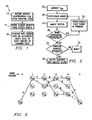
- FIGURE 1 illustrates a block diagram describing the concept of speaker verification using voice recognition.
- a spoken code is received in block 12 from an unknown user, i.e., a user whose identity has not been validated.
- a claimed identity is derived from the speech sample. The claimed identity is determined by translating the spoken code into discrete words which form a unique identification code. A proper identity code corresponds to one of a set of authorized users.
- the identification code is used to retrieve stored data on the corresponding authorized user's voice pattern to verify the identity of the unknown person. The verification is performed by comparing the stored speech data with the spoken code received in block 12.
- an authorized user submits a unique phrase which will become part of his identification code.
- the phrase is composed of the digits 0-9, although this restriction is not necessary for the present invention.
- the phrase entered by the user may be his or her telephone number or social security number.
- Checksum words are computed and added to the phrase such that the total phrase is forced to a predetermined checksum. For example, if the entered phrase is "0150" and the predetermined checksum for each (five digit) phrase in the system is set to zero for a modulus of three, then the system will compute a "0" as the checksum word to satisfy the formula set forth below: where
- an identification phrase which meets the checksum constraints may be selected for the user without his involvement.
- FIGURE 2 illustrates a flow chart of the speech recognition process of the present invention.
- the speech recognition system will compute several hypothesized phrases simultaneously for each spoken identity code. For example, if the spoken identification code is "01500,” the system will normally track several hypothesized phrases, depending upon the user's pronunciation of the identification code. In addition to "01500", the system may track, for example, "01941,” “00942,” and "00501" as being possibilities for the spoken phrase. This aspect of the invention is illustrated in connection with FIGURE 3.
- the initial state, S 00 is activated in block 20.
- words are hypothesized and the spoken identification code is sampled in block 26.
- One such system for hypothesizing words is disclosed in U.S. Patent No. 4,984,178 to Hemphill et al. entitled “Chart Parser for Stochastic Unification Grammar", filed February 21, 1989, but other systems could be used as well.
- decision block 28 it is determined whether a word may be observed from the sample speech, i.e., whether the hypothesis has finished. If a word is observed in decision block 28, then the finite-state automation transitions are applied to determine the destination state based on the observed word in block 30. Each observed word is given a score indicative of its correlation with the sampled speech. If two hypothesized phrases each activate the same state, the phrase with the higher score is maintained, while the phrase with the lower score is rejected. After activating the state or updating the state's score, hypothesizing words and sampling the speech in blocks 24 and 26 continues until the end of the utterance. In decision block 32, it is determined whether a complete sentence is recognized.
- FIGURE 3 illustrates a state diagram depicting operation of the flow chart of FIGURE 3, but ignoring word boundary uncertainties.
- FIGURE 3 illustrates an example where four phrases are hypothesized, "01500,” “01941”, “00942”, and "00501,” using a checksum of modulus 3.
- State S 00 represents the initial state. At word position "1", a "0” has been determined as the first observed word. In this instance, the "0" was clear enough that no other words were observed.
- the finite-state automation transitions dictate that from S 00 , a hypothesized word of "0” causes a transition to S 10 (the first subscript representing the word position and the second subscript representing the checksum).
- the checksum of the phrase at word position "1" is determined by the finite-state automaton without any calculation. From word position "1" to word position "2", two words are observed, a “0” and a “1”; the first observed word (“0") causes a transition from S 10 to S 20 and the second observed word causes a transition from S 10 to S 21 . From word position "2" to word position "3”, two words are observed, a “9” and a "5". The observed “9” results in a transition from S 20 to S 30 and a transition from S 21 to S 31 . The observed "5" results in a transition from S 20 to S 32 and a transition from S 21 to S 30 .
- the observed words result in two states, S 31 and S 32 , having a transition to the same state, S 42 .
- the phrase with the highest score would be chosen for continued hypothesizing while the weaker score would be rejected.
- An alternative embodiment of the present invention uses a unification grammar, which adds "logical variables" to allow context from one part of a grammar rule to affect subsequent processing of the remainder of a rule.
- An example of the unification grammar which constrains a sequence of five digits by a checksum is illustrated below using the Definite Clause Grammar dialect of the Prolog programming language:
- the rules in the program constitute the entire. checksum grammar; independent of the checksum modulus. These rules expand during the recognition process to cover exactly that subset of the original finite-state automata needed for a particular utterance.
- unification grammars provide the technical advantage of efficiently supporting encoding of context, thus reducing the memory requirements.
- the reduced memory requirement is offset by the need to perform calculations during processing, which is not necessary using the Finite State Automata.
- present invention may be used with other grammars, such as a context free grammar. It should also be noted that the present invention may be used with any set of words and need not be constrained to digits only. Grammar rules could be applied to any set of words such that the rules embody a checksum.
- a specific application of the present invention would provide circuitry for recognizing speech from a spoken phrase comprising a plurality of words, including circuitry for hypothesizing words from the spoken phrase, circuitry for applying grammar rules to determine a transition from a source state to a destination state responsive to a hypothesized word, such that a checksum may be determined from the destination state.
- each valid phrase comprises a plurality of numbers.
- each state is associated with a word position within a hypothesized phrase comprised of successive hypothesized words and a checksum value for the hypothesized phrase.
- the hypothesizing circuit is operable to hypothesize a plurality of hypothesized phrases for each spoken phrase and such circuit would further comprise circuitry for computing a probability for each hypothesized word and circuitry for computing a probability for each hypothetical phrase. Additionally, such circuit would further comprise circuitry for comparing the probabilities of hypothetical phrases having a common destination state.
Landscapes
- Engineering & Computer Science (AREA)
- Health & Medical Sciences (AREA)
- Audiology, Speech & Language Pathology (AREA)
- Human Computer Interaction (AREA)
- Physics & Mathematics (AREA)
- Acoustics & Sound (AREA)
- Multimedia (AREA)
- Artificial Intelligence (AREA)
- Computational Linguistics (AREA)
- Machine Translation (AREA)
Claims (27)
- Procédé de reconnaissance de paroles à partir d'une phrase prononcée, comprenant les étapes consistant à : créer une grammaire comprenant une ou plusieurs contraintes à total de contrôle de sorte que l'on peut identifier une séquence de mots uniquement si cette séquence satisfait à des contraintes à total de contrôle; recevoir une phrase prononcée; supposer l'existence d'une ou de plusieurs séquences de mots à partir de la phrase prononcée; et commander la reconnaissance de paroles avec ladite grammaire pour reconnaítre une séquence de mots moyennant l'utilisation de ladite contrainte ou desdites contraintes à total de contrôle avec la séquence de mots ou la pluralité de séquences de mots supposées.
- Procédé selon la revendication 1, qui inclut l'étape consistant à appliquer une règle grammaticale associée à un premier état et à un mot supposé, de sorte qu'un second état est déterminé, ledit second état étant indicatif d'une valeur de total de contrôle.
- Procédé selon la revendication 1, selon lequel ladite étape de commande comprend l'étape consistant à commander la reconnaissance de paroles en utilisant une automatisation å états finis englobant lesdites contraintes à total de contrôle.
- Procédé selon la revendication 1, selon lequel ladite étape de commande comprend l'étape consistant à commander la reconnaissance de paroles en utilisant une grammaire d'unification englobant ladite contrainte ou lesdites contraintes à total de contrôle.
- Procédé selon la revendication 1, comprenant l'étape consistant à :activer un premier état;supposer l'existence d'un mot à partir du signal d'entrée prononcé; etappliquer une règle grammaticale associée audit premier état audit mot supposé, de telle sorte qu'un second état est déterminé, ledit second état étant indicatif d'une valeur de total de contrôle.
- Procédé selon l'une quelconque des revendications 1 à 5, selon lequel chaque mot supposé comprend un nombre.
- Procédé selon la revendication 5, comprenant les étapes consistant à :
répéter lesdites étapes consistant à supposer l'existence d'un mot et à appliquer des règles grammaticales associées, à ce mot jusqu'à ce que la fin de la phrase prononcée doit atteinte pour déterminer des états associés à une nouvelle position d'un mot et en rapport avec desdits mots supposés. - Procédé selon la revendication 5, comprenant les étapes consistant à :supposer l'existence de phrases formées de mots successifs supposés à partir de ladite phrase prononcée; etappliquer des règles grammaticales à chacun desdits mots successifs supposés, pour déterminer des états successifs associés à des positions de mots successifs, chaque état successif étant indicatif d'une valeur de total de contrôle.
- Procédé selon l'une quelconque des revendications 1 à 8, comprenant les étapes consistant à calculer une probabilité pour chaque mot supposé pour faciliter ladite étape de commande.
- Procédé selon la revendication 7, comprenant l'étape consistant à calculer une probabilité pour chaque phrase hypothétique pour faciliter ladite étape de commande.
- Procédé selon la revendication 10, comprenant l'activation de chacun desdits états successifs déterminés, après application de la règle grammaticale.
- Procédé selon la revendication 11, comprenant l'étape consistant à comparer les probabilités de phrases hypothétiques lorsqu'un état déterminé a été activé précédemment en liaison avec une autre phrase supposée.
- Procédé selon la revendication 5, selon lequel lesdites règles grammaticales comprennent des transitions d'automatisation à états finis.
- Procédé selon la revendication 5, selon lequel lesdites règles grammaticales comprennent des règles grammaticales d'unification.
- Système de reconnaissance de paroles à partir d'une phrase prononcée, comprenant : des moyens pour fournir une grammaire qui englobe une ou plusieurs contraintes à total de contrôle de telle sorte qu'une séquence de mots peut être reconnue uniquement si cette séquence satisfait auxdites contraintes à total de contrôle; des moyens pour supposer l'existence d'une ou plusieurs séquences de mots à partir de la phrase prononcée; et des moyens pour commander la reconnaissance de paroles en utilisant lesdites une ou plusieurs contraintes à total de contrôle dans lesdites une ou plusieurs séquences de mots supposées.
- Système selon la revendication 15, selon lequel lesdits moyens pour supposer l'existence de mots comprennent un circuit pour supposer l'existence de nombres.
- Système selon la revendication 15 ou 16, qui comprend un circuit pour appliquer une règle grammaticale associée à un premier état et à un mot observé de sorte qu'un second état est déterminé, ledit second état étant indicatif d'une valeur de total de contrôle.
- Système selon l'une des revendications 15 à 17, comprenant un circuit pour calculer une probabilité pour chaque mot supposé.
- Système selon la revendication 15, selon lequel lesdits moyens de commande comprennent un circuit pour commander la reconnaissance de paroles moyennant l'utilisation d'une grammaire à états finis englobant la ou lesdites contraintes à total de contrôle.
- Système selon. la revendication 15, selon lequel lesdits moyens de commande comprennent un circuit pour commander la reconnaissance de paroles, moyennant l'utilisation d'une grammaire d'unification englobant lesdites contraintes.
- Circuit pour reconnaítre des paroles à partir d'une phrase prononcée comportant une pluralité de mots, comprenant :un circuit pour supposer l'existence d'une ou plusieurs séquences de mots à partir de la phrase prononcée;un circuit pour appliquer des règles grammaticales qui englobent une ou plusieurs contraintes à total de contrôle de telle sorte qu'une séquence de mots peut être reconnue uniquement si elle satisfait auxdites contraintes à total de contrôle, pour déterminer une transition d'un état d'origine à un état de destination en réponse à un mot supposé, de telle sorte qu'une somme de contrôle peut être déterminée à partir dudit état de destination; etun circuit pour la reconnaissance de paroles par commande d'une telle reconnaissance de paroles avec ladite grammaire utilisant lesdites contraintes à total de contrôle sur une ou plusieurs séquences de mots supposées.
- Circuit selon la revendication 21, selon lequel chaque-mot supposé comprend un nombre.
- Circuit selon la revendication 21 ou la revendication 22, dans lequel chaque état est associé à une position de mot, dans une phrase supposée et qui comprend des mots supposés successifs et une valeur de total de contrôle pour la phrase supposée.
- Circuit selon la revendication 23, dans lequel ledit circuit de formation de suppositions peut agir de manière à supposer une pluralité de phrases supposées pour chaque phrase prononcée.
- Circuit selon la revendication 24, comprenant un circuit pour calculer une probabilité pour chaque mot supposé pour faciliter la reconnaissance de paroles par ledit circuit.
- Circuit selon la revendication 25, comprenant un circuit pour calculer une probabilité pour chaque mot supposé pour faciliter la reconnaissance de paroles par ledit circuit.
- Circuit selon la revendication 26, comprenant un circuit pour calculer des probabilités de phrases supposées et qui ont un état de destination commun, pour faciliter la reconnaissance de paroles par ledit circuit.
Applications Claiming Priority (2)
| Application Number | Priority Date | Filing Date | Title |
|---|---|---|---|
| US07/458,860 US5222187A (en) | 1989-12-29 | 1989-12-29 | Grammar-based checksum constraints for high performance speech recognition circuit |
| US458860 | 1989-12-29 |
Publications (3)
| Publication Number | Publication Date |
|---|---|
| EP0435580A2 EP0435580A2 (fr) | 1991-07-03 |
| EP0435580A3 EP0435580A3 (en) | 1993-08-25 |
| EP0435580B1 true EP0435580B1 (fr) | 1999-04-14 |
Family
ID=23822380
Family Applications (1)
| Application Number | Title | Priority Date | Filing Date |
|---|---|---|---|
| EP90314033A Expired - Lifetime EP0435580B1 (fr) | 1989-12-29 | 1990-12-20 | Contraintes grammaticales à somme de contrÔle pour circuit de reconnaissance de la parole à haute performance |
Country Status (4)
| Country | Link |
|---|---|
| US (1) | US5222187A (fr) |
| EP (1) | EP0435580B1 (fr) |
| JP (1) | JP3332939B2 (fr) |
| DE (1) | DE69033051T2 (fr) |
Families Citing this family (14)
| Publication number | Priority date | Publication date | Assignee | Title |
|---|---|---|---|---|
| DE19501599C1 (de) * | 1995-01-20 | 1996-05-02 | Daimler Benz Ag | Verfahren zur Spracherkennung |
| US5870706A (en) * | 1996-04-10 | 1999-02-09 | Lucent Technologies, Inc. | Method and apparatus for an improved language recognition system |
| US5878385A (en) * | 1996-09-16 | 1999-03-02 | Ergo Linguistic Technologies | Method and apparatus for universal parsing of language |
| US6003002A (en) * | 1997-01-02 | 1999-12-14 | Texas Instruments Incorporated | Method and system of adapting speech recognition models to speaker environment |
| US6456974B1 (en) * | 1997-01-06 | 2002-09-24 | Texas Instruments Incorporated | System and method for adding speech recognition capabilities to java |
| US6049768A (en) * | 1997-11-03 | 2000-04-11 | A T & T Corp | Speech recognition system with implicit checksum |
| US6499013B1 (en) * | 1998-09-09 | 2002-12-24 | One Voice Technologies, Inc. | Interactive user interface using speech recognition and natural language processing |
| US6922669B2 (en) * | 1998-12-29 | 2005-07-26 | Koninklijke Philips Electronics N.V. | Knowledge-based strategies applied to N-best lists in automatic speech recognition systems |
| EP1134703A1 (fr) * | 2000-03-14 | 2001-09-19 | BRITISH TELECOMMUNICATIONS public limited company | Services sécurisés |
| US20030023431A1 (en) * | 2001-07-26 | 2003-01-30 | Marc Neuberger | Method and system for augmenting grammars in distributed voice browsing |
| US7852993B2 (en) | 2003-08-11 | 2010-12-14 | Microsoft Corporation | Speech recognition enhanced caller identification |
| US20060004574A1 (en) * | 2004-06-30 | 2006-01-05 | Microsoft Corporation | Semantic based validation information in a language model to detect recognition errors and improve dialog performance |
| US20060031071A1 (en) * | 2004-08-03 | 2006-02-09 | Sony Corporation | System and method for automatically implementing a finite state automaton for speech recognition |
| US8731925B2 (en) * | 2006-12-22 | 2014-05-20 | Nuance Communications, Inc. | Solution that integrates voice enrollment with other types of recognition operations performed by a speech recognition engine using a layered grammar stack |
Family Cites Families (11)
| Publication number | Priority date | Publication date | Assignee | Title |
|---|---|---|---|---|
| US3947817A (en) * | 1974-01-07 | 1976-03-30 | Recognition Equipment Incorporated | Hand operated optical character recognition wand |
| JPS5529803A (en) | 1978-07-18 | 1980-03-03 | Nippon Electric Co | Continuous voice discriminating device |
| JPS5629292A (en) | 1979-08-17 | 1981-03-24 | Nippon Electric Co | Continuous voice identifier |
| JPS58132298A (ja) * | 1982-02-01 | 1983-08-06 | 日本電気株式会社 | 窓制限付パタンマツチング装置 |
| JPS6077280A (ja) * | 1983-10-04 | 1985-05-01 | Nec Corp | パタ−ンマツチング装置 |
| US4882757A (en) * | 1986-04-25 | 1989-11-21 | Texas Instruments Incorporated | Speech recognition system |
| GB8625468D0 (en) * | 1986-10-24 | 1987-04-15 | Smiths Industries Plc | Speech recognition apparatus |
| US4984178A (en) * | 1989-02-21 | 1991-01-08 | Texas Instruments Incorporated | Chart parser for stochastic unification grammar |
| CA2795053A1 (fr) | 2010-03-31 | 2011-10-06 | The Hospital For Sick Children | Utilisation de conditionnement ischemique a distance pour ameliorer l'evolution apres un infarctus du myocarde |
| WO2014064944A1 (fr) | 2012-10-26 | 2014-05-01 | 株式会社ニコン | Appareil de collage de substrat, appareil d'alignement, procédé de collage de substrat, procédé d'alignement, et procédé de fabrication de dispositif à semi-conducteur stratifié |
| JP6131477B2 (ja) | 2014-11-06 | 2017-05-24 | パナソニックIpマネジメント株式会社 | 室内空気質制御システム |
-
1989
- 1989-12-29 US US07/458,860 patent/US5222187A/en not_active Expired - Lifetime
-
1990
- 1990-12-20 DE DE69033051T patent/DE69033051T2/de not_active Expired - Fee Related
- 1990-12-20 EP EP90314033A patent/EP0435580B1/fr not_active Expired - Lifetime
- 1990-12-28 JP JP40910290A patent/JP3332939B2/ja not_active Expired - Fee Related
Also Published As
| Publication number | Publication date |
|---|---|
| EP0435580A2 (fr) | 1991-07-03 |
| DE69033051T2 (de) | 1999-08-05 |
| JP3332939B2 (ja) | 2002-10-07 |
| JPH04242800A (ja) | 1992-08-31 |
| US5222187A (en) | 1993-06-22 |
| DE69033051D1 (de) | 1999-05-20 |
| EP0435580A3 (en) | 1993-08-25 |
Similar Documents
| Publication | Publication Date | Title |
|---|---|---|
| EP0435580B1 (fr) | Contraintes grammaticales à somme de contrÔle pour circuit de reconnaissance de la parole à haute performance | |
| US5832063A (en) | Methods and apparatus for performing speaker independent recognition of commands in parallel with speaker dependent recognition of names, words or phrases | |
| ES2278763T3 (es) | Sistema y procedimiento de reconocimiento de voz con una pluralidad de motores de reconocimiento. | |
| EP0387602B1 (fr) | Procédé et dispositif pour la détermination automatique des règles phonologiques pour un système de reconnaissance de la parole continue | |
| US8655658B2 (en) | Recognizing the numeric language in natural spoken dialogue | |
| DE60124408T2 (de) | System und Verfahren für automatische Spracherkennung unter Verwendung von Mapping bzw. Abbildung | |
| US5754978A (en) | Speech recognition system | |
| US5895448A (en) | Methods and apparatus for generating and using speaker independent garbage models for speaker dependent speech recognition purpose | |
| US6324513B1 (en) | Spoken dialog system capable of performing natural interactive access | |
| US6975983B1 (en) | Natural language input method and apparatus | |
| US7249019B2 (en) | Method and apparatus for providing an integrated speech recognition and natural language understanding for a dialog system | |
| EP0128288A1 (fr) | Procédé et dispositif de reconnaissance de mots isolés à adaptation automatique | |
| Riccardi et al. | Stochastic language adaptation over time and state in natural spoken dialog systems | |
| US20080133245A1 (en) | Methods for speech-to-speech translation | |
| JPH0422276B2 (fr) | ||
| JPH07181994A (ja) | 信頼性評価を用いた自動音声言語認識処理 | |
| CA2481080C (fr) | Procede et systeme de detection et d'extraction d'entites nommees de communications spontanees | |
| JPH09230887A (ja) | 発声音に関する話者の検証を行うためのシステム及び方法 | |
| EP0949606B1 (fr) | Procédé et dispositif de reconnaissance de la parole utilisant des transcriptions phonétiques | |
| EP0242743B1 (fr) | Système de reconnaissance de la parole | |
| EP1111587B1 (fr) | Dispositif de reconnaissance vocale mettant en oeuvre une règle syntaxique de permutation | |
| Mérialdo | Multilevel decoding for very-large-size-dictionary speech recognition | |
| Seide et al. | Improving speech understanding by incorporating database constraints and dialogue history | |
| Brenner et al. | Word recognition in continuous speech using a phonological based two-network matching parser and a synthesis based prediction | |
| Sahraeian et al. | Using generalized maxout networks and phoneme mapping for low resource ASR-a case study on Flemish-Afrikaans |
Legal Events
| Date | Code | Title | Description |
|---|---|---|---|
| PUAI | Public reference made under article 153(3) epc to a published international application that has entered the european phase |
Free format text: ORIGINAL CODE: 0009012 |
|
| AK | Designated contracting states |
Kind code of ref document: A2 Designated state(s): DE FR GB IT NL |
|
| PUAL | Search report despatched |
Free format text: ORIGINAL CODE: 0009013 |
|
| AK | Designated contracting states |
Kind code of ref document: A3 Designated state(s): DE FR GB IT NL |
|
| 17P | Request for examination filed |
Effective date: 19940224 |
|
| 17Q | First examination report despatched |
Effective date: 19960111 |
|
| GRAG | Despatch of communication of intention to grant |
Free format text: ORIGINAL CODE: EPIDOS AGRA |
|
| GRAG | Despatch of communication of intention to grant |
Free format text: ORIGINAL CODE: EPIDOS AGRA |
|
| GRAH | Despatch of communication of intention to grant a patent |
Free format text: ORIGINAL CODE: EPIDOS IGRA |
|
| GRAH | Despatch of communication of intention to grant a patent |
Free format text: ORIGINAL CODE: EPIDOS IGRA |
|
| GRAA | (expected) grant |
Free format text: ORIGINAL CODE: 0009210 |
|
| ITF | It: translation for a ep patent filed | ||
| AK | Designated contracting states |
Kind code of ref document: B1 Designated state(s): DE FR GB IT NL |
|
| PG25 | Lapsed in a contracting state [announced via postgrant information from national office to epo] |
Ref country code: NL Free format text: LAPSE BECAUSE OF FAILURE TO SUBMIT A TRANSLATION OF THE DESCRIPTION OR TO PAY THE FEE WITHIN THE PRESCRIBED TIME-LIMIT Effective date: 19990414 |
|
| ET | Fr: translation filed | ||
| REF | Corresponds to: |
Ref document number: 69033051 Country of ref document: DE Date of ref document: 19990520 |
|
| NLV1 | Nl: lapsed or annulled due to failure to fulfill the requirements of art. 29p and 29m of the patents act | ||
| PLBE | No opposition filed within time limit |
Free format text: ORIGINAL CODE: 0009261 |
|
| STAA | Information on the status of an ep patent application or granted ep patent |
Free format text: STATUS: NO OPPOSITION FILED WITHIN TIME LIMIT |
|
| 26N | No opposition filed | ||
| REG | Reference to a national code |
Ref country code: GB Ref legal event code: IF02 |
|
| PGFP | Annual fee paid to national office [announced via postgrant information from national office to epo] |
Ref country code: FR Payment date: 20041201 Year of fee payment: 15 |
|
| PGFP | Annual fee paid to national office [announced via postgrant information from national office to epo] |
Ref country code: DE Payment date: 20041230 Year of fee payment: 15 |
|
| PG25 | Lapsed in a contracting state [announced via postgrant information from national office to epo] |
Ref country code: IT Free format text: LAPSE BECAUSE OF NON-PAYMENT OF DUE FEES Effective date: 20051220 |
|
| PG25 | Lapsed in a contracting state [announced via postgrant information from national office to epo] |
Ref country code: DE Free format text: LAPSE BECAUSE OF NON-PAYMENT OF DUE FEES Effective date: 20060701 |
|
| PG25 | Lapsed in a contracting state [announced via postgrant information from national office to epo] |
Ref country code: FR Free format text: LAPSE BECAUSE OF NON-PAYMENT OF DUE FEES Effective date: 20060831 |
|
| PGFP | Annual fee paid to national office [announced via postgrant information from national office to epo] |
Ref country code: GB Payment date: 20061106 Year of fee payment: 17 |
|
| REG | Reference to a national code |
Ref country code: FR Ref legal event code: ST Effective date: 20060831 |
|
| GBPC | Gb: european patent ceased through non-payment of renewal fee |
Effective date: 20071220 |
|
| PG25 | Lapsed in a contracting state [announced via postgrant information from national office to epo] |
Ref country code: GB Free format text: LAPSE BECAUSE OF NON-PAYMENT OF DUE FEES Effective date: 20071220 |