EP0436737A1 - Aus entzündeten bereichen stammendes phospholipase-a2 hemmendes protein, seine herstellung und dafür kodierendes gen - Google Patents
Aus entzündeten bereichen stammendes phospholipase-a2 hemmendes protein, seine herstellung und dafür kodierendes gen Download PDFInfo
- Publication number
- EP0436737A1 EP0436737A1 EP90911691A EP90911691A EP0436737A1 EP 0436737 A1 EP0436737 A1 EP 0436737A1 EP 90911691 A EP90911691 A EP 90911691A EP 90911691 A EP90911691 A EP 90911691A EP 0436737 A1 EP0436737 A1 EP 0436737A1
- Authority
- EP
- European Patent Office
- Prior art keywords
- phospholipase
- protein
- purified
- amino acid
- acid sequence
- Prior art date
- Legal status (The legal status is an assumption and is not a legal conclusion. Google has not performed a legal analysis and makes no representation as to the accuracy of the status listed.)
- Withdrawn
Links
Images











Classifications
-
- C—CHEMISTRY; METALLURGY
- C07—ORGANIC CHEMISTRY
- C07K—PEPTIDES
- C07K14/00—Peptides having more than 20 amino acids; Gastrins; Somatostatins; Melanotropins; Derivatives thereof
- C07K14/435—Peptides having more than 20 amino acids; Gastrins; Somatostatins; Melanotropins; Derivatives thereof from animals; from humans
- C07K14/46—Peptides having more than 20 amino acids; Gastrins; Somatostatins; Melanotropins; Derivatives thereof from animals; from humans from vertebrates
- C07K14/47—Peptides having more than 20 amino acids; Gastrins; Somatostatins; Melanotropins; Derivatives thereof from animals; from humans from vertebrates from mammals
- C07K14/4701—Peptides having more than 20 amino acids; Gastrins; Somatostatins; Melanotropins; Derivatives thereof from animals; from humans from vertebrates from mammals not used
- C07K14/4702—Regulators; Modulating activity
- C07K14/4703—Inhibitors; Suppressors
-
- A—HUMAN NECESSITIES
- A61—MEDICAL OR VETERINARY SCIENCE; HYGIENE
- A61K—PREPARATIONS FOR MEDICAL, DENTAL OR TOILETRY PURPOSES
- A61K38/00—Medicinal preparations containing peptides
Definitions
- the invention relates to protein inhibiting phospholipase A2 which participates in the progress of inflammation, the production process and gene therefor. More particularly, the invention concerns rat or human protein inhibitors of phospholipase A2 purified from inflammatory sites.
- Steroids have been used in treatment for a variety of inflammatory diseases as a powerful anti-inflammatory agent. Steroids have, however, various kinds of side-effects because of its hormonal actions and its application must be limited to relatively serious cases. Thus, the development of a novel drug having anti-inflammatory action comparative to that of steroids but much reduced side-effects has been most seriously awaited by the doctors treating inflammatory diseases.
- the inventors paid attention to these problems and purified the phospholipase A2 from the peritoneal exudate of rats with peritonitis caused by casein.
- the inventors have succeeded in purification of phospholipase A2 from human inflammation sites, namely the synovial fluid in humans with rheumatoid arthritis [W089/05851 specification (Japanese Patent 325255/ (1987), Hara et al, J. Biochem. 104 , 326-328 1988), and clarified that phospholipase A2 purified from human inflammatory sites very well resembles phospholipase A2 purified from rat inflammation region in the activity and structure. In other words, both enzymes showed high specificity to phosphatidylethanolamin. On the contrary, the phospholipase A2 purified from pancreas does not exhibit such substrate specificity.
- the sequence of 34 amino acids on the N-terminal was compared and resultantly, the homology between the phospholipase A2 purified from rat inflammation sites and the phospholipase A2 purified from human inflammation sites was 67 %, while it was only 45 % between the phospholipase A2 purified from human inflammatory sites and the phospholipase A2 purified from pancreas.
- the inventors have found a protein fraction which specifically inhibits the phospholipase A2 purified from rat peritoneal exudate, in the peritoneal wash of the rats to which dexamethasone was given.
- the inventors purified the fraction to obtain proteins of about 35 kDa and 40 kDa and determined the amino acid sequence of individual N-terminals [Japanese Patent laid-open No. S 63-246397 (1988) (Japanese Patent Application No. S 62-79693 (1987)].
- the inventors obtained, as a protein specifically inhibiting phospholipase A2 purified from synovial fluid of humans with rheumatoid arthritis, a protein of about 33 kDa as an enzymatic degradation products of human complement C3 and determined the amino acid sequence of the N-terminal (Japanese Patent Laid-open No. H 2-91100 (1990) (Japanese Patent Application No. S 63-242556 (1988)].
- inhibitory proteins did not exhibit the inhibitory activity against the pancreas phospholipase A2 at all. In other words, these inhibitory proteins are quite unique because they have activities which have overcome the two above-mentioned problems and can be expected to manifest much more powerful anti-inflammatory action than that of the previously isolated phospholipase A2-inhibitory protein.
- the N-terminal amino acid sequence of protein inhibitors of phospholipase A2 purified from inflammatory sites which has been purified from rat peritoneal wash, has extremely high homology with a part of the amino acid sequence of human complement C3 ⁇ chain and is presumably a protein similar to C3dg or C3d, a degradation product of C3.
- Japanese Patent Laid-open No. H 2-91100 (1990) described above is cited as a document relating to the correlation between the complement C3 and the phospholipase A2-inhibitory protein purified from inflammatory sites.
- the patent document does not describe the complete amino acid sequence and the gene of the inhibitory protein at all.
- the object of the invention is to give the complete amino acid sequence of protein inhibitors of phospholipase A2 purified from inflammatory sites clearly.
- Another object of the invention is to clarify the DNA sequence coding the amino acid sequence of protein inhibitors of phospholipase A2 purified from inflammatory sites and to provide the preparation process for giving a large amount of the protein.
- the inventors have made intensified study, as considering the problems of prior arts, and reached the present invention by finding that a protein which is coded with 1032 bases and composed of 344 amino acids, and another protein which is coded with 1047 bases and composed of 349 amino acids, have inhibitory activity against phospholipase A2 purified from inflammatory sites, respectively.
- the present invention is protein inhibitors of phospholipase A2 purified from inflammatory sites wherein said inhibitors have the amino acid sequence shown in Fig. 1 or an amino acid sequence physiologically equivalent thereto.
- the present invention is a production process for an inhibitory protein against phospholipase A2 purified from inflammatory sites, said protein having the amino acid sequence given in Fig. 1 or amino acid sequences having physiologically equivalent thereto wherein said process comprises enzymatic treatment of mammalian serum.
- the present invention is also a gene of the inhibitory protein against phospholipase A2 purified from inflammatory sites wherein said protein has the amino acid sequence given in Fig. 1 or an amino acid sequence physiologically equivalent thereto.
- the present invention is an inhibitory protein against phospholipase A2 purified from human inflammatory sites wherein said protein has the amino acid sequence given in Fig. 3 or an amino acid sequence physiologically equivalent thereto.
- the present invention is a production process for an inhibitory protein against phospholipase A2 purified from inflammatory sites, said protein having the amino acid sequence given in Fig. 3 or an amino acid sequence physiologically equivalent thereto wherein said process comprises enzymatic treatment of human serum.
- the present invention is also a gene which codes the inhibitory protein against phospholipase A2 purified from human inflammatory sites wherein said protein having the amino acid sequence given in Fig. 3 or an amino acid sequence physiologically equivalent thereto.
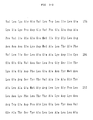
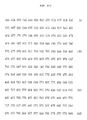
- Fig. 1 gives the amino acid sequence of the rat inhibitory protein-rat against phospholipase A2 purified from inflammatory sites (abbreviated to inhibitory protein-rat) according to the invention.
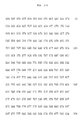
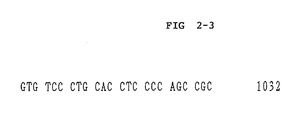
- Fig. 2 gives an example of DNA base sequence including the gene of the inhibitory protein-rat.
- Fig. 3 shows the amino acid sequence of human phospholipase A2-inhibitory protein purified from inflammatory site-human (abbreviated to inhibitory protein-human hereinafter) according to the present invention.
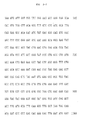
- Fig. 4 shows an example of the DNA base sequence of the gene for the inhibitory protein-human according to the present invention.
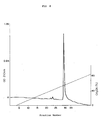
- Fig. 5 depicts an elution pattern of the inhibitory protein-rat in anion-exchange HPLC.
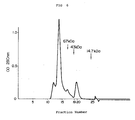
- Fig. 6 depicts an elution pattern of the inhibitory protein-rat in gel filtration HPLC.
- Fig. 7 depicts an elution pattern of the inhibitory protein-rat in anion-exchange HPLC.
- Fig. 8 depicts an elution pattern of the inhibitory protein-rat in reversed phase HPLC.
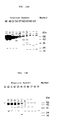
- Fig. 9 gives SDS-PAGE of the inhibitory protein-rat.
- Fig. 10 shows the inhibitory activity of the inhibitory protein-rat according to the present invention.
- Fig. 11 (including 11a and 11b) gives the inhibitory activity of the inhibitory protein-rat according to the present invention against a variety of phospholipase A2.
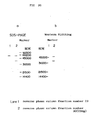
- Fig. 12 gives Western blotting results of untreated and 37°C-treated human serums.
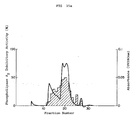
- Fig. 13 depicts an elution pattern (13a) and SDS-PAGE (13b) of the inhibitory protein-human in preparative anion-exchange HPLC.
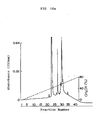
- Fig. 14 depicts an elution pattern (14a) and SDS-PAGE (14b) of the inhibitory protein-human in analytical anion-exchange HPLC.
- Fig. 15 depicts an elution pattern (Fig. 15a) and SDS-PAGE (Fig. 15b) of the inhibitory protein-human in gel filtration HPLC.
- Fig. 16 depicts an elution pattern (Fig. 16a) and SDS-PAGE (Fig. 16b) in reverse-phase HPLC.
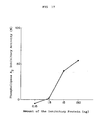
- Fig. 17 shows the inhibitory activity of the inhibitory protein-human according to the present invention.
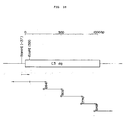
- Fig. 18 shows the strategy for determining the base sequence of the gene containing the inhibitory protein-rat according to the present invention.
- Fig. 19 gives the amino acid sequence near the breakage site of rat C3 by factor I of human C3.
- Fig. 20 depicts SDS-PAGE (Fig. 20a) and Western Blotting (Fig. 20b) of inhibitory protein-human according to the present invention.
- the protein inhibitors of phospholipase A2 purified from inflammatory sites according to the present invention is a polypeptide having the sequence of 344 amino acids given in Fig. 1 or another one having the sequence of 349 amino acids given in Fig. 3, and other polypeptides are also included in the protein inhibitors of phospholipase A2 purified from inflammatory sites according to the present invention, as long as they have a substantially equal level of biological activity to the inhibitory protein-human, even when the amino acid sequence of the inhibitory protein is partially substituted, deleted or inserted.
- the protein inhibitors of phospholipase A2 purified from inflammatory sites are produced by enzymatic treatment of serum from human, rat or the like and the enzymatic treatment means direct treatment of serum at 37°C for 6 to 10 days or treatment of C3 purified from serum with Factor I by usual operations.
- the gene of protein inhibitors of phospholipase A2 purified from inflammatory sites comprised the sequence of 1032 DNAs given in Fig. 2 or of 1047 DNA given in Fig. 4, and the single stranded DNA and the double stranded DNA consisting of the single stranded DNA and the complementally stranded DNA are also included in the scope of the present invention.
- DNA are also included in the genes of protein inhibitors of phospholipase A2 purified from inflammatory sites according to the present invention, as long as they code the amino acid sequence of the inhibitory protein, even when the DNA has a base sequence resulting from partial substitution, deletion or insertion of the bases in the inhibitory protein gene, or the DNA includes the above-stated base sequence or a part of the above-stated base sequence.
- the protein inhibitor of phospholipase A2 purified from inflammatory sites of the invention is isolated and purified by heat-treating or enzymatically treating serum and subjecting the resultant sample to anion-exchange HPLC, gel filtration HPLC and reverse phase HPLC, as the activity of phospholipase A2 purified from inflammatory sites is used as an index, as described by Vik [Vik, D.P. et al. J. Immunol., 134 , 2571 (1985)].
- the serum used in the invention is mammalian serum, particularly rat serum or human serum. Then, the sample which has been isolated and purified is determined its N-terminal amino acid sequence by the gas-phase protein sequencer (Applied Biosystem Co.).
- the inventors had cloned a rat C3 cDNA, ⁇ rC3/11 which harbored an about 2.7 kbp of insert DNA and was regarded to include the whole part of the gene coding the inhibitory protein according the present invention, which is presumably a protein analogue to human C3dg.
- the base sequence of the clone was determined and the base sequence of the gene of the inhibitory protein was identified in the comparison with the N-terminal amino acid sequence of the inhibitory protein.
- the N-terminal amino acid sequence of the purified sample was determined to be identical to human C3dg.
- the complete base sequence of the gene of the inhibitory protein was determined on the basis of the base sequence of human C3 gene [de Bruijn et al., Proc. Natl. Acad. Sci. USA, 82 , 708-712(1985)].
- the phospholipase A2 which was isolated and purified from the peritoneal exudate of rats with peritonitis caused by casein or from the synovial fluid of the humans with rheumatoid arthritis and the substrate was 14C-phosphatidyl-ethanolamine (about 2,000 dpm/nmol. 1 mM) extracted from E. coli cultured in the presence of 14C-acetic acid.
- an inhibitor sample and water were combined with 50 ⁇ l of 0.5M Tris ⁇ HCl (pH 9.0), 25 ⁇ l of 40mM CaCl2 and 25 ⁇ l of the substrate to adjust the total volume to 240 ⁇ l. They were mixed, finally 10 ⁇ l of an enzyme solution (0.1ng/ ⁇ l) was added to the mixture to start the reactions at 37°C for 10 minutes and the Dole's reagent was added (1.5 ml) to stop the reactions. According to the Dole's method, 14C-fatty acid was extracted and the radioactivity was measured with a liquid scintillation counter.
- One tenth volume of a dye solution (0.1% BPB, XC, 10% SDS) was added to a sample obtained from the enzymatic treatment or HPLC, they were heat-treated at 100°C for 5 minutes, applied to 12.5 % polyacrylamide gel and electrophoresed in the presence of 1% SDS with 15 to 25 mA for 1.5 hours.
- 2-mercaptoethanol (2ME) was added to the sample. After electrophoresis, the mixture was stained with CBB to detect the protein.
- the protein was transferred from the gel to a nitrocellulose filter using an electroblot apparatus (Milipore Co.).
- Sheep anti-human C3d serum (Dako), horseradish peroxidase-conjugated anti-sheep IgG antibody (Cappel) and 4-chloro-1-naphthol (Bio-Rad) as a substrate were used to detect the C3d band by the enzyme-linked immunmostaining assay.
- a gas-phase protein sequencer (Applied Biosystem 477A) and HPLC (Applied Biosystem 120A) were employed.
- the sample was dissolved in 200 ⁇ l of 8M urea-1% ammonium hydrogencarbonate solution, 600 ⁇ l of 1% ammonium hydrogencarbonate solution was added to the solution, then 1 ⁇ g of ⁇ -chymotrypsin was added to start the reaction at 37°C for 16 hours. Since the C-terminal of the protein was anticipated to be Arg, chymotrypsin was used.
- Acetic acid was added to the reaction mixture to adjust the pH to about 5, and applied to an anhydrochymotrypsin agarose column (TAKARA SHUZO) which was equilibrated with 50mM sodium acetate buffer (pH 5.0) containing 20 mM of CaCl2.
- the C-terminal fragment was recovered in the flow-through and its amino acid sequence was determined as in (3) to reveal the C-terminal amino acid sequence of the inhibitory protein.
- the protein inhibitors of phospholipase A2 purified from inflammatory sites according to the invention was elucidated on its complete amino acid sequence by the present invention, and can be produced by known methods of chemical synthesis, but the protein can be readily mass-produced by the recombinant DNA method.
- the protein inhibitors of phospholipase A2 purified from inflammatory sites will be utilized as an anti-inflammatory agent as well as in diagnosis of inflammatory diseases using an antibody obtained from the protein as an antigen or a kit for such diagnosis.
- the inhibitory protein according to the present invention obtained in (A) (fraction Nr. 30 in reversed phase HPLC, protein concentration 40 ⁇ g/ml) was determined its inhibitory activity against phospholipase A2 purified from inflammatory sites and other phospholipase A2 by the procedures for determining the inhibitory activity as described above (rat platelet-secretory phospholipase A2 was used as an enzyme. It is same as phospholipase A2 purified from inflammatory sites).
- Example 2 Preparation of protein inhibitors of phospholipase A2 purified from human inflammatory sites (abbreviated to inhibitory protein-human) and the measurement of its inhibitory activity
- the inhibitory protein-human according to the present invention obtained in (A), (fraction Nr. 30 in reversed phase HPLC, protein concentration 15 ng/ ⁇ l) was determined its inhibitory activity against phospholipase A2 purified from human inflammatory site and other phospholipase A2 according to the method described in Example 1.
- the inhibitory protein according to the present invention inhibits phospholipase A2 purified from human inflammatory site in a dose dependent manner.
- the amount of the inhibitory protein needed for inhibiting 1 ng of phospholipase A2 purified from human inflammatory sites was about 50 ng.
- the inhibitory protein inhibited phospholipase A2 purified from rat inflammatory sites, but not phospholipase A2 purified from porcine pancreas.
- the inhibitory protein according to the present invention has a specific inhibitory activity against phospholipase A2 purified from human inflammatory sites.
- the 39 kDa inhibitory protein which was isolated and purified in Example 1 (A), was determined its N-terminal amino acid sequence by means of the gas-phase protein sequencer 477A (Applied Biosystem Co.). The sequence was as follows: NH2-Glu-Asp-Val-Pro-Ala-Ala-Asp-Leu-Ser- This sequence was identical completely to the N-terminal sequence of C3dg which is deduced from the base sequence of rat C3 cDNA which will be stated later and was also identical completely to the N-terminal amino acid sequence of the protein inhibitors of phospholipase A2 purified from peritoneal exudate of a rat treated with dexamethasone.
- the filter was stained by the enzyme-linked immunostaining method using rabbit anti-human C3d serum (DAKOPATTS) as a primary antibody, anti-rabbit Ig G horseraddish peroxidase-conjugated sheep Ig G fraction (CAPPEL) as a secondary antibody, and 4-chloro-1-naphthol (Bio-Rad) as a substrate.
- DAKOPATTS rabbit anti-human C3d serum
- CAPPEL horseraddish peroxidase-conjugated sheep Ig G fraction
- Bio-Rad 4-chloro-1-naphthol
- the inhibitory protein specifically reacted with anti-human C3d serum.
- the inhibitory protein according to the present invention was identified as rat C3dg.
- Example 4 cDNA cloning of protein inhibitors of phospholipase A2 purified from inflammatory sites
- Hind III digest of plasmid pFC4/5.4 containing mouse C3 cDNA segment (J. B. C. 260 , 10936, 1986) was subjected to the low-melting agarose gel electrophoresis to separate the 2.2 kbp segment. Further, Stu I digest was subjected to similar operations to give 1.8 kbp segment.
- E. coli 1090 line infected with ⁇ gt 11 phage was cultured at 37°C for 5 hours and the resultant about 50,000 transformants were replicated to a nylon filter membrane, dipped in 0.5 M NaOH-1.5 M NaCl to modify the DNA, and neutralized with Tris ⁇ HCl buffer containing 1.5 M NaCl-1 mM EDTA (pH 7.2). Then, the filter was air-dried, and the DNA was immobilized to the filter by irradiating with ultraviolet rays for 3 minutes using a trans-illuminator. The mouse C3 cDNA obtained in (A) was labeled with 32P, and used as a screening probe.
- transformant groups on the examined filter were screened by hybridization with the probe at 65°C and the hybridization was judged by the autoradiography and 7 transformants were found to be positively cloned among about 50,000 transformants. These positive clones were named ⁇ r C3/11 - 17.
- phage DNA of ⁇ r C3/11 was extracted, the DNA was digested with EcoRI to give 0.7 kbp and 2.0 kbp DNA segments. These segments were inserted into the EcoRI sites of M13mp19 (TAKARA SHUZO). The 0.7 kbp segment was further digested with BamHI into 0.1 kbp segment and 0.6 kbp segment, and these segments were inserted into the mp19 to determine the base sequence from both ends.
- the sequence was analyzed according to the 7-DEAZA technique [Mizusawa, et. al., Nucleic Acid Res., 14 , 1319 (1986)].
- the 2.0 kbp segment was analyzed according to the technique developed by Hood et al in which the sequence analysis is put forward, as the primers designed from the determined region are synthesized [Hood, et. al., Anal. Biochem., 154 , 353 (1986)].
- Fig. 18 The strategy for determining the base sequence of ⁇ r C3/11 is given in Fig. 18.
- the uppermost numerals are the base numbers at the breakage points based on the framed part of rat C3dg
- EcoRI and others are the names of restriction enzymes
- the numerals in parentheses are the base number on the cleavage site or the starting site for determination of base sequence.
- the horizontal arrows give the direction and range for determining base sequence with restriction enzymes and the primer, respectively.
- Example 5 Determination of the base sequence of the gene coding protein inhibitors of phospholipase A2 purified from rat inflammatory sites and the amino acid sequence of the protein
- Fig. 19 shows the part corresponding to the amino acid sequence in the neighborhood of the breakage sites by human C3 factor I, among the rat C3 amino acid sequence presumed from the base sequence (C) of the C3 cDNA clone which has been elucidated in Example 4.
- Human C3 is cleaved by factor I between 283Arg-284Glu in the ⁇ chain, but the corresponding site shifts to Gln-Gly in rat C3 and Arg-Glu exists at the site five residues after Gln-Gly. And, the N-terminal amino acid sequence of the fragment formed by cleavage at this site was completely identical to the N-terminal amino acid sequence of the inhibitory protein according to the invention, which was purified from rat serum.
- rat C3 is cleaved at this site by an enzyme having similar activity to human factor I.
- the protein inhibitor of phospholipase A2 purified from inflammatory sites has been found to be a protein which is coded with 1032 bases and is composed of 344 amino acids.
- Example 6 Determination of the complete base sequence of the gene of protein inhibitors of phospholipase A2 purified from human inflammatory sites and the complete amino acid sequence of the inhibitory protein
- N-terminal amino acid sequence was determined in the same manner as described above on the inhibitory protein of about 39 kDa molecular weight which was isolated and purified in Example 2(A) (fraction Nr. 30 in the reverse phase HPLC). As a result, the following sequence was given: NH2-Glu-Gly-Val-Asn-Lys-Glu-Asp-Ile-Pro-Pro- This sequence was completely identical to the N-terminal amino acid sequence of human C3dg.
- Example 2(A) fraction Nr. 30 in reverse phase HPLC
- the protein was transferred to a filter by the western blotting method and detected by the enzyme-linked immunostaining method using anti-human C3d serum.
- Fig. 20a gives the SDS-PAGE
- Fig. 20b shows the western blotting.
- the protein inhibitors of phospholipase A2 purified from human inflammatory sites is human C3dg. Accordingly, the base sequence of the inhibitory protein of this invention is presumed to be completely identical to the part coding C3dg in the entire base sequence of the human C3 gene.
- the complete amino acid sequence of the protein inhibitor of phospholipase A2 purified from human inflammatory sites and the complete base sequence of the protein inhibitor of phospholipase A2 purified from human inflammatory sites of the invention are those given in Fig. 3 and Fig. 4, respectively.
- the protein inhibitors of phospholipase A2 purified from inflammatory sites was found to be a protein which is coded with 1047 bases and comprises 349 amino acids.
Landscapes
- Chemical & Material Sciences (AREA)
- Health & Medical Sciences (AREA)
- Life Sciences & Earth Sciences (AREA)
- Organic Chemistry (AREA)
- General Health & Medical Sciences (AREA)
- Gastroenterology & Hepatology (AREA)
- Biochemistry (AREA)
- Biophysics (AREA)
- Zoology (AREA)
- Genetics & Genomics (AREA)
- Medicinal Chemistry (AREA)
- Molecular Biology (AREA)
- Proteomics, Peptides & Aminoacids (AREA)
- Toxicology (AREA)
- Medicines That Contain Protein Lipid Enzymes And Other Medicines (AREA)
- Peptides Or Proteins (AREA)
- Preparation Of Compounds By Using Micro-Organisms (AREA)
Applications Claiming Priority (4)
| Application Number | Priority Date | Filing Date | Title |
|---|---|---|---|
| JP1200246A JPH0365187A (ja) | 1989-08-03 | 1989-08-03 | 起炎性ホスホリパーゼa↓2阻害蛋白、その製造方法およびその遺伝子 |
| JP200246/89 | 1989-08-03 | ||
| JP2089085A JP2581823B2 (ja) | 1990-04-05 | 1990-04-05 | ヒト炎症局所由来ホスホリパーゼa▲下2▼阻害蛋白、その製造方法およびその遺伝子 |
| JP89085/90 | 1990-04-05 |
Publications (2)
| Publication Number | Publication Date |
|---|---|
| EP0436737A1 true EP0436737A1 (de) | 1991-07-17 |
| EP0436737A4 EP0436737A4 (en) | 1992-10-28 |
Family
ID=26430519
Family Applications (1)
| Application Number | Title | Priority Date | Filing Date |
|---|---|---|---|
| EP19900911691 Withdrawn EP0436737A4 (en) | 1989-08-03 | 1990-08-03 | Phospholipase a 2? inhibiting protein originating in inflamed region, production thereof, and gene therefor |
Country Status (2)
| Country | Link |
|---|---|
| EP (1) | EP0436737A4 (de) |
| WO (1) | WO1991001999A1 (de) |
Cited By (1)
| Publication number | Priority date | Publication date | Assignee | Title |
|---|---|---|---|---|
| EP0495995A4 (de) * | 1990-08-03 | 1994-04-13 | Teijin Limited |
Families Citing this family (1)
| Publication number | Priority date | Publication date | Assignee | Title |
|---|---|---|---|---|
| US20050186577A1 (en) | 2004-02-20 | 2005-08-25 | Yixin Wang | Breast cancer prognostics |
Family Cites Families (3)
| Publication number | Priority date | Publication date | Assignee | Title |
|---|---|---|---|---|
| CA1290267C (en) * | 1985-04-15 | 1991-10-08 | Lorin K. Johnson | Human anti-inflammatory phospholipase inhibitor protein |
| JPH06799B2 (ja) * | 1987-04-02 | 1994-01-05 | 帝人株式会社 | 起炎性フオスフオリパ−ゼa▲下2▼阻害活性を有する蛋白 |
| JPH0291100A (ja) * | 1988-09-29 | 1990-03-30 | Teijin Ltd | ヒトホスホリパーゼa↓2阻害蛋白 |
-
1990
- 1990-08-03 EP EP19900911691 patent/EP0436737A4/en not_active Withdrawn
- 1990-08-03 WO PCT/JP1990/000996 patent/WO1991001999A1/ja not_active Ceased
Cited By (1)
| Publication number | Priority date | Publication date | Assignee | Title |
|---|---|---|---|---|
| EP0495995A4 (de) * | 1990-08-03 | 1994-04-13 | Teijin Limited |
Also Published As
| Publication number | Publication date |
|---|---|
| EP0436737A4 (en) | 1992-10-28 |
| WO1991001999A1 (fr) | 1991-02-21 |
Similar Documents
| Publication | Publication Date | Title |
|---|---|---|
| Gutte et al. | The synthesis of ribonuclease A | |
| Oxvig et al. | Isolation and characterization of circulating complex between human pregnancy-associated plasma protein-A and proform of eosinophil major basic protein | |
| US5344915A (en) | Proteins and the preparation thereof | |
| Andre et al. | Severin, gelsolin, and villin share a homologous sequence in regions presumed to contain F-actin severing domains. | |
| Maeda et al. | Differential RNA splicing and post-translational cleavages in the human salivary proline-rich protein gene system. | |
| Sallenave et al. | Characterization and gene sequence of the precursor of elafin, an elastase-specific inhibitor in bronchial secretions | |
| JPH0720434B2 (ja) | ヒルジン化合物の製造方法 | |
| JPH1175875A (ja) | ヒト組織因子抑制因子 | |
| Müller-Esterl et al. | Purification and properties of human low molecular weight kininogen | |
| Filipek et al. | Interaction of calcyclin and its cyanogen bromide fragments with annexin II and glyceraldehyde 3-phosphate dehydrogenase | |
| Esnard et al. | Purification and physicochemical characterization of a new rat plasma proteinase inhibitor, α1-inhibitor III | |
| Prussak et al. | Peptide production from proteins separated by sodium dodecyl-sulfate polyacrylamide gel electrophoresis | |
| EP0758682B1 (de) | Inhibitor des Hepatozytwachstumsfaktoraktivators | |
| McMaster et al. | The growth-associated neuronal phosphoprotein B-50: improved purification, partial primary structure, and characterization and localization of proteolysis products | |
| Maras et al. | Pig kidney 3, 4‐dihydroxyphenylalanine (Dopa) decarboxylase: Primary structure and relationship to other amino acid decarboxylases | |
| Sparrow et al. | The amino acid sequence of component 7c, a type II intermediate-filament protein from wool | |
| Feldman et al. | Purification and characterization of frog. alpha.-macroglobulin: receptor recognition of an amphibian glycoprotein | |
| US5344764A (en) | Protein inhibitors of phospholipase A2 purified from inflammatory sites and production process | |
| JP3022984B2 (ja) | 細菌コラゲナーゼ遺伝子 | |
| US5646249A (en) | Isolation and characterization of a novel chaperone protein | |
| MacWright et al. | Isolation and characterization of pepsin-solubilized human basement membrane (type IV) collagen peptides | |
| Tatsumi et al. | Purification and characterization of nebulin subfragments produced by 0.1 mM CaCl2 | |
| Tobe et al. | Mapping of human inter-alpha-trypsin inhibitor family heavy chain-related protein gene (ITIHL1) to human chromosome 3p21→ p14 | |
| US5196304A (en) | Serine proteinase inhibitor gene from the insect Manduca sexta | |
| EP0753304A1 (de) | Thrombolytisches enzym und verfahren zu seiner herstellung |
Legal Events
| Date | Code | Title | Description |
|---|---|---|---|
| PUAI | Public reference made under article 153(3) epc to a published international application that has entered the european phase |
Free format text: ORIGINAL CODE: 0009012 |
|
| 17P | Request for examination filed |
Effective date: 19910410 |
|
| AK | Designated contracting states |
Kind code of ref document: A1 Designated state(s): DE FR GB |
|
| A4 | Supplementary search report drawn up and despatched |
Effective date: 19920910 |
|
| AK | Designated contracting states |
Kind code of ref document: A4 Designated state(s): DE FR GB |
|
| 17Q | First examination report despatched |
Effective date: 19930706 |
|
| STAA | Information on the status of an ep patent application or granted ep patent |
Free format text: STATUS: THE APPLICATION IS DEEMED TO BE WITHDRAWN |
|
| 18D | Application deemed to be withdrawn |
Effective date: 19960612 |