EP0439693A2 - Packetvermitteltes Mehrfachverarbeitungsverbindungssystem mit Fehlerkorrektur und Wiederherstellung - Google Patents
Packetvermitteltes Mehrfachverarbeitungsverbindungssystem mit Fehlerkorrektur und Wiederherstellung Download PDFInfo
- Publication number
- EP0439693A2 EP0439693A2 EP90120874A EP90120874A EP0439693A2 EP 0439693 A2 EP0439693 A2 EP 0439693A2 EP 90120874 A EP90120874 A EP 90120874A EP 90120874 A EP90120874 A EP 90120874A EP 0439693 A2 EP0439693 A2 EP 0439693A2
- Authority
- EP
- European Patent Office
- Prior art keywords
- packet
- processor
- data
- packets
- field
- Prior art date
- Legal status (The legal status is an assumption and is not a legal conclusion. Google has not performed a legal analysis and makes no representation as to the accuracy of the status listed.)
- Granted
Links
Images





Classifications
-
- G—PHYSICS
- G06—COMPUTING OR CALCULATING; COUNTING
- G06F—ELECTRIC DIGITAL DATA PROCESSING
- G06F15/00—Digital computers in general; Data processing equipment in general
- G06F15/16—Combinations of two or more digital computers each having at least an arithmetic unit, a program unit and a register, e.g. for a simultaneous processing of several programs
- G06F15/163—Interprocessor communication
- G06F15/173—Interprocessor communication using an interconnection network, e.g. matrix, shuffle, pyramid, star, snowflake
- G06F15/17356—Indirect interconnection networks
- G06F15/17368—Indirect interconnection networks non hierarchical topologies
- G06F15/17393—Indirect interconnection networks non hierarchical topologies having multistage networks, e.g. broadcasting scattering, gathering, hot spot contention, combining/decombining
-
- G—PHYSICS
- G06—COMPUTING OR CALCULATING; COUNTING
- G06F—ELECTRIC DIGITAL DATA PROCESSING
- G06F11/00—Error detection; Error correction; Monitoring
- G06F11/07—Responding to the occurrence of a fault, e.g. fault tolerance
- G06F11/0703—Error or fault processing not based on redundancy, i.e. by taking additional measures to deal with the error or fault not making use of redundancy in operation, in hardware, or in data representation
- G06F11/0706—Error or fault processing not based on redundancy, i.e. by taking additional measures to deal with the error or fault not making use of redundancy in operation, in hardware, or in data representation the processing taking place on a specific hardware platform or in a specific software environment
- G06F11/0712—Error or fault processing not based on redundancy, i.e. by taking additional measures to deal with the error or fault not making use of redundancy in operation, in hardware, or in data representation the processing taking place on a specific hardware platform or in a specific software environment in a virtual computing platform, e.g. logically partitioned systems
-
- G—PHYSICS
- G06—COMPUTING OR CALCULATING; COUNTING
- G06F—ELECTRIC DIGITAL DATA PROCESSING
- G06F11/00—Error detection; Error correction; Monitoring
- G06F11/07—Responding to the occurrence of a fault, e.g. fault tolerance
- G06F11/0703—Error or fault processing not based on redundancy, i.e. by taking additional measures to deal with the error or fault not making use of redundancy in operation, in hardware, or in data representation
- G06F11/0706—Error or fault processing not based on redundancy, i.e. by taking additional measures to deal with the error or fault not making use of redundancy in operation, in hardware, or in data representation the processing taking place on a specific hardware platform or in a specific software environment
- G06F11/0721—Error or fault processing not based on redundancy, i.e. by taking additional measures to deal with the error or fault not making use of redundancy in operation, in hardware, or in data representation the processing taking place on a specific hardware platform or in a specific software environment within a central processing unit [CPU]
- G06F11/0724—Error or fault processing not based on redundancy, i.e. by taking additional measures to deal with the error or fault not making use of redundancy in operation, in hardware, or in data representation the processing taking place on a specific hardware platform or in a specific software environment within a central processing unit [CPU] in a multiprocessor or a multi-core unit
-
- G—PHYSICS
- G06—COMPUTING OR CALCULATING; COUNTING
- G06F—ELECTRIC DIGITAL DATA PROCESSING
- G06F11/00—Error detection; Error correction; Monitoring
- G06F11/07—Responding to the occurrence of a fault, e.g. fault tolerance
- G06F11/0703—Error or fault processing not based on redundancy, i.e. by taking additional measures to deal with the error or fault not making use of redundancy in operation, in hardware, or in data representation
- G06F11/0793—Remedial or corrective actions
-
- G—PHYSICS
- G06—COMPUTING OR CALCULATING; COUNTING
- G06F—ELECTRIC DIGITAL DATA PROCESSING
- G06F11/00—Error detection; Error correction; Monitoring
- G06F11/07—Responding to the occurrence of a fault, e.g. fault tolerance
- G06F11/14—Error detection or correction of the data by redundancy in operations
- G06F11/1402—Saving, restoring, recovering or retrying
- G06F11/1415—Saving, restoring, recovering or retrying at system level
- G06F11/1443—Transmit or communication errors
-
- G—PHYSICS
- G06—COMPUTING OR CALCULATING; COUNTING
- G06F—ELECTRIC DIGITAL DATA PROCESSING
- G06F11/00—Error detection; Error correction; Monitoring
- G06F11/07—Responding to the occurrence of a fault, e.g. fault tolerance
- G06F11/08—Error detection or correction by redundancy in data representation, e.g. by using checking codes
- G06F11/10—Adding special bits or symbols to the coded information, e.g. parity check, casting out 9's or 11's
-
- G—PHYSICS
- G06—COMPUTING OR CALCULATING; COUNTING
- G06F—ELECTRIC DIGITAL DATA PROCESSING
- G06F11/00—Error detection; Error correction; Monitoring
- G06F11/07—Responding to the occurrence of a fault, e.g. fault tolerance
- G06F11/14—Error detection or correction of the data by redundancy in operations
- G06F11/1402—Saving, restoring, recovering or retrying
- G06F11/1415—Saving, restoring, recovering or retrying at system level
- G06F11/142—Reconfiguring to eliminate the error
- G06F11/1423—Reconfiguring to eliminate the error by reconfiguration of paths
Definitions
- This invention relates to the field of multiprocessing systems and error recovery in multiprocessing systems.
- a multiprocessing system is a computing system employing two or more connected processing units to execute programs simultaneously.
- MPS multiprocessing system
- Conventionally, multiprocessing systems have been classified into a number of types based on the interconnection between the processors.
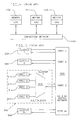
- a first type of conventional multiprocessing system is the "multiprocessor" or “shared memory” system (Fig. 1).
- a shared memory system number of central processing units 102-106 are interconnected by the fact that they share a common global memory 108.
- each central processing unit may have a local cache memory, cross cache validation makes the caches transparent to the user and the system appears as if it only has a single global memory.
- Shared memory systems also take the form of multiple central processing units sharing multiple global memories through a connection network.
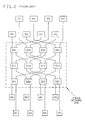
- An example of such a system is an Omega network (Fig. 2).
- a plurality of switches S01-S24 organized into stages route data between a plurality of processors P0-P7 and a plurality of global memories M0-M7 by using a binary destination tag generated by a requesting processor.
- Each stage of switches in the network decodes a respective bit of the tag to make the network self-routing.
- the Omega network thereby avoids the need for a central controller.
- a common characteristic of shared memory systems is that access time to a piece of data in the memory is independent of the processor making the request.
- a significant limitation of shared memory systems is that the aggregate bandwidth of the global memory limits the number of processors that can be effectively accommodated on the system.
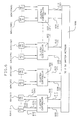
- a second type of commonly known multiprocessing system is the multicomputer message passing network (Fig. 3).
- Message passing networks are configured by interconnecting a number of processing nodes.
- Each node 302-308 includes a central processing unit and a local memory that is not globally accessible.
- the programmer In order for an application to share data among processors the programmer must explicitly code commands to move data from one node to another.
- the time that it takes for a processor to access data depends on its distance (in nodes) from the processor that currently has the data in its local memory.
- each node has a direct connection to every other node.
- Such configurations are, however, impractical for large number of processors. Solutions such as hypercube configurations have been conventionally used to limit the largest distance between processors. In any event, as the number of processors in the network increases the number of indirect connections and resulting memory access times will also tend to increase.
- Hybrid machines have some of the properties of shared memory systems and some of the properties of message passing networks.
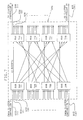
- a number of processors 402-406 each having a local memory, are connected by way of a connection network 408. Even though all memories are local, the operating system makes the machine look like at has a single global memory.
- An example of a Hybrid machine is the IBM RP3.
- Hybrid machines can typically provide access to remote data significantly faster than message passing networks. Even so, data layout can be critical to algorithm performance and the aggregate communications speed of the connection network is a limit to the number of processors that can be effectively accommodated.
- a variant on multiprocessing system connection networks is the cluster-connected network (Fig. 5).
- a cluster-connected network a number of clusters 502-508, each including a group of processors 510-516 and a multiplexer/controller 518, are connected through switch network 520.
- the cluster network has advantages over the topology of Fig. 4 in that a larger number of processors can be effectively connected to the switch network through a given number of ports.
- One constraint of cluster connected networks is that the bandwidths of both the cluster controller and the switch are critical to system performance. For this reason, the design of the switch and cluster controller are important factors in determining maximum system size and performance.
- It is a third object of this invention is to provide a computer system capable of performing complex ad hoc queries against a relational database at speeds which are several orders of magnitude faster than with today's largest mainframe comput-ers.
- an improved cluster controller includes a switch for distributing packets received from the processing elements in accordance with a destination address and packet priority, a global storage, queues for controlling packet flow to the processing elements, an assembly buffer for assembling data from the processing elements into packets, and selection logic for selecting packets from any of the assembly buffer and the global storage to the switching network.
- a system and method for recovering from errors in the destination field of data being transferred between two nodes of a multiprocessing system having at least three nodes is provided.
- the error is detected and corrected.
- data is rerouted to the correct node by way of an independent data path (i.e. one other than the one on which it was received).
- an independent data path i.e. one other than the one on which it was received.
- a multiprocessor network is provided.
- the network is architected as a plurality of cluster controllers which connect groups of processors by way of a switch.
- the processing elements each include a local memory which is accessible by each of the processors in the system.
- a packet format for use in a cluster connected multiprocessing system includes a data field, source and destination fields, a field that can cause a write into a global memory of a cluster controller, and error correct/detect fields.
- the present multiprocessing system comprises of a large number of pro-cessing elements which are interconnected by means of a high bandwidth switch.
- the hardware described in this disclosure provides up to 4096 processing elements, although the described packet architecture allows up to 32768 processing elements. It should be understood, however, that any number of processing elements could be configured using the principles described herein.
- the size of a system configu-ration can be scaled according to computational require-ments, with a granularity of a single processing element (PE).
- Each processing element comprises one or more high performance (e.g., 50-200 MIPS) general purpose microprocessors, a large local storage (e.g., 64-256MB) and a DMA controller that sends and receives messages through the switch without requiring processor intervention.
- Each processing element can also comprise one or more optional hardware accelerators for database processing functions,
- Each processing element can be packed on an individual printed circuit card.
- the processing element cards can also provide special purpose hardware, such as I/O ports for direct access to a relational database file system, vector processing engines, or data encryption facilities.
- database accelerator hard-ware can be used to enhance the performance of common functions such as predicate evaluation, field extraction, sorting, merging, and joining.
- the switch that interconnects the processing elements is hierarchical, comprising a network of clusters. Up to 64 processing elements are combined to form a cluster, and up to 64 clusters are linked by way of a Banyan network. Messages are routed through the switch in the form of packets, each of which comprise a quadword of data and a word of control information.
- Fig. 6 is a structural overview of the present multiprocessing system.
- the system of Fig. 6 is a cluster connected network (cluster network) comprising 32 cluster controllers 602(1)-602(32).
- Each cluster controller provides a system interface for 64 Processing Elements (PEs) 604(1-64), 604(65-128) ... 604(1985-2048).
- PEs Processing Elements
- Each group of one cluster controller and 64 processing elements is referred to as a "cluster”.
- Each processing element in a given cluster is connected to the cluster controller by way of an input bus (e.g. 612(1)) and an independent (separate) output bus (e.g. 614(1)).
- the 32 cluster controllers are each connected to a 32x32 switch network 606 by way of an input bus 608(1-32) and an independent output bus 610(1-32).
- the entire system thus includes 2048 processing elements 604(1-2048). Both the cluster controllers and the switch network operate to assemble and transfer data between the processing elements synchronously, under control of a high speed clock (e.g. 5ns cycle time).
- Expanded versions of the system having, for example, 64 clusters interconnected by a 64x64 switch network can be embodied in the same structure. A variety of larger and smaller configurations are equally feasible.
- a port on the switch network 606 can devoted for use as a host interface.
- the host interface is provided by a host adapter element which takes the place of any one of the cluster controllers 602(1)-602(32) of Fig. 6.
- the link between the host computer 1800 and the host adaptor 1700 is preferably provided by multiple fiberoptic or copper cables 1702 which connect to a high speed data link in the host computer.
- the link is preferably full duplex, providing for simultaneous transfers in both directions without handshaking protocols.
- the host computer 1800 preferably transmits data blocks that comprise one or more data records preceded by a header record that contains control information (which includes a logical destination address and a command field).
- An exemplary size for each data record is 4 kilobytes.
- Commands from the host computer to the cluster network are accomplished as a special case of a header record without accompanying data records.
- the preferred architecture for the host to cluster network communication is a symmetrical peer to peer message passing scheme, which allows the cluster network to generate asynchronous responses to the host computer via commands that result in interruption on the host computer 1800.
- the host adapter 1700 is provided with a data block buffer array 1704. Buffering is provided because the data rate to and from the host computer can well exceed the data rate of an individual processing element.
- the host may have a data rate range of 500MB/second to 1GB/second, and a given data block could be routed to a single processing element that can only receive data at a peak rate of 200MB/sec.
- the data block buffer array 1704 includes multiple buffers (preferably at least 4KB each) for speed matching purposes. This enables the host adapter 1700 to manage several concurrent operations in order to run the host link at the maximum rate allowed by the host computer.
- the host computer 1800 addresses the cluster network as a large linear address space. Via a mapping table embodied with the routing logic 1706, the host adapter 1700 converts each host address to a physical address in the memory of a processing element. Thus, the host address space of data blocks is distributed across all the processing elements as a band within their local memories. It is contemplated that as much as half the processing elements local memory space will be used for this purpose.
- the mapping is managed by a microprocessor 1708 within the host adapter 1700.
- the microprocessor 1708 has a local storage 1710 for working data and microcode and performs the function of providing configuration control (including logical partitioning of the multiprocessor for handling multiple queries).
- the actual data transfers are handled by support elements, explained below, rather than by the microprocessor 1708 itself.
- the interface logic 1712 performs the functions of converting data blocks, from the host, to packets for transmission to processing elements via the switch network and reverse assembly from packets.
- a link adaptor 1714 converts data from the internal Host Adaptor format to the appropriate link format (e.g. fiber optic formats), and visa versa.
- the link adaptor 1714 also handles link level protocols. As previously explained, the routing logic 1706 decides where logical address maps to processors.
- the Host Adapter 1700 is preferably embodied using a mother board that holds a number of conventional logic and memory cards using the same technologies as are used in the processing element cards. It should be understood, that the multiprocessor of Fig. 6 can operate as a stand alone multiprocessing system without the provision of a host connection.
- Fig. 7 is a more detailed illustration of the 32x32 switch network 606 of Fig. 6.
- the switch network 606 comprises eight intercon-nected 8x8 switches 702-716 each of which is preferably implemented on a thermal conduction module (TCM).
- a first column (stage) of switches 702-708 receives incoming packets from each of the 32 cluster controllers 602(1)-602(32). The outputs of each of the switches in the first column are connected, via pairs of output busses, to each of four 8X8 switches 710-716 arranged in a second column (stage).
- the second column of switches is connected to route the received data packets to the data inputs of any one of the 32 cluster controllers 602(1)-602(32).
- the 8X8 switches 702-716 are of the self routing type (i.e. they decode an internal field in the incoming message to determine routing) that can provide connection between any given input port and any given output port. Further, the 8X8 switches provide simultaneous connection and communication between all eight input ports and all eight output ports in accordance with the selected routing.
- a 64x64 version of the switch is used in an embodiment having 64 cluster controllers.
- the 64X64 switch is made by adding eight more 8x8 switches, for a total of 16 switches arranged in two columns of 8 switches each.
- For the 64x64 configuration only one bus is provided between each switch in the first and second stages. Only one bus is needed because all outputs of each switch in the first column are individually connected to a switch in the second column of the 64 X 64 embodiment.
- Fig. 8 shows a typical one of the 8x8 switches 702-716.
- Each 8X8 switch comprises eight 8X1 switch/queues. The interconnection of a typical one of these switch/queues 802 is illustrated.
- Each of the input ports on each 8X8 switch/queue is bused to all eight 8X1 switch/queues.
- Each 8X1 switch queue can take from 0 to 8 of its inputs (quintword packets) and enter them into a single fifo output queue in each cycle of the network clock. In the same cycle a single packet (the top of queue) can be taken off the queue and passed on to the next stage of the switch network or to the final destination. If the queue is empty at the start of a cycle, a valid input packet can bypass the queue and go directly to the output, thus saving a cycle which would have been otherwise wasted in unneeded staging.
- Each packet carries with it its own destination address.
- the addressing mechanism provides the following function. Only those packets properly addressed for the output port represented by a given switch queue will be actually be enqueued on that port. In addition, each packet will be enqueued on only one queue.
- the addresses must be such that an address corresponds to a unique path between a source and destination. Groups of 3 bits within each address represent the local addresses within each switch. A fixed priority scheme is used to determine in what order each of the simultaneous input packets is enqueued.
- Fig. 9 is a more detailed diagram of the typical switch/queue 802 shown in Fig. 8.
- Each switch/queue contains a queue 902 of up to 64 pack-ets.
- Each packet is a quintword (180 bits) in size.
- Each word includes 32 bits of data plus 4 bits of ECC.
- a packet from an input port is selected by the recognition logic 904 of a single switch/queue based on the destination address (DST id) which is contained in the control word portion of the packet. Up to eight packets (one from each input port) may be enqueued at a given output port during each cycle.
- DST id destination address
- each output port can select a packet for transmission, either from its local queue 902, or from short circuit logic 906 which enables a single input to go directly to the output port register 910 when the queue is empty.
- Busy logic 908 is provided to prevent forwarding a packet when a downstream queue is full. This design prevents an output from appearing to be busy during bursts of activity, and can thereby avoid propagating the busy condition to senders.
- the recognition logic 904 will select on those three addresses to be gated to this part of the switch. If the output port queue 902 is not empty and is not full, the the input packets will be enqueued. If the output port queue 902 is full, the Busy Logic 908 will prevent the ingating of the packets. If the output port queue 902 is empty, the Short Circuit Logic 906 will take one of the three input packets, in accord with a conventional priority scheme, and pass it directly to the output port register 910, at the same time enqueueing the remaining two packets on the output port queue. The packet in the Output Port Register 910 will be gated to the next level of the switch as long as that level is not busy.
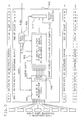
- Fig. 10 is a more detailed illustration of an exemplary one of the cluster controllers 602(1)-602(32) of Fig. 6.
- Cluster controller 1 602(1) will be used by way of example.
- the 9 from 6 switch 1002 receives six inputs: one from the switching network 606, one from a global store 1004 and four from a cluster controller assembly buffer 1006.
- the 9 from 6 switch 1002 distributes the received data (from the six inputs) to the appropriate "octant" or to the global store 1004.
- the global store 1004 can be used for a variety of functions including sharing status between processing elements, process coordination, shared algorithm control, and shared data.
- the 9 from 6 switch 1002 decodes 3 bits from the internal packet destination address (DST).
- the global store 1004 is accessed by the switch 1002 decoding a global store access command. Any conflicts for output from the 9 from 6 switch 1002 are resolved with a conventional priority and round robin scheme.
- the connection from the switching network 608(1) always has highest priority.
- Eight are connected to octants of processing element queues.
- An exemplary octant is designated by reference numeral 1008.
- Each of eight outputs 1010(1) -1010(8) are connected to an individual octant of this type.
- Each octant includes eight processing element queues. Each queue is 16 packets deep and includes busy/full logic and short circuits for empty queues.
- Each octant has only one input (from the 9-from-6 switch) and one output, and enables one read and one write to occur simultaneously.
- Each cluster controller 602(1) -602(32) further includes 32 Processing Element Ports (PEPs) 1012(1)-1012(32).
- Each processing element port includes subports to interface with two processing elements.
- Each subport includes a two byte output port connected to a corresponding one of the processing element input busses 612(1-64) and a one byte input port connected to the corresponding one of the processing element output busses 614(1-64) for each of two processing elements.
- the output of each queue is bused to all four PEPs (for eight processing elements) in the octant.
- the PEPs use address decoding to ingate only those packets which are addressed to the appropriate processing element.
- Each PEP includes a packet buffer for the output port with logic to signal to the octant queues when the buffer is empty.
- Each of the eight octants operates independently, serving one of its eight PEP buffers one quintword each cycle, if a packet is available. From the PEPs, the packet is sent across the appropriate processing element input bus to the addressed processing element, two bytes at a time. The asymmetry of the input and output buses (one versus two bytes) helps to prevent queue full conditions.
- one byte of data comes across one the input buses from a processing element into the corresponding processing element port (i.e. the PEP to which the PE is connected). From the processing element port, the incoming byte of data is routed directly into a port of an assembly buffer 1006 which takes in successive bytes and forms a quintword packet.
- the assembly buffer has 64 slots (quintword memory locations) 1014(1)-1014(64). In other words, there is one slot in the assembly buffer for each processing element, each operating independently an having its own byte counting and busy logic (not shown).
- the assembly buffer slots are arranged into four columns. Each column has its own round robin logic to select one slot of those which are complete. Each cycle of the network clock, one quintword packet from one slot in each column can be outgated. The outgated packets go to the 9-from-6 switch 1002 and the 1-of-5 selector 1016. A fifth input to the 1 of 5 selector 1016 comes from the global store 1004. The 1-of-5 selector will, based on address and round robin logic, takes one packet which needs to be routed through the switch network 606 and send it on its way. Packets which are not successfully gated through either the 1-of-5 selector or the 9-of-6 switch remain in their slots to be selected the next time the round robin algorithm allows.
- An example of the operation of the cluster controller, under a uniform distribution of messages, is as follows: One input from the connected processing elements, a byte per cycle, is read into each of the assembly buffers. Five quintword packets per cycle can be outgated to the 1-of-5 selec-tor, so that one quintword per cycle is sent to another cluster controller.
- up to 6 quintword packets can be gated to up to 9 destinations, with queueing.
- the cluster controller can input 6.4 GB/sec from the PEs (100 MB/sec/PE).
- the assembly buffers and global memory can output 12.8 GB/sec, up to 3.2 GB/sec of which can to to other cluster control-lers. Up to 19.2 GB/sec may enter into the output queues, and the output queues themselves can dispatch up to 28.8 GB/sec to the PEPs and Global Store.
- the PEPs each can deliver 200 MB/sec to their respective PEs, which aggregated would allow up to 12.8 GB/sec to flow out of the cluster controller to the PEs. While these are peak numbers, they show that the design is biased to allow a steady stream of 3.2 GB/sec to flow from PEs to other clusters, and up to 12.8 GB/sec back out to the PEs. Again, the design is biased to prevent queues from filling and creating contention upstream in the switch.
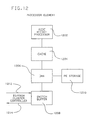
- Fig. 12 shows a preferred embodiment of the processing elements 604(1)-604(2048) of Fig. 6. It should be understood that the present multiprocessor could use other types of processors as processing elements.
- the central processor 1202 of the processing element is preferably a state of the art RISC microprocessor. It is connected, in a conventional manner, to the processor cache 1204 which gives fast access time to instructions and data.
- the bus from the cache 1204 ties into a DMA controller 1206.
- the DMA controller 1206 provides the cache 1204 bidirectional ports to each of the switch buffer 1208 and the main processing element storage 1210.
- the switch buffer 1208 is an input/output buffer which handles the data and protocols to and from the cluster controller.
- the cluster controller connects to the processing element through the switch buffer 1208 by way of two unidirectional ports connected to individual busses 1212, 1214.
- the first unidirectional port handles incoming traffic from the cluster controller to the processing element while the second unidirectional port handles outgoing traffic from the processing element to the cluster controller.
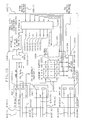
- Fig. 13 is a more detailed diagram of the DMA controller 1206 of Fig. 12.
- a Quintword Assembly Buffer 1302 takes 2 bytes of data at a time from the cluster controller to processing element bus 1212 and reassembles the packet.
- the ECC logic 1304 checks and restores the integrity of the data as well checks whether the packet arrived at the proper destination.
- the Input Message Control Logic 1308 places the data on a queue in the PE storage 1210. This task is accomplished by a Storage Arbitration Controller 1310, which can handle multiple requests for the PE storage 1210 and can resolve any storage conflicts. The Input Message Control Logic 1308 then signals the PE microprocessor 1202 that a message is available.
- the PE microprocessor 1202 When the PE microprocessor 1202 wishes to send a message to another PE, it first enqueues the message on a destination queue in the PE storage 1210. The microprocessor 1202 then signals the Output Message Control 1312 that a message is ready. It does this by doing a "store" operation to a fixed address. This address does not exist in the PE storage 1210 but is decoded by the Storage Arbitration Control 1310 as a special signal. The data for the "store” operation points to the destination queue in PE storage 1210.
- each message in the destination queue is provided with a header.
- the headers are kept locally in the DMA controller 1206 in the destination PE Q-header array 1314.
- the message header specifies the total length of the message in bytes (up to 4096), the id of the PE to which the message is to be sent (15-bit DST id), and the id of this sending PE (15-bit SRC id).
- the DMA controller interleaves packets from multiple messages, rather than send the messages sequentially. However, all messages from one processing element to another specific processing element are sent in order.
- the switch design ensures that the packets received by a processing element from another specific processing element are received in the same order in which they were sent.
- the Output Message Control Logic pre-fetches all or portions of the top message for the various destination into the Output Message Buffer 1316. From the Output Message Buffer 1316, the data is taken, one quintword at a time into the Quintword Disassembly Buffer 1318 where it is sent, a byte at a time, across to the cluster controller.
- the DMA controller 1206 also generates a nine bit SEC/DED Error Correcting Code (ECC) for each packet prior to transmission.
- ECC Error Correcting Code
- the DMA controller 1206 applies the ECC, and then performs the function specified by the packet command field. If the ECC indicates that a single bit error occurred in the DST id of the received packet, then the packet should have gone to some other processing element, so the DMA controller 1206 corrects the DST id and retransmits the packet to the correct processing element. Where the cluster network is configured with a host processor, the DMA controller 1206 also reports this error event to a host processor service subsystem. This is accomplished by generating an interruption to software on the host processor, which reports the error to the service subsystem under the control of a thresholding algorithm.
- ECC is generated in the sending processing element and applied in the receiving processing element
- parity checking is also performed every time a packet enters or leaves a TCM, and upon receipt by the destination processing element. Thus, correctable errors are detected and can be reported to the service system as soon as they begin to occur.
- the receiving processing element 604(1) will receive the incoming packet by way of the 9-6 switch and a PEP output bus. Once the packet is received, the processing element will correct the destination field error (using the ECC), and resend the packet on the cluster controller 602(1) to the correct PE 604(1) by way of the PEP input bus and the assembly buffer. Since the packet will no longer travel the path of the problem connection, the hard error will not be repeated for this packet.
- a similar procedure ensures correction of many errors where an incorrect destination address is caused on the bus from the cluster controllers to the switch network 606. It will be noted that each cluster has a separate input bus and output bus. Therefore, if the destination address of an outgoing packet is altered due to a misconnection on the output side of the bus and a packet is sent to the wrong cluster controller, the path between the correct cluster controller and the receiving/correcting cluster controller will completely differ from the path between the originating processor and the receiving/correcting processor.
- the switch network 606 itself also includes error correction logic. Therefore, if a packet is routed to a non-present or non-operational processing element, the switch will reverse the source and destination fields and send the packet back to the sender with an error indication.
- Fig. 11 shows a preferred embodiment for a a packet format used with the system of Fig. 6.
- Each packet is 180 bits wide and includes a 5 bit command field (CMD), an 8 bit sequence number field (SEQ), a 15 bit destination address field (DST), a 15 bit source address field (SRC), a 128 bit data field and a 9 bit error correction code (ECC).
- CMD 5 bit command field
- SEQ 8 bit sequence number field
- DST 15 bit destination address field
- SRC 15 bit source address field
- ECC 9 bit error correction code
- the command field includes a five bit command that tells the cluster controller and the receiving processing element how to handle the packet.
- the sequence number field (SEQ) includes an 8 bit packet sequence number sequentially assigned by the originating (source) processing element. The sequence number enables the receiving system to identify which packet number of the total packet count in the message has been received.
- the destination address field includes a fifteen bit destination processing element number.
- the destination field is used by the switch and cluster controller to self route the packet and by the receiving (destination) processing element to verify that the packet has been routed to the proper address.
- the source address field includes a fifteen bit originating (source) processing element number.
- the source field is used by the switch and cluster controller to return the packet to the source in a case where an inoperable or non-present processing element number appears in the destination address field (DST) field, and by the receiving (destination) processing element to properly address any response to the message or command.
- the data field (DATA) includes 128 bits of information.
- the type of information in the data field is defined by the command field (CMD).
- the ECC Field includes an SEC/DED (Single Error Correct/Double Error Detect) error correction code.
- the sequence field specifies the total length of the message, and the DMA controller allocates a message buffer of this length in the PE local memory, writes the initial quadword of data into the message buffer, and sets local hardware pointer, length and sequence registers if there will be more packets of data for this message. It also constructs the message header in memory, which includes the message length, DST id and SRC id.
- the sequence number field is checked against the sequence register to verify that packets are arriving in order, and each quadword of data is added to the message buffer.
- the message When the message has been completely received it is enqueued on a queue in local memory, known as the IN_QUEUE, for processing by the local processor. If the IN_QUEUE had been empty prior to the addition of this message, then an interruption is generated to the local processor to notify it of pending work.
- the DMA controller For storage access command packets, the DMA controller performs the required fetch or store operation to the PE local memory (transferring a doubleword of data), and for fetches a response packet is constructed by reversing the SRC and DST id fields, and then sent on the through the switch to return the requested doubleword of data.
- Packets that contain global storage access commands are handled in the cluster controller in the same way that local storage access commands are handled by the DMA controllers.
- the memory operations are autonomous, and include a compare-and-swap capability.
- Fig. 14 depicts a preferred layout of a processing element/cluster board.
- a cluster preferably comprises a multilayer circuit board 1400 on which up to 64 processing element cards (i.e. circuit boards which each embody a processing element) are mounted directly, and at least one cluster controller thermal conduction module (TCM) 1402. Each cluster controller handles local message passing within the cluster, and connects to the switch network 606.
- TCM thermal conduction module
- Fig. 15 shows a preferred system frame layout with four clusters in each of eight frames 1502-1516.
- the switch network thermal conduction modules are preferably embodied in central frames 1518-1524.
- the Host Adapter 1700 (Fig. 17) can reside in any one of the switch network frames 1502-1516. For availability and configurability reasons, an additional Host Adapter 1700 can be provided in another one of the switch network frames 1502-1516.
- Fig. 16 shows a preferred layout for a processing element card 1600, includ-ing the high performance RISC microprocessor 1202, the optional database accelerator 1602, the DMA controller 1206, and the local memory 1210.
- the processing element cards 1600 have twice as many pins as can be connect-ed to the cluster controller TCM. Therefore, a second set of PE buses (a second "PE port") is brought of the processing card and onto the mother board (the TCM mother board) where it is routed to the second (spare) cluster controller TCM position (1404, Fig. 14).
- CMOS densities continue to improve
- a second PE could be packaged per card, and duplicate cluster controller and switch network TCM's could be plugged into the pre-wired boards, doubling the size of the system to 4096 PEs.
- each PE could use two PE ports to the cluster controller, either for higher bandwidth or for improved fault tolerance.
- the above-described system can be built as a stand-alone multiprocessing system, as a stand-alone database processor or employed as a coprocessor to a traditional mainframe host.
- the host system would provide the front-end MVS/DB2 system functions, including session management, transaction processing, database locking and recovery.
- the present multiprocessor system could also be employed as a back-end system to offload and accelerate the read-only complex query processing functions from the host.
Landscapes
- Engineering & Computer Science (AREA)
- Theoretical Computer Science (AREA)
- Physics & Mathematics (AREA)
- General Engineering & Computer Science (AREA)
- General Physics & Mathematics (AREA)
- Quality & Reliability (AREA)
- Computer Hardware Design (AREA)
- Mathematical Physics (AREA)
- Software Systems (AREA)
- Multimedia (AREA)
- Multi Processors (AREA)
- Bus Control (AREA)
- Computer And Data Communications (AREA)
- Data Exchanges In Wide-Area Networks (AREA)
Applications Claiming Priority (2)
| Application Number | Priority Date | Filing Date | Title |
|---|---|---|---|
| US474440 | 1990-02-02 | ||
| US07/474,440 US5161156A (en) | 1990-02-02 | 1990-02-02 | Multiprocessing packet switching connection system having provision for error correction and recovery |
Publications (3)
| Publication Number | Publication Date |
|---|---|
| EP0439693A2 true EP0439693A2 (de) | 1991-08-07 |
| EP0439693A3 EP0439693A3 (en) | 1992-06-24 |
| EP0439693B1 EP0439693B1 (de) | 1995-08-16 |
Family
ID=23883543
Family Applications (1)
| Application Number | Title | Priority Date | Filing Date |
|---|---|---|---|
| EP90120874A Expired - Lifetime EP0439693B1 (de) | 1990-02-02 | 1990-10-31 | Packetvermitteltes Mehrfachverarbeitungsverbindungssystem mit Fehlerkorrektur und Wiederherstellung |
Country Status (4)
| Country | Link |
|---|---|
| US (2) | US5161156A (de) |
| EP (1) | EP0439693B1 (de) |
| JP (2) | JP2566681B2 (de) |
| DE (1) | DE69021710T2 (de) |
Cited By (17)
| Publication number | Priority date | Publication date | Assignee | Title |
|---|---|---|---|---|
| EP0634724A1 (de) * | 1993-07-15 | 1995-01-18 | Bull S.A. | Verarbeitungssystem mit gemeinschaftlichem Speicher |
| EP0651336A1 (de) * | 1993-10-28 | 1995-05-03 | International Business Machines Corporation | Busarchitekturerweiterung mit einem Vermittlungsnetzwerk |
| EP0638867A3 (de) * | 1993-08-12 | 1995-10-18 | Hughes Aircraft Co | Dynamisches rekonfigurbares Prozessorkommunikationsnetzwerk für SIMD-Multiprozessoren und Vorrichtung zu seinem Betrieb. |
| EP0600581A3 (en) * | 1992-11-30 | 1997-03-05 | Fujitsu Ltd | Multiprocessor system transferring abnormality detection signal generated in networking apparatus back to processor in parallel with data transfer route. |
| US5617547A (en) * | 1991-03-29 | 1997-04-01 | International Business Machines Corporation | Switch network extension of bus architecture |
| US5983323A (en) * | 1993-07-15 | 1999-11-09 | Bull, S.A. | Processor node |
| US6240491B1 (en) | 1993-07-15 | 2001-05-29 | Bull S.A. | Process and system for switching between an update and invalidate mode for each cache block |
| CN1068487C (zh) * | 1995-03-16 | 2001-07-11 | 现代电子产业株式会社 | 分组交换机的检错装置 |
| WO2002050682A3 (en) * | 2000-12-18 | 2003-01-16 | Sun Microsystems Inc | High performance storage array interconnection fabric using multiple independent paths |
| US6718428B2 (en) | 2000-12-18 | 2004-04-06 | Sun Microsystems, Inc. | Storage array interconnection fabric using a torus topology |
| WO2004081790A1 (en) * | 2003-03-14 | 2004-09-23 | International Business Machines Corporation | Transfer of error-analysis and statistical data in a fibre channel input/output system |
| GB2405228A (en) * | 2003-08-19 | 2005-02-23 | Ibm | Verifying the order of a queue of work items |
| US6909695B2 (en) | 2001-05-07 | 2005-06-21 | Sun Microsystems, Inc. | Fault-tolerant, self-healing routing scheme for a multi-path interconnection fabric in a storage network |
| US7007189B2 (en) | 2001-05-07 | 2006-02-28 | Sun Microsystems, Inc. | Routing scheme using preferred paths in a multi-path interconnection fabric in a storage network |
| EP1675001A1 (de) * | 2004-12-21 | 2006-06-28 | NEC Corporation | Doppeltes Synchronisationssystem und Verfahren zu dessen Betrieb |
| US7072976B2 (en) | 2001-01-04 | 2006-07-04 | Sun Microsystems, Inc. | Scalable routing scheme for a multi-path interconnection fabric |
| EP1158414A3 (de) * | 1995-08-25 | 2014-11-12 | Avocent Redmond Corp. | Rechnerverbindungssystem |
Families Citing this family (185)
| Publication number | Priority date | Publication date | Assignee | Title |
|---|---|---|---|---|
| JPH07104871B2 (ja) * | 1989-08-31 | 1995-11-13 | 三菱電機株式会社 | リレーショナル・データベースにおけるジョイン処理方式 |
| US5265207A (en) * | 1990-10-03 | 1993-11-23 | Thinking Machines Corporation | Parallel computer system including arrangement for transferring messages from a source processor to selected ones of a plurality of destination processors and combining responses |
| JP2575557B2 (ja) * | 1990-11-13 | 1997-01-29 | インターナショナル・ビジネス・マシーンズ・コーポレイション | スーパーコンピユータシステム |
| JPH04245751A (ja) * | 1991-01-31 | 1992-09-02 | Nec Corp | イベント処理分散型網監視システム |
| US5825773A (en) * | 1991-03-20 | 1998-10-20 | Hitachi, Ltd. | Switching system for transferring broadcast packet held in broadcast buffer received from input port to output ports according to the state of each output port |
| JP3679813B2 (ja) * | 1991-07-22 | 2005-08-03 | 株式会社日立製作所 | 並列計算機 |
| JPH05134954A (ja) * | 1991-11-15 | 1993-06-01 | Fujitsu Ltd | ネツトワーク処理装置 |
| EP0570648A1 (de) * | 1992-05-21 | 1993-11-24 | International Business Machines Corporation | Gerät zur Herstellung und Prüfung von Fehlerkorrekturkoden für Nachrichten in einer Nachrichtenvermittlungsanordnung |
| JP2552075B2 (ja) * | 1992-05-22 | 1996-11-06 | インターナショナル・ビジネス・マシーンズ・コーポレイション | コンピュータ・システム |
| US5758053A (en) * | 1992-07-22 | 1998-05-26 | Hitachi, Ltd. | Fault handling and recovery for system having plural processors |
| JPH06214969A (ja) * | 1992-09-30 | 1994-08-05 | Internatl Business Mach Corp <Ibm> | 情報通信方法および装置 |
| US5781715A (en) * | 1992-10-13 | 1998-07-14 | International Business Machines Corporation | Fault-tolerant bridge/router with a distributed switch-over mechanism |
| US20020091850A1 (en) | 1992-10-23 | 2002-07-11 | Cybex Corporation | System and method for remote monitoring and operation of personal computers |
| US5499377A (en) * | 1993-05-03 | 1996-03-12 | Designed Enclosures, Inc. | Multi-computer access switching system |
| JP3176482B2 (ja) * | 1993-07-07 | 2001-06-18 | 富士通株式会社 | 論理シミュレーション装置 |
| US5485573A (en) * | 1993-07-16 | 1996-01-16 | Unisys Corporation | Method and apparatus for assisting in the determination of the source of errors in a multi-host data base management system |
| JPH07105128A (ja) * | 1993-10-07 | 1995-04-21 | Mitsubishi Electric Corp | データ転送装置 |
| US5765146A (en) * | 1993-11-04 | 1998-06-09 | International Business Machines Corporation | Method of performing a parallel relational database query in a multiprocessor environment |
| EP0986007A3 (de) * | 1993-12-01 | 2001-11-07 | Marathon Technologies Corporation | Verfahren zur Isolierung von Ein-/Ausgabeanforderungen |
| US5581705A (en) * | 1993-12-13 | 1996-12-03 | Cray Research, Inc. | Messaging facility with hardware tail pointer and software implemented head pointer message queue for distributed memory massively parallel processing system |
| US5450578A (en) * | 1993-12-23 | 1995-09-12 | Unisys Corporation | Method and apparatus for automatically routing around faults within an interconnect system |
| US5495589A (en) * | 1993-12-23 | 1996-02-27 | Unisys Corporation | Architecture for smart control of bi-directional transfer of data |
| US6088768A (en) * | 1993-12-28 | 2000-07-11 | International Business Machines Corporation | Method and system for maintaining cache coherence in a multiprocessor-multicache environment having unordered communication |
| US5664223A (en) * | 1994-04-05 | 1997-09-02 | International Business Machines Corporation | System for independently transferring data using two independently controlled DMA engines coupled between a FIFO buffer and two separate buses respectively |
| JP3544390B2 (ja) * | 1994-06-29 | 2004-07-21 | 富士通株式会社 | 並列計算機で用いられるメッセージ通信方法 |
| US5630045A (en) * | 1994-12-06 | 1997-05-13 | International Business Machines Corporation | Device and method for fault tolerant dual fetch and store |
| WO1996018256A2 (en) * | 1994-12-09 | 1996-06-13 | British Telecommunications Public Limited Company | Multi-processor environments |
| US5634068A (en) * | 1995-03-31 | 1997-05-27 | Sun Microsystems, Inc. | Packet switched cache coherent multiprocessor system |
| US5721921A (en) * | 1995-05-25 | 1998-02-24 | Cray Research, Inc. | Barrier and eureka synchronization architecture for multiprocessors |
| US5632013A (en) * | 1995-06-07 | 1997-05-20 | International Business Machines Corporation | Memory and system for recovery/restoration of data using a memory controller |
| US5925099A (en) * | 1995-06-15 | 1999-07-20 | Intel Corporation | Method and apparatus for transporting messages between processors in a multiple processor system |
| US5740175A (en) * | 1995-10-03 | 1998-04-14 | National Semiconductor Corporation | Forwarding database cache for integrated switch controller |
| US6055618A (en) * | 1995-10-31 | 2000-04-25 | Cray Research, Inc. | Virtual maintenance network in multiprocessing system having a non-flow controlled virtual maintenance channel |
| US5864738A (en) * | 1996-03-13 | 1999-01-26 | Cray Research, Inc. | Massively parallel processing system using two data paths: one connecting router circuit to the interconnect network and the other connecting router circuit to I/O controller |
| US5841973A (en) * | 1996-03-13 | 1998-11-24 | Cray Research, Inc. | Messaging in distributed memory multiprocessing system having shell circuitry for atomic control of message storage queue's tail pointer structure in local memory |
| US5923847A (en) * | 1996-07-02 | 1999-07-13 | Sun Microsystems, Inc. | Split-SMP computer system configured to operate in a protected mode having repeater which inhibits transaction to local address partiton |
| US5805614A (en) * | 1996-07-03 | 1998-09-08 | General Signal Corporation | Fault tolerant switch fabric with control and data correction by hamming codes |
| US5812556A (en) * | 1996-07-03 | 1998-09-22 | General Signal Corporation | Fault tolerant switch fabric with control and data correction by hamming codes and error inducing check register |
| US6393581B1 (en) * | 1996-08-29 | 2002-05-21 | Cornell Research Foundation, Inc. | Reliable time delay-constrained cluster computing |
| US5790397A (en) | 1996-09-17 | 1998-08-04 | Marathon Technologies Corporation | Fault resilient/fault tolerant computing |
| US6791947B2 (en) | 1996-12-16 | 2004-09-14 | Juniper Networks | In-line packet processing |
| US6282195B1 (en) | 1997-01-09 | 2001-08-28 | Silicon Graphics, Inc. | Packetized data transmissions in a switched router architecture |
| US6067567A (en) * | 1997-02-20 | 2000-05-23 | International Business Machines Corporation | Message distribution capability which uses distribution nodes to collect acknowledgements for a primary node |
| US5923840A (en) * | 1997-04-08 | 1999-07-13 | International Business Machines Corporation | Method of reporting errors by a hardware element of a distributed computer system |
| US6098105A (en) * | 1997-04-08 | 2000-08-01 | International Business Machines Corporation | Source and destination initiated interrupt method for message arrival notification |
| US6105071A (en) * | 1997-04-08 | 2000-08-15 | International Business Machines Corporation | Source and destination initiated interrupt system for message arrival notification |
| US6098104A (en) * | 1997-04-08 | 2000-08-01 | International Business Machines Corporation | Source and destination initiated interrupts for message arrival notification, and related data structures |
| US5968189A (en) * | 1997-04-08 | 1999-10-19 | International Business Machines Corporation | System of reporting errors by a hardware element of a distributed computer system |
| US6304895B1 (en) | 1997-08-22 | 2001-10-16 | Apex Inc. | Method and system for intelligently controlling a remotely located computer |
| US6167437A (en) * | 1997-09-02 | 2000-12-26 | Silicon Graphics, Inc. | Method, system, and computer program product for page replication in a non-uniform memory access system |
| US6401174B1 (en) * | 1997-09-05 | 2002-06-04 | Sun Microsystems, Inc. | Multiprocessing computer system employing a cluster communication error reporting mechanism |
| US6289424B1 (en) | 1997-09-19 | 2001-09-11 | Silicon Graphics, Inc. | Method, system and computer program product for managing memory in a non-uniform memory access system |
| US6249802B1 (en) * | 1997-09-19 | 2001-06-19 | Silicon Graphics, Inc. | Method, system, and computer program product for allocating physical memory in a distributed shared memory network |
| US6000024A (en) * | 1997-10-15 | 1999-12-07 | Fifth Generation Computer Corporation | Parallel computing system |
| US20010044843A1 (en) * | 1997-10-28 | 2001-11-22 | Philip Bates | Multi-user computer system |
| US6230252B1 (en) | 1997-11-17 | 2001-05-08 | Silicon Graphics, Inc. | Hybrid hypercube/torus architecture |
| US6085303A (en) * | 1997-11-17 | 2000-07-04 | Cray Research, Inc. | Seralized race-free virtual barrier network |
| US5970232A (en) * | 1997-11-17 | 1999-10-19 | Cray Research, Inc. | Router table lookup mechanism |
| US6101181A (en) * | 1997-11-17 | 2000-08-08 | Cray Research Inc. | Virtual channel assignment in large torus systems |
| US6633945B1 (en) | 1997-12-07 | 2003-10-14 | Conexant Systems, Inc. | Fully connected cache coherent multiprocessing systems |
| US6065077A (en) | 1997-12-07 | 2000-05-16 | Hotrail, Inc. | Apparatus and method for a cache coherent shared memory multiprocessing system |
| US6516442B1 (en) * | 1997-12-07 | 2003-02-04 | Conexant Systems, Inc. | Channel interface and protocols for cache coherency in a scalable symmetric multiprocessor system |
| US6418537B1 (en) | 1997-12-07 | 2002-07-09 | Conexant Systems, Inc. | Accurate timing calibration for each of multiple high-speed clocked receivers using a single DLL |
| BR9813703A (pt) * | 1997-12-19 | 2000-10-10 | Unilever Nv | Composição de pasta espalhável contendo óleo, e, processos para refinar um azeite de oliveira, e para a manufatura de uma composição alimentìcia. |
| US6341132B1 (en) | 1998-02-04 | 2002-01-22 | Cisco Technology, Inc. | ATM node having local error correcting procedures |
| US6256753B1 (en) * | 1998-06-30 | 2001-07-03 | Sun Microsystems, Inc. | Bus error handling in a computer system |
| IL142119A0 (en) | 1998-09-22 | 2002-03-10 | Cybex Computer Prod Corp | System and method for accessing and operating personal computers remotely |
| US6216174B1 (en) | 1998-09-29 | 2001-04-10 | Silicon Graphics, Inc. | System and method for fast barrier synchronization |
| US6618379B1 (en) * | 1998-12-08 | 2003-09-09 | Nec Corporation | RRGS-round-robin greedy scheduling for input/output terabit switches |
| US6920562B1 (en) | 1998-12-18 | 2005-07-19 | Cisco Technology, Inc. | Tightly coupled software protocol decode with hardware data encryption |
| JP3277906B2 (ja) | 1998-12-18 | 2002-04-22 | 日本電気株式会社 | 階層構造作成方法及び装置 |
| US6256683B1 (en) * | 1998-12-23 | 2001-07-03 | Bops, Inc. | Methods and apparatus for providing direct memory access control |
| US6389494B1 (en) * | 1998-12-30 | 2002-05-14 | Emc Corporation | System for interfacing a data storage system to a host utilizing a plurality of busses for carrying end-user data and a separate bus for carrying interface state data |
| US7117275B1 (en) | 1999-01-04 | 2006-10-03 | Emc Corporation | Data storage system having separate data transfer section and message network |
| US7073020B1 (en) | 1999-01-04 | 2006-07-04 | Emc Corporation | Method for message transfer in computer storage system |
| US6388453B1 (en) | 1999-01-25 | 2002-05-14 | Bryan D. Greer | Swept-frequency dielectric moisture and density sensor |
| EP1203275A4 (de) * | 1999-06-25 | 2004-12-01 | Massively Parallel Computing I | Massive zusammengefasste netzwerkverarbeitungssystem und verfahren |
| US6469988B1 (en) | 1999-07-08 | 2002-10-22 | Conexant Systems, Inc. | Low-level circuit implementation of signal flow graphs for real-time signal processing of high-speed digital signals |
| US6378014B1 (en) | 1999-08-25 | 2002-04-23 | Apex Inc. | Terminal emulator for interfacing between a communications port and a KVM switch |
| US6711170B1 (en) * | 1999-08-31 | 2004-03-23 | Mosaid Technologies, Inc. | Method and apparatus for an interleaved non-blocking packet buffer |
| US7139899B2 (en) * | 1999-09-03 | 2006-11-21 | Cisco Technology, Inc. | Selected register decode values for pipeline stage register addressing |
| US6751698B1 (en) | 1999-09-29 | 2004-06-15 | Silicon Graphics, Inc. | Multiprocessor node controller circuit and method |
| US6674720B1 (en) | 1999-09-29 | 2004-01-06 | Silicon Graphics, Inc. | Age-based network arbitration system and method |
| US6681341B1 (en) | 1999-11-03 | 2004-01-20 | Cisco Technology, Inc. | Processor isolation method for integrated multi-processor systems |
| US7082552B2 (en) | 2000-02-08 | 2006-07-25 | Mips Tech Inc | Functional validation of a packet management unit |
| US7032226B1 (en) | 2000-06-30 | 2006-04-18 | Mips Technologies, Inc. | Methods and apparatus for managing a buffer of events in the background |
| US7155516B2 (en) | 2000-02-08 | 2006-12-26 | Mips Technologies, Inc. | Method and apparatus for overflowing data packets to a software-controlled memory when they do not fit into a hardware-controlled memory |
| US7649901B2 (en) | 2000-02-08 | 2010-01-19 | Mips Technologies, Inc. | Method and apparatus for optimizing selection of available contexts for packet processing in multi-stream packet processing |
| US7058064B2 (en) * | 2000-02-08 | 2006-06-06 | Mips Technologies, Inc. | Queueing system for processors in packet routing operations |
| US7165257B2 (en) | 2000-02-08 | 2007-01-16 | Mips Technologies, Inc. | Context selection and activation mechanism for activating one of a group of inactive contexts in a processor core for servicing interrupts |
| WO2001063438A1 (en) * | 2000-02-24 | 2001-08-30 | Bops Incorporated | Methods and apparatus for providing bit-reversal and multicast functions utilizing dma controller |
| US6990063B1 (en) * | 2000-03-07 | 2006-01-24 | Cisco Technology, Inc. | Distributing fault indications and maintaining and using a data structure indicating faults to route traffic in a packet switching system |
| US7010575B1 (en) | 2000-03-31 | 2006-03-07 | Emc Corporation | Data storage system having separate data transfer section and message network having bus arbitration |
| US7007194B1 (en) | 2000-06-29 | 2006-02-28 | Emc Corporation | Data storage system having point-to-point configuration |
| US6779071B1 (en) | 2000-04-28 | 2004-08-17 | Emc Corporation | Data storage system having separate data transfer section and message network with status register |
| US6651130B1 (en) | 2000-04-28 | 2003-11-18 | Emc Corporation | Data storage system having separate data transfer section and message network with bus arbitration |
| US7418470B2 (en) * | 2000-06-26 | 2008-08-26 | Massively Parallel Technologies, Inc. | Parallel processing systems and method |
| US8325761B2 (en) * | 2000-06-26 | 2012-12-04 | Massivley Parallel Technologies, Inc. | System and method for establishing sufficient virtual channel performance in a parallel computing network |
| US6816916B1 (en) * | 2000-06-29 | 2004-11-09 | Emc Corporation | Data storage system having multi-cast/unicast |
| US6735620B1 (en) | 2000-07-18 | 2004-05-11 | International Business Machines Corporation | Efficient protocol for retransmit logic in reliable zero copy message transport |
| US7089289B1 (en) | 2000-07-18 | 2006-08-08 | International Business Machines Corporation | Mechanisms for efficient message passing with copy avoidance in a distributed system using advanced network devices |
| US6799200B1 (en) | 2000-07-18 | 2004-09-28 | International Business Machines Corporaiton | Mechanisms for efficient message passing with copy avoidance in a distributed system |
| US6675254B1 (en) * | 2000-09-29 | 2004-01-06 | Intel Corporation | System and method for mid-plane interconnect using switched technology |
| US7106693B1 (en) | 2000-11-02 | 2006-09-12 | Cisco Technology, Inc. | Method and apparatus for pacing the flow of information sent from a device |
| US7012889B1 (en) | 2000-11-02 | 2006-03-14 | Cisco Technology, Inc. | Method and apparatus for controlling input rates within a packet switching system |
| US6907490B2 (en) * | 2000-12-13 | 2005-06-14 | Intel Corporation | Method and an apparatus for a re-configurable processor |
| US6826645B2 (en) | 2000-12-13 | 2004-11-30 | Intel Corporation | Apparatus and a method to provide higher bandwidth or processing power on a bus |
| US6779049B2 (en) * | 2000-12-14 | 2004-08-17 | International Business Machines Corporation | Symmetric multi-processing system with attached processing units being able to access a shared memory without being structurally configured with an address translation mechanism |
| TW567695B (en) * | 2001-01-17 | 2003-12-21 | Ibm | Digital baseband system |
| US7027397B1 (en) | 2001-02-15 | 2006-04-11 | Cisco Technology, Inc. | Method and apparatus for accumulating and distributing traffic and flow control information in a packet switching system |
| US6807640B2 (en) * | 2001-05-08 | 2004-10-19 | Intersil Americas, Inc. | Programmable interface controller suitable for spanning clock domains |
| US20030009509A1 (en) * | 2001-06-22 | 2003-01-09 | Fish Russell H. | Distributed means of organizing an arbitrarily large number of computers |
| US8086738B2 (en) | 2007-05-24 | 2011-12-27 | Russell Fish | Distributed means of organizing an arbitrarily large number of computers |
| US20030033463A1 (en) * | 2001-08-10 | 2003-02-13 | Garnett Paul J. | Computer system storage |
| US7251698B2 (en) * | 2002-05-28 | 2007-07-31 | Newisys, Inc. | Address space management in systems having multiple multi-processor clusters |
| US7281055B2 (en) * | 2002-05-28 | 2007-10-09 | Newisys, Inc. | Routing mechanisms in systems having multiple multi-processor clusters |
| US7103636B2 (en) * | 2002-05-28 | 2006-09-05 | Newisys, Inc. | Methods and apparatus for speculative probing of a remote cluster |
| US7155525B2 (en) * | 2002-05-28 | 2006-12-26 | Newisys, Inc. | Transaction management in systems having multiple multi-processor clusters |
| US7181674B2 (en) * | 2002-06-28 | 2007-02-20 | Sun Microsystems, Inc. | Computer system including a network employing redundant information and slicing |
| WO2004036841A1 (ja) * | 2002-10-18 | 2004-04-29 | Matsushita Electric Industrial Co., Ltd. | グローバル・ネットワークにおける ローミング接続方法及び装置 |
| US8185602B2 (en) | 2002-11-05 | 2012-05-22 | Newisys, Inc. | Transaction processing using multiple protocol engines in systems having multiple multi-processor clusters |
| US7577755B2 (en) * | 2002-11-19 | 2009-08-18 | Newisys, Inc. | Methods and apparatus for distributing system management signals |
| US7324438B1 (en) | 2003-02-13 | 2008-01-29 | Cisco Technology, Inc. | Technique for nondisruptively recovering from a processor failure in a multi-processor flow device |
| US7826445B2 (en) * | 2003-03-13 | 2010-11-02 | International Business Machines Corporation | Message formation and distribution in heterogeneous networks |
| US7386626B2 (en) * | 2003-06-23 | 2008-06-10 | Newisys, Inc. | Bandwidth, framing and error detection in communications between multi-processor clusters of multi-cluster computer systems |
| US7577727B2 (en) * | 2003-06-27 | 2009-08-18 | Newisys, Inc. | Dynamic multiple cluster system reconfiguration |
| US7353362B2 (en) * | 2003-07-25 | 2008-04-01 | International Business Machines Corporation | Multiprocessor subsystem in SoC with bridge between processor clusters interconnetion and SoC system bus |
| US7159137B2 (en) * | 2003-08-05 | 2007-01-02 | Newisys, Inc. | Synchronized communication between multi-processor clusters of multi-cluster computer systems |
| US7117419B2 (en) * | 2003-08-05 | 2006-10-03 | Newisys, Inc. | Reliable communication between multi-processor clusters of multi-cluster computer systems |
| US7395347B2 (en) * | 2003-08-05 | 2008-07-01 | Newisys, Inc, | Communication between and within multi-processor clusters of multi-cluster computer systems |
| US7103823B2 (en) | 2003-08-05 | 2006-09-05 | Newisys, Inc. | Communication between multi-processor clusters of multi-cluster computer systems |
| US7536674B2 (en) * | 2003-08-13 | 2009-05-19 | Intel Corporation | Method and system for configuring network processing software to exploit packet flow data locality |
| US7503048B1 (en) | 2003-08-18 | 2009-03-10 | Cray Incorporated | Scheduling synchronization of programs running as streams on multiple processors |
| US7743223B2 (en) | 2003-08-18 | 2010-06-22 | Cray Inc. | Decoupling of write address from its associated write data in a store to a shared memory in a multiprocessor system |
| US7519771B1 (en) | 2003-08-18 | 2009-04-14 | Cray Inc. | System and method for processing memory instructions using a forced order queue |
| US7334110B1 (en) | 2003-08-18 | 2008-02-19 | Cray Inc. | Decoupled scalar/vector computer architecture system and method |
| US7366873B1 (en) | 2003-08-18 | 2008-04-29 | Cray, Inc. | Indirectly addressed vector load-operate-store method and apparatus |
| US7421565B1 (en) | 2003-08-18 | 2008-09-02 | Cray Inc. | Method and apparatus for indirectly addressed vector load-add -store across multi-processors |
| US7543133B1 (en) | 2003-08-18 | 2009-06-02 | Cray Inc. | Latency tolerant distributed shared memory multiprocessor computer |
| US8307194B1 (en) | 2003-08-18 | 2012-11-06 | Cray Inc. | Relaxed memory consistency model |
| US7379424B1 (en) | 2003-08-18 | 2008-05-27 | Cray Inc. | Systems and methods for routing packets in multiprocessor computer systems |
| US7437521B1 (en) | 2003-08-18 | 2008-10-14 | Cray Inc. | Multistream processing memory-and barrier-synchronization method and apparatus |
| US7735088B1 (en) | 2003-08-18 | 2010-06-08 | Cray Inc. | Scheduling synchronization of programs running as streams on multiple processors |
| EP1665065B1 (de) * | 2003-09-09 | 2007-10-03 | Koninklijke Philips Electronics N.V. | Integrierte datenverarbeitungsschaltung mit mehreren programmierbaren prozessoren |
| US7259482B2 (en) | 2003-09-24 | 2007-08-21 | Belkin International, Inc. | Distance extender and method making use of same |
| US7889674B2 (en) * | 2004-05-04 | 2011-02-15 | Samsung Electronics Co., Ltd. | Zigbee network device for assigning addresses to child nodes after constructing cluster-tree structure, address assigning method and routing method |
| US20050286526A1 (en) * | 2004-06-25 | 2005-12-29 | Sood Sanjeev H | Optimized algorithm for stream re-assembly |
| US7461173B2 (en) * | 2004-06-30 | 2008-12-02 | Intel Corporation | Distributing timers across processors |
| US20060004933A1 (en) * | 2004-06-30 | 2006-01-05 | Sujoy Sen | Network interface controller signaling of connection event |
| US20060031474A1 (en) * | 2004-07-19 | 2006-02-09 | Linden Cornett | Maintaining reachability measures |
| US7366889B2 (en) * | 2004-08-27 | 2008-04-29 | Sun Microsystems, Inc. | Computer cluster control network comprising a first network to communicate control data and a second network to communicate non-control data between processing nodes |
| US8331234B1 (en) | 2004-09-08 | 2012-12-11 | Q1 Labs Inc. | Network data flow collection and processing |
| US20060059411A1 (en) * | 2004-09-16 | 2006-03-16 | Sony Corporation And Sony Electronics, Inc. | Method and system for increasing channel coding gain |
| US7590777B2 (en) * | 2004-12-10 | 2009-09-15 | International Business Machines Corporation | Transferring data between system and storage in a shared buffer |
| US7512135B2 (en) * | 2004-12-10 | 2009-03-31 | International Business Machines Corporation | Method for transferring data among a logical layer, physical layer, and storage device |
| DE102005034652B4 (de) * | 2005-03-02 | 2013-08-08 | Rohde & Schwarz Gmbh & Co. Kg | Bussystem und Verfahren zum Betreiben des Bussystems |
| US7478769B1 (en) | 2005-03-09 | 2009-01-20 | Cray Inc. | Method and apparatus for cooling electronic components |
| US7523342B1 (en) * | 2005-10-28 | 2009-04-21 | Sun Microsystems, Inc. | Data and control integrity for transactions in a computer system |
| US20070150699A1 (en) * | 2005-12-28 | 2007-06-28 | Schoinas Ioannis T | Firm partitioning in a system with a point-to-point interconnect |
| CN101375261A (zh) * | 2006-02-24 | 2009-02-25 | 富士通株式会社 | 错误控制装置 |
| US8427489B2 (en) | 2006-08-10 | 2013-04-23 | Avocent Huntsville Corporation | Rack interface pod with intelligent platform control |
| US8009173B2 (en) | 2006-08-10 | 2011-08-30 | Avocent Huntsville Corporation | Rack interface pod with intelligent platform control |
| US8108512B2 (en) * | 2006-09-01 | 2012-01-31 | Massively Parallel Technologies, Inc. | System and method for accessing and using a supercomputer |
| CN101512987A (zh) * | 2006-09-06 | 2009-08-19 | Nxp股份有限公司 | 时间触发网络中的集群耦合器 |
| US8634470B2 (en) * | 2007-07-24 | 2014-01-21 | Samsung Electronics Co., Ltd. | Multimedia decoding method and multimedia decoding apparatus based on multi-core processor |
| US7496784B1 (en) * | 2008-01-10 | 2009-02-24 | International Business Machines Corporation | Method and system for thresholding hardware errors |
| US7958194B2 (en) * | 2008-08-25 | 2011-06-07 | Massively Parallel Technologies, Inc. | System and method for parallel processing using a Type I Howard Cascade |
| FR2938943B1 (fr) * | 2008-11-21 | 2010-11-12 | Thales Sa | Systeme multiprocesseur. |
| US20100251259A1 (en) * | 2009-03-31 | 2010-09-30 | Howard Kevin D | System And Method For Recruitment And Management Of Processors For High Performance Parallel Processing Using Multiple Distributed Networked Heterogeneous Computing Elements |
| US7925736B2 (en) * | 2009-06-15 | 2011-04-12 | Microsoft Corporation | Message redirection within a messaging infrastructure |
| US10216692B2 (en) * | 2009-06-17 | 2019-02-26 | Massively Parallel Technologies, Inc. | Multi-core parallel processing system |
| US9645603B1 (en) | 2013-09-12 | 2017-05-09 | Advanced Processor Architectures, Llc | System clock distribution in a distributed computing environment |
| US11042211B2 (en) | 2009-08-07 | 2021-06-22 | Advanced Processor Architectures, Llc | Serially connected computing nodes in a distributed computing system |
| US8381031B2 (en) | 2009-08-07 | 2013-02-19 | Advanced Processor Architectures, Llc | Distributed computing |
| US9429983B1 (en) | 2013-09-12 | 2016-08-30 | Advanced Processor Architectures, Llc | System clock distribution in a distributed computing environment |
| US20130212363A1 (en) * | 2011-05-20 | 2013-08-15 | Grayskytech Llc | Machine transport and execution of logic simulation |
| US20130282352A1 (en) * | 2011-05-20 | 2013-10-24 | Grayskytech Llc | Real time logic simulation within a mixed mode simulation network |
| US20150178092A1 (en) * | 2013-12-20 | 2015-06-25 | Asit K. Mishra | Hierarchical and parallel partition networks |
| US9552327B2 (en) | 2015-01-29 | 2017-01-24 | Knuedge Incorporated | Memory controller for a network on a chip device |
| US10061531B2 (en) * | 2015-01-29 | 2018-08-28 | Knuedge Incorporated | Uniform system wide addressing for a computing system |
| US20170116154A1 (en) * | 2015-10-23 | 2017-04-27 | The Intellisis Corporation | Register communication in a network-on-a-chip architecture |
| US10027583B2 (en) | 2016-03-22 | 2018-07-17 | Knuedge Incorporated | Chained packet sequences in a network on a chip architecture |
| US10346049B2 (en) | 2016-04-29 | 2019-07-09 | Friday Harbor Llc | Distributed contiguous reads in a network on a chip architecture |
| JP6784160B2 (ja) * | 2016-12-08 | 2020-11-11 | 富士通株式会社 | 並列処理装置及びノード間通信プログラム |
| JP6885237B2 (ja) * | 2017-07-11 | 2021-06-09 | 富士通株式会社 | ノード間通信装置、並列処理装置及びノード間通信経路制御方法 |
Family Cites Families (13)
| Publication number | Priority date | Publication date | Assignee | Title |
|---|---|---|---|---|
| US4306286A (en) * | 1979-06-29 | 1981-12-15 | International Business Machines Corporation | Logic simulation machine |
| US4344134A (en) * | 1980-06-30 | 1982-08-10 | Burroughs Corporation | Partitionable parallel processor |
| JPS60191536A (ja) * | 1984-03-13 | 1985-09-30 | Nec Corp | デ−タ処理装置障害通知方式 |
| US4754394A (en) * | 1984-10-24 | 1988-06-28 | International Business Machines Corporation | Multiprocessing system having dynamically allocated local/global storage and including interleaving transformation circuit for transforming real addresses to corresponding absolute address of the storage |
| JPS61260350A (ja) * | 1985-05-14 | 1986-11-18 | Fujitsu Ltd | 並列処理制御方式 |
| US4723244A (en) * | 1985-10-01 | 1988-02-02 | Harris Corporation | Method and apparatus for preserving the integrity of the error detection/correction word in a code word |
| US4811210A (en) * | 1985-11-27 | 1989-03-07 | Texas Instruments Incorporated | A plurality of optical crossbar switches and exchange switches for parallel processor computer |
| IT1184015B (it) * | 1985-12-13 | 1987-10-22 | Elsag | Sistema multiprocessore a piu livelli gerarchici |
| US5060140A (en) * | 1986-01-16 | 1991-10-22 | Jupiter Technology Inc. | Universal programmable data communication connection system |
| US5021947A (en) * | 1986-03-31 | 1991-06-04 | Hughes Aircraft Company | Data-flow multiprocessor architecture with three dimensional multistage interconnection network for efficient signal and data processing |
| JP2954220B2 (ja) * | 1987-07-27 | 1999-09-27 | 株式会社日立製作所 | 並列計算機のためのデータ転送ネットワーク |
| JPH01126760A (ja) * | 1987-11-11 | 1989-05-18 | Toshiba Corp | 並列計算機システム |
| US4875206A (en) * | 1988-03-31 | 1989-10-17 | American Telephone And Telegraph Comopany, At&T Bell Laboratories | High bandwidth interleaved buffer memory and control |
-
1990
- 1990-02-02 US US07/474,440 patent/US5161156A/en not_active Expired - Lifetime
- 1990-10-31 EP EP90120874A patent/EP0439693B1/de not_active Expired - Lifetime
- 1990-10-31 DE DE69021710T patent/DE69021710T2/de not_active Expired - Fee Related
- 1990-12-27 JP JP2415183A patent/JP2566681B2/ja not_active Expired - Lifetime
-
1991
- 1991-06-21 US US07/718,694 patent/US5166674A/en not_active Expired - Lifetime
-
1994
- 1994-12-09 JP JP6305977A patent/JP2576846B2/ja not_active Expired - Lifetime
Non-Patent Citations (5)
Cited By (25)
| Publication number | Priority date | Publication date | Assignee | Title |
|---|---|---|---|---|
| US5617547A (en) * | 1991-03-29 | 1997-04-01 | International Business Machines Corporation | Switch network extension of bus architecture |
| EP0600581A3 (en) * | 1992-11-30 | 1997-03-05 | Fujitsu Ltd | Multiprocessor system transferring abnormality detection signal generated in networking apparatus back to processor in parallel with data transfer route. |
| US6240491B1 (en) | 1993-07-15 | 2001-05-29 | Bull S.A. | Process and system for switching between an update and invalidate mode for each cache block |
| EP0634724A1 (de) * | 1993-07-15 | 1995-01-18 | Bull S.A. | Verarbeitungssystem mit gemeinschaftlichem Speicher |
| US5983323A (en) * | 1993-07-15 | 1999-11-09 | Bull, S.A. | Processor node |
| FR2707777A1 (fr) * | 1993-07-15 | 1995-01-20 | Bull Sa | Ensemble informatique à mémoire partagée. |
| US6145072A (en) * | 1993-08-12 | 2000-11-07 | Hughes Electronics Corporation | Independently non-homogeneously dynamically reconfigurable two dimensional interprocessor communication topology for SIMD multi-processors and apparatus for implementing same |
| EP0638867A3 (de) * | 1993-08-12 | 1995-10-18 | Hughes Aircraft Co | Dynamisches rekonfigurbares Prozessorkommunikationsnetzwerk für SIMD-Multiprozessoren und Vorrichtung zu seinem Betrieb. |
| EP0651336A1 (de) * | 1993-10-28 | 1995-05-03 | International Business Machines Corporation | Busarchitekturerweiterung mit einem Vermittlungsnetzwerk |
| CN1068487C (zh) * | 1995-03-16 | 2001-07-11 | 现代电子产业株式会社 | 分组交换机的检错装置 |
| EP1158414A3 (de) * | 1995-08-25 | 2014-11-12 | Avocent Redmond Corp. | Rechnerverbindungssystem |
| WO2002050682A3 (en) * | 2000-12-18 | 2003-01-16 | Sun Microsystems Inc | High performance storage array interconnection fabric using multiple independent paths |
| US6718428B2 (en) | 2000-12-18 | 2004-04-06 | Sun Microsystems, Inc. | Storage array interconnection fabric using a torus topology |
| US7401161B2 (en) | 2000-12-18 | 2008-07-15 | Sun Microsystems, Inc. | High performance storage array interconnection fabric using multiple independent paths |
| US7072976B2 (en) | 2001-01-04 | 2006-07-04 | Sun Microsystems, Inc. | Scalable routing scheme for a multi-path interconnection fabric |
| US6909695B2 (en) | 2001-05-07 | 2005-06-21 | Sun Microsystems, Inc. | Fault-tolerant, self-healing routing scheme for a multi-path interconnection fabric in a storage network |
| US7007189B2 (en) | 2001-05-07 | 2006-02-28 | Sun Microsystems, Inc. | Routing scheme using preferred paths in a multi-path interconnection fabric in a storage network |
| WO2004081790A1 (en) * | 2003-03-14 | 2004-09-23 | International Business Machines Corporation | Transfer of error-analysis and statistical data in a fibre channel input/output system |
| US7324455B2 (en) | 2003-03-14 | 2008-01-29 | International Business Machines Corporation | Transfer of error-analysis and statistical data in a fibre channel input/output system |
| US7609643B2 (en) | 2003-03-14 | 2009-10-27 | International Business Machines Corporation | Transfer of error-analysis and statistical data after retry in a fibre channel input/output system |
| US7675865B2 (en) | 2003-03-14 | 2010-03-09 | International Business Machines Corporation | Transfer of error-analysis and statistical data in a fibre channel input/output system |
| GB2405228B (en) * | 2003-08-19 | 2006-09-06 | Ibm | A method, apparatus and computer program for verifying the order of a queue of work items |
| GB2405228A (en) * | 2003-08-19 | 2005-02-23 | Ibm | Verifying the order of a queue of work items |
| EP1675001A1 (de) * | 2004-12-21 | 2006-06-28 | NEC Corporation | Doppeltes Synchronisationssystem und Verfahren zu dessen Betrieb |
| US7568054B2 (en) | 2004-12-21 | 2009-07-28 | Nec Corporation | Duplicate synchronization system and method of operating duplicate synchronization system |
Also Published As
| Publication number | Publication date |
|---|---|
| DE69021710D1 (de) | 1995-09-21 |
| US5166674A (en) | 1992-11-24 |
| JPH07210527A (ja) | 1995-08-11 |
| US5161156A (en) | 1992-11-03 |
| JP2576846B2 (ja) | 1997-01-29 |
| EP0439693B1 (de) | 1995-08-16 |
| DE69021710T2 (de) | 1996-04-18 |
| EP0439693A3 (en) | 1992-06-24 |
| JPH04139566A (ja) | 1992-05-13 |
| JP2566681B2 (ja) | 1996-12-25 |
Similar Documents
| Publication | Publication Date | Title |
|---|---|---|
| US5161156A (en) | Multiprocessing packet switching connection system having provision for error correction and recovery | |
| US5353412A (en) | Partition control circuit for separately controlling message sending of nodes of tree-shaped routing network to divide the network into a number of partitions | |
| US5361363A (en) | Input/output system for parallel computer for performing parallel file transfers between selected number of input/output devices and another selected number of processing nodes | |
| US4907232A (en) | Fault-tolerant parallel processing system | |
| US7145837B2 (en) | Global recovery for time of day synchronization | |
| US6081883A (en) | Processing system with dynamically allocatable buffer memory | |
| US7450583B2 (en) | Device to receive, buffer, and transmit packets of data in a packet switching network | |
| EP0391583B1 (de) | Zweiweg-Rechnerverbindungssystem mit Steuerung eines Paketspeichers mit vier Anschlussstellen | |
| US4833468A (en) | Layered network | |
| US5020020A (en) | Computer interconnect system with transmit-abort function | |
| US7668923B2 (en) | Master-slave adapter | |
| US7788334B2 (en) | Multiple node remote messaging | |
| US5187780A (en) | Dual-path computer interconnect system with zone manager for packet memory | |
| US20050091383A1 (en) | Efficient zero copy transfer of messages between nodes in a data processing system | |
| US20050081080A1 (en) | Error recovery for data processing systems transferring message packets through communications adapters | |
| US6948031B2 (en) | Methods and apparatus for transferring a data element within a data storage system | |
| JPH086854A (ja) | アウトボードファイルキャッシュ外部処理コンプレックス | |
| US20050080920A1 (en) | Interpartition control facility for processing commands that effectuate direct memory to memory information transfer | |
| JPH118636A (ja) | ファイバチャネルスイッチングシステム及びその方法 | |
| US20050080945A1 (en) | Transferring message packets from data continued in disparate areas of source memory via preloading | |
| US20050078708A1 (en) | Formatting packet headers in a communications adapter | |
| CN120448331B (zh) | 一致性互连控制设备、方法、电子设备、产品及计算系统 | |
| US7218638B2 (en) | Switch operation scheduling mechanism with concurrent connection and queue scheduling | |
| Scott | The SCX channel: A new, supercomputer-class system interconnect | |
| US7272151B2 (en) | Centralized switching fabric scheduler supporting simultaneous updates |
Legal Events
| Date | Code | Title | Description |
|---|---|---|---|
| PUAI | Public reference made under article 153(3) epc to a published international application that has entered the european phase |
Free format text: ORIGINAL CODE: 0009012 |
|
| AK | Designated contracting states |
Kind code of ref document: A2 Designated state(s): DE FR GB |
|
| 17P | Request for examination filed |
Effective date: 19911211 |
|
| PUAL | Search report despatched |
Free format text: ORIGINAL CODE: 0009013 |
|
| AK | Designated contracting states |
Kind code of ref document: A3 Designated state(s): DE FR GB |
|
| 17Q | First examination report despatched |
Effective date: 19931026 |
|
| GRAA | (expected) grant |
Free format text: ORIGINAL CODE: 0009210 |
|
| AK | Designated contracting states |
Kind code of ref document: B1 Designated state(s): DE FR GB |
|
| REF | Corresponds to: |
Ref document number: 69021710 Country of ref document: DE Date of ref document: 19950921 |
|
| PGFP | Annual fee paid to national office [announced via postgrant information from national office to epo] |
Ref country code: FR Payment date: 19951009 Year of fee payment: 6 |
|
| ET | Fr: translation filed | ||
| PLBE | No opposition filed within time limit |
Free format text: ORIGINAL CODE: 0009261 |
|
| STAA | Information on the status of an ep patent application or granted ep patent |
Free format text: STATUS: NO OPPOSITION FILED WITHIN TIME LIMIT |
|
| 26N | No opposition filed | ||
| PGFP | Annual fee paid to national office [announced via postgrant information from national office to epo] |
Ref country code: DE Payment date: 19961030 Year of fee payment: 7 |
|
| PG25 | Lapsed in a contracting state [announced via postgrant information from national office to epo] |
Ref country code: FR Effective date: 19970630 |
|
| REG | Reference to a national code |
Ref country code: FR Ref legal event code: ST |
|
| PG25 | Lapsed in a contracting state [announced via postgrant information from national office to epo] |
Ref country code: DE Free format text: LAPSE BECAUSE OF NON-PAYMENT OF DUE FEES Effective date: 19980701 |
|
| PGFP | Annual fee paid to national office [announced via postgrant information from national office to epo] |
Ref country code: GB Payment date: 19981001 Year of fee payment: 9 |
|
| PG25 | Lapsed in a contracting state [announced via postgrant information from national office to epo] |
Ref country code: GB Free format text: LAPSE BECAUSE OF NON-PAYMENT OF DUE FEES Effective date: 19991031 |
|
| GBPC | Gb: european patent ceased through non-payment of renewal fee |
Effective date: 19991031 |