EP0439770A2 - Procédé d'élimination de substances nocives et de récupération de substances utiles d'un courant d'eaux résiduaires de cokerie - Google Patents
Procédé d'élimination de substances nocives et de récupération de substances utiles d'un courant d'eaux résiduaires de cokerie Download PDFInfo
- Publication number
- EP0439770A2 EP0439770A2 EP90124373A EP90124373A EP0439770A2 EP 0439770 A2 EP0439770 A2 EP 0439770A2 EP 90124373 A EP90124373 A EP 90124373A EP 90124373 A EP90124373 A EP 90124373A EP 0439770 A2 EP0439770 A2 EP 0439770A2
- Authority
- EP
- European Patent Office
- Prior art keywords
- stripper
- temperature
- water
- reverse osmosis
- tdh
- Prior art date
- Legal status (The legal status is an assumption and is not a legal conclusion. Google has not performed a legal analysis and makes no representation as to the accuracy of the status listed.)
- Granted
Links
- 238000000034 method Methods 0.000 title claims abstract description 39
- XLYOFNOQVPJJNP-UHFFFAOYSA-N water Substances O XLYOFNOQVPJJNP-UHFFFAOYSA-N 0.000 title claims description 44
- 238000004939 coking Methods 0.000 title claims description 11
- 239000000126 substance Substances 0.000 title description 8
- 239000010908 plant waste Substances 0.000 title 1
- 239000003245 coal Substances 0.000 claims abstract description 26
- 239000002351 wastewater Substances 0.000 claims abstract description 24
- 238000001223 reverse osmosis Methods 0.000 claims abstract description 21
- 239000000571 coke Substances 0.000 claims abstract description 17
- 150000003839 salts Chemical class 0.000 claims abstract description 16
- 230000007062 hydrolysis Effects 0.000 claims abstract description 15
- 238000006460 hydrolysis reaction Methods 0.000 claims abstract description 15
- 239000003344 environmental pollutant Substances 0.000 claims abstract description 12
- 231100000719 pollutant Toxicity 0.000 claims abstract description 12
- 238000001704 evaporation Methods 0.000 claims abstract description 8
- 230000008020 evaporation Effects 0.000 claims abstract description 8
- 238000002425 crystallisation Methods 0.000 claims abstract description 7
- 230000008025 crystallization Effects 0.000 claims abstract description 7
- 238000006243 chemical reaction Methods 0.000 claims abstract description 4
- 239000000463 material Substances 0.000 claims abstract description 4
- ISWSIDIOOBJBQZ-UHFFFAOYSA-N Phenol Chemical compound OC1=CC=CC=C1 ISWSIDIOOBJBQZ-UHFFFAOYSA-N 0.000 claims description 19
- 238000000926 separation method Methods 0.000 claims description 9
- 239000012466 permeate Substances 0.000 claims description 8
- 238000005373 pervaporation Methods 0.000 claims description 7
- NLXLAEXVIDQMFP-UHFFFAOYSA-N Ammonia chloride Chemical class [NH4+].[Cl-] NLXLAEXVIDQMFP-UHFFFAOYSA-N 0.000 claims description 6
- UFWIBTONFRDIAS-UHFFFAOYSA-N Naphthalene Chemical compound C1=CC=CC2=CC=CC=C21 UFWIBTONFRDIAS-UHFFFAOYSA-N 0.000 claims description 6
- 239000000047 product Substances 0.000 claims description 6
- 238000000197 pyrolysis Methods 0.000 claims description 6
- 239000012465 retentate Substances 0.000 claims description 6
- 239000000460 chlorine Substances 0.000 claims description 4
- 238000001816 cooling Methods 0.000 claims description 4
- 239000006185 dispersion Substances 0.000 claims description 4
- 229910052801 chlorine Inorganic materials 0.000 claims description 3
- 238000004140 cleaning Methods 0.000 claims description 3
- 238000001914 filtration Methods 0.000 claims description 3
- 238000011084 recovery Methods 0.000 claims description 2
- 239000002904 solvent Substances 0.000 claims description 2
- -1 S2O3 ions Chemical class 0.000 claims 1
- 150000002500 ions Chemical class 0.000 claims 1
- 231100000252 nontoxic Toxicity 0.000 abstract description 2
- 230000003000 nontoxic effect Effects 0.000 abstract description 2
- 239000012223 aqueous fraction Substances 0.000 abstract 1
- 238000000746 purification Methods 0.000 abstract 1
- 238000007670 refining Methods 0.000 abstract 1
- 239000000243 solution Substances 0.000 description 9
- 238000010438 heat treatment Methods 0.000 description 8
- 239000012266 salt solution Substances 0.000 description 8
- RWSOTUBLDIXVET-UHFFFAOYSA-N Dihydrogen sulfide Chemical compound S RWSOTUBLDIXVET-UHFFFAOYSA-N 0.000 description 7
- HEMHJVSKTPXQMS-UHFFFAOYSA-M Sodium hydroxide Chemical compound [OH-].[Na+] HEMHJVSKTPXQMS-UHFFFAOYSA-M 0.000 description 6
- 239000012528 membrane Substances 0.000 description 6
- 150000002989 phenols Chemical class 0.000 description 5
- 238000004064 recycling Methods 0.000 description 5
- 239000002253 acid Substances 0.000 description 4
- 239000012141 concentrate Substances 0.000 description 4
- 239000000498 cooling water Substances 0.000 description 4
- 238000009295 crossflow filtration Methods 0.000 description 4
- KSSNXJHPEFVKHY-UHFFFAOYSA-N phenol;hydrate Chemical compound O.OC1=CC=CC=C1 KSSNXJHPEFVKHY-UHFFFAOYSA-N 0.000 description 4
- FAPWRFPIFSIZLT-UHFFFAOYSA-M Sodium chloride Chemical compound [Na+].[Cl-] FAPWRFPIFSIZLT-UHFFFAOYSA-M 0.000 description 3
- 235000019270 ammonium chloride Nutrition 0.000 description 3
- 238000006477 desulfuration reaction Methods 0.000 description 3
- 230000023556 desulfurization Effects 0.000 description 3
- 239000007791 liquid phase Substances 0.000 description 3
- OKTJSMMVPCPJKN-UHFFFAOYSA-N Carbon Chemical compound [C] OKTJSMMVPCPJKN-UHFFFAOYSA-N 0.000 description 2
- 206010000210 abortion Diseases 0.000 description 2
- 231100000176 abortion Toxicity 0.000 description 2
- 229910052736 halogen Inorganic materials 0.000 description 2
- 150000002367 halogens Chemical class 0.000 description 2
- 230000014759 maintenance of location Effects 0.000 description 2
- 239000002562 thickening agent Substances 0.000 description 2
- 239000002699 waste material Substances 0.000 description 2
- 238000004065 wastewater treatment Methods 0.000 description 2
- 239000002028 Biomass Substances 0.000 description 1
- ZAMOUSCENKQFHK-UHFFFAOYSA-N Chlorine atom Chemical compound [Cl] ZAMOUSCENKQFHK-UHFFFAOYSA-N 0.000 description 1
- 238000010521 absorption reaction Methods 0.000 description 1
- 230000000274 adsorptive effect Effects 0.000 description 1
- 125000003118 aryl group Chemical group 0.000 description 1
- 230000033228 biological regulation Effects 0.000 description 1
- 150000001804 chlorine Chemical class 0.000 description 1
- 239000000084 colloidal system Substances 0.000 description 1
- 238000009833 condensation Methods 0.000 description 1
- 230000005494 condensation Effects 0.000 description 1
- 238000000354 decomposition reaction Methods 0.000 description 1
- 238000011161 development Methods 0.000 description 1
- 230000018109 developmental process Effects 0.000 description 1
- 238000004821 distillation Methods 0.000 description 1
- 238000000605 extraction Methods 0.000 description 1
- 230000002349 favourable effect Effects 0.000 description 1
- 239000013505 freshwater Substances 0.000 description 1
- 210000003128 head Anatomy 0.000 description 1
- 230000003301 hydrolyzing effect Effects 0.000 description 1
- 239000012535 impurity Substances 0.000 description 1
- 239000008239 natural water Substances 0.000 description 1
- 229910052757 nitrogen Inorganic materials 0.000 description 1
- 150000002894 organic compounds Chemical class 0.000 description 1
- 239000002245 particle Substances 0.000 description 1
- 239000012071 phase Substances 0.000 description 1
- 229910052698 phosphorus Inorganic materials 0.000 description 1
- 150000003222 pyridines Chemical class 0.000 description 1
- 238000010791 quenching Methods 0.000 description 1
- 239000008237 rinsing water Substances 0.000 description 1
- 229920006395 saturated elastomer Polymers 0.000 description 1
- 239000010802 sludge Substances 0.000 description 1
- 239000011780 sodium chloride Substances 0.000 description 1
- 238000011144 upstream manufacturing Methods 0.000 description 1
- 238000007738 vacuum evaporation Methods 0.000 description 1
Images

Classifications
-
- C—CHEMISTRY; METALLURGY
- C02—TREATMENT OF WATER, WASTE WATER, SEWAGE, OR SLUDGE
- C02F—TREATMENT OF WATER, WASTE WATER, SEWAGE, OR SLUDGE
- C02F1/00—Treatment of water, waste water, or sewage
- C02F1/02—Treatment of water, waste water, or sewage by heating
- C02F1/025—Thermal hydrolysis
-
- B—PERFORMING OPERATIONS; TRANSPORTING
- B01—PHYSICAL OR CHEMICAL PROCESSES OR APPARATUS IN GENERAL
- B01D—SEPARATION
- B01D61/00—Processes of separation using semi-permeable membranes, e.g. dialysis, osmosis or ultrafiltration; Apparatus, accessories or auxiliary operations specially adapted therefor
- B01D61/02—Reverse osmosis; Hyperfiltration ; Nanofiltration
- B01D61/025—Reverse osmosis; Hyperfiltration
- B01D61/026—Reverse osmosis; Hyperfiltration comprising multiple reverse osmosis steps
-
- C—CHEMISTRY; METALLURGY
- C02—TREATMENT OF WATER, WASTE WATER, SEWAGE, OR SLUDGE
- C02F—TREATMENT OF WATER, WASTE WATER, SEWAGE, OR SLUDGE
- C02F1/00—Treatment of water, waste water, or sewage
- C02F1/44—Treatment of water, waste water, or sewage by dialysis, osmosis or reverse osmosis
- C02F1/441—Treatment of water, waste water, or sewage by dialysis, osmosis or reverse osmosis by reverse osmosis
-
- C—CHEMISTRY; METALLURGY
- C02—TREATMENT OF WATER, WASTE WATER, SEWAGE, OR SLUDGE
- C02F—TREATMENT OF WATER, WASTE WATER, SEWAGE, OR SLUDGE
- C02F1/00—Treatment of water, waste water, or sewage
- C02F1/58—Treatment of water, waste water, or sewage by removing specified dissolved compounds
- C02F1/586—Treatment of water, waste water, or sewage by removing specified dissolved compounds by removing ammoniacal nitrogen
-
- C—CHEMISTRY; METALLURGY
- C02—TREATMENT OF WATER, WASTE WATER, SEWAGE, OR SLUDGE
- C02F—TREATMENT OF WATER, WASTE WATER, SEWAGE, OR SLUDGE
- C02F9/00—Multistage treatment of water, waste water or sewage
-
- C—CHEMISTRY; METALLURGY
- C02—TREATMENT OF WATER, WASTE WATER, SEWAGE, OR SLUDGE
- C02F—TREATMENT OF WATER, WASTE WATER, SEWAGE, OR SLUDGE
- C02F1/00—Treatment of water, waste water, or sewage
- C02F1/20—Treatment of water, waste water, or sewage by degassing, i.e. liberation of dissolved gases
-
- C—CHEMISTRY; METALLURGY
- C02—TREATMENT OF WATER, WASTE WATER, SEWAGE, OR SLUDGE
- C02F—TREATMENT OF WATER, WASTE WATER, SEWAGE, OR SLUDGE
- C02F2101/00—Nature of the contaminant
- C02F2101/10—Inorganic compounds
- C02F2101/16—Nitrogen compounds, e.g. ammonia
-
- C—CHEMISTRY; METALLURGY
- C02—TREATMENT OF WATER, WASTE WATER, SEWAGE, OR SLUDGE
- C02F—TREATMENT OF WATER, WASTE WATER, SEWAGE, OR SLUDGE
- C02F2103/00—Nature of the water, waste water, sewage or sludge to be treated
- C02F2103/34—Nature of the water, waste water, sewage or sludge to be treated from industrial activities not provided for in groups C02F2103/12 - C02F2103/32
Definitions
- the invention relates to a method for separating pollutants and recovering valuable materials from the wastewater stream of a coal upgrading plant.
- Coal upgrading plant means in particular a coking plant for high-temperature pyrolysis of hard coal.
- a generic method is known from DE 35 32 390 Al, wherein a wastewater resulting from coking or other coal upgrading processes is separated after filtering, de-phenolization and distillation by means of reverse osmosis into a low-salt permeate which can be recycled into the coking process and a concentrated saline solution. It is envisaged that the wastewater is subjected to a cross-flow filtration in the area of ultra to microfilters for the separation of colloids and suspended particles before the reverse osmosis and the concentrate resulting from the reverse osmosis after a possible vacuum evaporation in the coking - or another coal upgrading process is returned.
- the concentrate In order to remove larger amounts of chlorine, the concentrate should also be completely or partially split in a hot reducing atmosphere, preferably above 1,000 ° C. It has been shown that the processing of the wastewater before the reverse osmosis by means of cross-flow filtration is relatively complex and the processing of the Concentrate is a problem and needs further improvement.
- DE 38 03 905 A1 discloses a similar process for treating wastewater, the concentrated salt solution being brought into contact with the hot chamber coke to destroy the pollutants in a closed, gasifying coke cooling system.
- This addition of the salt solution, e.g. B. in a dry coke oven is not always convenient and cheap.
- DE-P 39 09 062 also proposes a process for the decomposition of waste eyes from absorption processes, in which the pollutants contained in the waste eyes by temperature-pressure hydrolysis (TDH) at temperatures of 250 to 350 ° C. and pressures of 50 up to 150 bar in the liquid phase converted into products such as H2S, CO2 and NH3 and returned to the raw gas.
- TSH temperature-pressure hydrolysis
- DE-A 25 53 840 relates to a process for the chemical treatment of waste water which contains organic compounds, the waste water being subjected to pressure hydrolytic treatment at temperatures above 100 ° C., preferably 170 to 200 ° C.
- the invention has for its object to propose a method for the separation of pollutants and recovery of valuable materials from the wastewater stream of a coking plant, in which the aforementioned problems do not occur and in particular clean water can be obtained that can be used 100% as process water.
- the wastewater which is preferably obtained after the NH 3 stripper is directly connected to a fractional reverse osmosis (FRO) system without the interposition of a cross-flow filtration stage
- the first stage consists of a tube or plate module, the overflow speed being greater than 1 m / sec or the ratio of overflow to permeate being greater than 30: 1.
- the retentate obtained in the first stage which essentially consists of an aqueous salt solution, is concentrated in a single or multi-stage evaporation system from a salt content of approx. 50 to 70 g / 1 to more than 500 g / 1.
- the dissolved pollutants are then destroyed with the concentrated salt solution using temperature-activated pressure hydrolysis (TDH) and the remaining non-toxic salts are separated from the resulting hydrolyzate by means of crystallization (KR).
- TDH temperature-activated pressure hydrolysis
- KR crystallization
- the special use of the phenol solution obtained in the second stage of the FRO as a solvent for naphthalene in the pre-cooling according to claim 2 has the advantage of saving tar-water dispersion from tar separation and recycling the phenol into the raw tar via the rinsing water circuit.
- the resulting gaseous products are expediently fed to the coke oven gas treatment plant for further treatment by an H2S and NH3 stripper.
- the crystallization of the NH4 salts occurring at the TDH at a temperature of 25 to 35 ° C is favorable because after the hydrolysis the NH4Cl salt has a purity of more than 90% and SCN ⁇ and S2O3 2- impurities in the extremely low ppm range.
- the conversion of the salt fraction after the TDH into Na or Ca salts is advantageous if, due to the circumstances, an introduction into the sea is possible.
- the steam produced by the temperature-pressure hydrolysis stripper can also be used in the deacidifier, according to the invention, analogously to the combination of stripper / deacidifier.
- the aqueous phenol solution obtained at the FRO can either be enriched in the crude tar or, if necessary after concentration in a pervaporation stage, can be obtained as the crude phenol.
- the various concentrations are only increased insignificantly.
- the phenol content in coal water increases from 0.5 to 1.0 g / l to 1.5 to 3.0 g / l.
- the increase in NH4Cl sprinkling water or Coal water is only about 50%.
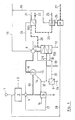
- the valuable and pollutants that arise are withdrawn as raw gas at a temperature of 800 to 900 ° C from the coking chambers of the coke oven battery (2) and in the template (4) by means of a circulating water stream Cooked at 80 to 82 ° C.
- the tar-water separator (7) separates the raw tar (15) and water (14) and the excess pyrolysis water and the process condensates as coal water (11).
- the raw coke oven gas is cooled to 20 to 22 ° C.
- the salt load of the coal water is 501 kg and the organic load is 91 kg.
- the salt load in the water increases to approx. 550 kg.
- the addition of fresh water (42 m3) and chemicals (1 m3) ultimately results in a wastewater quantity of 106 m3 after the biological treatment, the BOD value of which has been reduced to a level of ⁇ 50 mg / l, but whose salt load is> 560 kg (approx. 5.3 g / l).
- the biological treatment of the wastewater produces approx. 40 kg of dry biomass, which must be returned to the coking coal as sludge.
- the method according to the invention which was developed on the basis of the new ideas of the FRO and TDH, does not have these problems.
- the principle is shown in FIG. 1, namely for different utilization options of the phenol solution (29) to (34) and a new variant of the TDH / KR, the forced separation of the halogens (Cl) from the water cycle.
- the thermally volatile (NH4+) compounds, the pyridines and aromatics and 10 to 15% of the phenols in the desorber (8) by means of 6 to 6.5 t of stripping steam (24) at about 100 ° C. from the Coal water (11) after previous gravel filtering (35), (36) expelled.
- the desorbate at the head of the desorber (8) is approx. 35% of the Stripping steam loaded and is led as sour gas (18) to the deacidifier of the gas desulfurization, where the steam portion can still be used as stripping and heating steam.
- the vapors (49) (approx.
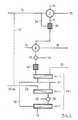
- the FRO is a multi-stage system consisting of membrane modules with different membranes and variable pH values in the individual stages (cf. Figure 2).
- the wastewater (12) after the desorber (8) in an amount of 34 m3 or, in the case of phenol water recycling (32), of 37 m3 has a pH of 8.5 and is treated by the addition of an acid (39 ) (about 2.5 kg HCl) to a pH of 5.
- the first reverse osmosis stage (RO-1) designed as a tube module with CA as a separation membrane, wastewater is converted into a salt solution (20) of 12.4 or 14 m3 and a permeate flow of 24.1 to 23 m3 at one Overflow speed divided from 1.0 to 1.2 m / s.
- the essential parameters of these substances are a retention capacity for NH4+ salts of more than 95% and for phenols of 0.
- RO-1 the pH of the permeate flowing out
- PA a base (41) (NaOH).
- the feed stream of 24.1 or 23 m3 is divided into a retentate stream (29) of 2.5 m3 and a permeate stream of 21.6 or 20.5 m3.
- the changes in pH and the type of separation membrane result in retention values of more than 95% for phenols and more than 98% for NH für salts.
- the retentates (30) of these stages are each recycled before the second reverse osmosis stage.
- a process water stream (13) of 21.6 or 20.5 m3 is obtained as permeate.
- the alternative to recycling the phenol water via line (29) and (32) to the pre-coolers (5) is the option of treating the phenol solution in a two-stage pervaporation system (9) and 37 kg of crude phenol as a 70% water solution via line (34) to win.
- the low-salt phenol retentate of the pervaporation stage is then returned via line (31) to the first stage together with the phenol water (30) of the third stage.
- the salt load upstream of the desorber (8) is increased to 660 kg with a phenol quantity of 72 kg.
- the recycling of the pervaporation retentate requires a change in the load of 710 kg salt and 67 kg phenol before the first reverse osmosis stage.
- the halogen quantity (27) of 258 kg (Cl ⁇ ) entered via the raw gas is discharged from the system. Of this amount, about 3 kg will appear in the gas desulfurization wastewater and about 5 kg in the raw tar. The remaining amount of approx. 250 kg Cl ⁇ is obtained as NH4Cl fraction in the order of 380 kg.
- the retentate from the first reverse osmosis stage of 12.4 or 14 m3 water is concentrated in an evaporation system (EDS) to approx. 1 m3 water.
- EDS evaporation system
- the multi-stage EDS is designed so that the necessary heating steam (21) of 6 or 6.5 t - apart from the condensate (22) - can be used indirectly as vapor steam of the last stage for the cooling water desorber (8).
- the concentrated salt solution (23) is fed into the TDH system via insert tank (43), pump (44) and heat exchanger (45) with the addition of energy (25), which works on the principle of temperature-activated pressure hydrolysis in the liquid phase at 300 ° C works.
- SCN ⁇ and S2O32- are hydrolyzed to H2S, NH3 and CO2.
- From the hydrolyzate drawn off via valve (46), the gaseous products are stripped with steam (49) in the desorber (47) and processed as hydrolysis gas (19) in the gas desulfurization deacidifier.
- the NH4 salt fraction (27) is separated from the stripped hydrolyzate (26) by crystallization (KR) and subsequent treatment in a decanter centrifuge (56).
- the hydrolyzate (26) according to Figure 3 is passed through the buffer tank (54), the agitator (53) with cooling water (55), the centrifuge (56) and the thickener (50), which is a heating steam addition (51) and one Condensation set deduction (52).
- the salts and organic products are destroyed in the pyrolysis at a temperature of more than 1,000 ° C in a reducing atmosphere and appear as secondary products H2S, NH3, CO2, CO and H2 and 80 kg Cl ⁇ back in the raw gas.
Landscapes
- Water Supply & Treatment (AREA)
- Chemical & Material Sciences (AREA)
- Engineering & Computer Science (AREA)
- Organic Chemistry (AREA)
- Environmental & Geological Engineering (AREA)
- Hydrology & Water Resources (AREA)
- Life Sciences & Earth Sciences (AREA)
- Nanotechnology (AREA)
- Chemical Kinetics & Catalysis (AREA)
- Physics & Mathematics (AREA)
- Thermal Sciences (AREA)
- Separation Using Semi-Permeable Membranes (AREA)
- Physical Water Treatments (AREA)
- Heat Treatment Of Water, Waste Water Or Sewage (AREA)
Priority Applications (1)
| Application Number | Priority Date | Filing Date | Title |
|---|---|---|---|
| AT90124373T ATE101844T1 (de) | 1990-01-30 | 1990-12-17 | Verfahren zur abtrennung von schadstoffen und gewinnung von wertstoffen aus dem abwasserstrom einer kokerei. |
Applications Claiming Priority (2)
| Application Number | Priority Date | Filing Date | Title |
|---|---|---|---|
| DE4002624 | 1990-01-30 | ||
| DE4002624A DE4002624C1 (fr) | 1990-01-30 | 1990-01-30 |
Publications (3)
| Publication Number | Publication Date |
|---|---|
| EP0439770A2 true EP0439770A2 (fr) | 1991-08-07 |
| EP0439770A3 EP0439770A3 (en) | 1991-10-02 |
| EP0439770B1 EP0439770B1 (fr) | 1994-02-23 |
Family
ID=6399038
Family Applications (1)
| Application Number | Title | Priority Date | Filing Date |
|---|---|---|---|
| EP90124373A Expired - Lifetime EP0439770B1 (fr) | 1990-01-30 | 1990-12-17 | Procédé d'élimination de substances nocives et de récupération de substances utiles d'un courant d'eaux résiduaires de cokerie |
Country Status (3)
| Country | Link |
|---|---|
| EP (1) | EP0439770B1 (fr) |
| AT (1) | ATE101844T1 (fr) |
| DE (1) | DE4002624C1 (fr) |
Cited By (7)
| Publication number | Priority date | Publication date | Assignee | Title |
|---|---|---|---|---|
| EP0968964A1 (fr) * | 1998-07-03 | 2000-01-05 | Fraunhofer-Gesellschaft Zur Förderung Der Angewandten Forschung E.V. | Procédé de valorisation de lisier |
| EP1020407A3 (fr) * | 1999-01-16 | 2002-10-16 | Uwatech Umwelt- und Wassertechnik GmbH | Procédé de séparation d'eau usée contenant du nitrate d'ammonium en deux parties liquides réutilisables |
| CN101781039A (zh) * | 2010-03-05 | 2010-07-21 | 中冶焦耐(大连)工程技术有限公司 | 催化氧化法与膜分离技术相结合的焦化废水深度处理工艺 |
| KR101050738B1 (ko) | 2004-09-02 | 2011-07-20 | 재단법인 포항산업과학연구원 | 코크스 제조시 발생 폐수 처리방법 |
| CN105439312A (zh) * | 2014-09-28 | 2016-03-30 | 上海宝钢化工有限公司 | 一种焦化废水回用装置及处理工艺 |
| WO2024045563A1 (fr) * | 2022-09-01 | 2024-03-07 | 宁德邦普循环科技有限公司 | Système de dessalement d'eaux usées basé sur la synthèse de précurseurs |
| CN117945486A (zh) * | 2024-01-24 | 2024-04-30 | 平湖独山港环保能源有限公司 | 热电联产机组的循环废水零排放系统及余热利用方法 |
Families Citing this family (3)
| Publication number | Priority date | Publication date | Assignee | Title |
|---|---|---|---|---|
| DE4340356A1 (de) * | 1993-11-26 | 1995-06-01 | Wieland Edelmetalle | Verfahren und Vorrichtung zum Abbau von harten Komplexbildnern in wässriger Lösung |
| CN101767912B (zh) * | 2010-01-20 | 2013-01-09 | 昆明钢铁控股有限公司 | 微波—氧化—混凝技术处理焦化生化出水的方法 |
| CN110981094B (zh) * | 2019-12-12 | 2022-08-16 | 芜湖市科邦新能源科技有限公司 | 一种用于将污水生物反应成清洁能源的成套设备 |
Family Cites Families (11)
| Publication number | Priority date | Publication date | Assignee | Title |
|---|---|---|---|---|
| DE746350C (de) * | 1938-12-22 | 1944-08-03 | Otto & Co Gmbh Dr C | Verfahren zur Aufbereitung waessriger ammoniakalischer Loesungen |
| US4002565A (en) * | 1975-08-25 | 1977-01-11 | Chevron Research Company | Waste-water process |
| DE2553840C3 (de) * | 1975-11-29 | 1981-01-29 | Bayer Ag, 5090 Leverkusen | Druckhydrolytische Behandlung von Abwasser |
| DE2706430C2 (de) * | 1977-02-16 | 1984-10-25 | The Boeing Co., Seattle, Wash. | Vorrichtung zum Entfernen von gelösten Feststoffen aus einer wäßrigen Lösung |
| DE3219701A1 (de) * | 1982-05-26 | 1983-12-01 | Ruhrkohle Ag, 4300 Essen | Behandlung von gaskondensaten |
| DD216229A1 (de) * | 1983-06-27 | 1984-12-05 | Leuna Werke Veb | Verfahren zur entfernung von verunreinigungen aus prozesswaessern |
| DE3532390A1 (de) * | 1984-09-12 | 1986-06-19 | Carl Still Gmbh & Co Kg, 4350 Recklinghausen | Verfahren zur behandlung von bei der verkokung oder anderen kohleveredelungsprozessen anfallendem abwasser |
| DE3615132A1 (de) * | 1986-05-03 | 1987-11-05 | Bergwerksverband Gmbh | Verfahren zur entphenolung eines konzentrates einer umkehr-osmose-anlage einer kokerei |
| US4808287A (en) * | 1987-12-21 | 1989-02-28 | Hark Ernst F | Water purification process |
| DE3803905A1 (de) * | 1988-02-09 | 1989-08-17 | Still Otto Gmbh | Verfahren zur behandlung von bei der kohlepyrolyse anfallendem abwasser |
| GB2234234B (en) * | 1989-07-19 | 1992-08-12 | British Gas Plc | Treatment for reducing impurities in aqueous liquor |
-
1990
- 1990-01-30 DE DE4002624A patent/DE4002624C1/de not_active Expired - Fee Related
- 1990-12-17 EP EP90124373A patent/EP0439770B1/fr not_active Expired - Lifetime
- 1990-12-17 AT AT90124373T patent/ATE101844T1/de not_active IP Right Cessation
Cited By (8)
| Publication number | Priority date | Publication date | Assignee | Title |
|---|---|---|---|---|
| EP0968964A1 (fr) * | 1998-07-03 | 2000-01-05 | Fraunhofer-Gesellschaft Zur Förderung Der Angewandten Forschung E.V. | Procédé de valorisation de lisier |
| EP1020407A3 (fr) * | 1999-01-16 | 2002-10-16 | Uwatech Umwelt- und Wassertechnik GmbH | Procédé de séparation d'eau usée contenant du nitrate d'ammonium en deux parties liquides réutilisables |
| KR101050738B1 (ko) | 2004-09-02 | 2011-07-20 | 재단법인 포항산업과학연구원 | 코크스 제조시 발생 폐수 처리방법 |
| CN101781039A (zh) * | 2010-03-05 | 2010-07-21 | 中冶焦耐(大连)工程技术有限公司 | 催化氧化法与膜分离技术相结合的焦化废水深度处理工艺 |
| CN101781039B (zh) * | 2010-03-05 | 2012-07-18 | 中冶焦耐(大连)工程技术有限公司 | 催化氧化法与膜分离技术相结合的焦化废水深度处理工艺 |
| CN105439312A (zh) * | 2014-09-28 | 2016-03-30 | 上海宝钢化工有限公司 | 一种焦化废水回用装置及处理工艺 |
| WO2024045563A1 (fr) * | 2022-09-01 | 2024-03-07 | 宁德邦普循环科技有限公司 | Système de dessalement d'eaux usées basé sur la synthèse de précurseurs |
| CN117945486A (zh) * | 2024-01-24 | 2024-04-30 | 平湖独山港环保能源有限公司 | 热电联产机组的循环废水零排放系统及余热利用方法 |
Also Published As
| Publication number | Publication date |
|---|---|
| DE4002624C1 (fr) | 1991-11-28 |
| ATE101844T1 (de) | 1994-03-15 |
| EP0439770A3 (en) | 1991-10-02 |
| EP0439770B1 (fr) | 1994-02-23 |
Similar Documents
| Publication | Publication Date | Title |
|---|---|---|
| EP0492329B1 (fr) | Procédé pour le traitement de solutions aqueuses contenant de l'acide sulfhydrique, de l'acide cyanhydrique et de l'ammoniac | |
| DE2208102B2 (de) | Verfahren zum Entfernen von Schwefeldioxid aus einem schwefeldioxidhaltigen Gas | |
| DE2229213A1 (de) | Verfahren zur aufarbeitung phenolhaltiger abwaesser der kohleveredelung | |
| DE112017001666B4 (de) | Verfahren zur Senkung des Schadstoffaustrags bei der Phenol- und Acetonproduktion | |
| DE69000900T2 (de) | Behandlung fuer die verringerung von schmutzstoffen in waesseriger fluessigkeit. | |
| EP0439770B1 (fr) | Procédé d'élimination de substances nocives et de récupération de substances utiles d'un courant d'eaux résiduaires de cokerie | |
| DE1467198A1 (de) | Verfahren zur Reinigung von NH3 und H2S enthaltendem Wasser | |
| EP0157339A2 (fr) | Procédé de préparation d'hydrocarbures à partir de boue activée | |
| DE2202707A1 (de) | Pyrolyse von erschoepften pulpeloesungen | |
| EP0095144B1 (fr) | Traitement de condensats de gaz | |
| DE3532390A1 (de) | Verfahren zur behandlung von bei der verkokung oder anderen kohleveredelungsprozessen anfallendem abwasser | |
| DE3041209A1 (de) | Verfahren zur aufbereitung von insbesondere nitrathaltigem wasser | |
| DE3803905C2 (fr) | ||
| DE19512385A1 (de) | Verfahren zur Aufarbeitung von Abwässern aus der thermischen Kohleverarbeitung | |
| DD209976A5 (de) | Verfahren zur abscheidung kondensierbarer waessriger und organischer materialien aus einem system | |
| DE4304510A1 (de) | Verfahren zur Rückgewinnung von Schwefelkohlenstoff aus einem Wasserdampf-Schwefelkohlenstoff-Gemisch | |
| CN117088550B (zh) | 一种兰炭废水的深度处理方法 | |
| DE3631251A1 (de) | Verfahren zur auswaschung von schwefelwasserstoff und ammoniak aus gasen | |
| EP1174169B1 (fr) | Procédé de traitement d'huiles végétales usées | |
| DE464006C (de) | Verfahren zur Behandlung von ammoniakhaltigem Gas | |
| DE10309832B4 (de) | Verfahren und Vorrichtung zur Gewinnung eines Mediums aus einem Rohmedium | |
| DE3735868A1 (de) | Verfahren zur gewinnung von reinem ammoniak aus schwefelwasserstoff- und/oder kohlendioxidhaltigem ammoniakabwasser | |
| AT513275B1 (de) | Verfahren zur Rückgewinnung von Aufschlusslösung | |
| DE1671346C (de) | Verfahren zur Nutzung des Destillationsgases von Verkokungsöfen | |
| DE245235C (fr) |
Legal Events
| Date | Code | Title | Description |
|---|---|---|---|
| PUAI | Public reference made under article 153(3) epc to a published international application that has entered the european phase |
Free format text: ORIGINAL CODE: 0009012 |
|
| 17P | Request for examination filed |
Effective date: 19901217 |
|
| AK | Designated contracting states |
Kind code of ref document: A2 Designated state(s): AT BE FR GB IT NL |
|
| PUAL | Search report despatched |
Free format text: ORIGINAL CODE: 0009013 |
|
| AK | Designated contracting states |
Kind code of ref document: A3 Designated state(s): AT BE FR GB IT NL |
|
| 17Q | First examination report despatched |
Effective date: 19920904 |
|
| RAP1 | Party data changed (applicant data changed or rights of an application transferred) |
Owner name: THYSSEN STILL OTTO ANLAGENTECHNIK GMBH |
|
| GRAA | (expected) grant |
Free format text: ORIGINAL CODE: 0009210 |
|
| AK | Designated contracting states |
Kind code of ref document: B1 Designated state(s): AT BE FR GB IT NL |
|
| REF | Corresponds to: |
Ref document number: 101844 Country of ref document: AT Date of ref document: 19940315 Kind code of ref document: T |
|
| ITF | It: translation for a ep patent filed | ||
| GBT | Gb: translation of ep patent filed (gb section 77(6)(a)/1977) |
Effective date: 19940527 |
|
| ET | Fr: translation filed | ||
| PLBE | No opposition filed within time limit |
Free format text: ORIGINAL CODE: 0009261 |
|
| STAA | Information on the status of an ep patent application or granted ep patent |
Free format text: STATUS: NO OPPOSITION FILED WITHIN TIME LIMIT |
|
| 26N | No opposition filed | ||
| PGFP | Annual fee paid to national office [announced via postgrant information from national office to epo] |
Ref country code: GB Payment date: 19961212 Year of fee payment: 7 |
|
| PGFP | Annual fee paid to national office [announced via postgrant information from national office to epo] |
Ref country code: FR Payment date: 19961216 Year of fee payment: 7 |
|
| PGFP | Annual fee paid to national office [announced via postgrant information from national office to epo] |
Ref country code: BE Payment date: 19961219 Year of fee payment: 7 |
|
| PGFP | Annual fee paid to national office [announced via postgrant information from national office to epo] |
Ref country code: NL Payment date: 19961223 Year of fee payment: 7 |
|
| PGFP | Annual fee paid to national office [announced via postgrant information from national office to epo] |
Ref country code: AT Payment date: 19961224 Year of fee payment: 7 |
|
| PG25 | Lapsed in a contracting state [announced via postgrant information from national office to epo] |
Ref country code: GB Free format text: LAPSE BECAUSE OF NON-PAYMENT OF DUE FEES Effective date: 19971217 Ref country code: AT Free format text: LAPSE BECAUSE OF NON-PAYMENT OF DUE FEES Effective date: 19971217 |
|
| PG25 | Lapsed in a contracting state [announced via postgrant information from national office to epo] |
Ref country code: FR Free format text: THE PATENT HAS BEEN ANNULLED BY A DECISION OF A NATIONAL AUTHORITY Effective date: 19971231 Ref country code: BE Free format text: LAPSE BECAUSE OF NON-PAYMENT OF DUE FEES Effective date: 19971231 |
|
| BERE | Be: lapsed |
Owner name: THYSSEN STILL OTTO ANLAGENTECHNIK G.M.B.H. Effective date: 19971231 |
|
| PG25 | Lapsed in a contracting state [announced via postgrant information from national office to epo] |
Ref country code: NL Free format text: LAPSE BECAUSE OF NON-PAYMENT OF DUE FEES Effective date: 19980701 |
|
| GBPC | Gb: european patent ceased through non-payment of renewal fee |
Effective date: 19971217 |
|
| NLV4 | Nl: lapsed or anulled due to non-payment of the annual fee |
Effective date: 19980701 |
|
| REG | Reference to a national code |
Ref country code: FR Ref legal event code: ST |
|
| PG25 | Lapsed in a contracting state [announced via postgrant information from national office to epo] |
Ref country code: IT Free format text: LAPSE BECAUSE OF NON-PAYMENT OF DUE FEES Effective date: 20051217 |