EP0441547B1 - Simulation von menschlicher Ausübung eines Prozessdurchführungsverfahrens - Google Patents
Simulation von menschlicher Ausübung eines Prozessdurchführungsverfahrens Download PDFInfo
- Publication number
- EP0441547B1 EP0441547B1 EP91300831A EP91300831A EP0441547B1 EP 0441547 B1 EP0441547 B1 EP 0441547B1 EP 91300831 A EP91300831 A EP 91300831A EP 91300831 A EP91300831 A EP 91300831A EP 0441547 B1 EP0441547 B1 EP 0441547B1
- Authority
- EP
- European Patent Office
- Prior art keywords
- procedure
- operator
- defining
- recited
- data
- Prior art date
- Legal status (The legal status is an assumption and is not a legal conclusion. Google has not performed a legal analysis and makes no representation as to the accuracy of the status listed.)
- Expired - Lifetime
Links
Images


Classifications
-
- G—PHYSICS
- G06—COMPUTING OR CALCULATING; COUNTING
- G06F—ELECTRIC DIGITAL DATA PROCESSING
- G06F15/00—Digital computers in general; Data processing equipment in general
-
- G—PHYSICS
- G09—EDUCATION; CRYPTOGRAPHY; DISPLAY; ADVERTISING; SEALS
- G09B—EDUCATIONAL OR DEMONSTRATION APPLIANCES; APPLIANCES FOR TEACHING, OR COMMUNICATING WITH, THE BLIND, DEAF OR MUTE; MODELS; PLANETARIA; GLOBES; MAPS; DIAGRAMS
- G09B9/00—Simulators for teaching or training purposes
-
- G—PHYSICS
- G06—COMPUTING OR CALCULATING; COUNTING
- G06F—ELECTRIC DIGITAL DATA PROCESSING
- G06F30/00—Computer-aided design [CAD]
- G06F30/20—Design optimisation, verification or simulation
-
- G—PHYSICS
- G09—EDUCATION; CRYPTOGRAPHY; DISPLAY; ADVERTISING; SEALS
- G09B—EDUCATIONAL OR DEMONSTRATION APPLIANCES; APPLIANCES FOR TEACHING, OR COMMUNICATING WITH, THE BLIND, DEAF OR MUTE; MODELS; PLANETARIA; GLOBES; MAPS; DIAGRAMS
- G09B19/00—Teaching not covered by other main groups of this subclass
- G09B19/0069—Engineering, e.g. mechanical, electrical design
Definitions
- the present invention is directed to a computer simulation of human performance of a procedure and, more particularly, to the simulation of a procedure for operating equipment, such as an electrical power plant.
- Some versions of such software are used in only a small percentage of the plants which could benefit from the use of such software.
- operating procedures at plants not using such software are virtually identical to the procedures for plants using such software.
- the plants not using such software could benefit from the evaluation of the procedure itself, which is difficult with a human operator due to the difference between the man-machine interface of the software and the way in which the printed procedures are used.
- If such software could be used for evaluation of the procedures, the results of the evaluation would be helpful at all locations where the procedures are used, whether the procedures are available in a computer based monitoring system or only in printed form.
- a main object of the present invention is to provide computer simulation of a human operator performing a predetermined procedure.
- the invention consists in a method of computer simulation of a human operator performing a predetermined procedure for the operation of equipment, comprising :
- the invention also consists in an apparatus for computer simulation of a human operator performing a predetermined procedure for the operation of equipment, comprising
- the operator characteristics include at least one decision making rule, at least one execution accuracy rule and at least one rule defining operator response speed.
- Each of the operator characteristics is preferably weighted by a probability function.
- the particular probability function used can be different for each operator characteristic.
- a typical probability function can be one which randomly provides a specified response a given percentage of the time. Such probability functions may be applied when a specific step or type of step is reached or when non-sequential procedural information, such as cautions, are generated by a computer-based monitoring system.
- Another object of the present invention is to provide a computer simulation of a human operator capable of evaluating how variations in human factors affect plant operations.
- Yet another object of the present invention is to provide computer simulation of a human operator capable of wide variation in multiple characteristics of human performance of a procedure.
- FIG. 1 A block diagram of such a system is illustrated in Fig. 1.
- a predefined procedure for operating equipment is stored in machine readable form to enable the computer system to operate as described in U.S. Patents 4,803,039 and 4,815,014.
- a monitoring system 10 receives equipment data 12 which is applied to the predefined procedure.
- the equipment data 12 is supplied from a data acquisition system in, e.g., an electrical power plant, chemical process plant or other installation of complex machinery. While the same source can be used during evaluation of human performance of the predefined procedure, during simulation the equipment data 12 is preferably supplied from a record of actual equipment performance, a simulator of the equipment or other source of synthetic data.
- the monitoring system 10 in addition to supplying procedure data in, for example, a conventional manner to a display unit 14 and printer 16, the monitoring system 10 also supplies procedure data to an operator simulation module 18.
- the procedure data may simply be obtained by the operator simulation module from arrays and other data storage elements used by the monitoring system 10 to record the procedure information output to the display unit 14.
- the information which would ordinarily be displayed to a human operator may be supplied to a separate computer system executing the operator simulation module 18. In either case, the monitoring system 10 identifies steps of the predefined procedure in dependence upon the equipment data 12.
- the predefined procedure used by the monitoring system 10 may be the cold startup of a nuclear reactor and the equipment data 12 may be a record of sensor data generated during an actual cold startup or a plant simulator running a simulation of the cold startup of a reactor.
- the monitoring system 10 will move through the steps of the procedure as the equipment data 12 indicates that the state of the nuclear reactor has changed and in dependence upon responses received from the operator simulation module 18.
- the operator simulation module 18 relies upon user defined operator characteristics 20 to determine how to respond to the procedure data.
- the operator characteristics fall into three broad categories.
- the first category includes decision making rules. Errors related to faulty decision making are cognitive errors, i.e., errors involving misjudgment. There are several ways in which decision making rules could be implemented. For example, if it is believed, either through experience or guesswork, that in certain situations errors will be made a certain percentage of the time, decision making rules can be written with a percentage error rate incorporated by applying a probability function containing a randomized factor weighted to produce the desired error rate during multiple simulation runs.
- the situation encoded in the decision making rules may involve a specific step, e.g., whether to take an action required by a step identified by number in the procedure.
- Another decision making rule may affect a class of steps, such as all steps related to a transition from one step to a nonsequential step, following a caution violation. Such a rule may indicate whether to take the transition required by the caution violation, or to continue the procedure. The transition may be to another step within the same procedure or to a completely different procedure. Such transitions are generally dependent upon plant conditions at the time that the caution violation occurs. Many other types of decision making rules can be included, as obvious to one of ordinary skill in the art.
- the second category of operator characteristics include execution accuracy rules. These rules recognize that humans make mistakes even though they know the correct action to take.
- the number of execution accuracy rules is likely to be less than the number of decision making rules and is likely to be influenced by the type of interface assumed between the human operator and the predefined procedure. For example, when it is assumed that a sophisticated interface, like COMPRO, provides information regarding the procedure to the user, the number of execution errors is likely to be much less than if the operator simulation module 18 is being used to evaluate the use of a written procedure.
- the third category of operator characteristics involves rules defining operator response speed.
- the number of rules defining operator response speed may be much simpler than the decision making rules.
- a single amount of average delay time may be applied to all responses. This delay time may be weighted by a probability function, such as functions which result in a normal distribution, a Poisson distribution or other known distribution of random events.
- the rules for defining operator response speed may define a different speed of response for specific steps, types of steps, or other information intended to be supplied by the predefined procedure to a human operator being simulated by the operator simulation module 18.
- a caution is a constraining condition applicable to a plurality of sequential instructions or conditions, as described in more detail in U.S. Patent Application Serial No. 07/307,831.
- the rules defining operator response speed may increase the delay upon receipt of information from the predefined procedure indicating that a caution has been displayed on the display unit 14, or would have been displayed if a human operator was interacting with the monitoring system 10.
- the amount of delay in response to a caution may vary depending upon the particular caution which is displayed.
- the operator response speed also may be defined as including an additional delay, beyond the usual delay for any other caution, when a caution containing lengthy text or information having a high level of importance is to be displayed by the monitoring system 10.
- a user i.e., a person evaluating human performance of the predefined procedure
- human performance of the predefined procedure can be simulated in dependence upon the operator characteristics.
- the simulation is begun by initiating execution of the monitoring system 10 and the operator simulation module 18. If a plant simulator, or tape containing actual plant data is used, the source of equipment data 12 is also started.
- the operator simulation module 18 then begins following the steps in the flowchart illustrated in Fig. 2 based upon the procedure data obtained from the monitoring system 10. First, decision making rules are applied 22, and then the execution accuracy rules are applied 24. Finally, the timing rules are applied 26.
- the result is a timed response 28 which is supplied to the monitoring system 10. This response is operated upon by the monitoring system as if it had been received by a human operator, including requesting a change in equipment operating condition, as indicated by the arrow 30 in Fig. 1.
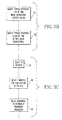
- Figs. 3A-3C An example of the application of defined operator characteristics is illustrated in Figs. 3A-3C.
- the decision rules applied in step 22 may include the program flow illustrated in Fig. 3A.
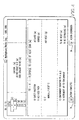
- the lower case letters in parentheses in Fig. 4 indicate colors used for the preceding text.
- Other steps may also be performed as indicated by the ellipses at the top and bottom of Fig. 3A.
- the decision making rules are likely to include opting 32 for completion of a step and thereby assigning 33 a value indicating that the procedure is to be continued if the step has been completed.
- Fig. 3A illustrates the probability function weighing the responses, i.e., separate steps after the decision is made in step 32.
- the probability function can be an integral part of the decision made in step 32 to opt for completion of a step, when the probability function determines that an incorrect decision is to be made, the route taken out of the decision step 32 is different.
- the result is the same in either embodiment, i.e., the correct response will be indicated provided the probability function does not determine that the incorrect response should be indicated.
- the probability function used for the response "ACTION COMPLETED” can be different from the probability function used for "ACTION OVERRIDDEN".
- the probability of correct response in step 38 can be set to produce a larger number of errors than the probability of correct response in step 37.
- Another rule that might be included is to opt 39 to address a caution or a caution violation. If this decision on the option is affirmative, the response will be assigned 40 an indication that the current step should be overridden, so as to allow for the immediate handling of the caution violation. This is equivalent to a human operator depressing the ACTION OVERRIDDEN button 36 in Fig. 4.
- the response ACTION OVERRIDDEN is assigned 40 only if the probability function is evaluated 41 to produce the correct response. If the evaluation 41 of the probability function results in production of an incorrect response or a decision is made 39 not to address a caution violation, the response ACTION COMPLETED is assigned 42, unless another probability function is evaluated 43 to assign 40 the response ACTION OVERRIDDEN to the response.
- the result of a decision in either of steps 39 and 41 to not assign 40 the response ACTION OVERRIDDEN could be to assign no response at all, thereby allowing the response to be decided by other rules, such as the decision 32 to complete the step.
- Another test which is likely to be included in the decision making rules is whether the option available to the operator includes a transition 44 to a new step or procedure.
- a rule might state that the response should indicate 46 that the transition is accepted.
- the response assigned in step 46 is weighted 48 by a probability function which otherwise causes OVERRIDE TRANSITION to be assigned 50 to the response. This latter response is also produced if a decision 44 is made to not perform the transition and another probability function is evaluated 52 to produce that response.
- any of the assignment steps 33, 40 and 46 may be modified by a probability function.
- the probability function may be a simple as producing the response 98 percent of the time using a random number generator, or as specific as producing the response only 50 percent of the time if the current step is number 12 in FR-H.1, as illustrated in Fig. 4. In the latter case, the correct response indicated by step 40 would not be made 50 percent of the time due to the probability function evaluated in step 41.
- execution accuracy rules 24 and timing rules 26 there may be several execution accuracy rules 24 and timing rules 26.
- a general rule, such as modifying 56 the usual response 0.25 percent of the time might be included. If both steps 54 and 56 are included in the execution accuracy rules, an additional provision may be added to step 56 so that the response is modified 0.25 percent of the time only if the current step is not a valve instruction. Alternatively, branching can be provided between steps 54 and 56 to attain the same result. Also, it would be possible to allow step 56 to further modify the response output by step 54.
- Timing rules are illustrated in Fig. 3C.
- One rule might provide a typical delay 58 of ten seconds.
- Another rule might add an additional two minute delay 60 when a caution is first displayed.
- Such timing rules may be specific to a group of steps, such as all sequential instructions in procedure FR-H.1.
- an additional delay 62 might be added when a transition is presented. After the total delay, the response is output 28 to the monitoring system 10.
- the monitoring system 10 processes the response as if it had been received from a human operator and modifies the instructions displayed on the display unit 14 in dependence upon the responses contained in decision data received from the operator simulation module and the equipment data 12.
- the simulation of human performance of the predefined procedure continues as the monitoring system 10 automatically identifies new steps of the predefined procedure in dependence upon the equipment data and the decision data.
- procedure data indicating the steps identified by the monitoring system 10 may be displayed on display unit 14 and may also be output to the printer 16.
- the responses are preferably also recorded on the printer 16 to indicate the response obtained from the operator simulation module. If the equipment data 12 is obtained from a disk file, or some other storage unit is connected to the monitoring system 10, the responses can be recorded on the same disk or in that storage unit. Regardless of how the responses are recorded, after the simulation is completed the responses may be analyzed to evaluate how the particular set of operator characteristics 20 affected the operation of the equipment. The simulation may be repeated with or without changes to the operator characteristics 20.
- the simulation may be repeated after making changes in the operator characteristics 20.
- both the procedure data and the responses produced by the operator simulation module 18 are recorded, together with additional decision data indicating the reason why the response was obtained.
- the decision data would include an indication that it was determined in step 39 to address the caution, but due to the weighing 41 of the probability function, step 40 was not executed.
- the decision data containing the response produced by the operator simulation module 29 can be supplied to the source of the equipment data 12, as indicated by arrow 30.
- the simulation of equipment operation can be performed in dependence upon the decision data, providing a more accurate simulation of how the operator characteristics affect the operation of the equipment.
Landscapes
- Engineering & Computer Science (AREA)
- Theoretical Computer Science (AREA)
- Physics & Mathematics (AREA)
- General Physics & Mathematics (AREA)
- Business, Economics & Management (AREA)
- General Engineering & Computer Science (AREA)
- Computer Hardware Design (AREA)
- Educational Administration (AREA)
- Educational Technology (AREA)
- Entrepreneurship & Innovation (AREA)
- Evolutionary Computation (AREA)
- Geometry (AREA)
- Testing And Monitoring For Control Systems (AREA)
- Management, Administration, Business Operations System, And Electronic Commerce (AREA)
- Electrically Operated Instructional Devices (AREA)
Claims (19)
- Verfahren der Computersimulierung eines menschlichen Operators, der eine vorbestimmte Prozedur für den Betrieb einer Ausrüstung durchführt, das folgendes umfasst:und(a) Speichern einer vorbestimmten Prozedur in einem Prozedurmittel (10);(b) Definieren (20) von Operatorkennzeichen;(b1) Definieren (20) von wenigstens einer eine Entscheidung treffenden Regel als Teil der Definition der Operatorkennzeichen;(c) Liefern von Prozedurdaten von dem Prozedurmittel (10) an ein Operatorsimulierungsmodul (18);in dem das Operatorsimulierungsmodul (18) Reaktionsdaten liefert, die Entscheidungen anzeigen, die bei der Simulierung von menschlicher Durchführung der vorbestimmten Prozedur gemacht werden.(d) Simulieren von menschlicher Durchführung der vorbestimmten Prozedur in Abhängigkeit von den in Schritt (b) definierten Operatorkennzeichen und von den in Schritt (c) gelieferten Prozedurdaten in dem Simulierungsmodul (18):
- Wie in Anspruch 1 dargelegtes Verfahren, in dem das Definieren (20) in Schritt (b) wenigstens einen der folgenden Unterschritte einschließt:(b2) Definieren (20) wenigstens einer Ausführungsgenauigkeitsregel; und(b3) Definieren (20) einer Operatorreaktionsgeschwindigkeit.
- Wie in Anspruch 2 dargelegtes Verfahren, in dem das Definieren (20) in wenigstens einem der Unterschritte (b1), (b2) und (b3) einschließt, die darin definierten Operatorkennzeichen durch eine Wahrscheinlichkeitsfunktion zu schätzen (37, 38, 41, 43, 48, 52).
- Wie in Anspruch 3 dargelegtes Verfahren, in dem alle Unterschritte (b1), (b2) und (b3) in dem Definieren in dem Schritt (b) eingeschlossen sind.
- Wie in Anspruch 3 dargelegtes Verfahren, in dem das Definieren (20) in wenigstens einem der Unterschritte (b1), (b2) und (b3) einschließt, eine Operatorreaktion auf wenigstens einen spezifischen Schritt der vorbestimmten Prozedur zu definieren.
- Wie in Anspruch 5 dargelegtes Verfahren, in dem der wenigstens eine spezifische Schritt alle Schritte einer spezifizierten Art in der vorher definierten Prozedur einschließt.
- Wie in Anspruch 6 dargelegtes Verfahren, in dem das Speichern in Schritt (a) einschließt, Übergänge von einem Schritt zu einem nicht folgenden Schritt der vorher definierten Prozedur zu speichern, und
in dem das Definieren (20) in Schritt (b1) einschließt, die Operatorreaktion auf wenigstens einen der Übergänge einschließt, einschließlich des Übergehens des wenigstens einen der Übergänge in Abhängigkeit von dem Schätzen von der Wahrscheinlichkeitsfunktion. - Wie in Anspruch 3 dargelegtes Verfahren, in dem das Definieren (20) in wenigstens einem der Unterschritte (b1), (b2) und (b3) einschließt, wenigstens eins der Operatorkennzeichen in Abhängigkeit von dem Stand der Wichtigkeit eines Zustands zu definieren (20), der von der Ausführung der vorher definierten Prozedur gesteuert wird.
- Wie in Anspruch 3 dargelegtes Verfahren, in dem das Definieren (20) in Unterschritt (b3) einschließt, die Operatorreaktionsgeschwindigkeit in Abhängigkeit von Information zu definieren (20), die von der vorher definierten Prozedur an einen menschlichen Operator geliefert werden soll, der in Schritt (d) simuliert wird.
- Wie in Anspruch 3 dargelegtes Verfahren, in dem das Speichern in Schritt (a) einschließt, aufeinanderfolgende Anleitungen und einschränkende Zustände zu speichern, wobei jeder einschränkende Zustand auf ein Vielzahl der aufeinanderfolgenden Anleitungen angewandt werden kann, und
in dem das Definieren (20) in wenigstens einem der Unterschritte (b1), (b2) und (b3) einschließt, die Operatorkennzeichen zu definieren (20), die in Reaktion auf Empfangen von Information von der vorher definierten Prozedur auf wenigstens einen der einschränkenden Zustände angewandt werden. - Wie in Anspruch 3 dargelegtes Verfahren, in dem das Simulieren (18) in Schritt (d) Reaktionen herstellt, und in dem das Verfahren weiterhin die folgenden Schritte umfasst:(e) Aufzeichnen (16, 12) der Reaktionen, die von dem Simulieren in Schritt (d) hergestellt werden; und(f) Analysieren der Reaktionen, die in Schritt (e) aufgezeichnet werden.
- Wie in Anspruch 11 dargelegtes Verfahren, in dem die Wahrscheinlichkeitsfunktion in dem Definieren (20) in dem wenigstens einen der Unterschritte (b1), (b2) und (b3) einen in Zufallszahlen verwandelten Faktor einschließt,in dem das Verfahren weiterhin den Schritt des (g) Wiederholens des Simulierens in Schritt (d) umfasst; undin dem das Aufzeichnen (16, 12) in Schritt (e) für jede Wiederholung des Simulierens in Schritt (d) durchgeführt wird.
- Wie in Anspruch 11 dargelegtes Verfahren, in dem das Verfahren weiterhin den Schritt des (g) Wiederholens des Definierens (20) in Schritt (b) umfasst und des Simulierens (18) in Schritt (d), wobei jede Wiederholung des Simulierens (18) in Schritt (d) dem Operatorkennzeichen entspricht, das in Schritt (b) für eine entsprechende Wiederholung von Schritt (b) definiert wird, und in dem das Aufzeichnen in Schritt (e) für jede Wiederholung des Simulierens (18) in Schritt (d) durchgeführt wird.
- Wie in Anspruch 11 dargelegtes Verfahren, in dem das Speichern in Schritt (a) einschließt, die vorher definierte Prozedur für eine betriebene Ausrüstung zu speichern, in dem das Verfahren weiterhin die folgenden Schritte umfasst:in dem das Analysieren in Schritt (f) einschließt, die Prozedurdaten zu analysieren, die in Schritt (i) aufgezeichnet werden.(g) Empfangen (12) von Ausrüstungsdaten, die den Zustand der Ausrüstung darstellen;(h) automatisches Identifizieren (10) von Schritten der vorher definierten Prozedur in Abhängigkeit von den Ausrüstungsdaten; und(i) Aufzeichnen (16, 12) von Prozedurdaten, die die Schritte anzeigen, die in Schritt (h) definiert werden, und
- Wie in Anspruch 14 dargelegtes Verfahren, das weiterhin die folgenden Schritte umfasst:in dem das Simulieren der menschlichen Durchführung in Schritt (d) in Abhängigkeit von den Prozedurdaten durchgerührt wird.(j) Simulieren des Betriebs der Ausrüstung, um die Ausrüstungsdaten herzustellen, und(k) Liefern von Reaktionsdaten, die das Simulieren der menschlichen Durchführung in Schritt (d) darstellen, in dem das Simulieren (18) von Ausrüstungsbetrieb in Schritt (j) in Abhängigkeit von den Reaktionsdaten durchgeführt wird, und
- Vorrichtung für die Computersimulierung eines menschlichen Operators, der eine vorbestimmte Prozedur für den Betrieb einer Ausrüstung durchführt die folgendes umfasst:in dem das Operatorsimulierungsmittel (18) Reaktionsdaten liefert, die Entscheidungen anzeigen, die beim Simulieren der menschlichen Durchführung der vorbestimmten Prozedur gemacht werden.ein Prozedurmittel (10) zum Speichern der vorher definierten Prozedur, und zum Liefern von Prozedurdaten;.ein Operatorkennzeichenmittel (20) zum Definieren von Operatorkennzeichen, einschließlich des Definierens von wenigstens einer eine Entscheidung treffenden Regel als Teil der Operatorkennzeichen; undein Operatorsimulierungsmittel (18) zum Simulieren von menschlicher Durchführung der vorher definierten Prozedur in Abhängigkeit von den Operatorkennzeichen und von den Prozedurdaten,
- Wie in Anspruch 16 dargelegte Vorrichtung, in der das Prozedurmittel (10) folgendes umfasst.ein Eingabemittel (12) zum Empfangen von Ausrüstungsdaten, die den Zustand der Ausrüstung darstellen;ein Verarbeitungsmittel (10) zum Identifizieren von Schritten der vorbestimmten Prozedur in Abhängigkeit von den Ausrüstungsdaten; undein Ausgabemittel (14, 16) zum Liefern von Prozedurdaten, die die Schritte anzeigen, die von dem Verarbeitungsmittel definiert werden.
- Wie in Anspruch 17 dargelegte Vorrichtung, die weiterhin ein Aufzeichnungsmittel (16, 12) umfasst, um die Prozedurdaten und die Entscheidungsdaten aufzuzeichnen.
- Wie in Anspruch 18 dargelegte Vorrichtung, die weiterhin ein Anzeigemittel (14) umfasst, um Schritte in der voprbestimmten Prozedur in Abhängigkeit von den Prozedurdaten und den Entscheidungsdaten anzuzeigen.
Applications Claiming Priority (2)
| Application Number | Priority Date | Filing Date | Title |
|---|---|---|---|
| US474896 | 1990-02-05 | ||
| US07/474,896 US5319579A (en) | 1990-02-05 | 1990-02-05 | Simulation of human performance of a process operation procedure |
Publications (3)
| Publication Number | Publication Date |
|---|---|
| EP0441547A2 EP0441547A2 (de) | 1991-08-14 |
| EP0441547A3 EP0441547A3 (en) | 1993-02-03 |
| EP0441547B1 true EP0441547B1 (de) | 1999-04-07 |
Family
ID=23885397
Family Applications (1)
| Application Number | Title | Priority Date | Filing Date |
|---|---|---|---|
| EP91300831A Expired - Lifetime EP0441547B1 (de) | 1990-02-05 | 1991-02-01 | Simulation von menschlicher Ausübung eines Prozessdurchführungsverfahrens |
Country Status (5)
| Country | Link |
|---|---|
| US (1) | US5319579A (de) |
| EP (1) | EP0441547B1 (de) |
| JP (1) | JPH0520296A (de) |
| KR (1) | KR100189127B1 (de) |
| ES (1) | ES2129399T3 (de) |
Families Citing this family (8)
| Publication number | Priority date | Publication date | Assignee | Title |
|---|---|---|---|---|
| AU2683192A (en) * | 1991-09-17 | 1993-04-27 | General Physics International Engineering & Simulation, Inc. | Real time analysis of power plant thermohydraulic phenomenon |
| JPH0816092A (ja) * | 1994-06-29 | 1996-01-19 | Mitsubishi Electric Corp | 訓練用シミュレータ装置 |
| US6216098B1 (en) | 1997-04-30 | 2001-04-10 | Institute For Research On Learning | Simulating work behavior |
| WO2001053841A1 (en) * | 2000-01-24 | 2001-07-26 | Fluor Corporation | Control system simulation, testing, and operator training |
| US20040002047A1 (en) * | 2002-06-28 | 2004-01-01 | Board Of Regents Of University Of Nebraska | System and method for developing critical thinking |
| US7280977B2 (en) * | 2003-10-09 | 2007-10-09 | General Motors Corporation | System and model for performance value based collaborative relationships |
| CN103197564B (zh) * | 2013-04-23 | 2016-01-20 | 湖南工学院 | 数字化人机界面监视单元数量优化方法及系统 |
| KR102898387B1 (ko) * | 2019-03-22 | 2025-12-11 | 에씰로 앙터나시오날 | 가상 포유류를 사용하여 포유류의 생리적 행동을 시뮬레이션하기 위한 장치, 프로세스 및 컴퓨터 프로그램 |
Family Cites Families (9)
| Publication number | Priority date | Publication date | Assignee | Title |
|---|---|---|---|---|
| US4977529A (en) * | 1973-02-23 | 1990-12-11 | Westinghouse Electric Corp. | Training simulator for a nuclear power plant |
| US4472770A (en) * | 1981-06-22 | 1984-09-18 | Li Chou H | Self-optimizing method and machine |
| US4803641A (en) * | 1984-06-06 | 1989-02-07 | Tecknowledge, Inc. | Basic expert system tool |
| US4803039A (en) * | 1986-02-03 | 1989-02-07 | Westinghouse Electric Corp. | On line interactive monitoring of the execution of process operating procedures |
| US4796194A (en) * | 1986-08-20 | 1989-01-03 | Atherton Robert W | Real world modeling and control process |
| US4815014A (en) * | 1987-02-27 | 1989-03-21 | Westinghouse Electric Corp. | Machine assisted execution of process operating procedures |
| IE60444B1 (en) * | 1988-03-30 | 1994-07-13 | Elverex Ltd | A software verification apparatus |
| US4939683A (en) * | 1989-05-19 | 1990-07-03 | Heerden Pieter J Van | Method and apparatus for identifying that one of a set of past or historical events best correlated with a current or recent event |
| US5140537A (en) * | 1990-05-21 | 1992-08-18 | Hewlett-Packard Company | Modeling a factory with human operators and validating the model |
-
1990
- 1990-02-05 US US07/474,896 patent/US5319579A/en not_active Expired - Lifetime
-
1991
- 1991-02-01 ES ES91300831T patent/ES2129399T3/es not_active Expired - Lifetime
- 1991-02-01 EP EP91300831A patent/EP0441547B1/de not_active Expired - Lifetime
- 1991-02-04 KR KR1019910001911A patent/KR100189127B1/ko not_active Expired - Lifetime
- 1991-02-05 JP JP3014203A patent/JPH0520296A/ja active Pending
Also Published As
| Publication number | Publication date |
|---|---|
| JPH0520296A (ja) | 1993-01-29 |
| ES2129399T3 (es) | 1999-06-16 |
| US5319579A (en) | 1994-06-07 |
| EP0441547A2 (de) | 1991-08-14 |
| KR910015920A (ko) | 1991-09-30 |
| KR100189127B1 (ko) | 1999-06-01 |
| EP0441547A3 (en) | 1993-02-03 |
Similar Documents
| Publication | Publication Date | Title |
|---|---|---|
| JP4271282B2 (ja) | 診断システム | |
| CN111401722B (zh) | 智能决策方法和智能决策系统 | |
| JP5874891B2 (ja) | プログラムテスト装置、プログラムテスト方法、およびプログラム | |
| Pfleeger | Design and analysis in software engineering: the language of case studies and formal experiments | |
| EP0441547B1 (de) | Simulation von menschlicher Ausübung eines Prozessdurchführungsverfahrens | |
| WO2007028676A2 (de) | Verfahren und vorrichtung zum automatisierten bewerten der qualität eines software-quellcodes | |
| JPH06507991A (ja) | 知識ベースの形成及びそのシミュレーション | |
| Pfleeger et al. | Design and analysis in software engineering | |
| CN112654943B (zh) | 制造系统设计辅助装置 | |
| US20070276514A1 (en) | Method In A Safety System For Controlling A Process Or Equipment | |
| US20230366927A1 (en) | Dice testing method | |
| CN115269432B (zh) | 一种配电智能网关测试用例实时建模方法、系统及设备 | |
| CN118295915A (zh) | 信息系统的界面标准化检验方法、平台、装置及电子设备 | |
| Pekenene et al. | Application of lean six sigma methodology in defect reduction: A case study of Botswana shade net manufacturing plant | |
| Krasich | Modeling of SW reliability in early design with planning and measurement of its reliability growth | |
| KR102552115B1 (ko) | 범용성을 가지는 기계 학습 프로그램 기록매체 | |
| CN118071336B (zh) | 一种电缆生产设备的设备运行管理方法及系统 | |
| CN115098372B (zh) | 一种系统可靠性测试方法、装置、计算机设备及存储介质 | |
| CN109669868A (zh) | 软件测试的方法及系统 | |
| GB2139767A (en) | Fault diagnosis in an industrial operation | |
| Pinto et al. | Human-Grounded XAI: An Evaluation of Explanation Faithfulness and Intelligibility For Interpretable Neural Networks | |
| JP2002024053A (ja) | ログ機能を搭載した汎用検査システム | |
| CN117171001A (zh) | 基于智能探索的自动化测试 | |
| CN117271237A (zh) | 基于台架环境的车辆报警信息正误自动决策方法 | |
| CN119417670A (zh) | 一种基于虚拟环境的高教实训课程资源适配方法 |
Legal Events
| Date | Code | Title | Description |
|---|---|---|---|
| PUAI | Public reference made under article 153(3) epc to a published international application that has entered the european phase |
Free format text: ORIGINAL CODE: 0009012 |
|
| AK | Designated contracting states |
Kind code of ref document: A2 Designated state(s): BE CH ES FR GB IT LI |
|
| PUAL | Search report despatched |
Free format text: ORIGINAL CODE: 0009013 |
|
| AK | Designated contracting states |
Kind code of ref document: A3 Designated state(s): BE CH ES FR GB IT LI |
|
| 17P | Request for examination filed |
Effective date: 19930720 |
|
| 17Q | First examination report despatched |
Effective date: 19950125 |
|
| GRAG | Despatch of communication of intention to grant |
Free format text: ORIGINAL CODE: EPIDOS AGRA |
|
| GRAG | Despatch of communication of intention to grant |
Free format text: ORIGINAL CODE: EPIDOS AGRA |
|
| GRAH | Despatch of communication of intention to grant a patent |
Free format text: ORIGINAL CODE: EPIDOS IGRA |
|
| GRAG | Despatch of communication of intention to grant |
Free format text: ORIGINAL CODE: EPIDOS AGRA |
|
| GRAH | Despatch of communication of intention to grant a patent |
Free format text: ORIGINAL CODE: EPIDOS IGRA |
|
| GRAH | Despatch of communication of intention to grant a patent |
Free format text: ORIGINAL CODE: EPIDOS IGRA |
|
| GRAA | (expected) grant |
Free format text: ORIGINAL CODE: 0009210 |
|
| AK | Designated contracting states |
Kind code of ref document: B1 Designated state(s): BE CH ES FR GB IT LI |
|
| REG | Reference to a national code |
Ref country code: CH Ref legal event code: EP Ref country code: CH Ref legal event code: NV Representative=s name: A. BRAUN, BRAUN, HERITIER, ESCHMANN AG PATENTANWAE |
|
| ET | Fr: translation filed | ||
| REG | Reference to a national code |
Ref country code: ES Ref legal event code: FG2A Ref document number: 2129399 Country of ref document: ES Kind code of ref document: T3 |
|
| PLBE | No opposition filed within time limit |
Free format text: ORIGINAL CODE: 0009261 |
|
| STAA | Information on the status of an ep patent application or granted ep patent |
Free format text: STATUS: NO OPPOSITION FILED WITHIN TIME LIMIT |
|
| 26N | No opposition filed | ||
| REG | Reference to a national code |
Ref country code: GB Ref legal event code: IF02 |
|
| PGFP | Annual fee paid to national office [announced via postgrant information from national office to epo] |
Ref country code: ES Payment date: 20020212 Year of fee payment: 12 |
|
| PGFP | Annual fee paid to national office [announced via postgrant information from national office to epo] |
Ref country code: BE Payment date: 20020318 Year of fee payment: 12 |
|
| PGFP | Annual fee paid to national office [announced via postgrant information from national office to epo] |
Ref country code: CH Payment date: 20020325 Year of fee payment: 12 |
|
| PG25 | Lapsed in a contracting state [announced via postgrant information from national office to epo] |
Ref country code: ES Free format text: LAPSE BECAUSE OF NON-PAYMENT OF DUE FEES Effective date: 20030203 |
|
| PG25 | Lapsed in a contracting state [announced via postgrant information from national office to epo] |
Ref country code: CH Free format text: LAPSE BECAUSE OF NON-PAYMENT OF DUE FEES Effective date: 20030228 Ref country code: LI Free format text: LAPSE BECAUSE OF NON-PAYMENT OF DUE FEES Effective date: 20030228 Ref country code: BE Free format text: LAPSE BECAUSE OF NON-PAYMENT OF DUE FEES Effective date: 20030228 |
|
| REG | Reference to a national code |
Ref country code: CH Ref legal event code: PL |
|
| REG | Reference to a national code |
Ref country code: ES Ref legal event code: FD2A Effective date: 20030203 |
|
| PGFP | Annual fee paid to national office [announced via postgrant information from national office to epo] |
Ref country code: IT Payment date: 20080221 Year of fee payment: 18 Ref country code: GB Payment date: 20080108 Year of fee payment: 18 |
|
| PGFP | Annual fee paid to national office [announced via postgrant information from national office to epo] |
Ref country code: FR Payment date: 20080212 Year of fee payment: 18 |
|
| GBPC | Gb: european patent ceased through non-payment of renewal fee |
Effective date: 20090201 |
|
| REG | Reference to a national code |
Ref country code: FR Ref legal event code: ST Effective date: 20091030 |
|
| PG25 | Lapsed in a contracting state [announced via postgrant information from national office to epo] |
Ref country code: GB Free format text: LAPSE BECAUSE OF NON-PAYMENT OF DUE FEES Effective date: 20090201 Ref country code: FR Free format text: LAPSE BECAUSE OF NON-PAYMENT OF DUE FEES Effective date: 20090302 |
|
| PG25 | Lapsed in a contracting state [announced via postgrant information from national office to epo] |
Ref country code: IT Free format text: LAPSE BECAUSE OF NON-PAYMENT OF DUE FEES Effective date: 20090201 |