EP0444056B1 - Procede de fabrication selective de 2,6-dialkylnaphthalene - Google Patents
Procede de fabrication selective de 2,6-dialkylnaphthalene Download PDFInfo
- Publication number
- EP0444056B1 EP0444056B1 EP89912024A EP89912024A EP0444056B1 EP 0444056 B1 EP0444056 B1 EP 0444056B1 EP 89912024 A EP89912024 A EP 89912024A EP 89912024 A EP89912024 A EP 89912024A EP 0444056 B1 EP0444056 B1 EP 0444056B1
- Authority
- EP
- European Patent Office
- Prior art keywords
- diisopropylnaphthalene
- stream
- naphthalene
- product
- alkylation
- Prior art date
- Legal status (The legal status is an assumption and is not a legal conclusion. Google has not performed a legal analysis and makes no representation as to the accuracy of the status listed.)
- Expired - Lifetime
Links
- 238000000034 method Methods 0.000 title claims abstract description 69
- 230000008569 process Effects 0.000 title claims abstract description 63
- 238000004519 manufacturing process Methods 0.000 title claims abstract description 24
- UFWIBTONFRDIAS-UHFFFAOYSA-N Naphthalene Chemical compound C1=CC=CC2=CC=CC=C21 UFWIBTONFRDIAS-UHFFFAOYSA-N 0.000 claims abstract description 153
- 239000003054 catalyst Substances 0.000 claims abstract description 101
- 238000005804 alkylation reaction Methods 0.000 claims abstract description 78
- 230000029936 alkylation Effects 0.000 claims abstract description 68
- 238000011067 equilibration Methods 0.000 claims abstract description 44
- GWLLTEXUIOFAFE-UHFFFAOYSA-N 2,6-diisopropylnaphthalene Chemical compound C1=C(C(C)C)C=CC2=CC(C(C)C)=CC=C21 GWLLTEXUIOFAFE-UHFFFAOYSA-N 0.000 claims description 99
- IAUKWGFWINVWKS-UHFFFAOYSA-N 1,2-di(propan-2-yl)naphthalene Chemical class C1=CC=CC2=C(C(C)C)C(C(C)C)=CC=C21 IAUKWGFWINVWKS-UHFFFAOYSA-N 0.000 claims description 65
- 239000011148 porous material Substances 0.000 claims description 55
- 238000006243 chemical reaction Methods 0.000 claims description 39
- 239000010457 zeolite Substances 0.000 claims description 37
- PMPBFICDXLLSRM-UHFFFAOYSA-N 1-propan-2-ylnaphthalene Chemical compound C1=CC=C2C(C(C)C)=CC=CC2=C1 PMPBFICDXLLSRM-UHFFFAOYSA-N 0.000 claims description 34
- URGAHOPLAPQHLN-UHFFFAOYSA-N sodium aluminosilicate Chemical compound [Na+].[Al+3].[O-][Si]([O-])=O.[O-][Si]([O-])=O URGAHOPLAPQHLN-UHFFFAOYSA-N 0.000 claims description 31
- 239000002808 molecular sieve Substances 0.000 claims description 28
- HNPSIPDUKPIQMN-UHFFFAOYSA-N dioxosilane;oxo(oxoalumanyloxy)alumane Chemical compound O=[Si]=O.O=[Al]O[Al]=O HNPSIPDUKPIQMN-UHFFFAOYSA-N 0.000 claims description 25
- 229910021536 Zeolite Inorganic materials 0.000 claims description 21
- 230000002378 acidificating effect Effects 0.000 claims description 18
- YGDMAJYAQCDTNG-UHFFFAOYSA-N 2,7-di(propan-2-yl)naphthalene Chemical compound C1=CC(C(C)C)=CC2=CC(C(C)C)=CC=C21 YGDMAJYAQCDTNG-UHFFFAOYSA-N 0.000 claims description 17
- 229910052680 mordenite Inorganic materials 0.000 claims description 17
- 125000001436 propyl group Chemical group [H]C([*])([H])C([H])([H])C([H])([H])[H] 0.000 claims description 17
- QQONPFPTGQHPMA-UHFFFAOYSA-N propylene Natural products CC=C QQONPFPTGQHPMA-UHFFFAOYSA-N 0.000 claims description 16
- 125000004805 propylene group Chemical group [H]C([H])([H])C([H])([*:1])C([H])([H])[*:2] 0.000 claims description 14
- QVGXLLKOCUKJST-UHFFFAOYSA-N atomic oxygen Chemical group [O] QVGXLLKOCUKJST-UHFFFAOYSA-N 0.000 claims description 13
- 238000004821 distillation Methods 0.000 claims description 12
- 150000001875 compounds Chemical class 0.000 claims description 10
- 125000001624 naphthyl group Chemical group 0.000 claims description 10
- 125000000217 alkyl group Chemical group 0.000 claims description 8
- 238000001179 sorption measurement Methods 0.000 claims description 8
- BDERNNFJNOPAEC-UHFFFAOYSA-N propan-1-ol Chemical compound CCCO BDERNNFJNOPAEC-UHFFFAOYSA-N 0.000 claims description 7
- 239000011959 amorphous silica alumina Substances 0.000 claims description 5
- 238000009835 boiling Methods 0.000 claims description 5
- 239000012013 faujasite Substances 0.000 claims description 5
- 238000002425 crystallisation Methods 0.000 claims description 4
- 230000008025 crystallization Effects 0.000 claims description 4
- 238000002156 mixing Methods 0.000 claims description 3
- OKKJLVBELUTLKV-UHFFFAOYSA-N Methanol Chemical compound OC OKKJLVBELUTLKV-UHFFFAOYSA-N 0.000 claims 6
- LFQSCWFLJHTTHZ-UHFFFAOYSA-N Ethanol Chemical compound CCO LFQSCWFLJHTTHZ-UHFFFAOYSA-N 0.000 claims 5
- 239000012141 concentrate Substances 0.000 claims 4
- 238000004064 recycling Methods 0.000 claims 4
- KFZMGEQAYNKOFK-UHFFFAOYSA-N Isopropanol Chemical compound CC(C)O KFZMGEQAYNKOFK-UHFFFAOYSA-N 0.000 claims 2
- HRYZWHHZPQKTII-UHFFFAOYSA-N chloroethane Chemical compound CCCl HRYZWHHZPQKTII-UHFFFAOYSA-N 0.000 claims 2
- NEHMKBQYUWJMIP-UHFFFAOYSA-N chloromethane Chemical compound ClC NEHMKBQYUWJMIP-UHFFFAOYSA-N 0.000 claims 2
- 229960003750 ethyl chloride Drugs 0.000 claims 2
- SNMVRZFUUCLYTO-UHFFFAOYSA-N n-propyl chloride Chemical compound CCCCl SNMVRZFUUCLYTO-UHFFFAOYSA-N 0.000 claims 2
- 238000010521 absorption reaction Methods 0.000 claims 1
- NEHMKBQYUWJMIP-NJFSPNSNSA-N chloro(114C)methane Chemical compound [14CH3]Cl NEHMKBQYUWJMIP-NJFSPNSNSA-N 0.000 claims 1
- 229960004756 ethanol Drugs 0.000 claims 1
- 229940050176 methyl chloride Drugs 0.000 claims 1
- 229940095050 propylene Drugs 0.000 claims 1
- UHOVQNZJYSORNB-UHFFFAOYSA-N Benzene Chemical compound C1=CC=CC=C1 UHOVQNZJYSORNB-UHFFFAOYSA-N 0.000 abstract description 12
- 239000007795 chemical reaction product Substances 0.000 abstract description 7
- 239000000047 product Substances 0.000 description 58
- 238000000926 separation method Methods 0.000 description 28
- 239000002253 acid Substances 0.000 description 22
- 239000000203 mixture Substances 0.000 description 21
- 230000004048 modification Effects 0.000 description 16
- 238000012986 modification Methods 0.000 description 16
- -1 2,6 dimethylnaphthalene Naphthalene Methanol Methyl chloride 2,6 diethylnaphthalene Naphthalene Ethylene Ethyl chloride Chemical compound 0.000 description 12
- 238000009826 distribution Methods 0.000 description 10
- VYPSYNLAJGMNEJ-UHFFFAOYSA-N Silicium dioxide Chemical compound O=[Si]=O VYPSYNLAJGMNEJ-UHFFFAOYSA-N 0.000 description 9
- 238000001354 calcination Methods 0.000 description 9
- 241000894007 species Species 0.000 description 9
- 238000010555 transalkylation reaction Methods 0.000 description 9
- 239000003153 chemical reaction reagent Substances 0.000 description 8
- 229910052782 aluminium Inorganic materials 0.000 description 7
- PNEYBMLMFCGWSK-UHFFFAOYSA-N aluminium oxide Inorganic materials [O-2].[O-2].[O-2].[Al+3].[Al+3] PNEYBMLMFCGWSK-UHFFFAOYSA-N 0.000 description 7
- 238000009792 diffusion process Methods 0.000 description 7
- 239000000463 material Substances 0.000 description 7
- 239000000758 substrate Substances 0.000 description 7
- VSCWAEJMTAWNJL-UHFFFAOYSA-K aluminium trichloride Chemical compound Cl[Al](Cl)Cl VSCWAEJMTAWNJL-UHFFFAOYSA-K 0.000 description 6
- 150000001768 cations Chemical class 0.000 description 6
- 238000001640 fractional crystallisation Methods 0.000 description 6
- 239000001301 oxygen Substances 0.000 description 6
- 229910052760 oxygen Inorganic materials 0.000 description 6
- 239000000126 substance Substances 0.000 description 6
- XAGFODPZIPBFFR-UHFFFAOYSA-N aluminium Chemical compound [Al] XAGFODPZIPBFFR-UHFFFAOYSA-N 0.000 description 5
- 230000003197 catalytic effect Effects 0.000 description 5
- 238000006555 catalytic reaction Methods 0.000 description 5
- 238000012512 characterization method Methods 0.000 description 5
- 239000003795 chemical substances by application Substances 0.000 description 5
- 239000007788 liquid Substances 0.000 description 5
- TVYVQNHYIHAJTD-UHFFFAOYSA-N 2-propan-2-ylnaphthalene Chemical compound C1=CC=CC2=CC(C(C)C)=CC=C21 TVYVQNHYIHAJTD-UHFFFAOYSA-N 0.000 description 4
- IJGRMHOSHXDMSA-UHFFFAOYSA-N Atomic nitrogen Chemical compound N#N IJGRMHOSHXDMSA-UHFFFAOYSA-N 0.000 description 4
- 229920000106 Liquid crystal polymer Polymers 0.000 description 4
- 239000003377 acid catalyst Substances 0.000 description 4
- 239000007789 gas Substances 0.000 description 4
- 239000000543 intermediate Substances 0.000 description 4
- 238000002360 preparation method Methods 0.000 description 4
- 239000000377 silicon dioxide Substances 0.000 description 4
- 229910052665 sodalite Inorganic materials 0.000 description 4
- XLYOFNOQVPJJNP-UHFFFAOYSA-N water Substances O XLYOFNOQVPJJNP-UHFFFAOYSA-N 0.000 description 4
- 239000004215 Carbon black (E152) Substances 0.000 description 3
- 239000004977 Liquid-crystal polymers (LCPs) Substances 0.000 description 3
- URLKBWYHVLBVBO-UHFFFAOYSA-N Para-Xylene Chemical group CC1=CC=C(C)C=C1 URLKBWYHVLBVBO-UHFFFAOYSA-N 0.000 description 3
- NBIIXXVUZAFLBC-UHFFFAOYSA-N Phosphoric acid Chemical compound OP(O)(O)=O NBIIXXVUZAFLBC-UHFFFAOYSA-N 0.000 description 3
- 230000015572 biosynthetic process Effects 0.000 description 3
- 230000009849 deactivation Effects 0.000 description 3
- 230000001419 dependent effect Effects 0.000 description 3
- 238000010586 diagram Methods 0.000 description 3
- 229930195733 hydrocarbon Natural products 0.000 description 3
- 150000002430 hydrocarbons Chemical class 0.000 description 3
- 238000009830 intercalation Methods 0.000 description 3
- 230000002687 intercalation Effects 0.000 description 3
- 150000002790 naphthalenes Chemical class 0.000 description 3
- 239000002904 solvent Substances 0.000 description 3
- 238000006467 substitution reaction Methods 0.000 description 3
- DSNHSQKRULAAEI-UHFFFAOYSA-N 1,4-Diethylbenzene Chemical compound CCC1=CC=C(CC)C=C1 DSNHSQKRULAAEI-UHFFFAOYSA-N 0.000 description 2
- SPPWGCYEYAMHDT-UHFFFAOYSA-N 1,4-di(propan-2-yl)benzene Chemical compound CC(C)C1=CC=C(C(C)C)C=C1 SPPWGCYEYAMHDT-UHFFFAOYSA-N 0.000 description 2
- YGYNBBAUIYTWBF-UHFFFAOYSA-N 2,6-dimethylnaphthalene Chemical compound C1=C(C)C=CC2=CC(C)=CC=C21 YGYNBBAUIYTWBF-UHFFFAOYSA-N 0.000 description 2
- FJKROLUGYXJWQN-UHFFFAOYSA-N 4-hydroxybenzoic acid Chemical compound OC(=O)C1=CC=C(O)C=C1 FJKROLUGYXJWQN-UHFFFAOYSA-N 0.000 description 2
- RTZKZFJDLAIYFH-UHFFFAOYSA-N Diethyl ether Chemical compound CCOCC RTZKZFJDLAIYFH-UHFFFAOYSA-N 0.000 description 2
- UFHFLCQGNIYNRP-UHFFFAOYSA-N Hydrogen Chemical compound [H][H] UFHFLCQGNIYNRP-UHFFFAOYSA-N 0.000 description 2
- IMNFDUFMRHMDMM-UHFFFAOYSA-N N-Heptane Chemical compound CCCCCCC IMNFDUFMRHMDMM-UHFFFAOYSA-N 0.000 description 2
- 229910019142 PO4 Inorganic materials 0.000 description 2
- 150000004996 alkyl benzenes Chemical class 0.000 description 2
- 239000012298 atmosphere Substances 0.000 description 2
- 125000004429 atom Chemical group 0.000 description 2
- 230000009286 beneficial effect Effects 0.000 description 2
- 238000005229 chemical vapour deposition Methods 0.000 description 2
- 239000000571 coke Substances 0.000 description 2
- 229910052593 corundum Inorganic materials 0.000 description 2
- 230000036571 hydration Effects 0.000 description 2
- 238000006703 hydration reaction Methods 0.000 description 2
- 239000001257 hydrogen Substances 0.000 description 2
- 229910052739 hydrogen Inorganic materials 0.000 description 2
- 230000000415 inactivating effect Effects 0.000 description 2
- 238000006317 isomerization reaction Methods 0.000 description 2
- 229910052751 metal Inorganic materials 0.000 description 2
- 239000002184 metal Substances 0.000 description 2
- 125000002950 monocyclic group Chemical group 0.000 description 2
- 229910052757 nitrogen Inorganic materials 0.000 description 2
- 125000004430 oxygen atom Chemical group O* 0.000 description 2
- 239000010452 phosphate Substances 0.000 description 2
- 239000002243 precursor Substances 0.000 description 2
- 230000009257 reactivity Effects 0.000 description 2
- 229910052710 silicon Inorganic materials 0.000 description 2
- 239000011973 solid acid Substances 0.000 description 2
- 239000000243 solution Substances 0.000 description 2
- LFQCEHFDDXELDD-UHFFFAOYSA-N tetramethyl orthosilicate Chemical group CO[Si](OC)(OC)OC LFQCEHFDDXELDD-UHFFFAOYSA-N 0.000 description 2
- 238000009834 vaporization Methods 0.000 description 2
- 230000008016 vaporization Effects 0.000 description 2
- 229910001845 yogo sapphire Inorganic materials 0.000 description 2
- MXPFNCSRRZDGMJ-UHFFFAOYSA-N 1,8-di(propan-2-yl)naphthalene Chemical compound C1=CC(C(C)C)=C2C(C(C)C)=CC=CC2=C1 MXPFNCSRRZDGMJ-UHFFFAOYSA-N 0.000 description 1
- ZFFMLCVRJBZUDZ-UHFFFAOYSA-N 2,3-dimethylbutane Chemical group CC(C)C(C)C ZFFMLCVRJBZUDZ-UHFFFAOYSA-N 0.000 description 1
- 229940090248 4-hydroxybenzoic acid Drugs 0.000 description 1
- 241000269350 Anura Species 0.000 description 1
- KRHYYFGTRYWZRS-UHFFFAOYSA-N Fluorane Chemical compound F KRHYYFGTRYWZRS-UHFFFAOYSA-N 0.000 description 1
- 229910006113 GeCl4 Inorganic materials 0.000 description 1
- QIGBRXMKCJKVMJ-UHFFFAOYSA-N Hydroquinone Chemical compound OC1=CC=C(O)C=C1 QIGBRXMKCJKVMJ-UHFFFAOYSA-N 0.000 description 1
- MNIGYIKCFSPQRJ-UHFFFAOYSA-N N,N-bis(2-hydroxypropyl)nitrosamine Chemical compound CC(O)CN(N=O)CC(C)O MNIGYIKCFSPQRJ-UHFFFAOYSA-N 0.000 description 1
- 101150101537 Olah gene Proteins 0.000 description 1
- 229910008051 Si-OH Inorganic materials 0.000 description 1
- 229910003910 SiCl4 Inorganic materials 0.000 description 1
- BLRPTPMANUNPDV-UHFFFAOYSA-N Silane Chemical compound [SiH4] BLRPTPMANUNPDV-UHFFFAOYSA-N 0.000 description 1
- 229910006358 Si—OH Inorganic materials 0.000 description 1
- QAOWNCQODCNURD-UHFFFAOYSA-N Sulfuric acid Chemical compound OS(O)(=O)=O QAOWNCQODCNURD-UHFFFAOYSA-N 0.000 description 1
- 239000004974 Thermotropic liquid crystal Substances 0.000 description 1
- 229910003074 TiCl4 Inorganic materials 0.000 description 1
- 229910021627 Tin(IV) chloride Inorganic materials 0.000 description 1
- 238000002441 X-ray diffraction Methods 0.000 description 1
- TZHYBRCGYCPGBQ-UHFFFAOYSA-N [B].[N] Chemical class [B].[N] TZHYBRCGYCPGBQ-UHFFFAOYSA-N 0.000 description 1
- 150000007513 acids Chemical class 0.000 description 1
- 230000002411 adverse Effects 0.000 description 1
- 229910052783 alkali metal Inorganic materials 0.000 description 1
- 150000001340 alkali metals Chemical class 0.000 description 1
- 150000001336 alkenes Chemical class 0.000 description 1
- 230000002152 alkylating effect Effects 0.000 description 1
- 229910000323 aluminium silicate Inorganic materials 0.000 description 1
- 229910052908 analcime Inorganic materials 0.000 description 1
- 238000004458 analytical method Methods 0.000 description 1
- 239000011260 aqueous acid Substances 0.000 description 1
- 150000001491 aromatic compounds Chemical class 0.000 description 1
- 230000008901 benefit Effects 0.000 description 1
- VCCBEIPGXKNHFW-UHFFFAOYSA-N biphenyl-4,4'-diol Chemical group C1=CC(O)=CC=C1C1=CC=C(O)C=C1 VCCBEIPGXKNHFW-UHFFFAOYSA-N 0.000 description 1
- 230000000903 blocking effect Effects 0.000 description 1
- MNKYQPOFRKPUAE-UHFFFAOYSA-N chloro(triphenyl)silane Chemical group C=1C=CC=CC=1[Si](C=1C=CC=CC=1)(Cl)C1=CC=CC=C1 MNKYQPOFRKPUAE-UHFFFAOYSA-N 0.000 description 1
- 238000004939 coking Methods 0.000 description 1
- 238000004891 communication Methods 0.000 description 1
- 239000008139 complexing agent Substances 0.000 description 1
- 239000002178 crystalline material Substances 0.000 description 1
- 230000002950 deficient Effects 0.000 description 1
- JYIMWRSJCRRYNK-UHFFFAOYSA-N dialuminum;disodium;oxygen(2-);silicon(4+);hydrate Chemical compound O.[O-2].[O-2].[O-2].[O-2].[O-2].[O-2].[Na+].[Na+].[Al+3].[Al+3].[Si+4] JYIMWRSJCRRYNK-UHFFFAOYSA-N 0.000 description 1
- 238000010790 dilution Methods 0.000 description 1
- 239000012895 dilution Substances 0.000 description 1
- 238000004141 dimensional analysis Methods 0.000 description 1
- 230000003292 diminished effect Effects 0.000 description 1
- 230000000694 effects Effects 0.000 description 1
- 238000005516 engineering process Methods 0.000 description 1
- 229920003247 engineering thermoplastic Polymers 0.000 description 1
- 125000001495 ethyl group Chemical group [H]C([H])([H])C([H])([H])* 0.000 description 1
- 229910052736 halogen Inorganic materials 0.000 description 1
- 150000002367 halogens Chemical class 0.000 description 1
- 230000035876 healing Effects 0.000 description 1
- 229910000040 hydrogen fluoride Inorganic materials 0.000 description 1
- 238000002513 implantation Methods 0.000 description 1
- 229910001387 inorganic aluminate Inorganic materials 0.000 description 1
- 229910052500 inorganic mineral Inorganic materials 0.000 description 1
- 229910052909 inorganic silicate Inorganic materials 0.000 description 1
- 238000007689 inspection Methods 0.000 description 1
- 238000005342 ion exchange Methods 0.000 description 1
- 125000001449 isopropyl group Chemical group [H]C([H])([H])C([H])(*)C([H])([H])[H] 0.000 description 1
- 239000007791 liquid phase Substances 0.000 description 1
- 230000008018 melting Effects 0.000 description 1
- 238000002844 melting Methods 0.000 description 1
- 229910001510 metal chloride Inorganic materials 0.000 description 1
- 125000002496 methyl group Chemical group [H]C([H])([H])* 0.000 description 1
- 239000011707 mineral Substances 0.000 description 1
- 239000012452 mother liquor Substances 0.000 description 1
- BWSNYLWZGNCWIH-UHFFFAOYSA-N naphthalene Chemical compound C1=CC=CC2=CC=CC=C21.C1=CC=CC2=CC=CC=C21 BWSNYLWZGNCWIH-UHFFFAOYSA-N 0.000 description 1
- RXOHFPCZGPKIRD-UHFFFAOYSA-N naphthalene-2,6-dicarboxylic acid Chemical compound C1=C(C(O)=O)C=CC2=CC(C(=O)O)=CC=C21 RXOHFPCZGPKIRD-UHFFFAOYSA-N 0.000 description 1
- MNZMMCVIXORAQL-UHFFFAOYSA-N naphthalene-2,6-diol Chemical compound C1=C(O)C=CC2=CC(O)=CC=C21 MNZMMCVIXORAQL-UHFFFAOYSA-N 0.000 description 1
- 239000012299 nitrogen atmosphere Substances 0.000 description 1
- 239000012188 paraffin wax Substances 0.000 description 1
- 239000012071 phase Substances 0.000 description 1
- 235000011007 phosphoric acid Nutrition 0.000 description 1
- 239000002798 polar solvent Substances 0.000 description 1
- 229920000728 polyester Polymers 0.000 description 1
- 238000005086 pumping Methods 0.000 description 1
- 239000002994 raw material Substances 0.000 description 1
- 239000011541 reaction mixture Substances 0.000 description 1
- 238000009877 rendering Methods 0.000 description 1
- 238000007142 ring opening reaction Methods 0.000 description 1
- 239000012266 salt solution Substances 0.000 description 1
- 239000010703 silicon Substances 0.000 description 1
- FDNAPBUWERUEDA-UHFFFAOYSA-N silicon tetrachloride Chemical compound Cl[Si](Cl)(Cl)Cl FDNAPBUWERUEDA-UHFFFAOYSA-N 0.000 description 1
- 239000011949 solid catalyst Substances 0.000 description 1
- 239000007858 starting material Substances 0.000 description 1
- 230000003335 steric effect Effects 0.000 description 1
- 125000001424 substituent group Chemical group 0.000 description 1
- 235000011149 sulphuric acid Nutrition 0.000 description 1
- 238000004381 surface treatment Methods 0.000 description 1
- 238000003786 synthesis reaction Methods 0.000 description 1
- 125000000999 tert-butyl group Chemical group [H]C([H])([H])C(*)(C([H])([H])[H])C([H])([H])[H] 0.000 description 1
- IEXRMSFAVATTJX-UHFFFAOYSA-N tetrachlorogermane Chemical compound Cl[Ge](Cl)(Cl)Cl IEXRMSFAVATTJX-UHFFFAOYSA-N 0.000 description 1
- 239000012815 thermoplastic material Substances 0.000 description 1
- HPGGPRDJHPYFRM-UHFFFAOYSA-J tin(iv) chloride Chemical compound Cl[Sn](Cl)(Cl)Cl HPGGPRDJHPYFRM-UHFFFAOYSA-J 0.000 description 1
- XJDNKRIXUMDJCW-UHFFFAOYSA-J titanium tetrachloride Chemical compound Cl[Ti](Cl)(Cl)Cl XJDNKRIXUMDJCW-UHFFFAOYSA-J 0.000 description 1
- 238000010977 unit operation Methods 0.000 description 1
- 239000012808 vapor phase Substances 0.000 description 1
- 238000001947 vapour-phase growth Methods 0.000 description 1
- 239000013598 vector Substances 0.000 description 1
- 238000002424 x-ray crystallography Methods 0.000 description 1
Images

Classifications
-
- C—CHEMISTRY; METALLURGY
- C07—ORGANIC CHEMISTRY
- C07C—ACYCLIC OR CARBOCYCLIC COMPOUNDS
- C07C2/00—Preparation of hydrocarbons from hydrocarbons containing a smaller number of carbon atoms
- C07C2/54—Preparation of hydrocarbons from hydrocarbons containing a smaller number of carbon atoms by addition of unsaturated hydrocarbons to saturated hydrocarbons or to hydrocarbons containing a six-membered aromatic ring with no unsaturation outside the aromatic ring
- C07C2/64—Addition to a carbon atom of a six-membered aromatic ring
-
- C—CHEMISTRY; METALLURGY
- C07—ORGANIC CHEMISTRY
- C07C—ACYCLIC OR CARBOCYCLIC COMPOUNDS
- C07C15/00—Cyclic hydrocarbons containing only six-membered aromatic rings as cyclic parts
- C07C15/20—Polycyclic condensed hydrocarbons
- C07C15/24—Polycyclic condensed hydrocarbons containing two rings
-
- C—CHEMISTRY; METALLURGY
- C07—ORGANIC CHEMISTRY
- C07C—ACYCLIC OR CARBOCYCLIC COMPOUNDS
- C07C2/00—Preparation of hydrocarbons from hydrocarbons containing a smaller number of carbon atoms
- C07C2/54—Preparation of hydrocarbons from hydrocarbons containing a smaller number of carbon atoms by addition of unsaturated hydrocarbons to saturated hydrocarbons or to hydrocarbons containing a six-membered aromatic ring with no unsaturation outside the aromatic ring
- C07C2/64—Addition to a carbon atom of a six-membered aromatic ring
- C07C2/66—Catalytic processes
-
- C—CHEMISTRY; METALLURGY
- C07—ORGANIC CHEMISTRY
- C07C—ACYCLIC OR CARBOCYCLIC COMPOUNDS
- C07C6/00—Preparation of hydrocarbons from hydrocarbons containing a different number of carbon atoms by redistribution reactions
- C07C6/08—Preparation of hydrocarbons from hydrocarbons containing a different number of carbon atoms by redistribution reactions by conversion at a saturated carbon-to-carbon bond
- C07C6/12—Preparation of hydrocarbons from hydrocarbons containing a different number of carbon atoms by redistribution reactions by conversion at a saturated carbon-to-carbon bond of exclusively hydrocarbons containing a six-membered aromatic ring
- C07C6/126—Preparation of hydrocarbons from hydrocarbons containing a different number of carbon atoms by redistribution reactions by conversion at a saturated carbon-to-carbon bond of exclusively hydrocarbons containing a six-membered aromatic ring of more than one hydrocarbon
-
- B—PERFORMING OPERATIONS; TRANSPORTING
- B01—PHYSICAL OR CHEMICAL PROCESSES OR APPARATUS IN GENERAL
- B01J—CHEMICAL OR PHYSICAL PROCESSES, e.g. CATALYSIS OR COLLOID CHEMISTRY; THEIR RELEVANT APPARATUS
- B01J2229/00—Aspects of molecular sieve catalysts not covered by B01J29/00
- B01J2229/10—After treatment, characterised by the effect to be obtained
- B01J2229/12—After treatment, characterised by the effect to be obtained to alter the outside of the crystallites, e.g. selectivation
-
- B—PERFORMING OPERATIONS; TRANSPORTING
- B01—PHYSICAL OR CHEMICAL PROCESSES OR APPARATUS IN GENERAL
- B01J—CHEMICAL OR PHYSICAL PROCESSES, e.g. CATALYSIS OR COLLOID CHEMISTRY; THEIR RELEVANT APPARATUS
- B01J2229/00—Aspects of molecular sieve catalysts not covered by B01J29/00
- B01J2229/10—After treatment, characterised by the effect to be obtained
- B01J2229/14—After treatment, characterised by the effect to be obtained to alter the inside of the molecular sieve channels
-
- B—PERFORMING OPERATIONS; TRANSPORTING
- B01—PHYSICAL OR CHEMICAL PROCESSES OR APPARATUS IN GENERAL
- B01J—CHEMICAL OR PHYSICAL PROCESSES, e.g. CATALYSIS OR COLLOID CHEMISTRY; THEIR RELEVANT APPARATUS
- B01J2229/00—Aspects of molecular sieve catalysts not covered by B01J29/00
- B01J2229/30—After treatment, characterised by the means used
- B01J2229/32—Reaction with silicon compounds, e.g. TEOS, siliconfluoride
-
- B—PERFORMING OPERATIONS; TRANSPORTING
- B01—PHYSICAL OR CHEMICAL PROCESSES OR APPARATUS IN GENERAL
- B01J—CHEMICAL OR PHYSICAL PROCESSES, e.g. CATALYSIS OR COLLOID CHEMISTRY; THEIR RELEVANT APPARATUS
- B01J2229/00—Aspects of molecular sieve catalysts not covered by B01J29/00
- B01J2229/30—After treatment, characterised by the means used
- B01J2229/34—Reaction with organic or organometallic compounds
-
- B—PERFORMING OPERATIONS; TRANSPORTING
- B01—PHYSICAL OR CHEMICAL PROCESSES OR APPARATUS IN GENERAL
- B01J—CHEMICAL OR PHYSICAL PROCESSES, e.g. CATALYSIS OR COLLOID CHEMISTRY; THEIR RELEVANT APPARATUS
- B01J29/00—Catalysts comprising molecular sieves
- B01J29/04—Catalysts comprising molecular sieves having base-exchange properties, e.g. crystalline zeolites
- B01J29/06—Crystalline aluminosilicate zeolites; Isomorphous compounds thereof
- B01J29/18—Crystalline aluminosilicate zeolites; Isomorphous compounds thereof of the mordenite type
-
- C—CHEMISTRY; METALLURGY
- C07—ORGANIC CHEMISTRY
- C07C—ACYCLIC OR CARBOCYCLIC COMPOUNDS
- C07C2521/00—Catalysts comprising the elements, oxides or hydroxides of magnesium, boron, aluminium, carbon, silicon, titanium, zirconium or hafnium
- C07C2521/12—Silica and alumina
-
- C—CHEMISTRY; METALLURGY
- C07—ORGANIC CHEMISTRY
- C07C—ACYCLIC OR CARBOCYCLIC COMPOUNDS
- C07C2529/00—Catalysts comprising molecular sieves
- C07C2529/04—Catalysts comprising molecular sieves having base-exchange properties, e.g. crystalline zeolites, pillared clays
- C07C2529/06—Crystalline aluminosilicate zeolites; Isomorphous compounds thereof
- C07C2529/18—Crystalline aluminosilicate zeolites; Isomorphous compounds thereof of the mordenite type
-
- C—CHEMISTRY; METALLURGY
- C07—ORGANIC CHEMISTRY
- C07C—ACYCLIC OR CARBOCYCLIC COMPOUNDS
- C07C2529/00—Catalysts comprising molecular sieves
- C07C2529/04—Catalysts comprising molecular sieves having base-exchange properties, e.g. crystalline zeolites, pillared clays
- C07C2529/06—Crystalline aluminosilicate zeolites; Isomorphous compounds thereof
- C07C2529/70—Crystalline aluminosilicate zeolites; Isomorphous compounds thereof of types characterised by their specific structure not provided for in groups C07C2529/08 - C07C2529/65
-
- C—CHEMISTRY; METALLURGY
- C07—ORGANIC CHEMISTRY
- C07C—ACYCLIC OR CARBOCYCLIC COMPOUNDS
- C07C2529/00—Catalysts comprising molecular sieves
- C07C2529/82—Phosphates
- C07C2529/84—Aluminophosphates containing other elements, e.g. metals, boron
- C07C2529/85—Silicoaluminophosphates (SAPO compounds)
-
- Y—GENERAL TAGGING OF NEW TECHNOLOGICAL DEVELOPMENTS; GENERAL TAGGING OF CROSS-SECTIONAL TECHNOLOGIES SPANNING OVER SEVERAL SECTIONS OF THE IPC; TECHNICAL SUBJECTS COVERED BY FORMER USPC CROSS-REFERENCE ART COLLECTIONS [XRACs] AND DIGESTS
- Y02—TECHNOLOGIES OR APPLICATIONS FOR MITIGATION OR ADAPTATION AGAINST CLIMATE CHANGE
- Y02P—CLIMATE CHANGE MITIGATION TECHNOLOGIES IN THE PRODUCTION OR PROCESSING OF GOODS
- Y02P20/00—Technologies relating to chemical industry
- Y02P20/50—Improvements relating to the production of bulk chemicals
- Y02P20/582—Recycling of unreacted starting or intermediate materials
Definitions
- the present invention relates generally to the manufacture of 2,6 dialkylnaphthalenes from naphthyl compounds or p-dialkylbenzenes from monocyclic aromatics.
- the present invention is a process for substantially improving the process economics of the manufacture of 2,6 dialkylnapthalenes, particularly 2,6-diisopropylnaphthalene from naphthalene and propylene, or paradialkylbenezenes from monocyclic aromatics by using a non-shape selective catalyst in an equilibration step in combination with a shape selective catalyst in an alkylation step to provide an alkylation product rich in the noted products.
- thermotropic liquid crystal polymers which combines the desirable attributes of moldability with multidirectional mechanical strength superior to conventional thermoplastic materials.
- these liquid crystal polymers are polyesters made up of planar, linear disubstituted aromatic compounds, for example, p-hydroxybenzoic acid, p-hydroquinone, 4,4'-dihydroxybiphenyl and 2-hydroxy, 6-naphthenoic acid.
- Table 1 describes the statistical distribution of the various diisopropylates using these designations. There is listed no 1,2-, 2,3-, and 1,8-diisopropylnaphthalene for orthodiisopropylation does not occur due to steric effects. In Table 1, it is shown that there are seven disubstituted isomers, of which two (2,6- and 2,7-) are the double ⁇ product.
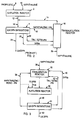
- a prior art process for producing 2,6-diisopropylnaphthalene from naphthalene is shown in Figure 2, labeled "Prior Art.”
- the three main components of this process are alkylation reactor 2, 2,6-diisopropylnaphthalene separation means 4, and transalkylation reactor 6.
- Propylene feed stream 8 and fresh naphthalene feed stream 10 are contacted in an alkylation reactor 2 containing a solid acid catalyst.
- Diisopropylnaphthalene product 12 is combined with a transalkylation recycle stream 14 to form stream 16, which is fed to 2,6-diisopropylnaphthalene separation means 4.
- 2,6-diisopropylnaphthalene separation means 4 can be a combination of unit operations which increase the purity of the desired 2,6-diisopropylnaphthalene product.
- thermal distillation can be used to separate naphthalene and monoisopropylnaphthalene from the higher boiling polyisopropylnaphthalenes.
- Thermal distillation can also be used to separate tri- and tetraisopropylnaphthalenes from the diisopropylnaphthalenes.
- crystallization or selective adsorption can be used to recover substantially pure 2,6-diisopropylnaphthalene from the other diisopropylnaphthalene isomers.
- the 2,6-diisopropylene product is represented as stream 24 in Figure 2.
- Naphthalene and monoisopropylnaphthalene recycle stream 18, diisopropylnaphthalene recycle stream 20, tri- and tetraisopropylnaphthalenes stream 22 and napthalene feed stream 26 are fed to transalkylation reactor 6 containing a solid acid catalyst.
- transalkylation reaction product transalkylation recycle stream 14
- the transalkylation reaction product, transalkylation recycle stream 14 is typically rich in diisopropylnaphthalene and is typically at equilibrium, being characterized by a 2,6/2,7-diisopropylnaphthalene molar ratio of about 1 and a diisopropylnaphthalene fraction containing no greater than 39 mole percent 2,6 diisopropylnaphthalene.
- the composition of diisopropylnaphthalene product 12 will be similar to stream 14 and when combined, the feed to 2,6 diisopropylnaphthalene separating means 4 will also have a 2,6/2,7 ratio of about 1 and contain about 39 mole percent 2,6 diisopropylnaphthalene in the diisopropylene fraction.
- feedstocks for various products which can be manufactured with this invention are listed below: FEED STOCKS PRODUCT AROMATIC PREFERRED ALKYL MOIETY OTHER ALKYL MOIETY 2,6 dimethylnaphthalene Naphthalene Methanol Methyl chloride 2,6 diethylnaphthalene Naphthalene Ethylene Ethyl chloride, Ethanol 2,6 diisopropylnaphthalene Naphthalene Propylene Propyl chloride, Propyl alcohol para-xylene Benzene Methanol Methyl chloride para-diethylbenzene Benzene Ethylene Ethyl chloride Ethanol para-diisopropylbenzene Benzene Propylene Propyl chloride Propyl alcohol
- the present invention provides a process having three major components: an equilibration step, an alkylation step and 2,6-diisopropylnaphthalene separation step.
- Fresh naphthalene feed and the recycle stream from the 2,6-diisopropylnaphthalene separation means are fed to the equilibration step wherein they are brought to thermodynamic equilibrium over an acid catalyst, thereby obtaining an equilibrated feed stream which is rich in ⁇ monoisopropylnaphthalene.
- the equilibrated stream is fed to the alkylation step where it is contacted with a propyl moiety-containing compound, preferably propylene, in the presence of a shape selective catalyst under conditions sufficient to convert the equilibrated feed stream and propyl moiety-containing compound to diisopropylnaphthalene.
- the alkylation step reaction product thereby obtained contains greater than 39 mole percent of 2,6-diisopropylnaphthalene among all diisopropylnaphthalenes and, 2,6-diisopropylnaphthalene and 2,7-diisopropylnaphthalene in a mole ratio greater than 1.0.
- This diisopropylnaphthalene product from the alkylation reactor, rich in the desired 2,6-isomer, is fed to 2,6-diisopropylnaphthalene separation step to obtain substantially pure 2,6-diisopropylnaphthalene and a recycle stream containing naphthalene, monoisopropylnaphthalene, other diisopropylnaphthalenes, tri-and tetraisopropylnaphthalenes for recycle to the equilibration step.
- substantially all of the naphthalene feed is fed to the transalkylation step to maximize the transalkylation of higher alkylates and produce a stream which is rich in mono-isopropylnaphthalene rather than diisopropylnaphthalene.
- Alkylation of this equilibrated stream with propylene over a shape selective catalyst produces a stream with an enhanced yield of 2,6-diisopropylnaphthalene and enhanced 2,6/2,7- diisopropylnaphthalene molar ratio.
- This stream is now fed directly to 2,6-diisopropylnaphthalene separation step without dilution by an equilibrated recycle stream thereby retaining its enhanced yield of 2,6-diisopropylnaphthalene and enhanced 2,6/2,7- diisopropylnaphthalene molar ratio and making separation of the 2,6-diisopropylene isomer from the other diisopropylnaphthalene isomers and higher alkylates simpler and more efficient than in previous process schemes.
- Figure 1 is a stepwise description of the isopropylation of naphthalene to monoisopropylnaphthalene and diisopropylnaphthalenes.
- Figure 2 is a process flow diagram for a prior art process for the manufacture of 2,6-diisopropylnaphthalene.
- Figure 3 is a process flow diagram for one embodiment of the present invention.
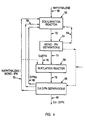
- Figure 4 is a process flow diagram for an alternate embodiment of the present invention.
- the isopropylation of naphthalene is known to occur in stepwise manner beginning with monoalkylates, dialkylates, trialkylates, etc.
- the exact scheme of this progression is set forth more completely in Figure 1 which also reveals the interconnectivity of the various mono- and di-alkylated species.
- the different routes and intermediates to the 2,6-diisopropylnaphthalene isomer are of particular interest to the present invention.
- This isomer can be formed directly by the ⁇ isopropylation of the monoalkylate or by isomerization of ⁇ , ⁇ and ⁇ , ⁇ dialkylates.
- the equilibrium data for the monoisopropylation of naphthalene is important since the 2,6 isomer is the ⁇ , ⁇ product and because the ⁇ isomer is the preferred thermodynamic species for the monoalkylate. It has been shown by Olah (U.S. Patent No. 4,288,646) that the concentration of the ⁇ product increases with the steric bulk of the substituent for monoalkylates of naphthalene. See Table 2. This is predicted to hold true for dialkylates as well.
- 2,6-diisopropylnaphthalene For the production of 2,6-diisopropylnaphthalene, there are two important measures of the distribution of the diisopropylated species obtained. One is the percentage of 2,6-diisopropylnaphthalene among all diisopropylated naphthalenes. The other is the ratio of the 2,6- to 2,7- isomers. The value of these measures in an equilibrium distribution of diisopropylated naphthalene species was not available in the literature and has been determined using silica-alumina, which is a non-shape selective catalyst.
- the equilibrium distribution at 225° contains about 39 mole percent 2,6-diisopropylnaphthalene among all the diisopropylnaphthalenes, and a 2,6-/2,7- isomer ratio of 1.0.
- the use of an equilibration reactor to enrich the proportion of monoisopropylnaphthalene fed to the alkylation reactor in combination with a shape selective alkylation catalyst provides an enriched diisopropylnaphthalene product which can be more easily and efficiently processed to obtain substantially pure 2,6-diisopropylnaphthalene and a recycle stream for the equilibration reactor.
- naphthalene was alkylated using a non-shape selective catalyst under conditions such that thermodynamic equilibration of products was obtained.
- the equilibration step is intended to bring the recycle streams from the 2,6-diisopropylnaphthalene separations section and the fresh naphthalene feed to thermodynamic equilibrium over an acid catalyst.
- the predominant equilibrium product is ⁇ -monoisopropylnaphthalene which is the preferred precursor for the desired 2,6-diisopropylnaphthalene.
- a variety of equilibration acid catalysts are available, see, for example, the catalysts set forth in Table 3 above. In our preferred embodiment, amorphous silica-alumina is used effectively.
- the equilibration reaction step operating temperature is related to the type of catalyst chosen.
- Table 3 presents suggested operating temperatures in relation to the catalyst used.
- the equilibration reaction step using an amorphous silica-alumina catalyst is operated at temperatures between 100°C and 500°C, most preferably in the range 250-300°C for 2,6-diisopropylnaphthalene production.
- the operating pressure should be high enough to prevent significant vaporization of the feed or product components at the reaction temperature. A pressure of 2 to 50 atmospheres should be sufficient for this purpose.
- Another design consideration is to operate the equilibration reactor at a higher pressure than the alkylation reactor to obviate the need for pumping between the two reactors, which will lead to an operating pressure in the range of 1 to 100 atmospheres. Similar process conditions are appropriate for the production of dialkylnaphthalene and paradialkylbenzene.
- the feed to the equilibration step comprises fresh naphthalene feed and recycled components from the 2,6-diisopropylnaphthalene separations step.
- the combined feed stream will typically have a ratio of moles of propyl groups to moles of naphthyl groups of between 0.2 to 2.0 : 1. Similar ratios of other alkenes to naphthalene or benzene in the feed would be appropriate to result in other disclosed products.
- the term "propyl groups” is intended to mean all propyl moieties, including propylene or the propyl groups of the alkylnaphthalenes.
- naphthyl groups is used to mean the sum of naphthalene plus all alkylnaphthalenes. In a commercial plant, this mole ratio will depend on the plant material balance, since the maximum amount of fresh naphthalene that can be added will be equivalent to the 2,6-diisopropylnaphthalene recovered plus any other naphthalene-containing compounds removed from the system, while the recycle stream comprises all of the remaining alkyl naphthalenes plus unconverted naphthalene that are in the alkylation reactor product.
- the alkylation reactor design must address an adiabatic temperature rise caused by the exothermic isopropylation reaction. Insufficient heat removal capacity in the alkylation reactor may lead to adverse effects on selectivity and alkylation catalyst life.
- the alkylation reactor operating temperature ranges between 100°C and 600°C, preferably between 250°C and 350°C for diisopropylnaphthalene production.
- the alkylation reactor operating pressure ranges from 1 to 100 atmospheres, preferably 2 to 10 atmospheres, but in any case should be high enough to prevent significant loss of naphthalene and alkyl naphthalenes by vaporization.
- the alkylation reaction is conducted under conditions such that the propyl/naphthyl group ratio in the reactor product is between 0.1 and 10, preferably between 1.0 and 2.5. These process conditions lead to a diisopropylnaphthalene product which typically contains greater than 39 mole percent diisopropylnaphthalene and a ratio of 2,6-diisopropylnaphthalene to 2,7-diisopropylnaphthalene greater than 1.0. Under optimum catalyst selection and reaction conditions, a ratio of 2,6-diisopropylnaphthalene to 2,7-diisopropylnaphthalene greater than 1.2 can be achieved.
- the preferred embodiment of the present invention utilizes an acidic crystalline molecular sieve catalyst which has twelve-membered oxygen rings and a pore aperture dimension between 5.5 ⁇ and 7.0 ⁇ .
- Acidic crystalline molecular sieve structures have a three dimensional network of AlO4 and SiO4 tetrahedra linked by the sharing of oxygen atoms.
- the framework thus obtained contains pores, channels and cages or interconnected voids.
- trivalent aluminum ions replace tetravalent silicon ions at lattice positions, the network bears a net negative charge, which must be compensated for by counterions (cations). These cations are mobile and may occupy various exchange sites depending on their radius, charge or degree of hydration, for example.
- Crystalline molecular sieve structures are often defined in terms of the number of their tetrahedral units (T atoms).
- T atoms tetrahedral units
- the sodalite unit is built from four and six membered oxygen rings.
- the mordenite framework is built from chains of tetrahedra cross linked by oxygen bridges. Each Al or Si tetrahedron is, in addition, part of a five-membered oxygen ring. The chains are then interconnected to obtain the mordenite structure.
- Mordenite is defined as having twelve-membered oxygen rings.
- the mordenite pore structure consists of elliptical and noninterconnected channels parallel to the c axis of the orthorhombic structure with pore aperture dimensions of 6.5 ⁇ and 7.0 ⁇ .
- ZSM-12 belongs structurally to the mordenite group of zeolites.
- the pore structure of ZSM-12 consists of linear, non-interpenetrating channels which are formed by twelve-membered rings and possess pore aperture dimensions of 5.5 ⁇ , 5.7 ⁇ and 6.2 ⁇ .
- Jacobs, P.A. et al. "Synthesis of High Silica Aluminosilicate Zeolites," Studies in Surface Science and Catalysis #33, Elsevier, 1987 page 301.
- Meier, W.M. "Atlas of Zeolite Structure Types" 2nd ed., Structure Commission of the International Zeolite Association , 1987).
- Offretite is a 12-oxygen ring zeolite with a pore aperture dimension of 6.7 ⁇ and 6.8 ⁇ in which the structure also contains a 14-hedron cage.
- MeAPSO-46 is also a 12-oxygen ring zeolite with a pore aperture dimension of 6.2 ⁇ and 6.4 ⁇ .
- acidic crystalline molecular sieve catalysts containing twelve membered oxygen rings are useful in the isopropylation reaction of naphthyl compounds.
- Pore structure (dimensions and network) varies greatly among zeolites. Without modifications of the zeolite structure, the lowest pore aperture dimension is about 2.6 ⁇ and the highest is 7.4 ⁇ . Pores may lead to linear, parallel, or interconnected channels or may give access to larger intracrystalline cavities, sometimes referred to as cages. For all zeolites, the pore opening is determined by the free aperture of the oxygen ring that limits the pore aperture.
- crystallographic free diameters may depend upon the hydration state of the zeolite, particularly for the more flexible frameworks. It should also be borne in mind that effective free diameters can be temperature dependent. Thus, the free diameters at reaction conditions may differ from those reported above.
- pore aperture is intended to refer to both the pore mouth at the external surface of the crystalline structure, and to the intracrystalline channel, exclusive of cages.
- a crystalline molecular sieve is hereinafter characterized by a "pore aperture dimension,” it is the intent to adopt the geometric dimensional analysis defined as "crystallographic free diameter of channels” in Meier, W.M., Olson, D.H., Atlas of Zeolite Structure Types , (Butterworth's, 1987, 2d Rev. Ed.)
- dimension is preferred over “diameter” because the latter term implies a circular opening, which is not always accurate in crystalline molecular sieves.
- Shape selective reactions occur when the zeolite framework and its pore structure allow substrate molecules of a given size and shape to reach active sites located in the intracrystalline free space, and allow product molecules of a given size and shape to diffuse out of the intracrystalline free space. It is therefore important to characterize accurately the pore structure that is encountered in the various crystalline molecular sieve frameworks.
- interconnecting channels in acidic crystalline molecular sieve catalysts is important in determining their physical and chemical properties.
- Three types of channel systems have been defined: a one dimensional system, such as found in analcime, does not permit intersection of the channels; two dimensional systems can be found in certain zeolites; and, three dimensional systems have intersecting channels.
- the second type consists of three-dimensional, intersecting channels, but the channels are not equidimensional; the pore aperture dimension depends upon the crystallographic direction. See Donald W. Breck, "Zeolite Molecular Sieves: Structure, Chemistry, and Use," at pp. 59-60 (John Wiley & Sons, 1974).
- Crystalline molecular sieves with three-dimensional channels can also contain larger intracrystalline cavities known as cages. These cavities may accommodate substrate molecules and, in principal, play a role in shape selective reactions.
- sodalite has sodalite cages, as does faujasite. Faujasite is a 12-oxygen ring zeolite with a pore aperture dimension of 7.4 ⁇ and also has super-cages (26-hedron) with a cage dimension of 11.8 ⁇ .
- Wide Type A Zeolite has cages having free dimension of 11.4 ⁇ . See E.G. Derouane, "Diffusion and Shape-Selective Catalysis in Zeolites," Intercalation Chemistry , at pp. 112-114, Ed. by M. Stanley Whittingham (Academic Press, 1982). See also Thaddeus E. Whyte et al., "Catalytic Materials: Relationship between Structure and Reactivity," at pp. 165-167, ACS Symposium Series 248 , (American Chemical Society, 1984).
- the acidic crystalline molecular sieve catalyst is synthetic mordenite.
- While synthetic mordenite has been described with reference to a particularly preferred embodiment of the present invention, there are other catalysts which can be used in the alkylation reaction to achieve an alkylation product enriched in both total diisopropylnaphthalenes and in the desired 2,6-diisopropylnaphthalene.
- mordenite When mordenite is used, external surface acid site deactivation is preferred. (See below).
- ZSM-12 can also be used without modification analogous to mordenite.
- Offretite and MeAPSO-46 also fall into the first class of catalysts whose pore aperture dimensions are between 5.5 ⁇ and 7.0 ⁇ , prior to any modification to the pores.
- the preferred Si/Al ratio in Zeolite L is 3.0.
- the structure of zeolite L consists of columns of symmetrical e-D6R-e units crosslinked to others by single oxygen bridges; planar 12-membered rings produce wide channels parallel to the c-axis.
- the pore aperture of zeolite L determined by x-ray crystallography was found to be 7.1 ⁇ .
- a more detailed description of the structure of zeolite L can be found in D.W. Breck, John Wiley & Sons, page 113, 1974.
- SAPO-5 is structurally analogous to AlPO4-5.
- AlPO4-5 is a 12-ring sieve with a pore aperture of 7.3 ⁇ .
- a more detailed description of the structure can be found in J.M. Bennett et al., Intrazeolite Chemistry , ACS Symposium Series 218 , American Chemical Society, page 79, 109, 1983.
- shape selective catalysts to enhance the conversion of substrate to the desired isomer involves the use of a catalyst whose intracrystalline structure permits diffusion of the substrate and the desired isomer under reaction conditions.
- certain catalyst modifications have been found to provide a shape selective catalyst particularly beneficial to the conversion of naphthalene and monoisopropylnaphthalene to the desired 2,6-diisopropylnaphthalene product.
- dealumination, calcination, and external and internal surface acid site modifications are dealumination, calcination, and external and internal surface acid site modifications.
- the preferred catalysts mordenite and ZSM-12, as well as offretite and faujasite, can be optimized to yield greater selectivities to the desired 2,6-diisopropylnaphthalene without substantially altering their pore aperture dimensions.
- One such modification to the preferred catalysts is to dealuminate.
- Dealumination of acidic crystalline molecular sieve materials can be achieved by exposing the solid catalyst to mineral acids such as HCl. The desired degree of dealumination will dictate the strength of acid used and the time during which the crystalline structure is exposed to the acid. It is also common to use a steam treatment, in combination with the acid leach, to dealuminate zeolite materials. For additional methods of preparing aluminum-deficient zeolites, see J.
- a dealuminated crystalline molecular sieve can be calcined at temperatures between 400°C and 1000°C, preferably between 400°C and 600°C. Calcination serves to dehydrate or "heal” Si-OH bonds or "nests” after dealumination. healing these nests provides a more uniform pore structure within the crystalline material, leading to structural stability and ultimately resulting in improved selectivity.
- calcination conditions of a catalyst can critically affect the catalytic activity.
- the choice of the calcination gas, for example oxygen or nitrogen, can affect catalyst species differently.
- calcination temperatures for crystalline molecular sieve catalysts can vary from 300°C to 1000°C.
- the optimal temperature was found experimentally to lie between 400°C and 600°C, but preferentially at about 500°C. (Mathur, Kuldeep, Narain, Ph.D. Thesis, University of Pittsburgh, 1977).
- H-mordenite removal of extra and intra crystalline water can be accomplished effectively in presence of an atmosphere of oxygen or nitrogen.
- the calcination temperature and the calcination gas are both important in order to minimize the formation of water.
- a nitrogen atmosphere is first used to carbonize the organic residue and release the contained hydrogen as hydrogen gas. Following this step, the atmosphere is changed to oxygen at a temperature sufficient to combust the carbonized residue to CO2, thus minimizing water formation.
- Another catalyst treatment involves catalyst external surface acid site removal or blockage.
- the reason for external surface acid removal or blockage is that inactivating the external surface of a zeolite catalyst will increase its shape-selective character, as otherwise the external surface acts as a non-shape selective catalyst.
- An additional reason for external surface acid site blockage or removal relates to coking on the catalyst surface. Unsaturated compounds such as propylene are able to condense on the acidic function of the catalyst surface producing a substantial amount of coke. See , Studies in Surface Science and Catalysis, 34 , p. 143. Coke will also be formed at the catalyst pore mouth over time. This buildup will cause the pores to become less accessible to substrate molecules, and eventually close the pores, rendering these channels inactive.
- Those crystalline molecular sieves which have been adequately modified by internal acid site treatment will perform in the selective isopropylation of naphthalene to provide a diisopropylnaphthalene which contains at least 39 mole percent of 2,6-diisopropylnaphthalene, and a 2,6-/2,7-diisopropylnaphthalene mole ratio greater than 1.0.
- crystalline molecular sieves may be treated to modify internal acid sites by contact with deactivating reagents selected from the group consisting of the halogen, hydridic and organic derivatives of Groups IIIA, IVA, IVB and VA.
- deactivating reagents selected from the group consisting of the halogen, hydridic and organic derivatives of Groups IIIA, IVA, IVB and VA.
- Preferred embodiments of the internal acid site deactivating reagents include B2H6, SiH4 and PH3.
- Si(OCH3)4 can be deposited irreversibly on zeolite, without entering the intracrystalline pores. See Niwa, M. et al., J. Chem.Soc. , Faraday Trans. , 1, 1984, 80 , 3135-3145; Niwa, M. et al., "Modification of H-Mordenite by Vapour-phase Deposition Method," J. Chem.Soc.Commun. , 1982, pp. 819-20.
- deactivating metal chlorides such as SiCl4, GeCl4, TiCl4 and SnCl4 can be effective to modify pore mouth structures without inactivating internal surface acid sites.
- metal molecules with a range of molecular dimensions, can be selected to be larger than the catalyst pore aperture, thereby preventing substantial diffusion into the internal pore. See Hidalgo, C.V. et al., Zeolites , 1984, 4 , April, p. 175-180.
- the deactivating agents can be contacted with the molecular sieve in either solution or vapor phase.
- External surface acid site deactivation can be obtained by either acid site blockage or acid removal.
- the deactivating agent should be selected to preclude internal surface diffusion. This limitation is easily met by the use of deactivation agents in either liquid or gas phase, whose molecules are too large to fit within even the largest pores of known zeolites.
- One such molecule is triphenylchlorosilane. See Martens, J.A. et al., Zeolites , 1984, 4 , April, p. 98-100.
- Another advantage from the use of a catalyst that achieves shape selectivity in this manner is that the production of polyalkylated aromatics, e.g., of tri- and tetraisopropylnaphthalene, is substantially reduced, because these larger molecules are even more selectively denied communication between the bulk liquid phase and the catalytic sites than are the dialkylnaphthalene isomers, such as diisopropylnaphthalene isomers, (or paradialkylbenzene isomer) other than paradialkylbenzenes or dialkylnaphthalenes such as 2,6-diisopropylnaphthalene.
- dialkylnaphthalene isomers such as diisopropylnaphthalene isomers, (or paradialkylbenzene isomer) other than paradialkylbenzenes or dialkylnaphthalenes such as 2,6-diisopropylnaphthalene.
- Figure 3 shows an embodiment illustrating the variation in which 2,6 diisopropylnaphthalene is produced.
- the three main process components are: equilibration reactor 30, alkylation reactor 32 and 2,6-diisopropylnaphthalene separation means 34.
- Fresh naphthalene feed stream 36 is provided to equilibration reactor 30 where it is combined with diisopropylnaphthalene recycle stream 40, tri- and tetraisopropylnaphthalenes recycle stream 42, and optionally naphthalene and monoisopropylnaphthalene recycle stream 38.
- This reaction mass is equilibrated over an appropriate equilibration catalyst, preferably amorphous silica-alumina catalyst, thereby obtaining an equilibration reaction product which is rich in monoisopropylnaphthalene.
- Equilibrated feed stream 44 is then fed to alkylation reactor 32 where it is contacted with propylene feed stream 46 in the presence of a shape selective catalyst, chosen to optimize the yield of 2,6-diisopropylnaphthalene.
- a shape selective catalyst chosen to optimize the yield of 2,6-diisopropylnaphthalene.
- 2,6-diisopropylnaphthalene enriched stream 48 is then fed to 2,6-diisopropylnaphthalene separation means 34.
- 2,6-diisopropylnaphthalene enriched stream 48 is first thermally distilled to remove unreacted naphthalene and monoisopropylnaphthalene for recycle to the equilibration reactor 30 or to the alkylation reactor 32 via naphthalene and monoisopropylnaphthalene recycle stream 38.
- a second thermal distillation can be used to separate diisopropylnaphthalenes from tri- and tetraisopropylnaphthalenes which are also recycled to the equilibration reactor 30 through tri-and tetra-isopropylnaphthalenes recycle stream 42.
- the diisopropylnaphthalenes are fractionally crystallized to obtain diisopropylnaphthalene recycle stream 40 and 2,6-diisopropylnaphthalene product stream 50.
- a solvent or an adduct-forming reagent for the fractional crystallization it may be necessary to add a solvent or an adduct-forming reagent for the fractional crystallization, and then to recover such solvent or adduct-forming reagent before any recycle to the equilibration reactor 30. It is also possible to utilize selective adsorption to recover 2,6-diisopropylnaphthalene from the other diisopropylnaphthalenes.
- FIG. 4 Another alternative embodiment of the process according to the present invention is set forth in Figure 4.
- This process scheme has four major components: equilibration reactor 52, monoisopropylnaphthalene separations means 54, alkylation reactor 56 and 2,6-diisopropylnaphthalene separations means 58.
- the major difference between this embodiment and the embodiment described with reference to Figure 3 is the use of monoisopropylnaphthalene separations means 54 to further enhance the concentration of naphthalene and ⁇ -monoisopropylnaphthalene in the feed to the alkylation reactor 56.
- fresh naphthalene feed 60 is combined with di/tri/tetra isopropylnaphthalenes recycle stream 62,diisopropylnaphthalenes recycle stream 66, tri- and tetraisopropylnaphthalenes recycle stream 68, and naphthalene and optionally monoisopropylnaphthalene recycle stream 70 in the presence of an acid catalyst, preferably amorphous silica-alumina, to obtain an equilibrium reaction mass which is rich in monoisopropylnaphthalene.
- an acid catalyst preferably amorphous silica-alumina
- Equilibrated product stream 72 is fed to monoisopropylnaphthalene separations means 54 wherein thermal distillation is used to separate naphthalene and monoisopropylnaphthalene from heavier alkylate.
- the heavy alkylate recycle stream 64 is recycled to equilibration reactor 52.
- a diisopropylnaphthalene stream 62 can be separated by distillate in monoisopropylnaphthalene separation means and recycled to 2,6 diisopropylnaphthalene separation means 58.
- Monoisopropylnaphthalene enriched feed stream 74 is then fed to the alkylation reactor 56 where it is contacted with propylene feed stream 76 in the presence of a shape selective catalyst as described above.
- diisopropylnaphthalene product which typically contains greater than 39 mole percent diisopropylnaphthalene and a ratio of 2,6-diisopropylnaphthalene to 2,7-diisopropylnaphthalene greater than 1.0.
- a ratio of 2,6-diisopropylnaphthalene to 2,7-diisopropylnaphthalene greater than 1.2 can be achieved.
- Alkylation product stream 78 enriched in the 2,6-diisopropylnaphthalene isomer, is then fed to 2,6-diisopropylnaphthalene separations means 58 wherein substantially pure 2,6-diisopropylnaphthalene is separated from the other alkylation reaction components such as naphthalene, monoisopropylnaphthalene, other diisopropylnaphthalenes, tri and tetraisopropyl- naphthalenes.
- 2,6-diisopropylnaphthalene separations means 58 wherein substantially pure 2,6-diisopropylnaphthalene is separated from the other alkylation reaction components such as naphthalene, monoisopropylnaphthalene, other diisopropylnaphthalenes, tri and tetraisopropyl- naphthalenes.
- 2,6-diisopropylnaphthalene product stream 80 is obtained, while diisopropylnaphthalenes recycle stream 66, tri- and tetraisopropylnaphthalenes recycle stream 68, and naphthalene and monoisopropylnaphthalene recycle stream 70 are recycled to the equilibration reactor 52.
- the naphthalene and monoisopropylnaphthalene recycle stream 70 is recycled to the alkylation reactor 56.
- the alkylation product stream 78 is thermally distilled to remove naphthalene and monoisopropylnaphthalenes, and in a second thermal distillation, the higher boiling tri- and tetraisopropylnaphthalenes are removed.
- diisopropylnaphthalenes would be subjected to fractional crystallization or reactive adsorption to separate the 2,6-diisopropylnaphthalene isomer from the other diisopropylnaphthalenes.
- this stream may be sent directly to fractional crystallization or selective adsorption for separating the 2,6-diisopropylnaphthalene isomer from the other alkylation reaction components.
- an alkylation catalyst such as an appropriately selected zeolite which produces a reactor effluent with a concentration of the desired 2,6-dialkylnaphthalene or para dialkylbenzene greater than that at equilibrium
- a means for separating the desired 2,6 dialkylnaphthalene from other alkylnaphthalenes or para-dialkylbenzene from other alkylbenzenes such as distillation, crystallization and/or adsorption
- a catalyst for transalkylating alkyl naphthalenes or alkylbenzenes such as silica-alumina.
- the following example illustrates the high selectivity to 2,6-diisopropylnaphthalene attained when alkylating naphthalene over a shape selective catalyst.
- the catalyst was H-mordenite dealuminated with steam calcining followed by a wash with 0.5 N HCl, followed by calcining at 500°C for 8 hours.
- the reaction was conducted in a stirred autoclave. Liquid charge was 90 grams, and catalyst charge was 1 gram.
- a feed was made up by mixing 374 grams of diisopropylnaphthalene with 226 grams of naphthalene to give a propyl/naphthyl ratio of about 1.
- Example 3 The material shown in Example 3 was alkylated with propylene in a stirred autoclave at a pressure of 50 psig and a temperature of 290°C.
- the catalyst was prepared as described in Example 2. Liquid charge was 90 grams, and catalyst charge was 1 gram.
- composition of the diisopropylnaphthalene fraction is much enriched in 2,6-diisopropylnaphthalene and has a high 2,6/2,7 ratio relative to an equilibrium product. Moreover, the concentration of tri- and tetraisopropylnaphthalenes is substantially reduced even at the highest conversion.
- composition of the alkylated product can be even further enriched in 2,6-diisopropylnaphthalene if the equilibrated feed, such as that shown in Example 3, is distilled to separate the naphthalene and monoisopropylnaphthalene from the higher alkylnaphthalenes, as shown in Figure 4.
- the following example illustrates the alkylation of a feed synthesized to represent a distilled, equilibrated feed with a propyl/naphthyl ratio of about 1.
- the reaction was conducted in a stirred autoclave. Reactor pressure was 50 psig, and the temperature was 290°.
- the catalyst was prepared as in Example 2. Liquid charge was 90 grams, and catalyst charge was 1 gram.
Landscapes
- Chemical & Material Sciences (AREA)
- Organic Chemistry (AREA)
- Chemical Kinetics & Catalysis (AREA)
- Organic Low-Molecular-Weight Compounds And Preparation Thereof (AREA)
- Low-Molecular Organic Synthesis Reactions Using Catalysts (AREA)
Abstract
Claims (24)
- Procédé de préparation du 2,6-diisopropylnaphtalène comprenant les étapes consistanta) à mettre en contact dans une étape d'équilibrage, une alimentation de naphtalène neuf et un courant de recyclage comprenant un ou plusieurs des composés suivants, naphtalène, monoisopropylnaphtalène, autres diisopropylnaphtalènes, triisopropylnaphtalène et tétraisopropylnaphtalènes, avec un catalyseur d'équilibrage, de façon que le naphtalène neuf et le courant recyclé soient amenés sensiblement à l'équilibre thermodynamique sur le catalyseur d'équilibrage pour produire un courant d'alimentation équilibrée, riche en monoisopropylnaphtalène;b) à mettre en contact au moins une partie du courant d'alimentation équilibrée et un composé contenant une fraction propyle choisi dans le groupe comprenant le chlorure de propyle, l'alcool propylique et le propylène dans une étape d'alkylation avec un catalyseur d'alkylation acidique à sélectivité de forme dans des conditions suffisantes pour transformer le courant d'alimentation équilibrée et le composé contenant une fraction propyle en un produit diisopropylnaphtalène comprenant plus de 39 moles pour cent de 2,6-diisopropylnaphtalène et ayant un rapport molaire du 2,6-diisopropylnaphtalène au 2,7-diisopropylnaphtalène de plus de 1,0;c) à diviser le produit diisopropylnaphtalène en un produit 2,6-diisopropylnaphtalène sensiblement pur et en le courant de recyclage; etd) à recycler le courant de recyclage à l'étape d'équilibrage.
- Procédé de la revendication 1, dans lequel ledit composé contenant une fraction propyle est le propylène.
- Procédé de la revendication 1 ou 2, dans lequel le rapport des moles des groupes propyles aux moles des groupes naphtyles dans l'alimentation totale de l'étape d'équilibrage, est d'environ 1,0.
- Procédé selon l'une quelconque des précédentes revendications, dans lequel l'étape de division du produit diisopropylnaphtalène est effectuée: dans une première étape de distillation thermique pour séparer le naphtalène et le monoisopropylnaphtalène n'ayant pas réagi d'un diisopropylnaphtalène de queue, dans une seconde étape de distillation thermique pour diviser le diisopropylnaphtalène de queue en un courant de composant à haut point d'ébullition comprenant des triisopropylnaphtalènes et en un concentré de diisopropylnaphtalène, et dans une étape de cristallisation fractionnée pour diviser le concentré de diisopropylnaphtalène en un produit 2,6-diisopropylnaphtalène sensiblement pur et en d'autres diisopropylnaphtalènes isomères.
- Procédé de la revendication 4, comprenant aussi l'étape consistant à recycler au moins une partie du naphtalène et du monoisopropylnaphtalène n'ayant pas réagi à l'étape d'alkylation.
- Procédé de la revendication 4, comprenant également l'étape consistant à introduire au moins une partie du diisopropylnaphtalène de queue à l'étape d'équilibrage.
- Procédé selon l'une quelconque des revendications 1 à 3, dans lequel l'étape de division du produit diisopropylnaphtalène est effectuée dans une étape choisie entre une cristallisation et une adsorption sélective adaptée à produire un 2,6-diisopropylnaphtalène sensiblement pur et le courant de recyclage.
- Procédé de la revendication 1, comprenant les étapes consistant:
à diviser le courant d'alimentation équilibrée en trois parties; un courant d'alkylat lourd, un courant riche en diisopropylnaphtalène, et un courant contenant du naphtalène et des monoisopropylnaphtalènes;
à renvoyer le courant d'alkylat lourd à l'étape d'équilibrage comme une partie du courant de recyclage;
à mélanger le courant riche en diisopropylnaphtalène avec le produit diisopropylnaphtalène quittant l'étape d'équilibrage; et
à introduire le courant contenant le naphtalène et les monoisopropylnaphtalènes dans l'étape d'alkylation ou au moins dans une partie du courant d'alimentation équilibrée amené à l'étape d'alkylation. - Procédé selon l'une quelconque des précédentes revendications, dans lequel l'étape d'alkylation ajoute de 0,5 à 2,0 groupes propyles par groupe naphtyle.
- Procédé selon l'une quelconque des précédentes revendications, dans lequel la température de réaction dans l'étape d'alkylation est comprise entre 250° et 350°C.
- Procédé selon l'une quelconque des précédentes revendications, dans lequel la pression de réaction dans l'étape d'alkylation est comprise entre 1 et 100 atmosphères.
- Procédé selon l'une quelconque des précédentes revendications, dans lequel la pression de réaction dans l'étape d'alkylation est comprise entre 2 et 10 atmosphères.
- Procédé pour la production de 2,6 dialkylnaphtalène comprenant les étapes consistant:(a) à mettre en contact, dans une étape d'équilibrage, une alimentation en naphtalène neuf, un courant recyclé comprenant un ou plusieurs composés suivants, naphtalène, monoalkylnaphtalène, dialkylnaphtalène, trialkylnaphtalène, et tétraalkylnaphtalène, avec un catalyseur d'équilibrage dans des conditions de réaction telles que l'alimentation en naphtalène et les courants recyclés soient amenés sensiblement à l'équilibre thermodynamique sur le catalyseur d'équilibrage pour produire un courant d'alimentation équilibrée, riche en monoalkylnaphtalène;b) à mettre en contact, dans une étape d'alkylation, au moins une partie du courant d'alimentation équilibrée et une fraction contenant un radical alkyle choisie parmi les composés suivants, méthanol, chlorure de méthyle, éthanol, chlorure d'éthyle, propylène, chlorure de propyle, propanol, et isopropanol, avec un catalyseur d'alkylation acidique à sélectivité de forme dans des conditions de réaction suffisantes pour transformer le courant d'alimentation équilibrée et la fraction contenant un radial alkyle en un produit dialkylnaphtalène contenant davantage que la quantité d'équilibre, de 2,6-dialkylnaphtalène;c) à diviser le produit dialkylnaphtalène en un produit 2,6-dialkylnaphtalène et en le courant de recyclage; etd) à recycler le courant de recyclage à l'étape d'équilibrage.
- Procédé de la revendication 13, dans lequel la fraction contenant un radical alkyle est choisie parmi le méthanol et le chlorure de méthyle.
- Procédé de la revendication 13, dans lequel la fraction contenant un radical alkyle est choisie parmi l'éthanol et le chlorure d'éthyle.
- Procédé de la revendication 13, dans lequel l'étape de division du produit diisopropylnaphtalène est effectuée dans une première étape de distillation thermique pour séparer le naphtalène et le monoalkylnaphtalène n'ayant pas réagi, d'un produit dialkylnaphtalène de queue, dans une deuxième étape de distillation thermique pour diviser le produit dialkylnaphtalène de queue en un courant de composant de point d'ébullition élevé comprenant des trialkylnaphtalènes et en un concentré de dialkylnaphtalènes, et dans une étape de cristallisation fractionnée pour diviser le concentré de dialkylnaphtalène en un produit 2,6-dialkylnaphtalène sensiblement pur et en d'autres dialkylnaphtalènes isomères.
- Procédé de la revendication 16,comprenant également l'étape consistant à recycler au moins une partie du naphtalène et du monoalkylnaphtalène n'ayant pas réagi, à l'étape d'alkylation.
- Procédé selon la revendication 16 ou 17, comprenant également l'étape consistant à introduire au moins une partie du produit dialkylnaphtalène de queue, à l'étape d'équilibrage.
- Procédé de la revendication 13, dans lequel l'étape de division du produit dialkylnaphtalène est effectuée dans une étape choisie entre la cristallisation et l'absorption sélective, adaptée à produire un 2,6-dialkylnaphtalène sensiblement pur et le courant de recyclage.
- Procédé de la revendication 13, comprenant les étapes consistant:
à diviser le courant d'alimentation équilibrée en trois parties: un courant d'alkylat lourd, un courant riche en dialkylnaphtalènes, et un courant contenant du naphtalène et des monoalkylnaphtalènes;
à renvoyer le courant d'alkylat lourd à l'étape d'équilibrage comme une fraction du courant de recyclage;
à mélanger le courant riche en dialkylnaphtalènes avec le produit dialkylnaphtalène quittant l'étape d'équilibrage;
à introduire le courant contenant le naphtalène et les monoalkylnaphtalènes dans l'étape d'alkylation ou au moins dans une partie du courant d'alimentation équilibrée amené à l'étape d'alkylation. - Procédé selon l'une quelconque des précédentes revendications, dans lequel ledit catalyseur d'équilibrage comprend un catalyseur silico-aluminé amorphe.
- Procédé selon l'une quelconque des revendications 1 à 20, dans lequel ledit catalyseur d'alkylation acidique sélective est un tamis moléculaire cristallin acidique ayant des chaînes fermées oxygénées à douze éléments et des largeurs d'ouverture de pores comprises entre 5,5A et 7,0A.
- Procédé selon l'une quelconque des revendications 1 à 20, dans lequel ledit tamis moléculaire cristallin acidique est choisi parmi le MeAPSO-46, l'Offretite, le ZSM-12 et la mordénite synthétique.
- Procédé de la revendication 22, dans lequel ledit catalyseur tamis moléculaire cristallin acidique est préparé par traitement d'un tamis moléculaire cristallin choisi parmi la Zéolite L, la Zéolite Bêta, la faujasite et le SAPO-5, pour diminuer lesdites dimensions d'ouverture de pores.
Applications Claiming Priority (5)
| Application Number | Priority Date | Filing Date | Title |
|---|---|---|---|
| US254284 | 1988-10-05 | ||
| US07/254,284 US5003122A (en) | 1988-10-05 | 1988-10-05 | Process for selective diisopropylation of naphthyl compounds using shape selective acidic crystalline molecular sieve catalysts |
| US07/303,575 US5003120A (en) | 1988-10-05 | 1989-01-27 | Process for selective manufacture of 2,6-diisopropylnaphthalenes with equilibration reactor |
| US303575 | 1989-01-27 | ||
| PCT/US1989/004496 WO1990003960A1 (fr) | 1988-10-05 | 1989-10-05 | Procede de fabrication selective de 2,6-dialkylnaphthalene |
Publications (3)
| Publication Number | Publication Date |
|---|---|
| EP0444056A1 EP0444056A1 (fr) | 1991-09-04 |
| EP0444056A4 EP0444056A4 (en) | 1991-11-06 |
| EP0444056B1 true EP0444056B1 (fr) | 1994-06-08 |
Family
ID=26943953
Family Applications (1)
| Application Number | Title | Priority Date | Filing Date |
|---|---|---|---|
| EP89912024A Expired - Lifetime EP0444056B1 (fr) | 1988-10-05 | 1989-10-05 | Procede de fabrication selective de 2,6-dialkylnaphthalene |
Country Status (7)
| Country | Link |
|---|---|
| US (1) | US5003120A (fr) |
| EP (1) | EP0444056B1 (fr) |
| JP (1) | JP2744832B2 (fr) |
| KR (1) | KR900701696A (fr) |
| AU (1) | AU4489289A (fr) |
| DE (1) | DE68916035T2 (fr) |
| WO (1) | WO1990003960A1 (fr) |
Families Citing this family (14)
| Publication number | Priority date | Publication date | Assignee | Title |
|---|---|---|---|---|
| US5073655A (en) * | 1988-10-06 | 1991-12-17 | Mobil Oil Corp. | Method for preparing diarylalkanes |
| DE69129843T2 (de) * | 1991-03-21 | 1999-03-11 | Solutia Europe N.V./S.A., Bruessel/Bruxelles | Verbessertes katalytisches Verfahren zur selektiven Alkylierung von aromatischen Kohlenwasserstoffen |
| US5177284A (en) * | 1991-05-28 | 1993-01-05 | Mobil Oil Corporation | Catalysts/process to synthesize alkylated naphthalene synthetic fluids with increased alpha/beta isomers for improving product qualities |
| ES2119767T3 (es) * | 1991-08-21 | 1998-10-16 | Solutia Europ Nv Sa | Procedimiento catalitico para la alquilacion selectiva de compuestos aromaticos policiclicos. |
| JPH05221886A (ja) * | 1992-02-13 | 1993-08-31 | Idemitsu Petrochem Co Ltd | 2,6−ジイソプロピルナフタレンの製造方法 |
| JPH05221885A (ja) * | 1992-02-13 | 1993-08-31 | Nkk Corp | アルキルベンゼン中に共存するアルキルテトラリンの除去方法 |
| IT1300061B1 (it) * | 1998-04-17 | 2000-04-19 | Eniricerche S P A Ora Enitecno | Processo per preparare 2,6-dimetilnaftalene |
| IT1314190B1 (it) | 1999-10-18 | 2002-12-06 | Eni Spa | Processo per preparare 2,6-dimetilnaftalene |
| US6906233B2 (en) * | 2002-12-12 | 2005-06-14 | Exxon Mobil Chemical Patents Inc. | Modified metalloaluminophosphate molecular sieves |
| US20060173458A1 (en) * | 2004-10-07 | 2006-08-03 | Micah Forstein | Bone fracture fixation system |
| CN101130478B (zh) * | 2006-08-25 | 2013-04-10 | 北京石油化工学院 | 一种高纯度2,6-二异丙基萘的制备方法 |
| CN105218290A (zh) * | 2014-07-03 | 2016-01-06 | 中国石油化工股份有限公司 | 萘和多异丙苯液相烷基转移反应制备二异丙基萘的方法 |
| CN105272802B (zh) * | 2014-07-24 | 2017-07-14 | 中国石油化工股份有限公司 | 异丙基萘歧化反应制备二异丙基萘的方法 |
| CN114736089B (zh) * | 2022-03-24 | 2023-08-08 | 中国科学院大连化学物理研究所 | 一种生产2,6-二异丙基萘的方法 |
Family Cites Families (28)
| Publication number | Priority date | Publication date | Assignee | Title |
|---|---|---|---|---|
| CA734526A (en) * | 1966-05-17 | Universal Oil Products Company | Process for the alkylation of aromatic compounds | |
| CA754659A (en) * | 1967-03-14 | Oertel Harald | Nonporous elastomeric polyurethane plastics | |
| US3076856A (en) * | 1959-08-27 | 1963-02-05 | Continental Oil Co | Process for preparing dialkyl-naphthalene |
| US3251897A (en) * | 1962-12-20 | 1966-05-17 | Socony Mobil Oil Co Inc | Alkylation of aromatic compounds in the presence of an alumino-silicate catalyst |
| US3205277A (en) * | 1962-12-21 | 1965-09-07 | Universal Oil Prod Co | Alkylation-transalkylation process |
| US3428701A (en) * | 1968-03-01 | 1969-02-18 | Universal Oil Prod Co | Alkylation-transalkylation process |
| GB1273252A (en) * | 1968-07-09 | 1972-05-03 | Shell Int Research | Alkylation of aromatic compounds |
| US3551510A (en) * | 1968-08-15 | 1970-12-29 | Universal Oil Prod Co | Alkylation-transalkylation process |
| US3631120A (en) * | 1969-06-13 | 1971-12-28 | Exxon Research Engineering Co | Alkylation of aromatic hydrocarbons |
| US3843739A (en) * | 1971-04-09 | 1974-10-22 | Gulf Research Development Co | Process for transalkylating diethyl benzene |
| US3751504A (en) * | 1972-05-12 | 1973-08-07 | Mobil Oil Corp | Vapor-phase alkylation in presence of crystalline aluminosilicate catalyst with separate transalkylation |
| JPS579222B2 (fr) * | 1973-05-25 | 1982-02-20 | ||
| JPS5011379A (fr) * | 1973-05-30 | 1975-02-05 | ||
| US4064068A (en) * | 1975-07-30 | 1977-12-20 | Sun Oil Company Of Pennsylvania | Preparation of isopropylnaphthalene mixture |
| US4026959A (en) * | 1976-05-07 | 1977-05-31 | American Cyanamid Company | Low temperature isomerization process for isopropylnaphthalene (100 percent sieve catalyst) |
| US4169111A (en) * | 1978-02-02 | 1979-09-25 | Union Oil Company Of California | Manufacture of ethylbenzene |
| CA1135286A (fr) * | 1978-12-14 | 1982-11-09 | Mobil Oil Corporation | Alkylation des hydrocarbures aromatiques |
| US4459426A (en) * | 1980-04-25 | 1984-07-10 | Union Oil Company Of California | Liquid-phase alkylation and transalkylation process |
| US4415544A (en) * | 1982-05-27 | 1983-11-15 | Mobil Oil Corporation | Modification of catalytic activity of porous zeolites |
| US4440871A (en) * | 1982-07-26 | 1984-04-03 | Union Carbide Corporation | Crystalline silicoaluminophosphates |
| US4567029A (en) * | 1983-07-15 | 1986-01-28 | Union Carbide Corporation | Crystalline metal aluminophosphates |
| EP0202752B1 (fr) * | 1985-04-22 | 1991-09-18 | Imperial Chemical Industries Plc | Procédé d'alkylation |
| US4735929A (en) * | 1985-09-03 | 1988-04-05 | Uop Inc. | Catalytic composition for the isomerization of paraffinic hydrocarbons |
| JPS62226931A (ja) * | 1986-03-29 | 1987-10-05 | Nippon Steel Chem Co Ltd | 2.6−ジイソプロピルナフタレンの製造方法 |
| US4751340A (en) * | 1986-06-16 | 1988-06-14 | Union Carbide Corporation | Selective production of para-aromatics |
| JPH064546B2 (ja) * | 1986-07-08 | 1994-01-19 | 東ソー株式会社 | モノ及び/又はジアルキルナフタレンの製造方法 |
| JPH06104630B2 (ja) * | 1986-11-11 | 1994-12-21 | 三井石油化学工業株式会社 | アルキル基置換芳香族炭化水素の製造方法 |
| DE3703291A1 (de) * | 1987-02-04 | 1988-08-18 | Ruetgerswerke Ag | Verfahren zur herstellung von 2,6-dialkylnaphthalin |
-
1989
- 1989-01-27 US US07/303,575 patent/US5003120A/en not_active Expired - Fee Related
- 1989-10-05 JP JP1511264A patent/JP2744832B2/ja not_active Expired - Lifetime
- 1989-10-05 WO PCT/US1989/004496 patent/WO1990003960A1/fr not_active Ceased
- 1989-10-05 EP EP89912024A patent/EP0444056B1/fr not_active Expired - Lifetime
- 1989-10-05 KR KR1019900701170A patent/KR900701696A/ko not_active Ceased
- 1989-10-05 AU AU44892/89A patent/AU4489289A/en not_active Abandoned
- 1989-10-05 DE DE68916035T patent/DE68916035T2/de not_active Expired - Fee Related
Also Published As
| Publication number | Publication date |
|---|---|
| JP2744832B2 (ja) | 1998-04-28 |
| AU4489289A (en) | 1990-05-01 |
| WO1990003960A1 (fr) | 1990-04-19 |
| EP0444056A4 (en) | 1991-11-06 |
| DE68916035D1 (de) | 1994-07-14 |
| JPH04501261A (ja) | 1992-03-05 |
| US5003120A (en) | 1991-03-26 |
| EP0444056A1 (fr) | 1991-09-04 |
| DE68916035T2 (de) | 1994-12-01 |
| KR900701696A (ko) | 1990-12-04 |
Similar Documents
| Publication | Publication Date | Title |
|---|---|---|
| US5227558A (en) | Aromatic alkylation process employing steam modified zeolite beta catalyst | |
| EP0439632B1 (fr) | Procédé d'alcoylation d'un hydrocarbure aromatique | |
| US5081323A (en) | Liquid phase alkylation or transalkylation process using zeolite beta | |
| JP4067122B2 (ja) | 芳香族変換方法及びこの方法に有用なゼオライト触媒 | |
| US5198595A (en) | Alkylation of aromatic compounds | |
| US7420098B2 (en) | Dual zone aromatic alkylation process | |
| US5003120A (en) | Process for selective manufacture of 2,6-diisopropylnaphthalenes with equilibration reactor | |
| EP0485683B1 (fr) | Préparation d'aromatiques alkylées | |
| NZ196345A (en) | Para-selective alkylation of aromatics using zeolite catalyst modified with ti,zr or hf.production of para-xylene | |
| US5003122A (en) | Process for selective diisopropylation of naphthyl compounds using shape selective acidic crystalline molecular sieve catalysts | |
| US5157180A (en) | Alkylation and transalkylation processes | |
| US5036033A (en) | Alkylation catalyst and processes for preparing | |
| US5202516A (en) | Process of recovering monoalkylbenzene and pure 1,3,5-trialkylbenzene from a mixture of dialkyl- and trialkylbenzenes | |
| US5026942A (en) | Process for selective diisopropylation of naphthyl compounds using shape selective acidic crystalline molecular sieve catalysts | |
| US7019186B2 (en) | Process for the preparation of 2,6-dimethylnaphthalene | |
| EP0021600B1 (fr) | Alcoylation sélective de xylènes avec de l'éthylène | |
| WO2021076259A1 (fr) | Production de composés alkylaromatiques | |
| KR100543270B1 (ko) | 방향족 화합물 전환방법 및 이 방법에 유용한 제올라이트촉매 | |
| NZ196837A (en) | Rium for use in aromatic alkylation zeolite catalyst composition modified with strontium or ba | |
| MXPA98009938A (en) | Processes of conversion of aromaticos and catalyst of ceolita util in the |
Legal Events
| Date | Code | Title | Description |
|---|---|---|---|
| PUAI | Public reference made under article 153(3) epc to a published international application that has entered the european phase |
Free format text: ORIGINAL CODE: 0009012 |
|
| 17P | Request for examination filed |
Effective date: 19910404 |
|
| AK | Designated contracting states |
Kind code of ref document: A1 Designated state(s): BE DE FR GB IT NL |
|
| A4 | Supplementary search report drawn up and despatched |
Effective date: 19910916 |
|
| AK | Designated contracting states |
Kind code of ref document: A4 Designated state(s): BE DE FR GB IT NL |
|
| 17Q | First examination report despatched |
Effective date: 19930420 |
|
| GRAA | (expected) grant |
Free format text: ORIGINAL CODE: 0009210 |
|
| AK | Designated contracting states |
Kind code of ref document: B1 Designated state(s): BE DE FR GB IT NL |
|
| REF | Corresponds to: |
Ref document number: 68916035 Country of ref document: DE Date of ref document: 19940714 |
|
| ET | Fr: translation filed | ||
| ITF | It: translation for a ep patent filed | ||
| PLBE | No opposition filed within time limit |
Free format text: ORIGINAL CODE: 0009261 |
|
| STAA | Information on the status of an ep patent application or granted ep patent |
Free format text: STATUS: NO OPPOSITION FILED WITHIN TIME LIMIT |
|
| 26N | No opposition filed | ||
| NLS | Nl: assignments of ep-patents |
Owner name: KOCH CHEMICAL COMPANY, A DIVISION OF KOCH REFINING |
|
| REG | Reference to a national code |
Ref country code: GB Ref legal event code: 732E |
|
| REG | Reference to a national code |
Ref country code: FR Ref legal event code: TP |
|
| PGFP | Annual fee paid to national office [announced via postgrant information from national office to epo] |
Ref country code: GB Payment date: 19990929 Year of fee payment: 11 |
|
| PGFP | Annual fee paid to national office [announced via postgrant information from national office to epo] |
Ref country code: DE Payment date: 19991008 Year of fee payment: 11 |
|
| PGFP | Annual fee paid to national office [announced via postgrant information from national office to epo] |
Ref country code: FR Payment date: 19991011 Year of fee payment: 11 |
|
| PGFP | Annual fee paid to national office [announced via postgrant information from national office to epo] |
Ref country code: NL Payment date: 19991029 Year of fee payment: 11 |
|
| PGFP | Annual fee paid to national office [announced via postgrant information from national office to epo] |
Ref country code: BE Payment date: 19991221 Year of fee payment: 11 |
|
| PG25 | Lapsed in a contracting state [announced via postgrant information from national office to epo] |
Ref country code: GB Free format text: LAPSE BECAUSE OF NON-PAYMENT OF DUE FEES Effective date: 20001005 |
|
| PG25 | Lapsed in a contracting state [announced via postgrant information from national office to epo] |
Ref country code: BE Free format text: LAPSE BECAUSE OF NON-PAYMENT OF DUE FEES Effective date: 20001031 |
|
| BERE | Be: lapsed |
Owner name: KOCH REFINING CY L.P. Effective date: 20001031 |
|
| PG25 | Lapsed in a contracting state [announced via postgrant information from national office to epo] |
Ref country code: NL Free format text: LAPSE BECAUSE OF NON-PAYMENT OF DUE FEES Effective date: 20010501 |
|
| GBPC | Gb: european patent ceased through non-payment of renewal fee |
Effective date: 20001005 |
|
| PG25 | Lapsed in a contracting state [announced via postgrant information from national office to epo] |
Ref country code: FR Free format text: LAPSE BECAUSE OF NON-PAYMENT OF DUE FEES Effective date: 20010629 |
|
| NLV4 | Nl: lapsed or anulled due to non-payment of the annual fee |
Effective date: 20010501 |
|
| PG25 | Lapsed in a contracting state [announced via postgrant information from national office to epo] |
Ref country code: DE Free format text: LAPSE BECAUSE OF NON-PAYMENT OF DUE FEES Effective date: 20010703 |
|
| REG | Reference to a national code |
Ref country code: FR Ref legal event code: ST |
|
| PG25 | Lapsed in a contracting state [announced via postgrant information from national office to epo] |
Ref country code: IT Free format text: LAPSE BECAUSE OF NON-PAYMENT OF DUE FEES;WARNING: LAPSES OF ITALIAN PATENTS WITH EFFECTIVE DATE BEFORE 2007 MAY HAVE OCCURRED AT ANY TIME BEFORE 2007. THE CORRECT EFFECTIVE DATE MAY BE DIFFERENT FROM THE ONE RECORDED. Effective date: 20051005 |