EP0444983B1 - Herstellungsverfahren für ein Haarkosmetikum, Zusammensetzung und kosmetisches Behandlungsverfahren - Google Patents
Herstellungsverfahren für ein Haarkosmetikum, Zusammensetzung und kosmetisches Behandlungsverfahren Download PDFInfo
- Publication number
- EP0444983B1 EP0444983B1 EP91400263A EP91400263A EP0444983B1 EP 0444983 B1 EP0444983 B1 EP 0444983B1 EP 91400263 A EP91400263 A EP 91400263A EP 91400263 A EP91400263 A EP 91400263A EP 0444983 B1 EP0444983 B1 EP 0444983B1
- Authority
- EP
- European Patent Office
- Prior art keywords
- silicone
- radical
- composition
- process according
- hair
- Prior art date
- Legal status (The legal status is an assumption and is not a legal conclusion. Google has not performed a legal analysis and makes no representation as to the accuracy of the status listed.)
- Expired - Lifetime
Links
Classifications
-
- A—HUMAN NECESSITIES
- A61—MEDICAL OR VETERINARY SCIENCE; HYGIENE
- A61K—PREPARATIONS FOR MEDICAL, DENTAL OR TOILETRY PURPOSES
- A61K8/00—Cosmetics or similar toiletry preparations
- A61K8/18—Cosmetics or similar toiletry preparations characterised by the composition
- A61K8/30—Cosmetics or similar toiletry preparations characterised by the composition containing organic compounds
- A61K8/33—Cosmetics or similar toiletry preparations characterised by the composition containing organic compounds containing oxygen
- A61K8/39—Derivatives containing from 2 to 10 oxyalkylene groups
-
- A—HUMAN NECESSITIES
- A61—MEDICAL OR VETERINARY SCIENCE; HYGIENE
- A61K—PREPARATIONS FOR MEDICAL, DENTAL OR TOILETRY PURPOSES
- A61K8/00—Cosmetics or similar toiletry preparations
- A61K8/02—Cosmetics or similar toiletry preparations characterised by special physical form
- A61K8/14—Liposomes; Vesicles
-
- A—HUMAN NECESSITIES
- A61—MEDICAL OR VETERINARY SCIENCE; HYGIENE
- A61K—PREPARATIONS FOR MEDICAL, DENTAL OR TOILETRY PURPOSES
- A61K8/00—Cosmetics or similar toiletry preparations
- A61K8/18—Cosmetics or similar toiletry preparations characterised by the composition
- A61K8/30—Cosmetics or similar toiletry preparations characterised by the composition containing organic compounds
- A61K8/40—Cosmetics or similar toiletry preparations characterised by the composition containing organic compounds containing nitrogen
- A61K8/41—Amines
- A61K8/416—Quaternary ammonium compounds
-
- A—HUMAN NECESSITIES
- A61—MEDICAL OR VETERINARY SCIENCE; HYGIENE
- A61K—PREPARATIONS FOR MEDICAL, DENTAL OR TOILETRY PURPOSES
- A61K8/00—Cosmetics or similar toiletry preparations
- A61K8/18—Cosmetics or similar toiletry preparations characterised by the composition
- A61K8/30—Cosmetics or similar toiletry preparations characterised by the composition containing organic compounds
- A61K8/58—Cosmetics or similar toiletry preparations characterised by the composition containing organic compounds containing atoms other than carbon, hydrogen, halogen, oxygen, nitrogen, sulfur or phosphorus
- A61K8/585—Organosilicon compounds
-
- A—HUMAN NECESSITIES
- A61—MEDICAL OR VETERINARY SCIENCE; HYGIENE
- A61K—PREPARATIONS FOR MEDICAL, DENTAL OR TOILETRY PURPOSES
- A61K8/00—Cosmetics or similar toiletry preparations
- A61K8/18—Cosmetics or similar toiletry preparations characterised by the composition
- A61K8/72—Cosmetics or similar toiletry preparations characterised by the composition containing organic macromolecular compounds
- A61K8/84—Cosmetics or similar toiletry preparations characterised by the composition containing organic macromolecular compounds obtained by reactions otherwise than those involving only carbon-carbon unsaturated bonds
- A61K8/89—Polysiloxanes
- A61K8/891—Polysiloxanes saturated, e.g. dimethicone, phenyl trimethicone, C24-C28 methicone or stearyl dimethicone
-
- A—HUMAN NECESSITIES
- A61—MEDICAL OR VETERINARY SCIENCE; HYGIENE
- A61Q—SPECIFIC USE OF COSMETICS OR SIMILAR TOILETRY PREPARATIONS
- A61Q5/00—Preparations for care of the hair
Definitions
- the present invention relates to a process for manufacturing a cosmetic composition for application to the hair, the cosmetic composition obtained by this process and a process for cosmetic treatment using said composition.
- oils and fatty substances to restore softness and shine to the hair; the application of these compounds is generally followed by a shampoo to remove excess oil or fatty substances from the hair.
- the use of oils and fatty substances softens and weighs down the hair and it is impossible to subsequently obtain a hairstyle having hold and volume.
- compositions containing silicone oils make it possible to obtain shiny hair, but their prolonged use or in large quantities has the drawback of giving the hair a greasy appearance.
- Aqueous compositions containing cationic surfactants are commonly used, which are applied to the hair and left to act for a few minutes before rinsing the hair.
- Cationic surfactants improve combing and styling, but have drawbacks: they tend to weigh down the hair and make it look greasy. In addition, the hair tends to resale quickly. These drawbacks are all the more accentuated as the treated hair is thinner and more sensitized.
- compositions containing both cationic surfactants and oils or fatty substances can have good cosmetic and rheological properties, but they tend to form a deposit on the hair.
- compositions containing silicones in addition to fatty substances and surfactants.
- an aqueous composition has been described containing linear polydimethylsiloxanes, polydimethylsiloxanes modified with at least one polyalkylene oxide (dimethicone copolyols), a lipid vehicle and a cationic surfactant; this composition is prepared by simple mixing in hot water, cooling and stirring.
- amphiphilic lipids are capable of forming, by stirring in the presence of an aqueous phase, a hydrated lipidic lamellar phase leading to vesicles;
- French Patent No. 2,315,991 describes, in particular, the case where the amphiphilic lipid is a nonionic lipid.
- These vesicles are made up of concentric layers of lipid (s) separated by layers of internal aqueous phase.
- the non-ionic lipid (s) used is (are), in known manner, amphiphilic lipids of natural or synthetic origin comprising, per molecule, one (or more) long (s) hydrocarbon chain (s).
- the many methods of making non-ionic lipid vesicles are well known.
- a first type of process see in particular US-A-4,772,471
- the amphiphilic lipids are dissolved in a solvent, then a film is formed by evaporating the solvent; the film obtained is then brought into contact with stirring with the aqueous phase to be encapsulated and the whole is subjected to vigorous stirring.
- a second type of process see in particular FR-A-2 315 991
- the use of a solvent is avoided: in a first step, the non-amphiphilic lipid (s) are brought into contact -ionic (s) melted (70 - 95 ° C.
- aqueous phase to be encapsulated with the aqueous phase to be encapsulated to form a hydrated lamellar phase, the addition of the aqueous phase to be encapsulated is continued with vigorous stirring until formation of vesicles; in a second step, an aqueous dispersion phase, identical or different from the aqueous phase to be encapsulated, is added while stirring is continued.
- vesicles and the composition is prepared using a known process for the manufacture of nonionic vesicles, in which the nonionic amphiphilic lipid and the silicone are mixed before the vesicle formation process.
- composition thus prepared contains stable vesicles.
- the present invention therefore has for first object a process for the manufacture of a cosmetic composition for application to the hair containing at least one lipid, at least one silicone and water, characterized in that it is mixed with l at least one nonionic amphiphilic lipid capable of forming vesicles with at least one silicone, which this mixture is subjected to a process for forming vesicles encapsulating an aqueous phase, and that a dispersion of the product is carried out obtained in an aqueous dispersion phase.
- the aqueous dispersion phase contains at least one cationic surfactant.
- the process for forming vesicles used is preferably the process which does not require a solvent, in which a fusion is carried out of the mixture of nonionic amphiphilic lipid (s) and silicone (s), an aqueous phase to be encapsulated is introduced so as to form a hydrated lamellar phase, the addition of this phase is continued with vigorous stirring to form vesicles, then an aqueous dispersion phase is added.
- the non-ionic amphiphilic lipid (s) constituting the lipid lamellar phase is (are) preferably associated with at least one stabilizing additive intended to modify the permeability or the load. superficial lipid sheets.
- these additives are more particularly chosen from sterols and / or anionic stabilizers.
- the sterol can advantageously be cholesterol or beta-sitosterol; preferably a weight-for-weight mixture of non-ionic amphiphilic lipid (s) and cholesterol or a mixture containing less than 50% by weight of cholesterol is used.
- the anionic stabilizer is advantageously chosen from the monosodium or disodium salts of acyl glutamate, the acyl radical being C14 - C22 such as the monosodium salt of stearyl glutamate, the disodium salts of cocoyl glutamates, of stearyl or of mixture of mixtures acyl radicals of copra and tallow; and phosphoric esters of C12 - C16 fatty alcohols; the anionic stabilizers are associated with the non-ionic amphiphilic lipid (s) in an amount not generally exceeding 12% by weight relative to the weight of the amphiphilic lipid (s) no -ionic (s). In known manner, it is possible to add to the nonionic amphiphilic lipids both a sterol and an anionic stabilizer.
- the silicones used can be in the form of oils, gums or resins insoluble in water, volatile or not.
- At least one non-volatile silicone is used, such as a hydroxylated polydimethylsiloxane oil at the chain end or a polyphenylmethylsiloxane gum, in the form of a solution in at least one cyclic volatile silicone oil of the cyclomethicone type.
- the surfactant is more particularly a tetraalkylammonium chloride of formula (II), in which R5, R6 and R7 are identical C1 - C4 alkyl radicals, preferably methyl, and R8 is a C20 - C22 alkyl radical. It is advantageous to use behenyltrimethylammonium chloride.
- the surfactant is a methyl sulphate
- R denotes a mixture of alkenyl and / or C13-C21 alkyl radicals derived from tallow fatty acids, for example the product sold under the trade name "REWOQUAT W 7500" by the company "REWO”.
- the present invention it is possible to add, in a known manner, to the non-ionic amphiphilic lipid (s) and / or to the silicone (s), before the formation of the vesicles, at least a liposoluble cosmetic and / or pharmaceutical active, which will be in the lipid sheets of the vesicles. It is also possible to introduce, in known manner, into the aqueous phase to be encapsulated and / or into the aqueous dispersion phase, at least one cosmetic and / or pharmaceutical active ingredient soluble in water and / or at least one additive.
- active agents mention may be made of acid vitamin A, linoleic acid, tocopherols and hair loss or hair regrowth agents, anti-dandruff agents, retinoids or the like, anti-inflammatories, antifungals, anti-seborrheics , sun filters or the like.
- the thickening agents are more particularly chosen from cellulose derivatives such as hydroxymethylcellulose, carboxymethylcellulose, hydroxybutylcellulose, hydroxypropylcellulose and more particularly hydroxyethylcellulose, such as the products sold under the trade name "NATROSOL” (150,250) by the company “HERCULES” or “CELLOSIZE” (QP and WP) by the company “UNION CARBIDE” or “NATROSOL PLUS GRADE 330 CS” by the company “AQUALON", methylhydroxypropylcellulose, in particular the products sold under the name "METHOCEL” ( E, F, J, K) by the company “DOW CHEMICAL” or heterobiopolysaccharides such as, for example, xanthan gums sold under the brands "KELTROL” and
- thickening agents can be incorporated indifferently into compositions containing silicosomes in the presence or not of a cationic surfactant.
- compositions do not contain a cationic surfactant
- crosslinked polyacrylic acids such as the products sold under the trade name "CARBOPOL” by the company “GOODRICH”, such as Carbopols 910, 934, can also be used as thickening agent.
- CARBOPOL the products sold under the trade name "CARBOPOL” by the company “GOODRICH”
- Carbopols 910, 934 can also be used as thickening agent.
- 934P, 940, 941, 1342 can also be used as thickening agent.
- a second object of the present invention is a composition obtained by the process defined above, comprising at least one silicone and at least one non-ionic amphiphilic lipid in the form of vesicles dispersed in an aqueous dispersion phase also preferably containing minus a cationic surfactant.
- composition according to the invention is in the form of a cream or lotion.
- compositions according to the invention are preferably used in the form of rinsing products, before and more particularly after shampooing, before and more particularly after coloring or discoloration, before and more particularly after a perm or straightening. It has been found that these compositions are stable over time, even in the presence of cationic surfactants, which was in no way predictable by those skilled in the art, taking into account in particular the indications contained in US-A-3 patent 957,971 (column 11, row 1). In addition, these compositions have a set of cosmetic properties.
- compositions do not grease the hair, do not soften it, detangle it easily and allow easy combing in the wet or dry state.
- compositions confer, in addition, on the hair, surprising properties such as uniform straightening, lightness and great softness from root to tip. There is a surprising effect of individualization of the hair fibers and a significant reduction in static electricity. These properties are obtained on natural or little sensitized hair when the composition does not contain a cationic surfactant and also on sensitized hair when the composition contains a cationic surfactant.
- compositions are also very easily removed on rinsing with water.
- a third object of the present invention is a process for cosmetic treatment of the hair, characterized in that an effective amount of the composition according to the invention is applied to it, that the hair is optionally combed and that finally rinse said hair.
- quantities of compositions are applied, in general, of the order of 5 to 40 g per head.
- a first constituent is prepared comprising the vesicles.
- a mixture of 10.8 g of nonionic lipids of formula: or not is an average statistical value equal to 3
- C3H5 (OH) O is represented by the mixture of the following structures: with 10.8 g of cholesterol and 1.2 g of monosodium salt of stearyl glutamate sold under the trade name "ACYLGLUTAMATE HS 11" by the company "AJINOMOTO".
- a second constituent comprising the aqueous dispersion phase; to do this, 25.6 g of an 80% solution of active material (ie 22 g of active material) of a quaternary ammonium salt sold under the trade name are dissolved in 10 minutes at 80 ° C.
- active material ie 22 g of active material
- quaternary ammonium salt sold under the trade name
- the first and second constituents thus obtained are mixed and homogenized with gentle stirring.
- the perfume is added, then it is made up to 1000 g with room temperature water and the mixture is gently stirred until it returns to room temperature.
- a composition is obtained, which has the appearance of a cream. This composition was observed to be stable after three months at room temperature by checking the presence of the vesicles by electron microscopy.
- This composition is applied, at a rate of approximately 15 g per head, to sensitized, washed and towel-dried hair. Rinse thoroughly with water a few seconds after the end of the application.
- Example 1 is reproduced by replacing the nonionic lipid with that of formula below: formula in which n is equal to 2.
- a stable composition is obtained, which has the same cosmetic properties on the hair as the composition of Example 1.
- Example 1 The product sold under the trade name "REWOQUAT W 7500” is replaced in Example 1 by the company "REWO” with an equal amount of distearyldimethylammonium chloride. A stable composition is obtained, which has the same cosmetic properties on the hair as the composition of Example 1.
- Example 4 the procedure is as in Example 1, except that the silicone sold under the trade name "Q2 1401" is replaced by the company "DOW CORNING" with other silicones in equal amounts.
- the silicone is a mixture of 15% by weight of the product sold under the trade name "SILBIONE 47V500000” by the company “RHONE POULENC” in 85% by weight of the product sold under the trade name "VOLATILE SILICONE 7158" by the company "UNION CARBID ".
- the silicone is a mixture of 15% by weight of a polydimethylsiloxane (of molecular weight 600,000) hydroxylated at the end of the chain in 85% by weight of a mixture of decamethylcyclopentasiloxane and octamethylcyclotetrasiloxane (50/50).
- the silicone is a mixture of 15% by weight of phenylmethylsiloxane (of molecular weight 600,000) in 85% of a mixture of decamethylcyclopentasiloxane and octamethylcyclotetrasiloxane (50/50).
- composition A in accordance with the invention, contains nonionic amphiphilic lipids in the form of vesicles and composition B, not in accordance with the invention, contains nonionic amphiphilic lipids which do not form vesicles, the amounts of lipids A and B being the same.
- compositions A and B were applied simultaneously at the rate of 6 g per half head to clean, wet hair.
- the whole hair is rinsed with lukewarm water, the hair is combed and dried.
- composition A gives a smoothing, holding and sheathing effect which is not obtained with composition B.
- composition A reduces the phenomenon of formation of electrostatic electricity and this effect is kept after shampooing.
- a disentangling and softness effect is obtained and light hair is obtained with composition A which is not obtained with composition B, which on the contrary makes them heavier.
- compositions C and D having the same formulation as compositions A and B were compared, except that 2.2 g of the cationic surfactant sold under the trade name were added to the two compositions.
- the application process is the same in both cases: 15 g of composition is distributed over the entire length of hair having undergone a perm. Rinse with warm water; we comb the hair and dry it.
- composition C is more detangling and communicates to the hair more softness and shine than composition D, which moreover makes hair greasy by weighing it down.
- compositions E and F correspond to the following weight formulation: - Non-ionic lipid of formula: or not is a mean statistical value equal to 3 and C3H5 (OH) O- is represented by the mixture of the following structures:
- the application process is, in both cases, that defined in Example 9. It is found that the hair treated with composition E according to the invention has superior cosmetic properties as regards disentangling, softness, shine, swelling, nervousness and lightness and that the hair treated with composition F is heavy and oily on application.
- the first step is carried out according to Example 1.
- a second constituent comprising the ingredients of the aqueous dispersion phase: to do this, 25.6 g of the cationic surfactant sold under the trade name "REWOQUAT W 7500" are brought to a temperature of 80 ° C. "by the company” REWO ". 51.20 g of water brought to 80 ° C. are introduced into the molten mixture and mixed for approximately 5 minutes. To the phase thus obtained, 76.8 g of water at 20 ° C. are added. The mixture is stirred for a few minutes, then 13 g of water at 20 ° C. are added. The mixture is introduced into a high pressure homogenizer at 500 bars of the "RANNIE" type.
- the first and second constituents thus obtained are mixed, with gentle stirring at room temperature.
- the perfume is added, then the mixture is made up to 1000 g with water at room temperature with gentle stirring.
- This composition is more particularly suitable for hair with an oily tendency. She makes these light, soft and shiny hair.
- a first constituent is prepared comprising the vesicles.
- a mixture of 10.9 g of nonionic lipids of formula: or not is an average statistical value equal to 3
- C3H5 (OH) O is represented by the mixture of the following structures: with 10.9 g of cholesterol and 1.2 g of monosodium salt of stearyl glutamate sold under the trade name "ACYLGLUTAMATE HS 11" by the company "AJINOMOTO".
- a second constituent comprising the aqueous dispersion phase; to do this, 62.5 g of a 75% solution of active material (i.e. 46.9 g of active material) of a quaternary ammonium salt sold under the name are dissolved in 10 minutes at 80 ° C. commercial "REWOQUAT W 7500" by the company "REWO” in 141 g of water.
- the first and second constituents thus obtained are mixed and homogenized with gentle stirring. Then to the mixture obtained, 2.5 g of hydroxyethylcellulose modified with an alkyl chain, sold as thickening agent, sold under the name "NATROSOL PLUS GRADE 330 CS" by the company "AQUALON” dissolved in 50 g of water at 80 ° C. .
- the perfume is added, then it is made up to 1000 g with room temperature water and the mixture is gently stirred until it returns to room temperature.
- a composition is obtained, which has the appearance of a cream.
- This composition is applied, at a rate of approximately 15 g per head, to sensitized, washed and towel-dried hair. Rinse thoroughly with water a few seconds after the end of the application.
Landscapes
- Health & Medical Sciences (AREA)
- Life Sciences & Earth Sciences (AREA)
- Animal Behavior & Ethology (AREA)
- General Health & Medical Sciences (AREA)
- Public Health (AREA)
- Veterinary Medicine (AREA)
- Birds (AREA)
- Epidemiology (AREA)
- Emergency Medicine (AREA)
- Cosmetics (AREA)
- Compositions Of Macromolecular Compounds (AREA)
Claims (19)
- Verfahren zur Herstellung eines kosmetischen Mittels zur Anwendung auf den Haaren, enthaltend wenigstens ein Lipid, wenigstens ein Silikon und Wasser, dadurch gekennzeichnet, daß man wenigstens ein nicht-ionisches, amphiphiles Lipid, das in der Lage ist, Vesikel zu bilden, mit wenigstens einem Silikon mit Wasser vermischt, daß man diese Mischung einem Verfahren zur Herstellung von Vesikeln, welche eine wäßrige Phase einkapseln, unterwirft und daß man das erhaltene Produkt in einer wäßrigen Dispersionsphase dispergiert.
- Verfahren nach Anspruch 1, dadurch gekennzeichnet, daß die wäßrige Dispersionsphase wenigstens ein kationisches grenzflächenaktives Mittel enthält.
- Verfahren nach einem der Ansprüche 1 oder 2, dadurch gekennzeichnet, daß man die Mischung aus nicht-ionischem, amphiphilem Lipid (nicht-ionischen, amphiphilen Lipiden) und Silikon (Silikonen) schmilzt, eine wäßrige einzukapselnde Phase einführt, so daß eine hydratisierte lamellare Phase gebildet wird, die Zugabe dieser Phase unter heftigem Bewegen fortsetzt, um Vesikel zu bilden und dann eine wäßrige Dispersionsphase zugibt.
- Verfahren nach einem der Ansprüche 1 oder 2, dadurch gekennzeichnet, daß man das nicht-ionische amphiphile Lipid (die nicht-ionischen amphiphilen Lipide) und das Silikon (die Silikone) in einem organischen Lösungsmittel löst, daß man aus einem Behälter, in den die so erhaltene Lösung gegeben wurde, das Lösungsmittel verdampft, um an der Wand des Behälters einen Film aus der Mischung (Lipid(e)/Silikon(e)) zu bilden, daß man in den Behälter die wäßrige, einzukapselnde Phase unter heftigem Bewegen bis zur Bildung der Vesikel gibt und daß man schließlich eine wäßrige Dispersionsphase zugibt.
- Verfahren nach einem der Ansprüche 1 bis 4, dadurch gekennzeichnet, daß das nicht-ionische, amphiphile Lipid ausgewählt ist unter linearen oder verzweigten Polyglycerinäthern oder -estern der Formel (I):
 - worin -C₃H₅(OH) O- für die folgenden Reste, in Kombination oder einzeln, steht:
-CH₂CHOHCH₂O- ;
 - worin
n einen statistischen Mittelwert zwischen 2 und 6 bedeutet;- worin R bedeutet:a) eine aliphatische Kette R₁ oder einen Rest R₂CO, wobei R₁ für einen linearen oder verzweigten, aliphatischen C₁₂-C₁₈-Rest steht und R₂ für einen linearen oder verzweigten, aliphatischen C₁₁-C₁₇-Rest steht;b) R₃ [ O-C₂H₃(R₄) ], worin -OC₂H₃(R₄)- die folgenden Reste, in Kombination oder einzeln bedeutet: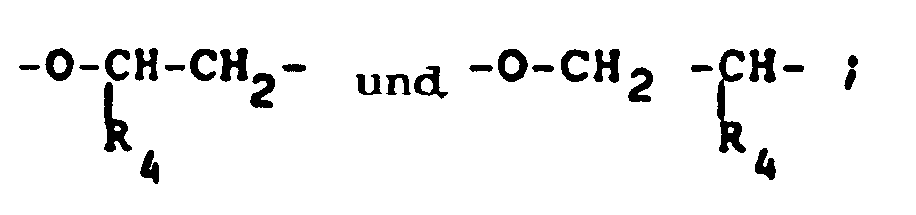
- Verfahren nach einem der Ansprüche 1 bis 5, dadurch gekennzeichnet, daß das nicht-ionische amphiphile Lipid (die nicht-ionischen amphiphilen Lipide) mit wenigstens einem stabilisierenden Additiv assoziiert ist (sind), das zur Modifikation der Permeabilität oder der Oberflächenladung der hydratisierten, lamellaren Lipidphase bestimmt ist.
- Verfahren nach einem der Ansprüche 1 bis 6, dadurch gekennzeichnet, daß das (oder die) mit den Lipiden vermischte(n) Silikon(e) ausgewählt ist (sind) unter:- Polydimethylsiloxanen und ihren Mischungen mit einem Trimethylsiloxysilicat;- Polydimethylsiloxanen, die an den Kettenenden mit Hydroxygruppen modifiziert sind;- Polydimethylsiloxanen, die mit C₁₂-C₂₂-Alkoxygruppen modifiziert sind;- Polydimethylsiloxanen, die mit Polyoxyalkylengruppen modifiziert sind, wobei der Alkylenrest ein C₂- oder C₃-Rest ist;- Polydimethylsiloxanen, die mit Acyloxyalkylresten modifiziert sind, wobei die Acylgruppe ein C₁₂-C₂₂-Rest und der Alkylrest ein C₁-C₄-Rest ist;- Polymethylphenylsiloxanen, Polymethyl-(C₁-C₂₀)-alkyl(C₁-C₂₀)-siloxanen;- Polymethyl[(C₁-C₄)Alkylaryl]siloxanen, die mit (C₁-C₄)Alkylamingruppen modifiziert sind; und- Cyclopolysiloxanen.
- Verfahren nach einem der Ansprüche 1 bis 7, dadurch gekennzeichnet, daß man wenigstens ein nichtflüchtiges Silicon in Lösung in wenigstens einem flüchtigen, zyklischen Siliconöl verwendet.
- Verfahren nach Anspruch 8, dadurch gekennzeichnet, daß das grenzflächenaktive Mittel wenigstens ein quartäres Ammoniumderivat der Formel II ist:

R₆ und R₇ entweder C₁-C₄-Alkylreste bedeuten, die zu R₅ und untereinander gleich oder verschieden sein können und Rg für einen C₂₀-C₂₂-Alkylrest steht;
oder R₆ = R₅ und R₇ = R₈ = ein C₁₈-Alkylrest;
oder R₆ einen (Alkyl- und/oder Alkenyl)amidoethylrest bedeutet, wobei der Alkyl- und/oder Alkenylrest ein C₁₃-C₂₁-Rest ist und sich von Talgfettsäuren ableitet;
und R₇ und R₈ zusammen mit dem Stickstoffatom einen 4,5-Dihydroimidazolheterozyklus bilden, der in 2-Stellung durch einen C₁₃-C₂₁-Alkylrest substituiert ist. - Verfahren nach einem der Ansprüche 1 bis 9, dadurch gekennzeichnet, daß man zu dem (den) nicht-ionischen, amphiphilen Lipid(en) und/oder dem (den) Silicon(en) wenigstens einen fettlöslichen, pharmazeutischen und/oder kosmetischen Wirkstoff gibt.
- Verfahren nach einem der Ansprüche 1 bis 10, dadurch gekennzeichnet, daß man in die wäßrige einzukapselnde Phase und/oder in die wäßrige Dispersionsphase wenigstens einen wasserlöslichen, kosmetischen und/oder pharmazeutischen Wirkstoff gibt.
- Verfahren nach einem der Ansprüche 1 bis 11, dadurch gekennzeichnet, daß man in die wäßrige einzukapselnde Phase und/oder in die Dispersionsphase ein Additiv aus der Gruppe der Konservierungsmittel, Farbstoffe oder Parfüms gibt.
- Verfahren nach einem der Ansprüche 1 bis 12, dadurch gekennzeichnet, daß man in die wäßrige Dispersionsphase ein Verdickungsmittel gibt.
- Verfahren nach einem der Ansprüche 1 bis 13, dadurch gekennzeichnet, daß man in die wäßrige Dispersionsphase eine mit Wasser nichtmischbare Substanz gibt.
- Zusammensetzung erhältlich nach einem Verfahren gemäß einem der Ansprüche 1 bis 14, umfassend wenigstens ein Silikon und wenigstens ein nicht-ionisches amphiphiles Lipid in Form von Vesikeln, die in einer wäßrigen Dispersionsphase dispergiert sind.
- Zusammensetzung nach Anspruch 15, dadurch gekennzeichnet, daß die wäßrige Dispersionsphase wenigstens ein kationisches, grenzflächenaktives Mittel enthält.
- Zusammensetzung nach Anspruch 16, dadurch gekennzeichnet, daß sie, berechnet in Gewichtsanteilen bezogen auf das Gesamtgewicht der Zusammensetzung, enthält:- 1 bis 10% des kationischen, grenzflächenaktiven Mittels (der kationischen, grenzflächenaktiven Mittel);- 1,5 bis 20% des nicht-ionischen, amphiphilen Lipids (der nicht-ionischen, amphiphilen Lipide);- 0,5 bis 10% des Silikons (der Silikone).
- Zusammensetzung nach Anspruch 17, dadurch gekennzeichnet, daß sie, berechnet in Gewichtsanteilen bezogen auf das Gesamtgewicht der Zusammensetzung, enthält:- 1 bis 7% des grenzflächenaktiven Mittels (der grenzflächenaktiven Mittel);- 1,5 bis 10% des nicht-ionischen, amphiphilen Lipids (der nicht-ionischen, amphiphilen Lipide);- 1,5 bis 5% des Silikons (der Silikone).
- Verfahren zur kosmetischen Behandlung der Haare, dadurch gekennzeichnet, daß man auf die Haare eine wirksame Menge der Zusammensetzung nach einem der Ansprüche 15 bis 18 aufträgt, die Haare gegebenenfalls kämmt und sie schließlich spült.
Priority Applications (1)
| Application Number | Priority Date | Filing Date | Title |
|---|---|---|---|
| AT91400263T ATE91404T1 (de) | 1990-02-23 | 1991-02-05 | Herstellungsverfahren fuer ein haarkosmetikum, zusammensetzung und kosmetisches behandlungsverfahren. |
Applications Claiming Priority (2)
| Application Number | Priority Date | Filing Date | Title |
|---|---|---|---|
| FR9002301 | 1990-02-23 | ||
| FR9002301A FR2658721B1 (fr) | 1990-02-23 | 1990-02-23 | Procede de fabrication d'une composition cosmetique pour application sur les cheveux, composition obtenue par ce procede et procede de traitement cosmetique a l'aide de ladite composition. |
Publications (2)
| Publication Number | Publication Date |
|---|---|
| EP0444983A1 EP0444983A1 (de) | 1991-09-04 |
| EP0444983B1 true EP0444983B1 (de) | 1993-07-14 |
Family
ID=9394093
Family Applications (1)
| Application Number | Title | Priority Date | Filing Date |
|---|---|---|---|
| EP91400263A Expired - Lifetime EP0444983B1 (de) | 1990-02-23 | 1991-02-05 | Herstellungsverfahren für ein Haarkosmetikum, Zusammensetzung und kosmetisches Behandlungsverfahren |
Country Status (7)
| Country | Link |
|---|---|
| US (1) | US5330758A (de) |
| EP (1) | EP0444983B1 (de) |
| JP (1) | JP3128657B2 (de) |
| AT (1) | ATE91404T1 (de) |
| CA (1) | CA2036279A1 (de) |
| DE (1) | DE69100161T2 (de) |
| FR (1) | FR2658721B1 (de) |
Families Citing this family (13)
| Publication number | Priority date | Publication date | Assignee | Title |
|---|---|---|---|---|
| US5219538A (en) * | 1987-03-13 | 1993-06-15 | Micro-Pak, Inc. | Gas and oxygen carrying lipid vesicles |
| FR2687314A1 (fr) * | 1992-02-18 | 1993-08-20 | Oreal | Dispersion de vesicules lipidiques, composition cosmetique et/ou pharmaceutique la contenant et procede de preparation de ladite dispersion. |
| FR2739555B1 (fr) * | 1995-10-04 | 1998-01-02 | Oreal | Compositions cosmetiques photoprotectrices contenant des nanopigments de tio2 et un acylaminoacide |
| FR2742674B1 (fr) * | 1995-12-21 | 1998-02-06 | Oreal | Dispersion stable d'une phase non miscible a l'eau, dans une phase aqueuse au moyen de vesicules a base de tensioactif silicone |
| FR2751533B1 (fr) * | 1996-07-23 | 2003-08-15 | Oreal | Composition de teinture d'oxydation pour fibres keratiniques comprenant un polymere amphiphile non-ionique |
| FR2755855B1 (fr) * | 1996-11-15 | 1998-12-24 | Oreal | Utilisation de nanoemulsions a base de lipides amphiphiles non-ioniques fluides pour les fibres keratiniques |
| FR2758334B1 (fr) * | 1997-01-14 | 1999-05-21 | Oreal | Composition aqueuse epaissie comprenant un polymere amphiphile et une silicone polyoxyalkylenee et utilisation en cosmetique |
| FR2771630B1 (fr) * | 1997-12-03 | 2000-03-31 | Oreal | Dispersion aqueuse comprenant un filtre uv du type organosiloxane a fonction benzalmalonate et un tensioactif cationique insoluble dans l'eau |
| US6979440B2 (en) * | 2001-01-29 | 2005-12-27 | Salvona, Llc | Compositions and method for targeted controlled delivery of active ingredients and sensory markers onto hair, skin, and fabric |
| US6491902B2 (en) | 2001-01-29 | 2002-12-10 | Salvona Llc | Controlled delivery system for hair care products |
| DE102004037397A1 (de) * | 2004-07-30 | 2006-03-23 | Henkel Kgaa | Haarkonditionierende Mittel mit Imidazolinen und aminofunktionellen Siliconen |
| US8277788B2 (en) | 2005-08-03 | 2012-10-02 | Conopco, Inc. | Quick dispersing hair conditioning composition |
| US7300912B2 (en) | 2005-08-10 | 2007-11-27 | Fiore Robert A | Foaming cleansing preparation and system comprising coated acid and base particles |
Family Cites Families (13)
| Publication number | Priority date | Publication date | Assignee | Title |
|---|---|---|---|---|
| US3957971A (en) | 1974-07-29 | 1976-05-18 | Lever Brothers Company | Moisturizing units and moisturizing compositions containing the same |
| FR2408387A2 (fr) | 1975-06-30 | 1979-06-08 | Oreal | Compositions a base de dispersions aqueuses de spherules lipidiques |
| FR2315991A1 (fr) * | 1975-06-30 | 1977-01-28 | Oreal | Procede de fabrication de dispersions aqueuses de spherules lipidiques et nouvelles compositions correspondantes |
| US4897308A (en) * | 1975-06-30 | 1990-01-30 | L'oreal | Compositions comprising aqueous dispersions of lipid spheres |
| EP0043327B1 (de) * | 1980-07-01 | 1984-01-18 | L'oreal | Verfahren zur Herstellung stabiler Dispersionen in einer wässrigen Phase von mindestens einer flüssigen, nicht mit Wasser mischbaren Phase und die entsprechenden Dispersionen |
| JPS5916534A (ja) * | 1982-07-19 | 1984-01-27 | Lion Corp | 非イオン性界面活性剤系ベシクル分散液 |
| FR2543018B1 (fr) * | 1983-03-22 | 1985-07-26 | Oreal | Procede de preparation de vesicules lipidiques par vaporisation de solvants |
| GR850600B (de) * | 1984-03-15 | 1985-07-02 | Procter & Gamble | |
| LU85303A1 (fr) * | 1984-04-13 | 1985-11-27 | Oreal | Composition capillaire et procede de traitement des cheveux |
| US5089269A (en) * | 1987-11-07 | 1992-02-18 | Shiseido Company Ltd. | Cosmetic containing fine soft microcapsules |
| FR2597367B1 (fr) * | 1986-04-22 | 1988-07-15 | Oreal | Procede pour faciliter la formation de spherules lipidiques en dispersion dans une phase aqueuse et pour ameliorer leur stabilite et leur taux d'encapsulation, et dispersions correspondantes. |
| US4976953A (en) * | 1987-03-06 | 1990-12-11 | The Procter & Gamble Company | Skin conditioning/cleansing compositions containing propoxylated glycerol derivatives |
| US5118507A (en) * | 1991-06-25 | 1992-06-02 | Elizabeth Arden Co., Division Of Conopco, Inc. | Silicone based cosmetic composition |
-
1990
- 1990-02-23 FR FR9002301A patent/FR2658721B1/fr not_active Expired - Lifetime
-
1991
- 1991-02-05 DE DE91400263T patent/DE69100161T2/de not_active Expired - Fee Related
- 1991-02-05 AT AT91400263T patent/ATE91404T1/de not_active IP Right Cessation
- 1991-02-05 EP EP91400263A patent/EP0444983B1/de not_active Expired - Lifetime
- 1991-02-13 CA CA002036279A patent/CA2036279A1/fr not_active Abandoned
- 1991-02-22 JP JP03114192A patent/JP3128657B2/ja not_active Expired - Fee Related
-
1992
- 1992-12-29 US US07/997,909 patent/US5330758A/en not_active Expired - Fee Related
Also Published As
| Publication number | Publication date |
|---|---|
| JP3128657B2 (ja) | 2001-01-29 |
| FR2658721B1 (fr) | 1992-06-19 |
| FR2658721A1 (fr) | 1991-08-30 |
| CA2036279A1 (fr) | 1991-08-24 |
| DE69100161T2 (de) | 1994-03-03 |
| ATE91404T1 (de) | 1993-07-15 |
| EP0444983A1 (de) | 1991-09-04 |
| DE69100161D1 (de) | 1993-08-19 |
| US5330758A (en) | 1994-07-19 |
| JPH04234805A (ja) | 1992-08-24 |
Similar Documents
| Publication | Publication Date | Title |
|---|---|---|
| EP0526289B1 (de) | Verfahren zur Herstellung von kosmetische Haarpflegemitteln sowie die Zusammensetzung und Verfahren zur kosmetischer Anwendung dieser Zusammensetzung | |
| EP0898960B1 (de) | Verdikte Zusammensetzung enthaltend pyrogene Siliciumdioxid | |
| EP0433131B1 (de) | Kosmetisches Mittel zur Haarpflege und Verwendung dieses Mittels | |
| EP0705592B2 (de) | Wie Milch aussehende Öl-in-Wasser reinigende Emulsion | |
| EP0551498B1 (de) | Kationische dispersionen enthaltend ceramiden und/oder glycoceramiden | |
| EP0976393B1 (de) | Zusammensetzung die ein Trübungs- oder Perlglanzmittel und mindestens einen Fettalkohol enthällt | |
| EP1093809B1 (de) | Kosmetische Zusammensetzungen enhaltend ein Vinyldimethicon/Dimethicon Copolymer und ein Konditionierungsmittel, und ihre Anwendungen | |
| WO1997003638A1 (fr) | Composition capillaire a base de minoxidil a faible teneur en solvant gras | |
| FR2794998A1 (fr) | Organogels et leurs utilisations notamment cosmetiques | |
| EP0681827A1 (de) | Verwendung von Bioflavonoiden als Schutzsubstanz für keratinische Hautankangsgebilde | |
| EP0444983A1 (de) | Herstellungsverfahren für ein Haarkosmetikum, Zusammensetzung und kosmetisches Behandlungsverfahren | |
| EP0651990B1 (de) | Zusammensetzung auf der Basis von C12-C20 Estern und Verwendung zum Abschminken | |
| WO1993024106A1 (fr) | Composition comprenant un oligomere proanthocyanidinique encapsule dans un liposome | |
| CA2323138C (fr) | Compositions cosmetiques contenant une emulsion d'un copolymere vinyldimethicone/dimethicone et un tensioactif cationique et leurs utilisations | |
| FR2755851A1 (fr) | Compositions cosmetiques detergentes et utilisation | |
| EP0459856B1 (de) | Kosmetische oder pharmazeutische Zubereitung zur Haar- und Kopfhautbehandlung | |
| EP0373988B2 (de) | Kosmetische oder pharmazeutische Zubereitung zur Haar- und Haarbodenbehandlung | |
| EP0930061A1 (de) | Oxidationsmittel von mehreren Komponenten und Verfahren für eine dauerhafte Haarverformung durch die Verwendung desselben | |
| FR3148716A1 (fr) | Composition nettoyante et applications de celle-ci | |
| FR2755850A1 (fr) | Compositions cosmetiques detergentes et utilisation |
Legal Events
| Date | Code | Title | Description |
|---|---|---|---|
| PUAI | Public reference made under article 153(3) epc to a published international application that has entered the european phase |
Free format text: ORIGINAL CODE: 0009012 |
|
| 17P | Request for examination filed |
Effective date: 19910208 |
|
| AK | Designated contracting states |
Kind code of ref document: A1 Designated state(s): AT BE CH DE DK ES FR GB GR IT LI NL SE |
|
| 17Q | First examination report despatched |
Effective date: 19921216 |
|
| GRAA | (expected) grant |
Free format text: ORIGINAL CODE: 0009210 |
|
| AK | Designated contracting states |
Kind code of ref document: B1 Designated state(s): AT BE CH DE DK ES FR GB GR IT LI NL SE |
|
| PG25 | Lapsed in a contracting state [announced via postgrant information from national office to epo] |
Ref country code: SE Effective date: 19930714 Ref country code: GR Free format text: LAPSE BECAUSE OF FAILURE TO SUBMIT A TRANSLATION OF THE DESCRIPTION OR TO PAY THE FEE WITHIN THE PRESCRIBED TIME-LIMIT Effective date: 19930714 Ref country code: NL Effective date: 19930714 Ref country code: ES Free format text: THE PATENT HAS BEEN ANNULLED BY A DECISION OF A NATIONAL AUTHORITY Effective date: 19930714 Ref country code: DK Effective date: 19930714 Ref country code: AT Effective date: 19930714 Ref country code: IT Free format text: LAPSE BECAUSE OF FAILURE TO SUBMIT A TRANSLATION OF THE DESCRIPTION OR TO PAY THE FEE WITHIN THE PRE;WARNING: LAPSES OF ITALIAN PATENTS WITH EFFECTIVE DATE BEFORE 2007 MAY HAVE OCCURRED AT ANY TIME BEFORE 2007. THE CORRECT EFFECTIVE DATE MAY BE DIFFERENT FROM THE ONE RECORDED.SCRIBED TIME-LIMIT Effective date: 19930714 |
|
| REF | Corresponds to: |
Ref document number: 91404 Country of ref document: AT Date of ref document: 19930715 Kind code of ref document: T |
|
| REF | Corresponds to: |
Ref document number: 69100161 Country of ref document: DE Date of ref document: 19930819 |
|
| GBT | Gb: translation of ep patent filed (gb section 77(6)(a)/1977) |
Effective date: 19930806 |
|
| NLV1 | Nl: lapsed or annulled due to failure to fulfill the requirements of art. 29p and 29m of the patents act | ||
| PG25 | Lapsed in a contracting state [announced via postgrant information from national office to epo] |
Ref country code: BE Effective date: 19940228 Ref country code: CH Effective date: 19940228 Ref country code: LI Effective date: 19940228 |
|
| PLBE | No opposition filed within time limit |
Free format text: ORIGINAL CODE: 0009261 |
|
| STAA | Information on the status of an ep patent application or granted ep patent |
Free format text: STATUS: NO OPPOSITION FILED WITHIN TIME LIMIT |
|
| 26N | No opposition filed | ||
| BERE | Be: lapsed |
Owner name: L' OREAL Effective date: 19940228 |
|
| REG | Reference to a national code |
Ref country code: CH Ref legal event code: PL |
|
| REG | Reference to a national code |
Ref country code: GB Ref legal event code: IF02 |
|
| PGFP | Annual fee paid to national office [announced via postgrant information from national office to epo] |
Ref country code: GB Payment date: 20040204 Year of fee payment: 14 |
|
| PGFP | Annual fee paid to national office [announced via postgrant information from national office to epo] |
Ref country code: FR Payment date: 20040210 Year of fee payment: 14 |
|
| PGFP | Annual fee paid to national office [announced via postgrant information from national office to epo] |
Ref country code: DE Payment date: 20040212 Year of fee payment: 14 |
|
| PG25 | Lapsed in a contracting state [announced via postgrant information from national office to epo] |
Ref country code: GB Free format text: LAPSE BECAUSE OF NON-PAYMENT OF DUE FEES Effective date: 20050205 |
|
| PG25 | Lapsed in a contracting state [announced via postgrant information from national office to epo] |
Ref country code: DE Free format text: LAPSE BECAUSE OF NON-PAYMENT OF DUE FEES Effective date: 20050901 |
|
| PG25 | Lapsed in a contracting state [announced via postgrant information from national office to epo] |
Ref country code: FR Free format text: LAPSE BECAUSE OF NON-PAYMENT OF DUE FEES Effective date: 20051031 |
|
| REG | Reference to a national code |
Ref country code: FR Ref legal event code: ST Effective date: 20051031 |