EP0445078A1 - Nouvelle utilisation d'un anticorps monoclonal - Google Patents
Nouvelle utilisation d'un anticorps monoclonal Download PDFInfo
- Publication number
- EP0445078A1 EP0445078A1 EP91810128A EP91810128A EP0445078A1 EP 0445078 A1 EP0445078 A1 EP 0445078A1 EP 91810128 A EP91810128 A EP 91810128A EP 91810128 A EP91810128 A EP 91810128A EP 0445078 A1 EP0445078 A1 EP 0445078A1
- Authority
- EP
- European Patent Office
- Prior art keywords
- antibody
- cells
- monoclonal antibody
- sclc
- human
- Prior art date
- Legal status (The legal status is an assumption and is not a legal conclusion. Google has not performed a legal analysis and makes no representation as to the accuracy of the status listed.)
- Granted
Links
Images



Classifications
-
- C—CHEMISTRY; METALLURGY
- C07—ORGANIC CHEMISTRY
- C07K—PEPTIDES
- C07K16/00—Immunoglobulins [IG], e.g. monoclonal or polyclonal antibodies
- C07K16/18—Immunoglobulins [IG], e.g. monoclonal or polyclonal antibodies against material from animals or humans
- C07K16/28—Immunoglobulins [IG], e.g. monoclonal or polyclonal antibodies against material from animals or humans against receptors, cell surface antigens or cell surface determinants
- C07K16/30—Immunoglobulins [IG], e.g. monoclonal or polyclonal antibodies against material from animals or humans against receptors, cell surface antigens or cell surface determinants from tumour cells
- C07K16/3023—Lung
-
- A—HUMAN NECESSITIES
- A61—MEDICAL OR VETERINARY SCIENCE; HYGIENE
- A61P—SPECIFIC THERAPEUTIC ACTIVITY OF CHEMICAL COMPOUNDS OR MEDICINAL PREPARATIONS
- A61P35/00—Antineoplastic agents
-
- A—HUMAN NECESSITIES
- A61—MEDICAL OR VETERINARY SCIENCE; HYGIENE
- A61K—PREPARATIONS FOR MEDICAL, DENTAL OR TOILETRY PURPOSES
- A61K38/00—Medicinal preparations containing peptides
-
- C—CHEMISTRY; METALLURGY
- C07—ORGANIC CHEMISTRY
- C07K—PEPTIDES
- C07K2317/00—Immunoglobulins specific features
- C07K2317/70—Immunoglobulins specific features characterized by effect upon binding to a cell or to an antigen
- C07K2317/73—Inducing cell death, e.g. apoptosis, necrosis or inhibition of cell proliferation
- C07K2317/732—Antibody-dependent cellular cytotoxicity [ADCC]
-
- C—CHEMISTRY; METALLURGY
- C07—ORGANIC CHEMISTRY
- C07K—PEPTIDES
- C07K2317/00—Immunoglobulins specific features
- C07K2317/70—Immunoglobulins specific features characterized by effect upon binding to a cell or to an antigen
- C07K2317/73—Inducing cell death, e.g. apoptosis, necrosis or inhibition of cell proliferation
- C07K2317/734—Complement-dependent cytotoxicity [CDC]
Definitions
- the invention relates to a new use of a monoclonal antibody. It concerns the use of a monoclonal antibody BR55-2 or a fragment thereof having the specificity of monoclonal antibody BR55-2, or a variant thereof, in the treatment of small cell lung carcinoma (SCLC).
- SCLC small cell lung carcinoma
- BR55-2 monoclonal antibodies, of murine origin
- BR55-2 or fragments thereof having the same specificity and their variants, disclosed in e.g. Wistar EP 0 285 059, which also discloses their preparation and their use in the detection and therapy of, basically, adenocarcinomas and similar tumors.
- the BR55-2 class of antibodies recognizes the difucosyl blood group antigens Y-6 and B-7-2 normally associated with adenocarcinomas.
- adenocarcinomas The etiology of small cell lung carcinoma is rather obscure but unrelated to malignancies of epithelial origin such as adenocarcinomas. Indeed, monoclonal antibodies known to exert an inhibitory effect on the development of adenocarcinomal malignancies are normally without effect on small cell lung carcinoma cells, and vice-versa, while a few monoclonal antibodies have been alleged to recognize both types of cells.
- the invention thus comprises the use of a monoclonal antibody BR55-2 or a fragment thereof having the specificity of monoclonal antibody BR55-2, or a variant thereof, in the treatment of small cell lung carcinoma.
- It further includes a method of treating small cell lung carcinoma comprising administering to a subject in need of such treatment a therapeutically effective amount of a monoclonal antibody BR55-2 or a fragment thereof having the specificity of monoclonal antibody BR55-2, or a variant thereof.
- composition which comprises as active agent a monoclonal antibody BR55-2 or a fragment thereof having the specificity of monoclonal antibody BR55-2, or a variant thereof, together with a pharmaceutically acceptable carrier or diluent, for use in the treatment of small cell lung carcinoma.
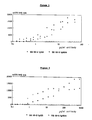
- the Lewis Y carbohydrate antigen which is defined by antibodies BR55-2 is surprisingly also significantly expressed on SCLC cell lines. This can be shown in binding studies of the BR55-2 antibodies with SCLC cell lines SW2, OH-1 and H-69 in a cell-ELISA (see Figures 1, 2 and 3, and Example 1 for experimental details).
- Binding of the antibodies was investigated on frozen sections from human SCLC using the immunohistochemical method of R.B. Colvin et al., Diagnostic Immunopathology , Raven Press, New York (1988). BR55-2 was found to bind strongly on 5 out of 7 investigated samples and somewhat weaker on the remaining 2 samples.
- CDC complement-dependent cytolysis
- ADCC antibody-dependent cell cytotoxicity
- antibodies BR55-2 activate human complement, which in turn destroys tumor cells, as is well-known.
- the source of the complement to be used in such tests can be human plasma or serum.
- the destruction of tumor cells can be measured by the release of previously incorporated 51Cr.
- PBMCs Peripheral blood mononuclear cells
- Tumor cell destruction can be measured e.g. by the release of preincorporated 51Cr.
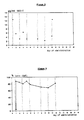
- Antibody BR55-2/IgG3 is present in serum at a concentration of several ⁇ g/ml after i.v. infusion. Depending on the dosage, the half-life period (on average about 24 hours) and the timepoint after infusion, concentrations of from about 2 ⁇ g/ml to about 13 ⁇ g/ml can be measured over the whole period of treatment with 50 mg per infusion, as shown in Figure 8 (see Example 5 for experimental details). The concentrations of antibody in the serum are obviously at their lowest shortly before the next infusion.
- Such serum antibody titers can be detected e.g. as mouse-Ig generally ( Example 5).
- Serum samples were collected from patients at various times during treatment and tested for cytotoxicity against SCLC cell line SW2. This tumor cell cytotoxicity is caused via complement activation by BR55-2 antibody present in serum.
- the dosage will, of course, vary depending upon e.g. the subject patient's age, the stage of disease, or the mode of administration, and can be determined by the specialist in each individual situation. It will also vary when the antibodies are used in combination with other chemotherapeutic agents, e.g. cytostatic agents.
- Administration is e.g. parenteral by injection or infusion, optionally together with effector cells, preferably leukocytes, e.g. autologous peripheral blood mononucleocytes.
- the dosage administered is e.g. of from about 0.01 mg/m2 to about 2000 mg/m2.
- Co-administration is normally substantially contemporaneous, thus an immunomodulator is e.g. administered from about 1 to about 6 days before administration of the antibody.
- Injection can be e.g. subcutaneous, intramuscular, intraperitoneal, intracavital or intravenous.
- Variants of BR55-2 are e.g. chimeric antibodies, humanized antibodies, class-switch variants, labelled antibodies and immunoconjugates. Fragments are e.g. Fab and F(ab')2 fragments. Variants and fragments can be prepared in accordance with known methods, e.g. as described in EP 0 285 059. Labeling may e.g. be effected with a radioisotope, a drug, an immunomodulator, a biological response modifier, a lectin or a toxin.
- Preferred is intact BR55-2, especially of IgG3 isotype.
- BR55-2 are particularly suitable for targeting of toxins and radioisotopes.
- a monoclonal antibody BR55-2 or a fragment thereof having the specificity of monoclonal antibody BR55-2, or a variant thereof means a monoclonal antibody, antibody fragment or antibody variant recognizing the antigen recognized by the monoclonal antibodies produced by deposited hybridomas BR55.2 (BR55-2/IgG3) and BR55.2S2a (BR-55-2/IgG2a).
- hybridomas have been deposited with the American Type Culture Collection, Rockville, MD 20852, USA, under the provisions of the Budapest Treaty, under deposit numbers ATCC HB 9324 and, respectively, ATCC HB 9347.
- Antibodies BR55-2 are very well tolerated. Side effects are dependent on dosage, duration of administration and isotype of antibody administered. Following infusion of 50 mg to 100 mg BR55-2/IgG3 only moderate nausea and vomiting is observed in most patients.
- Figure 1 Binding properties (cell ELISA) of BR55-2 isotypes IgG3 (stars) and IgG2a (open squares) to SCLC cell line SW2.
- Figure 2 As for Figure 1, but with cell line OH-1.
- Figure 3 As for Figure 1, but with cell line H-69.
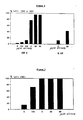
- FIG. 4 Complement-dependent cytolysis (CDC) (in % lysis of cells of SCLC cell line SW2) with BR55-2/IgG3.
- Figure 5 As for Figure 4, but for cell line H-69, with BR55-2/IgG3 and BR55-2/IgG2a.
- FIG. 6 ADCC (in % lysis of cells) for SCLC cell lines SW2 and H-69 with PBMCs as effector cells, mediated by BR55-2/IgG3.
- Figure 7 Lysis of SW2 cells with heparinized fresh human whole blood, mediated by BR55-2/IgG3.
- Figure 8 BR55-2 determination as mouse-IgG3 antibody titer in serum from a SCLC patient: administration was of 50 mg BR55-2/IgG3 on each of days 1, 3, 5, 8, 10 and 12. The interrupted vertical lines show the duration of infusion.
- Figure 9 Complement-dependent cytolysis (in % of lysed SW2 cells) in the serum of a SCLC patient after administration of 50 mg BR55-2/IgG3 on each of days 1, 3, 5, 8, 10 and 12.
- the interrupted vertical lines show the duration of infusion.
- FIG. 10 Immune response against BR55-2/IgG3 in serum from a SCLC patient: HAMA titers after administration of 50 mg BR55-2/IgG3 on each of days 1, 3, 5, 8, 10 and 12.
- Cell lines H-69, OH-1 and SW2 human SCLC lines (R. Waibl et al., Cancer Res. 48 [1988] 4318-4323)
- Microtiter plates are pretreated with poly-L-lysine hydrobromide (20-30 kD; 20 ⁇ g/ml in PBS def.; 100 ⁇ l/well; 30 minutes, room temperature) and washed twice with PBS def. (200 ⁇ l/well) and then incubated overnight at 4° with a suspension of cells of the cell line to be tested at a concentration of 4 x 10⁶ cells/ml (50 ⁇ l of cell suspension/well; medium A).
- poly-L-lysine hydrobromide 20-30 kD; 20 ⁇ g/ml in PBS def.; 100 ⁇ l/well; 30 minutes, room temperature
- PBS def. 200 ⁇ l/well
- the cells After centrifugation and removal of the supernatant the cells are fixed with 50 ⁇ l glutardialdehyde (0.1 % in physiological saline) per well for 5 minutes at room temperature, centrifuged, the supernatant is removed, the cells resuspended in 200 ⁇ l/well of PBS def./1 % BSA/ 0.1 % NaN3 and left for 1 hour at room temperature.
- glutardialdehyde 0.1 % in physiological saline
- the conjugate used for the antibody assay is rabbit anti-mouse IgG-peroxidase or rabbit anti-mouse IgG-F(ab')2-peroxidase (such as the reagents of Dianova Co.) 1:1000 in PBS def./2 % FCS. After incubation for 40 to 60 minutes at 37° the wells are washed thrice with the above PBS/Tween 20 solution and then 100 ⁇ l of the following substrate solution is added to each well: 40 mg o-phenylenediamine dihydrochloride, 100 ml staining buffer, 20 ⁇ l H2O2 (30 %). After about 5 minutes colour development is stopped by addition of 50 ⁇ l of 4N H2SO4/well.
- Binding of the antibody to the cells is determined by measuring extinction at 492 nm (calibration is at 620 nm). Where non-adherent cell lines are used all washing steps are effected by cell centrifugation and resuspension.
- the tumor target cells are transferred into fresh medium A and kept at 37°/5 % CO2 in a cell culture flask.
- the cells are collected from the culture flask and incubated at a concentration of 2 x 10⁶ to 5 x 10⁶ cells in 800 ⁇ l of medium A at 37°/ 5 % CO2 for 2 hours with 100 ⁇ Ci Na251CrO4. The cells are then washed with medium A to remove the excess 51Cr, resuspendend in fresh medium A and their concentration is adjusted to 2 x 10⁵ to 3 x 10⁵ cells/ml.
- the cells are treated as above but with the complement preparation replaced by a solution of 2 % SDS, 50 mM Na2CO3 and 10 mM EDTA.
- the value for spontaneous 51Cr release is obtained by replacing the complement preparation with medium A and the antibody solution with 50 ⁇ l PBS complement or NaCl 0.86 %.
- Example 3 Antibody-dependent cell cytotoxicity (ADCC) for human SCLC cell lines using peripheral blood mononuclear cells (PBMCs)
- ADCC Antibody-dependent cell cytotoxicity
- the tumor target cells are transferred into fresh medium A and kept at 37°/5 % CO2 in a cell culture flask.
- 51Cr labelling of the target cells is effected as described in Example 2 above.
- heparinized fresh human blood 50 ml of heparinized fresh human blood are diluted with 60 ml of PBS complete containing 0.1 % glucose. 15 ml aliquots of this solution are layered on top of 15 ml of Ficoll-Paque solution and the tubes are centrifuged at 400g for 30 to 60 minutes. The plasma supernatants are discarded, the PBMC layers are collected and diluted to 50 ml with PBS complete + 0.1 % glucose.
- the pellet After centrifugation at about 80 g (10 minutes), resuspension of the pellet in 25-30 ml PBS complete + 0.1 % glucose, and recentrifugation (80g, 10 minutes), the pellet is collected, suspended in medium A, the cells are counted and the suspension is diluted with medium A to about 2 x 10⁶ to 9 x 10⁶ cells/ml. 100 ⁇ l aliquots are pipetted into each well of a microtiter plate and the effector cells are incubated overnight at 37°/5 % CO2.
- Total 51Cr release is determined as above but replacing PBMCs with 100 ⁇ l of 2 % SDS, 50 mM Na2CO3 and 10 mM EDTA and replacing the antibody solution with 50 ⁇ l of PBS def.
- Spontaneous 51Cr release is obtained by replacing PBMCs with 100 ⁇ l of medium A and the antibody solution with 50 ⁇ l of PBS def. The result is computed as under Example 2 above.
- Example 4 Antibody-dependent cell cytotoxicity (ADCC) for SCLC cell lines using heparinized fresh human whole blood
- the tumor target cells are transferred into fresh medium A and kept at 37°/5 % CO2 in a cell culture flask.
- 51Cr labelling of the target cells is effected as described under Example 2 above.
- the cells are treated with 100 ⁇ l of 2 % SDS, 50 mM Na2CO3 and 10 mM EDTA, and 50 ⁇ l of PBS def. is added in place of antibody solution.
- Spontaneous 51Cr release is obtained by adding 100 ⁇ l of medium A and 50 ⁇ l of PBS to the target cells. The result is computed as under Example 2 above.
- Example 5 Determination of mouse-IgG3 antibody titer in patient serum (ELISA)
- the plates are washed 6 times with washing buffer, 200 ⁇ l of PBS def./5 % FCS are added, and incubation is effected for 30 minutes at 37°.
- the plates are washed, 100 ⁇ l aliquots of various dilutions of the serum to be assayed and of standard (BR55-2/IgG3) are added (dilutions are in PBS def./2 % FCS), and the plates are incubated for 60 minutes at 37°. Unbound antibody is washed out as described above and 100 ⁇ l aliquots of peroxidase-conjugated antibody (rabbit-anti-mouse IgG3/peroxidase) are added.
- Example 6 Ex vivo tumor cytotoxicity of sera from treated SCLC patients
- the tumor target cells from e.g. the human SCLC cell line SW2 are transferred to fresh medium A and kept at 37°/5 % CO2 in a cell culture flask.
- Patient serum samples are frozen and thawed only once. They are used undiluted.
- the cells are treated with 2 % SDS, 50 mM Na2CO3 and 10 mM EDTA in place of serum.
- Spontaneous 51Cr release is obtained by using medium A in place of serum. The result is computed as under Example 2 above.
- Example 8 Expression of the Lewis Y antigen on glycoproteins of SCLC cell line SW2
- Glycoproteins or plasma membranes of SW2 cells are isolated in conventional manner (D. Thom et al., Biochem. J. 168 [1977] 187-194). After SDS gel electrophoresis (U.K. Laemmli, Nature 227 [1970] 680-685) it can be shown by conventional Western blot analysis (M.B. Wilon and P.K. Nakane, Immunofluoroscence and Related Staining Techniques , Elsevier/North Holland Biomedical Press, Amsterdam [1978] 215-224) that antibodies BR55-2 specifically bind to glycoprotein fractions of cell line SW2.
Landscapes
- Health & Medical Sciences (AREA)
- Chemical & Material Sciences (AREA)
- Life Sciences & Earth Sciences (AREA)
- Organic Chemistry (AREA)
- Immunology (AREA)
- Medicinal Chemistry (AREA)
- General Health & Medical Sciences (AREA)
- Biochemistry (AREA)
- Cell Biology (AREA)
- Proteomics, Peptides & Aminoacids (AREA)
- Molecular Biology (AREA)
- Genetics & Genomics (AREA)
- Biophysics (AREA)
- Public Health (AREA)
- General Chemical & Material Sciences (AREA)
- Chemical Kinetics & Catalysis (AREA)
- Veterinary Medicine (AREA)
- Pharmacology & Pharmacy (AREA)
- Nuclear Medicine, Radiotherapy & Molecular Imaging (AREA)
- Animal Behavior & Ethology (AREA)
- Medicines Containing Antibodies Or Antigens For Use As Internal Diagnostic Agents (AREA)
- Preparation Of Compounds By Using Micro-Organisms (AREA)
- Peptides Or Proteins (AREA)
Applications Claiming Priority (2)
| Application Number | Priority Date | Filing Date | Title |
|---|---|---|---|
| DE4006308 | 1990-02-28 | ||
| DE4006308A DE4006308A1 (de) | 1990-02-28 | 1990-02-28 | Verwendung des monoklonalen antikoerpers br 55.2 gegen kleinzelliges lungenkarzinom |
Publications (2)
| Publication Number | Publication Date |
|---|---|
| EP0445078A1 true EP0445078A1 (fr) | 1991-09-04 |
| EP0445078B1 EP0445078B1 (fr) | 1995-11-15 |
Family
ID=6401132
Family Applications (1)
| Application Number | Title | Priority Date | Filing Date |
|---|---|---|---|
| EP91810128A Expired - Lifetime EP0445078B1 (fr) | 1990-02-28 | 1991-02-26 | Nouvelle utilisation d'un anticorps monoclonal |
Country Status (5)
| Country | Link |
|---|---|
| US (1) | US5523085A (fr) |
| EP (1) | EP0445078B1 (fr) |
| JP (1) | JP2996526B2 (fr) |
| AT (1) | ATE130200T1 (fr) |
| DE (2) | DE4006308A1 (fr) |
Cited By (2)
| Publication number | Priority date | Publication date | Assignee | Title |
|---|---|---|---|---|
| WO1993024647A1 (fr) * | 1992-05-22 | 1993-12-09 | Sandoz Ltd. | Anticorps monoclonaux anti-idiotypes diriges contre les anticorps monoclonaux br55-2 specifiques de lewis y et leurs utilisations |
| US5562903A (en) * | 1991-08-21 | 1996-10-08 | Sandoz Ltd. | Humanized antibodies that recognize difucosyl Lewis blood group antigens Y-6 and B-7-2 |
Families Citing this family (2)
| Publication number | Priority date | Publication date | Assignee | Title |
|---|---|---|---|---|
| AT413486B (de) * | 2002-07-03 | 2006-03-15 | Igeneon Krebs Immuntherapie | Verwendung eines antikörpers gerichtet gegen lewis-antigene |
| TWI618669B (zh) * | 2016-05-09 | 2018-03-21 | 力山工業股份有限公司 | 可收折的文具 |
Citations (3)
| Publication number | Priority date | Publication date | Assignee | Title |
|---|---|---|---|---|
| EP0285059A2 (fr) * | 1987-03-27 | 1988-10-05 | The Wistar Institute | Anticorps monoclonaux contre des antigènes glycolipides et leur utilisation |
| EP0323802A2 (fr) * | 1987-12-24 | 1989-07-12 | Sandoz Ag | Anticorps monoclonaux contre, et antigène de la surface cellulaire de cancer du poumon |
| US4888275A (en) * | 1984-05-18 | 1989-12-19 | Holmgren Jan R | Diagnosing and monitoring cancer |
-
1990
- 1990-02-28 DE DE4006308A patent/DE4006308A1/de not_active Withdrawn
-
1991
- 1991-02-26 EP EP91810128A patent/EP0445078B1/fr not_active Expired - Lifetime
- 1991-02-26 DE DE69114546T patent/DE69114546T2/de not_active Expired - Lifetime
- 1991-02-26 AT AT91810128T patent/ATE130200T1/de not_active IP Right Cessation
- 1991-02-27 JP JP3058440A patent/JP2996526B2/ja not_active Expired - Lifetime
-
1995
- 1995-01-24 US US08/378,890 patent/US5523085A/en not_active Expired - Lifetime
Patent Citations (3)
| Publication number | Priority date | Publication date | Assignee | Title |
|---|---|---|---|---|
| US4888275A (en) * | 1984-05-18 | 1989-12-19 | Holmgren Jan R | Diagnosing and monitoring cancer |
| EP0285059A2 (fr) * | 1987-03-27 | 1988-10-05 | The Wistar Institute | Anticorps monoclonaux contre des antigènes glycolipides et leur utilisation |
| EP0323802A2 (fr) * | 1987-12-24 | 1989-07-12 | Sandoz Ag | Anticorps monoclonaux contre, et antigène de la surface cellulaire de cancer du poumon |
Non-Patent Citations (4)
Cited By (3)
| Publication number | Priority date | Publication date | Assignee | Title |
|---|---|---|---|---|
| US5562903A (en) * | 1991-08-21 | 1996-10-08 | Sandoz Ltd. | Humanized antibodies that recognize difucosyl Lewis blood group antigens Y-6 and B-7-2 |
| WO1993024647A1 (fr) * | 1992-05-22 | 1993-12-09 | Sandoz Ltd. | Anticorps monoclonaux anti-idiotypes diriges contre les anticorps monoclonaux br55-2 specifiques de lewis y et leurs utilisations |
| AU678160B2 (en) * | 1992-05-22 | 1997-05-22 | Novartis Ag | Anti-idiotypic monoclonal antibodies against the lewis Y-specific monoclonal antibody BR55-2 and their uses |
Also Published As
| Publication number | Publication date |
|---|---|
| EP0445078B1 (fr) | 1995-11-15 |
| DE69114546T2 (de) | 1996-04-04 |
| DE4006308A1 (de) | 1991-08-29 |
| ATE130200T1 (de) | 1995-12-15 |
| JPH04211612A (ja) | 1992-08-03 |
| US5523085A (en) | 1996-06-04 |
| DE69114546D1 (de) | 1995-12-21 |
| JP2996526B2 (ja) | 2000-01-11 |
Similar Documents
| Publication | Publication Date | Title |
|---|---|---|
| US4443427A (en) | Monoclonal antibody | |
| Capron et al. | Functional study of a monoclonal antibody to IgE Fc receptor (Fc epsilon R2) of eosinophils, platelets, and macrophages. | |
| Braun et al. | Granulocytes and cultured human fibroblasts express common acute lymphoblastic leukemia-associated antigens | |
| CA1341082C (fr) | Procede de traitement de tumeurs par inhibition fonctionnelle du recepteur du facteur de croissance cellulaire | |
| JP3541296B2 (ja) | 腫瘍血管内皮細胞に特異的に結合するモノクローナル抗体とその利用方法 | |
| JPH05504330A (ja) | ヒトのがん腫と反応する新しい抗体 | |
| JPH0159867B2 (fr) | ||
| US20120052515A1 (en) | Therapeutic applications of noncovalent dimerizing antibodies | |
| EA024629B1 (ru) | Моноклональные антитела, связывающие b7h6, и их применение | |
| US20120052068A1 (en) | Autophilic antibodies and method of making the same | |
| Tagliabue et al. | Improvement of tumor cell detection using a pool of monoclonal antibodies | |
| EP0445078B1 (fr) | Nouvelle utilisation d'un anticorps monoclonal | |
| US6440733B1 (en) | Monoclonal antibodies recognizing antigens on the surface of endothelial cells of tumor vessel | |
| US5169775A (en) | Monoclonal antibodies against lymphoma-associated antigens, hybrid cell lines producing these antibodies | |
| EP0547079B1 (fr) | Nouvelle utilisation d'un anticorps monoclone | |
| JPH01502195A (ja) | 細胞毒性結合物の増強法 | |
| CA1340898C (fr) | Anticorps monoclonaux anti-antigenes associes a des lymphomes; lignees de cellules hybrides produisant ces anticorps; leur utilisation | |
| HK40098522B (en) | Antibodies against dll3 and uses thereof | |
| HK40098522A (en) | Antibodies against dll3 and uses thereof | |
| US20060177454A1 (en) | Method of promoting an immune response with a bispecific antibody | |
| JPH02219594A (ja) | 肺癌に対するモノクローナル抗体および細胞表面抗原 | |
| CN117257935A (zh) | 一种含抗cd47抗体或其抗原结合片段的制剂及其制备方法和应用 | |
| JPH1030000A (ja) | 腫瘍血管内皮表面の抗原を認識するモノクローナル抗体 |
Legal Events
| Date | Code | Title | Description |
|---|---|---|---|
| PUAI | Public reference made under article 153(3) epc to a published international application that has entered the european phase |
Free format text: ORIGINAL CODE: 0009012 |
|
| 17P | Request for examination filed |
Effective date: 19910228 |
|
| AK | Designated contracting states |
Kind code of ref document: A1 Designated state(s): AT BE CH DE DK ES FR GB GR IT LI LU NL SE |
|
| 17Q | First examination report despatched |
Effective date: 19940322 |
|
| GRAA | (expected) grant |
Free format text: ORIGINAL CODE: 0009210 |
|
| ITF | It: translation for a ep patent filed | ||
| AK | Designated contracting states |
Kind code of ref document: B1 Designated state(s): AT BE CH DE DK ES FR GB GR IT LI LU NL SE |
|
| PG25 | Lapsed in a contracting state [announced via postgrant information from national office to epo] |
Ref country code: CH Effective date: 19951115 Ref country code: BE Effective date: 19951115 Ref country code: AT Effective date: 19951115 Ref country code: NL Free format text: LAPSE BECAUSE OF FAILURE TO SUBMIT A TRANSLATION OF THE DESCRIPTION OR TO PAY THE FEE WITHIN THE PRESCRIBED TIME-LIMIT Effective date: 19951115 Ref country code: GR Free format text: LAPSE BECAUSE OF FAILURE TO SUBMIT A TRANSLATION OF THE DESCRIPTION OR TO PAY THE FEE WITHIN THE PRESCRIBED TIME-LIMIT Effective date: 19951115 Ref country code: LI Effective date: 19951115 Ref country code: ES Free format text: THE PATENT HAS BEEN ANNULLED BY A DECISION OF A NATIONAL AUTHORITY Effective date: 19951115 Ref country code: DK Effective date: 19951115 |
|
| REF | Corresponds to: |
Ref document number: 130200 Country of ref document: AT Date of ref document: 19951215 Kind code of ref document: T |
|
| REF | Corresponds to: |
Ref document number: 69114546 Country of ref document: DE Date of ref document: 19951221 |
|
| PG25 | Lapsed in a contracting state [announced via postgrant information from national office to epo] |
Ref country code: SE Effective date: 19960215 |
|
| ET | Fr: translation filed | ||
| PG25 | Lapsed in a contracting state [announced via postgrant information from national office to epo] |
Ref country code: LU Free format text: LAPSE BECAUSE OF NON-PAYMENT OF DUE FEES Effective date: 19960229 |
|
| NLV1 | Nl: lapsed or annulled due to failure to fulfill the requirements of art. 29p and 29m of the patents act | ||
| REG | Reference to a national code |
Ref country code: CH Ref legal event code: PL |
|
| PLBE | No opposition filed within time limit |
Free format text: ORIGINAL CODE: 0009261 |
|
| 26N | No opposition filed | ||
| REG | Reference to a national code |
Ref country code: FR Ref legal event code: TP |
|
| PGFP | Annual fee paid to national office [announced via postgrant information from national office to epo] |
Ref country code: GB Payment date: 20010202 Year of fee payment: 11 |
|
| REG | Reference to a national code |
Ref country code: GB Ref legal event code: IF02 |
|
| PG25 | Lapsed in a contracting state [announced via postgrant information from national office to epo] |
Ref country code: GB Free format text: LAPSE BECAUSE OF NON-PAYMENT OF DUE FEES Effective date: 20020226 |
|
| GBPC | Gb: european patent ceased through non-payment of renewal fee |
Effective date: 20020226 |
|
| PG25 | Lapsed in a contracting state [announced via postgrant information from national office to epo] |
Ref country code: FR Free format text: LAPSE BECAUSE OF NON-PAYMENT OF DUE FEES Effective date: 20021031 |
|
| REG | Reference to a national code |
Ref country code: FR Ref legal event code: ST |
|
| REG | Reference to a national code |
Ref country code: FR Ref legal event code: TP |
|
| REG | Reference to a national code |
Ref country code: FR Ref legal event code: RN |
|
| REG | Reference to a national code |
Ref country code: GB Ref legal event code: 728V |
|
| REG | Reference to a national code |
Ref country code: FR Ref legal event code: FC |
|
| REG | Reference to a national code |
Ref country code: GB Ref legal event code: 7281 |
|
| PG25 | Lapsed in a contracting state [announced via postgrant information from national office to epo] |
Ref country code: IT Free format text: LAPSE BECAUSE OF NON-PAYMENT OF DUE FEES;WARNING: LAPSES OF ITALIAN PATENTS WITH EFFECTIVE DATE BEFORE 2007 MAY HAVE OCCURRED AT ANY TIME BEFORE 2007. THE CORRECT EFFECTIVE DATE MAY BE DIFFERENT FROM THE ONE RECORDED. Effective date: 20050226 |
|
| PGRI | Patent reinstated in contracting state [announced from national office to epo] |
Ref country code: FR Effective date: 20100202 |
|
| PGFP | Annual fee paid to national office [announced via postgrant information from national office to epo] |
Ref country code: FR Payment date: 20100303 Year of fee payment: 20 |
|
| PGFP | Annual fee paid to national office [announced via postgrant information from national office to epo] |
Ref country code: DE Payment date: 20100226 Year of fee payment: 20 |
|
| REG | Reference to a national code |
Ref country code: DE Ref legal event code: R071 Ref document number: 69114546 Country of ref document: DE |
|
| PG25 | Lapsed in a contracting state [announced via postgrant information from national office to epo] |
Ref country code: DE Free format text: LAPSE BECAUSE OF EXPIRATION OF PROTECTION Effective date: 20110226 |