EP0445548B1 - Copolyester-Amide - Google Patents
Copolyester-Amide Download PDFInfo
- Publication number
- EP0445548B1 EP0445548B1 EP91101875A EP91101875A EP0445548B1 EP 0445548 B1 EP0445548 B1 EP 0445548B1 EP 91101875 A EP91101875 A EP 91101875A EP 91101875 A EP91101875 A EP 91101875A EP 0445548 B1 EP0445548 B1 EP 0445548B1
- Authority
- EP
- European Patent Office
- Prior art keywords
- mol
- temperature
- units
- copolyester
- amide
- Prior art date
- Legal status (The legal status is an assumption and is not a legal conclusion. Google has not performed a legal analysis and makes no representation as to the accuracy of the status listed.)
- Expired - Lifetime
Links
- 150000001408 amides Chemical class 0.000 title claims description 31
- 229920001634 Copolyester Polymers 0.000 title claims description 27
- KKEYFWRCBNTPAC-UHFFFAOYSA-N Terephthalic acid Chemical compound OC(=O)C1=CC=C(C(O)=O)C=C1 KKEYFWRCBNTPAC-UHFFFAOYSA-N 0.000 claims description 32
- WERYXYBDKMZEQL-UHFFFAOYSA-N butane-1,4-diol Chemical compound OCCCCO WERYXYBDKMZEQL-UHFFFAOYSA-N 0.000 claims description 24
- KIDHWZJUCRJVML-UHFFFAOYSA-N putrescine Chemical compound NCCCCN KIDHWZJUCRJVML-UHFFFAOYSA-N 0.000 claims description 20
- 238000002844 melting Methods 0.000 claims description 16
- 230000008018 melting Effects 0.000 claims description 16
- 150000002009 diols Chemical class 0.000 claims description 13
- 150000004985 diamines Chemical class 0.000 claims description 12
- 238000000034 method Methods 0.000 claims description 9
- 238000002360 preparation method Methods 0.000 claims description 7
- QPFMBZIOSGYJDE-UHFFFAOYSA-N 1,1,2,2-tetrachloroethane Chemical compound ClC(Cl)C(Cl)Cl QPFMBZIOSGYJDE-UHFFFAOYSA-N 0.000 claims description 6
- 229920000728 polyester Polymers 0.000 claims description 5
- ISWSIDIOOBJBQZ-UHFFFAOYSA-N Phenol Chemical compound OC1=CC=CC=C1 ISWSIDIOOBJBQZ-UHFFFAOYSA-N 0.000 claims description 4
- 238000002955 isolation Methods 0.000 claims description 3
- 238000000746 purification Methods 0.000 claims description 3
- OKKJLVBELUTLKV-UHFFFAOYSA-N Methanol Chemical compound OC OKKJLVBELUTLKV-UHFFFAOYSA-N 0.000 description 24
- 239000000047 product Substances 0.000 description 22
- YXFVVABEGXRONW-UHFFFAOYSA-N Toluene Chemical compound CC1=CC=CC=C1 YXFVVABEGXRONW-UHFFFAOYSA-N 0.000 description 12
- 229920006149 polyester-amide block copolymer Polymers 0.000 description 12
- 239000000203 mixture Substances 0.000 description 11
- WOZVHXUHUFLZGK-UHFFFAOYSA-N dimethyl terephthalate Chemical compound COC(=O)C1=CC=C(C(=O)OC)C=C1 WOZVHXUHUFLZGK-UHFFFAOYSA-N 0.000 description 10
- 239000000243 solution Substances 0.000 description 10
- 238000006243 chemical reaction Methods 0.000 description 9
- 150000005690 diesters Chemical class 0.000 description 9
- 229920000642 polymer Polymers 0.000 description 9
- IJGRMHOSHXDMSA-UHFFFAOYSA-N Atomic nitrogen Chemical compound N#N IJGRMHOSHXDMSA-UHFFFAOYSA-N 0.000 description 8
- 230000009477 glass transition Effects 0.000 description 8
- 229920001577 copolymer Polymers 0.000 description 7
- 238000009835 boiling Methods 0.000 description 6
- 229920001707 polybutylene terephthalate Polymers 0.000 description 6
- -1 Polybutylene terephthalate Polymers 0.000 description 5
- 125000003368 amide group Chemical group 0.000 description 5
- 238000010992 reflux Methods 0.000 description 5
- 229910052799 carbon Inorganic materials 0.000 description 4
- 238000002425 crystallisation Methods 0.000 description 4
- 239000011521 glass Substances 0.000 description 4
- 238000010438 heat treatment Methods 0.000 description 4
- 238000004519 manufacturing process Methods 0.000 description 4
- 125000000956 methoxy group Chemical group [H]C([H])([H])O* 0.000 description 4
- 229910052757 nitrogen Inorganic materials 0.000 description 4
- 239000002244 precipitate Substances 0.000 description 4
- XLYOFNOQVPJJNP-UHFFFAOYSA-N water Substances O XLYOFNOQVPJJNP-UHFFFAOYSA-N 0.000 description 4
- OAKJQQAXSVQMHS-UHFFFAOYSA-N Hydrazine Chemical compound NN OAKJQQAXSVQMHS-UHFFFAOYSA-N 0.000 description 3
- LRHPLDYGYMQRHN-UHFFFAOYSA-N N-Butanol Chemical compound CCCCO LRHPLDYGYMQRHN-UHFFFAOYSA-N 0.000 description 3
- 239000005700 Putrescine Substances 0.000 description 3
- 238000010521 absorption reaction Methods 0.000 description 3
- 229920005603 alternating copolymer Polymers 0.000 description 3
- 239000003054 catalyst Substances 0.000 description 3
- 238000001816 cooling Methods 0.000 description 3
- 230000007423 decrease Effects 0.000 description 3
- 239000007787 solid Substances 0.000 description 3
- 229920003002 synthetic resin Polymers 0.000 description 3
- 239000000057 synthetic resin Substances 0.000 description 3
- 150000003503 terephthalic acid derivatives Chemical class 0.000 description 3
- OFOBLEOULBTSOW-UHFFFAOYSA-N Malonic acid Chemical compound OC(=O)CC(O)=O OFOBLEOULBTSOW-UHFFFAOYSA-N 0.000 description 2
- 229920001400 block copolymer Polymers 0.000 description 2
- 238000009826 distribution Methods 0.000 description 2
- 229920006351 engineering plastic Polymers 0.000 description 2
- 238000012545 processing Methods 0.000 description 2
- 229920005604 random copolymer Polymers 0.000 description 2
- 238000003756 stirring Methods 0.000 description 2
- 239000013638 trimer Substances 0.000 description 2
- XFNJVJPLKCPIBV-UHFFFAOYSA-N trimethylenediamine Chemical compound NCCCN XFNJVJPLKCPIBV-UHFFFAOYSA-N 0.000 description 2
- QAOWNCQODCNURD-UHFFFAOYSA-N Sulfuric acid Chemical compound OS(O)(=O)=O QAOWNCQODCNURD-UHFFFAOYSA-N 0.000 description 1
- 239000000654 additive Substances 0.000 description 1
- 230000002411 adverse Effects 0.000 description 1
- 125000000217 alkyl group Chemical group 0.000 description 1
- 125000003118 aryl group Chemical group 0.000 description 1
- 230000009286 beneficial effect Effects 0.000 description 1
- 230000015572 biosynthetic process Effects 0.000 description 1
- CDQSJQSWAWPGKG-UHFFFAOYSA-N butane-1,1-diol Chemical compound CCCC(O)O CDQSJQSWAWPGKG-UHFFFAOYSA-N 0.000 description 1
- 125000004432 carbon atom Chemical group C* 0.000 description 1
- 239000007795 chemical reaction product Substances 0.000 description 1
- 239000004927 clay Substances 0.000 description 1
- 230000003247 decreasing effect Effects 0.000 description 1
- 238000010586 diagram Methods 0.000 description 1
- 239000000975 dye Substances 0.000 description 1
- 125000004185 ester group Chemical group 0.000 description 1
- 150000002148 esters Chemical class 0.000 description 1
- 238000002474 experimental method Methods 0.000 description 1
- 230000002349 favourable effect Effects 0.000 description 1
- 239000000945 filler Substances 0.000 description 1
- 238000007429 general method Methods 0.000 description 1
- 239000003365 glass fiber Substances 0.000 description 1
- NAQMVNRVTILPCV-UHFFFAOYSA-N hexane-1,6-diamine Chemical compound NCCCCCCN NAQMVNRVTILPCV-UHFFFAOYSA-N 0.000 description 1
- XXMIOPMDWAUFGU-UHFFFAOYSA-N hexane-1,6-diol Chemical compound OCCCCCCO XXMIOPMDWAUFGU-UHFFFAOYSA-N 0.000 description 1
- 229920001519 homopolymer Polymers 0.000 description 1
- 239000011261 inert gas Substances 0.000 description 1
- 238000002329 infrared spectrum Methods 0.000 description 1
- 238000001746 injection moulding Methods 0.000 description 1
- 239000000463 material Substances 0.000 description 1
- 239000000155 melt Substances 0.000 description 1
- BMPZYVDNYLEJSC-UHFFFAOYSA-N methyl 4-[1-[(4-methoxycarbonylbenzoyl)amino]butylcarbamoyl]benzoate Chemical compound C=1C=C(C(=O)OC)C=CC=1C(=O)NC(CCC)NC(=O)C1=CC=C(C(=O)OC)C=C1 BMPZYVDNYLEJSC-UHFFFAOYSA-N 0.000 description 1
- VAWFFNJAPKXVPH-UHFFFAOYSA-N naphthalene-1,6-dicarboxylic acid Chemical compound OC(=O)C1=CC=CC2=CC(C(=O)O)=CC=C21 VAWFFNJAPKXVPH-UHFFFAOYSA-N 0.000 description 1
- 239000000049 pigment Substances 0.000 description 1
- 229920000139 polyethylene terephthalate Polymers 0.000 description 1
- 239000005020 polyethylene terephthalate Substances 0.000 description 1
- 229920005862 polyol Polymers 0.000 description 1
- 150000003077 polyols Chemical class 0.000 description 1
- RLJWTAURUFQFJP-UHFFFAOYSA-N propan-2-ol;titanium Chemical compound [Ti].CC(C)O.CC(C)O.CC(C)O.CC(C)O RLJWTAURUFQFJP-UHFFFAOYSA-N 0.000 description 1
- 239000000376 reactant Substances 0.000 description 1
- 239000011541 reaction mixture Substances 0.000 description 1
- 238000007086 side reaction Methods 0.000 description 1
- RMAQACBXLXPBSY-UHFFFAOYSA-N silicic acid Chemical compound O[Si](O)(O)O RMAQACBXLXPBSY-UHFFFAOYSA-N 0.000 description 1
- 235000012239 silicon dioxide Nutrition 0.000 description 1
- 239000002904 solvent Substances 0.000 description 1
- 239000004071 soot Substances 0.000 description 1
- 239000003381 stabilizer Substances 0.000 description 1
- 239000007858 starting material Substances 0.000 description 1
- 235000011149 sulphuric acid Nutrition 0.000 description 1
- 239000000725 suspension Substances 0.000 description 1
- KKEYFWRCBNTPAC-UHFFFAOYSA-L terephthalate(2-) Chemical compound [O-]C(=O)C1=CC=C(C([O-])=O)C=C1 KKEYFWRCBNTPAC-UHFFFAOYSA-L 0.000 description 1
- VXUYXOFXAQZZMF-UHFFFAOYSA-N tetraisopropyl titanate Substances CC(C)O[Ti](OC(C)C)(OC(C)C)OC(C)C VXUYXOFXAQZZMF-UHFFFAOYSA-N 0.000 description 1
- 239000003017 thermal stabilizer Substances 0.000 description 1
Images



Classifications
-
- C—CHEMISTRY; METALLURGY
- C08—ORGANIC MACROMOLECULAR COMPOUNDS; THEIR PREPARATION OR CHEMICAL WORKING-UP; COMPOSITIONS BASED THEREON
- C08G—MACROMOLECULAR COMPOUNDS OBTAINED OTHERWISE THAN BY REACTIONS ONLY INVOLVING UNSATURATED CARBON-TO-CARBON BONDS
- C08G69/00—Macromolecular compounds obtained by reactions forming a carboxylic amide link in the main chain of the macromolecule
- C08G69/44—Polyester-amides
Definitions
- the present invention relates to new copolyester amides based on units originating from terephthalic acid and derivatives thereof, from one or more polyols and from one or more diamines.
- Polybutylene terephthalate is a particularly interesting synthetic resin which is used in particular as a so-called 'engineering plastic'. Due to the structural regularity thereof it has a high crystallinity, which results in a high modulus at temperatures above the glass transition temperature. Moreover it has a rapid crystallisation.
- a disadvantage of the said synthetic resin is that the melting temperature, as well as the glass transition temperature, are rather low.
- polyester amides based on terephthalic acid and derivatives thereof.
- the polyester amide which has been studied most is the polymer of terephthalic acid with 1,6-hexanediamine and 1,6-hexanediol (6NT6).
- This polyester amide has properties which are comparable to those of polyethylene terephthalate.
- the G-modulus of the polyester amide shows a sharp decline at temperatures above the glass transition point.
- polyester amides based on various diamines and diols.
- polyester amides with short-chain diols for example C3 and C4
- cyclisation and dimerisation side reactions obviously play a part.
- EP-A-0 315 027 describes copolymers of the general formula: In this formula x, y and r are each integers from 1 to 100,000. G may be the residue of tetramethylenediamine, E may be the residue of terephtalic acid, R may be the residue of 1,4-butanediol, Ar is a divalent aromatic carbocylic group. Units A comprise from about 1 to about 99 percent by weight of said copolymer and units B comprise from about 99 to about 1 percent by weight of said copolymer. Said copolymers can be block copolymers, "alternating" copolymers or random copolymers.
- EP-A-0 315 027 is not clear what exactly is meant with an alternating copolymer.
- a truly alternating copolymer is the copolymer with the above formula in which x and y are both 1.
- a true alternating copolymer as defined above has a too high melting point and has a high moisture absorption.
- copolymers with a very narrowly defined structure resembling the structure of alternating copolymners, but not being block copolymers and not being random copolymers show the following advantages:
- the invention relates to copolyester amides built up from units originating from terephthalic acid, 1,4-butanediol and 1,4-butanediamine, of the formula: ⁇ NH-(CH2)4-NH-C(O)-R-C(O) ⁇ a - ⁇ O-(CH2)4-O-C(O)-R-C-(O) ⁇ b ⁇ x
- R is a paraphenylene radical, wherein a/b is between 0.05 and 1, wherein the number of a-units which is present next to one another is less than 15 % of the overall number of a-units, wherein not more than 10 mol.% of the units originating from the terephthalic acid, not more than 10 mol.
- % of the units originating from the 1,4-butanediol and not more than 10 mol.% of the units originating from the 1,4-butanediamine can be replaced by another component, wherein x has a value such that the copolyester amide has an inherent viscosity [èta inh ] exceeding 0.4, as determined in phenol/tetrachloro-ethane (50/50 mol) using a 0.5 % by weight solution.
- ratio a/b is between 0.05 and 35/65.
- Such polymers are new and have surprisingly good properties.
- these polymers may not be referred to as homopolymers, such as the products by Williams et al.
- homopolymers such as the products by Williams et al.
- the inventors of the present invention have succeeded in manufacturing homopolyester amide based on 1,4-butanediol and 1,4-butanediamine, this in contrast with Williams et al, it has been found that such a product does not have good properties.
- the viscosity i.e. the measure for the molecular weight [èta inh ], exceeds 0.4, preferably exceeds 0.6.
- the viscosity has been determined in phenol/tetrachloroethane (50/50 (mol)) using a 0.5% by weight solution.
- Optimum properties of the product are obtained with such viscosities of the copolyester amides according to the invention. More in particular, the mechanical properties, for example, impact strength, then are good.
- a viscosity of more than 5.0 has no special advantages. Moreover, very special measures have then to be taken for processing the product, so that this is not preferred.
- the copolyester amides according to the invention have a number of unexpected and special properties.
- the melting temperature has been increased with respect to the melting temperature of the corresponding polyesters, i.c. PBT. This is particularly surprising, since on the basis of the known data (Van den Berghe and Williams, US Patent Specification 2,856,385), it might be expected that this would just be lower.
- the variation of the modulus at temperatures above the glass transition temperature is particularly favourable. In fact the modulus shows a considerably smaller decline than is usual, so that the temperature range within which the products according to the invention are useful, is much larger. This unexpected variation of the modulus applies both to dry and to wet products.
- the copolyester amides according to the invention consitute a class of polymers having a wide range of application.
- the resistance to solvent is particularly good, as well as the water absorption and the resistance to frictional detrition.
- the copolyester amide according to the invention may be used inter alia as an 'engineering plastic', or for the manufacture of fibres, for example, for technical yarns.
- the copolyester amides In itself it is possible to manufacture the copolyester amides with a 'random' distribution of the units originating from diol and diamine. It has been found, however, that with a more ordered distribution of the units originating from the diamine, a considerably better pattern of properties is obtained. For that reason the number of a-units, i.e. units originating from diamine, which is present next to each other in the copolyester amide, is not more than 15% of the overall number of a-units.
- the major components of the copolyesters according to the invention originate from 1,4-diaminobutane, 1,4-butanediol and terephthalic acid. However, it is also possible to replace a minor quantity of these components by corresponding components. It is essential, however, for these components not to adversely influence the properties of the copolyester amides. Not more than 10 mol.% of each component should be replaced by another component. More in particular this quantity is not more than 5 mol.%, preferably 0%.
- the preparation of the copolyester amides according to the invention may be carried out in various manners.
- a diester diamide is prepared in a first step by reaction of a diamine with an at least twofold molar quantity of diester of terephthalic acid, for example, dimethyl terephthalate.
- This reaction is generally carried out in the presence of a catalyst, for example, Li(OCH3).
- a catalyst for example, Li(OCH3).
- the use of a catalyst is not necessary, but in general has a positive influence on the course of the reaction. If the reaction is carried out starting from a mixture of all components which are provided in the reactor prior to the beginning of the reaction, a rather large excess of diester (400%) should be used so as to obtain an optimum product. It has been found surprisingly that it is also possible to prepare the product with a high yield using a small excess of diester (150%). It is also possible to start from the diamine and p-carboalkoxy-benzoyl chloride.
- a mixture of this diester diamide, a diol and optionally terephthalic acid or a terephthalic acid derivative is then condensed to form a prepolymer.
- This prepolymer may finally be postcondensed to form a copolyester amide having the desired properties.
- the conditions for the preparation of copolyester amides known from literature may be used for the prepolymerisation, but it is to be preferred to perform the prepolymerisation at a temperature of ⁇ 225°C, at a pressure of ⁇ 0.75 bar, and to then keep the temperature at a value of ⁇ 230°C, at a pressure of ⁇ 0.1 bar for at least 20 minutes. More in particular this second phase may be carried out at a temperature between 230 and 300°C, at a pressure between 10 and 50 mbar, for 10-45 minutes, and then at a temperature of >230°C at a pressure of ⁇ 5 bar, for 45 to 120 minutes.
- the prepolymer thus obtained may optionally be postcondensed in the conventional manner in the solid state at a temperature between 175°C and a few degrees below the melting-point of the polymer, in the presence of an inert gas.
- Another method of preparing the copolyester amides according to the invention comprises adding together a diol, a diamine and a dialkyl terephthalate or terephtalic acid or a terephtalate derivative, succeeded by increasing the temperature of the mixture to a value between 150 and 200°C. In this manner a prepolymer having a reasonable ordering degree is obtained, which prepolymer may be postcondensed to the desired molecular weight.
- the advantage of this method is that it can be carried out in one reactor without intermediate isolation and/or purification steps, which may have important practical advantages.
- This second method may still be adapted by bringing a mixture of the diol and the diester at the indicated reaction temperature and then gradually adding the diamine. In this manner the advantage of a one-reactor method is still present, while an excellent product is obtained.
- copolyester amides may be obtained with various ratios between ester and amide groups.
- terephthalic acid or a derivative thereof is used as a starting material for the preparation of the copolyester amide.
- a terephthalic acid other than dicarboxylic acid for example, 2,5-naphthalene dicarboxylic acid, provided the said dicarboxylic acid has the same structural properties in the copolyester amides according to the invention as terephthalic acid.
- copolyester amides according to the invention may be processed in any manner conventionally used for PBT to form articles, for example, by injection moulding at a temperature above the melting-point thereof.
- the usual additives may also be incorporated in the polymer, for example, dyes, pigments, UV-stabilisers, thermal stabilisers, as well as fillers, for example, soot, silicic acid, clay or glass fibres. It is also possible to mix the products according to the invention with one or more other synthetic resins.
- the obtained samples were analysed in a Perkin-Elmer DSC-7 instrument with a heating and a cooling rate of 20°C per minute.
- the samples are first heated to 20°C above their melting point (10 minutes, isothermal), cooled to 30°C and heated again.
- the area under the second melting curve is used as the heat of melting ( ⁇ H m,2 ).
- Tc crystallisation temperature
- T m,1 and Tm,2 melting temperature in a first heating/cooling cycle
- Tm,1 and Tm,2 The temperature at which the loss modulus reached a maximum has been determined as the glass temperature (Tg) both for a dried sample (24 hours in a vacuum oven) and for a wet sample (24 hours suspended in boiling water).
- Figure 1 shows an IR spectrum of the diester-diamide prepared according to a1.
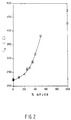
- Figure 2 is a graph in which the melting temperature is plotted against the content of amide groups.
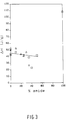
- Figure 3 is a graph in which the melting heat is plotted against the content of amide groups.
- Figure 4 shows the torsion diagrams of a number of products having a varying amide content varying from zero (PBT) to 50 mol % (PEA 50) (dry; 1 Hz; heating rate 1.8°C/min.).
- Figure 5 shows the glass transition temperatures of a number of polymers (wet, indicated by a square, and dry, indicated by a triangle), depending on the content of amide groups.
- Figure 6 shows the water absorption at 100% RV (in boiling water, 24 hours) as a funtion of the amide content.
- % amide a/(a+b) *100 , wherein a and b are defined as in the Claims.
- the reaction mixture turns to be cloudy due to the formation of a suspension of the trimer: N,N'-bis(p-carbomethoxybenzoyl)-butanediamine.
- the temperature is then raised to 170°C and 1ml of a Ti (OC3H7)4 solution (5% in N-butanol) is added.
- a Ti (OC3H7)4 solution 5% in N-butanol
- the trimer and the remaining dimethylterephtalate are transesterificated by the 1,4-butanediol.
- the temperature is gradually (15°C per minute) raised to 250°C and then vacuum (10-15 mm Hg)is applied for 15 minutes.
- the pressure is gradually decreased to a value of 1,3 mm while maintaining the temperature at 250°C. It is believed that lowering the pressure still further would be beneficial.
- polyesteramide has an inherent viscosity (èta inh ) of 0.61; a melting point (T m,2 ) of 222°C and T c value of 193°C.
Landscapes
- Chemical & Material Sciences (AREA)
- Health & Medical Sciences (AREA)
- Chemical Kinetics & Catalysis (AREA)
- Medicinal Chemistry (AREA)
- Polymers & Plastics (AREA)
- Organic Chemistry (AREA)
- Polyamides (AREA)
Claims (5)
- Copolyesteramid, welches aufgebaut ist aus Einheiten, die von Terephthalsäure, 1,4-Butandiol und 1,4-Butandiamin herrühren mit der Formel:
⁅{NH-(CH₂)₄-NH-C(O)-R-C(O)}a-{O-(CH₂)₄-O-C(O)-R-C-(O)}b⁆x
worin R ein Paraphenylenrest ist, worin a/b zwischen 0,05 und 1 liegt, worin die Zahl der a-Einheiten, die benachbart zueinander angeordnet sind, weniger als 15% der Gesamtzahl der a-Einheiten beträgt, worin nicht mehr als 10 Mol-% der Einheiten, die von Terephthalsäure herrühren, nicht mehr als 10 Mol-% der Einheiten, die von 1,4-Butandiol herrühren und nicht mehr als 10 Mol-% der Einheiten, die von 1,4-Butandiamin herrühren, durch eine andere Komponente ersetzt werden können, worin x einen solchen Wert hat, daß das Copolyesteramid eine inhärente Viskosität (ètainh) aufweist, die 0,4 überschreitet, bestimmt in Phenol/Tetrachlorethan (50/50 Mol) unter Verwendung einer 0,5 Gew.-%igen Lösung. - Copolyesteramid nach Anspruch 1, in welchem das Verhältnis a/b zwischen 0,05 und 35/65 liegt.
- Copolyesteramid nach Anspruch 1 oder 2, worin die Schmelztemperatur des Copolyesteramids wenigstens gleich der Schmelztemperatur des entsprechenden Polyesters ist.
- Verfahren zur Herstellung des Copolyesteramids gemäß Anspruch 1, worin ein Diol, ein Diamin und ein Dialkylterephthalat oder Terephthalsäure oder ein Terephthalat-Derivat zusammengegeben werden und ohne dazwischenliegende Isolations- und/oder Reinigungsstufen umgesetzt werden.
- Verfahren nach Anspruch 1, worin das Diol und das Dialkylterephthalat oder Terephthalsäure oder Terephthalat-Derivat zusammengegeben werden, zusammen erhitzt werden, worauf das Diamin nach und nach zugegeben wird.
Applications Claiming Priority (2)
| Application Number | Priority Date | Filing Date | Title |
|---|---|---|---|
| NL9000513 | 1990-03-06 | ||
| NL9000513A NL9000513A (nl) | 1990-03-06 | 1990-03-06 | Copolyesteramiden. |
Publications (2)
| Publication Number | Publication Date |
|---|---|
| EP0445548A1 EP0445548A1 (de) | 1991-09-11 |
| EP0445548B1 true EP0445548B1 (de) | 1994-08-24 |
Family
ID=19856701
Family Applications (1)
| Application Number | Title | Priority Date | Filing Date |
|---|---|---|---|
| EP91101875A Expired - Lifetime EP0445548B1 (de) | 1990-03-06 | 1991-02-11 | Copolyester-Amide |
Country Status (3)
| Country | Link |
|---|---|
| EP (1) | EP0445548B1 (de) |
| DE (1) | DE69103552T2 (de) |
| NL (1) | NL9000513A (de) |
Cited By (4)
| Publication number | Priority date | Publication date | Assignee | Title |
|---|---|---|---|---|
| US5731389A (en) * | 1996-04-24 | 1998-03-24 | General Electric Company | Blends of polyesters and polyesteramides, optionally with polycarbonates |
| US5744068A (en) * | 1996-01-24 | 1998-04-28 | General Electric Company | Blends of polyphenylene ethers and polyesteramides |
| US5852155A (en) * | 1995-03-01 | 1998-12-22 | General Electric Company | Compositions of polyesteramides |
| US6011125A (en) * | 1998-09-25 | 2000-01-04 | General Electric Company | Amide modified polyesters |
Families Citing this family (3)
| Publication number | Priority date | Publication date | Assignee | Title |
|---|---|---|---|---|
| US8450447B2 (en) | 2007-03-14 | 2013-05-28 | Dow Global Technologies Llc | Copolyesteramides with decreased perfection of the amide sequence |
| CN102634012B (zh) * | 2012-05-09 | 2013-11-13 | 金发科技股份有限公司 | 一种耐高温尼龙/pen/pet共聚物及其制法与应用 |
| US9962922B2 (en) | 2015-04-24 | 2018-05-08 | Xerox Corporation | Polyesteramide for 3D printing |
Citations (1)
| Publication number | Priority date | Publication date | Assignee | Title |
|---|---|---|---|---|
| EP0315027A2 (de) * | 1987-11-04 | 1989-05-10 | General Electric Company | Amidester-Blockcopolymere und Verfahren zu deren Herstellung |
Family Cites Families (1)
| Publication number | Priority date | Publication date | Assignee | Title |
|---|---|---|---|---|
| US3650999A (en) * | 1970-06-15 | 1972-03-21 | Monsanto Co | Poly(ester-amide) block copolymer hot melt adhesives |
-
1990
- 1990-03-06 NL NL9000513A patent/NL9000513A/nl not_active Application Discontinuation
-
1991
- 1991-02-11 DE DE1991603552 patent/DE69103552T2/de not_active Expired - Fee Related
- 1991-02-11 EP EP91101875A patent/EP0445548B1/de not_active Expired - Lifetime
Patent Citations (1)
| Publication number | Priority date | Publication date | Assignee | Title |
|---|---|---|---|---|
| EP0315027A2 (de) * | 1987-11-04 | 1989-05-10 | General Electric Company | Amidester-Blockcopolymere und Verfahren zu deren Herstellung |
Cited By (4)
| Publication number | Priority date | Publication date | Assignee | Title |
|---|---|---|---|---|
| US5852155A (en) * | 1995-03-01 | 1998-12-22 | General Electric Company | Compositions of polyesteramides |
| US5744068A (en) * | 1996-01-24 | 1998-04-28 | General Electric Company | Blends of polyphenylene ethers and polyesteramides |
| US5731389A (en) * | 1996-04-24 | 1998-03-24 | General Electric Company | Blends of polyesters and polyesteramides, optionally with polycarbonates |
| US6011125A (en) * | 1998-09-25 | 2000-01-04 | General Electric Company | Amide modified polyesters |
Also Published As
| Publication number | Publication date |
|---|---|
| EP0445548A1 (de) | 1991-09-11 |
| NL9000513A (nl) | 1991-10-01 |
| DE69103552D1 (de) | 1994-09-29 |
| DE69103552T2 (de) | 1995-04-20 |
Similar Documents
| Publication | Publication Date | Title |
|---|---|---|
| US8618239B2 (en) | Solid-stage polymerization system for a liquid crystalline polymer | |
| US4849499A (en) | Melt processable, liquid crystalline polyesters | |
| JPH04227632A (ja) | 新規なポリエーテルアミド及びその製法 | |
| US4081428A (en) | Preparation of polymers | |
| US4182842A (en) | Poly(ester-amides)prepared from an aromatic dicarboxylic acid, ethylene glycol and a p-acylaminobenzoic acid | |
| EP0445548B1 (de) | Copolyester-Amide | |
| US5120820A (en) | Thermoplastic liquid-crystalline, wholly aromatic polyimide ester from carboxy-n-(carboxyphenyl) phthalimide and aralky, hydroquinone | |
| US4433117A (en) | Copolyesteramide and production of the same | |
| EP1521792B1 (de) | Copolymerisation von cyclischen esteroligomeren | |
| US5672676A (en) | Polyesteramides with high heat deflection temperatures | |
| CA1046194A (en) | Poly(alkylenetrimellitate imides) and method of preparation | |
| JPH0571056B2 (de) | ||
| US5510451A (en) | Copolyester amides | |
| US4163099A (en) | Polyesters prepared from NH containing carboxylic acids | |
| US5268445A (en) | Segmented copolyester amides | |
| EP0376380A1 (de) | In der Schmelze verarbeitbares Polymer | |
| CA1096866A (en) | Dicarboxylic acids containing triazine rings, and polyesters formed from these dicarboxylic acids | |
| EP0334423A2 (de) | Linearer, Phosphor enthaltender Copolyester, Verfahren zu seiner Herstellung und seine Anwendung als Flammschutzmittel | |
| US4923953A (en) | Molding compounds comprising a thermoplastically processible, aromatic polyester imide | |
| EP0445547B1 (de) | Segmentierte Copolyesteramide | |
| US4758651A (en) | Amorphous aromatic copolyamide, a process for the preparation thereof, and shaped object | |
| CA1077642A (en) | Fire retardant reinforced phthalate alkylene glycol halodiphenol copolymer stabilised polycarbodiimide | |
| US4792597A (en) | Melt-processable polyesteramides having para-linked, substituted-phenylene radicals | |
| EP0322788B1 (de) | In der Schmelze verarbeitbare aromatische Polyesteramide mit 2,2'-substituierten Biphenylenradikalen | |
| US4139512A (en) | Copolyesters of triazinedicarboxylic acids |
Legal Events
| Date | Code | Title | Description |
|---|---|---|---|
| PUAI | Public reference made under article 153(3) epc to a published international application that has entered the european phase |
Free format text: ORIGINAL CODE: 0009012 |
|
| 17P | Request for examination filed |
Effective date: 19910225 |
|
| AK | Designated contracting states |
Kind code of ref document: A1 Designated state(s): DE ES FR GB IT NL |
|
| RIN1 | Information on inventor provided before grant (corrected) |
Inventor name: DE HAAN, JEANETTE LOUIS Inventor name: GAYMANS, REINOUD JAAP |
|
| 17Q | First examination report despatched |
Effective date: 19930212 |
|
| GRAA | (expected) grant |
Free format text: ORIGINAL CODE: 0009210 |
|
| AK | Designated contracting states |
Kind code of ref document: B1 Designated state(s): DE ES FR GB IT NL |
|
| PG25 | Lapsed in a contracting state [announced via postgrant information from national office to epo] |
Ref country code: IT Free format text: LAPSE BECAUSE OF FAILURE TO SUBMIT A TRANSLATION OF THE DESCRIPTION OR TO PAY THE FEE WITHIN THE PRE;WARNING: LAPSES OF ITALIAN PATENTS WITH EFFECTIVE DATE BEFORE 2007 MAY HAVE OCCURRED AT ANY TIME BEFORE 2007. THE CORRECT EFFECTIVE DATE MAY BE DIFFERENT FROM THE ONE RECORDED.SCRIBED TIME-LIMIT Effective date: 19940824 Ref country code: ES Free format text: THE PATENT HAS BEEN ANNULLED BY A DECISION OF A NATIONAL AUTHORITY Effective date: 19940824 Ref country code: NL Effective date: 19940824 |
|
| REF | Corresponds to: |
Ref document number: 69103552 Country of ref document: DE Date of ref document: 19940929 |
|
| ET | Fr: translation filed | ||
| NLV1 | Nl: lapsed or annulled due to failure to fulfill the requirements of art. 29p and 29m of the patents act | ||
| PLBE | No opposition filed within time limit |
Free format text: ORIGINAL CODE: 0009261 |
|
| STAA | Information on the status of an ep patent application or granted ep patent |
Free format text: STATUS: NO OPPOSITION FILED WITHIN TIME LIMIT |
|
| 26N | No opposition filed | ||
| PGFP | Annual fee paid to national office [announced via postgrant information from national office to epo] |
Ref country code: FR Payment date: 19990119 Year of fee payment: 9 |
|
| PGFP | Annual fee paid to national office [announced via postgrant information from national office to epo] |
Ref country code: GB Payment date: 19990121 Year of fee payment: 9 |
|
| PGFP | Annual fee paid to national office [announced via postgrant information from national office to epo] |
Ref country code: DE Payment date: 19990122 Year of fee payment: 9 |
|
| PG25 | Lapsed in a contracting state [announced via postgrant information from national office to epo] |
Ref country code: GB Free format text: LAPSE BECAUSE OF NON-PAYMENT OF DUE FEES Effective date: 20000211 |
|
| GBPC | Gb: european patent ceased through non-payment of renewal fee |
Effective date: 20000211 |
|
| PG25 | Lapsed in a contracting state [announced via postgrant information from national office to epo] |
Ref country code: FR Free format text: LAPSE BECAUSE OF NON-PAYMENT OF DUE FEES Effective date: 20001031 |
|
| REG | Reference to a national code |
Ref country code: FR Ref legal event code: ST |
|
| PG25 | Lapsed in a contracting state [announced via postgrant information from national office to epo] |
Ref country code: DE Free format text: LAPSE BECAUSE OF NON-PAYMENT OF DUE FEES Effective date: 20010103 |