EP0445681A2 - Herstellung einer Thrombin-bindenden Substanz - Google Patents
Herstellung einer Thrombin-bindenden Substanz Download PDFInfo
- Publication number
- EP0445681A2 EP0445681A2 EP91103184A EP91103184A EP0445681A2 EP 0445681 A2 EP0445681 A2 EP 0445681A2 EP 91103184 A EP91103184 A EP 91103184A EP 91103184 A EP91103184 A EP 91103184A EP 0445681 A2 EP0445681 A2 EP 0445681A2
- Authority
- EP
- European Patent Office
- Prior art keywords
- thrombin
- dna
- nucleotide sequence
- fragment
- dna fragment
- Prior art date
- Legal status (The legal status is an assumption and is not a legal conclusion. Google has not performed a legal analysis and makes no representation as to the accuracy of the status listed.)
- Withdrawn
Links
Images

Classifications
-
- C—CHEMISTRY; METALLURGY
- C12—BIOCHEMISTRY; BEER; SPIRITS; WINE; VINEGAR; MICROBIOLOGY; ENZYMOLOGY; MUTATION OR GENETIC ENGINEERING
- C12N—MICROORGANISMS OR ENZYMES; COMPOSITIONS THEREOF; PROPAGATING, PRESERVING, OR MAINTAINING MICROORGANISMS; MUTATION OR GENETIC ENGINEERING; CULTURE MEDIA
- C12N15/00—Mutation or genetic engineering; DNA or RNA concerning genetic engineering, vectors, e.g. plasmids, or their isolation, preparation or purification; Use of hosts therefor
- C12N15/09—Recombinant DNA-technology
- C12N15/11—DNA or RNA fragments; Modified forms thereof; Non-coding nucleic acids having a biological activity
-
- C—CHEMISTRY; METALLURGY
- C07—ORGANIC CHEMISTRY
- C07K—PEPTIDES
- C07K14/00—Peptides having more than 20 amino acids; Gastrins; Somatostatins; Melanotropins; Derivatives thereof
- C07K14/435—Peptides having more than 20 amino acids; Gastrins; Somatostatins; Melanotropins; Derivatives thereof from animals; from humans
- C07K14/745—Blood coagulation or fibrinolysis factors
- C07K14/7455—Thrombomodulin
-
- A—HUMAN NECESSITIES
- A61—MEDICAL OR VETERINARY SCIENCE; HYGIENE
- A61P—SPECIFIC THERAPEUTIC ACTIVITY OF CHEMICAL COMPOUNDS OR MEDICINAL PREPARATIONS
- A61P7/00—Drugs for disorders of the blood or the extracellular fluid
- A61P7/02—Antithrombotic agents; Anticoagulants; Platelet aggregation inhibitors
-
- A—HUMAN NECESSITIES
- A61—MEDICAL OR VETERINARY SCIENCE; HYGIENE
- A61K—PREPARATIONS FOR MEDICAL, DENTAL OR TOILETRY PURPOSES
- A61K38/00—Medicinal preparations containing peptides
Definitions
- This invention relates to a DNA fragment encoding a thrombin-binding substance, a recombinant plasmid containing the DNA fragment, a transformant containing the recombinant plasmid, and a preparation of the thrombin-binding substance.
- Aoki et al. isolated a human thrombomodulin having the similar properties from the human placenta and reported that it had a molecular weight of about 71,000 (non-reduced state) (Thrombo. Res. 37 , 353-364 (1985)).
- the present inventors previously found, in human urine, two thrombin-binding substances which were different from any of the above substances and had smaller molecular weights (MW about 39,000 and 31,000 in a non-reduced state), and applied a patent (Japanese patent application laid-open (Kokai) No. 146898/1988).
- the present inventors further separated the following two thrombin-binding substances (A) and (B) which were different from the above substances from a human tissue culture and from human urine, and filed patent applications (Japanese Patent Application Nos. 214139/1988, 116471/1990 and 202027/1990).
- These thrombin-binding substances (A) and (B) have the following properties and useful as a fibrinolysis accelerator or an anticoagulant drug.
- thrombin-binding substances (A) and (B) are obtainable from the human placental genomic DNA by using synthesized DNA primers as a probe, and that thrombin-binding substances (A) and (B) (hereinafter may be referred to simply as thrombin-binding substances) can be prepared by transforming the host cells by the use of a recombinant plasmid containing the DNA fragment thereby expressing the thrombin-binding substance gene. This invention was accomplished based on these findings.
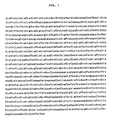
- An object of this invention is to provide a DNA fragment having a nucleotide sequence capable of encoding the amino acid sequence shown in Fig. 1.
- Another object of the invention is to provide a replicative recombinant plasmid containing the DNA fragment and a replicative expression vector.
- a further object of the invention is to provide a transformant cell containing the recombinant DNA.
- a further object of the invention is to provide a process for preparing the thrombin-binding substances.
- the DNA fragment encoding the thrombin-binding substances of the present invention can be prepared by the following process:
- a human placental genomic DNA is cleaved with a suitable restriction endonuclease to make a template DNA.
- DNA primers are synthesized with reference to a known nucleotide sequence of a human thrombomodulin gene (Shirai, T. et al: J. Biochem. 103, 281-285(1988)). These primers serve as a probe, and the template DNA is subjected to a screening step.
- the obtained DNA is cleaved with a suitable restriction endonuclease and a produced DNA fragment is ligated with a cloning vector for transformation of the microorganism.
- Plasmid DNA is extracted from the obtained transformant and after the treatment with a restriction endonuclease, a DNA fragment containing the DNA fragment of this invention can be obtained.
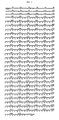
- the nucleotide sequence of the DNA fragment of this invention is shown in Fig. 2. It should however be noted that the nucleotide sequence is not necessarily limited to the sequence of Fig. 2 so far as it is capable of encoding the amino acid sequence constituting the peptide of the target thrombin-binding substances.
- a replicative expression vector is bonded to the DNA fragment of this invention.
- Examples of the usable expression vectors include any vectors such as those derived from procaryotes typified by E. coli, derived from yeasts, insect viruses, and from vertebrate viruses.
- a recombinant vector for expression which contains the following nucleotide sequences (1) to (7) in order in the downstream direction of transcription:
- DNA used as a vector is preferably plasmid.
- An example of such plasmid is one capable of being amplified in host cells of E. coli, and also capable of expressing the inserted gene by the transformation of mammalian cells.
- the plasmid DNA has a DNA sequence required for the multiplication of the plasmid in cells of E. coli, for example, a DNA sequence of the starting region of replication of Co1E1 plasmid, another DNA sequence capable of serving as a promoter in the mammalian cells, a gene capable of acting as a selective marker in a transformant of E. coli and a gene capable of acting as a selective marker in a transformant of the mammalian cells.
- the plasmid DNA has a DNA sequence of the starting region of replication such as HSV ori, polyoma ori and SV40 ori capable of acting in mammalian cells.
- the promoter may include promoters of cytomegalo virus, SV40, polyoma virus, bovine papilloma virus and adeno virus; LTR of retrovirus such as MMTV; and a promoter of metallothionein gene.
- selective marker genes may be mentioned ampicillin-resistant genes, kanamycin-resistant genes, tetracycline-resistant genes, chloramphenicol-resistant genes and so on.
- neomycin-resistant genes may be mentioned neomycin-resistant genes, hygromycin B-resistant genes, thymidine kinase genes, Eco gpt and dihydrofolate reductase genes. These genes may be used either singly or in combination.
- the incorporation of a DNA fragment of this invention in the mentioned vectors is effected by cleaving the DNA having such fragment with a suitable restriction endonuclease, and after adding a suitable linker if needed, joining the resultant DNA fragment to a vector DNA which has been cleaved with a suitable restriction endonuclease.
- suitable restriction endonuclease include EcoR I, Sph I, Pst I, Hind II, Hind III, BamH I, Xho I, Xba I, Ban III, Sma I and Nco I.
- Nuceotide modifying enzymes can also be used, which include exonuclease III, Bal 31, S1 nuclease, exonuclease VII, mung bean nuclease and DNA polymerase I.
- Usable linkers include EcoR I linker, Sma I linker, Nco I linker, BamH I linker, Xho I linker, Hind III linker, Pst I linker, Sph I linker and Xba I linker.
- plasmid for expression into host cells by the competent cell method, protoplasts method, calcium phosphate coprecipitation method, electroporation method, DEAE dextran method, lipofectin method or the like permits production of a transformant which has ability of effectively producing the recombinant plasmid and/or the thrombin-binding substances of this invention.
- Illustrative host cells for obtaining the mentioned transformants are unicellular microorganisms such as bacteria and yeasts, cultured insect cells and cultured vertebrate cells.
- E. coli is chosen as a host, various variants of the K12 strain of E.
- coli for example, HB101, C600K, JM101, JM103, JM105, JM109, MV1034, MV1184, MC1061/P3 and the like may be used.
- cultured mammalian cells are chosen as a host, COS cells, CHO cells, L cells, C127 cells, NIH3T3 cells, HeLa cells and the like may be used.
- a thrombin-binding substance is prepared by culturing the obtained transformant and then extracting and isolating the same from the culture medium and/or the cultured cells.
- various natural and synthetic culture media are used. They may desirably contain carbon sources such as sugars, alcohols or organic acid salts; nitrogen sources such as protein mixtures, amino acids or ammonium salts; and inorganic salts. It is also desired to add vitamins and antibiotics corresponding to the associated selective marker genes. If the plasmid allows to control the expression, it is necessary to follow a procedure which will induce the expression in the course of culturing. After culturing, culture medium and cultured cells are centrifugally separated.
- thrombin-binding substances accumulate in the cultured cells, it is necessary to disrupt or fracture the cells by freezing and thawing, ultrasonic processing, French press, enzyme treatment, homogenizing or the like, and then to solubilize the thrombin-binding substances with EDTA, surfactants, urea, guanidine hydrochloride or the like.
- the resultant culture medium or cultured cell extract containing the thrombin-binding substances is subjected to chromatography on one of various columns, so that purified thrombin-binding substances are obtained.
- column chromatography ion-exchange chromatography, affinity chromatography (for example, monoclonal antibody described in Japanese patent application laid-open (Kokai) No. 45398/1989 is usable) and gel chromatography may be applied either singly or in combination.
- the thus-obtained thrombin-binding substances have the aforementioned properties, and have the amino acid sequence shown in Table 1. They may have one or more sugar residues. When yeasts or vertebrate cells are used as host cells, glycosylated peptides are generally obtained.
- the gene of high molecular thrombin-binding substances (A) and (B) which are useful as an anticoagulant drug or a fibrinolysis accelerator and having a calcium-binding site has now been elucidated by the present inventors. Furthermore, economical mass production of the thrombin-binding substances is achieved by this invention.
- the nucleotide sequence of a human thrombomodulin gene was referred to (Shirai, T. et al., J. Biochem. 103, 281-285, 1988), and the following DNA primers were synthesized using a DNA synthesizer (ABI model 381A):
- DNAs were collected from the reaction mixture by ethanol precipitation, cleaved with Xho I and Kpn I, and a 1.57 kb Kho I - Kpn I fragment was prepared by agarose gel electrophoresis.
- a vector pUC118 for cloning (Vieira, J. and Messing, J.: Methods Enzymol. 153, 3-11, 1987) was cleaved with Hind II, joined to Xho I linker and then cleaved with Xho I and Kpn I to prepare a vector fragment by agarose electrophoresis.
- the above-described vector fragment, 1.57 kb Xho I - Kpn I fragment were ligated and E. coli MV 1304 (Vieira, J. and Messing, J.: Methods Enzymol. 153, 3-11, 1987) was transformed.
- Plasmid DNA was extracted from the obtained transformant and cleaved with a restriction endonuclease. As a result, 6 clones containing a plasmid inserted with 1.57 kb Xho I - Kpn I fragment derived from a human thrombomodulin gene were selected. In the process of determining the nucleotide sequence of the inserted fragment of the 6 clones, it was revealed that all of them had one to three mutations.
- the nucleotide sequence of the DNA fragment of this invention, which was inserted into the obtained plasmid pUCTM/XHO-KPN is shown in Fig. 2.
- the amino acid sequence corresponding to this nucleotide sequence is shown in Fig. 1, and this was confirmed to be identical to the sequence separately determined by the amino acid analysis of thrombin-binding substances (A) and (B).
- a pUCTM/XHO-KPN was cleaved with Xho I and Kpn I, and was prepared a 1.57 kb Xho - Kpn I fragment derived from a human thrombomodulin gene by agarose gel electrophoresis. This 1.57 kb fragment, together with linkers $1, $2, $3 and $4, was ligated with an expression vector CDM 8 (manufactured by Imvitrogen Co.) which was dephosphorylated after the cleavage with Xho I, and E. coli MC1061/P3 (Seed, B. and Aruffo, A.: Proc. Natl. Acd. Sci. USA. 84, 3365-3369, 1987) was transformed.
- CDM 8 manufactured by Imvitrogen Co.
- a plasmid DNA was extracted and was subjected to a cleavage with a restriction endonuclease, and the direction of the insertion and the inserted fragment were investigated.
- all clones showed the nucleotide sequence of Fig. 3, which evidenced that the expression vector of this invention was correctly constructed.
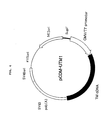
- the expression vector of this invention thus constructed and the transformant containing this vector were named pCDM-UTM1 (Fig. 4) and E. coli MC1061/P3[pCDM-UTM1], respectively.
- COS7 cells were transfected with pCDM-UTM1. Onto a 60 mm ⁇ culture dish was planted COS7 cells in the number of 1 X 10⁵. In the following day, the culture medium was suctioned and replaced with 2 ml of Dulbecco's modified minimum essential medium (DMEM) containing 10% Nu-serum (Collaborative Research Inc.).
- DMEM Dulbecco's modified minimum essential medium
- the obtained culture medium was passed through a column of 1 ml Sepharose 4B (2 mg IgG/ml resin) which was coupled with a monoclonal antibody A-73.
- the column was washed by; 1) 0.1 M sodium chloride-added 0.02 M Tris-HCl (pH 7.4): 2 ml, 2) 1 M sodium chloride and 0.05% Tween 20-added 0.02 M Tris-HCl (pH 7.4): 20 ml, and 3) 1 M sodium chloride-added 0.02 M Tris-HCl (pH 7.4): 5 ml in this order, and eluted with 5 ml of 0.02 M Tris-HCl (pH 7.4) added with 2 M of sodium thiocyanate, 5 mM EDTA and 1 M sodium chloride.
- the eluate was dialyzed against 0.02 M Tris-HCl added with 0.1 M sodium chloride.
- the dialysate was subjected to a SDS-PAGE according to a method proposed by Laemmli (Nature 227 , 680-685). Proteins in the gel were transfered onto a PVDF membrane according to a method proposed by Matsudaira (J. Biol. Chem. 262 (21), 10035-10038).
- the PVDF membrane was subjected to a reaction for 2 hours at room temperature in a 0.05 M Tris-HCl (TBS) containing 0.1% bovine serum albumin.
- TBS Tris-HCl
- Solution was decanted and washed throughtly with 0.05% Tween 20-added TBS, followed by a reaction for 1 hour at room temperature in a 0.05% Tween 20-added TBS containing a monoclonal antibody A-60 labeled with horseradish peroxidase.
- Solution was decanted and washed throughtly with 0.05% Tween 20-added TBS, followed by a color-developing in 5 ml of 50 mM acetic acid buffer (pH 5.0) containing 5 mg of 3-amino-9-ethylcarbazol dissolved in 2 ml of DMF and 25 microliters of 30% aqueous hydrogen peroxide. Single band was confirmed.
- the thus obtained substance showed properties of thrombin-binding substances, including activation of protein C when combined with thrombin, and ability of prolonging the clotting time.
Landscapes
- Health & Medical Sciences (AREA)
- Life Sciences & Earth Sciences (AREA)
- Chemical & Material Sciences (AREA)
- Engineering & Computer Science (AREA)
- Genetics & Genomics (AREA)
- Organic Chemistry (AREA)
- Bioinformatics & Cheminformatics (AREA)
- Biomedical Technology (AREA)
- Molecular Biology (AREA)
- Zoology (AREA)
- General Health & Medical Sciences (AREA)
- Biotechnology (AREA)
- Medicinal Chemistry (AREA)
- Wood Science & Technology (AREA)
- General Engineering & Computer Science (AREA)
- Hematology (AREA)
- Biophysics (AREA)
- Biochemistry (AREA)
- Proteomics, Peptides & Aminoacids (AREA)
- Diabetes (AREA)
- Toxicology (AREA)
- Veterinary Medicine (AREA)
- General Chemical & Material Sciences (AREA)
- Chemical Kinetics & Catalysis (AREA)
- Pharmacology & Pharmacy (AREA)
- Public Health (AREA)
- Physics & Mathematics (AREA)
- Gastroenterology & Hepatology (AREA)
- Nuclear Medicine, Radiotherapy & Molecular Imaging (AREA)
- Plant Pathology (AREA)
- Microbiology (AREA)
- Animal Behavior & Ethology (AREA)
- Preparation Of Compounds By Using Micro-Organisms (AREA)
- Peptides Or Proteins (AREA)
- Micro-Organisms Or Cultivation Processes Thereof (AREA)
- Saccharide Compounds (AREA)
- Medicines That Contain Protein Lipid Enzymes And Other Medicines (AREA)
Applications Claiming Priority (2)
| Application Number | Priority Date | Filing Date | Title |
|---|---|---|---|
| JP2054446A JPH03259084A (ja) | 1990-03-06 | 1990-03-06 | トロンビン結合性物質の製造法 |
| JP54446/90 | 1991-03-19 |
Publications (2)
| Publication Number | Publication Date |
|---|---|
| EP0445681A2 true EP0445681A2 (de) | 1991-09-11 |
| EP0445681A3 EP0445681A3 (en) | 1991-12-18 |
Family
ID=12970930
Family Applications (1)
| Application Number | Title | Priority Date | Filing Date |
|---|---|---|---|
| EP19910103184 Withdrawn EP0445681A3 (en) | 1990-03-06 | 1991-03-04 | Preparation of a thrombin-binding substance |
Country Status (4)
| Country | Link |
|---|---|
| EP (1) | EP0445681A3 (de) |
| JP (1) | JPH03259084A (de) |
| KR (1) | KR910016923A (de) |
| CA (1) | CA2037499A1 (de) |
Cited By (6)
| Publication number | Priority date | Publication date | Assignee | Title |
|---|---|---|---|---|
| EP0641215A4 (de) * | 1992-02-05 | 1995-11-29 | Schering Ag | Protease-resistente analoge des thrombomodulin. |
| US5593515A (en) * | 1994-03-29 | 1997-01-14 | Tsuyoshi Masumoto | High strength aluminum-based alloy |
| US8258269B2 (en) | 2007-03-23 | 2012-09-04 | Asahi Kasei Pharma Corporation | Method for producing high-purity soluble thrombomodulin |
| US8772239B2 (en) | 2011-11-15 | 2014-07-08 | Asahi Kasei Pharma Corporation | Medicament for therapeutic treatment and/or improvement of sepsis |
| US9127089B2 (en) | 2010-04-30 | 2015-09-08 | Asahi Kasei Pharma Corporation | Highly-purified soluble thrombomodulin and method for producing same |
| US12514910B2 (en) | 2018-10-22 | 2026-01-06 | Asahi Kasei Pharma Corporation | Medicament for therapeutic treatment and/or improvement of sepsis accompanied by coagulopathy |
Families Citing this family (1)
| Publication number | Priority date | Publication date | Assignee | Title |
|---|---|---|---|---|
| RU2433829C2 (ru) | 2006-10-06 | 2011-11-20 | Асахи Касеи Фарма Корпорейшн | Средство для лечения и/или улучшения состояния при диссеминированном внутрисосудистом свертывании |
Family Cites Families (1)
| Publication number | Priority date | Publication date | Assignee | Title |
|---|---|---|---|---|
| JPH0720997B2 (ja) * | 1988-08-29 | 1995-03-08 | 興和株式会社 | 新規なトロンビン結合性物質及びその製法 |
-
1990
- 1990-03-06 JP JP2054446A patent/JPH03259084A/ja active Pending
-
1991
- 1991-02-27 KR KR1019910003208A patent/KR910016923A/ko not_active Withdrawn
- 1991-03-04 EP EP19910103184 patent/EP0445681A3/en not_active Withdrawn
- 1991-03-04 CA CA002037499A patent/CA2037499A1/en not_active Abandoned
Cited By (10)
| Publication number | Priority date | Publication date | Assignee | Title |
|---|---|---|---|---|
| EP0641215A4 (de) * | 1992-02-05 | 1995-11-29 | Schering Ag | Protease-resistente analoge des thrombomodulin. |
| US5593515A (en) * | 1994-03-29 | 1997-01-14 | Tsuyoshi Masumoto | High strength aluminum-based alloy |
| US8258269B2 (en) | 2007-03-23 | 2012-09-04 | Asahi Kasei Pharma Corporation | Method for producing high-purity soluble thrombomodulin |
| US8952137B2 (en) | 2007-03-23 | 2015-02-10 | Asahi Kasei Pharma Corporation | Method for producing high-purity soluble thrombomodulin |
| US9127089B2 (en) | 2010-04-30 | 2015-09-08 | Asahi Kasei Pharma Corporation | Highly-purified soluble thrombomodulin and method for producing same |
| US8772239B2 (en) | 2011-11-15 | 2014-07-08 | Asahi Kasei Pharma Corporation | Medicament for therapeutic treatment and/or improvement of sepsis |
| US9034823B2 (en) | 2011-11-15 | 2015-05-19 | Asahi Kasei Pharma Corporation | Medicament for therapeutic treatment and/or improvement of sepsis |
| US9555080B2 (en) | 2011-11-15 | 2017-01-31 | Asahi Kasei Pharma Corporation | Medicament for therapeutic treatment and/or improvement of sepsis |
| US9592275B2 (en) | 2011-11-15 | 2017-03-14 | Asahi Kasei Pharma Corporation | Medicament for therapeutic treatment and/or improvement of sepsis |
| US12514910B2 (en) | 2018-10-22 | 2026-01-06 | Asahi Kasei Pharma Corporation | Medicament for therapeutic treatment and/or improvement of sepsis accompanied by coagulopathy |
Also Published As
| Publication number | Publication date |
|---|---|
| EP0445681A3 (en) | 1991-12-18 |
| CA2037499A1 (en) | 1991-09-07 |
| KR910016923A (ko) | 1991-11-05 |
| JPH03259084A (ja) | 1991-11-19 |
Similar Documents
| Publication | Publication Date | Title |
|---|---|---|
| US5693499A (en) | Process for preparing human coagulation factor VIII protein complex | |
| EP0205715B1 (de) | DNA-Fragmente, Expressionsvektoren, Proteine, Wirte und Verfahren zur Herstellung der Proteine | |
| US5665863A (en) | Polypeptides having granulocyte colony stimulating activity, their preparation and pharmaceutical compositions containing them | |
| WO1991002753A1 (en) | Anticoagulant protein | |
| FI106206B (fi) | Menetelmä polypeptidin valmistamiseksi | |
| JP2002504494A (ja) | マウス及びヒトエンドスタチンの生産方法 | |
| JP3805358B2 (ja) | フォン・ウィルブランド因子の治療用ドメイン | |
| US5935815A (en) | Process for micro biological production of proteins | |
| US20060127389A1 (en) | Fused protein with the function of both hemolysis and anticoagulation and use of it | |
| EP0445681A2 (de) | Herstellung einer Thrombin-bindenden Substanz | |
| CA2014948C (en) | Genes coding for a protein having human macif activity, expression vectors containing said genes, transformant cells and proteins having human macif activity | |
| Courtney et al. | Production and evaluation of recombinant hirudin | |
| Danley et al. | Crystallizable HIV-1 protease derived from expression of the viral pol gene in Escherichia coli | |
| EP2436765A2 (de) | Rekombinanter Faktor X ohne Glykosylierung und Verfahren zu dessen Herstellung | |
| US5273962A (en) | Human urinary thrombomodulin with a modified glycosaminoglycan (GAG) binding site | |
| EP0345155B1 (de) | Verfahren zur Herstellung von Proteinen, die ähnlich dem natürlich-menschlichen Apolipoprotein-E sind | |
| EP3057982B1 (de) | Fusionsproteine von interferon alpha 5 mit einem weiteren zytokin sowie verfahren zur herstellung davon | |
| EP0488317B1 (de) | Thrombin-bindende Substanz und Verfahren zu dessen Herstellung | |
| JP2553425B2 (ja) | トロンビン結合性物質及びその製造法 | |
| JPH04507347A (ja) | 活性化プロテインcを生成するための細胞培養法 | |
| WO1992006999A1 (en) | Therapeutic fragments of von willebrand factor | |
| AU619803B2 (en) | Rearranged tissue plasminogen activators and method for producing same | |
| WO1989007145A1 (en) | Modified gene sequences encoding modified tpa and products therefrom | |
| Jones | Production of human calcitonin by recombinant DNA technology | |
| JP3003135B2 (ja) | ポリペプチドの発現ベクター及びポリペプチドの製造法 |
Legal Events
| Date | Code | Title | Description |
|---|---|---|---|
| PUAI | Public reference made under article 153(3) epc to a published international application that has entered the european phase |
Free format text: ORIGINAL CODE: 0009012 |
|
| AK | Designated contracting states |
Kind code of ref document: A2 Designated state(s): BE CH DE ES FR GB IT LI NL SE |
|
| PUAL | Search report despatched |
Free format text: ORIGINAL CODE: 0009013 |
|
| AK | Designated contracting states |
Kind code of ref document: A3 Designated state(s): BE CH DE ES FR GB IT LI NL SE |
|
| 17P | Request for examination filed |
Effective date: 19920506 |
|
| 17Q | First examination report despatched |
Effective date: 19940414 |
|
| STAA | Information on the status of an ep patent application or granted ep patent |
Free format text: STATUS: THE APPLICATION IS DEEMED TO BE WITHDRAWN |
|
| 18D | Application deemed to be withdrawn |
Effective date: 19950411 |