EP0447544B1 - Novel onium salts and the use thereof as photoinitiators - Google Patents
Novel onium salts and the use thereof as photoinitiators Download PDFInfo
- Publication number
- EP0447544B1 EP0447544B1 EP90916926A EP90916926A EP0447544B1 EP 0447544 B1 EP0447544 B1 EP 0447544B1 EP 90916926 A EP90916926 A EP 90916926A EP 90916926 A EP90916926 A EP 90916926A EP 0447544 B1 EP0447544 B1 EP 0447544B1
- Authority
- EP
- European Patent Office
- Prior art keywords
- cyanobenzyl
- weight
- bronsted acid
- chromophore
- film
- Prior art date
- Legal status (The legal status is an assumption and is not a legal conclusion. Google has not performed a legal analysis and makes no representation as to the accuracy of the status listed.)
- Expired - Lifetime
Links
- 150000003839 salts Chemical class 0.000 title abstract description 33
- 239000007848 Bronsted acid Substances 0.000 claims abstract description 26
- 230000005855 radiation Effects 0.000 claims abstract description 10
- 125000001424 substituent group Chemical group 0.000 claims abstract description 8
- 238000004776 molecular orbital Methods 0.000 claims abstract description 6
- 230000001747 exhibiting effect Effects 0.000 claims abstract description 4
- 125000006575 electron-withdrawing group Chemical group 0.000 claims abstract description 3
- 239000000203 mixture Substances 0.000 claims description 26
- 239000000758 substrate Substances 0.000 claims description 23
- 150000001875 compounds Chemical class 0.000 claims description 10
- 238000000034 method Methods 0.000 claims description 10
- LSDPWZHWYPCBBB-UHFFFAOYSA-O methylsulfide anion Chemical compound [SH2+]C LSDPWZHWYPCBBB-UHFFFAOYSA-O 0.000 claims description 10
- 239000000463 material Substances 0.000 claims description 9
- XAGFODPZIPBFFR-UHFFFAOYSA-N aluminium Chemical compound [Al] XAGFODPZIPBFFR-UHFFFAOYSA-N 0.000 claims description 8
- 229910052782 aluminium Inorganic materials 0.000 claims description 8
- RYGMFSIKBFXOCR-UHFFFAOYSA-N Copper Chemical compound [Cu] RYGMFSIKBFXOCR-UHFFFAOYSA-N 0.000 claims description 5
- 229910052802 copper Inorganic materials 0.000 claims description 5
- 239000010949 copper Substances 0.000 claims description 5
- 229910017048 AsF6 Inorganic materials 0.000 claims description 3
- 229910015898 BF4 Inorganic materials 0.000 claims description 3
- 229910021188 PF6 Inorganic materials 0.000 claims description 3
- 229910021627 Tin(IV) chloride Inorganic materials 0.000 claims description 3
- 125000003118 aryl group Chemical group 0.000 claims description 3
- 229910001914 chlorine tetroxide Inorganic materials 0.000 claims description 3
- VLTRZXGMWDSKGL-UHFFFAOYSA-M perchlorate Chemical compound [O-]Cl(=O)(=O)=O VLTRZXGMWDSKGL-UHFFFAOYSA-M 0.000 claims description 3
- HPGGPRDJHPYFRM-UHFFFAOYSA-J tin(iv) chloride Chemical compound Cl[Sn](Cl)(Cl)Cl HPGGPRDJHPYFRM-UHFFFAOYSA-J 0.000 claims description 3
- 125000004434 sulfur atom Chemical group 0.000 claims description 2
- 125000001797 benzyl group Chemical group [H]C1=C([H])C([H])=C(C([H])=C1[H])C([H])([H])* 0.000 claims 1
- OIRDBPQYVWXNSJ-UHFFFAOYSA-N methyl trifluoromethansulfonate Chemical compound COS(=O)(=O)C(F)(F)F OIRDBPQYVWXNSJ-UHFFFAOYSA-N 0.000 claims 1
- RWSOTUBLDIXVET-UHFFFAOYSA-O sulfonium Chemical compound [SH3+] RWSOTUBLDIXVET-UHFFFAOYSA-O 0.000 abstract description 5
- VUEDNLCYHKSELL-UHFFFAOYSA-N arsonium Chemical compound [AsH4+] VUEDNLCYHKSELL-UHFFFAOYSA-N 0.000 abstract description 3
- 229910052757 nitrogen Inorganic materials 0.000 abstract description 3
- GPRLSGONYQIRFK-UHFFFAOYSA-N hydron Chemical compound [H+] GPRLSGONYQIRFK-UHFFFAOYSA-N 0.000 abstract description 2
- SPVXKVOXSXTJOY-UHFFFAOYSA-O selenonium Chemical compound [SeH3+] SPVXKVOXSXTJOY-UHFFFAOYSA-O 0.000 abstract description 2
- 229910052785 arsenic Inorganic materials 0.000 abstract 2
- 125000004433 nitrogen atom Chemical group N* 0.000 abstract 2
- 125000004437 phosphorous atom Chemical group 0.000 abstract 2
- 229910052711 selenium Inorganic materials 0.000 abstract 2
- 229910052717 sulfur Inorganic materials 0.000 abstract 2
- QGZKDVFQNNGYKY-UHFFFAOYSA-O Ammonium Chemical compound [NH4+] QGZKDVFQNNGYKY-UHFFFAOYSA-O 0.000 abstract 1
- 150000001450 anions Chemical class 0.000 abstract 1
- 150000004714 phosphonium salts Chemical class 0.000 abstract 1
- YMWUJEATGCHHMB-UHFFFAOYSA-N Dichloromethane Chemical compound ClCCl YMWUJEATGCHHMB-UHFFFAOYSA-N 0.000 description 45
- 239000010408 film Substances 0.000 description 35
- WEVYAHXRMPXWCK-UHFFFAOYSA-N Acetonitrile Chemical compound CC#N WEVYAHXRMPXWCK-UHFFFAOYSA-N 0.000 description 22
- RTZKZFJDLAIYFH-UHFFFAOYSA-N Diethyl ether Chemical compound CCOCC RTZKZFJDLAIYFH-UHFFFAOYSA-N 0.000 description 19
- -1 argon ion Chemical class 0.000 description 13
- 229940073584 methylene chloride Drugs 0.000 description 13
- 229920000642 polymer Polymers 0.000 description 13
- 238000010438 heat treatment Methods 0.000 description 12
- RWSOTUBLDIXVET-UHFFFAOYSA-N Dihydrogen sulfide Chemical class S RWSOTUBLDIXVET-UHFFFAOYSA-N 0.000 description 8
- 229920006254 polymer film Polymers 0.000 description 8
- 239000002904 solvent Substances 0.000 description 8
- 238000004528 spin coating Methods 0.000 description 8
- 239000012634 fragment Substances 0.000 description 7
- 239000011521 glass Substances 0.000 description 7
- 239000000126 substance Substances 0.000 description 7
- 239000012456 homogeneous solution Substances 0.000 description 6
- 239000000047 product Substances 0.000 description 6
- GUAFOGOEJLSQBT-UHFFFAOYSA-N scoparone Chemical compound C1=CC(=O)OC2=C1C=C(OC)C(OC)=C2 GUAFOGOEJLSQBT-UHFFFAOYSA-N 0.000 description 6
- XKRFYHLGVUSROY-UHFFFAOYSA-N argon Substances [Ar] XKRFYHLGVUSROY-UHFFFAOYSA-N 0.000 description 5
- 229910052786 argon Inorganic materials 0.000 description 5
- 238000004519 manufacturing process Methods 0.000 description 5
- LIIDWKDFORMMDQ-UHFFFAOYSA-N 2-[[4-(dipropylamino)phenyl]diazenyl]benzoic acid Chemical compound C1=CC(N(CCC)CCC)=CC=C1N=NC1=CC=CC=C1C(O)=O LIIDWKDFORMMDQ-UHFFFAOYSA-N 0.000 description 4
- HEDRZPFGACZZDS-UHFFFAOYSA-N Chloroform Chemical compound ClC(Cl)Cl HEDRZPFGACZZDS-UHFFFAOYSA-N 0.000 description 4
- 239000004593 Epoxy Substances 0.000 description 4
- 229920001665 Poly-4-vinylphenol Polymers 0.000 description 4
- 239000004793 Polystyrene Substances 0.000 description 4
- BLRPTPMANUNPDV-UHFFFAOYSA-N Silane Chemical compound [SiH4] BLRPTPMANUNPDV-UHFFFAOYSA-N 0.000 description 4
- XUIMIQQOPSSXEZ-UHFFFAOYSA-N Silicon Chemical compound [Si] XUIMIQQOPSSXEZ-UHFFFAOYSA-N 0.000 description 4
- CDBYLPFSWZWCQE-UHFFFAOYSA-L Sodium Carbonate Chemical compound [Na+].[Na+].[O-]C([O-])=O CDBYLPFSWZWCQE-UHFFFAOYSA-L 0.000 description 4
- 239000002253 acid Substances 0.000 description 4
- IISBACLAFKSPIT-UHFFFAOYSA-N bisphenol A Chemical compound C=1C=C(O)C=CC=1C(C)(C)C1=CC=C(O)C=C1 IISBACLAFKSPIT-UHFFFAOYSA-N 0.000 description 4
- 238000006243 chemical reaction Methods 0.000 description 4
- 238000004132 cross linking Methods 0.000 description 4
- 238000001035 drying Methods 0.000 description 4
- LNEPOXFFQSENCJ-UHFFFAOYSA-N haloperidol Chemical compound C1CC(O)(C=2C=CC(Cl)=CC=2)CCN1CCCC(=O)C1=CC=C(F)C=C1 LNEPOXFFQSENCJ-UHFFFAOYSA-N 0.000 description 4
- 239000000178 monomer Substances 0.000 description 4
- 229920002223 polystyrene Polymers 0.000 description 4
- 229910052710 silicon Inorganic materials 0.000 description 4
- 239000010703 silicon Substances 0.000 description 4
- 239000007787 solid Substances 0.000 description 4
- VZGDMQKNWNREIO-UHFFFAOYSA-N tetrachloromethane Chemical compound ClC(Cl)(Cl)Cl VZGDMQKNWNREIO-UHFFFAOYSA-N 0.000 description 4
- 239000010409 thin film Substances 0.000 description 4
- 238000012546 transfer Methods 0.000 description 4
- 230000009466 transformation Effects 0.000 description 4
- XPDWGBQVDMORPB-UHFFFAOYSA-N trifluoromethane acid Natural products FC(F)F XPDWGBQVDMORPB-UHFFFAOYSA-N 0.000 description 4
- 229920002554 vinyl polymer Polymers 0.000 description 4
- QTBSBXVTEAMEQO-UHFFFAOYSA-N Acetic acid Chemical compound CC(O)=O QTBSBXVTEAMEQO-UHFFFAOYSA-N 0.000 description 3
- LFQSCWFLJHTTHZ-UHFFFAOYSA-N Ethanol Chemical compound CCO LFQSCWFLJHTTHZ-UHFFFAOYSA-N 0.000 description 3
- YXFVVABEGXRONW-UHFFFAOYSA-N Toluene Chemical compound CC1=CC=CC=C1 YXFVVABEGXRONW-UHFFFAOYSA-N 0.000 description 3
- 238000011161 development Methods 0.000 description 3
- 229960004132 diethyl ether Drugs 0.000 description 3
- 238000005516 engineering process Methods 0.000 description 3
- 239000003822 epoxy resin Substances 0.000 description 3
- 238000001914 filtration Methods 0.000 description 3
- 150000002924 oxiranes Chemical class 0.000 description 3
- 229920000647 polyepoxide Polymers 0.000 description 3
- 230000005588 protonation Effects 0.000 description 3
- 238000010992 reflux Methods 0.000 description 3
- 238000003756 stirring Methods 0.000 description 3
- LYPVBFXTKUJYDL-UHFFFAOYSA-N sulfanium;trifluoromethanesulfonate Chemical compound [SH3+].[O-]S(=O)(=O)C(F)(F)F LYPVBFXTKUJYDL-UHFFFAOYSA-N 0.000 description 3
- UMLFTCYAQPPZER-UHFFFAOYSA-N 4-(bromomethyl)benzonitrile Chemical compound BrCC1=CC=C(C#N)C=C1 UMLFTCYAQPPZER-UHFFFAOYSA-N 0.000 description 2
- BRLQWZUYTZBJKN-UHFFFAOYSA-N Epichlorohydrin Chemical compound ClCC1CO1 BRLQWZUYTZBJKN-UHFFFAOYSA-N 0.000 description 2
- CSNNHWWHGAXBCP-UHFFFAOYSA-L Magnesium sulfate Chemical compound [Mg+2].[O-][S+2]([O-])([O-])[O-] CSNNHWWHGAXBCP-UHFFFAOYSA-L 0.000 description 2
- 238000003848 UV Light-Curing Methods 0.000 description 2
- 125000000217 alkyl group Chemical group 0.000 description 2
- 238000003491 array Methods 0.000 description 2
- QVGXLLKOCUKJST-UHFFFAOYSA-N atomic oxygen Chemical compound [O] QVGXLLKOCUKJST-UHFFFAOYSA-N 0.000 description 2
- 238000010538 cationic polymerization reaction Methods 0.000 description 2
- 239000007795 chemical reaction product Substances 0.000 description 2
- 239000002131 composite material Substances 0.000 description 2
- 239000012043 crude product Substances 0.000 description 2
- XLYOFNOQVPJJNP-UHFFFAOYSA-M hydroxide Chemical compound [OH-] XLYOFNOQVPJJNP-UHFFFAOYSA-M 0.000 description 2
- 230000003287 optical effect Effects 0.000 description 2
- 239000001301 oxygen Substances 0.000 description 2
- 229910052760 oxygen Inorganic materials 0.000 description 2
- 239000002245 particle Substances 0.000 description 2
- 229920002120 photoresistant polymer Polymers 0.000 description 2
- 238000006116 polymerization reaction Methods 0.000 description 2
- 229920001296 polysiloxane Polymers 0.000 description 2
- 239000011541 reaction mixture Substances 0.000 description 2
- 229910000077 silane Inorganic materials 0.000 description 2
- 229910000029 sodium carbonate Inorganic materials 0.000 description 2
- 235000017550 sodium carbonate Nutrition 0.000 description 2
- IFLREYGFSNHWGE-UHFFFAOYSA-N tetracene Chemical compound C1=CC=CC2=CC3=CC4=CC=CC=C4C=C3C=C21 IFLREYGFSNHWGE-UHFFFAOYSA-N 0.000 description 2
- XLYOFNOQVPJJNP-UHFFFAOYSA-N water Substances O XLYOFNOQVPJJNP-UHFFFAOYSA-N 0.000 description 2
- CMFPUVIDTIIVMA-UHFFFAOYSA-N (4-cyanophenyl)methyl-[(2-tetracen-5-ylphenyl)methyl]sulfanium trifluoromethanesulfonate Chemical compound FC(S(=O)(=O)[O-])(F)F.C(#N)C1=CC=C(C[SH+]CC2=C(C=CC=C2)C2=C3C=CC=CC3=CC3=CC4=CC=CC=C4C=C23)C=C1 CMFPUVIDTIIVMA-UHFFFAOYSA-N 0.000 description 1
- KXGFMDJXCMQABM-UHFFFAOYSA-N 2-methoxy-6-methylphenol Chemical compound [CH]OC1=CC=CC([CH])=C1O KXGFMDJXCMQABM-UHFFFAOYSA-N 0.000 description 1
- 229920003319 Araldite® Polymers 0.000 description 1
- MYMOFIZGZYHOMD-UHFFFAOYSA-N Dioxygen Chemical compound O=O MYMOFIZGZYHOMD-UHFFFAOYSA-N 0.000 description 1
- 206010073306 Exposure to radiation Diseases 0.000 description 1
- 239000007818 Grignard reagent Substances 0.000 description 1
- 229920000877 Melamine resin Polymers 0.000 description 1
- GRYLNZFGIOXLOG-UHFFFAOYSA-N Nitric acid Chemical compound O[N+]([O-])=O GRYLNZFGIOXLOG-UHFFFAOYSA-N 0.000 description 1
- GWRMEWVHGWPCMP-UHFFFAOYSA-M O1CCOCC1.O1CCOCC1.FC(S(=O)(=O)[O-])(F)F.[Ag+] Chemical compound O1CCOCC1.O1CCOCC1.FC(S(=O)(=O)[O-])(F)F.[Ag+] GWRMEWVHGWPCMP-UHFFFAOYSA-M 0.000 description 1
- 229920001807 Urea-formaldehyde Polymers 0.000 description 1
- QYKIQEUNHZKYBP-UHFFFAOYSA-N Vinyl ether Chemical class C=COC=C QYKIQEUNHZKYBP-UHFFFAOYSA-N 0.000 description 1
- 238000010521 absorption reaction Methods 0.000 description 1
- 150000001241 acetals Chemical class 0.000 description 1
- 150000001336 alkenes Chemical class 0.000 description 1
- 150000003863 ammonium salts Chemical class 0.000 description 1
- 150000001499 aryl bromides Chemical class 0.000 description 1
- AGEZXYOZHKGVCM-UHFFFAOYSA-N benzyl bromide Chemical compound BrCC1=CC=CC=C1 AGEZXYOZHKGVCM-UHFFFAOYSA-N 0.000 description 1
- 239000011230 binding agent Substances 0.000 description 1
- 238000000576 coating method Methods 0.000 description 1
- 150000004292 cyclic ethers Chemical class 0.000 description 1
- 125000004122 cyclic group Chemical group 0.000 description 1
- ZWAJLVLEBYIOTI-UHFFFAOYSA-N cyclohexene oxide Chemical compound C1CCCC2OC21 ZWAJLVLEBYIOTI-UHFFFAOYSA-N 0.000 description 1
- FWFSEYBSWVRWGL-UHFFFAOYSA-N cyclohexene oxide Natural products O=C1CCCC=C1 FWFSEYBSWVRWGL-UHFFFAOYSA-N 0.000 description 1
- 229910001882 dioxygen Inorganic materials 0.000 description 1
- 125000003700 epoxy group Chemical group 0.000 description 1
- 125000001495 ethyl group Chemical group [H]C([H])([H])C([H])([H])* 0.000 description 1
- 238000001704 evaporation Methods 0.000 description 1
- 230000008020 evaporation Effects 0.000 description 1
- 150000004795 grignard reagents Chemical class 0.000 description 1
- 238000009499 grossing Methods 0.000 description 1
- 230000002427 irreversible effect Effects 0.000 description 1
- 125000000959 isobutyl group Chemical group [H]C([H])([H])C([H])(C([H])([H])[H])C([H])([H])* 0.000 description 1
- 150000002596 lactones Chemical class 0.000 description 1
- 229910052943 magnesium sulfate Inorganic materials 0.000 description 1
- 235000019341 magnesium sulphate Nutrition 0.000 description 1
- 125000002496 methyl group Chemical group [H]C([H])([H])* 0.000 description 1
- 125000004123 n-propyl group Chemical group [H]C([H])([H])C([H])([H])C([H])([H])* 0.000 description 1
- 125000001624 naphthyl group Chemical group 0.000 description 1
- 229910017604 nitric acid Inorganic materials 0.000 description 1
- IJGRMHOSHXDMSA-UHFFFAOYSA-N nitrogen Substances N#N IJGRMHOSHXDMSA-UHFFFAOYSA-N 0.000 description 1
- 229920003986 novolac Polymers 0.000 description 1
- 229920001568 phenolic resin Polymers 0.000 description 1
- 125000001997 phenyl group Chemical group [H]C1=C([H])C([H])=C(*)C([H])=C1[H] 0.000 description 1
- XYFCBTPGUUZFHI-UHFFFAOYSA-O phosphonium Chemical compound [PH4+] XYFCBTPGUUZFHI-UHFFFAOYSA-O 0.000 description 1
- 239000003504 photosensitizing agent Substances 0.000 description 1
- 239000011253 protective coating Substances 0.000 description 1
- 230000001681 protective effect Effects 0.000 description 1
- 239000012264 purified product Substances 0.000 description 1
- 230000008707 rearrangement Effects 0.000 description 1
- 238000001953 recrystallisation Methods 0.000 description 1
- 238000011160 research Methods 0.000 description 1
- 229920005989 resin Polymers 0.000 description 1
- 239000011347 resin Substances 0.000 description 1
- GGCZERPQGJTIQP-UHFFFAOYSA-N sodium;9,10-dioxoanthracene-2-sulfonic acid Chemical compound [Na+].C1=CC=C2C(=O)C3=CC(S(=O)(=O)O)=CC=C3C(=O)C2=C1 GGCZERPQGJTIQP-UHFFFAOYSA-N 0.000 description 1
- 239000008247 solid mixture Substances 0.000 description 1
- 238000001228 spectrum Methods 0.000 description 1
- 238000000967 suction filtration Methods 0.000 description 1
- 238000012360 testing method Methods 0.000 description 1
- LZPBKINTWROMEA-UHFFFAOYSA-N tetracene-5,12-dione Chemical compound C1=CC=C2C=C3C(=O)C4=CC=CC=C4C(=O)C3=CC2=C1 LZPBKINTWROMEA-UHFFFAOYSA-N 0.000 description 1
- ITMCEJHCFYSIIV-UHFFFAOYSA-M triflate Chemical compound [O-]S(=O)(=O)C(F)(F)F ITMCEJHCFYSIIV-UHFFFAOYSA-M 0.000 description 1
Classifications
-
- G—PHYSICS
- G03—PHOTOGRAPHY; CINEMATOGRAPHY; ANALOGOUS TECHNIQUES USING WAVES OTHER THAN OPTICAL WAVES; ELECTROGRAPHY; HOLOGRAPHY
- G03F—PHOTOMECHANICAL PRODUCTION OF TEXTURED OR PATTERNED SURFACES, e.g. FOR PRINTING, FOR PROCESSING OF SEMICONDUCTOR DEVICES; MATERIALS THEREFOR; ORIGINALS THEREFOR; APPARATUS SPECIALLY ADAPTED THEREFOR
- G03F7/00—Photomechanical, e.g. photolithographic, production of textured or patterned surfaces, e.g. printing surfaces; Materials therefor, e.g. comprising photoresists; Apparatus specially adapted therefor
- G03F7/004—Photosensitive materials
- G03F7/039—Macromolecular compounds which are photodegradable, e.g. positive electron resists
-
- C—CHEMISTRY; METALLURGY
- C07—ORGANIC CHEMISTRY
- C07C—ACYCLIC OR CARBOCYCLIC COMPOUNDS
- C07C381/00—Compounds containing carbon and sulfur and having functional groups not covered by groups C07C301/00 - C07C337/00
-
- C—CHEMISTRY; METALLURGY
- C07—ORGANIC CHEMISTRY
- C07C—ACYCLIC OR CARBOCYCLIC COMPOUNDS
- C07C381/00—Compounds containing carbon and sulfur and having functional groups not covered by groups C07C301/00 - C07C337/00
- C07C381/12—Sulfonium compounds
-
- C—CHEMISTRY; METALLURGY
- C07—ORGANIC CHEMISTRY
- C07C—ACYCLIC OR CARBOCYCLIC COMPOUNDS
- C07C391/00—Compounds containing selenium
-
- C—CHEMISTRY; METALLURGY
- C07—ORGANIC CHEMISTRY
- C07F—ACYCLIC, CARBOCYCLIC OR HETEROCYCLIC COMPOUNDS CONTAINING ELEMENTS OTHER THAN CARBON, HYDROGEN, HALOGEN, OXYGEN, NITROGEN, SULFUR, SELENIUM OR TELLURIUM
- C07F9/00—Compounds containing elements of Groups 5 or 15 of the Periodic Table
- C07F9/66—Arsenic compounds
- C07F9/70—Organo-arsenic compounds
- C07F9/74—Aromatic compounds
-
- G—PHYSICS
- G03—PHOTOGRAPHY; CINEMATOGRAPHY; ANALOGOUS TECHNIQUES USING WAVES OTHER THAN OPTICAL WAVES; ELECTROGRAPHY; HOLOGRAPHY
- G03F—PHOTOMECHANICAL PRODUCTION OF TEXTURED OR PATTERNED SURFACES, e.g. FOR PRINTING, FOR PROCESSING OF SEMICONDUCTOR DEVICES; MATERIALS THEREFOR; ORIGINALS THEREFOR; APPARATUS SPECIALLY ADAPTED THEREFOR
- G03F7/00—Photomechanical, e.g. photolithographic, production of textured or patterned surfaces, e.g. printing surfaces; Materials therefor, e.g. comprising photoresists; Apparatus specially adapted therefor
- G03F7/004—Photosensitive materials
- G03F7/027—Non-macromolecular photopolymerisable compounds having carbon-to-carbon double bonds, e.g. ethylenic compounds
- G03F7/028—Non-macromolecular photopolymerisable compounds having carbon-to-carbon double bonds, e.g. ethylenic compounds with photosensitivity-increasing substances, e.g. photoinitiators
- G03F7/029—Inorganic compounds; Onium compounds; Organic compounds having hetero atoms other than oxygen, nitrogen or sulfur
-
- Y—GENERAL TAGGING OF NEW TECHNOLOGICAL DEVELOPMENTS; GENERAL TAGGING OF CROSS-SECTIONAL TECHNOLOGIES SPANNING OVER SEVERAL SECTIONS OF THE IPC; TECHNICAL SUBJECTS COVERED BY FORMER USPC CROSS-REFERENCE ART COLLECTIONS [XRACs] AND DIGESTS
- Y10—TECHNICAL SUBJECTS COVERED BY FORMER USPC
- Y10S—TECHNICAL SUBJECTS COVERED BY FORMER USPC CROSS-REFERENCE ART COLLECTIONS [XRACs] AND DIGESTS
- Y10S430/00—Radiation imagery chemistry: process, composition, or product thereof
- Y10S430/1053—Imaging affecting physical property or radiation sensitive material, or producing nonplanar or printing surface - process, composition, or product: radiation sensitive composition or product or process of making binder containing
- Y10S430/1055—Radiation sensitive composition or product or process of making
- Y10S430/114—Initiator containing
- Y10S430/115—Cationic or anionic
Definitions
- This invention relates to certain novel onium salts and, more particularly, to light sensitive onium salts. It also relates to the use of such salts as photoinitiators.
- onium salts which absorb visible radiation by means of a chromophore joined, through a partially insulating linkage, to the remainder of the molecule.
- Such salts should be thermally stable and capable of forming a Bronsted acid upon exposure of the light absorbing chromophore to visible light.
- the advantage of such salts is that a chromophore could be selected which matches the desired exposing radiation, such as a visible laser, e.g., argon ion (488/515 nm), nitrogen ion (423 nm), copper vapor (510/578 nm), e-beam pumped CdS (494 nm) and the He-Ne laser 632 nm.
- Onium salts having the desired properties described above are provided in accordance with this invention and include onium salts as represented by the following formula: wherein:
- the onium salts of this invention can be used in any application where it is desirable to release a Bronsted acid.
- the subject salts are especially useful in compositions which are curable by a Bronsted acid.
- Such compositions also called cationically curable compounds, include cyclic formals and acetals, vinyl ethers, cyclic ethers, lactones, polysiloxanes, ureaformaldehyde resins, melamine-formaldehyde resins, and epoxides.
- Cationic Polymerization of Olefins A Critical Inventory J. P. Kennedy, Wiley Interscience Pub. 1975. Epoxy resins are particularly preferred.
- the useful epoxy resins preferably contain a plurality of epoxy groups and may be based on the reaction product of Bisphenol A (i.e. 2,2-bis(4-hydroxyphenyl)propane) and epichlorohydrin, e.g. the resins sold under the registered Trademark Araldite by Ciba-Geigy Ltd., or are the reaction product of epichlorohydrin with a phenol-formaldehyde resin of relatively low molecular weight, e.g. epoxy-Novolaks (available, for example from Dow), or other modified epoxy resins as disclosed in UV Curing: Science and Technology (cited above).
- Bisphenol A i.e. 2,2-bis(4-hydroxyphenyl)propane
- epichlorohydrin e.g. the resins sold under the registered Trademark Araldite by Ciba-Geigy Ltd.
- a phenol-formaldehyde resin of relatively low molecular weight e.g. epoxy-Novolaks (available,
- the onium salts of the invention can comprise from 0.1 to 30, and preferably from 1 to 25 percent by weight of the curable composition.
- the onium salts of the invention can be used to provide protective coatings by imagewise or non-imagewise polymerization of monomers, e.g., the epoxide or ether containing monomers referred to above.
- the present onium salts can be used advantageously to provide overcoats for optical recording elements, such as those described by Thomas et al U.S. Patent 4,380,769 issued April 19, 1983.
- Such recording elements have on a support, in order, a smoothing layer, a reflection layer, a heat-deformable optical recording layer and a protective overcoat layer.
- the onium salts of this invention are useful in making printing plates.
- the onium salts of this invention and a material which can be chemically modified by a Bronsted acid can be solvent coated as a film onto an aluminum substrate. After the film has dried, it can be exposed to light absorbed by the chromophore of the onium salt, thus releasing a Bronsted acid.
- the film can be developed to produce a relief image by heating to vaporize chemical fragments from the exposed areas.
- the relief image can be inked and the resulting plate can be used as a printing plate.
- the relief image should be capable of being inked and capable of transferring the ink to a substrate, such as paper.
- the onium salts of the invention can also be used in photoelectrographic elements which have a conductive layer in contact with an acid generating layer which contains an onium salt of the invention (the acid generating layer being free of photopolymerizable monomer), as described in Molaire et al U.S. Patent Application Serial No. 856,543 filed April 28, 1986. Such elements can be imagewise exposed, the acid photogenerating layer can be electrostatically charged, and the resultant electrostatic image can be developed with charged toning particles. Also, the onium salts of the invention can be used in the electrophotographic elements and process described in Scozzofava et al U.S. Patent 4,485,161 issued November 27, 1984.
- the onium salts of the invention can also be used in the method of making color filter arrays which is described by Molaire et al U.S. Patent Application Serial No. 871,748 filed June 9, 1986.
- an electrophotographic element having a conductive layer in electrical contact with an acid photogenerating layer comprising an electrically insulating binder and being free of photopolymerizable materials, is imagewise exposed and electrostatically charged to form a latent image, and the latent image is developed with colored toner particles to form a single color array.
- Those steps can be repeated, with different colored toners to produce a multicolored filter array.
- the onium salts of this invention are particularly useful as photoinitiators to produce imagewise release of chemical fragments in a polymer system for photoresist or printing plate applications.
- the compounds of this invention can be prepared conveniently by the following reaction:
- the carbon tetrachloride was decanted off and the product dissolved in acetonitrile.
- the acetonitrile solution was dropped into diethyl ether (100 ml).
- the product as off white solid was collected by filtration; the yield was 2.55 gms.
- the crude was recrystalized from CH3CN/ether MP-127-130°C (dec).
- the Grignard reagent was formed by placing the aryl bromide, Mg, and 50 mls of anhydrous THF in a 100 ml round bottom flask and allowing the mixture to reflux for 4 hours. Then the 5-H,H-12-oxonaphthacene was added as a solid and the purple mixture was heated at reflux for 3 hours. The mixture was allowed to stir overnight at room temperature before adding 10 mls of concentrated HCl to the reaction mixture. The solution was heated at reflux for 15 minutes and cooled to room temperature. The reaction mixture was extracted with diethylether and the combined ether layers were extracted with 100 ml of 10% sodium carbonate, and then with water. The ether solution was dried with MgSO4, filtered and flash evaporated. The solid was slurred in a small amount of EtOH and filtered. The crude product yield was 1.05 grams.
- a Bronsted acid was produced which catalyzed the thermal transformation of the original polymer to polyvinylphenol after heating at 100°C for 5-15 minutes.
- the regions containing the polyvinylphenol were then selectively removed with an aqueous base solution (10-50% hydroxide solution).
- a Bronsted acid was produced which catalyzed the thermal transformation of the original polymer to polyvinylphenol after heating at 100°C for 5-15 minutes.
- the regions containing the polyvinylphenol were then selectively removed with an aqueous base solution (10-50% hydroxide solution).
- results similar to those described in the above examples can be obtained with other sulfonium and arsonium salts of the type described above. Also, by employing a protonating material such as water or an alcohol, similar results can be obtained with the phosphonium and ammonium salts described above, and with the sulfonium , selenonium and arsonium salts described above but in which the chromophore does not contain a removable, positive hydrogen ion.
- a protonating material such as water or an alcohol
- Methyl-p-cyanobenzyl-4-[6,7-dimethoxycoumarin] sulfonium trifluoromethanesulfonate (0.1 g) was dissolved in methylene chloride (10 ml) along with cyclohexene oxide (1.0 g) and the mixture coated onto a glass substrate and irradiated with visible light from a 200 Watt Hg-Xe lamp positioned 10,16 cm (4") from the substrate. The solution polymerized after exposure to visible radiation for 1 minute and heating at 50°C for 30 minutes. Polymerization was initiated by the Bronsted acid released when the sulfonium salt was irradiated.
- Phenyl-p-cyanobenzyl-9-[2-phenyl]anthryl sulfonium trifluoromethane sulfonate (0.2 g) was dissolved in methylene chloride (2ml) along with an epoxy prepolymer (1.0 g).
- a film of the prepolymer-sulfonium sensitizer composition was formed on a glass substrate by spin coating. The thin film ( ⁇ 5 micrometers) was irradiated for 2 minutes with a 200 Watt Hg-Xe lamp as previously described. The polymer film became tough and cross-linked after heating at 50°C for 30 minutes. Cross-linking was initiated by the Bronsted acid released when the sulfonium salt was irradiated.
- Phenyl-p-cyanobenzyl-4-[bifluorenylidenyl] sulfonium hexafluorophosphate (0.2 g) was dissolved in methylene chloride (2ml) along with an epoxy prepolymer (1.0 g).
- a film of the prepolymer- sulfonium sensitizer composition was formed on a glass substrate by spin coating. The thin film ( ⁇ 5 micrometers) was irradiated for 2 minutes with a 200 Watt Hg-Xe lamp as previously described. The polymer film became tough and cross-linked after heating at 50°C for 30 minutes. Cross-linking was initiated by the Bronsted acid released when the sulfonium salt was irradiated.
- Methyl-p-cyanobenzyl-9-[2-phenyl]anthryl sulfonium trifluoromethane sulfonate (0.2 g) was dissolved in methylene chloride (2ml) along with an epoxy prepolymer (1.0 g).
- a film of the prepolymer-sulfonium sensitizer composition was formed on a glass substrate by spin coating. The thin film ( ⁇ 5 micrometers) was irradiated for 2 minutes with a 200 Watt Hg-Xe lamp as previously described. The polymer film became tough and cross-linked after heating at 50°C for 30 minutes. Cross-linking was initiated by the Bronsted acid released when the sulfonium salt was irradiated.
- Methyl-p-cyanobenzyl-4-[bifluorenylidene-2-phenyl] sulfonium hexafluorophosphate (0.2 g) was dissolved in methylene chloride (2ml) along with an epoxy prepolymer (1.0 g).
- a film of the prepolymersulfonium sensitizer composition was formed on a glass substrate by spin coating. The thin film ( ⁇ 5 micrometers) was irradiated for 2 minutes with a 200 Watt Hg-Xe lamp as previously described. The polymer film became tough and cross-linked after heating at 50°C for 30 minutes. Cross-linking was initiated by the Bronsted acid released when the sulfonium salt was irradiated.
- a film of the above composition was formed on a 2,54 cm (1'') round disc 3,81 cm (1/8' thick) by spin coating. The polymer film was then exposed to visible light from a Hg-Xe lamp positioned 10,16 cm (4'') from the substrate for 3 minutes. The initially yellow film turned red after the irradiation was complete as a result of the Bronsted acid released from the sulfonium salt and protonation of the propyl red indicator.
- a film of the above composition was formed on a 2,54 cm (1'') round disc 3,81 cm (1/8' thick) by spin coating. The polymer film was then exposed to visible light from a Hg-Xe lamp positioned 10,16 cm (4") from the substrate for 3 minutes. The initially yellow film turned red after the irradiation was complete as a result of the Bronsted acid released from the sulfonium salt and protonation of the propyl red indicator.
- a film of the above composition was cast onto a conductive substrate of either aluminum or nesa (InSnO) glass by spin coating. The solvent was allowed to evaporate in a vaccuum oven with heating (25-50°C for 30 minutes). The polymer film was then exposed to visible light from a Hg-Xe lamp through a mask for 1 minute. The film was then charged with either a positive or negative corona while the conductive layer was held to ground.
- a film of the above composition was cast onto a conductive substrate of either aluminum or nesa (InSnO) glass by spin coating. The solvent was allowed to evaporate in a vacuum oven with heating (25-50°C for 30 minutes). The polymer film was then exposed to visible light from a Hg-Xe lamp through a mask for 1 minute. The film was then charged with either a positive or negative corona while the conductive layer was held to ground.
Landscapes
- Chemical & Material Sciences (AREA)
- Organic Chemistry (AREA)
- Physics & Mathematics (AREA)
- Spectroscopy & Molecular Physics (AREA)
- General Physics & Mathematics (AREA)
- Inorganic Chemistry (AREA)
- Materials For Photolithography (AREA)
- Compositions Of Macromolecular Compounds (AREA)
- Thermal Transfer Or Thermal Recording In General (AREA)
- Printing Plates And Materials Therefor (AREA)
- Non-Silver Salt Photosensitive Materials And Non-Silver Salt Photography (AREA)
- Organic Low-Molecular-Weight Compounds And Preparation Thereof (AREA)
- Polymerisation Methods In General (AREA)
Abstract
Description
- This invention relates to certain novel onium salts and, more particularly, to light sensitive onium salts. It also relates to the use of such salts as photoinitiators.
- It is well known that various onium salts, upon exposure to radiation, are capable of forming a Bronsted acid, and that the Bronsted acid thus formed can cure a wide variety of materials. See, for example, UV Curing: Science and Technology, edited by S. Peter Pappas and published (1978) by Technology Marketing Corporation, 64 Westover Road, Stamford, Connecticut 06902. The problem with such salts is that they do not absorb visible radiation, and commonly must be used in combination with a light-absorbing photosensitizer in order to carry out visible light, e.g., laser, induced photoinitiation.
- Research Disclosure Vol. 289, May 1988, page 298, published by Kenneth Mason Publications Ltd., London, England, describes sulfonium salts and oxysulfonium salts which, upon exposure to visible radiation, undergo irreversible intramolecular rearrangement to form a Bronsted acid. The light-absorbing capability of these sulfonium and oxysulfonium salts depends upon resonance (i.e., π resonance) throughout the molecule. The photo products of these salts absorb at shorter wavelengths than the starting sulfonium and oxysulfonium salts.
- There is a need in the art for onium salts which absorb visible radiation by means of a chromophore joined, through a partially insulating linkage, to the remainder of the molecule. Such salts should be thermally stable and capable of forming a Bronsted acid upon exposure of the light absorbing chromophore to visible light. The advantage of such salts is that a chromophore could be selected which matches the desired exposing radiation, such as a visible laser, e.g., argon ion (488/515 nm), nitrogen ion (423 nm), copper vapor (510/578 nm), e-beam pumped CdS (494 nm) and the He-Ne laser 632 nm.
- Onium salts having the desired properties described above are provided in accordance with this invention and include onium salts as represented by the following formula:

- R' represents one of the following chromophores:


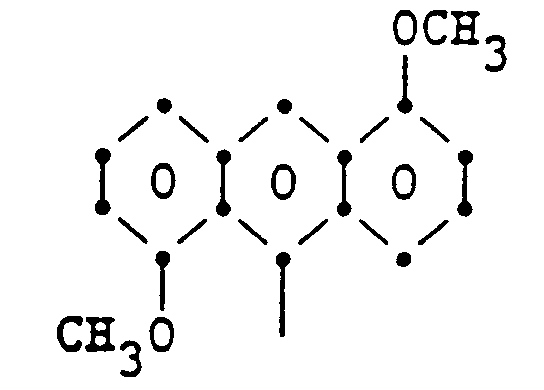


- J, R", R''' and R'''', taken together, represent one of the following groups:


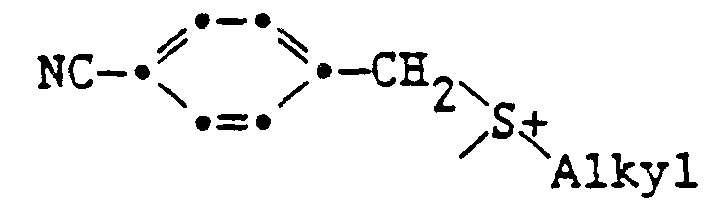

- Ar represents an optionally substituent aryl group; and
- W represents BF₄, ClO₄, AsF₆, PF₆, CF₃SO₃, CH₃SO₃, SnCl₄, FeCl₄, BiCl₄ or SbF₆.
- Further embodiments of the invention are set forth in the attached claims. Similar compounds have been disclosed in the older not prepublished EP-A-0 370 693.
- Some highly preferred compounds are those in which, referring to the above formula:
- R¹ represents one of the following chromophores:


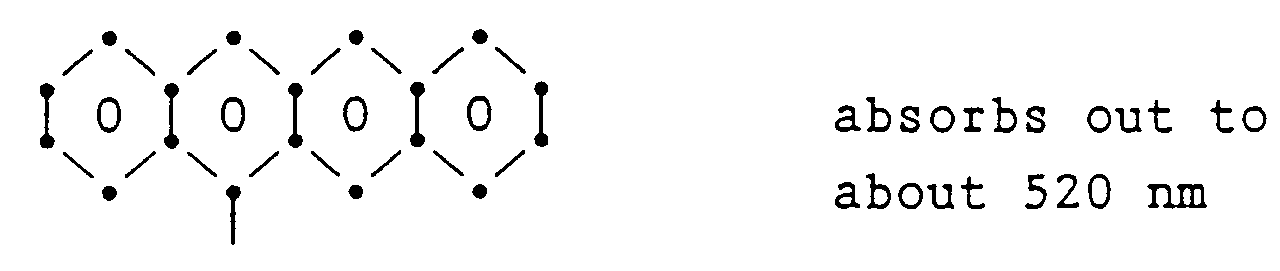

- L represents orthophenylene, or metaphenylene or paraphenylene; and
- J, R", R''' and R'''', taken together, represent one of the following groups:


- wherein Ar represents an optionally substituent aryl group, such as phenyl or naphthyl and alkyl represents an alkyl group such as methyl, ethyl, n-propyl or i-butyl; and
- W represents BF₄, ClO₄, AsF₆, PF₆, CF₃SO₃, CH₃SO₃, SnCl₄, FeCl₄, BiCl₄ and SbF₆.
- The onium salts of this invention can be used in any application where it is desirable to release a Bronsted acid. The subject salts are especially useful in compositions which are curable by a Bronsted acid. Such compositions, also called cationically curable compounds, include cyclic formals and acetals, vinyl ethers, cyclic ethers, lactones, polysiloxanes, ureaformaldehyde resins, melamine-formaldehyde resins, and epoxides. A more comprehensive list is detailed in Cationic Polymerization of Olefins: A Critical Inventory J. P. Kennedy, Wiley Interscience Pub. 1975. Epoxy resins are particularly preferred.
- The useful epoxy resins preferably contain a plurality of epoxy groups and may be based on the reaction product of Bisphenol A (i.e. 2,2-bis(4-hydroxyphenyl)propane) and epichlorohydrin, e.g. the resins sold under the registered Trademark Araldite by Ciba-Geigy Ltd., or are the reaction product of epichlorohydrin with a phenol-formaldehyde resin of relatively low molecular weight, e.g. epoxy-Novolaks (available, for example from Dow), or other modified epoxy resins as disclosed in UV Curing: Science and Technology (cited above). Still other useful epoxy resins and ether-containing materials polymerizable to a higher molecular weight are listed in Berggren et al U.S. Patent 4,291,114 (1981) col. 4 line 37 through col. 6 line 23 and the silicone curable compositions disclosed by Eckberg U.S. Patent 4,547,431 (1985) col. 3 line 29 through col. 4 line 17.
- The onium salts of the invention can comprise from 0.1 to 30, and preferably from 1 to 25 percent by weight of the curable composition.
- The onium salts of the invention can be used to provide protective coatings by imagewise or non-imagewise polymerization of monomers, e.g., the epoxide or ether containing monomers referred to above. The present onium salts can be used advantageously to provide overcoats for optical recording elements, such as those described by Thomas et al U.S. Patent 4,380,769 issued April 19, 1983. Such recording elements have on a support, in order, a smoothing layer, a reflection layer, a heat-deformable optical recording layer and a protective overcoat layer.
- The onium salts of this invention are useful in making printing plates. For example, the onium salts of this invention and a material which can be chemically modified by a Bronsted acid can be solvent coated as a film onto an aluminum substrate. After the film has dried, it can be exposed to light absorbed by the chromophore of the onium salt, thus releasing a Bronsted acid. The film can be developed to produce a relief image by heating to vaporize chemical fragments from the exposed areas. The relief image can be inked and the resulting plate can be used as a printing plate. The relief image should be capable of being inked and capable of transferring the ink to a substrate, such as paper.
- The onium salts of the invention can also be used in photoelectrographic elements which have a conductive layer in contact with an acid generating layer which contains an onium salt of the invention (the acid generating layer being free of photopolymerizable monomer), as described in Molaire et al U.S. Patent Application Serial No. 856,543 filed April 28, 1986. Such elements can be imagewise exposed, the acid photogenerating layer can be electrostatically charged, and the resultant electrostatic image can be developed with charged toning particles. Also, the onium salts of the invention can be used in the electrophotographic elements and process described in Scozzofava et al U.S. Patent 4,485,161 issued November 27, 1984.
- The onium salts of the invention can also be used in the method of making color filter arrays which is described by Molaire et al U.S. Patent Application Serial No. 871,748 filed June 9, 1986. In that method, an electrophotographic element having a conductive layer in electrical contact with an acid photogenerating layer comprising an electrically insulating binder and being free of photopolymerizable materials, is imagewise exposed and electrostatically charged to form a latent image, and the latent image is developed with colored toner particles to form a single color array. Those steps can be repeated, with different colored toners to produce a multicolored filter array.
- The onium salts of this invention are particularly useful as photoinitiators to produce imagewise release of chemical fragments in a polymer system for photoresist or printing plate applications.
- The following examples are included for a further understanding of the invention.
- The compounds of this invention can be prepared conveniently by the following reaction:

- In a 100 ml round bottom flask was placed 2.00 gms. of the anthrylsulfide and 1.1 grams of p-cyanobenzyl bromide. To the solid mixture was added 30 ml of methylene chloride. A solution was formed. To the solution was added 2.4 grams of the appropriate silver salt. The reaction was allowed to stir overnight. An H¹NMR spectrum indicated about 80% conversion with no benzyl bromide present. The precipitated silver salts were filtered off. The methylene chloride solvent was removed by evaporation. To the semi-solid was added 5 mls of chloroform. The chloroform solution was dropped into 300 mls of carbon tetrachloride, the product oiled out. The carbon tetrachloride was decanted off and the product dissolved in acetonitrile. The acetonitrile solution was dropped into diethyl ether (100 ml). The product as off white solid was collected by filtration; the yield was 2.55 gms. The crude was recrystalized from CH₃CN/ether MP-127-130°C (dec).
-

- In a 1 ℓ single neck round bottom was placed 20 grams of the 5,12-naphthacenequinone, 40 grams of Sn, and 500 mls of acetic acid. The mixture was refluxed for 1 1/2 hours. Then 40 mls of concentrated HCl was added. The mixture was allowed to cool and the product was collected by suction filtration. Crude yield was 17 grams. Recrystallization from toluene provided 15 g of purified product.
-

- The Grignard reagent was formed by placing the aryl bromide, Mg, and 50 mls of anhydrous THF in a 100 ml round bottom flask and allowing the mixture to reflux for 4 hours. Then the 5-H,H-12-oxonaphthacene was added as a solid and the purple mixture was heated at reflux for 3 hours. The mixture was allowed to stir overnight at room temperature before adding 10 mls of concentrated HCl to the reaction mixture. The solution was heated at reflux for 15 minutes and cooled to room temperature. The reaction mixture was extracted with diethylether and the combined ether layers were extracted with 100 ml of 10% sodium carbonate, and then with water. The ether solution was dried with MgSO₄, filtered and flash evaporated. The solid was slurred in a small amount of EtOH and filtered. The crude product yield was 1.05 grams.
- In a 15ml round bottom flask was placed 0.1 g (0.23 mmole) of 5-[2-thiomethylphenyl]naphthacene, 0.05 g (0.25 mmole) of p-cyano- benzylbromide, and 5 ml of methylenechloride. Then 0.11 g of silver trifluoromethane sulfonate di-dioxane was added and the reaction was allowed to stir for twenty four hours at room temperature. The methylene chloride was evaporated and 1 ml of acetonitrile was added. The insoluble silver salts were removed by filtration. The solution was then added to 150 ml of diethyl ether. The crude product crystallized and was collected by filtration. The product yield of 4-cyanobenzyl-2-[5-naphthacenyl]phenylmethyl sulfonium trifluoromethane sulfonate was 0.1 g.
- The following examples show the use of the salts of the invention to produce the imagewise release of chemical fragments in a polymer system for photoresist applications.
- 4-cyanobenzyl-2-[5-naphthacenyl]methyl sulfonium trifluoromethane sulfonate (I) (10% by weight) was dissolved in sufficient acetonitrile solvent along with polyvinyl (4-t-butylphenylcarbonate) as host polymer (90% by weight) to make a homogeneous solution. A film of the polymer-photoacid composition was cast onto a silicon wafer. The film was then irradiated in an imagewise fashion with an argon ion laser emitting at 488/515 nm. In the irradiated areas a Bronsted acid was produced which catalyzed the thermal transformation of the original polymer to polyvinylphenol after heating at 100°C for 5-15 minutes. The regions containing the polyvinylphenol were then selectively removed with an aqueous base solution (10-50% hydroxide solution).
- 4-cyanobenzyl-2-[5-naphthacenyl]methyl sulfonium trifluoromethane sulfonate (I) (10% by weight) was dissolved in sufficient dichloromethane along with a polymer containing pendant allyl-t-butyldimethyl silyl groups (90% by weight) to make a homogeneous solution. A film of the polymer-photoacid composition was cast onto a silicon wafer. The film was then irradiated in an imagewise fashion using an argon ion laser emitting at 488/515 nm. In the irradiated area a Bronsted acid was produced which catalyzed the thermal transformation to the vinyl polymer without the pendant silane functionality. Exposure of the irradiated and heated film to an oxygen plasma selectively removed the irradiated areas by a completely dry process.
- 4-cyanobenzyl-2-[5-naphthacenylphenyl]methyl sulfonium trifluoromethane sulfonate (I) (10% by weight) was dissolved in sufficient acetonitrile solvent along with polyvinyl (4-t-butylphenylcarbonate) as host polymer (90% by weight) to make a homogeneous solution. A film of the polymer photoacid composition was cast onto a silicon wafer. The film was then irradiated in an imagewise fashion with an argon ion laser emitting at 488/515 nm. In the irradiated areas a Bronsted acid was produced which catalyzed the thermal transformation of the original polymer to polyvinylphenol after heating at 100°C for 5-15 minutes. The regions containing the polyvinylphenol were then selectively removed with an aqueous base solution (10-50% hydroxide solution).
- 4-cyanobenzyl-2-[5-naphthacenylphenyl]methyl sulfonium trifluoromethane sulfonate (I) (10% by weight) with a polymer containing pendant allyl-t-butyldimethyl silyl groups (90 % by weight) to make a homogeneous solution. A film of the polymer photoacid composition was cast onto a silicon wafer. The film was then irradiated in an imagewise fashion using an argon ion laser emitting at 488/515 nm. In the irradiated area a Bronsted acid was produced which catalyzed the thermal transformation to the vinyl polymer without the pendant silane functionality. Exposure of the irradiated and heated film to an oxygen plasma selectively removed the irradiated areas by a completely dry process.
- Results similar to those described in the above examples can be obtained with other sulfonium and arsonium salts of the type described above. Also, by employing a protonating material such as water or an alcohol, similar results can be obtained with the phosphonium and ammonium salts described above, and with the sulfonium , selenonium and arsonium salts described above but in which the chromophore does not contain a removable, positive hydrogen ion.
- The following examples illustrate polymer coatings by photoinduced cationic polymerization of epoxide monomers and prepolymers.
- Methyl-p-cyanobenzyl-4-[6,7-dimethoxycoumarin] sulfonium trifluoromethanesulfonate (0.1 g) was dissolved in methylene chloride (10 ml) along with cyclohexene oxide (1.0 g) and the mixture coated onto a glass substrate and irradiated with visible light from a 200 Watt Hg-Xe lamp positioned 10,16 cm (4") from the substrate. The solution polymerized after exposure to visible radiation for 1 minute and heating at 50°C for 30 minutes. Polymerization was initiated by the Bronsted acid released when the sulfonium salt was irradiated.
- Phenyl-p-cyanobenzyl-9-[2-phenyl]anthryl sulfonium trifluoromethane sulfonate (0.2 g) was dissolved in methylene chloride (2ml) along with an epoxy prepolymer (1.0 g). A film of the prepolymer-sulfonium sensitizer composition was formed on a glass substrate by spin coating. The thin film (∼5 micrometers) was irradiated for 2 minutes with a 200 Watt Hg-Xe lamp as previously described. The polymer film became tough and cross-linked after heating at 50°C for 30 minutes. Cross-linking was initiated by the Bronsted acid released when the sulfonium salt was irradiated.
- Phenyl-p-cyanobenzyl-4-[bifluorenylidenyl] sulfonium hexafluorophosphate (0.2 g) was dissolved in methylene chloride (2ml) along with an epoxy prepolymer (1.0 g). A film of the prepolymer- sulfonium sensitizer composition was formed on a glass substrate by spin coating. The thin film (∼5 micrometers) was irradiated for 2 minutes with a 200 Watt Hg-Xe lamp as previously described. The polymer film became tough and cross-linked after heating at 50°C for 30 minutes. Cross-linking was initiated by the Bronsted acid released when the sulfonium salt was irradiated.
- Methyl-p-cyanobenzyl-9-[2-phenyl]anthryl sulfonium trifluoromethane sulfonate (0.2 g) was dissolved in methylene chloride (2ml) along with an epoxy prepolymer (1.0 g). A film of the prepolymer-sulfonium sensitizer composition was formed on a glass substrate by spin coating. The thin film (∼5 micrometers) was irradiated for 2 minutes with a 200 Watt Hg-Xe lamp as previously described. The polymer film became tough and cross-linked after heating at 50°C for 30 minutes. Cross-linking was initiated by the Bronsted acid released when the sulfonium salt was irradiated.
- Methyl-p-cyanobenzyl-4-[bifluorenylidene-2-phenyl] sulfonium hexafluorophosphate (0.2 g) was dissolved in methylene chloride (2ml) along with an epoxy prepolymer (1.0 g). A film of the prepolymersulfonium sensitizer composition was formed on a glass substrate by spin coating. The thin film (∼5 micrometers) was irradiated for 2 minutes with a 200 Watt Hg-Xe lamp as previously described. The polymer film became tough and cross-linked after heating at 50°C for 30 minutes. Cross-linking was initiated by the Bronsted acid released when the sulfonium salt was irradiated.
- The following examples illustrate imagewise dye absorption changes as a result of dye protonation.
- Phenyl-p-cyanobenzyl-4-[6,7-dimethoxycoumarin] sulfonium trifluoromethanesulfonate (1.0 g) was dissolved in methylene chloride (5 ml) along with polystyrene, MW = 100,000, (1.0 g) and propyl red indicator (0.001 g). A film of the above composition was formed on a 2,54 cm (1'') round disc 3,81 cm (1/8' thick) by spin coating. The polymer film was then exposed to visible light from a Hg-Xe lamp positioned 10,16 cm (4'') from the substrate for 3 minutes. The initially yellow film turned red after the irradiation was complete as a result of the Bronsted acid released from the sulfonium salt and protonation of the propyl red indicator.
- Methyl-p-cyanobenzyl-4-[6,7-dimethoxycoumarin-2-phenyl] sulfonium trifluoromethanesulfonate (1.0 g) was dissolved in methylene chloride (5 ml) along with polystyrene, MW = 100,000, (1.0 g) and propyl red indicator (0.001 g). A film of the above composition was formed on a 2,54 cm (1'') round disc 3,81 cm (1/8' thick) by spin coating. The polymer film was then exposed to visible light from a Hg-Xe lamp positioned 10,16 cm (4") from the substrate for 3 minutes. The initially yellow film turned red after the irradiation was complete as a result of the Bronsted acid released from the sulfonium salt and protonation of the propyl red indicator.
- The following examples illustrate imagewise conductive films for electrophotographic copying, circuit board fabrication, and fabrication of color filter arrays.
- Phenyl-p-cyanobenzyl-4-[6,7-dimethoxycoumarin] sulfonium hexafluorophosphate (0.1 g) was dissolved in methylene chloride (5ml) along with polystyrene, MW = 100,000, (1.0 g). A film of the above composition was cast onto a conductive substrate of either aluminum or nesa (InSnO) glass by spin coating. The solvent was allowed to evaporate in a vaccuum oven with heating (25-50°C for 30 minutes). The polymer film was then exposed to visible light from a Hg-Xe lamp through a mask for 1 minute. The film was then charged with either a positive or negative corona while the conductive layer was held to ground. The ion-charge discharges more rapidly in the irradiated areas due to the presence of a Bronsted acid to produce a latent charged image which can be visualized by the conventional toning procedure. Transfer of the toned image to paper converts it to a permanent state. Additional copies of the charged image can be made by repeating the charging, toning, and transfer process without repeating the exposure step.
- Methyl-p-cyanobenzyl-4-[6,7-dimethoxycoumarin-2-phenyl] sulfonium hexafluorophosphate (0.1 g) was dissolved in methylene chloride (5ml) along with polystyrene, MW = 100,000, (1.0 g). A film of the above composition was cast onto a conductive substrate of either aluminum or nesa (InSnO) glass by spin coating. The solvent was allowed to evaporate in a vacuum oven with heating (25-50°C for 30 minutes). The polymer film was then exposed to visible light from a Hg-Xe lamp through a mask for 1 minute. The film was then charged with either a positive or negative corona while the conductive layer was held to ground. The ion-charge discharges more rapidly in the irradiated areas due to the presence of a Bronsted acid to produce a latent image which can be visualized by the conventional toning procedure. Transfer of the toned image to paper converts it to a permanent state. Additional copies of the charged image can be made by repeating the charging, toning, and transfer process without repeating the exposure step.
- The following examples illustrate the use of Bronsted photoacids for the production of printing plate masters.
- 4-cyanobenzyl-2-[5-naphthacenylphenyl]methyl sulfonium trifluoromethanesulfonate (I) (10% by weight) was dissolved in sufficient acetonitrile solvent along with polyvinyl-(4-t-butylphenylcarbonate) as host polymer (90% by weight) to make a homogeneous solution. A film (∼5 microns) of the polymer-photoacid composite was cast onto a flexible rectangular aluminum substrate 25,4 cm x 30,48 cm (10'' x 12'') in dimensions. After drying at 50 degrees for 10 minutes, the film was exposed in an imagewise fashion with an argon-ion laser. Development to produce a relief image in the exposed areas was achieved by heating the film to 100 degrees for 5 minutes. The aluminum substrate was then wrapped around a drum with the relief image exposed. The raised pattern could be selectively inked and the inked image transferred to a substrate such as paper. This process could be repeated many times.
- 4-cyanobenzyl-2-[5-naphthacenylphenyl]methyl sulfonium trifluoromethanesulfonate (I) (10% by weight) was dissolved in sufficient acetonitrile solvent along with polyvinyl-(4-t-butylphenylcarbonate) as host polymer (90% by weight) to make a homogeneous solution. A film (∼5 microns) of the polymer-photoacid composite was cast onto a flexible rectangular aluminum substrate 25,4 cm x 30,48 cm (10" x 12") in dimensions. After drying at 50 degrees for 10 minutes, the film was exposed in an imagewise fashion with an argon-ion laser. Development to produce a relief image in the exposed areas was achieved by heating the film to 100 degrees for 5 minutes. The aluminum substrate was then wrapped around a drum with the relief image exposed. The raised pattern could be selectively inked and the inked image transferred to a substrate such as paper. This process could be repeated many times.
- 4-cyanobenzyl-2-[5-naphthacenylphenyl]methyl sulfonium trifluoromethanesulfonate (0.1 g) and poly(4-t-butylphenylcarbonate) (1.9 g) were dissolved in 5 ml of dichloromethane. A 2,54·10⁻⁵ m (1 mil) film of the above composition was cast onto a copper substrate and allowed to dry for 15 minutes at 60°C. The film was exposed for two minutes in an imagewise fashion through a test target with a 5 watt argon-ion laser. The film was heat treated at 100°C for 1 minute before development to remove the exposed regions with a 20% Na₂CO₃ solution. The exposed copper was etched with a nitric acid solution in the presence of molecular oxygen to produce a copper pattern for a printed circuit board.
Claims (9)
- A compound having the formula:
 R' represents one of the following chromophores:L represents:


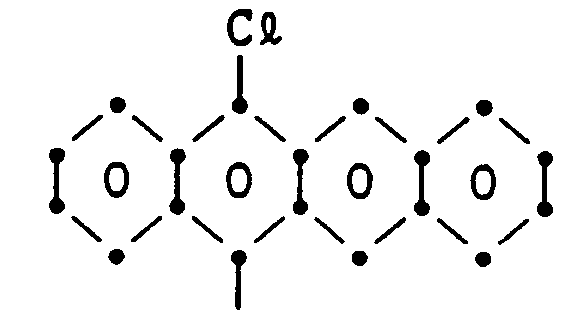


 J, R", R''' and R'''', taken together, represent one of the following groups:wherein


 Ar represents an optionally substituent aryl group; andW represents BF₄, ClO₄, AsF₆, PF₆, CF₃SO₃, CH₃SO₃, SnCl₄, FeCl₄, BiCl₄ or SbF₆.and wherein the chromophore exhibits a higher energy occupied molecular orbital than at least one other substituent attached to the S atom and at least one substitute comprising an electron withdrawing group and exhibiting a lower unoccupied molecular orbital than said chromophore.
 - A compound according to claim 1 which is 4-cyanobenzyl-2-[5-naphthacenylphenyl]-methyl sulfonium hexafluorophosphate.
- A composition of matter comprising a material curable by a Bronsted acid, and a compound in accordance with claim 1 or 2 said compound being capable, upon exposure to visible radiation, of forming a Bronsted acid.
- A composition of matter according to claim 3 comprising about 10 % by weight of 4-cyanobenzyl-2-[5-napththacenylphenyl]methyl sulfonium hexafluorophosphate and about 90 % by weight polyvinyl-(4-t-butylphenylcarbonate).
- A method of forming images which comprises exposing to visible radiation (1) a material curable by a Bronsted acid and (2) a compound according to claim 1 or 2.
- A method according to claim 5 which comprises exposing to visible laser radiation having a wavelength of about 488-515 nm a composition comprising about 90 % by weight polyvinyl-(4-t-butylphenylcarbonate) and about 10 % by weight 4-cyanobenzyl-2-[5-naphthacenylphenyl]methyl sulfonium hexafluorophsphate.
- A printing plate comprising a substrate having coated thereon a layer comprising:
a material (1) curable by a Bronsted acid, (2) capable of being inked and (3) capable of transferring ink to a substrate; and a compound according to claim 1 or 2. - A printing plate according to claim 7 comprising an aluminum substrate having coated thereon a film comprising about 10 % by weight 4-cyanobenzyl-2-[5-naphthacenylphenyl]methyl trifluoromethanesulfonate and about 90 % by weight polyvinyl-(4-t-butylphenylcarbonate).
- A material useful for forming printed circuit boards comprising a copper substrate having thereon a layer containing about 90 % by weight polyvinyl-(4-t-butylphenylcarbonate) and about 10 % by weight 4-cyanobenzyl-2-[5-napththacenyl]phenyl methyl sulfonium trifluoromethanesulfonate.
Applications Claiming Priority (3)
| Application Number | Priority Date | Filing Date | Title |
|---|---|---|---|
| US419245 | 1989-10-10 | ||
| US07/419,245 US5141969A (en) | 1988-11-21 | 1989-10-10 | Onium salts and the use thereof as photoinitiators |
| PCT/US1990/005494 WO1991006039A1 (en) | 1989-10-10 | 1990-10-01 | Novel onium salts and the use thereof as photoinitiators |
Publications (2)
| Publication Number | Publication Date |
|---|---|
| EP0447544A1 EP0447544A1 (en) | 1991-09-25 |
| EP0447544B1 true EP0447544B1 (en) | 1996-01-10 |
Family
ID=23661429
Family Applications (1)
| Application Number | Title | Priority Date | Filing Date |
|---|---|---|---|
| EP90916926A Expired - Lifetime EP0447544B1 (en) | 1989-10-10 | 1990-10-01 | Novel onium salts and the use thereof as photoinitiators |
Country Status (6)
| Country | Link |
|---|---|
| US (1) | US5141969A (en) |
| EP (1) | EP0447544B1 (en) |
| JP (1) | JPH04502374A (en) |
| CA (1) | CA2039703A1 (en) |
| DE (1) | DE69024786T2 (en) |
| WO (1) | WO1991006039A1 (en) |
Families Citing this family (25)
| Publication number | Priority date | Publication date | Assignee | Title |
|---|---|---|---|---|
| US5401607A (en) * | 1991-04-17 | 1995-03-28 | Polaroid Corporation | Processes and compositions for photogeneration of acid |
| US5302757A (en) * | 1992-09-14 | 1994-04-12 | Eastman Kodak Company | Ultraviolet light sensitive onium salts |
| US5334489A (en) * | 1992-10-23 | 1994-08-02 | Polaroid Corporation | Process for generation of squaric acid and for imaging, and imaging medium for use therein |
| US5286612A (en) * | 1992-10-23 | 1994-02-15 | Polaroid Corporation | Process for generation of free superacid and for imaging, and imaging medium for use therein |
| US5441850A (en) * | 1994-04-25 | 1995-08-15 | Polaroid Corporation | Imaging medium and process for producing an image |
| US5741630A (en) * | 1994-04-25 | 1998-04-21 | Polaroid Corporation | Process for fixing an image, and medium for use therein |
| US5798130A (en) * | 1995-09-05 | 1998-08-25 | John W. Von Holdt | Adjustable mold gate |
| DE19533607A1 (en) * | 1995-09-11 | 1997-03-13 | Basf Ag | Positive working radiation sensitive mixture and process for the production of relief structures |
| WO1998024000A1 (en) * | 1996-11-27 | 1998-06-04 | Polaroid Corporation | Process and composition for generating acid |
| ATE212734T1 (en) * | 1997-06-30 | 2002-02-15 | Siemens Ag | REACTION RESIN MIXTURES AND THEIR USE |
| DE59802875D1 (en) * | 1997-06-30 | 2002-03-14 | Siemens Ag | Initiators for cationic polymerization |
| EP1410907B1 (en) * | 2000-06-02 | 2016-05-18 | FUJIFILM Corporation | Lithographic printing plate precursor |
| EP1390664A4 (en) * | 2001-03-30 | 2008-01-02 | Univ Arizona | MATERIALS, METHODS AND USES FOR THE PHOTOCHEMICAL PRODUCTION OF ACIDS AND / OR RADICAL SPECIALTIES |
| US6630047B2 (en) | 2001-05-21 | 2003-10-07 | 3M Innovative Properties Company | Fluoropolymer bonding composition and method |
| EP1739482A4 (en) * | 2004-03-24 | 2009-03-25 | Fujifilm Corp | Image-forming process, lithographic printing plate, and lithography process |
| EP1696268B1 (en) * | 2005-02-28 | 2016-11-09 | FUJIFILM Corporation | Lithographic printing plate precursor |
| US7776940B2 (en) | 2005-12-20 | 2010-08-17 | 3M Innovative Properties Company | Methods for reducing bond strengths, dental compositions, and the use thereof |
| US7896650B2 (en) | 2005-12-20 | 2011-03-01 | 3M Innovative Properties Company | Dental compositions including radiation-to-heat converters, and the use thereof |
| US8026296B2 (en) | 2005-12-20 | 2011-09-27 | 3M Innovative Properties Company | Dental compositions including a thermally labile component, and the use thereof |
| US20070142498A1 (en) * | 2005-12-20 | 2007-06-21 | Brennan Joan V | Dental compositions including thermally responsive additives, and the use thereof |
| US8404427B2 (en) * | 2005-12-28 | 2013-03-26 | Fujifilm Corporation | Photosensitive composition, and pattern-forming method and resist film using the photosensitive composition |
| JP2008203573A (en) * | 2007-02-20 | 2008-09-04 | Fujifilm Corp | Photosensitive composition and two-photon absorption optical recording medium |
| US8772189B2 (en) | 2011-05-04 | 2014-07-08 | Ferro Corporation | Glass frit compositions for enamels |
| JP6278367B2 (en) * | 2014-05-13 | 2018-02-14 | 東洋合成工業株式会社 | Onium salt, photoacid generator, photosensitive resin composition and device manufacturing method |
| CN112300042B (en) * | 2020-09-27 | 2022-06-07 | 同济大学 | 4-Benzene five-membered ring-phenylsulfonium salt compound and preparation method and application thereof |
Family Cites Families (10)
| Publication number | Priority date | Publication date | Assignee | Title |
|---|---|---|---|---|
| GB1512982A (en) * | 1974-05-02 | 1978-06-01 | Gen Electric | Salts |
| US4026705A (en) * | 1975-05-02 | 1977-05-31 | General Electric Company | Photocurable compositions and methods |
| US4069054A (en) * | 1975-09-02 | 1978-01-17 | Minnesota Mining And Manufacturing Company | Photopolymerizable composition containing a sensitized aromatic sulfonium compound and a cationacally polymerizable monomer |
| US4442197A (en) * | 1982-01-11 | 1984-04-10 | General Electric Company | Photocurable compositions |
| NO853494L (en) * | 1984-09-07 | 1986-03-10 | Pilot Pen Co Ltd | PHOTOSENSIVE MIXING |
| US4933377A (en) * | 1988-02-29 | 1990-06-12 | Saeva Franklin D | Novel sulfonium salts and the use thereof as photoinitiators |
| EP0331496B1 (en) * | 1988-03-03 | 1992-09-16 | Sanshin Kagaku Kogyo Co., Ltd. | Polyfluoride sulfonium compounds and polymerization initiator thereof |
| US5047568A (en) * | 1988-11-18 | 1991-09-10 | International Business Machines Corporation | Sulfonium salts and use and preparation thereof |
| CA2002873A1 (en) * | 1988-11-21 | 1990-05-21 | Franklin Donald Saeva | Onium salts and the use thereof as photoinitiators |
| US4954416A (en) * | 1988-12-21 | 1990-09-04 | Minnesota Mining And Manufacturing Company | Tethered sulfonium salt photoinitiators for free radical polymerization |
-
1989
- 1989-10-10 US US07/419,245 patent/US5141969A/en not_active Expired - Lifetime
-
1990
- 1990-10-01 WO PCT/US1990/005494 patent/WO1991006039A1/en not_active Ceased
- 1990-10-01 JP JP2515507A patent/JPH04502374A/en active Pending
- 1990-10-01 CA CA002039703A patent/CA2039703A1/en not_active Abandoned
- 1990-10-01 EP EP90916926A patent/EP0447544B1/en not_active Expired - Lifetime
- 1990-10-01 DE DE69024786T patent/DE69024786T2/en not_active Expired - Fee Related
Also Published As
| Publication number | Publication date |
|---|---|
| US5141969A (en) | 1992-08-25 |
| WO1991006039A1 (en) | 1991-05-02 |
| CA2039703A1 (en) | 1991-04-11 |
| DE69024786T2 (en) | 1996-08-29 |
| JPH04502374A (en) | 1992-04-23 |
| EP0447544A1 (en) | 1991-09-25 |
| DE69024786D1 (en) | 1996-02-22 |
Similar Documents
| Publication | Publication Date | Title |
|---|---|---|
| EP0370693B1 (en) | Novel onium salts and the use thereof as photoinitiators | |
| US5470994A (en) | Sulfonium salts and the use thereof as photoinitiators | |
| US5141969A (en) | Onium salts and the use thereof as photoinitiators | |
| US5089374A (en) | Novel bis-onium salts and the use thereof as photoinitiators | |
| US5055376A (en) | Curable compositions containing onium salt photoinitiators which have a chromophore linked to the onium salt moiety through the 3-position and method of use | |
| EP0464614B1 (en) | A composition having sensitivity to light or radiation | |
| CA1114089A (en) | Photopolymerizable compositions containing epoxy and hydroxyl-containing organic materials and aromatic iodonium or sulfonium salt photo initiators | |
| US4603101A (en) | Photoresist compositions containing t-substituted organomethyl vinylaryl ether materials | |
| US4193799A (en) | Method of making printing plates and printed circuit | |
| CA1306568C (en) | Negative photoresist based on polyphenols and epoxy compounds or vinyl ethers | |
| CA1328883C (en) | Negative photoresist based on polyphenols and selected epoxy or vinyl ether compounds | |
| KR19990072757A (en) | Photoresist compositions and methods and articles of manufacture comprising same | |
| Crivello | Possibilities for photoimaging using onium salts | |
| JPS632052A (en) | Photoelectric photographic element and photoelectric photography | |
| JPS5914499B2 (en) | Compound system that can be crosslinked by photon irradiation | |
| US5302757A (en) | Ultraviolet light sensitive onium salts | |
| JP2001249457A (en) | Crosslinkable high resolution photoresist composition usable together with developing solution which is aqueous solution having high base concentration and photoresist pattern forming method using the same | |
| KR100300146B1 (en) | Crosslinkable, aqueous base developable photoresist composition and method for use thereof | |
| JPS6035930B2 (en) | curable composition | |
| US5256510A (en) | Photoelectrographic imaging with near-infrared sensitizing dyes | |
| JPS6239585A (en) | Tellurane type sensitizer for photoconductive composition | |
| JP2009015085A (en) | Optical waveguide forming material, optical waveguide manufacturing method, and optical waveguide | |
| JP2009008965A (en) | Optical waveguide forming material, optical waveguide manufacturing method, and optical waveguide | |
| CA1114986A (en) | Curable compositions containing epoxy resins, polyvinyl acetal and an aromatic onium salt | |
| JP2000109510A (en) | Visible light polymerizable composition |
Legal Events
| Date | Code | Title | Description |
|---|---|---|---|
| PUAI | Public reference made under article 153(3) epc to a published international application that has entered the european phase |
Free format text: ORIGINAL CODE: 0009012 |
|
| 17P | Request for examination filed |
Effective date: 19910430 |
|
| AK | Designated contracting states |
Kind code of ref document: A1 Designated state(s): BE CH DE FR GB LI |
|
| 17Q | First examination report despatched |
Effective date: 19940413 |
|
| RBV | Designated contracting states (corrected) |
Designated state(s): DE FR GB |
|
| GRAA | (expected) grant |
Free format text: ORIGINAL CODE: 0009210 |
|
| AK | Designated contracting states |
Kind code of ref document: B1 Designated state(s): DE FR GB |
|
| REF | Corresponds to: |
Ref document number: 69024786 Country of ref document: DE Date of ref document: 19960222 |
|
| ET | Fr: translation filed | ||
| PLBE | No opposition filed within time limit |
Free format text: ORIGINAL CODE: 0009261 |
|
| STAA | Information on the status of an ep patent application or granted ep patent |
Free format text: STATUS: NO OPPOSITION FILED WITHIN TIME LIMIT |
|
| 26N | No opposition filed | ||
| PGFP | Annual fee paid to national office [announced via postgrant information from national office to epo] |
Ref country code: FR Payment date: 20011005 Year of fee payment: 12 |
|
| REG | Reference to a national code |
Ref country code: GB Ref legal event code: IF02 |
|
| PG25 | Lapsed in a contracting state [announced via postgrant information from national office to epo] |
Ref country code: FR Free format text: LAPSE BECAUSE OF NON-PAYMENT OF DUE FEES Effective date: 20030630 |
|
| REG | Reference to a national code |
Ref country code: FR Ref legal event code: ST |
|
| PGFP | Annual fee paid to national office [announced via postgrant information from national office to epo] |
Ref country code: GB Payment date: 20040915 Year of fee payment: 15 |
|
| PGFP | Annual fee paid to national office [announced via postgrant information from national office to epo] |
Ref country code: DE Payment date: 20041029 Year of fee payment: 15 |
|
| PG25 | Lapsed in a contracting state [announced via postgrant information from national office to epo] |
Ref country code: GB Free format text: LAPSE BECAUSE OF NON-PAYMENT OF DUE FEES Effective date: 20051001 |
|
| PG25 | Lapsed in a contracting state [announced via postgrant information from national office to epo] |
Ref country code: DE Free format text: LAPSE BECAUSE OF NON-PAYMENT OF DUE FEES Effective date: 20060503 |
|
| GBPC | Gb: european patent ceased through non-payment of renewal fee |
Effective date: 20051001 |