EP0449249B1 - Auf verölten Flächen haftende Heissschmelzklebmasse und eine rutschstabile Verarbeitungsmethode für metallische Blendbleche - Google Patents
Auf verölten Flächen haftende Heissschmelzklebmasse und eine rutschstabile Verarbeitungsmethode für metallische Blendbleche Download PDFInfo
- Publication number
- EP0449249B1 EP0449249B1 EP91104875A EP91104875A EP0449249B1 EP 0449249 B1 EP0449249 B1 EP 0449249B1 EP 91104875 A EP91104875 A EP 91104875A EP 91104875 A EP91104875 A EP 91104875A EP 0449249 B1 EP0449249 B1 EP 0449249B1
- Authority
- EP
- European Patent Office
- Prior art keywords
- resin
- group
- weight
- hot
- styrene
- Prior art date
- Legal status (The legal status is an assumption and is not a legal conclusion. Google has not performed a legal analysis and makes no representation as to the accuracy of the status listed.)
- Expired - Lifetime
Links
- AHIPPLIROFGGDR-UHFFFAOYSA-N CNCN(C)OOO Chemical compound CNCN(C)OOO AHIPPLIROFGGDR-UHFFFAOYSA-N 0.000 description 1
Classifications
-
- C—CHEMISTRY; METALLURGY
- C09—DYES; PAINTS; POLISHES; NATURAL RESINS; ADHESIVES; COMPOSITIONS NOT OTHERWISE PROVIDED FOR; APPLICATIONS OF MATERIALS NOT OTHERWISE PROVIDED FOR
- C09J—ADHESIVES; NON-MECHANICAL ASPECTS OF ADHESIVE PROCESSES IN GENERAL; ADHESIVE PROCESSES NOT PROVIDED FOR ELSEWHERE; USE OF MATERIALS AS ADHESIVES
- C09J157/00—Adhesives based on unspecified polymers obtained by reactions only involving carbon-to-carbon unsaturated bonds
- C09J157/06—Homopolymers or copolymers containing elements other than carbon and hydrogen
-
- C—CHEMISTRY; METALLURGY
- C09—DYES; PAINTS; POLISHES; NATURAL RESINS; ADHESIVES; COMPOSITIONS NOT OTHERWISE PROVIDED FOR; APPLICATIONS OF MATERIALS NOT OTHERWISE PROVIDED FOR
- C09J—ADHESIVES; NON-MECHANICAL ASPECTS OF ADHESIVE PROCESSES IN GENERAL; ADHESIVE PROCESSES NOT PROVIDED FOR ELSEWHERE; USE OF MATERIALS AS ADHESIVES
- C09J151/00—Adhesives based on graft polymers in which the grafted component is obtained by reactions only involving carbon-to-carbon unsaturated bonds; Adhesives based on derivatives of such polymers
- C09J151/003—Adhesives based on graft polymers in which the grafted component is obtained by reactions only involving carbon-to-carbon unsaturated bonds; Adhesives based on derivatives of such polymers grafted on to macromolecular compounds obtained by reactions only involving unsaturated carbon-to-carbon bonds
-
- C—CHEMISTRY; METALLURGY
- C09—DYES; PAINTS; POLISHES; NATURAL RESINS; ADHESIVES; COMPOSITIONS NOT OTHERWISE PROVIDED FOR; APPLICATIONS OF MATERIALS NOT OTHERWISE PROVIDED FOR
- C09J—ADHESIVES; NON-MECHANICAL ASPECTS OF ADHESIVE PROCESSES IN GENERAL; ADHESIVE PROCESSES NOT PROVIDED FOR ELSEWHERE; USE OF MATERIALS AS ADHESIVES
- C09J201/00—Adhesives based on unspecified macromolecular compounds
- C09J201/02—Adhesives based on unspecified macromolecular compounds characterised by the presence of specified groups, e.g. terminal or pendant functional groups
Definitions
- the present invention relates to a hot-melt type adhesive composition which is suitable for adhesion and sealing to metals without pretreatment and a non-slip processing method of metal scaffolding board.
- the invention relates to a hot-melt adhesive composition which can be preferably used for adhesion of plastics having difficulty on adhesion and sealing to metals, is excellent in adhesion properties to oiled surfaces of metals, resistance to water and corrosion, and is capable of conducting instant adhesion or short time adhesion.
- the invention relates to the non-slip processing method of metal scaffolding board by using oiled-face adherable hot-melt adhesive without pretreatment.
- a hot-melt adhesive composition having 100% solid content has conventionally been used in various fields, well known on its usefulness in industry, and employed in a rapidly increasing amount due to its instant adhesion characteristic and lack of pollution.
- thermosetting type adhesives for example, an epoxy adhesive, solvent type adhesive and a two component acrylic adhesive. These adhesives substantially have problems of toxicity, odour and poor workability and hence conversion to a solventless type hot-melt adhesive composition is required.
- a liquid epoxy adhesive capable of oiled-face adhesion is used for the adhesion of face-oiled steel plates in a door hemming portion.
- Hot-melt adhesives have recently been focused attention again for the adhesion of various plastic parts for rigging in view of pollution-free properties and increase in productivity. However, adhesives which can exhibit satisfactory adhesion properties to face-oiled materials have not yet been found.
- hot-melt adhesive is also coated on metallic scaffold plates in order to prevent slip.
- conventional adhesives can be applied to degreased materials only and require complex coating steps.
- Development of hot-melt adhesive composition capable of adhering to oiled surface is strongly desired in view of pollution-free application and energy saving.
- a hot-melt adhesive composition primarily composed of butyl rubber has been disclosed in Japanese Patent Publication 92379 (1985) as a pollution-free, instant adhesive or an adhere-sealing agent which is most suitable for plastics of difficult adhesion.
- Some of other hot-melt adhesive compositions have been known to contain thermoplastic macro molecules such as styrene-ethylene-butylene-styrene resin, styrene-butadiene-styrene resin, and styrene-isoprene-styrene resin as a base polymer and other components such as tackifiers, waxes and plasticizers.
- hot-melt adhesive compositions containing ethylene-vinyl acetate resin as thermoplastic macro molecule have been known.
- disclosed arts for hot-melt adhesive compositions capable of adhering to metals include polyamide base, polyester base, ethylene-vinyl acetate base and rubber base hot-melt compositions. Any of these adhesive compositions, however, have exhibited adhesion reliability only on a clean surface of metals. Oiled metal surface having build-up of cutting oil, lubricant or rust proof oil can not at all or scarcely exhibit adhesive force as such by the conventional hot-melt adhesive composition.
- the first requirement is to provide a hot-melt adhesive composition having excellent adhesion to oiled surfaces without pretreatment by utilizing instant adhesion properties of the hot-melt adhesive.
- the second requirement is to provide reliability for adhesion to, for example, polypropylene, acrylics, polyethylene, polycarbonate, acrylonitrile-styrene resin, acrylonitrile-butadiene-styrene resin and other plastics which are difficult to adhere.
- the third requirement is to provide the adherend with water resistance and environmental compatibility.
- the fourth requirement relates to the above third requirement, and is to provide rust prevention for metals, that is, to provide a hot-melt adhesive composition having a high rust-preventive effect after adhesion.
- the object of the invention is to obtain a hot-melt adhesive composition which is, in adhesion of metallic materials, suitable for carrying out adhesion without pretreatment under high reliability and capable of conducting pollution-free and instant adhesion. That is, the object is to provide a composition which can instantly adhere to a metal surface stained with machine oil, lubricant, rust preventing oil, grinding oil, processing oil and other residual oils used for machining treatment of the metal surface.
- Another object of the present invention is to provide a hot-melt adhesive composition which exhibits reliability on adhesion-sealing, water resistance and rust prevention of metals for a long period.
- Another object of the present invention is to provide a non-slip processing method of a metal scaffolding board by using an oiled-face adherable hot melt adhesive composition.
- the above problems could surprisingly be solved on the basis of the finding that in a hot-melt adhesive composition containing a required component composed of a thermoplastic base polymer and a tackifier and an optional component composed of a wax and a plasticizer, the above object can be accomplished by providing a modified resin obtained by introducing a phosphoric acid group into a molecular chain in one of the above constitutive components.
- the subject matter of the present invention is an oiled-face adherable, hot-melt adhesive composition having constitutive components comprised of a thermoplastic base polymer, a tackifier and optionally at least one additive selected from the group consisting of waxes and plasticizers, at least one of the molecular chains in said constitutive components comprising a modified resin component obtained by introducing into the molecular chain a functional group represented by the formula (I): wherein R1 is a hydrogen atom, an alkyl group having from 1 to 8 carbon atoms, ⁇ NH4, ⁇ NH3-CH2-CH2-OH, ⁇ NH2(CH3)2, ⁇ NH(CH3)2-C2H4-C6H6-OH, R2 is a hydrogen atom, methyl group, ⁇ NH4 or ⁇ NH3-CH2-CH2OH; R3 is a hydrogen atom or a methyl group; A is -CH2CH2-(OCH2CH2) Y -, -CH2CH2
- the oiled-face adherable, hot-melt resin composition of the present invention described above has preferably following embodiments.
- the composition of the invention is a hot-melt adhesive having constitutive components comprised of at least a thermoplastic base polymer and a tackifier and optionally a wax and/or a plasticizer.
- the preferred composition comprises in the molecular chain of at least one of the constitutive components a phosphoric acid group or a half amine salt group which are represented by the above formula (I) and further comprises one or more of functional groups selected from -COOH and which are introduced into the same or different molecular chain.
- a more preferred composition comprises a modified resin component obtained by grafting an unsaturated carboxylic acid or its anhydride in an amount of 5% by weight or less.
- a more preferred composition comprises, as the tackifier, hydrogenated rosin, a hydrogenated rosin ester derivative or polymerized rosin in the range of from 1 to 40% by weight.
- a more preferred composition comprises a modified resin component obtained by grafting from 0.1 to 20 parts by weight of a compound selected from the group consisting of 2-hydroxy-3-(meth)acryloxypropyl phosphate, 2-hydroxy-3-(meth)acryloxyethyl phosphate and their half amine salts into 100 parts by weight of the constitutive components.
- a more preferred composition comprises a modified resin component obtained by reacting a resin component having a hydroxyl group with an agent selected from the group consisting of phosphorus pentoxide, phosphorus trichloride and phosphorus oxychloride and hydrolyzing the resultant intermediate.
- a more preferred composition comprises a modified resin component obtained by introducing a glycidyl group into the constitutive components and successively reacting the resultant intermediate with phosphorous acid or phosphoric acid.
- a more preferred composition comprises at least one thermoplastic resin having a molecular weight in the range of from 20,000 to 1,000,000 and selected from the group consisting of styrene-ethylene-butylene-styrene resin, styrene-ethylene-butylene resin, styrene-ethylene-propylene-styrene resin, ethylene-propylene resin and ethylene acrylate ester resin; and the thermoplastic resin previously comprises both or either of the modified resin components obtained by (A) grafting from 1 to 20 parts by weight of a compound selected from the group consisting of 2-hydroxy-3-(meth)acryloxypropyl phosphate, 2-hydroxy-3-(meth)acryloxyethyl phosphate and an half amine salt of these phosphates upon 100 parts by weight of the thermoplastic resin, and (B) grafting from 0.1 to 5 parts by weight of a monomer selected from the group consisting of maleic anhydride, acrylic acid and methacrylic acid.
- composition having constitutive components composed of:
- the present invention is a non-slip processing method of a metal scaffolding board comprising conducting hot-melt coating of the above oiled-face adherable, hot-melt adhesive composition on the back surface of the metal scaffolding board without surface treatment to form a non-slip film composed of one or a plurality of layer having a width of from 5 to 30 mm.
- the preferred embodiments for the above non-slip processing method of the metal scaffolding board is to form a plurality of coated layers and to apply wet-on-wet to the second or the upper layer, simultaneously with the first layer or separately, a non-polar hot-melt composition consisting essentially of from 20 to 60% by weight of an ethylene-vinyl acetate resin or an ethylene-acrylate ester resin, from 75 to 10% by weight of a tackifier having a softening point of from 80 to 130°C and from 5 to 30% by weight of a wax.
- the oiled-face adherable, hot-melt adhesive composition of the invention contains a modified resin component obtained by chemically introducing into the molecule of at least one of the constitutive components in the hot-melt adhesive a functional group represented by the formula (I), that is, a phosphoric acid group having at least one -P-OH bond, phosphorous acid group, phytic acid group or half amine salts of these groups.
- a functional group represented by the formula (I) that is, a phosphoric acid group having at least one -P-OH bond, phosphorous acid group, phytic acid group or half amine salts of these groups.
- the hot-melt adhesive composition contains a modified resin component obtained by chemically introducing the phosphoric acid group into at least one of the components selected from the below described thermoplastic base polymer, tackifier and wax and/or plasticizer; preferably contains a modified resin component obtained by chemically introducing the phosphorous acid group or the phosphoric acid group corresponding to the range of from 0.01 to 20% by weight converted to phosphoric acid; most preferably contains a modified resin component obtained by further introducing a carboxyl or its anhydride group into the same or different molecule of the above component modified with the phosphoric acid group, thereby subjecting to coexist two kinds of functional groups.
- the fundamental constitution of the hot-melt adhesive composition of the invention is composed of a so-called thermoplastic base polymer, a tackifier and a wax and/or plasticizer.
- the hot-melt adhesive composition of the invention preferably contains the thermoplastic base polymer described below.
- the number average molecular weight of the base polymer measured by high-performance liquid chromatography is in the range of from 20,000 to 1,500,000, preferably from 20,000 to 1,000,000, more preferably from 20,000 to 500,000.
- thermoplastic base polymer is preferably compatible with the below described tackifier and wax components. No particular restriction is imposed on the base polymer.
- Exemplary thermoplastic base polymers include butyl base rubber, partially crosslinked butyl rubber, polyisobutylene resin, styrene-ethylene-butylene resin, styrene-ethylene-butylene-styrene base block copolymer, styrene-ethylene-propylene base block copolymer, styrene-isoprene-styrene base block copolymer, styrene-butadiene-styrene base copolymer, ethylene-propylene base resin, acrylic rubber, polyester resin, modified high molecular weight polyethylene having a melt index of from 5 to 200 g/10 min at 180°C, ionomer resin, ethylene-acrylate ester copolymer having an acrylate ester content of from 1 to 45% and a melt index of from 0.1
- thermoplastic base polymer are used singly or as a mixture in an amount of from 5 to 45% by weight and preferably used as a mixture of 5 kinds or less.
- Combined use of at least 2 kinds of resins selected from butyl rubber, styrene-ethylene-butylene-styrene resin, styrene-ethylene-butylene resin, styrene-ethylene-propylene-styrene resin, ethylene-propylene resin and ethylene-acrylate ester resin is preferred in view of heat stability and adhesion characteristics.
- the above resin can be used for the thermoplastic base polymer to be modified by introducing the phosphoric acid group and, if desired, the carboxyl or its anhydride group into the molecule.
- modification can be readily carried out and the resultant modified resin component can preferably provide the oiled-face adherable, hot-melt adhesive composition of the invention which has suitable rigidity and toughness and is also excellent in weatherability and heat stability.
- the total amount of the thermoplastic base polymer which partially includes the modified base polymer obtained by introducing into the molecule the above phosphoric acid group and, if desired, the carboxylic acid or its anhydride group is generally from 5 to 80% by weight, preferably from 20 to 50% by weight. The total amount less than 5% by weight is liable to lack strength in high temperature. On the other hand, the total amount exceeding 80% by weight leads to viscosity increase in the hot-melt adhesive and thereby tends to decrease coating workability and to cause poor wetting properties to the target material for adhesion.
- the oiled-face adherable, hot-melt adhesive composition of the invention is required to use the tackifier by the following reason.
- the tackifier is very effective for viscosity reduction and wetting property control of the hot-melt adhesive composition of the invention, in other words, for the improvement of workability, adjustment of hot tack and open time control, and hence is important for the exhibition of instant adhesion properties.
- tackifiers include, for example, (hydrogenated)aromatic or aliphatic petroleum resin, terpene base resin, terpene-phenol copolymer resin, (hydrogenated)rosin and (hydrogenated)rosin ester base resin, polymerised rosin, hydrogenated dicyclopentadiene base resin, styrene base resin, coumarone-indene resin, ketone resin, xylene resin, C-5 base petroleum resin obtained by copolymerizing C-5 fraction including pentene, isoprene, piperylene and 1,3-pentadiene which are formed by thermal decomposition of petroleum naphtha, C-9 base petroleum resin obtained by copolymerizing C-9 fraction including indene, vinyltoluene and ⁇ - or ⁇ -methylstyrene which are formed by thermal decomposition of petroleum naphtha, and a petroleum resin obtained by copolymerization of the above C-5
- the total amount of the tackifier which contains, if desired, the modified tackifier obtained by introducing the above phosphoric acid group and the carboxyl or its anhydride group into the molecular chain is preferably 80% by weight or less, more preferably from 20 to 60% by weight, most preferably from 20 to 50% by weight of the composition.
- the tackifier can be used singly or in combination.
- a tackifier which gives no adverse effect on the graft reaction is preferably selected.
- a tackifier which inhibits the reaction by converting active radical to stabilized radical is not used for modification and preferably added after finishing modification.
- Raw material resins for the tackifier which are suitable for carrying out the introduction of the above functional groups by grafting in the invention include, for example, hydrogenated petroleum resin, hydrogenated terpene resin, hydrogenated rosin, hydrogenated rosin ester base resin, styrene base resin, ketone resin, xylene resin, hydrogenated C-5 or hydrogenated C-9 base petroleum resin and hydrogenated C-5/C-9 copolymer resin.
- rosin, rosin ester derivative resin and terpene-phenol copolymer resin which are thought to inhibit grafting are preferably used in a minimum amount.
- rosin, rosin ester derivative resin and terpene-phenol copolymer resin which have carboxyl groups or hydroxyl groups in the molecule exhibit a remarkable effect for improving wetting properties to metals and are preferably added in the final stage of the grafting.
- Wax is used for the hot-melt adhesive composition of the invention.
- Use of the wax enables viscosity reduction and control of wetting properties, i.e., enhancement of workability, inhibition of blocking, control of open time and remarkable improvement of heat resistance. Thus favorable properties for instant adhesion can be exhibited.
- Exemplary waxes for use in the invention include polyethylene base wax, polypropylene base wax, paraffin wax, microcrystalline wax, natural waxes and modified products of these waxes.
- the total amount of the wax which contains, if desired, so-called modified wax obtained by introducing the above phosphoric acid group and the carboxyl or its anhydride group into the molecular chain is 30% by weight or less, preferably in the range of from 1 to 20% by weight of the composition.
- the amount of more than 30% by weight makes open time too short and is liable to lack in workability for adhesion.
- Plasticizer can be used for the hot-melt adhesive composition of the invention. Use of the plasticizer can provide suitable rubber elasticity and remarkably improves low temperature adhesion characteristics.
- Preferred plasticizers which can be used include a single compound or a mixture of compounds selected from atactic polypropylene, liquid polybutene, polyisobutylene having a molecular weight of from 5,000 to 12,000, paraffin base oil, naphthene base oil, straight chain fatty acid esters and aromatic polycarboxylic acid ester derivatives.
- the amount of the plasticizer used generally depends upon the heat resistance and rigidity of the hot-melt adhesive composition of the invention.
- the total amount of the plasticizer which contains, if desired, modified plasticizer obtained by introducing the above phosphoric acid group and the carboxyl or its anhydride group into the molecular chain is preferably 50% by weight or less, more preferably from 5 to 30% by weight of the composition in view of the balance of properties such as low temperature adhesion, open time and blocking.
- Use of the plasticizer exceeding 50% by weight is liable to be too much plasticized and causes problems on rigidity at high temperature.
- the oiled-face adherable, hot-melt adhesive composition of the invention can be, if desired, incorporated with the following pigments, fillers, ultraviolet absorbers, ultraviolet stabilizers, antioxidants and aging inhibitors. Representative materials will be illustrated below.
- Fillers have a particle size of 100 mesh or less and include, for example, carbon black, talc, clay, silica, barium sulfate, calcium carbonate, barium carbonate, magnesium oxide and titanium oxide. These fillers are generally used for paints and adhesives, and can be used in an amount of 60% by weight or less of the composition in the invention.
- Exemplary ultraviolet absorbers which can be used include 2-(5-methyl-2-hydroxyphenyl)benzotriazole, 2-[2-hydroxy-3,5-bis( ⁇ , ⁇ -dimethylbenzyl)phenyl]-2H-benzotriazole, 2-(3,5-di-tert-butyl-2-hydroxyphenyl)benzotriazole, 2-(3-tert-butyl-5-methyl-2-hydroxyphenyl)-5-chlorobenzotriazole, 2-(3,5-di-tert-butyl-2-hydroxyphenyl)-5-chlorobenzophenol, 2-(3,5-di-tert-amyl-2-hydroxyphenyl)benzotriazole and other benzotriazole base compounds; 2-ethoxy-2'-ethyloxazolic acid bisanilide, 2-ethoxy-5-tert-butyl-2'-ethyloxazolic acid bisanilide and other oxazolic acid amide base compounds; and 2,4-hydroxy-4-oct
- Ultraviolet stabilizers which can be used include, for example, hindered amine compounds such as bis(2,2,6,6-tetramethyl-4-piperazyl)sebacate, bis(1,2,2,6,6-pentamethyl-4-piperidyl)sabacate, dimethyl succinate/1-(2-hydroxyethyl)-4-hydroxy-2,2,6,6-tetramethylpiperidine polycondensate and 1-[2- ⁇ 3-(3,5-di-tert-butyl-4-hydroxyphenyl) propionyloxy ⁇ ethyl]-4-[3-(3,5-di-tert-butyl-4-hydroxyphenyl)propionyl]-2,2,6,6-tetramethyl piperidine.
- the ultraviolet stabilizers can be used in an amount of from 0.05 to 3% by weight of the composition.
- antioxidants which can be used include, for example, 2,4-bis(n-octylthio)-6-(4-hydroxy-3,5-di-tert-butylanilino)-1,3,5-triazine, pentaerythrityl-tetrakis[3-(3,5-di-tert-butyl-4-hydroxyphenyl)propionate], 2,2-thiodiethylene bis[3-(3,5-di-tert-butyl-4-hydroxyphenyl)propionate], octadecyl-3-(3,5-di-tert-butyl-4-hydroxyphenyl)propionate, 2,2-thio-bis(4-methyl-6-tert-butylphenol), N,N'-hexamethylenebis(3,5-di-tert-butyl-4-hydroxy-cinnamide) and other hindered phenol base compounds; and tris(2,4-di-tert-butylphenyl)phos
- the oiled-face adherable, hot-melt adhesive composition of the present invention comprises the modified resin component obtained by introducing, as a functional group, the phosphoric acid group and, if desired, the carboxyl or its anhydride group into one or more molecular chains selected from the above base polymer, tackifier, wax and plasticizer.
- the exemplary monomers include (meth)acryloxyalkyl phosphate base monomers such as 2-hydroxy-3-methacryloxypropyl phosphate (another name: phosphoxypropyl methacrylate), 2-hydroxy-3-methacryloxyethyl phosphate, 2-hydroxy-3-acryloxypropyl phosphate, 2-hydroxy-3-acryloxyethyl phosphate, 2-hydroxy-3-( ⁇ -chloro- ⁇ -propylmethacrylate), the monoethanolamine salt of acid phosphoxyethyl methacrylate, monoethanolamine salt of acid phosphoxypropyl methacrylate, monoammonium salt of acid phosphoxyethyl methacrylate, and monoammonium salt of acid phosphoxypropyl methacrylate.
- (meth)acryloxyalkyl phosphate base monomers such as 2-hydroxy-3-methacryloxypropyl phosphate (another name: phosphoxypropyl methacrylate), 2-hydroxy-3-methacryloxy
- the above phosphoric acid ester monomers are reaction products and their half salts of acrylate esters or methacrylate esters such as 2-hydroxyethyl acrylate, 2-hdyroxyethyl methacrylate, 2-hydroxypropyl acrylate and 2-hydroxypropyl methacrylate which have a hydroxyl group in the molecule with phosphorus pentaoxide, phosphorus trichloride, pyrophosphoric acid and phosphorus oxychloride.
- acrylate esters or methacrylate esters such as 2-hydroxyethyl acrylate, 2-hdyroxyethyl methacrylate, 2-hydroxypropyl acrylate and 2-hydroxypropyl methacrylate which have a hydroxyl group in the molecule with phosphorus pentaoxide, phosphorus trichloride, pyrophosphoric acid and phosphorus oxychloride.
- Addition products and their half salts of phosphoric acid with glycidyl acrylate or glycidyl methacrylate are also preferred monomers such as methacryloyloxyethyl acid phosphate dimethylaminoethyl methacrylate.
- Still further preferred monomers are acid phosphoxypolyoxyethylene glycol monomethacrylate and its half salts, acid phosphoxypolyoxypropylene glycol monomethacrylate and its half salts, and associated compounds of acid phosphoxypolyoxypropylene glycol monomethacrylate with methacryloyloxyethyl acid phosphate dimethylaminoethyl methacrylate.
- particularly preferred monomers for the invention are 2-hydroxy-3-(meth)acryloxypropyl phosphate, 2-hydroxy-3-(meth)acryloxyethyl phosphate, 2-hydroxy-3-( ⁇ -chloro- ⁇ -propyl methacrylate), monoethanolamine salts of acid phosphoxyethyl methacrylate, monoethanolamine salts of acid phosphoxypropyl methacrylate, monoammonium salt of acid phosphoxyethyl methacrylate, monoammonium salt of acid phosphoxypropyl methacrylate, methacryloxyethyl acid phosphate dimethylaminoethyl methacrylate, acid phosphoxypolyoxyethylene glycol monomethacrylate or its half salt, acid phosphoxypolyoxypropylene glycol monomethacrylate, and associated compounds of acid phosphoxypolyoxypropylene glycol monomethacrylate with methacryloyloxyethyl acid phosphate dimethyla
- phosphorus pentoxide, phosphorus trichloride, phosphorus oxychloride, phosphorous acid or its half amine salts, and phosphoric acid or its half amine salts are reacted with active hydroxyl groups or glycidyloxy groups to introduce the phosphoric acid group into the molecule.
- a prescribed amount of the above ethylenically unsaturated phosphoric acid ester monomer is added to a component or a combination thereof selected from the constitutive components of the above hot-melt adhesive. Grafting of the resultant mixture is carried out in a nitrogen atmosphere under melt-kneading by the addition of a radical generation catalyst.
- catalysts can be used for the radical generation catalyst.
- Preferred catalysts are, for example, organic peroxides, azo base initiators, and photo radical initiators.
- the grafting reaction can be carried out in the absence of a solvent, or in the presence of one or more of the constitutive components of the invention as a diluent or retarder of the reaction, or in the presence of a known solvent having good compatibility with the constitutive components or the modified main materials of the invention and by removing the solvent after finishing the modification.
- a solvent or in the presence of one or more of the constitutive components of the invention as a diluent or retarder of the reaction, or in the presence of a known solvent having good compatibility with the constitutive components or the modified main materials of the invention and by removing the solvent after finishing the modification.
- Grafting is carried out generally in the range of from 80 to 200°C, preferably from 100 to 150°C.
- active hydroxyl groups in the molecule are reacted (addition, condensation) with phosphorus pentoxide, phosphorus trichloride, phosphorus oxychloride or pyrophosphoric acid to introduce the phosphoric acid group into the molecular chain.
- This process can also be applied with ease to the constitutive components of the above hot-melt adhesive which have no functional group at all by carrying out pretreatment.
- One or more of the constitutive components having no polar functional group are previously treated with hydrogen peroxide to introduce active hydroxyl groups in the molecule and then reacted with, for example, phosphorous pentoxide to introduce the phosphoric acid group.
- the molecular chain is once converted to an active hydroxyl group in the second process by utilizing various chemical reactions depending upon the kind of functional group in the resin before modification, and then reacted with phosphorus pentachloride to achieve the modification.
- the preferred constitutive components of the above hot-melt resin composition which already have hydroxyl groups include, for example, tackifiers such as terpene-phenol copolymer resin, terpene-bisphenol copolymer resin, p-hydroxystyrene copolymer petroleum resin and p-hydroxy- ⁇ -methylstyrene copolmer petroleum resin; and plasticizers and waxes such as (hydrogenated) polybutadiene monol, (hydrogenated) polybutadiene diol, (hydrogenated) polyisoprene monol, (hydrogenated) polyisoprene diol and other liquid, low molecular weight, terminal hydroxylated polyolefin resin, oxidized polyethylene wax, oxidized polypropylene wax and oxidized paraffin wax.
- tackifiers such as terpene-phenol copolymer resin, terpene-bisphenol copolymer resin, p-hydroxystyrene copolymer petroleum resin and
- glycidyl groups in the molecule are reacted (addition,condensation) with phosphorous acid or its half amine salts, phosphoric acid or its half amine salts, and phytic acid to obtain a modified resin.
- the below described pretreatment reaction is previously carried out as conducted in the second process and then glycidyl group is introduced to achieve modification.
- One or more of the constitutive components having no polar functional group are previously grafted with an allylglycidyl ether compound, glycidyl methacrylate or glycidyl acrylate to introduce active glycidyl groups in the molecule and then phosphorous acid or phytic acid is added to achieve modification. Namely, various known chemical reactions are utilized depending upon the kind of functional group in the resin before modification and active glycidyl groups are finally introduced into the molecule to carry out modification.
- the reactions in the second and third processes can be carried out in the absence of a solvent, or in the presence of one or more of the constitutive components of the invention as a diluent, or in the presence of a known inactive solvent having good compatibility with the constitutive components or the modified main materials of the invention and by removing the solvent after finishing the modification.
- Addition and condensation reactions are preferably carried out in anhydrous conditions in view of preventing side-reactions.
- the reaction in the second and the third processes is carried out generally in the range of from 20 to 150°C, preferably from 50 to 80°C.
- modified resin having a carboxyl group or its anhydride includes a compound obtained by the below described processes and a resin which is conventionally available in the market and already contains (dehydrated)carboxyl group as a functional group.
- Exemplary resins which are available in the market include maleic anhydride grafted styrene-ethylene-butylene-styrene block copolymer resin and other acid modified thermoplastic base polymer; acid modified polypropylene wax, acid modified polyethylene wax, acid modified paraffin wax and other acid modified waxes; and rosin, partially esterified rosin derivatives, polymerized rosin and other tackifiers.
- the process for introducing the (dehydrated) carboxyl group as a functional group includes graft reaction.
- Representative modifying agents which can be most suitably used for the graft reaction include, for example, maleic acid, maleic anhydride, fumaric acid, itaconic acid, itaconic anhydride, crotonic acid, citraconic acid, citraconic anhdyride, acrylic acid and methacrylic acid.
- Preferred materials are maleic anhydride, itaconic anhydride, crotonic acid, acrylic acid and methacrylic acid. More preferred materials are maleic anhydride, acrylic acid and methacrylic acid.
- the modification process utilizing the grafing reaction of the above unsaturated organic acids can be carried out by the same procedures as graft introduction of the above phosphoric acid group.
- the process can be conducted by simultaneously using the same radical generating catalyst as described in the first process and a prescribed amount of the above unsaturated organic acid is added in a nitrogen atmosphere under melt kneading. No particular limitation is put on the selection of temperature, radical generating catalyst (radical initiator) and other reaction conditions.
- the graft modification of introducing the above (dehydrated) carboxyl group can be carried out simultaneously, in a multi step or separately with the above grafting of the phosphoric acid group.
- the present invention is not restricted by the difference of modification process.
- the hot-melt adhesive composition of the invention preferably contains the resin component obtained by grafting the above unsaturated organic acid in an amount of 5% by weight or less of the constitutional components. It is also preferred in view of remarkable effect on water resistance and rust prevention of metals to contain one or more tackifiers selected from the group consisting of (hydrogenated) rosin, partially esterified (hydrogenated)rosin derivative and polymerized rosin in the range of from 1 to 40% by weight. The effect on water resistance is not increased even though the amount exceeds 5% by weight. The amount exceeding 40% by weight decreases heat stability. The amount less than 1% by weight has almost no effect. Hence the above range is preferred.
- the constitutive components contain a modified resin obtained by introducing the phosphoric acid group into one or more molecular chain, and more preferably that the components simultaneously contain the (dehydrated)carboxyl group.
- the hot-melt adhesive composition of the invention is preferred in conclusion to have low melt viscosity in view of obtaining sufficiently high oiled-face adhesion and good workability in coating operation.
- Melt viscosity at 200°C is generally 200,000 cps or less, preferably 100,000 cps or less, most preferably in the range of from 500 to 50,000 cps.
- the hot-melt adhesive composition has good viscosity behavior, i.e., flow property, wetting is rapidly performed on the adherend surface and a remarkable effect can be exhibited on the adhesion of a coarse and oiled surface.
- the preparation of the composition in the present invention is preferably carried out by using a strong stirr-mixer such as a polymerization vessel or a Banbury type kneader.
- a strong stirr-mixer such as a polymerization vessel or a Banbury type kneader.
- the grafting reaction or chemical modification under melt-mixing state can be conducted by heating in a nitrogen atmosphere.
- the modification and the kneading procedures may be conducted separately, in multiple steps or simultaneously. Any procedures can be suitably employed.
- the phosphoric acid group or the (dehydrated) carboxyl group are respectively introduced in advance by the above processes, the constitutive components of the invention are further added, and successively, if desired, fillers, ultraviolet absorbers, ultraviolet stabilizers, antioxidants (aging inhibitors), surface active agents, pigments and various coupling agents are further added, and the resulting mixture is thoroughly melt-kneaded to obtain the hot-melt adhesive composition of the invention.
- coating or sealing methods such as bead coating, area coating and spot coating which use various hot-melt applicators, multiple coating adhesion method, clamping adhesion with hot or cold rolls, clamping adhesion with exclusive jigs, press adhesion and other arbitrary adhesion fixing methods.
- the surface-treated steel plates used for the oiled-face adhesion test described in the examples were prepared by the following method.
- An SPCC steel plate having a thickness of 0.5 mm and width of 25 mm was submerged in a press oil, taken out and allowed to stand for 10 minutes at a vertical position, followed by submerging in a rust-proof lubrication oil, taken out and allowed to stand for 24 hours at a vertical position to remove excess oil.
- SPCC steel plate which was already subjected to rust-proof lubricating oil treatment was purchased from a test panel supplier and used as such for the test.
- Steel plates such as galvanized sheet iron and SPCC steel plate were submerged in an aqueous emulsion type lubricant containing natural vegetable oil, mineral oil and a glycol derivative as main components, taken out and then water was removed with an air spray gun to obtain a test specimen.
- the heat stability test of the hot-melt adhesive composition in the examples was carried out by charging 100 g of the composition into a 200 ml glass beaker, heating in an oven for a predetermined time and thereafter measuring changes in appearance, viscosity and properties.
- the rust-preventing durability test of the hot-melt adhesive composition in the examples was carried out by coating on a steel plate in a thickness of about 20 to 30 »m, allowing to stand for a week, followed by giving the coated film a cross-cut to the depth of metal surface at the center of the specimen by using a sharp cutter knife, dipping a lower half of the resulting specimen in city water or in a 4% aqueous sodium chloride solution at 40°C so as to expose an upper half of the specimen into the air, allowing to stand for 3 days, and taking out to observe rust generation on the metal surface and changes in coated film adhesion.
- a galvanized sheet iron was drilled at the portion corresponding to the top of a scaffolding board. Under pouring a sufficient amount of coconut-oil-base lubricant on the processing rolls, the perforated sheet iron obtained above was continuously passed through the rolls to process into a shape of the scaffolding board having a section composed of 20 cm in width, 3.5 cm in height of channel type both sides and 2 cm in width of both bottom portions and having a length of 2 m.
- Non-slip processing of two-layer structure is carried out by using two gear pump type hot-melt applicators fitted with a twin caoting nozzle which is composed of two isolated output nozzles and integrated at the tip.
- Two hot-melt adhesive resin compositions are individually fed to each output nozzle at temperature of 180 to 200°C and continuously applied to the same position so as to obtain the first coat having a width of 13 to 15 mm and a thickness of 0.5 ⁇ 0.4 mm and the second coat (top coat) having a width of 13 to 15 mm and a thickness of 0.8 ⁇ 0.5 mm.
- Ethylene-ethyl acrylate resin (hereinafter referred to as EEA) composed of 25% ethyl acrylate copolymer (Trade mark; EVAFLEX EEA A-703, manufactured by Mitsui Du Pont Polychemicals) was used, and 100 parts of the resin was melted at 110°C in a nitrogen atmosphere and 12 parts of 2-hydroxy-3-methacryloxypropyl phosphate was added and mixed. To the resulting mixture, 0.3 part of dicumyl peroxide was added by three portions and a grafting reaction was carried out.
- EEA Ethylene-ethyl acrylate resin
- the reaction rate calculated from residual monomer ratio in the modification reaction was about 95% or more by boiling water extraction or high performance liquid chromatography. According to the results of measurement by high performance liquid chromatography, at least about 50% of the above phosphoric acid acrylate monomer was grafted on the starting material resin.
- melt-A had a melt viscosity of about 15,000 cps at 190°C.
- Viscosity change rate after heat stability test at 190°C for 48 hours was 10% or less. The heat stability was good and abnormality such as skinning was not observed.
- a hot-melt resin composition Melt-B was prepared by carrying out the same procedures as described in Example 1 except that 2-hydroxy-3-methacryloxypropyl phosphate was replaced by 2-hydroxy-3-methacryloxyethyl phosphate.
- EEA resin composed of 17% ethyl acrylate copolymer (Trade mark; EVAFLEX A-707, manufactured by Mitsui Du Pont Polychemicals) 25 parts SEBS having 14% styrene content (Trade mark; Clayton G-1657, manufactured by Shell Chemicals) 10 parts Tackifier, hydrogenated dicyclopentadiene resin having a softening point of 125°C (Trade mark; Escorez 5320, manufactured by Tonex) 30 parts
- the reaction rate calculated from residual monomer ratio in each modification reaction was about 95% or more by boiling water extraction or high performance liquid chromatography.
- the modified resin composition thus obtained was mixed with the following tackifier, wax, plasticizer and various additives to obtain a hot-melt adhesive composition; Melt-C as illustrated in Table 1.
- Rosin ester derivative (Trade mark; SUPER ESTER A-115, manufactured by Arakawa Chemical) 15 parts Acid modified PP wax (Trade mark; Viscol TS-200, manufactured by Sanyo Chemical Industries) 12.5 parts Naphthene oil plasticizer 5 parts Hindered phenol antioxidant (Trade mark; IRGANOX-1010, manufactured by Ciba Geigy) 0.25 part
- Ultraviolet absorber (Trade mark; TINUVIN-P, manufactured by Ciba Geigy) 0.25 part
- melt-C had a melt viscosity of about 8000 cps at 190°C.
- Viscosity change rate after heat stability test at 190°C for 48 hours was 10% or less. The heat stability was good and abnormality such as skinning was not observed.
- a hot-melt resin composition Melt-D was obtained by carrying out the same procedures as described in Example 3 except that 2-hydroxy-3-methacryloxypropyl phosphate was replaced by 2-hydroxy-3-methacryloxyethyl phosphate.
- EEA composed of 25% ethyl acrylate copolymer (Trade mark; EVAFLEX A-703, manufactured by Mitsui Du Pont Polychemicals) 20 parts Butyl rubber (Trade mark; BUTYL-365, manufactured by Japan Synthetic Rubber) 5 parts Mixture of styrene-ethylene-butylene copolymer (SEB) and SEBB which has 28% styrene content (Trade mark; Kraton G-1726X, manufactured by Shell Chemicals) 10 parts Hydrogenated terpene resin tackifier having softening point of 150°C (Trade mark; Clearon P-125, manufactured by Yasuhara Chemical) 40 parts
- the modified resin composition thus obtained was mixed with the following tackifier, wax, plasticizer, pigment and various additives to obtain a hot-melt adhesive composition; Melt-E as illustrated in Table 1.
- Terpene phenol base tackifier (Trade mark; YS-POLYSTAR #2130, manufactured by Yasuhara Chemical) 18 parts Polyethylene wax (PE wax) (Trade mark; NEOWAX-L, manufactured by Yasuhara Chemical) 3 parts Liquid polybutene plasticizer (Trade mark; HV-300, manufactured by Nippon Petrochemical) 5 parts Hindered phenol antioxidant (Trade mark; IRGANOX-1706, manufactured by Ciba Geigy) 0.3 part Tris-nonylphenyl phosphite antioxidant 0.5 part Ultraviolet absorber (Trade mark; TINUVIN-P, manufactured by Ciba Geigy) 0.25 part Carbon black 0.02 part Colloidal silica (Trade mark; AEROSIL #200) 1.0 part
- melt-E had melt viscosity of 25000 to 27000 cps at 190°C.
- Viscosity change rate after heat stability test at 190°C for 48 hours was 10% or less. The heat stability was good and abnormality such as skinning was not observed at all.
- a hot-melt resin composition Melt-F was prepared by carrying out the same procedures as described in Example 5 except that ethanolamine half salt of 2-hydroxy-3-methacryloxypropyl phosphate was replaced by ethanolamine half salt of 2-hydroxy-3-methacryloxyethyl phosphate.
- a hot-melt resin composition Melt-G was prepared by carrying out the same procedures as described in Example 5 except that ethanolamine half salt of 2-hydroxy-3-methacryloxypropyl phosphate was replaced by acid phosphoxypolyoxyethylene glycol monomethacrylate.
- a hot-melt resin composition Melt-H was prepared by carrying out the same procedures as described in Example 5 except that ethanolamine half salt of 2-hydroxy-3-methacryloxypropyl phosphate was replaced by acid phosphoxypolyoxypropylene glycol monomethacrylate.
- a solution was prepared by dissolving 100 parts of the same thermoplastic resin EEA as used in Example 1 in 200 parts of a mixture of toluene and n-hexane and heated to 110°. The resulting solution was cooled to 20°C and 10 parts of 2-hydroxy-3-dimethacryloxypropyl phosphate were added in a nitrogen atmosphere. About 1.0 part of 1,1-bis(tert-butylperoxy)-3,3,5-trimethylcyclohexane was successively added by two portions to carry out a grafting reaction.
- melt-I had a melt viscosity of about 20,000 cps at 180°C.
- Viscosity change rate after heat stability test at 190°C for 48 hours was 10% or less. The heat stability was good and abnormality such as skinning was not observed.
- a hot-melt resin composition Melt-J was obtained by carrying out the same procedures as described in Example 9 except that 2-hydroxy-3-dimethacryloxypropyl phosphate was replaced by an approximately 1:1 mixture of 2-hydroxy-3-methacryloxyethyl phosphate and 2-hydroxy-3-dimethacryloxyethyl phosphate and the modified product was converted to a monoammonium salt.
- a solution was prepared by dissolving 50 parts of terpene phenol resin (Trade mark; YS Polystar T-130, manufactured by Yasuhara Chemical) and 50 parts of hydrogenated liquid polyisoprene diol having a hydroxyl equivalent of 0.90 mg/g and an average molecular weight of 2,500 (Trade mark; PIP-H, manufactured by Idemitsu Petrochemical) in 200 parts of toluene at 20°C.
- PIP-H average molecular weight of 2,500
- a hot-melt adhesive composition Melt-K as illustrated in Table 1.
- Styrene-isoprene-styrene resin having 14% styrene content (Trade mark; Quintac 3421, manufactured by Nippon zeon) 20 parts SEBS having 14% styrene content (Trade mark; Kraton G-1657, manufactured by Shell Chemicals) 10 parts Rosin ester resin (Trade mark; SUPER ESTER A-115, manufactured by Arakawa Chemical) 25 parts PP wax (Trade Mark; Viscol 660P, manufactured by Sanyo Chemical Industries) 10 parts Antioxidant (Trade mark; IRGANOX-1010, manufactured by Ciba Geigy) 0.2 part Tris-nonylphenyl phosphite antioxidant 0.5 part
- melt-K had melt viscosity of about 30,000 cps at 160°C. Viscosity change rate after heat stability test at 160°C for 48 hours was 25% or less. The heat stability was good and abnormality such as skinning was not observed.
- a hot-melt resin composition Melt-L was prepared by carrying out the same procedures as described in Example 11 except that phosphorus pentoxide was replaced by 4 parts of phosphorus oxychloride.
- melt-M had melt viscosity of about 10,000 cps at 180°C.
- Viscosity change rate after heat stability test at 180°C for 48 hours was about 15% or less. The heat stability was good and abnormality such as skinning was not observed.
- thermoplastic base polymer 80 parts was mixed with the following thermoplastic base polymer, wax and various additives to obtain a hot-melt adhesive composition; Melt-N.
- SEBS Trade mark; Taftec H-1051, manufactured from Asahi Chemical Industry
- PP wax Trade mark; Viscol 660P, manufactured by Sanyo Chemical Industries
- Liquid polybutene plasticizer (Trade mark; HV-300, manufactured by Nippon Petrochemical)
- Antioxidant (Trade mark; IRGANOX-1010, manufactured by Ciba Geiby) 0.2 part Tris-nonylphenyl phosphite 0.5 part
- EEA composed of 25% ethyl acrylate copolymer (Trade mark; EVAFLEX A-703, manufactured by Mitsui Du Pont Polychemical) were mixed with the following thermoplastic base polymer, tackifier, wax, plasticizer and various additives to obtain a hot-melt adhesive composition; Melt-1 as illustrated in Table 1.
- SEBS having 29% styrene content (Trade mark; Kraton G-1652, manufactured by Shell Chemicals) 10 parts Hydrogenated dicyclopentadiene resin having a softening point of 105°C (Trade mark; Escolety 5300, manufactured by Tonex) 45 parts Rosin ester derivative (Trade mark; SUPER ESTER A-115, manufactured by Arakawa Chemical) 10 parts PP wax (Trade mark; Viscol TS-200, manufactured by Sanyo Chemical Industries) 10 parts Naphthene oil plasticizer 5 parts Antioxidant (Trade mark; IRGANOX-1010, manufactured by Ciba-Geigy) 0.25 part Ultraviolet absorber (Trade mark; TINUVIN-P, manufactured by Ciba-Geigy) 0.25 part
- a hot-melt adhesive composition Melt-2 was prepared by carrying out the same procedures as described in Example 7 except that EEA (Trade mark; EVAFLEX, A-703) was replaced by a 1:1 mixture of ethylene-vinyl acetate resin (EVA) having 28% vinyl acetate content (Trade mark; EVAFLEX #250) and EVA having 19% vinyl acetate content (Trade mark; EVAFLEX #450).
- EEA Trade mark; EVAFLEX, A-703
- EVA ethylene-vinyl acetate resin having 28% vinyl acetate content
- EVAFLEX #450 EVA having 19% vinyl acetate content
- a hot-melt adhesive composition Melt-3 was prepared by carrying out the same procedures as described in Example 7 except that EEA (Trade mark; EVAFLEX A-703) was replaced by a 1:1 mixture of SIS having 14% styrene content (Trade mark; Califlex TR-1107) and SIS having 21% styrene content (Trade mark; Califlex TR-1111).
- a hot-melt adhesive composition Melt-4 was prepared by carrying out the same procedures as described in Example 7 except that EEA (Trade mark; EVAFLEX A-703) was replaced by a mixture consisting of 10% of butyl rubber (Trade mark; JSR Butyl #365), 10% of polyisobutylene (Trade mark; VISTANEX L-80, manufactured by Exxon) and 80% of atactic polypropylene having a softening point of 140°C.
- Tensile shear test was conducted at a crosshead speed of 25 mm/min.
- T-peel and 90°-peel test were conducted at a crosshead speed of 50 mm/min.
- melt sample was coated on one side of a metal specimen, another specimen was immediately placed on the coated portion, and clamped for 2-10 seconds to complete adhesion.
- Adhesive thickness was adjusted to 50-150 »m.
- melt-A, B, 1 and 2 which have a relatively short open time of 10 seconds or less
- metal specimens for the test were previously warmed to 50-60°C in order to suitably carry out adhesion by hand method.
- adhesion strength exhibited at least 75% of the value illustrated in Table 1. The adhesion strength increased with passage of time. Consequently, previous warming is optional and does not limit the invention.
- the hot-melt adhesive compositions in comparative examples exhibited very low adhesive strength or incomplete adhesion, low T-peel strength in particular, and caused interfacial peeling on the metal surface, in all cases, without exerting oiled-face adhesion.
- Comparative examples also led to severe decrease in strength in aging test and practical use of these compositions were thought to be difficult.
- the oiled-face adherable, hot-melt adhesive composition of the invention has proved to exhibit excellent oiled-face adhesion as seen in the examples illustrated in Table 1.
- the oiled-face adherable, hot-melt resin compositions, Melt-A to Melt-N, in the invention increased their adhesive strength after aging due to curing effect.
- the oiled-face adherable hot-melt resin composition was simultaneously found to have a remarkable effect on rust proof. No development of rust was observed particularly in the immersion into warm water or salt water.
- the hot-melt adhesive compositions described in examples 1-5 had an open time of from 15 to 30 seconds and a setting time of about 15 seconds or less to perform complete adhesion. Thus high workability and productivity has been confirmed.
- the novel hot-melt resin composition obtained by introducing the phosphoric acid group or a combination of the phosphoric acid group and the (dehydrated)carboxyl group into one or more molecular chains in the constitutive components of the hot-melt adhesive composition can provide the following characteristics.
- the present invention provides a novel and highly reliable hot-melt adhesive composition which retains instant adhesion and freedom from pollution, has excellent adhesion to oiled surface and dominant rust proof property, and is most suitable for use in adhesion and seal of metals with various plastics and other materials.
- the adhesive composition can be preferably used for adhesion of metals with each other, plastics with each other, lamination or adhesion and sealing of various plastics and metals, metal protective coating, non-slip treatment on metal surface and adhesion of metals with different materials.
- Example 15-1 Melt-A obtained in Example 1 was applied by one layer hot-melt method to an untreated scaffolding board so as to obtain an average film thickness of 1.5 mm. This is referred to as Example 15-1.
- Example 15-2 Another non-slip treated scaffolding board was obtained by conducting the same procedures as carried out in Example 15-1 except that Melt-A was replaced by Melt-B obtained in Example 2. This is referred to as Example 15-2.
- the non-slip properties of the scaffolding boards obtained in Examples 15-1 and 15-2 were measured in accordance with JIS K-7204. After 1000 rotations of truck wheel No. CS-17 under 1 kg load, abrasion wear was 10 mg or less and almost no abrasion was observed.
- Example 15-1 The non-slip treated board obtained in Example 15-1 was allowed to stand at 35°C under pressure of 0.5 kg/cm2 for 3 days to observe blocking property. After the test, little blocking was found and there was quite no problem for actual use.
- a small piece was cut out from the coated portion of the non-slip treated scaffolding board and submerged in warm water at 40°C for 10 days.
- the adhesive strength of the coated film increased after immersion.
- Adhesion of the non-slip coated film of the scaffolding boards obtained in Examples 15-1 and 15-2 were satisfactory for practical use.
- Example 1 Melt-A obtained in Example 1 and Melt-5 obtained by below described process were applied for coating an untreated scaffolding board.
- Melt-A was directly applied to the board as a primary layer with a thickness of 0.5 mm.
- Melt-5 was applied to form a top layer with a thickness of about 0.8 mm.
- Wet-on-wet coating was carried out through a complex nozzle-die at a line speed of 15 m/min by using two hot-melt applicators.
- the above hot-melt resin composition; Melt-5 has the following composition.
- Ethylene-vinyl acetate resin having 19% vinyl acetate content (Trade mark; EVAFLEX #450, manufactured by Mitsui Du Pont Polychemicals) 30 parts Styrene-butadiene-styrene resin having 30% styrene content (Trade mark; Califlex TR-1101, manufactured by Shell Chemicals) 5 parts Rosin ester resin (Trade mark; SUPER ESTER A-115, manufactured by Arakawa Chemical) 25 parts Hydrogenated dicyclopentadiene resin (Trade mark; Escorez 5300, manufactured by Tonex) 20 parts PE wax (Trade mark; NEOWAX-L, manufactured by Yasuhara Chemical) 19.8 parts Antioxidant (Trade mark; IRGANOX-1010, manufactured by Ciba Geigy) 0.2 part
- Non-slip property was measured on the next day.
- the non-slip treated scaffolding board was allowed to stand at 40°C under pressure of 1.5 kg/cm2 for 3 days and blocking property was observed. Blocking was little and no problem was found for actual use. Blocking indicated by separation strength was 0.15 kg per 30 cm length of the scaffolding board.
- the T-peel strength of the double-layer film composed of Melt-A and Melt-5 was 7.5 kg/in or more at 20°C, and 2.8 kg/in or more at 50°C.
- a test piece of 15 cm in length was cut out from the non-slip treated scaffolding board and submerged in warm water at 40°C for 10 days.
- the adhesive strength of the coated film increased after immersion.
- adhesion the non-slip layer of the scaffolding board was satisfactory for practical use.
- EEA composed of 25% ethyl acrylate copolymer (Trade mark; EVAFLEX A-703, manufactured by Mitsui Du Pont Polychemicals) was used and 35 parts of EEA were mixed with the following thermoplastic base polymer, tackifier, wax, plasticizer and other additives to prepare a hot-melt adhesive composition; Melt-6.
- SEBS having 29% styrene content (Trade mark; Kraton G-1652, manufactured by Shell Chemicals) 10 parts Hydrogenated dicyclopentadiene resin having a softening point of 105°C (Trade mark; Escorez 5300, manufactured by Tonex) 45 parts Rosin ester derivative (Trade mark; SUPER ESTER A-115, manufactured by Arakawa Chemical) 10 parts PP wax (Trade mark; Viscol TS-200, manufactured by Sanyo Chemical Industries) 10 parts Naphthene oil plasticizer 5 parts Antioxidant (Trade mark; IRGANOX-1010, manufactured by Ciba Geigy) 0.25 part Ultraviolet absorber (Trade mark; TINUVIN-P, manufactured by Ciba Geigy) 0.25 part
- the above untreated metal scaffolding board was pretreated with a gas flame to carry out degreasing and preheating.
- Melt-6 was applied one layer to the board at the metal surface temperature of 220 to 270°C so as to obtain an average thickness of 1.3 mm.
- the applied board was immediately cooled with water. The obtained board was subjected to property measurement next day.
- the treated scaffolding board was allowed to stand at 35°C under pressure of 1.5 kg/cm2 for 3 days. Blocking was little and no problem was found for practical use.
Landscapes
- Chemical & Material Sciences (AREA)
- Organic Chemistry (AREA)
- Chemical Kinetics & Catalysis (AREA)
- Adhesives Or Adhesive Processes (AREA)
Claims (11)
- Auf verölten Flächen haftende Heißschmelzklebmasse mit Grundkomponenten, bestehend aus einem thermoplastischen Grundpolymer, einem Klebrigmacher und gegebenenfalls mindestens einem Additiv, ausgewählt aus der Gruppe bestehend aus Wachsen und Weichmachern, wobei mindestens eine der Molekülketten in den Grundkomponenten eine modifizierte Harzkomponente umfaßt, welche durch Einführen einer in der Formel (I) dargestellten funktionellen Gruppe in die Molekülkette erhalten wird:


R₂ ein Wasserstoffatom, eine Methylgruppe, ·NH₄ oder ·NH₃-CH₂-CH₂OH ist; R₃ ein Wasserstoffatom oder eine Methylgruppe ist; A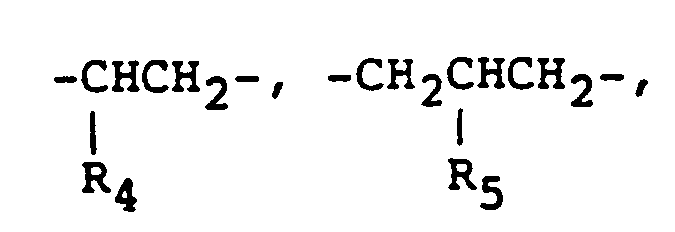

- Heißschmelzklebmasse nach Anspruch 1, in der mindestens eine der Molekülketten in den Grundkomponenten in der gleichen oder einer verschiedenen Molekülkette die Phosphorsäuregruppe, dargestellt durch die Formel (I) in Anspruch 1 oder ein Halbaminsalz derselben, und weiter eine oder mehrere funktionelle Gruppen, ausgewählt aus -COOH oder
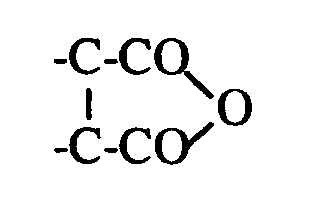
- Klebstoffmasse nach Anspruch 2, in der die Grundkomponenten eine modifizierte Harzkomponente umfassen, die durch Pfropfen einer ungesättigten Carbonsäure oder eines ungesättigten Carbonsäureanhydrids in einer Menge von 5 Gewichtsprozent oder weniger erhalten werden kann.
- Klebstoffmasse nach einem der Ansprüche 1 bis 3, in der der Klebrigmacher mindestens ein Material umfaßt, ausgewählt aus der Gruppe bestehend aus hydriertem Kolophonium, hydriertem Kolophoniumesterderivat und polymerisiertem Kolophonium in einer Menge von 1 bis 40 Gewichtsprozent.
- Klebstoffharzmasse nach einem der Ansprüche 1 bis 4, in der die Grundkomponenten eine modifizierte Harzkomponente umfassen, die durch Pfropfen von 0,1 bis 20 Gewichtsteilen einer Verbindung, ausgewählt aus 2-Hydroxy-3-(meth)acryloxypropylphosphat, 2-Hydroxy-3-(meth)acryloxyethylphosphat oder einem Halbaminsalz derselben, auf 100 Gewichtsteile der Grundkomponenten erhalten wird.
- Klebstoffmasse nach einem der Ansprüche 1 bis 4, in der die Grundkomponenten eine modifizierte Harzkomponente umfassen, die erhalten wird durch Umsetzung einer eine Hydroxylgruppe tragenden Harzkomponente mit einem Mittel, ausgewählt aus der Gruppe bestehend aus Phosphorpentoxid, Phosphortrichlorid und Phosphoroxychlorid, und durch Hydrolysieren des so erhaltenen Zwischenprodukts.
- Klebstoffmasse nach einem der Ansprüche 1 bis 6, in der die Grundkomponenten eine modifizierte Harzkomponente umfassen, die durch Einführung einer Glycidylgruppe in die Grundkomponenten und nachfolgender Umsetzung mit phosphoriger Säure oder Phosphorsäure erhalten wird.
- Klebstoffmasse nach Anspruch 1, in der die Grundkomponenten mindestens ein thermoplastisches Harz umfassen, das ein Molekulargewicht im Bereich von 20.000 bis 1.000.000 besitzt und ausgewählt wird aus der Gruppe bestehend aus Styrol-ethylen-butylen-styrolharz, Styrol-ethylen-butylenharz, Styrol-ethylen-propylen-styrolharz, Ethylen-propylenharz und Ethylen-acrylatesterharz; und in der das thermoplastische Harz vorher eine oder beide der modifizierten Harzkomponenten, erhalten durch (A) Pfropfen von 1 bis 20 Gewichtsteilen einer Verbindung, ausgewählt aus der Gruppe bestehend aus 2-Hydroxy-3-(meth)acryloxypropylphosphat, 2-Hydroxy-3-(meth)acryloxyethylphosphat und einem Halbaminsalz derselben, auf 100 Gewichtsteile eines thermoplastischen Harzes, oder durch (B) Pfropfen von 0,1 bis 5 Gewichtsteilen eines Monomers, ausgewählt aus Maleinsäureanhydrid, Acrylsäure und Methacrylsäure, umfaßt.
- Klebstoffmasse nach Anspruch 1, in der die Grundkomponenten zusammengesetzt sind aus:(a) 5 bis 80 Gewichtsprozent mindestens eines thermoplastischen Harzes mit einem Molekulargewicht von 20.000 bis 1.000.000, ausgewählt aus der Gruppe bestehend aus Butylkautschuk, Polyisobutylen, Styrol-butadien-styrolharz, Styrol-isopren-styrolharz, Styrol-ethylen-butylen-styrolharz, Styrol-ethylen-butylenharz, Styrol-ethylen-propylen-styrolharz, Ethylen-propylenharz, Ethylenvinylacetatharz und Ethylenacrylatesterharz,(b) 20 bis 60 Gewichtsprozent mindestens eines Klebrigmachers, ausgewählt aus der Gruppe bestehend aus einem hydrierten Terpengrundharz, hydriertem Petroleumharz, hydriertem alicyclischem Grundpetroleumharz und einem Kolophoniumesterderivatharz,(c) 1 bis 20 Gewichts-% mindestens eines Wachses, ausgewählt aus der Gruppe bestehend aus Paraffingrundwachs, Polyethylengrundwachs, Polypropylengrundwachs und modifizierten Wachsen davon, und(d) 0 bis 30 Gewichtsprozent mindestens eines Weichmachers, ausgewählt aus der Gruppe bestehend aus flüssigem Polybuten, flüssigem hydrierten Polyisopren und ataktischem Polypropylen; und in der diese Grundkomponenten eine modifizierte Harzkomponente umfassen, die durch Pfropfen von 1 bis 20 Gewichtsteilen von 2-Hydroxy-3-(meth)acryloxypropylphosphat oder 2-Hydroxy-3-(meth)acryloxyethylphosphat auf 100 Gewichtsteile der Summe aus dem thermoplastischen Harz und einer oder mehreren der anderen Grundkomponenten erhalten wird.
- Rutschstabiles Verarbeitungsverfahren für metallische Blendbleche, das die Durchführung einer Heißschmelzbeschichtung einer auf verölten Flächen haftenden Heißschmelzklebmasse aus Anspruch 1 auf die Rückseite eines metallischen Blendblechs ohne Oberflächenbehandlung in einer Breite von 5 bis 30 mm umfaßt.
- Rutschstabiles Verarbeitungsverfahren nach Anspruch 10, wobei eine Heißschmelzbeschichtung ausgeführt wird, um eine Vielzahl von Schichten zu erzeugen, und um naß auf naß auf die zweite oder die obere Schicht, gleichzeitig mit der ersten Schicht oder getrennt, eine unpolare Heißschmelzklebmasse aufzutragen, die im wesentlichen aus 20 bis 60 Gewichtsprozenten eines Ethylen-vinylacetatharzes oder eines Ethylen-acrylatesterharzes, aus 75 bis 10 Gewichtsprozenten eines Klebrigmachers mit einer Erweichungspunkttemperatur von 80 bis 130°C und aus 5 bis 30 Gewichtsprozenten eines Wachses mit einem Schmelzpunkt von 100 bis 150°C besteht.
Applications Claiming Priority (2)
| Application Number | Priority Date | Filing Date | Title |
|---|---|---|---|
| JP76578/90 | 1990-03-28 | ||
| JP7657890 | 1990-03-28 |
Publications (3)
| Publication Number | Publication Date |
|---|---|
| EP0449249A2 EP0449249A2 (de) | 1991-10-02 |
| EP0449249A3 EP0449249A3 (en) | 1992-10-21 |
| EP0449249B1 true EP0449249B1 (de) | 1995-06-21 |
Family
ID=13609149
Family Applications (1)
| Application Number | Title | Priority Date | Filing Date |
|---|---|---|---|
| EP91104875A Expired - Lifetime EP0449249B1 (de) | 1990-03-28 | 1991-03-27 | Auf verölten Flächen haftende Heissschmelzklebmasse und eine rutschstabile Verarbeitungsmethode für metallische Blendbleche |
Country Status (3)
| Country | Link |
|---|---|
| US (1) | US5095059A (de) |
| EP (1) | EP0449249B1 (de) |
| DE (1) | DE69110515T2 (de) |
Cited By (3)
| Publication number | Priority date | Publication date | Assignee | Title |
|---|---|---|---|---|
| WO1994019414A1 (en) * | 1993-02-23 | 1994-09-01 | Stone Industries, Inc. | Slip resistant compositions and uses |
| EP0919363A4 (de) * | 1997-06-13 | 2002-04-17 | Nippon Petrochemicals Co Ltd | Verbundstruktur und dichtungsmasse zur verwendung in derselben |
| US6833171B2 (en) | 2002-04-03 | 2004-12-21 | Kimberly-Clark Worldwide, Inc. | Low tack slip-resistant shoe cover |
Families Citing this family (18)
| Publication number | Priority date | Publication date | Assignee | Title |
|---|---|---|---|---|
| ES2088485T3 (es) * | 1990-02-19 | 1996-08-16 | Mitsui Petrochemical Ind | Procedimiento de fabricacion de elastomero termoplastico. |
| US5318990A (en) * | 1993-06-21 | 1994-06-07 | Owens-Corning Fiberglas Technology Inc. | Fibrous glass binders |
| DE4431751C1 (de) * | 1994-09-06 | 1996-05-09 | Siemens Ag | Flammwidriges einkomponentiges Reaktionsharz |
| AR020650A1 (es) * | 1998-08-10 | 2002-05-22 | Poly Med Inc | Polimeros fosforilados y conjugados de los mismos |
| DE10016183A1 (de) * | 1999-04-13 | 2001-03-15 | Henkel Kgaa | Niedrigviskoser Schmelzklebstoff |
| WO2001005882A1 (en) * | 1999-07-15 | 2001-01-25 | Loctite Corporation | Lubricious sealant compositions |
| US8614291B2 (en) | 1999-08-10 | 2013-12-24 | Poly-Med, Inc. | Phosphorylated polymers and conjugates thereof |
| FR2830257B1 (fr) * | 2001-10-02 | 2006-12-01 | Bostik Findley | Procede d'assemblage par collage de substrats hydrophobes et oleophobes destines au marche de l'emballage |
| EP1615980A1 (de) * | 2003-03-20 | 2006-01-18 | Exxonmobil Chemical Patents Inc. | Klebstoffzusammensetzungen und verfahren zu deren auswahl |
| US8088481B2 (en) * | 2004-12-27 | 2012-01-03 | Lintec Corporaton | Pressure-sensitive adhesive sheet for tire |
| JP2006188580A (ja) * | 2005-01-05 | 2006-07-20 | Nippon Fuller Kk | ホットメルト接着剤組成物 |
| KR100861987B1 (ko) * | 2007-08-07 | 2008-10-07 | 주식회사 덕진산업 | 자동차 도어 실링용 부틸 테이프의 조성물 및 그 제조방법 |
| JP4278704B1 (ja) | 2008-10-03 | 2009-06-17 | 東洋アドレ株式会社 | アルカリ分散型ホットメルト粘着剤組成物、その製造方法、ラベルの貼り付け方法、および容器 |
| JP6023399B2 (ja) * | 2010-12-27 | 2016-11-09 | ヘンケルジャパン株式会社 | ホットメルト接着剤 |
| JP5628884B2 (ja) * | 2012-11-26 | 2014-11-19 | 日東電工株式会社 | 水分散型粘着剤組成物、粘着剤層、粘着シート、及び、当該粘着剤層または粘着シートを含む積層体 |
| KR101979521B1 (ko) * | 2014-11-17 | 2019-09-03 | 미쓰이 가가쿠 가부시키가이샤 | 코팅제, 가식 필름 및 성형체 |
| CN119161667B (zh) * | 2024-10-10 | 2025-12-09 | 公牛集团股份有限公司 | 一种耐高温出油tpe材料及其制备得到的制品和应用 |
| CN119242204B (zh) * | 2024-12-05 | 2025-06-06 | 江苏凯伦建材股份有限公司 | 适用于水性涂层类防水卷材的热熔胶及其制备方法和应用 |
Family Cites Families (3)
| Publication number | Priority date | Publication date | Assignee | Title |
|---|---|---|---|---|
| NL94856C (de) * | 1954-12-30 | 1900-01-01 | ||
| US3155744A (en) * | 1960-12-23 | 1964-11-03 | American Cyanamid Co | Adhesionable vinyl-modified polyolefins and methods for producing same |
| JPS6028476A (ja) * | 1983-07-27 | 1985-02-13 | Arakawa Chem Ind Co Ltd | ホツトメルト接着剤組成物 |
-
1991
- 1991-03-27 US US07/675,611 patent/US5095059A/en not_active Expired - Fee Related
- 1991-03-27 EP EP91104875A patent/EP0449249B1/de not_active Expired - Lifetime
- 1991-03-27 DE DE69110515T patent/DE69110515T2/de not_active Expired - Fee Related
Cited By (3)
| Publication number | Priority date | Publication date | Assignee | Title |
|---|---|---|---|---|
| WO1994019414A1 (en) * | 1993-02-23 | 1994-09-01 | Stone Industries, Inc. | Slip resistant compositions and uses |
| EP0919363A4 (de) * | 1997-06-13 | 2002-04-17 | Nippon Petrochemicals Co Ltd | Verbundstruktur und dichtungsmasse zur verwendung in derselben |
| US6833171B2 (en) | 2002-04-03 | 2004-12-21 | Kimberly-Clark Worldwide, Inc. | Low tack slip-resistant shoe cover |
Also Published As
| Publication number | Publication date |
|---|---|
| DE69110515T2 (de) | 1996-02-15 |
| US5095059A (en) | 1992-03-10 |
| DE69110515D1 (de) | 1995-07-27 |
| EP0449249A2 (de) | 1991-10-02 |
| EP0449249A3 (en) | 1992-10-21 |
Similar Documents
| Publication | Publication Date | Title |
|---|---|---|
| US5095059A (en) | Oiled-face adherable, hot-melt adhesive composition and a non-slip processing method of metal scaffolding board | |
| US5618883A (en) | Styrene ethylene-butylene and ethylene-propylene block copolymer hot melt pressure sensitive adhesives | |
| EP0011474B1 (de) | Heissschmelzzusammensetzung | |
| US5677376A (en) | Acrylate-containing polymer blends | |
| AU762483B2 (en) | Acrylic copolymer, acrylic pressure-sensitive adhesive composition, acrylic pressure-sensitive adhesive tape or sheet, and acrylic adhesive composition | |
| JP2977292B2 (ja) | ホットメルト接着剤組成物 | |
| US4728572A (en) | Removable hot melt pressure sensitive adhesive | |
| JP3043452B2 (ja) | 油面接着性のホットメルト接着剤組成物、およびそれを用いた金属製足場板のスリップ防止加工方法 | |
| EP0739383B1 (de) | Acrylat enthaltende polymermischungen | |
| CA2192866C (en) | Adhesive composition | |
| US4359551A (en) | Hot-melt pressure-sensitive adhesive composition containing an acid grafted block copolymer | |
| US5973056A (en) | Hot-melt adhesive composition excellent in heat resistance and cold resistance | |
| DE102006023936A1 (de) | Maskierung von Fensterflanschen mit einem Klebeband mit einer Selbstklebemasse auf Basis vernetzter Vinylaromatenblockcopolymere | |
| US5135816A (en) | Radiation-reactive phenylbutadiene multiblock copolymers | |
| AU2002303289B2 (en) | Rubber-acrylic adhesive formulation | |
| EP0868493B1 (de) | Poly(alpha-olefin)-selbstklebeband mit einer grundierungsschicht | |
| JPH0216785B2 (de) | ||
| JP2971148B2 (ja) | 金属の防錆加工方法 | |
| GB2066270A (en) | Hot-melt pressure-sensitive adhesive composition | |
| EP0872530A1 (de) | Selbstklebende klebstoffzusammensetzung für einen oberflächenschutzfilm | |
| JP2928591B2 (ja) | 熱可塑性の接着剤組成物 | |
| JPH02242872A (ja) | ポリエチレンおよびポリプロピレン用のポリ(ビニルアルキルエーテル)含有ホットメルト接着剤 | |
| JP2776248B2 (ja) | ホットメルト型接着剤 | |
| JPH093422A (ja) | ホットメルト接着剤組成物 | |
| JPH0665555A (ja) | ホットメルト接着剤組成物 |
Legal Events
| Date | Code | Title | Description |
|---|---|---|---|
| PUAI | Public reference made under article 153(3) epc to a published international application that has entered the european phase |
Free format text: ORIGINAL CODE: 0009012 |
|
| 17P | Request for examination filed |
Effective date: 19910424 |
|
| AK | Designated contracting states |
Kind code of ref document: A2 Designated state(s): DE FR GB |
|
| PUAL | Search report despatched |
Free format text: ORIGINAL CODE: 0009013 |
|
| AK | Designated contracting states |
Kind code of ref document: A3 Designated state(s): DE FR GB |
|
| 17Q | First examination report despatched |
Effective date: 19940301 |
|
| GRAA | (expected) grant |
Free format text: ORIGINAL CODE: 0009210 |
|
| AK | Designated contracting states |
Kind code of ref document: B1 Designated state(s): DE FR GB |
|
| REF | Corresponds to: |
Ref document number: 69110515 Country of ref document: DE Date of ref document: 19950727 |
|
| ET | Fr: translation filed | ||
| PGFP | Annual fee paid to national office [announced via postgrant information from national office to epo] |
Ref country code: FR Payment date: 19960315 Year of fee payment: 6 |
|
| PGFP | Annual fee paid to national office [announced via postgrant information from national office to epo] |
Ref country code: GB Payment date: 19960318 Year of fee payment: 6 |
|
| PGFP | Annual fee paid to national office [announced via postgrant information from national office to epo] |
Ref country code: DE Payment date: 19960328 Year of fee payment: 6 |
|
| PLBE | No opposition filed within time limit |
Free format text: ORIGINAL CODE: 0009261 |
|
| STAA | Information on the status of an ep patent application or granted ep patent |
Free format text: STATUS: NO OPPOSITION FILED WITHIN TIME LIMIT |
|
| 26N | No opposition filed | ||
| PG25 | Lapsed in a contracting state [announced via postgrant information from national office to epo] |
Ref country code: GB Effective date: 19970327 |
|
| GBPC | Gb: european patent ceased through non-payment of renewal fee |
Effective date: 19970327 |
|
| PG25 | Lapsed in a contracting state [announced via postgrant information from national office to epo] |
Ref country code: FR Free format text: LAPSE BECAUSE OF NON-PAYMENT OF DUE FEES Effective date: 19971128 |
|
| PG25 | Lapsed in a contracting state [announced via postgrant information from national office to epo] |
Ref country code: DE Effective date: 19971202 |
|
| REG | Reference to a national code |
Ref country code: FR Ref legal event code: ST |