EP0449611B1 - Acier réfractaire - Google Patents
Acier réfractaire Download PDFInfo
- Publication number
- EP0449611B1 EP0449611B1 EP91302694A EP91302694A EP0449611B1 EP 0449611 B1 EP0449611 B1 EP 0449611B1 EP 91302694 A EP91302694 A EP 91302694A EP 91302694 A EP91302694 A EP 91302694A EP 0449611 B1 EP0449611 B1 EP 0449611B1
- Authority
- EP
- European Patent Office
- Prior art keywords
- heat
- resistant
- cast steel
- phase
- ferritic
- Prior art date
- Legal status (The legal status is an assumption and is not a legal conclusion. Google has not performed a legal analysis and makes no representation as to the accuracy of the status listed.)
- Expired - Lifetime
Links
Images

Classifications
-
- F—MECHANICAL ENGINEERING; LIGHTING; HEATING; WEAPONS; BLASTING
- F01—MACHINES OR ENGINES IN GENERAL; ENGINE PLANTS IN GENERAL; STEAM ENGINES
- F01N—GAS-FLOW SILENCERS OR EXHAUST APPARATUS FOR MACHINES OR ENGINES IN GENERAL; GAS-FLOW SILENCERS OR EXHAUST APPARATUS FOR INTERNAL-COMBUSTION ENGINES
- F01N13/00—Exhaust or silencing apparatus characterised by constructional features
- F01N13/16—Selection of particular materials
-
- C—CHEMISTRY; METALLURGY
- C22—METALLURGY; FERROUS OR NON-FERROUS ALLOYS; TREATMENT OF ALLOYS OR NON-FERROUS METALS
- C22C—ALLOYS
- C22C38/00—Ferrous alloys, e.g. steel alloys
- C22C38/18—Ferrous alloys, e.g. steel alloys containing chromium
- C22C38/24—Ferrous alloys, e.g. steel alloys containing chromium with vanadium
-
- C—CHEMISTRY; METALLURGY
- C22—METALLURGY; FERROUS OR NON-FERROUS ALLOYS; TREATMENT OF ALLOYS OR NON-FERROUS METALS
- C22C—ALLOYS
- C22C38/00—Ferrous alloys, e.g. steel alloys
- C22C38/18—Ferrous alloys, e.g. steel alloys containing chromium
- C22C38/26—Ferrous alloys, e.g. steel alloys containing chromium with niobium or tantalum
-
- F—MECHANICAL ENGINEERING; LIGHTING; HEATING; WEAPONS; BLASTING
- F02—COMBUSTION ENGINES; HOT-GAS OR COMBUSTION-PRODUCT ENGINE PLANTS
- F02B—INTERNAL-COMBUSTION PISTON ENGINES; COMBUSTION ENGINES IN GENERAL
- F02B1/00—Engines characterised by fuel-air mixture compression
- F02B1/02—Engines characterised by fuel-air mixture compression with positive ignition
- F02B1/04—Engines characterised by fuel-air mixture compression with positive ignition with fuel-air mixture admission into cylinder
Definitions
- the present invention relates to a heat-resistant cast steel suitable for exhaust equipment members, etc. for automobile engines, and an exhaust equipment member made of such a heat-resistant cast steel.
- heat-resistant cast iron and heat-resistant cast steel have compositions shown in Table 1 below as Comparative Examples.
- Other examples of heat resistent alloy steels are provided in GB-A-1205250 and CH-A-369481.
- heat-resistant cast iron such as high-Si spheroidal graphite cast iron, NI-RESIST cast iron (Ni-Cr-Cu austenite cast iron), etc. shown in Table 1, and exceptionally expensive heat-resistant, high-alloy cast steel such as austenitic cast steel, etc. are employed because the operating conditions are extremely severe at high temperatures.
- high-Si spheroidal graphite cast iron and NI-RESIST cast iron are relatively good in castability, but they are poor in durability in terms of thermal fatigue resistance and oxidation resistance. Accordingly, they cannot be used for members which may be subjected to such a high temperature as 900°C or even higher.
- Heat-resistant, high-alloy cast steel such as heat-resistant austenitic cast steel, etc. is excellent in terms of high-temperature strength at 900°C or higher, but it is poor in a thermal fatigue life due to a large thermal expansion coefficient. Further, because of poor castability, it is likely to suffer from casting defects such as shrinkage cavities and poor fluidity in the process of casting. In addition, because of poor machinability, the production of parts from these materials is not efficient.
- ferritic cast stainless steel Besides the above cast iron and cast steel, there is ferritic cast stainless steel, but conventional ferritic cast stainless steel shows poor ductility at room temperature if its high-temperature durability is improved. Accordingly, it cannot be used for members which are subjected to mechanical impact, etc.
- the inventors have found that by adding certain amounts of W, Nb and/or V and further Ni, B, REM, etc. to a ferritic cast steel, the ferrite matrix and the crystal grain boundaries can be strengthened and the transformation temperature can be elevated, without deteriorating the ductility at room temperature, whereby the high-temperature strength of the cast steel can be improved.
- the present invention provides a heat-resistant ferritic cast steel having a composition comprising, by weight, of:-
- REM is meant a rare earth metal
- the present invention provides a heat-resistant, ferritic cast steel having a composition comprising, by weight, of:
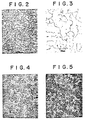
- said cast steel having, in addition to a usual ⁇ -phase, a phase (hereinafter referred to as " ⁇ '-phase") transformed from a ⁇ -phase and composed of an ⁇ -phase and carbides, an area ratio ( ⁇ '/( ⁇ + ⁇ ')) being 20-90%, said cast steel being subjected to an annealing treatment at a temperature lower than a ( ⁇ + ⁇ ) phase region.
- ⁇ '-phase a phase transformed from a ⁇ -phase and composed of an ⁇ -phase and carbides
- a heat-resistant, ferritic cast steel according to a first embodiment of the present invention has a composition comprising, by weight, of:
- said cast steel having, in addition to a usual ⁇ -phase, a phase (hereinafter referred to as " ⁇ '-phase") transformed from a ⁇ -phase and composed of an ⁇ -phase and carbides, an area ratio ( ⁇ '/( ⁇ + ⁇ ')) being 20-90%, said cast steel being subjected to an annealing treatment at a temperature lower than a ( ⁇ + ⁇ ) phase region.
- ⁇ '-phase a phase transformed from a ⁇ -phase and composed of an ⁇ -phase and carbides
- the transformation temperature from the ⁇ -phase to the ⁇ -phase is 900°C or higher.
- a heat-resistant, ferritic cast steel according to a second embodiment of the present invention has a composition comprising, by weight, of:
- said cast steel having, in addition to a usual ⁇ -phase, a phase (hereinafter referred to as " ⁇ '-phase") transformed from a ⁇ -phase and composed of an ⁇ -phase and carbides, an area ratio ( ⁇ '/( ⁇ + ⁇ ')) being 20-70%, said cast steel being subjected to an annealing treatment at a temperature lower than a ( ⁇ + ⁇ ) phase region.
- ⁇ '-phase a phase transformed from a ⁇ -phase and composed of an ⁇ -phase and carbides
- the transformation temperature from the ⁇ -phase to the ⁇ -phase is 950°C or higher.
- a heat-resistant, ferritic cast steel according to a third embodiment of the present invention has a composition comprising, by weight, of:
- said cast steel having, in addition to a usual ⁇ -phase, a phase (hereinafter referred to as " ⁇ '-phase") transformed from a ⁇ -phase and composed of an ⁇ -phase and carbides, an area ratio ( ⁇ '/( ⁇ + ⁇ ')) being 20-80%, said cast steel being subjected to an annealing treatment at a temperature lower than a ( ⁇ + ⁇ ) phase region.
- ⁇ '-phase a phase transformed from a ⁇ -phase and composed of an ⁇ -phase and carbides
- the transformation temperature from the ⁇ -phase to the ⁇ -phase is 1000°C or higher.
- a heat-resistant, ferritic cast steel according to a fourth embodiment of the present invention has a composition comprising, by weight, of:
- said cast steel having, in addition to a usual ⁇ -phase, a phase (hereinafter referred to as " ⁇ '-phase") transformed from a ⁇ -phase and composed of an ⁇ -phase and carbides, an area ratio ( ⁇ '/( ⁇ + ⁇ ')) being 20-80%, said cast steel being subjected to an annealing treatment at a temperature lower than a ( ⁇ + ⁇ ) phase region.
- ⁇ '-phase a phase transformed from a ⁇ -phase and composed of an ⁇ -phase and carbides
- the transformation temperature from the ⁇ -phase to the ⁇ -phase is 1000°C or higher.
- a heat-resistant, ferritic cast steel according to a fifth embodiment of the present invention has a composition comprising, by weight, of:
- said cast steel having, in addition to a usual ⁇ -phase, a phase (hereinafter referred to as " ⁇ '-phase") transformed from a ⁇ -phase and composed of an ⁇ -phase and carbides, an area ratio ( ⁇ '/( ⁇ + ⁇ ')) being 20-80%, said cast steel being subjected to an annealing treatment at a temperature lower than a ( ⁇ + ⁇ ) phase region.
- ⁇ '-phase a phase transformed from a ⁇ -phase and composed of an ⁇ -phase and carbides
- the transformation temperatre from the ⁇ -phase to the ⁇ -phase is 1000°C or higher.
- the resulting metal structure contains an ⁇ ′-phase, whereby the heat-resistant, ferritic cast steel shows higher thermal fatigue resistance and oxidation resistance than those of the conventional heat-resistant, high-alloy cast steel, and castability and machinability equivalent to those of the heat-resistant cast iron, without deteriorating its ductility at a room temperature. Further, since the transformation temperature of the heat-resistant, ferritic cast steel is elevated to 900°C or higher, its thermal fatigue resistance is greatly improved.
- C, Si, Mn, Cr, W, Nb and/or V are basic required elements.
- C has a function of improving the fluidity and castability of a melt and forming a proper amount of an ⁇ ′-phase. It further has a function of providing the heat-resistant, ferritic cast steel with a high strength at a high temperature of 900°C or higher. To exhibit such functions effectively, the amount of C should be 0.05% or more.
- a ⁇ -phase in which C is dissolved is formed at a high temperature, in addition to the ⁇ -phase existing from a high temperature to a room temperature.
- This ⁇ -phase phase is transformed to ( ⁇ -phase + carbides) by precipitating carbides during the cooling process.
- the resulting phase ( ⁇ -phase + carbides) is called " ⁇ '-phase.”
- the amount of C exceeds 0.45%, the ⁇ '-phase is less likely to exist, thereby forming a martensite structure. Also, Cr carbides which decrease the oxidation resistance, corrosion resistance and machinability of the heat-resistant, ferritic cast steel are remarkably precipitated. Accordingly, the amount of C is 0.05-0.45%.
- Si has effects of narrowing the range of the ⁇ -phase in the Fe-Cr alloy of the present invention, thereby increasing the stability of its metal structure and its oxidation resistance. Further, it has a function as a deoxidizer and also is effective for improving castability and reducing pin holes in the resulting cast products. To effectively exhibit these effects, the amount of Si should be 0.4% or more. However, when it is excessive, primary carbides grow coarser by a balance with C (carbon equivalent), thereby deteriorating the machinability of the cast steel, and the amount of Si in the ferrite matrix becomes excessive, causing the decrease of the ductility and the formation of a ⁇ -phase at a high temperature. Accordingly, the amount of Si should be 2.0% or less.
- Mn is effective like Si as a deoxidizer for the melt, and has a function of improving the fluidity during the casting operation. To exhibit such function effectively, the amount of Mn is 0.3-1.0%.
- Cr is an element capable of improving the oxidation resistance and stabilizing the ferrite structure of the heat-resistant, ferritic cast steel. To insure such effects, the amount of Cr should be 16.0% or more. On the other hand, if it is added excessively, coarse primary carbides of Cr are formed, and the formation of the ⁇ -phase is accelerated at a high temperature, resulting in extreme brittleness. Accordingly, the upper limit of Cr should be 25.0%.
- W has a function of improving the high-temperature strength by strengthening the ferrite matrix without deteriorating the ductility at room temperature. Accordingly, for the purpose of improving creep resistance and thermal fatigue resistance due to the elevation of the transformation temperature, the amount of W should be 1.0% or more. However, when the amount of W exceeds 5.0%, coarse eutectic carbides are formed, resulting in the deterioration of the ductility and machinability. Thus, the amount of W is 5.0% or less.
- Nb (nieobium) and/or V (vanadium) 0.01-1.0%
- Nb and V form fine carbides when combined with C, increasing the tensile strength at a high temperature and the thermal fatigue resistance. Also, by suppressing the formation of the Cr carbides, they function to improve the oxidation resistance and machinability of the heat-resistant, ferritic cast steel. For such purposes, the amount of Nb and/or V should be 0.01% or more. However, if they are excessively added, carbides are formed in the crystal grain boundaries, and too much C is consumed by forming the carbides of Nb and V, making it less likely to form the ⁇ ′-phase. This leads to extreme decrease in strength and ductility. Accordingly, each of Nb or V should be 0.50% or less (1.0% or less in totality).
- Ni, B, REM (rare earth elements) and N may be added alone or in combination together with the above indispensable elements.
- the proportions of the above elements are as follows:
- N is an element capable of improving the high-temperature strength and the thermal fatigue resistance like C, and such effects can be obtained when the amount of N is 0.01% or more.
- the amount of N should be 0.15% or less.
- Ni (nickel) 0.1-2.0%
- Ni is a ⁇ -phase-forming element like C, and to form a proper amount of ⁇ ′-phase, 0.1% or more of Ni is desirably added. When it exceeds 2.0%, the ⁇ -phase having an excellent oxidation resistance decreases, and the ⁇ ′-phase becomes a martensite phase, leading to the remarkable deterioration of ductility. Accordingly, the amount of Ni should be 2.0% or less.
- B has a function of strengthening the crystal grain boundaries of the cast steel and making carbides in the grain boundaries finer and further deterring the agglomeration and growth of such carbides, thereby improving the high-temperature strength and toughness of the heat-resistant, ferritic cast steel. Accordingly, the amount of B is desirably 0.001% or more. However, if it is excessively added, borides are precipitated, leading to poor high-temperature strength and toughness. Thus, the upper limit of B is 0.01%. Therefore, the amount of B is 0.001-0.01%.
- REM is a light rare earth element such as Ce (cerium), La (lanthanum), etc., which is capable of forming stable oxides, thereby improving the oxidation resistance. It also has a function of making the crystal grain boundaries finer. To exhibit such functions effectively, the amount of REM is desirably 0.001% or more. On the other hand, when it is added excessively, it forms non-metallic inclusions which is detrimental to the ductility. Accordingly, the upper limit of REM is 0.05%.
- the heat-resistant, ferritic cast steel in each embodiment has the following composition:
- the heat-resistant, ferritic cast steel of the present invention having the above composition has the ⁇ ′-phase transformed from the ⁇ -phase and composed of the ⁇ -phase and carbides, in addition to the usual ⁇ -phase.
- the "usual ⁇ -phase” means a ⁇ (delta) ferrite phase.
- the precipitated carbides are carbides (M 23 C 6 , M 7 C 3 , MC, etc.) of Fe, Cr, W, Nb, etc.
- the heat-resistant, ferritic cast steel is subjected to an annealing treatment at a temperature lower than a ( ⁇ + ⁇ ) phase region.
- the annealing treatment temperature is generally 700-850°C, and the annealing time is 1-10 hours.
- the above annealing temperature is in the range where the ⁇ ′-phase is not transformed to the ⁇ -phase.
- the heat-resistant, ferritic cast steel should have a transformation temperature of 900°C or higher.
- the ferrite-forming elements such as Cr, Si, W, V, Nb and the austenite-forming elements such as C, Ni, Co, N, Mn are well balanced.
- the area ratio ( ⁇ ′/( ⁇ + ⁇ ′)) and the transformation temperature are as follows:
- FIG. 1 shows an integral exhaust manifold mounted to a straight-type, four-cylinder engine equipped with a turbo charger.
- the exhaust manifold 1 is mounted to a turbine housing 2 of the turbo charger, which is connected to a catalyst converter chamber 4 for cleaning an exhaust gas via an exhaust outlet pipe 3.
- the converter chamber 4 is further connected to a main catalyzer 5.
- An outlet of the main catalyzer 5 is communicated with a muffler (not shown) in D.
- the turbine housing 2 is communicated with an intake manifold (not shown) in B, and an air is introduced thereinto as shown by C.
- the exhaust gas is introduced into the exhaust manifold 1 as shown by A.
- Such exhaust manifold 1 and turbine housing 2 are desirably as thin as possible to have a small heat capacity.
- the thicknesses of the exhaust manifold 1 and the turbine housing 2 are, for instance, 2.5-3.4 mm and 2.7-4.1 mm, respectively.
- Such thin exhaust manifold 1 and turbine housing 2 made of the heat-resistant, ferritic cast steel show excellent durability without suffering from cracks under heating-cooling cycles.
- Y-block test pieces (No. B according to JIS) were prepared by casting. Incidentally, the casting was conducted by melting the steel in the atmosphere in a 100-kg high-frequency furnace, removing the resulting melt from the furnace at a temperature of 1550°C or higher and pouring it into a mold at about 1550°C.
- test pieces (Y-blocks) of Examples 1-9 were subjected to a heat treatment comprising heating them at 800°C for 2 hours in a furnace and cooling them in the air.
- test pieces of Comparative Examples 1-5 were used in an as-cast state for the tests.
- the test pieces of Comparative Examples 1-5 are those used for heat-resistant parts such as turbo charger housings, exhaust manifolds, etc. for automobiles.
- the test piece of Comparative Example 1 is high-Si spheroidal graphite cast iron
- the test piece of Comparative Example 2 is NI-RESIST spheroidal graphite cast iron
- the test piece of Comparative Example 3 is a CB-30 according to the ACI (Alloy Casting Institute) standards
- the test piece of Comparative Example 4 is one of heat-resistant austenite cast steels (SCH 12, according to JIS)
- the test piece of Comparative Example 5 is a heat-resistant, ferritic cast steel (NSHR-F2, trademark of Hitachi Metals, Ltd.) used for exhaust manifolds for high-performance engines.
- test pieces of Examples 1-9 show transformation temperatures of 900°C or higher, higher than those of Comparative Examples 1 and 3.
- a rod test piece having a diameter of 10 mm and a length of 20 mm was kept in the air at 900°C for 200 hours, and its oxide scale was removed by a shot blasting treatment to measure a weight variation per a unit surface area. By calculating oxidation weight loss (mg/cm 2 ) after the oxidation test, the oxidation resistance was evaluated.
- test pieces of Examples 1-9 are extremely superior to those of Comparative Examples 1-5 with respect to a high-temperature strength, an oxidation resistance and a thermal fatigue life. This is due to the fact that by containing proper amounts of W, Nb, Ni and N, the ferrite matrix was strengthened, and the transformation temperature was elevated to 900°C or higher without deteriorating the ductility at a room temperature.
- test pieces of Examples 1-9 show relatively low hardness (H B ) of 179-235. This means that they are excellent in machinability.
- test pieces (Y-blocks) of Examples 10-19 were subjected to a heat treatment comprising heating them at 800°C for 2 hours in a furnace and cooling them in the air.
- test pieces of Examples 10-19 show transformation temperatures of 950°C or higher, higher than those of Comparative Examples 1-4.
- Table 5 The results of the tensile test at a room temperature are shown in Table 5, and the results of the tensile test at a high temperature, the thermal fatigue test and the oxidation test are shown in Table 6.
- test pieces of Examples 10-19 are extremely superior to those of Comparative Examples 1-5 with respect to a high-temperature strength, an oxidation resistance and a thermal fatigue life. This is due to the fact that by containing proper amounts of W, Nb, V, B and Ni, the ferrite matrix was strengthened, and the transformation temperature was elevated to 950°C or higher without deteriorating the ductility at a room temperature.
- test pieces of Examples 10-19 show relatively low hardness (H B ) of 174-217. This means that they are excellent in machinability.
- test pieces (Y-blocks) of Examples 20-34 were subjected to a heat treatment comprising heating them at 800°C for 2 hours in a furnace and cooling them in the air.
- test pieces of Examples 20-34 show transformation temperatures of 1000°C or higher, higher than those of Comparative Examples 1 and 3.
- Example 2 the same evaluation test as in Example 1 were conducted.
- the tensile test at a high temperature and the oxidation test were conducted at 900°C and 1000°C, respectively.
- Table 8 The results of the tensile test at a room temperature are shown in Table 8, and the results of the tensile test at a high temperature, the thermal fatigue test and the oxidation test are shown in Table 9 (at 900°C) and Table 10 (1000°C). Table 8 at Room Temperature Example No.
- test pieces of Examples 20-34 are extremely superior to those of Comparative Examples 1-5 with respect to a high-temperature strength, an oxidation resistance and a thermal fatigue life. This is due to the fact that by containing proper amounts of W, B, REM, etc., the ferrite matrix was strengthened, and the transformation temperature was elevated to 1000°C or higher without deteriorating the ductility at a room temperature.
- test pieces of Examples 20-34 show relatively low hardness (H B ) of 170-223. This means that they are excellent in machinability.
- an exhaust manifold (thickness: 2.5-3.4 mm) and a turbine housing (thickness: 2.7-4.1 mm) were produced by casting the heat-resistant, ferritic cast steel of Examples 5, 15 and 26. All of the resulting heat-resistant cast steel parts were free from casting defects. These cast parts were machined to evaluate their cuttability. As a result, no problem was found in any cast parts.
- the exhaust manifold and the turbine housing were mounted to a high-performance, straight-type, four-cylinder, 2000-cc gasoline engine (test machine) to conduct a durability test.
- the test was conducted by repeating 500 heating-cooling (Go-Stop) cycles each consisting of a continuous full-load operation of 6000 rpm (14 minutes), idling (1 minute), complete stop (14 minutes) and idling (1 minute) in this order.
- the exhaust gas temperature under a full load was 930°C at the inlet of the turbo charger housing.
- the highest surface temperature of the exhaust manifold was about 870°C in a pipe-gathering portion thereof, and the highest surface temperature of the turbo charger housing was about 890°C in a waist gate portion thereof.
- the exhaust manifold and the turbine housing made of the heat-resistant, ferritic cast steel of the present invention had excellent durability and reliability.
- an exhaust manifold was produced from high-Si spheroidal graphite cast iron having a composition shown in Table 11, and a turbo charger housing was produced from austenite spheroidal graphite cast iron having a composition shown in Table 11 (NI-RESIST D2, trademark of INCO).
- NI-RESIST D2 trademark of INCO
- the exhaust manifold made of the high-Si spheroidal graphite cast iron underwent thermal cracking due to oxidation in the vicinity of the pipe-gathering portion after 98 cycles, failing to continue the operation. After that, the exhaust manifold was exchanged to that of Example 5 and the evaluation test was continued.
- the ferrite matrix and the crystal grain boundaries are strengthened, whereby the transformation temperature of the heat-resistant, ferritic cast steel is elevated without deteriorating the ductility at a room temperature.
- the heat-resistant, ferritic cast steel of the present invention has an improved high-temperature strength.
- the heat-resistant, ferritic cast steel of the present invention is superior to the conventional heat-resistant cast steel.
- the heat-resistant, ferritic cast steel of the present invention is excellent in castability and machinability, it can be formed into cast articles at a low cost.
- Such heat-resistant, ferritic cast steel according to the present invention is particularly suitable for exhaust equipment members for engines, etc.
- the exhaust equipment members made of such heat-resistant, ferritic cast steel according to the present invention show extremely good durability without suffering from thermal cracking.
- compositions given for the various embodiments, and their preferred composition ranges, are of themselves new and inventive and that protection is sought for these individually as well as in broad terms.
- the invention provides a heat-resistant, ferritic cast steel having excellent durability such as a thermal fatigue resistance and an oxidation resistance, castability, machinability, etc., which can be produced at a low cost, thereby solving problems inherent in conventional heat-resistant cast iron and heat-resistant cast steel.
Landscapes
- Chemical & Material Sciences (AREA)
- Engineering & Computer Science (AREA)
- Mechanical Engineering (AREA)
- Materials Engineering (AREA)
- Metallurgy (AREA)
- Organic Chemistry (AREA)
- Combustion & Propulsion (AREA)
- General Engineering & Computer Science (AREA)
- Exhaust Silencers (AREA)
Claims (12)
- Un acier moulé ferritique réfractaire ayant une composition comprenant, en poids:C: 0,05-0,45%,Si: 0,4-2,0%,Mn: 0,3-1,0%,Cr: 16,0-25,0%,W: 1,0-5,0%,Nb et/ou V: 0,01-1,0%, (mais aucun n'excédant 0,5%)N: 0-0,15%,Ni: 0-2,0%,B: 0-0,05%,MTR: 0-0,05%,la quantité restante étant Fe et des impuretés occasionnelles, et l'acier moulé ayant, en plus d'une phase de ferrite (α) habituelle, une phase (α') de ferrite et de carbure obtenue par transformation d'une phase d'austénite (γ), dans lequel le rapport de surface de α' sur (α + α') est dans la plage de 20 à 90%, et l'acier moulé a été soumis à un traitement de recuit à une température inférieure à la région de la phase (γ + α).
- Un acier moulé ferritique réfractaire comme revendiqué dans la revendication 1, ayant une composition comprenant, en poids:C: 0,05-0,45%,Si: 0,4-2,0%,Mn: 0,3-1,0%,Cr: 16,0-25,0%,W: 1,0-5,0%Nb et/ou V: 0,01-1,0%, (mais aucun n'excédant 0,5%), la quantité restante étant Fe et des impuretés occasionnelles.
- Un acier moulé ferritique réfractaire, comme revendiqué dans la revendication 1, ayant une composition comprenant, en poids:C: 0,10-0,30%,Si: 0,4-2,0%,Mn: 0,3-1,0%,Cr: 16,0-25,0%,W: 1,0-5,0%,Nb: 0,01-0,5%,Ni: 0,1-2,0%,N: 0,01-0,15%,la quantité restante étant Fe et des impuretés occasionnelles.
- Un acier moulé ferritique réfractaire, comme revendiqué dans la revendication 1, 2 ou 3, dans lequel la température de transformation de la phase α en phase γ est de 900°C ou supérieure.
- Un acier moulé ferritique réfractaire, comme revendiqué dans la revendication 1, ayant une composition comprenant, en poids:C: 0,05-0,30%,Si: 0,4-2,0%Mn: 0,3-1,0%Cr: 16,0-25,0%W: 1,0-5,0%,Nb 0,01-0,5%,V: 0,01-0,5%,B: 0,001-0,01%,Ni: 0,05-2,0%,la quantité restante étant Fe et des impuretés occasionnelles, dans lequel le rapport de surface (α'/(α + α')) est dans la plage de 20 à 70%.
- Un acier moulé ferritique réfractaire, comme revendiqué dans la revendication 5, dans lequel la température de transformation de la phase α en phase γ est de 950°C ou supérieure.
- Un acier moulé ferritique réfractaire, comme revendiqué dans la revendication 1, ayant une composition comprenant, en poids:C: 0,15-0,45%,Si: 0,4-2,0%,Mn: 0,3-1,0%,Cr: 17,0-22,0%,W: 1,0-4,0%,Nb et/ou V: 0,01-0,5%,la quantité restante étant Fe et des impuretés occasionnelles, dans lequel le rapport de surface (α'/(α + α')) est dans la plage de 20 à 80%.
- Un acier moulé ferritique réfractaire, comme revendiqué dans la revendication 1, ayant une composition comprenant, en poids:C: 0,15-0,45%,Si: 0,4-2,0%,Mn: 0,3-1,0%,Cr: 17,0-22,0%,W: 1,0-4,0%,Nb et/ou V: 0,01-0,5%,B: 0,001-0,05%,MTR: 0,001-0,05%,La quantité restante étant Fe et des impuretés occasionnelles, dans lequel le rapport de surface (α'/(α + α')) est dans la plage de 20 à 80%.
- Un acier moulé ferritique réfractaire, comme revendiqué dans la revendication 1, ayant une composition comprenant, en poids:C: 0,15-0,45%,Si: 0,4-2,0%,Mn: 0,3-1,0%,Cr: 17,0-22,0%,W: 1,0-4,0%,Nb et/ou V: 0,01-0,5%,Ni: 0,1-2,0%,B: 0,001-0,05%,MTR: 0,001-0,05%,la quantité restante étant Fe et des impuretés occasionnelles, dans lequel le rapport de surface (α'/(α + α')) est dans la plage de 20 à 80%.
- Un acier moulé ferritique réfractaire, comme revendiqué dans la revendication 7, 8 ou 9, dans lequel la température de transformation de la phase α en phase γ est de 1000°C ou supérieure.
- Une pièce d'échappement faite d'un acier moulé ferritique réfractaire comme revendiqué dans l'une quelconque des revendications précédentes.
- Une pièce d'échappement, comme revendiquée dans la revendication 11, sous la forme d'un collecteur d'échappements ou d'un carter de turbine.
Applications Claiming Priority (6)
| Application Number | Priority Date | Filing Date | Title |
|---|---|---|---|
| JP7775990 | 1990-03-27 | ||
| JP77759/90 | 1990-03-27 | ||
| JP20546290 | 1990-08-02 | ||
| JP205462/90 | 1990-08-02 | ||
| JP81647/91 | 1991-03-20 | ||
| JP3081647A JPH0826438B2 (ja) | 1990-03-27 | 1991-03-20 | 熱疲労寿命に優れたフェライト系耐熱鋳鋼 |
Publications (2)
| Publication Number | Publication Date |
|---|---|
| EP0449611A1 EP0449611A1 (fr) | 1991-10-02 |
| EP0449611B1 true EP0449611B1 (fr) | 1996-06-12 |
Family
ID=27302511
Family Applications (1)
| Application Number | Title | Priority Date | Filing Date |
|---|---|---|---|
| EP91302694A Expired - Lifetime EP0449611B1 (fr) | 1990-03-27 | 1991-03-27 | Acier réfractaire |
Country Status (4)
| Country | Link |
|---|---|
| US (1) | US5152850A (fr) |
| EP (1) | EP0449611B1 (fr) |
| JP (1) | JPH0826438B2 (fr) |
| DE (1) | DE69120129T2 (fr) |
Families Citing this family (15)
| Publication number | Priority date | Publication date | Assignee | Title |
|---|---|---|---|---|
| US5259887A (en) * | 1991-08-21 | 1993-11-09 | Hitachi Metals, Ltd. | Heat-resistant, ferritic cast steel, exhaust equipment member made thereof |
| US5348073A (en) * | 1992-04-02 | 1994-09-20 | Hitachi Metals, Ltd. | Method and apparatus for producing cast steel article |
| JP2542778B2 (ja) * | 1992-11-02 | 1996-10-09 | 日立金属株式会社 | 排気系部品 |
| US5582657A (en) * | 1993-11-25 | 1996-12-10 | Hitachi Metals, Ltd. | Heat-resistant, ferritic cast steel having high castability and exhaust equipment member made thereof |
| US6685881B2 (en) * | 2000-09-25 | 2004-02-03 | Daido Steel Co., Ltd. | Stainless cast steel having good heat resistance and good machinability |
| EP1553198A1 (fr) * | 2002-06-14 | 2005-07-13 | JFE Steel Corporation | Acier inox ferritique thermoresistant et son procede de production |
| JP5168713B2 (ja) * | 2006-02-23 | 2013-03-27 | 大同特殊鋼株式会社 | 薄肉鋳物部品及びその製造方法 |
| US7914732B2 (en) * | 2006-02-23 | 2011-03-29 | Daido Tokushuko Kabushiki Kaisha | Ferritic stainless steel cast iron, cast part using the ferritic stainless steel cast iron, and process for producing the cast part |
| JP4521470B1 (ja) * | 2009-04-27 | 2010-08-11 | アイシン高丘株式会社 | フェライト系耐熱鋳鋼および排気系部品 |
| CN102822370B (zh) * | 2010-03-31 | 2014-09-03 | 日立金属株式会社 | 常温韧性优异的铁素体系耐热铸钢和由其构成的排气系统零件 |
| EP2623623B1 (fr) * | 2010-10-01 | 2016-03-23 | Hitachi Metals, Ltd. | Acier ferritique moulé à haute résistance à chaud avec d'excellentes propriétés en termes de coulabilité, d'absence de défauts gazeux, de ténacité et d'usinabilité et composant de système d'échappement comprenant ledit acier |
| US10975718B2 (en) | 2013-02-12 | 2021-04-13 | Garrett Transportation I Inc | Stainless steel alloys, turbocharger turbine housings formed from the stainless steel alloys, and methods for manufacturing the same |
| CN104032236B (zh) * | 2014-06-27 | 2016-02-10 | 南京赛达机械制造有限公司 | 一种可提高抗热裂性能的汽轮机叶片及其生产工艺 |
| KR101676243B1 (ko) | 2014-12-02 | 2016-11-30 | 현대자동차주식회사 | 고온 강도 및 내산화성이 우수한 내열주강 |
| JP6881119B2 (ja) * | 2017-07-14 | 2021-06-02 | 大同特殊鋼株式会社 | フェライト系ステンレス鋼及び耐熱部材 |
Family Cites Families (7)
| Publication number | Priority date | Publication date | Assignee | Title |
|---|---|---|---|---|
| GB337404A (fr) * | 1928-05-25 | 1930-10-29 | Fried. Krupp Aktiengesellschaft | |
| CH369481A (de) * | 1956-01-11 | 1963-05-31 | Birmingham Small Arms Co Ltd | Verfahren zur Erhöhung der Kriechfestigkeit von Chromstahl |
| US2880085A (en) * | 1956-03-29 | 1959-03-31 | Firth Vickers Stainless Steels Ltd | Ferritic alloy steels for use at elevated temperatures |
| US3617258A (en) * | 1966-10-21 | 1971-11-02 | Toyo Kogyo Co | Heat resistant alloy steel |
| US3700432A (en) * | 1970-08-11 | 1972-10-24 | United States Steel Corp | Ferritic stainless steels with improved stretch-forming characteristics |
| US4799972A (en) * | 1985-10-14 | 1989-01-24 | Sumitomo Metal Industries, Ltd. | Process for producing a high strength high-Cr ferritic heat-resistant steel |
| JPH01159354A (ja) * | 1987-12-16 | 1989-06-22 | Nissan Motor Co Ltd | 耐熱鋳鋼 |
-
1991
- 1991-03-20 JP JP3081647A patent/JPH0826438B2/ja not_active Expired - Lifetime
- 1991-03-26 US US07/674,949 patent/US5152850A/en not_active Expired - Lifetime
- 1991-03-27 EP EP91302694A patent/EP0449611B1/fr not_active Expired - Lifetime
- 1991-03-27 DE DE69120129T patent/DE69120129T2/de not_active Expired - Lifetime
Also Published As
| Publication number | Publication date |
|---|---|
| DE69120129T2 (de) | 1996-11-14 |
| US5152850A (en) | 1992-10-06 |
| JPH04218645A (ja) | 1992-08-10 |
| JPH0826438B2 (ja) | 1996-03-13 |
| DE69120129D1 (de) | 1996-07-18 |
| EP0449611A1 (fr) | 1991-10-02 |
Similar Documents
| Publication | Publication Date | Title |
|---|---|---|
| EP1741799B1 (fr) | ACIER COULÉ AUSTÉNITIQUE À FORTE TENEUR EN Cr-Ni RÉSISTANT À LA CHALEUR ET COMPOSANT DE SYSTÈME D'ÉCHAPPEMENT PRODUIT À PARTIR DE CELUI-CI | |
| EP0449611B1 (fr) | Acier réfractaire | |
| EP0655511B1 (fr) | Acier de moulage réfractaire ferritique, à haute coulabilité et composant de système d'échappement fabriqué avec cet acier | |
| EP0668367B1 (fr) | Acier de moulage réfractaire austénitique et composant de système d'échappement fabriqué avec cet acier | |
| EP1652949A1 (fr) | Fonte graphitee spheroidale austenitique resistant a la chaleur | |
| EP0471255B1 (fr) | Acier de moulage réfractaire austénitique et composant de système d'échappement fabriqué avec cet acier | |
| EP0613960B1 (fr) | Acier de moulage réfractaire austénitique et composant de système d'échappement fabriqué avec cet acier | |
| EP2554703B1 (fr) | Acier coulé de ferrite résistant à la chaleur doté d'une excellente résistance à température normale et composant de système d'échappement constitué dudit acier coulé | |
| EP0530604B1 (fr) | Acier de moulage réfractaire ferritique et composant de système d'échappement fabriqué avec cet acier | |
| EP0359085B1 (fr) | Aciers de coulée, résistant aux températures élevées | |
| JP3332189B2 (ja) | 鋳造性の優れたフェライト系耐熱鋳鋼 | |
| US5201965A (en) | Heat-resistant cast steel, method of producing same, and exhaust equipment member made thereof | |
| US20040223866A1 (en) | Cast iron composition for automobile engine exhaust system | |
| JPH06228713A (ja) | 高温強度および被削性の優れたオーステナイト系耐熱鋳鋼およびそれからなる排気系部品 | |
| JPH06256908A (ja) | 耐熱鋳鋼およびそれからなる排気系部品 | |
| JP3054102B2 (ja) | フェライト系耐熱鋳鋼 | |
| JPH06228712A (ja) | 高温強度および被削性の優れたオーステナイト系耐熱鋳鋼およびそれからなる排気系部品 | |
| JP2542778B2 (ja) | 排気系部品 | |
| JP3417636B2 (ja) | 鋳造性および被削性の優れたオーステナイト系耐熱鋳鋼およびそれからなる排気系部品 | |
| JPH06212366A (ja) | 高温強度の優れたオーステナイト系耐熱鋳鋼およびそれからなる排気系部品 | |
| JPH05125494A (ja) | フエライト系耐熱鋳鋼およびそれからなる排気系部品 | |
| JPH05171365A (ja) | フェライト系耐熱鋳鋼およびそれからなる排気系部品 | |
| JPH07157848A (ja) | 耐熱鋳鋼 | |
| JPH05287457A (ja) | 室温延性、耐酸化性の優れたフェライト系耐熱鋳鋼およびそれからなる排気系部品 | |
| JPH05287458A (ja) | 室温延性、耐酸化性の優れたフェライト系耐熱鋳鋼およびそれからなる排気系部品 |
Legal Events
| Date | Code | Title | Description |
|---|---|---|---|
| PUAI | Public reference made under article 153(3) epc to a published international application that has entered the european phase |
Free format text: ORIGINAL CODE: 0009012 |
|
| AK | Designated contracting states |
Kind code of ref document: A1 Designated state(s): DE FR GB IT SE |
|
| 17P | Request for examination filed |
Effective date: 19911204 |
|
| 17Q | First examination report despatched |
Effective date: 19931122 |
|
| GRAH | Despatch of communication of intention to grant a patent |
Free format text: ORIGINAL CODE: EPIDOS IGRA |
|
| GRAA | (expected) grant |
Free format text: ORIGINAL CODE: 0009210 |
|
| AK | Designated contracting states |
Kind code of ref document: B1 Designated state(s): DE FR GB IT SE |
|
| ITF | It: translation for a ep patent filed | ||
| REF | Corresponds to: |
Ref document number: 69120129 Country of ref document: DE Date of ref document: 19960718 |
|
| ET | Fr: translation filed | ||
| PLBE | No opposition filed within time limit |
Free format text: ORIGINAL CODE: 0009261 |
|
| STAA | Information on the status of an ep patent application or granted ep patent |
Free format text: STATUS: NO OPPOSITION FILED WITHIN TIME LIMIT |
|
| 26N | No opposition filed | ||
| REG | Reference to a national code |
Ref country code: GB Ref legal event code: IF02 |
|
| PGFP | Annual fee paid to national office [announced via postgrant information from national office to epo] |
Ref country code: IT Payment date: 20100320 Year of fee payment: 20 Ref country code: FR Payment date: 20100324 Year of fee payment: 20 |
|
| PGFP | Annual fee paid to national office [announced via postgrant information from national office to epo] |
Ref country code: GB Payment date: 20100322 Year of fee payment: 20 |
|
| PGFP | Annual fee paid to national office [announced via postgrant information from national office to epo] |
Ref country code: DE Payment date: 20100429 Year of fee payment: 20 |
|
| PGFP | Annual fee paid to national office [announced via postgrant information from national office to epo] |
Ref country code: SE Payment date: 20100310 Year of fee payment: 20 |
|
| REG | Reference to a national code |
Ref country code: DE Ref legal event code: R071 Ref document number: 69120129 Country of ref document: DE |
|
| REG | Reference to a national code |
Ref country code: GB Ref legal event code: PE20 Expiry date: 20110326 |
|
| REG | Reference to a national code |
Ref country code: SE Ref legal event code: EUG |
|
| PG25 | Lapsed in a contracting state [announced via postgrant information from national office to epo] |
Ref country code: GB Free format text: LAPSE BECAUSE OF EXPIRATION OF PROTECTION Effective date: 20110326 |
|
| PG25 | Lapsed in a contracting state [announced via postgrant information from national office to epo] |
Ref country code: DE Free format text: LAPSE BECAUSE OF EXPIRATION OF PROTECTION Effective date: 20110327 |