EP0449669A1 - Photochrome Verbindung, Zusammensetzung und Verwendung derselben - Google Patents
Photochrome Verbindung, Zusammensetzung und Verwendung derselben Download PDFInfo
- Publication number
- EP0449669A1 EP0449669A1 EP91302870A EP91302870A EP0449669A1 EP 0449669 A1 EP0449669 A1 EP 0449669A1 EP 91302870 A EP91302870 A EP 91302870A EP 91302870 A EP91302870 A EP 91302870A EP 0449669 A1 EP0449669 A1 EP 0449669A1
- Authority
- EP
- European Patent Office
- Prior art keywords
- indole
- benzoxazine
- carbon atoms
- pyrido
- dihydro
- Prior art date
- Legal status (The legal status is an assumption and is not a legal conclusion. Google has not performed a legal analysis and makes no representation as to the accuracy of the status listed.)
- Withdrawn
Links
- PCWLGGJHLKUXPN-ONUIUJJFSA-N Cc(c(cccc1)c1cc1)c1/N=C\C1(Nc2ccccc2C11CCCCC1)O Chemical compound Cc(c(cccc1)c1cc1)c1/N=C\C1(Nc2ccccc2C11CCCCC1)O PCWLGGJHLKUXPN-ONUIUJJFSA-N 0.000 description 1
Images


Classifications
-
- C—CHEMISTRY; METALLURGY
- C07—ORGANIC CHEMISTRY
- C07D—HETEROCYCLIC COMPOUNDS
- C07D498/00—Heterocyclic compounds containing in the condensed system at least one hetero ring having nitrogen and oxygen atoms as the only ring hetero atoms
- C07D498/02—Heterocyclic compounds containing in the condensed system at least one hetero ring having nitrogen and oxygen atoms as the only ring hetero atoms in which the condensed system contains two hetero rings
- C07D498/10—Spiro-condensed systems
-
- C—CHEMISTRY; METALLURGY
- C07—ORGANIC CHEMISTRY
- C07D—HETEROCYCLIC COMPOUNDS
- C07D498/00—Heterocyclic compounds containing in the condensed system at least one hetero ring having nitrogen and oxygen atoms as the only ring hetero atoms
- C07D498/12—Heterocyclic compounds containing in the condensed system at least one hetero ring having nitrogen and oxygen atoms as the only ring hetero atoms in which the condensed system contains three hetero rings
- C07D498/20—Spiro-condensed systems
-
- C—CHEMISTRY; METALLURGY
- C07—ORGANIC CHEMISTRY
- C07D—HETEROCYCLIC COMPOUNDS
- C07D498/00—Heterocyclic compounds containing in the condensed system at least one hetero ring having nitrogen and oxygen atoms as the only ring hetero atoms
- C07D498/22—Heterocyclic compounds containing in the condensed system at least one hetero ring having nitrogen and oxygen atoms as the only ring hetero atoms in which the condensed system contains four or more hetero rings
-
- G—PHYSICS
- G03—PHOTOGRAPHY; CINEMATOGRAPHY; ANALOGOUS TECHNIQUES USING WAVES OTHER THAN OPTICAL WAVES; ELECTROGRAPHY; HOLOGRAPHY
- G03C—PHOTOSENSITIVE MATERIALS FOR PHOTOGRAPHIC PURPOSES; PHOTOGRAPHIC PROCESSES, e.g. CINE, X-RAY, COLOUR, STEREO-PHOTOGRAPHIC PROCESSES; AUXILIARY PROCESSES IN PHOTOGRAPHY
- G03C1/00—Photosensitive materials
- G03C1/685—Compositions containing spiro-condensed pyran compounds or derivatives thereof, as photosensitive substances
Definitions
- the present invention relates to a novel compound having a photochromic action, a composition comprising this compound, and a use thereof. More particularly, the present invention relates to a novel compound which is colored from the colorless state under irradiation of an ultraviolet ray-containing light such as sunlight or a light of a mercury lamp, this change is reversible and the color fading speed is high, a composition comprising this novel compound and a use thereof.
- an ultraviolet ray-containing light such as sunlight or a light of a mercury lamp
- the photochromism is the phenomenon which has attracted attention in these several years, and this phenomenon is a reversible phenomenon in which when a certain compound is irradiated with an ultraviolet ray-containing light such as sunlight or a light of a mercury lamp, the color of the compound is promptly changed and when the irradiation is stopped and the compound is placed in the dark place, the original color is manifested again.
- the compound having this property is called "photochromic compound”, and various photochromic compounds have been synthesized. However, a special common structure is not found among these compounds.
- the compounds show photochromic characteristics in a solution or a polymer matrix.
- the photochromic characteristics of the spiroxazine compounds is remarkable at temperatures not higher than 20°C, it is not excellent at temperatures close to the ambient temperature (20 to 30°C), particularly higher than the ambient temperature.
- Another object of the present invention is to provide a compound which shows the photochromic characteristics at relatively high temperatures not less than the ambient temperature.
- Still another object of the present invention is to provide a photochromic compound having a practical utility.
- a further object of the present invention is to provide a polymer composition comprising a photochromic compound.
- a still further object of the present invention is to provide a photochromic lens having a practical utility.
- a spiroxazine compound represented by the following general formula (I): wherein R 1 and R 2 may be the same or different alkyl groups having 1 to 20 carbon atoms, or may together form a cycloalkyl ring, bicycloalkyl ring or a tricycloalkyl ring,
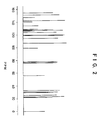
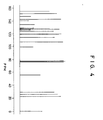
- Figs. 1,2,3 and 4 are 13C nuclear magnetic resonance spectrum charts of compounds obtained in Example 1,26,38 and 53, respectively.
- R 1 and R 2 which may be the same or different alkyl groups or may together form a ring.
- the alkyl group have 1 to 20, preferably 1 to 6 carbon atoms.
- the specific alkyl group includes, for example, a methyl group, an ethyl group, and an isopropyl group.
- R 1 and R 2 together form a ring, a cycloalkyl group, a bicycloalkyl group and tricycloalkyl ring having 5 to 10 carbon atoms are generally preferable although not critical.
- a divalent group derived from a cyclopentane ring, cyclohexane ring, a cycloheptane ring, a norbornane ring, an adamantane ring, a bicyclo (3.3.1) nonane ring and a bicyclo (2.2.1) hepthane ring is preferable.
- R 3 represents a hydrocarbon group, an alcoxycarbonylalkyl group or an cyanoalkyl group.
- the hydrocarbon group is generally an alkyl group having 1 to 10 carbon atoms, preferably 1 to 4 carbon atoms, an aryl group having 6 to 10 carbon atoms, or an aralkyl group having 7 to 14 carbon atoms although not critical.
- Specific examples of the alkyl group include a methyl group, an ethyl group and an isopropyl group.
- the aryl group includes, for example, a phenyl group and a naphthyl group.
- the aralkyl group includes, for example, a benzyl group, a phenylethyl group, a phenylpropyl group, and a naphthylmethyl group.
- the alkoxy group of the alkoxycarbonylalkyl group has generally 1 to 10, preferably 1 to 4 carbon atoms although not critical. It is desired that the alkylene group of the alkoxycarbonylalkyl group has generally 1 to 10, preferably 1 to 4 carbon atoms although not critical. Specific examples of the alkoxycarbonylalkyl group include a methoxycarbonylmethyl group, a methoxycarbonylethyl group, a methoxycarbonylpropyl group, an ethyoxycarbonylmethyl group, an ethoxycarbonylethyl group, an ethoxycarbonylbutyl group, and a butoxycarbonylethyl group.
- the cyanoalkyl group have 1 to 10, more preferably 1 to 4 carbon atoms.
- the specific examples of the cyanoalkyl group include a cyanomethyl group, a cyanoethyl group and a cyanopropyl group.
- R 4 and R 5 represent a hydrogen atom, a halogen atom, a hydrocarbon group, an alkoxy group, a cyano group, a halogenoalkyl group, an amino group, a substituted amino group, and an alkoxycarbonyl group.
- hydrocarbon groups mentioned above be the hydrocarbon group described in relation to R 3 .
- the alkoxy group has 1 to 10, preferably 1 to 4 carbon atoms.
- Specific examples of the alkoxy group includes a methoxy group, an ethoxy group, a propoxy group and a butoxy group.
- the halogen atom in the halogenoalkyl group is a fluorine atom, a chlorine atom or a bromine atom.
- the alkyl group having 1 to 4 carbon atoms is preferable.
- the specific examples of the halogenoalkyl group include a trifluoromethyl group, a trichloromethyl group and a tribromoethyl group.
- R ⁇ and R 7 which may be the same or different, and preferably represent a hydrogen atom, an alkyl group, an aralkyl group and an aryl group.
- R 4 and R are represented by the general formula J
- R 8 is preferably an alkylene group such as a tetramethylene group and a pentamethylene group; an oxyalkylene group such as an thioalkylene group such as an azoalkylene group such as
- the alkoxycarbonyl group is not particularly critical, it is generally preferable that the number of the carbon atoms be 1 to 5, more preferably 1 to 3. Specific examples of the alkoxycarbonyl group include a methoxycarbonyl group, and an ethoxycarbonyl group.
- the aromatic hydrocarbon group which may be substituted or an unsaturated heterocyclic group which may be substituted.
- the aromatic hydrocarbon group include a divalent group derived from a ring having 6 to 18 carbon atoms constituting one benzene ring or 2 to 4 fused rings of a benzene ring, such as a benzene ring, a naphthalene ring, a phenanthrene ring and an anthracene ring.
- the aromatic hydrocarbon group may have at most 5, preferably up to 3 substituents.
- substituents examples include a halogen atoms such as fluorine, chlorine and bromine; a hydroxyl group; a cyano group; a nitro group; alkyl groups having 1 to 20 carbon atoms such as methyl group, an ethyl group, a propyl group and a butyl group; alkoxy groups having 1 to 20 carbon atoms such as a methoxy group, an ethoxy group, a propoxy group and a butoxy group; aryl groups having 6 to 10 carbon atoms such as a phenyl group, a tolyl group and naphthyl group; alkylamino groups having 1 to 4 carbon atoms such as a methylamino group and an ethylamino group; dialkylamino groups having 2 to 8 carbon atoms such as a dimethylamino group and a diethylamino group; halogenoalkyl groups having 1 to 4 carbon atoms such as trifluoromethyl group
- the unsaturated hererocyclic groups which may have substituents and represented by in the general formula (I) include a divalent group derived from a 5- or 6-membered heterocyclic ring containing oxygen, sulfur and nitrogen atoms or a heterocyclic ring which is formed by fusion of a benzen ring to the 5-or 6- membered heterocyclic ring mentioned above.
- the unsaturated heterocyclic group includes a divalent heterocyclic group derived from nitrogen-containing heterocyclic rings such as a pyridine ring, a quinoline ring, a pyrrol ring and an indole ring, oxygen-containing heterocyclic rings such as a furan ring and a benzofuran ring; sulfur-containing heterocyclic rings such as a thiophene ring and a benzothiophene ring.
- preferred compound includes the following two compound includes the following two compound groups depending upon the kind of the groups represented by R lo R 2 and in the general formula (I).
- the first compound group is represented by the general formula (II):
- the fused polycyclic aromatic hydrocarbon group represented by in the general formula (II) is a divalent group derived form a fused ring comprising more than one benzene ring.
- a divalent group derived from a fused ring comprising 2 to 4 benzene rings of a naphthalene ring, a phenanthrene ring or an anthracene ring is specially preferable.
- the unsaturated heterocyclic group represented by in the general formula (II) may be a group similar to the unsaturated heterocyclic group, which is described in relation to in the general formula (I).
- the substituents of the fused polycyclic aromatic hydrocarbon group and the unsaturated heterocyclic group may be groups similar to the substituents which are described in relation to in the general formula (I).
- the divalent group derived from the pyridine ring may be a group represented as: or a group represented as:
- the latter group has a tendency to show higher coloration density.
- R i ' and R 2 ' may be the same or different alkyl groups having 1 to 20 carbon atoms, or may together form a cycloalkyl ring, a bicycloalkyl ring or a tricycloalkyl ring, with the proviso that when R 1 ' and R 2 ' are both alkyl groups, at least one is an alkyl group having more than one carbon atom,
- R 1 ' and R 2 ' in the general formula (III) be an alkyl group having one or more carbon atoms and the other be an alkyl group having more than one carbon atoms or they together form a ring.
- aromatic hydrocarbon group, the unsaturated heterocyclic ring and the substituent of these groups represented by in the general formula (III) may be a group similar to the group described in relation to in the general formula (I).
- the group derived from the pyridine ring may be
- the latter has a tendency to show higher coloration density.
- a 5- or 6-membered heterocyclic ring especially a pyridine ring and R 1 ' and R 2 are alkyl groups or cycloalkyl groups, a higher coloration density can be obtained.
- the compound represented by the above-mentioned general formula (I) is a colorless or light yellow solid or viscous liquid at normal temperature under atmospheric pressure, and the compound can be identified, for example, by the following means (A) through (C).
- R 1 and R 2 may be the same or different alkyl groups having 1 to 20 carbon atoms, or may together form a cycloalkyl ring, a bicycloalkyl ring or a tricycloalkyl ring
- R 3 represents an alkyl group having 1 to 10 carbon atoms, an aryl group having 6 to 10 carbon atoms, an aralkyl group having 7 to 14 carbon atoms, an alkoxycarbonylalkyl group including an alkoxy group having 1 to 10 carbon atoms and an alkylene group having 1 to 10 carbon atoms or a cyanoalkyl group having 1 to 10 carbon atoms, represents a group selected from the group consisting of an aromatic hydrocarbon group and an unsaturated heterocyclic group which may be substituted with a halogen atom, a hydroxyl group, a cyano group, a nitro group, an alkyl group
- A represents an anion with a nitroso compound represented by the general formula (V):
- R 4 and R ⁇ which may be the same or different, represent a hydrogen atom, a halogen atom, an alkyl group having 1 to 10 carbon atoms, an aryl group having 6 to 10 carbon atoms, an aralkyl group having 7 to 14 carbon atoms, an alkoxy group having 1 to 10 carbon atoms, a cyano group, a halogenoalkyl group having 1 to 4 carbon atoms, an amino group, a dialkylamino group having 2 to 20 carbon atoms, a 5- or 6-membered monocyclic heterocyclic group having one nitrogen atom or an alkoxycarbonyl group having 1 to 5 carbon atoms, and represents a group selected from the group consisting an aromatic hydrocarbon group and an unsaturated heterocyclic group which may be substituted with a halogen atom, a cyano group, a nitro group, an alkyl group having 1
- the reaction between the compound represented by the general formula (IV) with the compound represented by the general formula (V) is carried out in the following method.
- the reaction ratio between the two compounds can be selected in a broad range, however in general, the reaction ratio is selected in the range of from 1/10 to 10/1 (molar ratio). It is generally preferred that the reaction temperature be 0 to 200°C.
- a polar solvent such as methyl alcohol, ethyl alcohol, N-methylpyrrolidone, dimethylformamide, tetrahydrofuran is used as the reaction solvent.
- the reaction is carried out in the presence of a known base represented by amines including tertiary amino such triethylamine and secondary amine such as diethylamine, piperidine, pyrrolidine, mor- phorine; and inorganic bases such as alkali metal hydroxides or alkali metal carbonates. It is preferable that the condensing agent be used in an amount of 0.1 to 10 moles per mole of the compound of the general formula (IV).
- the spiroxazine compound represented by the formula (1) of the present invention is well soluble in ordinary organic solvents such as toluene, chloroform, teterahydrofuran. If the compound of general formula (I) is dissolved in such an organic solvent, the solution is generally colorless and transparent. When the solution is irradiated with sunlight or ultraviolet rays, the solution is promptly colored. If the solution is insulated from the light, the solution is promptly restored to the original colorless state. Thus, the compound of general formula (I) shows a good reversible photochromic action. This photochromic action of the compound of general formula (I) is also caused in a polymer solid matrix. The reversing speed is in the order of second.
- any of polymers in which the spiroxazine compound of general formula (I) of the present invention is uniformly dispersed can be used as the polymer constituting the polymer matrix.
- Any of thermoplastic resins and thermosetting resins may be adopted as the polymer solid material.
- thermoplastic resins include, for example, polymethyl acrylate, polyethyl acrylate, polymethyl mehtac- rylate, polyethyl methacrylate, polystyrene, polyacrylonitrile, polyvinyl alcohol, polyacrylamide, polu(2-hydroxyethylmethacrylate), polydimethylsiloxane, polycarbonate.
- Dispersion of the compound represented by the general formula (I) of the present invention into a thermoplastic resin can be carried out by the synthesis of the termoplastic, that is, the polymerization or melting and mixing the thermoplastic resin and the compound at temperature not less than a melting point of the thermoplastic resin.
- thermosetting resins includes the polymers of radical polymeric multifunctional monomers which include, for example, polyvalent acrylate and polyvalent methacrylate compounds such as ethylene glycol diacrylate, diethylane glycol dimethacrylate, ethylene glycol bisglycidile methacrylate, bisphenol A dimethacrylate, 2,2-bis(4-methacryloyl oxyethoxy phenyl) propane, 2,2-bis(3,5-dibromo-4-methacryloyl oxyethoxy phenyl) propane; polyvalent allyl compounds such as diallyl phthalate, diallyl terephthalate, diallyl isophthalate, diallyl epoxy succinate, diallyl fumarate, diallyl chlorendate, diallyl hexaphthalate, diallyl carbonate, allyl diglycol carbonate, trimethylolpropane triallyl carbonate; polyvalent thioacrylate and polyvalent thiomethacrylate compounds such as 1,2-bis (methacrylo
- thermosetting resins may also include, for example, copolymers of the radical polymeric multifunction monomers with radical polymeric monofunctional monomers including unsaturated carboxylic acids such as acrylic acid, methacrylic acid, maleic anhydride; acrylate and methacrylate compounds such as methyl acrylate, methyl methacrylate, benzyl methacrylate, phenyl methacrylate, 2-hydroexyethyl methacrylate; fumarate compounds such as diethyl fumarate, diphenyl fumarate; thioacrylate and thiomethacrylate compounds such as methyl thioacrylate, benzyl thioacrylate, benzyl thiomethacrylate; and vinyl compounds such as styrene, chlorostyrene, methylstyrene, vinylnaphthalene, bromostyrene.
- unsaturated carboxylic acids such as acrylic acid, methacrylic acid, maleic anhydride
- acrylate and methacrylate compounds
- thermosetting resins may further include addition copolymers of the above mentioned radical polymeric multifunctional monomers with polyvalent thiol compounds such as ethanedithiol, propanethiol, hexanodithiol, pentaerythritol tetraskisthioglycolate, di(2-mercapthoethyl)ether; and addition copolymers of polyvalent isocyanate compounds such as diphenylethane diisocyanate, xylene diisocyanate, p-phenylene diisocyanate with polyvalent alcohol compounds such as ethylene glycol, trimethylol propane, pentaerythritol, bisphenol A on the above mentioned polyvalent thiol compounds.
- polyvalent thiol compounds such as ethanedithiol, propanethiol, hexanodithiol, pentaerythritol tetraskisthioglycolate, di(2-mercapthoethy
- Dispersion of the compound of the general formula (I) into the thermosetting resin may be generally carried out by mixing the starting monomers of the thermosetting resin with the compound of the general formula (I) and thereafter polymerizing them.
- the mixing ratio of spiro xazine compound of the present invention to the polymer as mentioned above is not critical. However, in order to obtain an excellent coloration density and not to lower the solid state property of the polymer, it is preferred that the spiroxazine compound be used in a polymer as mentioned above 100 parts by weight in an amount of 0.001 to 70 parts by weight.
- the compound of the present invention can be widely used as the photochromic compound.
- the compounds of the present invention can be used as various recording materials for example, various memory materials, copying materials printing photosensitive material, cathode ray tube recording materials, laser photosensitive materials and holographic photosensitive materials instead of the conventional silver salt photosensitive materials.
- the photochromic material comprising the compound of the present invention can be used as a photochromic lens material, an optical filter material, a display material, an actinome- ter material and a decorative material.
- any method can be used without any particular limitation, so far as a uniform dimming performance is obtained.
- a homogeneous dispersion of the compound of the present invention in a polymer film is sandwiched in a lens
- a method in which the compound of the present invention is dissolved in, for example, a silicone oil, the surface of a lens is impregnated with the solution at 150 to 200°C over a period of 10 to 60 minutes and the impregnated surface is covered with a hardenable substance to form a photochromic lens can be considered a method in which the above-mentioned polymer film is coated on the surface of a lens and the surface is covered with a hardenable substance to form a photochromic lens.
- the spiroxazine compound of the present invention shows the marked photochromic characteristic in a high-molecular solid matrix, of course, at temperatures in the vicinity of ambient temperature 20 to 30°C, even at temperatures (30 to 40°) higher than the ambient temperature.
- the spiro xazine compounds represented in TAble 3 were synthesized in the same method as described in Example 26.
- the elementary analysis values of the obtained compound were 64.00% for C, 4.20% for H, 12.36% for N, 7.06% for 0, and 12.38% for F which were well in agreement with the theoretical values of C 24 H 19 N 4 O 2 F 3 , that is, 63.7% for C, 4.23% for H, 12.38% for N, 7.07% for 0 and 12.6% for F.
- the spiroxazine compounds represented in Table 5 were synthesized in the same method as described in Examples 38 and 39.
- Example 38 The structures of the obtained compounds were analyzed by the same structure-identification means as adopted in Example 38. It was confirmed that the obtained compounds were compounds represented by structural formula shown in Table 5.
- Example 1 The compound synthesized in Example 1, which was represented by the following formula: was dissolved and dispersed in polymethyl methacrylate with the aid of benzene, and a cast film was prepared on a slide glass sheet (11.2 cm x 3.7 cm) so that the concentration of the compound in the film was 1.0 x 10- 4 mol/g and the thickness of the film was 0.1 mm.
- the photochromic film was irradiated with rays of a cercury lamp (SHL-100 supplied by Toshiba) located 10 cm apart from the film at 35°C + 1°C for 60 seconds to effect coloration in the film, and the photochromic characteristics were examined with respect to items described below.
- the obtained results of Example 65 are shown in Table 9.
- the maximum absorption wavelength ⁇ , max of the colored film was determined by using a spectrophotometer (220 A supplied by Hitachi).
- Example 1 0.4 parts by weight of the sprioxazine synthesized in Example 1 was added to a composition of 70 parts by weight of chlorostyrene with 30 parts by weight of 2,2-bix (3,5-dibromo-4-methacryloyloxyethoxyphenyl) propane.
- One part by weight of perbutyl ND was added to the composition as an initiator of radical polymerization and was sufficiently mixed.
- the mixture liquid was casted into a modl comprising a glass plate and a gasket made of an ethylene-vinyl acetate copolymer and was polymerized in the mold. The mold was placed in an air oven.
- Polymerization was carried out by gradually elevating the temperature of the air oven from 30°C to 90°C for 18 hours and keeping it at 90°C over a period of 2 hours. After the termination of the polymerization, the mold was removed out from the air oven. After the mold was allowed to cool, the polymer molded piece was removed from the glass of the mold.
- Example 129 The photochromic characteristics of the obtained molded piece having a thickness of 2 mm was measured in the same method as Example 65.
- the results of Example 129 was shown in Table 10.
- Example 129 Excepting that the kinds and amounts of the monomers and the spiroxazine used in Example 129 were changed and polymerization was carried out by a known means depending the monomers, Examples 130 to 144 are identical with Example 129. The results are shown in Table 10.
- Table 10 The awreviations in Table 10 represent the following compounds.
Landscapes
- Chemical & Material Sciences (AREA)
- Organic Chemistry (AREA)
- Engineering & Computer Science (AREA)
- Materials Engineering (AREA)
- Physics & Mathematics (AREA)
- General Physics & Mathematics (AREA)
- Nitrogen And Oxygen Or Sulfur-Condensed Heterocyclic Ring Systems (AREA)
Applications Claiming Priority (8)
| Application Number | Priority Date | Filing Date | Title |
|---|---|---|---|
| JP7863790 | 1990-03-29 | ||
| JP78637/90 | 1990-03-29 | ||
| JP202516/90 | 1990-08-01 | ||
| JP20251690 | 1990-08-01 | ||
| JP2301184A JP2905591B2 (ja) | 1990-08-01 | 1990-11-08 | スピロオキサジン化合物およびその製造方法 |
| JP2301183A JP2905590B2 (ja) | 1990-03-29 | 1990-11-08 | スピロオキサジン化合物およびその製造方法 |
| JP301184/90 | 1990-11-08 | ||
| JP301183/90 | 1990-11-08 |
Publications (1)
| Publication Number | Publication Date |
|---|---|
| EP0449669A1 true EP0449669A1 (de) | 1991-10-02 |
Family
ID=27466195
Family Applications (1)
| Application Number | Title | Priority Date | Filing Date |
|---|---|---|---|
| EP91302870A Withdrawn EP0449669A1 (de) | 1990-03-29 | 1991-04-02 | Photochrome Verbindung, Zusammensetzung und Verwendung derselben |
Country Status (3)
| Country | Link |
|---|---|
| US (1) | US5246989A (de) |
| EP (1) | EP0449669A1 (de) |
| AU (1) | AU638815B2 (de) |
Cited By (13)
| Publication number | Priority date | Publication date | Assignee | Title |
|---|---|---|---|---|
| EP0524692A1 (de) * | 1991-07-24 | 1993-01-27 | GREAT LAKES CHEMICAL ITALIA S.r.l. | Photochrome und thermochrome Verbindungen und ihre Anwendung in polymeren Materialien |
| WO1995000500A1 (de) * | 1993-06-28 | 1995-01-05 | Optische Werke G. Rodenstock | Photochrome oxazineverbindungen |
| US5446150A (en) * | 1992-12-03 | 1995-08-29 | Pilkington Plc | Photochromic spiroxazine compounds |
| US5446151A (en) * | 1992-12-03 | 1995-08-29 | Pilkington Plc | Photo reactive spiro-benzoxazine compounds |
| US5446149A (en) * | 1992-12-03 | 1995-08-29 | Pilkington Plc | Bridged spiroxazine photochromic compounds |
| WO1998004563A1 (fr) * | 1996-07-31 | 1998-02-05 | Transitions Optical Inc. | Nouvelles spirooxazines homoazaadamantane et leur utilisation dans le domaine de l'optique ophtalmique |
| EP0785936A4 (de) * | 1994-10-13 | 1998-07-08 | Ppg Industries Inc | Photochrome naphthoxazin-verbindungen |
| WO1999020630A1 (en) * | 1997-10-20 | 1999-04-29 | James Robinson Limited | Photochromic compounds |
| WO2002085854A1 (de) * | 2001-04-19 | 2002-10-31 | Wella Aktiengesellschaft | 5-aryl-1,3,3-trimethyl-2-methylen-indolin derivate und deren salze, verfahren zu deren herstellung und verwendung dieser verbindungen zum temporären färben von fasern |
| US6521753B1 (en) | 2000-05-31 | 2003-02-18 | Johnson & Johnson Vision Care, Inc. | Indolinospiropyran compounds and methods for their manufacture |
| WO2016166619A1 (en) * | 2015-04-13 | 2016-10-20 | Sabic Global Technologies, B.V. | Photochromic spirooxazine compounds |
| CN106146534A (zh) * | 2016-06-29 | 2016-11-23 | 福州大学 | 一种三环苯并吗啉衍生物及其制备方法 |
| US9522921B2 (en) | 2015-04-13 | 2016-12-20 | Sabic Global Technologies, B.V. | Photochromic spirooxazine compounds |
Families Citing this family (22)
| Publication number | Priority date | Publication date | Assignee | Title |
|---|---|---|---|---|
| FR2647789B1 (fr) * | 1989-06-05 | 1994-07-22 | Essilor Int | Composes photochromiques de type indolino-spiro-oxazine, leur procede de preparation, compositions et articles photochromiques contenant de tels composes |
| FR2647790A1 (fr) * | 1989-06-05 | 1990-12-07 | Essilor Int | Composes photochromiques de type indolino-spiro-oxazine, leur procede de preparation, compositions et articles photochromiques contenant de tels composes |
| WO1995000519A1 (de) * | 1993-06-28 | 1995-01-05 | Optische Werke G. Rodenstock | Photochrome verbindungen |
| US5708064A (en) * | 1993-10-15 | 1998-01-13 | Ppg Industries, Inc. | High refractive index photochromic ophthalmic article |
| US5531940A (en) * | 1993-12-10 | 1996-07-02 | Innotech, Inc. | Method for manufacturing photochromic lenses |
| FR2727971A1 (fr) * | 1994-12-12 | 1996-06-14 | Corning Inc | Nouveaux materiaux organiques photochromiques a indice de refraction eleve, leur preparation et articles formes de ces materiaux |
| US5789015A (en) * | 1996-06-26 | 1998-08-04 | Innotech, Inc. | Impregnation of plastic substrates with photochromic additives |
| US5821287A (en) * | 1996-08-08 | 1998-10-13 | National Science Council | Photochromic pigment |
| DE19643773A1 (de) * | 1996-10-23 | 1998-04-30 | Tschochner Rolfheinz | UV-sensitive Farbstoffe |
| US5914174A (en) * | 1996-12-05 | 1999-06-22 | Innotech, Inc. | Lens or semi-finished blank comprising photochromic resin compositions |
| US6509334B1 (en) * | 1999-05-04 | 2003-01-21 | American Home Products Corporation | Cyclocarbamate derivatives as progesterone receptor modulators |
| US6417214B1 (en) * | 1999-05-04 | 2002-07-09 | Wyeth | 3,3-substituted indoline derivatives |
| EP1219626B1 (de) * | 1999-09-20 | 2005-06-01 | Fuji Photo Film Co., Ltd. | Verbindungen zur floureszenz-kennzeichnung |
| US7077985B2 (en) | 2000-05-30 | 2006-07-18 | Vision-Ease Lens | Injection molding of lens |
| US7858001B2 (en) | 2003-09-09 | 2010-12-28 | Insight Equity A.P.X., L.P. | Photochromic lens |
| ES2544317T3 (es) | 2003-09-09 | 2015-08-28 | Insight Equity A.P.X., Lp | Laminado de poliuretano fotocrómico |
| US20050136333A1 (en) * | 2003-12-19 | 2005-06-23 | Lawrence Brian L. | Novel optical storage materials based on narrowband optical properties |
| US7897296B2 (en) * | 2004-09-30 | 2011-03-01 | General Electric Company | Method for holographic storage |
| US20060078802A1 (en) * | 2004-10-13 | 2006-04-13 | Chan Kwok P | Holographic storage medium |
| EP1874984A2 (de) | 2005-03-04 | 2008-01-09 | Vision-Ease Lens, Inc. | Formungsverfahren für mit verschiedenen filmmaterialien beschichtete polymer-wafer |
| CN104359905B (zh) * | 2014-11-20 | 2017-06-23 | 南京工业大学 | 一种汞离子可视化快速检测方法 |
| CN116218033B (zh) * | 2023-01-05 | 2025-03-14 | 四川大学 | 有机材料在制备可彩色色变聚合物材料中的应用 |
Family Cites Families (2)
| Publication number | Priority date | Publication date | Assignee | Title |
|---|---|---|---|---|
| JPS6130487A (ja) * | 1984-07-20 | 1986-02-12 | Mitsubishi Heavy Ind Ltd | 構造物の海上輸送方法 |
| DE3852831T2 (de) * | 1987-02-02 | 1995-05-18 | Toray Industries | Photochrome Verbindung. |
-
1991
- 1991-03-28 US US07/676,285 patent/US5246989A/en not_active Expired - Fee Related
- 1991-03-28 AU AU73925/91A patent/AU638815B2/en not_active Ceased
- 1991-04-02 EP EP91302870A patent/EP0449669A1/de not_active Withdrawn
Non-Patent Citations (9)
| Title |
|---|
| CHEMICAL ABSTRACTS, vol. 107, No. 20, 1987, Columbus, Ohio, USA S. YAMAMOTO et al. "New spirooxazine compounds" page 782, column 2, abstract -No. 187 531s & Jpn. Kokai Tokkyo Koho JP 62 33,184 (87 33,184) * |
| CHEMICAL ABSTRACTS, vol. 107, No. 26, 1987, Columbus, Ohio, USA S. YAMAMOTO et al. "Photochromic spirophenan- throxazines" page 674, column 1, abstract -No. 246 763u & Jpn. Kokai Tokkyo Koho JP 62,164 685 (87,164685) * |
| CHEMICAL ABSTRACTS, vol. 109, No. 10, 1988, Columbus, Ohio, USA Y. TATEOKA et al. "Photochromic spirooxazine compounds and photosensitive materials using them" page 701, column 2, abstract -No. 83 544y & Jpn. Kokai Tokkyo Koho JP 63 30,486 (88 30,486) * |
| CHEMICAL ABSTRACTS, vol. 109, No. 12, 1988, Columbus, Ohio, USA Y. TATEOKA et al. "Photochromic spirooxazine compounds and photosensitive materials using them" page 600, column 2, abstract -No. 101 935h & Jpn. Kokai Tokkyo Koho JP 63 30 487 (88 30,487) * |
| CHEMICAL ABSTRACTS, vol. 109, No. 12, 1988, Columbus, Ohio, USA Y. TATEOKA et al. "Photochromic spirooxazine compounds and photosensitive materials using them" page 601, column 1, abstract -No. 101 938m & Jpn. Kokai Tokkyo Koho JP 63 30,488 (88 30,488) * |
| CHEMICAL ABSTRACTS, vol. 109, No. 14, 1988, Columbus, Ohio, USA Y. TATEOKA et al. "Photochromic spirooxazine derivatives and photosensi- tive materials using them" page 647, column 1, abstract -No. 119 752f & Jpn. Kokai Tokkyo Koho JP 63 30,489 (88 30,489) * |
| CHEMICAL ABSTRACTS, vol. 109, No. 25, 1988, Columbus, Ohio, USA S. YAMAMOTO et al. "Photochromic spirooxazines" page 865, column 2, abstract -No. 231 040y * |
| CHEMICAL ABSTRACTS, vol. 111, No. 4, 1989, Columbus, Ohio, USA S. YAMAMOTO et al. "Prepa- ration of spiro(oxazine-= pyrrolidine) compounds as photochromic substances" page 535, column 2, abstract -No. 31 395x * |
| CHEMICAL ABSTRACTS, vol. 96, No. 15, 1982, Columbus, Ohio, USA U.W. GRUMMT et al. "New photochromic 2H-1,4- oxazines and spiro-2H-1,4- -oxazines" page 693, column 1, abstract- No. 122 706n * |
Cited By (23)
| Publication number | Priority date | Publication date | Assignee | Title |
|---|---|---|---|---|
| US5730908A (en) * | 1991-07-24 | 1998-03-24 | Enichem Synthesis S.P.A. | Photochromatic and thermochromatic compounds and their application in polymeric materials |
| EP0524692A1 (de) * | 1991-07-24 | 1993-01-27 | GREAT LAKES CHEMICAL ITALIA S.r.l. | Photochrome und thermochrome Verbindungen und ihre Anwendung in polymeren Materialien |
| US5446150A (en) * | 1992-12-03 | 1995-08-29 | Pilkington Plc | Photochromic spiroxazine compounds |
| US5446151A (en) * | 1992-12-03 | 1995-08-29 | Pilkington Plc | Photo reactive spiro-benzoxazine compounds |
| US5446149A (en) * | 1992-12-03 | 1995-08-29 | Pilkington Plc | Bridged spiroxazine photochromic compounds |
| WO1995000500A1 (de) * | 1993-06-28 | 1995-01-05 | Optische Werke G. Rodenstock | Photochrome oxazineverbindungen |
| US5801243A (en) * | 1993-06-28 | 1998-09-01 | Optische Werke G. Rodenstock | Photochromic compounds (7) |
| EP0785936A4 (de) * | 1994-10-13 | 1998-07-08 | Ppg Industries Inc | Photochrome naphthoxazin-verbindungen |
| US6136968A (en) * | 1996-07-31 | 2000-10-24 | Transitions Optical Inc. | Homoazaadamantane spirooxazines and their use in the field of ophthalmic optics |
| WO1998004563A1 (fr) * | 1996-07-31 | 1998-02-05 | Transitions Optical Inc. | Nouvelles spirooxazines homoazaadamantane et leur utilisation dans le domaine de l'optique ophtalmique |
| FR2751971A1 (fr) * | 1996-07-31 | 1998-02-06 | Essilor Int | Nouvelles spirooxazines homoazaadamantane et leur utilisation dans le domaine de l'optique ophtalmique |
| WO1999020630A1 (en) * | 1997-10-20 | 1999-04-29 | James Robinson Limited | Photochromic compounds |
| GB2345910A (en) * | 1997-10-20 | 2000-07-26 | James Robinson Ltd | Photochromic compounds |
| US6303673B1 (en) | 1997-10-20 | 2001-10-16 | James Robinson Limited | Photochromic compounds |
| GB2345910B (en) * | 1997-10-20 | 2002-04-10 | James Robinson Ltd | Photochromic compounds |
| US6521753B1 (en) | 2000-05-31 | 2003-02-18 | Johnson & Johnson Vision Care, Inc. | Indolinospiropyran compounds and methods for their manufacture |
| US6803471B2 (en) * | 2000-05-31 | 2004-10-12 | Johnson & Johnson Vision Care, Inc. | Indolinospiropyran compounds and methods for their manufacture |
| WO2002085854A1 (de) * | 2001-04-19 | 2002-10-31 | Wella Aktiengesellschaft | 5-aryl-1,3,3-trimethyl-2-methylen-indolin derivate und deren salze, verfahren zu deren herstellung und verwendung dieser verbindungen zum temporären färben von fasern |
| US7056348B2 (en) | 2001-04-19 | 2006-06-06 | Wella Ag | 5-aryl-1,3,3-trimethyl-2-methylene-indoline derivatives and salts thereof, methods for the production and use of said compounds for the temporary coloration of fibers |
| WO2016166619A1 (en) * | 2015-04-13 | 2016-10-20 | Sabic Global Technologies, B.V. | Photochromic spirooxazine compounds |
| US9522921B2 (en) | 2015-04-13 | 2016-12-20 | Sabic Global Technologies, B.V. | Photochromic spirooxazine compounds |
| CN106146534A (zh) * | 2016-06-29 | 2016-11-23 | 福州大学 | 一种三环苯并吗啉衍生物及其制备方法 |
| CN106146534B (zh) * | 2016-06-29 | 2017-12-08 | 福州大学 | 一种三环苯并吗啉衍生物及其制备方法 |
Also Published As
| Publication number | Publication date |
|---|---|
| AU7392591A (en) | 1991-10-03 |
| US5246989A (en) | 1993-09-21 |
| AU638815B2 (en) | 1993-07-08 |
Similar Documents
| Publication | Publication Date | Title |
|---|---|---|
| EP0449669A1 (de) | Photochrome Verbindung, Zusammensetzung und Verwendung derselben | |
| JPWO2002090342A1 (ja) | クロメン化合物 | |
| JP2001031670A (ja) | クロメン化合物 | |
| EP0629626B1 (de) | Cyclopropyl-substituierte Spiro-fotochrome | |
| JP3047434B2 (ja) | フォトクロミック成形体 | |
| JP2723387B2 (ja) | フォトクロミック組成物 | |
| EP0696582B1 (de) | Polycyclische Spirophthalimid-Derivate, Verfahren zu ihrer Herstellung und ihre Verwendung als Fulgimide | |
| EP1038870A1 (de) | 3,3-Bis(aryl)-5-((N-(un)substituierte)amido)naphtopyrans,deren Herstellung,diese enthaltende Zusammenstellungen und (co)polymer Matrixen | |
| JP2856818B2 (ja) | スピロオキサジン化合物及びその製造方法 | |
| JP2000026469A (ja) | スピロオキサジン化合物 | |
| JP2723340B2 (ja) | フォトクロミック組成物 | |
| EP1044979A2 (de) | 1-[(N-(Un)substitutierte)amidoalkyl]spiroindolinonaphthoxazine, deren Herstellung, Zubereitungen und diese enthaltende (Co)polymer-Matrizen | |
| JP2915100B2 (ja) | フォトクロミック成形体 | |
| JP2807531B2 (ja) | フォトクロミック成形体 | |
| JP2735676B2 (ja) | フォトクロミック成形体 | |
| JPH03121188A (ja) | フォトクロミック組成物 | |
| JP2723341B2 (ja) | フォトクロミック組成物 | |
| JP2723390B2 (ja) | フォトクロミック組成物 | |
| JP2735668B2 (ja) | フォトクロミック成形体 | |
| EP0900798A1 (de) | Fulgimid-verbindungen, ihre verwendung und zusammensetzungen die diese enthalten | |
| JP2512583B2 (ja) | フォトクロミック組成物 | |
| JP2774830B2 (ja) | スピロオキサジン化合物及びその製造方法 | |
| JP2723407B2 (ja) | フォトクロミック成形体 | |
| JP2564059B2 (ja) | フォトクロミック成形体 | |
| JP3594654B2 (ja) | フォトクロミック組成物 |
Legal Events
| Date | Code | Title | Description |
|---|---|---|---|
| PUAI | Public reference made under article 153(3) epc to a published international application that has entered the european phase |
Free format text: ORIGINAL CODE: 0009012 |
|
| AK | Designated contracting states |
Kind code of ref document: A1 Designated state(s): DE FR GB IT |
|
| 17P | Request for examination filed |
Effective date: 19910816 |
|
| RAP1 | Party data changed (applicant data changed or rights of an application transferred) |
Owner name: TOKUYAMA CORPORATION |
|
| 17Q | First examination report despatched |
Effective date: 19940802 |
|
| STAA | Information on the status of an ep patent application or granted ep patent |
Free format text: STATUS: THE APPLICATION IS DEEMED TO BE WITHDRAWN |
|
| 18D | Application deemed to be withdrawn |
Effective date: 19981103 |