EP0450094A1 - Hydrophiles polymersilikat-mineralverbundmaterial und seine verwendung - Google Patents
Hydrophiles polymersilikat-mineralverbundmaterial und seine verwendung Download PDFInfo
- Publication number
- EP0450094A1 EP0450094A1 EP90915179A EP90915179A EP0450094A1 EP 0450094 A1 EP0450094 A1 EP 0450094A1 EP 90915179 A EP90915179 A EP 90915179A EP 90915179 A EP90915179 A EP 90915179A EP 0450094 A1 EP0450094 A1 EP 0450094A1
- Authority
- EP
- European Patent Office
- Prior art keywords
- complex material
- complex
- material according
- gel
- silicate mineral
- Prior art date
- Legal status (The legal status is an assumption and is not a legal conclusion. Google has not performed a legal analysis and makes no representation as to the accuracy of the status listed.)
- Granted
Links
Images



Classifications
-
- A—HUMAN NECESSITIES
- A61—MEDICAL OR VETERINARY SCIENCE; HYGIENE
- A61K—PREPARATIONS FOR MEDICAL, DENTAL OR TOILETRY PURPOSES
- A61K9/00—Medicinal preparations characterised by special physical form
- A61K9/0012—Galenical forms characterised by the site of application
- A61K9/0014—Skin, i.e. galenical aspects of topical compositions
-
- A—HUMAN NECESSITIES
- A61—MEDICAL OR VETERINARY SCIENCE; HYGIENE
- A61K—PREPARATIONS FOR MEDICAL, DENTAL OR TOILETRY PURPOSES
- A61K47/00—Medicinal preparations characterised by the non-active ingredients used, e.g. carriers or inert additives; Targeting or modifying agents chemically bound to the active ingredient
- A61K47/02—Inorganic compounds
-
- A—HUMAN NECESSITIES
- A61—MEDICAL OR VETERINARY SCIENCE; HYGIENE
- A61K—PREPARATIONS FOR MEDICAL, DENTAL OR TOILETRY PURPOSES
- A61K47/00—Medicinal preparations characterised by the non-active ingredients used, e.g. carriers or inert additives; Targeting or modifying agents chemically bound to the active ingredient
- A61K47/30—Macromolecular organic or inorganic compounds, e.g. inorganic polyphosphates
- A61K47/32—Macromolecular compounds obtained by reactions only involving carbon-to-carbon unsaturated bonds, e.g. carbomers, poly(meth)acrylates, or polyvinyl pyrrolidone
-
- A—HUMAN NECESSITIES
- A61—MEDICAL OR VETERINARY SCIENCE; HYGIENE
- A61K—PREPARATIONS FOR MEDICAL, DENTAL OR TOILETRY PURPOSES
- A61K8/00—Cosmetics or similar toiletry preparations
- A61K8/18—Cosmetics or similar toiletry preparations characterised by the composition
- A61K8/19—Cosmetics or similar toiletry preparations characterised by the composition containing inorganic ingredients
- A61K8/26—Aluminium; Compounds thereof
-
- A—HUMAN NECESSITIES
- A61—MEDICAL OR VETERINARY SCIENCE; HYGIENE
- A61K—PREPARATIONS FOR MEDICAL, DENTAL OR TOILETRY PURPOSES
- A61K8/00—Cosmetics or similar toiletry preparations
- A61K8/18—Cosmetics or similar toiletry preparations characterised by the composition
- A61K8/72—Cosmetics or similar toiletry preparations characterised by the composition containing organic macromolecular compounds
- A61K8/81—Cosmetics or similar toiletry preparations characterised by the composition containing organic macromolecular compounds obtained by reactions involving only carbon-to-carbon unsaturated bonds
- A61K8/8141—Compositions of homopolymers or copolymers of compounds having one or more unsaturated aliphatic radicals, each having only one carbon-to-carbon double bond, and at least one being terminated by only one carboxyl radical, or of salts, anhydrides, esters, amides, imides or nitriles thereof; Compositions of derivatives of such polymers
- A61K8/8147—Homopolymers or copolymers of acids; Metal or ammonium salts thereof, e.g. crotonic acid, (meth)acrylic acid; Compositions of derivatives of such polymers
-
- A—HUMAN NECESSITIES
- A61—MEDICAL OR VETERINARY SCIENCE; HYGIENE
- A61Q—SPECIFIC USE OF COSMETICS OR SIMILAR TOILETRY PREPARATIONS
- A61Q19/00—Preparations for care of the skin
-
- C—CHEMISTRY; METALLURGY
- C01—INORGANIC CHEMISTRY
- C01B—NON-METALLIC ELEMENTS; COMPOUNDS THEREOF; METALLOIDS OR COMPOUNDS THEREOF NOT COVERED BY SUBCLASS C01C
- C01B33/00—Silicon; Compounds thereof
- C01B33/20—Silicates
- C01B33/36—Silicates having base-exchange properties but not having molecular sieve properties
- C01B33/38—Layered base-exchange silicates, e.g. clays, micas or alkali metal silicates of kenyaite or magadiite type
- C01B33/44—Products obtained from layered base-exchange silicates by ion-exchange with organic compounds such as ammonium, phosphonium or sulfonium compounds or by intercalation of organic compounds, e.g. organoclay material
-
- C—CHEMISTRY; METALLURGY
- C08—ORGANIC MACROMOLECULAR COMPOUNDS; THEIR PREPARATION OR CHEMICAL WORKING-UP; COMPOSITIONS BASED THEREON
- C08K—Use of inorganic or non-macromolecular organic substances as compounding ingredients
- C08K3/00—Use of inorganic substances as compounding ingredients
- C08K3/34—Silicon-containing compounds
-
- A—HUMAN NECESSITIES
- A61—MEDICAL OR VETERINARY SCIENCE; HYGIENE
- A61Q—SPECIFIC USE OF COSMETICS OR SIMILAR TOILETRY PREPARATIONS
- A61Q1/00—Make-up preparations; Body powders; Preparations for removing make-up
- A61Q1/02—Preparations containing skin colorants, e.g. pigments
-
- A—HUMAN NECESSITIES
- A61—MEDICAL OR VETERINARY SCIENCE; HYGIENE
- A61Q—SPECIFIC USE OF COSMETICS OR SIMILAR TOILETRY PREPARATIONS
- A61Q19/00—Preparations for care of the skin
- A61Q19/10—Washing or bathing preparations
-
- Y—GENERAL TAGGING OF NEW TECHNOLOGICAL DEVELOPMENTS; GENERAL TAGGING OF CROSS-SECTIONAL TECHNOLOGIES SPANNING OVER SEVERAL SECTIONS OF THE IPC; TECHNICAL SUBJECTS COVERED BY FORMER USPC CROSS-REFERENCE ART COLLECTIONS [XRACs] AND DIGESTS
- Y10—TECHNICAL SUBJECTS COVERED BY FORMER USPC
- Y10S—TECHNICAL SUBJECTS COVERED BY FORMER USPC CROSS-REFERENCE ART COLLECTIONS [XRACs] AND DIGESTS
- Y10S424/00—Drug, bio-affecting and body treating compositions
- Y10S424/15—Suppositories
Definitions
- the present invention relates to a complex material comprising a carboxyl group containing a hydrophilic polymer and a water swellable silicate mineral. More particularly, it relates to the above-mentioned complex material having a very high water retentivity which is swelled and gelled by absorption of an aqueous substance to an extremely high degree when in contact with the aqueous substance, and further, the gel-like aromatic compositions, cosmetics, laxatives, rectal administration compositions, pharmaceutical compositions and skin ulcer external agents thereof.
- synthetic polymeric materials widely used for sanitary cotton, paper diapers, such as starch-acrylonitrile graft polymer hydrolyzates, starch-acrylic acid graft polymer neutralized products, saponified products of vinyl acetate-acrylate copolymers, hydrolyzate of acrylonitrile copolymers or acrylamide copolymers, or self-crosslinked type sodium polyacrylate.
- those which cause a swelling and gelling of aqueous substances by an absorption of aqueous substances include natural polymers such as various polysaccharides, gelatin, synthetic polymers such as polyoxyethylene, acrylic acid type polymers, and inorganic mineral substances such as montmorillonite, silica.
- natural polymers such as various polysaccharides, gelatin, synthetic polymers such as polyoxyethylene, acrylic acid type polymers, and inorganic mineral substances such as montmorillonite, silica.
- polyacrylic acid type polymers can further enhance the strength when gelled by mixing same with polyvalent oxides, polyvalent hydroxides, organic polyvalent metal compounds and salts thereof, or alumina and silica, as a crosslinking agent, and therefore are actually employed as a base for poultices.
- Emerson J. Soil Science, 14 , 52, 1963
- the synthetic polymeric materials used for the above-mentioned hygienic cotton and paper diapers probably has impurities such as unreacted monomers, polymerization initiators, crosslinking agents, and surfactants remaining therein, whereby their uses may be sometimes limited due to the characteristics of the starting materials themselves, and it has been difficult to direct them to uses for pharmaceuticals and cosmetics, for which a high safety is particularly demanded.
- the complex material of polyacrylic acid and montmorillo-nite type soil reported by Emerson has a problem in that the swelling ability is low because of small content of polyacrylic acid, and the gel strength is extremely weak.
- the present inventors in view of the state of the art as described above, have made extensive studies in order to find substances which can be used in many fields, including particularly pharmaceutical and cosmetics, and have a high swelling ability and gel strength in combination, and as a result, have found that a complex material comprising a carboxyl group containing hydrophilic polymer and a water swellable silicate mineral formulates to exhibit a specific new IR-absorption spectrum not existing in either of these starting materials, can accomplish the above-mentioned object to complete the present invention.
- hydrophilic polymer-silicate mineral complex material comprising a carboxyl group containing hydrophilic polymer and a water swellable silicate mineral and having a new absorption spectrum not existing in these starting materials within the range of 1000 to 1300 cm ⁇ 1 in the IR-absorption spectrum. Also, there are provided particularly gel-like aromatic compositions, cosmetics, laxatives, rectal administration agents, pharmaceutical compositions having an improved water solubility, and skin ulcer external agents, based on the use of such a complex material.
- the carboxyl group containing hydrophilic polymer to be used in the present invention is a polymer having carboxyl groups bonded directly or through lower alkylene group or lower alkyleneoxy group to the polymer backbone chain, or having carboxyl groups as the pendant groups, and refers to a polymer which is itself soluble or dispersible in an aqueous medium.
- the polymer backbone particularly backbone chains derived from addition polymerization of ethylenic monomers and sugar chains can be mentioned.
- the lower alkylene group or lower alkyleneoxy group specific examples include methylene, ethylene, propylene, isopropylene, butylene, methyleneoxy, ethyleneoxy, propyleneoxy, isopropyleneoxy and butyleneoxy groups.
- the carboxyl group containing hydrophilic polymer includes a variety of polymers in accordance with the above definition, regardless of whether they are themselves known or not. More specifically, there are included, for example, the addition polymerization type polymers, including homopolymer, by using monomers such as acrylic acid, methacrylic acid, maleic acid, fumaric acid or itaconic acid or esters there of, or acrylonitrile or acrylamide or hydrolyzates thereof, copolymers of these monomers with vinylacetates or acrylonitrile or hydrolyzate thereof, or acidic polysaccharide such as carboxymethyl cellulose, hyaluronic acid, xanthin gum, gum arabic or alginic acid, etc.
- the extracts from natural products or fermented products with specific microorganisms themselves or those in which the molecular weights are modified by such means as hydrolysis may be employed.
- the polymer obtained by graft polymerizing the above-mentioned carboxyl group containing monomer onto the neutral polysaccharides such as cellulose can be used as the polymer of the present invention.
- specific examples of these include the polymers disclosed in Japanese Examined Patent Publication (Kokoku) No. 53-46199, Japanese Unexamined Patent Publications (Kokai) Nos. 56-76419, 56-84701, and 60-31511, and U. S. Patent 4,333,461.
- poly(acrylic acid) and poly(methacrylic acid) homopolymer are preferable, preferably having (number or weight) average molecular weights of at least 500,000, more preferably over 1,000,000.
- those having molecular weights of less than a 500,000 average molecular weight tend to be separated into poly(acrylic acid) or poly(methacrylic acid) and water swellable silicate mineral if left to stand for a long time, when the gel is formed in an aqueous substance, although the desired complex of the present invention can be formed.
- the poly(acrylic acid) and the poly(methacrylic acid) are not particularly limited and may be straight chain or crosslinked type, but a complex material obtained by using a straight chain type as the starting material has a weaker gel strength during gelation than when using a crosslinked type as the starting material, and further, the fiber forming property remains even when formed into a gel. Therefore, it is more advantageous to use a crosslinked type as the poly(acrylic acid) and the poly(methacrylic acid).
- the polymer may be one crosslinked under conditions wherein the weight % of the crosslinking agent based on respective monomers during the reaction falls within the range of 0.3 to 3.5%, and need not be crosslinked to such a high degree as employed in the poly(acrylic acid) and the poly(methacrylic acid) used in paper diaper.
- carboxypolymethylene or carboxylvinyl polymer set forth in the Component Standards of Quasi-drugs of Japanese Pharmacopoeia or the Standards of the Starting Materials for Cosmetics are included.
- Hibis 104 (Wako Junyaku, molecular weight about 3,000,000), Hibis 103 (Wako Junyaku, molecular weight about 4,000,000), Carbopol 934 (Goodrich, molecular weight several 1,000,000) are included, as these have been confirmed to be safe when used to human bodies, and therefore, are particularly preferable for use with the complex of the present invention for the phrmaceuticals or cosmetics. It is preferable to use the acidic polysaccharide as specifically enumerated above, which are per se available for pharmaceutical and cosmetics.
- water swellable silicate as used in the present specification and claims is used in a broad sense, and includes all kinds, provided it is a silicon dioxide containing a water swellable mineral naturally produced or synthesized. Therefore, the water swellable silicate mineral may include layered silicate minerals, typically swellable fine particulate silica as well as minerals belonging to the smectite family, the vermiculite family and the chlorite family. Specific examples of swellable fine particulate silica include Aerosol (trade mark, Nippon Aerosol), and commercial products thereof include AerosolTM #200 and #303.
- the layered silicate mineral for example, montmorillonite of the smectite family, forms one sheet of crystalline layer by bonding with lamination of silicate tetrahedral layer-alumina octahedral layer-silicate tetrahedral layer.
- the Al ion which is the center metal of the octahedral layer is partially substituted with Mg ion having smaller positive charge, the layer as a whole is negatively charged.
- the alkali metal ions corresponding to the negative charges exists between the layers to neutralize the charges of the crystalline layer.
- the exchangeable cations absorb a large amount of water between the layers, and therefore, the mineral has been known to exhibit a swellability even alone, and since these cations interact well with the above-mentioned carboxyl group containing hydrophilic polymers, it is preferable as the silicate mineral of the present invention.
- the smectite family including, in addition to the above-mentioned montmorillonite species, paiderite species, saponite species, hectorite species, bentonite species, nontronite species, and sohconite species is particularly preferable because it can give a complex material having on a good swellability in pure water and a high gel strength during gelation.
- Kunipia, Smecton both from Kunimine Kogyo
- Laponite Laporte
- fluorotetrasilicon mica Topicy Kogyo
- one or two or more kinds can be chosen from among these minerals, as desired.
- the complex material of the present invention comprising the starting materials as described above is specific in having an IR-absorption at 1000 to 1300 cm ⁇ 1 not existing in these starting materials.
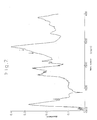
- the complex material of the present invention comprising Hibis (Wako Junyaku) and Laponite (Laporte), as shown in the IR-absorption spectrum of said complex material measured with KBr tablet (Fig. 1), in addition to the absorption around 1000 cm ⁇ 1 due to the Si-O skeleton stretching vibration of the layered silicate mineral, a peak newly appears at around 1070 cm ⁇ 1.
- This absorption does not exist in Hibis and Laponite which are the starting materials, and does not exist in a simple mixture thereof.
- the complex material of the present invention when the complex material of the present invention is formed, a peak appears at around 1040 to 1100 cm ⁇ 1, and therefore this peak can be considered as the absorption inherent to the complex material.
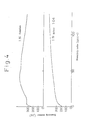
- the complex material of the present invention comprising the acrylic acid type polymer and the swellable fine particulate silica has new absorptions not found in either starting material, at around 1220 cm ⁇ 1 and 1225 mm ⁇ 1 as shown by the IR-absorption spectrum in Fig. 2.
- the IR-absorption spectrum thus newly appearing will vary in the absorption band thereof, depending on the starting materials chosen, but the complex material of the present invention can be specified by observation of the new absorption which appears in a region not existing in the starting materials.
- the mechanism of the appearance of this absorption has not yet been clarified, but may be considered to be due to a formation of a hydrogen bond between poly(acrylic acid) and/or poly(methacrylic acid) and the water swellable silicate mineral, or the ionic mutual interaction between the positive charge on the silicate mineral end surface and the negative charge of the dissociated carboxyl group.
- the complex materials of the present invention are also characterized by a strong gel strength.
- the hardness and gel strength of the complex material of the present invention when dispersed in pure water to 1% by weight have the characteristics as shown in Table 1.
- the complex material of the present invention as described above can be prepared from the respective corresponding starting materials according to a mixing-kneading method known per se .
- a mixing-kneading method known per se .
- the carboxyl group containing hydrophilic polymer and the water-swellable silicate mineral are mixed in water until homogeneous.
- the concentrations thereof are not particularly limited because the properties of the homogeneous solution differ depending on the characteristics of the starting materials employed, but if the concentrations are too high, they become difficult to mix, and therefore, both are practically preferably 5% or lower.
- the mixing method can be practiced in conventional manner, but if the mixing is practiced at too high a shear rate, the polymer will be decomposed, and therefore, should be practiced under a relatively lower shear rate for a long time.
- the pH of the mixed aqueous solution is adjusted to 5 to 7, more desirably to 6.0 to 6.5, to effect a swelling and gelation.
- the pH at this time is not particularly limited, but this pH range may be considered to be advantageous for the formation of the complex material, because a particularly high gel strength is exhibited in this pH range.
- the aqueous gel is dehydrated and dried and taken out as powder.
- the dehydration and drying method may be any of spray drying, lyophilization, solvent dehydration, etc., but solvent dehydration is the most efficient.
- solvent dehydration is the most efficient to the aqueous gel.
- alcohols or ketones methanol, ethanol, n-propanol, iso-propanol, n-butanol acetone, methyl ethyl ketone or combinations thereof can be used.
- the base used for the pH adjustment is not particularly limited, but alkali metal hydroxides, ammonia water, and water-soluble amines are preferable used.
- the purpose of the pH adjustment is to make a part of the carboxyl groups of the carboxyl containing hydrophilic polymer more readily dissociable into ions, thereby enhancing the swelling ability in pure water.
- the complex material will not be destroyed by such a pH adjustment.
- the precipitates can be recovered by a conventional method such as centrifugation, filtration, and decantation.
- the complex material, precipitated and recovered as described above, is transferred to the drying step, for which a drying method generally utilized, i.e., hot air drying or vacuum drying, can be utilized.
- a drying method generally utilized i.e., hot air drying or vacuum drying
- the aqueous gel formed in the above-mentioned pH adjustment step can be dried as such by a method such as freeze drying or spray drying, to obtain the complex material powder. Since the form of the present complex material can be varied from powder to sheet by choosing the concentration of the organic solvent and the drying method, these should be chosen depending on the purpose of use of the complex material.
- the mixing ratio of these starting materials is not limited because it is varied depending on the kinds of polymer and the water swellable silicate mineral employed, but generally the mixing ratio of the carboxyl containing hydrophilic polymer and the water swellable silicate is 0.3 to 0.97 in terms of the weight fraction calculated on solids of the former.
- the gel strength of the present invention will be at a maximum within the range of the weight ratio of the polymer from 0.3 to 0.8.
- the complex material of the present invention thus obtained can be confirmed by an IR-absorption spectrum as described above, or by measuring the strength of the aqueous gel thereof, in some cases.
- a particular feature of the characteristics of the complex material of the present invention is that the gel strength becomes about 2-fold that before drying, when a drying step is included in the preparation steps thereof. More specifically, the gel obtained by drying the gel after the pH adjustment, and dispersing it again into water to the same concentration, will have a value which is about 2-fold the gel strength before drying. The reason for this has not yet been clarified, but it is estimated that the intermolecular distance between the polymer and the water swellable silicate mineral is shortened by drying, whereby the hydrogen bonding is more developed, resulting in an increased gel strength.
- the complex material of the present invention has a swelling rate, swelling ability, and gel strength in combination which are equal to or higher than those of the synthetic polymeric materials presently used in sanitary cotton and paper diapers, for example, starch-acrylonitrild graft polymer hydrolyzate, hydrolyzate of acrylamide copolymer, self-crosslinking type sodium polyacrylate, etc.
- a swelling rate, swelling ability, and gel strength in combination which are equal to or higher than those of the synthetic polymeric materials presently used in sanitary cotton and paper diapers, for example, starch-acrylonitrild graft polymer hydrolyzate, hydrolyzate of acrylamide copolymer, self-crosslinking type sodium polyacrylate, etc.
- an acrylic acid polymer when used, it will be generally swelled to 200 to 800-fold in terms of weight ratio in water, and 30 to 100-fold in physiological saline.
- poly(acrylic acid) of poly(methacrylic acid) and water swellable silicate mineral which are starting materials of the complex material of the present invention, are both weak against salts, and when used as the base for a cream, etc., may cause a frequent water liberation to occur, but by a complex formation according to the present invention, a base which is stable at a broader salt concentration and in a broader pH region than the respective starting materials can be provided.
- poly(acrylic acid), poly(methacrylic acid), hyaluronic acid, xanthin gum, gum arabic which have been approved as additives in pharmaceuticals, can be combined to simply prepare the complex material, and therefore, materials (or base materials) suitably used particularly in the fields of pharmaceutical and cosmetics, where safety is demanded, can be provided.
- the texture can be also controlled freely, from that approximate to a water swellable silicate mineral to that approximate to a polyacrylic acid, depending on the compositional ratio of the starting materials.
- bases for cosmetics such as creams, lotions, and aromatics
- bases for pharmaceuticals such as styptic, hydrogels for pharmaceutical, laxatives, swellable contraceptives, and quiescent suppositorys and for sanitary uses such as paper diapers and other sanitary articles, soil improvers for agriculture and horticulture afforestation, water stoppage agents, plasma fractionation agents, dust preventives, dew formation preventives, deodorants, disposable pocket heaters, and gels for artificial seeds.
- a gel-like aromatic composition as described below is provided. More specifically, this is a gel-like aromatic composition comprising 1 to 99.0% by weight of a perfume, 0 to 90% by weight of an alcoholic organic solvent, 0 to 40% by weight of a nonionic surfactant, 0.1 to 90% by weight of the polymer-silicate mineral complex material of the present invention, and the balance of water.
- the gel-like aromatic composition using the complex material according to the present invention is free from the above-mentioned drawbacks.
- the gel-like aromatic composition of the present invention comprises a complex material of a poly(acrylic acid) or poly(methacrylic acid)-water swellable silicate mineral, a perfume, an alcoholic organic solvent, a nonionic surfactant and water.
- the kind of the perfume in the present invention is not particularly limited, but, for example, those from the hydrocarbon type with a small polarity to the alcoholic type with a large polarity can be formulated.
- the alcoholic organic solvents can include methanol, ethanol, propanol, isopropanol, propylene glycol, 1,3-butylene glycol, 3-methyl-3-methoxybutanol, 3-methyl-1,3-butane diol or the like.
- the nonionic surfactant is not limited, provided that it can disperse, emulsify and solubulize the perfume, as exemplified by sorbitan esters, POE sorbitan esters, POE alcohol ethers, POE alkyl ethers, and POE castor oil derivatives.
- the poly(acrylic acid) or poly(methacrylic acid) may be either straight chain or crosslinked, and is not particularly limited.
- a cosmetic comprising the present complex material formulated as the thickener is provided.
- the thickener various polysaccharides, natural polymers such as gelatin, and synthetic polymers such as polyoxyethylene and polyacrylic acid have been primarily used.
- thickeners may be frequently a cause of such a feeling, and in such cases, a sticky feeling may be sometimes removed by using a water swellable silicate mineral such as montmorillonite and silica.
- a water swellable silicate mineral such as montmorillonite and silica.
- thickeners of the water swellable silicate mineral type have a poor stability, therefore there is a tendency for a water liberation with an elapse of time when formulated in cosmetics.
- the complex material according to the present invention as the thickener, a cosmetic which gives a conspicuous fresh feeling without stickiness can be obtained. Also, by using the complex material of the present invention prepared using the starting materials having previous examples of approval as the base for cosmetics, it can be also used without trouble with respect to safety.
- the cosmetic according to the present invention can be thickened even with an extremely small amount and has a conspicuous freshness feeling without stickiness.
- the amount of the complex material to be formulated in the cosmetic is preferably 5.0% by weight or less, usually 1.0% by weight or less.
- other components used conventionally for cosmetics such as organic and inorganic powders, polyhydric alcohol surfactants, preserving sterilizers, dyes, perfumes, and pharmaceuticals can be suitably formulated within the range which does not impair the effect of the present invention.
- the dosage form of the cosmetic may be as desired, and can be a solubulized system, emulsified system, or powder dispersion system.
- the uses to which it is applied are wide and include basal cosmetics such as lotions, milky lotions, and creams, as a matter of course, and make-up cosmetics such as a foundation, and hair cosmetics.
- a laxative having the present complex material formulated therein.
- laxative mucilaginous laxatives composed mainly of liquid paraffin or vegetable oil, infiltratable laxatives represented by surfactants, swellable laxatives such as agar, prisium seed, carboxymethyl cellulose, and methyl cellulose have been generally employed.
- mucilaginous laxatives leak from the anus to contaminate clothing, dissolve vitamins A and D to inhibit the absorptions thereof, and inhibit the digestive action.
- infiltratable laxatives when oily components are co-present, may be absorbed, and there is a fear that liver disorders may occur.
- swellable laxatives although having no local irritation action but, on the contrary exhibiting a mucilaginous-covering action, thus have an advantage in that they can be also used when there is an inflammatory disorder at enteric mucosa, have a drawback in that flatulence customarily accompanied with constipation is worsened at the initial stage of therapy, and a drawback in that they must be administered in a relatively larger dose.
- the laxative formulated with the complex material according to the present invention is highly swelled when borough into contact with even a very small amount of an aqueous substance such as body fluid, to form a soft gel, thereby acting effectively.
- the complex material can be prepared simply by using a combination of starting materials which have previous approval as pharmaceutical additives, and therefore, may be considered to have no problem with respect to safety.
- a particular feature of the present complex material is that it has specific properties of being substantially not swelled in an artificial gastric juice (Liquid 1 of Japanese Pharmacopoeia) but is swelled in an artificial enteric juice (Liquid 2 of Japanese Pharmacopoeia).
- the laxative according to the present invention comprises the above-described complex material having the specific properties formulated therein.
- the complex material can be a swellable laxative even in a very small amount or alone, due to its high swelling ability, but by a combination with various pharmaceutical and additives to be formulated in other conventional laxatives, a further promotion of mucilaginous-covering action and reduction of local irritation can be effected.
- the materials which can be formulated with the carboxyl containing hydrophilic polymer-water swellable silicate mineral complex material include fluid paraffins, various vegetable oils, dioctyl sodium sulfossucinate, polocsalcol, agar powder, Ispagule powder, prisium seed, methyl cellulose, carboxymethyl cellulose, mannan, otherwise various vitamins, and excipitents.
- the dosage form is not particularly limited, and granules, tablets, powder, and capsules can be used.
- a rectal administration composition formulated with the present complex material.
- the rectal formulation preparation is adapted to be used for effecting not only a local action but also a systemic action, by making use of its pharmaceutical advantages.
- a local action is required, it is used for hemorrhoids, conticipation, and enteral cleaning.
- a systemic action for example, extremely various pharmaceutical can be administered as the rectal administration preparation for use in antipyretic, analgesic, anticonvulsant, antieplectic, antiemetic, tranquilizer, circulatory organs, peripheral nerve, antihistamine, hemostasis, antitumor, and antibiotics.
- some have a low absorption ratio from the rectum, posing a problem in bioavailability.
- the present composite is formulated into the rectal administration composition, whereby a residence in the rectal cavity is imparted, and a persistency and releasability of the pharmaceutical can be synergetically ameliorated.
- the rectal administration composition according to the present invention is characterized by formulating the complex material of the present invention having the above-mentioned specific properties.
- the amount of the complex material formulated into the rectal administration composition should be desirably 0.01 to 70% by weight.
- the amount of the complex material formulated is extremely small, a sufficient water swellability can not be obtained in the preparation formed, while if it is too much, the preparation formed will be undesirablye brittle and unstable.
- the rectal administration composition in the present invention can be formed into a preparation in conventional manner together with a pharmaceutical and a base in addition to the complex material comprising, for example, a poly(acrylic acid) and a water swellable silicate mineral. If necessary, various additives such as preservatives, stabilizers, colorants, surfactants, antiseptics, extenders, and antioxidants can be also formulated.
- the rectal formulation composition in the present invention can be administered to patients in the form of a rectal suppository formed in a conventional manner, soft capsules for a rectal administration, or dosage form to be administered by a syringe for a rectal administration.
- the pharmaceutical to be used in the present invention is not particularly limited, but examples of the pharmaceutical for rectal administration generally include steroid hormones such as hydrocortisone, hydrocortisone acetate, prednisolone, methylprednisolone, prednisolone acetate, hydrocortisone acetate propionate, prednisolone valerate acetate, dexamethasone, betamethasone, triamcinolone, chlobetazone butyrate, chlobetazole propionate, fluosinonide, dexamethasone acetate, betamethazone valerate, triamcinolone acetonide, etc.; antiphlogistic analgesics such as aspirin, salicylic acid, acetaminophen, methyl salicylate, glycol salicylate, mefenamic acid, fluefenamic acid, indometacin, diclofenac, ketoprofen, ibu
- mineral oils such as petrolatum, paraffins, fluid paraffins, silicone oils, etc.
- higher fatty acids such as stearic acid, oleic acid, lauric acid, myristic acid, palmitic acid, etc.
- higher alcohols such as cetanol, lauryl alcohol, stearyl alcohol, etc.
- waxes such as wood was, whale wax, honey was, beeswax, etc.
- natural and synthetic fatty acid triglycerides such as Wittepsol, Saposier, Pharmasol, ODO, Panacete, Coconade, Migriol, etc.; and so on.
- water soluble base for example, polyethylene glycol, polypropylene glycol, glycerine, glycero-gelatin, etc. can be included, and the above bases can be used either single or in combination of two or more kinds.
- the reason why a residence can be retained in the present invention is considered to be due to the fact that the complex material of a carboxyl group containing hydrophilic polymer and a water swellable silicate mineral according to the present invention has a water swelling action, and that its specific gravity is larger than 1, whereby the base becomes heavier than water and consequently, a diffusion from within rectal cavity can be suppressed.
- the pharmaceutical is aminobenzoate, procaine hydrochloride, lidocaine, benzocaine, procaine, dibucaine, tetracaine hydrochloride, lidocaine hydrochloride, teecaine , benzyl alcohol, promoxine hydrochloride, catacaine hydrochloride, butanicaine hydrochloride, piperocaine hydrochloride, chlorobutanol, etc.; narcotic tranquilizers such as barbital, amobarbital, amobarbital sodium, phenobarbital, phenobarbital sodium, secobarbital sodium, benzobarbital calcium, hexobarbital, trichlophos , bromovalerylurea, glutethimide, metacal
- the base to be used in the present invention may be either oily or water soluble, and examples of oily base may include vegetables oils such as cacao fat, palm fat, laurin fat, cinnamon fat, coconut oil, olive oil, soybean oil, repeseed oil, camellia oil, coconut oil, peanut oil, avocado oil, corn oil, sesame oil, absorbed gradually, whereby the persistency is also improved.
- vegetable oils such as cacao fat, palm fat, laurin fat, cinnamon fat, coconut oil, olive oil, soybean oil, repeseed oil, camellia oil, coconut oil, peanut oil, avocado oil, corn oil, sesame oil, absorbed gradually, whereby the persistency is also improved.
- the rectal administration composition can be also applied as a vaginal suppository, due to the characteristics possessed thereby.
- a pharmaceutical composition having a difficult-to-solubulize pharmaceutical formulated with the present complex material.
- a difficult-to-solubulize pharmaceutical when administered to or coated on a living body, has a low solubility into a digestive juice or skin fat, and therefore, the pharmacological activity can be effectively absorbed only with difficulty. Therefore, various attempts have been made to ameliorate the absorbability of difficult-to-solubulize pharmaceuticals. For example, attempts have been made to enhance the absorbability of the pharmaceutical by embedding them in liposome bases or incorporating difficult-to-solubulize pharmaceutical in a hydrogenated phospholipid matrix (Japanese Unexamined Patent Publication (Kokai) No. 61-172832).
- the method using liposome and hydrogenated phospholipid may have an excellent biocompatibility, it has no persistency at a high solubility, and further, when formulated in an external agent, drawbacks arise in that the amount of the pharmaceutical distributed on the skin fat is small, and the amount absorbed by the skin is also small.
- the pharmaceutical composition according to the present invention by utilizing the excellent water absorptive action as well as a high safety to living body of the composition comprising a carboxyl group containing hydrophilic polymer and a water swellable silicate mineral, to enable the difficult-to-solubulize pharmaceutical to be included in the complex material, a composition exhibiting an excellent solubility, permucosal and percutaneous absorption can be obtained.
- the pharmaceutical composition according to the present invention is characterized by formulating the above-described complex material having specific properties with a difficult-to-solubulize pharmaceutical.
- difficult-to-solubulize pharmaceuticals are those which are "slightly difficult-to-solubulize", “difficult-to-solubulize”, “extremely difficult-to-solubulize”, and “substantially insoluble”, as defined in the Japanese Pharmacopoeia, including specifically coronary blood vessel vasodilators such as nifedipine, dipyridamole, prenylamine lactate, efloxate, etc.; antiepileptis such as phenytoin, phenacemide, ethylphenacemide, ethotoin, primidone, phensuccimide, nitrazepam, chlonazeban, carbamazepine, etc., antibiotics such as griseofulvin, tolunaphtate , etc.; skeletal muscle relaxants such as chlosobzaone , phenopropamate , etc., antihistamines
- arrhythmics such as phenytoin, disophramide, etc.
- diuretics such as polythiazide , spironolactone, chlorotaridone , etc.
- hypotensors such as decerupidine , meptame , reserpine, meptamate , etc.
- hormones such as prostaglandin F, 2 ⁇ danasol , mepitiostane, etc., which are substantially insoluble in water, or have a very low solubility if dissolved to some extent, or a very slow dissolving rate.
- the difficult-to-solubulize pharmaceutical employed may be either a solid or a liquid.
- a difficult-to-solubulize pharmaceutical is dissolved in an organic solvent and the complex material of a poly(acrylic acid) and a water swellable silicate mineral according to the present invention is dispersed into the solution, is thoroughly stirred, and the organic solvent is then removed, followed by a thorough drying, to give a pharmaceutical composition of the present invention.
- One or two more kinds of difficult-to-solubulize pharmaceutical may be dissolved at the same time in a solvent, depending on the desired preparation.
- the method of removing the solvent preferably uses an evaporator or a vacuum dryer. The method of removing the solvent by filtration is not preferable, because even the difficult-to-solubulize pharmaceutical may be discharged.
- organic solvent those generally employed, such as ethanol, methanol, acetone, etc. may be used, but a solvent species and a solvent amount capable of dissolving the pharmaceutical uniformly are required.
- the temperature at which the complex material is dispersed is not limited, provided it is a temperature at which the difficult-to-solubulize pharmaceutical can be dissolved, and room temperature may be sufficient depending on the kind of pharmaceutical.
- the ratio of the difficult-to-solubulize pharmaceutical based on the complex material of a poly(acrylic acid) and a water swellable silicate mineral is not particularly limited, but when it exceeds 10%, the difficult-to-solubulize pharmaceutical will be insufficiently included, whereby crystals of the pharmaceutical may be precipitated, and therefore, is preferably 10% or less.
- the inclusion ability of the pharmaceutical composition of the present invention can be controlled by varying the kind or formulation ratio of the poly(acrylic acid) and the water swellable silicate mineral during the preparation of the complex material, and consequently, the dissolving rate of the pharmaceutical can be controlled.
- the pharmaceutical composition of the present invention can be also prepared by mixing the complex material with a difficult-to-solubulize pharmaceutical in a base, without problems.
- vitamin A's such as vitamin A oil, retinol, retinol acetate, etc.
- vitamin B2's such as riboflavin, riboflavin acetate, flavin adenine dinucleotide, etc.
- vitamin B6's such as pyridoxine hydrochloric acid, pyridoxine dioctanoate
- vitamin C's such as L-ascorbic acid, dipalmitic L-ascorbate, sodium L-ascorbic acid-2-sulfate
- panthothenic acids such as calcium panthotenate, D-panthothenyl alcohol, pantothenyl ethyl ether, acetyl panthothenylethyl ether, etc.
- vitamin D's such as vitamin A oil, retinol, retinol acetate, etc.
- vitamin B2's such as riboflavin, riboflavin acetate, fla
- an external skin ulcer agent is provided.
- an external skin ulcer agent comprising an absorptive material, which absorbs the oozed fluid from he skin ulcer portion without accumulation, formulated with a pharmaceutical is employed.
- an absorptive material there have been utilized dextrin and dextran cross linked products, white sucrose, aluminum hydroxide gel, etc., but all of these must be formulated in large amounts, to sufficiently absorb oozed fluid while maintaining an adequate water content at the skin ulcer.
- the complex material according to the present invention can sufficiently fulfill these functions in a small amount, and becomes an elastic gel when it absorbs an oozed liquid; thus protecting the skin ulcer portion. Therefore, by a formulation of the present complex material, an external skin ulcer agent not know in the art can be provided.
- the external skin ulcer agent can be formed into a preparation by conventional method, but if necessary, in addition to the present complex material and the pharmaceutical various additives such as preservatives, colorants, extenders, etc. can be formulated.
- the amount of the present complex material formulated is not particularly limited, but is desirably 5% by weight or more, to absorb the fluid excreted from within the body.
- the pharmaceutical to be used in the present invention is not particularly limited, but in addition to sterilizers such as quaternary ammonium salts, iodine, coridone iodine, etc., the above-mentioned granulation formation promotor, various antibiotics and blood circulation promotors, etc. can be formulated.
- the dosage form also is not particularly limited, but an ointment, cream, lotion, powder spray, etc. are preferred.
- the complex material of the present invention has an excellent hardness and swelling ratio. Particularly, one with a weight fraction of Hibis 104 exceeding 0.3 is superior.
- Example 1 The preparation method and evaluation method in Example 1 were repeated except for using 2% aqueous carboxymethyl cellulose (Gotoku Yakuhin, TPT-1200) solution and 2% aqueous dispersion of Laponite XLG (Laporte) in place of 2% aqueous Hibis 104 (Wako Junyaku) solution and 2% aqueous dispersion of Laponite XLG (Laporte) and adding carboxymethyl cellulose at weight fractions calculated on solids of 0.1, 0.2, 0.3, 0.4 0.6, 0.7, 0.8 and 0.9, respectively.
- the Control is the evaluation of the starting material alone.
- Table 3 and Table 4 The evaluations results are shown in Table 3 and Table 4, respectively.
- a preparation of a complex material was attempted with a combination of a straight chain poly(acrylic acid) or a crosslinked poly(acrylic acid) with magnesium hydroxide, calcium hydroxide, aluminum hydroxide, aluminum sulfate, potash alum, silica gel, or Laponite XLG. More specifically, to 100 ml of a 3% aqueous solution of the former, 100 ml of a 1% aqueous dispersion of the latter was added, and after uniform mixing, the mixture was neutralized with 5% aqueous sodium hydroxide under stirring. An amount 500 ml of acetone was added thereto, followed by recovery of the precipitates by suction precipitation.
- the complex material using the acidic polysaccharide of the present invention is specific in that the gel strength will be little influenced by salts, although the hardness itself cannot be made too high.
- PAA (25), PAA (75), PAA (100), PAA (400) mean poly(acrylic acids) with average molecular weights of 250,000, 750,000, 1,000,000 and 4,000,000, respectively. As the molecular weight of poly(acrylic acid) is larger, both the hardness and swelling ratio become larger, but it can be understood that a complex formation occurs with at least an average molecular weight of 500,000 or higher.
- Example 7 For these respective complex materials, the hardness and swelling ratio in pure water were measured in the same manner as in Example 1. The results are as shown in Table 7, and it can be seen that they have a hardness and swelling ratio equal to those of the complex material of Example 1.
- a 1% aqueous solution of Hibis 104 and a 1% aqueous solution of Laponite XLG were mixed at 3:1 by weight, and then divided into 9 aliquots, which were respectively adjusted from pH 4 to 10 with 10% sodium hydroxide.
- the gels of various pH were subjected to a measurement of the hardness thereof, and then 2-fold amount of acetone was added to each gel to recover the complex material as precipitates, which were vacuum dried at 60°C to obtain a complex material powder.
- This powder was again dispersed to 1% in pure water, and the hardness measured.
- Table 11 It can be understood that the gel has a maximum value at a pH of 5 to 7, particularly at 6.0 to 6.5, both before and after drying. Further, it can be alos understood that the hardness is increased to about two-fold by drying.
- the complex material prepared by drying from the gel of pH 6.3 in Example 9 was placed in McIlvain buffer of pH 1 to 8, Liquid 1 (artificial gastric juice) and Liquid 2 (artificial enteric juice) listed in Japanese Pharmacopoeia sampled in a measuring cylinder for an examination of equilibrated value of swelling ratio.
- the swelling ratio was read from the graduation on the measuring cylinder.
- Table 13 The results were summarized in Table 13. It can be clearly seen that the swelling ratio depends strongly on the pH.
- Example 1 The preparation method and evaluation method in Example 1 were repeated except for using 2% aqueous solution of a poly(methacrylic acid) (General Science) and a 2% aqueous dispersion of Laponite XLG (Laporte) as the starting materials. Results similar to those of Table 2 are shown in Table 14.
- the complex material of the present invention has an excellent hardness and swelling ratio. Particularly, it can be appreciated that on with a weight fraction of poly(methacrylic acid) exceeding 0.3 is superior.
- Example 4 was repeated except for using a poly(methacrylic acid) having a similar average molecular weight in place of the poly(acrylic acid).
- Example 12 For the complex materials thus obtained, as in Example 12, the hardness and swelling ratio in pure water were examined. The results are shown in Table 15.
- PMAA (25), PMAA (75), PMAA (100), PMAA (400) mean poly(methacrylic acids) with average molecular weights of 250,000, 750,000, 1,000,000 and 4,000,000, respectively. It can be seen that the hardness and swelling ratio will be greater as the molecular weight of poly(methacrylic acid) is larger, but a complex formation can be effected with at least an average molecular weight of 500,000 or more.
- Example 5 was repeated except for using a poly(methacrylic acid) (General Science) in place of using Carbopol 934 (Goodrich) as the starting material, and using a 10% sodium hydroxide of pH 6.4 in place of that of a pH of 6.3 for a pH adjustment of the uniform mixture.
- a poly(methacrylic acid) General Science
- Carbopol 934 Goodrich
- Example 14 According to the same procedure as described in Example 14, 500 ml of an aqueous 3% poly(methacrylic acid) (General Science) solution was mixed uniformly with each 500 ml of an 1% aqueous dispersion of Kunipia, Beagam, Smectone SA or Laponite XLG, and each mixture was adjusted to pH 6.3 with 10% sodium hydroxide under stirring. Each mixture was spray dried as such to obtain dry fine powder of complex material, and hardness and swelling ratio in pure water were measured. The results are shown in Table 17. From these results, it can be seen that a complex material having properties equal to those in Example 14 can be obtained without the use of an organic solvent.
- a 1% aqueous solution of a poly(methacrylic acid) and a 1% aqueous solution of Laponite XLG were mixed at 3 : 1 by weight, and then divided into 9 aliquots, which were respectively adjusted from pH 4 to 9 with 10% sodium hydroxide.
- the gels of various pH were subjected to a measurement of the hardness thereof, and then 2-fold amount of acetone was added to each gel to recover the complex material as the precipitates, which were vacuum dried at 60°C to obtain complex material powders.
- Example 16 The tests were conducted in the same manner as in Example 10 except for using the complex prepared by drying from the gel having a pH of 6.3 in Example 16.
- a 2% aqueous solution of carboxymethyl cellulose (Gotoku Yakuhin, TPT-1200) was first ion exchanged with Amberlite IR-120B (Organo), and then either one of Laponite XLG (Laporte), Kunipia (Kunimine Kogyo), Beagam (Vanderbilt), Smectone SA (Kunimina Kogyo), bentonite of Japanese Pharmacopoeia as a water-swellable silicate mineral was added to a weight fraction calculated on solids of carboxymethyl cellulose of 0.75.
- the mixture uniformly mixed by a homomixer, and each mixture adjusted to a pH of 6.3 with 2N NaOH.
- a 2-fold amount of ethanol was added to each mixture to recover the complex by precipitation.
- the respective precipitates recovered were vacuum dried at 60°C for 16 hours, to obtain various kinds of complex powders (yields were all 90% or higher).
- each solution was dispersed in the respective complex material gels swelled with deionized water and sealed.
- a solution of Theodor, a perfume, an antioxidant, a colorant dissolved in ethyl alcohol heated to 40°C was left to cool to room temperature, and then dispersed into a complex material gel swelled with deionized water and sealed.
- Example 20 was repeated except that the same components as in Example 20 were formulated according to the following composition.
- a solution of Theodor, a perfume, an antioxidant, a colorant dissolved in 3-methyl-3-methoxybutanol heated to 40°C was left to cool to room temperature, and then dispersed into a complex material gel swelled with deionized water and sealed.
- a solution of Tween 60, a perfume, an antioxidant, a colorant dissolved in ethyl alcohol and 3-methyl-3-methoxybutanol heated to 40°C was left to cool to room temperature, and then dispersed into a complex material gel swelled with deionized water and sealed.
- Agar was added to deionized water and heated at 90 to 100°C to be dissolved therein, and to the resultant solution were added Tween 60, a perfume and methyl p-benzoate at 50 to 60°C. An amount of 50 g of the mixture was charged into a vessel, left to cool at room temperature and then sealed.
- Carrageenan was added into deionized water and heated at 60 to 70°C to be dissolved therein, and to the resultant solution were added Tween 60, a perfume and methyl p-benzoate at 50 to 60°C. An amount of 50 g of the mixture was charged into a vessel, left to cool at room temperature and then sealed.
- Silica gel was added to a perfume, and the mixture was dispersed in a water absorptive polymer gel swelled with deionized water and sealed.
- the oil phase portion A and the aqueous phase portion B shown below were respectively dissolved by heating, the oil phase portion was mixed into the aqueous phase portion, and the mixture was emulsified by an emulsifier. Next, the emulsion was cooled to the final temperature of 30° to obtain a cream.
- the amounts formulated are all % by weight.
- a nutritious cream was obtained as in Example 25.
- a nutritious milky lotion was prepared as in Example 25.
- a foundation was prepared as in Example 25.
- aqueous phase portion A and the alcoholic portion B shown below were uniformly dissolved, respectively, and then B was added to A to be mixed and solubilized, followed by an addition of L-arginine C to prepare a lotion.
- a nutritious milky lotion was prepared as in Example 25.
- a lotion was prepared as in Example 29.
- the cosmetics of the present invention were found to have an excellent coating ease onto the face, adhesion to the skin, and were moderately fresh. They were also satisfactory in other useabilities demanded for cosmetics.
- Hibis 104 To a 2% aqueous solution of Hibis 104 was added a 2% aqueous dispersion of either one of Laponite XLG, Kunipia, Beagam, Smectone SA, bentonite of Japanese Pharmacopoeia as a water swellable silicate mineral to a weight fraction calculated on solids of Hibis 104 of 0.75, and after mixing uniformly by a homomixer, each mixture was adjusted to pH 6.3 with 2 N NaOH. Next, under stirring, 2-fold amount of ethanol was added to each mixture, and the powder of the complex material was precipitated and recovered. Each of the precipitates recovered was vacuum dried at 60°C for 16 hours to obtain various complex material powders (yields were all 90% or more).
- the respective complex materials obtained in the preparation methods as described above were each charged in an amount of 100 mg into 200 ml of pure water, Liquid 1 (artificial gastric juice) and Liquid 2 (artificial enteric juice) listed in Japanese Pharmacopoeia, the mixture was stirred with a magnetic stirrer for 30 minutes, left to stand for 24 hours, and then the volume of the complex material gel swelling was measured by a measuring cylinder.
- Table 23 summarizes the gel volumes of the respective complex materials.
- a laxative with a recipe shown below was administered continuously between meals to 10 rabbits for one week. As a result, the number of discharges for one week increased, and by using either of the laxatives shown below containing the complex material of the present invention, it was confirmed that the quality of the feces can be commonly ameliorated.
- Example 33 the respective complex materials obtained in Example 33 were employed.
- the pharmaceutical-included complex material has an increased solubility in water by about 2-fold, as compared with the system of griseofulvin alone.
- the griseofulvin treated with Laponite itself which has a pharmaceutical-including ability showed substantially no significant difference from the system of griseofulvin alone.
- Petrolatum and fluid paraffin were mixed and melted at 70°C, and to the mixture was added the pharmaceutical-included complex material * prepared in Example 38 (containing 5% by weight of griseofulvin), followed by thorough mixing to obtain an oily ointment.
- the amounts formulated are all % by weight.
- Example 39 For comparison of Example 39, an oily ointment was similarly obtained with the recipe shown below.
- Example 39 For an examination of the therapeutical effects of the oily ointments of Example 39 and Comparative Example 11, a panel of 30 members afflicted with tinia pedis were coated with the ointment once per day, and the afflicted portions were observed over two weeks. A judgement was conducted according to the following standards. The results are shown in Table 26.
- the complex material of the present invention has a very high water swellability and gel strength in combination, and yet has an affinity for living bodies, and further, can be provided as a material having a high safety to living bodies, by choosing the starting material. Therefore, it can be utilized in industrial fields to which pharmaceuticals and cosmetics belong, as a matter of course, and many other applications are possible, including sanitary uses such as paper diapers, sanitary goods, soil improvers for afforestation agriculture and horticulture, water stoppage agents, plasma fractionating agents, dust preventives, dew formation preventives, deodorants, disposable pocked heaters, and gels for artificial seeds, etc.
- the gel-like aromatic composition formulated with the above-described complex material has an excellent stability, and a good perfume generation without a lowering of the volatilization of the perfume with a lapse of time.
- the complex material when the complex material is formulated as the thickener of a cosmetic, it is free from stickiness, gives a conspicuous feeling of freshness, and has an excellent stability. Further, in a system formulated a polymer derived from living body such as collagen or hyaluronic acid which has been recently used as the humectant, the drawbacks of a difficult coatability on account of stickiness or absence of a good feeling on account of a superficial slippage can be improved by a formulation of the complex material.
- the laxative formulated with the complex material can reduce the dose as a whole, and particularly, in the initial stage of therapy, does not worsen flatulence customarily accompanying constipation, but rather suppresses such an unpleasant phenomenon. Further, it will not ooze out of the anus as in the case of the laxative therapy using a fluid paraffin as the main component.
- the rectal administration composition of the present invention is a novel base for a suppository formulated with the above-mentioned complex material.
- the base enhances the releasability of the pharmaceutical, and exhibits an excellent residence within the rectal cavity, whereby a biological utilization efficiency of the drug is also enhanced. Further, since it resides within the rectal cavity for a long time, the persistency of the pharmaceutical effect can be increased.
- a formulation of a difficult-to-solubulize pharmaceutical in the above-mentioned complex material remarkably increases the solubility of the difficult-to-solubulize pharmaceutical in water, whereby a permucosal and percutaneous absorption can be improved.
- the external skin ulcer agent of the present invention by a formulation of the above-mentioned complex material, has the function of sufficiently absorbing the oozed fluid while maintaining the skin ulcer portion at an adequate equilibrated water content, and further, has the function of protecting the ulcer portion through an absorption of the oozed fluid, which becomes an elastic gel.
- the pharmaceutical formulated is gradually released accompanied by an absorption of the oozed fluid, whereby the effect can persist for a long time.
Landscapes
- Health & Medical Sciences (AREA)
- Chemical & Material Sciences (AREA)
- Life Sciences & Earth Sciences (AREA)
- General Health & Medical Sciences (AREA)
- Veterinary Medicine (AREA)
- Public Health (AREA)
- Animal Behavior & Ethology (AREA)
- Epidemiology (AREA)
- Inorganic Chemistry (AREA)
- Medicinal Chemistry (AREA)
- Pharmacology & Pharmacy (AREA)
- Organic Chemistry (AREA)
- Birds (AREA)
- Dermatology (AREA)
- Polymers & Plastics (AREA)
- Chemical Kinetics & Catalysis (AREA)
- Medicinal Preparation (AREA)
- Cosmetics (AREA)
- Silicates, Zeolites, And Molecular Sieves (AREA)
- Polymerisation Methods In General (AREA)
- Compositions Of Macromolecular Compounds (AREA)
Applications Claiming Priority (9)
| Application Number | Priority Date | Filing Date | Title |
|---|---|---|---|
| JP27232489 | 1989-10-19 | ||
| JP272324/89 | 1989-10-19 | ||
| JP258542/90 | 1990-09-27 | ||
| JP258544/90 | 1990-09-27 | ||
| JP25854390 | 1990-09-27 | ||
| JP258543/90 | 1990-09-27 | ||
| JP25854290 | 1990-09-27 | ||
| JP25854490 | 1990-09-27 | ||
| PCT/JP1990/001345 WO1991005736A1 (en) | 1989-10-19 | 1990-10-19 | Hydrophilic polymer-silicate mineral composite and its use |
Publications (3)
| Publication Number | Publication Date |
|---|---|
| EP0450094A1 true EP0450094A1 (de) | 1991-10-09 |
| EP0450094A4 EP0450094A4 (en) | 1993-07-21 |
| EP0450094B1 EP0450094B1 (de) | 1996-10-02 |
Family
ID=27478479
Family Applications (1)
| Application Number | Title | Priority Date | Filing Date |
|---|---|---|---|
| EP90915179A Expired - Lifetime EP0450094B1 (de) | 1989-10-19 | 1990-10-19 | Hydrophiles polymersilikat-mineralverbundmaterial und seine verwendung |
Country Status (8)
| Country | Link |
|---|---|
| US (1) | US5538728A (de) |
| EP (1) | EP0450094B1 (de) |
| KR (1) | KR940001127B1 (de) |
| AU (1) | AU627628B2 (de) |
| CA (1) | CA2044151C (de) |
| DE (1) | DE69028767T2 (de) |
| ES (1) | ES2093032T3 (de) |
| WO (1) | WO1991005736A1 (de) |
Cited By (2)
| Publication number | Priority date | Publication date | Assignee | Title |
|---|---|---|---|---|
| GR1001069B (el) * | 1991-09-06 | 1993-04-28 | Novaya Mek Obschestvos Organic | Διογκουμενον δι'υδατος συνθετο υλικο πολυμερους-ορυκτου και μεθοδος παρασκευης του. |
| CN112063221A (zh) * | 2020-09-18 | 2020-12-11 | 山东华熙海御生物医药有限公司 | 含透明质酸的着色助剂、制法及其应用 |
Families Citing this family (38)
| Publication number | Priority date | Publication date | Assignee | Title |
|---|---|---|---|---|
| US5871764A (en) * | 1996-02-29 | 1999-02-16 | Johnson & Johnson Consumer Products, Inc. | Skin toning formulation |
| JPH09268118A (ja) * | 1996-04-01 | 1997-10-14 | Kao Corp | 肌色改善美容剤 |
| EP0849355B1 (de) * | 1996-12-21 | 2004-03-17 | Clariant GmbH | Pulverförmige Wasch- und Reinigungsmittel-Komponente |
| DE19744621A1 (de) * | 1997-10-09 | 1999-04-15 | Muehlbauer Ernst Kg | Mischung zur Verwendung als Wundverband |
| US5962008A (en) * | 1998-05-22 | 1999-10-05 | Carroll; Maryann | Topical medicament for use in treatment of anorectal inflammation |
| US6660277B1 (en) | 1998-06-19 | 2003-12-09 | Avon Products, Inc. | Gel matrix non-emulsion composition containing two clay gels |
| US20020160336A1 (en) * | 1998-10-09 | 2002-10-31 | Ernst Muhlbauer Kg | Mixture for use as wound dressing |
| CA2350140A1 (en) * | 1998-11-13 | 2000-05-25 | Mitsui Chemicals, Incorporated | Organic polymer/inorganic fine particle-dispersed aqueous solution having excellent stability and uses thereof |
| GB0004723D0 (en) * | 2000-02-29 | 2000-04-19 | Crosfield Joseph & Sons | Controlled breakdown granules |
| JP4585074B2 (ja) * | 2000-03-28 | 2010-11-24 | ライオン株式会社 | 薬剤組成物の製造方法 |
| DE60140838D1 (de) * | 2000-05-12 | 2010-02-04 | Kao Corp | Saugfähiger Gegenstand |
| US20020076443A1 (en) * | 2000-06-19 | 2002-06-20 | Stanley Stein | Multiple phase cross-linked compositions and uses thereof |
| JP3738439B2 (ja) * | 2001-12-07 | 2006-01-25 | 日本純薬株式会社 | マニキュア用バインダーの製法、マニキュア用バインダー及びマニキュア |
| JP2003171220A (ja) * | 2001-12-07 | 2003-06-17 | Nippon Junyaku Kk | 化粧料、化粧料用バインダー及びその製法 |
| CN1192787C (zh) * | 2002-03-08 | 2005-03-16 | 天津天士力制药股份有限公司 | 治疗溃疡性结肠炎的中药制剂及其制备方法 |
| US20060013877A1 (en) * | 2002-07-22 | 2006-01-19 | Nanohybrid Co., Ltd. | Hybrid of itraconazole, cyclosporine or carvedilol with a layered silicate and a process for preparing the same |
| MY147403A (en) * | 2003-04-29 | 2012-11-30 | Kowa Co | Composition containing medicine extremely slightly solube in water and method for preparation thereof |
| JP4730725B2 (ja) * | 2004-03-03 | 2011-07-20 | 一般財団法人川村理化学研究所 | 高分子ヒドロゲルの製造方法 |
| KR100691608B1 (ko) * | 2005-02-21 | 2007-03-12 | (주)나노하이브리드 | 염기성 고분자가 첨가된 유리 염기형 약물과 층상형 규산염의 하이브리드 및 그의 제조방법 |
| ES2525790T3 (es) * | 2005-07-04 | 2014-12-30 | Süd-Chemie Ip Gmbh & Co. Kg | Suspensiones espesas de silicatos estratificados con un alto contenido de materiales sólidos |
| JP5221870B2 (ja) * | 2006-04-04 | 2013-06-26 | ライオン株式会社 | 毛髪化粧料 |
| DE102006044447B4 (de) * | 2006-09-14 | 2013-06-20 | Manfred Helms | Gelartiges Basenpräparat auf Basis ätherischer Ölmischungen zur dermalen und transdermalen Anwendung |
| DE102006044448B4 (de) * | 2006-09-14 | 2013-06-20 | Manfred Helms | Gelartiges Basenpräparat zur Supplementierung von Spurenelementen und Verfahren zu dessen Herstellung |
| KR100856791B1 (ko) * | 2007-03-19 | 2008-09-05 | 주식회사 용진유화 | 친수성 층상 실리케이트를 함유하는 고무 조성물의 제조방법 |
| ES2315200B1 (es) * | 2007-09-14 | 2009-10-29 | Clayspray, S.L. | Composicion cosmetica para administracion topica en forma de spray. |
| DE102007045165A1 (de) * | 2007-09-20 | 2009-04-02 | Beiersdorf Ag | Kosmetische Zubereitungen mit verminderter Transparenz und Klebrigkeit |
| FR2952814B1 (fr) * | 2009-11-23 | 2013-07-19 | Ephyla Sas | Composition comprenant un complexe de phyllosilicates organiquement modifies generer des emulsions huile dans eau eventuellement a froid |
| JP2012034777A (ja) * | 2010-08-05 | 2012-02-23 | Takasago Internatl Corp | 水性ゲル薬剤揮散体組成物 |
| US9321030B2 (en) | 2012-01-04 | 2016-04-26 | The Trustees Of The Stevens Institute Of Technology | Clay-containing thin films as carriers of absorbed molecules |
| US9302248B2 (en) | 2013-04-10 | 2016-04-05 | Evonik Corporation | Particulate superabsorbent polymer composition having improved stability |
| US9375507B2 (en) | 2013-04-10 | 2016-06-28 | Evonik Corporation | Particulate superabsorbent polymer composition having improved stability |
| US10059812B2 (en) | 2014-02-24 | 2018-08-28 | Nissan Chemical Industries, Ltd. | Method for producing gel |
| FR3028753B1 (fr) * | 2014-11-24 | 2018-01-05 | L'oreal | Gel aqueux ou hydroalcoolique de phyllosilicates synthetiques a titre d'agent viscosant, matifiant et/ou homogeneisant d'application |
| CN116367809A (zh) * | 2020-10-30 | 2023-06-30 | 莱雅公司 | 护肤组合物 |
| CN114133593B (zh) * | 2021-11-24 | 2024-03-08 | 上海瑞凝生物科技有限公司 | 一种纤维素-聚乙二醇-层状二氧化硅复合水凝胶及其应用 |
| CN114766355A (zh) * | 2022-03-16 | 2022-07-22 | 北方民族大学 | 一种黑果枸杞人工种子制备装置及其再生因素研究方法 |
| CN120225174A (zh) * | 2022-12-20 | 2025-06-27 | 株式会社资生堂 | 增稠组合物及其制造方法、以及化妆品 |
| WO2024135214A1 (ja) * | 2022-12-20 | 2024-06-27 | 株式会社カネカ | エマルション組成物およびその製造方法 |
Family Cites Families (7)
| Publication number | Priority date | Publication date | Assignee | Title |
|---|---|---|---|---|
| CA1155992A (en) * | 1979-09-17 | 1983-10-25 | Jean Dupre | Thickening agent for aqueous compositions |
| US4351754A (en) * | 1979-09-17 | 1982-09-28 | Rohm And Haas Company | Thickening agent for aqueous compositions |
| JPS5657981A (en) * | 1979-10-17 | 1981-05-20 | Canon Inc | Electronic apparatus with alarm |
| US4333461A (en) * | 1979-12-17 | 1982-06-08 | Colgate-Palmolive Company | Borated polysaccharide absorbents and absorbent products |
| HUT35639A (en) * | 1984-08-06 | 1985-07-29 | Nippon Soda Co | Process for preparing 3-chloro-1-formyl-4-phenyl-pyrrole derivatives |
| WO1988000572A1 (fr) * | 1986-07-24 | 1988-01-28 | Shiseido Company Ltd. | Poudre spherique d'argile minerale, son procede de production et composition la contenant |
| JPH0696447B2 (ja) * | 1986-07-24 | 1994-11-30 | 株式会社資生堂 | 複合粉体及びその製造法 |
-
1990
- 1990-10-19 CA CA002044151A patent/CA2044151C/en not_active Expired - Fee Related
- 1990-10-19 AU AU65322/90A patent/AU627628B2/en not_active Ceased
- 1990-10-19 EP EP90915179A patent/EP0450094B1/de not_active Expired - Lifetime
- 1990-10-19 WO PCT/JP1990/001345 patent/WO1991005736A1/ja not_active Ceased
- 1990-10-19 DE DE69028767T patent/DE69028767T2/de not_active Expired - Fee Related
- 1990-10-19 ES ES90915179T patent/ES2093032T3/es not_active Expired - Lifetime
- 1990-10-19 KR KR1019910700623A patent/KR940001127B1/ko not_active Expired - Fee Related
-
1993
- 1993-04-14 US US08/046,840 patent/US5538728A/en not_active Expired - Fee Related
Cited By (2)
| Publication number | Priority date | Publication date | Assignee | Title |
|---|---|---|---|---|
| GR1001069B (el) * | 1991-09-06 | 1993-04-28 | Novaya Mek Obschestvos Organic | Διογκουμενον δι'υδατος συνθετο υλικο πολυμερους-ορυκτου και μεθοδος παρασκευης του. |
| CN112063221A (zh) * | 2020-09-18 | 2020-12-11 | 山东华熙海御生物医药有限公司 | 含透明质酸的着色助剂、制法及其应用 |
Also Published As
| Publication number | Publication date |
|---|---|
| AU6532290A (en) | 1991-05-16 |
| CA2044151C (en) | 1996-01-09 |
| US5538728A (en) | 1996-07-23 |
| KR940001127B1 (ko) | 1994-02-14 |
| DE69028767D1 (de) | 1996-11-07 |
| CA2044151A1 (en) | 1991-04-20 |
| WO1991005736A1 (en) | 1991-05-02 |
| ES2093032T3 (es) | 1996-12-16 |
| EP0450094B1 (de) | 1996-10-02 |
| KR920700696A (ko) | 1992-08-10 |
| DE69028767T2 (de) | 1997-03-20 |
| EP0450094A4 (en) | 1993-07-21 |
| AU627628B2 (en) | 1992-08-27 |
Similar Documents
| Publication | Publication Date | Title |
|---|---|---|
| US5538728A (en) | Hydrophilic polymer-silicate mineral complex material and use thereof | |
| US5102666A (en) | Calcium polycarbophil controlled release composition and method | |
| US7854922B2 (en) | Skin preparation for external use characterized by containing sugar derivative of α, α-trehalose | |
| US6596264B2 (en) | Composition especially in the form of emulsion, gel or aqueous solution, including a crosslinked poly(2-acrylamido-2-methylpropanesulphonic acid) polymer neutralized to at least 90% | |
| AU616571B2 (en) | Cosmetic composition containing inclusion product with hydroxyalkylated cyclodextrin | |
| US20040143026A1 (en) | Bioadhesive hydrophilic composition for treatment of mammalian skin | |
| CN101889958A (zh) | 冻干组合物 | |
| JP2017536471A (ja) | 水溶性超分子複合体 | |
| JP3064417B2 (ja) | 放出制御性製剤及び方法 | |
| EP0402933B2 (de) | Anwendung von feuchtem Sucralfatgel als Träger für Arzneimittel mit topischen Aktivitäten und für kosmetische Präparate | |
| JP2000256131A (ja) | チロシナーゼ生成抑制剤及びこれを含有する皮膚外用剤 | |
| JP2002541081A (ja) | 水に対する化粧組成物の抵抗性を向上させるための薬剤としてのイソステアリルグリコシド及びイソステアリルアルコールに基づいた組成物の使用 | |
| US6117434A (en) | Humectant composition, base containing the same, and cosmetic material or external preparation containing said humectant composition | |
| JPH0525863B2 (de) | ||
| CA1063023A (en) | Particulate compositions for ointment preparation | |
| JP2002205916A (ja) | 化粧料 | |
| JP3340877B2 (ja) | ヒアルロニダーゼ阻害剤および化粧料 | |
| DE69918626T2 (de) | Zusammensetzung zur äusserlichen Anwendung enthaltend Succinoglucan, Tonerde und ein Alkylacrylat/methacrylat Copolymer | |
| JP3101090B2 (ja) | 皮膚外用剤 | |
| JPH07278001A (ja) | 皮膚外用組成物及び浴用剤 | |
| TW518233B (en) | Composition for use as cosmetics | |
| JPWO1991005736A1 (ja) | 親水性ポリマー・ケイ酸塩鉱物の複合体およびその使用 | |
| JPS63160661A (ja) | 外用組成物 | |
| JP2002193820A (ja) | 皮膚外用剤及び皮膚外用剤組成物 | |
| JPH0358906A (ja) | 化粧料および粉末化粧料 |
Legal Events
| Date | Code | Title | Description |
|---|---|---|---|
| PUAI | Public reference made under article 153(3) epc to a published international application that has entered the european phase |
Free format text: ORIGINAL CODE: 0009012 |
|
| 17P | Request for examination filed |
Effective date: 19910614 |
|
| AK | Designated contracting states |
Kind code of ref document: A1 Designated state(s): BE CH DE DK ES FR GB GR IT LI NL SE |
|
| A4 | Supplementary search report drawn up and despatched |
Effective date: 19930602 |
|
| AK | Designated contracting states |
Kind code of ref document: A4 Designated state(s): BE CH DE DK ES FR GB GR IT LI NL SE |
|
| 17Q | First examination report despatched |
Effective date: 19950116 |
|
| GRAH | Despatch of communication of intention to grant a patent |
Free format text: ORIGINAL CODE: EPIDOS IGRA |
|
| GRAH | Despatch of communication of intention to grant a patent |
Free format text: ORIGINAL CODE: EPIDOS IGRA |
|
| GRAA | (expected) grant |
Free format text: ORIGINAL CODE: 0009210 |
|
| AK | Designated contracting states |
Kind code of ref document: B1 Designated state(s): BE CH DE DK ES FR GB GR IT LI NL SE |
|
| PG25 | Lapsed in a contracting state [announced via postgrant information from national office to epo] |
Ref country code: NL Free format text: LAPSE BECAUSE OF FAILURE TO SUBMIT A TRANSLATION OF THE DESCRIPTION OR TO PAY THE FEE WITHIN THE PRESCRIBED TIME-LIMIT Effective date: 19961002 Ref country code: LI Free format text: LAPSE BECAUSE OF FAILURE TO SUBMIT A TRANSLATION OF THE DESCRIPTION OR TO PAY THE FEE WITHIN THE PRESCRIBED TIME-LIMIT Effective date: 19961002 Ref country code: GR Free format text: LAPSE BECAUSE OF FAILURE TO SUBMIT A TRANSLATION OF THE DESCRIPTION OR TO PAY THE FEE WITHIN THE PRESCRIBED TIME-LIMIT Effective date: 19961002 Ref country code: DK Effective date: 19961002 Ref country code: CH Free format text: LAPSE BECAUSE OF FAILURE TO SUBMIT A TRANSLATION OF THE DESCRIPTION OR TO PAY THE FEE WITHIN THE PRESCRIBED TIME-LIMIT Effective date: 19961002 Ref country code: BE Effective date: 19961002 |
|
| ITF | It: translation for a ep patent filed | ||
| REF | Corresponds to: |
Ref document number: 69028767 Country of ref document: DE Date of ref document: 19961107 |
|
| ET | Fr: translation filed | ||
| REG | Reference to a national code |
Ref country code: ES Ref legal event code: FG2A Ref document number: 2093032 Country of ref document: ES Kind code of ref document: T3 |
|
| PG25 | Lapsed in a contracting state [announced via postgrant information from national office to epo] |
Ref country code: SE Effective date: 19970102 |
|
| NLV1 | Nl: lapsed or annulled due to failure to fulfill the requirements of art. 29p and 29m of the patents act | ||
| REG | Reference to a national code |
Ref country code: CH Ref legal event code: PL |
|
| PLBE | No opposition filed within time limit |
Free format text: ORIGINAL CODE: 0009261 |
|
| STAA | Information on the status of an ep patent application or granted ep patent |
Free format text: STATUS: NO OPPOSITION FILED WITHIN TIME LIMIT |
|
| PGFP | Annual fee paid to national office [announced via postgrant information from national office to epo] |
Ref country code: FR Payment date: 19970909 Year of fee payment: 8 |
|
| 26N | No opposition filed | ||
| PGFP | Annual fee paid to national office [announced via postgrant information from national office to epo] |
Ref country code: ES Payment date: 19971010 Year of fee payment: 8 |
|
| PGFP | Annual fee paid to national office [announced via postgrant information from national office to epo] |
Ref country code: GB Payment date: 19971015 Year of fee payment: 8 |
|
| PGFP | Annual fee paid to national office [announced via postgrant information from national office to epo] |
Ref country code: DE Payment date: 19971027 Year of fee payment: 8 |
|
| PG25 | Lapsed in a contracting state [announced via postgrant information from national office to epo] |
Ref country code: GB Free format text: LAPSE BECAUSE OF NON-PAYMENT OF DUE FEES Effective date: 19981019 |
|
| PG25 | Lapsed in a contracting state [announced via postgrant information from national office to epo] |
Ref country code: ES Free format text: LAPSE BECAUSE OF THE APPLICANT RENOUNCES Effective date: 19981020 |
|
| GBPC | Gb: european patent ceased through non-payment of renewal fee |
Effective date: 19981019 |
|
| PG25 | Lapsed in a contracting state [announced via postgrant information from national office to epo] |
Ref country code: FR Free format text: LAPSE BECAUSE OF NON-PAYMENT OF DUE FEES Effective date: 19990630 |
|
| REG | Reference to a national code |
Ref country code: FR Ref legal event code: ST |
|
| PG25 | Lapsed in a contracting state [announced via postgrant information from national office to epo] |
Ref country code: DE Free format text: LAPSE BECAUSE OF NON-PAYMENT OF DUE FEES Effective date: 19990803 |
|
| REG | Reference to a national code |
Ref country code: ES Ref legal event code: FD2A Effective date: 20001102 |
|
| PG25 | Lapsed in a contracting state [announced via postgrant information from national office to epo] |
Ref country code: IT Free format text: LAPSE BECAUSE OF NON-PAYMENT OF DUE FEES Effective date: 20051019 |