EP0451452B1 - A recombinant plasmid for lipase expression and a process for producing a lipase - Google Patents
A recombinant plasmid for lipase expression and a process for producing a lipase Download PDFInfo
- Publication number
- EP0451452B1 EP0451452B1 EP19910101675 EP91101675A EP0451452B1 EP 0451452 B1 EP0451452 B1 EP 0451452B1 EP 19910101675 EP19910101675 EP 19910101675 EP 91101675 A EP91101675 A EP 91101675A EP 0451452 B1 EP0451452 B1 EP 0451452B1
- Authority
- EP
- European Patent Office
- Prior art keywords
- lipase
- escherichia coli
- plasmid
- expression
- gene
- Prior art date
- Legal status (The legal status is an assumption and is not a legal conclusion. Google has not performed a legal analysis and makes no representation as to the accuracy of the status listed.)
- Expired - Lifetime
Links
- 108090001060 Lipase Proteins 0.000 title claims description 61
- 239000013612 plasmid Substances 0.000 title claims description 56
- 102000004882 Lipase Human genes 0.000 title claims description 40
- 239000004367 Lipase Substances 0.000 title claims description 40
- 235000019421 lipase Nutrition 0.000 title claims description 40
- 238000000034 method Methods 0.000 title claims description 24
- 241000588724 Escherichia coli Species 0.000 claims description 44
- 241000589538 Pseudomonas fragi Species 0.000 claims description 6
- 239000013598 vector Substances 0.000 claims description 5
- 108010052418 (N-(2-((4-((2-((4-(9-acridinylamino)phenyl)amino)-2-oxoethyl)amino)-4-oxobutyl)amino)-1-(1H-imidazol-4-ylmethyl)-1-oxoethyl)-6-(((-2-aminoethyl)amino)methyl)-2-pyridinecarboxamidato) iron(1+) Proteins 0.000 claims 1
- 230000000977 initiatory effect Effects 0.000 claims 1
- 108020004414 DNA Proteins 0.000 description 18
- 239000012634 fragment Substances 0.000 description 16
- 108090000623 proteins and genes Proteins 0.000 description 16
- 108091008146 restriction endonucleases Proteins 0.000 description 14
- 241000894006 Bacteria Species 0.000 description 12
- 108091028043 Nucleic acid sequence Proteins 0.000 description 9
- 229960000723 ampicillin Drugs 0.000 description 9
- AVKUERGKIZMTKX-NJBDSQKTSA-N ampicillin Chemical compound C1([C@@H](N)C(=O)N[C@H]2[C@H]3SC([C@@H](N3C2=O)C(O)=O)(C)C)=CC=CC=C1 AVKUERGKIZMTKX-NJBDSQKTSA-N 0.000 description 9
- 101100522123 Caenorhabditis elegans ptc-1 gene Proteins 0.000 description 8
- 102000012410 DNA Ligases Human genes 0.000 description 8
- 108010061982 DNA Ligases Proteins 0.000 description 8
- 238000010276 construction Methods 0.000 description 8
- 239000000126 substance Substances 0.000 description 8
- BPHPUYQFMNQIOC-NXRLNHOXSA-N isopropyl beta-D-thiogalactopyranoside Chemical compound CC(C)S[C@@H]1O[C@H](CO)[C@H](O)[C@H](O)[C@H]1O BPHPUYQFMNQIOC-NXRLNHOXSA-N 0.000 description 7
- 239000000243 solution Substances 0.000 description 7
- 108091081024 Start codon Proteins 0.000 description 6
- 230000000694 effects Effects 0.000 description 6
- 238000001962 electrophoresis Methods 0.000 description 6
- 238000004519 manufacturing process Methods 0.000 description 6
- 102000004594 DNA Polymerase I Human genes 0.000 description 5
- 108010017826 DNA Polymerase I Proteins 0.000 description 5
- GUBGYTABKSRVRQ-QKKXKWKRSA-N Lactose Natural products OC[C@H]1O[C@@H](O[C@H]2[C@H](O)[C@@H](O)C(O)O[C@@H]2CO)[C@H](O)[C@@H](O)[C@H]1O GUBGYTABKSRVRQ-QKKXKWKRSA-N 0.000 description 5
- 239000008101 lactose Substances 0.000 description 5
- 235000019626 lipase activity Nutrition 0.000 description 5
- 239000000523 sample Substances 0.000 description 5
- NHBKXEKEPDILRR-UHFFFAOYSA-N 2,3-bis(butanoylsulfanyl)propyl butanoate Chemical group CCCC(=O)OCC(SC(=O)CCC)CSC(=O)CCC NHBKXEKEPDILRR-UHFFFAOYSA-N 0.000 description 4
- 241000589516 Pseudomonas Species 0.000 description 4
- 230000001580 bacterial effect Effects 0.000 description 4
- 210000004027 cell Anatomy 0.000 description 4
- 238000012258 culturing Methods 0.000 description 4
- 150000002148 esters Chemical class 0.000 description 4
- 239000000203 mixture Substances 0.000 description 4
- 229920001184 polypeptide Polymers 0.000 description 4
- 102000004196 processed proteins & peptides Human genes 0.000 description 4
- 108090000765 processed proteins & peptides Proteins 0.000 description 4
- PEDCQBHIVMGVHV-UHFFFAOYSA-N Glycerine Chemical compound OCC(O)CO PEDCQBHIVMGVHV-UHFFFAOYSA-N 0.000 description 3
- 108020005091 Replication Origin Proteins 0.000 description 3
- 238000006243 chemical reaction Methods 0.000 description 3
- 238000011156 evaluation Methods 0.000 description 3
- 239000013604 expression vector Substances 0.000 description 3
- 230000001939 inductive effect Effects 0.000 description 3
- 239000000047 product Substances 0.000 description 3
- 230000003362 replicative effect Effects 0.000 description 3
- QKNYBSVHEMOAJP-UHFFFAOYSA-N 2-amino-2-(hydroxymethyl)propane-1,3-diol;hydron;chloride Chemical compound Cl.OCC(N)(CO)CO QKNYBSVHEMOAJP-UHFFFAOYSA-N 0.000 description 2
- 101100364969 Dictyostelium discoideum scai gene Proteins 0.000 description 2
- 102000004190 Enzymes Human genes 0.000 description 2
- 108090000790 Enzymes Proteins 0.000 description 2
- 101100364971 Mus musculus Scai gene Proteins 0.000 description 2
- 108020004511 Recombinant DNA Proteins 0.000 description 2
- FAPWRFPIFSIZLT-UHFFFAOYSA-M Sodium chloride Chemical compound [Na+].[Cl-] FAPWRFPIFSIZLT-UHFFFAOYSA-M 0.000 description 2
- 238000002835 absorbance Methods 0.000 description 2
- 230000015572 biosynthetic process Effects 0.000 description 2
- 239000007795 chemical reaction product Substances 0.000 description 2
- 238000012790 confirmation Methods 0.000 description 2
- 238000011161 development Methods 0.000 description 2
- 238000010931 ester hydrolysis Methods 0.000 description 2
- 239000013613 expression plasmid Substances 0.000 description 2
- 239000000463 material Substances 0.000 description 2
- 238000005259 measurement Methods 0.000 description 2
- 238000002156 mixing Methods 0.000 description 2
- 239000002773 nucleotide Substances 0.000 description 2
- 125000003729 nucleotide group Chemical group 0.000 description 2
- 102000004169 proteins and genes Human genes 0.000 description 2
- 238000002415 sodium dodecyl sulfate polyacrylamide gel electrophoresis Methods 0.000 description 2
- 239000000758 substrate Substances 0.000 description 2
- 238000003786 synthesis reaction Methods 0.000 description 2
- DGVVWUTYPXICAM-UHFFFAOYSA-N β‐Mercaptoethanol Chemical compound OCCS DGVVWUTYPXICAM-UHFFFAOYSA-N 0.000 description 2
- KIUMMUBSPKGMOY-UHFFFAOYSA-N 3,3'-Dithiobis(6-nitrobenzoic acid) Chemical compound C1=C([N+]([O-])=O)C(C(=O)O)=CC(SSC=2C=C(C(=CC=2)[N+]([O-])=O)C(O)=O)=C1 KIUMMUBSPKGMOY-UHFFFAOYSA-N 0.000 description 1
- QFVHZQCOUORWEI-UHFFFAOYSA-N 4-[(4-anilino-5-sulfonaphthalen-1-yl)diazenyl]-5-hydroxynaphthalene-2,7-disulfonic acid Chemical compound C=12C(O)=CC(S(O)(=O)=O)=CC2=CC(S(O)(=O)=O)=CC=1N=NC(C1=CC=CC(=C11)S(O)(=O)=O)=CC=C1NC1=CC=CC=C1 QFVHZQCOUORWEI-UHFFFAOYSA-N 0.000 description 1
- GANZODCWZFAEGN-UHFFFAOYSA-N 5-mercapto-2-nitro-benzoic acid Chemical compound OC(=O)C1=CC(S)=CC=C1[N+]([O-])=O GANZODCWZFAEGN-UHFFFAOYSA-N 0.000 description 1
- 229920001817 Agar Polymers 0.000 description 1
- GUBGYTABKSRVRQ-XLOQQCSPSA-N Alpha-Lactose Chemical compound O[C@@H]1[C@@H](O)[C@@H](O)[C@@H](CO)O[C@H]1O[C@@H]1[C@@H](CO)O[C@H](O)[C@H](O)[C@H]1O GUBGYTABKSRVRQ-XLOQQCSPSA-N 0.000 description 1
- 101100243951 Caenorhabditis elegans pie-1 gene Proteins 0.000 description 1
- 108020004705 Codon Proteins 0.000 description 1
- 108010054576 Deoxyribonuclease EcoRI Proteins 0.000 description 1
- 229940122601 Esterase inhibitor Drugs 0.000 description 1
- 108091034117 Oligonucleotide Proteins 0.000 description 1
- DBMJMQXJHONAFJ-UHFFFAOYSA-M Sodium laurylsulphate Chemical compound [Na+].CCCCCCCCCCCCOS([O-])(=O)=O DBMJMQXJHONAFJ-UHFFFAOYSA-M 0.000 description 1
- 239000002253 acid Substances 0.000 description 1
- 239000008272 agar Substances 0.000 description 1
- 238000009835 boiling Methods 0.000 description 1
- 239000007853 buffer solution Substances 0.000 description 1
- 229940041514 candida albicans extract Drugs 0.000 description 1
- 239000003054 catalyst Substances 0.000 description 1
- 239000003153 chemical reaction reagent Substances 0.000 description 1
- 210000000349 chromosome Anatomy 0.000 description 1
- 230000000295 complement effect Effects 0.000 description 1
- 150000001875 compounds Chemical class 0.000 description 1
- 238000007796 conventional method Methods 0.000 description 1
- 239000003599 detergent Substances 0.000 description 1
- 235000014113 dietary fatty acids Nutrition 0.000 description 1
- 239000003866 digestant Substances 0.000 description 1
- 239000003814 drug Substances 0.000 description 1
- 238000004043 dyeing Methods 0.000 description 1
- 239000002329 esterase inhibitor Substances 0.000 description 1
- 230000001747 exhibiting effect Effects 0.000 description 1
- 229930195729 fatty acid Natural products 0.000 description 1
- 239000000194 fatty acid Substances 0.000 description 1
- 150000004665 fatty acids Chemical class 0.000 description 1
- 238000013467 fragmentation Methods 0.000 description 1
- 238000006062 fragmentation reaction Methods 0.000 description 1
- 239000000499 gel Substances 0.000 description 1
- 238000011081 inoculation Methods 0.000 description 1
- 238000002955 isolation Methods 0.000 description 1
- 229930027917 kanamycin Natural products 0.000 description 1
- 229960000318 kanamycin Drugs 0.000 description 1
- SBUJHOSQTJFQJX-NOAMYHISSA-N kanamycin Chemical compound O[C@@H]1[C@@H](O)[C@H](O)[C@@H](CN)O[C@@H]1O[C@H]1[C@H](O)[C@@H](O[C@@H]2[C@@H]([C@@H](N)[C@H](O)[C@@H](CO)O2)O)[C@H](N)C[C@@H]1N SBUJHOSQTJFQJX-NOAMYHISSA-N 0.000 description 1
- 229930182823 kanamycin A Natural products 0.000 description 1
- 239000003550 marker Substances 0.000 description 1
- 108020004999 messenger RNA Proteins 0.000 description 1
- 239000004006 olive oil Substances 0.000 description 1
- 235000008390 olive oil Nutrition 0.000 description 1
- 238000002264 polyacrylamide gel electrophoresis Methods 0.000 description 1
- 238000002360 preparation method Methods 0.000 description 1
- 238000012545 processing Methods 0.000 description 1
- 239000008213 purified water Substances 0.000 description 1
- 238000011160 research Methods 0.000 description 1
- 230000000717 retained effect Effects 0.000 description 1
- 239000012723 sample buffer Substances 0.000 description 1
- 238000000926 separation method Methods 0.000 description 1
- 238000012163 sequencing technique Methods 0.000 description 1
- 238000002741 site-directed mutagenesis Methods 0.000 description 1
- 239000011780 sodium chloride Substances 0.000 description 1
- 238000000527 sonication Methods 0.000 description 1
- 239000006228 supernatant Substances 0.000 description 1
- 238000012360 testing method Methods 0.000 description 1
- 101150019416 trpA gene Proteins 0.000 description 1
- XLYOFNOQVPJJNP-UHFFFAOYSA-N water Chemical compound O XLYOFNOQVPJJNP-UHFFFAOYSA-N 0.000 description 1
- 239000012138 yeast extract Substances 0.000 description 1
Images


Classifications
-
- C—CHEMISTRY; METALLURGY
- C12—BIOCHEMISTRY; BEER; SPIRITS; WINE; VINEGAR; MICROBIOLOGY; ENZYMOLOGY; MUTATION OR GENETIC ENGINEERING
- C12N—MICROORGANISMS OR ENZYMES; COMPOSITIONS THEREOF; PROPAGATING, PRESERVING, OR MAINTAINING MICROORGANISMS; MUTATION OR GENETIC ENGINEERING; CULTURE MEDIA
- C12N15/00—Mutation or genetic engineering; DNA or RNA concerning genetic engineering, vectors, e.g. plasmids, or their isolation, preparation or purification; Use of hosts therefor
- C12N15/09—Recombinant DNA-technology
- C12N15/63—Introduction of foreign genetic material using vectors; Vectors; Use of hosts therefor; Regulation of expression
- C12N15/70—Vectors or expression systems specially adapted for E. coli
-
- C—CHEMISTRY; METALLURGY
- C12—BIOCHEMISTRY; BEER; SPIRITS; WINE; VINEGAR; MICROBIOLOGY; ENZYMOLOGY; MUTATION OR GENETIC ENGINEERING
- C12N—MICROORGANISMS OR ENZYMES; COMPOSITIONS THEREOF; PROPAGATING, PRESERVING, OR MAINTAINING MICROORGANISMS; MUTATION OR GENETIC ENGINEERING; CULTURE MEDIA
- C12N9/00—Enzymes; Proenzymes; Compositions thereof; Processes for preparing, activating, inhibiting, separating or purifying enzymes
- C12N9/14—Hydrolases (3)
- C12N9/16—Hydrolases (3) acting on ester bonds (3.1)
- C12N9/18—Carboxylic ester hydrolases (3.1.1)
- C12N9/20—Triglyceride splitting, e.g. by means of lipase
Definitions
- This invention relates to a recombinant plasmid capable of effecting expression of a lipase originated from Pseudomonas fragi IFO 12049 strain (hereinafter abbreviated merely to lipase) inside Eschericia coli in a good efficiency, an Escherichia coli transformed by the above recombinant plasmid and a process for producing the above lipase.
- the present invention relates to a recombinant plasmid capable of effecting a lipase expression inside Escherichia coli in a good efficiency, characterized in that, when a lipase gene is inserted into an expression vector capable of effecting expression of a foreign gene inside Escherichia coli according to gene manipulation, to construct a new recombinant plasmid, then a fused promoter (tac promoter) of a promoter of Escherichia coli tryptphan operon with Escherichia coli lactose operon, is used as a vector of multicopy type which is replicative inside Escherichia coli ; an Escherichia coli strain transformed by the above plasmid; and further a process for producing a lipase using the Escherichia coli strain.
- tac promoter a fused promoter of a promoter of Escherichia coli tryptphan operon with Escherichia
- Lipases have been used as a lipid-hydrolyzing enzyme, for oils- and fats-processing, medicine for clinical diagonosis, detergents, digestants, etc. Further, in recent years, they are important enzymes which catalyze ester hydrolysis, ester synthesis or ester conversion in the production of chemical products, particularly optically active compounds.
- Pseudomonas genus bacterium has been known to produce lipases useful as a catalyst for ester hydrolysis, ester synthesis or ester conversion (Japanese patent application laid-open No. Sho 62-166,898/1987).
- the specific feature of the lipases produced by the Pseudomonas genus bacterium is interesting in the aspect of commercial utilization, but its production is effected by expression of usually one gene contained in the chromosome DNA of the lipase-producing bacterium; hence it has been difficult to improve the production of the lipase with a leap.
- the present inventors have previously isolated a lipase gene from Pseudomonas fragi IFO 12049 strain, determined its primary structure and succeeded in confirming the expression of a lipase within Escherichia coli as a host (Japanese patent application No. Sho 63-187,684). However, the quantity thereof expressed was so small that it has been urgent to choose and develop a recombinant plasmid-host system capable of effecting expression of a lipase within Escherichia coli in a good efficiency.
- the object of the present invention is to provide a recombinant plasmid capable of effecting expression of a lipase within Escherichia coli in a good efficiency in the expression of a lipase within Escherichia coli according to gene manipulation DNA technique, Escherichia coli strains transformed by the plasmid and suitable for producing a lipase in a good efficiency and a process for producing a lipase in the best efficiency in accordance with characteristics specific of such Escherichia coli strains.
- the present invention consists in the following constitutions:
- Fig. 1 shows a flowsheet concretely illustrating the construction steps of plasmid pTC-1.
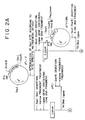
- Fig. 2 shows a flowsheet concretely illustrating the construction steps of plasmid pTCE-lip and pTCS-lip.
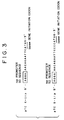
- Fig. 3 shows a DNA sequence between SD sequence and lipase-initiation codon ATG in plasmid pTCE-lip and plasmid pTCS-lip.
- the vector used for the recombinant plasmid of the present invention it is possible to use a DNA fragment retained stably inside Escherichia coli as a host and having a plasmid replicator (replication origin) which is of multicopy type, replicative i.e. effectively functionable inside Escherichia coli .
- a plasmid replicator replication origin
- the plasmid replicator it is possible to use those of pUC type plasmid, etc.
- these plasmids are convenient to contain genes constituting a selective marker when a recombinant plasmid is introduced into a host bacterium, for example, various genes capable of effecting expression of resistance to Ampicillin or Kanamycin, etc.
- the tac promoter used for the recombinant plasmid of the present invention may be constructed from trp promoter and lac promoter according to the method reported by E. Amann et al (Gene, 25 , 167 (1983)).
- the tac promoter may be cut out from a suitable vector containing tac promoter as exemplified by vector-pKK 223-3 (made by Pharmacia Co., Ltd.).
- the tac promoter is preferred to contain SD (Shine-Dalgarno) sequence.
- the sequence between SD sequence of tac promoter and initiation codon ATG of lipase gene should also be taken into consideration.
- a sequence as illustrated by the present inventors in Example mentioned later is preferred.
- a DNA sequence coding a lipase gene incorporated downstream of tac promoter a sequence already cloned from Pseudomonas fragi IFO 12049 strain by the present inventors and disclosed in Japanese patent application No. Sho 63-187,684 (which is a DNA sequence described in the above constitution (1)) may be utilized, and a DNA sequence coding a lipase gene which is functionally equivalent to the above gene may also be, of course, utilized.
- any of those which effectively function within Escherichia coli may be used, but use of a terminator exhibiting a high activity e.g. rrnB or trpA is preferred in the aspect of balancing it with a promoter having a high promoter activity such as tac promoter.
- the recombinant plasmid of the present invention having the above constitution is introduced into Escherichia coli as a host bacterium, it is possible to effect expression of a lipase having a higher efficiency within the Escherichia coli as a host.
- lipase As to the expression of lipase, if a lactose repressor-producing bacterium is used as a host bacterium, it is possible to induce the expression by means of lactose or isopropyl- ⁇ -D-thiogalactopyranoside (IPTG).
- IPTG isopropyl- ⁇ -D-thiogalactopyranoside
- JM 109 Yanisch-Perron, C., Vieira, J. and Messing, J, Gene, 33 , 103 (1985)]
- D 1210 Sadler, S.J., Tecklenburg, M. and Betz, J.L., Gene, 8 , 279 (1980)]
- a bacterium producing no lactose repressor is used as a host bacterium, it is possible to effect expression of lipase even when an inducing substance such as IPTG is not used.
- JM 83 Mossing, J., Crea, R. and Seeberg, P.H., Nucl. Acid. Res., 2 , 309 (1981)], etc. may be utilized.
- culture conditions may be determined so as to be able to effect lipase expression in a good efficiency, according to the characteristics specific of Escherichia coli as a host.
- a sample of Escherichia coli adjusted under culture conditions capable of effecting lipase expression in a good efficiency as described above, has its constituting components separated up to a polypeptide level, according to sodium dodecyl sulfate (SDS)-polyacrylamide gel electrophoresis.
- SDS sodium dodecyl sulfate
- the thus separated polypeptide is then dyed in a suitable manner and visualized.
- Confirmation of the lipase expression within Escherichia coli by the recombinant plasmid of the present invention is carried out by comparing the pattern of the SDS-polyacrylamide gel electrophoresis, using as a control, the same adjusted sample of Escherichia coli containing a plasmid having no lipase gene incorporated thereinto.
- evaluation of the lipase activity expressed within Escherichia coli may be carried out according to a method of determination by titrating a fatty acid liberated by a lipase function using emulsified olive oil as a substrate, or a method of using a commercially available lipase activity measurement kit, etc.
- a lipase gene originated from a Pseudomonas bacterium within Escherichia coli in a better efficiency and also it has become possible to provide the same lipase as a lipase originated from a Pseudomonas bacterium utilizable for commercial application uses, or its variant retaining substantially the same specific features.
- a replication origin (ori)-containing DNA fragment was separated and recovered from a mixture of DNA fragments obtained by digesting plasmid pUC9 [Vieira, J. and Messing, J., Gene 19 , 259 (1982), Yanisch-Perron, C., Vieira, J. and Messing, J., Gene 33 , 103 (1985)], with a restriction enzyme Pvu II ⁇ Sca I, according to a known electrophoresis method, while a tac promoter-containing DNA fragment was separated and recovered from a mixture of DNA fragments obtained by digesting plasmid pKK223-3 (made by Pharmacia Co., Ltd.) with a restriction enzyme ScaI ⁇ NruI, according to a known electrophoresis method.
- plasmids were indivisually extracted from the Ampicillin-resistant colonies which appeared on the plate, followed by preparing a restriction map of the respective plasmids, identifying a colony having plasmid pTC1 of a construction as shown in Fig. 1 and isolating the plasmid pTC1 from the colony.
- the NcoI site of a restriction enzyme was introduced into the vicinity of 5' terminal of a lipase gene pFL-2 containing a lipase gene originated from Pseudomonas fragi IFO 12049 strain, constructed according to the method of the present inventors, disclosed in Japanese patent application No. Sho 63-187,684, according to a site-specific mutagenesis method [Morinaga, Y., Frances-chini, T., Inouye, S. and Inouye, M., Biotechnology, 2 , 636 (1984)].
- the resulting plasmid was digested with restriction enzymes NcoI ⁇ ScaI, followed by separating and recovering 1Kb DNA fragment containing the lipase gene according to electrophoresis method and further subjecting it to Klenow fragment treatment to thereby make its terminal blunt.
- the plasmid pTC1 constructed according to the method described in the above Example 1 was digested with a restriction enzyme Eco RI, followed by subjecting the digested pTC1 to Klenow fragment treatment to thereby make its terminal blunt.
- the thus obtained DNA fragment originated from pTC1 and made blunt at its terminal and the previously obtained 1kb DNA fragment containing a lipase gene were reacted in the presence of T4 DNA ligase to obtain a plasmid pTCE-lip as constructed in Fig. 2.
- This 1.1 Kb DNA fragment and 3.1 Kb DNA fragment obtained by digesting a plasmid pTV118N (made by Takara Shuzo Co., Ltd.) with restriction enzymes NcoI ⁇ EcoRI were reacted in the presence of T4 DNA ligase to obtain a plasmid pNE118 lip as constructed in Fig. 2.
- This plasmid pNE 118 lip was digested with restriction enzyme NcoI, followed by Klenow fragment treatment to make its terminal blunt, digesting with restriction enzyme Hind III and separating and recovering 1.2 Kb DNA fragment containing a lipase gene according to electrophoresis method.
- This 1.2 Kb DNA fragment and 4.4 Kb DNA fragment obtained by digesting the plasmid pIC1 obtained above in the item (1) with restriction enzymes SmaI, Hind III were reacted in the presence of T4DNA ligase to obtain a plasmid pTCS-lip as constructed in Fig. 2.
- the nucleotide sequence was determined using M13 sequencing kits (made by Takara Shuzo Co., Ltd.), according to Hattori et al's method [M. Hattori and Y. Sasaki, Anal. Biochem., 152 , 232 (1986). The results are shown in Fig 3.
- the lipase expression plasmids pTCE-lip and pTCS-lip obtained in Example 1 were each introduced into Escherichia coli JM109 (lac I q -generating bacterium) [Yanisch-Perron, C. Vieira, J.
- sample buffer solution (10% glycerol, 5% 2-mercaptoethanol and 2.3% SDS. 0.0625M Tris-HCl, pH 6.8)
- SDS-15% polyacrylamide gel electrophoresis according to Laemmli's method [U.K. Laemmli, Nature, 227 , 680 (1970)], and thereafter dyeing the polypeptide in the gel with Coomassie Blue solution.
- JM 109 (pTC1) strain and JM 109 (pTCE-lip) strain and JM 109 (pTCS-lip) strain not subjected to inducing production with IPTG were alike prepared as control samples, followed by electrophoresis. From comparison of electrophoretic patterns with those of the control samples, confirmation of expression of polypeptides originated from lipase genes induced with IPTG in JM 109 (pTCE-lip) strain and JM 109 (pTCS-lip) strain was carried out.
- Lipase activity was evaluated using a lipase kit S as a commercially available product made by Dainippon Seiyaku Co., Ltd. Thus evaluation was carried out in principle as follows: Dimethylcapryl tributyrate is hydrolyzed by a lipase to form dimethylcaprol, which reacts quantitatively with 5,5'-dithio-bis(2-nitrobenzoic acid) to form yellow 5-thio-2-nitrobenzoic acid.
- a color-developing reagent (1 ml), a sample (50 »l) and an esterase inhibitor (20 »l) were placed in test tubes, followed by mixing them together, placing the respective tubes in a constant temperature bath, allowing them to stand at 30°C for 5 minutes, adding a substrate solution (100 »l), just thereafter incubating at 30°C for 30 minutes under light-shielding, thereafter adding a reaction-terminating solution (2.0 ml), mixing them, placing the mixture under light-shielding, and measuring an absorbance of 412 nm within one hour using purified water as a control.
- the case where a difference between the absorbance of the resulting substance and that of the blank was 0.001 is defined as 1 BALB unit.
- the measurement sample there was used a supernatant (12,000 r.p.m. ⁇ 15 min., using a device HIMAC CR 15B® made by Hitachi Co., Ltd.) obtained by sonication of cells obtained by inducing IPTG (0.6 mM) obtained according to the process of Example 2, followed by culturing the resulting substance for 3 hours.
- JM 109 (pTCE-lip) strain JM 109 (pTCS-lip) strain (each of the present invention) and JM 109 (pFL-2) strain (disclosed in Japanese patent application No. Sho 63-187684) were 220 BALB units, 300 BALB units and 130 BALB units, each per ml of the culture solution.
- the plasmid using a restriction enzyme T4 DNA ligase and Klenow fragment, treatment of DNA fragment and preparation of plasmid from bacterial cells were prepared according to conventional method unless otherwise indicated.
- the restriction enzymes T4 DNA ligase made by Nippon Gene Co., Ltd. was used and as the Klenow fragment, that made by Takara Shuzo Co., Ltd. was used.
Landscapes
- Health & Medical Sciences (AREA)
- Life Sciences & Earth Sciences (AREA)
- Genetics & Genomics (AREA)
- Chemical & Material Sciences (AREA)
- Engineering & Computer Science (AREA)
- Zoology (AREA)
- Organic Chemistry (AREA)
- Bioinformatics & Cheminformatics (AREA)
- Wood Science & Technology (AREA)
- General Engineering & Computer Science (AREA)
- Biomedical Technology (AREA)
- Biotechnology (AREA)
- Microbiology (AREA)
- Biochemistry (AREA)
- Molecular Biology (AREA)
- General Health & Medical Sciences (AREA)
- Medicinal Chemistry (AREA)
- Physics & Mathematics (AREA)
- Biophysics (AREA)
- Plant Pathology (AREA)
- Enzymes And Modification Thereof (AREA)
- Micro-Organisms Or Cultivation Processes Thereof (AREA)
Applications Claiming Priority (2)
| Application Number | Priority Date | Filing Date | Title |
|---|---|---|---|
| JP55859/90 | 1990-03-07 | ||
| JP2055859A JP2587305B2 (ja) | 1990-03-07 | 1990-03-07 | リパーゼ発現用組換え体プラスミド及びリパーゼの製造法 |
Publications (2)
| Publication Number | Publication Date |
|---|---|
| EP0451452A1 EP0451452A1 (en) | 1991-10-16 |
| EP0451452B1 true EP0451452B1 (en) | 1995-12-13 |
Family
ID=13010790
Family Applications (1)
| Application Number | Title | Priority Date | Filing Date |
|---|---|---|---|
| EP19910101675 Expired - Lifetime EP0451452B1 (en) | 1990-03-07 | 1991-02-07 | A recombinant plasmid for lipase expression and a process for producing a lipase |
Country Status (4)
| Country | Link |
|---|---|
| EP (1) | EP0451452B1 (da) |
| JP (1) | JP2587305B2 (da) |
| DE (1) | DE69115325T2 (da) |
| DK (1) | DK0451452T3 (da) |
Families Citing this family (6)
| Publication number | Priority date | Publication date | Assignee | Title |
|---|---|---|---|---|
| JPH0687A (ja) * | 1992-06-17 | 1994-01-11 | Chisso Corp | リパ−ゼ活性を有すタンパク質をコ−ドする遺伝子及びその製造法 |
| DK88892D0 (da) * | 1992-07-06 | 1992-07-06 | Novo Nordisk As | Forbindelse |
| US5534427A (en) * | 1992-07-31 | 1996-07-09 | E. R. Squibb & Sons, Inc. | Pseudomonas fluorescens lipase |
| AT399886B (de) * | 1992-07-31 | 1995-08-25 | Helmut Dipl Ing Dr Schwab | Esterase aus pseudomonas marginata |
| WO2012177655A2 (en) * | 2011-06-24 | 2012-12-27 | Arizona Board Of Regents For And On Behalf Of Arizona State University | Methods and systems for tracking bioremediation processes |
| RU2507261C1 (ru) * | 2012-06-04 | 2014-02-20 | Федеральное государственное бюджетное образовательное учреждение высшего профессионального образования "Новосибирский национальный исследовательский государственный университет" (НГУ) | РЕКОМБИНАНТНАЯ ПЛАЗМИДНАЯ ДНК pYP2, КОДИРУЮЩАЯ ФЕРМЕНТАТИВНО-АКТИВНУЮ ЧАСТЬ ПОЛИПЕПТИДА ЛИПАЗЫ, БЕЛКА ПИЩЕВАРИТЕЛЬНОГО ТРАКТА ПЧЕЛИНОЙ ОГНЕВКИ |
Family Cites Families (3)
| Publication number | Priority date | Publication date | Assignee | Title |
|---|---|---|---|---|
| JPS60221091A (ja) * | 1983-12-21 | 1985-11-05 | Kyowa Hakko Kogyo Co Ltd | 新規プロモ−タ− |
| EP0237338B1 (en) * | 1986-03-12 | 1992-09-23 | IMCERA Group Inc. | Hybrid expression vectors, their construction and uses |
| EP0318775B1 (en) * | 1987-12-03 | 1994-02-02 | Chisso Corporation | A lipase gene |
-
1990
- 1990-03-07 JP JP2055859A patent/JP2587305B2/ja not_active Expired - Lifetime
-
1991
- 1991-02-07 DE DE1991615325 patent/DE69115325T2/de not_active Expired - Fee Related
- 1991-02-07 EP EP19910101675 patent/EP0451452B1/en not_active Expired - Lifetime
- 1991-02-07 DK DK91101675T patent/DK0451452T3/da active
Also Published As
| Publication number | Publication date |
|---|---|
| JPH03259085A (ja) | 1991-11-19 |
| EP0451452A1 (en) | 1991-10-16 |
| DE69115325D1 (de) | 1996-01-25 |
| DE69115325T2 (de) | 1996-05-30 |
| JP2587305B2 (ja) | 1997-03-05 |
| DK0451452T3 (da) | 1996-01-22 |
Similar Documents
| Publication | Publication Date | Title |
|---|---|---|
| KR960014703B1 (ko) | 세팔로스포린 아세틸히드롤라아제 유전자 및 이 유전자에 의해 코딩된 단백질 | |
| CN108504657A (zh) | 利用crispr-cas9技术敲除hek293t细胞kdm2a基因的方法 | |
| JPH04507346A (ja) | アルカリ性タンパク質分解酵素およびその製造方法 | |
| CN110982803B (zh) | 一种新型邻苯二甲酸酯水解酶EstJ6及其编码基因与应用 | |
| WO2021178934A1 (en) | Class ii, type v crispr systems | |
| EP0318775B1 (en) | A lipase gene | |
| KR100358532B1 (ko) | 니트릴라제유전자프로모터를활성화하는조절인자및그것을코딩하는dna | |
| JP2729628B2 (ja) | 巨大菌からのグルコース・デヒドロゲナーゼの調製方法 | |
| EP0451452A1 (en) | A recombinant plasmid for lipase expression and a process for producing a lipase | |
| CN113755468A (zh) | 一种对胰蛋白酶抗性提高的玉米赤霉烯酮水解酶 | |
| CN120249251B (zh) | VpCas9蛋白及其单位点突变体和在基因编辑中的应用 | |
| Jack et al. | Overexpression, purification and crystallization of Bam HI endonuclease | |
| CN116121215B (zh) | 一种甘油磷酸氧化酶的突变体及其用途 | |
| JP3142348B2 (ja) | ニトリル分解酵素系の遺伝子を有する組換え体プラスミド、形質転換微生物、ならびに該形質転換微生物によるアミドおよび酸の製造法 | |
| JP2777805B2 (ja) | イソアミラーゼの構造遺伝子 | |
| Jagura-Burdzy et al. | Cloning and physical mapping of the cysB region of Salmonella typhimurium | |
| CN113832127A (zh) | 一种限制性内切酶BamHⅠ的突变体及其应用 | |
| JPH06311884A (ja) | プラスミド及びそれで形質転換されたエ シェリチア・コリ | |
| EP0547876A1 (en) | Gene encoding enzyme having flavin reducing activity and nitroreductase activity | |
| US5217880A (en) | L-fucose dehydrogenase gene, microorganism having said gene and production of l-fucose dehydrogenase by the use of said microorganism | |
| JPH034793A (ja) | ストレプトミセスからのリゾチーム遺伝子、それを得る方法およびその使用 | |
| Moore et al. | Isolation, cloning and characterization of argF gene DNA from Escherichia coli K-12 | |
| JPH0336514B2 (da) | ||
| RU2221868C2 (ru) | Ген l-аспарагиназы erwinia carotovora и штамм escherichia coli вкпм № в-8174 - продуцент l-аспарагиназы erwinia carotovora | |
| US20240360477A1 (en) | Systems and methods for transposing cargo nucleotide sequences |
Legal Events
| Date | Code | Title | Description |
|---|---|---|---|
| PUAI | Public reference made under article 153(3) epc to a published international application that has entered the european phase |
Free format text: ORIGINAL CODE: 0009012 |
|
| AK | Designated contracting states |
Kind code of ref document: A1 Designated state(s): DE DK FR GB |
|
| 17P | Request for examination filed |
Effective date: 19920129 |
|
| 17Q | First examination report despatched |
Effective date: 19940509 |
|
| GRAA | (expected) grant |
Free format text: ORIGINAL CODE: 0009210 |
|
| AK | Designated contracting states |
Kind code of ref document: B1 Designated state(s): DE DK FR GB |
|
| REG | Reference to a national code |
Ref country code: DK Ref legal event code: T3 |
|
| REF | Corresponds to: |
Ref document number: 69115325 Country of ref document: DE Date of ref document: 19960125 |
|
| ET | Fr: translation filed | ||
| PLBE | No opposition filed within time limit |
Free format text: ORIGINAL CODE: 0009261 |
|
| STAA | Information on the status of an ep patent application or granted ep patent |
Free format text: STATUS: NO OPPOSITION FILED WITHIN TIME LIMIT |
|
| 26N | No opposition filed | ||
| PGFP | Annual fee paid to national office [announced via postgrant information from national office to epo] |
Ref country code: GB Payment date: 19970129 Year of fee payment: 7 |
|
| PG25 | Lapsed in a contracting state [announced via postgrant information from national office to epo] |
Ref country code: GB Free format text: LAPSE BECAUSE OF NON-PAYMENT OF DUE FEES Effective date: 19980207 |
|
| PGFP | Annual fee paid to national office [announced via postgrant information from national office to epo] |
Ref country code: FR Payment date: 19980210 Year of fee payment: 8 |
|
| PGFP | Annual fee paid to national office [announced via postgrant information from national office to epo] |
Ref country code: DE Payment date: 19980213 Year of fee payment: 8 |
|
| GBPC | Gb: european patent ceased through non-payment of renewal fee |
Effective date: 19980207 |
|
| PG25 | Lapsed in a contracting state [announced via postgrant information from national office to epo] |
Ref country code: FR Free format text: LAPSE BECAUSE OF NON-PAYMENT OF DUE FEES Effective date: 19991029 |
|
| PG25 | Lapsed in a contracting state [announced via postgrant information from national office to epo] |
Ref country code: DE Free format text: LAPSE BECAUSE OF NON-PAYMENT OF DUE FEES Effective date: 19991201 |
|
| REG | Reference to a national code |
Ref country code: FR Ref legal event code: ST |
|
| PGFP | Annual fee paid to national office [announced via postgrant information from national office to epo] |
Ref country code: DK Payment date: 20000211 Year of fee payment: 10 |
|
| PG25 | Lapsed in a contracting state [announced via postgrant information from national office to epo] |
Ref country code: DK Free format text: LAPSE BECAUSE OF NON-PAYMENT OF DUE FEES Effective date: 20010207 |
|
| REG | Reference to a national code |
Ref country code: DK Ref legal event code: EBP |