EP0451972A1 - Utilisation d'enzymes - Google Patents
Utilisation d'enzymes Download PDFInfo
- Publication number
- EP0451972A1 EP0451972A1 EP19910302396 EP91302396A EP0451972A1 EP 0451972 A1 EP0451972 A1 EP 0451972A1 EP 19910302396 EP19910302396 EP 19910302396 EP 91302396 A EP91302396 A EP 91302396A EP 0451972 A1 EP0451972 A1 EP 0451972A1
- Authority
- EP
- European Patent Office
- Prior art keywords
- enzymes
- enzyme
- antibody
- target
- product according
- Prior art date
- Legal status (The legal status is an assumption and is not a legal conclusion. Google has not performed a legal analysis and makes no representation as to the accuracy of the status listed.)
- Granted
Links
Images


Classifications
-
- A—HUMAN NECESSITIES
- A61—MEDICAL OR VETERINARY SCIENCE; HYGIENE
- A61Q—SPECIFIC USE OF COSMETICS OR SIMILAR TOILETRY PREPARATIONS
- A61Q11/00—Preparations for care of the teeth, of the oral cavity or of dentures; Dentifrices, e.g. toothpastes; Mouth rinses
-
- A—HUMAN NECESSITIES
- A61—MEDICAL OR VETERINARY SCIENCE; HYGIENE
- A61K—PREPARATIONS FOR MEDICAL, DENTAL OR TOILETRY PURPOSES
- A61K47/00—Medicinal preparations characterised by the non-active ingredients used, e.g. carriers or inert additives; Targeting or modifying agents chemically bound to the active ingredient
- A61K47/50—Medicinal preparations characterised by the non-active ingredients used, e.g. carriers or inert additives; Targeting or modifying agents chemically bound to the active ingredient the non-active ingredient being chemically bound to the active ingredient, e.g. polymer-drug conjugates
- A61K47/51—Medicinal preparations characterised by the non-active ingredients used, e.g. carriers or inert additives; Targeting or modifying agents chemically bound to the active ingredient the non-active ingredient being chemically bound to the active ingredient, e.g. polymer-drug conjugates the non-active ingredient being a modifying agent
- A61K47/68—Medicinal preparations characterised by the non-active ingredients used, e.g. carriers or inert additives; Targeting or modifying agents chemically bound to the active ingredient the non-active ingredient being chemically bound to the active ingredient, e.g. polymer-drug conjugates the non-active ingredient being a modifying agent the modifying agent being an antibody, an immunoglobulin or a fragment thereof, e.g. an Fc-fragment
- A61K47/6801—Drug-antibody or immunoglobulin conjugates defined by the pharmacologically or therapeutically active agent
- A61K47/6803—Drugs conjugated to an antibody or immunoglobulin, e.g. cisplatin-antibody conjugates
- A61K47/6811—Drugs conjugated to an antibody or immunoglobulin, e.g. cisplatin-antibody conjugates the drug being a protein or peptide, e.g. transferrin or bleomycin
- A61K47/6815—Enzymes
-
- A—HUMAN NECESSITIES
- A61—MEDICAL OR VETERINARY SCIENCE; HYGIENE
- A61K—PREPARATIONS FOR MEDICAL, DENTAL OR TOILETRY PURPOSES
- A61K47/00—Medicinal preparations characterised by the non-active ingredients used, e.g. carriers or inert additives; Targeting or modifying agents chemically bound to the active ingredient
- A61K47/50—Medicinal preparations characterised by the non-active ingredients used, e.g. carriers or inert additives; Targeting or modifying agents chemically bound to the active ingredient the non-active ingredient being chemically bound to the active ingredient, e.g. polymer-drug conjugates
- A61K47/51—Medicinal preparations characterised by the non-active ingredients used, e.g. carriers or inert additives; Targeting or modifying agents chemically bound to the active ingredient the non-active ingredient being chemically bound to the active ingredient, e.g. polymer-drug conjugates the non-active ingredient being a modifying agent
- A61K47/68—Medicinal preparations characterised by the non-active ingredients used, e.g. carriers or inert additives; Targeting or modifying agents chemically bound to the active ingredient the non-active ingredient being chemically bound to the active ingredient, e.g. polymer-drug conjugates the non-active ingredient being a modifying agent the modifying agent being an antibody, an immunoglobulin or a fragment thereof, e.g. an Fc-fragment
- A61K47/6835—Medicinal preparations characterised by the non-active ingredients used, e.g. carriers or inert additives; Targeting or modifying agents chemically bound to the active ingredient the non-active ingredient being chemically bound to the active ingredient, e.g. polymer-drug conjugates the non-active ingredient being a modifying agent the modifying agent being an antibody, an immunoglobulin or a fragment thereof, e.g. an Fc-fragment the modifying agent being an antibody or an immunoglobulin bearing at least one antigen-binding site
- A61K47/6883—Polymer-drug antibody conjugates, e.g. mitomycin-dextran-Ab; DNA-polylysine-antibody complex or conjugate used for therapy
- A61K47/6885—Polymer-drug antibody conjugates, e.g. mitomycin-dextran-Ab; DNA-polylysine-antibody complex or conjugate used for therapy the conjugate or the polymer being a starburst, a dendrimer, a cascade
-
- A—HUMAN NECESSITIES
- A61—MEDICAL OR VETERINARY SCIENCE; HYGIENE
- A61K—PREPARATIONS FOR MEDICAL, DENTAL OR TOILETRY PURPOSES
- A61K8/00—Cosmetics or similar toiletry preparations
- A61K8/18—Cosmetics or similar toiletry preparations characterised by the composition
- A61K8/30—Cosmetics or similar toiletry preparations characterised by the composition containing organic compounds
- A61K8/64—Proteins; Peptides; Derivatives or degradation products thereof
- A61K8/66—Enzymes
-
- A—HUMAN NECESSITIES
- A61—MEDICAL OR VETERINARY SCIENCE; HYGIENE
- A61P—SPECIFIC THERAPEUTIC ACTIVITY OF CHEMICAL COMPOUNDS OR MEDICINAL PREPARATIONS
- A61P35/00—Antineoplastic agents
-
- A—HUMAN NECESSITIES
- A61—MEDICAL OR VETERINARY SCIENCE; HYGIENE
- A61K—PREPARATIONS FOR MEDICAL, DENTAL OR TOILETRY PURPOSES
- A61K2800/00—Properties of cosmetic compositions or active ingredients thereof or formulation aids used therein and process related aspects
- A61K2800/80—Process related aspects concerning the preparation of the cosmetic composition or the storage or application thereof
- A61K2800/94—Involves covalent bonding to the substrate
Definitions
- This invention relates to the utilization of enzymes to perform a desired function, and to products for the purpose.
- An example of such a function is to attack species occurring in the oral microflora. Another is to attack tumour cells.
- This invention entails use of two enzymes, one of which generates an intermediate product which is a substrate for the other enzyme.
- the latter enzyme converts the intermediate into an agent which is active against a target.
- glucose oxidase This catalyses the oxidation of glucose to gluconic acid by molecular oxygen, producing hydrogen peroxide in the process.
- the other enzyme may then be a peroxidase, which functions to convert hydrogen peroxide into more potent oxidised species e.g. by reaction with halides such as iodide ion to produce hypoiodite or by reaction with thiocyanate to produce hypothiocyanate.
- halides such as iodide ion to produce hypoiodite
- thiocyanate to produce hypothiocyanate.
- Hydrogen peroxide does display cytotoxicity but is rapidly decomposed in vivo .
- Oxidised halide species produced by peroxidase possess even greater toxicity but have an even shorter life in vivo .
- one or more vehicles contain, in the same vehicle or distributed between a plurality of vehicles:
- one enzyme can more readily use the intermediate produced by the other enzyme so enhancing their effectiveness.
- An aspect of the invention resides in a product comprising the above-mentioned vehicles. Another aspect is a method of attacking cells by administration of the vehicles.
- the linking means acts by coupling the enzymes to the target (which is not itself part of the product, of course).
- the linking means included in the product is able to attach, or is attached already, to the enzymes, so as to form a link between them without incorporating anything external to the product as part of the link.
- the linking means is something other than chemical conjugation of both enzymes to a single whole antibody.
- Both enzymes may be included in the vehicle or vehicles (not necessarily in the same vehicle).
- one of the enzymes may be a material which is present in vivo , for instance in the general vicinity of the intended target site and the linking means serves to couple that enzyme to the other. This would concentrate that enzyme into proximity with the other enzyme.
- the enzymes which are used may be an oxidase which generates hydrogen peroxide plus a peroxidase which uses this as substrate e.g. to form hypohalite.
- a peroxidase may also use peroxide to convert thiocyanate to hypothiocyanate.
- Glucose oxidase is particularly envisaged.
- galactose oxidase which could use as its substrate the galactose which occurs naturally in yoghurt.
- Horseradish peroxidase is commercially available and could be used in conjunction with either of these oxidases. A further possibility is lactoperoxidase.
- the vehicle(s) preferably contain means for attaching the enzymes to a target site.
- the oral microflora is a complex ecosystem which contains a wide variety of microbial species. One of these species may be selected as the target site. However, the effect of targeting to one species will be to attack both that species and other species which occur in close proximity to it. Thus, by delivering to one species which occurs in dental plaque, cytotoxic agents will be delivered to the plaque and will act against all the species which occur together in the plaque, including those responsible for plaque formation. Extracellular dextran produced by such organisms could itself be used as a target site.
- Streptococcus mutans This has been identified as an important contributor to dental plaque, and has been shown to be capable of inducing clinical caries lesions in germ free animals when established as a mono-infection.
- S. mutans has the ability to utilise dietary carbohydrate for the synthesis of an insoluble polysaccharide matrix, facilitating attachment to, and colonisation of, hard surfaces, as well as production of acids capable of the dissolution of enamel. These characteristics have been identified as important virulence determinants. Although other species and genera have also proved capable of both acid and plaque production, or even of caries initiation in the germ free animal, S. mutans is widely recognised as at least one significant cause of tooth decay because of the scale of its acid and polysaccharide production.
- target species S. sanguis , A. viscosus and A. naeslundii . These are all present in dental plaque as a substantial proportion of the species normally found in dental plaque. Because of frequent occurrence, these three may be preferred as target site.
- Another application is to attack species of the subgingival microflora responsible for periodontal disease.
- the target species could well be Bacteroides gingivalis .
- a possible cosmetic application is the reduction of stain on teeth.
- enzymes are used which produce a material with a bleaching function, such as hypohalite ion.
- the target site is at the tooth surface where staining may be present.
- Another application is to attack human tumour cells, notably in bone marrow which has been removed temporarily from the body of a patent undergoing radiotherapy.
- G.Ox denotes glucose oxidase.
- HRP denotes horseradish peroxidase.
- PEI denotes polyethyleneimine.
- This invention requires two enzymes to be linked together.
- the enzymes which are linked may be attached to a target. Attachment is preferably accomplished by means of an antibody or antibody fragment which binds to the target site.
- the linking means extends between the enzymes and couples the enzymes together otherwise than through the target site (which may be a cell) or through a single whole antibody which binds directly to the target site. This makes it possible to avoid subjecting a target-specific antibody to artificial chemical reactions used to effect conjugation of enzymes to the antibody through covalent bond formation. Secondly, linking the enzymes otherwise than through the target site or a target-specific antibody can make it easier to control the distribution of enzymes and get the two kinds of enzyme in proximity to each other, so that the intermediate which is the product of one enzyme is generated in proximity to the other enzyme.
- the linking means is a carrier material to which both enzymes are conjugated chemically by covalent bond formation.
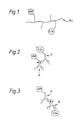
- This carrier material can be a synthetic polymer having chemical functionality to enable the attachment of enzymes by chemical reaction. This is illustrated by Fig. 1.
- a suitable polymer is polyethyleneimine (PEI) which is a branched polymer with amino groups at the termini of the branches.
- This provides a further aspect of this invention, which is two enzymes, one of which produces a substrate for the other, both conjugated through covalent bonds to a synthetic polymer.
- Glucose oxidase and horseradish peroxidase are both enzymes with pendant glycosyl chains.
- Such enzymes can be covalently bound to polyethyleneimine by first oxidising the enzymes in aqueous solution with periodate to generate aldehyde groups in the pendant glycosyl chains. These groups will then form Schiff bases with amino groups on the polyethyleneimine, at alkaline pH (e.g. pH 9.5) after which reduction with borohydride can be used to reduce any unreacted aldehyde groups and also increase the stability by reduction of the Schiff bases.
- alkaline pH e.g. pH 9.5
- the linking means may comprise at least one antibody (preferably other than a target-specific antibody) to which the enzymes are joined.
- the enzymes may each be attached or attachable to a respective antibody while these antibodies are able to bind to each other by antibody-antigen binding. An example of this is shown in Fig. 2 where the enzymes are conjugated chemically to respective antibodies from different species, one of which is an antigen for the other.
- numeral 10 denotes rabbit anti-bovine immunoglobulin to which horseradish peroxidase is conjugated.
- Numeral 12 denotes sheep anti-rabbit immunoglobulin conjugated to glucose oxidase. This binds to antibody 10 so linking the enzymes.
- FIG. 3 Horseradish peroxidase is conjugated chemically to goat anti-rabbit immunoglobulin.
- the goat antibodies 14 bind to rabbit anti-glucose oxidase antibodies 16 which bind to glucose oxidase.
- the two enzymes are linked together through the antibodies 14,16.
- Two linked enzymes, connected together in accordance with this invention can display a cell killing activity against a target even if there are no deliberate measures to attach the linked enzymes to the target. This can arise simply because bringing the enzymes together enhances activity. Also the complex of enzymes and linking means may have an inherent affinity for the site of the target.
- the linked enzymes are coupled to the site of the target.
- the complex consisting of the two enzymes and linking means may be attached or attachable to an antibody able to bind to the target site. Desirably this attachment is by antibody-antigen binding, which can avoid chemical conjugation to target-specific antibody.
- linking means includes one or more antibodies, one of these can have the ability to bind to target-specific antibody which is included in the vehicle(s). This is illustrated by Figs. 4 and 5.
- numeral 20 denotes a target which is S. mutans and numeral 22 denotes antigenic sites on the cell surface.
- numeral 24 denotes bovine anti- S. mutans antibody which is included in the overall product. This binds to the target and the rabbit anti-bovine antibody 10 of the complex shown in Fig. 2 binds to the bovine antibody 24.
- the antibody 14 of the complex of Fig. 3 binds to rabbit anti- S. mutans antibody 26 which binds to the target 20.
- the linking means is a synthetic polymer as illustrated in Fig. 1, a complex of such polymer with both enzymes bound to it through covalent bonds could be attached to the target site in various ways.
- the product to include an antibody to one of the enzymes, an antibody to the target and a further antibody able to form a bridge by binding both to this and to the antibody which binds to the target site.
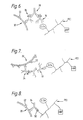
- Fig. 6 where many numerals have the same significance as in Fig. 5.
- Numeral 28 denotes goat anti-rabbit immunoglobulin.
- the product may include a double antibody conjugate with two specificities which has the ability to bind to one of the enzymes and also to bind to antibody which binds to the target.
- Double antibody conjugates are known per se . This arrangement is illustrated by Fig. 7.
- Numeral 24 denotes bovine antibody to the S. mutans target 20.
- Numeral 30 denotes a double antibody conjugate of anti-bovine and anti-glucose oxidase antibodies.
- the polymer to have antigenic sites characteristic of the target covalently bound to it.
- Antibody able to bind to the intended target would also bind to these antigenic sites on the polymer and in that way couple the polymer to the target site.
- Fig. 8 This arrangement is illustrated by Fig. 8, where numeral 32 denotes an antigen attached to polyethyleneimine and numeral 34 denotes an anti-target antibody binding to the target 20 and to the antigen 32.
- Linking of enzymes and binding to a target may be accomplished by means of antibody fragments.
- a preferred arrangement utilises an antibody fragment to bind to a target site and further fragments to bind enzymes to the first fragment.
- the first antibody fragment which binds to a target site may be an Fv fragment of an antibody to the desired target.
- a fragment contains only the variable domains of light and heavy chains of an antibody.
- the fragment could possibly be an F(ab)2 fragment which would provide two combining sites. It might alternatively be as little as a single variable domain of one chain of an antibody.
- a first antibody fragment has an additional peptide chain appended to it, and further fragments bind the enzymes to this peptide chain.
- Bacteria can be made to produce a variable domain with an extra peptide chain already attached to the C-terminus of the domain. This can be achieved by standard genetic techniques. For example, a gene encoding a variable domain can easily be lengthened by means of site directed mutagenesis techniques, using in vitro synthesised oligonucleotides which encode the peptide to be appended to the variable region. Site directed mutagenesis is now a widely used technique, and adequate protocols can be found in several published books, for example in Sambrook et al , (1989), Molecular Cloning, 2nd edition, Cold Spring Harbour Laboratory Press, New York.
- An attached extra peptide provides a very convenient "handle" for the attachment of the therapeutic agent.
- Further antibody fragments which bind enzymes to the first fragment are preferably a second antibody fragment able to bind to an enzyme by antibody-antigen binding, and an F(ab)2 fragment (which is bivalent) able to bind to the first and second antibody fragments, especially to antigenic peptides appended to the first and second antibody fragments.
- Fig. 9 illustrates a preferred arrangement in which antibody fragments are utilised.
- Fv antibody fragment 44 For attaching to the target 40 which has antigenic sites 42 there is an Fv antibody fragment 44 with several repeats of a peptide 46 appended to the distal (c-terminal) end of one of the two chains in the Fv fragment 44.
- Glucose oxidase (G.Ox) and horseradish peroxidase (HRP) are each bound by a respective Fv fragment 48,50 with specificity for the enzyme concerned, and with a single repeat of the same peptide 46 appended to one chain of the Fv fragment.
- the peptides 46 appended to the anti-enzyme Fv fragments 48,50 become linked to peptides 46 on the anti-target Fv fragment by F(ab)2 fragments 52 which bind specifically to these peptides. Since the F(ab)2 fragments are divalent they can form a bridge attaching an anti-enzyme fragment, with attached enzyme, to the anti-target fragment 44.
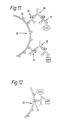
- numeral 20 denotes a target which is S. mutans with antigenic sites 22.
- Numeral 54 denotes anti- S. mutans antibody which has glucose oxidase (G.Ox) conjugated to it.
- Numeral 56 denotes anti- S. mutans antibody which has horseradish peroxidase (HRP) conjugated to it.
- HRP horseradish peroxidase
- Numeral 26 denotes rabbit anti- S. mutans antibody.
- Numeral 16 denotes rabbit anti-glucose oxidase, bound to that enzyme.
- Numeral 58 denotes rabbit anti-horseradish peroxidase bound to horseradish peroxidase.
- Numeral 28 denotes goat anti-rabbit immunoglobulin which acts to bind antibodies 16 and 58 to anti-target antibodies 26.
- Fig. 12 shows another arrangement in which both enzymes are chemically conjugated to a single antibody, which also binds to the target.
- Antibodies used in this invention may be polyclonal or monoclonal. Where an antibody of one specificity and an antibody of a different specificity are used together, it is possible that one antibody would be monoclonal while the other antibody was polyclonal.
- polyclonal antibodies it may be found desirable to distribute the enzymes and antibodies between more than one vehicle in the product , so that the full complexes of both enzymes and antibodies do not form until the time of use. We have found that during storage, large complexes with polyclonal antibodies are prone to suffer a reduction in their ability to bind to a target site.
- a product comprising a vehicle or vehicles containing enzymes, means to link them and/or one or more antibodies or antibody fragments could take a number of forms. If the target site is in the mouth, possibilities include mouthwash, toothpaste and a lozenge which will dissolve in the mouth. These forms of product could be used even when a plurality of vehicles are needed. For instance the product could be a two-component mouthwash which the user mixes immediately before use.
- Another possible form of product providing a plurality of vehicles would be a lozenge to be sucked in the mouth, with the various materials contained in separate regions of the lozenge.
- Two vehicle forms could be used in combination as a way to provide a plurality of vehicles, e.g. toothpaste whose use is followed by a mouthwash or a lozenge.
- the product may include some or all of the substrates for the enzymes, apart from the enzymatically generated intermediate, or it may rely on some or all enzyme substrates being present at the target site.
- the product could rely on dietary glucose as the enzyme substrate or it could itself incorporate glucose provided this was separate from the glucose oxidase.
- PBS phosphate buffered saline having pH 8 unless otherwise stated.
- Dilutions are expressed in the form "1/n" signifying that a quantity of starting solution was mixed with diluent to give a solution in which the concentration was one n'th that of the starting solution.
- Example 1 Part 1 - Materials employed
- Horseradish peroxidase conjugated to rabbit anti-bovine immunoglobulin was a commercial product (Sigma).
- Glucose oxidase conjugated to sheep anti-rabbit immunoglobulin was a commercial product (Serotec).
- Bovine anti- S. mutans was prepared as follows: S. Mutans was cultured overnight in Todd-Hewitt broth. The culture was killed with heat, mixed with sterile saline and fumed silica (Gasil) adjuvant to yield a solution containing 0.1g/ml Gasil and 108 cells/ml. 2ml of this solution was injected intramuscularly into a calf. A similar injection was given three weeks later and after two more weeks antisera was extracted from whole blood. Rabbit anti-bovine immunoglobulin (used for comparisons) was also a commercial product (Sigma).
- Controls were carried out in which steps of the procedure were omitted or varied.
- the cells generally survive in the presence of antibodies to them (experiment A).
- glucose oxidase conjugate When glucose oxidase conjugate is present, but unable to bind to the S. mutans cells (experiment G) it displays a cell killing effect. It displays a greater cell killing effect if bound to the target S. mutans cells (experiment D).
- horseradish peroxidase conjugate produced some cell killing without glucose oxidase (experiment F).
- Experiment C shows both conjugates present and able to complex together. Thus this experiment had both enzymes present and linked together. There was cell killing and it was greater than when glucose oxidase conjugate was present, but unbound, (experiment G) or when horseradish peroxidase alone was bound to the target (experiment F).
- experiment B contains all the components to enable both conjugates to attach together and also attach to the target cells.
- the number of surviving cells dropped dramatically within two hours, and eventually fell to zero.
- Example 1 The procedure of Example 1 was repeated, using two different dilutions of the glucose oxidase/sheep anti-rabbit conjugate.
- the conjugate used was 1/10 dilution in PBS at pH 8, so that after addition the final dilution of the conjugate was 1/100.
- the conjugate was used at 1/160 dilution, so that after addition the final dilution was 1/1600.
- This example demonstrates the covalent conjugation of glucose oxidase (G.Ox) and horseradish peroxidase (HRP) to polyethyleneimine (PEI) of molecular weight 50,000-60,000 (ex Aldrich). Covalent coupling is achieved by periodate oxidation of pendant glycosyl chains on the enzymes, to generate aldehyde groups which react with amino groups on the PEI. These chemical links (Schiff's bases) are subsequently stabilised by reduction with sodium borohydride, which simultaneously removes unused reactive aldehydes (by reduction to alcohols) to prevent further chemical coupling.
- G.Ox glucose oxidase
- HRP horseradish peroxidase
- PEI polyethyleneimine
- G.Ox (10mg) was dissolved in 2.0ml distilled water, and then mixed with 0.2ml of a freshly prepared 0.1M solution of sodium metaperiodate in distilled water. The mixture was stirred for 20 minutes in the dark at ambient temperature, after which it was dialysed overnight at 4°C against 1mM sodium acetate/acetic acid buffer, pH 4.4 (1 litre).
- HRP was oxidised in the same way, except that it was at a concentration of 2.5mg in 2ml distilled water.
- each oxidised enzyme solution was raised by the addition of 0.05ml of 0.2M sodium carbonate/bicarbonate buffer, pH 9.5.
- 0.2ml of the oxidised G.Ox solution was mixed with 0.2ml of a 100 ⁇ g/ml solution of PEI in 0.01M sodium carbonate/bicarbonate buffer at pH 9.5.
- the mixture was kept at ambient temperature in the dark for 30 minutes.
- 0.2ml of the oxidised HRP was then added, and the reaction was continued for a further 2 hours (still in the dark). At the end of this stage the reaction was stopped by the addition of 0.03ml of a 5mg/ml solution of sodium borohydride in distilled water.
- Part 2 It was demonstrated in vitro that the DEPEI conjugate would attach to S. mutans cells
- a culture of S. mutans cells (as described in the earlier examples) was washed by centrifugation and resuspension (4 times) in PBS and finally resuspended in the original volume of PBS.
- Samples of this bacterial suspension (0.2ml) were mixed with equal volumes of PBS containing 1% bovine serum albumin and 0.15% Tween 20 (PBST/BSA), held at ambient temperature for 30 minutes, sedimented again by centrifugation and then resuspended in a solution of DEPEI conjugate diluted 1/50 in PBST/BSA (at pH 8.0).
- the S. mutans cells and DEPEI conjugate were left in contact for 30 minutes at ambient temperature, after which the cells were sedimented and resuspended in PBST/BSA 3 times.
- An identical control sample was subjected to the same procedure, but without the addition of any DEPEI conjugate.
- the sedimented pellet was resuspended in 0.5ml of a solution of tetramethyl benzidine (TMB, Sigma) and glucose in 0.1M phosphate/citrate buffer, pH 6.5 (TMB at 100 ⁇ g/ml and glucose at 27mg/ml). This mixture was maintained at ambient temperature for 5 minutes, after which the cells were centrifuged to a pellet and a 0.2ml sample of the supernatant fluid was transferred to a microtitre plate. 0.05ml of 2M hydrochloric acid was added, then the optical density of the fluid was measured. Optical densities were: Experimental sample : 1.07 Control (no DEPEI) : 0.01
Landscapes
- Health & Medical Sciences (AREA)
- Life Sciences & Earth Sciences (AREA)
- Engineering & Computer Science (AREA)
- Bioinformatics & Cheminformatics (AREA)
- Animal Behavior & Ethology (AREA)
- Public Health (AREA)
- Veterinary Medicine (AREA)
- General Health & Medical Sciences (AREA)
- Chemical & Material Sciences (AREA)
- Epidemiology (AREA)
- Pharmacology & Pharmacy (AREA)
- Medicinal Chemistry (AREA)
- Immunology (AREA)
- Chemical Kinetics & Catalysis (AREA)
- Birds (AREA)
- General Chemical & Material Sciences (AREA)
- Nuclear Medicine, Radiotherapy & Molecular Imaging (AREA)
- Organic Chemistry (AREA)
- Molecular Biology (AREA)
- Oral & Maxillofacial Surgery (AREA)
- Biotechnology (AREA)
- Immobilizing And Processing Of Enzymes And Microorganisms (AREA)
- Medicines Containing Antibodies Or Antigens For Use As Internal Diagnostic Agents (AREA)
- Medicines That Contain Protein Lipid Enzymes And Other Medicines (AREA)
- Cosmetics (AREA)
- Detergent Compositions (AREA)
- Adhesives Or Adhesive Processes (AREA)
- Enzymes And Modification Thereof (AREA)
Applications Claiming Priority (4)
| Application Number | Priority Date | Filing Date | Title |
|---|---|---|---|
| GB909006329A GB9006329D0 (en) | 1990-03-21 | 1990-03-21 | Cell killing |
| GB9006329 | 1990-03-21 | ||
| GB9021671 | 1990-10-05 | ||
| GB909021671A GB9021671D0 (en) | 1990-10-05 | 1990-10-05 | Delivery of agents |
Publications (2)
| Publication Number | Publication Date |
|---|---|
| EP0451972A1 true EP0451972A1 (fr) | 1991-10-16 |
| EP0451972B1 EP0451972B1 (fr) | 1996-05-29 |
Family
ID=26296816
Family Applications (1)
| Application Number | Title | Priority Date | Filing Date |
|---|---|---|---|
| EP91302396A Expired - Lifetime EP0451972B1 (fr) | 1990-03-21 | 1991-03-20 | Utilisation d'enzymes |
Country Status (8)
| Country | Link |
|---|---|
| EP (1) | EP0451972B1 (fr) |
| JP (1) | JPH0584073A (fr) |
| AT (1) | ATE138579T1 (fr) |
| AU (1) | AU642980B2 (fr) |
| CA (1) | CA2038579C (fr) |
| DE (1) | DE69119817T2 (fr) |
| ES (1) | ES2088463T3 (fr) |
| IN (1) | IN172887B (fr) |
Cited By (13)
| Publication number | Priority date | Publication date | Assignee | Title |
|---|---|---|---|---|
| WO1995027046A3 (fr) * | 1994-03-31 | 1995-11-30 | Unilever N.V. | Compositions antimicrobiennes enzymatiques comprenant des haloperoxydases |
| WO1997023241A1 (fr) * | 1995-12-21 | 1997-07-03 | Quest International B.V. | Compositions de particules |
| US5888480A (en) * | 1995-01-17 | 1999-03-30 | Four Star Partners | Methods, compositions, and dental delivery systems for the protection of the surfaces of teeth |
| WO1999016472A1 (fr) * | 1997-09-30 | 1999-04-08 | E-L Management Corp. | Compositions stables comprenant des composants biologiquement actifs |
| WO1999018999A1 (fr) * | 1997-10-16 | 1999-04-22 | Pharmacal Biotechnologies, Inc. | Compositions permettant de reguler la colonisation bacterienne |
| US5961958A (en) * | 1996-07-16 | 1999-10-05 | Four Star Partners | Methods, compositions, and dental delivery systems for the protection of the surfaces of teeth |
| FR2803199A1 (fr) * | 1999-12-29 | 2001-07-06 | Jean Dominique Dana | Procede de transformation des sucres alimentaires cariogenes en produits neutres acariogenes ou cariostatiques et composition pour la mise en oeuvre |
| EP1408996A4 (fr) * | 2001-04-02 | 2006-03-22 | Univ Georgetown | Proc d de preparation simplifie et ameliore immunoliposome ou d'un polyplexe cibl sur un anticorps ou un fragment d'anticorps pour l'administration systemique d'un agent therapeutique ou diagnostique |
| WO2007045252A3 (fr) * | 2005-10-21 | 2007-06-28 | Danisco | Composition comestible |
| US7479276B1 (en) | 1999-02-22 | 2009-01-20 | Synergene Therapeutics, Inc. | Antibody fragment-targeted immunoliposomes for systemic gene delivery |
| US7780882B2 (en) | 1999-02-22 | 2010-08-24 | Georgetown University | Simplified and improved method for preparing an antibody or an antibody fragment targeted immunoliposome for systemic administration of a therapeutic or diagnostic agent |
| US9034329B2 (en) | 1999-02-22 | 2015-05-19 | Georgetown University | Preparation of antibody or an antibody fragment-targeted immunoliposomes for systemic administration of therapeutic or diagnostic agents and uses thereof |
| US9034330B2 (en) | 1999-02-22 | 2015-05-19 | Georgetown University | Preparation of antibody or an antibody fragment-targeted immunoliposomes for systemic administration of therapeutic or diagnostic agents and uses thereof |
Families Citing this family (3)
| Publication number | Priority date | Publication date | Assignee | Title |
|---|---|---|---|---|
| DE69304899T2 (de) * | 1992-03-06 | 1997-03-13 | Creagen, Inc., Cambridge, Mass. | Pathogen-gerichtete biokatalisatoren |
| EP1212100B1 (fr) * | 1999-09-16 | 2005-04-06 | Unilever Plc | Systeme d'administration d'un agent antipelliculaire |
| BR112013015459B8 (pt) | 2010-12-20 | 2018-06-12 | Du Pont | método, produto de cuidado oral e composição de geração de perácido |
Citations (5)
| Publication number | Priority date | Publication date | Assignee | Title |
|---|---|---|---|---|
| US4578265A (en) * | 1981-08-13 | 1986-03-25 | Laclede Professional Products, Inc. | Di-enzymatic dentifrice |
| WO1988001178A1 (fr) * | 1986-08-18 | 1988-02-25 | The Dow Chemical Company | Conjugues du type a eclatement etoile |
| WO1990003185A1 (fr) * | 1988-09-28 | 1990-04-05 | Ideon Corporation | Immunotherapeutiques enzymatiques de combinaison |
| WO1991000112A1 (fr) * | 1989-06-30 | 1991-01-10 | Brunswick Corporation | Conjugues d'anticorps-oxydase de lactate |
| FR2651433A1 (fr) * | 1989-09-07 | 1991-03-08 | Dana Dominique | Complexe enzymatique a activite sur le tartre et la carie dentaire. |
Family Cites Families (2)
| Publication number | Priority date | Publication date | Assignee | Title |
|---|---|---|---|---|
| AU642979B2 (en) * | 1990-03-21 | 1993-11-04 | Quest International B.V. | Utilization and delivery of enzymes |
| AU5544090A (en) * | 1990-04-26 | 1991-11-11 | Ringdal Patenter A/S | Activating unit for weapon |
-
1991
- 1991-03-18 AU AU72997/91A patent/AU642980B2/en not_active Ceased
- 1991-03-19 CA CA002038579A patent/CA2038579C/fr not_active Expired - Fee Related
- 1991-03-20 EP EP91302396A patent/EP0451972B1/fr not_active Expired - Lifetime
- 1991-03-20 ES ES91302396T patent/ES2088463T3/es not_active Expired - Lifetime
- 1991-03-20 DE DE69119817T patent/DE69119817T2/de not_active Expired - Fee Related
- 1991-03-20 AT AT91302396T patent/ATE138579T1/de active
- 1991-03-20 JP JP3130821A patent/JPH0584073A/ja active Pending
- 1991-03-21 IN IN85BO1991 patent/IN172887B/en unknown
Patent Citations (5)
| Publication number | Priority date | Publication date | Assignee | Title |
|---|---|---|---|---|
| US4578265A (en) * | 1981-08-13 | 1986-03-25 | Laclede Professional Products, Inc. | Di-enzymatic dentifrice |
| WO1988001178A1 (fr) * | 1986-08-18 | 1988-02-25 | The Dow Chemical Company | Conjugues du type a eclatement etoile |
| WO1990003185A1 (fr) * | 1988-09-28 | 1990-04-05 | Ideon Corporation | Immunotherapeutiques enzymatiques de combinaison |
| WO1991000112A1 (fr) * | 1989-06-30 | 1991-01-10 | Brunswick Corporation | Conjugues d'anticorps-oxydase de lactate |
| FR2651433A1 (fr) * | 1989-09-07 | 1991-03-08 | Dana Dominique | Complexe enzymatique a activite sur le tartre et la carie dentaire. |
Non-Patent Citations (2)
| Title |
|---|
| SNT FILE SERVER & FILE CA, CHEMICAL ABSTRACTS, vol. 105, no. 17, abstract no. 145834w, Columbus, Ohio, US; J. PENE et al.: "In vitro cytolysis of myeloma tumor cells with glucose oxidase and lactoperoxidase antibody conjugates", & BIOCHEM. INT., 13(2), 233-43 * |
| STN FILE SERVER & FILE MEDLINE, AN=81192354; R.B. JOHNSON, Jr. et al.: "Comparison of glucose oxidase and peroxidase as labels for antibody in enzyme-linked immunosorbent assay", & J. IMMUNOASSAY, (1980), 1(1), 27-37 * |
Cited By (23)
| Publication number | Priority date | Publication date | Assignee | Title |
|---|---|---|---|---|
| WO1995027046A3 (fr) * | 1994-03-31 | 1995-11-30 | Unilever N.V. | Compositions antimicrobiennes enzymatiques comprenant des haloperoxydases |
| US5980868A (en) * | 1995-01-17 | 1999-11-09 | Homola; Andrew M. | Methods, compositions, and dental delivery systems for the protection of the surfaces of teeth |
| US5888480A (en) * | 1995-01-17 | 1999-03-30 | Four Star Partners | Methods, compositions, and dental delivery systems for the protection of the surfaces of teeth |
| WO1997023241A1 (fr) * | 1995-12-21 | 1997-07-03 | Quest International B.V. | Compositions de particules |
| US5961958A (en) * | 1996-07-16 | 1999-10-05 | Four Star Partners | Methods, compositions, and dental delivery systems for the protection of the surfaces of teeth |
| WO1999016472A1 (fr) * | 1997-09-30 | 1999-04-08 | E-L Management Corp. | Compositions stables comprenant des composants biologiquement actifs |
| US5972355A (en) * | 1997-09-30 | 1999-10-26 | E-L Management Corp. | Stable compositions containing biologically active components |
| AU742762B2 (en) * | 1997-10-16 | 2002-01-10 | Pharmacal Biotechnologies, Inc. | Compositions for controlling bacterial colonization |
| WO1999018999A1 (fr) * | 1997-10-16 | 1999-04-22 | Pharmacal Biotechnologies, Inc. | Compositions permettant de reguler la colonisation bacterienne |
| US9034329B2 (en) | 1999-02-22 | 2015-05-19 | Georgetown University | Preparation of antibody or an antibody fragment-targeted immunoliposomes for systemic administration of therapeutic or diagnostic agents and uses thereof |
| US9480750B2 (en) | 1999-02-22 | 2016-11-01 | Georgetown University | Preparation of antibody or an antibody fragment targeted immunoliposomes for systemic administration of therapeutic or diagnostic agents and uses thereof |
| US7479276B1 (en) | 1999-02-22 | 2009-01-20 | Synergene Therapeutics, Inc. | Antibody fragment-targeted immunoliposomes for systemic gene delivery |
| US7780882B2 (en) | 1999-02-22 | 2010-08-24 | Georgetown University | Simplified and improved method for preparing an antibody or an antibody fragment targeted immunoliposome for systemic administration of a therapeutic or diagnostic agent |
| US9034330B2 (en) | 1999-02-22 | 2015-05-19 | Georgetown University | Preparation of antibody or an antibody fragment-targeted immunoliposomes for systemic administration of therapeutic or diagnostic agents and uses thereof |
| US8859274B2 (en) | 1999-02-22 | 2014-10-14 | Synergene Therapeutics, Inc. | Antibody fragment-targeted immunoliposomes for systemic gene delivery |
| US8865127B2 (en) | 1999-02-22 | 2014-10-21 | Georgetown University | Simplified and improved method for preparing an antibody or an antibody fragment targeted immunoliposome for systemic administration of a therapeutic or diagnostic agent |
| WO2001049241A3 (fr) * | 1999-12-29 | 2001-12-20 | Dana Jean Dominique | Composition d'hygiene bucco-dentaire |
| US6716611B2 (en) | 1999-12-29 | 2004-04-06 | Jean Dominique Dana | Method for transforming cariogenic food sugars into acariogenic or cariostatic neutral products and composition therefor |
| FR2803199A1 (fr) * | 1999-12-29 | 2001-07-06 | Jean Dominique Dana | Procede de transformation des sucres alimentaires cariogenes en produits neutres acariogenes ou cariostatiques et composition pour la mise en oeuvre |
| EP1408996A4 (fr) * | 2001-04-02 | 2006-03-22 | Univ Georgetown | Proc d de preparation simplifie et ameliore immunoliposome ou d'un polyplexe cibl sur un anticorps ou un fragment d'anticorps pour l'administration systemique d'un agent therapeutique ou diagnostique |
| WO2007045251A3 (fr) * | 2005-10-21 | 2007-07-19 | Danisco | Composition comprenant un systeme d'enzyme couple |
| CN101316576B (zh) * | 2005-10-21 | 2013-03-27 | 杜邦营养生物科学有限公司 | 含有偶联的酶系统的组合物 |
| WO2007045252A3 (fr) * | 2005-10-21 | 2007-06-28 | Danisco | Composition comestible |
Also Published As
| Publication number | Publication date |
|---|---|
| ATE138579T1 (de) | 1996-06-15 |
| JPH0584073A (ja) | 1993-04-06 |
| DE69119817D1 (de) | 1996-07-04 |
| CA2038579C (fr) | 1998-06-23 |
| EP0451972B1 (fr) | 1996-05-29 |
| ES2088463T3 (es) | 1996-08-16 |
| AU7299791A (en) | 1991-10-03 |
| AU642980B2 (en) | 1993-11-04 |
| IN172887B (fr) | 1993-12-25 |
| CA2038579A1 (fr) | 1991-09-22 |
| DE69119817T2 (de) | 1996-10-31 |
Similar Documents
| Publication | Publication Date | Title |
|---|---|---|
| EP0451972B1 (fr) | Utilisation d'enzymes | |
| US5801226A (en) | Oral care compositions | |
| US5490988A (en) | Delivery of therapeutic agents to a target site | |
| Rosan et al. | Dental plaque formation | |
| Mayrand et al. | Biological activities of outer membrane vesicles | |
| US5824292A (en) | Oral care compositions | |
| Beachey et al. | The adherence of group A streptococci to oropharyngeal cells: the lipoteichoic acid adhesin and fibronectin receptor | |
| US5993825A (en) | Group B streptococcus type II and type V polysaccharide-protein conjugate vaccines | |
| EP0450800B1 (fr) | Utilisation et délivrance d'enzymes | |
| EP0453097B1 (fr) | Composition comprenant au moins deux anticorps differents ou leurs fragments | |
| CZ20001237A3 (cs) | Kompozitum k regulaci bakteriálních kolonií, způsob regulace bakteriální kolonizace, způsob přípravy kompozitu pro regulaci proliferace bakteriálních kolonií a způsob regulace kolonizace bakteriálního plaku v ústní dutině | |
| EP0824019B1 (fr) | Suppression ou réduction de la forte haleine | |
| JPH10500127A (ja) | グルカン結合タンパク質及びその使用 | |
| EP1564218B1 (fr) | Composition peptidique pour la cavité buccale | |
| Philpott et al. | Affinity cytotoxicity of tumor cells with antibody-glucose oxidase conjugates, peroxidase, and arsphenamine | |
| Lee | Active release of bound antibody by Streptococcus mutans | |
| US20020034508A1 (en) | Antibodies for use in targeted and temporary treatment of humans and animals | |
| EP0419532A1 (fr) | Preparation pharmaceutique et conjugue d'un bactericide et d'un anticorps dresse contre des bacteries formant la plaque dentaire ou causant des caries | |
| Mallett et al. | Competent antigen-binding fragments (Fab) from secretory immunoglobulin A using Streptococcus sanguis immunoglobulin A protease | |
| JPH1077218A (ja) | 口腔用生成物 | |
| da Silva et al. | Vaccine against dental caries: an update | |
| Cowan et al. | Glucan-binding factor in saliva | |
| CA1326819C (fr) | Structure pharmaceutique | |
| FR2687157A1 (fr) | Proteines hybrides complexes, leur procede de preparation, et leurs applications comme agent de diagnostic, comme agent a visee therapeutique ou comme reactif utilisable en imagerie medicale. | |
| HUT63343A (en) | Process for producing immunereactive compounds |
Legal Events
| Date | Code | Title | Description |
|---|---|---|---|
| PUAI | Public reference made under article 153(3) epc to a published international application that has entered the european phase |
Free format text: ORIGINAL CODE: 0009012 |
|
| AK | Designated contracting states |
Kind code of ref document: A1 Designated state(s): AT BE CH DE DK ES FR GB GR IT LI NL SE |
|
| 17P | Request for examination filed |
Effective date: 19920408 |
|
| RAP3 | Party data changed (applicant data changed or rights of an application transferred) |
Owner name: UNILEVER N.V. Owner name: UNILEVER PLC |
|
| 17Q | First examination report despatched |
Effective date: 19940210 |
|
| GRAA | (expected) grant |
Free format text: ORIGINAL CODE: 0009210 |
|
| AK | Designated contracting states |
Kind code of ref document: B1 Designated state(s): AT BE CH DE DK ES FR GB GR IT LI NL SE |
|
| PG25 | Lapsed in a contracting state [announced via postgrant information from national office to epo] |
Ref country code: GR Free format text: LAPSE BECAUSE OF FAILURE TO SUBMIT A TRANSLATION OF THE DESCRIPTION OR TO PAY THE FEE WITHIN THE PRESCRIBED TIME-LIMIT Effective date: 19960529 Ref country code: DK Effective date: 19960529 Ref country code: BE Effective date: 19960529 Ref country code: AT Effective date: 19960529 |
|
| REF | Corresponds to: |
Ref document number: 138579 Country of ref document: AT Date of ref document: 19960615 Kind code of ref document: T |
|
| REG | Reference to a national code |
Ref country code: CH Ref legal event code: NV Representative=s name: E. BLUM & CO. PATENTANWAELTE |
|
| REF | Corresponds to: |
Ref document number: 69119817 Country of ref document: DE Date of ref document: 19960704 |
|
| REG | Reference to a national code |
Ref country code: ES Ref legal event code: BA2A Ref document number: 2088463 Country of ref document: ES Kind code of ref document: T3 |
|
| ITF | It: translation for a ep patent filed | ||
| ET | Fr: translation filed | ||
| REG | Reference to a national code |
Ref country code: ES Ref legal event code: FG2A Ref document number: 2088463 Country of ref document: ES Kind code of ref document: T3 |
|
| PLBE | No opposition filed within time limit |
Free format text: ORIGINAL CODE: 0009261 |
|
| STAA | Information on the status of an ep patent application or granted ep patent |
Free format text: STATUS: NO OPPOSITION FILED WITHIN TIME LIMIT |
|
| 26N | No opposition filed | ||
| REG | Reference to a national code |
Ref country code: GB Ref legal event code: 732E |
|
| REG | Reference to a national code |
Ref country code: CH Ref legal event code: PUE Owner name: UNILEVER N.V. TRANSFER- QUEST INTERNATIONAL B.V. |
|
| PGFP | Annual fee paid to national office [announced via postgrant information from national office to epo] |
Ref country code: CH Payment date: 20000218 Year of fee payment: 10 |
|
| PGFP | Annual fee paid to national office [announced via postgrant information from national office to epo] |
Ref country code: SE Payment date: 20000221 Year of fee payment: 10 |
|
| PGFP | Annual fee paid to national office [announced via postgrant information from national office to epo] |
Ref country code: DE Payment date: 20000228 Year of fee payment: 10 |
|
| PGFP | Annual fee paid to national office [announced via postgrant information from national office to epo] |
Ref country code: ES Payment date: 20000307 Year of fee payment: 10 |
|
| NLS | Nl: assignments of ep-patents |
Owner name: QUEST INTERNATIONAL B.V. |
|
| PGFP | Annual fee paid to national office [announced via postgrant information from national office to epo] |
Ref country code: NL Payment date: 20010226 Year of fee payment: 11 |
|
| PG25 | Lapsed in a contracting state [announced via postgrant information from national office to epo] |
Ref country code: SE Free format text: LAPSE BECAUSE OF NON-PAYMENT OF DUE FEES Effective date: 20010321 Ref country code: ES Free format text: LAPSE BECAUSE OF NON-PAYMENT OF DUE FEES Effective date: 20010321 |
|
| PG25 | Lapsed in a contracting state [announced via postgrant information from national office to epo] |
Ref country code: LI Free format text: LAPSE BECAUSE OF NON-PAYMENT OF DUE FEES Effective date: 20010331 Ref country code: CH Free format text: LAPSE BECAUSE OF NON-PAYMENT OF DUE FEES Effective date: 20010331 |
|
| REG | Reference to a national code |
Ref country code: FR Ref legal event code: TP |
|
| EUG | Se: european patent has lapsed |
Ref document number: 91302396.6 |
|
| REG | Reference to a national code |
Ref country code: CH Ref legal event code: PL |
|
| PG25 | Lapsed in a contracting state [announced via postgrant information from national office to epo] |
Ref country code: DE Free format text: LAPSE BECAUSE OF NON-PAYMENT OF DUE FEES Effective date: 20020101 |
|
| REG | Reference to a national code |
Ref country code: GB Ref legal event code: IF02 |
|
| PGFP | Annual fee paid to national office [announced via postgrant information from national office to epo] |
Ref country code: FR Payment date: 20020211 Year of fee payment: 12 |
|
| PG25 | Lapsed in a contracting state [announced via postgrant information from national office to epo] |
Ref country code: NL Free format text: LAPSE BECAUSE OF NON-PAYMENT OF DUE FEES Effective date: 20021001 |
|
| NLV4 | Nl: lapsed or anulled due to non-payment of the annual fee |
Effective date: 20021001 |
|
| PGFP | Annual fee paid to national office [announced via postgrant information from national office to epo] |
Ref country code: GB Payment date: 20030213 Year of fee payment: 13 |
|
| REG | Reference to a national code |
Ref country code: ES Ref legal event code: FD2A Effective date: 20030303 |
|
| PG25 | Lapsed in a contracting state [announced via postgrant information from national office to epo] |
Ref country code: FR Free format text: LAPSE BECAUSE OF NON-PAYMENT OF DUE FEES Effective date: 20031127 |
|
| REG | Reference to a national code |
Ref country code: FR Ref legal event code: ST |
|
| PG25 | Lapsed in a contracting state [announced via postgrant information from national office to epo] |
Ref country code: GB Free format text: LAPSE BECAUSE OF NON-PAYMENT OF DUE FEES Effective date: 20040320 |
|
| GBPC | Gb: european patent ceased through non-payment of renewal fee |
Effective date: 20040320 |
|
| PG25 | Lapsed in a contracting state [announced via postgrant information from national office to epo] |
Ref country code: IT Free format text: LAPSE BECAUSE OF NON-PAYMENT OF DUE FEES;WARNING: LAPSES OF ITALIAN PATENTS WITH EFFECTIVE DATE BEFORE 2007 MAY HAVE OCCURRED AT ANY TIME BEFORE 2007. THE CORRECT EFFECTIVE DATE MAY BE DIFFERENT FROM THE ONE RECORDED. Effective date: 20050320 |