EP0455730B1 - Materiau et procede utilises pour la detection d'oxygene - Google Patents
Materiau et procede utilises pour la detection d'oxygene Download PDFInfo
- Publication number
- EP0455730B1 EP0455730B1 EP90903277A EP90903277A EP0455730B1 EP 0455730 B1 EP0455730 B1 EP 0455730B1 EP 90903277 A EP90903277 A EP 90903277A EP 90903277 A EP90903277 A EP 90903277A EP 0455730 B1 EP0455730 B1 EP 0455730B1
- Authority
- EP
- European Patent Office
- Prior art keywords
- oxygen
- radicals
- phenyl
- units
- silane
- Prior art date
- Legal status (The legal status is an assumption and is not a legal conclusion. Google has not performed a legal analysis and makes no representation as to the accuracy of the status listed.)
- Expired - Lifetime
Links
Images




Classifications
-
- G—PHYSICS
- G01—MEASURING; TESTING
- G01N—INVESTIGATING OR ANALYSING MATERIALS BY DETERMINING THEIR CHEMICAL OR PHYSICAL PROPERTIES
- G01N21/00—Investigating or analysing materials by the use of optical means, i.e. using sub-millimetre waves, infrared, visible or ultraviolet light
- G01N21/62—Systems in which the material investigated is excited whereby it emits light or causes a change in wavelength of the incident light
- G01N21/63—Systems in which the material investigated is excited whereby it emits light or causes a change in wavelength of the incident light optically excited
- G01N21/64—Fluorescence; Phosphorescence
- G01N21/6408—Fluorescence; Phosphorescence with measurement of decay time, time resolved fluorescence
-
- G—PHYSICS
- G01—MEASURING; TESTING
- G01N—INVESTIGATING OR ANALYSING MATERIALS BY DETERMINING THEIR CHEMICAL OR PHYSICAL PROPERTIES
- G01N21/00—Investigating or analysing materials by the use of optical means, i.e. using sub-millimetre waves, infrared, visible or ultraviolet light
- G01N21/62—Systems in which the material investigated is excited whereby it emits light or causes a change in wavelength of the incident light
- G01N21/63—Systems in which the material investigated is excited whereby it emits light or causes a change in wavelength of the incident light optically excited
- G01N21/64—Fluorescence; Phosphorescence
- G01N21/6428—Measuring fluorescence of fluorescent products of reactions or of fluorochrome labelled reactive substances, e.g. measuring quenching effects, using measuring "optrodes"
-
- G—PHYSICS
- G01—MEASURING; TESTING
- G01N—INVESTIGATING OR ANALYSING MATERIALS BY DETERMINING THEIR CHEMICAL OR PHYSICAL PROPERTIES
- G01N21/00—Investigating or analysing materials by the use of optical means, i.e. using sub-millimetre waves, infrared, visible or ultraviolet light
- G01N21/62—Systems in which the material investigated is excited whereby it emits light or causes a change in wavelength of the incident light
- G01N21/63—Systems in which the material investigated is excited whereby it emits light or causes a change in wavelength of the incident light optically excited
- G01N21/64—Fluorescence; Phosphorescence
- G01N21/6428—Measuring fluorescence of fluorescent products of reactions or of fluorochrome labelled reactive substances, e.g. measuring quenching effects, using measuring "optrodes"
- G01N2021/6432—Quenching
-
- Y—GENERAL TAGGING OF NEW TECHNOLOGICAL DEVELOPMENTS; GENERAL TAGGING OF CROSS-SECTIONAL TECHNOLOGIES SPANNING OVER SEVERAL SECTIONS OF THE IPC; TECHNICAL SUBJECTS COVERED BY FORMER USPC CROSS-REFERENCE ART COLLECTIONS [XRACs] AND DIGESTS
- Y10—TECHNICAL SUBJECTS COVERED BY FORMER USPC
- Y10T—TECHNICAL SUBJECTS COVERED BY FORMER US CLASSIFICATION
- Y10T436/00—Chemistry: analytical and immunological testing
- Y10T436/20—Oxygen containing
- Y10T436/207497—Molecular oxygen
-
- Y—GENERAL TAGGING OF NEW TECHNOLOGICAL DEVELOPMENTS; GENERAL TAGGING OF CROSS-SECTIONAL TECHNOLOGIES SPANNING OVER SEVERAL SECTIONS OF THE IPC; TECHNICAL SUBJECTS COVERED BY FORMER USPC CROSS-REFERENCE ART COLLECTIONS [XRACs] AND DIGESTS
- Y10—TECHNICAL SUBJECTS COVERED BY FORMER USPC
- Y10T—TECHNICAL SUBJECTS COVERED BY FORMER US CLASSIFICATION
- Y10T436/00—Chemistry: analytical and immunological testing
- Y10T436/20—Oxygen containing
- Y10T436/207497—Molecular oxygen
- Y10T436/209163—Dissolved or trace oxygen or oxygen content of a sealed environment
Definitions
- This invention relates to a method for determining the presence of oxygen in a sample, and to a sensor for practicing the method.
- the invention makes use of silicic acid heteropolycondensates as membranes for passing oxygen, and comprises their use in oxygen sensing.
- luminescent quenching methods for oxygen determination potentially provide many advantages over older, slower methods which destroy the sample being analyzed, or which consume oxygen during its termination. For example, luminescent quenching methods are more readily automated.
- British Patent 2,132,348B describes use of luminescent compounds in measuring oxygen concentration
- the luminescent material is incorporated in a polymeric carrier which is permeable to oxygen.
- the purpose of the carrier is to prevent the luminescent substance from responding to contaminants and interferents.
- Polymers for such use are mentioned on page 8, lines 8-29. Further polymeric carriers as membranes are described is EP-A-0243116 and EP-A- 0259951.
- Plastic films of the type suggested by the British patent have their limitations; for example, the excited state of the trapped luminescent substance can have a deleterious effect on the organic matrix.
- organic substances are susceptible to environmental deterioration or they have undesirable mechanical problems, e.g., low mechanical strength, or a narrow range of oxygen permeability.
- some sensor elements with organic substrates are subject to chemical attack by materials in which it is desired to determine oxygen.
- many organic substances are not optically clear. Consequently they are not well suited for use where light transmission is desired, e.g., in analytical determinations which are based on measurement of the intensity of light. Stated another way, organic substances can form films which are not optically homogeneous, and which therefore reduce the amount of luminescence signal that can be measured.
- U. S. Patent 4,587,101 teaches that the suitability of a polymer for use as a membrane for O2 determination mainly depends on its oxygen permeability, which should be sufficiently high. It also says that with the exception of silicone (P O 2 ⁇ 600x10 ⁇ 10cm2 s ⁇ 1cmHg ⁇ 1), the oxygen permeability of unplasticized polymers are too low (P O 2 ⁇ 35x10 ⁇ 10cm2 s ⁇ 1cmHg ⁇ 1) and do not yield useful results with regard to oxygen sensitivity, even if the fluorescence decay times of the indicator substances are long.
- Various polymer/plasticizer combinations are suggested, column 3, lines 1-40. Thus, the reference teaches that plasticizers are required components of plastic membranes used for oxygen determination.
- the silicic acid heteropolycondensates used in the present invention do not require plasticizers. Furthermore, the use of silicic acid heteropolycondensates as membranes for passing oxygen is not suggested by the reference.
- Avnir et al Journal of Non-Crystalline Solids 74 (1985) 395-406, discloses the use of a sol/gel process to entrap organic fluorescent dyes in silica and silica-titania thin films.
- the heteropolycondensates are made by a polymerization/ condensation reaction of metal alkoxides, followed by low temperature dehydration. Use of the films as solar or laser light guides is suggested.
- the reference does not suggest that silicic acid heteropolycondensates can be used as oxygen permeable membranes in oxygen sensing systems.
- our invention relates to a method of determining the presence of oxygen in a sample, said method comprising:
- this invention relates to a sensor comprising a luminescent material which luminesces when excited by visible or ultraviolet light and whose lifetime or intensity of illumination is quenchable by oxygen, said luminescent material being incorporated within a membrane, characterized in that said membrane consists essentially of a silicic acid heteropolycondensate having silane units with the formula RSi ⁇ wherein the valences of said units are interconnected by oxygen.
- the condensates are more stable than wholly organic materials.
- the membranes of this invention have many additional valuable properties for oxygen sensing by luminescent quenching. For example, they transmit light in a manner similar to glass, and they readily dissolve phosphorescent agents at use concentrations.
- the membranes employed in this invention offer improved thermal and mechanical stability.
- the improved chemical stability provided by the heteropolycondensates allow oxygen sensors to be used in operating environments where other sensors have interference problems.
- the oxygen permeability of the heteropolycondensates can be altered by using different functional groups.
- the polycondensates offer an opportunity to "tailor make" or fine-tune a composition for a particular oxygen sensing application.
- the present inventors have provided improved methods and sensors for oxygen sensing.
- the improved sensors and methods have the advantages referred to above. For example, they can be used to determine oxygen in environments where other sensors have interference problems, and they can detect oxygen in a wide range of concentrations by using selected sensor compositions having the required oxygen permeability.
- the heteropolycondensates are identified by the relative percentages of monomers which were reacted to produce the condensate.
- the designation "100-methyl” refers to an organic modified silicic acid heteropolycondensate made by the hydrolysis/condensation reaction (illustrated by Example 1) conducted using methyltriethoxysilane as the sole monomer.
- silicic acid heteropolycondensates may be referred to as "sol/gels”.
- Fig. 1 The normalized phosphorescence intensities of PtOEP (platinum octaethylporphyrin) in (O) phenyl/propyl and (X) Ph/OSTEE coatings as a function of time.
- the oxygen partial pressure was changed in 5 steps from nitrogen to air.
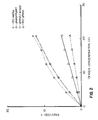
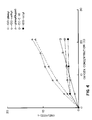
- Fig. 2 to 4. A collection of plots of [I(N2) / I(O2) - 1] as a function of oxygen concentration for various sol/gel coatings.
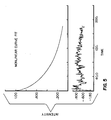
- Fig. 5 Time-resolved phosphorescence decay curve measured for a phenyl/propyl coating in nitrogen. The intensity has been normalized. The best-fit curve is plotted on the top of the experimental data. The residuals are plotted below the decay curve and best-fit curve.
- Fig. 6 The same experimental system as Fig 5, except measured in air.
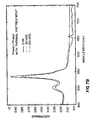
- FIG. 7 Visible absorption spectra of PtOEP in phenyl/propyl coatings measured at different exposure (air and room light) time. (A) and (B) are without and with thermal pretreatment respectively.
- Equation (1) illustrates complete hydrolysis of a triethoxysilane, such as phenyltriethoxysilane. As shown, for each molar equivalent of the trialkoxysilane which is completely hydrolyzed, three molar equivalents of water are consumed. The hydrolyzed product is comparatively unstable; it tends to rapidly undergo the condensation process illustrated by Equation (2). It is known in the art that condensation can begin to occur before all three alkoxide groups are hydrolyzed.
- Equation (2) is an oversimplification. It illustrates condensation between two silanol groups, each of which were formed in step (1). As shown by the unsatisfied valences, further condensation between other groups can occur.
- This invention comprises a method of determining the presence of oxygen in a gaseous, liquid, or solid sample, said method comprising:
- Heteropolycondensates for use in this invention include:
- the process of this invention can also be carried out using an endcapped silicic acid condensate, i.e., a silicic acid heteropolycondensate having the repeating unit Si ⁇ wherein the unsatisfied valences in said units are interconnected by oxygen, and said condensate is endcapped by R3Si-groups, wherein each R is alike or different and has the same significance as above.
- the condensates within this subclass (5) are illustrated by the non-limiting example, EC-C-18.
- the heteropolycondensates used in this invention are made by causing molecules of one or more silanes selected from those having the formula: to hydrolyze and interconnect.
- the process is preferably conducted in the presence of a water miscible solvent in which the silane(s) are dissolved.
- the reaction is also preferably carried out by adding the water slowly or in a fine stream to the silane starting material.
- a water miscible solvent, and controlled addition of the water assists in maintaining homogeneity during hydrolysis.
- the amount of water employed is preferably the calculated amount required for complete hydrolysis of the hydrolyzable groups (represented by X in the above formulas) present in the silane(s) to be reacted.
- the amount of solvent is not critical. Generally, from two to four volumes of solvent are used.
- the solvent can be an alcohol, an ether, a ketone, or an acid, an amide or the like. Typical solvents are methanol, ethanol, dioxane, acetone, acetic acid, and dimethyl formamide. Dioxane is a preferred solvent for silanes in which the hydrolyzable groups are halogen. Alcohols are preferred solvents when the hydrolyzable groups are alkoxides.
- hydrolyzable groups mean any group or groups which react with water under the reaction conditions employed. They may be selected from hydrogen, halogen, alkoxide, and similar radicals. Preferably they are alkoxides wherein the alkyl group is a hydrocarbyl radical, i.e., a radical solely composed of carbon and hydrogen. Preferably, the alkoxide groups have up to about 4 carbon atoms.
- the process may be carried out in the presence of a catalyst, e.g., an acid, or base.
- Acids suitable for this purpose have a pK a of less than or equal to 5.
- they are volatile acids such as hydrochloric acid and acetic acid.
- Inorganic bases such as NaOH, KOH, and Ca(OH)2, and organic bases such as lower alkylamines, e.g., triethylamine, can be used. Acids are preferred catalysts.
- the process may be conducted at a temperature of from about -25°C to about 130°C.
- a preferred temperature range is from about 20°C to about 65°C.
- the process is preferably conducted at ambient pressure; however, slightly greater or lesser pressures can be used if desired.
- the process is complete in less than 24 hours.
- a preferred reaction time is from about 0.5 to about 5.0 hours. It is to be understood that the reaction time is not a truly independent variable but is dependent to at least to an appreciable extent on the other reaction conditions employed. For example, higher temperatures and more reactive hydrolyzable groups favor shorter reaction times. Less reactive groups and lower temperatures generally require longer reaction times.
- this invention comprises a method for determining the presence of oxygen in a sample.
- This method comprises providing a membrane containing luminescent material which luminesces when excited by visible or ultraviolet light, and whose luminescence (intensity or lifetime) is quenchable by oxygen.
- the method is not restricted to any specific type of luminescence.
- the process of this invention can be based on photoluminescence, chemiluminescence, or thermoluminescence.
- the luminescent substance employed is incorporated in a silicic acid heteropolycondensate produced by the process discussed above.
- the heteropolycondensate/luminescent composite is exposed to the sample such that oxygen permeates the heteropolycondensate and quenches the luminescence of the indicator.
- the degree of quenching i.e., the amount of quench by oxygen, is measured and used to determine the amount of oxygen in the sample.
- the method of incorporating the luminescent compound in the heteropolycondensate is not critical. One method for doing so is set forth in the Examples below.
- the sensor made from the heteropolycondensate/luminescent compound composite can be incorporated in a variety of sensing devices known in the art.
- the sensors of this invention may be used in the apparatus and methods set forth in: Herschfeld et al; Journal of Lightwave Technology , Vol. LT-5 No.7 (July 1987), pp. 1027-1032. Gehrich et al; IEEE Transactions on Biomedical Engineering, Vol. BME-33 No. 2 (February 1986), pp. 117-132. Wolfbeis et al; Mikrochimica Acta [Wien] (1984), pp. 153-158. Ruzicka et al; Analytica Chimica Acta 69 , (1974), pp. 129-141. Wolfbeis et al; Anal. Chem . (1985) 57 , pp. 2556-2561.
- the luminescent compound employed in the sensors provided by this invention can be selected from a wide variety of luminescent materials known in the art. Typically, it may be acridine, pyrene, and the like, or the complex of platinum with octaethylporphyrin. Other suitable systems include the porphyrin, octaethylporphyrin, or phthalocyanine ligands complexed with Cu++, Zn++, VO++, Pd++, or Pt++. Complexes of 1,10:phenanthroline, and substituted derivatives thereof, with chromium or a platinum subgroup metal can also be used.
- Typical luminescent materials which can be used in this invention are disclosed in British Patent 2,132,348B and in Lee et al; Anal. Chem. (1987) 59 , pp. 279-283; and Avnir et al; Journal of Non-Crystalline Solids 74 (1985), pp. 395-406 ( supra ).
- the concentration of the luminescent compound in the heteropolycondensate is within the range of from about 0.01 to about 0.4% by weight; more preferably from about 0.05 to about 0.2 weight percent.
- sol/gel (silicic acid heteropolycondensate) solutions were prepared by a standardized set of conditions as described below, using 80-phenyl/15-Ph2/5-OSTEE as an example.
- a 250 mL, three-neck round-bottom flask equipped with a mechanical stirrer and reflux condensor were placed 40 mL (0.17 mol) of phenyltriethoxysilane, 6.6 mL (0.031 mol) of dichlorodiphenylsilane, 2.3 mL (0.010 mol) of tetraethoxysilane, and 49 mL of ethanol.
- the procedure described above was easily modified to produce a variety of compositions simply by varying the monomers.
- the amount of ethanol which was added was equal in volume to the silane monomers.
- an intermediate product can be prepared by polymerizing the silanes selected from compounds of Formulas I, II, or III, and then capping residual silanol groups with endcapping compounds of Formula IV, such as octadecyldimethylchlorosilane (C18H37)(CH3)2SiCl.
- endcapping agent in moles is used in an amount within the range of from about 0.5 to about 8, more preferably from about 2 to about 4.
- the temperature and reaction time employed for the endcapping can be within the ranges of from about 25°C to about 100°C, and from about 0.25 to about 4.0 hours, respectively, more preferably from about 40°C to about 70°C, and from about 0.5 to about 2 hours.
- Non-endcapped or endcapped heteropolycondensates made according to the process illustrated by this Example can be upgraded by heating them at an elevated temperature and pressure as (discussed above and) illustrated by the following Example:
- Phenyltriethoxysilane (60 ml, 0.25 mol) was polymerized according to the procedure set forth in Example 1 using 46.7 ml of ethanol and 13.4 ml (0.75 mol) of water. No acid catalyst was employed.
- the ethanolic solution of the silicic acid heteropolycondensate produced was transferred to a stainless steel reaction vessel and dried by heating above the critical temperature of ethanol.
- the phenyl group-containing silicic acid was in the form of a white powdery material which was soluble in methylene chloride.
- Stock solutions were prepared by dissolving one gram of organic modified silicic acid heteropolycondensates in 10 mL of CH2Cl2 in which one milligram of PtOEP was added. Light was excluded from the stock solution.
- an optical fiber spectrometer (Guided Wave Model 200) was used to measure the phosphorescence intensity. This commercial instrument is equipped with a bifurcated fiber with one input fiber in the center axis to guide light to the sample and six output fibers along the edge to collect the scattered light and guide it back to the spectrometer. The fibers are terminated in a stainless steel probe.
- a polycarbonate or polymethylmethacrylate barrel was screwed on the probe, and a circular glass disc was glued to the barrel with dichloromethane.
- the 25 mil thick plate places the dye in the cross section of the exciting beam and the field of view defined by the numerical aperture of the optical fibers, maximizing the observable phosphorescence.
- the PtOEP/sol-gel was first drop coated on the circular glass plate. This coating was then heated at 60°C to 120°C for one to four hours. After cooling to room temperature, this glass plate was "glued" to the barrel.
- the fiber was kept in a glass bottle which is connected to two flowmeters. The two flowmeters were used to control the ratio of compressed nitrogen and air partial pressure, while keeping the total pressure constant.
- the dye/polymer was excited with a tungsten lamp and an Ealing interference filter which passed wavelengths ⁇ 550 nm.
- the phosphorescence was monitored at 642 nm with a bandwidth of 10 nm.
- Phosphorescence lifetimes were estimated from the recorded decay curves (which were obtained by time-resolved phosphorescence) by nonlinear curve fitting. Visible absorption spectra were taken with an HP-4850A UV-VIS spectrometer.
- Fig. 1 shows the results of the phosphorescence intensities of PtOEP incorporated in (X), 95-Phenyl/5-OSTEE and (O), Phenyl/propyl coatings, which were normalized with their corresponding intensities measured in nitrogen, as a function of time (in minutes).
- each step change in the intensity is due to the change of the ratio of nitrogen to oxygen partial pressure by manually adjusting flowmeters. The measurements were done by increasing oxygen partial pressure in five steps from nitrogen to air. The phosphorescence intensity decreased as the oxygen partial pressure increased due to the quenching of phosphorescence by oxygen. When switching back to nitrogen, the intensity almost regains its original high value as shown in the case of (O), Phenyl/propyl.
- the slight decrease in the intensity when switching back and forth between nitrogen and air could arise from the instability of incorporated PtOEP, which will be discussed later.
- the response time of this sensor depending on the coating thickness, could be in the range of seconds (e.g., 10-40 second).
- the difference in the change in intensity for each step change of oxygen partial pressure is significant between 95-Phenyl/5-OSTEE and phenyl/propyl. This difference is an indication of the differences in the oxygen permeability between these two coatings. Phenyl/propyl coatings show higher oxygen permeability than 95-Phenyl/5-OSTEE.
- Figs. 2 to 4 are a collection of these plots for eight different sol/gel coatings. Their compositional differences have been described above.
- Fig. 2 shows that 100-methyl and phenyl(hyper) are significantly more permeable to oxygen than phenyl/propyl and 100-phenyl. However, 100-methyl and phenyl(hyper) show nonlinear behavior. On the other hand, 100-phenyl and phenyl/propyl show relatively linear responses to the oxygen concentration range examined (Fig. 2).
- Fig. 4 shows results obtained on coatings prepared from an endcapped sol/gel, EC-C-18, and from a 100% n-octyltriethoxysilane sol/gel, 100-octyl.
- the response of these two coatings to oxygen quenching are significantly different from other silicic acid heteropolycondensates coatings. It is obvious that these polycondensate coatings are very permeable to oxygen. Their response curves reach plateaus at relatively low oxygen concentration.
- the measured oxygen permeability is also a function of the decay lifetimes of the phosphorescent probes. For a comparison of oxygen permeabilities among these coatings, we determined the associated phosphorescence lifetimes.
- the phosphorescence lifetimes of the incorporated PtOEP were evaluated from time-resolved phosphorescence measurements.
- Fig. 5 shows a typical phosphorescence decay curve for a phenyl/propyl coating measured under nitrogen. It also includes a best fit-curve by assuming biexponential decay. The fit is reasonably good, a good fit having a low deviation and a random distribution in the residuals (residuals are plotted below the decay curves in Figs. 5 and 6).
- the time scale is in microseconds.
- Fig. 6 shows results obtained in air with the same coating used in Fig. 5. Again, this decay curve can be explained by two decay lifetimes which are shorter than those measured in nitrogen, as expected.
- Table II summarizes the phosphorescence lifetimes measured both in air and nitrogen. This Table also includes the results measured for a PtOEP/CH2Cl2 solution.
- the ratio of slopes, which are proportional to the product of the phosphorescence lifetime and the oxygen permeability, for 100-methyl:phenyl/propyl:95-Phenyl/5-OSTEE is 1:0.431:0.161. After correcting for the difference in their phosphorescence lifetimes, the ratio becomes 1:0.49:0.19. In this case, the luminescence lifetimes only change the relative magnitude, not the order, of the permeabilities among these three coatings.
- Alkyl substituted glassy coatings appear to be more permeable to oxygen than aryl substituted coatings.
- 100% phenyl substituted coatings prepared by hypercritical processing of Example 2 show much higher oxygen permeability than phenyl coatings prepared from conventional low temperature sol/gel processes. If a portion of phenyl is substituted by propyl, it results in an increase in oxygen permeability.
- the introduction of 5% of OSTEE decreases the oxygen permeability. The OSTEE can cause the final structure of coatings to be more tightly cross-linked and will produce harder coatings
- the oxygen permeability of sol/gel coatings prepared from aminopropylsilane was evaluated by measuring the phosphorescent spectra of incorporated PdTPPS both in air and nitrogen. The results show that air did not quench the phosphorescence of PdTPPS (palladium tetraphenylporphyrinsulfonate) to any appreciable amount. In other words, this coating is very impermeable to oxygen. This can be attributed to the character of the amino groups. This kind of oxygen impermeable coating has its own value. For example, sol/gels containing aminopropyl groups can be blended with other sol/gels having greater oxygen permeability to fine tune the permeability of the sensor.
- sol gels have many valuable properties as a coating for oxygen sensing.
- the mechanical and chemical stability of the sol/gel coating has allowed the sensor to be operated in IN NaOH, ferric oxyhydroxide aqueous slurries, latex colloidal suspensions, and gas, unlike other phosphorescent optrodes that have interference problems.
- the dynamic range is 3 to 4 times larger than the literature optrodes (Miller, F., et al, J. Lightwave Tech., Lt-5(7), 1027-1032, 1987) as illustrated by the curve for 100-methyl in Fig. 4.
- the optimum oxygen sensitivity range is tunable (as shown by Figs. 4-6), and the lowest measurable oxygen concentration is ⁇ 0.001%.
- the optical properties (transparency, scatter, etc.) of some sol/gel coatings approach those of optical quality glass.
Landscapes
- Health & Medical Sciences (AREA)
- Immunology (AREA)
- Chemical & Material Sciences (AREA)
- Physics & Mathematics (AREA)
- Analytical Chemistry (AREA)
- Nuclear Medicine, Radiotherapy & Molecular Imaging (AREA)
- Life Sciences & Earth Sciences (AREA)
- Biochemistry (AREA)
- General Health & Medical Sciences (AREA)
- General Physics & Mathematics (AREA)
- Pathology (AREA)
- Optics & Photonics (AREA)
- Chemical Kinetics & Catalysis (AREA)
- Investigating Or Analysing Materials By The Use Of Chemical Reactions (AREA)
- Investigating, Analyzing Materials By Fluorescence Or Luminescence (AREA)
- Investigating Or Analysing Biological Materials (AREA)
Abstract
Claims (11)
- Méthode pour déterminer la présence d'oxygène dans un échantillon, méthode dans laquelle :(A) on expose un capteur à l'échantillon, capteur comprenant :(i) une substance luminescente qui émet une luminescence lorsqu'elle est excitée par une lumière visible ou ultraviolette et dont la durée de vie ou l'intensité de la luminescence est susceptible d'être réduite par la présence d'oxygène, et(ii) une membrane perméable à l'oxygène et dans laquelle se trouve incorporée la substance luminescente,(B) on laisse l'oxygène de l'échantillon passer à travers la membrane et entrer en contact avec la substance luminescente,(C) on mesure la perte de luminescence provoquée par l'oxygène, et(D) on utilise cette mesure pour déterminer le contenu en oxygène de l'échantillon ;caractérisée en ce que la membrane consiste essentiellement en un hétéropolycondensat d'acide silicique modifié par des radicaux organiques ayant des unités silane de formule RSi≡, les valences libres de ces unités étant interconnectées avec de l'oxygène.
- Méthode selon la revendication 1 dans laquelle les radicaux R dans les unités silane sont choisis dans la classe comprenant :(a) les radicaux alkyle inférieurs ou les radicaux alkyle inférieurs substitués par un halogène ayant jusqu'à environ 7 atomes de carbone ;(b) les radicaux aryle ayant jusqu'à environ 14 atomes de carbone ; et(c) des mélanges de (a) et (b).
- Méthode selon la revendication 2 dans laquelle les radicaux R dans les groupes silane sont choisis de telle sorte que 70 à 100% de ces groupes sont choisis dans le groupe (b) et 0-30% dans le groupe (a).
- Méthode selon la revendication 2 dans laquelle les radicaux R dans les unités silane sont choisis dans le sous-groupe (b) et l'hétéropolycondensat est caractérisé de plus en ce qu'il ne contient pratiquement aucun groupe hydrolysable ou silanol.
- Méthode selon la revendication 3 dans laquelle les radicaux R dans les unités silane sont des radicaux phényle.
- Méthode selon la revendication 4 dans laquelle les radicaux R dans les unités silane sont des radicaux phényle.
- Méthode selon la revendication 1 dans laquelle les radicaux R dans les unités silane sont choisis parmi les groupes alkyle et les groupes alkyle substitués par un halogène ayant de 7 à 20 atomes de carbone.
- Méthode selon la revendication 7 dans laquelle les radicaux R dans les unités silane sont des radicaux octyle.
- Méthode selon la revendication 1 dans laquelle R est un groupe alkyle ou alkyle substitué par un halogène ayant jusqu'à 20 atomes de carbone ou un groupe aryle ayant jusqu'à 14 atomes de carbone substitué par un radical amine -NR₁R₂ où R₁ et R₂ sont les mêmes ou différents et choisis parmi l'hydrogène et les groupes alkyle inférieurs ayant jusqu'à 4 atomes de carbone.
- Méthode selon la revendication 9 dans laquelle R est aminopropyle.
- Capteur comprenant une substance luminescente qui émet une luminescence lorsqu'elle est excitée par une lumière visible ou ultraviolette et dont la durée de vie ou l'intensité de la luminescence est susceptible d'être réduite par la présence d'oxygène, substance luminescente incorporée dans une membrane, caractérisé en ce que la membrane consiste essentiellement en un hétéropolycondensat d'acide silicique modifié par des radicaux organiques ayant des unités silane de formule RSi≡, les valences libres de ces unités étant interconnectées avec de l'oxygène.
Applications Claiming Priority (2)
| Application Number | Priority Date | Filing Date | Title |
|---|---|---|---|
| US07/300,105 US5047350A (en) | 1989-01-19 | 1989-01-19 | Material and method for oxygen sensing |
| US300105 | 1989-01-19 |
Publications (2)
| Publication Number | Publication Date |
|---|---|
| EP0455730A1 EP0455730A1 (fr) | 1991-11-13 |
| EP0455730B1 true EP0455730B1 (fr) | 1993-08-25 |
Family
ID=23157733
Family Applications (1)
| Application Number | Title | Priority Date | Filing Date |
|---|---|---|---|
| EP90903277A Expired - Lifetime EP0455730B1 (fr) | 1989-01-19 | 1990-01-16 | Materiau et procede utilises pour la detection d'oxygene |
Country Status (6)
| Country | Link |
|---|---|
| US (1) | US5047350A (fr) |
| EP (1) | EP0455730B1 (fr) |
| JP (1) | JPH04502815A (fr) |
| CA (1) | CA2045402A1 (fr) |
| DE (1) | DE69002937T2 (fr) |
| WO (1) | WO1990008310A1 (fr) |
Families Citing this family (29)
| Publication number | Priority date | Publication date | Assignee | Title |
|---|---|---|---|---|
| US5358876A (en) * | 1991-07-17 | 1994-10-25 | Mitsubishi Gas Chemical Company, Inc. | Oxygen indicator |
| US5155149A (en) * | 1991-10-10 | 1992-10-13 | Boc Health Care, Inc. | Silicone polyurethane copolymers containing oxygen sensitive phosphorescent dye compounds |
| US5501836A (en) * | 1994-07-11 | 1996-03-26 | Hewlett Packard Company | Entrapped non-enzymatic macromolecules for chemical sensing |
| US5628310A (en) * | 1995-05-19 | 1997-05-13 | Joseph R. Lakowicz | Method and apparatus to perform trans-cutaneous analyte monitoring |
| DE19605522C2 (de) * | 1996-02-15 | 1998-08-27 | Karlsruhe Forschzent | Verwendung einer sensitiven Schicht für einen Sensor |
| US5863460A (en) * | 1996-04-01 | 1999-01-26 | Chiron Diagnostics Corporation | Oxygen sensing membranes and methods of making same |
| US7335164B2 (en) | 1996-07-15 | 2008-02-26 | Ntc Technology, Inc. | Multiple function airway adapter |
| US6815211B1 (en) | 1998-08-04 | 2004-11-09 | Ntc Technology | Oxygen monitoring methods and apparatus (I) |
| US6325978B1 (en) | 1998-08-04 | 2001-12-04 | Ntc Technology Inc. | Oxygen monitoring and apparatus |
| AT409306B (de) * | 1997-10-03 | 2002-07-25 | Hoffmann La Roche | Optisch chemischer sensor |
| ATE437450T1 (de) * | 1997-10-09 | 2009-08-15 | Univ Princeton | Phosphoreszente organische lichtemittierende vorrichtung |
| US6254831B1 (en) | 1998-01-21 | 2001-07-03 | Bayer Corporation | Optical sensors with reflective materials |
| US6190612B1 (en) | 1998-01-21 | 2001-02-20 | Bayer Corporation | Oxygen sensing membranes and methods of making same |
| US6306347B1 (en) | 1998-01-21 | 2001-10-23 | Bayer Corporation | Optical sensor and method of operation |
| US6107083A (en) * | 1998-08-21 | 2000-08-22 | Bayer Corporation | Optical oxidative enzyme-based sensors |
| US20090011945A1 (en) * | 1999-07-28 | 2009-01-08 | Bright Frank V | Method For Making Microsensor Arrays For Detecting Analytes |
| AUPQ937100A0 (en) * | 2000-08-15 | 2000-09-07 | Food & Packaging Centre Management Limited | Odour sensor |
| US6632402B2 (en) * | 2001-01-24 | 2003-10-14 | Ntc Technology Inc. | Oxygen monitoring apparatus |
| US7309614B1 (en) | 2002-12-04 | 2007-12-18 | Sru Biosystems, Inc. | Self-referencing biodetection method and patterned bioassays |
| GB0302489D0 (en) * | 2003-02-04 | 2003-03-05 | Bae Systems Plc | Improvements relating to pressure sensitive paint |
| US7750294B2 (en) * | 2004-03-10 | 2010-07-06 | The Research Foundation Of State University Of New York | Photonic sensors, xerogel-based sensors and nanosensors |
| US7740904B2 (en) * | 2005-07-11 | 2010-06-22 | Ocean Optics, Inc. | High performance materials for optical sensors for hydrocarbons environment |
| DE102005044071A1 (de) * | 2005-09-07 | 2007-03-08 | Nimbus Biotechnologie Gmbh | Verfahren zur Messung der Permeation einer Substanz durch eine Barriere |
| US7749768B2 (en) * | 2006-03-13 | 2010-07-06 | Cryovac, Inc. | Non-invasive method of determining oxygen concentration in a sealed package |
| US7569395B2 (en) * | 2006-03-13 | 2009-08-04 | Cryovac, Inc. | Method and apparatus for measuring oxygen concentration |
| US7744542B2 (en) * | 2006-04-20 | 2010-06-29 | Cardiac Pacemakers, Inc. | Implanted air passage sensors |
| US20090128344A1 (en) * | 2007-11-21 | 2009-05-21 | General Electric Company | Systems, Apparatuses And Methods For Monitoring Physical Conditions Of A Bed Occupant |
| DE102008011578A1 (de) * | 2008-02-28 | 2009-09-03 | Endress + Hauser Conducta Gesellschaft für Mess- und Regeltechnik mbH + Co. KG | Photolumineszenz-Sensor |
| WO2010001298A1 (fr) * | 2008-06-30 | 2010-01-07 | Braskem S.A. | Capteurs chimiques modifiés par le procédé sol-gel et leur application aux matrices polymères |
Family Cites Families (12)
| Publication number | Priority date | Publication date | Assignee | Title |
|---|---|---|---|---|
| US2486162A (en) * | 1942-02-26 | 1949-10-25 | Corning Glass Works | Organo-siloxanes |
| US3725658A (en) * | 1971-01-18 | 1973-04-03 | Trw Inc | Apparatus and method for continuously detecting oxygen in a gas stream |
| DE2758415A1 (de) * | 1977-12-28 | 1979-07-12 | Fraunhofer Ges Forschung | Kieselsaeureheteropolykondensate, verfahren zu deren herstellung und deren verwendung als membranen und adsorbentien |
| US4476870A (en) * | 1982-03-30 | 1984-10-16 | The United States Of America As Represented By The Department Of Health And Human Services | Fiber optic PO.sbsb.2 probe |
| AT379688B (de) * | 1982-11-22 | 1986-02-10 | List Hans | Sensorelement zur bestimmung des o2-gehaltes einer probe |
| AT377095B (de) * | 1982-11-23 | 1985-02-11 | List Hans | Sensorelement zur bestimmung des o2-gehaltes einer probe sowie verfahren zur herstellung desselben |
| CA1261717A (fr) * | 1982-12-23 | 1989-09-26 | John R. Bacon | Methode et appareil pour mesurer l'oxygene |
| US4677078A (en) * | 1984-05-07 | 1987-06-30 | Gould Inc. | Oxygen monitoring device and method |
| US5019350A (en) * | 1986-02-13 | 1991-05-28 | Pfizer Hospital Products, Inc. | Fluorescent polymers |
| US4849172A (en) * | 1986-04-18 | 1989-07-18 | Minnesota Mining And Manufacturing Company | Optical sensor |
| EP0243116A3 (fr) * | 1986-04-18 | 1990-01-24 | Minnesota Mining And Manufacturing Company | Senseur optique |
| US4861727A (en) * | 1986-09-08 | 1989-08-29 | C. R. Bard, Inc. | Luminescent oxygen sensor based on a lanthanide complex |
-
1989
- 1989-01-19 US US07/300,105 patent/US5047350A/en not_active Expired - Lifetime
-
1990
- 1990-01-16 JP JP2503395A patent/JPH04502815A/ja active Pending
- 1990-01-16 CA CA002045402A patent/CA2045402A1/fr not_active Abandoned
- 1990-01-16 DE DE90903277T patent/DE69002937T2/de not_active Expired - Fee Related
- 1990-01-16 EP EP90903277A patent/EP0455730B1/fr not_active Expired - Lifetime
- 1990-01-16 WO PCT/US1990/000159 patent/WO1990008310A1/fr not_active Ceased
Also Published As
| Publication number | Publication date |
|---|---|
| JPH04502815A (ja) | 1992-05-21 |
| DE69002937D1 (de) | 1993-09-30 |
| US5047350A (en) | 1991-09-10 |
| CA2045402A1 (fr) | 1990-07-20 |
| DE69002937T2 (de) | 1994-03-24 |
| EP0455730A1 (fr) | 1991-11-13 |
| WO1990008310A1 (fr) | 1990-07-26 |
Similar Documents
| Publication | Publication Date | Title |
|---|---|---|
| EP0455730B1 (fr) | Materiau et procede utilises pour la detection d'oxygene | |
| Klimant et al. | Fast response oxygen micro-optodes based on novel soluble ormosil glasses | |
| US5019350A (en) | Fluorescent polymers | |
| US5462880A (en) | Ratiometric fluorescence method to measure oxygen | |
| US5536783A (en) | Fluorescent polymers useful in conjunction with optical PH sensors | |
| Liu et al. | Oxygen permeability of sol-gel coatings | |
| EP0274185A1 (fr) | Composition de polymère silicone contenant un colorant | |
| JPH0365639A (ja) | 光ファイバーを備えた能動化学センサ及びその製造方法 | |
| WO1988005533A1 (fr) | Amplification de signaux provenant de fibres optiques | |
| Chan et al. | Evaluation of a luminescent ruthenium complex immobilized inside Nafion as optical pH sensor | |
| CN110108683A (zh) | 一种用于溶氧含量检测的比率氧传感膜的制备方法 | |
| US5015715A (en) | Method for bonding an analyte-sensitive dye compound to an addition-cure silicone | |
| US5182353A (en) | Method for bonding an analyte-sensitive dye compound to an addition-cure silicone | |
| Brook et al. | Immobilization of ruthenium tris-bipyridyl complex for chlorine gas detection | |
| US20040062683A1 (en) | Sensitive single-layer sensing device of covalently attached luminescent indicator on glass surface for measuring the concentration of analytes | |
| Noreña-Franco et al. | Chemically sensitive films for the detection of hazardous substances employing cyanine and nitroso near infrared dyes | |
| MacCraith et al. | Evanescent-wave oxygen sensing using sol-gel-derived porous coatings | |
| JP2000510590A (ja) | オゾン濃度を測定するためのセンサ素子及びセンサ | |
| Shahriari et al. | Doped Sol-Gel Films for Fiber Optic Chemical Sensors | |
| CA2204319A1 (fr) | Detecteurs phosphorescents pour l'oxygene | |
| Carturan et al. | Optical properties of a fluorinated polyimide as related to ethanol and water-vapor-sensing capability | |
| Seitz et al. | Polymeric Indicator Substrates for Fiber Optic Chemical Sensors | |
| Murtagh et al. | Luminescence decay analysis of doped sol-gel films | |
| JIAN | Polymeric Indicator Substrates for Fiber Optic | |
| Palmeira et al. | Optimization of ormosil glasses for luminescence based dissolved oxygen sensors |
Legal Events
| Date | Code | Title | Description |
|---|---|---|---|
| PUAI | Public reference made under article 153(3) epc to a published international application that has entered the european phase |
Free format text: ORIGINAL CODE: 0009012 |
|
| 17P | Request for examination filed |
Effective date: 19910709 |
|
| AK | Designated contracting states |
Kind code of ref document: A1 Designated state(s): AT BE CH DE DK ES FR GB IT LI LU NL SE |
|
| 17Q | First examination report despatched |
Effective date: 19921012 |
|
| RBV | Designated contracting states (corrected) |
Designated state(s): DE FR GB |
|
| GRAA | (expected) grant |
Free format text: ORIGINAL CODE: 0009210 |
|
| AK | Designated contracting states |
Kind code of ref document: B1 Designated state(s): DE FR GB |
|
| REF | Corresponds to: |
Ref document number: 69002937 Country of ref document: DE Date of ref document: 19930930 |
|
| ET | Fr: translation filed | ||
| PLBE | No opposition filed within time limit |
Free format text: ORIGINAL CODE: 0009261 |
|
| STAA | Information on the status of an ep patent application or granted ep patent |
Free format text: STATUS: NO OPPOSITION FILED WITHIN TIME LIMIT |
|
| 26N | No opposition filed | ||
| PGFP | Annual fee paid to national office [announced via postgrant information from national office to epo] |
Ref country code: GB Payment date: 19991202 Year of fee payment: 11 |
|
| PGFP | Annual fee paid to national office [announced via postgrant information from national office to epo] |
Ref country code: FR Payment date: 19991217 Year of fee payment: 11 |
|
| PGFP | Annual fee paid to national office [announced via postgrant information from national office to epo] |
Ref country code: DE Payment date: 19991229 Year of fee payment: 11 |
|
| PG25 | Lapsed in a contracting state [announced via postgrant information from national office to epo] |
Ref country code: GB Free format text: LAPSE BECAUSE OF NON-PAYMENT OF DUE FEES Effective date: 20010116 |
|
| GBPC | Gb: european patent ceased through non-payment of renewal fee |
Effective date: 20010116 |
|
| PG25 | Lapsed in a contracting state [announced via postgrant information from national office to epo] |
Ref country code: FR Free format text: LAPSE BECAUSE OF NON-PAYMENT OF DUE FEES Effective date: 20010928 |
|
| PG25 | Lapsed in a contracting state [announced via postgrant information from national office to epo] |
Ref country code: DE Free format text: LAPSE BECAUSE OF NON-PAYMENT OF DUE FEES Effective date: 20011101 |
|
| REG | Reference to a national code |
Ref country code: FR Ref legal event code: ST |