EP0457035A1 - Verfahren zur Inaktivierung der biologischen Aktivität von DNA - Google Patents
Verfahren zur Inaktivierung der biologischen Aktivität von DNA Download PDFInfo
- Publication number
- EP0457035A1 EP0457035A1 EP91105898A EP91105898A EP0457035A1 EP 0457035 A1 EP0457035 A1 EP 0457035A1 EP 91105898 A EP91105898 A EP 91105898A EP 91105898 A EP91105898 A EP 91105898A EP 0457035 A1 EP0457035 A1 EP 0457035A1
- Authority
- EP
- European Patent Office
- Prior art keywords
- acid
- dna
- biological activity
- inactivating
- concentration
- Prior art date
- Legal status (The legal status is an assumption and is not a legal conclusion. Google has not performed a legal analysis and makes no representation as to the accuracy of the status listed.)
- Granted
Links
Images
Classifications
-
- A—HUMAN NECESSITIES
- A61—MEDICAL OR VETERINARY SCIENCE; HYGIENE
- A61L—METHODS OR APPARATUS FOR STERILISING MATERIALS OR OBJECTS IN GENERAL; DISINFECTION, STERILISATION OR DEODORISATION OF AIR; CHEMICAL ASPECTS OF BANDAGES, DRESSINGS, ABSORBENT PADS OR SURGICAL ARTICLES; MATERIALS FOR BANDAGES, DRESSINGS, ABSORBENT PADS OR SURGICAL ARTICLES
- A61L2/00—Disinfection or sterilisation of materials or objects, in general; Accessories therefor
- A61L2/16—Disinfection or sterilisation of materials or objects, in general; Accessories therefor using chemical substances
- A61L2/18—Liquid substances
-
- A—HUMAN NECESSITIES
- A61—MEDICAL OR VETERINARY SCIENCE; HYGIENE
- A61L—METHODS OR APPARATUS FOR STERILISING MATERIALS OR OBJECTS IN GENERAL; DISINFECTION, STERILISATION OR DEODORISATION OF AIR; CHEMICAL ASPECTS OF BANDAGES, DRESSINGS, ABSORBENT PADS OR SURGICAL ARTICLES; MATERIALS FOR BANDAGES, DRESSINGS, ABSORBENT PADS OR SURGICAL ARTICLES
- A61L2/00—Disinfection or sterilisation of materials or objects, in general; Accessories therefor
- A61L2/02—Disinfection or sterilisation of materials or objects, in general; Accessories therefor using physical processes
- A61L2/04—Heat
-
- C—CHEMISTRY; METALLURGY
- C12—BIOCHEMISTRY; BEER; SPIRITS; WINE; VINEGAR; MICROBIOLOGY; ENZYMOLOGY; MUTATION OR GENETIC ENGINEERING
- C12N—MICROORGANISMS OR ENZYMES; COMPOSITIONS THEREOF; PROPAGATING, PRESERVING, OR MAINTAINING MICROORGANISMS; MUTATION OR GENETIC ENGINEERING; CULTURE MEDIA
- C12N1/00—Microorganisms; Compositions thereof; Processes of propagating, maintaining or preserving microorganisms or compositions thereof; Processes of preparing or isolating a composition containing a microorganism; Culture media therefor
- C12N1/08—Reducing the nucleic acid content
-
- A—HUMAN NECESSITIES
- A61—MEDICAL OR VETERINARY SCIENCE; HYGIENE
- A61L—METHODS OR APPARATUS FOR STERILISING MATERIALS OR OBJECTS IN GENERAL; DISINFECTION, STERILISATION OR DEODORISATION OF AIR; CHEMICAL ASPECTS OF BANDAGES, DRESSINGS, ABSORBENT PADS OR SURGICAL ARTICLES; MATERIALS FOR BANDAGES, DRESSINGS, ABSORBENT PADS OR SURGICAL ARTICLES
- A61L2103/00—Materials or objects being the target of disinfection or sterilisation
- A61L2103/05—Living organisms or biological materials
Definitions
- the invention relates to a method for inactivating the biological activity of DNA, in particular recombinant DNA, and preferably the simultaneous killing of cells such as mammalian cells, e.g. CHO, COS and hybridoma cells, bacterial cells such as e.g. E.coli and B.subtilis, or yeast.
- cells such as mammalian cells, e.g. CHO, COS and hybridoma cells, bacterial cells such as e.g. E.coli and B.subtilis, or yeast.
- waste When working with recombinant DNA-containing microorganisms, waste is produced which contains not only living organisms but also dead organisms containing active nucleic acid. The waste must be inactivated with the appropriate safety classification before the biomass is fed into the sewage treatment plant.
- the inactivation must take place before the biomass is introduced into the sewage treatment plant, no substances can be used for this purpose, which could damage or kill the microorganisms of the activated sludge, for example, if a biological sewage treatment plant is charged using the activated sludge process.
- the substances used are non-toxic to the environment or are broken down by the microorganisms of the activated sludge, so that they can not cause any damage, and that substances are used that cover the surfaces and walls of equipment used for fermentation and Purification are used, do not negatively affect.
- DE OS 37 33921 describes a method for inactivating the DNA, in particular recombinant DNA, in which percarboxylic acid having 1 to 3 carbon atoms, one of its salts, an alkali peroxide or an alkali peroxomonosulfate is added to a biomass containing DNA, and the mixture is then added 20 to 60 Is heated to 60 to 100 ° C for minutes, preferably at pH 6 to 11.
- the percarboxylic acid such as peroxyacetic acid, are, however, relatively unstable.
- the invention therefore relates to a process for inactivating the biological activity of the DNA, in particular the recombinant DNA, characterized in that the DNA is present in the presence of an acid, apart from percarboxylic acid, in a concentration of at least 0.2 mM and a pH of at most 4 heated at a temperature of 60 to 100 ° C.
- the method can be carried out with a biomass or isolated DNA.
- the biomass can be, for example, a culture solution containing microorganisms or a cell culture.
- Preferred is a process in acid at a concentration of 1mM to 500mM, e.g. 2 to 100 mM, in particular 2.3 to 50 or 10 to 50 mM.
- the process according to the invention is normally carried out in the pH range between 1 and 3, particularly preferably in the pH range between 2 and 3.
- Mammalian cells are preferably treated at a concentration of at least 100 mM and a pH of at most 3, preferably 2.5. In the case of bacteria, these are preferably treated at a concentration of at least 400 mM and a pH of at most 3.
- Organic acids such as e.g. Formic acid, acetic acid, propionic acid, halogenated organic acids such as e.g. Mono-, di-, trichloroacetic acid, oxalic acid, malonic acid, succinic acid, malic acid, citric acid, tartaric acid, lactic acid, maleic acid, fumaric acid, benzoic acid, salicylic acid, inorganic acids such as hydrochloric acid, hydrogen bromide, hydrogen fluoride, hydrogen iodide, perchloric acid, sulfuric acid, sulfurous acid, nitric acid, nitrous Acid, boric acid and phosphoric acid and acidic salts such as sodium bisulfate and sodium bisulfite, as well as suitable combinations thereof.
- Citric acid, lactic acid, acetic acid, phosphoric acid or formic acid is preferably used.
- the mixture is preferably heated until no DNA with a chain length of more than 500 base pairs can be detected electrophoretically.
- the duration is 10 to 70 minutes, in particular 20 to 60 minutes.
- a particular advantage of the method is that not only normal double-stranded DNA such as ⁇ DNA and genomic DNA from bacteria or mammalian cells, but also "supercoiled plasmid DNA" can be safely inactivated.
- a sample containing 5 ⁇ g DNA in an aqueous solution (10 ⁇ l) was prepared in a 1.5 ml Eppendorf tube.
- acid was added in various batches (10 ⁇ l) and the resulting reaction mixture (final volume was 20 ⁇ l) was incubated under the conditions given in Table 1 below.
- 5 ul of 1M Tris pH 8.5 were added for neutralization.
- 10 ⁇ l of the DNA solution were removed after the acid treatment, mixed with 5 ⁇ l application buffer, consisting of 20% Ficoll (Pharmacia Fine Chemicals), 0.05% bromophenol blue, 20 mM EDTA, and placed on an agarose gel electrophoresis plate (agarose concentrations between 1 and 2%) applied.
- the electrophoresis buffer consisted of 40 mM Tris acetate pH 7.8 1 mM EDTA. The electrophoresis was carried out at 30-50 volts / cm.
- Example 1 was repeated using pBR 322 (supercoiled DNA) with different acids of different concentrations, as shown in Table 2.
- the reaction mixture was incubated at 70 ° C for 60 minutes.
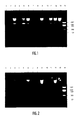
- Figure 1 shows the electrophoresis of such an experiment. It clearly shows that when the DNA is incubated according to the invention (lanes 1, 2, 4, 5, 7, 8 and 10), it is broken down into fragments of less than 300 bp.
- Example 1 was repeated using lambda phage DNA with different acids of different concentrations as shown in Table 3.
- the reaction mixture was incubated at 70 ° C for 60 minutes.
- E. coli strain HB 101
- Bacillus subtilis ATCC 6633
Landscapes
- Health & Medical Sciences (AREA)
- Life Sciences & Earth Sciences (AREA)
- Chemical & Material Sciences (AREA)
- Engineering & Computer Science (AREA)
- General Health & Medical Sciences (AREA)
- Zoology (AREA)
- Bioinformatics & Cheminformatics (AREA)
- Public Health (AREA)
- Organic Chemistry (AREA)
- Epidemiology (AREA)
- Wood Science & Technology (AREA)
- Animal Behavior & Ethology (AREA)
- Biotechnology (AREA)
- Genetics & Genomics (AREA)
- Veterinary Medicine (AREA)
- General Chemical & Material Sciences (AREA)
- Biochemistry (AREA)
- Biomedical Technology (AREA)
- Medicinal Chemistry (AREA)
- Microbiology (AREA)
- Molecular Biology (AREA)
- General Engineering & Computer Science (AREA)
- Virology (AREA)
- Tropical Medicine & Parasitology (AREA)
- Chemical Kinetics & Catalysis (AREA)
- Micro-Organisms Or Cultivation Processes Thereof (AREA)
- Saccharide Compounds (AREA)
- Preparation Of Compounds By Using Micro-Organisms (AREA)
- Measuring Or Testing Involving Enzymes Or Micro-Organisms (AREA)
Abstract
Description
- Die Erfindung betrifft ein Verfahren zur Inaktivierung der biologischen Aktivität von DNA, insbesondere rekombinanter DNA, und vorzugsweise die gleichzeitige Abtötung von Zellen wie Säugetierzellen, z.B. CHO-, COS- und Hybridoma-Zellen, Bakterienzellen wie z.B. E.coli und B.subtilis, oder Hefen.
- Beim Arbeiten mit rekombinanter DNA enthaltenden Mikroorganismen entstehen Abfälle, die nicht nur lebende Organismen sondern auch aktive Nukleinsäure enthaltende tote Organismen enthalten. Die Abfälle müssen bei entsprechender Sicherheitseinstufung inaktiviert werden, bevor die Biomasse in die Kläranlage eingeleitet wird.
- Obwohl viele Mikroorganismen und Zellkulturen durch Erhitzung auf 80°C abgetötet werden können, wird die DNA durch diese Maßnahmen in der Regel nicht zerstört.
- Die bisher bekannten und vom Bundesgesundheitsamt (BGA) der Bundesrepublik Deutschland und von der Zentralkommission für Biologische Sicherheit (ZKBS) der Bundesrepublik Deutschland anerkannten Methoden zur Sterilisation und Inaktivierung (z.B. Dampfsterilisation 20 Minuten lang bei 121°C) sind sehr aufwendig, und im Industriemaßstab angewandt, sehr kostenintensiv. Bei diesen von der ZKBS zugelassenen Entsorgungsverfahren wird der Abbau der DNA auf kleine Bruchstücke, unter 500 bp, erreicht. Derartige Bruchstücke sind nicht mehr biologisch aktiv und können daher gefahrlos in das Abwasser geleitet werden.
- Da die Inaktivierung erfolgen muß, bevor die Biomasse in die Kläranlage eingeleitet wird, können keine Substanzen zu diesem Zweck verwendet werden, die beispielsweise die Mikroorganismen des Belebtschlammes schädigen oder abtöten könnten, falls eine biologische Kläranlage nach dem Belebtschlammverfahren beschickt wird. Darüber hinaus ist es erstrebenswert, daß die verwendeten Substanzen für die Umwelt nicht toxisch sind bzw. von den Mikroorganismen des Belebtschlammes abgebaut werden, damit sie keinen Schaden verursachen können und daß Substanzen verwendet werden, die die Oberflächen und Wandungen von Geräten, die für Fermentation und Aufreinigung eingesetzt werden, nicht negativ beeinflussen.
- In der DE OS 37 33921 ist ein Verfahren zur Inaktivierung der DNA beschrieben, insbesondere rekombinanter DNA, wobei einer DNA enthaltenden Biomasse Percarbonsäure mit 1 bis 3 C-Atomen, eines ihrer Salze, ein Alkaliperoxid oder ein Alkaliperoxomonosulfat zugesetzt und die Mischung anschliessend 20 bis 60 Minuten lang auf 60 bis 100 °C erhitzt wird, vorzugsweise bei pH 6 bis 11.
- Die Percarbonsäure, wie z.B. die Peroxiessigsäure, sind aber relativ instabil.
- Es ist bereits literaturbekannt, daß eine DNA-Kette bei einer 40 Minuten langen Erhitzung in einer Phenol enthaltenden Kochsalzlösung bei 100°C stark degradiert wird (Meth. Enzymol. B XII, S. 97).
- In Meth. Enzymol. A XII, S. 222-223, wird die Degradierung einer DNA zur Herstellung von Apurinsäure mittels einer 98%igen Ameisensäure bei 30°C für 17 Stunden beschrieben.
- Überraschenderweise haben wir gefunden, daß eine Reihe von lagerstabilen, biologisch abbaubaren Säuren bei gewissen pH-Werten und Konzentrationen nicht nur zur Inaktivierung von DNA sondern auch zur Abtötung von Zellen geeignet sind, und zwar unter relativ niedrigen Temperaturen.
- Gegenstand der Erfindung ist daher ein Verfahren zur Inaktivierung der biologischen Aktivität der DNA, insbesondere der rekombinanten DNA, dadurch gekennzeichnet, daß man die DNA in Anwesenheit einer Säure, außer Percarbonsäure, in einer Konzentration von mindestens 0.2 mM und einem pH-Wert von maximal 4 bei einer Temperatur von 60 bis 100°C erhitzt.
- Das Verfahren kann mit einer Biomasse oder isolierter DNA durchgeführt werden. Die Biomasse kann beispielsweise eine Mikrorganismen enthaltende Kulturlösung oder eine Zellkultur sein.
- Bevorzugt wird ein Verfahren in Säure in einer Konzentration von 1 mM bis 500 mM, z.B. 2 bis 100 mM, insbesondere 2,3 bis 50 oder 10 bis 50 mM.
- Das erfindungsgemäße Verfahren wird normalerweise im pH-Bereich zwischen 1 und 3, besonders bevorzugt im pH-Bereich zwischen 2 und 3, durchgeführt.
- Bevorzugt werden Säugetierzellen bei einer Konzentration von mindestens 100 mM und einem pH-Wert von maximal 3, vorzugsweise 2.5, behandelt. Im Falle von Bakterien werden diese vorzugsweise bei einer Konzentration von mindestens 400 mM und einem pH-Wert von maximal 3 behandelt.
- Als Säuren kommen organische Säuren wie z.B. Ameisensäure, Essigsäure, Propionsäure, halogenierte organische Säuren wie z.B. Mono-, Di-, Trichloressigsäure, Oxalsäure, Malonsäure, Bernsteinsäure, Apfelsäure, Zitronensaure, Weinsäure, Milchsäure, Maleinsäure, Fumarsäure, Benzoesäure Salizylsäure, anorganische Säuren wie Salzsäure, Bromwasserstoff, Fluorwasserstoff, Jodwasserstoff, Perchlorsäure, Schwefelsäure, schwefelige Säure, Salpetersäure, salpetrige Säure, Borsäure und Phosphorsäure und saure Salze wie Natriumhydrogensulfat und Natriumhydrogensulfit sowie geeignete Kombinationen davon in Betracht. Vorzugsweise wird Zitronensäure, Milchsäure, Essigsäure, Phosphorsäure oder Ameisensäure verwendet.
- Die Erhitzung der Mischung erfolgt bevorzugt so lange, bis elektrophoretisch keine DNA mit einer Kettenlänge von mehr als 500 Basenpaaren nachweisbar ist. In der Regel beträgt die Dauer 10 bis 70 Minuten, insbesondere 20 bis 60 Minuten.
- Um zu überprüfen, ob die gesamte DNA abgebaut wurde, wird aus der Mischung ein Aliquot entnommen und damit eine Agarosegel-Elektrophorese durchgeführt. Die chromatographische Auftrennung nach Molekulargewicht zeigt die Bruchstücke an, die noch in der Lösung vorhanden sind.
- Ein besonderer Vorteil des Verfahrens besteht darin, daß nicht nur normal-doppelsträngige DNA wie λ DNA und genomische DNA aus Bakterien oder Säugetierzellen, sondern auch "supercoiled-Plasmid-DNA" sicher inaktiviert werden können.
- Eine Probe, enthaltend 5 µg DNA in einer wässrigen Lösung (10 µl), wurde in einem 1.5 ml-Eppendorf-Gefäß angesetzt. Dazu wurde in verschiedenen Ansätzen (10 µl) Säure zugesetzt und die resultierende Reaktionsmischung (Endvolumen betrug 20 µl) unter den in der nachfolgenden Tabelle 1 jeweils angegebenen Bedingungen inkubiert. Am Ende der Inkubationszeit wurden 5 µl lM Tris pH 8,5 zur Neutralisation zugesetzt.
- 10 µl der DNA-Lösung wurden nach der Säurebehandlung entnommen, mit 5 µl Auftragspuffer, bestehend aus 20% Ficoll (Pharmacia Fine Chemicals), 0,05% Bromphenolblau, 20 mM EDTA, vermischt und auf eine Agarosegel-Elektrophoreseplatte (Agarose-Konzentrationen zwischen 1 und 2%) aufgetragen. Der Elektrophoresepuffer bestand aus 40 mM Tris-Acetat pH 7,8 1 mM EDTA. Die Elektrophoresen wurden bei 30 - 50 Volt/cm durchgeführt.
- Als DNA-Längenstandards dienten λ-DNA verdaut mit Bst EII, oder Hind III und Plasmid-pBR 322 verdaut mit Hinf I oder Bst Nl. Dabei wurden Fragmente mit folgenden Längen (in Basenpaaren) erhalten:
- λ-DNA/Hind III:
- 27491, 9416, 6557, 4361, 2322, 2027, 564, 125
- pBR 322/Bst Nl:
- 1857, 1060, 929, 383, 121, 13
- Die Ergebnisse sind in Tabelle 1 dargestellt.


- Beispiel 1 wurde unter Verwendung von pBR 322 (supercoiled DNA) mit verschiedenen Säuren unterschiedlicher Konzentrationen, wie in Tabelle 2 dargestellt, wiederholt.
- Die Reaktionsmischung wurde 60 Minuten lang bei 70°C inkubiert.

- Abbildung 1 stellt die Elektrophorese eines solchen Versuches dar. Sie zeigt deutlich, daß bei erfindungsgemässer Inkubation der DNA (Lanes 1, 2, 4, 5, 7, 8 und 10) ein Abbau zu Fragmenten von kleiner als 300 bp erfolgt.
- Beispiel 1 wurde unter Verwendung von Lambda-Phagen DNA mit verschiedenen Säuren unterschiedlicher Konzentrationen wie in Tabelle 3 dargestellt wiederholt.
- Die Reaktionsmischung wurde 60 Minuten lang bei 70°C inkubiert.

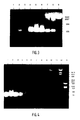
- Die Ergebnisse werden in Abbildung 2 dargestellt. Es zeigte sich, daß nach erfindungsgemässer Behandlung der Lambda-Phagen DNA (Lanes 1, 2, 4, 5, 7, 8, 10 und 11) eine deutliche Fragmentierung der DNA nachweisbar ist.
- Aus einer Suspensionskultur rekombinanter CHO-Zellen (3 x 10⁶ Zellen/ml; Vitalität 96%) wurden Aliquots mit je 1 x 10⁷ Zellen entnommen und Zitronensäure zugegeben. Das Endvolumen betrug 1 ml. Die Konzentrationen an Zitronensäure waren: [mM] 400, 200, 100, 50, 20, 10. Eine Probe wurde zur Kontrolle mit Wasser vermischt. Es erfolgte eine Inkubation bei 70°C für 60 Minuten (s. Tabelle 4).
- Anschliessend wurden die Ansätze nach Zugabe von lM Tris pH 8.5 unter Einstellung des PH-Wertes auf 7 60 Minuten mit Proteinase K (Endkonzentration: 0,4 mg/ml) inkubiert und mit Phenol/ Chloroform (1 : 1) zweimal extrahiert. Der wässrige Überstand wurde über eine Sephadex-G25-Säule entsalzt, 90-fach eingeengt und 10 µl, entsprechend 200 µl der Suspensionskultur, mit der Agarosegel-Elektrophorese (1,8% Agarose) untersucht.
- Die Ergebnisse sind in Abbildung 3 dargestellt. Es zeigte sich, daß nach erfindungsgemässer Behandlung der vitalen CHO-Zellen (Lanes 1 bis 6) eine starke Denaturierung und der Abbau der DNA bis zu Fragmenten mit ungefähr 125 bp (Lanes 1-4) nachweisbar ist.

- Je 1 ml einer Bakterienkultur wurden mit je 1 ml Zitronensäure steigender Konzentration vermischt, wobei folgende Endkonzentrationen an Zitronensäure eingestellt wurden: 0,2 M; 0,4 M; 0,8 M; 1,0 M. Als Kontrolle wurde zu einer Probe statt Zitronensäure 1 ml Wasser gegeben (s. Tabelle 5).
- Alle Proben wurden 1 Stunde bei 70°C inkubiert. Anschliessend wurden die Proben für 5 Minuten bei 12.000 xg zentrifugiert und das Sediment mit Proteinase K (Endkonzentration 100 µg/ml) 1 Stunde bei 37°C verdaut um die Zellmembran aufzuschliessen und gebundene DNA freizusetzen.
- Zur Abtrennung von Membranresten, die bei der weiteren Analyse stören, wurde den Proben Kochsalz (Endkonzentration: 0,7 M) und Cetyltrimethyl-ammoniumbromid (Serva, Heidelberg, Best. Nr. 16530) (Endkonzentration: 1%) zugesetzt, 10 Minuten bei 65°C inkubiert und anschliessend mit 1/1 Volumen Chloroform/ Isoamylalkohol (24 : 1) extrahiert. Die wässrige Phase, DNA enthaltend, wird durch Extraktion mit Phenol/Chloroform/Isoamylalkohol (25 : 24 : 1) gereinigt, der wässrige Überstand mit Hilfe der Agarosegel-Elektrophorese untersucht. Zur Elektrophorese wurden 10 µl der aufgereinigten DNA-Lösung, entsprechend 0,4 ml der Kulturbrühe, verwendet.
- Die Ergebnisse werden in dem Elektropherogramm von Abbildung 4 dargestellt. Es zeigte sich, daß nach der erfindungsgemässen Behandlung der Bakterien nur DNA-Fragmente mit ungefähr 100 bp nachweisbar waren.

Claims (4)
- Verfahren zur Inaktivierung der biologischen Aktivität der DNA, insbesondere rekombinanter DNA, dadurch gekennzeichnet, daß die DNA in Anwesenheit einer Säure außer Percarbonsäure bei einer Konzentration von mindestens 0.2 mM und einem pH-Wert von maximal 4, vorzugsweise 3, auf eine Temperatur von 60 bis 100°C erhitzt wird.
- Verfahren nach Anspruch 1, dadurch gekennzeichnet, daß die Säuren biologisch abbaubar sind.
- Verfahren nach Anspruch 1, dadurch gekennzeichnet, daß die Säure Zitronensäure, Milchsäure, Essigsäure, Phosphorsäure oder Ameisensäure ist.
- Verfahren nach den Ansprüchen 1 bis 3, dadurch gekennzeichnet, daß Zellkulturen und Mikroorganismen wie CHO, E.coli und Bacillus subtilis gleichzeitig abgetötet werden.
Applications Claiming Priority (2)
| Application Number | Priority Date | Filing Date | Title |
|---|---|---|---|
| DE4015832A DE4015832A1 (de) | 1990-05-17 | 1990-05-17 | Verfahren zur inaktivierung der biologischen aktivitaet von dna |
| DE4015832 | 1990-05-17 |
Publications (2)
| Publication Number | Publication Date |
|---|---|
| EP0457035A1 true EP0457035A1 (de) | 1991-11-21 |
| EP0457035B1 EP0457035B1 (de) | 1995-08-02 |
Family
ID=6406590
Family Applications (1)
| Application Number | Title | Priority Date | Filing Date |
|---|---|---|---|
| EP91105898A Expired - Lifetime EP0457035B1 (de) | 1990-05-17 | 1991-04-13 | Verfahren zur Inaktivierung der biologischen Aktivität von DNA |
Country Status (8)
| Country | Link |
|---|---|
| US (1) | US5417862A (de) |
| EP (1) | EP0457035B1 (de) |
| JP (1) | JP3029211B2 (de) |
| AT (1) | ATE125713T1 (de) |
| DE (2) | DE4015832A1 (de) |
| DK (1) | DK0457035T3 (de) |
| ES (1) | ES2077707T3 (de) |
| GR (1) | GR3017807T3 (de) |
Families Citing this family (5)
| Publication number | Priority date | Publication date | Assignee | Title |
|---|---|---|---|---|
| US5861295A (en) | 1997-01-02 | 1999-01-19 | Life Technologies, Inc. | Nucleic acid-free thermostable enzymes and methods of production thereof |
| US6630333B1 (en) * | 1999-03-23 | 2003-10-07 | Invitrogen Corporation | Substantially pure reverse transriptases and methods of production thereof |
| CN1328193C (zh) * | 2002-09-02 | 2007-07-25 | 古贺健 | 污泥减量方法和装置 |
| KR102178036B1 (ko) | 2013-03-15 | 2020-11-13 | 디에스엠 아이피 어셋츠 비.브이. | 핵산 분해를 위한 호열성 뉴클레아제의 용도 |
| JP6057175B2 (ja) * | 2013-04-23 | 2017-01-11 | 国立研究開発法人産業技術総合研究所 | 非脱気式の高温高圧水蒸気処理装置を用いて汚染を漏らさず高速にdnaを分解除去する方法 |
Citations (5)
| Publication number | Priority date | Publication date | Assignee | Title |
|---|---|---|---|---|
| US3227626A (en) * | 1961-09-18 | 1966-01-04 | Merck & Co Inc | Plasminogen heat sterilization |
| FR2318225A1 (fr) * | 1975-07-16 | 1977-02-11 | Ici Ltd | Procede de traitement de proteine unicellulaire |
| GB1471336A (en) * | 1973-04-16 | 1977-04-21 | Armour Pharma | Process for the purification and sterilisation of acidophilic biologicals- |
| EP0144714A2 (de) * | 1983-12-09 | 1985-06-19 | Heilmittelwerke Wien Gesellschaft m.b.H. | Verfahren zur Herstellung einer Serumproteinlösung |
| EP0278674A2 (de) * | 1987-02-05 | 1988-08-17 | Cook Imaging Corporation | Sterilisation von Zusammensetzungen mit beschränkter Haltbarkeit |
Family Cites Families (2)
| Publication number | Priority date | Publication date | Assignee | Title |
|---|---|---|---|---|
| DE3733921A1 (de) * | 1987-10-07 | 1989-04-20 | Boehringer Mannheim Gmbh | Verfahren zur inaktivierung rekombinanter dna |
| US5120452A (en) * | 1990-07-26 | 1992-06-09 | Olin Corporation | Process for purifying wastewater with hypochlorous acid |
-
1990
- 1990-05-17 DE DE4015832A patent/DE4015832A1/de not_active Withdrawn
-
1991
- 1991-04-13 EP EP91105898A patent/EP0457035B1/de not_active Expired - Lifetime
- 1991-04-13 AT AT91105898T patent/ATE125713T1/de not_active IP Right Cessation
- 1991-04-13 ES ES91105898T patent/ES2077707T3/es not_active Expired - Lifetime
- 1991-04-13 DK DK91105898.0T patent/DK0457035T3/da active
- 1991-04-13 DE DE59106112T patent/DE59106112D1/de not_active Expired - Fee Related
- 1991-05-16 JP JP03111816A patent/JP3029211B2/ja not_active Expired - Fee Related
-
1992
- 1992-09-08 US US07/942,057 patent/US5417862A/en not_active Expired - Lifetime
-
1995
- 1995-10-18 GR GR950402910T patent/GR3017807T3/el unknown
Patent Citations (5)
| Publication number | Priority date | Publication date | Assignee | Title |
|---|---|---|---|---|
| US3227626A (en) * | 1961-09-18 | 1966-01-04 | Merck & Co Inc | Plasminogen heat sterilization |
| GB1471336A (en) * | 1973-04-16 | 1977-04-21 | Armour Pharma | Process for the purification and sterilisation of acidophilic biologicals- |
| FR2318225A1 (fr) * | 1975-07-16 | 1977-02-11 | Ici Ltd | Procede de traitement de proteine unicellulaire |
| EP0144714A2 (de) * | 1983-12-09 | 1985-06-19 | Heilmittelwerke Wien Gesellschaft m.b.H. | Verfahren zur Herstellung einer Serumproteinlösung |
| EP0278674A2 (de) * | 1987-02-05 | 1988-08-17 | Cook Imaging Corporation | Sterilisation von Zusammensetzungen mit beschränkter Haltbarkeit |
Also Published As
| Publication number | Publication date |
|---|---|
| DE59106112D1 (de) | 1995-09-07 |
| GR3017807T3 (en) | 1996-01-31 |
| JPH0623346A (ja) | 1994-02-01 |
| EP0457035B1 (de) | 1995-08-02 |
| JP3029211B2 (ja) | 2000-04-04 |
| US5417862A (en) | 1995-05-23 |
| ATE125713T1 (de) | 1995-08-15 |
| DK0457035T3 (da) | 1995-10-30 |
| ES2077707T3 (es) | 1995-12-01 |
| DE4015832A1 (de) | 1991-11-21 |
Similar Documents
| Publication | Publication Date | Title |
|---|---|---|
| EP0302298B1 (de) | Entseuchung von Klärschlamm | |
| EP0306778B1 (de) | Verfahren zur Sterilisation von Plasma oder Plasmafraktionen | |
| EP0530173B1 (de) | Verfahren zur Inaktivierung von Prionen | |
| CH642680A5 (en) | DNA transfer vector, process for its preparation and its use | |
| EP0430270A1 (de) | Verfahren zur biologischen Inaktivierung von Nukleinsäuren | |
| EP2328623B1 (de) | Verfahren zur verringerung der viralen und mikrobiellen belastung feststoffhaltiger aus dem pankreas von tieren gewonnener extrakte | |
| EP0457035B1 (de) | Verfahren zur Inaktivierung der biologischen Aktivität von DNA | |
| DE3888571T2 (de) | Stabilisierung von biologischen und pharmazeutischen Produkten während der Inaktivierung von viralen und bakteriellen Keimen. | |
| DE68917594T2 (de) | Gelkörper und verfahren für biologische sterilisierungssteuerung. | |
| EP0334904B1 (de) | Verfahren zur inaktivierung rekombinanter dna | |
| DE69227805T2 (de) | Verwendung von Tri-n-Butylphosphat bei niedrigem pH in Lösungen von biologisch aktiven Proteinen für eine verbesserte viruzide Wirkung | |
| CN113197199A (zh) | 一种器械消毒液及其制备方法和应用 | |
| AT88674B (de) | Verfahren zur Abtötung von Mikroorganismen mit Hilfe des elektrischen Stromes. | |
| WO1998043919A1 (de) | Verfahren zum aufbereiten von abwasser, insbesondere aus mälzereien und brauereien | |
| DE4027223A1 (de) | Verfahren zum biologischen abbau persistenter organischer stoffe | |
| DE3707987A1 (de) | Inaktivierung von human immunodeficiency virus (hiv) in proteinhaltigen loesungen durch phenole | |
| DE2424116C2 (de) | Verfahren zur biologischen Reinigung von Abwasser | |
| DE963920C (de) | Verfahren zur Herstellung einer haltbaren waessrigen Gluten-Emulsion | |
| DE69328719T2 (de) | Microbiologische Methode zur Entsorgung von organischen Abfallstoff | |
| Sa'diyah et al. | Effectiveness of Indigenous Lead (Pb) Reducing Bacteria Consortia of Waste Water Treatment in Agar Flour Industry | |
| AT386608B (de) | Verfahren zum herstellen eines mikroorganismus | |
| AT386609B (de) | Verfahren zum herstellen eines mikroorganismus | |
| EP0524971B1 (de) | Dekontaminiertes biologisches material | |
| DE3011714C2 (de) | ||
| DE2911868A1 (de) | Seminalplasmin, verfahren zu seiner herstellung und seine verwendung |
Legal Events
| Date | Code | Title | Description |
|---|---|---|---|
| PUAI | Public reference made under article 153(3) epc to a published international application that has entered the european phase |
Free format text: ORIGINAL CODE: 0009012 |
|
| AK | Designated contracting states |
Kind code of ref document: A1 Designated state(s): AT BE CH DE DK ES FR GB GR IT LI LU NL SE |
|
| 17P | Request for examination filed |
Effective date: 19911212 |
|
| 17Q | First examination report despatched |
Effective date: 19931122 |
|
| GRAA | (expected) grant |
Free format text: ORIGINAL CODE: 0009210 |
|
| AK | Designated contracting states |
Kind code of ref document: B1 Designated state(s): AT BE CH DE DK ES FR GB GR IT LI LU NL SE |
|
| REF | Corresponds to: |
Ref document number: 125713 Country of ref document: AT Date of ref document: 19950815 Kind code of ref document: T |
|
| REF | Corresponds to: |
Ref document number: 59106112 Country of ref document: DE Date of ref document: 19950907 |
|
| ITF | It: translation for a ep patent filed | ||
| REG | Reference to a national code |
Ref country code: DK Ref legal event code: T3 |
|
| ET | Fr: translation filed | ||
| REG | Reference to a national code |
Ref country code: ES Ref legal event code: FG2A Ref document number: 2077707 Country of ref document: ES Kind code of ref document: T3 |
|
| REG | Reference to a national code |
Ref country code: GR Ref legal event code: FG4A Free format text: 3017807 |
|
| GBT | Gb: translation of ep patent filed (gb section 77(6)(a)/1977) |
Effective date: 19960122 |
|
| PLBE | No opposition filed within time limit |
Free format text: ORIGINAL CODE: 0009261 |
|
| STAA | Information on the status of an ep patent application or granted ep patent |
Free format text: STATUS: NO OPPOSITION FILED WITHIN TIME LIMIT |
|
| 26N | No opposition filed | ||
| REG | Reference to a national code |
Ref country code: GB Ref legal event code: IF02 |
|
| PGFP | Annual fee paid to national office [announced via postgrant information from national office to epo] |
Ref country code: LU Payment date: 20070412 Year of fee payment: 17 Ref country code: DK Payment date: 20070412 Year of fee payment: 17 Ref country code: SE Payment date: 20070412 Year of fee payment: 17 |
|
| PGFP | Annual fee paid to national office [announced via postgrant information from national office to epo] |
Ref country code: AT Payment date: 20070413 Year of fee payment: 17 Ref country code: CH Payment date: 20070413 Year of fee payment: 17 Ref country code: NL Payment date: 20070413 Year of fee payment: 17 |
|
| PGFP | Annual fee paid to national office [announced via postgrant information from national office to epo] |
Ref country code: DE Payment date: 20070423 Year of fee payment: 17 |
|
| PGFP | Annual fee paid to national office [announced via postgrant information from national office to epo] |
Ref country code: ES Payment date: 20070427 Year of fee payment: 17 |
|
| PGFP | Annual fee paid to national office [announced via postgrant information from national office to epo] |
Ref country code: BE Payment date: 20070502 Year of fee payment: 17 |
|
| PGFP | Annual fee paid to national office [announced via postgrant information from national office to epo] |
Ref country code: GB Payment date: 20070426 Year of fee payment: 17 |
|
| PGFP | Annual fee paid to national office [announced via postgrant information from national office to epo] |
Ref country code: IT Payment date: 20070626 Year of fee payment: 17 |
|
| PGFP | Annual fee paid to national office [announced via postgrant information from national office to epo] |
Ref country code: FR Payment date: 20070416 Year of fee payment: 17 |
|
| PGFP | Annual fee paid to national office [announced via postgrant information from national office to epo] |
Ref country code: GR Payment date: 20070420 Year of fee payment: 17 |
|
| BERE | Be: lapsed |
Owner name: KARL *THOMAE G.M.B.H. Effective date: 20080430 |
|
| REG | Reference to a national code |
Ref country code: CH Ref legal event code: PL |
|
| REG | Reference to a national code |
Ref country code: DK Ref legal event code: EBP |
|
| EUG | Se: european patent has lapsed | ||
| GBPC | Gb: european patent ceased through non-payment of renewal fee |
Effective date: 20080413 |
|
| NLV4 | Nl: lapsed or anulled due to non-payment of the annual fee |
Effective date: 20081101 |
|
| PG25 | Lapsed in a contracting state [announced via postgrant information from national office to epo] |
Ref country code: NL Free format text: LAPSE BECAUSE OF NON-PAYMENT OF DUE FEES Effective date: 20081101 Ref country code: CH Free format text: LAPSE BECAUSE OF NON-PAYMENT OF DUE FEES Effective date: 20080430 Ref country code: DE Free format text: LAPSE BECAUSE OF NON-PAYMENT OF DUE FEES Effective date: 20081101 Ref country code: LI Free format text: LAPSE BECAUSE OF NON-PAYMENT OF DUE FEES Effective date: 20080430 |
|
| REG | Reference to a national code |
Ref country code: FR Ref legal event code: ST Effective date: 20081231 |
|
| PG25 | Lapsed in a contracting state [announced via postgrant information from national office to epo] |
Ref country code: AT Free format text: LAPSE BECAUSE OF NON-PAYMENT OF DUE FEES Effective date: 20080413 |
|
| PG25 | Lapsed in a contracting state [announced via postgrant information from national office to epo] |
Ref country code: BE Free format text: LAPSE BECAUSE OF NON-PAYMENT OF DUE FEES Effective date: 20080430 |
|
| PG25 | Lapsed in a contracting state [announced via postgrant information from national office to epo] |
Ref country code: FR Free format text: LAPSE BECAUSE OF NON-PAYMENT OF DUE FEES Effective date: 20080430 Ref country code: DK Free format text: LAPSE BECAUSE OF NON-PAYMENT OF DUE FEES Effective date: 20080430 |
|
| REG | Reference to a national code |
Ref country code: ES Ref legal event code: FD2A Effective date: 20080414 |
|
| PG25 | Lapsed in a contracting state [announced via postgrant information from national office to epo] |
Ref country code: GR Free format text: LAPSE BECAUSE OF NON-PAYMENT OF DUE FEES Effective date: 20081104 Ref country code: GB Free format text: LAPSE BECAUSE OF NON-PAYMENT OF DUE FEES Effective date: 20080413 |
|
| PG25 | Lapsed in a contracting state [announced via postgrant information from national office to epo] |
Ref country code: ES Free format text: LAPSE BECAUSE OF NON-PAYMENT OF DUE FEES Effective date: 20080414 |
|
| PG25 | Lapsed in a contracting state [announced via postgrant information from national office to epo] |
Ref country code: IT Free format text: LAPSE BECAUSE OF NON-PAYMENT OF DUE FEES Effective date: 20080413 |
|
| PG25 | Lapsed in a contracting state [announced via postgrant information from national office to epo] |
Ref country code: LU Free format text: LAPSE BECAUSE OF NON-PAYMENT OF DUE FEES Effective date: 20080413 |
|
| PG25 | Lapsed in a contracting state [announced via postgrant information from national office to epo] |
Ref country code: SE Free format text: LAPSE BECAUSE OF NON-PAYMENT OF DUE FEES Effective date: 20080414 |