EP0457140A2 - Phenoxyphenylsulfonylverbindungen - Google Patents
Phenoxyphenylsulfonylverbindungen Download PDFInfo
- Publication number
- EP0457140A2 EP0457140A2 EP91107254A EP91107254A EP0457140A2 EP 0457140 A2 EP0457140 A2 EP 0457140A2 EP 91107254 A EP91107254 A EP 91107254A EP 91107254 A EP91107254 A EP 91107254A EP 0457140 A2 EP0457140 A2 EP 0457140A2
- Authority
- EP
- European Patent Office
- Prior art keywords
- chlorine
- represents hydrogen
- alkyl
- fluorine
- methyl
- Prior art date
- Legal status (The legal status is an assumption and is not a legal conclusion. Google has not performed a legal analysis and makes no representation as to the accuracy of the status listed.)
- Withdrawn
Links
- 0 CC1C(O*)=C(*)C(OC(C2)C=CC(*)C2S(=O)=O)=C(*)C1* Chemical compound CC1C(O*)=C(*)C(OC(C2)C=CC(*)C2S(=O)=O)=C(*)C1* 0.000 description 1
Classifications
-
- C—CHEMISTRY; METALLURGY
- C07—ORGANIC CHEMISTRY
- C07D—HETEROCYCLIC COMPOUNDS
- C07D213/00—Heterocyclic compounds containing six-membered rings, not condensed with other rings, with one nitrogen atom as the only ring hetero atom and three or more double bonds between ring members or between ring members and non-ring members
- C07D213/02—Heterocyclic compounds containing six-membered rings, not condensed with other rings, with one nitrogen atom as the only ring hetero atom and three or more double bonds between ring members or between ring members and non-ring members having three double bonds between ring members or between ring members and non-ring members
- C07D213/04—Heterocyclic compounds containing six-membered rings, not condensed with other rings, with one nitrogen atom as the only ring hetero atom and three or more double bonds between ring members or between ring members and non-ring members having three double bonds between ring members or between ring members and non-ring members having no bond between the ring nitrogen atom and a non-ring member or having only hydrogen or carbon atoms directly attached to the ring nitrogen atom
- C07D213/60—Heterocyclic compounds containing six-membered rings, not condensed with other rings, with one nitrogen atom as the only ring hetero atom and three or more double bonds between ring members or between ring members and non-ring members having three double bonds between ring members or between ring members and non-ring members having no bond between the ring nitrogen atom and a non-ring member or having only hydrogen or carbon atoms directly attached to the ring nitrogen atom with hetero atoms or with carbon atoms having three bonds to hetero atoms with at the most one bond to halogen, e.g. ester or nitrile radicals, directly attached to ring carbon atoms
- C07D213/78—Carbon atoms having three bonds to hetero atoms, with at the most one bond to halogen, e.g. ester or nitrile radicals
- C07D213/81—Amides; Imides
- C07D213/82—Amides; Imides in position 3
-
- A—HUMAN NECESSITIES
- A01—AGRICULTURE; FORESTRY; ANIMAL HUSBANDRY; HUNTING; TRAPPING; FISHING
- A01N—PRESERVATION OF BODIES OF HUMANS OR ANIMALS OR PLANTS OR PARTS THEREOF; BIOCIDES, e.g. AS DISINFECTANTS, AS PESTICIDES OR AS HERBICIDES; PEST REPELLANTS OR ATTRACTANTS; PLANT GROWTH REGULATORS
- A01N41/00—Biocides, pest repellants or attractants, or plant growth regulators containing organic compounds containing a sulfur atom bound to a hetero atom
- A01N41/02—Biocides, pest repellants or attractants, or plant growth regulators containing organic compounds containing a sulfur atom bound to a hetero atom containing a sulfur-to-oxygen double bond
- A01N41/04—Sulfonic acids; Derivatives thereof
- A01N41/06—Sulfonic acid amides
-
- A—HUMAN NECESSITIES
- A01—AGRICULTURE; FORESTRY; ANIMAL HUSBANDRY; HUNTING; TRAPPING; FISHING
- A01N—PRESERVATION OF BODIES OF HUMANS OR ANIMALS OR PLANTS OR PARTS THEREOF; BIOCIDES, e.g. AS DISINFECTANTS, AS PESTICIDES OR AS HERBICIDES; PEST REPELLANTS OR ATTRACTANTS; PLANT GROWTH REGULATORS
- A01N43/00—Biocides, pest repellants or attractants, or plant growth regulators containing heterocyclic compounds
- A01N43/48—Biocides, pest repellants or attractants, or plant growth regulators containing heterocyclic compounds having rings with two nitrogen atoms as the only ring hetero atoms
- A01N43/56—1,2-Diazoles; Hydrogenated 1,2-diazoles
-
- A—HUMAN NECESSITIES
- A01—AGRICULTURE; FORESTRY; ANIMAL HUSBANDRY; HUNTING; TRAPPING; FISHING
- A01N—PRESERVATION OF BODIES OF HUMANS OR ANIMALS OR PLANTS OR PARTS THEREOF; BIOCIDES, e.g. AS DISINFECTANTS, AS PESTICIDES OR AS HERBICIDES; PEST REPELLANTS OR ATTRACTANTS; PLANT GROWTH REGULATORS
- A01N43/00—Biocides, pest repellants or attractants, or plant growth regulators containing heterocyclic compounds
- A01N43/48—Biocides, pest repellants or attractants, or plant growth regulators containing heterocyclic compounds having rings with two nitrogen atoms as the only ring hetero atoms
- A01N43/60—1,4-Diazines; Hydrogenated 1,4-diazines
-
- A—HUMAN NECESSITIES
- A01—AGRICULTURE; FORESTRY; ANIMAL HUSBANDRY; HUNTING; TRAPPING; FISHING
- A01N—PRESERVATION OF BODIES OF HUMANS OR ANIMALS OR PLANTS OR PARTS THEREOF; BIOCIDES, e.g. AS DISINFECTANTS, AS PESTICIDES OR AS HERBICIDES; PEST REPELLANTS OR ATTRACTANTS; PLANT GROWTH REGULATORS
- A01N47/00—Biocides, pest repellants or attractants, or plant growth regulators containing organic compounds containing a carbon atom not being member of a ring and having no bond to a carbon or hydrogen atom, e.g. derivatives of carbonic acid
- A01N47/08—Biocides, pest repellants or attractants, or plant growth regulators containing organic compounds containing a carbon atom not being member of a ring and having no bond to a carbon or hydrogen atom, e.g. derivatives of carbonic acid the carbon atom having one or more single bonds to nitrogen atoms
- A01N47/10—Carbamic acid derivatives, i.e. containing the group —O—CO—N<; Thio analogues thereof
- A01N47/16—Carbamic acid derivatives, i.e. containing the group —O—CO—N<; Thio analogues thereof the nitrogen atom being part of a heterocyclic ring
-
- A—HUMAN NECESSITIES
- A01—AGRICULTURE; FORESTRY; ANIMAL HUSBANDRY; HUNTING; TRAPPING; FISHING
- A01N—PRESERVATION OF BODIES OF HUMANS OR ANIMALS OR PLANTS OR PARTS THEREOF; BIOCIDES, e.g. AS DISINFECTANTS, AS PESTICIDES OR AS HERBICIDES; PEST REPELLANTS OR ATTRACTANTS; PLANT GROWTH REGULATORS
- A01N51/00—Biocides, pest repellants or attractants, or plant growth regulators containing organic compounds having the sequences of atoms O—N—S, X—O—S, N—N—S, O—N—N or O-halogen, regardless of the number of bonds each atom has and with no atom of these sequences forming part of a heterocyclic ring
-
- C—CHEMISTRY; METALLURGY
- C07—ORGANIC CHEMISTRY
- C07C—ACYCLIC OR CARBOCYCLIC COMPOUNDS
- C07C311/00—Amides of sulfonic acids, i.e. compounds having singly-bound oxygen atoms of sulfo groups replaced by nitrogen atoms, not being part of nitro or nitroso groups
- C07C311/48—Amides of sulfonic acids, i.e. compounds having singly-bound oxygen atoms of sulfo groups replaced by nitrogen atoms, not being part of nitro or nitroso groups having nitrogen atoms of sulfonamide groups further bound to another hetero atom
- C07C311/49—Amides of sulfonic acids, i.e. compounds having singly-bound oxygen atoms of sulfo groups replaced by nitrogen atoms, not being part of nitro or nitroso groups having nitrogen atoms of sulfonamide groups further bound to another hetero atom to nitrogen atoms
-
- C—CHEMISTRY; METALLURGY
- C07—ORGANIC CHEMISTRY
- C07D—HETEROCYCLIC COMPOUNDS
- C07D231/00—Heterocyclic compounds containing 1,2-diazole or hydrogenated 1,2-diazole rings
- C07D231/02—Heterocyclic compounds containing 1,2-diazole or hydrogenated 1,2-diazole rings not condensed with other rings
- C07D231/10—Heterocyclic compounds containing 1,2-diazole or hydrogenated 1,2-diazole rings not condensed with other rings having two or three double bonds between ring members or between ring members and non-ring members
- C07D231/12—Heterocyclic compounds containing 1,2-diazole or hydrogenated 1,2-diazole rings not condensed with other rings having two or three double bonds between ring members or between ring members and non-ring members with only hydrogen atoms, hydrocarbon or substituted hydrocarbon radicals, directly attached to ring carbon atoms
-
- C—CHEMISTRY; METALLURGY
- C07—ORGANIC CHEMISTRY
- C07D—HETEROCYCLIC COMPOUNDS
- C07D231/00—Heterocyclic compounds containing 1,2-diazole or hydrogenated 1,2-diazole rings
- C07D231/02—Heterocyclic compounds containing 1,2-diazole or hydrogenated 1,2-diazole rings not condensed with other rings
- C07D231/10—Heterocyclic compounds containing 1,2-diazole or hydrogenated 1,2-diazole rings not condensed with other rings having two or three double bonds between ring members or between ring members and non-ring members
- C07D231/14—Heterocyclic compounds containing 1,2-diazole or hydrogenated 1,2-diazole rings not condensed with other rings having two or three double bonds between ring members or between ring members and non-ring members with hetero atoms or with carbon atoms having three bonds to hetero atoms with at the most one bond to halogen, e.g. ester or nitrile radicals, directly attached to ring carbon atoms
- C07D231/16—Halogen atoms or nitro radicals
-
- C—CHEMISTRY; METALLURGY
- C07—ORGANIC CHEMISTRY
- C07D—HETEROCYCLIC COMPOUNDS
- C07D233/00—Heterocyclic compounds containing 1,3-diazole or hydrogenated 1,3-diazole rings, not condensed with other rings
- C07D233/54—Heterocyclic compounds containing 1,3-diazole or hydrogenated 1,3-diazole rings, not condensed with other rings having two double bonds between ring members or between ring members and non-ring members
- C07D233/56—Heterocyclic compounds containing 1,3-diazole or hydrogenated 1,3-diazole rings, not condensed with other rings having two double bonds between ring members or between ring members and non-ring members with only hydrogen atoms or radicals containing only hydrogen and carbon atoms, attached to ring carbon atoms
-
- C—CHEMISTRY; METALLURGY
- C07—ORGANIC CHEMISTRY
- C07D—HETEROCYCLIC COMPOUNDS
- C07D249/00—Heterocyclic compounds containing five-membered rings having three nitrogen atoms as the only ring hetero atoms
- C07D249/02—Heterocyclic compounds containing five-membered rings having three nitrogen atoms as the only ring hetero atoms not condensed with other rings
- C07D249/08—1,2,4-Triazoles; Hydrogenated 1,2,4-triazoles
-
- C—CHEMISTRY; METALLURGY
- C07—ORGANIC CHEMISTRY
- C07D—HETEROCYCLIC COMPOUNDS
- C07D261/00—Heterocyclic compounds containing 1,2-oxazole or hydrogenated 1,2-oxazole rings
- C07D261/02—Heterocyclic compounds containing 1,2-oxazole or hydrogenated 1,2-oxazole rings not condensed with other rings
-
- C—CHEMISTRY; METALLURGY
- C07—ORGANIC CHEMISTRY
- C07D—HETEROCYCLIC COMPOUNDS
- C07D263/00—Heterocyclic compounds containing 1,3-oxazole or hydrogenated 1,3-oxazole rings
- C07D263/02—Heterocyclic compounds containing 1,3-oxazole or hydrogenated 1,3-oxazole rings not condensed with other rings
- C07D263/04—Heterocyclic compounds containing 1,3-oxazole or hydrogenated 1,3-oxazole rings not condensed with other rings having no double bonds between ring members or between ring members and non-ring members
-
- C—CHEMISTRY; METALLURGY
- C07—ORGANIC CHEMISTRY
- C07D—HETEROCYCLIC COMPOUNDS
- C07D295/00—Heterocyclic compounds containing polymethylene-imine rings with at least five ring members, 3-azabicyclo [3.2.2] nonane, piperazine, morpholine or thiomorpholine rings, having only hydrogen atoms directly attached to the ring carbon atoms
- C07D295/22—Heterocyclic compounds containing polymethylene-imine rings with at least five ring members, 3-azabicyclo [3.2.2] nonane, piperazine, morpholine or thiomorpholine rings, having only hydrogen atoms directly attached to the ring carbon atoms with hetero atoms directly attached to ring nitrogen atoms
- C07D295/26—Sulfur atoms
-
- C—CHEMISTRY; METALLURGY
- C07—ORGANIC CHEMISTRY
- C07D—HETEROCYCLIC COMPOUNDS
- C07D307/00—Heterocyclic compounds containing five-membered rings having one oxygen atom as the only ring hetero atom
- C07D307/02—Heterocyclic compounds containing five-membered rings having one oxygen atom as the only ring hetero atom not condensed with other rings
- C07D307/34—Heterocyclic compounds containing five-membered rings having one oxygen atom as the only ring hetero atom not condensed with other rings having two or three double bonds between ring members or between ring members and non-ring members
- C07D307/56—Heterocyclic compounds containing five-membered rings having one oxygen atom as the only ring hetero atom not condensed with other rings having two or three double bonds between ring members or between ring members and non-ring members with hetero atoms or with carbon atoms having three bonds to hetero atoms with at the most one bond to halogen, e.g. ester or nitrile radicals, directly attached to ring carbon atoms
- C07D307/68—Carbon atoms having three bonds to hetero atoms with at the most one bond to halogen
Definitions
- the invention relates to new phenoxyphenylsulfonyl compounds, processes for their preparation and their use as herbicides and plant growth regulators.
- phenoxyphenylsulfonyl compounds have become known as potential herbicides (cf. DE-OS 2833021 / US-P 4213775). However, these compounds have no practical significance because of their unsatisfactory activity.
- the phenoxyphenylsulfonyl compounds of the formula (I) according to the invention are more effectively active against weeds than methyl 3- (2,4-dichlorophenoxy) -6-nitro-benzoate, which is a structurally similar previously known active ingredient with the same direction of action.
- Formula (II) provides a general definition of the phenoxybenzenesulfonic acid chlorides to be used as starting materials in process (a) according to the invention for the preparation of compounds of the formula (I).
- R1, R2, R3, R4, R5 and R6 preferably or in particular have those meanings which have already been described above in connection with the description of the compounds of the formula (I) according to the invention preferably or as particularly preferred for R1, R2 , R3, R4, R5 and R6 were specified.
- the starting materials of the formula (II) are known and / or can be prepared by processes known per se (cf. US Pat. No. 4,213,775; DE-OS 3833549 / LeA 26411).
- aminodiphenyl ethers of the formula (IV) are known and / or can be prepared by processes known per se (cf. EP-A 29123; EP-A 313908 / LeA 25624; DE-OS 3902288 / LeA 26655).
- Formula (III) provides a general definition of the nitrogen compounds to be used further as starting materials in process (a) according to the invention.
- A preferably or in particular has the meaning which has already been mentioned above in connection with the description of the compounds of the formula (I) according to the invention preferably or as being particularly preferred for A.
- Preferred alkali metal salts of the compounds of formula (III) are their lithium, sodium or potassium salts.
- Examples of the starting materials of the formula (III) are: Pyrazole, 4-chloro-pyrazole, 4-bromo-pyrazole, 3-methyl, 4-methyl, 3,5-dimethyl and 3,4,5-trimethyl-pyrazole, 4-chloro-3,5-dimethyl -pyrazole, imidazole, 2-methyl- and 4-methyl-imidazole, hydrazine, methylhydrazine, ethylhydrazine, propylhydrazine, isopropylhydrazine, butylhydrazine, isobutylhydrazine, sec-butylhydrazine, tert-butylhydrazine, dimethylhydrazine, cyclopentylhexylhydrazine, cyclopentylhexrazine, phenylhydrazine, 4-chlorophenylhydrazine, 4-bromophenylhydrazine, 4-methylphenylhydrazine, 4-methoxyphen
- the compounds of formula (III) are known organic synthetic chemicals.
- Process (a) according to the invention for the preparation of the new compounds of the formula (I) is preferably carried out using diluents.
- diluents Practically all inert organic solvents can be used as diluents. These preferably include aliphatic and aromatic, optionally halogenated hydrocarbons such as pentane, hexane, heptane, cyclohexane, petroleum ether, gasoline, ligroin, benzene, toluene, xylene, methylene chloride, ethylene chloride, chloroform, carbon tetrachloride, chlorobenzene and o-dichlorobenzene, ethers such as diethyl and Dibutyl ether, glycol dimethyl ether and diglycol dimethyl ether, tetrahydrofuran and dioxane, ketones such as acetone, methyl ethyl, methyl isopropyl and methyl isobut
- Acid acceptors which can be used in process (a) according to the invention are all acid binders which can customarily be used for such reactions.
- Alkali metal hydroxides such as, for. B. sodium and potassium hydroxide, alkaline earth metal hydroxides such. B.
- alkali carbonates and alcoholates such as sodium and potassium carbonate, sodium and potassium tert-butoxide, also aliphatic, aromatic or heterocyclic amines, for example triethylamine, trimethylamine, Dimethylaniline, dimethylbenzylamine, pyridine, 1,5-diazabicyclo- [4,3,0] non-5-ene (DBN), 1,8-diazabicyclo- [5,4,0] -undec-7-ene (DBU ) and 1,4-diazabicyclo- [2,2,2] octane (DABCO).
- DBN 1,5-diazabicyclo- [4,3,0] non-5-ene
- DBU 1,8-diazabicyclo- [5,4,0] -undec-7-ene
- DBUCO 1,4-diazabicyclo- [2,2,2] octane
- reaction temperatures in process (a) according to the invention can be varied within a substantial range. In general, temperatures between 0 ° C and 100 ° C, preferably at temperatures between 10 ° C and 50 ° C.
- Process (a) according to the invention is generally carried out under normal pressure. However, it is also possible to work under increased or reduced pressure.
- process (a) the starting materials required in each case are generally used in approximately equimolar amounts. However, it is also possible to use one of the two components used in each case in a larger excess.
- the reactions are generally carried out in a suitable diluent in the presence of an acid acceptor, and the reaction mixture is stirred for several hours at the temperature required in each case.
- Working up in process (a) according to the invention is carried out in each case by customary methods.
- each R6 is nitro - generally defined by the formula (I).
- R1, R2, R3, R4, R5 and A then preferably or in particular have those meanings which have already been mentioned above in connection with the description of the compounds of the formula (I) according to the invention, preferably or as particularly preferred for R1, R2, R3, R4, R5 and A were given.
- the starting materials of the formula (I) for process (b) are novel compounds according to the invention; they can be prepared by the process (a) according to the invention.
- Process (b) is carried out using a hydrogenation catalyst.
- Raney nickel, platinum and palladium are examples of this. Raney nickel is preferably used for process (b).
- Process (b) is carried out in the presence of a diluent.
- Alcohols such as methanol, ethanol, propanol or isopropanol
- ethers such as glycol dimethyl ether, diglycol dimethyl ether, tetrahydrofuran or dioxane, or esters, such as methyl acetate or ethyl acetate, are preferably used as solvents for process (b).
- reaction temperatures can be varied within a substantial range in process (b) according to the invention. In general, temperatures between 0 ° C and 150 ° C, preferably at temperatures between 20 ° C and 100 ° C.
- Process (b) is generally carried out at atmospheric pressure or elevated pressure up to about 200 bar, preferably up to about 100 bar.
- Process (b) can be carried out under the conditions customary in catalytic hydrogenations.
- the starting compound of the formula (I) is mixed with the diluent and the catalyst and then hydrogen is metered in until there is no longer any consumption of hydrogen.
- the reaction mixture is filtered and, after the filtrate has been concentrated, the crude product is obtained as a residue which can be purified in the customary manner, for example by column chromatography.
- Formula (I) provides a general definition of the compounds to be used as starting materials in process (c) according to the invention for the preparation of compounds of the formula (I), with the proviso that R6 in each case represents amino.
- R1, R2, R3, R4, R5 and A then preferably or in particular have those meanings which have already been mentioned above in connection with the description of the compounds of the formula (I) according to the invention, preferably or as particularly preferred for R1, R2, R3, R4, R5 and A were given.
- the starting materials of formula (I) for process (c) are new compounds according to the invention; they can be produced by process (b) according to the invention.
- Process (c) is carried out using a hydrogen halide or sulfuric acid.
- the hydrogen halides are hydrogen fluoride, hydrogen chloride, hydrogen bromide and hydrogen iodide.
- Process (c) is optionally carried out using an organic solvent.
- organic solvents are, for example, ethers, such as glycol dimethyl ether and diglycol dimethyl ether, and also tetrahydrofuran and dioxane, ketones, such as acetone and methyl ethyl ketone, and amides, such as dimethylformamide.
- Process (c) is carried out using copper (I) halides or copper (I) cyanide.
- copper (I) halides are copper (I) chloride, copper (I) bromide and copper (I) iodide.
- reaction temperatures can be varied within a substantial range in process (c) according to the invention. In general, temperatures between -20 ° C and +80 ° C, preferably at temperatures between 0 ° C and 60 ° C.
- Process (c) according to the invention is generally carried out under normal pressure. However, it is also possible to work under increased or reduced pressure.
- between 0.8 and 2.5 mol, preferably between 1.1 and 1.5 mol, of sodium nitrite or potassium nitrite are generally employed per mol of starting compound of the formula (I) and between 2 and 20 mol, preferably between 3 and 10 mol, hydrogen halide or sulfuric acid, and between 1 and 3 mol, preferably between 1.1 and 1.5 mol, copper (I) halide or copper (I) - cyanide.
- a diazotization is carried out in the usual way: for this purpose, the starting compound of the formula (I) is generally placed in an aqueous solution of a hydrogen halide or of sulfuric acid, and an aqueous solution of sodium nitrite or potassium nitrite is slowly added with cooling. Excess nitrous acid is optionally removed after the diazotization with urea and the diazonium salt solution is added with cooling to an aqueous solution of a copper (I) halide or copper (I) cyanide. Then, if necessary with heating, the mixture is stirred until the evolution of gas has ended and then worked up by customary methods.
- the active compounds according to the invention can be used as defoliants, desiccants, haulm killers and in particular as weed killers. Weeds in the broadest sense are understood to mean all plants that grow up in places where they are undesirable. Whether the substances according to the invention act as total or selective herbicides depends essentially on the amount used.
- the active compounds according to the invention can be used, for example, in the following plants: Dicotyledon weeds of the genera: Sinapis, Lepidium, Galium, Stellaria, Matricaria, Anthemis, Galinsoga, Chenopodium, Urtica, Senecio, Amaranthus, Portulaca, Xanthium, Convolvulus, Ipomoea, Polygonum, Sesbania, Ambrosia, Cirsorus, Carduusanum, Sonuanum , Rotala, Lindernia, Lamium, Veronica, Abutilon, Emex, Datura, Viola, Galeopsis, Papaver, Centaurea, Trifolium, Ranunculus, Taraxacum.
- the compounds are suitable for total weed control, for example on industrial and track systems and on paths and squares with and without tree cover.
- the compounds for weed control in permanent crops for example forests, ornamental trees, fruit, wine, citrus, nut, banana, coffee, tea, rubber, oil palm, cocoa, berry fruit and hop plants, can be used on ornamental and sports turf and pastures and for selective weed control in annual crops.
- the compounds of formula (I) according to the invention are suitable for the selective control of monocotyledons and in particular of dicotyledon weeds in monocotyledon and dicotyledon crops, both in the pre-emergence and in the post-emergence process. To some extent, they also have an insecticidal effect.
- the active compounds according to the invention intervene in the metabolism of the plants and can therefore be used as growth regulators.
- the principle of action of plant growth regulators is that an active ingredient can also have several different effects on plants.
- the effects of the substances essentially depend on the point in time of use, based on the stage of development of the plant, on the amounts of active ingredient applied to the plants or their environment and on the type of application. In any case, growth regulators should influence the crop plants in a certain desired manner.
- the number of leaves in the plants can be controlled in such a way that defoliation of the plants is achieved at a desired point in time.
- Defoliation of this kind plays a major role in the mechanical harvesting of cotton, but is also used in other crops such as of interest in viticulture to facilitate harvesting. Defoliation of the plants can also be carried out in order to reduce the transpiration of the plants before transplanting.
- the active ingredients can be converted into the customary formulations, such as solutions, emulsions, wettable powders, suspensions, powders, dusts, pastes, soluble powders, granules, suspension emulsion concentrates, active ingredient-impregnated natural and synthetic substances, and very fine encapsulations in polymeric substances.
- formulations are prepared in a known manner, e.g. B. by mixing the active ingredients with extenders, that is liquid solvents and / or solid carriers, optionally using surface-active agents, ie emulsifiers and / or dispersants and / or foam-generating agents.
- extenders that is liquid solvents and / or solid carriers
- surface-active agents ie emulsifiers and / or dispersants and / or foam-generating agents.
- organic solvents can, for example, also be used as auxiliary solvents.
- auxiliary solvents include aromatics, such as xylene, toluene, or alkylnaphthalenes, chlorinated aromatics and chlorinated aliphatic hydrocarbons, such as chlorobenzenes, Chlorethylene or methylene chloride, aliphatic hydrocarbons such as cyclohexane or paraffins, for example petroleum fractions, mineral and vegetable oils, alcohols such as butanol or glycol and their ethers and esters, ketones such as acetone, methyl ethyl ketone, methyl isobutyl ketone or cyclohexanone, strongly polar solvents such as dimethylformamide and dimethyl sulfoxide , as well as water.
- aromatics such as xylene, toluene, or alkylnaphthalenes
- chlorinated aromatics and chlorinated aliphatic hydrocarbons such as chlorobenzen
- solid carriers e.g. ammonium salts and natural rock powders, such as kaolins, clays, talc, chalk, quartz, attapulgite, montmorillonite or diatomaceous earth and synthetic rock powders, such as highly disperse silica, aluminum oxide and silicates, as solid carriers for granulates are possible: e.g.
- Possible emulsifiers and / or foam-generating agents are: for example nonionic and anionic emulsifiers, such as polyoxyethylene fatty acid esters, polyoxyethylene fatty alcohol ethers, for example alkylaryl polyglycol ethers, alkyl sulfonates, alkyl sulfates, aryl sulfonates and protein hydrolyzates; Possible dispersing agents are, for example, lignin sulfite waste liquor and methyl cellulose.
- Adhesives such as carboxymethyl cellulose, natural and synthetic powdery, granular or latex-shaped polymers, such as gum arabic, polyvinyl alcohol, polyvinyl acetate, and natural phospholipids such as cephalins and lecithins can be used in the formulations and synthetic phospholipids.
- Other additives can be mineral and vegetable oils.
- Dyes such as inorganic pigments, e.g. Iron oxide, titanium oxide, ferrocyan blue and organic dyes such as alizarin, azo and metal phthalocyanine dyes and trace nutrients such as salts of iron, manganese, boron, copper, cobalt, molybdenum and zinc can be used.
- the formulations generally contain between 0.1 and 95 percent by weight of active compound, preferably between 0.5 and 90%.
- the active compounds according to the invention can also be used in a mixture with known herbicides for weed control, finished formulations or tank mixes being possible.
- Known herbicides such as 1-amino-6-ethylthio-3- (2,2-dimethylpropyl) -1,3,5-triazine-2,4 (1H, 3H) -dione (AMETHYDIONE) or N- (2-benzothiazolyl) -N, N'-dimethyl-urea (METABENZTHIAZURON) for weed control in cereals; 4-amino-3-methyl-6-phenyl-1,2,4-triazin-5 (4H) -one (METAMITRON) for weed control in sugar beets and 4-amino-6- (1,1-dimethylethyl) -3- methylthio-1,2,4-triazin-5 (4H) -one (METRIBUZIN) for weed control in soybeans, in question; also 2,4-dichlorophenoxyacetic acid (2,4-D); 4- (2,4-dichlorophenoxy) butyric acid (2,4-DB); 2,4-d
- a mixture with other known active compounds such as fungicides, insecticides, acaricides, nematicides, bird repellants, plant nutrients and agents which improve soil structure, is also possible.
- the active compounds can be used as such, in the form of their formulations or in the use forms prepared therefrom by further dilution, such as ready-to-use solutions, suspensions, emulsions, powders, pastes and granules. They are used in the usual way, e.g. by pouring, spraying, spraying, sprinkling.
- the active compounds according to the invention can be applied both before and after emergence of the plants.
- the amount of active ingredient used can vary over a wide range. It essentially depends on the type of effect desired. In general, the application rates are between 1 g and 10 kg of active ingredient per hectare of soil, preferably between 5 g and 5 kg per ha.
- a mixture of 4.5 g (10 mmol) of 1-benzylthio-2-nitro-5- (2-chloro-4-methylsulfonylphenoxy) benzene, 200 ml of acetic acid, 30 ml of water and 150 ml of methylene chloride is made up to approx. Cooled to 0 ° C. and chlorine is passed into this mixture until a clear, light yellow solution is formed. The mixture is stirred for 15 minutes and then poured onto 1.5 liters of water. The mixture is then extracted with methylene chloride, the organic phase is washed with water, dried with sodium sulfate and filtered. The solvent is distilled off from the filtrate in a water jet vacuum, the residue is stirred with petroleum ether and the crystalline product is isolated by suction.
- Methyl 3- (2,4-dichlorophenoxy) -6-nitrobenzoate (known from U.S. Patent 3,652,645 and U.S. Patent 3,776,715).
- active compound 1 part by weight of active compound is mixed with the stated amount of solvent, the stated amount of emulsifier is added and the concentrate is diluted with water to the desired concentration.
- the compounds according to the preparation examples show up to 100% superiority in activity over the comparison substance (A): (1), (3), (4), (5), (6), (7) , (9), (10), (11) and (17).
- active compound 1 part by weight of active compound is mixed with the stated amount of solvent, the stated amount of emulsifier is added and the concentrate is diluted with water to the desired concentration.
- active compound 1 part by weight of active compound is mixed with the stated amounts of solvent and emulsifier and the mixture is made up to the desired concentration with water.
- Cotton plants are grown in the greenhouse until the 5th following leaf is fully developed. At this stage, the plants are sprayed dripping wet with the active ingredient preparations. After 1 week, the leaf fall and the drying out of the leaves are rated in comparison to the control plants.
- the active ingredients according to the preparation examples (1), (3), (11) and (21) show very strong drying out of the leaves and very strong falling of the leaves.
Landscapes
- Chemical & Material Sciences (AREA)
- Organic Chemistry (AREA)
- Life Sciences & Earth Sciences (AREA)
- Agronomy & Crop Science (AREA)
- Pest Control & Pesticides (AREA)
- Plant Pathology (AREA)
- Health & Medical Sciences (AREA)
- Engineering & Computer Science (AREA)
- Dentistry (AREA)
- General Health & Medical Sciences (AREA)
- Wood Science & Technology (AREA)
- Zoology (AREA)
- Environmental Sciences (AREA)
- Agricultural Chemicals And Associated Chemicals (AREA)
- Plural Heterocyclic Compounds (AREA)
- Pyridine Compounds (AREA)
- Organic Low-Molecular-Weight Compounds And Preparation Thereof (AREA)
- Furan Compounds (AREA)
- Hydrogenated Pyridines (AREA)
- Heterocyclic Carbon Compounds Containing A Hetero Ring Having Nitrogen And Oxygen As The Only Ring Hetero Atoms (AREA)
Abstract
Beschrieben werden neue Phenoxyphenylsulfonylverbindungen der Formel (I)

in welcher
in welcher
- R¹ bis R⁶
- und A die in der Beschreibung angegebene Bedeutung haben sowie mehrere Verfahren zu ihrer Herstellung.
Description
- Die Erfindung betrifft neue Phenoxyphenylsulfonylverbindungen, Verfahren zu ihrer Herstellung sowie ihre Verwendung als Herbizide und Pflanzenwuchsregulatoren.
- Es ist bekannt, daß bestimmte Phenoxyphenylverbindungen, wie z. B. 3-(2,4-Dichlor-phenoxy)-6-nitro-benzoesäuremethylester (Bifenox) herbizid wirksam sind (vgl. US-P 3 652 645 und US-P 3 776 715). Die Wirkung dieser bekannten Verbindung ist jedoch nicht in allen Belangen zufriedenstellend.
- Weiter sind auch einige Phenoxyphenylsulfonylverbindungen als potentielle Herbizide bekanntgeworden (vgl. DE-OS 2833021/US-P 4213775). Diese Verbindungen haben jedoch wegen unbefriedigender Wirkung keine praktische Bedeutung erlangt.
- Es wurden nun neue Phenoxyphenylsulfonylverbindungen der allgemeinen Formel (I)

in welcher - R¹
- für Wasserstoff, Halogen, Cyano oder Trifluormethyl steht,
- R²
- für Wasserstoff oder Halogen steht,
- R³
- für Halogen, Cyano, Trifluormethyl, Trifluormethoxy, Methylsulfonyl oder Trifluormethylsulfonyl steht,
- R⁴
- für Wasserstoff oder Halogen steht,
- R⁵
- für Wasserstoff oder Halogen steht,
- R⁶
- für Wasserstoff, Halogen, Cyano, Nitro, Amino oder Trifluormethyl steht und
- A
- für die Gruppierung
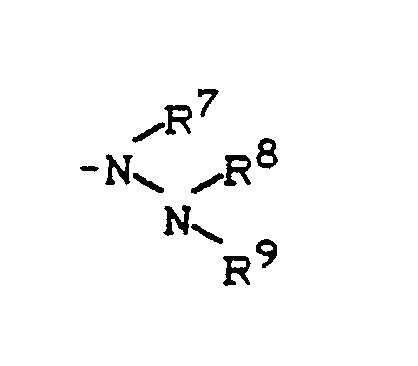
- R⁷
- für Wasserstoff oder Alkyl steht,
- R⁸
- für Wasserstoff oder Alkyl steht und
- R⁹
- für Wasserstoff, für jeweils gegebenenfalls substituiertes Alkyl, Cycloalkyl, Phenyl, Benzyl, Naphthyl, Pyridinyl, Pyrimidinyl oder Triazinyl steht, oder
- R⁹
- für die Gruppierung -CO-R¹⁰ steht, wobei
- R¹⁰
- für Wasserstoff, Amino, Carbamoyl oder für jeweils gegebenenfalls substituiertes Alkyl, Cycloalkyl, Phenyl, Naphthyl, Pyridinyl, Furyl, Alkoxy, Phenoxy, Phenylamino oder Naphthyloxy steht, oder
- R⁹
- für die Gruppierung -SO₂-R¹¹ steht, wobei
- R¹¹
- für jeweils gegebenenfalls substituiertes Alkyl, Phenyl, Naphthyl, Pyridinyl oder Thienyl steht, oder
- R⁹
- zusammen mit R⁸ für Alkandiyl steht;
- A
- für jeweils gegebenenfalls substituiertes Pyrrolidinyl, Piperidinyl, Perhydroazepinyl, Morpholinyl, Oxazolidinyl, Isoxazolidinyl, Perhydro-1,2-oxazinyl, Perhydro-1,3-oxazinyl oder Piperazinyl steht;
- A
- auch für Amino, Alkylamino, Dialkylamino oder für gegebenenfalls substituiertes Azolyl steht,
- Weiter wurde gefunden, daß man die neuen Phenoxyphenylsulfonylverbindungen der allgemeinen Formel (I) erhält, wenn man
- (a) Phenoxybenzolsulfonsäurechloride der allgemeinen Formel (II)

- R¹, R², R³, R⁴, R⁵ und R⁶
- die oben angegebenen Bedeutungen haben,
H-A (III)
in welcher- A
- die oben angegebene Bedeutung hat,
gegebenenfalls in Gegenwart eines Säureakzeptors und gegebenenfalls in Gegenwart eines Verdünnungsmittels umsetzt, oder wenn man - (b) für den Fall, daß in Formel (I) R⁶ für Amino steht und R¹, R², R³, R⁴, R⁵ und A die oben angegebenen Bedeutungen haben,
Verbindungen der allgemeinen Formel (I), in welcher R⁶ für Nitro steht und R¹, R², R³, R⁴, R⁵ und A die oben angegebenen Bedeutungen haben,
mit Wasserstoff in Gegenwart eines Hydrierungskatalysators und in Gegenwart eines Verdünnungsmittels umsetzt, oder wenn man - (c) für den Fall, daß in Formel (I) R⁶ für Halogen oder Cyano steht und R¹, R², R³, R⁴, R⁵ und A die oben angegebenen Bedeutungen haben,
Verbindungen der allgemeinen Formel (I), in welcher R⁶ für Amino steht und R¹, R², R³, R⁴, R⁵ und A die oben angegebenen Bedeutungen haben,
mit Natriumnitrit oder Kaliumnitrit und mit einem Hydrogenhalogenid (für R⁶: Halogen) bzw. mit Schwefelsäure (für R⁶: Cyano) in Gegenwart von Wasser und gegebenenfalls in Gegenwart eines organischen Lösungsmittels umsetzt und die hierbei erhaltenen Diazoniumsalzlösungen mit in Wasser gelösten Kupfer(I)-halogeniden bzw. mit Kupfer(I)-cyanid umsetzt. - Schließlich wurde gefunden, daß die neuen Phenoxyphenylsulfonylverbindungen der Formel (I) starke herbizide und pflanzenwuchsregulierende Wirkung zeigen.
- Überraschenderweise sind die erfindungsgemäßen Phenoxyphenylsulfonylverbindungen der Formel (I) gegen Unkräuter wesentlich stärker wirksam als 3-(2,4-Dichlor-phenoxy)-6-nitro-benzoesäure-methylester, welches ein strukturell ähnlicher vorbekannter Wirkstoff gleicher Wirkungsrichtung ist.
- Die Erfindung betrifft vorzugsweise Verbindungen der Formel (I), in welcher
- R¹
- für Wasserstoff, Fluor, Chlor, Brom, Cyano oder Trifluormethyl steht,
- R²
- für Wasserstoff, Fluor oder Chlor steht,
- R³
- für Fluor, Chlor, Brom, Cyano, Trifluormethyl, Trifluormethoxy, Methylsulfonyl oder Trifluormethylsulfonyl steht,
- R⁴
- für Wasserstoff, Fluor oder Chlor steht,
- R⁵
- für Wasserstoff, Fluor oder Chlor steht,
- R⁶
- für Wasserstoff, Fluor, Chlor, Brom, Iod, Cyano, Nitro, Amino oder Trifluormethyl steht und
- A
- für die Gruppierung

- R⁷
- für Wasserstoff oder Methyl steht,
- R⁸
- für Wasserstoff oder C₁-C₆-Alkyl steht und
- R⁹
- für Wasserstoff, für gegebenenfalls durch Hydroxy, Fluor und/oder Chlor substituiertes C₁-C₆-Alkyl, für gegebenenfalls durch Fluor, Chlor, Brom und/oder C₁-C₄-Alkyl substituiertes C₃-C₆-Cycloalkyl, für gegebenenfalls durch Fluor, Chlor, Brom, C₁-C₄-Alkyl und/oder C₁-C₄-Alkoxy substituiertes Phenyl, für Benzyl, für Naphthyl, für jeweils gegebenenfalls durch Fluor, Chlor, Brom, Methyl, Ethyl, Methoxy und/oder Ethoxy substituiertes Pyridinyl, Pyrimidinyl oder Triazinyl, oder
- R⁹
- für die Gruppierung -CO-R¹⁰ steht, wobei
- R¹⁰
- für Wasserstoff, Amino, Carbamoyl, für gegebenenfalls durch Fluor, Chlor, Brom und/oder C₁-C₄-Alkoxy substituiertes C₁-C₆-Alkyl, für gegebenenfalls durch Fluor, Chlor, Brom und/oder C₁-C₄-Alkyl substituiertes C₃-C₆-Cycloalkyl, für gegebenenfalls durch Hydroxy, Amino, Fluor, Chlor, Brom, Trifluormethyl, C₁-C₄-Alkyl und/oder C₁-C₄-Alkoxy substituiertes Phenyl, für gegebenenfalls durch Hydroxy substituiertes Naphthyl, für Pyridinyl oder Furyl, für C₁-C₆-Alkoxy, Phenoxy, Phenylamino oder Naphthyloxy steht, oder
- R⁹
- für die Gruppierung -SO₂-R¹¹ steht, wobei
- R¹¹
- für gegebenenfalls durch Fluor und/oder Chlor substituiertes C₁-C₆-Alkyl, für jeweils gegebenenfalls durch Fluor, Chlor, Brom, Cyano, Nitro, Carboxy, Methyl, Trifluormethyl, Methoxy, Difluormethoxy, Trifluormethoxy, Dimethylaminosulfonyl, Methoxycarbonyl, Ethoxycarbonyl und/oder Dimethylaminocarbonyl substituiertes Phenyl oder Pyridinyl, für Naphthyl oder für gegebenenfalls durch Fluor, Chlor, Brom, Cyano, Nitro, Methyl, Methoxy und/oder Methoxycarbonyl substituiertes Thienyl steht, oder
- R⁹
- zusammen mit R⁸ für C₄-C₆-Alkandiyl steht;
- A
- für jeweils gegebenenfalls durch C₁-C₄-Alkyl, Formyl, C₁-C₄-Alkylcarbonyl, C₁-C₄-Alkoxycarbonyl, Phenyl und/ oder C₁-C₄-Alkoxy substituiertes Pyrrolidinyl, Piperidinyl, Perhydroazepinyl, Morpholinyl, Oxazolidinyl, Isoxazolidinyl, Perhydro-1,2-oxazinyl, Perhydro-1,3-oxazinyl oder Piperazinyl steht;
- A
- auch für Amino, C₁-C₆-Alkylamino, Di-(C₁-C₄-alkyl)-amino oder für gegebenenfalls einfach bis dreifach, gleich oder verschieden durch Halogen, Cyano, Nitro, Amino, C₁-C₄-Alkyl, C₁-C₄-Alkoxy, C₁-C₄-Alkylthio, Halogen-C₁-C₄-alkyl, Halogen-C₁-C₄-alkoxy und/oder Halogen-C₁-C₄-alkylthio substituiertes Pyrazolyl, Imidazolyl oder Triazolyl steht.
- Die Erfindung betrifft insbesondere Verbindungen der Formel (I), in welcher
- R¹
- für Wasserstoff, Fluor oder Chlor steht,
- R²
- für Wasserstoff, Fluor oder Chlor steht,
- R³
- für Trifluormethyl, Methylsulfonyl oder Trifluormethylsulfonyl steht,
- R⁴
- für Wasserstoff, Fluor oder Chlor steht,
- R⁵
- für Wasserstoff, Fluor oder Chlor steht,
- R⁶
- für Wasserstoff, Chlor, Brom, Cyano oder Nitro steht und
- A
- für die Gruppierung

- R⁷
- für Wasserstoff steht,
- R⁸
- für Wasserstoff oder Methyl steht und
- R⁹
- für Wasserstoff, Methyl, Ethyl, Propyl, Isopropyl, Butyl, Isobutyl, sec-Butyl, tert-Butyl, Cyclopentyl, Cyclohexyl, Phenyl, Fluorphenyl, Chlorphenyl, Bromphenyl, Methylphenyl, Methoxyphenyl, für jeweils gegebenenfalls durch Chlor, Methyl und/oder Methoxy substituiertes Pyridinyl, Pyrimidinyl oder Triazinyl oder
- R⁹
- für die Gruppierung -CO-R¹⁰ steht, wobei
- R¹⁰
- für Methyl, Ethyl, für gegebenenfalls durch Fluor, Chlor, Methyl und/oder Trifluormethyl substituiertes Phenyl, Pyridinyl, Furyl, Methoxy oder Ethoxy steht, oder
- R⁹
- für die Gruppierung -SO₂-R¹¹ steht, wobei
- R¹¹
- für Methyl, Ethyl, Propyl, Butyl oder für gegebenenfalls einfach bis dreifach durch Methyl substituiertes Phenyl steht, oder
- R⁹
- zusammen mit R⁸ für Tetramethylen, Pentamethylen oder Hexamethylen steht;
- A
- für jeweils gegebenenfalls einfach bis dreifach durch Methyl und/oder Ethyl substituiertes Pyrrolidinyl, Piperidinyl, Perhydroazepinyl, Morpholinyl, Oxazolidinyl, Isoxazolidinyl oder Piperazinyl, das gegebenenfalls auch durch Formyl, Acetyl, Methoxycarboxyl, Ethoxycarbonyl oder Phenyl substituiert ist, steht;
- A
- auch für Amino, Methylamino, Ethylamino, Propylamino, Isopropylamino, Butylamino, Dimethylamino, Diethylamino oder für gegebenenfalls einfach bis dreifach, gleich oder verschieden durch Chlor, Brom, Methyl, Ethyl und/oder Trifluormethyl substituiertes Pyrazolyl oder Imidazolyl steht.
- Beispiele für die neuen Phenoxyphenylsulfonylverbindungen der Formel (I) sind in der nachstehenden Tabelle 1 aufgeführt.


- Verwendet man für das erfindungsgemäße Verfahren (a) beispielsweise 2-Cyano-5-(2,6-difluor-4-trifluormethylphenoxy)-benzolsulfonsäurechlorid und Acethydrazid als Ausgangsstoffe, so kann der Reaktionsablauf durch das folgende Formelschema wiedergegeben werden:

- Verwendet man für das erfindungsgemäße Verfahren (b) beispielsweise N-(2-Nitro-5-(2-chlor-4-trifluormethylphenoxy)-phenyl-sulfonyl)-morpholin und Wasserstoff in Gegenwart eines Platin-Katalysators als Ausgangsstoffe, so kann der Reaktionsablauf durch das folgende Formelschema wiedergegeben werden:

- Verwendet man für das erfindungsgemäße Verfahren (c) beispielsweise N-(2-Amino-5-(2-chlor-6-fluor-4-trifluormethyl-phenoxy)-phenyl-sulfonyl)-pyrrolidin und Natriumnitrit/Hydrogenbromid sowie anschließend Kupfer(I)-bromid als Ausgangsstoffe, so kann der Reaktionsablauf durch das folgende Formelschema wiedergegeben werden:

- Die beim erfindungsgemäßen Verfahren (a) zur Herstellung von Verbindungen der Formel (I) als Ausgangsstoffe zu verwendenden Phenoxybenzolsulfonsäurechloride sind durch die Formel (II) allgemein definiert.
- In Formel (II) haben R¹, R², R³, R⁴, R⁵ und R⁶ vorzugsweise bzw. insbesondere diejenigen Bedeutungen, die bereits oben im Zusammenhang mit der Beschreibung der erfindungsgemäßen Verbindungen der Formel (I) vorzugsweise bzw. als insbesondere bevorzugt für R¹, R², R³, R⁴, R⁵ und R⁶ angegeben wurden.
- Als Beispiele für die Ausgangsstoffe der Formel (II) seien genannt:
3-(2-Chlor-4-trifluormethyl-phenoxy)-, 3-(2,6-Dichlor-4-trifluormethyl-phenoxy)-, 3-(2-Chlor-6-fluor-4-trifluormethyl-phenoxy)-, 3-(2,3,6-Trichlor-4-trifluormethyl)-phenoxy)- und 3-(2,6-Dichlor-3-fluor-4-trifluormethyl-phenoxy)-benzolsulfonsäurechlorid; 2-Chlor-, 2-Brom-, 2-Cyano- und 2-Nitro-5-(2-chlor-4-trifluormethyl-phenoxy)-, 2-Chlor-, 2-Brom-, 2-Cyano- und 2-Nitro-5-(2,6-dichlor-4-trifluormethyl-phenoxy-, 2-Chlor-, 2-Brom-, 2-Cyano- und 2-Nitro-5-(2-chlor-6-fluor-4-trifluormethyl-phenoxy)-, 2-Chlor-, 2-Brom-, 2-Cyano- und 2-Nitro-5-(2,3,6-trichlor-4-trifluormethyl-phenoxy)- und 2-Chlor-, 2-Brom-, 2-Cyano- und 2-Nitro-5-(2,6-dichlor-3-fluor-4-trifluormethyl-phenoxy)-benzolsulfonsäurechlorid. - Die Ausgangsstoffe der Formel (II) sind bekannt und/oder können nach an sich bekannten Verfahren hergestellt werden (vgl. US-P 4 213 775; DE-OS 3833549/LeA 26411).
- Man erhält die Verbindungen der Formel (II) beispielsweise, wenn man
Aminodiphenylether der allgemeinen Formel (IV)
in welcher - R¹, R², R³, R⁴ und R⁵
- die oben angegebenen Bedeutungen haben, und
- R⁶
- mit Ausnahme von Amino die oben angegebene Bedeutung hat,
- Die Aminodiphenylether der Formel (IV) sind bekannt und/oder können nach an sich bekannten Verfahren hergestellt werden (vgl. EP-A 29123; EP-A 313908/LeA 25624; DE-OS 3902288/LeA 26655).
- Die beim erfindungsgemäßen Verfahren (a) weiter als Ausgangsstoffe zu verwendenden Stickstoffverbindungen sind durch die Formel (III) allgemein definiert. In Formel (III) hat A vorzugsweise bzw. insbesondere diejenige Bedeutung, die bereits oben im Zusammenhang mit der Beschreibung der erfindungsgemäßen Verbindungen der Formel (I) vorzugsweise bzw. als insbesondere bevorzugt für A angegeben wurde. Bevorzugte Alkalimetallsalze der Verbindungen der Formel (III) sind deren Lithium-, Natrium- oder Kaliumsalze.
- Als Beispiele für die Ausgangsstoffe der Formel (III) seien genannt:
Pyrazol, 4-Chlor-pyrazol, 4-Brom-pyrazol, 3-Methyl-, 4-Methyl-, 3,5-Dimethyl- und 3,4,5-Trimethyl-pyrazol, 4-Chlor-3,5-dimethyl-pyrazol, Imidazol, 2-Methyl- und 4-Methyl-imidazol, Hydrazin, Methylhydrazin, Ethylhydrazin, Propylhydrazin, Isopropylhydrazin, Butylhydrazin, Isobutylhydrazin, sec-Butylhydrazin, tert-Butylhydrazin, Dimethylhydrazin, Cyclopentylhydrazin, Cyclohexylhydrazin, Phenylhydrazin, 4-Fluor-phenylhydrazin, 4-Chlor-phenylhydrazin, 4-Brom-phenylhydrazin, 4-Methyl-phenylhydrazin, 4-Methoxy-phenylhydrazin, 2-Hydrazino-pyridin, 3-Hydrazino-pyridin, 4-Hydrazino-pyridin, 2-Hydrazino-pyrimidin, 4,5-Dichlor-2-hydrazino-pyrimidin, 2-Hydrazino-4,6-dimethyl-pyrimidin, 2-Hydrazino-4,6-dimethoxy-pyrimidin, 2-Hydrazino-4-methoxy-6-methyl-pyrimidin, 2-Hydrazino-4,6-dimethyl-s-triazin, 2-Hydrazino-4,6-dimethoxy-s-triazin, 2-Hydrazino-4-methoxy-6-methyl-s-triazin, Acetylhydrazin, Propionylhydrazin, Benzoylhydrazin, 4-Fluor-benzoylhydrazin, 4-Chlorbenzoyl-hydrazin, 4-Methyl-benzoyl-hydrazin, 2-Pyridinoyl-hydrazin, 3-Pyridinoyl-hydrazin, 4-Pyridinoyl-hydrazin, 2-Furoylhydrazin, Methoxycarbonylhydrazin, Ethoxycarbonylhydrazin, Methylsulfonylhydrazin, Phenylsulfonylhydrazin, 4-Methyl-phenylsulfonylhydrazin, N-Amino-piperidin, N-Amino-perhydroazepin, Pyrrolidin, 2-Methyl-pyrrolidin, Piperidin, 2-Methyl-, 3-Methyl-, 4-Methyl-, 2-Ethyl-, 2,4-Dimethyl- und 2,5-Dimethyl-piperidin, Perhydroazepin, Morpholin, 2,2-Dimethyl-oxazolidin, Isoxazolidin, Piperazin, N-Methyl- und N-Ethyl-piperazin. - Die Verbindungen der Formel (III) sind bekannte organische Synthesechemikalien.
- Das erfindungsgemäße Verfahren (a) zur Herstellung der neuen Verbindungen der Formel (I) wird vorzugsweise unter Verwendung von Verdünnungsmitteln durchgeführt. Als Verdünnungsmittel kommen dabei praktisch alle inerten organischen Lösungsmittel in Frage. Hierzu gehören vorzugsweise aliphatische und aromatische, gegebenenfalls halogenierte Kohlenwasserstoffe wie Pentan, Hexan, Heptan, Cyclohexan, Petrolether, Benzin, Ligroin, Benzol, Toluol, Xylol, Methylenchlorid, Ethylenchlorid, Chloroform, Tetrachlorkohlenstoff, Chlorbenzol und o-Dichlorbenzol, Ether wie Diethyl- und Dibutylether, Glykoldimethylether und Diglykoldimethylether, Tetrahydrofuran und Dioxan, Ketone wie Aceton, Methyl-ethyl-, Methyl-isopropyl- und Methyl-isobutyl-keton, Ester wie Essigsäuremethylester und -ethylester, Nitrile wie z. B. Acetonitril und Propionitril, Amide wie z. B. Dimethylformamid, Dimethylacetamid und N-Methyl-pyrrolidon sowie Dimethylsulfoxid, Tetramethylensulfon und Hexamethylphosphorsäuretriamid.
- Als Säureakzeptoren können bei dem erfindungsgemäßen Verfahren (a) alle üblicherweise für derartige Umsetzungen verwendbaren Säurebindemittel eingesetzt werden. Vorzugsweise in Frage kommen Alkalimetallhydroxide wie z. B. Natrium- und Kaliumhydroxid, Erdalkalihydroxide wie z. B. Calciumhydroxid, Alkalicarbonate und -alkoholate wie Natrium- und Kaliumcarbonat, Natrium- und Kalium-tert-butylat, ferner aliphatische, aromatische oder heterocyclische Amine, beispielsweise Triethylamin, Trimethylamin, Dimethylanilin, Dimethylbenzylamin, Pyridin, 1,5-Diazabicyclo-[4,3,0]-non-5-en (DBN), 1,8-Diazabicyclo-[5,4,0]-undec-7-en (DBU) und 1,4-Diazabicyclo-[2,2,2]-octan (DABCO).
- Die Reaktionstemperaturen können bei dem erfindungsgemäßen Verfahren (a) in einem größeren Bereich variiert werden. Im allgemeinen arbeitet man bei Temperaturen zwischen 0 °C und 100 °C, vorzugsweise bei Temperaturen zwischen 10 °C und 50 °C.
- Das erfindungsgemäße Verfahren (a) wird im allgemeinen unter Normaldruck durchgeführt. Es ist jedoch auch möglich, unter erhöhtem oder vermindertem Druck zu arbeiten.
- Zur Durchführung des erfindungsgemäßen Verfahrens (a) werden die jeweils benötigten Ausgangsstoffe im allgemeinen in angenähert äquimolaren Mengen eingesetzt. Es ist jedoch auch möglich, eine der beiden jeweils eingesetzten Komponenten in einem größeren Überschuß zu verwenden. Die Reaktionen werden im allgemeinen in einem geeigneten Verdünnungsmittel in Gegenwart eines Säureakzeptors durchgeführt, und das Reaktionsgemisch wird mehrere Stunden bei der jeweils erforderlichen Temperatur gerührt. Die Aufarbeitung erfolgt bei dem erfindungsgemäßen Verfahren (a) jeweils nach üblichen Methoden.
- Die beim erfindungsgemäßen Verfahren (b) zur Herstellung von Verbindungen der Formel (I) als Ausgangsstoffe zu verwendenden Verbindungen sind - mit der Maßgabe, daß jeweils R⁶ für Nitro steht - durch die Formel (I) allgemein definiert.
- In Formel (I) haben dann R¹, R², R³, R⁴, R⁵ und A vorzugsweise bzw. insbesondere diejenigen Bedeutungen, die bereits oben im Zusammenhang mit der Beschreibung der erfindungsgemäßen Verbindungen der Formel (I) vorzugsweise bzw. als insbesondere bevorzugt für R¹, R², R³, R⁴, R⁵ und A angegeben wurden.
- Die Ausgangsstoffe der Formel (I) für Verfahren (b) sind erfindungsgemäße, neue Verbindungen; sie können nach den erfindungsgemäßen Verfahren (a) hergestellt werden.
- Verfahren (b) wird unter Verwendung eines Hydrierungskatalysators durchgeführt. Als Beispiele hierfür seien Raney-Nickel, Platin und Palladium genannt. Vorzugsweise wird Raney-Nickel für Verfahren (b) eingesetzt.
- Verfahren (b) wird in Gegenwart eines Verdünnungsmittels durchgeführt. Vorzugsweise werden Alkohole, wie Methanol, Ethanol, Propanol oder Isopropanol, Ether, wie Glycoldimethylether, Diglycoldimethylether, Tetrahydrofuran oder Dioxan, oder Ester, wie Essigsäuremethylester oder Essigsäureethylester, als Lösungsmittel für Verfahren (b) eingesetzt.
- Die Reaktionstemperaturen können bei dem erfindungsgemäßen Verfahren (b) in einem größeren Bereich variiert werden. Im allgemeinen arbeitet man bei Temperaturen zwischen 0 °C und 150 °C, vorzugsweise bei Temperaturen zwischen 20 °C und 100 °C.
- Verfahren (b) wird im allgemeinen bei Normaldruck oder erhöhtem Druck bis etwa 200 bar, vorzugsweise bis etwa 100 bar, durchgeführt.
- Verfahren (b) kann unter den bei katalytischen Hydrierungen üblichen Bedingungen durchgeführt werden. In einer bevorzugten Ausführungsform von Verfahren (b) wird die Ausgangsverbindung der Formel (I) mit dem Verdünnungsmittel und dem Katalysator vermischt und dann so lange Wasserstoff zudosiert, bis kein Verbrauch von Wasserstoff mehr festzustellen ist. Nach dem Ende der Hydrierung filtriert man das Reaktionsgemisch und erhält nach Einengen des Filtrats das Rohprodukt als Rückstand, welcher auf übliche Weise, beispielsweise durch Säulenchromatographie, gereinigt werden kann.
- Die beim erfindungsgemäßen Verfahren (c) zur Herstellung von Verbindungen der Formel (I) als Ausgangsstoffe zu verwendenden Verbindungen sind - mit der Maßgabe, daß jeweils R⁶ für Amino steht - durch die Formel (I) allgemein definiert.
- In Formel (I) haben dann R¹, R², R³, R⁴, R⁵ und A vorzugsweise bzw. insbesondere diejenigen Bedeutungen, die bereits oben im Zusammenhang mit der Beschreibung der erfindungsgemäßen Verbindungen der Formel (I) vorzugsweise bzw. als insbesondere bevorzugt für R¹, R², R³, R⁴, R⁵ und A angegeben wurden.
- Die Ausgangsstoffe der Formel (I) für Verfahren (c) sind erfindungsgemäße, neue Verbindungen; sie können nach dem erfindungsgemäßen Verfahren (b) hergestellt werden.
- Verfahren (c) wird unter Einsatz eines Hydrogenhalogenids bzw. von Schwefelsäure durchgeführt. Als Beispiele für die Hydrogenhalogenide seien Hydrogenfluorid, Hydrogenchlorid, Hydrogenbromid und Hydrogeniodid genannt.
- Verfahren (c) wird gegebenenfalls unter Verwendung eines organischen Lösungsmittels durchgeführt. Geeignete organische Lösungsmittel sind beispielsweise Ether, wie Glycoldimethylether und Diglycoldimethylether, sowie Tetrahydrofuran und Dioxan, Ketone, wie Aceton und Methylethylketon, sowie Amide, wie Dimethylformamid.
- Verfahren (c) wird unter Einsatz von Kupfer(I)-halogeniden bzw. von Kupfer(I)-cyanid durchgeführt. Als Beispiele für die Kupfer(I)-halogenide seien Kupfer(I)-chlorid, Kupfer(I)-bromid und Kupfer(I)-iodid genannt.
- Die Reaktionstemperaturen können bei dem erfindungsgemäßen Verfahren (c) in einem größeren Bereich variiert werden. Im allgemeinen arbeitet man bei Temperaturen zwischen -20 °C und +80 °C, vorzugsweise bei Temperaturen zwischen 0 °C und 60 °C.
- Das erfindungsgemäße Verfahren (c) wird im allgemeinen unter Normaldruck durchgeführt. Es ist jedoch auch möglich, unter erhöhtem oder vermindertem Druck zu arbeiten.
- Zur Durchführung des erfindungsgemäßen Verfahrens (c) setzt man je Mol Ausgangsverbindung der Formel (I) im allgemeinen zwischen 0,8 und 2,5 Mol, vorzugsweise zwischen 1,1 und 1,5 Mol, Natriumnitrit oder Kaliumnitrit und zwischen 2 und 20 Mol, vorzugsweise zwischen 3 und 10 Mol, Hydrogenhalogenid bzw. Schwefelsäure, sowie zwischen 1 und 3 Mol, vorzugsweise zwischen 1,1 und 1,5 Mol, Kupfer(I)-halogenid bzw. Kupfer(I)-cyanid ein.
- Zunächst wird auf übliche Weise eine Diazotierung durchgeführt: Man legt hierzu im allgemeinen die Ausgangsverbindung der Formel (I) in einer wäßrigen Lösung eines Hydrogenhalogenids bzw. von Schwefelsäure vor und gibt dazu unter Kühlen langsam eine wäßrige Lösung von Natriumnitrit oder Kaliumnitrit. Überschüssige salpetrige Säure wird gegebenenfalls nach der Diazotierung mit Harnstoff beseitigt und die Diazoniumsalzlösung wird unter Kühlen zu einer wäßrigen Lösung eines Kupfer(I)-halogenids bzw. von Kupfer(I)-cyanid gegeben. Dann wird, gegebenenfalls unter Erwärmen, bis zum Ende der Gasentwicklung gerührt und anschließend nach üblichen Methoden aufgearbeitet.
- Die erfindungsgemäßen Wirkstoffe können als Defoliants, Desiccants, Krautabtötungsmittel und insbesondere als Unkrautvernichtungsmittel verwendet werden. Unter Unkraut im weitesten Sinne sind alle Pflanzen zu verstehen, die an Orten aufwachsen, wo sie unerwünscht sind. Ob die erfindungsgemäßen Stoffe als totale oder selektive Herbizide wirken, hängt im wesentlichen von der angewendeten Menge ab.
- Die erfindungsgemäßen Wirkstoffe können z.B. bei den folgenden Pflanzen verwendet werden:
Dikotyle Unkräuter der Gattungen: Sinapis, Lepidium, Galium, Stellaria, Matricaria, Anthemis, Galinsoga, Chenopodium, Urtica, Senecio, Amaranthus, Portulaca, Xanthium, Convolvulus, Ipomoea, Polygonum, Sesbania, Ambrosia, Cirsium, Carduus, Sonchus, Solanum, Rorippa, Rotala, Lindernia, Lamium, Veronica, Abutilon, Emex, Datura, Viola, Galeopsis, Papaver, Centaurea, Trifolium, Ranunculus, Taraxacum. - Dikotyle Kulturen der Gattungen: Gossypium, Glycine, Beta, Daucus, Phaseolus, Pisum, Solanum, Linum, Ipomoea, Vicia, Nicotiana, Lycopersicon, Arachis, Brassica, Lactuca, Cucumis, Cucurbita.
- Monokotyle Unkräuter der Gattungen: Echinochloa, Setaria, Panicum, Digitaria, Phleum, Poa, Festuca, Eleusine, Brachiaria, Lolium, Bromus, Avena, Cyperus, Sorghum, Agropyron, Cynodon, Monochoria, Fimbristylis, Sagittaria, Eleocharis, Scirpus, Paspalum, Ischaemum, Sphenoclea, Dactyloctenium, Agrostis, Alopecurus, Apera.
- Monokotyle Kulturen der Gattungen: Oryza, Zea, Triticum, Hordeum, Avena, Secale, Sorghum, Panicum, Saccharum, Ananas, Asparagus, Allium.
- Die Verwendung der erfindungsgemäßen Wirkstoffe ist jedoch keineswegs auf diese Gattungen beschränkt, sondern erstreckt sich in gleicher Weise auch auf andere Pflanzen.
- Die Verbindungen eignen sich in Abhängigkeit von der Konzentration zur Totalunkrautbekämpfung z.B. auf Industrie- und Gleisanlagen und auf Wegen und Plätzen mit und ohne Baumbewuchs. Ebenso können die Verbindungen zur Unkrautbekämpfung in Dauerkulturen, z.B. Forst, Ziergehölz-, Obst-, Wein-, Citrus-, Nuß-, Bananen-, Kaffee-, Tee-, Gummi-, Ölpalm-, Kakao-, Beerenfrucht- und Hopfenanlagen, auf Zier- und Sportrasen und Weideflächen und zur selektiven Unkrautbekämpfung in einjährigen Kulturen eingesetzt werden.
- Die erfindungsgemäßen Verbindungen der Formel (I) eignen sich zur selektiven Bekämpfung von monokotylen und insbesondere von dikotylen Unkräutern in monokotylen und dikotylen Kulturen sowohl im Vorauflauf- als auch im Nachauflauf-Verfahren. In gewissem Umfang zeigen sie auch insektizide Wirkung.
- Die erfindungsgemäßen Wirkstoffe greifen in den Metabolismus der Pflanzen ein und können deshalb als Wachstumsregulatoren eingesetzt werden.
- Für die Wirkungsweise von Pflanzenwachstumsregulatoren gilt nach der bisherigen Erfahrung, daß ein Wirkstoff auch mehrere verschiedenartige Wirkungen auf Pflanzen ausüben kann. Die Wirkungen der Stoffe hängen im wesentlichen ab von dem Zeitpunkt der Anwendung bezogen auf das Entwicklungsstadium der Pflanze sowie von den auf die Pflanzen oder ihre Umgebung ausgebrachten Wirkstoffmengen und von der Art der Applikation. In jedem Fall sollen Wachstumsregulatoren die Kulturpflanzen in bestimmter gewünschter weise beeinflussen.
- Unter dem Einfluß von Wachstumsregulatoren kann der Blattbestand der Pflanzen so gesteuert werden, daß ein Entblättern der Pflanzen zu einem gewünschten Zeitpunkt erreicht wird. Eine derartige Entlaubung spielt bei der mechanischen Beerntung der Baumwolle eine große Rolle ist aber auch in anderen Kulturen wie z.B. im Weinbau zur Erleichterung der Ernte von Interesse. Eine Entlaubung der Pflanzen kann auch vorgenommen werden, um die Transpiration der Pflanzen vor dem Verpflanzen herabzusetzen.
- Die Wirkstoffe können in die üblichen Formulierungen überführt werden, wie Lösungen, Emulsionen, Spritzpulver, Suspensionen, Pulver, Stäubemittel, Pasten, lösliche Pulver, Granulate, Suspensions-Emulsions-Konzentrate, Wirkstoff-imprägnierte Natur- und synthetische Stoffe sowie Feinstverkapselungen in polymeren Stoffen.
- Diese Formulierungen werden in bekannter Weise hergestellt, z. B. durch Vermischen der Wirkstoffe mit Streckmitteln, also flüssigen Lösungsmitteln und/oder festen Trägerstoffen, gegebenenfalls unter Verwendung von oberflächenaktiven Mitteln, also Emulgiermitteln und/oder Dispergiermitteln und/oder schaumerzeugenden Mitteln.
- Im Falle der Benutzung von Wasser als Streckmittel können z.B. auch organische Lösungsmittel als Hilfslösungsmittel verwendet werden. Als flüssige Lösungsmittel kommen im wesentlichen infrage: Aromaten, wie Xylol, Toluol, oder Alkylnaphthaline, chlorierte Aromaten und chlorierte aliphatische Kohlenwasserstoffe, wie Chlorbenzole, Chlorethylene oder Methylenchlorid, aliphatische Kohlenwasserstoffe, wie Cyclohexan oder Paraffine, z.B. Erdölfraktionen, mineralische und pflanzliche Öle, Alkohole, wie Butanol oder Glykol sowie deren Ether und Ester, Ketone wie Aceton, Methylethylketon, Methylisobutylketon oder Cyclohexanon, stark polare Lösungsmittel, wie Dimethylformamid und Dimethylsulfoxid, sowie Wasser.
Als feste Trägerstoffe kommen infrage:
z.B. Ammoniumsalze und natürliche Gesteinsmehle, wie Kaoline, Tonerden, Talkum, Kreide, Quarz, Attapulgit, Montmorillonit oder Diatomeenerde und synthetische Gesteinsmehle, wie hochdisperse Kieselsäure, Aluminiumoxid und Silikate, als feste Trägerstoffe für Granulate kommen in Frage: z.B. gebrochene und fraktionierte natürliche Gesteine wie Calcit, Marmor, Bims, Sepiolith, Dolomit sowie synthetische Granulate aus anorganischen und organischen Mehlen sowie Granulate aus organischem Material wie Sägemehl, Kokosnußschalen, Maiskolben und Tabakstengeln; als Emulgier- und/oder schaumerzeugende Mittel kommen infrage: z.B. nichtionogene und anionische Emulgatoren, wie Polyoxyethylen-Fettsäure-Ester, Polyoxyethylen-Fettalkohol-Ether, z.B. Alkylaryl-polyglykolether, Alkylsulfonate, Alkylsulfate, Arylsulfonate sowie Eiweißhydrolysate; als Dispergiermittel kommen infrage: z.B. Lignin-Sulfitablaugen und Methylcellulose. - Es können in den Formulierungen Haftmittel wie Carboxymethylcellulose, natürliche und synthetische pulvrige, körnige oder latexförmige Polymere verwendet werden, wie Gummiarabicum, Polyvinylalkohol, Polyvinylacetat, sowie natürliche Phospholipide, wie Kephaline und Lecithine und synthetische Phospholipide. Weitere Additive können mineralische und vegetabile Öle sein.
- Es können Farbstoffe wie anorganische Pigmente, z.B. Eisenoxid, Titanoxid, Ferrocyanblau und organische Farbstoffe, wie Alizarin-, Azo- und Metallphthalocyaninfarbstoffe und Spurennährstoffe wie Salze von Eisen, Mangan, Bor, Kupfer, Kobalt, Molybdän und Zink verwendet werden.
- Die Formulierungen enthalten im allgemeinen zwischen 0,1 und 95 Gewichtsprozent Wirkstoff, vorzugsweise zwischen 0,5 und 90 %.
- Die erfindungsgemäßen Wirkstoffe können als solche oder in ihren Formulierungen auch in Mischung mit bekannten Herbiziden zur Unkrautbekämpfung Verwendung finden, wobei Fertigformulierungen oder Tankmischungen möglich sind.
- Für die Mischungen kommen bekannte Herbizide wie z.B. 1-Amino-6-ethylthio-3-(2,2-dimethylpropyl)-1,3,5-triazin-2,4(1H,3H)-dion (AMETHYDIONE) oder N-(2-Benzthiazolyl)-N,N'-dimethyl-harnstoff (METABENZTHIAZURON) zur Unkrautbekämpfung in Getreide; 4-Amino-3-methyl-6-phenyl-1,2,4-triazin-5(4H)-on (METAMITRON) zur Unkrautbekämpfung in Zuckerrüben und 4-Amino-6-(1,1-dimethylethyl)-3-methylthio-1,2,4-triazin-5(4H)-on (METRIBUZIN) zur Unkrautbekämpfung in Sojabohnen, infrage; ferner auch 2,4-Dichlorphenoxyessigsäure (2,4-D); 4-(2,4-Dichlorphenoxy)-buttersäure (2,4-DB); 2,4-Dichlorphenoxypropionsäure (2,4-DP); Chloressigsäure-N-(methoxymethyl)-2,6-diethylanilid (ALACHLOR); Methyl-6,6-dimethyl-2,4-dioxo-3-[1-(2-propenyloxyamino)-butyliden]-cyclohexancarbonsäure (ALLOXYDIM); 4-Amino-benzolsulfonyl-methylcarbamat (ASULAM); 2-Chlor-4-ethylamino-6-isopropylamino-1,3,5-triazin (ATRAZIN); 2-[[[[[(4,6-Dimethoxypyrimidin-2-yl)-amino]-carbonyl]-amino]-sulfonyl]-methyl]-benzoesäuremethylester (BENSULFURON); 3-Isopropyl-2,1,3-benzothiadiazin-4-on-2,2-dioxid (BENTAZON); 3,5-Dibrom-4-hydroxybenzonitril (BROMOXYNIL); N-(Butoxymethyl)-2-chlor-N-(2,6-diethylphenyl)-acetamid (BUTACHLOR); 5-Amino-4-chlor-2-phenyl-2,3-dihydro-3-oxy-pyridazin (CHLORIDAZON); Ethyl-2-{[(4-chlor-6-methoxy-2-pyrimidinyl)-aminocarbonyl]-aminosulfonyl}-benzoat (CHLORIMURON); N-(3-Chlorphenyl)-isopropylcarbamat (CHLORPROPHAM); 2-Chlor-N-{[(4-methoxy-6-methyl-1,3,5-triazin-2-yl)-amino]-carbonyl}-benzolsulfonamid (CHLORSULFURON); N,N-Dimethyl-N'-(3-chlor-4-methylphenyl)-harnstoff (CHLORTOLURON); exo-1-Methyl-4-(1-methylethyl)-2-(2-methylphenyl-methoxy)-7-oxabicyclo-(2,2,1)-heptan (CINMETHYLIN); 3,6-Dichlor-2-pyridincarbonsäure (CLOPYRALID); 2-Chlor-4-ethylamino-6-(3-cyanopropylamino)-1,3,5-triazin (CYANAZIN); N,S-Diethyl-N-cyclohexyl-thiolcarbamat (CYCLOATE); 2-[1-(Ethoximino)-butyl]-3-hydroxy-5-[tetrahydro-(2H)-thiopyran-3-yl]-2-cyclohexen-1-on (CYCLOXYDIM); 2-[4-(2,4-Dichlorphenoxy)-phenoxyl-propionsäure, deren Methyl- oder deren Ethylester (DICLOFOP); 2-[(2-Chlorphenyl)-methyl]-4,4-dimethylisoxazolidin-3-on (DIMETHAZONE); N,N-Di-n-propyl-thiocarbamidsäure-S-ethylester (EPTAME); 4-Amino-6-t-butyl-3-ethylthio-1,2,4-triazin-5-(4H)-on (ETHIOZIN); 2-{4-[(6-Chlor-2-benzoxazolyl)-oxylphenoxy}-propansäure, deren Methyl- oder deren Ethylester (FENOXAPROP); 2-[4-(5-Trifluormethyl-2-pyridyloxy)-phenoxy]-propansäure oder deren Butylester (FLUAZIFOP); N,N-Dimethyl-N'-(3-trifluormethylphenyl)-harnstoff (FLUOMETURON); 1-Methyl-3-phenyl-5-(3-trifluormethylphenyl)-4-pyridon (FLURIDONE); [(4-Amino-3,5-dichlor-6-fluor-2-pyridinyl)-oxyl-essigsäure bzw. deren 1-Methylheptylester (FLUROXYPYR); 2-{4-[(3-Chlor-5-(trifluormethyl)-2-pyridinyl)-oxy]-phenoxy}-propansäure bzw. deren Ethylester (HALOXYFOP); 3-Cyclohexyl-6-dimethylamino-1-methyl-1,3,5-triazin-2,4-dion (HEXAZINONE); Methyl-2-[4,5-dihydro-4-methyl-4-(1-methylethyl)-5-oxo-1H-imidazol-2-yl]-4(5)-methylbenzoat (IMAZAMETHABENZ); 2-[5-Methyl-5-(1-methylethyl)-4-oxo-2-imidazolin-2-yl]-3-chinolincarbonsäure (IMAZAQUIN); 2-[4,5-Dihydro-4-methyl-4-isopropyl-5-oxo-(1H)-imidazol-2-yl]-5-ethylpyridin-3-carbonsäure (IMAZETHAPYR); 3,5-Diiod-4-hydroxybenzonitril (IOXYNIL); N,N-Dimethyl-N'-(4-isopropylphenyl)-harnstoff (ISOPROTURON); (2-Methyl-4-chlorphenoxy)-essigsäure (MCPA); (4-Chlor-2-methylphenoxy)-propionsäure (MCPP); N-Methyl-2-(1,3-benzthiazol-2-yloxy)-acetanilid (MEFENACET); 2-Chlor-N-(2,6-dimethylphenyl)-N-[(1H)-pyrazol-1-yl-methyl]-acetamid (METAZACHLOR); 2-Ethyl-6-methyl-N-(1-methyl-2-methoxyethyl)-chloracetanilid (METOLACHLOR); 2-{[[((4-Methoxy-6-methyl-1,3,5-triazin-2-yl)-amino)-carbonyl]-amino]-sulfonyl}-benzoesäure oder deren Methylester (METSULFURON); S-Ethyl-N,N-hexamethylen-thiolcarbamat (MOLINATE); 1-(3-Trifluormethylphenyl)-4-methylamino-5-chlor-6-pyridazon (NORFLURAZON); 4-(Di-n-propylamino)-3,5-dinitrobenzolsulfonamid (ORYZALIN); N-(1-Ethylpropyl)-3,4-dimethyl-2,6-dinitroanilin (PENDIMETHALIN); 3-(Ethoxycarbonylaminophenyl)-N-(3'-methylphenyl)-carbamat (PHENMEDIPHAM); 2-Chlor-N-isopropylacetanilid (PROPACHLOR); Isopropyl-N-phenyl-carbamat (PROPHAM); 0-(6-Chlor-3-phenyl-pyridazin-4-yl)-S-octylthiocarbonat (PYRIDATE); 2-[4-(6-Chlor-chinoxalin-2-yl-oxy)-phenoxy]-propionsäure-ethylester (QUIZALOFOPETHYL); 2-[1-(Ethoxamino)-butyliden]-5-(2-ethylthiopropyl)-1,3-cyclohexadion (SETHOXYDIM); 2-Chlor-4,6-bis-(ethylamino)-1,3,5-triazin (SIMAZIN); 2,4-Bis-[N-ethylamino]-6-methylthio-1,3,5-triazin (SIMETRYNE); 4-Ethylamino-2-t-butylamino-6-methylthio-s-triazin (TERBUTRYNE); 3-[[[[(4-Methoxy-6-methyl-1,3,5-triazin-2-yl)-amino]-carbonyl]-amino]-sulfonyl]-thiophen-2-carbonsäure-methylester (THIAMETURON); S-[(4-Chlorphenyl)-methyl]-N,N-diethyl-thiocarbamat (THIOBENCARB); N,N-Diisopropyl-S-(2,3,3-trichlorallyl)-thiolcarbamat (TRIALLATE); 2,6-Dinitro-4-trifluormethyl-N,N-dipropylanilin (TRIFLURALIN). Einige Mischungen zeigen überraschenderweise auch synergistische Wirkung.
- Auch eine Mischung mit anderen bekannten Wirkstoffen, wie Fungiziden, Insektiziden, Akariziden, Nematiziden, Schutzstoffen gegen Vogelfraß, Pflanzennährstoffen und Bodenstrukturverbesserungsmitteln ist möglich.
- Die Wirkstoffe können als solche, in Form ihrer Formulierungen oder den daraus durch weiteres Verdünnen bereiteten Anwendungsformen, wie gebrauchsfertige Lösungen, Suspensionen, Emulsionen, Pulver, Pasten und Granulate angewandt werden. Die Anwendung geschieht in üblicher Weise, z.B. durch Gießen, Spritzen, Sprühen, Streuen.
- Die erfindungsgemäßen Wirkstoffe können sowohl vor als auch nach dem Auflaufen der Pflanzen appliziert werden.
- Sie können auch vor der Saat in den Boden eingearbeitet werden.
- Die angewandte Wirkstoffmenge kann in einem größeren Bereich schwanken. Sie hängt im wesentlichen von der Art des gewünschten Effektes ab. Im allgemeinen liegen die Aufwandmengen zwischen 1 g und 10 kg Wirkstoff pro Hektar Bodenfläche, vorzugsweise zwischen 5 g und 5 kg pro ha.
- Die Herstellung und die Verwendung der erfindungsgemäßen Wirkstoffe geht aus den nachfolgenden Beispielen hervor.
-

- Eine Mischung aus 4,5 g (10 mMol) 2-Nitro-5-(2,6-dichlor-4-trifluormethyl-phenoxy)-benzolsulfonsäurechlorid, 1,6 g (22 mMol) Pyrrolidin und 60 ml Methylenchlorid wird 4 Stunden bei 20°C gerührt und anschließend eingeengt. Der Rückstand wird mit 20 ml 2N Salzsäure verrührt und das kristallin angefallene Produkt durch Absaugen isoliert.
- Man erhält 4,8 g (99% der Theorie) N-(2-Nitro-5-(2,6-dichlor-4-trifluormethyl-phenoxy)-phenylsulfonyl)-pyrrolidin vom Schmelzpunkt 168°C.
-

- 2,06 g (5 mMol) 2-Nitro-5-(2-chlor-4-methylsulfonylphenoxy)-benzolsulfonsäurechlorid werden in 50 ml Methylenchlorid vorgelegt und unter Rühren nacheinander mit 0,5 g (5 mMol) Triethylamin und 0,45 g (5 mMol) 3,5-Dimethyl-pyrazol versetzt. Das Reaktionsgemisch wird 15 Stunden bei 20°C gerührt, dann nach Verdünnen mit Methylenchlorid und Wasser durchgeschüttelt, die organische Phase abgetrennt, mit 2N-Salzsäure gewaschen, mit Natriumsulfat getrocknet und filtriert. Vom Filtrat wird das Lösungsmittel im Wasserstrahlvakuum sorgfältig abdestilliert.
- Man erhält 1,1 g (45% der Theorie) 1-(2-Nitro-5-(2-chlor-4-methylsulfonyl-phenoxy)-phenylsulfonyl)-3,5-dimethyl-pyrazol als festen Rückstand vom Schmelzpunkt 125°C.
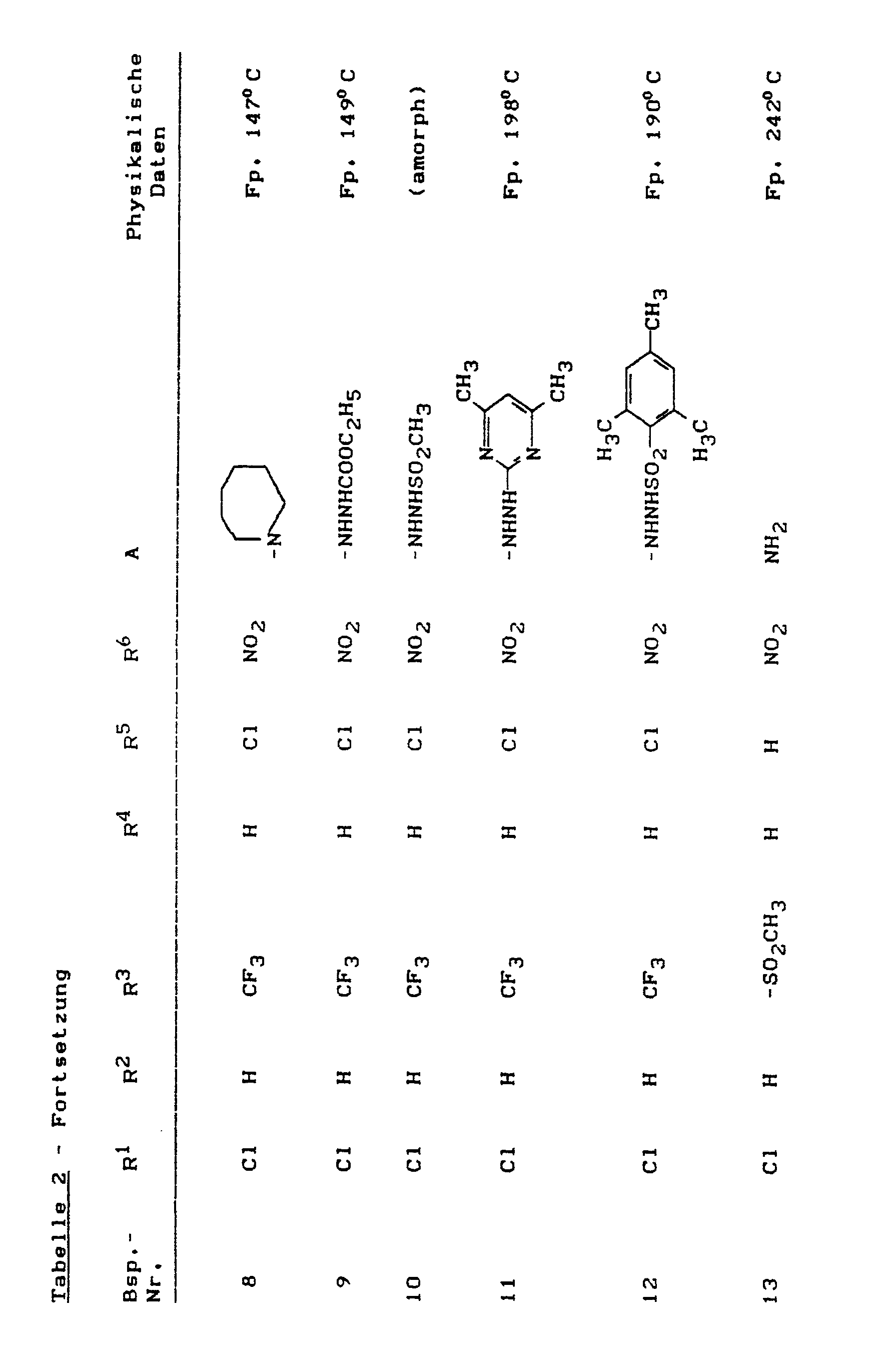
- Analog zu den Beispielen 1 oder 2 sowie entsprechend der allgemeinen Beschreibung der erfindungsgemäßen Herstellungsverfahren können beispielsweise auch die in der nachstehenden Tabelle 2 aufgeführten Verbindungen der Formel (I) erhalten werden.



-

-

- 3,7 g (20 mMol) 4-Fluor-1,2-dinitro-benzol werden in 100 ml Dimethylsulfoxid auf 80°C erhitzt und bei dieser Temperatur wird unter Rühren eine aus 4,1 g (20 mMol) 2-Chlor-4-methylsulfonyl-phenol, 1,9 g 45%iger Natronlauge (20 mMol NaOH) und 50 ml Dimethylsulfoxid hergestellte Lösung eindosiert. Das Gemisch wird 5 Stunden bei 80°C gerührt, dann auf 600 ml Wasser gegossen und mit 2N Salzsäure angesäuert. Das kristallin angefallene Produkt wird durch Absaugen isoliert.
- Man erhält 4,5 g (60% der Theorie) 1,2-Dinitro-4-(2-chlor-4-methylsulfonyl-phenoxy)-benzol vom Schmelzpunkt 109°C.
-

- 3,0 g (8 mMol) 1,2-Dinitro-4-(2-chlor-4-methylsulfonylphenoxy)-benzol werden in 50 ml Acetonitril vorgelegt und nacheinander mit 0,35 g Natriumhydroxid (gelöst in 2 ml Wasser) und 1,0 g (8,4 mMol) Benzylmercaptan versetzt. Das Gemisch wird eine Stunde bei 35°C gerührt, dann auf 100 ml Wasser gegossen und mit 2N-Salzsäure angesäuert. Dann wird zweimal mit Essigsäureethylester extrahiert, die vereinigten organischen Phasen mit Natriumsulfat getrocknet und filtriert. Vom Filtrat wird das Lösungsmittel im Wasserstrahlvakuum sorfältig abdestilliert.
- Man erhält 2,27 g (63% der Theorie) 1-Benzylthio-2-nitro-5-(2-chlor-4-methylsulfonyl-phenoxy)-benzol als festen Rückstand vom Schmelzpunkt 157°C.
-

- Eine Mischung aus 4,5 g (10 mMol) 1-Benzylthio-2-nitro-5-(2-chlor-4-methylsulfonyl-phenoxy)-benzol, 200 ml Essigsäure, 30 ml Wasser und 150 ml Methylenchlorid wird auf ca. 0°C abgekühlt und in diese Mischung wird Chlor bis zur Bildung einer klaren, hellgelben Lösung eingeleitet. Die Mischung wird 15 Minuten gerührt und dann auf 1,5 Liter Wasser gegossen. Man extrahiert dann mit Methylenchlorid, wäscht die organische Phase mit Wasser, trocknet mit Natriumsulfat und filtriert. Vom Filtrat wird das Lösungsmittel im Wasserstrahlvakuum abdestilliert, der Rückstand mit Petrolether verrührt und das kristallin angefallene Produkt durch Absaugen isoliert.
- Man erhält 3,25 g (79% der Theorie) 2-Nitro-5-(2-chlor-4-methylsulfonyl-phenoxy)-benzolsulfonsäurechlorid vom Schmelzpunkt 108°C.
-

- Eine Mischung aus 20,8 g (60 mMol) 2-Cyano-5-(2-chlor-6-fluor-4-trifluormethyl-phenoxy)-anilin, 100 ml Essigsäure und 120 ml konzentrierter Salzsäure wird auf 0°C abgekühlt und tropfenweise mit einer Lösung von 4,6 g (66 mMol) Natriumnitrit in 8 ml Wasser versetzt. Das Reaktionsgemisch wird 90 Minuten bei 0°C gerührt und anschließend zu einer gesättigten Lösung von Schwefeldioxid in 300 ml Essigsäure gegeben. Dann wird noch eine Lösung von 1,2 g Kupfer(II)-chlorid in 2 ml Wasser zudosiert und die Mischung wird 20 Stunden bei 10°C bis 20°C gerührt. Anschließend wird mit Eis verdünnt, mit Methylenchlorid geschüttelt, die organische Phase abgetrennt, mit Natriumsulfat getrocknet und filtriert. Vom Filtrat wird das Lösungsmittel im Wasserstrahlvakuum sorgfältig abdestilliert.
- Man erhält 10,8 g (43% der Theorie) 2-Cyano-5-(2-chlor-6-fluor-4-trifluormethyl-phenoxy)-benzolsulfonsäurechlorid als festen Rückstand vom Schmelzpunkt 130°C.
- In den folgenden Anwendungsbeispielen wird die nachstehend aufgeführte Verbindung als Vergleichssubstanz herangezogen:

- 3-(2,4-Dichlor-phenoxy)-6-nitrobenzoesäure-methylester
(bekannt aus US-PS 3 652 645 und US-PS 3 776 715). -
- Lösungsmittel:
- 5 Gewichtsteile Aceton
- Emulgator:
- 1 Gewichtsteil Alkylarylpolyglykolether
- Zur Herstellung einer zweckmäßigen Wirkstoffzubereitung vermischt man 1 Gewichtsteil Wirkstoff mit der angegebenen Menge Lösungsmittel, gibt die angegebene Menge Emulgator zu und verdünnt das Konzentrat mit Wasser auf die gewünschte Konzentration.
- Mit der Wirkstoffzubereitung spritzt man Testpflanzen, welche eine Höhe von 5 - 15 cm haben so, daß die jeweils gewünschten Wirkstoffmengen pro Flächeneinheit ausgebracht werden. Die Konzentration der Spritzbrühe wird so gewählt, daß in 1000 l Wasser/ha die jeweils gewünschten Wirkstoffmengen ausgebracht werden. Nach drei Wochen wird der Schädigungsgrad der Pflanzen bonitiert in % Schädigung im Vergleich zur Entwicklung der unbehandelten Kontrolle.
Es bedeuten: - 0 % =
- keine Wirkung (wie unbehandelte Kontrolle)
- 100 % =
- totale Vernichtung
- Eine bis an 100 %ige Überlegenheit in der Wirksamkeit gegenüber der Vergleichssubstanz (A) zeigen in diesem Test z.B. die Verbindungen gemäß den Herstellungsbeispielen: (1), (3), (4), (5), (6), (7), (9), (10), (11) und (17).
-
- Lösungsmittel:
- 5 Gewichtsteile Aceton
- Emulgator:
- 1 Gewichtsteil Alkylarylpolyglykolether
- Zur Herstellung einer zweckmäßigen Wirkstoffzubereitung vermischt man 1 Gewichtsteil Wirkstoff mit der angegebenen Menge Lösungsmittel, gibt die angegebene Menge Emulgator zu und verdünnt das Konzentrat mit Wasser auf die gewünschte Konzentration.
- Samen der Testpflanzen werden in normalen Boden ausgesät und nach 24 Stunden mit der Wirkstoffzubereitung begossen. Dabei hält man die Wassermenge pro Flächeneinheit zweckmäßigerweise konstant. Die Wirkstoffkonzentration in der Zubereitung spielt keine Rolle, entscheidend ist nur die Aufwandmenge des Wirkstoffs pro Flächeneinheit. Nach drei Wochen wird der Schädigungsgrad der Pflanzen bonitiert in % Schädigung im Vergleich zur Entwicklung der unbehandelten Kontrolle. Es bedeuten:
- 0 % =
- keine Wirkung (wie unbehandelte Kontrolle)
- 100 % =
- totale Vernichtung
- In diesem Test zeigen beispielsweise die Verbindungen gemäß den Herstellungsbeispielen (1), (5), (6), (7), (9), (10), (17) und (22) starke Wirkung gegen Unkräuter.
-
- Lösungsmittel:
- 30 Gewichtsteile Dimethylformamid
- Emulgator:
- 1 Gewichtsteil Polyoxyethylen-Sorbitan-Monolaurat
- Zur Herstellung einer zweckmäßigen Wirkstoffzubereitung vermischt man 1 Gewichtsteil Wirkstoff mit den angegebenen Mengen Lösungsmittel und Emulgator und füllt mit Wasser auf die gewünschte Konzentration auf.
- Baumwollpflanzen werden im Gewächshaus bis zur vollen Entfaltung des 5. Folgeblattes angezogen. In diesem Stadium werden die Pflanzen tropfnaß mit den Wirkstoffzubereitungen besprüht. Nach 1 Woche werden der Blattfall und das Austrocknen der Blätter im Vergleich zu den Kontrollpflanzen bonitiert.
- In diesem Test zeigen beispielsweise die Wirkstoffe gemäß den Herstellungsbeispielen (1), (3), (11) und (21) ein sehr starkes Austrocknen der Blätter und sehr starken Blattfall.
Claims (8)
- Phenoxyphenylsulfonylverbindungen der allgemeinen Formel (I)
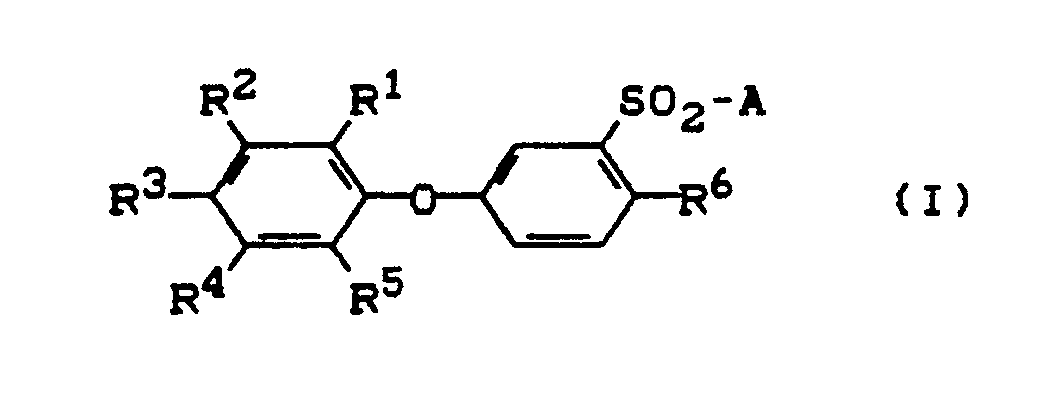 R¹ für Wasserstoff, Halogen, Cyano oder Trifluormethyl steht,R² für Wasserstoff oder Halogen steht,R³ für Halogen, Cyano, Trifluormethyl, Trifluormethoxy, Methylsulfonyl oder Trifluormethylsulfonyl steht,R⁴ für Wasserstoff oder Halogen steht,R⁵ für Wasserstoff oder Halogen steht,R⁶ für Wasserstoff, Halogen, Cyano, Nitro, Amino oder Trifluormethyl steht undA für die Gruppierung
 R⁷ für Wasserstoff oder Alkyl steht,R⁸ für Wasserstoff oder Alkyl steht undR⁹ für Wasserstoff, für jeweils gegebenenfalls substituiertes Alkyl, Cycloalkyl, Phenyl, Benzyl, Naphthyl, Pyridinyl, Pyrimidinyl oder Triazinyl steht, oderR⁹ für die Gruppierung -CO-R¹⁰ steht, wobeiR¹⁰ für Wasserstoff, Amino, Carbamoyl oder für jeweils gegebenenfalls substituiertes Alkyl, Cycloalkyl, Phenyl, Naphthyl, Pyridinyl, Furyl, Alkoxy, Phenoxy, Phenylamino oder Naphthyloxy steht, oderR⁹ für die Gruppierung -SO₂-R¹¹ steht, wobeiR¹¹ für jeweils gegebenenfalls substituiertes Alkyl, Phenyl, Naphthyl, Pyridinyl oder Thienyl steht, oderR⁹ zusammen mit R⁸ für Alkandiyl steht;oderA für jeweils gegebenenfalls substituiertes Pyrrolidinyl, Piperidinyl, Perhydroazepinyl, Morpholinyl, Oxazolidinyl, Isoxazolidinyl, Perhydro-1,2-oxazinyl, Perhydro-1,3-oxazinyl oder Piperazinyl steht;oder für den Fall, daS R³ für Methylsulfonyl oder Trifluormethylsulfonyl stehtA auch für Amino, Alkylamino, Dialkylamino oder für gegebenenfalls substituiertes Azolyl steht.
 - Phenoxyphenylsulfonylverbindungen der Formel (I) gemäß Anspruch 1, in welcherR¹ für Wasserstoff, Fluor, Chlor, Brom, Cyano oder Trifluormethyl steht,R² für Wasserstoff, Fluor oder Chlor steht,R³ für Fluor, Chlor, Brom, Cyano, Trifluormethyl, Trifluormethoxy, Methylsulfonyl oder Trifluormethylsulfonyl steht,R⁴ für Wasserstoff, Fluor oder Chlor steht,R⁵ für Wasserstoff, Fluor oder Chlor steht,R⁶ für Wasserstoff, Fluor, Chlor, Brom, Iod, Cyano, Nitro, Amino oder Trifluormethyl steht undA für die Gruppierung
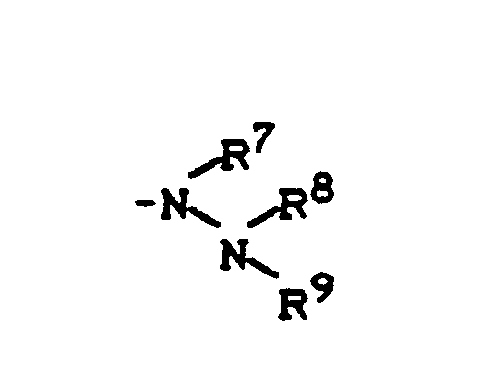 R⁷ für Wasserstoff oder Methyl steht,R⁸ für Wasserstoff oder C₁-C₆-Alkyl steht undR⁹ für Wasserstoff, für gegebenenfalls durch Hydroxy, Fluor und/oder Chlor substituiertes C₁-C₆-Alkyl, für gegebenenfalls durch Fluor, Chlor, Brom und/oder C₁-C₄-Alkyl substituiertes C₃-C₆-Cycloalkyl, für gegebenenfalls durch Fluor, Chlor, Brom, C₁-C₄-Alkyl und/oder C₁-C₄-Alkoxy substituiertes Phenyl, für Benzyl, für Naphthyl, für jeweils gegebenenfalls durch Fluor, Chlor, Brom, Methyl, Ethyl, Methoxy und/oder Ethoxy substituiertes Pyridinyl, Pyrimidinyl oder Triazinyl, oderR⁹ für die Gruppierung -CO-R¹⁰ steht, wobeiR¹⁰ für Wasserstoff, Amino, Carbamoyl, für gegebenenfalls durch Fluor, Chlor, Brom und/oder C₁-C₄-Alkoxy substituiertes C₁-C₆-Alkyl, für gegebenenfalls durch Fluor, Chlor, Brom und/oder C₁-C₄-Alkyl substituiertes C₃-C₆-Cycloalkyl, für gegebenenfalls durch Hydroxy, Amino, Fluor, Chlor, Brom, Trifluormethyl, C₁-C₄-Alkyl und/ oder C₁-C₄-Alkoxy substituiertes Phenyl, für gegebenenfalls durch Hydroxy substituiertes Naphthyl, für Pyridinyl oder Furyl, für C₁-C₆-Alkoxy, Phenoxy, Phenylamino oder Naphthyloxy steht, oderR⁹ für die Gruppierung -SO₂-R¹¹ steht, wobeiR¹¹ für gegebenenfalls durch Fluor und/oder Chlor substituiertes C₁-C₆-Alkyl, für jeweils gegebenenfalls durch Fluor, Chlor, Brom, Cyano, Nitro, Carboxy, Methyl, Trifluormethyl, Methoxy, Difluormethoxy, Trifluormethoxy, Dimethylaminosulfonyl, Methoxycarbonyl, Ethoxycarbonyl und/oder Dimethylaminocarbonyl substituiertes Phenyl oder Pyridinyl, für Naphthyl oder für gegebenenfalls durch Fluor, Chlor, Brom, Cyano, Nitro, Methyl, Methoxy und/oder Methoxycarbonyl substituiertes Thienyl steht, oderR⁹ zusammen mit R⁸ für C₄-C₆-Alkandiyl steht;oderA für jeweils gegebenenfalls durch C₁-C₄-Alkyl, Formyl, C₁-C₄-Alkylcarbonyl, C₁-C₄-Alkoxycarbonyl, Phenyl und/ oder C₁-C₄-Alkoxy substituiertes Pyrrolidinyl, Piperidinyl, Perhydroazepinyl, Morpholinyl, Oxazolidinyl, Isoxazolidinyl, Perhydro-1,2-oxazinyl, Perhydro-1,3-oxazinyl oder Piperazinyl steht;oder für den Fall, daß R³ für Methylsulfonyl oder Trifluormethylsulfonyl stehtA auch für Amino, C₁-C₆-Alkylamino, Di-(C₁-C₄-alkyl)-amino oder für gegebenenfalls einfach bis dreifach, gleich oder verschieden durch Halogen, Cyano, Nitro, Amino, C₁-C₄-Alkyl, C₁-C₄-Alkoxy, C₁-C₄-Alkylthio, Halogen-C₁-C₄-alkyl, Halogen-C₁-C₄-alkoxy und/oder Halogen-C₁-C₄-alkylthio substituiertes Pyrazolyl, Imidazolyl oder Triazolyl steht.
 - Phenoxyphenylsulfonylverbindungen der Formel (I) gemäß Anspruch 1, in welcherR¹ für Wasserstoff, Fluor oder Chlor steht,R² für Wasserstoff, Fluor oder Chlor steht,R³ für Trifluormethyl, Methylsulfonyl oder Trifluormethylsulfonyl steht,R⁴ für Wasserstoff, Fluor oder Chlor steht,R⁵ für Wasserstoff, Fluor oder Chlor steht,R⁶ für Wasserstoff, Chlor, Brom, Cyano oder Nitro steht undA für die Gruppierung
 R⁷ für Wasserstoff steht,R⁸ für Wasserstoff oder Methyl steht undR⁹ für Wasserstoff, Methyl, Ethyl, Propyl, Isopropyl, Butyl, Isobutyl, sec-Butyl, tert-Butyl, Cyclopentyl, Cyclohexyl, Phenyl, Fluorphenyl, Chlorphenyl, Bromphenyl, Methylphenyl, Methoxyphenyl, für jeweils gegebenenfalls durch Chlor, Methyl und/oder Methoxy substituiertes Pyridinyl, Pyrimidinyl oder Triazinyl oderR⁹ für die Gruppierung -CO-R¹⁰ steht, wobeiR¹⁰ für Methyl, Ethyl, für gegebenenfalls durch Fluor, Chlor, Methyl und/oder Trifluormethyl substituiertes Phenyl, Pyridinyl, Furyl, Methoxy oder Ethoxy steht, oderR⁹ für die Gruppierung -SO₂-R¹¹ steht, wobeiR¹¹ für Methyl, Ethyl, Propyl, Butyl oder für gegebenenfalls einfach bis dreifach durch Methyl substituiertes Phenyl steht, oderR⁹ zusammen mit R⁸ für Tetramethylen, Pentamethylen oder Hexamethylen steht;oderA für jeweils gegebenenfalls einfach bis dreifach durch Methyl und/oder Ethyl substituiertes Pyrrolidinyl, Piperidinyl, Perhydroazepinyl, Morpholinyl, Oxazolidinyl, Isoxazolidinyl oder Piperazinyl, das gegebenenfalls auch durch Formyl, Acetyl, Methoxycarbonyl, Ethoxycarbonyl oder Phenyl substituiert ist, steht;oder für den Fall, daß R³ für Methylsulfonyl oder Trifluormethylsulfonyl stehtA auch für Amino, Methylamino, Ethylamino, Propylamino, Isopropylamino, Butylamino, Dimethylamino, Diethylamino oder für gegebenenfalls einfach bis dreifach, gleich oder verschieden durch Chlor, Brom, Methyl, Ethyl und/oder Trifluormethyl substituiertes Pyrazolyl oder Imidazolyl steht.
 - Verfahren zur Herstellung von Phenoxyphenylsulfonylverbindungen der allgemeinen Formel (I)
 R¹ für Wasserstoff, Halogen, Cyano oder Trifluormethyl steht,R² für Wasserstoff oder Halogen steht,R³ für Halogen, Cyano, Trifluormethyl, Trifluormethoxy, Methylsulfonyl oder Trifluormethylsulfonyl steht,R⁴ für Wasserstoff oder Halogen steht,R⁵ für Wasserstoff oder Halogen steht,R⁶ für Wasserstoff, Halogen, Cyano, Nitro, Amino oder Trifluormethyl steht undA für die Gruppierung
 R⁷ für Wasserstoff oder Alkyl steht,R⁸ für Wasserstoff oder Alkyl steht undR⁹ für Wasserstoff, für jeweils gegebenenfalls substituiertes Alkyl, Cycloalkyl, Phenyl, Benzyl, Naphthyl, Pyridinyl, Pyrimidinyl oder Triazinyl steht, oderR⁹ für die Gruppierung -CO-R¹⁰ steht, wobeiR¹⁰ für Wasserstoff, Amino, Carbamoyl oder für jeweils gegebenenfalls substituiertes Alkyl, Cycloalkyl, Phenyl, Naphthyl, Pyridinyl, Furyl, Alkoxy, Phenoxy, Phenylamino oder Naphthyloxy steht, oderR⁹ für die Gruppierung -SO₂-R¹¹ steht, wobeiR¹¹ für jeweils gegebenenfalls substituiertes Alkyl, Phenyl, Naphthyl, Pyridinyl oder Thienyl steht, oderR⁹ zusammen mit R⁸ für Alkandiyl steht;oderA für jeweils gegebenenfalls substituiertes Pyrrolidinyl, Piperidinyl, Perhydroazepinyl, Morpholinyl, Oxazolidinyl, Isoxazolidinyl, Perhydro-1,2-oxazinyl, Perhydro-1,3-oxazinyl oder Piperazinyl steht;oder für den Fall, daß R³ für Methylsulfonyl oder Trifluormethylsulfonyl stehtA auch für Amino, Alkylamino, Dialkylamino oder für gegebenenfalls substituiertes Azolyl steht,dadurch gekennzeichnet, daß man(a) Phenoxybenzolsulfonsäurechloride der allgemeinen Formel (II)
R¹, R², R³, R⁴, R⁵ und R⁶ die oben angegebenen Bedeutungen haben,
mit Stickstoffverbindungen der allgemeinen Formel (III)
H-A (III)
in welcherA die oben angegebene Bedeutung hat,oder mit Alkalimetallsalzen von Verbindungen der Formel (III)
gegebenenfalls in Gegenwart eines Säureakzeptors und gegebenenfalls in Gegenwart eines Verdünnungsmittels umsetzt, oder(b) für den Fall, daß in Formel (I) R⁶ für Amino steht und R¹, R², R³, R⁴, R⁵ und A die oben angegebenen Bedeutungen haben,
Verbindungen der allgemeinen Formel (I), in welcher R⁶ für Nitro steht und R¹, R², R³, R⁴, R⁵ und A die oben angegebenen Bedeutungen haben,
mit Wasserstoff in Gegenwart eines Hydrierungskatalysators und in Gegenwart eines Verdünnungsmittels umsetzt, oder(c) für den Fall, daS in Formel (I) R⁶ für Halogen oder Cyano steht und R¹, R², R³, R⁴, R⁵ und A die oben angegebenen Bedeutungen haben,
Verbindungen der allgemeinen Formel (I), in welcher R⁶ für Amino steht und R¹, R², R³, R⁴, R⁵ und A die oben angegebenen Bedeutungen haben,
mit Natriumnitrit oder Kaliumnitrit und mit einem Hydrogenhalogenid (für R⁶: Halogen) bzw. mit Schwefelsäure (für R⁶: Cyano) in Gegenwart von Wasser und gegebenenfalls in Gegenwart eines organischen Lösungsmittels umsetzt und die hierbei erhaltenen Diazoniumsalzlösungen mit in Wasser gelösten Kupfer(I)-halogeniden bzw. Kupfer(I)-cyanid versetzt. - Herbizide und pflanzenwuchsregulierende Mittel, gekennzeichnet durch einen Gehalt an mindestens einer Phenoxyphenylsulfonylverbindung der Formel (I) nach den Ansprüchen 1 bis 4.
- Verwendung von Phenoxyphenylsulfonylverbindungen der Formel (I) nach den Ansprüchen 1 bis 4 zur Bekämpfung von Unkräutern und/oder als Pflanzenwuchsregulator.
- Verfahren zur Bekämpfung von Unkräutern und zur Regulierung des Pflanzenwachstums, dadurch gekennzeichnet, daß man Phenoxyphenylsulfonylverbindungen der Formel (I) nach den Ansprüchen 1 bis 4 auf die Unkräuter bzw. Pflanzen und/oder ihren Lebensraum einwirken läßt.
- Verfahren zur Herstellung von herbiziden und/oder pflanzenwuchsregulierenden Mitteln, dadurch gekennzeichnet, daß man Phenoxyphenylsulfonylverbindungen der Formel (I) nach den Ansprüchen 1 bis 4 mit Streckmitteln und/oder oberflächenaktiven Mitteln vermischt.
Applications Claiming Priority (2)
| Application Number | Priority Date | Filing Date | Title |
|---|---|---|---|
| DE19904015834 DE4015834A1 (de) | 1990-05-17 | 1990-05-17 | Phenoxyphenylsulfonylverbindungen |
| DE4015834 | 1990-05-17 |
Publications (2)
| Publication Number | Publication Date |
|---|---|
| EP0457140A2 true EP0457140A2 (de) | 1991-11-21 |
| EP0457140A3 EP0457140A3 (en) | 1992-09-30 |
Family
ID=6406592
Family Applications (1)
| Application Number | Title | Priority Date | Filing Date |
|---|---|---|---|
| EP19910107254 Withdrawn EP0457140A3 (en) | 1990-05-17 | 1991-05-04 | Phenoxyphenyl sulfonyl compounds |
Country Status (5)
| Country | Link |
|---|---|
| EP (1) | EP0457140A3 (de) |
| JP (1) | JPH04226955A (de) |
| AU (1) | AU7709991A (de) |
| CA (1) | CA2042571A1 (de) |
| DE (1) | DE4015834A1 (de) |
Cited By (3)
| Publication number | Priority date | Publication date | Assignee | Title |
|---|---|---|---|---|
| WO1993010083A1 (en) * | 1991-11-22 | 1993-05-27 | Uniroyal Chemical Company, Inc. | Insecticidal phenylhydrazine derivatives |
| EP0548798A1 (de) * | 1991-12-18 | 1993-06-30 | Sanwa Kagaku Kenkyusho Co., Ltd. | Antivirale Agenten |
| CN113563235A (zh) * | 2021-07-28 | 2021-10-29 | 上海毕得医药科技股份有限公司 | 一种3-(卤代苯氧基)苯磺酰氯衍生物的合成方法 |
Families Citing this family (3)
| Publication number | Priority date | Publication date | Assignee | Title |
|---|---|---|---|---|
| AU2003237532B2 (en) * | 2002-06-12 | 2009-07-30 | Symphony Evolution, Inc. | Human ADAM-10 inhibitors |
| IL310915A (en) * | 2021-08-25 | 2024-04-01 | Basf Se | Herbicidal malonamides |
| CA3229466A1 (en) * | 2021-08-25 | 2023-03-02 | Basf Se | Herbicidal malonamides |
Family Cites Families (3)
| Publication number | Priority date | Publication date | Assignee | Title |
|---|---|---|---|---|
| JPS6054954B2 (ja) * | 1977-07-28 | 1985-12-03 | 宇部興産株式会社 | ジフエニルエ−テル誘導体,およびジフエニルエ−テル誘導体を含有する除草剤 |
| DE3823318A1 (de) * | 1988-07-09 | 1990-02-22 | Bayer Ag | (hetero)aryloxynaphthaline mit ueber schwefel gebundenen substituenten |
| DE3833549A1 (de) * | 1988-10-01 | 1990-04-12 | Bayer Ag | Substituierte phenoxyphenylsulfonylazole, verfahren zu ihrer herstellung sowie ihre verwendung als herbizide und pflanzenwuchsregulatoren |
-
1990
- 1990-05-17 DE DE19904015834 patent/DE4015834A1/de not_active Withdrawn
-
1991
- 1991-05-04 EP EP19910107254 patent/EP0457140A3/de not_active Withdrawn
- 1991-05-10 JP JP3135779A patent/JPH04226955A/ja active Pending
- 1991-05-14 CA CA 2042571 patent/CA2042571A1/en not_active Abandoned
- 1991-05-15 AU AU77099/91A patent/AU7709991A/en not_active Abandoned
Cited By (3)
| Publication number | Priority date | Publication date | Assignee | Title |
|---|---|---|---|---|
| WO1993010083A1 (en) * | 1991-11-22 | 1993-05-27 | Uniroyal Chemical Company, Inc. | Insecticidal phenylhydrazine derivatives |
| EP0548798A1 (de) * | 1991-12-18 | 1993-06-30 | Sanwa Kagaku Kenkyusho Co., Ltd. | Antivirale Agenten |
| CN113563235A (zh) * | 2021-07-28 | 2021-10-29 | 上海毕得医药科技股份有限公司 | 一种3-(卤代苯氧基)苯磺酰氯衍生物的合成方法 |
Also Published As
| Publication number | Publication date |
|---|---|
| EP0457140A3 (en) | 1992-09-30 |
| CA2042571A1 (en) | 1991-11-18 |
| DE4015834A1 (de) | 1991-11-21 |
| JPH04226955A (ja) | 1992-08-17 |
| AU7709991A (en) | 1991-11-21 |
Similar Documents
| Publication | Publication Date | Title |
|---|---|---|
| EP0422469B1 (de) | Sulfonylaminocarbonyltriazolinone | |
| EP0507171B1 (de) | Sulfonylaminocarbonyltriazolinone mit über Sauerstoff gebundenen Substituenten | |
| EP0341489B1 (de) | Sulfonylaminocarbonyltriazolinone | |
| EP0661262A1 (de) | Halogenierte Triazolinone | |
| DE3709574A1 (de) | Substituierte triazolinone | |
| EP0432600A2 (de) | 2-Iminopyridin-Derivate | |
| EP0419831A2 (de) | Substituierte Sulfonylaminoazole | |
| EP0354329B1 (de) | (Hetero)Aryloxynaphthaline mit über Schwefel gebundenen Substituenten | |
| EP0431291A2 (de) | Sulfonylaminocarbonyltriazolinone mit über Schwefel gebundenen Substituenten | |
| EP0330959A2 (de) | Substituierte Sulfonylaminoazole | |
| EP0472925B1 (de) | Substituierte Pyridine | |
| DE4035141A1 (de) | Substituierte sulfonylaminotriazolylpyrimidine | |
| EP0459243A2 (de) | Substituierte Azine | |
| EP0355385B1 (de) | Substituierte 4-Sulfonylamino-2-azinyl-1,2,4-triazol-3-one, Verfahren sowie Zwischenprodukte zu ihrer Herstellung und ihre Verwendung als Herbizide | |
| EP0477646A1 (de) | Substituierte 5-Alkoxy-1,2,4-triazol-3-(thi)one | |
| DE3928662A1 (de) | Substituierte 4,5-diamino-1,2,4-triazol-3-(thi)one | |
| DE4015834A1 (de) | Phenoxyphenylsulfonylverbindungen | |
| EP0490220A1 (de) | Substituierte 2,2-Difluor-1,3-benzodioxyl-4-ketone | |
| DE4112329A1 (de) | Cyanothiazolderivate | |
| EP0507172A1 (de) | Sulfonylguanidinoazine | |
| EP0451653A2 (de) | Naphthalinderivate | |
| EP0431270A1 (de) | Substituierte Sulfonylamidinohydrazone | |
| EP0414067A2 (de) | Substituierte Arylsulfonylaminoguanidinoazine | |
| EP0362606A1 (de) | Substituierte Phenoxyphenylsulfonylazole, Verfahren zu ihrer Herstellung sowie ihre Verwendung als Herbizide und Pflanzenwuchsregulatoren | |
| EP0399310A1 (de) | 6-(Pent-3-yl)-1,2,4-triazin-5 (4H)-one, Verfahren zu ihrer Herstellung und ihre Verwendung als Herbizide und Pflanzenwachstumsregulatoren |
Legal Events
| Date | Code | Title | Description |
|---|---|---|---|
| PUAI | Public reference made under article 153(3) epc to a published international application that has entered the european phase |
Free format text: ORIGINAL CODE: 0009012 |
|
| AK | Designated contracting states |
Kind code of ref document: A2 Designated state(s): BE CH DE FR GB IT LI NL |
|
| PUAL | Search report despatched |
Free format text: ORIGINAL CODE: 0009013 |
|
| AK | Designated contracting states |
Kind code of ref document: A3 Designated state(s): BE CH DE FR GB IT LI NL |
|
| STAA | Information on the status of an ep patent application or granted ep patent |
Free format text: STATUS: THE APPLICATION IS DEEMED TO BE WITHDRAWN |
|
| 18D | Application deemed to be withdrawn |
Effective date: 19930331 |