EP0457209A2 - Procédé pour la fabrication d'une feuille en matériau thermoplastique, feuille produite par le procédé et vitre de sécurité composite produit en utilisant la feuille - Google Patents
Procédé pour la fabrication d'une feuille en matériau thermoplastique, feuille produite par le procédé et vitre de sécurité composite produit en utilisant la feuille Download PDFInfo
- Publication number
- EP0457209A2 EP0457209A2 EP91107599A EP91107599A EP0457209A2 EP 0457209 A2 EP0457209 A2 EP 0457209A2 EP 91107599 A EP91107599 A EP 91107599A EP 91107599 A EP91107599 A EP 91107599A EP 0457209 A2 EP0457209 A2 EP 0457209A2
- Authority
- EP
- European Patent Office
- Prior art keywords
- film
- glass
- temperature
- stretched
- temperature range
- Prior art date
- Legal status (The legal status is an assumption and is not a legal conclusion. Google has not performed a legal analysis and makes no representation as to the accuracy of the status listed.)
- Granted
Links
- 239000005336 safety glass Substances 0.000 title claims abstract description 26
- 238000000034 method Methods 0.000 title claims description 23
- 229920001169 thermoplastic Polymers 0.000 title claims description 5
- 239000004416 thermosoftening plastic Substances 0.000 title claims description 5
- 239000002131 composite material Substances 0.000 title description 10
- 238000004519 manufacturing process Methods 0.000 title description 9
- 239000011521 glass Substances 0.000 claims abstract description 28
- 239000002346 layers by function Substances 0.000 claims abstract description 19
- 229920002037 poly(vinyl butyral) polymer Polymers 0.000 claims abstract description 18
- 239000002985 plastic film Substances 0.000 claims abstract description 15
- 229920006255 plastic film Polymers 0.000 claims abstract description 14
- 230000009477 glass transition Effects 0.000 claims abstract description 7
- 239000010410 layer Substances 0.000 claims description 15
- 230000008569 process Effects 0.000 claims description 14
- -1 polyethylene terephthalate Polymers 0.000 claims description 10
- 239000005020 polyethylene terephthalate Substances 0.000 claims description 10
- 229920000139 polyethylene terephthalate Polymers 0.000 claims description 10
- 230000008859 change Effects 0.000 claims description 9
- 238000001816 cooling Methods 0.000 claims description 6
- 238000010438 heat treatment Methods 0.000 claims description 6
- 239000012815 thermoplastic material Substances 0.000 claims description 5
- 239000004952 Polyamide Substances 0.000 claims description 3
- 239000004695 Polyether sulfone Substances 0.000 claims description 3
- 229920003023 plastic Polymers 0.000 claims description 3
- 229920002647 polyamide Polymers 0.000 claims description 3
- 229920006393 polyether sulfone Polymers 0.000 claims description 3
- ATJFFYVFTNAWJD-UHFFFAOYSA-N Tin Chemical compound [Sn] ATJFFYVFTNAWJD-UHFFFAOYSA-N 0.000 claims description 2
- 238000009998 heat setting Methods 0.000 claims description 2
- AMGQUBHHOARCQH-UHFFFAOYSA-N indium;oxotin Chemical compound [In].[Sn]=O AMGQUBHHOARCQH-UHFFFAOYSA-N 0.000 claims description 2
- 239000004033 plastic Substances 0.000 claims description 2
- 229910052709 silver Inorganic materials 0.000 claims description 2
- 239000004332 silver Substances 0.000 claims description 2
- BQCADISMDOOEFD-UHFFFAOYSA-N Silver Chemical compound [Ag] BQCADISMDOOEFD-UHFFFAOYSA-N 0.000 claims 1
- 239000011888 foil Substances 0.000 description 11
- 239000005340 laminated glass Substances 0.000 description 11
- 239000000758 substrate Substances 0.000 description 11
- 238000003475 lamination Methods 0.000 description 6
- 230000015572 biosynthetic process Effects 0.000 description 5
- 230000000052 comparative effect Effects 0.000 description 4
- 239000000463 material Substances 0.000 description 4
- XOLBLPGZBRYERU-UHFFFAOYSA-N tin dioxide Chemical compound O=[Sn]=O XOLBLPGZBRYERU-UHFFFAOYSA-N 0.000 description 3
- 238000010924 continuous production Methods 0.000 description 2
- 238000005096 rolling process Methods 0.000 description 2
- 230000000930 thermomechanical effect Effects 0.000 description 2
- 238000005452 bending Methods 0.000 description 1
- 230000008901 benefit Effects 0.000 description 1
- 239000000969 carrier Substances 0.000 description 1
- 239000003795 chemical substances by application Substances 0.000 description 1
- 239000011248 coating agent Substances 0.000 description 1
- 238000000576 coating method Methods 0.000 description 1
- 238000010030 laminating Methods 0.000 description 1
- 229910052751 metal Inorganic materials 0.000 description 1
- 239000002184 metal Substances 0.000 description 1
- 238000004544 sputter deposition Methods 0.000 description 1
- 229910001887 tin oxide Inorganic materials 0.000 description 1
Images

Classifications
-
- B—PERFORMING OPERATIONS; TRANSPORTING
- B29—WORKING OF PLASTICS; WORKING OF SUBSTANCES IN A PLASTIC STATE IN GENERAL
- B29C—SHAPING OR JOINING OF PLASTICS; SHAPING OF MATERIAL IN A PLASTIC STATE, NOT OTHERWISE PROVIDED FOR; AFTER-TREATMENT OF THE SHAPED PRODUCTS, e.g. REPAIRING
- B29C55/00—Shaping by stretching, e.g. drawing through a die; Apparatus therefor
- B29C55/02—Shaping by stretching, e.g. drawing through a die; Apparatus therefor of plates or sheets
- B29C55/10—Shaping by stretching, e.g. drawing through a die; Apparatus therefor of plates or sheets multiaxial
- B29C55/12—Shaping by stretching, e.g. drawing through a die; Apparatus therefor of plates or sheets multiaxial biaxial
-
- B—PERFORMING OPERATIONS; TRANSPORTING
- B32—LAYERED PRODUCTS
- B32B—LAYERED PRODUCTS, i.e. PRODUCTS BUILT-UP OF STRATA OF FLAT OR NON-FLAT, e.g. CELLULAR OR HONEYCOMB, FORM
- B32B27/00—Layered products comprising a layer of synthetic resin
- B32B27/06—Layered products comprising a layer of synthetic resin as the main or only constituent of a layer, which is next to another layer of the same or of a different material
- B32B27/08—Layered products comprising a layer of synthetic resin as the main or only constituent of a layer, which is next to another layer of the same or of a different material of synthetic resin
-
- B—PERFORMING OPERATIONS; TRANSPORTING
- B32—LAYERED PRODUCTS
- B32B—LAYERED PRODUCTS, i.e. PRODUCTS BUILT-UP OF STRATA OF FLAT OR NON-FLAT, e.g. CELLULAR OR HONEYCOMB, FORM
- B32B17/00—Layered products essentially comprising sheet glass, or glass, slag, or like fibres
- B32B17/06—Layered products essentially comprising sheet glass, or glass, slag, or like fibres comprising glass as the main or only constituent of a layer, next to another layer of a specific material
- B32B17/10—Layered products essentially comprising sheet glass, or glass, slag, or like fibres comprising glass as the main or only constituent of a layer, next to another layer of a specific material of synthetic resin
- B32B17/10005—Layered products essentially comprising sheet glass, or glass, slag, or like fibres comprising glass as the main or only constituent of a layer, next to another layer of a specific material of synthetic resin laminated safety glass or glazing
- B32B17/10009—Layered products essentially comprising sheet glass, or glass, slag, or like fibres comprising glass as the main or only constituent of a layer, next to another layer of a specific material of synthetic resin laminated safety glass or glazing characterized by the number, the constitution or treatment of glass sheets
- B32B17/10036—Layered products essentially comprising sheet glass, or glass, slag, or like fibres comprising glass as the main or only constituent of a layer, next to another layer of a specific material of synthetic resin laminated safety glass or glazing characterized by the number, the constitution or treatment of glass sheets comprising two outer glass sheets
-
- B—PERFORMING OPERATIONS; TRANSPORTING
- B32—LAYERED PRODUCTS
- B32B—LAYERED PRODUCTS, i.e. PRODUCTS BUILT-UP OF STRATA OF FLAT OR NON-FLAT, e.g. CELLULAR OR HONEYCOMB, FORM
- B32B17/00—Layered products essentially comprising sheet glass, or glass, slag, or like fibres
- B32B17/06—Layered products essentially comprising sheet glass, or glass, slag, or like fibres comprising glass as the main or only constituent of a layer, next to another layer of a specific material
- B32B17/10—Layered products essentially comprising sheet glass, or glass, slag, or like fibres comprising glass as the main or only constituent of a layer, next to another layer of a specific material of synthetic resin
- B32B17/10005—Layered products essentially comprising sheet glass, or glass, slag, or like fibres comprising glass as the main or only constituent of a layer, next to another layer of a specific material of synthetic resin laminated safety glass or glazing
- B32B17/10165—Functional features of the laminated safety glass or glazing
- B32B17/10174—Coatings of a metallic or dielectric material on a constituent layer of glass or polymer
-
- B—PERFORMING OPERATIONS; TRANSPORTING
- B32—LAYERED PRODUCTS
- B32B—LAYERED PRODUCTS, i.e. PRODUCTS BUILT-UP OF STRATA OF FLAT OR NON-FLAT, e.g. CELLULAR OR HONEYCOMB, FORM
- B32B17/00—Layered products essentially comprising sheet glass, or glass, slag, or like fibres
- B32B17/06—Layered products essentially comprising sheet glass, or glass, slag, or like fibres comprising glass as the main or only constituent of a layer, next to another layer of a specific material
- B32B17/10—Layered products essentially comprising sheet glass, or glass, slag, or like fibres comprising glass as the main or only constituent of a layer, next to another layer of a specific material of synthetic resin
- B32B17/10005—Layered products essentially comprising sheet glass, or glass, slag, or like fibres comprising glass as the main or only constituent of a layer, next to another layer of a specific material of synthetic resin laminated safety glass or glazing
- B32B17/1055—Layered products essentially comprising sheet glass, or glass, slag, or like fibres comprising glass as the main or only constituent of a layer, next to another layer of a specific material of synthetic resin laminated safety glass or glazing characterized by the resin layer, i.e. interlayer
- B32B17/10761—Layered products essentially comprising sheet glass, or glass, slag, or like fibres comprising glass as the main or only constituent of a layer, next to another layer of a specific material of synthetic resin laminated safety glass or glazing characterized by the resin layer, i.e. interlayer containing vinyl acetal
-
- B—PERFORMING OPERATIONS; TRANSPORTING
- B32—LAYERED PRODUCTS
- B32B—LAYERED PRODUCTS, i.e. PRODUCTS BUILT-UP OF STRATA OF FLAT OR NON-FLAT, e.g. CELLULAR OR HONEYCOMB, FORM
- B32B17/00—Layered products essentially comprising sheet glass, or glass, slag, or like fibres
- B32B17/06—Layered products essentially comprising sheet glass, or glass, slag, or like fibres comprising glass as the main or only constituent of a layer, next to another layer of a specific material
- B32B17/10—Layered products essentially comprising sheet glass, or glass, slag, or like fibres comprising glass as the main or only constituent of a layer, next to another layer of a specific material of synthetic resin
- B32B17/10005—Layered products essentially comprising sheet glass, or glass, slag, or like fibres comprising glass as the main or only constituent of a layer, next to another layer of a specific material of synthetic resin laminated safety glass or glazing
- B32B17/10807—Making laminated safety glass or glazing; Apparatus therefor
- B32B17/10981—Pre-treatment of the layers
-
- B—PERFORMING OPERATIONS; TRANSPORTING
- B32—LAYERED PRODUCTS
- B32B—LAYERED PRODUCTS, i.e. PRODUCTS BUILT-UP OF STRATA OF FLAT OR NON-FLAT, e.g. CELLULAR OR HONEYCOMB, FORM
- B32B27/00—Layered products comprising a layer of synthetic resin
- B32B27/30—Layered products comprising a layer of synthetic resin comprising vinyl (co)polymers; comprising acrylic (co)polymers
- B32B27/306—Layered products comprising a layer of synthetic resin comprising vinyl (co)polymers; comprising acrylic (co)polymers comprising vinyl acetate or vinyl alcohol (co)polymers
-
- B—PERFORMING OPERATIONS; TRANSPORTING
- B32—LAYERED PRODUCTS
- B32B—LAYERED PRODUCTS, i.e. PRODUCTS BUILT-UP OF STRATA OF FLAT OR NON-FLAT, e.g. CELLULAR OR HONEYCOMB, FORM
- B32B27/00—Layered products comprising a layer of synthetic resin
- B32B27/36—Layered products comprising a layer of synthetic resin comprising polyesters
-
- B—PERFORMING OPERATIONS; TRANSPORTING
- B29—WORKING OF PLASTICS; WORKING OF SUBSTANCES IN A PLASTIC STATE IN GENERAL
- B29C—SHAPING OR JOINING OF PLASTICS; SHAPING OF MATERIAL IN A PLASTIC STATE, NOT OTHERWISE PROVIDED FOR; AFTER-TREATMENT OF THE SHAPED PRODUCTS, e.g. REPAIRING
- B29C71/00—After-treatment of articles without altering their shape; Apparatus therefor
-
- B—PERFORMING OPERATIONS; TRANSPORTING
- B32—LAYERED PRODUCTS
- B32B—LAYERED PRODUCTS, i.e. PRODUCTS BUILT-UP OF STRATA OF FLAT OR NON-FLAT, e.g. CELLULAR OR HONEYCOMB, FORM
- B32B2329/00—Polyvinylalcohols, polyvinylethers, polyvinylaldehydes, polyvinylketones or polyvinylketals
- B32B2329/06—PVB, i.e. polyinylbutyral
-
- Y—GENERAL TAGGING OF NEW TECHNOLOGICAL DEVELOPMENTS; GENERAL TAGGING OF CROSS-SECTIONAL TECHNOLOGIES SPANNING OVER SEVERAL SECTIONS OF THE IPC; TECHNICAL SUBJECTS COVERED BY FORMER USPC CROSS-REFERENCE ART COLLECTIONS [XRACs] AND DIGESTS
- Y10—TECHNICAL SUBJECTS COVERED BY FORMER USPC
- Y10S—TECHNICAL SUBJECTS COVERED BY FORMER USPC CROSS-REFERENCE ART COLLECTIONS [XRACs] AND DIGESTS
- Y10S428/00—Stock material or miscellaneous articles
- Y10S428/91—Product with molecular orientation
-
- Y—GENERAL TAGGING OF NEW TECHNOLOGICAL DEVELOPMENTS; GENERAL TAGGING OF CROSS-SECTIONAL TECHNOLOGIES SPANNING OVER SEVERAL SECTIONS OF THE IPC; TECHNICAL SUBJECTS COVERED BY FORMER USPC CROSS-REFERENCE ART COLLECTIONS [XRACs] AND DIGESTS
- Y10—TECHNICAL SUBJECTS COVERED BY FORMER USPC
- Y10T—TECHNICAL SUBJECTS COVERED BY FORMER US CLASSIFICATION
- Y10T428/00—Stock material or miscellaneous articles
- Y10T428/31504—Composite [nonstructural laminate]
-
- Y—GENERAL TAGGING OF NEW TECHNOLOGICAL DEVELOPMENTS; GENERAL TAGGING OF CROSS-SECTIONAL TECHNOLOGIES SPANNING OVER SEVERAL SECTIONS OF THE IPC; TECHNICAL SUBJECTS COVERED BY FORMER USPC CROSS-REFERENCE ART COLLECTIONS [XRACs] AND DIGESTS
- Y10—TECHNICAL SUBJECTS COVERED BY FORMER USPC
- Y10T—TECHNICAL SUBJECTS COVERED BY FORMER US CLASSIFICATION
- Y10T428/00—Stock material or miscellaneous articles
- Y10T428/31504—Composite [nonstructural laminate]
- Y10T428/31725—Of polyamide
-
- Y—GENERAL TAGGING OF NEW TECHNOLOGICAL DEVELOPMENTS; GENERAL TAGGING OF CROSS-SECTIONAL TECHNOLOGIES SPANNING OVER SEVERAL SECTIONS OF THE IPC; TECHNICAL SUBJECTS COVERED BY FORMER USPC CROSS-REFERENCE ART COLLECTIONS [XRACs] AND DIGESTS
- Y10—TECHNICAL SUBJECTS COVERED BY FORMER USPC
- Y10T—TECHNICAL SUBJECTS COVERED BY FORMER US CLASSIFICATION
- Y10T428/00—Stock material or miscellaneous articles
- Y10T428/31504—Composite [nonstructural laminate]
- Y10T428/31786—Of polyester [e.g., alkyd, etc.]
Definitions
- the invention relates to a process for the production of a film made of thermoplastic, which is biaxially stretched and heat-set at temperatures above the glass transition temperature, a film produced by the process, and a laminated safety glass produced using the film.
- films made of thermoplastic material are often joined together with other layer material.
- films made of polyethylene terephthalate are used as carriers for functional layers. These coated films are embedded between two films made of polyvinyl butyral and integrated in laminated safety glass panes.
- Laminated safety glass is one of the glazing materials often used today. For example, a large part of the automotive windows are made of laminated safety glass. Laminated safety glass is also used in building glazing.
- Today's laminated safety glass generally consists of three layers, in which two panes of glass are connected to one another by a film made of polyvinyl butyral.
- Such glass laminates offer a high degree of security, since in the case of an impact
- the polyvinyl butyral film absorbs elastic mechanical energy and any glass splinters that may stick to the film.
- laminated safety glass pane it is rather desirable that such laminated safety glasses perform additional functions.
- the laminated safety glass pane it may be necessary for the laminated safety glass pane to offer special thermal protection or protection against strong sunlight.
- Other requirements, e.g. are placed specifically on motor vehicle windshields are the electrical heatability and the possibility of recording so-called head-up displays.
- One way to equip laminated safety glass with additional functions is to integrate thin layers into the glass laminate. This can be done by applying one or more functional layers on the side of one of the two glass panes which faces the polyvinyl butyral film in the subsequent lamination process. Coating individual glass panes is very complex and expensive. In the manufacture of windshields for motor vehicles, there is the additional difficulty that the coated, initially flat panes still have to undergo a bending process under heat, which is easy to tear Functional layers can lead. The yield is low in this critical step.
- the material for the substrate film includes Polyethylene terephthalate in question.
- the coated substrate film is embedded between two films made of polyvinyl butyral and thus laminated safety glass panes with the structure glass / PVB film / (coated film) / PVB film / glass are produced. If commercially available polyethylene terephthalate films are used, it is observed on the finished glass laminates that the coated substrate film forms waves. The appearance of the glass laminates is severely disturbed, and objects that are viewed through such a glass laminate also appear distorted. These glass laminates are out of the question.
- European patent 0 077 672 proposes a solution to this problem.
- the main idea is that only those films made of polyethylene terephthalate are used as the substrate film which have very special thermomechanical properties. This means that the thermal Shrinkage E of a film and its thickness d satisfy the following relations:
- E stands for thermal shrinkage, measured in%, which occurs after a 30-minute temperature exposure to 120 ° C, and d for the film thickness measured in ⁇ m.
- the limitation of the permitted thermal shrinkage to the interval specified in (1) is due to the fact that, on the one hand, a higher shrinkage leads to damage to the functional layer and, on the other hand, with a lower shrinkage, the small flatness errors of the film which always occur can no longer be compensated for.
- German patent application p 39 04 191.3 describes a process for producing a glass laminate consisting of glass, polyvinyl butyral film and coated plastic film, with not only polyethylene terephthalate films as carrier film for the functional layer with special shrink properties, but all commercially available, highly transparent plastic films that have thermal shrinkage can be used.
- care is taken during the lamination process that the areal dimension of the foils carrying the functional layer is not reduced. This is realized in such a way that the film is clamped in a holding device during the lamination process.
- the invention has for its object to provide a method for producing a film made of thermoplastic material, which is suitable to be integrated in a composite body, such as a laminated safety glass, without the film during the lamination process along its edges to avoid wave formation must be held.
- a laminated safety glass should also be created using this film, which is largely free of disturbing wave formation in the film.
- This object is achieved in that a further stretching after heat setting the film is made at temperatures below the glass temperature.
- the further stretching takes place at temperatures in the range from 30 to 60 ° C.
- the film is stretched either mono- or biaxially.
- the film is stretched further in each case between 0.5% and 10% at temperatures below the glass temperature in the longitudinal and transverse directions.
- the film produced according to the process steps described above consists of a thermoplastic, such as polyethylene terephthalate, polyamide or polyether sulfone, which is additionally biaxially stretched at temperatures below the glass temperature in the range from 30 to 60 ° C., and moreover the film has a temperature in the range thermal shrinkage from 30 ° C to 90 ° C.
- a thermoplastic such as polyethylene terephthalate, polyamide or polyether sulfone
- the main advantage of the method is that the film made therefrom made of thermoplastic material has no or only very little, the functionality of a composite body or one Laminated safety glass does not interfere with waves if it is subjected to a temperature load as an integral part of the composite body.
- the reason for this is that the additional stretching of the film below the glass temperature compensates for the thermal expansion of the film by means of thermal shrinkage that begins at low temperatures, so that no or only very slight, negligible waves can form.
- the section in FIG. 1 shows a coated plastic film 3 composed of a substrate film 1 and one or more functional layers 2. In FIG. 1, only a single functional layer 2 is shown.
- the material of the substrate film 1 is polyethylene terephthalate, polyamide or polyethersulfone.
- a film made of polyethylene terephthalate (Hostaphan® 4400 from HOECHST AG) with a thickness of 36 ⁇ m is used, which is coated in a cathode sputtering system with a translucent, heat-reflecting film 2.
- the light-transmitting and heat-reflecting film 2 consists, for example, of two metal layers and two dielectric layers and has the following structure: dielectric layer / silver / metallic indium tin oxide / dielectric layer Tin oxide or tin oxynitride of the form SnO2 or SnO x N y with 1 ⁇ x ⁇ 2 and 0 ⁇ y ⁇ 1 can be used as the dielectric layer.
- a film made from Hostaphan R 4400 is biaxially stretched and heat-set at temperatures above the glass transition temperature.
- thermoplastic film at temperatures below the glass temperature can be carried out in a continuous process. It is also possible to stretch individual pieces of film. The stretching can be carried out monoaxially, but the biaxial stretching below the glass transition temperature is preferred. The biaxial stretching in the longitudinal and transverse directions is carried out simultaneously, but stretching in successive steps is also possible.
- the section in FIG. 2 shows a laminated safety glass which consists of a glass / polyvinyl butyral film / plastic film with a functional layer / polyvinyl butyral film / glass laminate.
- the coated plastic film 3 made of the substrate film 1 and one or more functional layers 2 closes with the edge of the other layers of the laminate 8.
- These layers are the polyvinyl butyral foils 4, 5 lying on both sides of the plastic foil 3 and the ones on them adjoining glass panes 6 and 7.
- the laminating process of the plastic film 3 with the adjacent polyvinyl butyral foils 4 and 5 and the adjoining glass panes 6 and 7 is known from the production of conventional laminated safety glass and is therefore not further explained.
- Hostaphan R 4400 is a film made of polyethylene terephthalate, which is stretched in the machine direction at around 90 ° C and in the transverse direction at around 110 ° C. The stretching ratio is 3 in both directions. The film is then heat set at about 230 ° C.
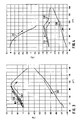
- Figures 3 and 5 show the dimensional changes in percent of such a Hostaphan R 4400 film in or across the machine direction depending on the temperature. Negative dimensional changes indicate shrinkage.
- the film runs through a temperature program that corresponds to the program for the production of laminated safety glass.
- the curves a, a 'in FIGS. 3 and 5 show the dimensional changes when the film is heated.
- This heating corresponds to the lamination process for producing the glass pre-composite in a roller system.
- the laminate In the rolling mill, the laminate is heated to about 90 ° C while exerting pressure. When it heats up, the plastic film expands, causing waves to form. After passing through the rolling mill, the film cools down. The dimensional changes of the free film take place on cooling in accordance with curves b, b '. Curves b, b 'lead back to the starting points of curves a, a' at 30 ° C. This is not the case with the foils embedded in the laminate.
- the glass pre-composite is placed in an autoclave, where the final laminate or the laminated safety glass pane is produced under pressure when heated up to 140 ° C.
- the curves c, c ' there is a maximum of expansion during heating at approximately 93 ° C., and the film then shrinks when it is heated further to 140 ° C.
- the changes in dimension as a percentage of the film when the laminate is cooled further to an initial temperature of 30 ° C. are shown in curves d and d '.
- a Hostaphan® was used 4400 - film with a thickness of 36 microns according to the invention integrated in the laminate 8.
- the film according to the invention was biaxially stretched again at 60 ° C., by about 5% in both directions.
- the film was then integrated into the laminate 8 to produce a laminated safety glass with the structure glass / polyvinyl butyral / Hostaphan® 4400 - film / polyvinyl butyral / glass.
- This film shows a very good flatness in combination and forms no or negligible, negligible waves.
- the reason for the different appearance of the laminated safety glass panes is the different thermomechanical behavior of the two foils.
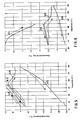
- Figures 4 and 6 show the dimensional changes in percent of a Hostaphan® 4400 film according to the invention in and across the machine direction depending on the temperature. Negative dimensional changes indicate shrinkage of the film.
- the temperature program corresponds to the program of the comparative example.
- the additionally stretched Hostaphan® 4400 film uses thermal shrinkage even at low temperatures of 30 to 40 ° C, which is greater than the thermal expansion caused by the heating. The thermal expansion is thus compensated for by the thermal shrinkage.
- the film has a thermal shrinkage in a temperature range from 30 ° C to 90 ° C, whereby the dimensional change is 0 to -1.3% due to the thermal shrinkage in the longitudinal direction.
- the film 1 in the laminate 8 shrinks to a value which is only slightly less than the initial dimension value at 30 ° C.
- the further cooling from 140 ° C. to 30 ° C. of the laminate 8 takes place in accordance with the curves h and h '.
- a Hostaphan R 4400 film according to the invention with a thickness of 36 ⁇ m was again biaxially stretched by 9% in both directions at 30 ° C.
- This film was integrated in a laminate 8 to produce a laminated safety glass pane, the laminate having the same structure as in Example 1.
- the dimensional changes of the plastic film 1 as a function of the temperature largely showed a course as shown in FIGS. 4 and 6 , so that a repeated description and representation of these curves is not necessary.
- This plastic film 1 shows no wave formation in the laminate 8.
- the plastic film 1 of Examples 1 and 2 was provided with a functional layer 2, as described above, and integrated into a glass composite. Plastic films coated in this way also showed no wave formation or tearing of the functional layer 2 as a result of the thermal shrinkage in the temperature range from 30 ° C. to 90 ° C. or from 30 to 140 ° C.
Landscapes
- Engineering & Computer Science (AREA)
- Mechanical Engineering (AREA)
- Joining Of Glass To Other Materials (AREA)
- Laminated Bodies (AREA)
- Shaping By String And By Release Of Stress In Plastics And The Like (AREA)
Applications Claiming Priority (2)
| Application Number | Priority Date | Filing Date | Title |
|---|---|---|---|
| DE4015571A DE4015571A1 (de) | 1990-05-15 | 1990-05-15 | Verfahren zur herstellung einer folie aus thermoplastischem kunststoff, folie, hergestellt nach dem verfahren, und verbundsicherheitsglas, hergestellt unter verwendung der folie |
| DE4015571 | 1990-05-15 |
Publications (3)
| Publication Number | Publication Date |
|---|---|
| EP0457209A2 true EP0457209A2 (fr) | 1991-11-21 |
| EP0457209A3 EP0457209A3 (en) | 1993-03-03 |
| EP0457209B1 EP0457209B1 (fr) | 1996-01-03 |
Family
ID=6406446
Family Applications (1)
| Application Number | Title | Priority Date | Filing Date |
|---|---|---|---|
| EP91107599A Expired - Lifetime EP0457209B1 (fr) | 1990-05-15 | 1991-05-10 | Procédé pour la fabrication d'une feuille en matériau thermoplastique, feuille produite par le procédé et vitre de sécurité composite produit en utilisant la feuille |
Country Status (4)
| Country | Link |
|---|---|
| US (1) | US5238743A (fr) |
| EP (1) | EP0457209B1 (fr) |
| JP (1) | JPH05162194A (fr) |
| DE (2) | DE4015571A1 (fr) |
Cited By (2)
| Publication number | Priority date | Publication date | Assignee | Title |
|---|---|---|---|---|
| DE19534420A1 (de) * | 1995-09-16 | 1997-03-20 | Flachglas Automotive Gmbh | Verfahren zur Herstellung einer von verwerfungsbedingten optischen Störungen freien Verbundsicherheitsglasscheibe |
| WO1998041396A1 (fr) * | 1997-03-19 | 1998-09-24 | Flachglas Automotive Gmbh | Procede pour la production de vitres feuilletees de securite incurvees |
Families Citing this family (7)
| Publication number | Priority date | Publication date | Assignee | Title |
|---|---|---|---|---|
| DE19540289A1 (de) * | 1995-10-28 | 1997-04-30 | Seele Gmbh | Winkelselektives Verschattungselement |
| JP3805722B2 (ja) * | 2002-06-10 | 2006-08-09 | 本田技研工業株式会社 | 車両のウインドシールド |
| CN100581813C (zh) * | 2003-06-12 | 2010-01-20 | 皮尔金顿意大利股份公司 | 生产曲面层压玻璃板的工艺 |
| US20100215952A1 (en) * | 2007-07-31 | 2010-08-26 | CentralGlass Company, Limited | Laminated Glass Having Plastic Film Inserted Therein |
| DE102010063969A1 (de) | 2010-12-22 | 2012-06-28 | Bayerische Motoren Werke Aktiengesellschaft | Anzeigeeinrichtung für ein Kraftfahrzeug |
| US9516149B2 (en) | 2011-09-29 | 2016-12-06 | Apple Inc. | Multi-layer transparent structures for electronic device housings |
| AU2016216389A1 (en) * | 2015-02-05 | 2017-08-17 | Sekisui Chemical Co., Ltd. | Laminated-glass interlayer and laminated glass |
Family Cites Families (10)
| Publication number | Priority date | Publication date | Assignee | Title |
|---|---|---|---|---|
| FR1295367A (fr) * | 1960-07-28 | 1962-06-08 | Du Pont | Pellicules d'esters linéaires polymères |
| US3794547A (en) * | 1965-01-28 | 1974-02-26 | Unitika Ltd | Polyamide films |
| US3502766A (en) * | 1965-01-28 | 1970-03-24 | Nippon Rayon Kk | Process for the improvement of polyamide films |
| DE1629562B2 (de) * | 1965-01-28 | 1972-07-06 | Unitika K.K., Amagasaki, Hyogo (Japan) | Verfahren zum biaxialen recken von folienbahnen aus polyamid |
| DE1901059B2 (de) * | 1969-01-10 | 1975-03-27 | Basf Ag, 6700 Ludwigshafen | Verfahren und Vorrichtung zur Herstellung biaxial orientierter Polyamidfolien |
| JPS5832489A (ja) * | 1981-08-20 | 1983-02-25 | 日東電工株式会社 | 印刷回路用ポリエステルフイルム |
| EP0077672B1 (fr) * | 1981-10-19 | 1986-06-25 | Teijin Limited | Film transmettant la lumière de manière sélective et structure stratifiée préformée |
| JPS61177228A (ja) * | 1985-02-04 | 1986-08-08 | Mitsubishi Monsanto Chem Co | 熱収縮性二軸延伸ポリアミドフイルムおよびその製造方法 |
| JPH07119055B2 (ja) * | 1988-04-19 | 1995-12-20 | ダイアホイルヘキスト株式会社 | 二軸延伸ポリエステルフィルム |
| DE3904191A1 (de) * | 1989-02-13 | 1990-08-16 | Hoechst Ag | Verfahren zur herstellung von verbundsicherheitsglas aus mehreren schichten, verbundsicherheitsglas, hergestellt nach dem verfahren, und vorrichtung zur durchfuehrung des verfahrens |
-
1990
- 1990-05-15 DE DE4015571A patent/DE4015571A1/de not_active Withdrawn
-
1991
- 1991-05-10 EP EP91107599A patent/EP0457209B1/fr not_active Expired - Lifetime
- 1991-05-10 DE DE59107184T patent/DE59107184D1/de not_active Expired - Fee Related
- 1991-05-13 US US07/699,335 patent/US5238743A/en not_active Expired - Fee Related
- 1991-05-15 JP JP3139758A patent/JPH05162194A/ja active Pending
Cited By (5)
| Publication number | Priority date | Publication date | Assignee | Title |
|---|---|---|---|---|
| DE19534420A1 (de) * | 1995-09-16 | 1997-03-20 | Flachglas Automotive Gmbh | Verfahren zur Herstellung einer von verwerfungsbedingten optischen Störungen freien Verbundsicherheitsglasscheibe |
| WO1997010099A1 (fr) * | 1995-09-16 | 1997-03-20 | Flachglas Automotive Gmbh | Procede de production d'une plaque de verre feuillete exempte d'obstruction optique due a un gauchissement, utilisation d'un film porteur particulier pour la production de cette plaque de verre feuillete et films porteurs convenant particulierement audit procede et a ladite utilisation |
| DE19534420C2 (de) * | 1995-09-16 | 1999-05-12 | Flachglas Automotive Gmbh | Verfahren zur Herstellung einer von verwerfungsbedingten optischen Störungen freien Verbundsicherheitsglasscheibe, Verwendung einer Trägerfolie und Trägerfolie |
| US6242088B1 (en) | 1995-09-16 | 2001-06-05 | Pilkington Automotive Deurschland Gmbh | Method for producing a laminated glass pane free of optical obstruction caused by warping, use of a particular carrier film for the production of the laminated glass pane and carrier films particularly suitable for the method or the use |
| WO1998041396A1 (fr) * | 1997-03-19 | 1998-09-24 | Flachglas Automotive Gmbh | Procede pour la production de vitres feuilletees de securite incurvees |
Also Published As
| Publication number | Publication date |
|---|---|
| EP0457209A3 (en) | 1993-03-03 |
| US5238743A (en) | 1993-08-24 |
| EP0457209B1 (fr) | 1996-01-03 |
| DE59107184D1 (de) | 1996-02-15 |
| JPH05162194A (ja) | 1993-06-29 |
| DE4015571A1 (de) | 1991-11-21 |
Similar Documents
| Publication | Publication Date | Title |
|---|---|---|
| EP0877664B2 (fr) | Procede de production d'une plaque de verre feuillete exempte d'obstruction optique due a un gauchissement, utilisation d'un film porteur particulier pour la production de cette plaque de verre feuillete et films porteurs convenant particulierement audit procede et a ladite utilisation | |
| EP0975463B1 (fr) | Procede pour la production de vitres feuilletees de securite incurvees | |
| DE69330005T2 (de) | Verfahren zur herstellung eines gekrummten, splittersicheren glaslaminats | |
| DE19902471C2 (de) | Verbundscheibe | |
| EP0392145B1 (fr) | Procédé et dispositif pour la fabrication de verre de sécurité, contenant plusieurs couches et verre de sécurité obtenu selon ce procédé | |
| DE60110548T2 (de) | Verbundglasscheiben | |
| DE69835860T2 (de) | Beheizbare Verbundglasscheibe, insbesondere für Flugzeugcockpit | |
| DE10155168B4 (de) | Verfahren zum Herstellen eines lichtdurchlässigen Scheibenaufbaus für Fahrzeuge und lichtdurchlässiger Scheibenaufbau | |
| DE112020002902T5 (de) | Laminierte Verglasung mit kleinen Radien in komplexer Form | |
| EP0457209B1 (fr) | Procédé pour la fabrication d'une feuille en matériau thermoplastique, feuille produite par le procédé et vitre de sécurité composite produit en utilisant la feuille | |
| EP2261030B1 (fr) | Procédé de fabrication d'un vitrage feuilleté | |
| DE19526912A1 (de) | Verfahren zur Verbesserung der Einbruchsicherheit von Glasfenstern und -türen mit Hilfe einer transparenten Schichtfolie | |
| EP1798027B1 (fr) | Feuille de polyvinylacétale ayant une largeur uniforme | |
| DE60131999T2 (de) | Verfahren zum herstellen von mehrschichtigen polymerfilmen | |
| WO2021197949A1 (fr) | Procédé de production d'une vitre composite présentant propriété optique pouvant être commandée électriquement | |
| DE1704624C3 (de) | Verfahren zur Herstellung eines durchsichtigen Verbundkörpers aus zwei Teilverbundkörpern | |
| DE1704619A1 (de) | Verbundsicherheitsglas | |
| DE4020696A1 (de) | Mehrschichtsystem mit hohem reflexionsvermoegen im infrarot-spektralbereich und mit hohem transmissionsvermoegen im sichtbaren bereich | |
| DE68921999T2 (de) | Im wesentlichen faltenfreie, nicht flache Folie mit hohem Elastizitätsmodul und Verfahren zu ihrer Herstellung. | |
| EP3720702A1 (fr) | Procédé pour la fabrication d'un disque composite | |
| DE202021101982U1 (de) | Verbundscheibe | |
| DE202016008420U1 (de) | Verbundscheibe | |
| EP2647497A1 (fr) | Procédé de fabrication d'une plaque composite concave avec feuille de polymère préformée | |
| EP4448272A1 (fr) | Pare-brise à protection contre les chocs améliorée | |
| WO2021204566A1 (fr) | Procédé de fabrication d'une vitre composite et vitre composite |
Legal Events
| Date | Code | Title | Description |
|---|---|---|---|
| PUAI | Public reference made under article 153(3) epc to a published international application that has entered the european phase |
Free format text: ORIGINAL CODE: 0009012 |
|
| AK | Designated contracting states |
Kind code of ref document: A2 Designated state(s): AT BE DE DK ES FR GB IT NL SE |
|
| PUAL | Search report despatched |
Free format text: ORIGINAL CODE: 0009013 |
|
| AK | Designated contracting states |
Kind code of ref document: A3 Designated state(s): AT BE DE DK ES FR GB IT NL SE |
|
| 17P | Request for examination filed |
Effective date: 19930714 |
|
| 17Q | First examination report despatched |
Effective date: 19950223 |
|
| RBV | Designated contracting states (corrected) |
Designated state(s): DE FR GB IT |
|
| GRAA | (expected) grant |
Free format text: ORIGINAL CODE: 0009210 |
|
| AK | Designated contracting states |
Kind code of ref document: B1 Designated state(s): DE FR GB IT |
|
| ITF | It: translation for a ep patent filed | ||
| REF | Corresponds to: |
Ref document number: 59107184 Country of ref document: DE Date of ref document: 19960215 |
|
| ET | Fr: translation filed | ||
| GBT | Gb: translation of ep patent filed (gb section 77(6)(a)/1977) |
Effective date: 19960327 |
|
| PLBE | No opposition filed within time limit |
Free format text: ORIGINAL CODE: 0009261 |
|
| STAA | Information on the status of an ep patent application or granted ep patent |
Free format text: STATUS: NO OPPOSITION FILED WITHIN TIME LIMIT |
|
| 26N | No opposition filed | ||
| PGFP | Annual fee paid to national office [announced via postgrant information from national office to epo] |
Ref country code: GB Payment date: 19990317 Year of fee payment: 9 |
|
| PGFP | Annual fee paid to national office [announced via postgrant information from national office to epo] |
Ref country code: FR Payment date: 19990415 Year of fee payment: 9 |
|
| PGFP | Annual fee paid to national office [announced via postgrant information from national office to epo] |
Ref country code: DE Payment date: 19990430 Year of fee payment: 9 |
|
| PG25 | Lapsed in a contracting state [announced via postgrant information from national office to epo] |
Ref country code: GB Free format text: LAPSE BECAUSE OF NON-PAYMENT OF DUE FEES Effective date: 20000510 |
|
| GBPC | Gb: european patent ceased through non-payment of renewal fee |
Effective date: 20000510 |
|
| PG25 | Lapsed in a contracting state [announced via postgrant information from national office to epo] |
Ref country code: FR Free format text: LAPSE BECAUSE OF NON-PAYMENT OF DUE FEES Effective date: 20010131 |
|
| PG25 | Lapsed in a contracting state [announced via postgrant information from national office to epo] |
Ref country code: DE Free format text: LAPSE BECAUSE OF NON-PAYMENT OF DUE FEES Effective date: 20010301 |
|
| REG | Reference to a national code |
Ref country code: FR Ref legal event code: ST |
|
| PG25 | Lapsed in a contracting state [announced via postgrant information from national office to epo] |
Ref country code: IT Free format text: LAPSE BECAUSE OF NON-PAYMENT OF DUE FEES;WARNING: LAPSES OF ITALIAN PATENTS WITH EFFECTIVE DATE BEFORE 2007 MAY HAVE OCCURRED AT ANY TIME BEFORE 2007. THE CORRECT EFFECTIVE DATE MAY BE DIFFERENT FROM THE ONE RECORDED. Effective date: 20050510 |