EP0457295B1 - Verwendung eines Modulators der Proteinphosphorylierung zur Behandlung der Amyloidosis in Zusammenhang mit der Alzheimerschen Krankheit - Google Patents
Verwendung eines Modulators der Proteinphosphorylierung zur Behandlung der Amyloidosis in Zusammenhang mit der Alzheimerschen Krankheit Download PDFInfo
- Publication number
- EP0457295B1 EP0457295B1 EP91107844A EP91107844A EP0457295B1 EP 0457295 B1 EP0457295 B1 EP 0457295B1 EP 91107844 A EP91107844 A EP 91107844A EP 91107844 A EP91107844 A EP 91107844A EP 0457295 B1 EP0457295 B1 EP 0457295B1
- Authority
- EP
- European Patent Office
- Prior art keywords
- βapp
- proteins
- modulator
- protein
- amyloid
- Prior art date
- Legal status (The legal status is an assumption and is not a legal conclusion. Google has not performed a legal analysis and makes no representation as to the accuracy of the status listed.)
- Revoked
Links
- 208000024827 Alzheimer disease Diseases 0.000 title claims abstract description 22
- 206010002022 amyloidosis Diseases 0.000 title claims abstract description 6
- 230000009822 protein phosphorylation Effects 0.000 title description 9
- 108090000623 proteins and genes Proteins 0.000 claims abstract description 44
- 102000004169 proteins and genes Human genes 0.000 claims abstract description 43
- 238000012545 processing Methods 0.000 claims abstract description 33
- 238000006366 phosphorylation reaction Methods 0.000 claims abstract description 25
- 230000026731 phosphorylation Effects 0.000 claims abstract description 24
- 239000008194 pharmaceutical composition Substances 0.000 claims abstract description 15
- 108091000080 Phosphotransferase Proteins 0.000 claims abstract description 13
- 102000020233 phosphotransferase Human genes 0.000 claims abstract description 13
- 102000004160 Phosphoric Monoester Hydrolases Human genes 0.000 claims abstract description 11
- 108090000608 Phosphoric Monoester Hydrolases Proteins 0.000 claims abstract description 11
- 210000002682 neurofibrillary tangle Anatomy 0.000 claims abstract description 10
- 230000003247 decreasing effect Effects 0.000 claims abstract description 7
- 230000003834 intracellular effect Effects 0.000 claims abstract description 7
- 230000002797 proteolythic effect Effects 0.000 claims abstract description 7
- 208000037259 Amyloid Plaque Diseases 0.000 claims abstract description 6
- 210000004027 cell Anatomy 0.000 claims description 45
- BQJRUJTZSGYBEZ-YVQNUNKESA-N phorbol 12,13-dibutanoate Chemical compound C([C@]1(O)C(=O)C(C)=C[C@H]1[C@@]1(O)[C@H](C)[C@H]2OC(=O)CCC)C(CO)=C[C@H]1[C@H]1[C@]2(OC(=O)CCC)C1(C)C BQJRUJTZSGYBEZ-YVQNUNKESA-N 0.000 claims description 31
- QNDVLZJODHBUFM-WFXQOWMNSA-N okadaic acid Chemical group C([C@H](O1)[C@H](C)/C=C/[C@H]2CC[C@@]3(CC[C@H]4O[C@@H](C([C@@H](O)[C@@H]4O3)=C)[C@@H](O)C[C@H](C)[C@@H]3[C@@H](CC[C@@]4(OCCCC4)O3)C)O2)C(C)=C[C@]21O[C@H](C[C@@](C)(O)C(O)=O)CC[C@H]2O QNDVLZJODHBUFM-WFXQOWMNSA-N 0.000 claims description 28
- VEFJHAYOIAAXEU-UHFFFAOYSA-N okadaic acid Natural products CC(CC(O)C1OC2CCC3(CCC(O3)C=CC(C)C4CC(=CC5(OC(CC(C)(O)C(=O)O)CCC5O)O4)C)OC2C(O)C1C)C6OC7(CCCCO7)CCC6C VEFJHAYOIAAXEU-UHFFFAOYSA-N 0.000 claims description 27
- 239000003795 chemical substances by application Substances 0.000 claims description 20
- 239000012634 fragment Substances 0.000 claims description 20
- 238000000034 method Methods 0.000 claims description 16
- 230000015556 catabolic process Effects 0.000 claims description 13
- 239000003112 inhibitor Substances 0.000 claims description 12
- 210000004962 mammalian cell Anatomy 0.000 claims description 12
- 239000000203 mixture Substances 0.000 claims description 9
- PHEDXBVPIONUQT-RGYGYFBISA-N phorbol 13-acetate 12-myristate Chemical compound C([C@]1(O)C(=O)C(C)=C[C@H]1[C@@]1(O)[C@H](C)[C@H]2OC(=O)CCCCCCCCCCCCC)C(CO)=C[C@H]1[C@H]1[C@]2(OC(C)=O)C1(C)C PHEDXBVPIONUQT-RGYGYFBISA-N 0.000 claims description 9
- 210000004556 brain Anatomy 0.000 claims description 8
- 102000013455 Amyloid beta-Peptides Human genes 0.000 claims description 7
- 108010090849 Amyloid beta-Peptides Proteins 0.000 claims description 7
- 241001465754 Metazoa Species 0.000 claims description 7
- 230000003941 amyloidogenesis Effects 0.000 claims description 7
- 238000000338 in vitro Methods 0.000 claims description 7
- 239000002644 phorbol ester Substances 0.000 claims description 7
- PHEDXBVPIONUQT-UHFFFAOYSA-N Cocarcinogen A1 Natural products CCCCCCCCCCCCCC(=O)OC1C(C)C2(O)C3C=C(C)C(=O)C3(O)CC(CO)=CC2C2C1(OC(C)=O)C2(C)C PHEDXBVPIONUQT-UHFFFAOYSA-N 0.000 claims description 6
- 238000006731 degradation reaction Methods 0.000 claims description 6
- 101710137189 Amyloid-beta A4 protein Proteins 0.000 claims description 5
- 101710151993 Amyloid-beta precursor protein Proteins 0.000 claims description 5
- 102100022704 Amyloid-beta precursor protein Human genes 0.000 claims description 5
- DZHSAHHDTRWUTF-SIQRNXPUSA-N amyloid-beta polypeptide 42 Chemical compound C([C@@H](C(=O)N[C@@H](C)C(=O)N[C@@H](CCC(O)=O)C(=O)N[C@@H](CC(O)=O)C(=O)N[C@H](C(=O)NCC(=O)N[C@@H](CO)C(=O)N[C@@H](CC(N)=O)C(=O)N[C@@H](CCCCN)C(=O)NCC(=O)N[C@@H](C)C(=O)N[C@H](C(=O)N[C@@H]([C@@H](C)CC)C(=O)NCC(=O)N[C@@H](CC(C)C)C(=O)N[C@@H](CCSC)C(=O)N[C@@H](C(C)C)C(=O)NCC(=O)NCC(=O)N[C@@H](C(C)C)C(=O)N[C@@H](C(C)C)C(=O)N[C@@H]([C@@H](C)CC)C(=O)N[C@@H](C)C(O)=O)[C@@H](C)CC)C(C)C)NC(=O)[C@H](CC=1C=CC=CC=1)NC(=O)[C@@H](NC(=O)[C@H](CC(C)C)NC(=O)[C@H](CCCCN)NC(=O)[C@H](CCC(N)=O)NC(=O)[C@H](CC=1N=CNC=1)NC(=O)[C@H](CC=1N=CNC=1)NC(=O)[C@@H](NC(=O)[C@H](CCC(O)=O)NC(=O)[C@H](CC=1C=CC(O)=CC=1)NC(=O)CNC(=O)[C@H](CO)NC(=O)[C@H](CC(O)=O)NC(=O)[C@H](CC=1N=CNC=1)NC(=O)[C@H](CCCNC(N)=N)NC(=O)[C@H](CC=1C=CC=CC=1)NC(=O)[C@H](CCC(O)=O)NC(=O)[C@H](C)NC(=O)[C@@H](N)CC(O)=O)C(C)C)C(C)C)C1=CC=CC=C1 DZHSAHHDTRWUTF-SIQRNXPUSA-N 0.000 claims description 5
- 230000015572 biosynthetic process Effects 0.000 claims description 5
- OHCQJHSOBUTRHG-KGGHGJDLSA-N FORSKOLIN Chemical compound O=C([C@@]12O)C[C@](C)(C=C)O[C@]1(C)[C@@H](OC(=O)C)[C@@H](O)[C@@H]1[C@]2(C)[C@@H](O)CCC1(C)C OHCQJHSOBUTRHG-KGGHGJDLSA-N 0.000 claims description 4
- 102000045595 Phosphoprotein Phosphatases Human genes 0.000 claims description 4
- 108700019535 Phosphoprotein Phosphatases Proteins 0.000 claims description 4
- 230000007423 decrease Effects 0.000 claims description 4
- 230000002621 immunoprecipitating effect Effects 0.000 claims description 4
- 238000004519 manufacturing process Methods 0.000 claims description 4
- 238000012216 screening Methods 0.000 claims description 4
- 230000004075 alteration Effects 0.000 claims description 3
- VLJISOQUPIAQHH-UUOWRZLLSA-N (-)-7-octylindolactam v Chemical group CN1[C@@H](C(C)C)C(=O)N[C@H](CO)CC2=C(CCCCCCCC)NC3=CC=CC1=C32 VLJISOQUPIAQHH-UUOWRZLLSA-N 0.000 claims description 2
- WWUZIQQURGPMPG-UHFFFAOYSA-N (-)-D-erythro-Sphingosine Natural products CCCCCCCCCCCCCC=CC(O)C(N)CO WWUZIQQURGPMPG-UHFFFAOYSA-N 0.000 claims description 2
- SUZLHDUTVMZSEV-UHFFFAOYSA-N Deoxycoleonol Natural products C12C(=O)CC(C)(C=C)OC2(C)C(OC(=O)C)C(O)C2C1(C)C(O)CCC2(C)C SUZLHDUTVMZSEV-UHFFFAOYSA-N 0.000 claims description 2
- 229930194617 Indolactam Natural products 0.000 claims description 2
- 102000008763 Neurofilament Proteins Human genes 0.000 claims description 2
- 108010088373 Neurofilament Proteins Proteins 0.000 claims description 2
- 206010035148 Plague Diseases 0.000 claims description 2
- 241000607479 Yersinia pestis Species 0.000 claims description 2
- FKAWLXNLHHIHLA-YCBIHMBMSA-N [(2r,3r,5r,7r,8s,9s)-2-[(1s,3s,4s,5r,6r,7e,9e,11e,13z)-14-cyano-3,5-dihydroxy-1-methoxy-4,6,8,9,13-pentamethyltetradeca-7,9,11,13-tetraenyl]-9-[(e)-3-[2-[(2s)-4-[[(2s,3s,4s)-4-(dimethylamino)-2,3-dihydroxy-5-methoxypentanoyl]amino]butan-2-yl]-1,3-oxazol-4 Chemical compound O1C([C@@H](C)CCNC(=O)[C@@H](O)[C@@H](O)[C@H](COC)N(C)C)=NC(\C=C\C[C@H]2[C@H]([C@H](O)C[C@]3(O2)C([C@@H](OP(O)(O)=O)[C@@H]([C@H](C[C@H](O)[C@H](C)[C@H](O)[C@H](C)\C=C(/C)\C(\C)=C\C=C\C(\C)=C/C#N)OC)O3)(C)C)C)=C1 FKAWLXNLHHIHLA-YCBIHMBMSA-N 0.000 claims description 2
- AUJRCFUBUPVWSZ-XTZHGVARSA-M auranofin Chemical compound CCP(CC)(CC)=[Au]S[C@@H]1O[C@H](COC(C)=O)[C@@H](OC(C)=O)[C@H](OC(C)=O)[C@H]1OC(C)=O AUJRCFUBUPVWSZ-XTZHGVARSA-M 0.000 claims description 2
- 229960005207 auranofin Drugs 0.000 claims description 2
- 230000019522 cellular metabolic process Effects 0.000 claims description 2
- OHCQJHSOBUTRHG-UHFFFAOYSA-N colforsin Natural products OC12C(=O)CC(C)(C=C)OC1(C)C(OC(=O)C)C(O)C1C2(C)C(O)CCC1(C)C OHCQJHSOBUTRHG-UHFFFAOYSA-N 0.000 claims description 2
- 150000001982 diacylglycerols Chemical class 0.000 claims description 2
- HKSZLNNOFSGOKW-UHFFFAOYSA-N ent-staurosporine Natural products C12=C3N4C5=CC=CC=C5C3=C3CNC(=O)C3=C2C2=CC=CC=C2N1C1CC(NC)C(OC)C4(C)O1 HKSZLNNOFSGOKW-UHFFFAOYSA-N 0.000 claims description 2
- 229940043355 kinase inhibitor Drugs 0.000 claims description 2
- 238000002372 labelling Methods 0.000 claims description 2
- 230000002934 lysing effect Effects 0.000 claims description 2
- 230000004770 neurodegeneration Effects 0.000 claims description 2
- 239000003757 phosphotransferase inhibitor Substances 0.000 claims description 2
- NHXLMOGPVYXJNR-ATOGVRKGSA-N somatostatin Chemical class C([C@H]1C(=O)N[C@H](C(N[C@@H](CO)C(=O)N[C@@H](CSSC[C@@H](C(=O)N[C@@H](CCCCN)C(=O)N[C@@H](CC(N)=O)C(=O)N[C@@H](CC=2C=CC=CC=2)C(=O)N[C@@H](CC=2C=CC=CC=2)C(=O)N[C@@H](CC=2C3=CC=CC=C3NC=2)C(=O)N[C@@H](CCCCN)C(=O)N[C@H](C(=O)N1)[C@@H](C)O)NC(=O)CNC(=O)[C@H](C)N)C(O)=O)=O)[C@H](O)C)C1=CC=CC=C1 NHXLMOGPVYXJNR-ATOGVRKGSA-N 0.000 claims description 2
- WWUZIQQURGPMPG-KRWOKUGFSA-N sphingosine Chemical compound CCCCCCCCCCCCC\C=C\[C@@H](O)[C@@H](N)CO WWUZIQQURGPMPG-KRWOKUGFSA-N 0.000 claims description 2
- HKSZLNNOFSGOKW-FYTWVXJKSA-N staurosporine Chemical compound C12=C3N4C5=CC=CC=C5C3=C3CNC(=O)C3=C2C2=CC=CC=C2N1[C@H]1C[C@@H](NC)[C@@H](OC)[C@]4(C)O1 HKSZLNNOFSGOKW-FYTWVXJKSA-N 0.000 claims description 2
- CGPUWJWCVCFERF-UHFFFAOYSA-N staurosporine Natural products C12=C3N4C5=CC=CC=C5C3=C3CNC(=O)C3=C2C2=CC=CC=C2N1C1CC(NC)C(OC)C4(OC)O1 CGPUWJWCVCFERF-UHFFFAOYSA-N 0.000 claims description 2
- 210000001519 tissue Anatomy 0.000 claims description 2
- 230000009261 transgenic effect Effects 0.000 claims description 2
- 229940121358 tyrosine kinase inhibitor Drugs 0.000 claims description 2
- LSGOVYNHVSXFFJ-UHFFFAOYSA-N vanadate(3-) Chemical compound [O-][V]([O-])([O-])=O LSGOVYNHVSXFFJ-UHFFFAOYSA-N 0.000 claims description 2
- 102000013498 tau Proteins Human genes 0.000 claims 1
- 108010026424 tau Proteins Proteins 0.000 claims 1
- 230000001105 regulatory effect Effects 0.000 abstract description 6
- 238000002360 preparation method Methods 0.000 abstract description 3
- 230000000694 effects Effects 0.000 description 26
- 108090000765 processed proteins & peptides Proteins 0.000 description 23
- 108090000315 Protein Kinase C Proteins 0.000 description 21
- 102000003923 Protein Kinase C Human genes 0.000 description 21
- 150000001875 compounds Chemical class 0.000 description 14
- 102000004196 processed proteins & peptides Human genes 0.000 description 14
- 230000033228 biological regulation Effects 0.000 description 12
- 239000003085 diluting agent Substances 0.000 description 12
- -1 e.g. Substances 0.000 description 11
- 239000003814 drug Substances 0.000 description 9
- FFEARJCKVFRZRR-BYPYZUCNSA-N L-methionine Chemical compound CSCC[C@H](N)C(O)=O FFEARJCKVFRZRR-BYPYZUCNSA-N 0.000 description 8
- 238000002474 experimental method Methods 0.000 description 8
- 238000001114 immunoprecipitation Methods 0.000 description 8
- 230000006870 function Effects 0.000 description 7
- PEDCQBHIVMGVHV-UHFFFAOYSA-N Glycerine Chemical compound OCC(O)CO PEDCQBHIVMGVHV-UHFFFAOYSA-N 0.000 description 6
- DNIAPMSPPWPWGF-UHFFFAOYSA-N Propylene glycol Chemical compound CC(O)CO DNIAPMSPPWPWGF-UHFFFAOYSA-N 0.000 description 6
- 239000004480 active ingredient Substances 0.000 description 6
- 238000007792 addition Methods 0.000 description 5
- 239000003826 tablet Substances 0.000 description 5
- 102000009091 Amyloidogenic Proteins Human genes 0.000 description 4
- 108010048112 Amyloidogenic Proteins Proteins 0.000 description 4
- LFQSCWFLJHTTHZ-UHFFFAOYSA-N Ethanol Chemical compound CCO LFQSCWFLJHTTHZ-UHFFFAOYSA-N 0.000 description 4
- 108010029485 Protein Isoforms Proteins 0.000 description 4
- 102000001708 Protein Isoforms Human genes 0.000 description 4
- 102000001253 Protein Kinase Human genes 0.000 description 4
- PXIPVTKHYLBLMZ-UHFFFAOYSA-N Sodium azide Chemical compound [Na+].[N-]=[N+]=[N-] PXIPVTKHYLBLMZ-UHFFFAOYSA-N 0.000 description 4
- FAPWRFPIFSIZLT-UHFFFAOYSA-M Sodium chloride Chemical compound [Na+].[Cl-] FAPWRFPIFSIZLT-UHFFFAOYSA-M 0.000 description 4
- 239000002775 capsule Substances 0.000 description 4
- 239000002299 complementary DNA Substances 0.000 description 4
- 230000001086 cytosolic effect Effects 0.000 description 4
- 239000000499 gel Substances 0.000 description 4
- 239000012133 immunoprecipitate Substances 0.000 description 4
- 230000004060 metabolic process Effects 0.000 description 4
- 150000004633 phorbol derivatives Chemical class 0.000 description 4
- 108060006633 protein kinase Proteins 0.000 description 4
- 238000011084 recovery Methods 0.000 description 4
- QKNYBSVHEMOAJP-UHFFFAOYSA-N 2-amino-2-(hydroxymethyl)propane-1,3-diol;hydron;chloride Chemical compound Cl.OCC(N)(CO)CO QKNYBSVHEMOAJP-UHFFFAOYSA-N 0.000 description 3
- 102000001301 EGF receptor Human genes 0.000 description 3
- 108060006698 EGF receptor Proteins 0.000 description 3
- XEKOWRVHYACXOJ-UHFFFAOYSA-N Ethyl acetate Chemical compound CCOC(C)=O XEKOWRVHYACXOJ-UHFFFAOYSA-N 0.000 description 3
- 108010051815 Glutamyl endopeptidase Proteins 0.000 description 3
- 102000010789 Interleukin-2 Receptors Human genes 0.000 description 3
- 108010038453 Interleukin-2 Receptors Proteins 0.000 description 3
- KFZMGEQAYNKOFK-UHFFFAOYSA-N Isopropanol Chemical compound CC(C)O KFZMGEQAYNKOFK-UHFFFAOYSA-N 0.000 description 3
- ZMXDDKWLCZADIW-UHFFFAOYSA-N N,N-Dimethylformamide Chemical compound CN(C)C=O ZMXDDKWLCZADIW-UHFFFAOYSA-N 0.000 description 3
- 241000283973 Oryctolagus cuniculus Species 0.000 description 3
- 230000002490 cerebral effect Effects 0.000 description 3
- 230000008021 deposition Effects 0.000 description 3
- 239000008298 dragée Substances 0.000 description 3
- 239000000839 emulsion Substances 0.000 description 3
- 235000019441 ethanol Nutrition 0.000 description 3
- 239000008187 granular material Substances 0.000 description 3
- 230000002401 inhibitory effect Effects 0.000 description 3
- 239000006166 lysate Substances 0.000 description 3
- 230000002132 lysosomal effect Effects 0.000 description 3
- 239000002609 medium Substances 0.000 description 3
- 239000003921 oil Substances 0.000 description 3
- 235000019198 oils Nutrition 0.000 description 3
- 239000006187 pill Substances 0.000 description 3
- 239000000047 product Substances 0.000 description 3
- 239000000243 solution Substances 0.000 description 3
- 239000002904 solvent Substances 0.000 description 3
- 239000000758 substrate Substances 0.000 description 3
- 239000000829 suppository Substances 0.000 description 3
- 239000004094 surface-active agent Substances 0.000 description 3
- 239000000725 suspension Substances 0.000 description 3
- XLYOFNOQVPJJNP-UHFFFAOYSA-N water Substances O XLYOFNOQVPJJNP-UHFFFAOYSA-N 0.000 description 3
- PUPZLCDOIYMWBV-UHFFFAOYSA-N (+/-)-1,3-Butanediol Chemical compound CC(O)CCO PUPZLCDOIYMWBV-UHFFFAOYSA-N 0.000 description 2
- WHTVZRBIWZFKQO-AWEZNQCLSA-N (S)-chloroquine Chemical compound ClC1=CC=C2C(N[C@@H](C)CCCN(CC)CC)=CC=NC2=C1 WHTVZRBIWZFKQO-AWEZNQCLSA-N 0.000 description 2
- VBICKXHEKHSIBG-UHFFFAOYSA-N 1-monostearoylglycerol Chemical compound CCCCCCCCCCCCCCCCCC(=O)OCC(O)CO VBICKXHEKHSIBG-UHFFFAOYSA-N 0.000 description 2
- JKMHFZQWWAIEOD-UHFFFAOYSA-N 2-[4-(2-hydroxyethyl)piperazin-1-yl]ethanesulfonic acid Chemical compound OCC[NH+]1CCN(CCS([O-])(=O)=O)CC1 JKMHFZQWWAIEOD-UHFFFAOYSA-N 0.000 description 2
- 229920001817 Agar Polymers 0.000 description 2
- OYPRJOBELJOOCE-UHFFFAOYSA-N Calcium Chemical compound [Ca] OYPRJOBELJOOCE-UHFFFAOYSA-N 0.000 description 2
- VTYYLEPIZMXCLO-UHFFFAOYSA-L Calcium carbonate Chemical compound [Ca+2].[O-]C([O-])=O VTYYLEPIZMXCLO-UHFFFAOYSA-L 0.000 description 2
- 102000004657 Calcium-Calmodulin-Dependent Protein Kinase Type 2 Human genes 0.000 description 2
- 108010003721 Calcium-Calmodulin-Dependent Protein Kinase Type 2 Proteins 0.000 description 2
- FBPFZTCFMRRESA-JGWLITMVSA-N D-glucitol Chemical compound OC[C@H](O)[C@@H](O)[C@H](O)[C@H](O)CO FBPFZTCFMRRESA-JGWLITMVSA-N 0.000 description 2
- 241000206672 Gelidium Species 0.000 description 2
- VEXZGXHMUGYJMC-UHFFFAOYSA-N Hydrochloric acid Chemical compound Cl VEXZGXHMUGYJMC-UHFFFAOYSA-N 0.000 description 2
- 108010089430 Phosphoproteins Proteins 0.000 description 2
- 102000007982 Phosphoproteins Human genes 0.000 description 2
- UIIMBOGNXHQVGW-UHFFFAOYSA-M Sodium bicarbonate Chemical compound [Na+].OC([O-])=O UIIMBOGNXHQVGW-UHFFFAOYSA-M 0.000 description 2
- CHLOVPDKABYEDC-UHFFFAOYSA-N [6-(decylamino)-1h-indol-4-yl]methanol Chemical compound CCCCCCCCCCNC1=CC(CO)=C2C=CNC2=C1 CHLOVPDKABYEDC-UHFFFAOYSA-N 0.000 description 2
- 230000002159 abnormal effect Effects 0.000 description 2
- 230000004913 activation Effects 0.000 description 2
- 239000012190 activator Substances 0.000 description 2
- 235000010419 agar Nutrition 0.000 description 2
- 150000001413 amino acids Chemical class 0.000 description 2
- 238000004458 analytical method Methods 0.000 description 2
- 238000013459 approach Methods 0.000 description 2
- 238000000211 autoradiogram Methods 0.000 description 2
- 239000000440 bentonite Substances 0.000 description 2
- 235000012216 bentonite Nutrition 0.000 description 2
- 229910000278 bentonite Inorganic materials 0.000 description 2
- SVPXDRXYRYOSEX-UHFFFAOYSA-N bentoquatam Chemical compound O.O=[Si]=O.O=[Al]O[Al]=O SVPXDRXYRYOSEX-UHFFFAOYSA-N 0.000 description 2
- SESFRYSPDFLNCH-UHFFFAOYSA-N benzyl benzoate Chemical compound C=1C=CC=CC=1C(=O)OCC1=CC=CC=C1 SESFRYSPDFLNCH-UHFFFAOYSA-N 0.000 description 2
- 210000004204 blood vessel Anatomy 0.000 description 2
- 230000037396 body weight Effects 0.000 description 2
- 229910052791 calcium Inorganic materials 0.000 description 2
- 210000003710 cerebral cortex Anatomy 0.000 description 2
- 238000006243 chemical reaction Methods 0.000 description 2
- 229960003677 chloroquine Drugs 0.000 description 2
- WHTVZRBIWZFKQO-UHFFFAOYSA-N chloroquine Natural products ClC1=CC=C2C(NC(C)CCCN(CC)CC)=CC=NC2=C1 WHTVZRBIWZFKQO-UHFFFAOYSA-N 0.000 description 2
- 238000003776 cleavage reaction Methods 0.000 description 2
- 238000000576 coating method Methods 0.000 description 2
- 230000001427 coherent effect Effects 0.000 description 2
- 239000002552 dosage form Substances 0.000 description 2
- 150000002148 esters Chemical class 0.000 description 2
- 230000007717 exclusion Effects 0.000 description 2
- BXWNKGSJHAJOGX-UHFFFAOYSA-N hexadecan-1-ol Chemical compound CCCCCCCCCCCCCCCCO BXWNKGSJHAJOGX-UHFFFAOYSA-N 0.000 description 2
- 238000011534 incubation Methods 0.000 description 2
- 239000007788 liquid Substances 0.000 description 2
- 239000012139 lysis buffer Substances 0.000 description 2
- HQKMJHAJHXVSDF-UHFFFAOYSA-L magnesium stearate Chemical compound [Mg+2].CCCCCCCCCCCCCCCCCC([O-])=O.CCCCCCCCCCCCCCCCCC([O-])=O HQKMJHAJHXVSDF-UHFFFAOYSA-L 0.000 description 2
- 230000035800 maturation Effects 0.000 description 2
- 210000002569 neuron Anatomy 0.000 description 2
- 230000037361 pathway Effects 0.000 description 2
- 125000002467 phosphate group Chemical group [H]OP(=O)(O[H])O[*] 0.000 description 2
- 229920001223 polyethylene glycol Polymers 0.000 description 2
- 230000003389 potentiating effect Effects 0.000 description 2
- 230000001681 protective effect Effects 0.000 description 2
- 230000017854 proteolysis Effects 0.000 description 2
- 230000007017 scission Effects 0.000 description 2
- 230000028327 secretion Effects 0.000 description 2
- 239000011780 sodium chloride Substances 0.000 description 2
- 230000004936 stimulating effect Effects 0.000 description 2
- 230000000638 stimulation Effects 0.000 description 2
- 239000000126 substance Substances 0.000 description 2
- 239000006228 supernatant Substances 0.000 description 2
- 230000032258 transport Effects 0.000 description 2
- DGVVWUTYPXICAM-UHFFFAOYSA-N β‐Mercaptoethanol Chemical compound OCCS DGVVWUTYPXICAM-UHFFFAOYSA-N 0.000 description 2
- 229940058015 1,3-butylene glycol Drugs 0.000 description 1
- OARGPFMFRLLKPF-UHFFFAOYSA-N 1-(5-isoquinolinesulfonyl)-2-methylpiperazine dihydrochloride Chemical compound Cl.Cl.CC1CNCCN1S(=O)(=O)C1=CC=CC2=CN=CC=C12 OARGPFMFRLLKPF-UHFFFAOYSA-N 0.000 description 1
- 101800003405 15 kDa peptide Proteins 0.000 description 1
- GUGJQAFPKZZOIV-UHFFFAOYSA-N 2-[2-(isoquinolin-5-ylsulfonylamino)ethyl]guanidine;hydrochloride Chemical compound Cl.N1=CC=C2C(S(=O)(=O)NCCN=C(N)N)=CC=CC2=C1 GUGJQAFPKZZOIV-UHFFFAOYSA-N 0.000 description 1
- WYFVKUWCEVMLOL-UHFFFAOYSA-N 4-(naphthalen-2-ylsulfonylamino)butylazanium;chloride Chemical compound [Cl-].C1=CC=CC2=CC(S(=O)(=O)NCCCC[NH3+])=CC=C21 WYFVKUWCEVMLOL-UHFFFAOYSA-N 0.000 description 1
- 239000005995 Aluminium silicate Substances 0.000 description 1
- 108010039627 Aprotinin Proteins 0.000 description 1
- 235000003911 Arachis Nutrition 0.000 description 1
- 244000105624 Arachis hypogaea Species 0.000 description 1
- 108010011485 Aspartame Proteins 0.000 description 1
- 241000416162 Astragalus gummifer Species 0.000 description 1
- 108091003079 Bovine Serum Albumin Proteins 0.000 description 1
- 208000014644 Brain disease Diseases 0.000 description 1
- 101710116137 Calcium/calmodulin-dependent protein kinase II Proteins 0.000 description 1
- 229920002134 Carboxymethyl cellulose Polymers 0.000 description 1
- 208000028698 Cognitive impairment Diseases 0.000 description 1
- 102000010831 Cytoskeletal Proteins Human genes 0.000 description 1
- 108010037414 Cytoskeletal Proteins Proteins 0.000 description 1
- FBPFZTCFMRRESA-FSIIMWSLSA-N D-Glucitol Natural products OC[C@H](O)[C@H](O)[C@@H](O)[C@H](O)CO FBPFZTCFMRRESA-FSIIMWSLSA-N 0.000 description 1
- FBPFZTCFMRRESA-KVTDHHQDSA-N D-Mannitol Chemical compound OC[C@@H](O)[C@@H](O)[C@H](O)[C@H](O)CO FBPFZTCFMRRESA-KVTDHHQDSA-N 0.000 description 1
- 206010012289 Dementia Diseases 0.000 description 1
- 201000010374 Down Syndrome Diseases 0.000 description 1
- 239000006144 Dulbecco’s modified Eagle's medium Substances 0.000 description 1
- 241000588724 Escherichia coli Species 0.000 description 1
- 239000004606 Fillers/Extenders Substances 0.000 description 1
- 239000001828 Gelatine Substances 0.000 description 1
- 241000282412 Homo Species 0.000 description 1
- 241000124008 Mammalia Species 0.000 description 1
- 229930195725 Mannitol Natural products 0.000 description 1
- 229920000168 Microcrystalline cellulose Polymers 0.000 description 1
- 102100040243 Microtubule-associated protein tau Human genes 0.000 description 1
- 101710115937 Microtubule-associated protein tau Proteins 0.000 description 1
- 241000528415 Moana Species 0.000 description 1
- QKAALLVQBOLELJ-UHFFFAOYSA-N N-(4-aminobutyl)-5-chloronaphthalene-2-sulfonamide hydrochloride Chemical compound Cl.ClC1=CC=CC2=CC(S(=O)(=O)NCCCCN)=CC=C21 QKAALLVQBOLELJ-UHFFFAOYSA-N 0.000 description 1
- 235000019483 Peanut oil Nutrition 0.000 description 1
- 229920003171 Poly (ethylene oxide) Polymers 0.000 description 1
- 102000007056 Recombinant Fusion Proteins Human genes 0.000 description 1
- 108010008281 Recombinant Fusion Proteins Proteins 0.000 description 1
- 229920002684 Sepharose Polymers 0.000 description 1
- ABBQHOQBGMUPJH-UHFFFAOYSA-M Sodium salicylate Chemical compound [Na+].OC1=CC=CC=C1C([O-])=O ABBQHOQBGMUPJH-UHFFFAOYSA-M 0.000 description 1
- 229920002472 Starch Polymers 0.000 description 1
- 229930006000 Sucrose Natural products 0.000 description 1
- CZMRCDWAGMRECN-UGDNZRGBSA-N Sucrose Chemical compound O[C@H]1[C@H](O)[C@@H](CO)O[C@@]1(CO)O[C@@H]1[C@H](O)[C@@H](O)[C@H](O)[C@@H](CO)O1 CZMRCDWAGMRECN-UGDNZRGBSA-N 0.000 description 1
- 244000299461 Theobroma cacao Species 0.000 description 1
- 235000009470 Theobroma cacao Nutrition 0.000 description 1
- 229920001615 Tragacanth Polymers 0.000 description 1
- 206010044688 Trisomy 21 Diseases 0.000 description 1
- GLNADSQYFUSGOU-GPTZEZBUSA-J Trypan blue Chemical compound [Na+].[Na+].[Na+].[Na+].C1=C(S([O-])(=O)=O)C=C2C=C(S([O-])(=O)=O)C(/N=N/C3=CC=C(C=C3C)C=3C=C(C(=CC=3)\N=N\C=3C(=CC4=CC(=CC(N)=C4C=3O)S([O-])(=O)=O)S([O-])(=O)=O)C)=C(O)C2=C1N GLNADSQYFUSGOU-GPTZEZBUSA-J 0.000 description 1
- 239000001089 [(2R)-oxolan-2-yl]methanol Substances 0.000 description 1
- 230000009471 action Effects 0.000 description 1
- 230000000274 adsorptive effect Effects 0.000 description 1
- 235000010443 alginic acid Nutrition 0.000 description 1
- 229920000615 alginic acid Polymers 0.000 description 1
- VREFGVBLTWBCJP-UHFFFAOYSA-N alprazolam Chemical compound C12=CC(Cl)=CC=C2N2C(C)=NN=C2CN=C1C1=CC=CC=C1 VREFGVBLTWBCJP-UHFFFAOYSA-N 0.000 description 1
- XAGFODPZIPBFFR-UHFFFAOYSA-N aluminium Chemical compound [Al] XAGFODPZIPBFFR-UHFFFAOYSA-N 0.000 description 1
- 229910052782 aluminium Inorganic materials 0.000 description 1
- 235000012211 aluminium silicate Nutrition 0.000 description 1
- 239000000605 aspartame Substances 0.000 description 1
- 235000010357 aspartame Nutrition 0.000 description 1
- IAOZJIPTCAWIRG-QWRGUYRKSA-N aspartame Chemical compound OC(=O)C[C@H](N)C(=O)N[C@H](C(=O)OC)CC1=CC=CC=C1 IAOZJIPTCAWIRG-QWRGUYRKSA-N 0.000 description 1
- 229960003438 aspartame Drugs 0.000 description 1
- 238000003556 assay Methods 0.000 description 1
- 238000011888 autopsy Methods 0.000 description 1
- 238000000376 autoradiography Methods 0.000 description 1
- 210000003050 axon Anatomy 0.000 description 1
- 230000003376 axonal effect Effects 0.000 description 1
- 229960002903 benzyl benzoate Drugs 0.000 description 1
- 239000011230 binding agent Substances 0.000 description 1
- 235000019437 butane-1,3-diol Nutrition 0.000 description 1
- 210000004899 c-terminal region Anatomy 0.000 description 1
- 239000011575 calcium Substances 0.000 description 1
- 229910000019 calcium carbonate Inorganic materials 0.000 description 1
- 235000010216 calcium carbonate Nutrition 0.000 description 1
- 235000013539 calcium stearate Nutrition 0.000 description 1
- 239000008116 calcium stearate Substances 0.000 description 1
- 239000001768 carboxy methyl cellulose Substances 0.000 description 1
- 235000010948 carboxy methyl cellulose Nutrition 0.000 description 1
- 239000008112 carboxymethyl-cellulose Substances 0.000 description 1
- 239000000969 carrier Substances 0.000 description 1
- 230000006037 cell lysis Effects 0.000 description 1
- 230000003833 cell viability Effects 0.000 description 1
- 239000001913 cellulose Substances 0.000 description 1
- 235000010980 cellulose Nutrition 0.000 description 1
- 229920002678 cellulose Polymers 0.000 description 1
- 229960000541 cetyl alcohol Drugs 0.000 description 1
- 210000000349 chromosome Anatomy 0.000 description 1
- 208000010877 cognitive disease Diseases 0.000 description 1
- 239000003086 colorant Substances 0.000 description 1
- 238000000205 computational method Methods 0.000 description 1
- 239000000470 constituent Substances 0.000 description 1
- 230000001054 cortical effect Effects 0.000 description 1
- 230000009089 cytolysis Effects 0.000 description 1
- 230000006735 deficit Effects 0.000 description 1
- 230000007850 degeneration Effects 0.000 description 1
- 238000000326 densiometry Methods 0.000 description 1
- KXGVEGMKQFWNSR-LLQZFEROSA-N deoxycholic acid Chemical compound C([C@H]1CC2)[C@H](O)CC[C@]1(C)[C@@H]1[C@@H]2[C@@H]2CC[C@H]([C@@H](CCC(O)=O)C)[C@@]2(C)[C@@H](O)C1 KXGVEGMKQFWNSR-LLQZFEROSA-N 0.000 description 1
- 229960003964 deoxycholic acid Drugs 0.000 description 1
- 235000014113 dietary fatty acids Nutrition 0.000 description 1
- 230000029087 digestion Effects 0.000 description 1
- 230000008034 disappearance Effects 0.000 description 1
- 201000010099 disease Diseases 0.000 description 1
- 208000037265 diseases, disorders, signs and symptoms Diseases 0.000 description 1
- 238000004090 dissolution Methods 0.000 description 1
- 239000003937 drug carrier Substances 0.000 description 1
- 208000025688 early-onset autosomal dominant Alzheimer disease Diseases 0.000 description 1
- 239000003995 emulsifying agent Substances 0.000 description 1
- 229940116977 epidermal growth factor Drugs 0.000 description 1
- 229940093499 ethyl acetate Drugs 0.000 description 1
- 239000010642 eucalyptus oil Substances 0.000 description 1
- 229940044949 eucalyptus oil Drugs 0.000 description 1
- 239000000284 extract Substances 0.000 description 1
- 208000015756 familial Alzheimer disease Diseases 0.000 description 1
- 239000003925 fat Substances 0.000 description 1
- 239000000194 fatty acid Substances 0.000 description 1
- 229930195729 fatty acid Natural products 0.000 description 1
- 239000012894 fetal calf serum Substances 0.000 description 1
- 239000000835 fiber Substances 0.000 description 1
- 210000002950 fibroblast Anatomy 0.000 description 1
- 239000000945 filler Substances 0.000 description 1
- 235000003599 food sweetener Nutrition 0.000 description 1
- 238000009472 formulation Methods 0.000 description 1
- 108020001507 fusion proteins Proteins 0.000 description 1
- 102000037865 fusion proteins Human genes 0.000 description 1
- 210000001035 gastrointestinal tract Anatomy 0.000 description 1
- 229920000159 gelatin Polymers 0.000 description 1
- 235000019322 gelatine Nutrition 0.000 description 1
- YQEMORVAKMFKLG-UHFFFAOYSA-N glycerine monostearate Natural products CCCCCCCCCCCCCCCCCC(=O)OC(CO)CO YQEMORVAKMFKLG-UHFFFAOYSA-N 0.000 description 1
- SVUQHVRAGMNPLW-UHFFFAOYSA-N glycerol monostearate Natural products CCCCCCCCCCCCCCCCC(=O)OCC(O)CO SVUQHVRAGMNPLW-UHFFFAOYSA-N 0.000 description 1
- 150000002334 glycols Chemical class 0.000 description 1
- 239000011544 gradient gel Substances 0.000 description 1
- IPCSVZSSVZVIGE-UHFFFAOYSA-N hexadecanoic acid Chemical compound CCCCCCCCCCCCCCCC(O)=O IPCSVZSSVZVIGE-UHFFFAOYSA-N 0.000 description 1
- 210000001320 hippocampus Anatomy 0.000 description 1
- 230000002962 histologic effect Effects 0.000 description 1
- 230000003053 immunization Effects 0.000 description 1
- 238000003119 immunoblot Methods 0.000 description 1
- PGHMRUGBZOYCAA-ADZNBVRBSA-N ionomycin Chemical compound O1[C@H](C[C@H](O)[C@H](C)[C@H](O)[C@H](C)/C=C/C[C@@H](C)C[C@@H](C)C(/O)=C/C(=O)[C@@H](C)C[C@@H](C)C[C@@H](CCC(O)=O)C)CC[C@@]1(C)[C@@H]1O[C@](C)([C@@H](C)O)CC1 PGHMRUGBZOYCAA-ADZNBVRBSA-N 0.000 description 1
- PGHMRUGBZOYCAA-UHFFFAOYSA-N ionomycin Natural products O1C(CC(O)C(C)C(O)C(C)C=CCC(C)CC(C)C(O)=CC(=O)C(C)CC(C)CC(CCC(O)=O)C)CCC1(C)C1OC(C)(C(C)O)CC1 PGHMRUGBZOYCAA-UHFFFAOYSA-N 0.000 description 1
- 239000002555 ionophore Substances 0.000 description 1
- 230000000236 ionophoric effect Effects 0.000 description 1
- NLYAJNPCOHFWQQ-UHFFFAOYSA-N kaolin Chemical compound O.O.O=[Al]O[Si](=O)O[Si](=O)O[Al]=O NLYAJNPCOHFWQQ-UHFFFAOYSA-N 0.000 description 1
- 230000000670 limiting effect Effects 0.000 description 1
- 239000007937 lozenge Substances 0.000 description 1
- 239000000314 lubricant Substances 0.000 description 1
- 230000007309 lysosomal acidification Effects 0.000 description 1
- 235000019359 magnesium stearate Nutrition 0.000 description 1
- 239000000594 mannitol Substances 0.000 description 1
- 235000010355 mannitol Nutrition 0.000 description 1
- 239000000463 material Substances 0.000 description 1
- 230000007246 mechanism Effects 0.000 description 1
- 230000001404 mediated effect Effects 0.000 description 1
- 239000012528 membrane Substances 0.000 description 1
- 206010027175 memory impairment Diseases 0.000 description 1
- 210000002418 meninge Anatomy 0.000 description 1
- 239000001525 mentha piperita l. herb oil Substances 0.000 description 1
- 108020004999 messenger RNA Proteins 0.000 description 1
- 238000001466 metabolic labeling Methods 0.000 description 1
- 229930182817 methionine Natural products 0.000 description 1
- 235000019813 microcrystalline cellulose Nutrition 0.000 description 1
- 239000008108 microcrystalline cellulose Substances 0.000 description 1
- 229940016286 microcrystalline cellulose Drugs 0.000 description 1
- 230000003020 moisturizing effect Effects 0.000 description 1
- CQDGTJPVBWZJAZ-UHFFFAOYSA-N monoethyl carbonate Chemical compound CCOC(O)=O CQDGTJPVBWZJAZ-UHFFFAOYSA-N 0.000 description 1
- DCVZSHVZGVWQKV-UHFFFAOYSA-N n-(2-aminoethyl)isoquinoline-5-sulfonamide Chemical compound N1=CC=C2C(S(=O)(=O)NCCN)=CC=CC2=C1 DCVZSHVZGVWQKV-UHFFFAOYSA-N 0.000 description 1
- HVBYTPRZJDIOAB-UHFFFAOYSA-N n-[2-(methylamino)ethyl]isoquinoline-3-sulfonamide;dihydrochloride Chemical compound Cl.Cl.C1=CC=C2C=NC(S(=O)(=O)NCCNC)=CC2=C1 HVBYTPRZJDIOAB-UHFFFAOYSA-N 0.000 description 1
- YGFQCJGXLSFQPL-UHFFFAOYSA-N n-[3-[decyl(methyl)amino]-5-(hydroxymethyl)phenyl]acetamide Chemical compound CCCCCCCCCCN(C)C1=CC(CO)=CC(NC(C)=O)=C1 YGFQCJGXLSFQPL-UHFFFAOYSA-N 0.000 description 1
- 210000005036 nerve Anatomy 0.000 description 1
- 230000002981 neuropathic effect Effects 0.000 description 1
- 239000003605 opacifier Substances 0.000 description 1
- 230000001151 other effect Effects 0.000 description 1
- 239000012188 paraffin wax Substances 0.000 description 1
- 238000007911 parenteral administration Methods 0.000 description 1
- 230000007170 pathology Effects 0.000 description 1
- 239000000312 peanut oil Substances 0.000 description 1
- 235000019477 peppermint oil Nutrition 0.000 description 1
- 238000012510 peptide mapping method Methods 0.000 description 1
- 239000002304 perfume Substances 0.000 description 1
- 239000000546 pharmaceutical excipient Substances 0.000 description 1
- WVDDGKGOMKODPV-ZQBYOMGUSA-N phenyl(114C)methanol Chemical compound O[14CH2]C1=CC=CC=C1 WVDDGKGOMKODPV-ZQBYOMGUSA-N 0.000 description 1
- 208000028591 pheochromocytoma Diseases 0.000 description 1
- 230000007505 plaque formation Effects 0.000 description 1
- 239000001267 polyvinylpyrrolidone Substances 0.000 description 1
- 229920000036 polyvinylpyrrolidone Polymers 0.000 description 1
- 235000013855 polyvinylpyrrolidone Nutrition 0.000 description 1
- 239000000843 powder Substances 0.000 description 1
- 239000002243 precursor Substances 0.000 description 1
- 239000003755 preservative agent Substances 0.000 description 1
- 230000000750 progressive effect Effects 0.000 description 1
- 229960004063 propylene glycol Drugs 0.000 description 1
- 210000004129 prosencephalon Anatomy 0.000 description 1
- 150000003856 quaternary ammonium compounds Chemical class 0.000 description 1
- 230000002285 radioactive effect Effects 0.000 description 1
- 102000005962 receptors Human genes 0.000 description 1
- 108020003175 receptors Proteins 0.000 description 1
- 230000002829 reductive effect Effects 0.000 description 1
- 230000000979 retarding effect Effects 0.000 description 1
- 210000001995 reticulocyte Anatomy 0.000 description 1
- 235000019204 saccharin Nutrition 0.000 description 1
- CVHZOJJKTDOEJC-UHFFFAOYSA-N saccharin Chemical compound C1=CC=C2C(=O)NS(=O)(=O)C2=C1 CVHZOJJKTDOEJC-UHFFFAOYSA-N 0.000 description 1
- 229940081974 saccharin Drugs 0.000 description 1
- 239000000901 saccharin and its Na,K and Ca salt Substances 0.000 description 1
- 238000012163 sequencing technique Methods 0.000 description 1
- 210000002966 serum Anatomy 0.000 description 1
- RMAQACBXLXPBSY-UHFFFAOYSA-N silicic acid Chemical compound O[Si](O)(O)O RMAQACBXLXPBSY-UHFFFAOYSA-N 0.000 description 1
- 235000012239 silicon dioxide Nutrition 0.000 description 1
- 235000017557 sodium bicarbonate Nutrition 0.000 description 1
- 229910000030 sodium bicarbonate Inorganic materials 0.000 description 1
- 229960004025 sodium salicylate Drugs 0.000 description 1
- 239000007787 solid Substances 0.000 description 1
- 239000011537 solubilization buffer Substances 0.000 description 1
- 239000000600 sorbitol Substances 0.000 description 1
- 238000010561 standard procedure Methods 0.000 description 1
- 235000019698 starch Nutrition 0.000 description 1
- 239000008107 starch Substances 0.000 description 1
- 239000005720 sucrose Substances 0.000 description 1
- 235000000346 sugar Nutrition 0.000 description 1
- 150000008163 sugars Chemical class 0.000 description 1
- 239000003765 sweetening agent Substances 0.000 description 1
- 239000006188 syrup Substances 0.000 description 1
- 235000020357 syrup Nutrition 0.000 description 1
- 239000000454 talc Substances 0.000 description 1
- 229910052623 talc Inorganic materials 0.000 description 1
- 235000012222 talc Nutrition 0.000 description 1
- 238000012360 testing method Methods 0.000 description 1
- HLZKNKRTKFSKGZ-UHFFFAOYSA-N tetradecan-1-ol Chemical compound CCCCCCCCCCCCCCO HLZKNKRTKFSKGZ-UHFFFAOYSA-N 0.000 description 1
- BSYVTEYKTMYBMK-UHFFFAOYSA-N tetrahydrofurfuryl alcohol Chemical compound OCC1CCCO1 BSYVTEYKTMYBMK-UHFFFAOYSA-N 0.000 description 1
- 239000000196 tragacanth Substances 0.000 description 1
- 235000010487 tragacanth Nutrition 0.000 description 1
- 229940116362 tragacanth Drugs 0.000 description 1
- 238000013518 transcription Methods 0.000 description 1
- 230000035897 transcription Effects 0.000 description 1
- 238000013519 translation Methods 0.000 description 1
- 102000035160 transmembrane proteins Human genes 0.000 description 1
- 108091005703 transmembrane proteins Proteins 0.000 description 1
- 229940108519 trasylol Drugs 0.000 description 1
- 238000001665 trituration Methods 0.000 description 1
- VBEQCZHXXJYVRD-GACYYNSASA-N uroanthelone Chemical compound C([C@@H](C(=O)N[C@H](C(=O)N[C@@H](CS)C(=O)N[C@@H](CC(N)=O)C(=O)N[C@@H](CS)C(=O)N[C@H](C(=O)N[C@@H]([C@@H](C)CC)C(=O)NCC(=O)N[C@@H](CC=1C=CC(O)=CC=1)C(=O)N[C@@H](CO)C(=O)NCC(=O)N[C@@H](CC(O)=O)C(=O)N[C@@H](CCCNC(N)=N)C(=O)N[C@@H](CS)C(=O)N[C@@H](CCC(N)=O)C(=O)N[C@@H]([C@@H](C)O)C(=O)N[C@@H](CCCNC(N)=N)C(=O)N[C@@H](CC(O)=O)C(=O)N[C@@H](CC(C)C)C(=O)N[C@@H](CCCNC(N)=N)C(=O)N[C@@H](CC=1C2=CC=CC=C2NC=1)C(=O)N[C@@H](CC=1C2=CC=CC=C2NC=1)C(=O)N[C@@H](CCC(O)=O)C(=O)N[C@@H](CC(C)C)C(=O)N[C@@H](CCCNC(N)=N)C(O)=O)C(C)C)[C@@H](C)O)NC(=O)[C@H](CO)NC(=O)[C@H](CC(O)=O)NC(=O)[C@H](CC(C)C)NC(=O)[C@H](CO)NC(=O)[C@H](CCC(O)=O)NC(=O)[C@@H](NC(=O)[C@H](CC=1NC=NC=1)NC(=O)[C@H](CCSC)NC(=O)[C@H](CS)NC(=O)[C@@H](NC(=O)CNC(=O)CNC(=O)[C@H](CC(N)=O)NC(=O)[C@H](CC(C)C)NC(=O)[C@H](CS)NC(=O)[C@H](CC=1C=CC(O)=CC=1)NC(=O)CNC(=O)[C@H](CC(O)=O)NC(=O)[C@H](CC=1C=CC(O)=CC=1)NC(=O)[C@H](CO)NC(=O)[C@H](CO)NC(=O)[C@H]1N(CCC1)C(=O)[C@H](CS)NC(=O)CNC(=O)[C@H]1N(CCC1)C(=O)[C@H](CC=1C=CC(O)=CC=1)NC(=O)[C@H](CO)NC(=O)[C@@H](N)CC(N)=O)C(C)C)[C@@H](C)CC)C1=CC=C(O)C=C1 VBEQCZHXXJYVRD-GACYYNSASA-N 0.000 description 1
- 239000001993 wax Substances 0.000 description 1
- 238000001262 western blot Methods 0.000 description 1
Images


Classifications
-
- A—HUMAN NECESSITIES
- A61—MEDICAL OR VETERINARY SCIENCE; HYGIENE
- A61K—PREPARATIONS FOR MEDICAL, DENTAL OR TOILETRY PURPOSES
- A61K31/00—Medicinal preparations containing organic active ingredients
-
- A—HUMAN NECESSITIES
- A61—MEDICAL OR VETERINARY SCIENCE; HYGIENE
- A61P—SPECIFIC THERAPEUTIC ACTIVITY OF CHEMICAL COMPOUNDS OR MEDICINAL PREPARATIONS
- A61P25/00—Drugs for disorders of the nervous system
- A61P25/28—Drugs for disorders of the nervous system for treating neurodegenerative disorders of the central nervous system, e.g. nootropic agents, cognition enhancers, drugs for treating Alzheimer's disease or other forms of dementia
-
- A—HUMAN NECESSITIES
- A61—MEDICAL OR VETERINARY SCIENCE; HYGIENE
- A61P—SPECIFIC THERAPEUTIC ACTIVITY OF CHEMICAL COMPOUNDS OR MEDICINAL PREPARATIONS
- A61P43/00—Drugs for specific purposes, not provided for in groups A61P1/00-A61P41/00
Definitions
- the present invention relates to the use of at least one agent that modulates or effects the phosphorylation of proteins in mammalian cells for the production of a pharmaceutical composition for the treatment of amyloidosis associated with Alzheimer's disease.
- AD Alzheimer's disease
- ⁇ APP ⁇ /A4 protein precursor
- Alzheimer's disease is the most common single cause of dementia in late life. Individuals with Alzheimer's disease are characterized by progressive memory impairments, loss of language and visuospatial skills and behavior deficits. The cognitive impairment of individuals with Alzheimer's disease is the result of degeneration of neuronal cells located in the cerebral cortex, hippocampus, basal forebrain and other brain regions. Histologic analyses of Alzheimer's disease brains obtained at autopsy demonstrated the presence of neurofibrillary tangles (NFT) in perikarya and axons of degenerating neurons, extracellular neuritic (senile) plaques, and amyloid plaques inside and around some blood vessels of affected brain regions.
- NFT neurofibrillary tangles
- Neuritic plaques are located at degenerating nerve terminals (both axonal and dendritic), and contain a core compound of amyloid protein fibers. Cerebrovascular amyloid protein material is found in blood vessels in the meninges and the cerebral cortex (Glenner and Wong, 1984, Biochem. Biophys. Res. Commun. , 120 :885-890; Glenner and Wong, 1984, Biochem. Biophys. Res. Commun. , 122 :1131-1135; Wong et al, 1985, Proc. Natl. Acad. Sci., U.S.A. , 82 :8729-8732).
- a central feature of the pathology of Alzheimer's disease is the deposition of amyloid protein within plaques.
- the 4 kDa amyloid protein (also referred to as A4, APC, ⁇ -amyloid or BAP) is a truncated form of the larger amyloid precursor protein ( ⁇ APP) which is encoded by a gene localized on chromosome 21 (Goldgaber et al, 1987, Science , 235 :877-880; Kang et al, 1987, Nature , 325 :733-736; Jenkins et al, 1988, Biochem. Biophys. Res. Commun. , 151 :1-8; Tanzi et al, 1987, Science , 235 :880-885).
- ⁇ APP amyloid precursor protein
- Alzheimer's disease is characterized by certain neuropathological features including intracellular neurofibrillary tangles, primarily composed of cytoskeletal proteins, and extracellular parenchymal and cerebrovascular amyloid (Katzman, R., Biological Aspects of Alzheimer's Disease , Cold Spring Harbor, New York). Biochemically, Alzheimer's disease is characterized by changes in protein phosphorylation.
- neurofibrillary tangles Two components of neurofibrillary tangles, namely the microtubule-associated protein tau and neurofilament proteins found in the neurofibrillary tangles are abnormally phosphorylated (perhaps by calcium/calmodulin-dependent protein kinase II (CaMKII)) (Sternberger, N.H., Sternberger, L.A. and Ulrich, J., (1985), Proc. Natl. Acad. Sci., U.S.A. , 82 :4274 and Flament, S. and Delacourte, A., (1989), FEBS Lett. , 247 :213).
- CaMKII calcium/calmodulin-dependent protein kinase II
- PLC Protein kinase C activity is reported to be reduced in Alzheimer's disease brain as well as in fibroblasts from Alzheimer's disease, familial Alzheimer's disease and Down's syndrome patients (Cole, G., Dobkins, K.R., Hausen, L.A., Terry, R.D. and Saitoh, T., (1988), Brain Res. , 452 :165-174 and Huyhn, T.V., Cole, G., Katzman, R., Haung, R.-P. and Saitoh, T. (1989), Arch. Neurol. , 46 :1195-1199).
- a cytosolic 60 kDa phosphoprotein is reported to be present at two-fold higher concentration in Alzheimer's disease brain when compared to controls (Saitoh, T. and Dobkins, K.R. (1986), Proc. Natl. Acad. Sci., 83 :9764-9767).
- ⁇ APP is comprised of three major isoforms, ⁇ APP 695 ⁇ APP 751 and ⁇ APP 770 , which arise from alternate splicing and are denoted by the lengths of their primary sequences.
- This protein is a phosphoprotein, and it has previously been proposed that the altered phosphorylation associated with Alzheimer's disease might affect not only tangle proteins, but might also alter the metabolism of ⁇ APP, perhaps leading to deposition of ⁇ A4 (Gandy et al, (1988), Proc. Natl. Acad. Sci., U.S.A. 85 :6218).
- Applicants have extended the above observations by studying the effects of agents that regulate protein phosphorylation on the metabolism of ⁇ APP, using PC12 rat pheochromocytoma cells as a model system.
- the metabolism of ⁇ APP in PC12 has been well characterized (Wiedemann, A., Konig, G., Buke, D., Fischer, P., Salbaum, J.M., Masters, C.L. and Beyreuther, K. (1989), Cell , 57 :115) making this cell line particularly useful.
- Applicants observed that ⁇ APP metabolism is regulated by agents that regulate protein phosphorylation and it is believed that alterations in protein phosphorylation will modify the deposition of ⁇ -amyloid in extracellular sites characteristic of Alzheimer's disease.
- the present invention concerns the use of a kinase modulator or a phosphatase modulator regulating protein phosphorylation of proteins found in intracellular neurofibrillary tangles and extracellular amyloid plaques, the modulator increasing or decreasing the rate of proteolytic processing of such proteins, for the preparation of a pharmaceutical composition for the treatment of amyloidosis associated with Alzheimer's disease in a mammalian patient or for inhibiting production of Alzheimer type amyloidosis in a mammal wherein said kinase or phosphatase modulator is at least one activator or inhibitor of protein kinase or phosphatase, the modulator altering the proteolytic processing of proteins found in intracellular neurofibrillary tangles and extracellular amyloid plaques.
- the present invention also relates to an in vitro method for screening for agents that modulate amyloid formation comprising contacting mammalian cells with an agent suspected of being capable of modulating the phosphorylation proteins and detecting for alterations in the degradation of the amyloid precursor protein comprising the steps of:
- the present invention also is directed to the use of an agent that modulates phosphorylation of proteins for the preparation of a diagnostic composition for screening for agents that modulate amyloid formation in a normal or transgenic whole animal comprising administering to said animal an agent suspected of being capable of modulating phosphorylation of proteins and detecting neurodegenerative changes in the brain of the animal.
- Fig. 1 are autoradiographs of PAGE gels from immunoprecipitates of [ 35 S]methionine labeled PC12 cells.
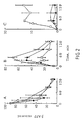
- Fig. 2 are three graphs showing the effect of agents that modulate PKC activity on ⁇ APP proteins in PC12 cells.
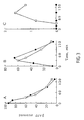
- Fig. 3 are three graphs showing the effect of PDBu on mature ⁇ APP proteins.
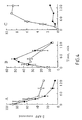
- Fig. 4 are three graphs showing the regulation of ⁇ APP processing by okadaic acid as a function of time.
- Fig. 5 are three graphs showing the regulation by okadaic acid of processing mature ⁇ APP as a function of time.
- PC12 cells were metabolically labeled for 20 minutes with [ 35 S] methionine followed by a chase period with complete medium for the indicated times. Agents regulating PKC activity were added at the start of the chase period (zero-time). Following cell lysis, extracts were subjected to immunoprecipitation, NaDodSO 4 -PAGE and autoradiography. The various forms of ⁇ APP were quantified by scanning the autoradiogram. The results shown are the means ⁇ SEM of four experiments. The data were normalized such that the total ⁇ APP 751/770 recovered (i.e., immature and mature) at zero-time was taken as 100 units. The levels of the COOH-terminal ⁇ APP fragments were insignificant at zero-time.
- a and B recovery is expressed at percent of total at zero-time.
- C recovery is expressed as arbitrary units.
- A Immature ⁇ APP 751/770 .
- B Mature ⁇ APP 751/770 .
- C 15 kDa COOH-terminal fragment. Control cells(- ⁇ -), PDBu-treated cells(- ⁇ -), H-7-treated cells(- ⁇ -).
- ⁇ APP in PC12 cells matures over 45 minutes and is probably processed via a lysosomal pathway. Phorbol esters lead to an apparent stimulation in the rate of this processing.
- PKC protein kinase C
- H7 an inhibitor of PKC
- H7 leads to an apparent decrease in the basal rate of processing of ⁇ APP suggests that in the unstimulated cell ⁇ APP may be cleaved after it is phosphorylated by basally active PKC.
- Okadaic acid as a potent inhibitor of phosphatases 1 and 2A, increases net phosphorylation for many substrates of numerous protein kinases. Therefore, the effect of okadaic acid on ⁇ APP processing cannot be attributed to any one kinase and is believed to involve phosphorylation of ⁇ APP by kinases distinct from those characterized previously, or phosphorylation of other proteins involved in the regulation of ⁇ APP maturation and processing.
- the effects of PDBu and okadaic acid on the 15 and 19 kDa fragments is believed to arise from phosphorylation causing either a more rapid breakdown of the mature ⁇ APP or a slowing down of the catabolism of the 15 and 19 kDa fragments.
- the 19 kDa fragment is a phosphorylated form of the 15 kDa fragment.
- Phosphorylation state can be modulated by inhibiting or stimulating the activity of kinases which add a phosphate moiety to proteins, or by inhibiting or stimulating phosphatases which remove a phosphate moiety from proteins.
- Phosphatase stimulators :
- the active compounds for use in the present invention can be administered as a medicament, i.e., a pharmaceutical composition.
- compositions used in the methods of this invention for administration to animals and humans comprise an active compound in associate with a pharmaceutical carrier or excipient.
- the medicament can be in the form of tablets (including lozenges and granules), dragees, capsules, pills, ampoules or suppositories comprising the compound of the invention.
- “Medicament” as used herein means physically discrete coherent portions suitable for medical administration.
- “Medicament in dosage unit form” as used herein means physically discrete coherent units suitable for medical administration, each containing a daily dose or a multiple (up to four times) or a sub-multiple (down to a fortieth) of a daily dose of the active compound of the invention in association with a carrier and/or enclosed within an envelope. Whether the medicament contains a daily dose, or for example, a half, a third or a quarter of a daily dose will depend on whether the medicament is to be administered once or, for example, twice three times or four times a day, respectively.
- compositions are formulated as dosage units, each unit being adapted to supply a fixed dose of active ingredients.
- Tablets, coated tablets, capsules, ampoules and suppositories are examples of preferred dosage forms according to the invention. It is only necessary that the active ingredient constitute an effective amount, i.e., such that a suitable effective dosage will be consistent with the dosage form employed in single or multiple unit doses. The exact individual dosages, as well as daily dosages, will of course be determined according to standard medical principles under the direction of a physician or veterinarian.
- the active compound can also be administered as suspensions, solutions and emulsions of the active compound in aqueous or non-aqueous diluents, syrups, granulates or powders.
- Diluents that can be used in pharmaceutical compositions (e.g., granulates) containing the active compound adapted to be formed into tablets, dragees, capsules and pills include the following: (a) fillers and extenders, e.g., starch, sugars, mannitol and silicic acid; (b) binding agents, e.g., carboxymethyl cellulose and other cellulose derivatives, alginates, gelatine and polyvinyl pyrrolidone; (c) moisturizing agents, e.g., glycerol; (d) disintegrating agents, e.g., agar-agar, calcium carbonate and sodium bicarbonate; (e) agents for retarding dissolution, e.g., paraffin; (f) resorption accelerators, e.g., quaternary ammonium compounds; (g) surface active agents, e.g., cetyl alcohol, glycerol monostearate; (h) adsorptive carriers,
- the tablets, dragees, capsules and pills comprising the active compound can have the customary coatings, envelopes and protective matrices, which may contain opacifiers. They can be so constituted that they release the active ingredient only or preferably in a particular part of the intestinal tract, possibly over a period of time.
- the coatings, envelopes and protective matrices may be made, for example, from polymeric substances or waxes.
- the active ingredient can also be made up in microencapsulated form together, with one or several of the above-mentioned diluents.
- the diluents to be used in pharmaceutical compositions adapted to be formed into suppositories can, for example, be the usual water-soluble diluents, such as polyethylene glycols and fats (e.g., cocoa oil and high esters, [e.g., C 14 -alcohol with C 16 -fatty acid]) or mixtures of these diluents.
- water-soluble diluents such as polyethylene glycols and fats (e.g., cocoa oil and high esters, [e.g., C 14 -alcohol with C 16 -fatty acid]) or mixtures of these diluents.
- compositions which are solutions and emulsions can, for example, contain the customary diluents (with, of course, the above-mentioned exclusion of solvents having a molecular weight below 200, except in the presence of a surface-active agent), such as solvents, dissolving agents and emulsifiers.
- customary diluents with, of course, the above-mentioned exclusion of solvents having a molecular weight below 200, except in the presence of a surface-active agent
- solvents, dissolving agents and emulsifiers such as solvents, dissolving agents and emulsifiers.
- diluents are water, ethyl alcohol, isopropyl alcohol, ethyl carbonate, ethyl acetate, benzyl alcohol, benzyl benzoate, propylene glycol, 1,3-butylene glycol, dimethylformamide, oils (for example, ground nut oil), glycerol, tetrahydrofurfuryl alcohol, polyethylene glycols and fatty acid esters of sorbitol or mixtures thereof.
- solutions and emulsions should be sterile, e.g., water or arachis oil contained in ampoules and, if appropriate, blood-isotonic.
- compositions which are suspensions can contain the usual diluents, such as liquid diluents, e.g., water, ethyl alcohol, propylene glycol, surface-active agents (e.g., ethoxylated isostearyl alcohols, polyoxyethylene sorbite and sorbitane esters), microcrystalline cellulose, aluminum methahydroxide, bentonite, agar-agar and tragacanth or mixtures thereof.
- liquid diluents e.g., water, ethyl alcohol, propylene glycol
- surface-active agents e.g., ethoxylated isostearyl alcohols, polyoxyethylene sorbite and sorbitane esters
- microcrystalline cellulose aluminum methahydroxide
- bentonite agar-agar and tragacanth or mixtures thereof.
- compositions can also contain coloring agents and preservatives, as well as perfumes and flavoring additions (e.g., peppermint oil and eucalyptus oil) and sweetening agents, (e.g., saccharin and aspartame).
- perfumes and flavoring additions e.g., peppermint oil and eucalyptus oil
- sweetening agents e.g., saccharin and aspartame
- compositions will generally contain from 0.5 to 90% of the active ingredient by weight of the total composition.
- compositions and medicaments can also contain other pharmaceutically active compounds.
- Any diluent in the medicaments of the present invention may be any of those mentioned above in relation to the pharmaceutical compositions.
- Such medicaments may include solvents of molecular weight less than 200 as the sole diluent.
- the active compound will be administered perorally, parenterally (for example, intramuscularly, intraperitoneally, subcutaneously, transdermally or intravenously), rectally or locally, preferably orally or parenterally, especially perlingually, or intravenously.
- the dosage rate e.g., 0.05 to 20 mg/kg of body weight
- the dosage rate will be a function of the nature and body weight of the human or animal subject to be treated, the individual reaction of this subject to the treatment, type of formulation in which the active ingredient is administered, the mode in which the administration is carried out and the point in the progress of the disease or interval at which it is to be administered.
- Phorbol 12,13-dibutyrate (PDBu), 4-alpha-phorbol 12,13-dibutyrate (4 ⁇ PDBu) and phorbol 12-myristate 13-acetate (PMA) were purchased form LC Service Corp., Woburn, Ma. Okadaic acid was purchased from Moana BioProducts, Inc., Honolulu, HI. H7 was purchased form Seikagada Kogyo Co., Japan.
- a synthetic peptide corresponding to the cytoplasmic domain of ⁇ APP ( ⁇ APP 645-694 ,the numbering of amino acids corresponds to those of human ⁇ APP 695 ,) was prepared by the Yale Sequencing Facility. Antibodies were prepared by immunizing rabbits with this synthetic peptide corresponding to ⁇ APP 645-695. Sera were screened by immunoblot analysis of lysates of E.coli expressing a fusion protein including the amino acids 16-695 of human ⁇ APP 695 .
- Sera which were immunoreactive against the recombinant fusion protein ⁇ APP 695 were further screened for immunoprecipitating activity in two systems: one system used 35 S-labeled ⁇ APP 695 which was produced by in vitro transcription of ⁇ APP 695 cDNA followed by in vitro translation of ⁇ APP 695 mRNA, using rabbit reticulocyte lysate and [ 35 S] methionine; the other system used 35 S-labeled ⁇ APP 695 produced by cells transfected with ⁇ APP 695 cDNA and labeled with [ 35 S] methionine. Immunoprecipitation was performed as described in Pang, D.T., Wang, J.K.T., Valtorta, F., Benfenati, F.
- PC cells were grown in Dulbecco's modified Eagle's medium (DMEM, Flow Labs) containing 10% (v/v) fetal calf serum and 5% heat inactivated horse serum.
- DMEM Dulbecco's modified Eagle's medium
- PC12 cells For metabolic labeling of PC12 cells, the cells were washed twice, removed from the dish by trituration, and the cells were suspended at 6 x 10 6 cells/ml in methionine-free DMEM, supplemented with 1 mCi/ml of [ 35 S]methionine (1200 Ci/mmol, NEN Products, Boston MA.) and 20 mM Hepes, pH 7.4 for 20 minutes. The cells were then diluted with 5-6 volumes of aerated complete medium (DMEM), containing excess methionine and 20 mM Hepes, pH 7.4, and chased for time periods of 0 to 135 minutes with additions as described. Test substances were added either at the start of the chase period (zero-time) or 35 minutes later. Cell viability, as determined by trypan blue exclusion, was greater than 90% at the start of the experiment and decreased less than 5% over 135 minutes of chase.
- DMEM aerated complete medium
- the cells (0.2 ml) were diluted with 0.4 ml of lysis buffer (2 mM NaN 3 , 150 mM NaCl, 100 mM Tris HCl, pH 7.4, containing 1% v/v NP40, 0.5% w/v sodium deoxycholate, 0.1% w/v NaDodSO 4 and 40 units/ml of trasylol) and placed on ice. After 20 minutes, samples were centrifuged at 10,000 x g for 5 minutes, and the supernatants were used for immunoprecipitation. In some experiments, the cells were sometimes lysed with 1% NaDodSO 4 , sonicated and boiled and used for immunoprecipitation (Pang, D.T., supra ). The results obtained with this procedure were virtually identical to those obtained using the standard procedure.
- the 10,000 x g supernatant was incubated for 1 hour at 4°C with 3 ⁇ l of undiluted or affinity-purified rabbit anti- ⁇ APP 645-695 in a total volume of 600 ⁇ l. Following the incubation, 75 ⁇ l of a 1:1 suspension of Protein A-Sepharose (Pharmacia LKB, Inc., Piscataway, N.J.) in lysis buffer was then added and the incubation was continued for another 30 minutes at 4°C.
- Protein A-Sepharose Pharmacia LKB, Inc., Piscataway, N.J.
- the insoluble complexes were washed three times with 100 mM Tris HCl, pH 7.4, containing 150 mM NaCl and 2mM NaN 3 , resuspended in solubilization buffer (62.5 mM Tris HCl, pH 6.8, 2% SDS, 5% 2-mercaptoethanol, 10% sucrose) and boiled. Proteins were separated by NaDodSO 4 -PAGE and detected using quantitative fluorography with 1 M sodium salicylate. Protein bands were quantified either by densitometry of the autoradiograms, or by excising the radioactive bands and subjecting them to liquid scintillation spectometry. ⁇ APP 751 and ⁇ APP 770 were the major ⁇ APP isoforms in PC12 cells.
- PC12 cells were incubated for 20 minutes in DMEM containing [ 35 S]methionine and subsequently chased for various periods in complete medium. Immunoprecipitation from lysates of such 35 S-labeled cells with an antibody prepared against ⁇ APP 645-695 yielded six protein bands of 149, 143, 125, 115, 113 and 106 kDa (Fig. 1a., lanes 1 and 2).
- M r 143/149 and 125 kDa were tentatively identified as follows: M r 106, 113 and 115 kDa bands, the immature (N-glycosylated) forms of ⁇ APP 695 , ⁇ APP 751 , and ⁇ APP 770 , respectively; M r 125, 143 and 149 kDa, the mature (N- and O- glycosylated) forms of ⁇ APP 695 , ⁇ APP 751 and ⁇ APP 770 , respectively.
- Another phorbol ester, PMA produced effects similar to those of PDBu, while the inactive PDBu analogue, 4 ⁇ PDBu was without effect (not shown).
- the decrease of labeled mature ⁇ APP and concomitant increase of the labeled 15 kDa and 19 kDa peptides evidences a precursor-product relationship between these proteins.
- the 15 kDa and 19 kDa peptides are proteolytic fragments of ⁇ APP which remain associated with the cell after cleavage and secretion of the N-terminal domain.
- PKC activation increases the rate of processing of mature ⁇ APP, leading to decreased recovery of the mature ⁇ APP and increased recovery of proteolytic fragments.
- H7 (100 ⁇ M), an inhibitor of several protein kinases including protein kinase C, produced a relative increase in the levels of mature ⁇ APP (Fig. 2B). These observations are consistent with the idea that PKC stimulates the processing of mature ⁇ APP. Moreover, H7, (100 ⁇ M) antagonized the effects of PDBu (1 ⁇ M) in decreasing the levels of labeled mature ⁇ APP and increasing the levels of labeled 15 kDa and 19 kDa peptides (not shown).
- a half-maximal effect of PDBu on the levels of labeled mature ⁇ APP was observed at about 17nM, consistent with other effects of PDBu known to be mediated by PKC.
- PDBu 1 ⁇ M was added after 35 minutes of chase. Rapid increases in the levels of labeled 15 kDa and 19 kDa peptides were observed (Fig. 2C), evidencing that PDBu acts to increase the rate of processing of mature ⁇ APP.
- okadaic acid When okadaic acid (1 ⁇ M) was added with PDBu (1 ⁇ M) at the start of the chase, levels of the labeled 15 kDa and 19 kDa peptides were greatly increased (Fig. 1A, lane 5). Addition of okadaic acid after 35 minutes of chase, when mature ⁇ APP neared maximal levels, led to a rapid increase in the levels of the labeled 15 kDa and 19 kDa peptides (Fig. 5C). These results evidence that okadaic acid acts to increase the rate of processing of mature ⁇ APP. A half-maximal effect of okadaic acid on the levels of labeled immature and mature ⁇ APP was observed at about 300 nM (not shown).
- Okadaic acid a potent inhibitor of phosphatases 1 and 2A, has been shown to increase net phosphorylation for many substrates in various experimental systems. Therefore, the effect of okadaic acid on ⁇ APP processing cannot be attributed to any one kinase and is believed to involve phosphorylation of ⁇ APP by kinases distinct from those characterized previously, or phosphorylation of other proteins involved in the regulation of ⁇ APP maturation and processing.
Landscapes
- Health & Medical Sciences (AREA)
- General Health & Medical Sciences (AREA)
- Life Sciences & Earth Sciences (AREA)
- Chemical & Material Sciences (AREA)
- Public Health (AREA)
- Veterinary Medicine (AREA)
- Medicinal Chemistry (AREA)
- Bioinformatics & Cheminformatics (AREA)
- Engineering & Computer Science (AREA)
- Pharmacology & Pharmacy (AREA)
- Animal Behavior & Ethology (AREA)
- Neurology (AREA)
- Organic Chemistry (AREA)
- Nuclear Medicine, Radiotherapy & Molecular Imaging (AREA)
- General Chemical & Material Sciences (AREA)
- Chemical Kinetics & Catalysis (AREA)
- Biomedical Technology (AREA)
- Neurosurgery (AREA)
- Psychiatry (AREA)
- Hospice & Palliative Care (AREA)
- Epidemiology (AREA)
- Medicines That Contain Protein Lipid Enzymes And Other Medicines (AREA)
- Radiation-Therapy Devices (AREA)
- Pharmaceuticals Containing Other Organic And Inorganic Compounds (AREA)
- Investigating Or Analysing Biological Materials (AREA)
- Enzymes And Modification Thereof (AREA)
Claims (11)
- Verfahren zur Herstellung eines Arzneimittels für die Behandlung von Amyloidosis im Zusammenhang mit der Alzheimer-Krankheit, umfassend das Kombinieren mindestens eines Kinasemodulators oder eines Phosphatasemodulators, der die Rate der proteolytischen Prozessierung von Proteinen erhöht oder erniedrigt, die sich in intrazellulären Alzheimer-Fibrillen ("neurofibrillary tangles") und extrazellulären Amyloidplaques befinden, mit einem physiologisch verträglichen Träger.
- Verfahren nach Anspruch 1, wobei die Proteine ausgewählt sind aus βA4-Amyloidvorläuferprotein, Tau oder einem Neurofilamentprotein.
- Verfahren nach Anspruch 1 oder 2, wobei der Modulator ein Kinasestimulator ist, ausgewählt aus einem Phorbolester, einem Indolactam, Mezerin, Diacylglycerin oder Forskolin.
- Verfahren nach Anspruch 3, wobei der Kinasestimulator ein Phorbolester ist, ausgewählt aus 4-α-Phorbol-12,13-dibutyrat, Phorbol-12,13-dibutyrat und Phorbol-12-myristat-13-acetat.
- Verfahren nach Anspruch 3, wobei der Kinasestimulator (-)-7-Octylindolactam V ist.
- Verfahren nach Anspruch 1 oder 2, wobei der Modulator ein Kinaseinhibitor ist, ausgewählt aus Staurosporin, Auranofin, W5, W12, W13, W7, H7, H8, H9, HA1004, Sphingosin und Tyrphostin.
- Verfahren nach Anspruch 1, wobei der Modulator ein Phosphatasestimulator ist, einschließlich eines Somatostatinanalogs.
- Verfahren nach Anspruch 1 oder 2, wobei der Phosphatasemodulator mindestens ein Inhibitor von Proteinphosphatase ist und der Inhibitor die proteolytische Prozessierung von Proteinen verringert, die sich in intrazellulären Alzheimer-Fibrillen und in extrazellulären Amyloidplaques befinden.
- Verfahren nach Anspruch 8, wobei der Inhibitor der Proteinphosphatase Okadasäure, ein Derivat von Okadasäure, Calyculin-A oder Vanadat ist.
- In vitro-Verfahren zur Durchmusterung auf einen Wirkstoff, der die Amyloiderzeugung moduliert, umfassend das Inkontaktbringen von Säugerzellen mit einem Wirkstoff, von dem angenommen wird, daß er zur Modulierung der Phosphorylierung eines Proteins fähig ist, und den Nachweis von Veränderungen im Abbau des Amyloidvorläuferproteins, umfassend die Schritte:(a) Bereitstellen von Säugerzellen oder Gewebsschnitten in Kultur;(b) radioaktive Markierung von Proteinen, die von der Säugerzelle während ihres Anabolismus produziert werden;(c) Ermöglichung für die Säugerzellen, die Metabolisierung in einem geeigneten, markerfreien Medium fortzusetzen;(d) Inkontaktbringen der Säugerzellen zu Beginn oder während des Schrittes (c) mit einem Wirkstoff, von dem angenommen wird, daß er zur Modulation der Phosphorylierung von Proteinen fähig ist, die während des Zellmetabolismus erfolgt;(e) Lysieren der Säugerzellen;(f) Immunpräzipitation der markierten βAPP-Fragmenteinheiten mit einem Antikörper gegen βAPP; und(g) Vergleich der immunpräzipitierten βAPP oder βAPP-Fragmente mit Standard-βAPP oder -βAPP-Fragmenten, um Veränderungen im βAPP-Abbau und in der β-Amyloidproduktion nachzuweisen.
- Verfahren zur Herstellung einer diagnostischen Zusammensetzung für die Durchmusterung auf einen Wirkstoff, der die Amyloiderzeugung moduliert, umfassend die Verabreichung der diagnostischen Zusammensetzung an ein normales oder transgenes ganzes Tier und den Nachweis von neurodegenerativen Veränderungen im Gehirn des Tieres, umfassend die Kombination eines Wirkstoffs, der die Phosphorylierung von Proteinen moduliert, mit einem geeigneten Träger.
Applications Claiming Priority (2)
| Application Number | Priority Date | Filing Date | Title |
|---|---|---|---|
| US52420290A | 1990-05-16 | 1990-05-16 | |
| US524202 | 1990-05-16 |
Publications (3)
| Publication Number | Publication Date |
|---|---|
| EP0457295A2 EP0457295A2 (de) | 1991-11-21 |
| EP0457295A3 EP0457295A3 (en) | 1992-08-05 |
| EP0457295B1 true EP0457295B1 (de) | 1997-04-09 |
Family
ID=24088213
Family Applications (1)
| Application Number | Title | Priority Date | Filing Date |
|---|---|---|---|
| EP91107844A Revoked EP0457295B1 (de) | 1990-05-16 | 1991-05-15 | Verwendung eines Modulators der Proteinphosphorylierung zur Behandlung der Amyloidosis in Zusammenhang mit der Alzheimerschen Krankheit |
Country Status (8)
| Country | Link |
|---|---|
| EP (1) | EP0457295B1 (de) |
| JP (1) | JPH0725786A (de) |
| AT (1) | ATE151287T1 (de) |
| CA (1) | CA2042668C (de) |
| DE (1) | DE69125523T2 (de) |
| DK (1) | DK0457295T3 (de) |
| ES (1) | ES2102986T3 (de) |
| GR (1) | GR3024032T3 (de) |
Cited By (8)
| Publication number | Priority date | Publication date | Assignee | Title |
|---|---|---|---|---|
| US7244764B2 (en) | 2003-06-23 | 2007-07-17 | Neurochem (International) Limited | Methods and compositions for treating amyloid-related diseases |
| US7414076B2 (en) | 2003-06-23 | 2008-08-19 | Neurochem (International) Limited | Methods and compositions for treating amyloid-related diseases |
| US7754761B2 (en) | 1993-03-29 | 2010-07-13 | Bellus Health (International) Limited | Sulfonated compounds and compositions for treating amyloidosis |
| US8044100B2 (en) | 2004-12-22 | 2011-10-25 | Bellus Health Inc. | Methods and compositions for treating amyloid-related diseases |
| US8178580B2 (en) | 2005-04-15 | 2012-05-15 | Kiacta Sarl | Formulations and methods for treating amyloidosis |
| US8372886B2 (en) | 2005-12-22 | 2013-02-12 | Kiacta Sarl | Treatment of renal disorders, diabetic nephropathy and dyslipidemias |
| EP3702470A2 (de) * | 2015-09-09 | 2020-09-02 | The Trustees of Columbia University in the City of New York | Reduktion von er-mam-lokalisiertem app-c99 und verfahren zur behandlung von morbus alzheimer |
| WO2023076936A1 (en) * | 2021-10-26 | 2023-05-04 | Robert Vito Farese | Use of auranofin as an inhibitor of atypical protein kinase c for treatment of neurodegenerative disorders |
Families Citing this family (36)
| Publication number | Priority date | Publication date | Assignee | Title |
|---|---|---|---|---|
| US5242932A (en) * | 1991-12-17 | 1993-09-07 | The Rockefeller University | Treatment of amyloidosis associated with alzheimer disease |
| US5538983A (en) * | 1990-05-16 | 1996-07-23 | The Rockefeller University | Method of treating amyloidosis by modulation of calcium |
| US5089517A (en) * | 1990-08-03 | 1992-02-18 | The Board Of Trustees Of The Leland Stanford Junior University | Neuroprotection by indolactam v and derivatives thereof |
| US7408027B1 (en) | 1991-12-06 | 2008-08-05 | Max-Planck-Gesellschaft Zur Forderung Der Wissenchaften | Tools for the diagnosis and treatment of Alzheimer's disease |
| EP0544942A1 (de) * | 1991-12-06 | 1993-06-09 | Max-Planck-Gesellschaft zur Förderung der Wissenschaften e.V. | Neue Werkzeuge für die Diagnose und die Behandlung der Alzheimer-Krankheit |
| WO1993011231A1 (en) * | 1991-12-06 | 1993-06-10 | MAX-PLANCK-Gesellschaft zur Förderung der Wissenschaften e.V. | Tools for the diagnosis and treatment of alzheimer's disease |
| EP0551200A1 (de) * | 1992-01-07 | 1993-07-14 | National University Of Singapore | Protein-Phosphatase-Inhibitoren zur Verwendung in der Therapie |
| US5461146A (en) * | 1992-07-24 | 1995-10-24 | Cephalon, Inc. | Selected protein kinase inhibitors for the treatment of neurological disorders |
| JP2893029B2 (ja) * | 1992-08-10 | 1999-05-17 | 旭化成工業株式会社 | 心臓保護剤 |
| JPH0680569A (ja) * | 1992-09-03 | 1994-03-22 | Asahi Chem Ind Co Ltd | 血小板凝集阻害剤 |
| WO1994009370A1 (en) | 1992-10-09 | 1994-04-28 | Massachusetts Institute Of Technology | Release of alzheimer amyloid precursor stimulated by activation of muscarinic acetylcholine receptors |
| US5962463A (en) * | 1992-10-09 | 1999-10-05 | Massachusetts Institute Of Technology | Methods of stimulating non-amyloidogenic processing of the amyloid precursor protein |
| EP0691844A1 (de) * | 1993-03-29 | 1996-01-17 | Queen's University At Kingston | Verfahren zur behandlung von amyloidosis |
| WO1994027603A1 (en) * | 1993-06-01 | 1994-12-08 | Cortex Pharmaceuticals, Inc. | Alkaline and acid phosphatase inhibitors in treatment of neurological disorders |
| IL110289A (en) * | 1993-08-06 | 1998-01-04 | Policlinico San Matteo Istitut | Pharmaceutical preparations containing 4-iodo-4-deoxydoxorubicin for the treatment of amyloidosis |
| GB9325395D0 (en) * | 1993-12-11 | 1994-02-16 | Ciba Geigy Ag | Compositions |
| GB9421472D0 (en) * | 1994-10-25 | 1994-12-07 | Smithkline Beecham Plc | Novel methods |
| GB9506197D0 (en) | 1995-03-27 | 1995-05-17 | Hoffmann La Roche | Inhibition of tau-tau association. |
| US6083920A (en) * | 1995-12-21 | 2000-07-04 | Ayurcore, Inc. | Compositions for modulating intracellular inositol trisphosphate concentration |
| CA2279651A1 (en) * | 1996-09-05 | 1998-03-12 | Massachusetts Institute Of Technology | Compositions and methods for treatment of neurological disorders and neurodegenerative diseases |
| US7144997B2 (en) * | 1997-07-24 | 2006-12-05 | Curis, Inc. | Vertebrate embryonic patterning-inducing proteins, compositions and uses related therto |
| WO1999016457A2 (en) * | 1997-10-01 | 1999-04-08 | MAX-PLANCK-Gesellschaft zur Förderung der Wissenschaften e.V. | Novel composition for treating, preventing and/or delaying ischemic cell death |
| WO2000003746A2 (en) * | 1998-07-14 | 2000-01-27 | The Brigham And Women's Hospital, Inc. | Upregulation of type iii endothelial cell nitric oxide synthase by agents that disrupt actin cytoskeletal organization |
| US6399107B1 (en) | 1998-12-22 | 2002-06-04 | Alcon Laboratories, Inc. | Use of inhibitors of gag synthesis for the treatment of corneal haze |
| US6242473B1 (en) * | 1999-01-08 | 2001-06-05 | Maxim Pharmaceuticals, Inc. | Treatment and prevention of reactive oxygen metabolite-mediated cellular damage |
| GB0100119D0 (en) | 2001-01-03 | 2001-02-14 | Univ Aberdeen | Materials and methods relating to protein aggregation in neurodegenerative disease |
| GB0101049D0 (en) | 2001-01-15 | 2001-02-28 | Univ Aberdeen | Materials and methods relating to protein aggregation in neurodegenerative disease |
| US20070010573A1 (en) | 2003-06-23 | 2007-01-11 | Xianqi Kong | Methods and compositions for treating amyloid-related diseases |
| DE10352450A1 (de) * | 2003-11-07 | 2005-06-23 | Ruprecht-Karls-Universität Heidelberg | Neues Mittel zur prophylaktischen und/oder therapeutischen Behandlung von Morbus Alzheimer |
| JP5186212B2 (ja) | 2004-09-23 | 2013-04-17 | ウィスタ ラボラトリーズ リミテッド | メチルチオニニウム塩化物(mtc)などのジアミノフェノチアジニウム化合物を化学合成および精製する方法 |
| CN104119294B (zh) | 2006-03-29 | 2018-10-30 | 维斯塔实验室有限公司 | 3,7-二氨基-10h-吩噻嗪化合物的制备方法 |
| DK2004155T3 (en) | 2006-03-29 | 2018-04-30 | Wista Lab Ltd | PROTEIN AGGREGATION INHIBITORS |
| SI2089417T1 (sl) | 2006-10-12 | 2015-04-30 | Bhi Limited Partnership | Metode, spojine, sestavki in vektorji za dostavo 3-amino-1-propansulfonske kisline |
| KR101888713B1 (ko) | 2011-02-11 | 2018-08-14 | 위스타 레보레이토리스 리미티드 | 페노티아진 디아미늄 염 및 이의 용도 |
| US20220016073A1 (en) | 2017-11-15 | 2022-01-20 | Korea Research Institute Of Bioscience And Biotechnology | Composition for preventing or treating neurodegenerative diseases, containing diterpene-based compound |
| JP7037814B2 (ja) * | 2018-03-28 | 2022-03-17 | 国立大学法人山口大学 | ホルボールエステルを有効成分とする軸索の伸展剤 |
Family Cites Families (1)
| Publication number | Priority date | Publication date | Assignee | Title |
|---|---|---|---|---|
| JPH085913B2 (ja) * | 1985-09-12 | 1996-01-24 | ザ・アドミニストレ−タ−ズ・オブ・ザ・ツ−レイン・エデユケイシヨナル・フアンド | 治療用ソマトスタチン同族体 |
-
1991
- 1991-05-14 JP JP3136925A patent/JPH0725786A/ja active Pending
- 1991-05-15 ES ES91107844T patent/ES2102986T3/es not_active Expired - Lifetime
- 1991-05-15 AT AT91107844T patent/ATE151287T1/de not_active IP Right Cessation
- 1991-05-15 EP EP91107844A patent/EP0457295B1/de not_active Revoked
- 1991-05-15 DK DK91107844.2T patent/DK0457295T3/da active
- 1991-05-15 CA CA002042668A patent/CA2042668C/en not_active Expired - Fee Related
- 1991-05-15 DE DE69125523T patent/DE69125523T2/de not_active Revoked
-
1997
- 1997-07-09 GR GR970401687T patent/GR3024032T3/el unknown
Cited By (10)
| Publication number | Priority date | Publication date | Assignee | Title |
|---|---|---|---|---|
| US7754761B2 (en) | 1993-03-29 | 2010-07-13 | Bellus Health (International) Limited | Sulfonated compounds and compositions for treating amyloidosis |
| US7244764B2 (en) | 2003-06-23 | 2007-07-17 | Neurochem (International) Limited | Methods and compositions for treating amyloid-related diseases |
| US7414076B2 (en) | 2003-06-23 | 2008-08-19 | Neurochem (International) Limited | Methods and compositions for treating amyloid-related diseases |
| US7598269B2 (en) | 2003-06-23 | 2009-10-06 | Bellus Health (International) Limited | Methods and compositions for treating amyloid-related diseases |
| US8044100B2 (en) | 2004-12-22 | 2011-10-25 | Bellus Health Inc. | Methods and compositions for treating amyloid-related diseases |
| US8835654B2 (en) | 2004-12-22 | 2014-09-16 | Bhi Limited Partnership | Method and compositions for treating amyloid-related diseases |
| US8178580B2 (en) | 2005-04-15 | 2012-05-15 | Kiacta Sarl | Formulations and methods for treating amyloidosis |
| US8372886B2 (en) | 2005-12-22 | 2013-02-12 | Kiacta Sarl | Treatment of renal disorders, diabetic nephropathy and dyslipidemias |
| EP3702470A2 (de) * | 2015-09-09 | 2020-09-02 | The Trustees of Columbia University in the City of New York | Reduktion von er-mam-lokalisiertem app-c99 und verfahren zur behandlung von morbus alzheimer |
| WO2023076936A1 (en) * | 2021-10-26 | 2023-05-04 | Robert Vito Farese | Use of auranofin as an inhibitor of atypical protein kinase c for treatment of neurodegenerative disorders |
Also Published As
| Publication number | Publication date |
|---|---|
| CA2042668A1 (en) | 1991-11-17 |
| GR3024032T3 (en) | 1997-10-31 |
| DE69125523T2 (de) | 1997-08-14 |
| DK0457295T3 (da) | 1997-04-28 |
| EP0457295A3 (en) | 1992-08-05 |
| ES2102986T3 (es) | 1997-08-16 |
| JPH0725786A (ja) | 1995-01-27 |
| DE69125523D1 (de) | 1997-05-15 |
| ATE151287T1 (de) | 1997-04-15 |
| CA2042668C (en) | 2002-12-03 |
| EP0457295A2 (de) | 1991-11-21 |
Similar Documents
| Publication | Publication Date | Title |
|---|---|---|
| CA2042668C (en) | Treatment of amyloidosis associated with alzheimer's disease | |
| US5385915A (en) | Treatment of amyloidosis associated with Alzheimer disease using modulators of protein phosphorylation | |
| US5348963A (en) | Method of screening for modulators of amyloid formation | |
| Lahiri et al. | Tacrine alters the secretion of the beta‐amyloid precursor protein in cell lines | |
| Hung et al. | Selective ectodomain phosphorylation and regulated cleavage of beta‐amyloid precursor protein. | |
| Pappolla et al. | Evidence of oxidative stress and in vivo neurotoxicity of beta-amyloid in a transgenic mouse model of Alzheimer's disease: a chronic oxidative paradigm for testing antioxidant therapies in vivo | |
| Knops et al. | Cell-type and amyloid precursor protein-type specific inhibition of Aβ release by bafilomycin A1, a selective inhibitor of vacuolar ATPases | |
| Greenberg et al. | Secreted beta-amyloid precursor protein stimulates mitogen-activated protein kinase and enhances tau phosphorylation. | |
| Keck et al. | Proteasome inhibition by paired helical filament‐tau in brains of patients with Alzheimer's disease | |
| Farber et al. | Regulated secretion of beta-amyloid precursor protein in rat brain | |
| Moreira et al. | Effect of amyloid β‐peptide on permeability transition pore: A comparative study | |
| US5538983A (en) | Method of treating amyloidosis by modulation of calcium | |
| JP2004091492A (ja) | アミロイドベータタンパク質(球状アッセンブリーおよびその使用) | |
| da Cruz e Silva et al. | Inhibition of protein phosphatase 1 stimulates secretion of Alzheimer amyloid precursor protein | |
| Knops et al. | Serine phosphorylation of the secreted extracellular domain of APP | |
| Liu et al. | Blockage of AEP attenuates TBI-induced tau hyperphosphorylation and cognitive impairments in rats | |
| US20100081613A1 (en) | Methods and compositions for enhancing memory | |
| US5962463A (en) | Methods of stimulating non-amyloidogenic processing of the amyloid precursor protein | |
| US11826368B2 (en) | Pharmaceutical composition comprising ibrutinib as effective ingredient for preventing or treating degenerative brain disease | |
| Baskin et al. | Morphological differentiation and proteoglycan synthesis regulate Alzheimer amyloid precursor protein processing in PC‐12 and human astrocyte cultures | |
| Hou et al. | Tetrahydroxystilbene glucoside improves learning and (or) memory ability of aged rats and may be connected to the APP pathway | |
| Grant et al. | Phosphorylation of mitogen-activated protein kinase is altered in neuroectodermal cells overexpressing the human amyloid precursor protein 751 isoform | |
| US20050085553A1 (en) | Remedies for mild recognition deflict | |
| Sigurdsson et al. | Laterality in the histological effects of injections of amyloid-β 25–35 into the amygdala of young Fischer rats | |
| Thakur | Alzheimer's disease–A challenge in the new millennium |
Legal Events
| Date | Code | Title | Description |
|---|---|---|---|
| PUAI | Public reference made under article 153(3) epc to a published international application that has entered the european phase |
Free format text: ORIGINAL CODE: 0009012 |
|
| AK | Designated contracting states |
Kind code of ref document: A2 Designated state(s): AT BE CH DE DK ES FR GB GR IT LI LU NL SE |
|
| RIN1 | Information on inventor provided before grant (corrected) |
Inventor name: GREENGARD, PAUL Inventor name: GANDY, SAMUEL E. Inventor name: BUXBAUM, JOSEPH D. |
|
| PUAL | Search report despatched |
Free format text: ORIGINAL CODE: 0009013 |
|
| AK | Designated contracting states |
Kind code of ref document: A3 Designated state(s): AT BE CH DE DK ES FR GB GR IT LI LU NL SE |
|
| 17P | Request for examination filed |
Effective date: 19930127 |
|
| 17Q | First examination report despatched |
Effective date: 19941228 |
|
| GRAH | Despatch of communication of intention to grant a patent |
Free format text: ORIGINAL CODE: EPIDOS IGRA |
|
| GRAH | Despatch of communication of intention to grant a patent |
Free format text: ORIGINAL CODE: EPIDOS IGRA |
|
| GRAA | (expected) grant |
Free format text: ORIGINAL CODE: 0009210 |
|
| AK | Designated contracting states |
Kind code of ref document: B1 Designated state(s): AT BE CH DE DK ES FR GB GR IT LI LU NL SE |
|
| REF | Corresponds to: |
Ref document number: 151287 Country of ref document: AT Date of ref document: 19970415 Kind code of ref document: T |
|
| REG | Reference to a national code |
Ref country code: CH Ref legal event code: NV Representative=s name: A. BRAUN, BRAUN, HERITIER, ESCHMANN AG PATENTANWAE Ref country code: CH Ref legal event code: EP |
|
| REG | Reference to a national code |
Ref country code: DK Ref legal event code: T3 |
|
| REF | Corresponds to: |
Ref document number: 69125523 Country of ref document: DE Date of ref document: 19970515 |
|
| ITF | It: translation for a ep patent filed | ||
| NLR4 | Nl: receipt of corrected translation in the netherlands language at the initiative of the proprietor of the patent | ||
| ET | Fr: translation filed | ||
| REG | Reference to a national code |
Ref country code: ES Ref legal event code: FG2A Ref document number: 2102986 Country of ref document: ES Kind code of ref document: T3 |
|
| REG | Reference to a national code |
Ref country code: GR Ref legal event code: FG4A Free format text: 3024032 |
|
| PLBQ | Unpublished change to opponent data |
Free format text: ORIGINAL CODE: EPIDOS OPPO |
|
| PLBI | Opposition filed |
Free format text: ORIGINAL CODE: 0009260 |
|
| 26 | Opposition filed |
Opponent name: SMITHKLINE BEECHAM PLC Effective date: 19980109 |
|
| PLBF | Reply of patent proprietor to notice(s) of opposition |
Free format text: ORIGINAL CODE: EPIDOS OBSO |
|
| NLR1 | Nl: opposition has been filed with the epo |
Opponent name: SMITHKLINE BEECHAM PLC |
|
| PLBF | Reply of patent proprietor to notice(s) of opposition |
Free format text: ORIGINAL CODE: EPIDOS OBSO |
|
| PLBF | Reply of patent proprietor to notice(s) of opposition |
Free format text: ORIGINAL CODE: EPIDOS OBSO |
|
| PLBF | Reply of patent proprietor to notice(s) of opposition |
Free format text: ORIGINAL CODE: EPIDOS OBSO |
|
| PLBF | Reply of patent proprietor to notice(s) of opposition |
Free format text: ORIGINAL CODE: EPIDOS OBSO |
|
| RDAH | Patent revoked |
Free format text: ORIGINAL CODE: EPIDOS REVO |
|
| REG | Reference to a national code |
Ref country code: GB Ref legal event code: IF02 |
|
| APAC | Appeal dossier modified |
Free format text: ORIGINAL CODE: EPIDOS NOAPO |
|
| APAE | Appeal reference modified |
Free format text: ORIGINAL CODE: EPIDOS REFNO |
|
| APAC | Appeal dossier modified |
Free format text: ORIGINAL CODE: EPIDOS NOAPO |
|
| PGFP | Annual fee paid to national office [announced via postgrant information from national office to epo] |
Ref country code: GB Payment date: 20040505 Year of fee payment: 14 |
|
| PGFP | Annual fee paid to national office [announced via postgrant information from national office to epo] |
Ref country code: NL Payment date: 20040518 Year of fee payment: 14 |
|
| PGFP | Annual fee paid to national office [announced via postgrant information from national office to epo] |
Ref country code: FR Payment date: 20040519 Year of fee payment: 14 |
|
| PGFP | Annual fee paid to national office [announced via postgrant information from national office to epo] |
Ref country code: AT Payment date: 20040521 Year of fee payment: 14 |
|
| PGFP | Annual fee paid to national office [announced via postgrant information from national office to epo] |
Ref country code: SE Payment date: 20040524 Year of fee payment: 14 Ref country code: ES Payment date: 20040524 Year of fee payment: 14 Ref country code: CH Payment date: 20040524 Year of fee payment: 14 |
|
| PGFP | Annual fee paid to national office [announced via postgrant information from national office to epo] |
Ref country code: LU Payment date: 20040525 Year of fee payment: 14 Ref country code: DK Payment date: 20040525 Year of fee payment: 14 Ref country code: BE Payment date: 20040525 Year of fee payment: 14 |
|
| PGFP | Annual fee paid to national office [announced via postgrant information from national office to epo] |
Ref country code: GR Payment date: 20040526 Year of fee payment: 14 |
|
| PGFP | Annual fee paid to national office [announced via postgrant information from national office to epo] |
Ref country code: DE Payment date: 20040528 Year of fee payment: 14 |
|
| APBU | Appeal procedure closed |
Free format text: ORIGINAL CODE: EPIDOSNNOA9O |
|
| RDAG | Patent revoked |
Free format text: ORIGINAL CODE: 0009271 |
|
| STAA | Information on the status of an ep patent application or granted ep patent |
Free format text: STATUS: PATENT REVOKED |
|
| REG | Reference to a national code |
Ref country code: CH Ref legal event code: PL |
|
| 27W | Patent revoked |
Effective date: 20041209 |
|
| GBPR | Gb: patent revoked under art. 102 of the ep convention designating the uk as contracting state |
Free format text: 20041209 |
|
| NLR2 | Nl: decision of opposition |
Effective date: 20041209 |
|
| REG | Reference to a national code |
Ref country code: SE Ref legal event code: ECNC |
|
| APAH | Appeal reference modified |
Free format text: ORIGINAL CODE: EPIDOSCREFNO |