EP0458033B1 - ContrÔle de flux pour réseaux à grande vitesse - Google Patents
ContrÔle de flux pour réseaux à grande vitesse Download PDFInfo
- Publication number
- EP0458033B1 EP0458033B1 EP91104395A EP91104395A EP0458033B1 EP 0458033 B1 EP0458033 B1 EP 0458033B1 EP 91104395 A EP91104395 A EP 91104395A EP 91104395 A EP91104395 A EP 91104395A EP 0458033 B1 EP0458033 B1 EP 0458033B1
- Authority
- EP
- European Patent Office
- Prior art keywords
- window
- pacing
- sender
- session
- size
- Prior art date
- Legal status (The legal status is an assumption and is not a legal conclusion. Google has not performed a legal analysis and makes no representation as to the accuracy of the status listed.)
- Expired - Lifetime
Links
- 230000004044 response Effects 0.000 claims description 52
- 238000000034 method Methods 0.000 claims description 41
- 230000005540 biological transmission Effects 0.000 claims description 30
- 230000001105 regulatory effect Effects 0.000 claims description 5
- 230000008859 change Effects 0.000 claims description 4
- 230000003247 decreasing effect Effects 0.000 claims description 4
- 239000000872 buffer Substances 0.000 description 21
- 230000008569 process Effects 0.000 description 19
- 230000007246 mechanism Effects 0.000 description 5
- 230000003044 adaptive effect Effects 0.000 description 4
- 238000013459 approach Methods 0.000 description 4
- 230000001419 dependent effect Effects 0.000 description 4
- 230000001143 conditioned effect Effects 0.000 description 3
- 238000013461 design Methods 0.000 description 3
- 238000012545 processing Methods 0.000 description 2
- 230000009467 reduction Effects 0.000 description 2
- 230000001960 triggered effect Effects 0.000 description 2
- 238000004891 communication Methods 0.000 description 1
- 230000001276 controlling effect Effects 0.000 description 1
- 238000013016 damping Methods 0.000 description 1
- 230000001934 delay Effects 0.000 description 1
- 238000010586 diagram Methods 0.000 description 1
- 230000002401 inhibitory effect Effects 0.000 description 1
- 238000002955 isolation Methods 0.000 description 1
- 230000002085 persistent effect Effects 0.000 description 1
- 238000011160 research Methods 0.000 description 1
- 230000007704 transition Effects 0.000 description 1
Images



Classifications
-
- H—ELECTRICITY
- H04—ELECTRIC COMMUNICATION TECHNIQUE
- H04L—TRANSMISSION OF DIGITAL INFORMATION, e.g. TELEGRAPHIC COMMUNICATION
- H04L47/00—Traffic control in data switching networks
- H04L47/10—Flow control; Congestion control
-
- H—ELECTRICITY
- H04—ELECTRIC COMMUNICATION TECHNIQUE
- H04L—TRANSMISSION OF DIGITAL INFORMATION, e.g. TELEGRAPHIC COMMUNICATION
- H04L47/00—Traffic control in data switching networks
- H04L47/10—Flow control; Congestion control
- H04L47/18—End to end
-
- H—ELECTRICITY
- H04—ELECTRIC COMMUNICATION TECHNIQUE
- H04L—TRANSMISSION OF DIGITAL INFORMATION, e.g. TELEGRAPHIC COMMUNICATION
- H04L47/00—Traffic control in data switching networks
- H04L47/10—Flow control; Congestion control
- H04L47/26—Flow control; Congestion control using explicit feedback to the source, e.g. choke packets
-
- H—ELECTRICITY
- H04—ELECTRIC COMMUNICATION TECHNIQUE
- H04L—TRANSMISSION OF DIGITAL INFORMATION, e.g. TELEGRAPHIC COMMUNICATION
- H04L47/00—Traffic control in data switching networks
- H04L47/10—Flow control; Congestion control
- H04L47/27—Evaluation or update of window size, e.g. using information derived from acknowledged [ACK] packets
Definitions
- This invention generally relates to a method of dynamically adjusting the window size in a session between a sender and a receiver over a link of a packet transmission network.
- this invention relates to a method of and to an apparatus for regulating data flow in a packet transmission network with a plurality of sessions.
- Flow control is the function that controls the entry and delivery of packets across computer networks. Its goals are to achieve high utilization of network resources- link bandwidths and node intelligence, to prevent deadlock, and to be fair to users. Window pacing, between a sender of data and the corresponding receiver in the network, is often the key element in achieving these goals. A window is related to the number of outstanding packets that have been transmitted but not acknowledged yet. SNA uses a window pacing mechanism, referred to herein as the "basic PRQ/PRS" scheme, which will be improved upon by this disclosure.
- the "basic PRQ/PRS" scheme is shown in [ 1 ] to have comparable or better performance than other pacing mechanisms.
- the sender requests more pacing credits (permissions to transmit packets) at the beginning of every window, and the receiver grants a new window of pacing credits only after it has processed all packets preceding, including the packet containing the pacing request.
- This protocol is performed via the exchange of two control messages- the pacing request (PRQ) and the pacing response (PRS).
- PRQ pacing request
- PRS pacing response
- Pacing can be done in two ways: one is the "end to end” way in which only the source and destination nodes are involved in pacing, and the other is the “hop by hop” way in which every node is involved in pacing of packets entering or leaving a node. Between the two, the hop by hop approach is more robust [ 2 ] in two aspects:
- the other approach is to pre-allocate buffers when pacing credits are granted. Since there is a receiving buffer pre-allocated for each legitimately transmitted packet, packets need never be dropped.
- a specific class of schemes that adopt this policy are the buffer class (BC) schemes [ 3 ].
- BC buffer class
- packets and buffers are grouped into classes. Packets of the same class share a pool of buffers.
- Several buffer classifications have been proposed: session based [ 4-5 ], path based [ 6 ], and hop count [ 7 ]. Buffer class schemes are very desirable because they probably can be deadlock and livelock free.
- An adaptive window pacing scheme is presented in U. S. Patent 4,736,369 to Barzilai et al. for a session based (one type of buffer classification) hop-by-hop flow control mechanism.
- This adaptive window scheme is designed to reduce the windows of congested sessions and increase the windows of active and uncongested sessions. Statuses of sessions are based on the queue lengths at both the senders and the receivers. A congested session has a queue at its receiver that is longer than a certain threshold; an inactive session has an empty queue at its sender. During each adjustment, window sizes are either increased or decreased by one. The receiver is allowed to send an isolated control packet to the sender to claim excess pacing credits from a specified session.
- the throughput of the PRQ/PRS scheme depends critically on the proper setting of window sizes.
- the concept of "keeping the pipe full" is recognized in several queueing studies such as [ 8 ].
- W max 3 + ((link speed in packets per second) x (round trip delay in seconds)).
- the range of window sizes, i.e., from 1 to W max increases with the product of link speed and link propagation time.
- the larger the window range the more difficult the window adjustment.
- the adaptive scheme in U. S. Patent 4,736,369 to Barzilai which changes windows by fixed increments is effective in low speed environment, but not in high speed environments. It is not acceptable, for example, to wait for 50 iterations for a window size to converge from 100 to 50.
- U. S. Patent 4,727,537 to Nichols describes a scheme for handling flow control within a STARLAN type controller.
- the Nichols patent describes a jamming signal, which results in inhibiting the transmission of data from any associated transmitting and receiving devices.
- U. S. Patent 4,616,359 to Fontenot discloses a flow control scheme for data packets through a packet switching network by the use of an adaptive preferential permit packet. This permit packet is sent node to node prior to a transmission of a bulk of data packets. The node discards the permit packet if the number of packets awaiting transmission from that node exceeds a prescribed threshold. Fontenot also discloses a time-out mechanism wherein a permit packet is resent from an originating port if a permit return packet is not received within a predetermined time.
- U. S. Patent 4,677,616 to Franklin discloses a flow control scheme for bus-like local area networks, e.g., data kit. Franklin's scheme requires the existence of a central system controller which monitors buffer occupancy in every transmitting/receiving terminal and adjusts window sizes of calls. This window scheme is semi-fixed because the window size of a call remains the same until either there are new call setups of existing calls terminate.
- U.S. Patent 4,630,264 to Wah et al discloses a contention resolution protocol on a single shared bus with asynchronous time division multiplexing. If more than one station contends for, or if no station contends for, a window adjustment rule is applied at each station to change the window size. Contention is resolved by generating a random number for each contending station at the beginning of a contention period, and by successively modifying the window until exactly one station's number is isolated in the window, contention is resolved. Once contention is resolved a packet can be transmitted.
- U. S. Patent 4,839,891 to Kobayashi et al. discloses a method for controlling data flow between source and destination data terminals. Whenever a data packet arrives at the destination data terminal, it is stored in a receive buffer from which it is withdrawn at a rate which may differ from the rate of transmission of packets from the source terminal. Dependent on the storage level of the receiver buffer, a flow control variable is incremented or decremented by a unit value before being retransmitted to the source data terminal. In order to correctly adjust the flow control variable, several iterations are necessary.
- an object of this invention to dynamically adjust the window size in a packet transmission network using a minimum number of iterations to arrive at the desired window size.
- the window adjustment process for an arbitrary hop of an arbitrary session within a network is described. This same process is to be applied at every hop of every session in the network.
- the term hop refers to two adjacent nodes and the facilities connecting these nodes.
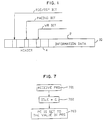
- a packet 10 that flows in the network is structured into two parts: an information data field 2 and a header 4.
- the header is used by the communication protocol to assist in packet processing.
- the header has various bits of which only the following are relevant for this invention.
- the new dynamic window adjustment scheme of this invention is a unique way to find the best window size in one iteration for whatever the change in the window size should be. Windows are not reduced incrementally. Instead, the scheme accurately estimates the best window reduction amount and "converges" in one iteration. When increasing windows, the scheme may "overshoot,” but this will be corrected in the next iteration.
- the desirable window size should be based on two quantities: a) the slower of the transmitting or receiving rates and b) the window turn around time (i.e., the elapsed time between a PRQ departing and a subsequent PRS arriving at the sender).
- CNT and QL are incremented for each arriving packet and QL is decremented for each departing forwarded packet.
- the algorithm has two parts. The first part is processed before the packet is queued for the next hop, and the second is processed when the sender dequeues a packet in order to transmit on the next hop.
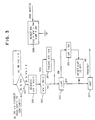
- FIG. 2 shows the flow diagram for the algorithm, and below is a detailed description of the various aspects of the scheme.
- the first part starts at box 201 and ends at box 209.
- the receivers Upon arrival of a packet at node (201), the receivers check the WR bit in the header. If this bit is not set, then there is no need to adjust the window size, and therefore, the packet goes directly to box 206 to update local parameters. However, if the WR bit is set, then the correct window size for the next request must be computed. It may happen that the result is the same value as for the previous window size.
- QL is checked. If the QL is not zero, then the conclusion is that the previous window was too big.
- PRS packet control packet
- the pacing bit is checked (204). If no pacing request is indicated by the pacing bit, then the sender has a bigger window than it can handle, and the receiver again computes a new reduced window in box 203.
- the receiver can afford to increase its transmission rate, and the sender indeed requests a larger window.
- Equation (2) should be viewed only as an example.
- the receiver For any incoming packet, the receiver has to increase the queue size. However, the CNT is increased for every incoming packet until it is reset. It is reset when the pacing bit is set. Thus, for any incoming packet, if the pacing bit is ON, the CNT will be set to one (206, 207); however, if the pacing bit is OFF, the CNT will be incremented by one (206, 208). After either step 207 or 208 the incoming packet flows into the queue.
- the receiver makes sure that for every packet that leaves the queue, it updates QL (210) and checks for the pacing bit (211). If the pacing bit is set, then it is the responsibility of the receiver to create a PRS (pacing response) packet with the window size from WS and send it back to sender of his own hop (box 212).
- QL Quality of Service
- the receiver transmits an extended pacing response (PRS) that contains two numbers: the number of available , "uncommitted” packet buffers (which is less than WS) and the "ideal" new_window size (WS) computed by the above procedure.
- PRS extended pacing response
- the non-extended PRS packet has a data filed for only one number.
- the sender can, of course, use the available, uncommitted number as the "next window" for the relevant session. But the sender can also increase the "next window” up to the value of the ideal new_window number by subtracting a like number of pacing credits from the Shared Credit Pool (SCP) which will be described below.
- SCP Shared Credit Pool
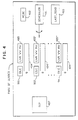
- the sender flow control algorithm can be triggered by two independent events. Either the queue has packets to send (301-307) or a PRS arrived from the receiver (308). The process of sending a packet requires permission from receiver in the form of a WW > 0. This permission is checked in box 301. If the WW is greater than zero, then the sender dequeues the packet and reduces the working window size by one (302).
- the reduced working window size is then compared with the value of the last window size received from the pacing response (303). If this working window size is one less than the last value of WS received from the pacing response, then the pacing bit is set to ON (304). Then, the LWR flag is checked (305). If this flag is set to ON, then the WR bit in the packet which was just dequeued is set to ON (306). As explained above, setting the LWR flag to ON indicates that no data packet has been transmitted since the last pacing response arrived at the sender. Finally, the dequeued packet (302) is transmitted to the receiver (307). Independent of the queue length or the window size, the sender may receive a PRS. Processing the PRS is shown in box 308. Resetting the NW means that the PRS has a new value for NW. It is part of the information as seen in FIG. 1.
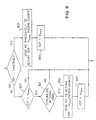
- FIG. 4 shows the structure of a sender with the Shared Credit Pool (SCP).
- SCP Shared Credit Pool
- Each session maintains a send queue (404, 404', 404"), bits for indicating LWR, WW and NW (405, 405', 405"), and an IDLE bit (406, 406', 406").
- FIG. 7 Depicted in FIG. 7 are sessions 901, 902, ..., 9n.
- An ON IDLE bit of a session is used to indicate that the session was idle, i.e., had an empty send queue.
- scheduler 401 which follows a certain discipline and decides the ordering of transmissions among sessions.
- the scheduler also needs a register, Last-send 403, to set the scheduling modes.
- FIG. 5 shows the process that the sender either sends a packet for or collects pacing counts from a scheduler session.
- the process starts with a selected session, as in block 501.
- the process is conditioned on whether or not the session has an empty queue, as in block 502. If the queue is empty and the session's IDLE bit is not set (503), then the IDLE bit is set (504) and the session's pacing count in excess of W' is sent to shared credit pool (505 and 506). If the queue is not empty and the session has non-zero pacing count (507), a data packet is sent using one of the session's own pacing count (508 and 509).
- the session can use a pacing count from SCP if the scheduling is in share mode (510, 511, 512 and 513).
- FIG. 6 shows the process of changing the scheduling mode.
- exclusive mode a session must use its own pacing count to send data packets.
- the process starts with some initialization of Last-send (600) and a currently selected session (601), and is conditioned on the current scheduling mode (602). If the scheduling is in exclusive mode, the process is dependent on whether or not the selected session sends a data packet (603). If the session sends a data packet, the mode is not changed and Last-send is updated to record the selected session, as in 606.
- Last-send session (604) indicates that no session sends any data packet between two consecutive schedulings of the selected session. This is the situation where no session can use their own pacing counts to send data packets.
- the scheduling mode is then switched to share mode 605.
- the scheduling is switched from share mode to exclusive mode as soon as one session can send a data packet using its own pacing count.
- the scheduling is in share mode, if the selected session has (1) non-empty send queue (607), (2) IDLE set of OFF (608), and (3) non-zero pacing counts (609), the scheduling is changed to exclusive mode (610).
- FIG. 7 shows the process of resetting IDLE bit. The process is triggered when a session receives a PRS (701). Then, IDLE is set to OFF (702) and PC is set to the value specified in PRS (703).
- Pacing counts in the SCP should not get too large; otherwise, the receiver looses control of its receiving buffers.
- An isolated pacing message (IPM) called Return Credit (or simply RC) is devised for this procedure.
- the sender usually sends RC's at convenient time such as when the scheduling is in share mode. However, if the pacing count in the SCP exceeds a prespecified threshold, then the return of the pacing credits is expedited. With either way of returning pacing counts, it is desirable to maintain some amount of pacing counts in SCP.
- a recommended value is W max FIG. 8 shows this process, in which the convenient time is when the scheduling is in share mode. The process is conditioned on whether SCP has accumulated more pacing counts than the threshold or not (801).
- the return is expedited by sending RC with (SCP-W max pacing counts immediately (802) and resetting the SCP to W max (803). If the threshold is not exceeded, an RC with (SCP-W max ) pacing counts is sent only if (1) the SCP has more pacing counts than W max and (2) the time is convenient, i.e., scheduling is in share mode (805). Also, when the RC is sent under the latter two conditions, the SCP is reset to W max (see 807). This process is activated whenever pacing counts are added to to the SCP or the time is convenient such as in share scheduling mode.
Landscapes
- Engineering & Computer Science (AREA)
- Computer Networks & Wireless Communication (AREA)
- Signal Processing (AREA)
- Data Exchanges In Wide-Area Networks (AREA)
- Communication Control (AREA)
Claims (17)
- Un procédé de régulation du flux de données dans un réseau de transmission de paquets avec une pluralité de sessions, chaque session étant établie entre un émetteur et un récepteur, échangeant des fenêtres de tailles variables, ledit procédé comprenant :la transmission d'une réponse de régulation de trafic audit émetteur (PRS), indiquant la taille d'une fenêtre (WS) subséquente à transmettre dans une session entre ledit émetteur et ledit récepteur, ladite taille de ladite fenêtre subséquente étant un nombre de paquets que l'émetteur peut transmettre dans une fenêtre subséquente,ladite taille de fenêtre subséquente (WS) étant déterminée en diminuant une taille de fenêtre antérieure si, lorsque ladite taille de fenêtre doit être calculée, soit QL ≠ 0, soit QL = 0 et qu'une requête de régulation de trafic n'a pas été reçue dans les limites d'un intervalle de temps spécifié, ladite taille de fenêtre étant ainsi adaptée d'après la formule ci-après:
 ladite taille de fenêtre subséquente (WS) étant déterminée en augmentant une taille de fenêtre antérieure si, lorsque ladite taille de fenêtre subséquente doit être calculée, QL = 0 et qu'une requête de régulation de trafic a été reçue dans ledit intervalle de temps spécifié, ladite taille de fenêtre subséquente prenant ainsi une valeur comprise entre CNT et Wmax, dans laquelle Wmax est un paramètre préspécifié.
 - Un procédé selon la revendication 1, dans lequel une étape consistant àtransmettre une requête de régulation de trafic (PRQ) audit récepteur, indiquant une requête pour une taille de fenêtre pour une fenêtre subséquente, ladite taille de fenêtre subséquente étant un nombre de paquets que ledit émetteur peut transmettre dans ladite fenêtre subséquente de ladite session,précède ladite étape de transmission, en réponse à ladite requête de régulation de trafic, une réponse de régulation de trafic (PRS) audit émetteur indiquant la taille de ladite fenêtre subséquente à transmettre dans ladite session entre ledit émetteur et ledit récepteur.
- Un procédé selon la revendication 1, dans lequel ladite étape de transmission d'une réponse de régulation de trafic (PRS) audit émetteur est exécutée tandis qu'une première fenêtre est en cours de transmission, et
dans lequel ladite réponse de régulation de trafic indique la taille de ladite fenêtre subséquente (WS), ladite fenêtre subséquente étant la fenêtre transmise dans ladite session après la transmission de ladite première fenêtre dans ladite session sans qu'aucune autre fenêtre soit transmise dans l'intervalle de temps compris entre la transmission de ladite première fenêtre et de ladite fenêtre subséquente. - Un procédé selon la revendication 1, dans lequel une étape consistant àtransmettre, dans une première fenêtre, une requête de régulation de trafic (PRQ) audit récepteur, indiquant une requête pour une taille de fenêtre (WS) pour une fenêtre subséquente, ladite taille de fenêtre étant un nombre de paquets que ledit émetteur peut transmettre dans ladite deuxième fenêtre de ladite session,précède ladite étape de transmission, en réponse, à ladite requête de régulation de trafic, d'une réponse de régulation de trafic (PRS) audit émetteur, indiquant la taille de ladite fenêtre subséquente à transmettre dans ladite session entre ledit émetteur et ledit récepteur, etdans lequel ladite étape de transmission d'une réponse de régulation de trafic audit émetteur est exécutée pendant que ladite première fenêtre est en cours de transmission,dans lequel ladite fenêtre subséquente est la fenêtre transmise dans ladite session après la transmission de ladite première fenêtre dans ladite session sans qu'aucune autre fenêtre soit transmise dans la période de temps s'écoulant entre la transmission de ladite première fenêtre et ladite fenêtre subséquente.
- Un procédé selon la revendication 4, dans lequel ladite requête de régulation de trafic est au moins un bit dans un paquet (RQS) indiquant une requête pour une taille de fenêtre (WS) pour une fenêtre respective suivant immédiatement une fenêtre contenant ladite requête de régulation de trafic, et dans lequel
ladite réponse de régulation de trafic est au moins un bit dans un paquet (RSP) indiquant une taille de fenêtre pour une fenêtre respective suivant immédiatement une fenêtre contenant ladite requête de régulation de trafic. - Un procédé selon la revendication 4 ou 5, dans lequel une étape detransmission d'un bit d'accusé de réception (WR) audit récepteur depuis ledit émetteur, ledit bit d'accusé de réception étant transmis dans le prochain paquet suivant immédiatement la réception de ladite réponse de régulation de trafic par ledit émetteur, ledit bit d'accusé de réception indiquant la réception de ladite réponse de régulation de trafic,fait suite à ladite requête de transmission, en réponse à ladite requête de régulation de trafic (PRQ), ladite réponse de régulation de trafic indiquant la taille de ladite fenêtre subséquente à transmettre dans ladite session entre ledit émetteur et ledit récepteur,ladite étape de détermination de ladite taille de fenêtre subséquente (WS) étant exécutée à la réception dudit bit d'accusé de réception (WR), et ladite taille de fenêtre étant comprise dans ladite réponse de régulation de trafic devant être la prochaine réponse de régulation de trafic transmise audit émetteur après la réception dudit bit d'accusé de réception.
- Un appareil de régulation de flux de données dans un réseau de transmission de paquets avec une pluralité de sessions, chaque session étant établie entre un émetteur et un récepteur, échangeant des fenêtres de tailles variables, ledit appareil comprenant:des moyens pour transmettre une réponse de régulation de trafic (PRS) audit émetteur, indiquant la taille d'une fenêtre subséquente (WS) à transmettre dans une session entre ledit émetteur et ledit récepteur, ladite taille de ladite fenêtre subséquente étant un nombre de paquets que l'émetteur peut transmettre dans une fenêtre subséquente; etdes moyens pour déterminer ladite taille de fenêtre subséquente (WS), dans lequel ladite taille de fenêtre subséquente est déterminée en diminuant une taille de fenêtre antérieure si, lorsque ladite taille de fenêtre doit être calculée, soit QL ≠ 0, soit QL = 0 et qu'une requête de régulation de trafic n'a pas été reçue dans un intervalle de temps spécifié, alors ladite taille de fenêtre subséquente étant une taille qui est diminuée à partir de ladite taille de fenêtre antérieure selon la formule ci-après:

- Un appareil selon la revendication 7, comprenant en outredes moyens pour transmettre une requête de régulation de trafic (PRQ) audit récepteur, indiquant une requête pour une taille de fenêtre (WS) pour une fenêtre subséquent, ladite taille de fenêtre subséquente étant un nombre de paquets que ledit émetteur peut transmettre dans ladite fenêtre subséquente de ladite session,ceci étant fait avant que lesdits moyens de transmission, envoient, en réponse à ladite requête de régulation de trafic, une réponse de régulation de trafic (PRS) indiquant que la taille de ladite fenêtre subséquente doit être transmise dans ladite session entre ledit émetteur et ledit récepteur.
- Un appareil selon la revendication 7, comprenant en outredes moyens pour assurer la transmission, dans une première fenêtre, d'une requête de régulation de trafic (PRQ) audit récepteur, indiquant une requête pour une taille de fenêtre (WS) pour une fenêtre subséquente, ladite taille de fenêtre étant un nombre de paquets que ledit émetteur peut transmettre dans ladite deuxième fenêtre de ladite session,cette transmission étant faite avant que lesdits moyens de transmission envoient, en réponse à ladite requête de régulation de trafic, une réponse de régulation de trafic (PRS) audit émetteur, indiquant la taille de ladite fenêtre subséquente à transmettre dans ladite session entre ledit émetteur et ledit récepteur,dans lequel lesdits moyens de transmission d'une réponse de régulation de trafic audit émetteur transmettent ladite réponse de régulation de trafic audit émetteur tandis qu'une première fenêtre doit être transmise,dans lequel ladite fenêtre subséquente est la fenêtre transmise dans ladite session, après la transmission de ladite première fenêtre dans ladite session, sans qu'aucune autre fenêtre soit transmise dans l'intervalle de temps entre la transmission de ladite première fenêtre et de ladite fenêtre subséquente.
- Un appareil selon la revendication 9, dans lequel ladite requête de régulation de trafic est au moins un bit dans un paquet (RQS) indiquant une requête pour une taille de fenêtre (WS) pour une fenêtre respective suivant immédiatement une fenêtre contenant ladite requête de régulation de trafic, et
dans lequel ladite reponse de régulation de trafic est au moins un bit dans un paquet (RSP) indiquant une taille de fenêtre pour une fenêtre respective suivant immédiatement une fenêtre contenant ladite requête de régulation de trafic. - Un appareil selon la revendication 9 ou 10, comprenant en outredes moyens pour transmettre un bit d'accusé de réception (WR) audit récepteur depuis ledit émetteur, ledit bit d'accusé de réception étant transmis dans le prochain paquet suivant immédiatement la réception de ladite réponse de régulation de trafic (PRS) par ledit émetteur, ledit bit d'accusé de réception indiquant la réception de ladite réponse de régulation de trafic,ceci étant fait après que lesdits moyens de transmission envoient, en réponse à ladite requête de régulation de trafic (PRQ), ladite réponse audit émetteur indiquant la taille de ladite fenêtre subséquente à transmettre dans ladite session entre ledit émetteur et ledit récepteur.
- Un procédé de régulation d'un flot de données dans un réseau de transmission de paquets avec une pluralité de sessions, chaque session étant établie entre un émetteur et un récepteur changeant des fenêtres de tailles variables, ledit procédé comprenant :une invitation à transmettre chacune desdites sessions pour déterminer si une file d'attente d'émission correspondant à chaque dite session à des paquets y étant stockés en vue d'une transmission;stocker, pour chacune desdites sessions sélectionnées, au moins un crédit de régulation de trafic dans un lot de crédits partagés (SCP), si une file d'attente d'émission correspondant à chaque dite session sélectionnée n'a aucun paquet y étant stocké en vue d'une transmission lorsque chaque session sélectionnée est invitée à transmettre,distribuer les crédits de régulation de trafic stockés dans ledit lot de crédits partagés (SCP) à celle desdites sessions sélectionnées dont lesdites files d'attente d'émission correspondantes ont des paquets y étant stockés pour une transmission.
- Un procédé selon la revendication 12, dans lequel, pour chacune desdites sections sélectionnées, des crédits de régulation de trafic sont stockés dans ledit lot de crédits partagés (SCP), seulement si le comptage de régulation de trafic pour chaque session sélectionnée est d'une valeur supérieure à W', qui est une première valeur sélectionnée.
- Un procédé selon la revendication 12, dans lequel, pour chacune desdites sessions sélectionnées, des crédits de régulation de trafic stockés dans ledit lot de crédits partagés (SCP) sont distribués à chaque dite session sélectionnée, seulement si chaque dite session sélectionnée a un comptage de régulation de trafic d'une valeur inférieure à une deuxième valeur sélectionnée.
- Un procédé selon la revendication 12, dans lequel chacune desdites sessions sélectionnées peut prendre l'un de deux modes, l'un desdits modes étant un mode de programmation exclusive dans lequel des crédits de régulation de trafic ne sont ni distribués depuis ni envoyés audit lot de crédits partagés (SCP), l'autre desdits modes étant un mode de programmation partagé dans lequel des crédits de régulation de trafic peuvent être envoyés à ou distribués depuis ledit lot de crédits partagés (SCP),
ledit procédé ayant au moins l'une desdites sessions dans le mode de programmation partagé, la ou lesdites sessions se trouvant dans ledit mode de programmation partagé étant ladite session sélectionnée. - Un procédé selon la revendication 15, dans lequel une première session, parmi lesdites sessions se trouvant dans ledit mode de programmation exclusive, passe audit mode de programmation partagé lorsqu'aucune desdites sessions ne transmet aucun paquet pendant l'intervalle de temps existant entre deux programmations consécutives de ladite première session et pendant l'intervalle de temps de la dernière programmation de la dite première session, et dans lequel toute première session parmi lesdites sessions passe dudit mode partagé audit mode exclusif dès que ladite deuxième session peut transmettre un paquet sans recevoir de crédit de régulation de trafic ayant été distribué depuis le lot de crédits partagés (SCP).
- Un appareil de régulation d'un flot de données dans un réseau de transmission de paquets, ayant une pluralité de sessions, chaque session étant établie entre un émetteur et un récepteur échangeant des fenêtres de tailles variables, ledit appareil comprenant :des moyens pour inviter à transmettre chacune desdites sessions afin de déterminer si une file d'attente d'émission correspondant à chaque session a des paquets y étant stockés pour une transmission;des moyens de stockage, pour chacune desdites sessions sélectionnées, d'au moins un crédit de régulation de trafic dans un lot de crédits de régulation de trafic (SCP) si une file d'attente d'émission correspondant à chaque dite session sélectionnée n'a aucun paquet y étant stocké pour une transmission lorsque chaque dite session sélectionnée est invitée à transmettre; etdes moyens de distribution de crédits de régulation de trafic stockés dans ledit lot de crédits partagés (SCP), à destination de celle desdites sessions sélectionnées dont lesdites files d'attente d'émission correspondantes ont des paquets y étant stockés pour une transmission.
Applications Claiming Priority (2)
| Application Number | Priority Date | Filing Date | Title |
|---|---|---|---|
| US07/527,609 US5063562A (en) | 1990-05-23 | 1990-05-23 | Flow control for high speed networks |
| US527609 | 1990-05-23 |
Publications (3)
| Publication Number | Publication Date |
|---|---|
| EP0458033A2 EP0458033A2 (fr) | 1991-11-27 |
| EP0458033A3 EP0458033A3 (en) | 1993-08-04 |
| EP0458033B1 true EP0458033B1 (fr) | 1997-06-25 |
Family
ID=24102192
Family Applications (1)
| Application Number | Title | Priority Date | Filing Date |
|---|---|---|---|
| EP91104395A Expired - Lifetime EP0458033B1 (fr) | 1990-05-23 | 1991-03-21 | ContrÔle de flux pour réseaux à grande vitesse |
Country Status (4)
| Country | Link |
|---|---|
| US (1) | US5063562A (fr) |
| EP (1) | EP0458033B1 (fr) |
| JP (1) | JP2783469B2 (fr) |
| DE (1) | DE69126640T2 (fr) |
Cited By (3)
| Publication number | Priority date | Publication date | Assignee | Title |
|---|---|---|---|---|
| US6115357A (en) * | 1997-07-01 | 2000-09-05 | Packeteer, Inc. | Method for pacing data flow in a packet-based network |
| US6748445B1 (en) | 2000-02-01 | 2004-06-08 | Microsoft Corporation | System and method for exchanging data |
| EP0924902B1 (fr) * | 1997-12-22 | 2006-03-22 | Sun Microsystems, Inc. | Commande de largeur de bande passante dans un réseau |
Families Citing this family (101)
| Publication number | Priority date | Publication date | Assignee | Title |
|---|---|---|---|---|
| JP2652079B2 (ja) * | 1990-08-09 | 1997-09-10 | シャープ株式会社 | データ伝送装置 |
| JP2752522B2 (ja) * | 1990-12-20 | 1998-05-18 | 富士通株式会社 | 広帯域isdnにおけるフロー制御方式 |
| US5317568A (en) * | 1991-04-11 | 1994-05-31 | Galileo International Partnership | Method and apparatus for managing and facilitating communications in a distributed hetergeneous network |
| CA2104133A1 (fr) * | 1992-08-17 | 1994-02-18 | Tsutomu Tanaka | Systeme de transmission de donnees utilisant des paquets a l'etat occupe, inactif, libre ou reinitialise |
| US5367523A (en) * | 1993-08-26 | 1994-11-22 | International Business Machines Corporation | Adaptive rate-based congestion and flow control in packet communications networks |
| US5402416A (en) * | 1994-01-05 | 1995-03-28 | International Business Machines Corporation | Method and system for buffer occupancy reduction in packet switch network |
| US5598535A (en) * | 1994-08-01 | 1997-01-28 | International Business Machines Corporation | System for selectively and cumulatively grouping packets from different sessions upon the absence of exception condition and sending the packets after preselected time conditions |
| US5453982A (en) * | 1994-08-29 | 1995-09-26 | Hewlett-Packard Company | Packet control procedure between a host processor and a peripheral unit |
| US5754787A (en) * | 1994-12-23 | 1998-05-19 | Intel Corporation | System for electronically publishing objects with header specifying minimum and maximum required transport delivery rates and threshold being amount publisher is willing to pay |
| US5940392A (en) * | 1994-12-30 | 1999-08-17 | Advanced Micro Devices, Inc. | Programmable address mapping matrix for secure networks |
| FI98023C (fi) * | 1995-05-09 | 1997-03-25 | Nokia Telecommunications Oy | Liukuvaan ikkunaan perustuva datavuonohjaus, joka käyttää säädettävää ikkunakokoa |
| US5764625A (en) * | 1995-11-13 | 1998-06-09 | International Business Machines Corp. | Optimal flow control window size design in high-speed networks |
| JP2929991B2 (ja) * | 1996-01-29 | 1999-08-03 | 日本電気株式会社 | 最適化クレジット制御方法 |
| US5859853A (en) * | 1996-06-21 | 1999-01-12 | International Business Machines Corporation | Adaptive packet training |
| US5905871A (en) * | 1996-10-10 | 1999-05-18 | Lucent Technologies Inc. | Method of multicasting |
| FR2759518B1 (fr) * | 1997-02-07 | 1999-04-23 | France Telecom | Procede et dispositif d'allocation de ressources dans un reseau numerique de transmission par paquets |
| US5918020A (en) * | 1997-02-28 | 1999-06-29 | International Business Machines Corporation | Data processing system and method for pacing information transfers in a communications network |
| US6044406A (en) * | 1997-04-08 | 2000-03-28 | International Business Machines Corporation | Credit-based flow control checking and correction method |
| US5825748A (en) * | 1997-04-08 | 1998-10-20 | International Business Machines Corporation | Credit-based flow control checking and correction system |
| US6105064A (en) * | 1997-05-30 | 2000-08-15 | Novell, Inc. | System for placing packets on network for transmission from sending endnode to receiving endnode at times which are determined by window size and metering interval |
| US6320846B1 (en) * | 1997-08-05 | 2001-11-20 | Hi/Fm, Inc. | Method and apparatus for controlling network bandwidth |
| US6178174B1 (en) * | 1997-08-26 | 2001-01-23 | International Business Machines Corporation | Optimistic, eager rendezvous transmission mode and combined rendezvous modes for message processing systems |
| US6201791B1 (en) * | 1997-10-29 | 2001-03-13 | International Business Machines Corp. | Method and apparatus for measuring flow capacity of and determining the optimal window size of a communications network |
| US6370163B1 (en) * | 1998-03-11 | 2002-04-09 | Siemens Information And Communications Network, Inc. | Apparatus and method for speech transport with adaptive packet size |
| EP0948168A1 (fr) * | 1998-03-31 | 1999-10-06 | TELEFONAKTIEBOLAGET L M ERICSSON (publ) | Méthode et dispositif pour le contrÔle du flux de données |
| US6205498B1 (en) * | 1998-04-01 | 2001-03-20 | Microsoft Corporation | Method and system for message transfer session management |
| US6529932B1 (en) | 1998-04-01 | 2003-03-04 | Microsoft Corporation | Method and system for distributed transaction processing with asynchronous message delivery |
| US6446206B1 (en) | 1998-04-01 | 2002-09-03 | Microsoft Corporation | Method and system for access control of a message queue |
| US6678726B1 (en) | 1998-04-02 | 2004-01-13 | Microsoft Corporation | Method and apparatus for automatically determining topology information for a computer within a message queuing network |
| US6298070B1 (en) | 1998-05-07 | 2001-10-02 | International Business Machines Corporation | Packet training with an adjustable optimum number of packets |
| CA2331310A1 (fr) * | 1998-05-08 | 1999-11-18 | Siemens Aktiengesellschaft | Procede de regulation du flux de donnees dans un reseau de communication |
| US6256634B1 (en) | 1998-06-30 | 2001-07-03 | Microsoft Corporation | Method and system for purging tombstones for deleted data items in a replicated database |
| US6202089B1 (en) | 1998-06-30 | 2001-03-13 | Microsoft Corporation | Method for configuring at runtime, identifying and using a plurality of remote procedure call endpoints on a single server process |
| US6275912B1 (en) | 1998-06-30 | 2001-08-14 | Microsoft Corporation | Method and system for storing data items to a storage device |
| US6848108B1 (en) * | 1998-06-30 | 2005-01-25 | Microsoft Corporation | Method and apparatus for creating, sending, and using self-descriptive objects as messages over a message queuing network |
| CA2249152C (fr) * | 1998-09-30 | 2003-07-08 | Northern Telecom Limited | Appareil et methode de gestion de largeur de bande pour connexion par paquets |
| JP3276341B2 (ja) * | 1999-02-23 | 2002-04-22 | 日本電信電話株式会社 | パケット転送装置及びパケット転送方法 |
| US7016971B1 (en) * | 1999-05-24 | 2006-03-21 | Hewlett-Packard Company | Congestion management in a distributed computer system multiplying current variable injection rate with a constant to set new variable injection rate at source node |
| US20020133620A1 (en) * | 1999-05-24 | 2002-09-19 | Krause Michael R. | Access control in a network system |
| US6529525B1 (en) * | 2000-05-19 | 2003-03-04 | Motorola, Inc. | Method for supporting acknowledged transport layer protocols in GPRS/edge host application |
| AU2001271609A1 (en) * | 2000-06-30 | 2002-01-14 | Kanad Ghose | System and method for fast, reliable byte stream transport |
| US6735620B1 (en) | 2000-07-18 | 2004-05-11 | International Business Machines Corporation | Efficient protocol for retransmit logic in reliable zero copy message transport |
| US6799200B1 (en) | 2000-07-18 | 2004-09-28 | International Business Machines Corporaiton | Mechanisms for efficient message passing with copy avoidance in a distributed system |
| US7089289B1 (en) | 2000-07-18 | 2006-08-08 | International Business Machines Corporation | Mechanisms for efficient message passing with copy avoidance in a distributed system using advanced network devices |
| US6907005B1 (en) * | 2000-07-24 | 2005-06-14 | Telefonaktiebolaget L M Ericsson (Publ) | Flexible ARQ for packet data transmission |
| US7237007B2 (en) * | 2001-12-05 | 2007-06-26 | Qualcomm Incorporated | Method and system for flow control between a base station controller and a base transceiver station |
| US7227840B1 (en) * | 2002-03-18 | 2007-06-05 | Juniper Networks, Inc. | High performance probabilistic rate policer |
| JP4535661B2 (ja) * | 2002-03-18 | 2010-09-01 | 日本電気株式会社 | 無線マルチホップネットワークにおける送信ノード、中継ノード及び通信システム |
| US7190699B2 (en) * | 2002-05-31 | 2007-03-13 | International Business Machines Corporation | Method and apparatus for implementing multiple credit levels over multiple queues |
| WO2005002120A2 (fr) * | 2003-06-12 | 2005-01-06 | California Institute Of Technology | Procede et appareil de regulation de l'encombrement d'un reseau |
| US20050135358A1 (en) * | 2003-12-23 | 2005-06-23 | Mane Pravin D. | Method and system for pre-fetching network data using a pre-fetching control protocol |
| US7688858B2 (en) | 2003-12-23 | 2010-03-30 | Intel Corporation | Method and system for pre-fetching network data using a pre-fetching control protocol |
| US7546367B2 (en) | 2004-01-15 | 2009-06-09 | Novell, Inc. | Methods and systems for managing network traffic by multiple constraints |
| JP2005332250A (ja) * | 2004-05-20 | 2005-12-02 | Toshiba Corp | データ処理装置およびフロー制御方法 |
| JP2008511205A (ja) * | 2004-08-17 | 2008-04-10 | カリフォルニア・インスティチュート・オブ・テクノロジー | キュー制御と1方向遅延測定を用いた、ネットワークの輻輳を制御する方法および装置 |
| US7869453B2 (en) * | 2004-12-17 | 2011-01-11 | Lantiq Deutschland Gmbh | Apparatus and method for data transfer |
| US20080148293A1 (en) * | 2006-10-17 | 2008-06-19 | Adrian Cowham | Configurable event broker |
| US8656448B2 (en) * | 2006-10-26 | 2014-02-18 | International Business Machines Corporation | Providing policy-based application services to an application running on a computing system |
| US8713582B2 (en) * | 2006-10-26 | 2014-04-29 | International Business Machines Corporation | Providing policy-based operating system services in an operating system on a computing system |
| US8032899B2 (en) | 2006-10-26 | 2011-10-04 | International Business Machines Corporation | Providing policy-based operating system services in a hypervisor on a computing system |
| US20080273547A1 (en) * | 2007-05-01 | 2008-11-06 | Honeywell International, Inc. | Apparatus and method for acknowledging successful transmissions in a wireless communication system |
| US7958274B2 (en) | 2007-06-18 | 2011-06-07 | International Business Machines Corporation | Heuristic status polling |
| US8296430B2 (en) | 2007-06-18 | 2012-10-23 | International Business Machines Corporation | Administering an epoch initiated for remote memory access |
| US8010875B2 (en) * | 2007-06-26 | 2011-08-30 | International Business Machines Corporation | Error correcting code with chip kill capability and power saving enhancement |
| US7802025B2 (en) | 2007-06-26 | 2010-09-21 | International Business Machines Corporation | DMA engine for repeating communication patterns |
| US7984448B2 (en) * | 2007-06-26 | 2011-07-19 | International Business Machines Corporation | Mechanism to support generic collective communication across a variety of programming models |
| US8140925B2 (en) | 2007-06-26 | 2012-03-20 | International Business Machines Corporation | Method and apparatus to debug an integrated circuit chip via synchronous clock stop and scan |
| US7793038B2 (en) | 2007-06-26 | 2010-09-07 | International Business Machines Corporation | System and method for programmable bank selection for banked memory subsystems |
| US7886084B2 (en) | 2007-06-26 | 2011-02-08 | International Business Machines Corporation | Optimized collectives using a DMA on a parallel computer |
| US8103832B2 (en) * | 2007-06-26 | 2012-01-24 | International Business Machines Corporation | Method and apparatus of prefetching streams of varying prefetch depth |
| US8509255B2 (en) * | 2007-06-26 | 2013-08-13 | International Business Machines Corporation | Hardware packet pacing using a DMA in a parallel computer |
| US7827391B2 (en) | 2007-06-26 | 2010-11-02 | International Business Machines Corporation | Method and apparatus for single-stepping coherence events in a multiprocessor system under software control |
| US8756350B2 (en) | 2007-06-26 | 2014-06-17 | International Business Machines Corporation | Method and apparatus for efficiently tracking queue entries relative to a timestamp |
| US8458282B2 (en) | 2007-06-26 | 2013-06-04 | International Business Machines Corporation | Extended write combining using a write continuation hint flag |
| US8468416B2 (en) | 2007-06-26 | 2013-06-18 | International Business Machines Corporation | Combined group ECC protection and subgroup parity protection |
| US7877551B2 (en) * | 2007-06-26 | 2011-01-25 | International Business Machines Corporation | Programmable partitioning for high-performance coherence domains in a multiprocessor system |
| US8230433B2 (en) | 2007-06-26 | 2012-07-24 | International Business Machines Corporation | Shared performance monitor in a multiprocessor system |
| US8108738B2 (en) * | 2007-06-26 | 2012-01-31 | International Business Machines Corporation | Data eye monitor method and apparatus |
| US8032892B2 (en) * | 2007-06-26 | 2011-10-04 | International Business Machines Corporation | Message passing with a limited number of DMA byte counters |
| US8082424B2 (en) * | 2007-08-01 | 2011-12-20 | International Business Machines Corporation | Determining when a set of compute nodes participating in a barrier operation on a parallel computer are ready to exit the barrier operation |
| US9065839B2 (en) | 2007-10-02 | 2015-06-23 | International Business Machines Corporation | Minimally buffered data transfers between nodes in a data communications network |
| US7984450B2 (en) * | 2007-11-28 | 2011-07-19 | International Business Machines Corporation | Dispatching packets on a global combining network of a parallel computer |
| US8509074B1 (en) | 2008-03-31 | 2013-08-13 | Saisei Networks Pte Ltd | System, method, and computer program product for controlling the rate of a network flow and groups of network flows |
| JP2009272874A (ja) * | 2008-05-07 | 2009-11-19 | Sony Corp | 通信装置、通信方法、プログラム、および通信システム |
| US8458722B2 (en) * | 2008-06-09 | 2013-06-04 | International Business Machines Corporation | Thread selection according to predefined power characteristics during context switching on compute nodes |
| US8140704B2 (en) * | 2008-07-02 | 2012-03-20 | International Busniess Machines Corporation | Pacing network traffic among a plurality of compute nodes connected using a data communications network |
| US8495603B2 (en) * | 2008-08-11 | 2013-07-23 | International Business Machines Corporation | Generating an executable version of an application using a distributed compiler operating on a plurality of compute nodes |
| TWI423032B (zh) * | 2009-04-30 | 2014-01-11 | Ralink Technology Corp | 提升資料傳輸效能的方法 |
| US8606979B2 (en) * | 2010-03-29 | 2013-12-10 | International Business Machines Corporation | Distributed administration of a lock for an operational group of compute nodes in a hierarchical tree structured network |
| US8365186B2 (en) | 2010-04-14 | 2013-01-29 | International Business Machines Corporation | Runtime optimization of an application executing on a parallel computer |
| US8504730B2 (en) | 2010-07-30 | 2013-08-06 | International Business Machines Corporation | Administering connection identifiers for collective operations in a parallel computer |
| US8565120B2 (en) | 2011-01-05 | 2013-10-22 | International Business Machines Corporation | Locality mapping in a distributed processing system |
| US9317637B2 (en) | 2011-01-14 | 2016-04-19 | International Business Machines Corporation | Distributed hardware device simulation |
| US8689228B2 (en) | 2011-07-19 | 2014-04-01 | International Business Machines Corporation | Identifying data communications algorithms of all other tasks in a single collective operation in a distributed processing system |
| US9250948B2 (en) | 2011-09-13 | 2016-02-02 | International Business Machines Corporation | Establishing a group of endpoints in a parallel computer |
| JP6036310B2 (ja) | 2013-01-09 | 2016-11-30 | 富士通株式会社 | パケット交換装置、伝送装置、及びパケットスケジューリング方法 |
| JP2014187421A (ja) | 2013-03-21 | 2014-10-02 | Fujitsu Ltd | 通信装置及びパケットスケジューリング方法 |
| US9609524B2 (en) | 2014-05-30 | 2017-03-28 | Honeywell International Inc. | Apparatus and method for planning and validating a wireless network |
| US9438853B2 (en) * | 2014-07-29 | 2016-09-06 | Qualcomm Incorporated | Receiver driven up-switching in video telephony |
| US10128987B2 (en) | 2016-09-15 | 2018-11-13 | Microsoft Technology Licensing, Llc | Scalable receive window auto-tuning |
| CN110535781B (zh) * | 2019-07-30 | 2021-08-13 | 西安交通大学 | 一种基于窗口预测的流量控制方法 |
Family Cites Families (2)
| Publication number | Priority date | Publication date | Assignee | Title |
|---|---|---|---|---|
| US4736369A (en) * | 1986-06-13 | 1988-04-05 | International Business Machines Corp. | Adaptive session-level pacing |
| US4839891A (en) * | 1987-07-24 | 1989-06-13 | Nec Corporation | Method for controlling data flow |
-
1990
- 1990-05-23 US US07/527,609 patent/US5063562A/en not_active Expired - Lifetime
-
1991
- 1991-03-21 EP EP91104395A patent/EP0458033B1/fr not_active Expired - Lifetime
- 1991-03-21 DE DE69126640T patent/DE69126640T2/de not_active Expired - Lifetime
- 1991-04-12 JP JP10845991A patent/JP2783469B2/ja not_active Expired - Fee Related
Cited By (3)
| Publication number | Priority date | Publication date | Assignee | Title |
|---|---|---|---|---|
| US6115357A (en) * | 1997-07-01 | 2000-09-05 | Packeteer, Inc. | Method for pacing data flow in a packet-based network |
| EP0924902B1 (fr) * | 1997-12-22 | 2006-03-22 | Sun Microsystems, Inc. | Commande de largeur de bande passante dans un réseau |
| US6748445B1 (en) | 2000-02-01 | 2004-06-08 | Microsoft Corporation | System and method for exchanging data |
Also Published As
| Publication number | Publication date |
|---|---|
| DE69126640D1 (de) | 1997-07-31 |
| JPH0774780A (ja) | 1995-03-17 |
| DE69126640T2 (de) | 1998-01-08 |
| EP0458033A3 (en) | 1993-08-04 |
| JP2783469B2 (ja) | 1998-08-06 |
| EP0458033A2 (fr) | 1991-11-27 |
| US5063562A (en) | 1991-11-05 |
Similar Documents
| Publication | Publication Date | Title |
|---|---|---|
| EP0458033B1 (fr) | ContrÔle de flux pour réseaux à grande vitesse | |
| EP0577359B1 (fr) | Contrôle de congestion dans des réseaux à grande vitesse | |
| EP0872988B1 (fr) | Procédé pour effectuer une mise en file d'attente par connexion pour un trafic commandé par rétroaction | |
| Gerla et al. | Flow control: A comparative survey | |
| EP0166734B1 (fr) | Controle d'ecoulement preferentiel adaptatif pour systeme de commutation de paquets | |
| JP2693267B2 (ja) | ウィンドウサイズの決定方法とデータセルの輻輳制御方法 | |
| Zhang | A new architecture for packet switching network protocols | |
| US7872968B2 (en) | Priority based bandwidth allocation within real-time and non-real time traffic streams | |
| US5936940A (en) | Adaptive rate-based congestion control in packet networks | |
| US6859435B1 (en) | Prevention of deadlocks and livelocks in lossless, backpressured packet networks | |
| US5193151A (en) | Delay-based congestion avoidance in computer networks | |
| JP2693266B2 (ja) | 通信網におけるデータセルの輻輳制御方法 | |
| US7889743B2 (en) | Information dissemination method and system having minimal network bandwidth utilization | |
| US20050163048A1 (en) | Method and system for providing committed information rate (CIR) based fair access policy | |
| US20030035373A1 (en) | Credit-based receiver using selected transmit rates and storage thresholds for preventing under flow and over flow-methods, apparatus and program products | |
| WO2003090419A1 (fr) | Reduction des fluctuations de delai relatives a des paquets de donnees | |
| JP2000332787A (ja) | パケット中継装置及びパケット優先度設定方法 | |
| Zukerman et al. | A protocol for eraser node implementation within the DQDB framework | |
| Morgan et al. | Packet-pair rate control—buffer requirements and overload performance | |
| Aweya et al. | TCP rate control with dynamic buffer sharing | |
| HK1086407A (en) | Service guarantee and congestion control in high speed networks | |
| Betini et al. | Flow control and routing algorithms in WAPSN | |
| Joo et al. | Weighted Fair Bandwidth Allocation for Adaptive Flows |
Legal Events
| Date | Code | Title | Description |
|---|---|---|---|
| PUAI | Public reference made under article 153(3) epc to a published international application that has entered the european phase |
Free format text: ORIGINAL CODE: 0009012 |
|
| AK | Designated contracting states |
Kind code of ref document: A2 Designated state(s): DE FR GB |
|
| 17P | Request for examination filed |
Effective date: 19911219 |
|
| PUAL | Search report despatched |
Free format text: ORIGINAL CODE: 0009013 |
|
| AK | Designated contracting states |
Kind code of ref document: A3 Designated state(s): DE FR GB |
|
| 17Q | First examination report despatched |
Effective date: 19950831 |
|
| GRAG | Despatch of communication of intention to grant |
Free format text: ORIGINAL CODE: EPIDOS AGRA |
|
| GRAH | Despatch of communication of intention to grant a patent |
Free format text: ORIGINAL CODE: EPIDOS IGRA |
|
| GRAH | Despatch of communication of intention to grant a patent |
Free format text: ORIGINAL CODE: EPIDOS IGRA |
|
| GRAA | (expected) grant |
Free format text: ORIGINAL CODE: 0009210 |
|
| AK | Designated contracting states |
Kind code of ref document: B1 Designated state(s): DE FR GB |
|
| REF | Corresponds to: |
Ref document number: 69126640 Country of ref document: DE Date of ref document: 19970731 |
|
| ET | Fr: translation filed | ||
| PLBE | No opposition filed within time limit |
Free format text: ORIGINAL CODE: 0009261 |
|
| STAA | Information on the status of an ep patent application or granted ep patent |
Free format text: STATUS: NO OPPOSITION FILED WITHIN TIME LIMIT |
|
| 26N | No opposition filed | ||
| PGFP | Annual fee paid to national office [announced via postgrant information from national office to epo] |
Ref country code: GB Payment date: 19990225 Year of fee payment: 9 |
|
| PGFP | Annual fee paid to national office [announced via postgrant information from national office to epo] |
Ref country code: FR Payment date: 19990312 Year of fee payment: 9 |
|
| PGFP | Annual fee paid to national office [announced via postgrant information from national office to epo] |
Ref country code: DE Payment date: 19990322 Year of fee payment: 9 |
|
| PG25 | Lapsed in a contracting state [announced via postgrant information from national office to epo] |
Ref country code: DE Free format text: LAPSE BECAUSE OF THE APPLICANT RENOUNCES Effective date: 20000226 |
|
| PG25 | Lapsed in a contracting state [announced via postgrant information from national office to epo] |
Ref country code: GB Free format text: LAPSE BECAUSE OF NON-PAYMENT OF DUE FEES Effective date: 20000321 |
|
| GBPC | Gb: european patent ceased through non-payment of renewal fee |
Effective date: 20000321 |
|
| PG25 | Lapsed in a contracting state [announced via postgrant information from national office to epo] |
Ref country code: FR Free format text: LAPSE BECAUSE OF NON-PAYMENT OF DUE FEES Effective date: 20001130 |
|
| REG | Reference to a national code |
Ref country code: FR Ref legal event code: ST |