EP0458846B1 - Thermostabile (1,3-1,4)-beta-glucanase - Google Patents
Thermostabile (1,3-1,4)-beta-glucanase Download PDFInfo
- Publication number
- EP0458846B1 EP0458846B1 EP90903321A EP90903321A EP0458846B1 EP 0458846 B1 EP0458846 B1 EP 0458846B1 EP 90903321 A EP90903321 A EP 90903321A EP 90903321 A EP90903321 A EP 90903321A EP 0458846 B1 EP0458846 B1 EP 0458846B1
- Authority
- EP
- European Patent Office
- Prior art keywords
- glucanase
- thermostable
- amino acid
- bacillus
- activity
- Prior art date
- Legal status (The legal status is an assumption and is not a legal conclusion. Google has not performed a legal analysis and makes no representation as to the accuracy of the status listed.)
- Expired - Lifetime
Links
Images


Classifications
-
- C—CHEMISTRY; METALLURGY
- C12—BIOCHEMISTRY; BEER; SPIRITS; WINE; VINEGAR; MICROBIOLOGY; ENZYMOLOGY; MUTATION OR GENETIC ENGINEERING
- C12Y—ENZYMES
- C12Y302/00—Hydrolases acting on glycosyl compounds, i.e. glycosylases (3.2)
- C12Y302/01—Glycosidases, i.e. enzymes hydrolysing O- and S-glycosyl compounds (3.2.1)
- C12Y302/01006—Endo-1,3(4)-beta-glucanase (3.2.1.6)
-
- A—HUMAN NECESSITIES
- A23—FOODS OR FOODSTUFFS; TREATMENT THEREOF, NOT COVERED BY OTHER CLASSES
- A23K—FODDER
- A23K20/00—Accessory food factors for animal feeding-stuffs
- A23K20/10—Organic substances
- A23K20/189—Enzymes
-
- C—CHEMISTRY; METALLURGY
- C12—BIOCHEMISTRY; BEER; SPIRITS; WINE; VINEGAR; MICROBIOLOGY; ENZYMOLOGY; MUTATION OR GENETIC ENGINEERING
- C12N—MICROORGANISMS OR ENZYMES; COMPOSITIONS THEREOF; PROPAGATING, PRESERVING, OR MAINTAINING MICROORGANISMS; MUTATION OR GENETIC ENGINEERING; CULTURE MEDIA
- C12N15/00—Mutation or genetic engineering; DNA or RNA concerning genetic engineering, vectors, e.g. plasmids, or their isolation, preparation or purification; Use of hosts therefor
- C12N15/09—Recombinant DNA-technology
- C12N15/63—Introduction of foreign genetic material using vectors; Vectors; Use of hosts therefor; Regulation of expression
- C12N15/79—Vectors or expression systems specially adapted for eukaryotic hosts
- C12N15/82—Vectors or expression systems specially adapted for eukaryotic hosts for plant cells, e.g. plant artificial chromosomes (PACs)
- C12N15/8241—Phenotypically and genetically modified plants via recombinant DNA technology
- C12N15/8242—Phenotypically and genetically modified plants via recombinant DNA technology with non-agronomic quality (output) traits, e.g. for industrial processing; Value added, non-agronomic traits
-
- C—CHEMISTRY; METALLURGY
- C12—BIOCHEMISTRY; BEER; SPIRITS; WINE; VINEGAR; MICROBIOLOGY; ENZYMOLOGY; MUTATION OR GENETIC ENGINEERING
- C12N—MICROORGANISMS OR ENZYMES; COMPOSITIONS THEREOF; PROPAGATING, PRESERVING, OR MAINTAINING MICROORGANISMS; MUTATION OR GENETIC ENGINEERING; CULTURE MEDIA
- C12N9/00—Enzymes; Proenzymes; Compositions thereof; Processes for preparing, activating, inhibiting, separating or purifying enzymes
- C12N9/14—Hydrolases (3)
- C12N9/24—Hydrolases (3) acting on glycosyl compounds (3.2)
- C12N9/2402—Hydrolases (3) acting on glycosyl compounds (3.2) hydrolysing O- and S- glycosyl compounds (3.2.1)
- C12N9/2405—Glucanases
- C12N9/2434—Glucanases acting on beta-1,4-glucosidic bonds
- C12N9/244—Endo-1,3(4)-beta-glucanase (3.2.1.6)
-
- C—CHEMISTRY; METALLURGY
- C07—ORGANIC CHEMISTRY
- C07K—PEPTIDES
- C07K2319/00—Fusion polypeptide
-
- C—CHEMISTRY; METALLURGY
- C07—ORGANIC CHEMISTRY
- C07K—PEPTIDES
- C07K2319/00—Fusion polypeptide
- C07K2319/01—Fusion polypeptide containing a localisation/targetting motif
- C07K2319/02—Fusion polypeptide containing a localisation/targetting motif containing a signal sequence
Definitions
- the present invention relates to novel thermostable (1,3-1,4)- ⁇ -glucanases, the use of novel thermostable (1,3-1,4)- ⁇ -glucanases, DNA fragments encoding such glucanases, organisms expressing the DNA fragments and a method for producing the thermostable (1,3-1,4)- ⁇ -glucanases.
- (1,3-1,4)- ⁇ -glucanases are used in the manufacture of different food products and animal feed and as subsidiary materials in biological research when it is necessary to cleave the ⁇ -glycosidic linkages in (1,3-1,4)- ⁇ -glucans.
- the use of such glucan hydrolyzing enzymes permits the application of larger proportions of raw grain in substitution for the use of malt, without this causing any trouble in the filtration due to high viscosity of the mash which may be caused by an increased amount of glucan compounds.
- the mixed linked (1,3-1,4)- ⁇ -glucans constitute the major part of the endosperm cell walls of cereals like oat and barley. They may cause severe problems in the brewing industry such as reduced yield of extract and lowered rates of wort separation or beer filtration. Remaining ⁇ -glucans in the finished beer may lead to the formation of hazes and gelatinous precipitates (Godfrey, 1983). Barley (1,3-1,4)- ⁇ -glucanases (EC 3.2.1.73) are synthesized in the scutellum and the aleurone layer during the early stages of germination of seeds (McFadden et al., 1988). However, a large proportion of the malt ⁇ -glucanase is irreversibly heat inactivated during kilning and the remaining activity is rapidly destroyed during mashing (Loi et al., 1987).
- ⁇ -glucanases from mesophilic Bacillus strains, e.g. from Bacillus amyloliquefaciens or Bacillus subtilis.
- a serious disadvantage with the known glucanases is their temperature sensitivity, which implies that they are only effective during the early phase of the mashing process. Later on when temperatures are above 65°C their activity is reduced substantially.
- thermostable glucanase the gene from Bacillus macerans encoding glucanase was introduced into Bacillus subtilis in order to express the gene in this organism (DD Patent Application WP C12N/315 706 1).
- this glucanase is also rapidly and irreversibly denatured.
- Another drawback to the known glucanases in relation to the brewing process is that these glucanases do not exert their full activity in the pH range from 4 to 5 which is the normal condition during mashing. For example the activity of the Bacillus ⁇ -glucanase at pH 4.6 is only 20% of that between 6 and 7. Furthermore, the stability is reduced when the glucanase is incubated at pH 4.
- the best characterized bacterial (1,3-1,4)- ⁇ -glucanases are those from Bacillus subtilis and B. amyloliquefaciens where the genes encoding the enzymes have been cloned and sequenced (Boriss et al., 1985; Cantwell and McConnell, 1983: Hofemeister et al., 1986; Murphy et al., 1984). It has recently been shown that the ⁇ -glucanase from B. macerans is more thermostable than the B. subtilis and B. amyloliquefaciens enzymes (Borriss, 1981; Borriss and Schroeder, 1981).
- B. macerans ⁇ -glucanase is rapidly inactivated.
- the B. macerans ⁇ -glucanase gene has been cloned (Borriss et al., 1988) and its nucleotide sequence determined (Borriss et al., in prep.).
- Comparison of the derived amino acid sequence of B. macerans ⁇ -glucanase with the derived sequences of B. subtilis and B. amyloliquefaciens ⁇ -glucanases reveals an overall homology of 70%.
- thermostability of enzymes may be enhanced by single amino acid substitutions that decrease the entropy of unfolding (Matthews et al., 1987).
- Several tentative rules for increasing the thermostability of proteins have been established (Argos et al., 1979; Imanaka et al., 1986; Querol and Parilla, 1987) but precise predictions for changes of function as a consequence of changes in structure remain elusive.
- Danish Patent Application 3368/87 discloses the combination of DNA sequences from the Bacillus licheniformis and Bacillus amyloliquefaciens ⁇ -amylase genes in order to obtain a chimeric ⁇ -amylase enzyme for the liquefaction of starch, which did not have a negative effect on the maximum percentage by weight of dextrose obtainable by saccharification with a glycoamylase. This negative effect was reduced with the chimeric ⁇ -amylase and the thermostable properties were retained in comparison with the parent enzymes.
- the present invention relates to a thermostable (1,3-1,4)- ⁇ -glucanase which retains at least 50% of its activity after 10 minutes, preferably 15 minutes, more preferably 18 minutes of incubation in 10mM CaCl 2 , 40mM Na-acetate at pH 6.0 and 70°C, the incubated solution having a concentration range from 0.3 to 1 mg (1,3-1,4)- ⁇ -glucanase per ml, the activity of the (1,3-1,4)- ⁇ -glucanase being understood as the ability of the enzyme to hydrolyze ⁇ -glycosidic linkages in (1,3-1,4)- ⁇ -glucans.
- thermoostable relates to the ability of an enzyme to resist denaturing and to retain the enzymatic activity at high temperatures for a period of time sufficient for the enzyme to convert its substrate into the reaction products, in the present case to cleave ⁇ -glycosidic linkages in (1,3-1,4)- ⁇ -glucans to obtain reducing sugars.
- high temperatures is meant temperatures above 60°C.
- the present invention relates to a thermostable (1,3-1,4)- ⁇ -glucanase which after 10 minutes of incubation in crude cell extracts at 65°C and pH 4.0 has a relative ⁇ -glucanase activity of at least 100%, preferably at least 110%, more preferably at least 120%.
- An example of such a characteristic behaviour of the (1,3-1,4)- ⁇ -glucanase of the invention is shown in Fig. 10, where the relative ⁇ -glucanase activity of hybrid enzyme H1 is compared to the relative ⁇ -glucanase activities of B. amyloliquefaciens and B. macerans ⁇ -glucanases. From Fig. 10 it is clear that the relative ⁇ -glucanase activity of the H1 enzyme is about 130% after 10 minutes of incubation.
- the present inventors have constructed hybrid genes encoding recombinant Bacillus(1,3-1,4)- ⁇ -glucanases, which are more thermostable than any (1,3-1,4)- ⁇ -glucanases known until now.
- the hybrid genes were constructed by reciprocal exchanges of the amino-terminal and carboxy-terminal parts of the ⁇ -glucanase encoding genes from Bacillus amyloliquefaciens and Bacillus macerans by using a common EcoRV endonuclease restriction site in the middle of the (1,3-1,4)- ⁇ -glucanase gene in B. amyloliquefaciens and B.
- the ⁇ -glucanase hybrid enzyme 1 contains the 107 amino-terminal residues of mature B. amyloliquefaciens ⁇ -glucanase and the 107 carboxyl-terminal amino acid residues of B. macerans ⁇ -glucanase.
- a reciprocal ⁇ -glucanase hybrid enzyme 2 (H2) consists of the 105 amino-terminal parts from the B. macerans enzyme and the carboxyl-terminal 107 amino acids from B. amyloliquefaciens.
- the biochemical properties of the two hybrid enzymes differ significantly from each other as well as from both parental ⁇ -glucanases.
- the hybrid proteins Compared to the parental enzymes, the hybrid proteins exhibit novel biochemical properties such as different pH-optima, thermostability and differences in pH tolerance.
- the H1 protein is of special interest for the brewing industry since in this protein the tolerance to lower pH and a low pH optimum of enzymatic activity has been combined with a thermostability exceeding that of the B. macerans ⁇ -glucanase at high pH. The pH optimum and especially the pH tolerance has been shifted to more acidic conditions and the thermostability surpasses that of both parental enzymes over the entire tested pH range.
- thermostable (1,3-1,4)- ⁇ -glucanase of the invention also makes it interesting to use the enzyme for different purposes where it is desirable to obtain (1,3-1,4)- ⁇ -glucanase enzymatic activity at high temperature and possibly at low pH, e.g. in the manufacturing of coffee surrogates or feed pellets, especially for use in feeding poultry. Poultry are not able to degrade ⁇ -glucans in the feed and pelleted feed containing high amounts of ⁇ -glucans causes reduced feed/weight gain ratios and also digestive disorders.
- thermostable (1,3-1,4)- ⁇ -glucanase of the invention in the production.
- thermostable (1,3-1,4)- ⁇ -glucanase Different strategies may be followed in the construction of a hybrid gene encoding a thermostable (1,3-1,4)- ⁇ -glucanase.
- Other restriction sites in the (1,3-1,4)- ⁇ -glucanase gene may be used; the nucleotide sequence of the (1,3-1,4)- ⁇ -glucanase gene may be digested by nuclease followed by the introduction of synthetic nucleotide sequences containing useful endonuclease restriction sites; or a total or partially synthetic gene may be constructed.
- (1,3-1,4)- ⁇ -glucanase genes originating from other organisms than B. amyloliquefaciens and B. macerans may be used in order to obtain a hybrid gene encoding a thermostable (1,3-1,4)- ⁇ -glucanase.
- thermostable hybrid (1,3-1,4)- ⁇ -glucanase comprising an amino acid sequence with the formula A - M where A is a polypeptide consisting of 5-200 amino acids which are at least 75%, preferably at least 85%, more preferably at least 90% identical to the amino acid residues of the N-terminal part of the Bacillus amyloliquefaciens or Bacillus macerans (1,3-1,4)- ⁇ -glucanase as given in Table I and M is a polypeptide consisting of 5 to 200 amino acids which are at least 75%, preferably at least 85%, more preferably at least 90% identical to the amino acid residues of the carboxy-terminal part of the Bacillus macerans or Bacillus amyloliquefaciens (1,3-1,4)- ⁇ -glucanase as shown in Table I.
- A is a polypeptide consisting of 5-200 amino acids which are at least 75%, preferably at least 85%, more preferably at least 90% identical to the amino acid residue
- the term "identical to” refers to a comparison of the overall composition of amino acids in two polypeptides or parts thereof. In each polypeptide the number of individual amino acid residues as well as the total number of amino acid residues is determined. Then, the degree of identity is given by the ratio of the number of identical amino acid residues in the two polypeptides relative to the total number of amino acid residues in the polypeptide to be compared. Thus, in the present context, the degree of identity is determined as the percentage of the amino acids in the (1,3-1,4)- ⁇ -glucanase of the invention or part thereof, which are identical to the amino acids in another polypeptide or part thereof, in the present case the amino-terminal part of B. amyloliquefaciens or B.
- amino-terminal part of a polypeptide is understood as that part of the polypeptide in question or a portion thereof, measured in number of amino acids, which possesses a free ⁇ -NH 2 group at its end.
- carboxy-terminal part of a polypeptide is understood as that part of the polypeptide in question or a portion thereof, measured in number of amino acids, which possesses a free ⁇ -COOH group at its end.
- a signal peptide enabling the transport out of the cell may be linked to the amino-terminal end of the thermostable (1,3-1,4)- ⁇ -glucanase.
- the signal peptide may be one encoded by the relevant part of native (1,3-1,4)- ⁇ -glucanase genes in bacteria or other microorganisms such as yeast and fungi; it may be of synthetic origin, or a combination of these sources.
- the choice of signal peptide depends on the microorganism used for expression of the thermostable (1,3-1,4)- ⁇ -glucanase.
- the signal peptide is a signal peptide homologous to the microorganism in question; e.g.
- the signal peptide when a yeast is used for expression the signal peptide should be homologous to yeast in order to enable transport of the thermostable (1,3-1,4)- ⁇ -glucanase out of the yeast cell.
- a suitable yeast signal peptide is the signal peptide from invertase which is known to be one of the few secreted proteins in yeast such as Saccharomyces species.
- other signal peptides from yeast such as the signal peptide for ⁇ -factor and acid phosphatase may be used for transporting the thermostable (1,3-1,4)- ⁇ -glucanase out of the yeast cell.
- the signal peptide is at least 75%, preferably at least 85%, more preferably at least 90% identical to the signal peptide of Bacillus amyloliquefaciens at the amino acid level as defined above.
- thermostable (1,3-1,4)- ⁇ -glucanase which comprises the following amino acid sequence: or analogues thereof.
- the invention also relates to a thermostable (1,3-1,4)- ⁇ -glucanase with the following amino acid sequence: or analogues thereof.
- analogue is used in the present context to indicate an enzyme of a similar amino acid composition or sequence as the characteristic amino acid sequence derived from the (1,3-1,4)- ⁇ -glucanase of the invention, allowing for minor variations which do not have an adverse effect on the enzymatic activity and the thermostability of the analogue.
- the analogous polypeptide or protein may be derived from other microorganisms than B. amyloliquefaciens and B. macerans or may be partially or completely of synthetic origin.
- amino acids of the (1,3-1,4)- ⁇ -glucanase may optionally have been modified, e.g. by chemical, enzymatic or another type of treatment, which does not effect adversely the specific activity of the (1,3-1,4)- ⁇ -glucanase and its thermostability to any substantial extent.
- the invention relates to a DNA fragment comprising a nucleotide sequence encoding the thermostable hybrid (1,3-1,4)- ⁇ -glucanase as described above.
- the DNA fragment may be used in a method of preparing the (1,3-1,4)- ⁇ -glucanase by recombinant DNA techniques.
- the use of the DNA fragment of the invention in the production of a recombinant (1,3-1,4)- ⁇ -glucanase e.g.
- the (1,3-1,4)- ⁇ -glucanase of the invention may also be prepared by the well-known methods of liquid or solid phase peptide synthesis utilizing the successive coupling of the individual amino acids of the polypeptide sequence or the coupling of individual amino acids forming fragments of the polypeptide sequence which are subsequently coupled so as to result in the desired polypeptide.
- the solid phase peptide synthesis may e.g. be performed as described by Merrifield (1963).
- the amino acid sequence is constructed by coupling an initial amino acid to a solid support and then sequentially adding the other amino acids in the sequence by peptide bonding until the desired length has been obtained.
- the preparation of synthetic peptides for use for diagnostic purposes may be carried out essentially as described in Shinnick (1983).
- the present invention relates to a DNA fragment substantially comprising the nucleotide sequence: or an analogue or a subsequence thereof.
- analogue is intended to designate a DNA fragment which shows one or several modifications in the nucleotide sequence, the modifications being of such a character that the modified DNA fragment is capable of encoding a hybrid (1,3-1,4)- ⁇ -glucanase having temperature stability properties as defined above.
- the modifications include, e.g., base substitutions which do not affect the resulting amino acid sequence encoded by the DNA fragment, substitutions of single base pairs resulting in the encoding of functionally equivalent amino acids, deletions, and additions.
- sequence designates a DNA sequence which comprises part of the DNA sequence shown above or other DNA sequences of the invention and which has retained its capability of expressing a (1,3-1,4)- ⁇ -glucanase having temperature stability properties as defined above, including subsequences which have been analogized by modifications as explained above.
- the DNA fragment encoding the (1,3-1,4)- ⁇ -glucanase or a part thereof may be subjected to mutagenization, e.g. by treatment with ultraviolet radiation, ionizing radiation or a chemical mutagen such as mitomycin C, 5-bromouracil, methylmethane sulphonate, hydroxylamine, nitrogen mustard or a nitrofuran so as to alter some of the properties of the gene product expressed from the mutagenized sequence substantially without effecting the enzymatic activity and the thermostability properties of the gene product.
- mutagenization e.g. by treatment with ultraviolet radiation, ionizing radiation or a chemical mutagen such as mitomycin C, 5-bromouracil, methylmethane sulphonate, hydroxylamine, nitrogen mustard or a nitrofuran
- site-directed mutagenesis or directed mutagenesis is useful in order to improve the thermostability, pH optimum for enzymatic activity and other useful properties of the (1,3-1,4)- ⁇
- the DNA fragment of the invention may be one which has been modified by substitution, addition, insertion or deletion of one or more nucleotides in the sequence for the purpose of establishing a sequence which, when expressed in a suitable host organism, results in the production of a (1,3-1,4)- ⁇ -glucanase having the temperature stability properties as defined above.
- the present invention relates to a method for producing a thermostable (1,3-1,4)- ⁇ -glucanase comprising cultivating a microorganism in which a DNA fragment as described above has been introduced in such a way that the microorganism is capable of producing the thermostable (1,3-1,4)- ⁇ -glucanase, the cultivation being performed under conditions leading to production of the thermostable (1,3-1,4)- ⁇ -glucanase and recovering the (1,3-1,4)- ⁇ -glucanase from the culture.
- Suitable expression vectors for the production of (1,3-1,4)- ⁇ -glucanase or a part thereof are vectors which upon transformation of a host organism are capable of replicating in the host organism.
- the vector may either be one which is capable of autonomous replication, such as a plasmid, or one which is replicated with the host chromosome, such as a bacteriophage.
- suitable vectors which have been widely employed are pBR322 and related vectors as well as pUC vectors and the like.
- suitable bacteriophages include M13 and ⁇ .
- self-replicating yeast vectors are those vectors carrying that part of the yeast 2 ⁇ DNA which is responsible for autonomous replication.
- the organism harbouring the vector carrying the DNA fragment of the invention or part thereof may be any organism which is capable of expressing said DNA fragment.
- the organism is preferably a microorganism such as a yeast or a bacterium.
- Yeasts such as Saccharomyces species possess some inherent properties which may be of great advantage in the production of extracellular proteins. Normally, yeasts only secrete very few proteins to the medium wherein they are cultured. It is, therefore, relatively easy to isolate and purify a yeast produced recombinant protein if this protein can be secreted from the yeast cell.
- a signal peptide In order to obtain secretion of the thermostable (1,3-1,4)- ⁇ -glucanase a signal peptide must be linked to the N-terminal end of the enzyme.
- the yeast-produced enzyme invertase is one of the few yeast proteins which are secreted from the yeast cell and it is therefore anticipated that the signal peptide from yeast courtse is suitable for enabling transport out of the yeast cell of the thermostable (1,3-1,4)- ⁇ -glucanase.
- gram-positive microorganisms as well as gram-negative bacteria may be employed as host organisms.
- a gram-negative bacterium such as E. coli is useful, but also gram-positive bacteria such as B. subtilis and other types of microorganisms such as fungi or other microorganisms conventionally used to produce recombinant DNA products may be used.
- the cultivation conditions will typically depend on the type of microorganism employed, and a person skilled in the art will know which cultivation method to choose and how to optimize this method.
- the invention relates to a plant capable of expressing the DNA fragment as described above. It may be advantageous to construct a plant which is able to express in its grains and germlings a thermostable (1,3-1,4)- ⁇ -glucanase as this can eliminate the need for adding the enzyme to, e.g. the mash during the brewing process.
- the plant is oat, barley, rye, wheat, rice or maize or any other plant used in the production of beer, coffee surrogates, feed or other manufacturing processes where the degradation of ⁇ -glucans by (1,3-1,4)- ⁇ -glucanases is required.
- a plant with an increased (1,3-1,4)- ⁇ -glucanase activity as compared to the plant in its natural form is, e.g. advantageous as a raw material for the production of beer because an increased ⁇ -glucanase activity will lead to a decreased amount of ⁇ -glucans in the wort which makes the filtration easier and improves the quality of the final product.
- the present invention relates to a genetic construct useful for producing a thermostable (1,3-1,4)- ⁇ -glucanase as defined above, i.e.
- a (1,3-1,4)- ⁇ -glucanase encoded by a DNA fragment as described above which construct comprises 1) a regulatory sequence functionally connected to 2) a DNA fragment as defined above encoding the (1,3-1,4)- ⁇ -glucanase, possibly including a nucleotide sequence encoding a signal peptide and 3) a transcription termination DNA sequence, functionally connected to the DNA fragment of 2).
- the genetic construct useful for producing a (1,3-1,4)- ⁇ -glucanase of the invention, or a part thereof, is preferably used in the construction of a plant having an increased ⁇ -glucanase activity as compared to a plant not containing the genetic construct.
- a plant expressing the DNA fragment of the invention may have a lower ⁇ -glucanase activity but a ⁇ -glucanase activity which is retained at high temperatures.
- the genetic construct When constructing a plant producing a temperature tolerant ⁇ -glucanase and possibly having an increased ⁇ -glucanase activity relative to the non-modified plant, the genetic construct should be active in a tissue or cell in which the (1,3-1,4)- ⁇ -glucanase is required for the desired activity or from which the ⁇ -glucanase may be transported into the place of activity.
- the genetic construct may be inserted in connection with or instead of another (1,3-1,4)- ⁇ -glucanase gene and may be inserted under the control of the regulatory sequence of a plant gene so that no additional regulatory sequence is required.
- the regulatory sequence contained in the above defined genetic constructs is preferably a plant promoter such as a constitutive or regulatable plant promoter.
- the promoter is preferably a promoter active in a plant which may be the CaMV promoter, the NOS promoter or the (1,3-1,4)- ⁇ -glucanase promoter.
- the examples of promoters are illustrative, other sequences can fulfil the same need.
- the transcription termination sequence of the genetic construct is a nucleotide sequence capable of terminating the transcription of a DNA fragment of gene and providing a polyadenylation signal and is preferably derived from a plant, i.e. being a plant transcription termination sequence.
- the genetic construct may further be provided with a marker which allows for the selection of the genetic construct in a plant cell into which it has been transferred.
- a marker which allows for the selection of the genetic construct in a plant cell into which it has been transferred.
- markers which may be used in plant cells, particularly markers which provide for antibiotic resistance. These markers include resistance to G418, hygromycin, bleomycin, kanamycin and gentamycin.
- plants of the invention e.g. plants having the properties described above, may be constructed by use of such methods.
- the basic principle in the construction of genetically modified plants is to insert genetic information in the plant genome so as to obtain a stable maintenance of the inserted genetic material.
- Several techniques exist for inserting the genetic information the two main principles being direct introduction of the genetic information and introduction of the genetic information by use of a bacterial vector system.
- the present invention relates to introduce a gene plus a genetic construct as defined above into the genome of a plant such as oat, barley, rye, wheat, rice or maize.
- tissue culturing methods such as culturing the cells in a suitable culture medium supplied with the necessary growth factors such as amino acids, plant hormones, vitamins etc.
- thermostable (1,3-1,4)- ⁇ -glucanase of the invention in the production of beer.
- ⁇ -glucans are extracted from the malt leading to an increased viscosity of the mash.
- the thermostable (1,3-1,4)- ⁇ -glucanase should be added during the mashing process.
- the mashing process is carried out as a stepwise process where the temperature is gradually raised up to a maximum temperature as high as about 76°C. In other breweries, the mashing process is carried out at a fixed temperature, typically in an interval from 50 to 65°C.
- the (1,3-1,4)- ⁇ -glucanase present in the barley becomes inactivated at about 55°C and commercially available products such as Cereflo® (a composite enzyme product comprising a (1,3-1,4)- ⁇ -glucanase available from Novo-Nordisk A/S, Denmark) becomes inactivated at about 67°C. Due to the high thermostability and high specific activity of the (1,3-1,4)- ⁇ -glucanase of the present invention, addition of a much lower amount of this enzyme is sufficient to achieve degradation of the ⁇ -glucans in the mash. While it is necessary to add 4 mg of Cereflo® pr.
- thermostable (1,3-1,4)- ⁇ -glucanase of the present invention is sufficient to achieve the same result.
- An amount of the thermostable (1,3-1,4)- ⁇ -glucanase as low as 20 ⁇ g/kg malt or even lower is believed to be sufficient to degrade the ⁇ -glucans in a typical mash.
- the invention further relates to a method of degrading (1,3-1,4)- ⁇ -glucans in a substrate, which method comprises subjecting the substrate to the action of an effective amount of a thermostable (1,3-1,4)- ⁇ -glucanase as described above for an appropriate period of time at a temperature of 65°C or higher, the amount of (1,3-1,4)- ⁇ -glucanase being at the most 200 ⁇ g, preferably at the most 100 ⁇ g, more preferably at the most 50 ⁇ g, still more preferably at the most 20 ⁇ g, and most preferably at the most 15 ⁇ g pr. kg of substrate.
- the ⁇ -glucan containing substrate may be in solid or liquid form and may comprise different types of raw grains such as oat or barley, or parts and mixtures thereof.
- the (1,3-1,4)- ⁇ -glucanase enzyme may be added in purified form, or as part of a mixture containing other enzymes or subsidiary materials, the enzyme preferably being solubilized. Also, the enzyme may be contained in the substrate by being incorporated in the plant by genetic engineering.
- the substrate comprising (1,3-1,4)- ⁇ -glucans may also be mixed with a second substrate containing a thermostable (1,3-1,4)- ⁇ -glucanase, the second substrate originating from maize, rice or wheat.
- a second substrate containing a thermostable (1,3-1,4)- ⁇ -glucanase the second substrate originating from maize, rice or wheat.
- Maize, rice and wheat does not naturally produce (1,3-1,4)- ⁇ -glucanase but can be changed by genetic engineering techniques to incorporate and express a gene encoding a thermostable (1,3-1,4)- ⁇ -glucanase.
- FIG. 1 Construction of an E. coli expression and secretion vector containing the hybrid gene bgl-H1.
- bgl-A (1,3-1,4)- ⁇ -glucanase gene from B. amyloliquefaciens.
- bgl-M (1,3-1,4)- ⁇ -glucanase gene from B. macerans. For details, see Example 1.
- FIG. 1 Construction of an E. coli expression and secretion vector containing the hybrid gene bgl-H2.
- bgl-A (1,3-1,4)- ⁇ -glucanase gene from B. amyloliquefaciens.
- bgl-M (1,3-1,4)- ⁇ -glucanase gene from B. macerans. For details, see Example 1.
- Figure 3 Diagram of the bgl-H1 gene and details of the fusion region. SP: signal peptide.
- Figure 4 Diagram of the bgl-H2 gene and details of the fusion region. SP: signal peptide.
- FIG. 5 SDS-PAGE of samples containing hybrid ⁇ -glucanases and B. macerans ⁇ -glucanase. Lanes 1-3: 2 ⁇ g, 5 ⁇ g, and 1 ⁇ g purified ⁇ -glucanase H1. Lanes 4: sample containing 50 ⁇ g supernatant protein and lane 5: 100 ⁇ g cell extract of E. coli cells transformed by pUC-H2. Lane 6: 2 ⁇ g of partially purified B. macerans ⁇ -glucanase. Lane 7: 1 ⁇ g of purified B. macerans ⁇ -glucanase.
- FIG. 1 Activity of Bacillus hybrid ⁇ -glucanase H1 and parental enzymes in crude extracts from transgenic E. coli cells after incubation for various lengths of time at 70°C, pH 6.0. Activity is expressed as per cent of the activity at time 0.
- Figure 7 Activity of hybrid Bacillus ⁇ -glucanase H1 and parental enzymes in crude extracts (see Materials and Methods) from transgenic E. coli cells after incubation for various lengths of time at 65°C, pH 6.0. Activity is expressed as per cent of the activity at time 0.
- FIG. 8 Time course of thermoinactivation of Bacillus hybrid ⁇ -glucanases H1 and H2 at 65°C, pH 5.5 in comparison with the ⁇ -glucanase of B. amyloliquefaciens.
- the purified amyloliquefaciens and H1-enzymes were dissolved at a concentration of 1 ⁇ g•ml" 1 in 40 mM Na-acetate, pH 5.5, 10 mM CaCl 2 and 50 pg•ml -1 bovine serum albumin.
- the H2-enzyme preparation was dissolved at a protein concentration of 0.75 mg•ml -1 in an identical buffer. Samples were withdrawn periodically and assayed for residual ⁇ -glucanase activity.
- Figure 9 The pH dependence of the activity of Bacillus hybrid ⁇ glucanases H1 and H2. The reactions were carried out with 1-6 ⁇ g H1 ⁇ -glucanase and 7-70 ⁇ g H2 ⁇ -glucanase preparation in the following buffers: 40 mM Na-acetate, pH 3.6-5.6; 40 mM K/Na phosphate, pH 6-8 and 40 mM Tris-Hcl, pH 8.4-8.8. Activity was determined with the Biocon assay using azo-barley ⁇ -glucan as substrate (McCleary, 1988).
- FIG. 1 Activity of Bacillus hybrid ⁇ -glucanase H1 and parental enzymes in crude extracts from transgenic E. coli cells after incubation for various lengths of time at 65°C, pH 4.0. Activity is expressed as per cent of the activity at time 0.
- Figure 11 The pH dependence of stability of Bacillus ⁇ -glucanase at 55°C. 2 ⁇ g of hybrid ⁇ -glucanase H1, 375 ⁇ g protein of hybrid ⁇ -glucanase H2 preparation, 2 ⁇ g of B. macerans ⁇ -glucanase or 10 ⁇ g of B. amyloliquefaciens ⁇ -glucanase were tested with 10 mM CaCl and 50 ⁇ g.ml -1 bovine serum albumin in 40 mM Na-acetate buffer adjusted to the indicated pH values in the range of 3.6 to 5.6 or in 40 mM K/Na phosphate buffer adjusted to the indicated pH values in the range 6.0 to 8.0. After incubation for 1 h at 55°C the residual activity was measured with method A (see Materials and Methods).
- FIG. 12 Improvement of thermal stability of Bacillus hybrid ⁇ -glucanases in the presence of CaCl 2 .
- 0.1 ⁇ g Bacillus hybrid enzyme H1 or 750 ⁇ g hybrid enzyme H2 preparation was dissolved in 1 ml 40 mM Na-acetate buffer pH 5.5 with or without 50 mM CaCl 2 and supplemented with 50 ⁇ g•ml -1 bovine serum albumin. After incubation for 30 min. at the indicated temperatures the residual activity was determined.
- FIG. 13 Time course of thermoinactivation of purified Bacillus hybrid ⁇ -glucanases H3, H4, H5 and H6 at 65°C, pH 4.1 in comparison with purified native ⁇ -glucanases of B. amyloliquefaciens, B. macerans, and B. subtilis.
- the enzymes were dissolved at a concentration of 0.1 mg•ml -1 in 40 mM Na-acetate buffer, pH 4.1, 10 mM CaCl 2 . Samples were withdrawn periodically and assayed for residual ⁇ -glucanase activity.
- FIG. 14 Time course of thermoinactivation of purified Bacillus hybrid ⁇ -glucanases H3, H4, H5 and H6 at 70°C, pH 6.0 in comparison with purified native ⁇ -glucanases of B. amyloliquefaciens, B. macerans, and B. subtilis.
- the enzymes were dissolved at a concentration of 0.1 mg•ml -1 in 40 mM Na-acetate buffer, pH 5.5, 10 mM CaCl 2 . Samples were withdrawn periodically and assayed for residual ⁇ -glucanase activity.
- Figure 15 The concentration of residual malt ⁇ -glucans during mashing of mixtures consisting of 50 g finely ground malt and 200 ml water and containing 5 ⁇ g H3 hybrid ⁇ -glucanase, 5 ⁇ g B. subtilis ⁇ -glucanase and no ⁇ -glucanase, respectively, and of residual ⁇ -glucan in solutions consisting of 50 ml ⁇ -glucan solutions (1.5 mg/ml) in 100 ml Na-acetate buffer, pH 5.5, 5 mM CaCl 2 to which 250 ng B. subtilis ⁇ -glucanase and H3 hybrid glucanase, respectively, were added. Samples were drawn periodically and assayed for residual ⁇ -glucans.
- E. coli DH5 ⁇ cells F - , endA1, hsd R17 (r k - , m k + ), supE44, thi1, ⁇ - , recA1, gyrA96, relA1, ⁇ 80dlacZ, ⁇ M15 (Hanahan, 1985) were used for propagation of plasmids and for expression of ⁇ -glucanase genes.
- the vectors comprised pBR322 (Bolivar et al., 1977) and pUC19 (Vanish-Perron et al., 1985).
- the recombinant plasmid pEG1 (Borriss et al., 1985) carries an insert with the B.
- amyloliquefaciens ⁇ -glucanase gene and pUC13-M carries a DNA insert with the ⁇ -glucanase gene from B. macerans which is identical to the insert of plasmid pUC19/34 (Borriss et al., 1988). Media and growth conditions were as described previously (Borriss et al., 1988).
- Radioactive nucleotides were from New England Nuclear, Boston, Massachusetts, USA. Restriction endonucleases, calf intestinal phosphatase and T4-DNA ligase were from Boehringer Mannheim, Mannheim, W. Germany. Modified T7-DNA polymerase (SequenaseTM) was from United States Biochemical Corporation, Cleveland, Ohio, USA. A GenecleanTM kit was from BIO 101 Inc., La Jolla, California, USA. Barley ⁇ -glucan as well as a ⁇ -glucanase assay kit was purchased from Biocon, Boronia, Victoria, Australia. Lichenan was prepared from Cetraria islandica as described previously (Borriss, 1981).
- E. coli cells were grown and prepared for transformation as described by Lederberg and Cohen (1974) and the competent cells were stored frozen as described by Thomsen (1983).
- Plasmid DNA was prepared from E. coli by the method of Hattori and Sakaki (1986). Specific DNA fragments generated by restriction endonuclease digestion were separated by agarose gel electrophoresis and purified from the gel matrix using a GenecleanTM kit according to the manufacturer's recommendations.
- thermostability of the hybrid enzyme H1 and parental enzymes E. coli cells harbouring the plasmid pUC13-H1
- the plasmids pEG1 and pUC13-M were grown in tryptone-yeast medium (10 g tryptone, 5 g yeast extract, 5 g NaCl per 1) at 37°C for 16 to 20 hours.
- the cells were lysed by sonication (MSE sonifier) and after clearing of the lysate by centrifugation, ⁇ -glucanase stability was analyzed by incubation of the reaction mixture containing an aliquot of clarified lysate for various lengths of time at 65°C or 70°C followed by determination of residual ⁇ -glucanase activity.
- Method A The reaction mixture consisted of 1 ml 0.5% (w/v) lichenan or barley ⁇ -glucan in 40 mM Na-acetate buffer, pH 6.0, with or without 10 mM CaCl 2 .
- the reaction was initiated by addition of 0.1 ml enzyme solution and incubation was at 37°C for 20 min.
- the reaction was stopped by addition of 0.5 ml 3,5-dinitrosalicylic acid and the amount of reducing sugars were measured using the reagent formulation outlined by Miller (1959). Specific activity is expressed as ⁇ mole glucose released per min. and mg of protein.
- Method B Alternatively, azo-barley ⁇ -glucan was used as substrate for analysis of ⁇ -glucanase activity (McCleary, 1988).
- the buffers employed were: 40 mM sodium acetate, pH 3.6-5.6; 40 mM potassium-sodium phosphate, pH 6-8; 40 mM Tris-HCl, pH 8.4-8.8.
- E. coli cells were incubated on solid medium containing 0.2% (w/v) lichenan. Staining with 0.2% (w/v) Congo red reveals a clearing zone around colonies expressing ⁇ -glucanase.
- the B. amyloliquefaciens and B. macerans ⁇ -glucanase genes, and proteins, are highly homologous. In the center of the genes is a unique EcoRV restriction site which was used as fusion point in the construction of hybrid ⁇ -glucanase genes.
- the B. macerans ⁇ -glucanase gene was excised as an EcoRI-PstI fragment from plasmid pUC13-M and recloned in pBR322 giving rise to plasmid pBR-MAC1 from which the small EcoRV fragment was purified and fused to the large EcoRV fragment from plasmid pEG1. With the insert in the correct orientation the plasmid is designated pEG-H2 and E. coli cells transformed with the plasmid were selected on medium containing tetracycline. The hybrid gene was excised from pEG-H2 as an EcoRI-BglII fragment and recloned in EcoRI-BamHI digested pUC19 to give plasmid pUC19-H2.
- the fragment for the expression of the bgl-H1 recombinant gene is shown in Fig. 3.
- the construct contains 469 bp of the flanking region, 75 bp encoding the signal peptide, and 321 bp encoding the amino-terminal half of the B. amyloliquefaciens ⁇ -glucanase.
- This 865 bp DNA stretch is fused in frame to the carboxyl-terminal half coding region as well as 54 bp of the 3'-flanking region of the ⁇ -glucanase gene from B. macerans.
- the other recombinant gene, bgl-H2, (Fig. 4) consists of 99 bp of the 5'-flanking region, 75 bp encoding the signal peptide and 315 bp encoding the amino-terminal half of the B. macerans ⁇ -glucanase.
- This 489 bp fragment is fused in frame to a 321 bp DNA segment encoding the carboxyl-terminal half of B. amyloliquefaciens ⁇ -glucanase and approximately 1.5 Kb 3'-flanking region.
- Plasmid constructions were analyzed by restriction enzyme digests, DNA sequence determination around splice junctions, or both.
- E. coli DH5 ⁇ cells were transformed with pUC13-H1 or pUC19-H2, respectively and transformed hybrid ⁇ -glucanase genes were expressed in these E. coli cells.
- the hybrid ⁇ -glucanase H1 was purified according to the procedure used for B. macerans ⁇ -glucanase (Borriss et al., 1988). By SDS-PAGE it was confirmed that the ⁇ -glucanase migrated as one Coomassie blue staining band (Fig. 5).
- the yield of hybrid enzyme H2 was only 1% of that obtained of H1 and too low to produce a chromatographically pure preparation (Table III). TABLE III Expression of ⁇ -glucanase in E.
- coli cells transformed with pUC13-H1 and pUC19-H2, respectively ⁇ -glucanase activity ( ⁇ mole glucose ml culture -1 •min -1 ) Plasmid Cells Supernatant pUC13-H1 67.5 7.0 pUC19-H2 0.06 n.d. n.d. not detectable
- the specific activity of ⁇ -glucanase H1 was determined to be 3700 ⁇ mole glucose mg -1 •min. -1 which is comparable to the specific activity of ⁇ -glucanases from Bacillus IMET B376 (1330 ⁇ mole glucose mg -1 •min -1 ) (Borriss et al., 1985) and from B. macerans (5030 ⁇ mole glucose mg -1 •min -1 ).
- Hybrid enzymes H1 and H2 degraded barley (1,3-1,4)- ⁇ -glucan as well as lichenan and the V max values determined with both substrates did not differ significantly (Table IV).
- the K m values for both hybrid proteins were determined using either barley ⁇ -glucan or lichenan as substrate.
- thermostability of hybrid ⁇ -glucanases in comparison with the parental enzymes from B. amyloliquefaciens and B. macerans was studied by measuring the time course of thermoinactivation of ⁇ -glucanase in samples of cleared lysates of E. coli DH5 ⁇ cells transformed with plasmids pUC13-H1, pEG-H2, pEG1 and pUC13-M encoding H1, H2, B. amyloliquefaciens and B. macerans recombinant ⁇ -glucanase, respectively.
- the samples (usually in the concentration range 0.3-1 mg protein/ml) were incubated in 10 mM CaCl 2 , 40 mM Na-acetate, pH 6.0 at 70°C and samples were removed periodically for determination of residual ⁇ -glucanase activity (Fig. 6).
- the results of this analysis revealed that the half-life of H1 ⁇ -glucanase is significantly higher (50% inactivation in 18.5 min.) than half-lives of the parental enzymes from B. amyloliquefaciens (4 min.) and B. macerans (9 min.).
- the H2 ⁇ -glucanase underwent thermoinactivation with a half-life less than 2 min. and is thus more heat-labile than the parental enzymes.
- the hybrid enzyme H1 was stable for more than 30 min. while the half-life of the enzyme from B. amyloliquefaciens was about 25 min. and that of B. macerans intermediate between the two. Purified H1 enzyme was stable for more than 1 hour when analyzed at 65°C, pH 6.0, whereas partially purified H2 enzyme was irreversibly thermoinactivated within 20-25 min. (Fig. 8). A time course for the inactivation of purified enzyme from B. amyloliquefaciens is shown as reference. Consistently, the hybrid enzyme H1 was significantly activated when tested after 5 min. at 65 to 70°C (Figs. 6-8).
- the pH range for optimal enzymatic activity of hybrid ⁇ -glucanase H1 was pH 5.6 to 6.6, while that for hybrid enzyme H2 was pH 7.0 to 8.0 (Fig. 9).
- the pH optimum range for enzymatic activity of the ⁇ -glucanases from B. amyloliquefaciens and B. macerans was from pH 6.0 to 7.0 and from pH 6.0 to 7.5, respectively (results not shown).
- Fig. 9 also shows that the hybrid enzyme H1 retains 50% of its activity at pH 4.8 and that H2 retains 50% of its activity at pH 5.6.
- the corresponding values for the parental enzymes are pH 5.2 (B. amyloliquefaciens) and pH 5.5 (B. macerans).
- Another characteristic is enzyme stability as a function of pH.
- the hybrid enzyme H1 was stable for more than 30 min. while the ⁇ -glucanase from B. amyloliquefaciens had a half-life of 20 min. and that of M. macerans of only 12 min. (Fig. 10).
- This feature was examined for hybrid and parental ⁇ -glucanases by incubation at 55°C for 1 h in the range pH 3 to 9, followed by determination of residual enzymatic activity (Fig. 11).
- ⁇ -glucanase H1 is stable from below pH 3.6 up to 7.0, while ⁇ -glucanase H2 has a very narrow pH range of stability between pH 5.6 to 6.0. Both parental ⁇ -glucanases are unstable below pH 4.8 and above pH 6.0 ( B. amyloliquefaciens ) or pH 6.5 ( B. macerans ) .
- fusion genes encoding the glucanases using a polymerase chain reaction technique according to the procedure described by Yon & Fried (1989), Nucleic Acid Res., 17, 4895, and Horton et al. (1989) Gene, 77, 61-68.
- the fusion genes comprise DNA sequences from the B. amyloliquefaciens BE20/78 ⁇ -glucanase gene and from the B. macerans E 138 ⁇ -glucanase gene.
- the fusion genes were inserted in the plasmid pTZ19R (Mead et al., 1986, Protein Engineering, 1, 67-74).
- the four resulting recombinant plasmids were designated pTZ19R-H3, pTZ19R-H4, pTZ19R-H5, and pTZ19R-H6, respectively.
- the plasmids were used for transformation of E. coli DH5 ⁇ .
- the host cells were grown in minimal medium to stationary phase to obtain expression of the ⁇ -glucanase genes.
- the resulting hybrid enzymes were designated H3, H4, H5, and H6, respectively.
- the H3 enzyme has the formula A16 - M indicating that it is a hybrid enzyme comprising 16 amino acids from the N-terminal part of mature B.
- amyloliquefaciens (1,3-1,4)- ⁇ -glucanase which have replaced the corresponding 16 amino acids from the N-terminal part of the mature B. macerans (1,3-1,4)- ⁇ -glucanase.
- the hybrid enzymes H4-H6 were constructed in a similar manner by replacing 36, 78, and 152 amino acids, respectively of the N-terminal part of mature B. macerans (1,3-1,4)- ⁇ -glucanase with the corresponding number of amino acids from the N-terminal part of the B. amyloliquefaciens ⁇ -glucanase.
- all of the four constructed hybrid enzymes have an N-terminal end originating from the B. amyloliquefaciens (1,3-1,4)- ⁇ -glucanase.
- all hybrid enzymes are synthesized with the transient signal peptide of B. amyloliquefaciens ⁇ -glucanase.
- the E. coli strain carrying pTZ19R-H3 encoding the hybrid enzyme H3 has been deposited with Deutsche Sammlung von Mikroorganismen under the Accession No. DSM 5790
- the E. coli strain transformed with pTZ19R-H4 encoding the hybrid enzyme H4 was deposited with Deutsche Sammlung von Mikroorganismen under the Accession No. DSM 5791
- the E. coli strain transformed with pTZ19R-H5 encoding the hybrid enzyme H5 was deposited with Deutsche Sammlung von Mikroorganismen under the Accession No. DSM 5792
- the E. coli strain carrying the pTZ19R-H6 plasmid encoding the hybrid enzyme H6 was deposited with Deutsche Sammlung von Mikroorganismen under the Accession No. DSM 5793. All the above four strains were deposited on 9 February, 1990.
- hybrid enzymes encoded by the hybrid fusion genes were characterized by determining their temperature optimum, pH optimum, specific activity, and thermostability. These characteristics were compared with the corresponding characteristics of the hybrid enzyme H1 as described hereinbefore and of native Bacillus ⁇ -glucanases as produced by the following Bacillus spp.: B. amyloliquefaciens BE20/78, B. macerens E138, and a B. subtilis sp. E. coli cells transformed with plasmids carrying the genes encoding said B. amyloliquefaciens ⁇ -glucanase (pEG1) and B. macerans ⁇ -glucanase (pUC13-M), respectively were grown in minimal medium to stationary phase to obtain expression of the ⁇ -glucanase gene products.
- B. amyloliquefaciens ⁇ -glucanase pEG1
- B. macerans ⁇ -glucanase pUC13-M
- the ⁇ -glucanase obtained by this purification scheme was essentially pure, but usually the fractions containing ⁇ -glucanase activity were pooled and concentrated to 2-5 ml and subjected to molecular sieve chromatography on a Sephacryl S200 HR column (2.5 x 60 cm) in 20 mM sodium acetate, pH 5.0, 5 mM CaCl 2 .
- the ⁇ -glucanase peak fractions were used for analysis of the thermostability of pure enzymes.
- the yield of pure ⁇ -glucanase was in the range of 0.5-25 mg per litre culture medium.
- the native B.subtilis enzyme was a commercial (1,3-1,4)- ⁇ -glucanase product (Cereflo® 200L, Novo-Nordisk A/S, Bagsv ⁇ rd, Denmark). As a first step of purification this product was concentrated five-fold followed by diafiltration against 50 mM Tris-HCl, pH 8 and anion exchange chromatography (Whatman DE 53). Unbound protein was concentrated and the buffer was changed to 20 mM sodium acetate, pH 5.0, 5 mM CaCl 2 by diafiltration. Further purification was obtained by cation exchange chromatography on CM52 (Whatman).
- the above pure preparations of the four test enzymes and of the four reference enzymes containing 100 ⁇ g purified enzyme per ml were diluted to contain an amount of enzyme which under the assay conditions resulted in measurable values (0.5 - 1.5 ⁇ g per ml).
- the reaction mixtures consisted of 1 ml substrate (0.5 mg/ml lichenan) in 100 mM Na-acetate buffer, pH 6.0 supplemented with 50 ⁇ g/ml bovine serum albumin and 0.1 ml of the appropriately diluted enzyme preparations.
- the H3 enzyme had a residual activity at 80°C of 75% of the optimum activity and at 85°C the corresponding residual activity was 20%.
- H4 had a higher temperature optimum than any of the native enzymes (70°C) and the H3 enzyme showed the broadest temperature range within which 90% or more of the optimum activity was retained (55 - 75°C). This enzyme also had the highest temperature limit for at least 90% activity relative to its optimum activity.
- the pH optima for the four test enzymes were in the range of 6.5 - 7.0.
- the enzymes H5 and H6 showed activities relative to these at their pH optima which exceeded the corresponding values for all of the three native Bacillus enzymes indicating a somewhat lower sensitivity to non-optimum pH conditions.
- the lower pH limit for retaining at least 90% activity was 5.9 for all test enzymes which is similar to what was found for the native enzymes. The results of this experiment therefore indicates that by constructing hybrid enzymes comprising polypeptides from the B. amyloliquefaciens and B. macerans (1,3-1,4)- ⁇ -glucanases a higher tolerance to acidic conditions can be obtained.
- the specific activity of the H3-H6 ⁇ -glucanases were determined essentially as described hereinbefore using the preparations of purified enzymes at a concentration of 100 ⁇ g ⁇ -glucanase protein per ml of 20 mM Na-acetate buffer, pH 6.0 supplemented with 5 mM CaCl 2 .
- the reaction mixtures were incubated at 25 and 50°C, respectively for 20 minutes after which the specific activity in terms of ⁇ moles glucose released per mg of enzyme per minute was determined. The results are shown in the table below.
- the hybrid enzyme H6 has a specific activity which is significantly higher than any of the parental Bacillus enzymes and of the B. subtilis ⁇ -glucanase. Generally, the specific activities at 50°C were 1.5 - 3 times higher than the values at 25°C. Also at this temperature the specific activity of H6 exceeded that of the parental enzymes as well as that of the native Bacillus subtilis ⁇ -glucanase. The hybrid enzyme H1 also exhibited a high specific activity at both temperatures of the same magnitude as the H6 enzyme.
- thermostabilities of the purified hybrid enzymes were determined in comparison with those of the purified native enzymes from the previously mentioned Bacillus spp. essentially according to the procedure described in Example 3.
- the enzyme activities were tested at 65°C, pH 4.1 and at 70°C, pH 6.0.
- the concentrations of enzymes were 100 ⁇ g/ml of the assay buffer.
- Samples of the reaction mixtures were collected at time intervals indicated in Figures 13 and 14 in which the results are summarized. It appears that the hybrid ⁇ -glucanases H3, H4 and H5 in comparison with the native enzymes showed an extremely high stability at 65°C and at pH 4.1. More than 90% of the initial enzyme activity of H3 and H4 and 85% of H5 remained after 60 minutes.
- the residual enzyme activity of H3 after 60 minutes was 85%.
- the residual activity of the native enzymes after 60 minutes at 65°C and pH 4.1 was only about 10% for the B. amyloliquefaciens and the B. subtilis (1,3-1,4)- ⁇ -glucanase whereas the B. macerans ⁇ -glucanase was completely inactivated after 10 minutes.
- the B. macerans and the B. amyloliquefaciens enzymes remained after 60 minutes of incubation.
- the last mashing mixture served as a negative control without any addition of ⁇ -glucanase.
- the thus prepared mixtures were left at 37°C for about 50 minutes to initiate mashing whereafter they were heated according to the temperature curve indicated in Fig. 15 until 175 minutes. During the period from 65 to 185 minutes samples were drawn from the mixtures at the intervals indicated in Fig. 15. Subsequent to this period of mashing further samples were drawn after 4, 6, and 24 hours.
- the drawn samples were immediately cooled in ice and centrifuged at 40°C after which the supernatants were transferred to fresh tubes and incubated for 15 minutes in boiling water to inactivate the enzymes.
- the samples were then assayed for residual ⁇ -glucan using calcofluor complex formation and flow injection analysis according to the procedure described by J ⁇ rgensen ( Carlsberg Res. Commun., 1988, 53, 277-285 and 287-296.
- Fig. 15 shows the amounts of residual ⁇ -glucans in the above mashing mixtures. It appears clearly that the addition of ⁇ -glucanases resulted in significantly lower amounts of ⁇ -glucans in the mixtures as compared to the negative control. Whereas the commercial ⁇ -glucanase product ceased to hydrolyze further ⁇ -glucan when the temperature exceeded about 67°C the hybrid enzyme H3 added at the same concentration continuously degraded ⁇ -glucans during the whole incubation period irrespective of the temperature conditions.
- the H3 enzyme was so active that the amount of residual ⁇ -glucans after the termination of the mashing process was less than 100 mg per litre as compared to about 1600 mg in the negative control mixture and about 600 mg per litre of the mixture with the commercial B. subtilis ⁇ -glucanase. After 24 hours of mashing and standing essentially no detectable residual ⁇ -glucans were found in the mixture to which the H3 hybrid enzyme has been added.
Landscapes
- Life Sciences & Earth Sciences (AREA)
- Health & Medical Sciences (AREA)
- Genetics & Genomics (AREA)
- Chemical & Material Sciences (AREA)
- Engineering & Computer Science (AREA)
- Organic Chemistry (AREA)
- Zoology (AREA)
- Wood Science & Technology (AREA)
- Bioinformatics & Cheminformatics (AREA)
- General Engineering & Computer Science (AREA)
- General Health & Medical Sciences (AREA)
- Biochemistry (AREA)
- Biotechnology (AREA)
- Biomedical Technology (AREA)
- Molecular Biology (AREA)
- Microbiology (AREA)
- Polymers & Plastics (AREA)
- Food Science & Technology (AREA)
- Physics & Mathematics (AREA)
- Medicinal Chemistry (AREA)
- Animal Husbandry (AREA)
- Biophysics (AREA)
- Plant Pathology (AREA)
- Cell Biology (AREA)
- Enzymes And Modification Thereof (AREA)
- Micro-Organisms Or Cultivation Processes Thereof (AREA)
- Photoreceptors In Electrophotography (AREA)
- Transition And Organic Metals Composition Catalysts For Addition Polymerization (AREA)
- Heat Sensitive Colour Forming Recording (AREA)
- Fats And Perfumes (AREA)
- Breeding Of Plants And Reproduction By Means Of Culturing (AREA)
- Protection Of Generators And Motors (AREA)
- Confectionery (AREA)
- Alcoholic Beverages (AREA)
- Soy Sauces And Products Related Thereto (AREA)
- Seasonings (AREA)
Claims (64)
- Thermostabile Hybrid-(1,3-1,4)-β-Glucanase, die von einem durch reziproken Austausch der aminoterminalen und carboxyterminalen Teile der (1,3-1,4)-β-Glucanasegene von Bacillus spp. hergestellten Hybridgen codiert wird, wobei die Glucanase mindestens 50 % ihrer Aktivität nach 10minütiger oder längerer Inkubation in 5 bis 10 mM CaCl2 und 20 bis 40 mM Na-Acetat bei einem pH-Wert von 6,0 oder niedriger und einer Temperatur von 65°C oder höher behält und dabei die inkubierte Lösung eine Enzymkonzentration im Bereich von 0,05 mg bis 1 mg (1,3-1,4)-β-Glucanase pro ml aufweist, und unter Aktivität der (1,3-1,4)-β-Glucanase die Fähigkeit des Enzyms zur Hydrolyse von β-glycosidischen Bindungen in (1,3-1,4)-β-Glucanen verstanden wird, und wobei die Hybrid-(1,3-1,4)-β-Glucanase thermostabiler als andere Glucanasen ist, die von den ursprünglichen (1,3-1,4)-β-Glucanasegenen von Bacillus spp. codiert werden.
- Thermostabile (1,3-1,4)-β-Glucanase nach Anspruch 1, wobei die Inkubationszeit 15 Minuten beträgt.
- Thermostabile (1,3-1,4)-β-Glucanase nach Anspruch 1, wobei die Inkubationszeit 18 Minuten beträgt.
- Thermostabile (1,3-1,4)-β-Glucanase nach einem der Ansprüche 1 bis 3, wobei die Inkubationstemperatur 70°C beträgt.
- Thermostabile (1,3-1,4)-β-Glucanase nach einem der Ansprüche 1 bis 4, wobei die Lösung eine Konzentration im Bereich von 0,3 bis 1 mg (1,3-1,4)-β-Glucanase pro ml aufweist.
- Thermostabile (1,3-1,4)-β-Glucanase nach Anspruch 1, die mindestens 85 % ihrer Aktivität nach 30minütiger oder längerer Inkubation behält.
- Thermostabile (1,3-1,4)-β-Glucanase nach Anspruch 6, wobei die Inkubationszeit 60 Minuten beträgt.
- Thermostabile (1,3-1,4)-β-Glucanase nach Anspruch 6, die mindestens 85 % ihrer Aktivität nach 30minütiger oder längerer Inkubation in 5 bis 10 mM CaCl2 und 20 bis 40 mM Na-Acetat bei einem pH-Wert von 4,1 und einer Temperatur von 65°C behält, wobei die inkubierte Lösung eine Enzymkonzentration von 0,1 mg (1,3-1,4)-β-Glucanase pro ml aufweist.
- Thermostabile (1,3-1,4)-β-Glucanase nach Anspruch 6, die mindestens 85 % ihrer Aktivität nach 30minütiger oder längerer Inkubation in 5 bis 10 mM CaCl2 und 20 bis 40 mM Na-Acetat bei einem pH-Wert von 6,0 und einer Temperatur von 70°C behält, wobei die inkubierte Lösung eine Enzymkonzentration von 0,1 mg (1,3-1,4)-β-Glucanase pro ml aufweist.
- Thermostabile (1,3-1,4)-β-Glucanase nach Anspruch 8 oder 9, wobei die Inkubationszeit 60 Minuten beträgt.
- Thermostabile (1,3-1,4)-β-Glucanase nach einem der Ansprüche 8 bis 10, die mindestens 90 % ihrer Aktivität behält.
- Thermostabile (1,3-1,4)-β-Glucanase nach einem der Ansprüche 1 bis 11, die nach 10minütiger Inkubation bei 65°C und einem pH-Wert von 6,0 in Rohzellextrakten eine relative β-Glucanaseaktivität von mindestens 100 % hat.
- Thermostabile (1,3-1,4)-β-Glucanase nach Anspruch 12, die eine relative β-Glucanaseaktivität von 130 % hat.
- Thermostabile (1,3-1,4)-β-Glucanase nach einem der Ansprüche 1 bis 13, umfassend eine Aminosäuresequenz mit der Formel
A - M
wobei A ein Polypeptid ist, das aus 5 bis 200 Aminosäuren besteht und zu mindestens 75 % identisch ist mit einem Polypeptid mit der gleichen Gesamtzahl an Aminosäureresten im N-terminalen Teil der (1,3-1,4)-β-Glucanase von Bacillus amyloliquefaciens oder Bacillus macerans, wie es in den Tabellen I und II dargestellt ist, und M ein Polypeptid ist, das aus 5 bis 200 Aminosäuren besteht und zu mindestens 75 % identisch ist mit einem Polypeptid mit der gleichen Gesamtzahl an Aminosäureresten im C-terminalen Teil der (1,3-1,4)-β-Glucanase von Bacillus amyloliquefaciens oder Bacillus macerans, wie es in den Tabellen I und II dargestellt ist. - Thermostabile (1,3-1,4)-β-Glucanase nach Anspruch 14, umfassend eine Aminosäuresequenz mit der Formel
A - M
wobei A ein Polypeptid ist, das aus 5 bis 200 Aminosäuren besteht und zu mindestens 85 % identisch ist mit einem Polypeptid mit der gleichen Gesamtzahl an Aminosäureresten im N-terminalen Teil der (1,3-1,4)-β-Glucanase von Bacillus amyloliquefaciens oder Bacillus macerans, wie es in den Tabellen I und II dargestellt ist, und M ein Polypeptid ist, das aus 5 bis 200 Aminosäuren besteht und zu mindestens 85 % identisch ist mit einem Polypeptid mit der gleichen Gesamtzahl an Aminosäureresten im C-terminalen Teil der (1,3-1,4)-β-Glucanase von Bacillus amyloliquefaciens oder Bacillus macerans, wie es in den Tabellen I und II dargestellt ist. - Thermostabile (1,3-1,4)-β-Glucanase nach Anspruch 15, umfassend eine Aminosäuresequenz mit der Formel
A - M
wobei A ein Polypeptid ist, das aus 5 bis 200 Aminosäuren besteht und zu mindestens 90 % identisch ist mit einem Polypeptid mit der gleichen Gesamtzahl an Aminosäureresten im N-terminalen Teil der (1,3-1,4)-β-Glucanase von Bacillus amyloliquefaciens oder Bacillus macerans, wie es in den Tabellen I und II dargestellt ist, und M ein Polypeptid ist, das aus 5 bis 200 Aminosäuren besteht und zu mindestens 90 % identisch ist mit einem Polypeptid mit der gleichen Gesamtzahl an Aminosäureresten im C-terminalen Teil der (1,3-1,4)-β-Glucanase von Bacillus amyloliquefaciens oder Bacillus macerans, wie es in den Tabellen I und II dargestellt ist. - Thermostabile (1,3-1,4)-β-Glucanase nach Anspruch 16, umfassend eine Aminosäuresequenz mit der Formel
A - M
wobei A ein Polypeptid ist, das aus 5 bis 200 Aminosäuren besteht und identisch ist mit einem Polypeptid mit der gleichen Gesamtzahl an Aminosäureresten im N-terminalen Teil der (1,3-1,4)-β-Glucanase von Bacillus amyloliquefaciens oder Bacillus macerans, wie es in den Tabellen I und II dargestellt ist, und M ein Polypeptid ist, das aus 5 bis 200 Aminosäuren besteht und identisch ist mit einem Polypeptid mit der gleichen Gesamtzahl an Aminosäureresten des C-terminalen Teils der (1,3-1,4)-β-Glucanase von Bacillus amyloliquefaciens oder Bacillus macerans, wie es in den Tabellen I und II dargestellt ist. - Thermostabile (1,3-1,4)-β-Glucanase nach Anspruch 14, wobei A ein Polypeptid ist, das aus 16 Aminosäuren besteht, die zu mindestens 75 %, vorzugsweise zu mindestens 85 % und insbesondere zu mindestens 90 % identisch mit den Aminosäureresten des N-terminalen Teils der (1,3-1,4)-β-Glucanase von Bacillus amyloliquefaciens sind, wie es in Tabelle I dargestellt ist.
- Thermostabile (1,3-1,4)-β-Glucanase nach Anspruch 14, wobei A ein Polypeptid ist, das aus 36 Aminosäuren besteht, die zu mindestens 75 %, vorzugsweise zu mindestens 85 % und insbesondere zu mindestens 90 % identisch mit den Aminosäureresten des N-terminalen Teils der (1,3-1,4)-β-Glucanase von Bacillus amyloliquefaciens sind, wie es in Tabelle I dargestellt ist.
- Thermostabile (1,3-1,4)-β-Glucanase nach Anspruch 14, wobei A ein Polypeptid ist, das aus 78 Aminosäuren besteht, die zu mindestens 75 %, vorzugsweise zu mindestens 85 % und insbesondere zu mindestens 90 % identisch mit den Aminosäureresten des N-terminalen Teils der (1,3-1,4)-β-Glucanase von Bacillus amyloliquefaciens sind, wie es in Tabelle I dargestellt ist.
- Thermostabile (1,3-1,4)-β-Glucanase nach Anspruch 14, wobei A ein Polypeptid ist, das aus 107 Aminosäuren besteht, die zu mindestens 75 %, vorzugsweise zu mindestens 85 % und insbesondere zu mindestens 90 % identisch mit den Aminosäureresten des N-terminalen Teils der (1,3-1,4)-β-Glucanase von Bacillus amyloliquefaciens sind, wie es in Tabelle I dargestellt ist.
- Thermostabile (1,3-1,4)-β-Glucanase nach Anspruch 14, wobei A ein Polypeptid ist, das aus 152 Aminosäuren besteht, die zu mindestens 75 %, vorzugsweise zu mindestens 85 % und insbesondere zu mindestens 90 % identisch mit den Aminosäureresten des N-terminalen Teils der (1,3-1,4)-β-Glucanase von Bacillus amyloliquefaciens sind, wie es in Tabellen I und II dargestellt ist.
- Thermostabile (1,3-1,4)-β-Glucanase nach einem der Ansprüche 1 bis 22, die ein an das N-terminale Ende des Enzyms gebundenes Signalpeptid besitzt.
- Thermostabile (1,3-1,4)-β-Glucanase nach Anspruch 23, die ein von einer Hefe, wie einer Saccharomyces-Art, stammendes Signalpeptid besitzt.
- Thermostabile (1,3-1,4)-β-Glucanase nach Anspruch 24, die ein Signalpeptid besitzt, das das Signalpeptid vom α-Faktor von Hefe, von saurer Phosphatase von Hefe oder von Invertase von Hefe ist.
- Thermostabile (1,3-1,4)-β-Glucanase nach Anspruch 23, die ein Signalpeptid besitzt, das auf Aminosäureebene zu mindestens 75 %, vorzugsweise zu mindestens 85 % und stärker bevorzugt zu mindestens 90 % identisch mit dem Signalpeptid von Bacillus amyloliquefaciens ist.
- Thermostabile (1,3-1,4)-β-Glucanase nach Anspruch 1, die die folgende Aminosäuresequenz umfaßt:oder Analoge davon.
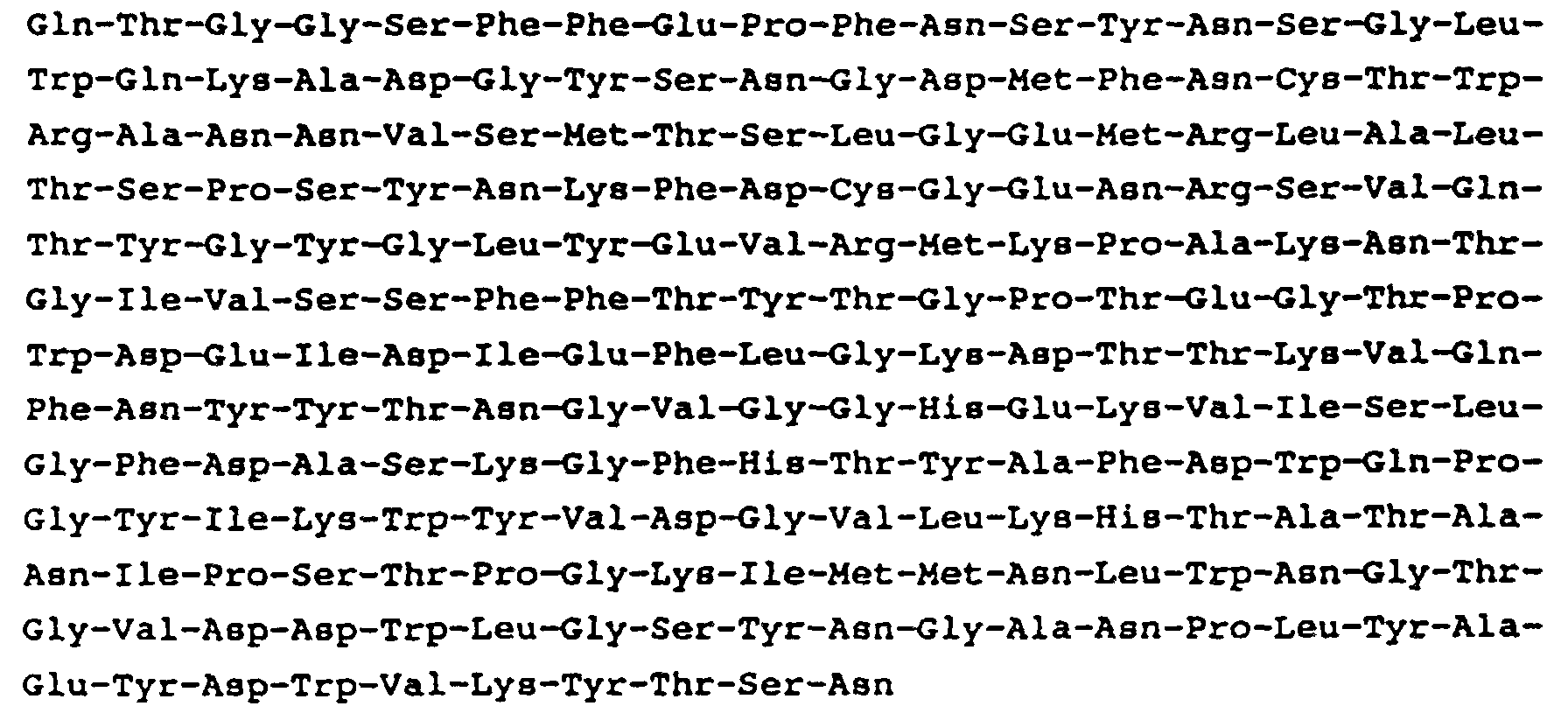
- Thermostabile (1,3-1,4)-β-Glucanase nach Anspruch 1, die die folgende Aminosäuresequenz umfaßt:oder Analoge davon.

- DNA-Fragment, umfassend eine Nucleotidsequenz, die die thermostabile (1,3-1,4)-β-Glucanase nach Anspruch 17 codiert.
- DNA-Fragment nach Anspruch 29, die die folgende Nucleotidsequenz umfaßt:
 oder ein Analog oder eine Subsequenz davon.

- Verfahren zur Herstellung einer thermostabilen (1,3-1,4)-β-Glucanase nach Anspruch 1, umfassend die Züchtung eines Mikroorganismus, in den ein DNA-Fragment nach Anspruch 29 oder 30 so eingeführt wurde, daß der Mikroorganismus in der Lage ist, die thermostabile (1,3-1,4)-β-Glucanase zu exprimieren, wobei die Züchtung unter Bedingungen durchgeführt wird, die zur Produktion der thermostabilen (1,3-1,4)-β-Glucanase und Gewinnung der (1,3-1,4)-β-Glucanase aus der Kultur führt.
- Verfahren nach Anspruch 31, wobei der Mikroorganismus ein Bakterium ist.
- Verfahren nach Anspruch 32, wobei das Bakterium ein gram-negatives Bakterium ist.
- Verfahren nach Anspruch 33, wobei das gram-negative Bakterium ein E. coli-Stamm ist.
- Verfahren nach Anspruch 34, wobei der E. coli-Stamm ein das Plasmid pUC13-H1 enthaltender E. coli-Stamm ist und das Plasmid bei der Deutschen Sammlung von Mikroorganismen unter der Hinterlegungsnummer DSM 5461 hinterlegt ist.
- Verfahren nach Anspruch 34, wobei der E. coli-Stamm ein das Plasmid pTZ19R-H3 enthaltender E. coli-Stamm ist und das Plasmid bei der Deutschen Sammlung von Mikroorganismen unter der Hinterlegungsnummer DSM 5790 hinterlegt ist.
- Verfahren nach Anspruch 34, wobei der E. coli-Stamm ein das Plasmid pTZ19R-H4 enthaltender E. coli-Stamm ist und das Plasmid bei der Deutschen Sammlung von Mikroorganismen unter der Hinterlegungsnummer DSM 5791 hinterlegt ist.
- Verfahren nach Anspruch 34, wobei der E. coli-Stamm ein das Plasmid pTZ19R-H5 enthaltender E. coli-Stamm ist und das Plasmid bei der Deutschen Sammlung von Mikroorganismen unter der Hinterlegungsnummer DSM 5792 hinterlegt ist.
- Verfahren nach Anspruch 34, wobei der E. coli-Stamm ein das Plasmid pTZ19R-H6 enthaltender E. coli-Stamm ist und das Plasmid bei der Deutschen Sammlung von Mikroorganismen unter der Hinterlegungsnummer DSM 5793 hinterlegt ist.
- Verfahren nach Anspruch 31, wobei der Mikroorganismus eine Hefe ist.
- Verfahren nach Anspruch 40, wobei die Hefe eine Saccharomyces-Art ist.
- Verfahren nach Anspruch 41, wobei die Saccharomyces-Art Saccharomyces cerevisiae ist.
- Eukaryontischer oder prokaryontischer Organismus, der mit dem DNA-Fragment nach Anspruch 29 oder 30 transformiert ist und dieses exprimieren kann.
- Organismus nach Anspruch 43, der ein Mikroorganismus ist.
- Mikroorganismus nach Anspruch 44, der ein Bakterium ist.
- Bakterium nach Anspruch 45, das ein gram-negatives Bakterium ist.
- Bakterium nach Anspruch 46, das ein E. coli-Stamm ist.
- E. coli-Stamm, der das Plasmid pUC13-H1 enthält, das bei der Deutschen Sammlung von Mikroorganismen unter der Hinterlegungsnummer DSM 5461 hinterlegt ist, und Mutanten und Varianten davon.
- E. coli-Stamm, der das Plasmid pTZ19R-H3 enthält, das bei der Deutschen Sammlung von Mikroorganismen unter der Hinterlegungsnummer DSM 5790 hinterlegt ist, und Mutanten und Varianten davon.
- E. coli-Stamm, der das Plasmid pTZ19R-H4 enthält, das bei der Deutschen Sammlung von Mikroorganismen unter der Hinterlegungsnummer DSM 5791 hinterlegt ist, und Mutanten und Varianten davon.
- E. coli-Stamm, der das Plasmid pTZ19R-H5 enthält, das bei der Deutschen Sammlung von Mikroorganismen unter der Hinterlegungsnummer DSM 5792 hinterlegt ist, und Mutanten und Varianten davon.
- E. coli-Stamm, der das Plasmid pTZ19R-H6 enthält, das bei der Deutschen Sammlung von Mikroorganismen unter der Hinterlegungsnummer DSM 5793 hinterlegt ist, und Mutanten und Varianten davon.
- Mikroorganismus nach Anspruch 44, der eine Hefe ist.
- Hefe nach Anspruch 53, die eine Saccharomyces-Art ist.
- Saccharomyces-Art nach Anspruch 54, die Saccharomyces cerevisiae ist.
- Organismus nach Anspruch 43, der eine Pflanze ist.
- Pflanze nach Anspruch 56, die Hafer, Gerste, Roggen, Weizen, Reis oder Mais ist.
- Verfahren zum Abbau von (1,3-1,4)-β-Glucanen in einem Substrat, umfassend das Einwirken einer wirksamen Menge an thermostabiler (1,3-1,4)-β-Glucanase nach einem der Ansprüche 1 bis 22 für einen Zeitraum bei einer Temperatur von 65°C oder höher auf das Substrat, wobei die Menge an (1,3-1,4)-β-Glucanase höchstens 200 µg, bevorzugt höchstens 100 µg, stärker bevorzugt höchstens 50 µg, noch stärker bevorzugt höchstens 20 µg und am stärksten bevorzugt 15 µg pro kg Substrat beträgt.
- Verfahren nach Anspruch 58, wobei das Substrat nicht-modifizierte, unbehandelte Körner oder Teile davon von Gerste oder Hafer oder anderem Getreide umfaßt.
- Verfahren nach Anspruch 58 oder 59, wobei das (1,3-1,4)-β-Glucane enthaltende Substrat mit einem zweiten Substrat gemischt wird, das aus eine thermostabile (1,3-1,4)-β-Glucanase nach Anspruch 1 enthaltendem Mais, Reis oder Weizen stammt.
- Verfahren zur Herstellung von Bier, dadurch gekennzeichnet, daß die Würze der Behandlung mit einer thermostabilen (1,3-1,4)-β-Glucanase nach einem der Ansprüche 1 bis 22 während des Zerstampfens bei einer Temperatur von 65°C oder höher und einem pH-Wert zwischen 4 und 5,5 unterzogen wird.
- Verfahren nach Anspruch 61, bei dem die Temperatur 70°C oder mehr beträgt.
- Verfahren zur Herstellung von β-Glucane enthaltender Tiernahrung, dadurch gekennzeichnet, daß die Tiernahrung mit einer thermostabilen (1,3-1,4)-β-Glucanase nach Anspruch 1 in einer Menge versetzt wird, die zum Erhalt eines signifikanten Abbaus von β-Glucanen im Gastrointestinaltrakt eines Tieres geeignet ist, das mit mit (1,3-1,4)-β-Glucanase versetzter Tiernahrung gefüttert wurde.
- Verfahren nach Anspruch 63, wobei die Tiernahrung zu Pellets geformt ist.
Applications Claiming Priority (5)
| Application Number | Priority Date | Filing Date | Title |
|---|---|---|---|
| DD89325800A DD282028A5 (de) | 1989-02-16 | 1989-02-16 | Verfahren zur herstellung einer thermostabilen, hybriden bacillus-beta-1,3-1,4-glukanase |
| DD325800 | 1989-02-16 | ||
| DK384889A DK384889D0 (da) | 1989-02-16 | 1989-08-04 | Forbedringer relateret til enzymer |
| DK3848/89 | 1989-08-04 | ||
| PCT/DK1990/000044 WO1990009436A1 (en) | 1989-02-16 | 1990-02-16 | A THERMOSTABLE (1,3-1,4)-β-GLUCANASE |
Publications (2)
| Publication Number | Publication Date |
|---|---|
| EP0458846A1 EP0458846A1 (de) | 1991-12-04 |
| EP0458846B1 true EP0458846B1 (de) | 1996-10-02 |
Family
ID=25748265
Family Applications (1)
| Application Number | Title | Priority Date | Filing Date |
|---|---|---|---|
| EP90903321A Expired - Lifetime EP0458846B1 (de) | 1989-02-16 | 1990-02-16 | Thermostabile (1,3-1,4)-beta-glucanase |
Country Status (10)
| Country | Link |
|---|---|
| EP (1) | EP0458846B1 (de) |
| JP (1) | JP2530942B2 (de) |
| AT (1) | ATE143688T1 (de) |
| AU (1) | AU638695B2 (de) |
| CA (1) | CA2050468C (de) |
| DE (1) | DE69028769T2 (de) |
| DK (1) | DK0458846T3 (de) |
| ES (1) | ES2092504T3 (de) |
| PT (1) | PT93181A (de) |
| WO (1) | WO1990009436A1 (de) |
Families Citing this family (21)
| Publication number | Priority date | Publication date | Assignee | Title |
|---|---|---|---|---|
| IL97020A (en) * | 1990-01-30 | 2000-12-06 | Mogen Int | Recombinant polynucleotides comprising a chitinase gene and a glucanase gene |
| PT97110B (pt) * | 1990-03-23 | 1998-11-30 | Gist Brocades Nv | Processo para catalisar reaccoes acelaraveis por enzimas, mediante adicao ao meio reaccional de sementes de plantas transgenicas e para obtencao das referidas sementes |
| US5593963A (en) * | 1990-09-21 | 1997-01-14 | Mogen International | Expression of phytase in plants |
| US7033627B2 (en) | 1990-03-23 | 2006-04-25 | Syngenta Mogen B.V. | Production of enzymes in seeds and their use |
| US5543576A (en) * | 1990-03-23 | 1996-08-06 | Mogen International | Production of enzymes in seeds and their use |
| ZA931333B (en) * | 1992-02-28 | 1994-08-25 | Unilever Plc | Recombinant plant enzyme. |
| CA2166777A1 (en) * | 1993-07-07 | 1995-01-19 | Joseph Noozhumurry Varghese | (1-3,1-4)-.beta.-glucanase of enhanced stability |
| US7005128B1 (en) | 1993-12-17 | 2006-02-28 | Genencor International, Inc. | Enzyme feed additive and animal feed including it |
| US5861271A (en) * | 1993-12-17 | 1999-01-19 | Fowler; Timothy | Cellulase enzymes and systems for their expressions |
| US6268196B1 (en) | 1993-12-17 | 2001-07-31 | Genencor International, Inc. | Method and compositions for treating cellulose containing fabrics using truncated cellulase enzyme compositions |
| HUP9801179A3 (en) * | 1995-11-07 | 2000-11-28 | Gist Brocades Bv | Stable compositions comprising transgenic plant material |
| JP2000515381A (ja) * | 1996-08-05 | 2000-11-21 | モーヘン インターナショナル エヌ.ブイ. | 麦芽種子を用いるアルコール飲料の製造のための改善されたプロセス |
| KR20000036077A (ko) | 1996-09-12 | 2000-06-26 | 한스 루돌프 하우스, 헨리테 브룬너, 베아트리체 귄터 | 셀룰로스 분해 효소를 발현하는 트랜스젠 식물 |
| US6268202B1 (en) | 1997-07-11 | 2001-07-31 | Her Majesty The Queen In Right Of Canada As Represented By The Department Of Agriculture And Agri-Food Canada | Strains of coniothyrium minitans having β-glucanase activity |
| WO2001059141A2 (en) * | 2000-02-10 | 2001-08-16 | Washington State University Research Foundation | Methods and compositions that utilize barley as a foodstuff for animals |
| ES2164610B1 (es) * | 2000-07-28 | 2003-05-16 | Consejo Superior Investigacion | Nuevo metodo para la sobreproduccion de liquenasas en bacterias aislando los genes directamente de muestras naturales (liquenaturasas). |
| AR036370A1 (es) | 2001-08-27 | 2004-09-01 | Syngenta Participations Ag | Plantas con auto-procesamiento y partes de las mismas |
| ES2758563T3 (es) * | 2011-06-09 | 2020-05-05 | Novozymes As | Fusión de moléculas bioactivas |
| CN110923182B (zh) * | 2019-12-06 | 2022-09-13 | 四川轻化工大学 | 一种基于酒糟的高效耐酸内切葡聚糖酶工程菌及应用 |
| WO2023225459A2 (en) | 2022-05-14 | 2023-11-23 | Novozymes A/S | Compositions and methods for preventing, treating, supressing and/or eliminating phytopathogenic infestations and infections |
| DE102023001827A1 (de) | 2023-04-19 | 2024-10-24 | Horst Wochnowski | Verfahren und dazugehörige Vorrichtung zum Züchten von in Gewässern Mikroplastik zersetzenden und abbauenden Mikroorganismenstämme durch einen künstlich herbeigeführten und beschleunigten Evolutions- und Selektionsprozess |
Family Cites Families (2)
| Publication number | Priority date | Publication date | Assignee | Title |
|---|---|---|---|---|
| DK311186D0 (da) * | 1986-06-30 | 1986-06-30 | Novo Industri As | Enzymer |
| CA1340685C (en) * | 1988-07-29 | 1999-07-27 | Frederick Meins | Dna sequences encoding polypeptides having beta-1,3-glucanase activity |
-
1990
- 1990-02-16 JP JP2503461A patent/JP2530942B2/ja not_active Expired - Lifetime
- 1990-02-16 DK DK90903321.9T patent/DK0458846T3/da active
- 1990-02-16 DE DE69028769T patent/DE69028769T2/de not_active Expired - Lifetime
- 1990-02-16 AT AT90903321T patent/ATE143688T1/de not_active IP Right Cessation
- 1990-02-16 ES ES90903321T patent/ES2092504T3/es not_active Expired - Lifetime
- 1990-02-16 WO PCT/DK1990/000044 patent/WO1990009436A1/en not_active Ceased
- 1990-02-16 PT PT93181A patent/PT93181A/pt not_active Application Discontinuation
- 1990-02-16 EP EP90903321A patent/EP0458846B1/de not_active Expired - Lifetime
- 1990-02-16 CA CA002050468A patent/CA2050468C/en not_active Expired - Lifetime
- 1990-02-16 AU AU51013/90A patent/AU638695B2/en not_active Expired
Also Published As
| Publication number | Publication date |
|---|---|
| JPH05504462A (ja) | 1993-07-15 |
| AU638695B2 (en) | 1993-07-08 |
| CA2050468C (en) | 1996-07-09 |
| EP0458846A1 (de) | 1991-12-04 |
| JP2530942B2 (ja) | 1996-09-04 |
| ES2092504T3 (es) | 1996-12-01 |
| ATE143688T1 (de) | 1996-10-15 |
| PT93181A (pt) | 1990-08-31 |
| AU5101390A (en) | 1990-09-05 |
| DE69028769T2 (de) | 1997-05-22 |
| DE69028769D1 (en) | 1996-11-07 |
| DK0458846T3 (da) | 1996-11-18 |
| CA2050468A1 (en) | 1990-08-17 |
| WO1990009436A1 (en) | 1990-08-23 |
Similar Documents
| Publication | Publication Date | Title |
|---|---|---|
| US5470725A (en) | Thermostable (1,3-1,4)-β-glucanase | |
| AU638695B2 (en) | A thermostable (1,3-1,4)-beta-glucanase | |
| JP3535162B2 (ja) | α−ガラクトシダーゼ酵素 | |
| US4863864A (en) | Glucoamylase gene of rhizopus oryzae | |
| Dohmen et al. | Cloning of the Schwanniomyces occidentalis glucoamylase gene (GAM1) and its expression in Saccharomyces cerevisiae | |
| Borriss et al. | Hybrid Bacillus endo-(1–3, 1–4)-β-glucanases: construction of recombinant genes and molecular properties of the gene products | |
| EP0871718B1 (de) | Herstellung enzymatisch aktiver, rekombinanter carboxypeptidase b | |
| NZ207000A (en) | Dna coding for fungal glucoamylase | |
| EP0804558B1 (de) | Tripeptidyl-aminopeptidase | |
| CN110564707A (zh) | 玉米赤霉烯酮水解酶突变体zhdm1及其编码基因和应用 | |
| CN113862233B (zh) | 提高葡萄糖氧化酶的酸稳定性的方法及突变体q241e/r499e、基因和应用 | |
| CN110527677A (zh) | 玉米赤霉烯酮水解酶突变体zhdm2及其编码基因和应用 | |
| CA2198828C (en) | Method for increasing thermostability in cellulase emzymes by removal of the cellulose binding domains | |
| WO1995004815A1 (en) | SECRETION OF CLOSTRIDIUM CELLULASE BY $i(E. COLI) | |
| NO302899B1 (no) | Rekombinant DNA-molekyl, transformert vertscelle, anvendelse av rekombinant DNA-molekyl og hybridvektor, og pektinlyasene PLA, PLB, PLC, PLE eller PLF i ren form | |
| EP0329693A1 (de) | Menschliche pankreas-sekretions-trypsin-inhibitoren, hergestellt mit dns-rekombinationsmethoden und verfahren für ihre herstellung | |
| JP3576549B2 (ja) | 真核生物発現系 | |
| EP0362183A2 (de) | Verfahren zur Herstellung von menschlichem Lysozym | |
| CN108699544B (zh) | α淀粉酶变体及其应用 | |
| CN108841808A (zh) | 酸性海藻糖酶TreA及其基因和应用 | |
| KR101826927B1 (ko) | 레반슈크라제 생산능이 향상된 균주 및 이를 이용한 레반 생산방법 | |
| US20020068349A1 (en) | Gene encoding recombinant trehalose phosphorylase, vector containing the gene, transformant transformed by the gene, and method for producing recombinant trehalose phosphorylase with the use of transformant | |
| Wanker et al. | Efficient secretion of Bacillus subtilis levanase by Saccharomyces cerevisiae | |
| WO1988001647A1 (en) | Stabilised polypeptides and their expression and use in fermentation | |
| Pan et al. | Expression of the Xylan-Degrading Genes of Bacillus pumilus IPO in Saccharomyces cerevisiae |
Legal Events
| Date | Code | Title | Description |
|---|---|---|---|
| PUAI | Public reference made under article 153(3) epc to a published international application that has entered the european phase |
Free format text: ORIGINAL CODE: 0009012 |
|
| 17P | Request for examination filed |
Effective date: 19910810 |
|
| AK | Designated contracting states |
Kind code of ref document: A1 Designated state(s): AT BE CH DE DK ES FR GB IT LI LU NL SE |
|
| 17Q | First examination report despatched |
Effective date: 19940630 |
|
| GRAH | Despatch of communication of intention to grant a patent |
Free format text: ORIGINAL CODE: EPIDOS IGRA |
|
| GRAH | Despatch of communication of intention to grant a patent |
Free format text: ORIGINAL CODE: EPIDOS IGRA |
|
| GRAA | (expected) grant |
Free format text: ORIGINAL CODE: 0009210 |
|
| AK | Designated contracting states |
Kind code of ref document: B1 Designated state(s): AT BE CH DE DK ES FR GB IT LI LU NL SE |
|
| REF | Corresponds to: |
Ref document number: 143688 Country of ref document: AT Date of ref document: 19961015 Kind code of ref document: T |
|
| ITF | It: translation for a ep patent filed | ||
| RAP2 | Party data changed (patent owner data changed or rights of a patent transferred) |
Owner name: INSTITUT FUER PFLANZENGENETIK UND KULTURPFLANZENF Owner name: CARLSBERG A/S |
|
| REF | Corresponds to: |
Ref document number: 69028769 Country of ref document: DE Date of ref document: 19961107 |
|
| REG | Reference to a national code |
Ref country code: DK Ref legal event code: T3 |
|
| REG | Reference to a national code |
Ref country code: ES Ref legal event code: FG2A Ref document number: 2092504 Country of ref document: ES Kind code of ref document: T3 |
|
| ET | Fr: translation filed | ||
| NLT2 | Nl: modifications (of names), taken from the european patent patent bulletin |
Owner name: CARLSBERG A/S EN INSTITUT FUER PFLANZENGENETIK UND |
|
| REG | Reference to a national code |
Ref country code: CH Ref legal event code: NV Representative=s name: A. BRAUN, BRAUN, HERITIER, ESCHMANN AG PATENTANWAE |
|
| PLBE | No opposition filed within time limit |
Free format text: ORIGINAL CODE: 0009261 |
|
| STAA | Information on the status of an ep patent application or granted ep patent |
Free format text: STATUS: NO OPPOSITION FILED WITHIN TIME LIMIT |
|
| 26N | No opposition filed | ||
| REG | Reference to a national code |
Ref country code: GB Ref legal event code: IF02 |
|
| REG | Reference to a national code |
Ref country code: CH Ref legal event code: PFA Owner name: INSTITUT FUER PFLANZENGENETIK UND KULTURPFLANZENF Free format text: INSTITUT FUER PFLANZENGENETIK UND KULTURPFLANZENFORSCHUNG#CORRENSSTRASSE 3#D-06466 GATERSLEBEN (DE) $ CARLSBERG A/S#VESTERFAELLEDVEJ 100#1799 COPENHAGEN V (DK) -TRANSFER TO- INSTITUT FUER PFLANZENGENETIK UND KULTURPFLANZENFORSCHUNG#CORRENSSTRASSE 3#D-06466 GATERSLEBEN (DE) $ CARLSBERG A/S#VESTERFAELLEDVEJ 100#1799 COPENHAGEN V (DK) |
|
| PGFP | Annual fee paid to national office [announced via postgrant information from national office to epo] |
Ref country code: AT Payment date: 20090218 Year of fee payment: 20 Ref country code: ES Payment date: 20090219 Year of fee payment: 20 Ref country code: DK Payment date: 20090213 Year of fee payment: 20 Ref country code: LU Payment date: 20090216 Year of fee payment: 20 |
|
| PGFP | Annual fee paid to national office [announced via postgrant information from national office to epo] |
Ref country code: DE Payment date: 20090219 Year of fee payment: 20 Ref country code: NL Payment date: 20090217 Year of fee payment: 20 |
|
| PGFP | Annual fee paid to national office [announced via postgrant information from national office to epo] |
Ref country code: CH Payment date: 20090217 Year of fee payment: 20 Ref country code: GB Payment date: 20090219 Year of fee payment: 20 |
|
| PGFP | Annual fee paid to national office [announced via postgrant information from national office to epo] |
Ref country code: IT Payment date: 20090221 Year of fee payment: 20 Ref country code: SE Payment date: 20090216 Year of fee payment: 20 |
|
| PGFP | Annual fee paid to national office [announced via postgrant information from national office to epo] |
Ref country code: BE Payment date: 20090408 Year of fee payment: 20 |
|
| PGFP | Annual fee paid to national office [announced via postgrant information from national office to epo] |
Ref country code: FR Payment date: 20090213 Year of fee payment: 20 |
|
| REG | Reference to a national code |
Ref country code: CH Ref legal event code: PL |
|
| BE20 | Be: patent expired |
Owner name: *INSTITUT FUR PFLANZENGENETIK UND KULTURPFLANZENFO Effective date: 20100216 Owner name: *CARLSBERG A/S Effective date: 20100216 |
|
| REG | Reference to a national code |
Ref country code: DK Ref legal event code: EUP |
|
| REG | Reference to a national code |
Ref country code: GB Ref legal event code: PE20 Expiry date: 20100215 |
|
| NLV7 | Nl: ceased due to reaching the maximum lifetime of a patent |
Effective date: 20100216 |
|
| REG | Reference to a national code |
Ref country code: ES Ref legal event code: FD2A Effective date: 20100217 |
|
| PG25 | Lapsed in a contracting state [announced via postgrant information from national office to epo] |
Ref country code: GB Free format text: LAPSE BECAUSE OF EXPIRATION OF PROTECTION Effective date: 20100215 |
|
| PG25 | Lapsed in a contracting state [announced via postgrant information from national office to epo] |
Ref country code: ES Free format text: LAPSE BECAUSE OF EXPIRATION OF PROTECTION Effective date: 20100217 |
|
| PG25 | Lapsed in a contracting state [announced via postgrant information from national office to epo] |
Ref country code: DE Free format text: LAPSE BECAUSE OF EXPIRATION OF PROTECTION Effective date: 20100216 |