EP0460596B1 - Vorrichtung zur Korrektur eines Farbtones eines Videosignales - Google Patents
Vorrichtung zur Korrektur eines Farbtones eines Videosignales Download PDFInfo
- Publication number
- EP0460596B1 EP0460596B1 EP91109095A EP91109095A EP0460596B1 EP 0460596 B1 EP0460596 B1 EP 0460596B1 EP 91109095 A EP91109095 A EP 91109095A EP 91109095 A EP91109095 A EP 91109095A EP 0460596 B1 EP0460596 B1 EP 0460596B1
- Authority
- EP
- European Patent Office
- Prior art keywords
- color
- signal
- greatest
- level
- color difference
- Prior art date
- Legal status (The legal status is an assumption and is not a legal conclusion. Google has not performed a legal analysis and makes no representation as to the accuracy of the status listed.)
- Expired - Lifetime
Links
Images


Classifications
-
- H—ELECTRICITY
- H04—ELECTRIC COMMUNICATION TECHNIQUE
- H04N—PICTORIAL COMMUNICATION, e.g. TELEVISION
- H04N9/00—Details of colour television systems
- H04N9/64—Circuits for processing colour signals
- H04N9/68—Circuits for processing colour signals for controlling the amplitude of colour signals, e.g. automatic chroma control circuits
-
- H—ELECTRICITY
- H04—ELECTRIC COMMUNICATION TECHNIQUE
- H04N—PICTORIAL COMMUNICATION, e.g. TELEVISION
- H04N9/00—Details of colour television systems
- H04N9/77—Circuits for processing the brightness signal and the chrominance signal relative to each other, e.g. adjusting the phase of the brightness signal relative to the colour signal, correcting differential gain or differential phase
Definitions
- This invention relates to an apparatus for correcting a color-tone component of a video signal.
- This invention also relates to a television receiver including such a color-tone correcting apparatus.
- Document US-A-4 812 905 discloses a color-tone correcting apparatus comprising: means for detecting a greatest color-representing component video signal of input component video signals, and outputting said detected greatest color-representing component video signal.
- a color-tone correcting apparatus comprising limiting means for limiting a level of a color-representing component video signal and means for adding a luminance representing component video signal and an output signal of said limiting means.
- a color-tone correcting apparatus comprising: first means for detecting a greatest color-representing component video signal of input component video signals, and outputting said detected greatest color-representing component video signal; said color-tone correcting apparatus being characterized by second means for removing small-level components from the output signal of said first means, and limiting an amplitude of the output signal of said first means to within a predetermined amplitude; and third means for adding an output signal of said second means and an input luminance signal.
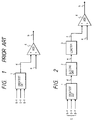
- Fig. 1 is a block diagram of a prior art color-tone correcting apparatus.
- Fig. 2 is a block diagram of a color-tone correcting apparatus according to a first embodiment of this invention.
- Fig. 3 is a time-domain diagram showing the waveforms of various signals in the color-tone correcting apparatus of Fig. 2.
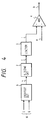
- Fig. 4 is a block diagram of a color-tone correcting apparatus according to a second embodiment of this invention.
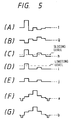
- Fig. 5 is a time-domain diagram showing the waveforms of various signals in the color-tone correcting apparatus of Fig. 4.
- Fig. 6 is a block diagram of a color-tone correcting apparatus according to a third embodiment of this invention.
- Fig. 7 is a time-domain diagram showing the waveforms of various signals in the color-tone correcting apparatus of Fig. 6.
- a prior art color-tone correcting apparatus includes a greatest detector 1 and an adder 4.
- the greatest detector 1 detects the greatest of three color difference signals R-Y, G-Y, and B-Y, and selects the greatest color difference signal and outputs the selected color difference signal "d".
- the greatest color difference signal "d” is used as a color-tone corrective signal or a luminance corrective signal.
- the adder 4 adds an input luminance signal "a” and the greatest color difference signal "d”, combining the signals "a” and "d” into a final luminance signal "b". In other words, the adder 4 corrects the input luminance signal "a” into the final luminance signal "b” in response to the color-tone corrective signal "d".
- the prior art color-tone correcting apparatus of Fig. 1 has the following problems.
- the greatest color difference signal "d” has noise components
- the final luminance signal “b” is also contaminated by the noise components since the final luminance signal “b” results from the addition of the greatest color difference signal "d” and the input luminance signal "a”.
- the greatest color difference signal "d” has a large level
- the final luminance signal "b” tends to be extremely large in level so that the color of the corresponding part of a reproduced image tends to be appreciably lighter than the original color.
- a color-tone correcting apparatus of a first embodiment of this invention includes a greatest detector 1, a slicing circuit 2, a limiter 3, and an adder 4.
- a group "c" of three color difference signals R-Y, B-Y, and C-Y is inputted into the greatest detector 1.
- the greatest detector 1 detects the greatest of the three color difference signals R-Y, G-Y, and B-Y, and selects the greatest color difference signal and outputs the selected color difference signal "d". For example, when the levels of the three color difference signals R-Y, G-Y, and B-Y increase and decrease as shown in the parts (A)-(C) of Fig. 3, the greatest color difference signal "d" varies as shown in the part (D) of Fig. 3.
- the slicing circuit 2 receives the greatest color difference signal "d” from the greatest detector 1.
- the slicing circuit 2 slices the greatest color difference signal "d” with a predetermined slicing level, and thereby converts the greatest color difference signal "d” into a color difference signal "e”.
- the slicing circuit 2 transmits the greatest color difference signal "d” which has a level equal to or greater than the slicing level, but cuts off the greatest color difference signal "d” which has a level below the slicing level. For example, when the level of the greatest color difference signal "d” varies around the slicing level as shown in the part (D) of Fig.
- the output color difference signal "e” from the slicing circuit 2 varies as shown in the part (E) of Fig. 3. In this way, the slicing circuit 2 cuts off the small-level part of the color difference signal "d". Cutting off the small-level part of the color difference signal "d” suppresses or decreases noise components of the color difference signal "d".
- the limiter 3 receives the noise-suppressed color difference signal "e” from the slicing circuit 2.
- the limiter 3 limits the amplitude of the color difference signal “e” to within a predetermined amplitude, and thereby converts the color difference signal "e” into a color difference signal "f".
- the limiter 3 prevents the amplitude of the color difference signal "e” from exceeding a predetermined limiting level.
- the level of the output color difference signal "f” of the limiter 3 is prevented from going excessively great.
- the color difference signal "f” is used as a color-tone corrective signal or a luminance corrective signal.
- the limiter 3 prevents the level of the color-tone corrective signal "f” from going excessively great. Therefore, even when the greatest color difference signal "d” has a large level, the final luminance signal "b” is prevented from going excessively large in level so that the color of the corresponding part of a reproduced image is prevented from being appreciably lighter than the original color.
- This embodiment may be modified as follows.
- a first modification of this embodiment only two of the color difference signals R-Y, G-Y, and B-Y are inputted into the greatest detector 1.
- the slicing circuit 2 has an additional function of removing minus components from the color difference signal "e”.
- the slicing circuit 2 and the limiter 3 are exchanged in position with respect to the arrangement of Fig. 2.
- the input luminance signal "a" has such a polarity that sync components are positive-going, and the adder 4 is replaced by a subtracter.
- a color-tone correcting apparatus of a second embodiment of this invention includes a greatest detector 5, a slicing circuit 2, a limiter 3, and an adder 4.
- a pair “g” of color signals "I” and “Q” is inputted into the greatest detector 5.
- the greatest detector 5 detects the greatest of the color signals "I” and “Q”, and selects the greatest color signal and outputs the selected greatest color signal "h”. For example, when the levels of the color signals "I” and “Q” increase and decrease as shown in the parts (A) and (B) of Fig. 5, the greatest color signal "h” varies as shown in the part (C) of Fig. 5.
- the color subcarrier is modulated with the color signals "I” and "Q”.
- the slicing circuit 2 receives the greatest color signal "h” from the greatest detector 5.
- the slicing circuit 2 slices the greatest color signal "h” with a predetermined slicing level, and thereby converts the greatest color signal "h” into a color signal "i”.
- the slicing circuit 2 transmits the greatest color signal "h” which has a level equal to or greater than the slicing level, but cuts off the greatest color signal "h” which has a level below the slicing level.
- the output color signal "i" from the slicing circuit 2 varies as shown in the part (D) of Fig. 5. In this way, the slicing circuit 2 cuts off the small-level part of the greatest color signal "h”. Cutting off the small-level part of the greatest color signal "h” suppresses or decreases noise components of the greatest color signal "h”.
- the limiter 3 receives the noise-suppressed color signal "i” from the slicing circuit 2.
- the limiter 3 limits the amplitude of the color signal “i” to within a predetermined amplitude, and thereby converts the color signal "i” into a color signal "j".
- the limiter 3 prevents the amplitude of the color signal "i” from exceeding a predetermined limiting level.
- the level of the output color signal "j" of the limiter 3 is prevented from going excessively great.
- the color signal "j” is used as a color-tone corrective signal or a luminance corrective signal.
- the adder 4 receives the amplitude-limited color signal "j" from the limiter 3. In addition, the adder 4 receives an input luminance signal "a". The adder 4 adds the color signal "j" and the input luminance signal "a", combining the signals "j" and “a” into a final luminance signal "b". In other words, the adder 4 corrects the input luminance signal "a” into the final luminance signal "b” in response to the color-tone corrective signal "j". For example, the color signal "j" and the input luminance signal "a” vary as shown in the parts (E) and (F) of Fig. 5, the final luminance signal "b” varies as shown in the part (G) of Fig. 5.
- the limiter 3 prevents the level of the color-tone corrective signal "j" from going excessively great. Therefore, even when the greatest color signal "h” has a large level, the final luminance signal "b" is prevented from going excessively large in level so that the color of the corresponding part of a reproduced image is prevented from being appreciably lighter than the original color.
- This embodiment may be modified as follows.
- the slicing circuit 2 and the limiter 3 are exchanged in position with respect to the arrangement of Fig. 4.
- the input luminance signal "a" has such a polarity that sync components are positive-going, and the adder 4 is replaced by a subtracter.
- a color-tone correcting apparatus of a third embodiment of this invention features that a color-tone component of a video signal is corrected in response to a color signal "I". Since the color signal "I" closely relates to a color which is generally sensed by human eyes at a highest sensitivity, the use of the color signal "I” enables an effective color-tone correction.
- a color-tone correcting apparatus of a third embodiment of this invention includes a slicing circuit 2, a limiter 3, and an adder 4.
- a color signal "I” is inputted into the slicing circuit 2.
- the slicing circuit 2 slices the color signal "I” with a predetermined slicing level, and thereby converts the color signal “I” into a color signal "k”. Specifically, the slicing circuit 2 transmits the color signal "I” which has a level equal to or greater than the slicing level, but cuts off the color signal "I” which has a level below the slicing level. For example, when the level of the color signal "I” varies around the slicing level as shown in the part (A) of Fig. 7, the output color signal "k” from the slicing circuit 2 varies as shown in the part (B) of Fig. 7. In this way, the slicing circuit 2 cuts off the small-level part of the color signal "I”. Cutting off the small-level part of the color signal "I” suppresses or decreases noise components of the color signal "I”.
- the limiter 3 receives the noise-suppressed color signal "k” from the slicing circuit 2.
- the limiter 3 limits the amplitude of the color signal “k” to within a predetermined amplitude, and thereby converts the color signal "k” into a color signal "m”.
- the limiter 3 prevents the amplitude of the color signal "k” from exceeding a predetermined limiting level.
- the level of the output color signal "m” of the limiter 3 is prevented from going excessively great.
- the color signal "m” is used as a color-tone corrective signal or a luminance corrective signal.
- the adder 4 receives the amplitude-limited color signal "m” from the limiter 3. In addition, the adder 4 receives an input luminance signal "a". The adder 4 adds the color signal "m” and the input luminance signal "a", combining the signals "m” and “a” into a final luminance signal "b". In other words, the adder 4 corrects the input luminance signal "a” into the final luminance signal "b” in response to the color-tone corrective signal "m”. For example, the color signal "m” and the input luminance signal "a” vary as shown in the parts (C) and (D) of Fig. 7, the final luminance signal "b” varies as shown in the part (E) of Fig. 7.
- the limiter 3 prevents the level of the color-tone corrective signal "m” from going excessively great. Therefore, even when the color signal "I” has a large level, the final luminance signal "b” is prevented from going excessively large in level so that the color of the corresponding part of a reproduced image is prevented from being appreciably lighter than the original color.
- This embodiment may be modified as follows.
- the slicing circuit 2 and the limiter 3 are exchanged in position with respect to the arrangement of Fig. 6.
- the input luminance signal "a" has such a polarity that sync components are positive-going, and the adder 4 is replaced by a subtracter.
Landscapes
- Engineering & Computer Science (AREA)
- Multimedia (AREA)
- Signal Processing (AREA)
- Processing Of Color Television Signals (AREA)
- Picture Signal Circuits (AREA)
Claims (9)
- Farbtonkorrekturvorrichtung mit:
einer ersten Einrichtung (1; 5) zur Erfassung einer maximalen, Farbe wiedergebenden Videosignalkomponente (d; h) von zugeführten Videosignalkomponenten (R-Y, G-Y, B-Y; I, Q) und Ausgabe der erfaßten maximalen, Farbe wiedergebenden Videosignalkomponente (d; h);
gekennzeichnet durch:eine zweite Einrichtung (2, 3) zur Entfernung niedrigpegeliger Komponenten aus dem Ausgangssignal (d; h) der ersten Einrichtung (1; 5) und Begrenzung der Amplitude des Ausgangssignals (d; h) der ersten Einrichtung (1; 5) auf eine vorgegebene Amplitude; undeine dritte Einrichtung (4) zur Addition des Ausgangssignals (f; j) der zweiten Einrichtung (2, 3) und eines zugeführten Luminanzsignals (a). - Farbtonkorrekturvorrichtung nach Anspruch 1,
dadurch gekennzeichnet, daß
die zugeführten Videosignalkomponenten (R-Y, G-Y, B-Y) Farbdifferenzsignale umfassen. - Farbtonkorrekturvorrichtung nach Anspruch 2,
dadurch gekennzeichnet, daß
die Farbdifferenzsignale ein Farbdifferenzsignal R-Y, ein Farbdifferenzsignal B-Y und ein Farbdifferenzsignal G-Y umfassen. - Farbtonkorrekturvorrichtung nach Anspruch 2,
dadurch gekennzeichnet, daß
die Farbdifferenzsignale ein Farbdifferenzsignal R-Y und ein Farbdifferenzsignal B-Y umfassen. - Farbtonkorrekturvorrichtung nach Anspruch 1,
dadurch gekennzeichnet, daß
die zugeführten Videosignalkomponenten (I, Q) ein Farbsignal "I" und ein Farbsignal "Q" umfassen. - Farbtonkorrekturvorrichtung nach Anspruch 1,
dadurch gekennzeichnet, daß
die zugeführten Videosignalkomponenten (I) ein Farbsignal "I" umfassen. - Farbtonkorrekturvorrichtung nach Anspruch 1,
dadurch gekennzeichnet, daß
die erste Einrichtung (5) die maximale, Farbe wiedergebende Videosignalkomponente (h) von einem Farbsignal "I" und einem Farbsignal "Q" erfaßt. - Farbtonkorrekturvorrichtung nach Anspruch 1,
dadurch gekennzeichnet, daß
die erste Einrichtung (1) die maximale, Farbe wiedergebende Videosignalkomponente (d) von zumindest zwei Farbdifferenzsignalen der Farbdifferenzsignale R-Y, B-Y und G-Y erfaßt. - Fernsehempfänger, der eine Farbtonkorrekturvorrichtung gemäß einem der vorstehenden Ansprüche 1 bis 8 umfaßt.
Applications Claiming Priority (2)
| Application Number | Priority Date | Filing Date | Title |
|---|---|---|---|
| JP2148286A JP2775997B2 (ja) | 1990-06-05 | 1990-06-05 | 映像信号の階調補正装置およびテレビジョン受像機 |
| JP148286/90 | 1990-06-05 |
Publications (3)
| Publication Number | Publication Date |
|---|---|
| EP0460596A2 EP0460596A2 (de) | 1991-12-11 |
| EP0460596A3 EP0460596A3 (en) | 1993-04-07 |
| EP0460596B1 true EP0460596B1 (de) | 1996-09-04 |
Family
ID=15449375
Family Applications (1)
| Application Number | Title | Priority Date | Filing Date |
|---|---|---|---|
| EP91109095A Expired - Lifetime EP0460596B1 (de) | 1990-06-05 | 1991-06-04 | Vorrichtung zur Korrektur eines Farbtones eines Videosignales |
Country Status (7)
| Country | Link |
|---|---|
| US (1) | US5255079A (de) |
| EP (1) | EP0460596B1 (de) |
| JP (1) | JP2775997B2 (de) |
| KR (1) | KR950005066B1 (de) |
| CA (1) | CA2043856C (de) |
| DE (1) | DE69121783T2 (de) |
| MY (1) | MY110231A (de) |
Families Citing this family (13)
| Publication number | Priority date | Publication date | Assignee | Title |
|---|---|---|---|---|
| JP3208814B2 (ja) * | 1992-01-09 | 2001-09-17 | 松下電器産業株式会社 | 映像信号補正装置 |
| RU2108006C1 (ru) * | 1996-09-27 | 1998-03-27 | Московское конструкторское бюро "Электрон" | Способ и устройство идентификации качественных характеристик отдельных ячеек в многорастровых системах отображения |
| US7382142B2 (en) | 2000-05-23 | 2008-06-03 | Nanonexus, Inc. | High density interconnect system having rapid fabrication cycle |
| US7247035B2 (en) | 2000-06-20 | 2007-07-24 | Nanonexus, Inc. | Enhanced stress metal spring contactor |
| US6812718B1 (en) | 1999-05-27 | 2004-11-02 | Nanonexus, Inc. | Massively parallel interface for electronic circuits |
| US6799976B1 (en) | 1999-07-28 | 2004-10-05 | Nanonexus, Inc. | Construction structures and manufacturing processes for integrated circuit wafer probe card assemblies |
| US7349223B2 (en) | 2000-05-23 | 2008-03-25 | Nanonexus, Inc. | Enhanced compliant probe card systems having improved planarity |
| US7579848B2 (en) | 2000-05-23 | 2009-08-25 | Nanonexus, Inc. | High density interconnect system for IC packages and interconnect assemblies |
| US7952373B2 (en) | 2000-05-23 | 2011-05-31 | Verigy (Singapore) Pte. Ltd. | Construction structures and manufacturing processes for integrated circuit wafer probe card assemblies |
| KR100402838B1 (ko) * | 2001-05-10 | 2003-10-22 | 주식회사 효성 | 폴리에스테르 멀티필라멘트사 |
| US20060104537A1 (en) * | 2004-11-12 | 2006-05-18 | Sozotek, Inc. | System and method for image enhancement |
| KR102544692B1 (ko) * | 2020-07-01 | 2023-06-15 | 코오롱인더스트리 주식회사 | 재생 섬유, 차량 소재 및 그 제법 |
| KR102544691B1 (ko) * | 2020-07-01 | 2023-06-15 | 코오롱인더스트리 주식회사 | 재생 섬유, 차량 소재 및 그 제법 |
Family Cites Families (9)
| Publication number | Priority date | Publication date | Assignee | Title |
|---|---|---|---|---|
| JPS588194B2 (ja) * | 1977-12-12 | 1983-02-15 | 日本放送協会 | カラ−テレビジヨン信号処理装置 |
| JPS5623086A (en) * | 1979-08-02 | 1981-03-04 | Hitachi Ltd | Picture quality improving circuit of color television receiver |
| US4337479A (en) * | 1979-09-13 | 1982-06-29 | Matsushita Electric Industrial Co., Ltd. | Color resolution compensator |
| DE2937958C2 (de) * | 1979-09-20 | 1982-03-25 | Robert Bosch Gmbh, 7000 Stuttgart | Verfahren zur horizontalen und vertikalen Konturkorrektur |
| JPS6033358A (ja) * | 1983-08-04 | 1985-02-20 | Hitachi Chem Co Ltd | 無電解銅めっき液 |
| US4558352A (en) * | 1983-11-28 | 1985-12-10 | Rca Corporation | Sampled data vertical detail signal processor |
| JPS62239670A (ja) * | 1986-04-11 | 1987-10-20 | Ikegami Tsushinki Co Ltd | 輪郭強調装置 |
| US4812905A (en) * | 1988-01-15 | 1989-03-14 | Rossi John P | System for compensating for the violation of the constant luminance principle in color television systems |
| JP2583325B2 (ja) * | 1989-12-26 | 1997-02-19 | 池上通信機株式会社 | 階調補正回路 |
-
1990
- 1990-06-05 JP JP2148286A patent/JP2775997B2/ja not_active Expired - Fee Related
-
1991
- 1991-05-30 US US07/707,509 patent/US5255079A/en not_active Expired - Lifetime
- 1991-05-31 MY MYPI91000966A patent/MY110231A/en unknown
- 1991-06-04 CA CA002043856A patent/CA2043856C/en not_active Expired - Fee Related
- 1991-06-04 KR KR1019910009205A patent/KR950005066B1/ko not_active Expired - Fee Related
- 1991-06-04 EP EP91109095A patent/EP0460596B1/de not_active Expired - Lifetime
- 1991-06-04 DE DE69121783T patent/DE69121783T2/de not_active Expired - Fee Related
Non-Patent Citations (1)
| Title |
|---|
| Patent Abstracts of Japan, Vol.13, No 166, & JP-A-63 318 888 * |
Also Published As
| Publication number | Publication date |
|---|---|
| EP0460596A3 (en) | 1993-04-07 |
| KR950005066B1 (ko) | 1995-05-17 |
| JP2775997B2 (ja) | 1998-07-16 |
| EP0460596A2 (de) | 1991-12-11 |
| MY110231A (en) | 1998-03-31 |
| JPH0440192A (ja) | 1992-02-10 |
| CA2043856A1 (en) | 1991-12-06 |
| DE69121783T2 (de) | 1997-02-06 |
| CA2043856C (en) | 1995-10-03 |
| US5255079A (en) | 1993-10-19 |
| DE69121783D1 (de) | 1996-10-10 |
| KR920001930A (ko) | 1992-01-30 |
Similar Documents
| Publication | Publication Date | Title |
|---|---|---|
| EP0460596B1 (de) | Vorrichtung zur Korrektur eines Farbtones eines Videosignales | |
| US5012329A (en) | Method of encoded video decoding | |
| US20020037101A1 (en) | Image processing apparatus, image processing method and computer program product for correcting image obtained by shooting subject | |
| KR960016851B1 (ko) | 휘도 신호 형성 회로 | |
| EP0551189B1 (de) | Vorrichtung zur Korrektur eines Videosignals | |
| EP0460595B1 (de) | Vorrichtung zur Korrektur eines Schwarzwertes eines Videosignales | |
| US4480266A (en) | Method and apparatus for preventing generation of false color signals in color television cameras | |
| US4686561A (en) | Vertical detail information restoration circuit | |
| US5150203A (en) | Variable chrominance filtering for encoding television signals | |
| EP0284266A2 (de) | Fernsehübertragung | |
| EP0675658A2 (de) | Adaptive Farbdemodulationsvorrichtung für PAL-System | |
| US5561473A (en) | Contour correction signal generating circuit | |
| US4862252A (en) | Y/C separator circuit for separating luminance and chrominance signals conditioned on an ac luminance component | |
| US7012719B1 (en) | Sign sensitive aperture correction system and method | |
| US6243144B1 (en) | Adaptive false color video filter and method | |
| KR100190040B1 (ko) | 위색신호 억압장치 | |
| EP0587224B1 (de) | Empfänger für erweitertes Fernsehsignal | |
| US20070058082A1 (en) | Saturation correction for color pictures | |
| US7139037B1 (en) | Circle correction in digital low-pass filter | |
| KR920007493Y1 (ko) | 디지탈 텔레비젼의 휴 조정회로 | |
| KR100219603B1 (ko) | 프린트할 색특성에 맞도록 보정된 프레임 화면을 출력하는 칼라 텔레비젼 수상기 | |
| KR19990076726A (ko) | 선명도 개선 방법 및 회로 | |
| JP2005286694A (ja) | ドット妨害軽減回路、表示装置 | |
| JPH05122716A (ja) | 妨害除去回路 | |
| WO1998014013A1 (en) | Comb filter with bypass mode |
Legal Events
| Date | Code | Title | Description |
|---|---|---|---|
| PUAI | Public reference made under article 153(3) epc to a published international application that has entered the european phase |
Free format text: ORIGINAL CODE: 0009012 |
|
| 17P | Request for examination filed |
Effective date: 19910704 |
|
| AK | Designated contracting states |
Kind code of ref document: A2 Designated state(s): DE GB |
|
| PUAL | Search report despatched |
Free format text: ORIGINAL CODE: 0009013 |
|
| AK | Designated contracting states |
Kind code of ref document: A3 Designated state(s): DE GB |
|
| 17Q | First examination report despatched |
Effective date: 19931027 |
|
| GRAH | Despatch of communication of intention to grant a patent |
Free format text: ORIGINAL CODE: EPIDOS IGRA |
|
| GRAA | (expected) grant |
Free format text: ORIGINAL CODE: 0009210 |
|
| AK | Designated contracting states |
Kind code of ref document: B1 Designated state(s): DE GB |
|
| REF | Corresponds to: |
Ref document number: 69121783 Country of ref document: DE Date of ref document: 19961010 |
|
| PLBE | No opposition filed within time limit |
Free format text: ORIGINAL CODE: 0009261 |
|
| STAA | Information on the status of an ep patent application or granted ep patent |
Free format text: STATUS: NO OPPOSITION FILED WITHIN TIME LIMIT |
|
| 26N | No opposition filed | ||
| REG | Reference to a national code |
Ref country code: GB Ref legal event code: IF02 |
|
| PGFP | Annual fee paid to national office [announced via postgrant information from national office to epo] |
Ref country code: GB Payment date: 20050601 Year of fee payment: 15 |
|
| PGFP | Annual fee paid to national office [announced via postgrant information from national office to epo] |
Ref country code: DE Payment date: 20050602 Year of fee payment: 15 |
|
| PG25 | Lapsed in a contracting state [announced via postgrant information from national office to epo] |
Ref country code: GB Free format text: LAPSE BECAUSE OF NON-PAYMENT OF DUE FEES Effective date: 20060604 |
|
| PG25 | Lapsed in a contracting state [announced via postgrant information from national office to epo] |
Ref country code: DE Free format text: LAPSE BECAUSE OF NON-PAYMENT OF DUE FEES Effective date: 20070103 |
|
| GBPC | Gb: european patent ceased through non-payment of renewal fee |
Effective date: 20060604 |