EP0462532A1 - Plats réfrigérés et/ou prêts à servir à longe durée de conservation - Google Patents
Plats réfrigérés et/ou prêts à servir à longe durée de conservation Download PDFInfo
- Publication number
- EP0462532A1 EP0462532A1 EP91109862A EP91109862A EP0462532A1 EP 0462532 A1 EP0462532 A1 EP 0462532A1 EP 91109862 A EP91109862 A EP 91109862A EP 91109862 A EP91109862 A EP 91109862A EP 0462532 A1 EP0462532 A1 EP 0462532A1
- Authority
- EP
- European Patent Office
- Prior art keywords
- ready
- temperature
- dish
- steam
- heated
- Prior art date
- Legal status (The legal status is an assumption and is not a legal conclusion. Google has not performed a legal analysis and makes no representation as to the accuracy of the status listed.)
- Granted
Links
Images

Classifications
-
- A—HUMAN NECESSITIES
- A23—FOODS OR FOODSTUFFS; TREATMENT THEREOF, NOT COVERED BY OTHER CLASSES
- A23B—PRESERVATION OF FOODS, FOODSTUFFS OR NON-ALCOHOLIC BEVERAGES; CHEMICAL RIPENING OF FRUIT OR VEGETABLES
- A23B2/00—Preservation of foods or foodstuffs, in general
- A23B2/20—Preservation of foods or foodstuffs, in general by heating materials in packages which are progressively transported, continuously or stepwise, through the apparatus
-
- A—HUMAN NECESSITIES
- A23—FOODS OR FOODSTUFFS; TREATMENT THEREOF, NOT COVERED BY OTHER CLASSES
- A23B—PRESERVATION OF FOODS, FOODSTUFFS OR NON-ALCOHOLIC BEVERAGES; CHEMICAL RIPENING OF FRUIT OR VEGETABLES
- A23B2/00—Preservation of foods or foodstuffs, in general
- A23B2/80—Freezing; Subsequent thawing; Cooling
- A23B2/803—Materials being transported through or in the apparatus, with or without shaping, e.g. in the form of powders, granules or flakes
- A23B2/8033—Materials being transported through or in the apparatus, with or without shaping, e.g. in the form of powders, granules or flakes with packages or with shaping in the form of blocks or portions
-
- B—PERFORMING OPERATIONS; TRANSPORTING
- B65—CONVEYING; PACKING; STORING; HANDLING THIN OR FILAMENTARY MATERIAL
- B65B—MACHINES, APPARATUS OR DEVICES FOR, OR METHODS OF, PACKAGING ARTICLES OR MATERIALS; UNPACKING
- B65B25/00—Packaging other articles presenting special problems
- B65B25/001—Packaging other articles presenting special problems of foodstuffs, combined with their conservation
-
- B—PERFORMING OPERATIONS; TRANSPORTING
- B65—CONVEYING; PACKING; STORING; HANDLING THIN OR FILAMENTARY MATERIAL
- B65D—CONTAINERS FOR STORAGE OR TRANSPORT OF ARTICLES OR MATERIALS, e.g. BAGS, BARRELS, BOTTLES, BOXES, CANS, CARTONS, CRATES, DRUMS, JARS, TANKS, HOPPERS, FORWARDING CONTAINERS; ACCESSORIES, CLOSURES, OR FITTINGS THEREFOR; PACKAGING ELEMENTS; PACKAGES
- B65D81/00—Containers, packaging elements, or packages, for contents presenting particular transport or storage problems, or adapted to be used for non-packaging purposes after removal of contents
- B65D81/34—Containers, packaging elements, or packages, for contents presenting particular transport or storage problems, or adapted to be used for non-packaging purposes after removal of contents for packaging foodstuffs or other articles intended to be cooked or heated within the package
- B65D81/343—Containers, packaging elements, or packages, for contents presenting particular transport or storage problems, or adapted to be used for non-packaging purposes after removal of contents for packaging foodstuffs or other articles intended to be cooked or heated within the package specially adapted to be heated in a conventional oven, e.g. a gas or electric resistance oven
-
- B—PERFORMING OPERATIONS; TRANSPORTING
- B65—CONVEYING; PACKING; STORING; HANDLING THIN OR FILAMENTARY MATERIAL
- B65D—CONTAINERS FOR STORAGE OR TRANSPORT OF ARTICLES OR MATERIALS, e.g. BAGS, BARRELS, BOTTLES, BOXES, CANS, CARTONS, CRATES, DRUMS, JARS, TANKS, HOPPERS, FORWARDING CONTAINERS; ACCESSORIES, CLOSURES, OR FITTINGS THEREFOR; PACKAGING ELEMENTS; PACKAGES
- B65D2581/00—Containers, packaging elements, or packages, for contents presenting particular transport or storage problems, or adapted to be used for non-packaging purposes after removal of contents
- B65D2581/34—Containers, packaging elements, or packages, for contents presenting particular transport or storage problems, or adapted to be used for non-packaging purposes after removal of contents for packaging foodstuffs or other articles intended to be cooked or heated within
- B65D2581/3437—Containers, packaging elements, or packages, for contents presenting particular transport or storage problems, or adapted to be used for non-packaging purposes after removal of contents for packaging foodstuffs or other articles intended to be cooked or heated within specially adapted to be heated by microwaves
Definitions
- the invention relates to ready-made or chilled ready meals with a plate or dish and a method for their production.
- Ready meals are an integral part of an industrial society. They are used, for example, in a wide variety of areas of life such as offices, hospitals, retirement homes and in the household. Your advantage lies in the quick and easy preparation for the end user. Ready meals are among others as dry mixes in frozen and chilled form.
- a disadvantage of this method is that it is not suitable for plate dishes, the components of which have very different consistencies, since the components for maintaining the taste, optical and mechanical stability are, on the one hand, an individual thermal preservation and, on the other hand, the components are positioned on a plate or Require tray with subsequent aseptic film cover.
- the dish or plate has a high surface moisture due to the direct vapor deposition, which impairs the mechanical adhesion of the film on these containers.
- the invention is accordingly based on the object of avoiding the abovementioned disadvantages and of providing a ready-to-serve meal or a ready-to-serve refrigerated meal with good taste properties and long shelf life.
- the ready-to-serve or ready-to-serve refrigerated meal according to the invention contains, on a serving container, plate or bowl, a pasteurized or sterilized dish arranged on a material that can be heated to 220 ° C.
- the foodstuffs which are essentially separated from one another by a skin film can be at least partially draped. This creative arrangement of the food is not lost when the skin film is removed, since it heats up when the Dish from the serving container.
- the skin film can be rolled up around the rim of the plate, but a design has proven to be particularly advantageous according to which the film covering the dish is welded to a film arranged under the plate outside the plate. After heating, both foils can be easily separated at the weld.
- the dishes according to the invention can be obtained by a method in which the foodstuffs are placed on the serving container by machine or by hand after conventional, almost ready preparation, steaming is carried out to reduce the number of germs, in parallel, if necessary, a sauce is sterilized, the dish is subjected to rapid cooling and together sealed with the serving container using a skin film.
- Meat or fish are placed by hand, other foods preferably by machine onto a serving container, a plate or a bowl.
- This serving container consists of a tasteless material that can be heated to 220 ° C.
- the solid foods on the serving container are subjected to direct steaming with saturated steam at atmospheric pressure, preferably in a steam tunnel.
- Steaming is preferably carried out for 5 to 25 minutes at a temperature of 90 ° C. to 100 ° C. and in a particularly preferred manner 10 to 15 minutes at 100 ° C.
- a slightly superheated steam is preferably used instead of saturated water vapor, preferably at a temperature of 101 ° C. to 120 ° C.
- the rear steam tunnel area or the entire steam tunnel is preferably at atmospheric pressure with superheated steam at a temperature of 100 ° C. to 140 ° C., preferably 110 ° C. to 130 ° C. C operated.
- the superheated steam is generated either by throttling saturated steam from increased pressure to atmospheric pressure (e.g. 1.6 bar saturated steam produces superheated steam at 110 ° C and 1 bar) or by heating saturated atmospheric steam using radiant or convection heat.
- the above-mentioned measures to avoid free liquid on the serving container may be sufficient. not from.
- the meat component is routed separately from the serving container through the heating stage and the steam tunnel and then positioned on the serving container.
- Dishes that are stable for over a year without any cooling are preferably subjected to steaming at elevated pressure with saturated steam at a temperature of 120 ° C. to 150 ° C., preferably about 20 minutes at 130 ° C. to 135 ° C., for 10 to 30 minutes .
- the steam temperature of 120 ° C to 150 ° C is generated either by saturated steam at elevated pressure or by superheated steam.
- an aseptic pressure lock is required at the inlet and outlet of the steam tunnel.
- Sauces are not subjected to the treatment described above.
- the reduction in the microbial count is achieved with a sauce in a closed heat exchanger system.
- the individual ingredients of the sauce are mixed in an upstream mixing container.
- the heat treatment is carried out at 100 ° C to 130 ° C, preferably in the manner of steam sterilization.
- this sterilization step has the task of reducing the sauce, i.e. increasing its viscosity.
- the sauce is then quickly cooled and added in an almost pasty form to the remaining, still hot foods on the serving container.
- the cooling can take place in various ways known to the person skilled in the art. It is essential, however, that the sauce is cooled to about 10 ° C. in about 2 minutes, since there is increased microbial growth in a temperature range from 10 ° C. to 60 ° C. compared to low temperature ranges.
- the sauce is placed under aseptic conditions on the rest of the food or the serving container. Since the sauce is almost pasty on the meat, it is immediately melted by the radiant heat of the plate, which gives it the adhesion to the plate.
- the plate or the dish is passed through an aseptic or pasteurized tunnel in which the edge of the container is dried by specifically injected, sterile gas, preferably nitrogen.
- the edge of the plate is blown from below or from the side to prevent the dish from drying out at the same time.
- residual water is removed from the serving container in that in the rear part of the steam tunnel there is direct steaming with a water vapor / nitrogen or water vapor / air mixture which is heated to 105 ° C. to 170 ° C. and in by convection or radiant heat is particularly preferably heated to 110 ° C to 130 ° C.
- a so-called moist-neutral heating of the foods from approximately 20 ° C. to approximately 78 ° C. to 90 ° C. has proven to be particularly advantageous, by means of which plates and dishes are heated before pasteurizing or sterilizing, with largely avoiding condensation and evaporation.
- Hot air or a hot inert gas such as e.g. Nitrogen or carbon dioxide at a temperature of about 100 ° C to 130 ° C, especially about 115 ° C, act on the food with a defined humidity.
- the heating can be carried out by heating the dish, e.g. supported with microwaves or infrared rays.
- the air humidity is chosen so that the water vapor partial pressure in the hot gas corresponds to the saturation partial pressure of the condensate moisture at the temperature to which the material is to be heated.
- a neutrally heated product is introduced into the direct steaming stage and is preferably exposed there to a treatment with superheated steam.
- Its flow can be weakly turbulent or almost free of turbulence (laminar flow).
- laminar flow With turbulent flow, the convective heat transfer is improved, but because of the increased risk of recontamination, an absolutely dense flow channel is required. With laminar flow, the convective heat transfer is lower, but the risk of microbiological recontamination is greatly reduced.
- not only the heating of the dish but also its pasteurization is carried out in the so-called moisture-neutral heating stage.
- the product no longer comes into contact with oxygen.
- This process is particularly advantageous for the pasteurization of pasta, pastes and vegetable components.
- the condensate moisture formed during the moisture-neutral heating is approximately the moisture absorption of Corresponds to pasta and vegetable components during the remaining cooking in pasteurization. This condensation moisture is therefore not or only partially evaporated by convective heat transfer.
- a moist hot steam mixture with a temperature of 70 to 98 ° C and a water vapor saturation pressure of the same temperature or slightly lower, preferably at about 98 ° C and a water vapor saturation pressure at about 95 ° C is used.
- the serving container with the foods positioned thereon can now be subjected to cooling, wherein cooling methods known to the person skilled in the art can be used. It is also crucial in this cooling step that the microbial stability of the ready meal depends on the speed of the cooling process.
- the person skilled in the art will therefore choose cooling methods with which the product can be cooled to core temperatures of 10 ° C. in the first cooling stage in the shortest possible time and to a core temperature of 2 ° C. to 3 ° C. in a second stage. Nitrogen with a working temperature of up to -30 ° C is preferably used to cool the ready meal (rapid cooling).
- the ready meal to the sealing station after direct steaming, an atmosphere change from steam to inert gas, for example nitrogen or carbon dioxide, taking place between the steam tunnel and the sealing station.
- inert gas for example nitrogen or carbon dioxide
- the inert gas is so far enriched with water vapor - preferably from the steam tunnel - that on the one hand there is only a slight evaporation and cooling between the steam tunnel and the sealing station of the court occurs and on the other hand condensation is avoided in order to avoid drops on the tunnel wall.
- the temperature of the moist inert gas stream is 65 ° C-100 ° C.
- the aseptic inert gas flow is free of oxygen and flows in the laminar flow.
- the ready meal is covered with a gas-tight skin film.
- the sealing can be carried out by various methods known to the person skilled in the art, but the skin film is preferably drawn in the sealing tool into a so-called dome, where it is almost plasticized by means of heat radiation at a temperature of about 220 ° C.
- the microbiological stability can be increased if the sealed dish is kept at a temperature above about 65 ° C. for some time. Normal cooling can then take place.
- a water vapor atmosphere or a moist inert gas atmosphere is used between the steam tunnel and the sealing station with a slight overpressure and with a weak turbulent flow.
- the low overpressure is generated by the fluidic series connection of the heating stage (with hot air circulation) and steam tunnel as well as the encapsulation of the sealing station. It is advantageous here that the costly laminar flow in the steam tunnel and sealing area is avoided and possible leaks in the apparatus do not lead to the ingress of contaminated ambient air.
- the skin film has a significantly higher softening temperature than the atmosphere between the steam tunnel and the sealing station in order to prevent thermal reshaping of the sealing film.
- the product is lifted under the film under vacuum, the skin film wrapping itself tightly around the individual food components, so they are preferably separated from one another so that circulating air is largely excluded.
- a further germ reduction occurs during the sealing process in that superheated steam at a temperature of approx. 180 ° C is passed into the space between the plate dish and the sealing film before the sealing.
- the boundary layer of the product and the serving container quickly reach the temperature of 70 ° C to 95 ° C, preferably 90 ° C for 2 to 5 minutes, to kill the vegetative germs, and on the other hand the temperature of 100 ° C is fallen below, so that the sealing film does not stand out from the serving container due to the evaporation pressure of the liquid of the good.
- the advantages achieved by the invention lie first of all in the exceptional shelf life for ready-to-cook refrigerated meals, without having to accept losses in taste and nutritional value compared to the dishes freshly prepared by conventional methods.
- Ready-to-serve refrigerated meals can be stored for more than 38 days and sterilized meals can be stored for more than one year.
- the food components thus retain their individual taste, provided that the cold chain is not interrupted after the treatment according to the invention.
- a transparent skin film is used for sealing, the end user can also be offered the product, which is above average in terms of taste and senses, in a visually appealing manner which stimulates the appetite.
- the skin film stands out from the dish after the ready meal has been reheated in the microwave or in the oven, so that the film can be removed easily and cleanly.
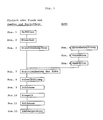
- the dish moves to position 2 via a chain guide, where the plate is positioned for the subsequent process steps.
- the product runs through direct steaming in a steam tunnel at atmospheric pressure and a temperature of around 100 ° C.
- the dish is steamed with water until a core temperature of about 90 ° C. has been reached and held for 10 minutes.
- heating with moist air circulation at a temperature of 115 ° C and a water vapor saturation pressure of 78 ° C can be integrated in the entrance area of the steam tunnel (item 3).
- the thermal treatment of grilled or fried components in position 3 is carried out using superheated steam at a temperature of 110 ° C.
- This superheated steam is generated by adiabatic throttling of saturated steam at a pressure of 1.6 bar to atmospheric pressure.
- the sauce components are mixed together in a mixing container and then transported via a closed system to a heat treatment stage (position 4), where the sauce is sterilized.
- the sauce In this treatment stage, the sauce is reduced to such an extent that it acquires a certain viscosity.
- position 5 the sauce is pre-cooled to a temperature of around 8 ° C to 12 ° C. After-cooling to 2 ° C to 4 ° C from position 6 ensures the correct consistency for positioning the sauce.
- the correct consistency is when the sauce has an almost pasty character and can be positioned without running.
- the heat treatment of the sauce runs parallel to the direct steaming of the other food components.
- Position 8 the product can be subjected to rapid cooling with nitrogen at a temperature of -70 ° C to -30 ° C. Cooling is continued until a temperature of about 2 ° C to 3 ° C and a temperature of about -1 ° C is reached in the core of the food. It is also important here that the cooling to about 10 ° C takes place as quickly as possible.
- Position 9 is a lock for drying the edge of the plate or bowl by blowing nitrogen in from the side.
- the product is sealed with a skin film at a temperature of 65 ° C to 95 ° C.
- the skin film is drawn into a so-called dome in the sealing tool, where it is almost plasticized under the influence of contact heat at a temperature of 220 ° C. If the skin film is almost plasticized, expanded and shaped more than three times, the product is pushed into the dome by a lifting table and, by switching off the heat, the film lies close to the food components, similar to a shrink film, and is then around the plate - or shell edge, but not carded around its bottom.
- All positions 3 to 11 are hermetically connected to each other under aseptic conditions or linked by tunnel strips so that the ingress of air or contaminants is excluded.
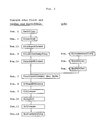
- sterilization is achieved in the steam tunnel (position 3) at a pressure of 2.7 bar and a saturated steam temperature of 130 ° C (core temperature of the sterile goods about 120 ° C) without the food being evaporated.
- the pressure locks position 13 and position 14 are required at the inlet and outlet of the steam tunnel.
- the procedure according to FIG. 3 can be carried out by treating grilled meat and fried potato chips on a serving container in position 3 with superheated steam or air / steam mixture.
- vegetables are pasteurized in a dosed transport device under atmospheric pressure by direct steaming with saturated steam at 100 ° C (position 15) and then positioned on the serving container (position 7). This pasteurization of the vegetables (position 15) can also be linked to the process variant in FIG. 2.
- Preheated air and water vapor from the steam tunnel are used to produce hot air at a temperature of around 115 ° C at a saturated water temperature of around 78 ° C, which circulates in the heating tunnel at a flow rate of 4 m / s.
- a core temperature in the meat of 76 ° C. is reached, condensation moisture forming in an amount of 3 g on the meat. Partial evaporation of the moisture then takes place at a temperature of 78 ° C, whereby the cooking process begins.
- the total throughput time in the stage of moisture-neutral heating is 15 minutes.
- the dish In the steam tunnel, the dish is treated with superheated steam at a temperature of 110 ° C, which was obtained from 1.6 bar saturated steam by relaxation. This treatment leads to residual evaporation of the excess condensate moisture and further cooking of the foodstuffs, the throughput time in the steam tunnel being approximately 15 minutes under quasi-laminar flow conditions.
- Circulating oxygen-free inert gas / steam mixture has a temperature T1 of 98 ° C at a saturated water temperature of T2 of 95 ° C. This means that the temperature is raised to 95 ° C with a core product temperature of 90 ° C - 95 ° C.
- the condensate moisture formed is mostly absorbed by the product (source moisture).
- T1 and T2 and the flow rate in the tunnel the desired humidity is set for the specific product.
- the heating times of the products depend essentially on the geometric shape and size as well as the material properties of the food components. The lead times here are approximately 15 to 25 minutes.
Landscapes
- Engineering & Computer Science (AREA)
- Life Sciences & Earth Sciences (AREA)
- Food Science & Technology (AREA)
- Wood Science & Technology (AREA)
- Zoology (AREA)
- Chemical & Material Sciences (AREA)
- Polymers & Plastics (AREA)
- Mechanical Engineering (AREA)
- Food Preservation Except Freezing, Refrigeration, And Drying (AREA)
- Seeds, Soups, And Other Foods (AREA)
Applications Claiming Priority (2)
| Application Number | Priority Date | Filing Date | Title |
|---|---|---|---|
| DE4019470A DE4019470C1 (fr) | 1990-06-19 | 1990-06-19 | |
| DE4019470 | 1990-06-19 |
Publications (2)
| Publication Number | Publication Date |
|---|---|
| EP0462532A1 true EP0462532A1 (fr) | 1991-12-27 |
| EP0462532B1 EP0462532B1 (fr) | 1995-01-18 |
Family
ID=6408640
Family Applications (1)
| Application Number | Title | Priority Date | Filing Date |
|---|---|---|---|
| EP91109862A Expired - Lifetime EP0462532B1 (fr) | 1990-06-19 | 1991-06-16 | Plats réfrigérés et/ou prêts à servir à longe durée de conservation |
Country Status (3)
| Country | Link |
|---|---|
| EP (1) | EP0462532B1 (fr) |
| AT (1) | ATE117174T1 (fr) |
| DE (2) | DE4019470C1 (fr) |
Cited By (2)
| Publication number | Priority date | Publication date | Assignee | Title |
|---|---|---|---|---|
| EP0570122A3 (fr) * | 1992-05-13 | 1994-01-05 | Kraft Foods, Inc. | Procédé pour emballer de façon aseptique un produit alimentaire composé |
| EP0691272A3 (fr) * | 1994-07-04 | 1997-09-10 | Rossi & Catelli Spa | Installation pour la production industrielle de préparation cuisinies à longue conservation, prêtes à consommer |
Citations (4)
| Publication number | Priority date | Publication date | Assignee | Title |
|---|---|---|---|---|
| CH425616A (de) * | 1963-04-09 | 1966-11-30 | Grace W R & Co | Packung für tiefgekühlte Speisen |
| US3889009A (en) * | 1972-07-31 | 1975-06-10 | Samuel P Lipoma | Method for continuous electromagnetic sterilization of food in a pressure zone |
| EP0284137A1 (fr) * | 1987-03-17 | 1988-09-28 | Unilever N.V. | Emballage |
| DE3919120A1 (de) * | 1988-06-14 | 1989-12-21 | Wolfgang Mueller | Behaelter zum transport, aufbewahrung und erwaermung von speisen |
Family Cites Families (2)
| Publication number | Priority date | Publication date | Assignee | Title |
|---|---|---|---|---|
| US4661359A (en) * | 1985-06-03 | 1987-04-28 | General Mills, Inc. | Compositions and methods for preparing an edible film of lower water vapor permeability |
| FR2596959B1 (fr) * | 1986-04-14 | 1990-11-02 | Cuisinier Snc Petit | Procede pour la preparation de produits alimentaires elabores et installation en vue de la mise en oeuvre du procede |
-
1990
- 1990-06-19 DE DE4019470A patent/DE4019470C1/de not_active Expired - Fee Related
-
1991
- 1991-06-16 EP EP91109862A patent/EP0462532B1/fr not_active Expired - Lifetime
- 1991-06-16 AT AT91109862T patent/ATE117174T1/de active
- 1991-06-16 DE DE59104293T patent/DE59104293D1/de not_active Expired - Fee Related
Patent Citations (4)
| Publication number | Priority date | Publication date | Assignee | Title |
|---|---|---|---|---|
| CH425616A (de) * | 1963-04-09 | 1966-11-30 | Grace W R & Co | Packung für tiefgekühlte Speisen |
| US3889009A (en) * | 1972-07-31 | 1975-06-10 | Samuel P Lipoma | Method for continuous electromagnetic sterilization of food in a pressure zone |
| EP0284137A1 (fr) * | 1987-03-17 | 1988-09-28 | Unilever N.V. | Emballage |
| DE3919120A1 (de) * | 1988-06-14 | 1989-12-21 | Wolfgang Mueller | Behaelter zum transport, aufbewahrung und erwaermung von speisen |
Non-Patent Citations (1)
| Title |
|---|
| LEHRBUCH DER LEBENSMITTEL- CHEMIE, 1961, SPRINGER-VERLAG,Berlin, G!ttingen, Heidelberg J. SCHORM¨LLER "Lehrbuch der Lebensmittelchemie" Seiten 216-219 * |
Cited By (2)
| Publication number | Priority date | Publication date | Assignee | Title |
|---|---|---|---|---|
| EP0570122A3 (fr) * | 1992-05-13 | 1994-01-05 | Kraft Foods, Inc. | Procédé pour emballer de façon aseptique un produit alimentaire composé |
| EP0691272A3 (fr) * | 1994-07-04 | 1997-09-10 | Rossi & Catelli Spa | Installation pour la production industrielle de préparation cuisinies à longue conservation, prêtes à consommer |
Also Published As
| Publication number | Publication date |
|---|---|
| DE4019470C1 (fr) | 1992-02-20 |
| ATE117174T1 (de) | 1995-02-15 |
| DE59104293D1 (de) | 1995-03-02 |
| EP0462532B1 (fr) | 1995-01-18 |
Similar Documents
| Publication | Publication Date | Title |
|---|---|---|
| US3494723A (en) | Method and apparatus for controlling microorganisms and enzymes | |
| DE68906306T2 (de) | Kontinuierliches verfahren fuer hitzestabilisierung von vorverpackten nahrungsmitteln. | |
| DE69426600T2 (de) | Verfahren zur vakuumverpackung von lebensmitteln in steifen behältern | |
| DE1915080A1 (de) | Verfahren und Vorrichtung zum UEberwachen von Mikroorganismen oder Enzymen | |
| Stephen et al. | Avocado (Persea americana Mill.) fruit: Nutritional value, handling and processing techniques, and health benefits | |
| DE69107775T2 (de) | Nahrungsmittel mit langer Haltbarkeit. | |
| EP3494798B1 (fr) | Procédé de stérilisation d'aliments transformés comprenant un prétraitement de chauffage par micro-ondes | |
| DE69802357T2 (de) | Vorrichtung zum keimfreien Füllen und Verpacken von Nahrungsmitteln | |
| DE1932900A1 (de) | Verfahren zum Garen von pflanzlichem Gut in geschlossenen Packungen | |
| JPH06153881A (ja) | 食品製品の熱処理法と熱処理装置 | |
| EP0462532B1 (fr) | Plats réfrigérés et/ou prêts à servir à longe durée de conservation | |
| EP0271915B1 (fr) | Procédé et dispositif de stérilisation de produits alimentaires en morceaux | |
| DE3438910C2 (de) | Verfahren zur Sterilisierung von Lebensmitteln | |
| DE69400363T2 (de) | Verfahren zur Herstellung von Kühl-essfertigem Pizzas | |
| DE102018109426A1 (de) | Pasteurisierung von fertiggerichen in hermetisch verschlossenen behältnissen | |
| JP3181249B2 (ja) | 容器入り低温殺菌食品の製造方法 | |
| DE69207599T2 (de) | Verfahren zur Herstellung von komplexen Nahrungsmittelartikeln mit verlängerter Haltbarkeit | |
| CH510441A (de) | Verfahren und Gerät zum Konservieren eines Materials | |
| DE10132535A1 (de) | Trocknungsverfahren und Einrichtungen zur Verfahrensdurchführung | |
| DE2428612A1 (de) | Verfahren zum aspetischen schneiden von fleisch- und wurstwaren, insbesondere von aufschnitt, und scheibenschneidmaschine zur durchfuehrung des verfahrens | |
| JP5944782B2 (ja) | 加熱殺菌方法及び装置、並びに食品包装体の製造方法及び製造システム | |
| DE3301299C2 (de) | Verfahren zur Herstellung von haltbaren Konserven eines durch Backen, Braten od.dgl. gegarten Lebensmittels | |
| DE2360777A1 (de) | Verfahren zur herstellung einer lagerfaehigen tortilla | |
| DE19941195C2 (de) | Muschelgericht und Verfahren zum Herstellen desselben | |
| DE4427308A1 (de) | Verfahren zur Herstellung von Bratkartoffelrohlingen |
Legal Events
| Date | Code | Title | Description |
|---|---|---|---|
| PUAI | Public reference made under article 153(3) epc to a published international application that has entered the european phase |
Free format text: ORIGINAL CODE: 0009012 |
|
| AK | Designated contracting states |
Kind code of ref document: A1 Designated state(s): AT BE CH DE DK ES FR GB GR IT LI LU NL SE |
|
| 17P | Request for examination filed |
Effective date: 19920509 |
|
| 17Q | First examination report despatched |
Effective date: 19930413 |
|
| GRAA | (expected) grant |
Free format text: ORIGINAL CODE: 0009210 |
|
| AK | Designated contracting states |
Kind code of ref document: B1 Designated state(s): AT BE CH DE DK ES FR GB GR IT LI LU NL SE |
|
| PG25 | Lapsed in a contracting state [announced via postgrant information from national office to epo] |
Ref country code: NL Effective date: 19950118 Ref country code: GR Free format text: LAPSE BECAUSE OF FAILURE TO SUBMIT A TRANSLATION OF THE DESCRIPTION OR TO PAY THE FEE WITHIN THE PRESCRIBED TIME-LIMIT Effective date: 19950118 Ref country code: ES Free format text: THE PATENT HAS BEEN ANNULLED BY A DECISION OF A NATIONAL AUTHORITY Effective date: 19950118 Ref country code: DK Effective date: 19950118 Ref country code: BE Effective date: 19950118 |
|
| REF | Corresponds to: |
Ref document number: 117174 Country of ref document: AT Date of ref document: 19950215 Kind code of ref document: T |
|
| REF | Corresponds to: |
Ref document number: 59104293 Country of ref document: DE Date of ref document: 19950302 |
|
| ITF | It: translation for a ep patent filed | ||
| PG25 | Lapsed in a contracting state [announced via postgrant information from national office to epo] |
Ref country code: SE Effective date: 19950418 |
|
| GBT | Gb: translation of ep patent filed (gb section 77(6)(a)/1977) |
Effective date: 19950406 |
|
| ET | Fr: translation filed | ||
| PG25 | Lapsed in a contracting state [announced via postgrant information from national office to epo] |
Ref country code: LU Free format text: LAPSE BECAUSE OF NON-PAYMENT OF DUE FEES Effective date: 19950630 Ref country code: LI Effective date: 19950630 Ref country code: CH Effective date: 19950630 |
|
| NLV1 | Nl: lapsed or annulled due to failure to fulfill the requirements of art. 29p and 29m of the patents act | ||
| ITPR | It: changes in ownership of a european patent |
Owner name: CAMBIO NOME EPO;BEKINA LEBENSMITTEL GMBH |
|
| RAP2 | Party data changed (patent owner data changed or rights of a patent transferred) |
Owner name: BEKINA LEBENSMITTEL GMBH |
|
| PLBE | No opposition filed within time limit |
Free format text: ORIGINAL CODE: 0009261 |
|
| STAA | Information on the status of an ep patent application or granted ep patent |
Free format text: STATUS: NO OPPOSITION FILED WITHIN TIME LIMIT |
|
| 26N | No opposition filed | ||
| REG | Reference to a national code |
Ref country code: CH Ref legal event code: PL |
|
| PGFP | Annual fee paid to national office [announced via postgrant information from national office to epo] |
Ref country code: GB Payment date: 19960603 Year of fee payment: 6 |
|
| PGFP | Annual fee paid to national office [announced via postgrant information from national office to epo] |
Ref country code: FR Payment date: 19960617 Year of fee payment: 6 |
|
| PGFP | Annual fee paid to national office [announced via postgrant information from national office to epo] |
Ref country code: AT Payment date: 19960621 Year of fee payment: 6 |
|
| REG | Reference to a national code |
Ref country code: CH Ref legal event code: AUV Free format text: DAS OBENGENANNTE PATENT IST, MANGELS BEZAHLUNG DER 5. JAHRESGEBUEHR, ERLOSCHEN. |
|
| PGFP | Annual fee paid to national office [announced via postgrant information from national office to epo] |
Ref country code: DE Payment date: 19960829 Year of fee payment: 6 |
|
| PG25 | Lapsed in a contracting state [announced via postgrant information from national office to epo] |
Ref country code: GB Free format text: LAPSE BECAUSE OF NON-PAYMENT OF DUE FEES Effective date: 19970616 Ref country code: AT Effective date: 19970616 |
|
| GBPC | Gb: european patent ceased through non-payment of renewal fee |
Effective date: 19970616 |
|
| PG25 | Lapsed in a contracting state [announced via postgrant information from national office to epo] |
Ref country code: FR Free format text: LAPSE BECAUSE OF NON-PAYMENT OF DUE FEES Effective date: 19980227 |
|
| PG25 | Lapsed in a contracting state [announced via postgrant information from national office to epo] |
Ref country code: DE Free format text: LAPSE BECAUSE OF NON-PAYMENT OF DUE FEES Effective date: 19980303 |
|
| REG | Reference to a national code |
Ref country code: FR Ref legal event code: ST |
|
| REG | Reference to a national code |
Ref country code: FR Ref legal event code: ST |
|
| PG25 | Lapsed in a contracting state [announced via postgrant information from national office to epo] |
Ref country code: IT Free format text: LAPSE BECAUSE OF NON-PAYMENT OF DUE FEES Effective date: 20050616 |