EP0462836A2 - Plasmide recombinant capable d'exprimer la manganèse superoxyde dismutase et procédé pour la production de cet enzyme - Google Patents
Plasmide recombinant capable d'exprimer la manganèse superoxyde dismutase et procédé pour la production de cet enzyme Download PDFInfo
- Publication number
- EP0462836A2 EP0462836A2 EP91305596A EP91305596A EP0462836A2 EP 0462836 A2 EP0462836 A2 EP 0462836A2 EP 91305596 A EP91305596 A EP 91305596A EP 91305596 A EP91305596 A EP 91305596A EP 0462836 A2 EP0462836 A2 EP 0462836A2
- Authority
- EP
- European Patent Office
- Prior art keywords
- human
- sod
- superoxide dismutase
- promoter
- manganese superoxide
- Prior art date
- Legal status (The legal status is an assumption and is not a legal conclusion. Google has not performed a legal analysis and makes no representation as to the accuracy of the status listed.)
- Withdrawn
Links
Images






Classifications
-
- C—CHEMISTRY; METALLURGY
- C12—BIOCHEMISTRY; BEER; SPIRITS; WINE; VINEGAR; MICROBIOLOGY; ENZYMOLOGY; MUTATION OR GENETIC ENGINEERING
- C12N—MICROORGANISMS OR ENZYMES; COMPOSITIONS THEREOF; PROPAGATING, PRESERVING, OR MAINTAINING MICROORGANISMS; MUTATION OR GENETIC ENGINEERING; CULTURE MEDIA
- C12N9/00—Enzymes; Proenzymes; Compositions thereof; Processes for preparing, activating, inhibiting, separating or purifying enzymes
- C12N9/0004—Oxidoreductases (1.)
- C12N9/0089—Oxidoreductases (1.) acting on superoxide as acceptor (1.15)
-
- C—CHEMISTRY; METALLURGY
- C12—BIOCHEMISTRY; BEER; SPIRITS; WINE; VINEGAR; MICROBIOLOGY; ENZYMOLOGY; MUTATION OR GENETIC ENGINEERING
- C12N—MICROORGANISMS OR ENZYMES; COMPOSITIONS THEREOF; PROPAGATING, PRESERVING, OR MAINTAINING MICROORGANISMS; MUTATION OR GENETIC ENGINEERING; CULTURE MEDIA
- C12N15/00—Mutation or genetic engineering; DNA or RNA concerning genetic engineering, vectors, e.g. plasmids, or their isolation, preparation or purification; Use of hosts therefor
- C12N15/09—Recombinant DNA-technology
- C12N15/63—Introduction of foreign genetic material using vectors; Vectors; Use of hosts therefor; Regulation of expression
- C12N15/70—Vectors or expression systems specially adapted for E. coli
Definitions
- This invention relates to a recombinant vector plasmid capable of effectively expressing human manganese superoxide dismutase (hereinafter referred to as "human Mn-SOD”), and to a process of producing human Mn-SOD using the same.
- the present invention also relates to a process of recovering human Mn-SOD from a solution containing proteins in bacterial cells, including human Mn-SOD, by which a human Mn-SOD same as the naturally occurring human Mn-SOD can be effectively isolated.
- SOD Superoxide dismutase
- SOD Superoxide dismutase
- Mn-SOD plays more important role than other SODs and that Mn-SOD is very stable in the body (Reference 11).
- E. coli transformed with a vector containing human Mn-SOD gene located at downstream region of P L promoter is used.
- P L promoter is a known promoter originated from ⁇ phage.
- the culturing temperature must be changed in the later stage of the culturing so as to induce the production of the desired protein.
- the human Mn-SOD extracted from human organs is tetramer (Reference 17).
- the content of tetramer in the produced human Mn-SOD is only 10% (Reference 3).
- the amount of the produced desired protein is only 0.5 mg/l medium (Reference 14), which is much smaller than that (400 - 500 mg/l) attained by the process of the present invention later described. Further, culturing yeasts is more troublesome than culturing E. coli .
- an object of the present invention is to provide a recombinant vector plasmid capable of effectively producing human Mn-SOD in a large amount in E. coli .
- Another object of the present invention is to provide a process of producing human Mn-SOD using the recombinant vector plasmid of the present invention, by which human Mn-SOD with high manganese content and high activity may be effectively produced in a large amount by a simple operation.
- Still another object of the present invention is to provide a process of recovering human Mn-SOD from a solution containing soluble proteins in the host cells, by which the molecular weight and specific activity of the human Mn-SOD are not decreased and human Mn-SOD having the same molecular weight and high activity as those of naturally occurring human Mn-SOD may be isolated.
- the present invention provides a recombinant vector comprising a ligated promoter including tac promoter and P L promoter; a structural gene encoding human Mn-SOD, which is located downstream the ligated promoter; and a terminator which acts in E. coli cell, which is located downstream the structural gene.
- the present invention also provides an E. coli transformant which is transformed with the recombinant vector plasmid of the present invention.
- the present invention further provides a process of producing human Mn-SOD comprising culturing the transformant of the present invention in a condition to produce the human Mn-SOD, and recovering the produced human Mn-SOD.
- the present invention still further provides a process of recovering human Mn-SOD from a solution containing soluble proteins in bacterial cells, comprising, in the order mentioned, the steps of: (a) passing the solution containing soluble proteins in the bacterial cells through an anion-exchange chromatography column; (b) adjusting the pH of the passed through fluid from the anion-exchange chromatography column to 6.0 - 6.7, and adjusting the salt concentration of the passed through fluid from the anion-exchange chromatography column to a degree capable of being adsorbed to a cation-exchange chromatography column used in the following step (c); (c) passing the resulting solution obtained in step (b) through a cation-exchange chromatography column; (d) passing through the cation-exchange chromatography column an elution buffer having a pH of 6.0 - 6.7 and a high salt concentration capable of eluting human Mn-SOD; and (e) recovering the eluted human Mn-SOD.
- the present invention it was first attained to produce human Mn-SOD in a large amount effectively by means of genetic engineering technique.
- the troublesome induction operation such as raising the culturing temperature or the like is not necessary, so that the process is simple.
- the human Mn-SOD recovered by the process of the present invention is mostly in the form of tetramer, so that the human Mn-SOD retains its high activity.
- the recombinant vector plasmid of the present invention contains a ligated promoter including tac promoter and P L promoter.
- the tac promoter is a fused promoter having the E. coli tryptophan promoter and E. coli lactose promoter, which per se is well-known in the art.
- the P L promoter is originated from E. coli ⁇ phage, which per se is also well-known in the art.
- the induction of production by raising the culturing temperature is not necessary, and the amount of the produced human Mn-SOD is larger.
- P L promoter which can be induced by raising temperature was employed (References 3 and 13) in order to eliminate the possible damage by hydrogen peroxide which is the intrinsic reaction product formed by SOD. It was surprisingly discovered by the present inventors that if tac /P L ligated promoter is employed, preferably with the addition of manganese ion to the culturing medium, human Mn-SOD is continuously produced and a large amount of (twice the amount attained when P L promoter is employed) human Mn-SOD is accumulated keeping its activity. It was also discovered that the human Mn-SOD accumulated in a large amount in the host cells does not inhibit the growth of the host cells and the production of the desired protein, so that the production of the enzyme in a large amount may be accomplished.
- a structural gene encoding human Mn-SOD is operatively linked with the promoter.
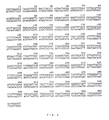
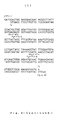
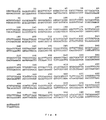
- the human Mn-SOD gene per se is known, which encodes the amino acid sequence, for example, shown in fig. 1 or 7. Examples of the nucleotide sequence of the human Mn-SOD gene are shown in Figs. 2 and 8.
- the human Mn-SOD gene may be isolated by cloning the gene from cDNAs prepared from an appropriate human tissue as described in the published references (References 3, 4 and 5). Alternatively, the human Mn-SOD gene may be divided into some blocks and each of the blocks is chemically synthesized, followed by ligation of the blocks so as to form the complete gene, which is employed in the actual working examples hereinbelow described.
- a terminator Downstream the structural gene of human Mn-SOD, a terminator is operatively linked. Any terminator may be employed as long as it functions in E. coli .
- the rrnB terminator for ribosomal RNA translation is especially preferred.
- the recombinant vector plasmid containing tac /P L ligated promoter may be constructed by firstly inserting P L promoter fragment by a known recombination technique in a plasmid such as pKK223-3 containing tac promoter and a terminator at downstream region of the tac promoter, and then inserting the human Mn-SOD gene immediately downstream the P L promoter.
- the expression unit including the tac /P L ligated promoter, the human Mn-SOD structural gene and the terminator may be cloned in a plasmid. Any plasmid such as pBR322, pUC18 or pKK223-3 which can transform E. coli may be employed.
- the above-mentioned expression unit may be inserted in any region of the plasmid as long as it can be expressed.
- the expression unit may preferably be inserted in, for example, Eco RI - Hind III site or Eco RI - Bam HI site.
- E. coli usually used in the field of genetic engineering
- E. coli strains which may be employed include E. coli C600, HB101, MC1061, DH5 ⁇ , JM105, JM109 and the like.
- E. coli JM105 and JM109 are preferred.
- the host E. coli usually produces its own Mn-SOD, the bacterial Mn-SOD may be contaminated in the desired human Mn-SOD, so that the bacterial Mn-SOD must be removed during the purification step of the human Mn-SOD.
- an E. coli host which does not produce its Mn-SOD is employed, it is very advantageous for the industrial production of human Mn-SOD.
- An example of such E. coli which does not produce Mn-SOD is E. coli GC4468 (Reference 19).
- E. coli host may be transformed by a conventional method.
- E. coli is grown in a nutrient medium until the absorbance at 600 nm reaches 0.4 - 0.6.
- the cells are treated with a buffer containing rubidium chloride or calcium chloride and the recombinant vector plasmid, thereby introducing the vector plasmid into the host cells (Reference 7).
- the selection of the transformant may be carried out by a conventional method in which the transformant is selected according to the selection marker such as drug resistance of the plasmid and the human Mn-SOD-producing cells are then selected.
- the human Mn-SOD may be obtained by culturing the transformant which produces human Mn-SOD and recovering the Mn-SOD from the cells.
- the cells may be cultured at a temperature of 32 - 40°C.
- a usual nutrient medium for culturing E. coli e.g., those described in Reference 7) to which manganese ion is added, may be employed.
- the concentration of manganese ion may be 1 - 20 mM, preferably 10 - 15 mM.
- the cells are collected by centrifugation.
- the collected cells are then disrupted by a conventional method such as changing the pressure, treatment with glass beads or with lysozyme.
- the insoluble materials are removed by centrifugation.
- the desired human Mn-SOD may be purified by anion-exchange chromatography and then cation-exchange chromatography in this order appropriately adjusting the pH and the salt concentration of the buffer.
- This method comprises the above-described steps (a) to (e).
- the solution or the supernatant containing the soluble proteins in the host cells obtained in the preceding step is firstly passed through an anion-exchange chromatography column.
- anion-exchanger employed in the chromatography those having amino groups are preferred. Among these, those having tertiary amino groups, and those having quaternary ammonium salt are preferred.
- Preferred examples of the anion-exchanger used herein include DEAE-Sepharose, DEAE-Sephacel and Q-Sepharose (all of them are commercially available from Pharmacia).
- phosphate buffer and tris buffer may be employed as the buffer for adsorption and washing.
- the buffer may preferably have a pH of about 7.8 and a salt concentration of 10 - 30 mM.
- the pH and the salt concentration of the passed through fluid from the preceding anion-exchange chromatography are adjusted.
- the pH of the passed through fluid is adjusted to 6.0 - 6.7, preferably about 6.5.
- the salt concentration of the passed through fluid is adjusted to a degree which allows the adsorption of the protein in the following cation-exchange chromatography step (c). More particularly, in the case where the pH of the passed through fluid is about 6.5, a salt concentration of 2 - 10 mM is preferred.
- the pH and the salt concentration of the passed through fluid from the anion-exchange chromatography may be adjusted by conventional methods such as gel permeation chromatography, dialysis and the like.
- the thus adjusted passed through fluid from the anion-exchange chromatography is then applied to a cation-exchange chromatography column.
- cation-exchanger those having carboxymethyl groups or sulfone groups are preferably employed.
- Preferred examples of the cation-exchanger which may be employed include CM-Sepharose and S-Sepharose (both are commercially available from Pharmacia).
- CM-Sepharose and S-Sepharose both are commercially available from Pharmacia.
- the buffer used for elution has a pH of 6.0 - 6.7, preferably about 6.5, and a high salt concentration capable of eluting human Mn-SOD.
- the salt concentration may preferably be 20 - 40 mM, especially about 30 mM, in the case where the buffer used for elution has a pH of about 6.5.
- the human Mn-SOD in the form of tetramer which is the active form of this enzyme may be obtained with a high yield.
- the human Mn-SOD purified by this method has a high manganese ion content of not less than 0.9 ion per one polypeptide chain, so that it has a specific activity as high as not less than 4200 units/mg protein.
- the human Mn-SOD purified by this method has a molecular weight of not less than 85,000.
- the human Mn-SOD purified by this method is useful in clinical applications such as anti-inflammation agent.
- the DNA shown in Fig. 2 encoding the human Mn-SOD having the amino acid sequence shown in Fig. 1 was divided into three blocks A, B and C as shown in Fig. 3, each of the blocks being provided with restriction sites at the ends thereof. Each block is further divided into 6 - 8 sections and these sections were chemically synthesized. The synthesis of the DNA fragments was carried out by the phosphoamidite method (Reference 8) using Model 381A automatic DNA synthesizer commercially available from Applied Biosystems.
- phosphate group was introduced to the 5′ end thereof.
- the chemically synthesized 6 - 8 DNA fragments constituting the blocks A, B or C shown in fig. 3 were ligated by using T4 ligase so as to form the blocks A, B and C.
- the block A was digested with Xba I - Eco RI
- the block B was digested with Eco RI - Bam HI
- the block C was digested with Bam HI - Hind III.
- electrophoresis the desired DNA blocks A, B and C were isolated (Fig. 4).
- the DNA blocks A, B and C were inserted in Xba I - Eco RI site, Eco RI - Bam HI site and Bam HI - Hind III site, respectively, of pUC plasmid vector using T4 DNA ligase and cloned so as to obtain plasmids pUCSODA (containing block A), pUCSODB (containing block B), pUCSODC (containing block C).
- the three plasmids were amplified in E. coli and purified.
- the plasmid pUCSODA was digested with Eco RI - Ear I and a DNA fragment of about 3 kbp was recovered.
- the plasmid pUCSODB was digested with Ear I - Bam HI and a DNA fragment of about 260 bp was recovered. These two DNA fragments were ligated using T4 DNA ligase to obtain a plasmid pUCSOD(A+B).
- the plasmid pUCSOD(A+B) was amplified in E. coli and purified.
- Plasmid pUCSODC was also amplified in E. coli and was digested with Bam HI - Hind III, followed by recovery of SOD fragment (C) of about 180 bp.
- the SOD fragments (A+B) and (C) were inserted in a known plasmid expression vector, plasmid pSW115 (Reference 6) having tac /P L ligated promoter.
- the SOD fragments were operatively inserted at downstream region of the ligated promoter. That is, the plasmid pSW115 was digested with Cla I and Hind III and the resulting DNA fragment of about 5.1 kb (hereinafter " Cla I - Hind III fragment") was recovered.
- Cla I - Hind III fragment The resulting Cla I - Hind III fragment and the two SOD fragments (A+B) and (C) were ligated by using T4 ligase so as to obtain an expression vector pSWTPSOD.
- E. coli DH5 ⁇ strain (commercially available from Bethesda Research Laboratories, Maryland, U.S.A.) was used.
- E. coli JM109 (commercially available from Toyobo, Osaka, Japan) was transformed with the plasmid pSWTPSOD obtained in Example 1 and a transformat JM109SOD which acquired resistance to ampicillin was selected.
- the transformant was cultured under shaking in one liter of 2 x LB medium (Reference 7) containing 50 mg/l of ampicillin and 10 mM of manganese sulfate at 37°C for 20 hours. Upon reaching an absorbance at 600 nm to 12.4, the cells were collected by centrifugation and were suspended in a 10 mM potassium phosphate buffer having a pH of 7.8. The cells were then disrupted by glass beads by using Dynomill.
- the disrupted cell suspension was centrifuged and the supernatant was recovered.
- the Mn-SOD activity of the supernatant was measured by a conventional Method (Reference 9).
- the total activity was 2.26 x 10⁶ units as shown in Table 1.
- the percentage of the desired human Mn-SOD among the soluble proteins in the supernatant was 45.1% by weight.
- the supernatant of the disrupted cell suspension prepared from one liter of the culturing medium in Example 2 was applied to DEAE-Sepharose column (commercially available from Pharmcia) preliminarily equilibrated with 10 mM potassium phosphate buffer (pH 7.8) with a volume of 5 times that of the column. After concentrating the passed through fluid by ultrafiltration, the resulting concentrate was applied to Sephadex G-25 (commercially available from Pharmacia) column and the buffer was changed to 10 mM potassium phosphate buffer (pH 6.5) thereby.
- CM-Sepharose commercially available from Pharmacia
- 10 mM potassium phosphate buffer (pH 6.5) with a volume of 5 times that of the column.
- the proteins were eluted by 30 mM potassium phosphate buffer (pH 6.5) and fractions exhibiting SOD activity were collected and combined.
- the thus obtained Mn-SOD solution was subjected to electrophoresis. As a result, as shown in Fig. 5, a single band was obtained, so that it was proved that the protein was isolated.
- the Mn-SOD solution had a total SOD activity of 7 x 10⁵ units.
- the specific activity of the Mn-SOD solution determined in accordance with References 9 and 12 was 5280 units/mg protein.
- the manganese content of the thus purified human Mn-SOD which was measured by atomic absorption spectrophotometry, was 0.99 manganese ion per one polypeptide chain.
- the molecular weight of the thus isolated protein was determined by low angle laser scattering method (Reference 16) using molecular weight markers of BSA (bovine serum albumin, M.W. 67,000) and OVA (ovalubmin, M.W. 43,000). The determined molecular weight was 98,000, so that it was shown that this human Mn-SOD is in the form of tetramer.
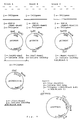
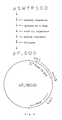
- the gene shown in fig. 8 which encodes amino acid sequence of modified human Mn-SOD in which 59th isoleucine is converted to threonine, shown in Fig. 7. More particularly, the gene was divided in the same manner as shown in Fig. 3, and according to the scheme shown in Fig. 4, an expression vector pSWTPTSOD (shown in Fig. 9) expressing human Mn-SOD having the amino acid sequence shown in Fig. 7 was prepared.
- the human Mn-SOD was expressed according to the same method as in Example 2, and the human Mn-SOD was purified by the same manner as in Example 3.
- the supernatant of the disrupted cell suspension had a total SOD activity of 1.44 x 10⁶ as shown in Table 2.
- the desired human Mn-SOD was obtained as a pure protein which exhibited an activity of 7.9 x 10⁵ units.
- a plasmid pP L MNSOD having P L promoter alone and human Mn-SOD structural gene was prepared in accordance with the scheme shown in Fig. 6. More particularly, 10 ⁇ g of the plasmid pSWTPSOD prepared in Example 1 was digested with Eco RI and the digest was purified by agarose gel electrophoresis to obtain 1 ⁇ g of linear plasmid generated by cutting one Eco RI site in the plasmid pSWTPSOD. The linear plasmid was digested with Bam HI to cut the unique Bam HI site therein and DNA fragment of 4.9 kbp was purified by agarose gel electrophoresis.
- the isolated fragment in the amount of 0.2 ⁇ g was treated with DNA polymerase Klenow fragment so as to make its both ends blunt.
- the thus obtained DNA fragment was circulated by a conventional reaction using T4 ligase and the resulting plasmid was introduced in E. coli DH5 ⁇ strain to transform the same.
- T4 ligase By screening the transformants, 2 transformants among 36 transformants contained the desired plasmid pP L MNSOD which does not have tac promoter.
- E. coli N4830 (having cI857 and N gene, commercially available from Pharmacia) was transformed and the transformant was cultured in 1 x LB medium (Reference 7) containing 50 mg/l of ampicillin at 32°C until the absorbance at 600 nm of the culture medium reaches 0.7.
- 1 x LB medium Reference 7
- manganese sulfate was added to a final concentration of 1.2 mM and the culture medium was incubated at 42°C for 2 hours.
- the cells were collected by centrifugation and the collected cells were suspended in 250 mM NaCl buffer containing 50 mM potassium phosphate, followed by disruption of the cells by the treatment with glass beads by using Dynomill.
- the disrupted cell suspension was centrifuged and the supernatant was recovered.
- the total Mn-SOD activity of the supernatant was measured, which was 9.84 x 10⁵ units as shown in Table 3.
- the percentage of the desired human Mn-SOD among the soluble proteins in the supernatant was 20.1% by weight.
- the supernatant of the disrupted cell suspension obtained in Comparative Example 1 from one liter of the culture medium was heated at 60°C for one hour and the cooled to 4°C.
- the resultant was centrifuged and the supernatant was recovered.
- the concentrate was applied to Sephadex G-25 column (commercially available from Pharmacia) preliminarily equilibrated with 10 mM potassium phosphate buffer (pH 7.8) with a volume of 5 times that of the column, thereby exchanging the buffer to 10 mM potassium phosphate buffer (pH 7.8).
- the resultant was passed through DEAE-Sepharose column (commercially available from Pharmacia) preliminarily equilibrated with 10 mM phosphate buffer (pH 7.8) with a volume of 5 times that of the column.
- the passed through fluid was concentrated by ultrafiltration and the buffer was exchanged to 40 mM acetate buffer (pH 5.5) by gel permeation chromatography using Sephadex G-25 column (commercially available from Pharmacia).
- the resultant was applied to CM-Sepharose column (commercially available from Pharmacia) preliminarily equilibrated with 40 mM acetate buffer (pH 5.5) with a volume of 5 times that of the column so as to adsorb the proteins to the column.
- the proteins were eluted by 180 mM acetate buffer (pH 5.5), and the fractions having SOD activity were recovered and combined.
- the thus obtained solution was subjected to electrophoresis.
- the protein contained in the solution was a single protein having a total SOD activity of 2.1 x 10⁵ units as shown in Table 3.
- the specific activity of the protein was measured according to the method described in References 9 and 12, which was 3560 units/mg protein.
- the manganese ion content of the thus obtained human Mn-SOD was 0.78 ion per one polypeptide chain, which was measured by atomic absorption spectrophotometry.
- the molecular weight of the thus isolated human Mn-SOD was measured, which was 48,000. Thus, it was proved that most of the thus isolated human Mn-SOD molecules were in the form of dimer.
Landscapes
- Health & Medical Sciences (AREA)
- Life Sciences & Earth Sciences (AREA)
- Genetics & Genomics (AREA)
- Chemical & Material Sciences (AREA)
- Engineering & Computer Science (AREA)
- Zoology (AREA)
- Organic Chemistry (AREA)
- Bioinformatics & Cheminformatics (AREA)
- Wood Science & Technology (AREA)
- General Engineering & Computer Science (AREA)
- Biomedical Technology (AREA)
- Biotechnology (AREA)
- Microbiology (AREA)
- Biochemistry (AREA)
- Molecular Biology (AREA)
- General Health & Medical Sciences (AREA)
- Medicinal Chemistry (AREA)
- Physics & Mathematics (AREA)
- Biophysics (AREA)
- Plant Pathology (AREA)
- Enzymes And Modification Thereof (AREA)
Applications Claiming Priority (4)
| Application Number | Priority Date | Filing Date | Title |
|---|---|---|---|
| JP159925/90 | 1990-06-20 | ||
| JP15992590 | 1990-06-20 | ||
| JP2279286A JPH04117288A (ja) | 1990-06-20 | 1990-10-19 | ヒト・マンガンスーパーオキシドジスムターゼの製造法 |
| JP279286/90 | 1990-10-19 |
Publications (2)
| Publication Number | Publication Date |
|---|---|
| EP0462836A2 true EP0462836A2 (fr) | 1991-12-27 |
| EP0462836A3 EP0462836A3 (en) | 1992-08-26 |
Family
ID=26486582
Family Applications (1)
| Application Number | Title | Priority Date | Filing Date |
|---|---|---|---|
| EP19910305596 Withdrawn EP0462836A3 (en) | 1990-06-20 | 1991-06-20 | Recombinant vector plasmid capable of expressing human manganese superoxide dismutase, and process of producing this enzyme |
Country Status (1)
| Country | Link |
|---|---|
| EP (1) | EP0462836A3 (fr) |
Cited By (16)
| Publication number | Priority date | Publication date | Assignee | Title |
|---|---|---|---|---|
| EP0282899B1 (fr) * | 1987-03-14 | 1996-01-10 | BOEHRINGER INGELHEIM INTERNATIONAL GmbH | La manganèse-superoxyde-dismutase humaine (hMn-SOD) |
| US5747026A (en) * | 1993-10-15 | 1998-05-05 | University Of Alabama At Birmingham Research Foundation | Antioxidants |
| US5994339A (en) * | 1993-10-15 | 1999-11-30 | University Of Alabama At Birmingham Research Foundation | Oxidant scavengers |
| US6103714A (en) * | 1994-09-20 | 2000-08-15 | Duke University | Oxidoreductase activity of manganic porphyrins |
| US6127356A (en) * | 1993-10-15 | 2000-10-03 | Duke University | Oxidant scavengers |
| US6479477B1 (en) | 1998-04-24 | 2002-11-12 | Duke University | Substituted porphyrins |
| US6544975B1 (en) | 1999-01-25 | 2003-04-08 | National Jewish Medical And Research Center | Substituted porphyrins |
| US6916799B2 (en) | 1997-11-03 | 2005-07-12 | Duke University | Substituted porphyrins |
| US7485721B2 (en) | 2002-06-07 | 2009-02-03 | Duke University | Substituted porphyrins |
| CN101955918A (zh) * | 2009-07-17 | 2011-01-26 | 华东理工大学 | 一种生产重组高活性锰超氧化物歧化酶的方法 |
| US8470808B2 (en) | 1999-01-25 | 2013-06-25 | Jon D. Piganelli | Oxidant scavengers for treatment of type I diabetes or type II diabetes |
| US8765729B2 (en) | 2001-01-19 | 2014-07-01 | Aeolus Sciences, Inc. | Cancer therapy |
| US11382895B2 (en) | 2008-05-23 | 2022-07-12 | National Jewish Health | Methods for treating injury associated with exposure to an alkylating species |
| WO2023250389A1 (fr) * | 2022-06-21 | 2023-12-28 | Lanzatech, Inc. | Micro-organismes et procédés pour la coproduction continue de protéines spécialisées de haute valeur et de produits chimiques à partir de substrats c1 |
| CN119220509A (zh) * | 2024-09-27 | 2024-12-31 | 四平华科生物技术有限责任公司 | 一种高纯的人源sod及其制备方法和用途 |
| US12371727B2 (en) | 2022-06-21 | 2025-07-29 | Lanzatech, Inc. | Microorganisms and methods for the continuous co-production of tandem repeat proteins and chemical products from C1-substrates |
Family Cites Families (2)
| Publication number | Priority date | Publication date | Assignee | Title |
|---|---|---|---|---|
| US4946790A (en) * | 1987-02-06 | 1990-08-07 | Mitsui Toatsu Chemicals, Inc. | Recombinant plasmid for the expression of L-phenylalanine ammonia-lyase and transformed strain carrying same |
| US5043277A (en) * | 1987-02-19 | 1991-08-27 | Mitsui Toatsu Chemicals, Incorporated | Method of regulating expression of a foreign gene by controlling culture temperature and a process of producing a foreign gene product thereby |
-
1991
- 1991-06-20 EP EP19910305596 patent/EP0462836A3/en not_active Withdrawn
Cited By (26)
| Publication number | Priority date | Publication date | Assignee | Title |
|---|---|---|---|---|
| EP0282899B1 (fr) * | 1987-03-14 | 1996-01-10 | BOEHRINGER INGELHEIM INTERNATIONAL GmbH | La manganèse-superoxyde-dismutase humaine (hMn-SOD) |
| US7470677B2 (en) | 1993-10-15 | 2008-12-30 | Aeolus Pharmaceuticals, Inc. | Oxidant scavengers |
| US5747026A (en) * | 1993-10-15 | 1998-05-05 | University Of Alabama At Birmingham Research Foundation | Antioxidants |
| US5994339A (en) * | 1993-10-15 | 1999-11-30 | University Of Alabama At Birmingham Research Foundation | Oxidant scavengers |
| US6127356A (en) * | 1993-10-15 | 2000-10-03 | Duke University | Oxidant scavengers |
| US6583132B1 (en) | 1993-10-15 | 2003-06-24 | Duke University | Oxidant scavengers |
| US6103714A (en) * | 1994-09-20 | 2000-08-15 | Duke University | Oxidoreductase activity of manganic porphyrins |
| US6916799B2 (en) | 1997-11-03 | 2005-07-12 | Duke University | Substituted porphyrins |
| US6479477B1 (en) | 1998-04-24 | 2002-11-12 | Duke University | Substituted porphyrins |
| US7820644B2 (en) | 1999-01-25 | 2010-10-26 | Aelous Pharmaceuticals, Inc. | Substituted porphyrins |
| US7189707B2 (en) | 1999-01-25 | 2007-03-13 | National Jewish Medical Research Center | Substituted porphyrins |
| US9289434B2 (en) | 1999-01-25 | 2016-03-22 | Aeolus Sciences, Inc. | Substituted porphyrins |
| US6544975B1 (en) | 1999-01-25 | 2003-04-08 | National Jewish Medical And Research Center | Substituted porphyrins |
| US8946202B2 (en) | 1999-01-25 | 2015-02-03 | Aeolus Sciences, Inc. | Substituted porphyrins |
| US8217026B2 (en) | 1999-01-25 | 2012-07-10 | Aeolus Sciences, Inc. | Substituted porphyrins |
| US8470808B2 (en) | 1999-01-25 | 2013-06-25 | Jon D. Piganelli | Oxidant scavengers for treatment of type I diabetes or type II diabetes |
| US8546562B2 (en) | 1999-01-25 | 2013-10-01 | James D. Crapo | Substituted porphyrins |
| US8765729B2 (en) | 2001-01-19 | 2014-07-01 | Aeolus Sciences, Inc. | Cancer therapy |
| US7485721B2 (en) | 2002-06-07 | 2009-02-03 | Duke University | Substituted porphyrins |
| US11382895B2 (en) | 2008-05-23 | 2022-07-12 | National Jewish Health | Methods for treating injury associated with exposure to an alkylating species |
| CN101955918B (zh) * | 2009-07-17 | 2014-05-21 | 华东理工大学 | 一种生产重组高活性锰超氧化物歧化酶的方法 |
| CN101955918A (zh) * | 2009-07-17 | 2011-01-26 | 华东理工大学 | 一种生产重组高活性锰超氧化物歧化酶的方法 |
| WO2023250389A1 (fr) * | 2022-06-21 | 2023-12-28 | Lanzatech, Inc. | Micro-organismes et procédés pour la coproduction continue de protéines spécialisées de haute valeur et de produits chimiques à partir de substrats c1 |
| US12291734B2 (en) | 2022-06-21 | 2025-05-06 | Lanzatech, Inc. | Microorganisms and methods for the continuous co-production of high-value, specialized proteins and chemical products from C1-substrates |
| US12371727B2 (en) | 2022-06-21 | 2025-07-29 | Lanzatech, Inc. | Microorganisms and methods for the continuous co-production of tandem repeat proteins and chemical products from C1-substrates |
| CN119220509A (zh) * | 2024-09-27 | 2024-12-31 | 四平华科生物技术有限责任公司 | 一种高纯的人源sod及其制备方法和用途 |
Also Published As
| Publication number | Publication date |
|---|---|
| EP0462836A3 (en) | 1992-08-26 |
Similar Documents
| Publication | Publication Date | Title |
|---|---|---|
| EP0462836A2 (fr) | Plasmide recombinant capable d'exprimer la manganèse superoxyde dismutase et procédé pour la production de cet enzyme | |
| CA2050601C (fr) | Production d'hemoglobine dans des bacteries et des levures et analogues | |
| US5171680A (en) | Superoxide dismutase analogs having novel binding properties | |
| US4742004A (en) | Method for producing enzymatically active eucaryotic sod in bacteria | |
| JPH07147984A (ja) | ポリクリングルプラスミノーゲン活性化因子をコードする遺伝子およびそれを含有するベクター | |
| JPS62272976A (ja) | 変異組織プラスミノ−ゲンアクチベ−タ−及びその製造 | |
| AU607897B2 (en) | Human manganese superoxide dismutase cDNA and its expression in bacteria and method of recovering enzymatically active human manganese superoxide dismutase | |
| EP0366354A2 (fr) | Déacétoxycéphalosporine C synthase purifiée | |
| GB2221911A (en) | Purification of hemoglobin and methemoglobin by bioselective elution | |
| Chen et al. | Cloning, sequence analysis, and expression of the genes encoding the two subunits of the methylotrophic bacterium W3A1 electron transfer flavoprotein. | |
| Hart et al. | Purification, N-terminal amino acid sequence and properties of hydroxymethylbilane synthase (porphobilinogen deaminase) from Escherichia coli | |
| JP2894696B2 (ja) | ウロキナーゼ型プラスミノーゲン活性化因子及びその製造方法 | |
| EP0352089B1 (fr) | PSTI humain modifié | |
| US5246847A (en) | Polypeptide analogs of human manganese superoxide dismutase and compositions and complexes thereof | |
| JP2942578B2 (ja) | 新しい結合特性を有する超酸化物不均化酵素類縁体 | |
| JPH03201987A (ja) | ヒト血清アルブミン断片 | |
| EP0345155A1 (fr) | Procédé de préparation des protéines similaires à l'apolipoprotéine-E humaine naturelle | |
| CA2073043C (fr) | Methode de purification de la cuivre/zinc (cu-zn) superoxyde dismutase obtenue a partir de recombinants de bacteries ou de cellules d'eucaryotes | |
| Ballantine et al. | The hydroxymethyldihydropterin pyrophosphokinase domain of the multifunctional folic acid synthesis Fas protein of Pneumocystis carinii expressed as an independent enzyme in Escherichia coli: refolding and characterization of the recombinant enzyme | |
| US5360729A (en) | Method for purification of recombinant copper/zinc (CU-ZN) superoxide dismutase from bacteria or eucaryotic cells | |
| JPH04117288A (ja) | ヒト・マンガンスーパーオキシドジスムターゼの製造法 | |
| KR100431724B1 (ko) | 인간 훼리틴 유전자의 발현벡터, 이를 포함하는 대장균 형질전환체 및 상기 형질전환체를 이용한 인간 훼리틴 단백질의 제조방법 | |
| JP2999954B2 (ja) | 4−カルバモイル−1−β−D−リボフラノシル−イミダゾリウム−5−オレイトの酵素的製造法 | |
| Ribó et al. | Production of Human Pancreatic Ribonuclease inSaccharomyces cerevisiaeandEscherichia coli | |
| ES2219685T3 (es) | Mutante del inhibidor del tipo erythrina caffra y empleo de dicho mutante para la purificacion de las serinproteasas. |
Legal Events
| Date | Code | Title | Description |
|---|---|---|---|
| PUAI | Public reference made under article 153(3) epc to a published international application that has entered the european phase |
Free format text: ORIGINAL CODE: 0009012 |
|
| AK | Designated contracting states |
Kind code of ref document: A2 Designated state(s): DE FR GB |
|
| PUAL | Search report despatched |
Free format text: ORIGINAL CODE: 0009013 |
|
| AK | Designated contracting states |
Kind code of ref document: A3 Designated state(s): DE FR GB |
|
| 17P | Request for examination filed |
Effective date: 19920915 |
|
| STAA | Information on the status of an ep patent application or granted ep patent |
Free format text: STATUS: THE APPLICATION HAS BEEN WITHDRAWN |
|
| 18W | Application withdrawn |
Withdrawal date: 19921203 |