EP0463616A2 - System und Verfahren zur automatischen Beantwortung einer Betriebszustandsanfrage - Google Patents
System und Verfahren zur automatischen Beantwortung einer Betriebszustandsanfrage Download PDFInfo
- Publication number
- EP0463616A2 EP0463616A2 EP91110554A EP91110554A EP0463616A2 EP 0463616 A2 EP0463616 A2 EP 0463616A2 EP 91110554 A EP91110554 A EP 91110554A EP 91110554 A EP91110554 A EP 91110554A EP 0463616 A2 EP0463616 A2 EP 0463616A2
- Authority
- EP
- European Patent Office
- Prior art keywords
- delivery date
- item
- delivered
- requested delivery
- production
- Prior art date
- Legal status (The legal status is an assumption and is not a legal conclusion. Google has not performed a legal analysis and makes no representation as to the accuracy of the status listed.)
- Withdrawn
Links
Images





Classifications
-
- G—PHYSICS
- G06—COMPUTING OR CALCULATING; COUNTING
- G06Q—INFORMATION AND COMMUNICATION TECHNOLOGY [ICT] SPECIALLY ADAPTED FOR ADMINISTRATIVE, COMMERCIAL, FINANCIAL, MANAGERIAL OR SUPERVISORY PURPOSES; SYSTEMS OR METHODS SPECIALLY ADAPTED FOR ADMINISTRATIVE, COMMERCIAL, FINANCIAL, MANAGERIAL OR SUPERVISORY PURPOSES, NOT OTHERWISE PROVIDED FOR
- G06Q10/00—Administration; Management
- G06Q10/06—Resources, workflows, human or project management; Enterprise or organisation planning; Enterprise or organisation modelling
-
- Y—GENERAL TAGGING OF NEW TECHNOLOGICAL DEVELOPMENTS; GENERAL TAGGING OF CROSS-SECTIONAL TECHNOLOGIES SPANNING OVER SEVERAL SECTIONS OF THE IPC; TECHNICAL SUBJECTS COVERED BY FORMER USPC CROSS-REFERENCE ART COLLECTIONS [XRACs] AND DIGESTS
- Y02—TECHNOLOGIES OR APPLICATIONS FOR MITIGATION OR ADAPTATION AGAINST CLIMATE CHANGE
- Y02P—CLIMATE CHANGE MITIGATION TECHNOLOGIES IN THE PRODUCTION OR PROCESSING OF GOODS
- Y02P90/00—Enabling technologies with a potential contribution to greenhouse gas [GHG] emissions mitigation
- Y02P90/02—Total factory control, e.g. smart factories, flexible manufacturing systems [FMS] or integrated manufacturing systems [IMS]
Definitions
- the present invention generally relates to a system and method for automatically answering a production status inquiry, and more particularly a system and method for comparing the time limit of delivery specified by a customer with standard and minimum production periods in response to a production status inquiry from the customer and for automatically outputting an answer to the inquiry.
- a conventional system for answering an inquiry from a customer only handles the requested date of delivery of products, and does not have any function for determining whether all items of products ordered by the customer can be delivered on the requested delivery date.
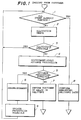
- FIG.1 is a flowchart showing an inquiry answering procedure executed in a conventional production system as described above.
- step 1 an inquiry from a customer is received and it is determined whether or not it is possible to deliver all items relating to the inquiry to the customer on the requested date of delivery.
- step 8 the customer is informed of information confirming that all the items will be delivered on the requested date of delivery. It will be noted that when the result at step 1 is YES, steps which will be described below are repeatedly performed.
- step 3 determines whether or not the stock relating to the selected item can be allocated.
- step 4 is executed.
- step 4 a business department which is directly in contact with the customer negotiates with a production department for an advance production. If it is determined, at step 5, that the advance production is possible, the production schedule including an expected date when the advance production is completed is rearranged at step 6. At step 9, data relating to the rearrangement of the production schedule is updated. On the other hand, if it is determined, at step 5, that the advance production is impossible, the customer is informed of a delay in the requested date of delivery. It should be noted that step 7 is performed when it is determined, at step 5, that the advance production of any one of all the items relating to the inquiry is impossible.
- production status inquiry answering systems as described above have the following disadvantages.
- a more specific object of the present invention is to provide a system and method for automatically answering a production status inquiry in which an answer to the inquiry is automatically generated precisely.
- a system for automatically answering a production status inquiry supplied from an external device coupled to the system comprising: receiving means for receiving the production status inquiry; storing means for storing a requested delivery date related to the production status inquiry, a minimum production period necessary for producing each item, and an extension period defined for each predetermined item, each item indicating a respective product; first determining means, operatively coupled to the receiving means and the storing means, for determining whether or not each item can be delivered on the requested delivery date by comparing the requested delivery date with the minimum production period; first generating means, operatively coupled to the first determining means and said storing means, for generating a confirmation report showing that each item related to the production status inquiry can be delivered on the requested delivery date when the first determining means determines that each item can be delivered on the requested delivery date; second determining means, operatively coupled to the first determining means and the storing means, for determining whether or not each item which is determined not to be able to be delivered on
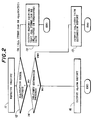
- FIG.2 is a flowchart showing the principle of an automatic production status inquiry answering method according to the present invention.
- a production status inquiry from a customer is received. Further, as will be described later, information about products in stock, information about the production schedule managed by a production management system (which will be described later), and other necessary information are received at step 11.
- an allocation check process is carried out for each item at step 12. In the allocation check process, for each item unit, the requested date of delivery is compared with a standard production period of time as well as a limited number of production dates (a minimum production period of time).
- the standard production period is defined as a standard period of time required from the decision to make products to the completion of actual manufacturing.
- the minimum production period is defined as a shortest period of time required from the decision to make products to the completion of actual manufacturing.
- a delivery date extension process is carried out at step 14.
- the delivery date extension process regarding the item which is determined not to be able to be delivered on the requested delivery date by the accelerated production during the minimum production period, it is determined whether or not the delivery date is allowed to be extended in a way which will be described later.
- an alarm report is output at step 16.
- the alarm report shows that it is impossible to deliver all the items on the requested date of delivery.
- the business department negotiates with the customer for an extension of the requested date of delivery while taking into account the opinion of the production department. For example, a change in the allocation of some items will be discussed between the business department and the customer.
- a delivery date extension report is output at step 15.
- the requested delivery date extension report shows, for example, that some of the items requested by the customer can be delivered on the requested delivery date, but the other items can be delivered on extended delivery dates calculated automatically. In this case, for example, the business department negotiates with the customer for an extension of the requested delivery date.
- the minimum production period used at step 12 is defined as follows: (standard production period)/K. where K is an arbitrary number. For example, K is equal to 2. As has been explained previously, it is determined that the allocation be possible if the requested delivery date comes after the minimum production period. Even if one of the items is determined to have to be delivered on the requested delivery date obtained before the end of the minimum production period, step 14 is performed.
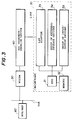
- FIG.3 is a block diagram of the automatic production status inquiry answering system according to a preferred embodiment of the present invention.
- the system shown in FIG.3 includes a LAN (Local Area Network) mainframe 30, an EDI (Electronic Data Interchange) transmit/receive device 40, and a modem (modulator/demodulator) 50.
- the modem 50 is coupled to a value added network (VAN) via a communication line.
- the LAN mainframe 30 is composed of a central processing unit (CPU) 31, a memory 32, a LAN adapter 33, a group of external storage devices 34, and a group of input/output devices 35.
- the LAN adapter 33 communicates with the transmit/receive device 40.
- the group of external storage devices 34 forms databases, and store a variety of information which will be described later.
- the group of input/output devices 35 includes, for example, a keyboard, a display device, and a printer.
- the CPU 31 controls the entire operation of the LAN mainframe 30, as will be described later.
- the memory 32 is used as a work area of the CPU 31.
- FIG.4 shows a production management system (MPS/MRP) 60 coupled to the value added network.
- the production management system 60 receives demand information, supply information and inventory information for finished goods.
- the demand information includes information on forecasted demand and a customer order.
- the supply information includes information on production progress and accepted orders.
- the inventory information for the finished goods includes information on the number (amount) of products on hand.
- the production management system 60 integrally manages the above-mentioned information, and outputs managed information, such as information about production routing status and information about the number of products which can be actually allocated.
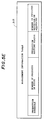
- FIGS.5A through 5F respectively show information stored in the databases located in the group of storage units 34.
- FIG.5A shows a customer master table 311, which stores a customer code and the name of customer.
- FIG.5B shows an order head information table 312, which stores an estimate number, a sales order number and the date of an order received.
- FIG.5C shows an order item information table 313, which stores a production number, the name of an ordered product, the number (amount) of ordered products, an allocation date, an allocation date after the adjustment by the accelerated production, and the requested delivery date.
- FIG.5D shows a production period table 314, which stores an item of product, a standard production period and a minimum production period. The minimum production periods of different products may be different from each other.
- FIG.5E shows a table 315 of management information received from the aforementioned production management system shown in FIG.4.
- the information table 315 stores, the number of products in stock, a production schedule, a production routing status and the number of products which can be actually allocated.
- the information on the production routing status shows the progress in the production, such as the date of starting the production, or the date of completing a predetermined test.
- the number of products which can be allocated in the information table 315 is obtained by subtracting the number of products in stock from the number of products which have been lent, for example. It will be noted that desired information may be added to any of the above-mentioned tables.
- step 110 which corresponds to step 11 shown in FIG.2, the mainframe 30 executes a receiving process under the control of the CPU 31.
- the mainframe 30 receives an inquiry from a customer via the value added network, the modem 50 and the transmit/receive device 40.
- the inquiry may be generated by the aforementioned management system 60 in accordance with the particulars of the inquiry from the customer.
- a business terminal which is coupled to the value added network and which can output information on the inquiry to the value added network.
- the management information as shown in FIG.5E, which is generated and output by the management system 60, is received.
- the CPU 31 executes the aforementioned allocation check process 12, which consists of steps 111 and 112 shown in FIG.6.
- FIG.7 is a flowchart of an allocation check procedure during the step 111 shown in FIG.6.
- the CPU 31 determines whether or not all items inquired about have been checked.
- the CPU 31 executes step 112.
- the CPU 31 determines whether or not each item inquired about can be allocated on the requested delivery date.
- the CPU 31 refers, for each item, to the order item information table 313, the production period table 314 and the management information table 315.
- the CPU 31 determines that the item being considered can be allocated. Even if the necessary number of products being considered cannot be produced by the requested delivery date, the CPU 31 determines that the item being considered can be allocated if the necessary number of products is smaller than the number of products which can be actually allocated. It will be noted that information about the number of products which can be actually allocated is defined in the information table 315 shown in FIG.5E. Then, the CPU 31 subtracts the number of products which can be actually allocated from the requested number of products, so that the information table 315 is updated at step 111-3. At the same time, the CPU 31 determines the allocation date to be, for example, the requested delivery date or some days before the requested delivery date. The products in stock will be allocated on the allocation date (or the requested delivery date).
- step 111-2 if it is determined, at step 111-2, that the item being considered cannot be allocated on the requested delivery date, the CPU 31 executes step 111-4.
- the CPU 31 refers to the minimum production period defined in the production period table 314 and the production schedule defined in the information table 315, and determines whether or not the item being considered can be allocated by accelerated production during the minimum production period, by taking into account the production schedule and the production routing status. It can be seen from the production schedule and the production routing status how many products have been produced and stocked.
- the CPU 31 determines the allocation date to be, for example, the requested delivery date or some days before the requested delivery date, and updates the number of products which can be actually allocated.
- the allocation date determined at step 111-5 is registered in the corresponding area of the table 313 related to allocation date after adjustment. Further, at step 111-5, the CPU 31 updates the date of completion of the production defined in the production schedule in the information table 315.
- a particular flag is given to, for example, the production number defined in the order item information table 313.
- step 112 the CPU 31 determines whether or not all the items have been determined to be allocated at step 111.
- step 113 the CPU 31 executes step 113, at which step a confirmation report is displayed or printed. This confirmation report shows that all the items related to the inquiry will be delivered on the same requested delivery date.
- step 115 the CPU 31 executes step 115 shown in FIG.6.
- the CPU 31 determines whether or not there is a predetermined period (one month, for example) until the requested delivery date. When it is determined, at step 115, that there is a period shorter than one month until the request delivery date, the CPU 31 executes step 116, at which the aforementioned alarm report is output. On the other hand, when there is one month or longer until the requested delivery date, the CPU 31 executes step 117, at which step a delivery date extension procedure shown in FIG.8 is carried out.
- a predetermined period one month, for example
- the CPU 31 refers to the order item information table 313 shown in FIG.5C, and identifies items which are determined not to be able to be allocated at steps 111-4 and 111-6 shown in FIG.7.
- the CPU 31 refers to the order item information table 313, and identifies which are determined to be able to be allocated at steps 111-2 and 111-3.
- the CPU 31 refers to a delivery date extension table 316 stored in a database formed in the group 34 of external storage devices.
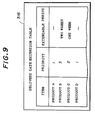
- FIG.9 is a diagram showing the delivery date extension table 316, in which the priority order of production (delivery) and an extension period are defined for each item.
- Products A, B, C, D ... are products related to each other.
- products A, B, C, D ... are related to a communication system, and are respectively a cable, a communication terminal, a repeater, and a connector. Normally, such products are not needed at the same time.
- cables and connectors are needed first, repeaters are needed second, and communication terminals are needed third. That is, the priority of need of products, that is, the priority of the delivery date can be defined among products. In the example being considered, products A and D have the first priority, product C has the second priority, and product D has the third priority.
- the delivery date extension table 316 shown in FIG.9 defines an extension period for each item having a priority lower than the first priority. For example, the extension period equal to one week is defined for product C. That is, in view of the procedure for constructing the communication system, it is enough to deliver product C one week later than the requested delivery date related to each item having the first priority. Similarly, the extension period equal to two weeks is defined for product B.
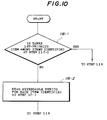
- step 118-1 the CPU 31 determines, at step 118-1, whether or not there is an item which is one of the items identified at step 117-1 shown in FIG.8 and which has the first (highest) priority.
- the result obtained at step 118-1 is YES, that is, when it is determined that there is a first-priority item which cannot be delivered on the requested delivery date, the procedure proceeds to step 116, at which the alarm report is output.
- step 118-2 the CPU 31 reads, from the delivery date extension table 316 shown in FIG.9, the extension period for each of the items identified at step 117-2 shown in FIG.8. If products B and C shown in FIG.9 are items identified at step 117-2, the extension periods for products B and C are read out respectively. Then, the CPU 31 executes step 119.
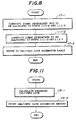
- FIG.11 is a flowchart of a delivery date extension answering procedure executed at step 119.
- the CPU 31 calculates, for each item identified at step 117-2, the extended delivery date from the requested delivery date defined in the table 313 shown in FIG.5C and the previously read extension period defined in table 316 shown in FIG.9.
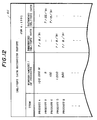
- the CPU 31 creates a delivery date extension report 411 shown in FIG.12.
- the delivery date extension report 411 includes information on the item, the number (amount) of products, the requested delivery date, and the extended delivery date. Assuming that the requested delivery date is July 8, 1991, the extended delivery date for product C calculated at step 119-1 is July 15, 1991, and the extended delivery date for product B is July 22, 1991.
- the delivery date extension report 411 is, for example, printed by the printer of the group 35 of input/output devices. The business department negotiates with the customer with extension of the delivery dates for the items by using the delivery date extension report 411.
- the CPU 31 creates the alarm report identified by reference numeral 412 as shown in FIG.13.
- the alarm report 412 shown in FIG.13 shows information on the item, the number (amount) of products, the requested delivery date and an alarm indication.
- Each item subjected to the procedure of step 111-6 shown in FIG.7 cannot be delivered on the requested delivery date.
- An alarm indication * is given to each item subjected to the procedure of step 111-6.
- the information about the number (amount) of products and the requested delivery date can be obtained from the order item information table 313 shown in FIG.5C. If step 116 comes from step 115, the alarm indication will be given to each of all the items inquired about.
- the aforementioned confirmation report has, for example, the same requested delivery date printed for each item on the alarm report 412, while no alarm indication is given.
Landscapes
- Engineering & Computer Science (AREA)
- Business, Economics & Management (AREA)
- Human Resources & Organizations (AREA)
- Strategic Management (AREA)
- Economics (AREA)
- Entrepreneurship & Innovation (AREA)
- Educational Administration (AREA)
- Game Theory and Decision Science (AREA)
- Development Economics (AREA)
- Marketing (AREA)
- Operations Research (AREA)
- Quality & Reliability (AREA)
- Tourism & Hospitality (AREA)
- Physics & Mathematics (AREA)
- General Business, Economics & Management (AREA)
- General Physics & Mathematics (AREA)
- Theoretical Computer Science (AREA)
- General Factory Administration (AREA)
- Management, Administration, Business Operations System, And Electronic Commerce (AREA)
Applications Claiming Priority (2)
| Application Number | Priority Date | Filing Date | Title |
|---|---|---|---|
| JP2168667A JPH0457158A (ja) | 1990-06-27 | 1990-06-27 | 進度照会回答処理装置 |
| JP168667/90 | 1990-06-27 |
Publications (2)
| Publication Number | Publication Date |
|---|---|
| EP0463616A2 true EP0463616A2 (de) | 1992-01-02 |
| EP0463616A3 EP0463616A3 (en) | 1993-12-29 |
Family
ID=15872269
Family Applications (1)
| Application Number | Title | Priority Date | Filing Date |
|---|---|---|---|
| EP19910110554 Withdrawn EP0463616A3 (en) | 1990-06-27 | 1991-06-26 | System and method for automatically answering production status inquiry |
Country Status (4)
| Country | Link |
|---|---|
| EP (1) | EP0463616A3 (de) |
| JP (1) | JPH0457158A (de) |
| AU (1) | AU636769B2 (de) |
| CA (1) | CA2045775A1 (de) |
Cited By (22)
| Publication number | Priority date | Publication date | Assignee | Title |
|---|---|---|---|---|
| WO2000017795A1 (en) * | 1998-09-18 | 2000-03-30 | I2 Technologies, Inc. | System and method for managing atp data in a distributed supply chain planning environment |
| US6188989B1 (en) | 1995-06-16 | 2001-02-13 | I2 Technologies, Inc. | System and method for managing available to promised product (ATP) |
| WO2002029687A1 (en) * | 2000-10-05 | 2002-04-11 | I2 Technologies, Inc. | Fulfillment management system for managing atp data |
| FR2833733A1 (fr) * | 2001-12-18 | 2003-06-20 | France Telecom | Systeme d'assistance a la prise de rendez-vous pour la livraison d'un produit |
| EP1237106A3 (de) * | 2001-01-25 | 2003-11-12 | Honda Giken Kogyo Kabushiki Kaisha | Vorrichtung für die Verwaltung der Produktbestellungen in einer Versorgungskette |
| EP1164522A3 (de) * | 2000-05-31 | 2004-01-07 | Kabushiki Kaisha Toshiba | Verfahren für den elektronischen Handel mit Halbleiterprodukten, elektronischer Handel damit, Produktionssystem, Produktionsverfahren, Entwurfssystem, Entwurfsverfahren und Herstellungsverfahren für die Produktionsausrüstung |
| US6708174B1 (en) | 2000-12-20 | 2004-03-16 | I2 Technologies, Inc. | System and method for retrieving information according to improved matching criteria |
| US6963847B1 (en) | 1998-09-18 | 2005-11-08 | I2 Technologies Us, Inc. | System and method for managing ATP data in a distributed supply chain planning environment |
| US6963849B1 (en) | 2000-10-05 | 2005-11-08 | I2 Technologies Us, Inc | Providing decision support based on past participant performance within an electronic marketplace environment |
| US6980966B1 (en) | 2000-10-05 | 2005-12-27 | I2 Technologies Us, Inc. | Guided buying decision support in an electronic marketplace environment |
| US7024371B2 (en) | 2001-04-13 | 2006-04-04 | I2 Technologies Us, Inc. | High availability planning and scheduling architecture |
| US7039602B1 (en) | 1999-06-14 | 2006-05-02 | I2 Technologies Us, Inc. | Configuring products with default sections determined according to optimization functions |
| US7043444B2 (en) | 2001-04-13 | 2006-05-09 | I2 Technologies Us, Inc. | Synchronization of planning information in a high availability planning and scheduling architecture |
| US7065499B1 (en) | 2001-03-19 | 2006-06-20 | I2 Technologies Us, Inc. | Intelligent order promising |
| US7085729B1 (en) | 1995-06-16 | 2006-08-01 | I2 Technologies Us, Inc. | System and method for allocating manufactured products to sellers |
| US7117163B1 (en) | 2000-06-15 | 2006-10-03 | I2 Technologies Us, Inc. | Product substitution search method |
| US7249044B2 (en) | 2000-10-05 | 2007-07-24 | I2 Technologies Us, Inc. | Fulfillment management system for managing ATP data in a distributed supply chain environment |
| US7523060B1 (en) | 2000-12-20 | 2009-04-21 | I2 Technologies Us, Inc. | System and method for negotiating according to improved matching criteria |
| US7747481B2 (en) | 2000-10-05 | 2010-06-29 | I2 Technologies Us, Inc. | Extreme capacity management in an electronic marketplace environment |
| US7970722B1 (en) | 1999-11-08 | 2011-06-28 | Aloft Media, Llc | System, method and computer program product for a collaborative decision platform |
| CN112101903A (zh) * | 2020-09-15 | 2020-12-18 | 云镝智慧科技有限公司 | 一种采购对象的生产进度状态展示方法及相关装置 |
| CN116384842A (zh) * | 2023-06-05 | 2023-07-04 | 商飞软件有限公司 | 一种基于飞机交付状态评估模型实现飞机交付判断的方法 |
Family Cites Families (4)
| Publication number | Priority date | Publication date | Assignee | Title |
|---|---|---|---|---|
| US4459663A (en) * | 1981-07-02 | 1984-07-10 | American Business Computer | Data processing machine and method of allocating inventory stock for generating work orders for producing manufactured components |
| US4887208A (en) * | 1987-12-18 | 1989-12-12 | Schneider Bruce H | Sales and inventory control system |
| US4866628A (en) * | 1987-12-18 | 1989-09-12 | International Business Machines Corp. | Automated production dispatch system with feedback control |
| EP0425405A3 (en) * | 1989-10-23 | 1992-01-22 | International Business Machines Corporation | An automated customer order promising and confirming method |
-
1990
- 1990-06-27 JP JP2168667A patent/JPH0457158A/ja active Pending
-
1991
- 1991-06-24 AU AU79277/91A patent/AU636769B2/en not_active Ceased
- 1991-06-26 CA CA002045775A patent/CA2045775A1/en not_active Abandoned
- 1991-06-26 EP EP19910110554 patent/EP0463616A3/en not_active Withdrawn
Cited By (29)
| Publication number | Priority date | Publication date | Assignee | Title |
|---|---|---|---|---|
| US6188989B1 (en) | 1995-06-16 | 2001-02-13 | I2 Technologies, Inc. | System and method for managing available to promised product (ATP) |
| US7085729B1 (en) | 1995-06-16 | 2006-08-01 | I2 Technologies Us, Inc. | System and method for allocating manufactured products to sellers |
| US8423395B1 (en) | 1995-06-16 | 2013-04-16 | Jda Software Group, Inc. | System and method for managing data associated with available to-promise (ATP) products |
| WO2000017795A1 (en) * | 1998-09-18 | 2000-03-30 | I2 Technologies, Inc. | System and method for managing atp data in a distributed supply chain planning environment |
| US6963847B1 (en) | 1998-09-18 | 2005-11-08 | I2 Technologies Us, Inc. | System and method for managing ATP data in a distributed supply chain planning environment |
| US7039602B1 (en) | 1999-06-14 | 2006-05-02 | I2 Technologies Us, Inc. | Configuring products with default sections determined according to optimization functions |
| US7970722B1 (en) | 1999-11-08 | 2011-06-28 | Aloft Media, Llc | System, method and computer program product for a collaborative decision platform |
| US8005777B1 (en) | 1999-11-08 | 2011-08-23 | Aloft Media, Llc | System, method and computer program product for a collaborative decision platform |
| US8160988B1 (en) | 1999-11-08 | 2012-04-17 | Aloft Media, Llc | System, method and computer program product for a collaborative decision platform |
| EP1164522A3 (de) * | 2000-05-31 | 2004-01-07 | Kabushiki Kaisha Toshiba | Verfahren für den elektronischen Handel mit Halbleiterprodukten, elektronischer Handel damit, Produktionssystem, Produktionsverfahren, Entwurfssystem, Entwurfsverfahren und Herstellungsverfahren für die Produktionsausrüstung |
| US6788985B2 (en) | 2000-05-31 | 2004-09-07 | Kabushiki Kaisha Toshiba | Electronic commerce method for semiconductor products, electronic commerce thereof, production system, production method, production equipment design system, production equipment design method, and production equipment manufacturing method |
| US7117163B1 (en) | 2000-06-15 | 2006-10-03 | I2 Technologies Us, Inc. | Product substitution search method |
| US6963849B1 (en) | 2000-10-05 | 2005-11-08 | I2 Technologies Us, Inc | Providing decision support based on past participant performance within an electronic marketplace environment |
| US6980966B1 (en) | 2000-10-05 | 2005-12-27 | I2 Technologies Us, Inc. | Guided buying decision support in an electronic marketplace environment |
| US7747481B2 (en) | 2000-10-05 | 2010-06-29 | I2 Technologies Us, Inc. | Extreme capacity management in an electronic marketplace environment |
| US7249044B2 (en) | 2000-10-05 | 2007-07-24 | I2 Technologies Us, Inc. | Fulfillment management system for managing ATP data in a distributed supply chain environment |
| WO2002029687A1 (en) * | 2000-10-05 | 2002-04-11 | I2 Technologies, Inc. | Fulfillment management system for managing atp data |
| US6708174B1 (en) | 2000-12-20 | 2004-03-16 | I2 Technologies, Inc. | System and method for retrieving information according to improved matching criteria |
| US7523060B1 (en) | 2000-12-20 | 2009-04-21 | I2 Technologies Us, Inc. | System and method for negotiating according to improved matching criteria |
| US10192259B2 (en) | 2000-12-20 | 2019-01-29 | Jda Software Group, Inc. | System and method for negotiating according to improved matching criteria |
| EP1237106A3 (de) * | 2001-01-25 | 2003-11-12 | Honda Giken Kogyo Kabushiki Kaisha | Vorrichtung für die Verwaltung der Produktbestellungen in einer Versorgungskette |
| US7065499B1 (en) | 2001-03-19 | 2006-06-20 | I2 Technologies Us, Inc. | Intelligent order promising |
| US7043444B2 (en) | 2001-04-13 | 2006-05-09 | I2 Technologies Us, Inc. | Synchronization of planning information in a high availability planning and scheduling architecture |
| US7024371B2 (en) | 2001-04-13 | 2006-04-04 | I2 Technologies Us, Inc. | High availability planning and scheduling architecture |
| EP1321882A1 (de) * | 2001-12-18 | 2003-06-25 | France Telecom | Unterstützungssystem zum Treffen von Verabredungen für die Lieferung eines Produktes |
| FR2833733A1 (fr) * | 2001-12-18 | 2003-06-20 | France Telecom | Systeme d'assistance a la prise de rendez-vous pour la livraison d'un produit |
| CN112101903A (zh) * | 2020-09-15 | 2020-12-18 | 云镝智慧科技有限公司 | 一种采购对象的生产进度状态展示方法及相关装置 |
| CN116384842A (zh) * | 2023-06-05 | 2023-07-04 | 商飞软件有限公司 | 一种基于飞机交付状态评估模型实现飞机交付判断的方法 |
| CN116384842B (zh) * | 2023-06-05 | 2023-08-29 | 商飞软件有限公司 | 一种基于飞机交付状态评估模型实现飞机交付判断的方法 |
Also Published As
| Publication number | Publication date |
|---|---|
| CA2045775A1 (en) | 1991-12-28 |
| AU7927791A (en) | 1992-06-11 |
| JPH0457158A (ja) | 1992-02-24 |
| AU636769B2 (en) | 1993-05-06 |
| EP0463616A3 (en) | 1993-12-29 |
Similar Documents
| Publication | Publication Date | Title |
|---|---|---|
| EP0463616A2 (de) | System und Verfahren zur automatischen Beantwortung einer Betriebszustandsanfrage | |
| US6876895B2 (en) | Order assembly production system and method | |
| US8046276B2 (en) | System and method for managing product reserve | |
| EP1416347A1 (de) | Produktionsverwaltungssystem, produktionsverwaltungsverfahren | |
| US20060212323A1 (en) | Production management system | |
| JPH0997284A (ja) | 発注管理装置 | |
| CN111626672A (zh) | 一种应急物资的订单处理方法和装置以及库存控制方法 | |
| KR20120017262A (ko) | 재고 물품의 수량 관리 장치 및 방법 | |
| US7689475B2 (en) | Distribution control system and method, and server apparatus and its control method | |
| JP3831328B2 (ja) | 在庫管理方法、在庫管理システムおよび在庫管理プログラム | |
| CN112633789A (zh) | 库存管理装置及存储介质 | |
| US20040049433A1 (en) | Back order management system | |
| JP3239980B2 (ja) | 物流管理システム | |
| JPH05197735A (ja) | 集中在庫管理装置 | |
| JPH05324685A (ja) | 見込生産品の在庫管理方式 | |
| JP2002328984A (ja) | 情報提供方法及び情報提供システム | |
| US20040122724A1 (en) | System and method for generating priorities of manufacturing orders | |
| EP1472637A2 (de) | Teilebestellsystem zur verbesserung der effizienz der teilelieferung | |
| CN115023718A (zh) | 交付期计算装置、交付期计算方法以及程序 | |
| JP2004029874A (ja) | 生産管理システム | |
| US20020103684A1 (en) | Program and method for providing a delivery date, and recording medium thereof | |
| JP2000051095A (ja) | 生産及び梱包管理システム | |
| JP2003316412A (ja) | 納期管理装置 | |
| JP4325825B2 (ja) | 生産計画制御方法、生産計画システム、および記録媒体 | |
| JP2003140729A (ja) | 納期管理装置 |
Legal Events
| Date | Code | Title | Description |
|---|---|---|---|
| PUAI | Public reference made under article 153(3) epc to a published international application that has entered the european phase |
Free format text: ORIGINAL CODE: 0009012 |
|
| AK | Designated contracting states |
Kind code of ref document: A2 Designated state(s): DE FR GB |
|
| PUAL | Search report despatched |
Free format text: ORIGINAL CODE: 0009013 |
|
| AK | Designated contracting states |
Kind code of ref document: A3 Designated state(s): DE FR GB |
|
| 17P | Request for examination filed |
Effective date: 19940216 |
|
| STAA | Information on the status of an ep patent application or granted ep patent |
Free format text: STATUS: THE APPLICATION HAS BEEN WITHDRAWN |
|
| 18W | Application withdrawn |
Withdrawal date: 19960926 |