EP0465380A2 - Hämoverträgliches Verbundmaterial - Google Patents
Hämoverträgliches Verbundmaterial Download PDFInfo
- Publication number
- EP0465380A2 EP0465380A2 EP91420199A EP91420199A EP0465380A2 EP 0465380 A2 EP0465380 A2 EP 0465380A2 EP 91420199 A EP91420199 A EP 91420199A EP 91420199 A EP91420199 A EP 91420199A EP 0465380 A2 EP0465380 A2 EP 0465380A2
- Authority
- EP
- European Patent Office
- Prior art keywords
- additive
- material according
- acrylonitrile
- support
- copolymer
- Prior art date
- Legal status (The legal status is an assumption and is not a legal conclusion. Google has not performed a legal analysis and makes no representation as to the accuracy of the status listed.)
- Granted
Links
Images

Classifications
-
- B—PERFORMING OPERATIONS; TRANSPORTING
- B01—PHYSICAL OR CHEMICAL PROCESSES OR APPARATUS IN GENERAL
- B01D—SEPARATION
- B01D67/00—Processes specially adapted for manufacturing semi-permeable membranes for separation processes or apparatus
- B01D67/0081—After-treatment of organic or inorganic membranes
- B01D67/0088—Physical treatment with compounds, e.g. swelling, coating or impregnation
-
- A—HUMAN NECESSITIES
- A61—MEDICAL OR VETERINARY SCIENCE; HYGIENE
- A61L—METHODS OR APPARATUS FOR STERILISING MATERIALS OR OBJECTS IN GENERAL; DISINFECTION, STERILISATION OR DEODORISATION OF AIR; CHEMICAL ASPECTS OF BANDAGES, DRESSINGS, ABSORBENT PADS OR SURGICAL ARTICLES; MATERIALS FOR BANDAGES, DRESSINGS, ABSORBENT PADS OR SURGICAL ARTICLES
- A61L33/00—Antithrombogenic treatment of surgical articles, e.g. sutures, catheters, prostheses, or of articles for the manipulation or conditioning of blood; Materials for such treatment
- A61L33/0076—Chemical modification of the substrate
- A61L33/0088—Chemical modification of the substrate by grafting of a monomer onto the substrate
-
- A—HUMAN NECESSITIES
- A61—MEDICAL OR VETERINARY SCIENCE; HYGIENE
- A61L—METHODS OR APPARATUS FOR STERILISING MATERIALS OR OBJECTS IN GENERAL; DISINFECTION, STERILISATION OR DEODORISATION OF AIR; CHEMICAL ASPECTS OF BANDAGES, DRESSINGS, ABSORBENT PADS OR SURGICAL ARTICLES; MATERIALS FOR BANDAGES, DRESSINGS, ABSORBENT PADS OR SURGICAL ARTICLES
- A61L33/00—Antithrombogenic treatment of surgical articles, e.g. sutures, catheters, prostheses, or of articles for the manipulation or conditioning of blood; Materials for such treatment
- A61L33/06—Use of macromolecular materials
- A61L33/064—Use of macromolecular materials obtained by reactions only involving carbon-to-carbon unsaturated bonds
-
- B—PERFORMING OPERATIONS; TRANSPORTING
- B01—PHYSICAL OR CHEMICAL PROCESSES OR APPARATUS IN GENERAL
- B01D—SEPARATION
- B01D71/00—Semi-permeable membranes for separation processes or apparatus characterised by the material; Manufacturing processes specially adapted therefor
- B01D71/06—Organic material
- B01D71/40—Polymers of unsaturated acids or derivatives thereof, e.g. salts, amides, imides, nitriles, anhydrides, esters
- B01D71/42—Polymers of nitriles, e.g. polyacrylonitrile
- B01D71/421—Polyacrylonitrile
-
- B—PERFORMING OPERATIONS; TRANSPORTING
- B01—PHYSICAL OR CHEMICAL PROCESSES OR APPARATUS IN GENERAL
- B01D—SEPARATION
- B01D71/00—Semi-permeable membranes for separation processes or apparatus characterised by the material; Manufacturing processes specially adapted therefor
- B01D71/06—Organic material
- B01D71/52—Polyethers
- B01D71/521—Aliphatic polyethers
- B01D71/5211—Polyethylene glycol or polyethyleneoxide
-
- B—PERFORMING OPERATIONS; TRANSPORTING
- B01—PHYSICAL OR CHEMICAL PROCESSES OR APPARATUS IN GENERAL
- B01D—SEPARATION
- B01D71/00—Semi-permeable membranes for separation processes or apparatus characterised by the material; Manufacturing processes specially adapted therefor
- B01D71/06—Organic material
- B01D71/76—Macromolecular material not specifically provided for in a single one of groups B01D71/08 - B01D71/74
Definitions
- the present invention relates to the technical field of composite materials comprising a support membrane coated with an additive reducing the thrombogenic nature of the support.
- the extracorporeal circulation of blood for treatment purposes requires contact between the blood and an artificial surface.
- the blood comes into contact with the lines and with the dialysis membrane.
- plasmapheresis or for treatments by contact with supports grafted with enzymes or substances intended for purification.
- contact of the blood with an artificial surface generally results in activation of the coagulation system and the deposition of blood platelets, which may lead to thromboses, either locally in contact with the artificial surface, or more generally to inside the human body.
- the present invention provides a composite material comprising a support membrane consisting essentially of a copolymer of acrylonitrile and of at least one ionic or ionizable monomer coated with an additive reducing the thrombogenic nature of the support, said additive being a copolymer in which at least one of the monomers comprises the polyoxyethylene unit with a degree of polymerization greater than or equal to three, characterized in that the additive is adsorbed on the support membrane and in that it comprises at least acrylonitrile as a comonomer.
- the adsorption of the additive makes it possible to preserve the chemical nature of the support membrane and therefore its properties.
- the adsorption phenomenon involves physical bonds such as ionic bonds, hydrophilic, hydrophobic bonds and Van der Waals forces.
- the improvement of the adsorption of the additive on the support membrane is obtained thanks to the interactions existing between the acrylonitrile groups of the additive and those of the support.
- the adsorption treatment is economical compared to other treatments such as mass grafting. In fact, maximum efficiency is obtained for a minimum quantity of additive used, since a surface layer of additive is sufficient to obtain the desired effect.
- the degree of polymerization of the polyoxyethylene is equal to 23.
- the polyoxyethylene links are long enough to cause a certain steric hindrance on the surface of the membrane which prevents the deposition of platelets and fibrinogen; in addition, the hydrophilic nature of the polyoxyethylene results in forming an aqueous environment on the surface of the support which contributes to accentuating the biocompatibility character of the membrane.
- the additive further comprises a positively charged comonomer.
- This positive charge which can for example come from a quaternary ammonium, makes it possible to improve the anchoring between the additive and the support thanks to an ionic bond.
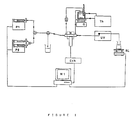
- FIG. 1 represents, schematically and without a determined scale, an experimental arrangement making it possible to demonstrate the improvement in the non-thrombogenicity properties of the material according to the invention.
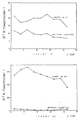
- Figure II illustrates the reduction in platelet adhesion induced by the material according to the invention compared to a material of the prior art, in the absence of red blood cell.
- Figure III illustrates the reduction in platelet adhesion induced by the material according to the invention compared to a material of the prior art in the presence of red blood cells.
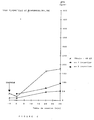
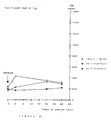
- Figures IV, V and VI illustrate the results of assays of the plasma levels of Fibrinopeptide A, ⁇ thromboglobulin and activated protein C3a respectively, during ex-vivo dialysis tests with materials according to the invention compared with materials of the prior art.
- the support membranes according to the invention consist of a copolymer of acrylonitrile and of at least one ionic or ionizable monomer, as described in application FR 2 105 502.
- the ionic or ionizable monomers are essentially olefinically monomers unsaturated and comprising at least one functional group such as the sulfonic or phosphonic acid group.
- the acid groups are preferably found in the form of salts, such as the sodium, potassium and ammonium salts.
- An example of a particularly suitable support membrane is an acrylonitrile membrane and sodium methallylsulfonate such as the dialysis membrane HOSPAL AN 69 (registered trademark).
- a plasmapheresis membrane consisting of methyl methacrylate and acrylonitrile is also an example of a membrane suitable for the purposes of the present invention.
- the additive used according to the present invention is a polymer of which one of the comonomers is acrylonitrile and of which at least one of the comonomers is a macromonomer of polyoxyethylene (CH2CH2O) n.
- the degree of polymerization n of the polyoxyethylene macromer is a variable greater than or equal to three. In fact, the greater the degree of polymerization, the greater the length of the links and therefore the more the aqueous environment created by the hydrophilicity of polyoxyethylene will represent a thick layer. However, this environment is highly hemocompatible.
- the polyoxyethylene links cause steric hindrance on the surface of the support which prevents the deposition of platelets and the adsorption of fibrinogen.
- polyoxyethylene macromonomers suitable for the present invention mention may in particular be made of tri polyacrylate (ethylene glycol), nonaethylene glycol methacrylate, methoxynona methacrylate (ethylene glycol), methoxy methacrylate 23 ethylene glycol.
- the present invention in order to improve the anchoring of the additive to the support, it is possible to add to it at least one positively charged monomer.
- This positive charge will allow, in the case of a support having electronegative sites, such as the sulfonate sites of the membrane HOSPAL AN 69 (registered trademark), to create ionic bonds enhancing the adsorption of the additive to the support.
- Load positive may, for example, be that of a quaternary ammonium, as is the case if a monomer such as trimethyl amino ethyl methacrylate chloride is added to the additive.
- the adsorption of the additive on the support membrane can be carried out by slow circulation, in contact with the support membrane, of the additive in a buffer solution at the appropriate pH, then by rinsing the support abundantly with this buffer solution.
- the adsorption can be carried out by slow injection of the additive in a tyrode buffer (NaCl, KCl, NaHCO3, NaH2PO4 , H2O) for example.
- a tyrode buffer NaCl, KCl, NaHCO3, NaH2PO4 , H2O
- the qualities of the composite material of the present invention can be tested by means of methods for measuring the radioactive activity after labeling of fibrinogen and platelets, for example with iodine 125 and indium 111 respectively.
- An additive suitable for the present invention is produced by radical copolymerization of acrylonitrile and methoxy polyethylene glycol monomethacrylate.
- a (n) is called polyethylene glycol methacrylate, the degree of polymerization of which is n and B is acrylonitrile.
- Dimethylformamide (DMF), dimethylsulphoxide (DMSO) and acrylonitrile (B) are distilled twice on CaH2, under reduced pressure as regards DMF and DMSO.
- the azobis-isobutyronitrile used as initiator is crystallized from a toluene methanol solution.
- Methoxy polyethylene glycol A (5) methacrylates, A (8) and A (21) are used directly as supplied by Polysciences.
- the monomers, the solvent and the initiator are introduced into a double-walled glass reactor fitted with a magnetic or mechanical stirrer and connected to an external thermostat allowing the temperature to be controlled at ⁇ 0.1 ° C.
- the system is then degassed by 3 successive vacuum-argon scanning cycles, and the reaction is then carried out at a constant temperature of 60 ° C. under a slight pressure of argon.
- the consumption of acrylonitrile is monitored by gas-liquid chromatography.
- copolymers are then lyophilized if we want to keep them.
- the copolymerization is carried out at 30 ° C, in the presence of KClO3 and NaHSO3 in an aqueous medium.
- HOSPAL AN 69 registered trademark
- These fibers, 48 in number, are inserted into a hemodialysis minimodule.
- the internal diameter of the fibers is 270 ⁇ m and their length is around 20cm.
- the internal surface of the hollow fibers is treated by adsorption by slowly injecting a solution of terpolymer Y into the buffer TS inside the mini-module, and then rinsing thoroughly with this buffer, whose pH is 7.5.
- a fibrinogen solution is labeled with Iodine 125 according to the iodogen technique.
- Two syringe pumps P1 and P2, containing one, the solution, the other, the solvent, are controlled by a microcomputer M1.
- the total flow rate, the concentration of the solution injected, the duration and the number of passages of the solution can thus be programmed.
- the minimodule M is placed in a slot of a detector (NaI crystal), which is connected to an Ech counting scale also connected to the microcomputer M1.
- the solution is first directed to a UV cell for controlling the protein concentration; it is then collected in a container placed on an electronic balance BL, the data of which are acquired by the microcomputer M1. All the instantaneous kinetic data are displayed on the screen and saved in a file, which can be used for further processing.
- the minimodule is thermostated at 37 ° C. by circulating the buffer in the dialysate compartment.
- the flow of this buffer is controlled by a float flow meter.
- the introduction of the fibrinogen solution into the minimodules is done by moving the buffer to avoid the formation of an air-solution interface.
- the passage of the radioactive solution or suspension is framed by two buffer passages of the same duration.
- the duration of passage of the solution and that of each rinsing with the buffer are equal to 25 min.
- the flow rate is fixed at 2 ml / min.
- the fiber bundles are cut into 2 cm pieces to determine the surface concentration as a function of the position on the beam.
- the adhesion kinetics of the platelets are studied comparatively with a minimodule of hollow fibers constituted by composite material according to the present invention and with a minimodule of hollow fibers in a HOSPAL AN 69 (registered trademark) membrane serving as a control.
- the experimental setup is that of the previous example.
- the platelets are labeled with indium 111 in TA buffer (Tyrode Albumin 0.35%).
- the passage time of the platelet suspension is variable (5 or 10 min); however, the time for each rinse is fixed at 3 min.
- the curves in FIG. 2 illustrate the improvement in the non-thrombogenic nature of the material according to the invention compared with the control membrane.
- the platelet concentration of the solution used is 300,000 ⁇ l / ⁇ l, the duration of contact between the surface of the fibers and the platelet solution is 10 minutes; the shear rate is 500 s ⁇ 1, the reaction is carried out at 37 ° C.
- the platelet solution has no red blood cells.
- the platelets are dissolved in a solution containing 40% of red blood cells, which corresponds fairly well to the concentration of blood for a normal hematocrit.
- the platelet concentration is then 180,000 ⁇ l / ⁇ l.
- the shear rate is 500 s ⁇ 1 and the reaction is carried out at room temperature.
- FIG. 3 represents, for each of the minimodules (according to the invention and according to the control module) the activity of the surface, as a function of time.
- the biocompatibility of the material which is the subject of the invention is evaluated by measuring the levels of fibrinopeptide A, ⁇ thromboglobulin and the protein C3a during ex-vivo dialysis sessions.
- the mini-dialyzers After rinsing the mini-dialyzers with an aqueous NaCl solution at 0.9 g / l, two of them are treated by adsorption of the additive Y obtained according to example 2. A third is kept intact to serve as a control .
- the adsorption treatment is carried out by passing a 5 g / l polymer solution through the fibers in a simple tyrode buffer.
- dialyzers After treatment, the dialyzers are rinsed with an aqueous NaCl solution at 0.9 g / l, heparinized at 2.5 IU / ml for the blood compartment.
- the rinsing liquid is kept in the dialysate compartment by closing the inlet and the outlet of the dialysis liquid and the blood of a donor is passed through the blood compartment at a flow rate of 10 ml. / min, for 34 min.
- the shear rate is 360 s ⁇ 1. After passing through the hemodialyzer, the blood is not returned to the patient.
- a number of plasma substances are then assayed which make it possible to assess the biocompatibility of the material.
- FIG. IV represents the plasma level of Fibrinopeptide A from two tests carried out with the material of the invention as well as the level of the control constituted by a HOSPAL AN 69 membrane (registered trademark) without additive.
- Fibrinopeptide A is an early indicator of activation of the coagulation phenomenon.
- FIG. V likewise illustrates the plasma levels of ⁇ thromboglobulin which is a marker of platelet activation.
- FIG. VI represents the results of the plasma assay of the activated protein C3a, the presence of which indicates an activation of the complement system.
- the maintenance of the performances (dialysis and permeability) of the material of the invention is checked with respect to the support not coated with the additive.
- HOSPAL AN 69 membrane registered trademark
- the dialyzer is treated by adsorption of the terpolymer Y in the same way as in the previous example. A material is thus obtained according to the present invention.
- the ultrafiltration measurements are carried out in a dialysis bath under a transmembrane pressure of 200 mm Hg.
- the clearance measurements carried out are corrected to be brought back to the same flow conditions at the inlet of the blood compartment (i.e. 3.5 ml / min) and of the dialysate compartment (i.e. 10.5 ml / min), the ultrafiltration flow being zero.
Landscapes
- Health & Medical Sciences (AREA)
- Chemical & Material Sciences (AREA)
- Chemical Kinetics & Catalysis (AREA)
- General Health & Medical Sciences (AREA)
- Veterinary Medicine (AREA)
- Hematology (AREA)
- Surgery (AREA)
- Epidemiology (AREA)
- Life Sciences & Earth Sciences (AREA)
- Animal Behavior & Ethology (AREA)
- Engineering & Computer Science (AREA)
- Public Health (AREA)
- Materials Engineering (AREA)
- Inorganic Chemistry (AREA)
- Manufacturing & Machinery (AREA)
- External Artificial Organs (AREA)
- Materials For Medical Uses (AREA)
- Separation Using Semi-Permeable Membranes (AREA)
- Polysaccharides And Polysaccharide Derivatives (AREA)
- Heterocyclic Carbon Compounds Containing A Hetero Ring Having Oxygen Or Sulfur (AREA)
- Medicines Containing Material From Animals Or Micro-Organisms (AREA)
Applications Claiming Priority (2)
| Application Number | Priority Date | Filing Date | Title |
|---|---|---|---|
| FR9007984A FR2663546B1 (fr) | 1990-06-25 | 1990-06-25 | Materiau composite hemocompatible. |
| FR9007984 | 1990-06-25 |
Publications (3)
| Publication Number | Publication Date |
|---|---|
| EP0465380A2 true EP0465380A2 (de) | 1992-01-08 |
| EP0465380A3 EP0465380A3 (en) | 1992-03-25 |
| EP0465380B1 EP0465380B1 (de) | 1995-08-23 |
Family
ID=9397991
Family Applications (1)
| Application Number | Title | Priority Date | Filing Date |
|---|---|---|---|
| EP91420199A Expired - Lifetime EP0465380B1 (de) | 1990-06-25 | 1991-06-18 | Hämoverträgliches Verbundmaterial |
Country Status (8)
| Country | Link |
|---|---|
| US (1) | US5236592A (de) |
| EP (1) | EP0465380B1 (de) |
| JP (1) | JP3126749B2 (de) |
| AT (1) | ATE126709T1 (de) |
| CA (1) | CA2045186A1 (de) |
| DE (1) | DE69112305T2 (de) |
| ES (1) | ES2077202T3 (de) |
| FR (1) | FR2663546B1 (de) |
Cited By (2)
| Publication number | Priority date | Publication date | Assignee | Title |
|---|---|---|---|---|
| US5290448A (en) * | 1991-12-14 | 1994-03-01 | Akzo Nv | Polyacrylonitrile membrane |
| FR2721217A1 (fr) * | 1994-06-20 | 1995-12-22 | Hospal Ind | Dispositif multifonction pour le traitement du sang. |
Families Citing this family (7)
| Publication number | Priority date | Publication date | Assignee | Title |
|---|---|---|---|---|
| FR2747591B1 (fr) * | 1996-04-19 | 1998-05-22 | Hospal Ind | Appareil medical pour le traitement extracorporel du sang ou du plasma et procedes de fabrication de cet appareil |
| FR2758394B1 (fr) * | 1997-01-14 | 1999-03-19 | Hospal Ind | Moyens pour la bio-epuration specifique d'un fluide biologique |
| FR2772639B1 (fr) * | 1997-12-24 | 2000-02-04 | Hospal Ind | Utilisation d'un polymere neutre ou cationique pour prevenir l'activation de la phase contact du sang ou du plasma en contact avec une membrane semi-permeable |
| DE19804536C2 (de) * | 1998-02-05 | 2003-04-10 | Inst Polymerforschung Dresden | Verfahren zur Oxygenation von Blut |
| JP6908878B2 (ja) * | 2016-03-29 | 2021-07-28 | 東レ株式会社 | 医療用高分子、医療用高分子溶液および医療デバイスの製造方法 |
| US11285445B2 (en) * | 2018-05-31 | 2022-03-29 | King Abdullah University Of Science And Technology | CO2-philic thin film composite membranes |
| CN108752824A (zh) * | 2018-06-18 | 2018-11-06 | 北京点域科技有限公司 | 一种透析用毛细管纤维的制备方法 |
Family Cites Families (11)
| Publication number | Priority date | Publication date | Assignee | Title |
|---|---|---|---|---|
| GB1236597A (en) * | 1968-03-20 | 1971-06-23 | Nat Res Dev | Semi-permeable membranes and acrylonitrile copolymers for the production thereof |
| NL206587A (de) * | 1970-08-05 | |||
| FR2105502A5 (de) * | 1970-09-09 | 1972-04-28 | Rhone Poulenc Sa | |
| US3799355A (en) * | 1970-12-28 | 1974-03-26 | Us Health Education & Welfare | Dialysis membranes and manufacture |
| FR2129164A5 (de) * | 1971-03-17 | 1972-10-27 | Rhone Poulenc Sa | |
| FR2199014B1 (de) * | 1972-09-12 | 1975-03-14 | Rhone Poulenc Ind | |
| US4025439A (en) * | 1973-12-12 | 1977-05-24 | Mitsubishi Rayon Co., Ltd. | Dried semipermeable membrane and manufacture thereof |
| JPS585320A (ja) * | 1981-07-01 | 1983-01-12 | Toray Ind Inc | グラフト共重合体 |
| US4511711A (en) * | 1982-02-10 | 1985-04-16 | Sumitomo Chemical Company, Limited | Process for producing semipermeable membrane |
| FR2529464B1 (de) * | 1982-07-01 | 1985-01-18 | Hospal Ind | |
| DE3639561A1 (de) * | 1986-11-20 | 1988-06-01 | Baumann Hanno | Verfahren zur herstellung von nicht-thrombogenen substraten |
-
1990
- 1990-06-25 FR FR9007984A patent/FR2663546B1/fr not_active Expired - Fee Related
-
1991
- 1991-06-18 AT AT91420199T patent/ATE126709T1/de not_active IP Right Cessation
- 1991-06-18 EP EP91420199A patent/EP0465380B1/de not_active Expired - Lifetime
- 1991-06-18 ES ES91420199T patent/ES2077202T3/es not_active Expired - Lifetime
- 1991-06-18 DE DE69112305T patent/DE69112305T2/de not_active Expired - Fee Related
- 1991-06-21 CA CA002045186A patent/CA2045186A1/fr not_active Abandoned
- 1991-06-21 US US07/719,245 patent/US5236592A/en not_active Expired - Lifetime
- 1991-06-24 JP JP03151500A patent/JP3126749B2/ja not_active Expired - Fee Related
Cited By (3)
| Publication number | Priority date | Publication date | Assignee | Title |
|---|---|---|---|---|
| US5290448A (en) * | 1991-12-14 | 1994-03-01 | Akzo Nv | Polyacrylonitrile membrane |
| FR2721217A1 (fr) * | 1994-06-20 | 1995-12-22 | Hospal Ind | Dispositif multifonction pour le traitement du sang. |
| EP0688569A1 (de) * | 1994-06-20 | 1995-12-27 | Hospal Industrie S.A. | Mehrzweck Blutbehandlungsvorrichtung |
Also Published As
| Publication number | Publication date |
|---|---|
| ATE126709T1 (de) | 1995-09-15 |
| ES2077202T3 (es) | 1995-11-16 |
| CA2045186A1 (fr) | 1991-12-26 |
| EP0465380B1 (de) | 1995-08-23 |
| JP3126749B2 (ja) | 2001-01-22 |
| US5236592A (en) | 1993-08-17 |
| DE69112305T2 (de) | 1996-03-21 |
| FR2663546B1 (fr) | 1995-05-12 |
| JPH07503A (ja) | 1995-01-06 |
| FR2663546A1 (fr) | 1991-12-27 |
| EP0465380A3 (en) | 1992-03-25 |
| DE69112305D1 (de) | 1995-09-28 |
Similar Documents
| Publication | Publication Date | Title |
|---|---|---|
| US5658561A (en) | Method of producing anti-thrombogenic material and material produced thereby | |
| Ye et al. | Novel cellulose acetate membrane blended with phospholipid polymer for hemocompatible filtration system | |
| Chandy et al. | Prostaglandin E1‐immobilized poly (vinyl alcohol)‐blended chitosan membranes: Blood compatibility and permeability properties | |
| Zhang et al. | Preparation of a heparin-like functionalized tannic acid-coated polyethersulfone ultrafiltration membrane for hemodialysis by a simple surface modification method | |
| Bohnert et al. | Adsorption of proteins from artificial tear solutions to contact lens materials. | |
| Baszkin et al. | The interaction of plasma proteins with polymers. I. Relationship between polymer surface energy and protein adsorption/desorption | |
| Iwasaki et al. | Reduction of surface‐induced platelet activation on phospholipid polymer | |
| US20030148017A1 (en) | Copolymer coating for a hydrophobic membrane | |
| KR101157244B1 (ko) | 개질 기재의 제조 방법 및 분리막 시스템의 개질 방법 | |
| JPH06507558A (ja) | ポリマーコーティング | |
| AU6816994A (en) | Surface modified biocompatible membranes | |
| WO2003031533A1 (en) | Hydrophilic material and process for producing the same | |
| EP0465380B1 (de) | Hämoverträgliches Verbundmaterial | |
| WO2001054802A1 (fr) | Membrane semi-permeable non thrombogene et procede de fabrication | |
| JP2024547087A (ja) | 膜の選択性を高める方法 | |
| CN118475400A (zh) | 涂覆有聚多巴胺和软骨素的膜及其生产方法 | |
| JP5633277B2 (ja) | 分離膜モジュール | |
| Yuan et al. | Low-fouling hemocompatible dialysis membranes realized by surface grown heparin-like hydrogel layer | |
| EP0688569B1 (de) | Mehrzweck-Blutbehandlungsvorrichtung | |
| JPH0311787B2 (de) | ||
| Lyman | Membranes | |
| Du et al. | Phosphorylcholine-terminated dendritic polyethersulfone membrane with efficient hemocompatibility and antifouling properties for potential hemodialysis application | |
| Bajpai et al. | Adsorption of fibrinogen onto macroporous, biocompatible sponges based on poly (2‐hydroxyethyl methacrylate) | |
| CN121755174B (zh) | 一种血液灌流吸附剂表面的抗凝血水凝胶复合涂层及制备方法 | |
| Frautschi et al. | Alkylation of cellulosic membranes results in reduced complement activation |
Legal Events
| Date | Code | Title | Description |
|---|---|---|---|
| PUAI | Public reference made under article 153(3) epc to a published international application that has entered the european phase |
Free format text: ORIGINAL CODE: 0009012 |
|
| AK | Designated contracting states |
Kind code of ref document: A2 Designated state(s): AT BE CH DE DK ES FR GB GR IT LI LU NL SE |
|
| PUAL | Search report despatched |
Free format text: ORIGINAL CODE: 0009013 |
|
| AK | Designated contracting states |
Kind code of ref document: A3 Designated state(s): AT BE CH DE DK ES FR GB GR IT LI LU NL SE |
|
| 17P | Request for examination filed |
Effective date: 19920415 |
|
| 17Q | First examination report despatched |
Effective date: 19940316 |
|
| GRAA | (expected) grant |
Free format text: ORIGINAL CODE: 0009210 |
|
| AK | Designated contracting states |
Kind code of ref document: B1 Designated state(s): AT BE CH DE DK ES FR GB GR IT LI LU NL SE |
|
| PG25 | Lapsed in a contracting state [announced via postgrant information from national office to epo] |
Ref country code: NL Free format text: LAPSE BECAUSE OF FAILURE TO SUBMIT A TRANSLATION OF THE DESCRIPTION OR TO PAY THE FEE WITHIN THE PRESCRIBED TIME-LIMIT Effective date: 19950823 Ref country code: GR Free format text: LAPSE BECAUSE OF FAILURE TO SUBMIT A TRANSLATION OF THE DESCRIPTION OR TO PAY THE FEE WITHIN THE PRESCRIBED TIME-LIMIT Effective date: 19950823 Ref country code: DK Effective date: 19950823 Ref country code: AT Effective date: 19950823 |
|
| REF | Corresponds to: |
Ref document number: 126709 Country of ref document: AT Date of ref document: 19950915 Kind code of ref document: T |
|
| REF | Corresponds to: |
Ref document number: 69112305 Country of ref document: DE Date of ref document: 19950928 |
|
| GBT | Gb: translation of ep patent filed (gb section 77(6)(a)/1977) |
Effective date: 19951016 |
|
| REG | Reference to a national code |
Ref country code: ES Ref legal event code: FG2A Ref document number: 2077202 Country of ref document: ES Kind code of ref document: T3 |
|
| ITF | It: translation for a ep patent filed | ||
| PG25 | Lapsed in a contracting state [announced via postgrant information from national office to epo] |
Ref country code: SE Effective date: 19951123 |
|
| NLV1 | Nl: lapsed or annulled due to failure to fulfill the requirements of art. 29p and 29m of the patents act | ||
| PLBE | No opposition filed within time limit |
Free format text: ORIGINAL CODE: 0009261 |
|
| STAA | Information on the status of an ep patent application or granted ep patent |
Free format text: STATUS: NO OPPOSITION FILED WITHIN TIME LIMIT |
|
| PG25 | Lapsed in a contracting state [announced via postgrant information from national office to epo] |
Ref country code: LU Free format text: LAPSE BECAUSE OF NON-PAYMENT OF DUE FEES Effective date: 19960630 Ref country code: LI Effective date: 19960630 Ref country code: CH Effective date: 19960630 Ref country code: BE Effective date: 19960630 |
|
| 26N | No opposition filed | ||
| BERE | Be: lapsed |
Owner name: HOSPAL INDUSTRIE Effective date: 19960630 |
|
| REG | Reference to a national code |
Ref country code: CH Ref legal event code: PL |
|
| PGFP | Annual fee paid to national office [announced via postgrant information from national office to epo] |
Ref country code: FR Payment date: 19990525 Year of fee payment: 9 |
|
| PGFP | Annual fee paid to national office [announced via postgrant information from national office to epo] |
Ref country code: ES Payment date: 19990608 Year of fee payment: 9 |
|
| PGFP | Annual fee paid to national office [announced via postgrant information from national office to epo] |
Ref country code: GB Payment date: 19990616 Year of fee payment: 9 |
|
| PGFP | Annual fee paid to national office [announced via postgrant information from national office to epo] |
Ref country code: DE Payment date: 19990727 Year of fee payment: 9 |
|
| PG25 | Lapsed in a contracting state [announced via postgrant information from national office to epo] |
Ref country code: GB Free format text: LAPSE BECAUSE OF NON-PAYMENT OF DUE FEES Effective date: 20000618 |
|
| PG25 | Lapsed in a contracting state [announced via postgrant information from national office to epo] |
Ref country code: ES Free format text: THE PATENT HAS BEEN ANNULLED BY A DECISION OF A NATIONAL AUTHORITY Effective date: 20000619 |
|
| GBPC | Gb: european patent ceased through non-payment of renewal fee |
Effective date: 20000618 |
|
| PG25 | Lapsed in a contracting state [announced via postgrant information from national office to epo] |
Ref country code: FR Free format text: LAPSE BECAUSE OF NON-PAYMENT OF DUE FEES Effective date: 20010228 |
|
| REG | Reference to a national code |
Ref country code: FR Ref legal event code: ST |
|
| PG25 | Lapsed in a contracting state [announced via postgrant information from national office to epo] |
Ref country code: DE Free format text: LAPSE BECAUSE OF NON-PAYMENT OF DUE FEES Effective date: 20010403 |
|
| REG | Reference to a national code |
Ref country code: ES Ref legal event code: FD2A Effective date: 20020204 |
|
| PG25 | Lapsed in a contracting state [announced via postgrant information from national office to epo] |
Ref country code: IT Free format text: LAPSE BECAUSE OF NON-PAYMENT OF DUE FEES;WARNING: LAPSES OF ITALIAN PATENTS WITH EFFECTIVE DATE BEFORE 2007 MAY HAVE OCCURRED AT ANY TIME BEFORE 2007. THE CORRECT EFFECTIVE DATE MAY BE DIFFERENT FROM THE ONE RECORDED. Effective date: 20050618 |