EP0465577B1 - Katalysierte ablagerung von markierungsmittel - Google Patents
Katalysierte ablagerung von markierungsmittel Download PDFInfo
- Publication number
- EP0465577B1 EP0465577B1 EP19900905997 EP90905997A EP0465577B1 EP 0465577 B1 EP0465577 B1 EP 0465577B1 EP 19900905997 EP19900905997 EP 19900905997 EP 90905997 A EP90905997 A EP 90905997A EP 0465577 B1 EP0465577 B1 EP 0465577B1
- Authority
- EP
- European Patent Office
- Prior art keywords
- conjugate
- enzyme
- analyte
- assay
- group
- Prior art date
- Legal status (The legal status is an assumption and is not a legal conclusion. Google has not performed a legal analysis and makes no representation as to the accuracy of the status listed.)
- Expired - Lifetime
Links
- 230000008021 deposition Effects 0.000 title abstract description 43
- 102000004190 Enzymes Human genes 0.000 claims abstract description 133
- 108090000790 Enzymes Proteins 0.000 claims abstract description 133
- 238000003556 assay Methods 0.000 claims abstract description 62
- 239000000758 substrate Substances 0.000 claims abstract description 52
- 239000012491 analyte Substances 0.000 claims abstract description 44
- 238000000034 method Methods 0.000 claims abstract description 32
- 238000001514 detection method Methods 0.000 claims abstract description 23
- 230000004913 activation Effects 0.000 claims abstract description 22
- 230000001419 dependent effect Effects 0.000 claims abstract description 22
- 230000003100 immobilizing effect Effects 0.000 claims abstract description 4
- 229940088598 enzyme Drugs 0.000 claims description 139
- 108010001336 Horseradish Peroxidase Proteins 0.000 claims description 48
- MUGYJXWDGQOBET-UFLZEWODSA-N 5-[(3as,4s,6ar)-2-oxo-1,3,3a,4,6,6a-hexahydrothieno[3,4-d]imidazol-4-yl]pentanoic acid;4-(2-aminoethyl)phenol Chemical compound NCCC1=CC=C(O)C=C1.N1C(=O)N[C@@H]2[C@H](CCCCC(=O)O)SC[C@@H]21 MUGYJXWDGQOBET-UFLZEWODSA-N 0.000 claims description 34
- 230000009870 specific binding Effects 0.000 claims description 28
- 102000002260 Alkaline Phosphatase Human genes 0.000 claims description 27
- 108020004774 Alkaline Phosphatase Proteins 0.000 claims description 27
- 108010090804 Streptavidin Proteins 0.000 claims description 21
- IAZDPXIOMUYVGZ-UHFFFAOYSA-N Dimethylsulphoxide Chemical compound CS(C)=O IAZDPXIOMUYVGZ-UHFFFAOYSA-N 0.000 claims description 19
- 239000000243 solution Substances 0.000 claims description 17
- 238000003018 immunoassay Methods 0.000 claims description 13
- 229960003732 tyramine Drugs 0.000 claims description 13
- 102000004160 Phosphoric Monoester Hydrolases Human genes 0.000 claims description 11
- 108090000608 Phosphoric Monoester Hydrolases Proteins 0.000 claims description 11
- 108010005774 beta-Galactosidase Proteins 0.000 claims description 9
- 102000004316 Oxidoreductases Human genes 0.000 claims description 8
- 108090000854 Oxidoreductases Proteins 0.000 claims description 8
- 108700019535 Phosphoprotein Phosphatases Proteins 0.000 claims description 8
- 102000005936 beta-Galactosidase Human genes 0.000 claims description 8
- 108010031186 Glycoside Hydrolases Proteins 0.000 claims description 6
- 102000005744 Glycoside Hydrolases Human genes 0.000 claims description 6
- 102000003992 Peroxidases Human genes 0.000 claims description 6
- 108010015776 Glucose oxidase Proteins 0.000 claims description 5
- 239000004366 Glucose oxidase Substances 0.000 claims description 5
- 102000004157 Hydrolases Human genes 0.000 claims description 5
- 108090000604 Hydrolases Proteins 0.000 claims description 5
- 102000004195 Isomerases Human genes 0.000 claims description 5
- 108090000769 Isomerases Proteins 0.000 claims description 5
- 102000003960 Ligases Human genes 0.000 claims description 5
- 108090000364 Ligases Proteins 0.000 claims description 5
- 102000004317 Lyases Human genes 0.000 claims description 5
- 108090000856 Lyases Proteins 0.000 claims description 5
- 102000004357 Transferases Human genes 0.000 claims description 5
- 108090000992 Transferases Proteins 0.000 claims description 5
- 229940116332 glucose oxidase Drugs 0.000 claims description 5
- 235000019420 glucose oxidase Nutrition 0.000 claims description 5
- FUZZWVXGSFPDMH-UHFFFAOYSA-N hexanoic acid Chemical compound CCCCCC(O)=O FUZZWVXGSFPDMH-UHFFFAOYSA-N 0.000 claims description 5
- 108700020962 Peroxidase Proteins 0.000 claims description 4
- 239000006181 electrochemical material Substances 0.000 claims description 4
- 230000002285 radioactive effect Effects 0.000 claims description 4
- 102000045595 Phosphoprotein Phosphatases Human genes 0.000 claims description 2
- 239000007864 aqueous solution Substances 0.000 claims description 2
- 238000004519 manufacturing process Methods 0.000 claims description 2
- 241001676573 Minium Species 0.000 claims 1
- 239000003153 chemical reaction reagent Substances 0.000 abstract description 10
- 150000001875 compounds Chemical class 0.000 abstract description 6
- 230000003213 activating effect Effects 0.000 abstract description 2
- 238000000151 deposition Methods 0.000 description 40
- UQLDLKMNUJERMK-UHFFFAOYSA-L di(octadecanoyloxy)lead Chemical compound [Pb+2].CCCCCCCCCCCCCCCCCC([O-])=O.CCCCCCCCCCCCCCCCCC([O-])=O UQLDLKMNUJERMK-UHFFFAOYSA-L 0.000 description 31
- 230000003321 amplification Effects 0.000 description 28
- 238000003199 nucleic acid amplification method Methods 0.000 description 28
- 239000000872 buffer Substances 0.000 description 18
- DZGWFCGJZKJUFP-UHFFFAOYSA-N tyramine Chemical compound NCCC1=CC=C(O)C=C1 DZGWFCGJZKJUFP-UHFFFAOYSA-N 0.000 description 17
- 230000027455 binding Effects 0.000 description 15
- 238000006243 chemical reaction Methods 0.000 description 13
- 239000000427 antigen Substances 0.000 description 12
- 102000036639 antigens Human genes 0.000 description 12
- 108091007433 antigens Proteins 0.000 description 12
- GEYOCULIXLDCMW-UHFFFAOYSA-N 1,2-phenylenediamine Chemical compound NC1=CC=CC=C1N GEYOCULIXLDCMW-UHFFFAOYSA-N 0.000 description 11
- YBJHBAHKTGYVGT-ZKWXMUAHSA-N (+)-Biotin Chemical compound N1C(=O)N[C@@H]2[C@H](CCCCC(=O)O)SC[C@@H]21 YBJHBAHKTGYVGT-ZKWXMUAHSA-N 0.000 description 10
- 230000015572 biosynthetic process Effects 0.000 description 10
- 239000012528 membrane Substances 0.000 description 10
- 108091003079 Bovine Serum Albumin Proteins 0.000 description 9
- BVKZGUZCCUSVTD-UHFFFAOYSA-L Carbonate Chemical compound [O-]C([O-])=O BVKZGUZCCUSVTD-UHFFFAOYSA-L 0.000 description 9
- HEMHJVSKTPXQMS-UHFFFAOYSA-M Sodium hydroxide Chemical compound [OH-].[Na+] HEMHJVSKTPXQMS-UHFFFAOYSA-M 0.000 description 9
- 229940098773 bovine serum albumin Drugs 0.000 description 9
- 239000012634 fragment Substances 0.000 description 9
- 241000283707 Capra Species 0.000 description 8
- 230000003197 catalytic effect Effects 0.000 description 8
- 108090000371 Esterases Proteins 0.000 description 7
- 239000004793 Polystyrene Substances 0.000 description 7
- 235000020958 biotin Nutrition 0.000 description 7
- 230000001351 cycling effect Effects 0.000 description 7
- 150000002148 esters Chemical class 0.000 description 7
- 230000003287 optical effect Effects 0.000 description 7
- 229920002223 polystyrene Polymers 0.000 description 7
- 239000000523 sample Substances 0.000 description 7
- 238000005406 washing Methods 0.000 description 7
- 101710149279 Small delta antigen Proteins 0.000 description 6
- 102100022563 Tubulin polymerization-promoting protein Human genes 0.000 description 6
- 238000002835 absorbance Methods 0.000 description 6
- 238000010790 dilution Methods 0.000 description 6
- 239000012895 dilution Substances 0.000 description 6
- 238000011534 incubation Methods 0.000 description 6
- 239000003446 ligand Substances 0.000 description 6
- 125000003396 thiol group Chemical group [H]S* 0.000 description 6
- BTBUEUYNUDRHOZ-UHFFFAOYSA-N Borate Chemical compound [O-]B([O-])[O-] BTBUEUYNUDRHOZ-UHFFFAOYSA-N 0.000 description 5
- ZMXDDKWLCZADIW-UHFFFAOYSA-N N,N-Dimethylformamide Chemical compound CN(C)C=O ZMXDDKWLCZADIW-UHFFFAOYSA-N 0.000 description 5
- ISWSIDIOOBJBQZ-UHFFFAOYSA-N Phenol Chemical compound OC1=CC=CC=C1 ISWSIDIOOBJBQZ-UHFFFAOYSA-N 0.000 description 5
- 230000036436 anti-hiv Effects 0.000 description 5
- 229960002685 biotin Drugs 0.000 description 5
- 239000011616 biotin Substances 0.000 description 5
- 239000002953 phosphate buffered saline Substances 0.000 description 5
- 238000002360 preparation method Methods 0.000 description 5
- 239000000126 substance Substances 0.000 description 5
- DWQOTEPNRWVUDA-CCEZHUSRSA-N 2-(4-hydroxyphenylazo)benzoic acid Chemical compound OC(=O)C1=CC=CC=C1\N=N\C1=CC=C(O)C=C1 DWQOTEPNRWVUDA-CCEZHUSRSA-N 0.000 description 4
- XZKIHKMTEMTJQX-UHFFFAOYSA-N 4-Nitrophenyl Phosphate Chemical compound OP(O)(=O)OC1=CC=C([N+]([O-])=O)C=C1 XZKIHKMTEMTJQX-UHFFFAOYSA-N 0.000 description 4
- QRXMUCSWCMTJGU-UHFFFAOYSA-N 5-bromo-4-chloro-3-indolyl phosphate Chemical compound C1=C(Br)C(Cl)=C2C(OP(O)(=O)O)=CNC2=C1 QRXMUCSWCMTJGU-UHFFFAOYSA-N 0.000 description 4
- 239000000020 Nitrocellulose Substances 0.000 description 4
- QAOWNCQODCNURD-UHFFFAOYSA-N Sulfuric acid Chemical compound OS(O)(=O)=O QAOWNCQODCNURD-UHFFFAOYSA-N 0.000 description 4
- SXEHKFHPFVVDIR-UHFFFAOYSA-N [4-(4-hydrazinylphenyl)phenyl]hydrazine Chemical compound C1=CC(NN)=CC=C1C1=CC=C(NN)C=C1 SXEHKFHPFVVDIR-UHFFFAOYSA-N 0.000 description 4
- 230000003622 anti-hsv Effects 0.000 description 4
- 238000010523 cascade reaction Methods 0.000 description 4
- 230000008878 coupling Effects 0.000 description 4
- 238000010168 coupling process Methods 0.000 description 4
- 238000005859 coupling reaction Methods 0.000 description 4
- 230000002255 enzymatic effect Effects 0.000 description 4
- 210000004185 liver Anatomy 0.000 description 4
- 229920001220 nitrocellulos Polymers 0.000 description 4
- 235000011149 sulphuric acid Nutrition 0.000 description 4
- 238000003786 synthesis reaction Methods 0.000 description 4
- QKNYBSVHEMOAJP-UHFFFAOYSA-N 2-amino-2-(hydroxymethyl)propane-1,3-diol;hydron;chloride Chemical compound Cl.OCC(N)(CO)CO QKNYBSVHEMOAJP-UHFFFAOYSA-N 0.000 description 3
- YUDPTGPSBJVHCN-DZQJYWQESA-N 4-methylumbelliferyl beta-D-galactoside Chemical compound C1=CC=2C(C)=CC(=O)OC=2C=C1O[C@@H]1O[C@H](CO)[C@H](O)[C@H](O)[C@H]1O YUDPTGPSBJVHCN-DZQJYWQESA-N 0.000 description 3
- 108090001008 Avidin Proteins 0.000 description 3
- LFQSCWFLJHTTHZ-UHFFFAOYSA-N Ethanol Chemical compound CCO LFQSCWFLJHTTHZ-UHFFFAOYSA-N 0.000 description 3
- 102000018071 Immunoglobulin Fc Fragments Human genes 0.000 description 3
- 108010091135 Immunoglobulin Fc Fragments Proteins 0.000 description 3
- OKKJLVBELUTLKV-UHFFFAOYSA-N Methanol Chemical compound OC OKKJLVBELUTLKV-UHFFFAOYSA-N 0.000 description 3
- 230000000694 effects Effects 0.000 description 3
- 125000004494 ethyl ester group Chemical group 0.000 description 3
- 230000003993 interaction Effects 0.000 description 3
- 238000002156 mixing Methods 0.000 description 3
- 238000000159 protein binding assay Methods 0.000 description 3
- 239000000376 reactant Substances 0.000 description 3
- 125000006850 spacer group Chemical group 0.000 description 3
- -1 succinimidyl esters Chemical group 0.000 description 3
- 238000012800 visualization Methods 0.000 description 3
- YMXHPSHLTSZXKH-RVBZMBCESA-N (2,5-dioxopyrrolidin-1-yl) 5-[(3as,4s,6ar)-2-oxo-1,3,3a,4,6,6a-hexahydrothieno[3,4-d]imidazol-4-yl]pentanoate Chemical compound C([C@H]1[C@H]2NC(=O)N[C@H]2CS1)CCCC(=O)ON1C(=O)CCC1=O YMXHPSHLTSZXKH-RVBZMBCESA-N 0.000 description 2
- 102000014914 Carrier Proteins Human genes 0.000 description 2
- HEDRZPFGACZZDS-UHFFFAOYSA-N Chloroform Chemical compound ClC(Cl)Cl HEDRZPFGACZZDS-UHFFFAOYSA-N 0.000 description 2
- 238000002965 ELISA Methods 0.000 description 2
- 108010049003 Fibrinogen Proteins 0.000 description 2
- 102000008946 Fibrinogen Human genes 0.000 description 2
- 108010027044 HIV Core Protein p24 Proteins 0.000 description 2
- 108090001060 Lipase Proteins 0.000 description 2
- 239000004367 Lipase Substances 0.000 description 2
- 102000004882 Lipase Human genes 0.000 description 2
- BAQMYDQNMFBZNA-UHFFFAOYSA-N N-biotinyl-L-lysine Natural products N1C(=O)NC2C(CCCCC(=O)NCCCCC(N)C(O)=O)SCC21 BAQMYDQNMFBZNA-UHFFFAOYSA-N 0.000 description 2
- 241000283973 Oryctolagus cuniculus Species 0.000 description 2
- UIIMBOGNXHQVGW-UHFFFAOYSA-M Sodium bicarbonate Chemical compound [Na+].OC([O-])=O UIIMBOGNXHQVGW-UHFFFAOYSA-M 0.000 description 2
- 108090000190 Thrombin Proteins 0.000 description 2
- DTQVDTLACAAQTR-UHFFFAOYSA-N Trifluoroacetic acid Chemical compound OC(=O)C(F)(F)F DTQVDTLACAAQTR-UHFFFAOYSA-N 0.000 description 2
- 230000004520 agglutination Effects 0.000 description 2
- 125000000217 alkyl group Chemical group 0.000 description 2
- 238000013459 approach Methods 0.000 description 2
- 238000002820 assay format Methods 0.000 description 2
- BAQMYDQNMFBZNA-MNXVOIDGSA-N biocytin Chemical compound N1C(=O)N[C@@H]2[C@H](CCCCC(=O)NCCCC[C@H](N)C(O)=O)SC[C@@H]21 BAQMYDQNMFBZNA-MNXVOIDGSA-N 0.000 description 2
- 150000001615 biotins Chemical class 0.000 description 2
- 239000003114 blood coagulation factor Substances 0.000 description 2
- 125000004432 carbon atom Chemical group C* 0.000 description 2
- 238000012512 characterization method Methods 0.000 description 2
- 230000035602 clotting Effects 0.000 description 2
- 239000005515 coenzyme Substances 0.000 description 2
- 230000000295 complement effect Effects 0.000 description 2
- 230000021615 conjugation Effects 0.000 description 2
- 125000004122 cyclic group Chemical group 0.000 description 2
- 238000013461 design Methods 0.000 description 2
- LOKCTEFSRHRXRJ-UHFFFAOYSA-I dipotassium trisodium dihydrogen phosphate hydrogen phosphate dichloride Chemical compound P(=O)(O)(O)[O-].[K+].P(=O)(O)([O-])[O-].[Na+].[Na+].[Cl-].[K+].[Cl-].[Na+] LOKCTEFSRHRXRJ-UHFFFAOYSA-I 0.000 description 2
- JOTKPEFYIFQWPV-UHFFFAOYSA-N ethyl 2-[(4-hydroxyphenyl)diazenyl]benzoate Chemical compound CCOC(=O)C1=CC=CC=C1N=NC1=CC=C(O)C=C1 JOTKPEFYIFQWPV-UHFFFAOYSA-N 0.000 description 2
- 238000002474 experimental method Methods 0.000 description 2
- 235000013861 fat-free Nutrition 0.000 description 2
- 229940012952 fibrinogen Drugs 0.000 description 2
- 125000000524 functional group Chemical group 0.000 description 2
- 230000007062 hydrolysis Effects 0.000 description 2
- 238000006460 hydrolysis reaction Methods 0.000 description 2
- 230000002163 immunogen Effects 0.000 description 2
- 235000019421 lipase Nutrition 0.000 description 2
- 239000000463 material Substances 0.000 description 2
- 238000005259 measurement Methods 0.000 description 2
- 235000013336 milk Nutrition 0.000 description 2
- 239000008267 milk Substances 0.000 description 2
- 210000004080 milk Anatomy 0.000 description 2
- 239000000203 mixture Substances 0.000 description 2
- 238000012544 monitoring process Methods 0.000 description 2
- 108020004707 nucleic acids Proteins 0.000 description 2
- 102000039446 nucleic acids Human genes 0.000 description 2
- 150000007523 nucleic acids Chemical class 0.000 description 2
- 239000002245 particle Substances 0.000 description 2
- 108040007629 peroxidase activity proteins Proteins 0.000 description 2
- 239000008363 phosphate buffer Substances 0.000 description 2
- 229920000136 polysorbate Polymers 0.000 description 2
- 230000008569 process Effects 0.000 description 2
- 238000003127 radioimmunoassay Methods 0.000 description 2
- AHTFMWCHTGEJHA-UHFFFAOYSA-N s-(2,5-dioxooxolan-3-yl) ethanethioate Chemical compound CC(=O)SC1CC(=O)OC1=O AHTFMWCHTGEJHA-UHFFFAOYSA-N 0.000 description 2
- 230000035945 sensitivity Effects 0.000 description 2
- 239000011550 stock solution Substances 0.000 description 2
- 229960004072 thrombin Drugs 0.000 description 2
- XLYOFNOQVPJJNP-UHFFFAOYSA-N water Substances O XLYOFNOQVPJJNP-UHFFFAOYSA-N 0.000 description 2
- FLCQLSRLQIPNLM-UHFFFAOYSA-N (2,5-dioxopyrrolidin-1-yl) 2-acetylsulfanylacetate Chemical compound CC(=O)SCC(=O)ON1C(=O)CCC1=O FLCQLSRLQIPNLM-UHFFFAOYSA-N 0.000 description 1
- 150000003923 2,5-pyrrolediones Chemical group 0.000 description 1
- ZESIQEJMZPNWOD-UHFFFAOYSA-N 2-(4-hydroxyphenyl)propanoic acid;1-hydroxypyrrolidine-2,5-dione Chemical compound ON1C(=O)CCC1=O.OC(=O)C(C)C1=CC=C(O)C=C1 ZESIQEJMZPNWOD-UHFFFAOYSA-N 0.000 description 1
- NEGFNJRAUMCZMY-UHFFFAOYSA-N 3-(dimethylamino)benzoic acid Chemical compound CN(C)C1=CC=CC(C(O)=O)=C1 NEGFNJRAUMCZMY-UHFFFAOYSA-N 0.000 description 1
- WJNMGOZTTWZRIK-UHFFFAOYSA-N 3-acetylsulfanyl-2-(2,5-dioxopyrrolidin-1-yl)propanoic acid Chemical compound CC(=O)SCC(C(O)=O)N1C(=O)CCC1=O WJNMGOZTTWZRIK-UHFFFAOYSA-N 0.000 description 1
- BPVHBBXCESDRKW-UHFFFAOYSA-N 5(6)-carboxyfluorescein Chemical compound C12=CC=C(O)C=C2OC2=CC(O)=CC=C2C21OC(=O)C1=CC(C(=O)O)=CC=C21.C12=CC=C(O)C=C2OC2=CC(O)=CC=C2C11OC(=O)C2=CC=C(C(=O)O)C=C21 BPVHBBXCESDRKW-UHFFFAOYSA-N 0.000 description 1
- 229920000936 Agarose Polymers 0.000 description 1
- 239000005711 Benzoic acid Substances 0.000 description 1
- 108010039209 Blood Coagulation Factors Proteins 0.000 description 1
- 102000015081 Blood Coagulation Factors Human genes 0.000 description 1
- 102100033620 Calponin-1 Human genes 0.000 description 1
- 101710132601 Capsid protein Proteins 0.000 description 1
- 241001092081 Carpenteria Species 0.000 description 1
- 108010078791 Carrier Proteins Proteins 0.000 description 1
- 206010053567 Coagulopathies Diseases 0.000 description 1
- QOSSAOTZNIDXMA-UHFFFAOYSA-N Dicylcohexylcarbodiimide Chemical compound C1CCCCC1N=C=NC1CCCCC1 QOSSAOTZNIDXMA-UHFFFAOYSA-N 0.000 description 1
- 102000010911 Enzyme Precursors Human genes 0.000 description 1
- 108010062466 Enzyme Precursors Proteins 0.000 description 1
- BWGVNKXGVNDBDI-UHFFFAOYSA-N Fibrin monomer Chemical class CNC(=O)CNC(=O)CN BWGVNKXGVNDBDI-UHFFFAOYSA-N 0.000 description 1
- 108010093031 Galactosidases Proteins 0.000 description 1
- 102000002464 Galactosidases Human genes 0.000 description 1
- 208000009889 Herpes Simplex Diseases 0.000 description 1
- 101000945318 Homo sapiens Calponin-1 Proteins 0.000 description 1
- 101000652736 Homo sapiens Transgelin Proteins 0.000 description 1
- 108010021625 Immunoglobulin Fragments Proteins 0.000 description 1
- 102000008394 Immunoglobulin Fragments Human genes 0.000 description 1
- QIVBCDIJIAJPQS-VIFPVBQESA-N L-tryptophane Chemical group C1=CC=C2C(C[C@H](N)C(O)=O)=CNC2=C1 QIVBCDIJIAJPQS-VIFPVBQESA-N 0.000 description 1
- 102000004856 Lectins Human genes 0.000 description 1
- 108090001090 Lectins Proteins 0.000 description 1
- PEEHTFAAVSWFBL-UHFFFAOYSA-N Maleimide Chemical compound O=C1NC(=O)C=C1 PEEHTFAAVSWFBL-UHFFFAOYSA-N 0.000 description 1
- NQTADLQHYWFPDB-UHFFFAOYSA-N N-Hydroxysuccinimide Chemical compound ON1C(=O)CCC1=O NQTADLQHYWFPDB-UHFFFAOYSA-N 0.000 description 1
- 108010033276 Peptide Fragments Proteins 0.000 description 1
- 102000007079 Peptide Fragments Human genes 0.000 description 1
- 102000009097 Phosphorylases Human genes 0.000 description 1
- 108010073135 Phosphorylases Proteins 0.000 description 1
- 239000004952 Polyamide Substances 0.000 description 1
- 239000004743 Polypropylene Substances 0.000 description 1
- VYPSYNLAJGMNEJ-UHFFFAOYSA-N Silicium dioxide Chemical compound O=[Si]=O VYPSYNLAJGMNEJ-UHFFFAOYSA-N 0.000 description 1
- 241000700584 Simplexvirus Species 0.000 description 1
- KEAYESYHFKHZAL-UHFFFAOYSA-N Sodium Chemical compound [Na] KEAYESYHFKHZAL-UHFFFAOYSA-N 0.000 description 1
- YZCKVEUIGOORGS-NJFSPNSNSA-N Tritium Chemical compound [3H] YZCKVEUIGOORGS-NJFSPNSNSA-N 0.000 description 1
- QIVBCDIJIAJPQS-UHFFFAOYSA-N Tryptophan Chemical group C1=CC=C2C(CC(N)C(O)=O)=CNC2=C1 QIVBCDIJIAJPQS-UHFFFAOYSA-N 0.000 description 1
- WETWJCDKMRHUPV-UHFFFAOYSA-N acetyl chloride Chemical compound CC(Cl)=O WETWJCDKMRHUPV-UHFFFAOYSA-N 0.000 description 1
- 239000012346 acetyl chloride Substances 0.000 description 1
- 230000009471 action Effects 0.000 description 1
- 239000012190 activator Substances 0.000 description 1
- 150000001412 amines Chemical group 0.000 description 1
- 230000003602 anti-herpes Effects 0.000 description 1
- 239000011324 bead Substances 0.000 description 1
- WQZGKKKJIJFFOK-FPRJBGLDSA-N beta-D-galactose Chemical compound OC[C@H]1O[C@@H](O)[C@H](O)[C@@H](O)[C@H]1O WQZGKKKJIJFFOK-FPRJBGLDSA-N 0.000 description 1
- 239000011230 binding agent Substances 0.000 description 1
- 108091008324 binding proteins Proteins 0.000 description 1
- 230000000903 blocking effect Effects 0.000 description 1
- 244000309466 calf Species 0.000 description 1
- 150000001732 carboxylic acid derivatives Chemical class 0.000 description 1
- 238000004587 chromatography analysis Methods 0.000 description 1
- 230000015271 coagulation Effects 0.000 description 1
- 238000005345 coagulation Methods 0.000 description 1
- 238000007820 coagulation assay Methods 0.000 description 1
- 239000000470 constituent Substances 0.000 description 1
- 238000007796 conventional method Methods 0.000 description 1
- 230000003247 decreasing effect Effects 0.000 description 1
- 238000006073 displacement reaction Methods 0.000 description 1
- 238000007323 disproportionation reaction Methods 0.000 description 1
- 239000000975 dye Substances 0.000 description 1
- 125000004185 ester group Chemical group 0.000 description 1
- 230000032050 esterification Effects 0.000 description 1
- 238000005886 esterification reaction Methods 0.000 description 1
- 229940014144 folate Drugs 0.000 description 1
- 239000011724 folic acid Substances 0.000 description 1
- 238000007429 general method Methods 0.000 description 1
- 239000011521 glass Substances 0.000 description 1
- 125000005179 haloacetyl group Chemical group 0.000 description 1
- ALBYIUDWACNRRB-UHFFFAOYSA-N hexanamide Chemical compound CCCCCC(N)=O ALBYIUDWACNRRB-UHFFFAOYSA-N 0.000 description 1
- HBSYJULDYOVADU-UHFFFAOYSA-N hydrazine;3-methyl-1,3-benzothiazol-2-one Chemical compound NN.C1=CC=C2SC(=O)N(C)C2=C1 HBSYJULDYOVADU-UHFFFAOYSA-N 0.000 description 1
- 229910052739 hydrogen Inorganic materials 0.000 description 1
- AFQIYTIJXGTIEY-UHFFFAOYSA-N hydrogen carbonate;triethylazanium Chemical compound OC(O)=O.CCN(CC)CC AFQIYTIJXGTIEY-UHFFFAOYSA-N 0.000 description 1
- 125000004464 hydroxyphenyl group Chemical group 0.000 description 1
- 230000005764 inhibitory process Effects 0.000 description 1
- 210000000936 intestine Anatomy 0.000 description 1
- 238000002955 isolation Methods 0.000 description 1
- 150000002540 isothiocyanates Chemical group 0.000 description 1
- 230000000155 isotopic effect Effects 0.000 description 1
- 238000002372 labelling Methods 0.000 description 1
- 239000002523 lectin Substances 0.000 description 1
- 239000007788 liquid Substances 0.000 description 1
- 239000000696 magnetic material Substances 0.000 description 1
- 125000005439 maleimidyl group Chemical group C1(C=CC(N1*)=O)=O 0.000 description 1
- 239000003550 marker Substances 0.000 description 1
- 230000007246 mechanism Effects 0.000 description 1
- 238000002844 melting Methods 0.000 description 1
- 230000008018 melting Effects 0.000 description 1
- 238000012986 modification Methods 0.000 description 1
- 230000004048 modification Effects 0.000 description 1
- 125000001624 naphthyl group Chemical group 0.000 description 1
- 238000007899 nucleic acid hybridization Methods 0.000 description 1
- 229920001542 oligosaccharide Polymers 0.000 description 1
- 150000002482 oligosaccharides Chemical class 0.000 description 1
- 238000005457 optimization Methods 0.000 description 1
- 229910052760 oxygen Inorganic materials 0.000 description 1
- 235000020030 perry Nutrition 0.000 description 1
- 125000001997 phenyl group Chemical group [H]C1=C([H])C([H])=C(*)C([H])=C1[H] 0.000 description 1
- CMPQUABWPXYYSH-UHFFFAOYSA-N phenyl phosphate Chemical compound OP(O)(=O)OC1=CC=CC=C1 CMPQUABWPXYYSH-UHFFFAOYSA-N 0.000 description 1
- 229920002401 polyacrylamide Polymers 0.000 description 1
- 229920002647 polyamide Polymers 0.000 description 1
- 102000040430 polynucleotide Human genes 0.000 description 1
- 108091033319 polynucleotide Proteins 0.000 description 1
- 239000002157 polynucleotide Substances 0.000 description 1
- 229920001155 polypropylene Polymers 0.000 description 1
- 229920000915 polyvinyl chloride Polymers 0.000 description 1
- 239000004800 polyvinyl chloride Substances 0.000 description 1
- 102000004169 proteins and genes Human genes 0.000 description 1
- 108090000623 proteins and genes Proteins 0.000 description 1
- 150000003222 pyridines Chemical class 0.000 description 1
- 238000000163 radioactive labelling Methods 0.000 description 1
- 239000011541 reaction mixture Substances 0.000 description 1
- 238000006894 reductive elimination reaction Methods 0.000 description 1
- 238000011160 research Methods 0.000 description 1
- 238000010517 secondary reaction Methods 0.000 description 1
- 239000000741 silica gel Substances 0.000 description 1
- 229910002027 silica gel Inorganic materials 0.000 description 1
- 229910000030 sodium bicarbonate Inorganic materials 0.000 description 1
- 235000017557 sodium bicarbonate Nutrition 0.000 description 1
- 239000012312 sodium hydride Substances 0.000 description 1
- 229910000104 sodium hydride Inorganic materials 0.000 description 1
- 239000007787 solid Substances 0.000 description 1
- 239000007790 solid phase Substances 0.000 description 1
- JJAHTWIKCUJRDK-UHFFFAOYSA-N succinimidyl 4-(N-maleimidomethyl)cyclohexane-1-carboxylate Chemical compound C1CC(CN2C(C=CC2=O)=O)CCC1C(=O)ON1C(=O)CCC1=O JJAHTWIKCUJRDK-UHFFFAOYSA-N 0.000 description 1
- 235000000346 sugar Nutrition 0.000 description 1
- 150000008163 sugars Chemical class 0.000 description 1
- 150000003461 sulfonyl halides Chemical group 0.000 description 1
- 229910052717 sulfur Inorganic materials 0.000 description 1
- 239000000725 suspension Substances 0.000 description 1
- 229920001059 synthetic polymer Polymers 0.000 description 1
- MNNOXJIFTSBCFQ-UHFFFAOYSA-N tert-butyl 6-iodohexanoate Chemical compound CC(C)(C)OC(=O)CCCCCI MNNOXJIFTSBCFQ-UHFFFAOYSA-N 0.000 description 1
- 125000000999 tert-butyl group Chemical group [H]C([H])([H])C(*)(C([H])([H])[H])C([H])([H])[H] 0.000 description 1
- 238000012360 testing method Methods 0.000 description 1
- MUUHXGOJWVMBDY-UHFFFAOYSA-L tetrazolium blue Chemical compound [Cl-].[Cl-].COC1=CC(C=2C=C(OC)C(=CC=2)[N+]=2N(N=C(N=2)C=2C=CC=CC=2)C=2C=CC=CC=2)=CC=C1[N+]1=NC(C=2C=CC=CC=2)=NN1C1=CC=CC=C1 MUUHXGOJWVMBDY-UHFFFAOYSA-L 0.000 description 1
- HODRFAVLXIFVTR-RKDXNWHRSA-N tevenel Chemical compound NS(=O)(=O)C1=CC=C([C@@H](O)[C@@H](CO)NC(=O)C(Cl)Cl)C=C1 HODRFAVLXIFVTR-RKDXNWHRSA-N 0.000 description 1
- 229910052722 tritium Inorganic materials 0.000 description 1
- 230000007306 turnover Effects 0.000 description 1
- OUYCCCASQSFEME-UHFFFAOYSA-N tyrosine Natural products OC(=O)C(N)CC1=CC=C(O)C=C1 OUYCCCASQSFEME-UHFFFAOYSA-N 0.000 description 1
- 125000001493 tyrosinyl group Chemical group [H]OC1=C([H])C([H])=C(C([H])=C1[H])C([H])([H])C([H])(N([H])[H])C(*)=O 0.000 description 1
Images



Classifications
-
- G—PHYSICS
- G01—MEASURING; TESTING
- G01N—INVESTIGATING OR ANALYSING MATERIALS BY DETERMINING THEIR CHEMICAL OR PHYSICAL PROPERTIES
- G01N33/00—Investigating or analysing materials by specific methods not covered by groups G01N1/00 - G01N31/00
- G01N33/48—Biological material, e.g. blood, urine; Haemocytometers
- G01N33/50—Chemical analysis of biological material, e.g. blood, urine; Testing involving biospecific ligand binding methods; Immunological testing
- G01N33/53—Immunoassay; Biospecific binding assay; Materials therefor
- G01N33/531—Production of immunochemical test materials
- G01N33/532—Production of labelled immunochemicals
- G01N33/535—Production of labelled immunochemicals with enzyme label or co-enzymes, co-factors, enzyme inhibitors or enzyme substrates
-
- G—PHYSICS
- G01—MEASURING; TESTING
- G01N—INVESTIGATING OR ANALYSING MATERIALS BY DETERMINING THEIR CHEMICAL OR PHYSICAL PROPERTIES
- G01N33/00—Investigating or analysing materials by specific methods not covered by groups G01N1/00 - G01N31/00
- G01N33/48—Biological material, e.g. blood, urine; Haemocytometers
- G01N33/50—Chemical analysis of biological material, e.g. blood, urine; Testing involving biospecific ligand binding methods; Immunological testing
- G01N33/53—Immunoassay; Biospecific binding assay; Materials therefor
- G01N33/531—Production of immunochemical test materials
- G01N33/532—Production of labelled immunochemicals
-
- G—PHYSICS
- G01—MEASURING; TESTING
- G01N—INVESTIGATING OR ANALYSING MATERIALS BY DETERMINING THEIR CHEMICAL OR PHYSICAL PROPERTIES
- G01N33/00—Investigating or analysing materials by specific methods not covered by groups G01N1/00 - G01N31/00
- G01N33/48—Biological material, e.g. blood, urine; Haemocytometers
- G01N33/50—Chemical analysis of biological material, e.g. blood, urine; Testing involving biospecific ligand binding methods; Immunological testing
- G01N33/53—Immunoassay; Biospecific binding assay; Materials therefor
- G01N33/536—Immunoassay; Biospecific binding assay; Materials therefor with immune complex formed in liquid phase
- G01N33/542—Immunoassay; Biospecific binding assay; Materials therefor with immune complex formed in liquid phase with steric inhibition or signal modification, e.g. fluorescent quenching
-
- G—PHYSICS
- G01—MEASURING; TESTING
- G01N—INVESTIGATING OR ANALYSING MATERIALS BY DETERMINING THEIR CHEMICAL OR PHYSICAL PROPERTIES
- G01N33/00—Investigating or analysing materials by specific methods not covered by groups G01N1/00 - G01N31/00
- G01N33/48—Biological material, e.g. blood, urine; Haemocytometers
- G01N33/50—Chemical analysis of biological material, e.g. blood, urine; Testing involving biospecific ligand binding methods; Immunological testing
- G01N33/58—Chemical analysis of biological material, e.g. blood, urine; Testing involving biospecific ligand binding methods; Immunological testing involving labelled substances
- G01N33/581—Chemical analysis of biological material, e.g. blood, urine; Testing involving biospecific ligand binding methods; Immunological testing involving labelled substances with enzyme label (including co-enzymes, co-factors, enzyme inhibitors or substrates)
Definitions
- This invention relates to assays and, more particularly, to catalyzing reporter deposition via an activated conjugate to amplify the detector signal thereby improving detection and/or quantitation of an analyte in a sample.
- Radioimmunoassays RIAs
- IRMA immunoradiometric assays
- Detection systems based on enzymes or fluorescent labels were developed as an alternative to isotopic detection systems. Enzyme based assays proved to be more sensitive, faster, less dependent upon expensive, sophisticated instrumentation.
- U.S. Patent 4, 668, 621 issued to Doellgast on May 26, 1987, describes application of an enzyme-linked coagulation assay (ELCA) to develop an amplified immunoassay using the clotting cascade to enhance sensitivity of detection of immune complexes.
- ELCA enzyme-linked coagulation assay
- the process involves clot formation due to thrombin activated fibrin formation from insolubilized fibrinogen and labeled solubilized fibrinogen. Amplification of the amount of reportable ligand attached to solid phase is obtained only by combining use of clotting factor conjugates with subsequent coagulation cascade reactions.
- One of the disadvantages of this system is that it can only be used to measure the presence of materials which modulate the activity of one or more of the blood clotting factors.
- Another disadvantage is that the primary enzyme, thrombin, cannot be immobilized or coupled to a reporter or a member of a specific binding pair.
- European Patent Application Publication No. 123,265 which was published on October 31, 1984, describes another cascade amplification immunoassay wherein a zymogen-derived-enzyme is coupled to a zymogen-to-enzyme cascade reaction sequence to obtain multiple stages of amplification in producing detectable marker material used to quantify analyte amount.
- the production of the second enzyme can be followed or the second enzyme can act on a second substrate to produce a third enzyme.
- U.S. Patent 4,318,980 issued to Boguslaski et al. on March 9, 1982, describes a heterogenous specific binding assay using a conjugate formed of a specific binding substance coupled to the reactant, i.e., an enzymatic reactant.
- the ability of the reactant to participate in the monitoring reaction to detect the presence of analyte is altered by the presence of the ligand in the medium.
- the conjugate in its free state is more active in the monitoring reaction than in its bound state.
- WO 81/00725 which was published on March 19, 1981 describes a method of determining a substrate in a sample which comprises converting the substrate to a product in a first stage of a cyclic reaction sequence and converting the product back to the substrate in a second reaction stage of the cyclic reaction sequence. At least one of the first and second reaction stages is enzyme catalyzed.
- European Patent Application Publication No. 181,762 published on May 21, 1986, describes a method to determine enzymatic activity in a liquid sample by particle agglutination or inhibition of particle agglutination.
- Substrate/cofactor cycling is another example of amplification which is based on the cycling of a cofactor or substrate which is generated by the primary enzyme label.
- the primary enzyme converts the primary substrate to an active form which can be cycled by two enzymes of the amplifier cycle. These two enzymes are provided in high concentration and are poised to turn over high concentrations of substrate but are prevented from so doing until the cycling substrate is formed.
- the product of the primary enzyme is a catalytic activator of the amplifier cycle which responds in proportion to the concentration of substrate and hence the concentration of the enzyme label.
- a more complex substrate cycling system is described in U.S. Patent 4,745,054, issued to Rabin et al. on May 17, 1988.
- the Rabin system involves using a small enzymically inactive peptide fragment of an enzyme as a label and conjugated with the complementary fragment to form an enzyme which catalyzes a primary reaction whose product is, or leads to, an essential coenzyme or prosthetic group for a second enzyme which catalyzes a secondary reaction leading to a detectable result indicating the presence of analyte.
- Vary et al., Clinical Chemistry, pages 1696-1701, Vol. 32 (1986) describe an amplification method suited to nucleic acids. This is the strand displacement assay which uses the unique ability of a polynucleotide to act as a substrate label which can be released by a phosphorylase.
- the present invention concerns a method to catalyze reporter deposition to improve detection or quantitation of an analyte in a sample by amplifying the detector signal which comprises immobilizing an analyte dependent enzyme activation system which catalyzes deposition of reporter by activating a conjugate consisting of a detectably labeled substrate specific for the enzyme system, said conjugate reacts with the analyte dependent enzyme activation system to produce an activated conjugate which deposits substantially wherever receptor for the activated conjugate is immobilized, said receptor not being reactive with the analyte dependent enzyme activation system.
- the invention concerns an assay for detecting or quantitating the presence or absence of an analyte in a sample using catalyzed reporter deposition to amplify the reporter signal.
- This invention also concerns 6-(phenoxy-(4'-azo-2''-carboxyethylphenyl))-hexanoyl-alkaline phosphatase.
- Figure 1 is a graph comparing results of an HSV antigen assay run with and without catalyzed reporter deposition.
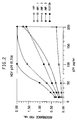
- Figure 2 is a graph comparing results of an HIV p24 core antigen assay using conjugate concentrations of 0.2, 0.4, and 0.8 ⁇ l/ml (Amp 1, 2, and 3, respectively)
- HRP represents a non-amplified assay wherein the detector antibody was directly labeled with HRP.
- Biotin indicates another non-amplified assay wherein the detector antibody was conjugated to biotin and detected with HRP labeled streptavidin.
- Figure 3 is a graph of a mouse IgG assay run using an HRP ADEAS to catalyze deposition of biotin-tyramine which was detected with streptavidin-HRP (HRP-Amp HRP) or with streptavidin-AP (HRP-Amp AP). The assay was also run using only HRP labeled detector antibody or AP labeled detector antibody.
- Figure 4 presents two graphs comparing results obtained from a Du Pont HIV p24 antigen ELISA run with and without using catalyzed reporter deposition to amplify reporter signal.
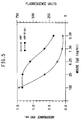
- Figure 5 is a graph comparing results of a mouse IgG assay without catalyzed reporter deposition (HRP) and with catalyzed reporter deposition (HRP- ⁇ -Gal).
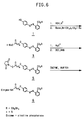
- Figure 6 depicts a preparation of 6-(phenoxy-(4'-azo-2''-carboxyethylphenyl))-hexanoyl-alkaline phosphatase (HEE-6-AP), the synthesis of which is described in Example 10.
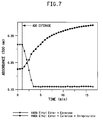
- FIG. 7 illustrates the esterase catalyzed conversion of HEE to 2-(4'-hydroxyphenylazo)benzoic acid (HABA)/streptavidin complex.
- analyte dependent enzyme activation system refers to an enzyme system wherein (i) at least one enzyme is coupled, in any manner known to those skilled in the art, to a member of a specific binding pair, or (ii) the enzyme need not be coupled to a member of a specific binding pair when it is the analyte.
- the enzyme either by itself or in connection with a second enzyme, catalyzes the formation of an activated conjugate which then is deposited wherever a receptor for the activated conjugate is immobilized.
- amplification means amplification of reporter signal due to deposition of a conjugate activated by an ADEAS.
- conjugate means a detectably labeled substrate specific for the ADEAS whether it be a single enzyme ADEAS or multi-enzyme ADEAS.
- the substrate must have at least one component but is not limited to such.
- the substrate can consist of two components. One component contains the binding site for the receptor and is detectably labeled. The other component is a constituent which prevents or interferes with binding to the receptor until such time as the ADEAS primes the conjugate as is discussed below.
- Another example of a conjugate is biotin-tyramine wherein tyramine is the substrate portion and biotin constitutes the detectable label as described below. Conjugates are described in greater detail below as well.
- detectably labeled means that the substrate can be coupled to either a reporter or to an unlabeled first member of a specific binding pair provided that the reporter introduces a different moiety to the substrate as is discussed below.
- the substrate-specific binding partner complex is reacted with the second member of the binding pair which is coupled to a reporter.
- the substrate-specific binding partner complex can be pre-reacted with the detectably labeled other member of the specific binding pair prior to deposition.
- deposition means directed binding of an activated conjugate to the receptor which results from either the formation of a covalent bond or a specific binding pair interaction as described below.
- receptor means a site which will bind to the activated conjugate either through the formation of a covalent bond or a specific binding pair interaction as described below.
- activated conjugate means that the conjugate has been primed by the ADEAS to bind with the receptor.
- One of the unique features of this invention is the analyte dependent enzyme activation system which catalyzes deposition of conjugate by converting the substrate portion of the conjugate to an activated form which is deposited wherever a specific receptor for the activated conjugate is immobilized.
- the ADEAS does not utilize enzyme cascade reactions or enzyme cycling to effect amplification. Rather, it uses either a single enzyme or combination of enzymes to activate the conjugate.
- ADEAS alyte dependent enzyme activation system
- analyte an enzyme, for example in the detection of an enzyme such as alkaline phosphatase, or different, have been immobilized and a receptor, as described below, is immobilized to bind the activated conjugate.
- the ADEAS, conjugate, and receptor are chosen to form an operational trio.
- ADEAS single enzyme ADEAS system applied to a forward sandwich immunoassay format: the test sample containing the analyte is reacted with an immobilized capture reagent, such as an antibody; excess reagents are washed off; the immobilized capture antibody-analyte complex is reacted with an ADEAS, such as a second antibody specific for the analyte which has been coupled to an enzyme, e.g. horseradish peroxidase (HRP), alkaline phosphatase (AP), etc.
- HRP horseradish peroxidase
- AP alkaline phosphatase
- Coupling of the enzyme to a specific binding partner does not affect the enzyme's ability to react with the substrate portion of the conjugate.
- conjugate such as biotin-tyramine or HABA-tyramine analog (e.g., N-(4'''-hydroxyphenethyl)-6-(phenoxy-(4'-azo-2''-benzoic acid))hexamide)
- the enzyme reacts with the substrate portion of the conjugate, e.g., with the tyramine portion of the conjugate, converting it to an active form which will bind to an immobilized receptor which is either endogenous or exogenous to the assay system.
- the amount of conjugate deposited will be a function of immobilized ADEAS.
- Deposited conjugate such as biotin-tyramine or HABA tyramine analog can then be detected by reacting with streptavidin-HRP and orthophenylenediamine.
- HABA-tyramine analog means, generally, unsubstituted or substituted HABA, coupled with or without a spacer, to a hydroxy-phenyl containing compound such as tyramine. If the conjugate is fluorescein-tyramine then the deposited conjugate can be detected directly, or following reaction with a labeled anti-fluorescein antibody.
- the ADEAS is used to catalyze the deposition of detectably labeled substrate (the conjugate) to generate additional signal.
- the ADEAS is detected directly as part of the overall signal when the enzyme component of the ADEAS is the same as the enzyme used as the reporter.
- Figure 3 illustrates this situation as well as the situation where an ADEAS enzyme component and reporter enzyme are different and thus, the ADEAS enzyme component is not detected directly as part of the overall signal.
- the ADEAS can be an antibody coupled to an enzyme such as AP.
- a second enzyme such as HRP could be immobilized on the support.
- the conjugate can be a detectably labeled phenylphosphate which cannot react with HRP until it is dephosphorylated.
- AP dephosphorylates the phenol which then is free to react with the immobilized HRP to form an activated phenolic conjugate which deposits wherever receptors are immobilized. After removing excess reagent, deposited reporter is detected and quantitated.
- HRP can be coupled to the second antibody and AP can be immobilized on the surface of the support.
- the instant invention is surprising and unexpected because amplification of reporter signal is obtained via deposited activated conjugate without using cascade mechanisms or enzyme cycling.
- the ADEAS reacts with the conjugate to form an activated conjugate which will bind with immobilized receptor specific for the activated conjugate.
- the amounts of receptor and activated conjugate are in excess of the amount of ADEAS immobilized.
- an ADEAS is governed by the ability of the enzyme or enzymes to convert a conjugate to an activated form which will bind to an immobilized receptor whether endogenous or exogenous. Accordingly, a detailed knowledge of catalytic properties of each specific enzyme is needed in order to properly design the substrate and receptor. Other important factors include availability of the enzyme or enzymes, relative ease or difficulty to couple it to the member of a specific binding pair, stability of the enzyme or enzymes as well as the stability of the conjugate and the receptor. In some cases, an ADEAS can be purchased, depending on the assay format.
- Enzymes suitable for use in an ADEAS include hydrolases, lyases, oxidoreductases, transferases isomerases and ligases.
- peroxidase glucose oxidase
- phosphatase phosphatase
- esterase transferases isomerases
- ligases ligases.
- peroxidase glucose oxidase
- phosphatase phosphatase
- esterase phosphatase
- glycosidase Specific examples include alkaline phosphatase, lipases, beta-galactosidase and horseradish peroxidase,.
- Immune specific binding pairs are exemplified by antigen/antibody systems or hapten/antihapten systems.
- the antibody member, whether polyclonal, monoclonal or an immunoreactive fragment thereof, of the binding pair can be produced by customary methods familiar to those skilled in the art.
- the terms immunoreactive antibody fragment or immunoreactive fragment mean fragments which contain the binding region of the antibody.
- Such fragments may be Fab-type fragments which are defined as fragments devoid of the Fc portion, e.g., Fab, Fab' and F(ab')2 fragments, or may be so-called "half-molecule" fragments obtained by reductive cleavage of the disulfide bonds connecting the heavy chain components of the intact antibody. If the antigen member of the specific binding pair is not immunogenic, e.g., a hapten, it can be covalently coupled to a carrier protein to render it immunogenic.
- Non-immune binding pairs include systems wherein the two components share a natural affinity for each other but are not antibodies.
- Exemplary non-immune binding pairs are biotin-avidin or biotin-streptavidin, folic acid-folate binding protein, complementary probe nucleic acids, etc.
- non-immune binding pairs which form a covalent bond with each other but are not antibodies.
- Exemplary covalent binding pairs include sulfhydryl reactive groups such as maleimides and haloacetyl derivatives and amine reactive groups such as isothiocyanates, succinimidyl esters and sulfonyl halides, etc.
- Suitable supports used in assays include synthetic polymer supports, such as polystyrene, polypropylene, substituted polystyrene, e.g., aminated or carboxylated polystyrene; polyacrylamides; polyamides; polyvinylchloride, etc.; glass beads; agarose; nitrocellulose, etc.
- synthetic polymer supports such as polystyrene, polypropylene, substituted polystyrene, e.g., aminated or carboxylated polystyrene; polyacrylamides; polyamides; polyvinylchloride, etc.; glass beads; agarose; nitrocellulose, etc.
- conjugate i.e., a detectably labeled substrate which must be specific for the ADEAS.
- the enzyme or enzymes catalyze formation of an activated conjugate which binds wherever a receptor is immobilized whether exogenous or endogenous.
- An immobilized exogenous receptor means a receptor which does not originate within the assay. It must be immobilized on the surface of the support prior to adding the conjugate to the reaction mixture.
- An endogenous receptor means a receptor which originates within the assay and does not require immobilization prior to adding the conjugate because the receptor is immobilized within the assay system.
- an HRP ADEAS HRP coupled to a member of a specific binding pair
- conjugate containing a phenolic substrate an activated phenolic substrate is produced. It is believed that the activated phenolic substrate binds to electron rich moieties such as tyrosine and tryptophan present in the proteins on the solid support.
- a different conjugate such as a labeled 3-methyl-2-benzothiazolinone hydrazine (MBTH) which is discussed below, a receptor, such as 3-(dimethylamino)benzoic acid (DMAB), must be immobilized prior to addition of conjugate.
- DMAB 3-(dimethylamino)benzoic acid
- Another embodiment involves reacting a conjugate which becomes phosphorylated by an ADEAS.
- the activated (phosphorylated) conjugated can then react with an antibody specific for the activated conjugate.
- an ADEAS can be reacted with a conjugate consisting of a component which when activated will bind to a receptor and which is coupled to a component having a thiol reactive group such as a maleimide.
- the deposited maleimide moiety can then be detected by reacting with a sulfhydryl-containing reporter which can be endogenous to the reporter, e.g., beta-galactosidase, or the sulfhydryl groups can be added to reporters such as HRP or AP using thiolating reagents such as N-succinimidyl-S-acetylthioacetate (SATA), S-acetylmercaptosuccinic anhydride (SAMSA), or succinimidyl-3-(acetylthio)-propionate (SATP).
- SATA N-succinimidyl-S-acetylthioacetate
- SAMSA S-acetylmercaptosucc
- the substrate can be coupled to a protected sulfhydryl containing group and this can be used as the conjugate. After binding to the receptor, this can be deprotected using conventional techniques known to those skilled in the art. Detection can be effected using a reporter having a thiol reactive group such as maleimide-HRP or iodoacetyl-HRP.
- HABA 2-(4'-hydroxy-phenylazo)-benzoic acid
- avidin and streptavidin are used herein interchangeably.
- HABA can be detectably labeled using any of the reporters described below, e.g., radioisotopes, enzymes, etc.
- alkaline phosphatase can be conjugated to HABA, using techniques well known to those skilled in the art, with or without a spacer, to a functional group on HABA.
- a functional group is the 4'-hydroxyl moiety.
- HABA can be modified to possess a second component which prevents binding until it has been removed by the ADEAs.
- esterification of HABA with ethanol produces a HABA ethyl ester which does not bind to streptavidin. Detectably labeled HABA ethyl esters will not bind to streptavidin until the ester group has been hydrolyzed to the corresponding carboxylic acid.
- Hydrolysis can be affected using an enzyme such as an esterase, e.g., porcine liver esterase.
- an enzyme such as an esterase, e.g., porcine liver esterase.
- detectably labeled HABA esters such as 6-(phenoxy-(4'-azo-2''-carboxyethylphenyl))-hexanoyl-alkaline phosphatase can be deposited using an ADEAS having a suitable esterase which will hydrolyze the ester to permit binding of detectably labeled HABA with streptavidin (i.e., exogenous receptor) which has been immobilized on the surface of a support.
- streptavidin i.e., exogenous receptor
- R1 through R8 are the same or different and are selected from the group consisting of straight chain or branched alkyl groups having 1-4 carbon atoms, F, Cl, Br or I; Z is phenyl or naphthyl; n is 1-19; X is N, O, S; and R9 can be H or straight chain or branched alkyl group having 1-4 carbon atoms can be used to synthesize HABA-type conjugates as described in the examples below.
- HABA-type conjugate means HABA derivatives: (i) which can be substituted or unsubstituted and are coupled with a spacer to a reporter and (ii) which contain an ADEAS activatable moiety that prevents the conjugate from binding to streptavidin until it has been activated or removed by the ADEAS.
- HABA derivatives (i) which can be substituted or unsubstituted and are coupled with a spacer to a reporter and (ii) which contain an ADEAS activatable moiety that prevents the conjugate from binding to streptavidin until it has been activated or removed by the ADEAS.
- small organic molecule/receptor combinations which are suitable to practice the invention include haptens/antibodies, sugars and oligosaccharides/lectins, biotin and dyes/avidin and/or streptavidin.
- the optimal concentration of conjugate is determined according to the procedure explained in Example 1. Optimal concentrations will vary depending upon enzyme used in the ADEAS and substrate selected to produce conjugate.
- Conjugate can be synthesized using conventional coupling and labeling techniques. Substrate choice will depend upon the ADEAS selected. To reiterate, detailed knowledge is required of the catalytic properties of each specific enzyme in order to properly design a useful synthetic substrate and, if necessary, a receptor.
- reporter A wide variety of reporters are available for coupling to the substrate to produce the conjugate or to couple to a member of a specific binding pair. As was discussed above reporter should introduce a different moiety to the substrate. Reporters can be a radioactive isotope, such as, 125I, enzymes, fluorogenic, chemiluminescent, electrochemical or magnetic materials. Internally labeled reporters (e.g., tritium or other such radionuclides) which do not introduce a different moiety to the substrate are not contemplated for practicing the invention.
- Another embodiment of the forward sandwich immunoassay described above would involve reacting a capture-antibody-analyte-second antibody complex with an ADEAS consisting of an anti-antibody coupled to an enzyme such as HRP or AP.
- the anti-antibody would bind an epitope on the second antibody.
- This invention is not limited to sandwich immunoassays. It is applicable to a wide variety of assay formats, for example, nucleic acid hybridization assays for both RNA and DNA.
- the conjugate In the AP/HRP multi-enzyme ADEAS described above, the conjugate must be dephosphorylated before it will react with HRP; and in the ⁇ -gal/HRP multi-enzyme ADEAS, the conjugate must be deglycosylated before it will react with HRP.
- Para-hydroxyphenylpropionyl biocytin was prepared by mixing a solution of p-hydroxyphenyl-propionic acid-N-hydroxysuccinimide ester (50 mg [0.2 mMol]/2 ml dimethyl sulfoxide) with biocytin (70.75 mg [0.2 mMol]/2 ml 0.1 M NaHCO3) overnight at room temperature (RT).
- Biotin-tyramine was prepared by mixing a solution of tyramine (40 mg [0.3 mMol]/1 ml dimethyl sulfoxide) with biotin-N-hydroxysuccinimide ester (100 mg [0.3 mMol]/1 ml dimethyl sulfoxide) overnight at RT.
- the solutions of HPPB and BT were used as is.
- the calculated concentrations were 26 mg/ml for HPPB and 55 mg/ml for BT.
- HSV Herpes Simplex Virus
- BSA bovine serum albumin
- the dilution was sufficient to obtain the optical densities in the range reported in Table 1. It was washed with PBST.
- the analyte dependent enzyme activation system consisted of HRP coupled to anti-HSV (HRP ADEAS) which was purchased from Dako. The HRP ADEAS was added and incubated for 30 min. at RT and was washed with PBST.
- HPPB or BT as set forth in Table 2 below, were added in 50 mM tris-HCl, 0.01% H2O2, pH 8.0, for 15 min. at RT. After washing with PBST, streptavidin-HRP was added and incubated for 15 min. at RT to react with deposited biotins.
- Results are presented in Table 2.
- Column 1 presents the various concentrations in ⁇ l/ml of HPPB or BT.
- Columns 2 and 3 present the optical densities recorded as a function of HPPB concentration.
- Columns 4 and 5 present the results obtained using BT.
- HPPB and BT were converted to activated forms by HRP ADEAS. Catalyzed reporter deposition was achieved without immobilizing a receptor.
- the optimal concentration of HPPB was 20 ⁇ l/ml (approximately 0.5 mg/ml), and that of BT, was about 0.3 ⁇ l/ml (approximately 16 ⁇ g/ml). TABLE 2 Absorbance 490 nm Conc.
- Anti-HSV coated EIA strips were prepared as described in Example 1. A 1:100 dilution of HSV antigen was prepared and serially four-fold diluted. These dilutions of HSV were incubated for 2 hours at 37°C with the anti-HSV coated EIA strips. Excess reagent was washed off with PBST. The ADEAS was the same as that described in Example 1 above. It was added to the anti-HSV coated EIA strips containing the anti-HSV-HSV complex and incubated for 30 min. at RT and then washed with PBST.
- Example 2 20 ⁇ l/ml of HPPB conjugate as determined in Example 1 was added in 50 mM tris-HCl, 0.01% H2O2, pH 8.0, and was incubated for 15 min. at RT and then washed with PBST. Deposited biotins were reacted with streptavidin-HRP (SA-HRP) for 15 min. at RT. It was washed with PBST. The substrate, OPD, was added and incubated 30 min. at RT, stopped with 4 N H2SO4, and the absorbance at 490 nm was recorded on a microtiter plate reader.
- SA-HRP streptavidin-HRP
- Non-amplified assays were run in which (a) no HPPB and no SA-HRP were used; (b) HPPB was used without SA-HRP; (c) SA-HRP was used without HPPB.
- Polystyrene EIA strips (NUNC) were coated with rabbit anti-HIV p24 antibodies in 0.1 M carbonate buffer, pH 9.6, overnight at 4°C, and then blocked with 2% BSA in carbonate buffer followed by washing with PBST. HIV antigen was incubated for 2 hours at 37°C (concentrations are indicated in Figure 2). The plate was then washed with PBST. A rabbit anti-HIV p24-HRP analyte dependent enzyme activation system was then incubated for 2 hours at 37°C, and washed with PBST.
- biotinylated anti-HIV p24 antibody was used, and detected with streptavidin-HRP. OPD was added and incubated for 30 minutes, stopped with 4 N H2SO4, and optical densities at 490 nm were recorded on a microtiter plate reader.
- Figure 2 also presents results for a non-amplified assay using a biotinylated antibody/SA-HRP detection system (biotin) and a non-amplified assay wherein anti-HIV p24 detector was directly labeled with HRP.
- biotin biotinylated antibody/SA-HRP detection system
- anti-HIV p24 detector was directly labeled with HRP.
- the results obtained using the anti-HIV p24-HRP detector were inferior compared to the significant increase in detector signal obtained using catalyzed reporter deposition.
- biotin-tyramine a solution of biotin-N-hydroxysuccinimide, 170 mg (0.5 mMoles), and tyramine (recrystallized from water), 68.5 mg (0.5 mMoles), in 25 ml dimethylformamide was treated with 10 ml of 1 M triethylammonium bicarbonate, pH 7.5, and then heated at 50°C for 3 hours.
- HRP ADEAS Goat anti-mouse IgG-HRP
- AP ADEAS goat anti-mouse IgG-Alkaline Phosphatase
- a 1 mg/ml stock solution of biotin tyramine (as described in Example 4) in dimethyl sulfoxide was prepared, and then added to a 0.1 M borate buffer, pH 8.5, 0.01% H2O2, at 10 ⁇ l/ml (10 ⁇ g/ml biotin tyramine) and incubated for 15 min. at RT. The plate was then washed with PBST. Streptavidin-HRP (for HRP-Amp HRP), or streptavidin-Alkaline Phosphatase (for HRP-Amp Alk Phos) were incubated for 15 min.
- the Du Pont HIV p24 Antigen ELISA (catalog number NEK 060) was modified for catalyzed reporter deposition as follows: SA-HRP was used at 1/4 the concentration indicated in the directions. This was followed by a 15 min. RT incubation with biotin-tyramine, 10 ⁇ g/ml, in 0.1 M borate, 0.01% H2O2 pH 8.5 buffer (as in Example 5) . Following washing with PBST, SA-HRP at 1/16 the concentration was incubated for 15 min. at RT. Finally, OPD was added as per kit directions. Except for extending the standard concentrations down to 0.39 pg/ml, no other changes were made.
- Nitrocellulose (Schleicher & Schuell, BA 85) was spotted with HSV antigen, and then blocked with 1% BSA, 1% non-fat dry milk, in PBS buffer, overnight. The membranes were incubated for 1 hour at RT with the analyte dependent enzyme activation system described in Example 1 above. The membranes were then incubated with biotin tyramine (from Example 1) at 2 ⁇ l/10 ml 50 mM tris-HCl, 0.01% H2O2, pH 8.0 buffer for 15 min. at RT, which was followed by incubation with streptavidin-alkaline phosphatase for 15 min. at RT.
- Beta-Galactosidase by Horseradish Peroxidase, and Detection by Fluorescence
- N-(NUNC) Polystyrene EIA strips (NUNC) were coated with goat anti-mouse IgG (Fc fragment specific) antibody (ICN) in 0.1 M carbonate buffer, pH 9.6, overnight at RT. They were then blocked with 2% BSA in carbonate buffer and washed with PBST. Concentrations of mouse IgG in BSA-PBST, as set forth in Figure 5, were incubated for 1 hour at 37°C followed by washing with PBST. Goat anti-mouse IgG-HRP (ADEAS) purchased from Boehringer Mannheim was diluted as recommended by the manufacturer and incubated for 1 hour at 37°C. The plate was then washed with PBST.
- ICN goat anti-mouse IgG (Fc fragment specific) antibody
- a 1 mg/ml stock solution of BT conjugate (as described in Example 4) in dimethyl sulfoxide was prepared, and then added to a 0.1 M borate, 0.01% H2O2, pH 8.5 buffer at 10 ⁇ l/ml (10 ⁇ g/ml biotin tyramine). The mixture was added to the plate and incubated for 15 min. at RT, and then washed with PBST. Streptavidin-beta galactosidase (Bethesda Research Labs) was added and incubated for 15 min. at RT. The assay was also run without catalyzed reporter deposition, i.e., without adding BT.
- Colorimetric detection of the non-amplified assay was achieved after incubation with OPD (for HRP), for 15 min. at RT. Fluorescent detection of the amplified assay was achieved after the addition of 4-methylumbelliferyl beta-D-galactoside (MUG) (for HRP-beta Gal). Optical densities at 490 nm were recorded for HRP/OPD on a microtiter plate reader. Fluorescence for HRP-beta Gal/MUG was recorded on a fluorescence microtiter plate reader (Dynatech Laboratories).
- the results are shown in Figure 5.
- the fluorescent signal was due to the quantitative deposition of biotintyramine by the HRP ADEAS followed by incubation with streptavidin beta-galactosidase.
- Fluorescein-tyramine was prepared as follows: Solutions of 46.6 mg of 5- (and 6)-carboxyfluorescein succinimidyl ester in 0.3 ml dimethyl sulfoxide and 14.6 mg tyramine in 0.3 ml dimethyl sulfoxide were prepared. Conjugation was achieved by mixing 0.25 ml of each solution overnight at RT. The solution was used as is.
- nitrocellulose strips were spotted with 1 ⁇ l of mouse IgG at 10 ⁇ g/ml, and serial two fold dilutons in PBS.
- the membranes were blocked with 5% non-fat dry milk in PBST for 30 min, and then washed three times in PBST.
- a goat anti-mouse IgG-HRP conjugate (Boehringer Mannehim) diluted 1/2000 in 1% BSA-PBST was incubated for 30 min. at RT, and the membrane were washed three times with PBST.
- the third membrane was incubated with FT at 20 ⁇ g/ml in 0.1 M borate, 0.01% H2O2, pH 8.5 buffer for 15 min.
- Ethyl 2-(4'-hydroxyphenylazo)benzoate is prepared from 2-(4'-hydroxyphenylazo)-benzoic acid (HABA, ( 1 )), anhydrous ethanol and a catalytic amount of acetyl chloride.
- HABA 2-(4'-hydroxyphenylazo)-benzoic acid
- HABA 2-(4'-hydroxyphenylazo)-benzoic acid
- the ethyl ester (HEE) is reacted with t-butyl 6-iodohexanoate and sodium hydride using the general procedure reported by Castellanos et al., Tetrahedron, pages 1691-1696, Vol.
- HEE-6-NHS N-succinimidyl-6-(phenoxy-(4'-azo-2''-carboxyethylphenyl))hexanoate
- HEE-6-NHS N-succinimidyl-6-(phenoxy-(4'-azo-2''-carboxyethylphenyl))hexanoate
- the NHS ester ( 5 ) is dissolved in a minimum volume of DMSO and added to a buffered aqueous solution of alkaline phosphatase (e.g. calf intestine) using the general procedure reported by O'Sullivan et al., Methods in Enzymology, pages 147-166, Vol. 73, (1981) to give the conjugate (HEE-6-AP, ( 6 )).
- alkaline phosphatase e.g. calf intestine
- H-T HABA-Tyramine Conjugate
- Microtiter plate strips (Nunc) are coated with a mixture of goat anti-mouse IgG (Fc fragment specific) antibody (ICN) and streptavidin (Scripps Laboratories) in 0.1M carbonate buffer pH 9.6 overnight at RT. They are then blocked with 2% BSA in PBS and washed with PBST. Dilutions of mouse IgG (0-100 ng/ml) in BSA-PBST are incubated in the wells for 1 hr. at 37°C followed by washing with PBST. A preparation of goat anti-mouse IgG-PLE (PLE ADEAS) (0.75 mg/ml) is prepared by the general method described by Hashida et al., Journal of Applied Biochemistry Vol.
- HEE-6-AP (1 mg/ml) (prepared as described in Example 10) is added to the microtiter plate well and incubated for at least 15 min. at 37°C. The plate is then washed with PBST. Spectrophotometric detection is achieved after the addition of p-nitrophenyl phosphate. Reactions are stopped by the addition of 1 N NaOH. Optical densities at 405 nm are recorded on the microtiter plate reader.
- Amplification of detector signal in this example results from catalyzed reporter-enzyme deposition, i.e., PLE catalyzes deposition of HEE-6-AP where the receptor, streptavidin, has been immobilized on the microtiter plate surface.
- a suspension of porcine liver esterase was added (10 ⁇ l, 2860 U/ml, Cat. No. E3128, Sigma Chemical, St. Louis, MO) to a solution of ethyl 2-(4'-hydroxy-phenylazo)benzoate (HEE) (0.25 mM) and streptavidin (0.2 mg/ml) in phosphate buffer (0.1 M, pH 8.0, 2ml).
- HEE ethyl 2-(4'-hydroxy-phenylazo)benzoate
- streptavidin 0.2 mg/ml
- the absorbance of the two solutions was measured at 500 nm as a function of time.
- Figure 7 shows that the absorbance of the solution which contained no streptavidin decreased over time indicating hydrolysis of HEE to 2-(4'-hydroxy-phenylazo)benzoic acid (HABA).
- HABA 2-(4'-hydroxy-phenylazo)benzoic acid
Landscapes
- Health & Medical Sciences (AREA)
- Immunology (AREA)
- Life Sciences & Earth Sciences (AREA)
- Engineering & Computer Science (AREA)
- Molecular Biology (AREA)
- Biomedical Technology (AREA)
- Chemical & Material Sciences (AREA)
- Hematology (AREA)
- Urology & Nephrology (AREA)
- Food Science & Technology (AREA)
- Biochemistry (AREA)
- Cell Biology (AREA)
- Biotechnology (AREA)
- Medicinal Chemistry (AREA)
- Physics & Mathematics (AREA)
- Analytical Chemistry (AREA)
- Microbiology (AREA)
- General Health & Medical Sciences (AREA)
- General Physics & Mathematics (AREA)
- Pathology (AREA)
- Measuring Or Testing Involving Enzymes Or Micro-Organisms (AREA)
- Organic Low-Molecular-Weight Compounds And Preparation Thereof (AREA)
- Saccharide Compounds (AREA)
- Pyrrole Compounds (AREA)
- Medicines Containing Antibodies Or Antigens For Use As Internal Diagnostic Agents (AREA)
Claims (31)
- Verfahren zum Nachweis oder der mengenmäßigen Bestimmung eines Analyten in einem Test, welches das Verwenden eines analytabhängigen Enzymaktivierungssystems umfaßt, das wenigstens ein Enzym zum Umsetzen mit einem Konjugat umfaßt, welches aus einem nachweisbar markierten Substrat besteht, das auf das Enzymsystem spezifisch ist, unter Bilden eines aktivierten Konjugats, das sich im wesentlichen überall dort festsetzt, wo wenigstens ein Rezeptor für das aktivierte Konjugat immobilisiert ist, wobei der Rezeptor mit dem analytabhängigen Enzymaktivierungssystem, in welchem die abgeschiedenen Markierungen entweder direkt oder indirekt ein Signal erzeugen, das nachgewiesen oder mengenmäßig bestimmt werden kann, nicht reaktionsfähig ist.
- Verfahren gemäß Anspruch 1, bei welchem wenigstens ein Enzym des analytabhängigen Enzymaktivierungssystems aus der Gruppe ausgewählt ist, die aus Oxidoreduktasen, Hydrolasen, Lyasen, Transferasen, Isomerasen und Ligasen besteht.
- Verfahren gemäß Anspruch 2, bei welchem das Enzym aus der Gruppe ausgewählt ist, die aus Peroxidasen, Oxidasen, Phosphatasen, Esterasen und Glykosidasen besteht.
- Verfahren gemäß Anspruch 3, bei welchem das Enzym aus der Gruppe ausgewählt ist, die aus Meerrettichperoxidase, Glukoseoxidase, alkalischer Phosphatase und beta-Galaktosidase besteht, und vorzugsweise Meerrettichperoxidase ist.
- Verfahren gemäß Anspruch 4, bei welchem das Konjugat aus der Gruppe ausgewählt ist, die aus Biotin-Tyramin, p-Hydroxyphenylpropionylbiocytin oder Fluorescein-Tyramin besteht.
- Verfahren gemäß Anspruch 1, bei welchem das Konjugat mit nachweisbar markiertem Antikörper umgesetzt wird.
- Verfahren gemäß Anspruch 1, bei welchem das Konjugat mit einem nachweisbar markierten Mitglied eines spezifischen Bindungspaares umgesetzt wird.
- Verfahren gemäß Anspruch 1, bei welchem das Konjugat mit nachweisbar markiertem Streptavidin umgesetzt wird.
- Verfahren gemäß Anspruch 1, bei welchem die nachweisbare Markierung aus der Gruppe, die aus Enzymen, radioaktiven Isotopen, fluorogenen, chemilumineszierenden oder elektrochemischen Materialien besteht, oder einem Mitglied eines spezifischen Bindungspaares ausgewählt ist.
- Verfahren gemäß Anspruch 1, bei welchem das Konjugat 6-(Phenoxy-(4'-azo-2''-carboxyethylphenyl))-hexanoyl-alkalische Phosphatase ist.
- Test zum Nachweisen oder mengenmäßigen Bestimmen der Anwesenheit oder Abwesenheit eines Analyten in einer Probe, dera) das Immobilisieren des Analyten;b) das Umsetzen des Produkts aus Schritt (a) mit einem analytabhängigen Enzymaktivierungssystem;c) das Umsetzen des Produkts aus Schritt (b) mit einem aus einem nachweisbar markierten Substrat bestehenden Konjugat unter Bilden eines aktivierten Konjugats, das sich im wesentlichen überall dort festsetzt, wo ein Rezeptor für das aktivierte Konjugat immobilisiert ist, wobei der Rezeptor mit dem analytabhängigen Enzymaktivierungssystem nicht reaktionsfähig ist undd) das Nachweisen oder mengenmäßige Bestimmen der Anwesenheit oder Abwesenheit des Analyten in der Probe umfaßt.
- Test gemäß Anspruch 11, bei welchem das analytabhängige Enzymaktivierungssystem wenigstens ein Enzym besitzt, das aus der Gruppe ausgewählt ist, die aus Oxidoreduktasen, Hydrolasen, Lyasen, Transferasen, Isomerasen und Ligasen besteht.
- Test gemäß Anspruch 12, bei welchem das Enzym aus der Gruppe ausgewählt ist, die aus Peroxidasen, Oxidasen, Phosphatasen, Esterasen und Glykosidasen besteht.
- Test gemäß Anspruch 13, bei welchem das Enzym aus der Gruppe ausgewählt ist, die aus Meerrettichperoxidase, Glukoseoxidase, alkalischer Phosphatase und beta-Galaktosidase besteht.
- Test gemäß Anspruch 11, bei welchem die nachweisbare Markierung aus der Gruppe, die aus Enzymen, radioaktiven Isotopen, fluorogenen, chemilumineszierenden oder elektrochemischen Materialien besteht, oder einem Mitglied eines spezifischen Bindungspaares ausgewählt ist.
- Test gemäß Anspruch 14, bei welchem das Enzym Meerrettichperoxidase ist und das Konjugat aus der Gruppe ausgewählt ist, die aus Biotin-Tyramin, p-Hydroxyphenylpropionylbiocytin oder Fluorescein-Tyramin besteht.
- Verfahren gemäß Anspruch 11, bei welchem das Konjugat 6-(Phenoxy-(4'-azo-2''-carboxyethylphenyl))-hexanoyl-alkalische Phosphatase ist.
- Test gemäß Anspruch 11, bei welchem das Konjugat mit einem nachweisbar markierten Mitglied eines spezifischen Bindungspaars umgesetzt wird.
- Test gemäß Anspruch 11, bei welchem das Konjugat mit einem nachweisbar markierten Antikörper umgesetzt wird.
- Test gemäß Anspruch 11, bei welchem das Konjugat mit nachweisbar markiertem Streptavidin umgesetzt wird.
- Test gemäß Anspruch 11, bei welchem der Test ein Immunassay ist.
- Test zum Nachweisen oder mengenmäßigen Bestimmen der Anwesenheit oder Abwesenheit eines Analyten in einer Probe, welchera) das Umsetzen eines analytabhängigen Enzymaktivierungssystems mit einem aus einem nachweisbar markierten Substrat bestehenden Konjugat unter Bilden eines aktivierten Konjugats, welches sich im wesentlichen überall dort festsetzt, wo ein Rezeptor für das aktivierte Konjugat immobilisiert ist, wobei der Rezeptor mit dem analytabhängigen Enzymaktivierungssystem nicht reaktionsfähig ist, undb) das Nachweisen oder mengenmäßige Bestimmen der Anwesenheit oder Abwesenheit des Analyten in der Probe umfaßt.
- Test gemäß Anspruch 22, bei welchem das analytabhängige Enzymaktivierungssystem wenigstens ein Enzym besitzt, das aus der Gruppe ausgewählt ist, die aus Oxidoreduktasen, Hydrolasen, Lyasen, Transferasen, Isomerasen und Ligasen besteht.
- Test gemäß Anspruch 23, bei welchem das Enzym aus der Gruppe ausgewählt ist, die aus Peroxidasen, Oxidasen, Phosphatasen, Esterasen und Glykosidasen besteht.
- Test gemäß Anspruch 24, bei welchem das Enzym aus der Gruppe ausgewählt ist, die aus Meerrettichperoxidase, Glukoseoxidase, alkalischer Phosphatase und beta-Galaktosidase besteht.
- Test gemäß Anspruch 22, bei welchem die nachweisbare Markierung aus der Gruppe, die aus Enzymen, radioaktiven Isotopen, fluorogenen, chemilumineszierenden oder elektrochemischen Materialien besteht, oder einem Mitglied eines spezifischen Bindungspaares ausgewählt ist.
- Test gemäß Anspruch 22, bei welchem das Konjugat mit einem nachweisbar markierten Mitglied eines spezifischen Bindungspaars umgesetzt wird.
- Test gemäß Anspruch 22, bei welchem das Konjugat mit nachweisbar markiertem Streptavidin umgesetzt wird.
- Test gemäß Anspruch 22, bei welchem das Konjugat mit einem nachweisbar markierten Antikörper umgesetzt wird.
- Test gemäß Anspruch 22, bei welchem der Test ein Immunassay ist.
- Verfahren zum Herstellen von 6-(Phenoxy-(4'-azo-2''-carboxyethylphenyl))-hexanoyl-alkalischer Phosphatase, welches1) das Lösen von (N-Succinimidyl)-6-(phenoxy-(4'-azo-2''-carboxyethylphenyl))-hexanoat im Mindestvolumen Dimethylsulfoxid und2) das Hinzusetzen der Lösung einer gepufferten, wäßrigen Lösung von alkalischer Phosphatase umfaßt.
Priority Applications (1)
| Application Number | Priority Date | Filing Date | Title |
|---|---|---|---|
| AT90905997T ATE103071T1 (de) | 1989-03-29 | 1990-03-28 | Katalysierte ablagerung von markierungsmittel. |
Applications Claiming Priority (4)
| Application Number | Priority Date | Filing Date | Title |
|---|---|---|---|
| US494226 | 1983-05-13 | ||
| US33035789A | 1989-03-29 | 1989-03-29 | |
| US330357 | 1989-03-29 | ||
| US49422690A | 1990-03-20 | 1990-03-20 |
Publications (2)
| Publication Number | Publication Date |
|---|---|
| EP0465577A1 EP0465577A1 (de) | 1992-01-15 |
| EP0465577B1 true EP0465577B1 (de) | 1994-03-16 |
Family
ID=26987247
Family Applications (1)
| Application Number | Title | Priority Date | Filing Date |
|---|---|---|---|
| EP19900905997 Expired - Lifetime EP0465577B1 (de) | 1989-03-29 | 1990-03-28 | Katalysierte ablagerung von markierungsmittel |
Country Status (7)
| Country | Link |
|---|---|
| EP (1) | EP0465577B1 (de) |
| JP (1) | JP2948904B2 (de) |
| AU (1) | AU645491B2 (de) |
| DE (1) | DE69007473T2 (de) |
| ES (1) | ES2063347T3 (de) |
| RU (1) | RU2102759C1 (de) |
| WO (1) | WO1990011523A2 (de) |
Cited By (2)
| Publication number | Priority date | Publication date | Assignee | Title |
|---|---|---|---|---|
| US5994519A (en) * | 1996-07-08 | 1999-11-30 | Cambridge Antibody Technology Limited | Labelling and selection of molecules |
| US20220260490A1 (en) * | 2018-01-31 | 2022-08-18 | National Yang Ming Chiao Tung University | Fluorescence immunoassay device based on integration of photonic crystal and magnetic beads |
Families Citing this family (10)
| Publication number | Priority date | Publication date | Assignee | Title |
|---|---|---|---|---|
| EP0795610A1 (de) * | 1996-03-13 | 1997-09-17 | Becton, Dickinson and Company | Amplifiziertes "in situ" Hybridationssignal mittels biotinilierter tyraminen Abscheidung |
| EP0996855A4 (de) * | 1997-06-04 | 2001-08-01 | Au Membrane & Biotech Res Inst | Biosensor unter verwendung von optisch empfindlichen teilen |
| DE10015418C2 (de) * | 2000-03-28 | 2001-04-19 | Eisenblaetter Gerd Gmbh | Schleifwerkzeug und Verfahren zu dessen Herstellung |
| RU2197732C1 (ru) * | 2001-05-30 | 2003-01-27 | Государственный научно-исследовательский институт биологического приборостроения | Способ обнаружения и идентификации клеток микроорганизмов и вирусов |
| RU2213974C1 (ru) * | 2002-04-09 | 2003-10-10 | Баженов Алексей Иванович | Способ одновременного определения нескольких аналитов |
| US8758989B2 (en) * | 2006-04-06 | 2014-06-24 | Kimberly-Clark Worldwide, Inc. | Enzymatic detection techniques |
| JP5744743B2 (ja) | 2008-11-17 | 2015-07-08 | ヘッドウェイ テクノロジーズ, インク.Headway Technologies, Inc. | 共有結合形成反応ペアを用いた標的分子の粒子ベースの検出における方法および組成物 |
| JP5850746B2 (ja) | 2008-11-17 | 2016-02-03 | ヘッドウェイ テクノロジーズ, インク.Headway Technologies, Inc. | 連結分子を用いた標的分子の粒子ベースの検出における方法および組成物 |
| WO2012112563A2 (en) | 2011-02-16 | 2012-08-23 | Magic Technologies, Inc. | Methods and compositions for the target-localized anchoring of detectable label |
| ES2678211T3 (es) | 2012-03-27 | 2018-08-09 | Ventana Medical Systems, Inc. | Conjugados de señalización y procedimientos de uso |
Family Cites Families (3)
| Publication number | Priority date | Publication date | Assignee | Title |
|---|---|---|---|---|
| WO1984002193A1 (en) * | 1982-12-03 | 1984-06-07 | Du Pont | Chromogenic support immunoassay |
| DK147184A (da) * | 1983-04-18 | 1984-10-19 | Du Pont | Fremgangsmaade og reagens til kvantitativ immunokemisk analyse |
| IL72269A0 (en) * | 1983-11-30 | 1984-10-31 | Miles Lab | Specific binding assay methods and reagent systems |
-
1990
- 1990-03-28 ES ES90905997T patent/ES2063347T3/es not_active Expired - Lifetime
- 1990-03-28 DE DE69007473T patent/DE69007473T2/de not_active Expired - Lifetime
- 1990-03-28 AU AU54101/90A patent/AU645491B2/en not_active Expired
- 1990-03-28 EP EP19900905997 patent/EP0465577B1/de not_active Expired - Lifetime
- 1990-03-28 JP JP2505706A patent/JP2948904B2/ja not_active Expired - Lifetime
- 1990-03-28 WO PCT/US1990/001569 patent/WO1990011523A2/en not_active Ceased
- 1990-03-28 RU SU5001818A patent/RU2102759C1/ru active
Cited By (3)
| Publication number | Priority date | Publication date | Assignee | Title |
|---|---|---|---|---|
| US5994519A (en) * | 1996-07-08 | 1999-11-30 | Cambridge Antibody Technology Limited | Labelling and selection of molecules |
| US6180336B1 (en) | 1996-07-08 | 2001-01-30 | Cambridge Antibody Technology Limited | Labelling and selection of molecules |
| US20220260490A1 (en) * | 2018-01-31 | 2022-08-18 | National Yang Ming Chiao Tung University | Fluorescence immunoassay device based on integration of photonic crystal and magnetic beads |
Also Published As
| Publication number | Publication date |
|---|---|
| AU5410190A (en) | 1990-10-22 |
| RU2102759C1 (ru) | 1998-01-20 |
| DE69007473T2 (de) | 1994-07-21 |
| AU645491B2 (en) | 1994-01-20 |
| JPH04504206A (ja) | 1992-07-30 |
| WO1990011523A3 (en) | 1991-02-21 |
| WO1990011523A2 (en) | 1990-10-04 |
| DE69007473D1 (de) | 1994-04-21 |
| EP0465577A1 (de) | 1992-01-15 |
| JP2948904B2 (ja) | 1999-09-13 |
| ES2063347T3 (es) | 1995-01-01 |
Similar Documents
| Publication | Publication Date | Title |
|---|---|---|
| US5731158A (en) | Catalyzed reporter deposition | |
| US5182203A (en) | Bifunctional compounds useful in catalyzed reporter deposition | |
| EP0027036B1 (de) | Testverfahren unter Verwendung von Enzymen als Markierungssubstanzen | |
| US4540659A (en) | Simultaneous calibration heterogeneous immunoassay | |
| EP1618383B1 (de) | Membranstreifen-biosensorsystem zum point-of-care-testen | |
| Bobrow et al. | Catalyzed reporter deposition, a novel method of signal amplification application to immunoassays | |
| US4214048A (en) | Reagent suitable for enzyme immuno assay | |
| JP2848457B2 (ja) | オリゴマー化受容体を用いる測定方法 | |
| US4849338A (en) | Simultaneous calibration heterogeneous immunoassay | |
| EP0093613B1 (de) | Gleichzeitiges heterogenes Immuntest-Eichungsverfahren, Vorrichtung und diagnostischer Testsatz | |
| EP0465577B1 (de) | Katalysierte ablagerung von markierungsmittel | |
| US5972630A (en) | Homogeneous immunoassays using enzyme inhibitors | |
| JPS6175260A (ja) | 増幅された続取りおよび気相検出を伴う結合アツセイ | |
| JP3245172B2 (ja) | ミコフェノール酸のイムノアッセイ | |
| US5658725A (en) | Acylated protein aggregates and their use in suppressing interference in immunoassays | |
| EP0399464A2 (de) | Testverfahren für eine Substanz mit einer spezifischen Zuckerkette | |
| US5434054A (en) | Devices for determining hydrolase activity through its hydrolytic release of an immobilized indicator enzyme | |
| CA2301818C (en) | Bifunctional compounds useful in catalyst reporter deposition | |
| EP1161555B1 (de) | 4-(4-hydroxystyryl)pyridin-enthaltende substrate für analytabhängiges enzym aktivierungssystem | |
| EP0313274A1 (de) | Enzymatisches Bestimmungsverfahren | |
| CA2013214C (en) | Catalyzed reporter deposition | |
| EP0184701B1 (de) | Verfahren zur Bestimmung eines Liganden | |
| US7291474B2 (en) | Hydrolytic substrates for an analyte-dependent enzyme activation system | |
| US5998157A (en) | Acylated protein aggregates and their use as signal enhancers in an immunoassay for the detection of antibodies | |
| EP0386690A1 (de) | Signalerhöhung in einem magnetischen Immunoassay durch Inhibition von enzymatischer Katalyse |
Legal Events
| Date | Code | Title | Description |
|---|---|---|---|
| PUAI | Public reference made under article 153(3) epc to a published international application that has entered the european phase |
Free format text: ORIGINAL CODE: 0009012 |
|
| 17P | Request for examination filed |
Effective date: 19910927 |
|
| AK | Designated contracting states |
Kind code of ref document: A1 Designated state(s): AT BE CH DE DK ES FR GB IT LI LU NL SE |
|
| 17Q | First examination report despatched |
Effective date: 19921119 |
|
| GRAA | (expected) grant |
Free format text: ORIGINAL CODE: 0009210 |
|
| AK | Designated contracting states |
Kind code of ref document: B1 Designated state(s): AT BE CH DE DK ES FR GB IT LI LU NL SE |
|
| PG25 | Lapsed in a contracting state [announced via postgrant information from national office to epo] |
Ref country code: DK Effective date: 19940316 Ref country code: AT Effective date: 19940316 |
|
| REF | Corresponds to: |
Ref document number: 103071 Country of ref document: AT Date of ref document: 19940415 Kind code of ref document: T |
|
| REF | Corresponds to: |
Ref document number: 69007473 Country of ref document: DE Date of ref document: 19940421 |
|
| EPTA | Lu: last paid annual fee | ||
| ET | Fr: translation filed | ||
| ITF | It: translation for a ep patent filed | ||
| REG | Reference to a national code |
Ref country code: ES Ref legal event code: FG2A Ref document number: 2063347 Country of ref document: ES Kind code of ref document: T3 |
|
| PLBE | No opposition filed within time limit |
Free format text: ORIGINAL CODE: 0009261 |
|
| STAA | Information on the status of an ep patent application or granted ep patent |
Free format text: STATUS: NO OPPOSITION FILED WITHIN TIME LIMIT |
|
| EAL | Se: european patent in force in sweden |
Ref document number: 90905997.4 |
|
| 26N | No opposition filed | ||
| PGFP | Annual fee paid to national office [announced via postgrant information from national office to epo] |
Ref country code: ES Payment date: 19970313 Year of fee payment: 8 |
|
| PGFP | Annual fee paid to national office [announced via postgrant information from national office to epo] |
Ref country code: FR Payment date: 19971202 Year of fee payment: 9 |
|
| PG25 | Lapsed in a contracting state [announced via postgrant information from national office to epo] |
Ref country code: ES Free format text: LAPSE BECAUSE OF EXPIRATION OF PROTECTION Effective date: 19980330 |
|
| PG25 | Lapsed in a contracting state [announced via postgrant information from national office to epo] |
Ref country code: FR Free format text: LAPSE BECAUSE OF NON-PAYMENT OF DUE FEES Effective date: 19991130 |
|
| REG | Reference to a national code |
Ref country code: FR Ref legal event code: ST |
|
| REG | Reference to a national code |
Ref country code: GB Ref legal event code: 732E |
|
| REG | Reference to a national code |
Ref country code: ES Ref legal event code: FD2A Effective date: 20000601 |
|
| REG | Reference to a national code |
Ref country code: CH Ref legal event code: PUE Owner name: E.I. DU PONT DE NEMOURS & COMPANY TRANSFER- NEN LI |
|
| REG | Reference to a national code |
Ref country code: GB Ref legal event code: IF02 |
|
| NLS | Nl: assignments of ep-patents |
Owner name: NEN LIFE SCIENCE PRODUCTS, INC. |
|
| REG | Reference to a national code |
Ref country code: FR Ref legal event code: TP |
|
| PGFP | Annual fee paid to national office [announced via postgrant information from national office to epo] |
Ref country code: NL Payment date: 20090324 Year of fee payment: 20 |
|
| PGFP | Annual fee paid to national office [announced via postgrant information from national office to epo] |
Ref country code: CH Payment date: 20090325 Year of fee payment: 20 |
|
| PGFP | Annual fee paid to national office [announced via postgrant information from national office to epo] |
Ref country code: DE Payment date: 20090327 Year of fee payment: 20 Ref country code: IT Payment date: 20090331 Year of fee payment: 20 Ref country code: SE Payment date: 20090327 Year of fee payment: 20 Ref country code: LU Payment date: 20090401 Year of fee payment: 20 |
|
| PGFP | Annual fee paid to national office [announced via postgrant information from national office to epo] |
Ref country code: BE Payment date: 20090430 Year of fee payment: 20 |
|
| PGFP | Annual fee paid to national office [announced via postgrant information from national office to epo] |
Ref country code: GB Payment date: 20090403 Year of fee payment: 20 |
|
| BE20 | Be: patent expired |
Owner name: *NEN LIFE SCIENCE PRODUCTS INC. UNE SOC. DE L'ETAT Effective date: 20100328 |
|
| REG | Reference to a national code |
Ref country code: CH Ref legal event code: PL |
|
| REG | Reference to a national code |
Ref country code: NL Ref legal event code: V4 Effective date: 20100328 |
|
| REG | Reference to a national code |
Ref country code: GB Ref legal event code: PE20 Expiry date: 20100327 |
|
| EUG | Se: european patent has lapsed | ||
| PG25 | Lapsed in a contracting state [announced via postgrant information from national office to epo] |
Ref country code: GB Free format text: LAPSE BECAUSE OF EXPIRATION OF PROTECTION Effective date: 20100327 |
|
| PG25 | Lapsed in a contracting state [announced via postgrant information from national office to epo] |
Ref country code: NL Free format text: LAPSE BECAUSE OF EXPIRATION OF PROTECTION Effective date: 20100328 |
|
| PG25 | Lapsed in a contracting state [announced via postgrant information from national office to epo] |
Ref country code: DE Free format text: LAPSE BECAUSE OF EXPIRATION OF PROTECTION Effective date: 20100328 |