EP0466025A2 - Resistmaterial, Methode zu seiner Herstellung und Verfahren zum Herstellen von Resistbildern mit diesem Material - Google Patents
Resistmaterial, Methode zu seiner Herstellung und Verfahren zum Herstellen von Resistbildern mit diesem Material Download PDFInfo
- Publication number
- EP0466025A2 EP0466025A2 EP91111109A EP91111109A EP0466025A2 EP 0466025 A2 EP0466025 A2 EP 0466025A2 EP 91111109 A EP91111109 A EP 91111109A EP 91111109 A EP91111109 A EP 91111109A EP 0466025 A2 EP0466025 A2 EP 0466025A2
- Authority
- EP
- European Patent Office
- Prior art keywords
- resist
- group
- resist material
- polysiloxane
- layer
- Prior art date
- Legal status (The legal status is an assumption and is not a legal conclusion. Google has not performed a legal analysis and makes no representation as to the accuracy of the status listed.)
- Granted
Links
Images



Classifications
-
- G—PHYSICS
- G03—PHOTOGRAPHY; CINEMATOGRAPHY; ANALOGOUS TECHNIQUES USING WAVES OTHER THAN OPTICAL WAVES; ELECTROGRAPHY; HOLOGRAPHY
- G03F—PHOTOMECHANICAL PRODUCTION OF TEXTURED OR PATTERNED SURFACES, e.g. FOR PRINTING, FOR PROCESSING OF SEMICONDUCTOR DEVICES; MATERIALS THEREFOR; ORIGINALS THEREFOR; APPARATUS SPECIALLY ADAPTED THEREFOR
- G03F7/00—Photomechanical, e.g. photolithographic, production of textured or patterned surfaces, e.g. printing surfaces; Materials therefor, e.g. comprising photoresists; Apparatus specially adapted therefor
- G03F7/004—Photosensitive materials
- G03F7/075—Silicon-containing compounds
- G03F7/0757—Macromolecular compounds containing Si-O, Si-C or Si-N bonds
-
- G—PHYSICS
- G03—PHOTOGRAPHY; CINEMATOGRAPHY; ANALOGOUS TECHNIQUES USING WAVES OTHER THAN OPTICAL WAVES; ELECTROGRAPHY; HOLOGRAPHY
- G03F—PHOTOMECHANICAL PRODUCTION OF TEXTURED OR PATTERNED SURFACES, e.g. FOR PRINTING, FOR PROCESSING OF SEMICONDUCTOR DEVICES; MATERIALS THEREFOR; ORIGINALS THEREFOR; APPARATUS SPECIALLY ADAPTED THEREFOR
- G03F7/00—Photomechanical, e.g. photolithographic, production of textured or patterned surfaces, e.g. printing surfaces; Materials therefor, e.g. comprising photoresists; Apparatus specially adapted therefor
- G03F7/004—Photosensitive materials
- G03F7/04—Chromates
Definitions
- the present invention relates to a resist material for use in lithography, for example, in the production of integrated circuits and more particularly to a resist material for two layer resists, which material can reproduce negative patterns with high accuracy and has high resistance to oxygen plasma etching (high O2RIE resistance). Also, the present invention relates to a method of producing such a resist material, as well as to a process of forming resist patterns with such a resist material.
- Positive type photoresists composed of novolak resin and naphthoquinonediazide as a photosensitizer are featured by having high sensitivity, high resolution, and high solubility in alkaline solutions and have recently been used widely in the field of lithography.
- Resists are generally grouped into two types, one single layer resists and the other two layer resists (including silylated ones) having a top layer and a bottom layer. While the single layer resists are advantageous that they require simple processes more attention is paied to the two layer resists which can be formed into thin films in order to compensate for decrease in optical focal distance accompanying exposure with high resolution using a short wavelength radiation. In other words, the two layer resists can make the best of the performance of the exposure device used although the processes associated therewith are somewhat complicated.
- This type of resist materials generally have low glass transition temperatures. Because of this, there arise various severe problems in adaptability to the processes. More particularly, dusts tend to collect on the material during the processing, the thickness of the film prepared from the material is difficult to be controlled, and the developability of the material decreases due to the deformation of patterns upon development.
- conventional resist materials contain novolak resin, a silicon compound and an acid generator, and the silicon compound is rendered alkali-insoluble as a result of condensation with an acid generated by the acid generator upon exposure to high energy radiation (cf., D. R. McKean, et al., "A highly etch resistant, negative resist for Deep-UV and electron beam lithography", SPIE Vol. 1262 Advances in Resist Technology and Processing VII, pp. 110 (1990); and T. Ueno, et al., "Chemical Amplification Negative Resist Systems Composed of Novolac, Silanols, and Acid Generators", SPIE Vol. 1262, Advances in Resist Technology and Processing VII, pp.26 (1990)).
- the resist materials have low Si contents as low as 12 % or less resulting in that they have low oxygen plasma resistance and pattern formation with high precision is difficult therewith.
- crosslinking agent crosslinks with OH groups upon exposure, resulting in decreased solubility in aqueous alkali solutions (cf. The 51st Scientific Lecture Meeting of Japanese Applied Physics Association, Preliminary Print No. 28a-PC-8 (1990)) .
- crosslinking reaction fails to give acceptable resolution of patterns.
- An object of the present invention is to provide a resist material which is alkali-developable, and has a high glass transition temperature, and high resistance to O2-RIE.
- Another object of the present invention is to provide a method of preparing a resist material which is of an alkali-developable type, has a high glass transition temperature, and high resistance to O2-RIE.
- Still another object of the present invention is to provide a process of forming resist patterns using such a resist material.
- a resist material comprises:
- R1, R2 and R3, which are the same or different, each may be an alkyl group, an alkenyl group, a cycloalkyl group, a phenyl group, or a 4-tetrahydrophthalic anhydride group, preferably a 3-glycidoxypropyl group, a 2-(3,4-epoxycyclo-hexyl)ethyl group, an ethyl group, a methyl group, a phenyl group, or a 4-tetrahydro-phthalic anhydride group, and more preferably a 2-(3,4-epoxycyclohexyl)ethyl group or a phenyl group.
- the abundance of the groups represented by R1, R2 and R3 and having an oxirane ring may be about 20 to 100 % by mole based on total groups represented by R1, R2 and R3.
- the polysiloxane may be a weight average molecular weight of about 800 to about 10,000.
- the acid generator may be one selected from the class consisting of:
- the acid generator may preferably be diphenyl-4-thiophenoxyphenylsulfonium hexafluorophosphate.
- the acid generator may be contained in an amount of about 0.5 to about 20 % by weight based on the weight of the resist material.
- the aforementioned resist material may contain a spectral sensitizer, preferably phenathiazine.
- the resist material may also contain an organic polymer having a hydroxyl group.
- This organic polymer may be one selected from the group consisting of novolak resin, phenol resin, pyrogallol-acetone polymer and polyvinylphenol.
- the organic polymer may be contained in an amount of no more than about 10 % by weight.
- the aforementioned resist material may contain an epoxy compound.
- the epoxy compound may be one selected from the group consisting of ethylene glycol diglycidyl, epoxy resin, epoxystyrene, and epoxybutane.
- the amount of the epoxy compound may be no more than about 5 % by weight based on the weight of the resist material.
- a resist material comprises:
- a method of producing a resist material comprises the steps of: hydrolyzing an alkoxysilane having an oxirane ring to form a hydrolyzate; condensing with dehydration the hydrolyzate to form a polysiloxane; and mixing the polysiloxane with an acid generator.
- a method of producing a resist material comprises the steps of: hydrolyzing an alkoxysilane having an oxirane ring and an alkoxysilane free of an oxirane ring to form a hydrolyzate; condensing with dehydration the hydrolyzate to form a polysiloxane; and mixing the polysiloxane with an acid generator.
- a process of forming resist patterns comprises the steps of: applying an organic polymer on a substrate to form a bottom layer on the substrate; coating a resist material on the bottom layer to form a top layer, thus forming a two layer resist on the substrate; prebaking the two layer resist; imagewise exposing the prebaked two layer resist with high energy radiation to obtain an exposed two layer resist having an exposed portion of the top layer and an unexposed portion of the top layer; postbaking the exposed two layer resist to render the exposed portion of the top layer insoluble in an alkali developer; developing the exposed two layer resist with an alkali developer to remove the unexposed portion of the top layer while retaining the insolubilized, exposed portion of the top layer on the first layer to form space corresponding to the unexposed portion of the top layer; and dry etching the bottom layer using the remaining exposed portion of the top layer as a mask to remove the bottom layer in a region beneath the space corresponding to the unexposed portion of the top layer, wherein the resist material
- the postbaking may preferably be performed at a temperature lower than that at which the prebaking is carried out.
- the resist material of the present invention is a mixture of the polysiloxane and the acid generator, and optionally the organic polymer having a hydroxyl group in the polymer, and the silanol groups contained therein can efficiently dehydrate and condensate upon exposure to high energy radiation with the acid generated by the acid generator serving as a catalyst so that it can give rise to highly sensitive, alkali-developable, nonswelling negative-type resists.
- the resist material of the invention has high resistance to oxygen plasma etching or dry etching; it can be used as a top layer of two layer resists. Its feasibility in two layer resists enables the formation of fine patterns in a width of no larger than 0.5 ⁇ m, even as small as 0.25 ⁇ m, in a high aspect ratio, e.g., up to at least about 10.
- the polysiloxane constituting the resist material of the present invention is a polysiloxane obtained by the hydrolysis and condensation with dehydration of either 1) one or more polyfunctional alkoxysilanes having an oxirane ring (hereafter, sometimes referred to also as oxirane-containing aloxysilanes), or 2) one or more oxirane-containing aloxysilanes and one or more aloxysilanes free of an oxirane ring (hereafter, sometimes referred to also as oxirane-free alkoxysilanes), and some or all of the pendant groups derived from the alkoxysilanes in the polysiloxane contain an oxirane ring.
- oxirane ring is also referred to as epoxy group.
- the polysiloxane used in the resist material of the invention has partial structural units represented by formulae (1) to (3), respectively, below;
- R1, R2 and R3, which are the same or different, each represent an organic group such as an aliphatic hydrocarbon group, an alicyclic hydrocarbon group or an aromatic hydrocarbon group.
- the partial structural units represented by formulae (1), (2) and (3), respectively, are connected to each other so as to complete siloxane bonds.
- a part or all of a multiplicity of groups represented by R1, R2 and R3, respectively, have an oxirane ring.
- the polysiloxane contains typically the following ladder-type structure
- the polysiloxane may contain incomplete ladder-type structures represented by formulae (4b), (4c), (4d) and (4e), respectively, which correspond to those ladder-type structures in which some of the siloxane bonds;
- Examples of the aliphatic hydrocarbon group represented by R1, R2 or R3 include an alkyl group preferably having 1 to 6 carbon atoms, such as a methyl group, an ethyl group, a propyl group, a hexyl group, etc.; an alkenyl group preferably having 2 to 4 carbon atoms such as a vinyl group, an allyl group, etc.; an acetoxy group, and the like.
- Examples of the alicyclic hydrocarbon group represented by R1, R2 or R3 include a cycloalkyl group preferably having 5 or 6 carbon atoms, such as a cyclohexyl group.
- the aromatic hydrocarbon group represented by R1, R2 or R3 is, for example, a phenyl group.
- the aforementioned organic groups represented by R1, R2 or R3 may have one or more substituents selected from, for example, fluorine; an amino group; a substituted amino group such as a 2-aminoethylamino group, an N-methylamino group, an N-allyl-N-(2-aminoethyl)amino group, an N-allyl-N-glycidylamino group, or an N,N-glycidylamino group; a mercapto group; a cyano group; a methacryloxy group, an acetoxy group, a 4-tetrahydrophtahlic anhydride group, and a 4-tetrahydrophthalic acid group.
- substituents selected from, for example, fluorine; an amino group; a substituted amino group such as a 2-aminoethylamino group, an N-methylamino group, an N-allyl-N-(2-aminoethyl)amin
- R1, R2 or R3 include a 3-glycidoxypropyl group, a 2-(3,4-epoxycyclohexyl)ethyl group, a 3-(N-allyl-N-glycidyl)aminopropyl group, a 3-(N,N-diglycidyl)aminopropyl group, a methyl group, an ethyl group, a propyl group, a hexyl group, a vinyl group, an allyl group, an amino group, a 3-(2-aminoethylamino)propyl group, an N-methylaminopropyl group, a 3-aminopropyl group, a 3-[N-allyl-N-(2-aminoethyl)]aminopropyl group, a 3-(N,N-diglycidyl)aminopropyl group, a 3-mercaptopropyl group, a 2-cyanoethyl group, a
- the polysiloxane is prepared by hydrolysis and condensation with dehydration of one or more of the oxirane-containing alkoxysilanes, it can be prepared generally by the following method. First, a specified alkoxysilane or alkoxysilanes is or are dissolved in an alcohol such as ethanol, and water and a catalyst such as hydrochloric acid are added to the resulting solution. The catalyst may be omitted, if desired. While this reaction proceeds usually at room temperature, the reaction may be carried out with heating at about 100°C, for example. After a predetermined time (e.g, for 2 to 10 hours), the reaction mixture is introduced in water to form precipitates. After being filtered, the product is dried usually at 50°C.
- a predetermined time e.g, for 2 to 10 hours
- the product in this stage may be put into practical use, or it may be introduced in a suitable solvent (e.g., dimethylacetamide (DMAc)) containing an alkali catalyst or the like and allowed to react further when a polymer with a higher molecular weight is desired. It is also effective to heat the product in a bulk at about 120 to 140°C, for example, so that the condensation reaction can proceed further. Because the alkoxysilanes produce silanols during this reaction and the silanol groups are introduced in the polymer, the resulting polysiloxane dissolve in aqueous alkali solutions.
- a suitable solvent e.g., dimethylacetamide (DMAc)
- DMAc dimethylacetamide
- the catalyst which can be used for the production of the polysiloxane is not limited particularly and includes, for example, acid catalysts such as hydrochloric acid, hydrofluoric acid, nitric acid, sulfuric acid, acetic acid, and formic acid, and alkali catalysts such as ammonia, sodium hydroxide, potassium hydroxide, and calcium hydroxide.
- acid catalysts such as hydrochloric acid, hydrofluoric acid, nitric acid, sulfuric acid, acetic acid, and formic acid
- alkali catalysts such as ammonia, sodium hydroxide, potassium hydroxide, and calcium hydroxide.
- the polysiloxane obtained by hydrolysis and condensation with dehydration of the alkoxysilanes generally has silanol groups at terminals thereof, and there is a possibility that the silanol groups condensate with each other to change the characteristics of the polysiloxane with time.
- This disadvantage can be avoided by adding a silylating agent to the reaction system to substitute the silanol groups by nonreactive substituents.
- the silylation must be controlled carefully in view of the solubility of the polysiloxane in alkalis.
- Suitable examples of the silylating agent include trimethylsilyl chloride, hexamethyldisilazane, etc.
- oxirane-containing alkoxysilane examples include 3-glycidoxypropyltrimethoxysilane, 3-glycidoxypropylmethyldimethoxysilane, 2-(3,4-epoxycyclohexyl)ethyltrimethoxysilane, 3-(N-allyl-N-glycidyl)aminopropyltrimethoxysilane, 3-(N,N-diglycidyl)aminopropyltrimethoxysilane, 3-glycidoxypropyltriethoxysilane, 3-glycidoxypropylmethyldiethoxysilane, 2-(3,4-epoxycyclohexyl)ethyltriethoxysilane, 3-(N-allyl-N-glycidyl)aminopropyltriethoxysilane, 3-(N,N-diglycidyl)aminopropyltriethoxysilane, etc.
- Polysiloxanes obtained by copolymerization of one or more of the oxirane-containing alkoxysilanes with one or more of the oxirane-free alkoxysilanes may also be used in the present invention.
- the copolymerization may be carried out under substantially the same hydrolysis and dehydration conditions as the aforementioned polymerization (hydrolysis and condensation with dehydration) of the oxirane-containing alkoxysilane(s).
- the oxirane-free alkoxysilanes are not limited particularly and any conventional alkoxysilanes which have no oxirane ring may be used. Specific examples thereof include dimethoxydimethylsilane, diethoxydimethylsilane, dimethoxymethyl-3,3,3-trifluoropropylsilane, diethoxydivinylsilane, diethoxydiethylsilane, 3-aminopropyldiethoxymethylsilane, 3-(2-aminoethylaminopropyl)dimethoxymethylsilane, dimethoxymethylphenylsilane, diethoxymethylphenylsilane, dimethoxydiphenylsilane, diethoxydiphenylsilane, tris(2-methoxyethoxy)vinylsilane, methyltrimethoxysilane, ethyltrimethoxysilane, 3,3,3-tripropyltrimethoxysilane, methyl
- phenyltriethoxysilane particularly preferred are phenyltriethoxysilane, phenyltrimethoxysilane, methyltriethoxysilane and tetraethoxysilane in view of ease of getting starting materials thereof, high reactivity, and desirable characteristics of products thereof.
- oxirane-containing alkoxysilane is 2-(3,4-epoxycyclohexyl)ethyltriethoxysilane, and phenyltriethoxysilane is particularly preferred as the oxirane-free alkoxysilane. It is preferred to use these in combination.
- the polysiloxane used in the resist material of the present invention usually has a weight average molecular weight of about 800 to about 10,000. If the molecular weight is lower than about 800, the sensitivity is insufficient while the molecular weight exceeding about 10,000 results in poor stability with time.
- the abundance of oxirane ring in the polysiloxane is about 20 to about 70 % by mole based on total pendants. If it is lower than about 20 % by mole, the polysiloxane has too low a solubility in alkali developers. If the abundance of oxirane ring exceeds about 70 % by mole, the polymer has a glass transition temperature below 50°C. Generally, higher silicon (Si) content is more advantageous in order to obtain higher resolution, and usually it is preferred to use no less than about 15 % by weight of S: based on the weight of the polysiloxane.
- the polysiloxane used in the present invention has an optical transmission of no lower than 90 % at 248 nm in a thickness of 1 ⁇ m.
- the polysiloxane has an optical transmission of no lower than 70 %, and therefore it is hopeful for a resist material for excimer lasers. It is important to copolymerize phenyltriethoxysilane in order to increase the glass transition temperature, Tg, and its composition is determined depending on optical transmission and solubility in alkali of the resulting polymer.
- the solubility of the polysiloxane in an aqueous alkali solution decreases greatly so that alkali development is difficult to be performed. This is presumed due to the fact that epoxy groups have higher affinities for water than phenyl groups do.
- the abundance of phenyl group, or the amount of phenylalkoxysilane to be added is 30 to 80 % by mole.
- EP represents a 2-(3,4-epoxycyclohexyl)ethyl group
- ⁇ represents a phenyl group. Any ⁇ may be interexchanged for any EP and vice versa.
- the resulting polysiloxane may contain any of the following incomplete ladder-type structures represented by formulae (5b), (5c), (5d) and (5e), respectively,
- EP represents a 2-(3,4-epoxycyclohexyl)ethyl group
- Resist materials composed mainly of polysiloxane may be combined with a suitable sensitizer and put to various applications.
- orthonaphthoquinone type sensitizers have increased absorption at wavelengths no longer than 300 nm and in addition do not fade with irradiation of light; they are unsuitable for resist materials for use in lithography using, as a light source, radiation with wavelengths in the region of deep ultraviolet rays such as excimer lasers (e.g., KrF excimer laser).
- acid generators are used as a sensitizer.
- the amount of the acid generator to be added may be small, resulting in reduced optical absorption in the deep ultraviolet region.
- the acid generator used in the present invention is not limited particularly and may include onium salts represented by the following general formulae (I), (II) and (III), respectively, below; R'N2+MXn ⁇ (I) (R')2I+MXn ⁇ (II) (R')3S+MXn ⁇ (III) wherein Ar or a multiplicity of (R')'s, which are the same or different, each represent an aromatic group or a substituted aromatic group, for example, a phenyl group, a naphthyl group, etc.
- MXn ⁇ represents a member selected from the group consisting of BF4 ⁇ , PF6 ⁇ , AsF6 ⁇ , and SbF6 ⁇ (e.g., diphenyl-4-thiophenoxyphenylsulfonium hexafluorophosphate), triflate compounds (e.g., bis(t-butylphenyl)iodonium triflate, triphenylsulfonium triflate, etc.), halomethyltriazines (e.g., dibromomethyltriazine, 2,4-bis(trichloromethyl)-6-phenyl-1,3,5-triazine, 2,4,6-tris(trichloromethyl)-1,3,5-triazine, etc.), tetrabromobisphenol A, nitrobenzyl ester compounds (e
- the acid generator also serving as a dissolution inhibitor for siloxane polymer in alkali solutions.
- the acid generator may be added usually in an amount of 0.5 to 20 % by weight. If this amount is below 0.5 % by weight, the amount of the acid generated is too small to make it possible to increase the sensitivity. On the other hand, if the amount exceeds 20 % by weight, the silicone content required for resist materials decreases to thereby deteriorate oxygen plasma etching resistance (O2RIE resistance) and increase the absorption at 248 nm.
- preferred amount of the acid generator is about 5 % by weight.
- the organic polymer having a hydroxyl group used in the present invention is not limited particularly, and various polymers such as novolak resins, phenol resins, pyrogallol-acetone polymers, polyvinylphenols may be used so far as they contain one or more hydroxyl groups in the molecule. These polymers are effective not only in improving the adhesion between the resist and the substrate but also in improving the storage stability of the resist. It is sufficient to add the organic polymer in an amount of 10 % by weight based on the polysiloxane.
- the epoxy compound may be either aliphatic or aromatic.
- ethylene glycol diglycidyl, Epikote 815 (epoxy resin, trade name for the product by Shell Co.), Epikote 1001 (trade name for epoxy resin produced by Shell Co.), epoxystyrene, epoxybutane, etc. can be used. Smaller epoxy equivalent of the epoxy compound is more advantageous because on that occasion the amount of the epoxy compound to be used can be reduced.
- the amount of the epoxy compound is no larger than 5 % by weight based on the polymer (polysiloxane), it gives a great effect on the storage stability of the resist.
- those resist solvents used commonly such as 2-ethoxyethyl acetate, ethyl lactate, and methoxy-2-propanol may be used.
- Fig. 1 is cross-sectional views illustrating the process of forming resist patterns according to the present invention
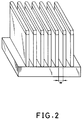
- Fig. 2 is a schematic perspective view showing the resist pattern formed according to Example 9 hereinbelow depicted based on scanning electron micrograph.
- a substrate 1 such as silicon wafer
- step A coating of a bottom layer
- a thin film 3 of the resist composition of the invention is formed by coating on the organic polymer film 2 to complete a two layer structure on the substrate, of which structure the organic polymer film is a bottom layer 2
- the film of the resist composition of the invention is a top layer 3 (step B: coating of a top layer).
- step C prebaking
- step D imagewise exposure
- step E post exposure baking (hereafter, sometimes referred to as PEB)).
- PEB post exposure baking
- the lower layer is dry-etched using oxygen and using the resist material in the irradiated portion which has remained after the alkali development as a mask so that the organic polymer film beneath the resist material can be etched off (step G: dry etching), thus forming a resist pattern.
- the organic polymer material any type of organic polymer may be used so far as it can be etched with oxygen plasma. However, aromatic group-containing polymers are preferred because some resistance is required for the organic polymer when the substrate is dry-etched after the pattern formation using the etched (patterned) organic polymer as a mask.
- diffusion of the acid generated by the acid generator can be prevented performing PEB at a temperature lower than that at which the prebaking is carried out, thus making it possible to form patterns with high resolution.
- the top and bottom layers of the two layer resist of the invention can be coated by a conventional coating method, for example, spin coating.
- the prebaking is performed usually at 100 to 120°C, preferably 105 to 110°C.
- the high energy radiation which can be used in the present invention include electron beams, X rays, deep UV rays, and UV rays.
- PEB can be carried out at 55 to 90°C, preferably 65 to 75°C.
- the dry etching can be performed using oxygen gas as an etching gas, for example, in a parallel flat plate type sputter-etching apparatus usually under the conditions of RF power being 0.1 to 0.2 W/cm2, and O2 gas partial pressure of 5 to 15 mTorr for 10 to 30 minutes.
- resolution limits thus far reached using g line (436 nm) and i line (365 nm) from a high pressure Hg lamp are 0.5 ⁇ m and 0.4 ⁇ m, respectively.
- resolution limit is 0.3 ⁇ m when a KrF excimer laser (248 nm) is used. While it will be possible to fabricate generally 64 Mbit LSI and the like using a resist material having resolution limit of 0.3 ⁇ m the width of patterns actually obtained will be 0.35 ⁇ m when a resist material having resolution limit of 0.3 ⁇ m is used. There is a general impression that further increase in contrast would seem difficult to be obtained by approaches attempting to improve radiation source.
- the present invention is directed to improvement of resolution limit by improving resist materials. If resolution limit of 0.25 ⁇ m is reached it is beyond expectation to fabricate 256 Mbit practical devices. Thus, it is advantageous to realize fine patterns with features of 0.25 ⁇ m or less.
- the resist material of the present invention has high optical transmittance (no lower than 70 %), high resolution, and high sensitivity (20 mJ/cm2). It also has high Si content (not lower than 17 % by weight) and high oxygen plasma resistance. As a result, it can be used as a material for forming the upper layer of a two layer resist.
- the resist material of the present invention With the resist material of the present invention, the fabrication of quarter micron or submicron super LSI is made possible. It is also possible to use the resist material of the invention in electron beam lithography and X ray lithography. In these cases, pattern formation with features of 0.2 ⁇ m or less is possible.
- the process of forming patterns according to the present invention cause less undercut and thus enables subsequent formation of dry-etched patterns of the substrate with the feature of the substrate pattern being substantially the same as that of the resist because the resin material used has high O2RIE resistance and narrow line-space width.
- 3-Glycidoxypropyltrimethoxysilane (23.6 g; 0.1 mol) was dissolved in ethanol, and an aqueous hydrochloric acid was added to the resulting solution while stirring it. After reacting the mixture at room temperature for 24 hours, the reaction was continued at 60°C for another 144 hours. After cooling it down to room temperature, ammonia was added to the reaction mixture and the reaction was continued further for 24 hours. After completion of the reaction, the reaction mixture was introduced into distilled water, and the resulting precipitates were filtered to obtain a white polymer.
- the product was soluble in various organic solvents such as tetrahydrofuran (THF), ethanol, ethylene glycol monoethyl ether (ethylcellosolve), methyl isobutyl ketone (MIBK), and acetone. From solutions of these solvents were obtained transparent uniform films.
- organic solvents such as tetrahydrofuran (THF), ethanol, ethylene glycol monoethyl ether (ethylcellosolve), methyl isobutyl ketone (MIBK), and acetone. From solutions of these solvents were obtained transparent uniform films.
- 3-Glycidoxypropyltrimethoxysilane (11.8 g; 0.05 mol) and phenyltriethoxysilane (12.0 g; 0.05 mol) were dissolved in ethanol, and an aqueous hydrochloric acid was added to the resulting solution while stirring it. After reacting the mixture at room temperature for 24 hours, the reaction was continued at 60°C for another 144 hours. After completion of the reaction, the reaction mixture was introduced into distilled water, and the resulting precipitate was filtered to obtain a white polymer. The product was soluble in various organic solvents such as THF, ethanol, ethylcello-solve, MIBK, acetone, and ethyl acetate. From solutions of these solvents were obtained transparent uniform films.
- organic solvents such as THF, ethanol, ethylcello-solve, MIBK, acetone, and ethyl acetate. From solutions of these solvents were obtained transparent uniform films.
- 3-Glycidoxypropyltrimethoxysilane (11.8 g; 0.05 mol) and methyltriethoxysilane (8.9 g; 0.05 mol) were dissolved in ethanol, and an aqueous hydrochloric acid was added to the resulting solution while stirring it. After reacting the mixture at room temperature for 24 hours, the reaction was continued at 60°C for another 144 hours. After completion of the reaction, the reaction mixture was introduced into distilled water, and the resulting precipitate was filtered to obtain a white polymer.
- the product was soluble in various organic solvents such as THF, ethanol, ethylcello-solve, MIBX, acetone, and ethyl acetate. From solutions of these solvents were obtained transparent uniform films.
- 3-Glycidoxypropyltrimethoxysilane (4.72 g; 0.02 mol), methyltriethoxysilane (8.9 g; 0.05 mol), and tetraethoxysilane (6.24 g; 0.03 mol) were dissolved in ethanol, and an aqueous hydrochloric acid was added to the resulting solution while stirring it. After reacting the mixture at room temperature for 6 hours, ammonia was added to the reaction mixture and the reaction was continued at 60°C for further 24 hours. After completion of the reaction, the reaction mixture was introduced into distilled water, and the resulting precipitate was filtered to obtain a white polymer. The product was soluble in various organic solvents such as THF, ethanol, ethylcellosolve, MIBK, acetone, and ethyl acetate. From solutions of these solvents were obtained transparent uniform films.
- organic solvents such as THF, ethanol, ethylcellosolve, MIBK, acetone,
- Fig. 3 is a chart illustrating an infrared absorption spectrum of the polymer. In Fig. 3, absorptions by OH groups in silanol are observed at 3,400 cm ⁇ 1 and 905 cm ⁇ 1. Fig.
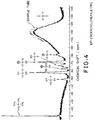
- FIG. 4 is a 29Si-NMR chart illustrating peaks of Si assigned to the following partial structural units represented by formulae (1A) to (6A), respectively, below; where EP represents an organic radical containing an epoxy group, and ⁇ represents a phenyl group, at -48 ppm, -57 ppm, -62 ppm, -67 ppm, - 71 ppm, and -81 ppm, respectively.
- the polymer had a molecular weight of about 1,500.
- 2-(3,4-Epoxycyclohexyl)ethyltrimethoxysilane (4.92 g; 0.02 mol), methyltriethoxysilane (8.9 g; 0.05 mol), and tetraethoxysilane (6.24 g; 0.03 mol) were dissolved in ethanol, and an aqueous hydrochloric acid was added to the resulting solution while stirring it. After reacting the mixture at room temperature for 6 hours, ammonia water was added to the reaction mixture, and the reaction was continued at 60°C for further 24 hours. After cooling it to room temperature, ammonia water was added to the reaction mixture, and the reaction was continued for additional 12 hours.
- the reaction mixture was introduced into distilled water, and the resulting precipitate was filtered to obtain a white polymer.
- the product was soluble in various organic solvents such as THF, ethanol, ethylcellosolve, MIBK, acetone, and ethyl acetate. From solutions of these solvents were obtained transparent uniform films.
- the polysiloxanes obtained in Preparation Examples 1 to 11 were each mixed with 10 % by weight of 2,6-dinitrobenzyl tosylate to prepare resist compositions.
- the respective resist compositions were coated on a silicon wafer in a thickness of about 0.3 ⁇ m by a conventional spin coating method, and prebaked at 100°C for 20 minutes. After the prebaking, each coated substrate was imagewise irradiated with a high energy radiation (electron beams, X rays, deep ultraviolet rays). On this occasion, in the case of deep UV rays, peak wavelength was set up to 257 nm (cold mirror CM-250).
- a high energy radiation electron beams, X rays, deep ultraviolet rays
- peak wavelength was set up to 257 nm (cold mirror CM-250).
- the coated substrates were each heated on a hot plate at 80°C for 5 minutes to effect postbaking (PEB), followed by development with a developer composed of HPRD 402 (trade name for an aqueous alkali solution containing about 3 % by weight of tetramethylammonium hydroxide (TMAH), manufactured by Fuji Hunt Co., hereafter the same) and water in a blend ratio of 1 : 1.
- HPRD 402 trade name for an aqueous alkali solution containing about 3 % by weight of tetramethylammonium hydroxide (TMAH), manufactured by Fuji Hunt Co., hereafter the same
- TMAH tetramethylammonium hydroxide
- Table 1 shows the sensitivity and resolution of each resist composition. Resolution was evaluated by forming line & space patterns. Each of the resist materials enabled the formation of patterns at a width of no larger than 0.3 ⁇ m.
- Respective resist compositions composed of one of the compositions of Example 1 and 0.5 % by weight based on polymer of phenathiazine as a spectral sensitizer were coated on a silicon wafer to a thickness of about 0.3 ⁇ m, and prebaked at 100°C for 20 minutes. After the prebaking, the coated substrates were each irradiated with ultraviolet rays using a Mask Aligner (manufactured by Canon Corporation). After the UV irradiation, the coated substrates were each subjected to the same heat treatment (PEB) as in Example 1, and then developed with the same developer as used in Example 1. D50 was obtained for each of the resist materials as its sensitivity.
- PEB heat treatment
- Table 2 shows the sensitivity and resolution of each resist composition. Resolution was evaluated by forming line & space patterns. All the resist compositions enabled the formation of patterns at a width of 0.5 ⁇ m.
- Acid generator 1 Triphenylsulfonium hexafluoroantimonate 2 % by weight
- Acid generator 2 Triphenylsulfonium hexafluoroarsenate 2 % by weight
- Acid generator 3 Diphenyliodonium hexafluoroantimonate 2 % by weight
- Acid generator 4 Bis(t-butylphenyl)iodonium trifluoromethanesulfonate 2 % by weight
- Acid generator 5 2,4-Bis (trichloromethyl)-6-phenyl-1,3,5-triazine 10 % by weight
- Acid generator 6 Iron allene hexafluorophosphate complex 5 % by weight
- Acid generator 7 Tris(2,3-dibromopropyl)isocyanurate 5 % by weight
- Acid generator 8 4-Met
- the polysiloxanes obtained in Preparation Examples 1 to 11 were each mixed with 10 % by weight of novolak resin and 10 % by weight of 2,6-dinitrobenzyl tosylate to prepare resist compositions.
- Each of the resist compositions was coated on a silicon wafer to a thickness of about 0.3 ⁇ m by a conventional spin coating method, and prebaked at 100°C for 20 minutes. After the prebaking, each coated substrate was imagewise irradiated with a high energy radiation (electron beams, X rays, deep ultraviolet rays). On this occasion, in the case of deep UV rays, peak wavelength was set up to 257 nm (cold mirror CM-250).
- the coated substrates were each heated on a hot plate at 80°C for 5 minutes to effect postbaking (PEB), followed by development with a developer composed of HPRD 402 (manufactured by Fuji Hunt Co.) and water in a blend ratio of 1 : 1.
- D 50 the amount of radiation irradiated with which the thickness of the film remaining after the irradiation was 50 % of the initial thickness of the film prior to the irradiation, was defined as sensitivity of the resist.
- Table 4 shows the sensitivity and resolution of each resist composition. Resolution was evaluated by forming line & space patterns. Each of the resist materials enabled the formation of patterns at a width of no larger than 0.3 ⁇ m.
- Resist compositions composed of one of the resist compositions of Example 4 and 0.5 % by weight based on polymer of phenathiazine as a spectral sensitizer were each coated on a silicon wafer to a thickness of about 0.3 ⁇ m, and prebaked at 100°C for 20 minutes. After the prebaking, the coated substrates were each irradiated with ultraviolet rays using a Mask Aligner (manufactured by Canon Corporation). After the UV irradiation, the coated substrates were each subjected to the same heat treatment (PEB) as in Example 1, and then developed with the same developer as used in Example 1. D50 was obtained for each of the resist materials as its sensitivity.
- PEB heat treatment
- Table 5 shows the sensitivity and resolution of each resist composition. Resolution was evaluated by forming line & space patterns. Each of the resist compositions enabled the formation of patterns at a width of 0.5 ⁇ m.
- Acid generator 1 Triphenylsulfonium hexafluoroantimonate 2 % by weight
- Acid generator 2 Triphenylsulfonium hexafluoroarsenate 2 % by weight
- Acid generator 3 Diphenyliodonium hexafluoroantimonate 2 % by weight
- Acid generator 4 Bis(t-butylphenyl)iodonium trifluoromethanesulfonate 2 % by weight
- Acid generator 5 2,4-Bis(trichloromethyl)-6-phenyl-1,3,5-triazine 10 % by weight
- Acid generator 6 Iron allene hexafluorophosphate complex 5 % by weight
- Acid generator 7 Tris(2, 3-dibromopropyl) isocyanurate 5
- Silicon wafers were each coated with AZ-1350 resist (produced by Hoechst AG) to a thickness of 3 ⁇ m, and heated at 200°C for 30 minutes to insolubilize.
- the respective resist compositions used in Examples 1 to 6 were coated on the AZ-1350 resists each to a thickness of about 0.3 ⁇ m, and prebaked at 100°C for 20 minutes.
- high energy radiation electron beams, X rays, deep UV rays, or UV rays
- the substrates thus treated were heated in the same manner as in Example 1, and developed with a developer having the same composition as that used in Example 1 to form patterns.
- the AZ resists were etched in a parallel flat plate type sputter etching apparatus using oxygen gas as an etching gas and one of the aforementioned resist patterns as a mask. After etching performed under the conditions of RF power: 0.2 W/cm2, and O2 gas pressure: 20 mTorr, for 15 minutes, the AZ resist in the portion uncovered with the resist pattern disappeared completely.
- Example 1 All the resist compositions used in Example 1 gave rise to 0.3 ⁇ m line & space patterns each in a thickness of about 3 ⁇ m while the use of the resist compositions in Example 2 enabled the formation of 0.5 ⁇ m line & space patterns.
- Each of the resist compositions was coated on a silicon wafer to a thickness of about 0.3 ⁇ m by a conventional spin coating method, and prebaked at 100°C for 20 minutes. After the prebaking, each coated substrate was imagewise irradiated with a high energy radiation (electron beams, X rays, or deep ultraviolet rays).
- peak wavelength was set up to 257 nm (cold mirror CM-250).
- the coated substrates were each heated on a hot plate at 80°C for 5 minutes to effect postbaking (PEB), followed by development with a developer composed of HPRD 402 (manufactured by Fuji Hunt Co.) and water in a blend ratio of 1 : 1. D50, the amount of radiation irradiated with which the thickness of the film remaining after the irradiation was 50 % of the initial thickness of the film prior to the irradiation, was defined as sensitivity of the resist.
- Table 8 shows the sensitivity and resolution of each resist composition. Resolution was evaluated by forming line & space patterns. Each of the resist compositions enabled the formation of patterns at a width of no larger than 0.25 ⁇ m.
- Resist compositions composed of one of the resist compositions of Example 9 and 0.5 % by weight based on polymer of phenathiazine as a spectral sensitizer were each coated on a silicon wafer to a thickness of about 0.3 ⁇ m, and prebaked at 100°C for 20 minutes. After the prebaking, the coated substrates were each irradiated with UV rays using an i -line stepper (manufactured by Nikon). After the UV irradiation, the coated substrates were each subjected to the same heat treatment (PEB) as in Example 9, and then developed with the same developer as used in Example 9. D50 was obtained for each of the resist materials as its sensitivity.
- PEB heat treatment
- Table 9 shows the sensitivity and resolution of each resist composition. Resolution was evaluated by forming line & space patterns. All the resist compositions enabled the formation of patterns at a width of 0.35 ⁇ m.
- Acid generator 1 Triphenylsulfonium hexafluoroantimonate 2 % by weight
- Acid generator 2 Triphenylsulfonium hexafluoroarsenate 2 % by weight
- Acid generator 3 Diphenyliodonium hexafluoroantimonate 2 % by weight
- Acid generator 4 Bis(t-butylphenyl)iodonium trifluoromethanesulfonate 2 % by weight
- Acid generator 5 2,4-Bis(trichloromethyl)-6-phenyl-1,3,5-triazine 10 % by weight
- Acid generator 6 Iron allene hexafluorophosphate complex 5 % by weight
- Acid generator 7 Tris(2, 3-dibromopropyl)isocyanur
- Silicon wafers were each coated with AZ-1350 resist (produced by Hoechst AG) to a thickness of 3 ⁇ m, and heated at 200°C for 30 minutes to insolubilize.
- the respective resist compositions used in Examples 9, 10 or 11 were coated on the AZ-1350 resists each to a thickness of about 0.3 ⁇ m, and prebaked at 100°C for 20 minutes.
- high energy radiation (electron beams, X rays, deep UV rays, or UV rays) was irradiated on each of the coated substrates. Then, the substrates thus treated were heated in the same manner as in Examples 9 or 10, and developed with a developer having the same composition as that used in Example 9 to form patterns.
- the AZ resists were etched in a parallel flat plate type sputter etching apparatus using oxygen gas as an etching gas and one of the aforementioned resist patterns as a mask. After etching performed under the conditions of RF power: 0.2 W/cm2, and O2 gas pressure: 20 mTorr, for 15 minutes, the AZ resist in the portion uncovered with the resist pattern disappeared completely.
- Example 9 All the resist compositions used in Example 9 gave rise to at most 0.25 ⁇ m line & space patterns each in a thickness of about 3 ⁇ m while the use of the resist compositions in Example 10 enabled the formation of 0.35 m line & space patterns.
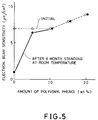
- Fig. 5 shows the relationship between the amount of the polyvinylphenol and sensitivity.
- the addition of polyvinylphenol resin resulted in a slight decrease in the sensitivity but in considerable improvement in the stability with time.
- resist compositions with no polyvinylphenol showed a larger change in the sensitivity after standing at room temperature for 6 months as compared with the resist compositions to which the polyvinylphenol was added.
- Fig. 6 shows the relationship between the amount of the diphenyl-4-thiophenoxyphenylsulfonium hexafluorophosphate added and sensitivity. As will be understood from Fig. 6, the larger the amount the higher the sensitivity but the lower the storage stability.
- a resist material comprises a polysiloxane obtained by hydrolysis and condensation with dehydration of one or more alkoxysilanes having an oxirane ring, or of a mixture of the alkoxysilane(s) having an oxirane ring and one or more alkoxysilanes having no oxirane ring, and an acid generator.
- the resist material may contain one or more of a spectral sensitizer, an organic polymer having a hydroxyl group or an epoxy compound.
- Resist patterns are formed by coating an organic polymer on a substrate (1) and then the resist material on the film of the organic polymer to form a two layer resist having a bottom layer (2) of the organic polymer and top layer (3) of the resist material, prebaking, imagewise exposing high radiation, postbaking, and developing the resist with alkaline solutions to remove an unexposed portion of the top layer, and dry etching the bottom layer using the relic of the resist material as a mask.
- the temperature of the post baking is preferably lower than that of the prebaking.
Landscapes
- Physics & Mathematics (AREA)
- General Physics & Mathematics (AREA)
- Spectroscopy & Molecular Physics (AREA)
- Silicon Polymers (AREA)
Applications Claiming Priority (4)
| Application Number | Priority Date | Filing Date | Title |
|---|---|---|---|
| JP17725790 | 1990-07-06 | ||
| JP177257/90 | 1990-07-06 | ||
| JP320781/90 | 1990-11-27 | ||
| JP32078190 | 1990-11-27 |
Publications (3)
| Publication Number | Publication Date |
|---|---|
| EP0466025A2 true EP0466025A2 (de) | 1992-01-15 |
| EP0466025A3 EP0466025A3 (en) | 1992-09-02 |
| EP0466025B1 EP0466025B1 (de) | 1999-03-10 |
Family
ID=26497867
Family Applications (1)
| Application Number | Title | Priority Date | Filing Date |
|---|---|---|---|
| EP91111109A Expired - Lifetime EP0466025B1 (de) | 1990-07-06 | 1991-07-04 | Resistmaterial, Methode zu seiner Herstellung und Verfahren zum Herstellen von Resistbildern mit diesem Material |
Country Status (3)
| Country | Link |
|---|---|
| EP (1) | EP0466025B1 (de) |
| KR (1) | KR940007795B1 (de) |
| DE (1) | DE69130966T2 (de) |
Cited By (12)
| Publication number | Priority date | Publication date | Assignee | Title |
|---|---|---|---|---|
| WO1994011788A1 (en) * | 1992-11-16 | 1994-05-26 | Technische Universiteit Delft | Method of producing microstructures |
| EP0965618A1 (de) * | 1998-06-18 | 1999-12-22 | JSR Corporation | Photohärtbare Zusammensetzung und lichtgehärtete geformte Gegenstände |
| WO2002016477A3 (en) * | 2000-08-21 | 2002-12-27 | Dow Chemical Co | Organosilicate resins as hardmasks for organic polymer dielectrics in fabrication of microelectronic devices |
| US7031591B2 (en) * | 2002-07-18 | 2006-04-18 | Shin-Etsu Chemical Co., Ltd. | Optical waveguide, forming material and making method |
| US7078156B2 (en) * | 2002-06-14 | 2006-07-18 | Samsung Electronics Co., Ltd. | Negative resist composition comprising base polymer having epoxy ring and Si-containing crosslinker and patterning method for semiconductor device using the same |
| WO2006077140A1 (en) | 2005-01-21 | 2006-07-27 | Leibniz-Institut Für Neue Materialien Gemeinnützige Gmbh | Composite composition for micropatterned layers having high relaxation ability, high chemical resistance and mechanical stability |
| WO2006078069A2 (en) | 2005-01-21 | 2006-07-27 | Canon Kabushiki Kaisha | Ink jet recording head, producing method therefor and composition for ink jet recording head |
| US7810904B2 (en) | 2005-01-21 | 2010-10-12 | Canon Kabushiki Kaisha | Ink jet recording head, producing method therefor and composition for ink jet recording head |
| US7985477B2 (en) | 2003-07-22 | 2011-07-26 | Leibniz- Institut Fuer Neue Materialien Gemeinnuetzige GmbH | Liquid-repellent, alkali-resistant coating composition and coating suitable for pattern forming |
| US8680179B2 (en) | 2006-07-18 | 2014-03-25 | Leibniz-Institut Fuer Neue Materialien Gemeinnuetzige Gmbh | Composite composition for micropatterned layers |
| US8920702B2 (en) | 2008-12-19 | 2014-12-30 | Andreas Hettich Gmbh & Co. Kg | Device and method for producing a moulded body having microstructures |
| EP2220184B1 (de) * | 2007-11-30 | 2019-03-06 | Braggone OY | Neue siloxanpolymerzusammensetzungen |
Families Citing this family (2)
| Publication number | Priority date | Publication date | Assignee | Title |
|---|---|---|---|---|
| US7244549B2 (en) * | 2001-08-24 | 2007-07-17 | Jsr Corporation | Pattern forming method and bilayer film |
| KR100725143B1 (ko) * | 2005-12-31 | 2007-06-07 | 유영선 | 감광성 조성물 및 그 제조 방법 |
Family Cites Families (2)
| Publication number | Priority date | Publication date | Assignee | Title |
|---|---|---|---|---|
| JP2608429B2 (ja) * | 1987-11-09 | 1997-05-07 | 東レ・ダウコーニング・シリコーン株式会社 | パターン形成用材料およびパターン形成方法 |
| US5059512A (en) * | 1989-10-10 | 1991-10-22 | International Business Machines Corporation | Ultraviolet light sensitive photoinitiator compositions, use thereof and radiation sensitive compositions |
-
1991
- 1991-07-04 EP EP91111109A patent/EP0466025B1/de not_active Expired - Lifetime
- 1991-07-04 DE DE69130966T patent/DE69130966T2/de not_active Expired - Fee Related
- 1991-07-05 KR KR1019910011370A patent/KR940007795B1/ko not_active Expired - Fee Related
Cited By (25)
| Publication number | Priority date | Publication date | Assignee | Title |
|---|---|---|---|---|
| WO1994011788A1 (en) * | 1992-11-16 | 1994-05-26 | Technische Universiteit Delft | Method of producing microstructures |
| EP0965618A1 (de) * | 1998-06-18 | 1999-12-22 | JSR Corporation | Photohärtbare Zusammensetzung und lichtgehärtete geformte Gegenstände |
| US6207728B1 (en) | 1998-06-18 | 2001-03-27 | Jsr Corporation | Photo-curable composition and photo-cured product |
| KR100795714B1 (ko) * | 2000-08-21 | 2008-01-21 | 다우 글로벌 테크놀로지스 인크. | 마이크로일렉트로닉 장치의 제조에 있어서 유기 중합체유전체용 하드마스크로서의 유기 규산염 수지 |
| WO2002016477A3 (en) * | 2000-08-21 | 2002-12-27 | Dow Chemical Co | Organosilicate resins as hardmasks for organic polymer dielectrics in fabrication of microelectronic devices |
| US7268200B2 (en) | 2000-08-21 | 2007-09-11 | Dow Global Technologies Inc. | Organosilicate resins as hardmasks for organic polymer dielectrics in fabrication of microelectronic devices |
| EP1837902A3 (de) * | 2000-08-21 | 2008-04-02 | Dow Global Technologies Inc. | Verwendung von Organosilikat-Harzen als Vorlagen für organische Polymerdielektrika bei der Herstellung mikroelektronischer Geräte |
| US7078156B2 (en) * | 2002-06-14 | 2006-07-18 | Samsung Electronics Co., Ltd. | Negative resist composition comprising base polymer having epoxy ring and Si-containing crosslinker and patterning method for semiconductor device using the same |
| US7226725B2 (en) | 2002-06-14 | 2007-06-05 | Samsung Electronics Co., Ltd. | Negative resist composition comprising base polymer having epoxy ring and si-containing crosslinker and patterning method for semiconductor device using the same |
| US7031591B2 (en) * | 2002-07-18 | 2006-04-18 | Shin-Etsu Chemical Co., Ltd. | Optical waveguide, forming material and making method |
| US7985477B2 (en) | 2003-07-22 | 2011-07-26 | Leibniz- Institut Fuer Neue Materialien Gemeinnuetzige GmbH | Liquid-repellent, alkali-resistant coating composition and coating suitable for pattern forming |
| WO2006077140A1 (en) | 2005-01-21 | 2006-07-27 | Leibniz-Institut Für Neue Materialien Gemeinnützige Gmbh | Composite composition for micropatterned layers having high relaxation ability, high chemical resistance and mechanical stability |
| US8087748B2 (en) | 2005-01-21 | 2012-01-03 | Canon Kabushiki Kaisha | Ink jet recording head, producing method therefor and composition for ink jet recording head |
| US7810904B2 (en) | 2005-01-21 | 2010-10-12 | Canon Kabushiki Kaisha | Ink jet recording head, producing method therefor and composition for ink jet recording head |
| CN101107568B (zh) * | 2005-01-21 | 2011-04-06 | 佳能株式会社 | 微图案化层用复合组合物 |
| WO2006078069A2 (en) | 2005-01-21 | 2006-07-27 | Canon Kabushiki Kaisha | Ink jet recording head, producing method therefor and composition for ink jet recording head |
| US8012364B2 (en) | 2005-01-21 | 2011-09-06 | Canon Kabushiki Kaisha | Ink jet recording head, producing method therefor and composition for ink jet recording head |
| CN101124519B (zh) * | 2005-01-21 | 2011-11-30 | 佳能株式会社 | 喷墨记录头、它的制备方法和喷墨记录头用组合物 |
| WO2006078069A3 (en) * | 2005-01-21 | 2007-09-20 | Canon Kk | Ink jet recording head, producing method therefor and composition for ink jet recording head |
| CN101863166B (zh) * | 2005-01-21 | 2012-05-23 | 佳能株式会社 | 喷墨记录头、它的制备方法和喷墨记录头用组合物 |
| US8535796B2 (en) | 2005-01-21 | 2013-09-17 | Leibniz-Institut Fuer Neue Materialien Gemeinnuetzige Gmbh | Composite composition for micropatterned layers having high relaxation ability, high chemical resistance and mechanical stability |
| US8680179B2 (en) | 2006-07-18 | 2014-03-25 | Leibniz-Institut Fuer Neue Materialien Gemeinnuetzige Gmbh | Composite composition for micropatterned layers |
| EP2220184B1 (de) * | 2007-11-30 | 2019-03-06 | Braggone OY | Neue siloxanpolymerzusammensetzungen |
| US8920702B2 (en) | 2008-12-19 | 2014-12-30 | Andreas Hettich Gmbh & Co. Kg | Device and method for producing a moulded body having microstructures |
| US9022775B2 (en) | 2008-12-19 | 2015-05-05 | Andreas Hettich Gmbh & Co. Kg | Device and method for producing a moulded body having microstructures |
Also Published As
| Publication number | Publication date |
|---|---|
| KR940007795B1 (ko) | 1994-08-25 |
| DE69130966D1 (de) | 1999-04-15 |
| DE69130966T2 (de) | 1999-09-16 |
| EP0466025A3 (en) | 1992-09-02 |
| KR920003100A (ko) | 1992-02-29 |
| EP0466025B1 (de) | 1999-03-10 |
Similar Documents
| Publication | Publication Date | Title |
|---|---|---|
| US5457003A (en) | Negative working resist material, method for the production of the same and process of forming resist patterns using the same | |
| US5017453A (en) | A silicone resist materials containing a polysiloxane and a photo-sensitive agent | |
| JP5152532B2 (ja) | 窒素含有シリル基を含むポリマーを含有するレジスト下層膜形成組成物 | |
| EP0466025B1 (de) | Resistmaterial, Methode zu seiner Herstellung und Verfahren zum Herstellen von Resistbildern mit diesem Material | |
| JP7791508B2 (ja) | レジスト下層膜形成用組成物 | |
| WO2011033965A1 (ja) | スルホンアミド基を有するシリコン含有レジスト下層膜形成組成物 | |
| KR20120031018A (ko) | 설파이드 결합을 갖는 실리콘 함유 레지스트 하층막 형성 조성물 | |
| EP0758102A1 (de) | Terpolymere mit Organosiliziumseitenketten und ihre Verwendung zur Herstellung von Reliefstrukturen | |
| JP7564503B2 (ja) | シリコン含有レジスト下層膜の製造方法 | |
| WO2016009939A1 (ja) | ハロゲン化スルホニルアルキル基を有するシリコン含有レジスト下層膜形成組成物 | |
| WO2005007747A2 (en) | Photosensitive silsesquioxane resin | |
| JPH04338958A (ja) | レジスト材料、その製造方法およびこれを用いたパターン形成方法 | |
| WO2024009993A1 (ja) | 積層体の製造方法、及び半導体素子の製造方法 | |
| WO2000053645A1 (en) | Hydroxy-epoxide thermally cured undercoat for 193 nm lithography | |
| Sun | Photo-imageable hardmask with dual tones for microphotolithography | |
| US5304453A (en) | Method for preparing resist patterns through image layer transfer to a receiver substrate, via a photo-hardening organic liquid adhesive, with subsequent oxygen reactive ion etching | |
| WO2022230940A1 (ja) | シリコン含有レジスト下層膜形成用組成物 | |
| JP4466879B2 (ja) | 二層型反射防止膜を用いたフォトレジストパターンの形成方法 | |
| KR100792045B1 (ko) | 레지스트 하층막용 하드마스크 조성물 및 이를 이용한반도체 집적회로 디바이스의 제조방법 | |
| JPH03288857A (ja) | レジスト材料及び感光性樹脂組成物 | |
| JPH08193167A (ja) | 感光性樹脂組成物 | |
| JP2004205900A (ja) | リン系有機基含有高分子を含む反射防止膜形成組成物 | |
| KR20230109157A (ko) | 레지스트 하층막 형성용 조성물 | |
| JPS63113021A (ja) | ポリシラン及びそれを用いた感光性組成物 | |
| WO2022210954A1 (ja) | シリコン含有レジスト下層膜形成用組成物 |
Legal Events
| Date | Code | Title | Description |
|---|---|---|---|
| PUAI | Public reference made under article 153(3) epc to a published international application that has entered the european phase |
Free format text: ORIGINAL CODE: 0009012 |
|
| 17P | Request for examination filed |
Effective date: 19910802 |
|
| AK | Designated contracting states |
Kind code of ref document: A2 Designated state(s): DE FR GB |
|
| PUAL | Search report despatched |
Free format text: ORIGINAL CODE: 0009013 |
|
| AK | Designated contracting states |
Kind code of ref document: A3 Designated state(s): DE FR GB |
|
| RAP1 | Party data changed (applicant data changed or rights of an application transferred) |
Owner name: NIPPON TELEGRAPH AND TELEPHONE CORPORATION |
|
| 17Q | First examination report despatched |
Effective date: 19960805 |
|
| GRAG | Despatch of communication of intention to grant |
Free format text: ORIGINAL CODE: EPIDOS AGRA |
|
| GRAG | Despatch of communication of intention to grant |
Free format text: ORIGINAL CODE: EPIDOS AGRA |
|
| GRAH | Despatch of communication of intention to grant a patent |
Free format text: ORIGINAL CODE: EPIDOS IGRA |
|
| GRAH | Despatch of communication of intention to grant a patent |
Free format text: ORIGINAL CODE: EPIDOS IGRA |
|
| GRAA | (expected) grant |
Free format text: ORIGINAL CODE: 0009210 |
|
| AK | Designated contracting states |
Kind code of ref document: B1 Designated state(s): DE FR GB |
|
| REF | Corresponds to: |
Ref document number: 69130966 Country of ref document: DE Date of ref document: 19990415 |
|
| ET | Fr: translation filed | ||
| PLBE | No opposition filed within time limit |
Free format text: ORIGINAL CODE: 0009261 |
|
| STAA | Information on the status of an ep patent application or granted ep patent |
Free format text: STATUS: NO OPPOSITION FILED WITHIN TIME LIMIT |
|
| 26N | No opposition filed | ||
| PGFP | Annual fee paid to national office [announced via postgrant information from national office to epo] |
Ref country code: GB Payment date: 20010618 Year of fee payment: 11 |
|
| PGFP | Annual fee paid to national office [announced via postgrant information from national office to epo] |
Ref country code: FR Payment date: 20010717 Year of fee payment: 11 |
|
| PGFP | Annual fee paid to national office [announced via postgrant information from national office to epo] |
Ref country code: DE Payment date: 20010829 Year of fee payment: 11 |
|
| REG | Reference to a national code |
Ref country code: GB Ref legal event code: IF02 |
|
| PG25 | Lapsed in a contracting state [announced via postgrant information from national office to epo] |
Ref country code: GB Free format text: LAPSE BECAUSE OF NON-PAYMENT OF DUE FEES Effective date: 20020704 |
|
| PG25 | Lapsed in a contracting state [announced via postgrant information from national office to epo] |
Ref country code: DE Free format text: LAPSE BECAUSE OF NON-PAYMENT OF DUE FEES Effective date: 20030201 |
|
| GBPC | Gb: european patent ceased through non-payment of renewal fee |
Effective date: 20020704 |
|
| PG25 | Lapsed in a contracting state [announced via postgrant information from national office to epo] |
Ref country code: FR Free format text: LAPSE BECAUSE OF NON-PAYMENT OF DUE FEES Effective date: 20030331 |
|
| REG | Reference to a national code |
Ref country code: FR Ref legal event code: ST |