EP0466558A1 - Verfahren zur Herstellung von 2- und 3-Phenylalkanen unter Verwendung von einem auf modifizierten Mordenit basierten Katalysator - Google Patents
Verfahren zur Herstellung von 2- und 3-Phenylalkanen unter Verwendung von einem auf modifizierten Mordenit basierten Katalysator Download PDFInfo
- Publication number
- EP0466558A1 EP0466558A1 EP91401830A EP91401830A EP0466558A1 EP 0466558 A1 EP0466558 A1 EP 0466558A1 EP 91401830 A EP91401830 A EP 91401830A EP 91401830 A EP91401830 A EP 91401830A EP 0466558 A1 EP0466558 A1 EP 0466558A1
- Authority
- EP
- European Patent Office
- Prior art keywords
- phenylalkanes
- benzene
- less
- mordenite
- mixture
- Prior art date
- Legal status (The legal status is an assumption and is not a legal conclusion. Google has not performed a legal analysis and makes no representation as to the accuracy of the status listed.)
- Withdrawn
Links
Images
Classifications
-
- C—CHEMISTRY; METALLURGY
- C07—ORGANIC CHEMISTRY
- C07C—ACYCLIC OR CARBOCYCLIC COMPOUNDS
- C07C2/00—Preparation of hydrocarbons from hydrocarbons containing a smaller number of carbon atoms
- C07C2/54—Preparation of hydrocarbons from hydrocarbons containing a smaller number of carbon atoms by addition of unsaturated hydrocarbons to saturated hydrocarbons or to hydrocarbons containing a six-membered aromatic ring with no unsaturation outside the aromatic ring
- C07C2/64—Addition to a carbon atom of a six-membered aromatic ring
- C07C2/66—Catalytic processes
-
- C—CHEMISTRY; METALLURGY
- C07—ORGANIC CHEMISTRY
- C07C—ACYCLIC OR CARBOCYCLIC COMPOUNDS
- C07C2521/00—Catalysts comprising the elements, oxides or hydroxides of magnesium, boron, aluminium, carbon, silicon, titanium, zirconium or hafnium
- C07C2521/02—Boron or aluminium; Oxides or hydroxides thereof
-
- C—CHEMISTRY; METALLURGY
- C07—ORGANIC CHEMISTRY
- C07C—ACYCLIC OR CARBOCYCLIC COMPOUNDS
- C07C2521/00—Catalysts comprising the elements, oxides or hydroxides of magnesium, boron, aluminium, carbon, silicon, titanium, zirconium or hafnium
- C07C2521/02—Boron or aluminium; Oxides or hydroxides thereof
- C07C2521/04—Alumina
-
- C—CHEMISTRY; METALLURGY
- C07—ORGANIC CHEMISTRY
- C07C—ACYCLIC OR CARBOCYCLIC COMPOUNDS
- C07C2521/00—Catalysts comprising the elements, oxides or hydroxides of magnesium, boron, aluminium, carbon, silicon, titanium, zirconium or hafnium
- C07C2521/06—Silicon, titanium, zirconium or hafnium; Oxides or hydroxides thereof
-
- C—CHEMISTRY; METALLURGY
- C07—ORGANIC CHEMISTRY
- C07C—ACYCLIC OR CARBOCYCLIC COMPOUNDS
- C07C2521/00—Catalysts comprising the elements, oxides or hydroxides of magnesium, boron, aluminium, carbon, silicon, titanium, zirconium or hafnium
- C07C2521/06—Silicon, titanium, zirconium or hafnium; Oxides or hydroxides thereof
- C07C2521/08—Silica
-
- C—CHEMISTRY; METALLURGY
- C07—ORGANIC CHEMISTRY
- C07C—ACYCLIC OR CARBOCYCLIC COMPOUNDS
- C07C2521/00—Catalysts comprising the elements, oxides or hydroxides of magnesium, boron, aluminium, carbon, silicon, titanium, zirconium or hafnium
- C07C2521/10—Magnesium; Oxides or hydroxides thereof
-
- C—CHEMISTRY; METALLURGY
- C07—ORGANIC CHEMISTRY
- C07C—ACYCLIC OR CARBOCYCLIC COMPOUNDS
- C07C2521/00—Catalysts comprising the elements, oxides or hydroxides of magnesium, boron, aluminium, carbon, silicon, titanium, zirconium or hafnium
- C07C2521/16—Clays or other mineral silicates
-
- C—CHEMISTRY; METALLURGY
- C07—ORGANIC CHEMISTRY
- C07C—ACYCLIC OR CARBOCYCLIC COMPOUNDS
- C07C2529/00—Catalysts comprising molecular sieves
- C07C2529/04—Catalysts comprising molecular sieves having base-exchange properties, e.g. crystalline zeolites, pillared clays
- C07C2529/06—Crystalline aluminosilicate zeolites; Isomorphous compounds thereof
- C07C2529/18—Crystalline aluminosilicate zeolites; Isomorphous compounds thereof of the mordenite type
Definitions
- the present invention relates to a process for the production of 2-phenylalkanes and 3-phenylalkanes by alkylation of benzene by means of linear olefin (s) comprising from 9 to 16 carbon atoms, more particularly from 10 to 14 carbon atoms. carbon, in the presence of at least one catalyst based on a modified mordenite.
- linear olefin s
- s linear olefin
- the 2- and 3- phenylalkanes obtained according to the invention constitute compounds for the formulation, after sulfonation, of biodegradable detergents.
- Linear alkylbenzenes of the 2- and 3- phenylalkane type are thus the most suitable for achieving this objective, the most advantageous benzene alkylating agents being constituted by linear C9-C16 olefins, preferably C10-C14.
- linear alkylbenzenes obtained by alkylation of benzene by means of linear olefin (s) are prepared today by two main processes.
- the first process is licensed by UOP (B. Vora, P. Pujado, J. Spinner, T. Imai, Hydrocarbon Processing, Nov. 1984, p.86; Petrochemical Handbook, Hydrocarbon Processing, Nov. 1987, p.63).
- UOP B. Vora, P. Pujado, J. Spinner, T. Imai, Hydrocarbon Processing, Nov. 1984, p.86; Petrochemical Handbook, Hydrocarbon Processing, Nov. 1987, p.63).
- This process uses, during the alkylation step of benzene, hydrofluoric acid as catalytic agent.
- the second process is licensed by ARCO Technology Inc (Petrochemical Handbook, Nov. 1985, p.127).
- the alkylation catalyst is here of the Friedel-Craft type, in particular based on AlCl3.
- the ARCO process poses the classic problem of processes based on Friedel-Craft catalysts, in this case the problem of rejects; in fact, for this type of process, it is necessary to neutralize the effluents with a basic solution at the outlet of the reactor. In addition to these various drawbacks, there are difficulties associated with the separation of the catalyst from the reaction products for the two processes.
- the technique required to carry out this transformation consists in replacing the cations initially present in the solid by proton precursors, such as ammonium ions, then in calcining in the presence of water vapor the ammonium form thus obtained.
- the product resulting from this initial transformation can then be subjected to various chemical treatments, in particular dealumination treatments.
- the zeolites prepared according to this technique (US-A-4.301317) prove to be quite efficient for the alkylation of benzene by linear olefins comprising at least 5 carbon atoms.
- the required reaction temperature must be above 50 ° C and the pressure above 1 MPa.
- Said mordenite generally has a secondary porous network (or mesoporous network), the volume of which, according to DUBININ theory, is greater than 0.020 cm3, owing to a special dealumination treatment which makes it possible to considerably reduce its content of extra-lattice aluminum species g, preferably greater than 0.040 cm3 / g; details on this mesoporous volume determination technique are given by F. RAATZ and H. AJOT in Stud. Surf. Sci. Cat., Vol. 39, p. 119.1988.
- the mordenites used in the present invention are made from basic mordenites of natural or synthetic origin.
- Synthetic mordenites are preferably used as basic mordenites, since they can be prepared in very pure phase with a controlled overall Si / Al atomic ratio varying between approximately 5 and 20. Furthermore, these synthetic mordenites are free from metallic impurities which are detrimental in terms of catalytic performance.
- synthetic mordenites are used as basic mordenites having, after synthesis, an overall Si / Al atomic ratio of less than about 10, which allows in particular, after a dealumination treatment, to develop a large mesoporous network within the crystals of the final mordenite.
- the basic mordenites must undergo a specific dealumination treatment possibly preceded by an ion exchange step.
- the optional ion exchange step generally consists of at least one treatment in ammonium salt solutions (nitrate, sulfate, oxalate, etc.) with an ammonium concentration of between 0.01 and ION, at a temperature between 10 and 180 ° C (exchange under autogenous pressure if necessary), for a period greater than approximately 10 minutes.
- ammonium salt solutions nitrate, sulfate, oxalate, etc.
- ammonium concentration between 0.01 and ION
- the dealumination treatment is an acid attack which consists of at least one treatment in acid solutions of various nature (HCl, HN03, H2S04, HF etc), at temperatures between 10 and 150 ° C (attack under autogenous pressure eventually).
- the acid concentrations are preferably between 1.5 and 7N.
- the volume ratios of solution to weight of dry solid are between 3 and 20 cm3 / g and, advantageously, between 3.5 and 7 cm3 / g.
- the duration of treatment is at least 10 minutes. To achieve the desired specifications, a limited number of acid attacks carried out under severe conditions or a greater number of acid attacks carried out under moderate conditions may be used.
- the preparation route used for the invention in addition to its greater simplicity, makes it possible to obtain solids truly free of extra-lattice species and whose mesoporous volume is free all aluminum debris.
- extra-lattice species in particular the extra-lattice species of aluminum nature, are known to be poisons from acidic framework sites and are moreover agents for blocking the secondary porous network possibly formed during the calcination step under water vapour.
- the superior performances of the mordenites used in the invention result at least in part from the absence of extra-lattice species, in particular of extra-lattice aluminum species, the aluminum extracts from the framework during the acid attack then being directly dissolved in solution.
- This allows solids to be obtained with maximum acidity and whose diffusion properties are greatly improved: acidity of the Bronsted type only linked to structural aluminum (no poisoning of structural sites by extra-lattice aluminum, no sites acids outside the framework), micro and mesoporous networks completely free of all debris.
- the mordenites used in the present invention make it possible to carry out the alkylation of benzene by linear olefins at very low temperatures, in particular at a temperature below 60 ° C and even at 20 ° C, which conventionally corresponds to ambient temperature.
- the cycle time with the catalysts used in the invention is clearly improved: it is of the order of several months to compare with several weeks with mordenites prepared by a route of the calcination type under steam followed by 'acid attack (s).
- the dealuminated mordenite defined above can be used, in the present invention, alone or in admixture with a binder or a matrix generally chosen from the group formed by clays, aluminas, silica, magnesia, zirconia, oxide of titanium, boron oxide and any combination of at least two of the above-mentioned compounds such as silica-alumina, silica-magnesia etc. All known methods of agglomeration and shaping are applicable, such as for example extrusion, pelletizing, drop coagulation, spray drying, etc.
- At least one catalyst based on a dealuminated mordenite having the characteristics defined above is thus used in the process according to the invention, generally containing 1 to 100%, preferably 20 to 98% and, for example, 40 to 98% in weight of said dealuminated mordenite and 0 to 99%, preferably 2 to 80% and, for example, 2 to 60% by weight of a matrix.
- benzene is reacted, in a reaction zone, with a filler containing at least one linear olefin comprising from 9 to 16 carbon atoms, preferably from 10 to 14 carbon atoms , in its molecule, in contact with at least one catalyst based on a dealuminated mordenite having the characteristics defined above (alkylation reaction), then the product obtained is fractionated so as to collect separately a first fraction containing benzene unconverted, a second fraction containing at least one linear C9-C16 olefin (preferably C10-C14) unconverted, a third fraction containing 2- and 3- phenylalkanes and a fourth fraction containing at least one polyalkylbenzene ( or poly-alkylbenzene fraction), the latter then being, at least in part, recycled to said reaction zone where it therefore reacts with benzene on contact with said catalyst, that is to say of the catalyst mentioned above with base of the dealuminated mor
- This variant of the invention is therefore in particular characterized in that the alkylation and transalkylation reactions take place jointly in the same reaction zone (that is to say in the same reactor) in the presence of the same catalyst.
- the first fraction containing benzene which is not converted at the end of the alkylation reaction is at least partly recycled to said reaction zone: thus, at least part of the benzene reacting with at least part of the fourth fraction (or poly-alkylbenzene fraction) recycled consists of unconverted benzene during the alkylation reaction, therefore unconverted benzene from said first fraction.
- the second fraction containing at least one linear C9-C16 olefin (usually C10-Céf) which is not converted at the end of the alkylation reaction is at least partly recycled to said reaction zone.
- the recycled part of the fourth fraction preferably contains essentially at least one dialkylbenzene and is preferably substantially free of heavy alkyl aromatics which can be removed by fractionation if necessary.
- the mixture of 2-phenylalkanes and 3-phenylalkanes obtained according to the invention is advantageously almost free or substantially free of n-phenylalkanes, n being an integer greater than or equal to 4.
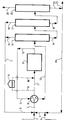
- the single figure illustrates a particular embodiment of the invention.
- Fresh benzene (line 1) is mixed, on the one hand, with a mixture (line 2) of benzene and linear C10-C14 olefins (cut whose distillation range is between 165 and 240 ° C), benzene coming from line 15 from the head of a first fractionation column 14 and said linear C10-C14 olefins coming from line 15 from the head of a second fractionation column 17, and on the other hand, with a mixture (line 3) of "fresh" linear olefins C10-C14 arriving via line 4 and dialkylbenzenes originating, via line 24, from the bottom (line 22) of a third fractionation column 20, after a possible purge (line 23).
- the overall mixture (or feed) obtained is then sent, via line 5, to the heat exchanger 6 where it is preheated by heat exchange with the effluent from line 12 of the alkylation reactor 11. Then the mixture is sent, after its stay in the heat exchanger 6, to the alkylation reactor 11 via line 7.
- the mixture leaving this exchanger 6 is sent beforehand, via line 8, to the heating furnace 9, from which it emerges via line 10 to go towards the alkylation reactor 11.
- the effluent is sent, via line 12, to the heat exchanger 6, then, via line 13, to a first fractionation column 14.
- this second fractionation column 17 a mixture is drawn off which is sent, via line 19, to a third fractionation column 20.
- a mixture of 2-phenylalkanes and 3- is collected by line 21 phenylalkanes (cut whose distillation range is between 290 and 370 ° C) which is sent to storage.
- dialkylbenzenes are drawn off, via line 22, at least a large part of which is recycled, via line 24, to reactor 11 and a small amount of which is optionally purged from the circuit by driving 23.
- the process according to the present invention can be carried out at a temperature below 300 ° C, for example below 60 ° C, under a pressure of 1 to 10 MPa, with a flow rate of liquid hydrocarbons (space velocity) of approximately 0 , 5 to 50 volumes per volume of catalyst and per hour and with a benzene / (C9-C16 olefin (s)) molar ratio of between 1 and 20.
- the raw material used to prepare these various catalysts is a large pore mordenite from the company Tosoh, in sodium form, referenced TSZ600NAA. Its chemical formula, in the anhydrous state, is Na, Al02 (Si02) 5.1 and its sodium content is around 5% by weight.
- This product is then separated into three equal parts Ao, Bo and Co which are each subjected to an acid attack using aqueous solutions of nitric acid of normality 0.9 N, 4.5 N and 8 N respectively: each solid is thus brought to reflux in the aqueous nitric acid solution, with a V / P ratio equal to 4 cm3 / g, then washed with water.
- Each Ao, Bo and Co mordenite prepared previously is then mixed with alumina gel.
- Each mixture obtained is then put into the form of extrudates with a diameter equal to about 1.8 mm by passage through a die.
- the extrudates are then dried in an oven at 120 ° C overnight, then calcined in dry air to about 550 ° C.
- Catalysts A, B and C are then obtained based respectively on the mordenites Ao, Bo and Co, containing 80% by weight of mordenite and 20% by weight of alumina.
- the three catalysts A, B and C, prepared in Example 1 are each tested in alkylation of benzene with dodecene-1, for the production of 2- and 3-phenyldodecanes, under the following operating conditions: - temperature: 50 ° C - pressure: 4 MPa - hourly liquid charge flow rate equal to 3 times the volume of the catalyst - benzene / dodecene-1 molar ratio: 5.5.
- the mordenite-based catalyst having an overall Si / Al atomic ratio of between 15 and 85, preferably between 15 and 60 is active but very poorly selective; moreover, it causes, on the one hand, an isomerization reaction of dodecene-1, and, on the other hand, a non-negligible formation of 4-, 5- and 6- phenyldodecanes which lead to detergents whose biodegradability is weak.
- the mordenite-based catalyst having an overall Si / Al atomic ratio greater than 85 is less active and does not have a very satisfactory selectivity for 2- and 3- phenyldodecanes.
- the raw material used here is a small pore mordenite from the departments Chimique de la Grande Paroisse, referenced Alite 150. Its chemical formula, in the anhydrous state, is Na, Al02 (Si02) 5.5 and its sodium content is 5.3% by weight.
- This product is then subjected to four consecutive acid attacks using aqueous 6N nitric acid solutions: for each acid attack, the product is thus brought to reflux in the aqueous nitric acid solution for 2 hours, with a ratio V / P equal to 4 cm3 / g. After each acid attack, the product is washed with water.
- the mordenite obtained Do has a sodium content by weight of less than 10 ppm, an overall Si / Al atomic ratio of 10.7, an elementary mesh volume of 2.750 nm3, an asymmetric frequency of the T04 tetrahedra of 1076.3 cm ⁇ 1 in the infrared spectrum, a microporous volume of 0.285 cm3 / g and a mesoporous volume of 0.198 cm3 / g.
- a catalyst D based on mordenite Do is then obtained, containing 80% by weight of said mordenite and 20% by weight of alumina.
- Catalyst D prepared in example 4, is tested in alkylation of benzene with dodecene-1, for the production of 2- and 3-phenyldodecanes, under operating conditions identical to those used in example 2.
- catalyst D which does not comply with those recommended by the invention, is active but very selective; it causes, on the one hand, an isomerization reaction of dodecene-1, and, on the other hand, a fairly large formation of 4-, 5- and 6-phenyldodecanes.
- an Eo mordenite is prepared by a succession of steaming or calcination treatments in a confined atmosphere and acid attack; the product Eo is prepared by steaming at 530 ° C. from the mordenite in ammonium form for 2 hours, followed by an acid attack with an aqueous solution of 1.8N nitric acid for 2 hours at reflux temperature.
- the mordenite obtained Eo has a sodium content by weight of 110 ppm, an overall Si / Al atomic ratio of 28, an elementary mesh volume of 2.725 nm3, an asymmetric frequency of the T04 tetrahedra of 1089.6 cm ⁇ 1 in the infra spectrum. -red, a microporous volume of 0.265 cm3 / g and a mesoporous volume of 0.182 cm3 / g.
- a catalyst E is then obtained based on mordenite Eo, containing 80% by weight of said mordenite and 20% by weight of alumina.
- Catalyst E prepared in Example 6, is tested in alkylation of benzene with dodecene-1, for the production of 2- and 3-phenyldodecanes, under operating conditions identical to those used in Example 2 (in particular with a charge of the same composition).
- the pass conversion rates obtained are 10.3% for benzene and 83% for dodecene-1.
Landscapes
- Chemical & Material Sciences (AREA)
- Organic Chemistry (AREA)
- Chemical Kinetics & Catalysis (AREA)
- Organic Low-Molecular-Weight Compounds And Preparation Thereof (AREA)
- Catalysts (AREA)
- Low-Molecular Organic Synthesis Reactions Using Catalysts (AREA)
Applications Claiming Priority (2)
| Application Number | Priority Date | Filing Date | Title |
|---|---|---|---|
| FR9008801 | 1990-07-09 | ||
| FR9008801A FR2664264B1 (fr) | 1990-07-09 | 1990-07-09 | Procede de production de 2- et 3-phenylalcanes utilisant un catalyseur a base de mordenite modifiee. |
Publications (1)
| Publication Number | Publication Date |
|---|---|
| EP0466558A1 true EP0466558A1 (de) | 1992-01-15 |
Family
ID=9398578
Family Applications (1)
| Application Number | Title | Priority Date | Filing Date |
|---|---|---|---|
| EP91401830A Withdrawn EP0466558A1 (de) | 1990-07-09 | 1991-07-03 | Verfahren zur Herstellung von 2- und 3-Phenylalkanen unter Verwendung von einem auf modifizierten Mordenit basierten Katalysator |
Country Status (3)
| Country | Link |
|---|---|
| EP (1) | EP0466558A1 (de) |
| JP (1) | JPH04230335A (de) |
| FR (1) | FR2664264B1 (de) |
Cited By (25)
| Publication number | Priority date | Publication date | Assignee | Title |
|---|---|---|---|---|
| FR2697246A1 (fr) * | 1992-10-28 | 1994-04-29 | Inst Francais Du Petrole | Procédé de production de phénylalcanes utilisant un catalyseur à base de zéolithe Y modifiée. |
| US5770782A (en) * | 1996-02-08 | 1998-06-23 | Huntsman Petrochemical Corporation | Process and system for alkylation of aromatic compounds |
| US5777187A (en) * | 1996-02-08 | 1998-07-07 | Huntsman Petrochemical Corporation | Two-step process for alkylation of benzene to form linear alkylbenzenes |
| WO1999005082A1 (en) * | 1997-07-21 | 1999-02-04 | The Procter & Gamble Company | Improved processes for making alkylbenzenesulfonate surfactants and products thereof |
| WO1999005241A1 (en) * | 1997-07-21 | 1999-02-04 | The Procter & Gamble Company | Cleaning products comprising improved alkylarylsulfonate surfactants prepared via vinylidene olefins and processes for preparation thereof |
| WO1999005084A1 (en) * | 1997-07-21 | 1999-02-04 | The Procter & Gamble Company | Process for making alkylbenzenesulfonate surfactants from alcohols and products thereof |
| WO2000012451A1 (en) * | 1998-09-02 | 2000-03-09 | The Procter & Gamble Company | Improved processes for making surfactants via adsorptive separation and products thereof |
| US6133492A (en) * | 1996-02-08 | 2000-10-17 | Huntsman Petrochemical Corporation | Alkylation of benzene to form linear alkylbenzenes using fluorine-containing mordenites |
| US6166281A (en) * | 1996-02-08 | 2000-12-26 | Huntsman Petrochemical Corporation | Alkylation of benzene to form linear alkylbenzenes using fluorine-containing mordenites |
| US6274540B1 (en) | 1997-07-21 | 2001-08-14 | The Procter & Gamble Company | Detergent compositions containing mixtures of crystallinity-disrupted surfactants |
| US6303556B1 (en) | 1999-01-20 | 2001-10-16 | The Procter & Gamble Company | Hard surface cleaning compositions comprising modified alkybenzene sulfonates |
| US6342473B1 (en) | 1999-01-20 | 2002-01-29 | The Procter & Gamble Company | Hard surface cleaning compositions comprising modified alkylbenzene sulfonates |
| US6498134B1 (en) | 1999-01-20 | 2002-12-24 | The Procter & Gamble Company | Dishwashing compositions containing alkylbenzenesulfonate surfactants |
| US6514926B1 (en) | 1998-10-20 | 2003-02-04 | The Procter & Gamble Company | Laundry detergents comprising modified alkylbenzene sulfonates |
| US6525233B1 (en) | 1997-08-08 | 2003-02-25 | The Procter & Gamble Company | Process for preparing a modified alkylaryl |
| US6583096B1 (en) | 1998-10-20 | 2003-06-24 | The Procter & Gamble Company | Laundry detergents comprising modified alkylbenzene sulfonates |
| US6593285B1 (en) | 1997-07-21 | 2003-07-15 | The Procter & Gamble Company | Alkylbenzenesulfonate surfactants |
| US6596680B2 (en) | 1997-07-21 | 2003-07-22 | The Procter & Gamble Company | Enhanced alkylbenzene surfactant mixture |
| US6774099B1 (en) | 1999-01-20 | 2004-08-10 | The Procter & Gamble Company | Dishwashing detergent compositions containing mixtures or crystallinity-disrupted surfactants |
| US6908894B2 (en) | 1997-07-21 | 2005-06-21 | The Procter & Gamble Company | Alkylaromatic hydrocarbon compositions |
| EP1574251A2 (de) | 2004-03-12 | 2005-09-14 | Chevron Oronite Company LLC | Alkylierte aromatische Zusammensetzungen, Zeolit enthaltende Katalysatorenzusammensetzung, und Verfahren zu deren Herstellung |
| FR2868418A1 (fr) * | 2004-04-05 | 2005-10-07 | Inst Francais Du Petrole | Procede de production de phenylalcanes utilisant un catalyseur zeolithique a base de silice-alumine |
| EP1584374A3 (de) * | 2004-03-12 | 2006-07-05 | Chevron Oronite Company LLC | Mordenitkatalysator für die Alkylierung von aromatischen Kohlenwasserstoffen |
| US7202205B1 (en) | 1999-09-01 | 2007-04-10 | Daniel Stedman Connor | Processes for making surfactants via adsorptive separation and products thereof |
| CN113620766A (zh) * | 2020-05-07 | 2021-11-09 | 中国石油天然气股份有限公司 | 一种高选择性线性烷基苯的生产方法 |
Families Citing this family (2)
| Publication number | Priority date | Publication date | Assignee | Title |
|---|---|---|---|---|
| US7626064B1 (en) * | 2008-06-26 | 2009-12-01 | Uop Llc | Transalkylation process |
| BR102014002154A2 (pt) * | 2014-01-28 | 2015-10-27 | Whirlpool Sa | processo de produção de composto alquilaromático, processo de transalquilação de polialquilaromáticos para produção seletiva de composto monoalquilaromático, e, processo de alquilação e transalquilação de compostos aromáticos e/ou poliaromáticos |
Citations (3)
| Publication number | Priority date | Publication date | Assignee | Title |
|---|---|---|---|---|
| FR2084704A5 (de) * | 1970-03-16 | 1971-12-17 | Universal Oil Prod Co | |
| US4731497A (en) * | 1986-12-29 | 1988-03-15 | Atlantic Richfield Company | Alkylation of aromatics with alpha-olefins |
| EP0366515A1 (de) * | 1988-10-26 | 1990-05-02 | Institut Français du Pétrole | Verfahren zur Herstellung von Alkylbenzol unter Verwendung eines Katalysators auf Basis von modifiziertem Mordenit |
-
1990
- 1990-07-09 FR FR9008801A patent/FR2664264B1/fr not_active Expired - Lifetime
-
1991
- 1991-07-03 EP EP91401830A patent/EP0466558A1/de not_active Withdrawn
- 1991-07-09 JP JP16808791A patent/JPH04230335A/ja active Pending
Patent Citations (3)
| Publication number | Priority date | Publication date | Assignee | Title |
|---|---|---|---|---|
| FR2084704A5 (de) * | 1970-03-16 | 1971-12-17 | Universal Oil Prod Co | |
| US4731497A (en) * | 1986-12-29 | 1988-03-15 | Atlantic Richfield Company | Alkylation of aromatics with alpha-olefins |
| EP0366515A1 (de) * | 1988-10-26 | 1990-05-02 | Institut Français du Pétrole | Verfahren zur Herstellung von Alkylbenzol unter Verwendung eines Katalysators auf Basis von modifiziertem Mordenit |
Cited By (32)
| Publication number | Priority date | Publication date | Assignee | Title |
|---|---|---|---|---|
| FR2697246A1 (fr) * | 1992-10-28 | 1994-04-29 | Inst Francais Du Petrole | Procédé de production de phénylalcanes utilisant un catalyseur à base de zéolithe Y modifiée. |
| US6133492A (en) * | 1996-02-08 | 2000-10-17 | Huntsman Petrochemical Corporation | Alkylation of benzene to form linear alkylbenzenes using fluorine-containing mordenites |
| US5770782A (en) * | 1996-02-08 | 1998-06-23 | Huntsman Petrochemical Corporation | Process and system for alkylation of aromatic compounds |
| US5777187A (en) * | 1996-02-08 | 1998-07-07 | Huntsman Petrochemical Corporation | Two-step process for alkylation of benzene to form linear alkylbenzenes |
| CN1064661C (zh) * | 1996-02-08 | 2001-04-18 | 胡茨曼石油化学公司 | 芳族化合物烷基化的方法和系统 |
| US6166281A (en) * | 1996-02-08 | 2000-12-26 | Huntsman Petrochemical Corporation | Alkylation of benzene to form linear alkylbenzenes using fluorine-containing mordenites |
| US6566319B1 (en) | 1997-07-21 | 2003-05-20 | The Procter & Gamble Company | Cleaning products comprising improved alkylarylsulfonate surfactants prepared via vinylidene olefins and processes for preparation thereof |
| US6596680B2 (en) | 1997-07-21 | 2003-07-22 | The Procter & Gamble Company | Enhanced alkylbenzene surfactant mixture |
| WO1999005084A1 (en) * | 1997-07-21 | 1999-02-04 | The Procter & Gamble Company | Process for making alkylbenzenesulfonate surfactants from alcohols and products thereof |
| WO1999005241A1 (en) * | 1997-07-21 | 1999-02-04 | The Procter & Gamble Company | Cleaning products comprising improved alkylarylsulfonate surfactants prepared via vinylidene olefins and processes for preparation thereof |
| US6274540B1 (en) | 1997-07-21 | 2001-08-14 | The Procter & Gamble Company | Detergent compositions containing mixtures of crystallinity-disrupted surfactants |
| US6908894B2 (en) | 1997-07-21 | 2005-06-21 | The Procter & Gamble Company | Alkylaromatic hydrocarbon compositions |
| US6602840B1 (en) | 1997-07-21 | 2003-08-05 | The Procter & Gamble Company | Processes for making alkylbenzenesulfonate surfactants and products thereof |
| WO1999005082A1 (en) * | 1997-07-21 | 1999-02-04 | The Procter & Gamble Company | Improved processes for making alkylbenzenesulfonate surfactants and products thereof |
| US6593285B1 (en) | 1997-07-21 | 2003-07-15 | The Procter & Gamble Company | Alkylbenzenesulfonate surfactants |
| US6525233B1 (en) | 1997-08-08 | 2003-02-25 | The Procter & Gamble Company | Process for preparing a modified alkylaryl |
| WO2000012451A1 (en) * | 1998-09-02 | 2000-03-09 | The Procter & Gamble Company | Improved processes for making surfactants via adsorptive separation and products thereof |
| US6514926B1 (en) | 1998-10-20 | 2003-02-04 | The Procter & Gamble Company | Laundry detergents comprising modified alkylbenzene sulfonates |
| US6583096B1 (en) | 1998-10-20 | 2003-06-24 | The Procter & Gamble Company | Laundry detergents comprising modified alkylbenzene sulfonates |
| US6498134B1 (en) | 1999-01-20 | 2002-12-24 | The Procter & Gamble Company | Dishwashing compositions containing alkylbenzenesulfonate surfactants |
| US6342473B1 (en) | 1999-01-20 | 2002-01-29 | The Procter & Gamble Company | Hard surface cleaning compositions comprising modified alkylbenzene sulfonates |
| US6774099B1 (en) | 1999-01-20 | 2004-08-10 | The Procter & Gamble Company | Dishwashing detergent compositions containing mixtures or crystallinity-disrupted surfactants |
| US6303556B1 (en) | 1999-01-20 | 2001-10-16 | The Procter & Gamble Company | Hard surface cleaning compositions comprising modified alkybenzene sulfonates |
| US7202205B1 (en) | 1999-09-01 | 2007-04-10 | Daniel Stedman Connor | Processes for making surfactants via adsorptive separation and products thereof |
| EP1574251A2 (de) | 2004-03-12 | 2005-09-14 | Chevron Oronite Company LLC | Alkylierte aromatische Zusammensetzungen, Zeolit enthaltende Katalysatorenzusammensetzung, und Verfahren zu deren Herstellung |
| EP1574251A3 (de) * | 2004-03-12 | 2005-12-28 | Chevron Oronite Company LLC | Alkylierte aromatische Zusammensetzungen, Zeolit enthaltende Katalysatorenzusammensetzung, und Verfahren zu deren Herstellung |
| EP1584374A3 (de) * | 2004-03-12 | 2006-07-05 | Chevron Oronite Company LLC | Mordenitkatalysator für die Alkylierung von aromatischen Kohlenwasserstoffen |
| EP2223744A1 (de) * | 2004-03-12 | 2010-09-01 | Chevron Oronite Company LLC | Verfahren zur Herstellung von Mordenitkatalysatorzusammensetzungen für die Alkylierung von aromatischen Kohlenwasserstoffen |
| FR2868418A1 (fr) * | 2004-04-05 | 2005-10-07 | Inst Francais Du Petrole | Procede de production de phenylalcanes utilisant un catalyseur zeolithique a base de silice-alumine |
| US7297828B2 (en) | 2004-04-05 | 2007-11-20 | Institut Francais Du Petrole | Process for the production of phenylalkanes that use a zeolitic catalyst that is based on silica-alumina |
| CN113620766A (zh) * | 2020-05-07 | 2021-11-09 | 中国石油天然气股份有限公司 | 一种高选择性线性烷基苯的生产方法 |
| CN113620766B (zh) * | 2020-05-07 | 2023-02-10 | 中国石油天然气股份有限公司 | 一种高选择性线性烷基苯的生产方法 |
Also Published As
| Publication number | Publication date |
|---|---|
| JPH04230335A (ja) | 1992-08-19 |
| FR2664264A1 (fr) | 1992-01-10 |
| FR2664264B1 (fr) | 1992-09-18 |
Similar Documents
| Publication | Publication Date | Title |
|---|---|---|
| EP0466558A1 (de) | Verfahren zur Herstellung von 2- und 3-Phenylalkanen unter Verwendung von einem auf modifizierten Mordenit basierten Katalysator | |
| EP0469940B1 (de) | Verfahren zur Herstellung von 2- und 3-Phenylalkanen unter Verwendung eines auf einem bestimmten Mordenit basierenden Katalysators | |
| EP0999183B1 (de) | Verfahren zur Herstellung eines Zeoliths des EUO-Typs mittels Vorläufern des Strukturbildners und dessen Verwendung als Isomerisierungskatalysator von Aromaten mit acht Kohlenstoffatomen | |
| CA2043026C (fr) | Procede de production d'alkylbenzenes utilisant des catalyseurs a base de zeolithe y desaluminee | |
| EP0084748B1 (de) | Herstellung von Kohlenwasserstoffen aus Methanol in Gegenwart von Katalysatoren vom Zeolithtyp | |
| EP2313343B1 (de) | Katalysator mit einem izm-2-zeolith und mindestens einem metall sowie seine verwendung zur umwandlung von kohlenwasserstoffen | |
| FR2648129A1 (fr) | Procede de production d'alkylbenzenes utilisant des catalyseurs a base de zeolithe y desaluminee | |
| WO2009153420A1 (fr) | Procede doligomerisation des olefines legeres utilisant un catalyseur a base d'un materiau amorphe à porosité hiérarchisée et organisee | |
| FR2797593A1 (fr) | Catalyseur comprenant au moins une zeolithe de type structural nes et du rhenium et son utilisation en transalkylation d'hydrocarbures alkylaromatiques | |
| FR2697246A1 (fr) | Procédé de production de phénylalcanes utilisant un catalyseur à base de zéolithe Y modifiée. | |
| FR2619319A1 (fr) | Catalyseur du type aluminosilicate renfermant au moins un metal noble et son utilisation en isomerisation d'une coupe c8 aromatique | |
| FR3009207A1 (fr) | Modification de zeolithe de type euo et son utilisation en isomerisation des composes c8 aromatiques | |
| FR2761905A1 (fr) | Catalyseur a base de mordenite desaluminee contenant au moins un metal des groupes vi, vii et viii, et son utilisation en dismutation et/ou transalkylation d'hydrocarbures aromatiques | |
| EP0363253B1 (de) | Katalysator auf Mordenitbasis und enthaltend mindestens ein Metall der Gruppe VIII und seine Anwendung für die Isomerisierung einer aromatischen C8-Fraktion | |
| Misaki et al. | Effect of zeolites on the alkylation of aromatics with alkanes using a Pd nanoparticle/solid acid cooperative catalytic system | |
| EP1456155B1 (de) | Verfahren zur herstellung von phenylalkanen unter anwendung einer kombination von zwei katalysatoren | |
| EP0789009B1 (de) | Verfahren zur Dismutation und/oder Transalkylierung von alkylaromatischen Kohlenwasserstoffen in Gegenwart von zwei zeolitischen Katalysatoren | |
| EP0755717B1 (de) | Mit Cerium modifizierte Mordenit-Zeolith-Katalysatoren und ihre Verwendung für die Isomerisierung einer aromatischen C8 Fraktion | |
| EP0350367B1 (de) | Umwandlungsverfahren von Durene zu einer Kohlenwasserstoffmischung mit einem Siedepunkt zwischen 30 und 300 Grad C | |
| EP1063216B1 (de) | Verfahren zur Herstellung von Phenylalkanen unter Verwendung eines Katalysators vom Strukturtyp EUO | |
| FR2761904A1 (fr) | Catalyseur a base de mordenite desaluminee et son utilisation en dismutation et/ou transalkylation d'hydrocarbures aromatiques | |
| EP0864359A1 (de) | Verfahren und katalytische Zusammensetzung zur Dehydrogenierung von Alkanen zu Alkenen | |
| FR2662438A1 (fr) | Procede de production d'alkylbenzenes utilisant des catalyseurs a base de zeolithe y desaluminee. | |
| EP0500413B1 (de) | Verwendung von Gallo-Aluminosilikat-Katalysatoren bei der Aromatisierung von Kohlenwasserstoffen mit 2 bis 7 Kohlenstoffatomen | |
| EP0788837B1 (de) | Verwendung für die Disproportionierung und/oder Transalkylierung von alkylaromatischen Kohlenwasserstoffen eines zusammengesetzten Katalysators |
Legal Events
| Date | Code | Title | Description |
|---|---|---|---|
| PUAI | Public reference made under article 153(3) epc to a published international application that has entered the european phase |
Free format text: ORIGINAL CODE: 0009012 |
|
| AK | Designated contracting states |
Kind code of ref document: A1 Designated state(s): AT BE DE ES GB IT NL |
|
| 17P | Request for examination filed |
Effective date: 19920508 |
|
| 17Q | First examination report despatched |
Effective date: 19930512 |
|
| STAA | Information on the status of an ep patent application or granted ep patent |
Free format text: STATUS: THE APPLICATION HAS BEEN WITHDRAWN |
|
| 18W | Application withdrawn |
Withdrawal date: 19931108 |
|
| R18W | Application withdrawn (corrected) |
Effective date: 19931108 |