EP0466775B1 - Verfahren zur steuerung eines in einem elektrodialytischen wasserzersetzer zu behandelnden salzstromes - Google Patents
Verfahren zur steuerung eines in einem elektrodialytischen wasserzersetzer zu behandelnden salzstromes Download PDFInfo
- Publication number
- EP0466775B1 EP0466775B1 EP90905973A EP90905973A EP0466775B1 EP 0466775 B1 EP0466775 B1 EP 0466775B1 EP 90905973 A EP90905973 A EP 90905973A EP 90905973 A EP90905973 A EP 90905973A EP 0466775 B1 EP0466775 B1 EP 0466775B1
- Authority
- EP
- European Patent Office
- Prior art keywords
- salt
- stream
- compartment
- acid
- concentration
- Prior art date
- Legal status (The legal status is an assumption and is not a legal conclusion. Google has not performed a legal analysis and makes no representation as to the accuracy of the status listed.)
- Expired - Lifetime
Links
Images


Classifications
-
- B—PERFORMING OPERATIONS; TRANSPORTING
- B01—PHYSICAL OR CHEMICAL PROCESSES OR APPARATUS IN GENERAL
- B01D—SEPARATION
- B01D61/00—Processes of separation using semi-permeable membranes, e.g. dialysis, osmosis or ultrafiltration; Apparatus, accessories or auxiliary operations specially adapted therefor
- B01D61/42—Electrodialysis; Electro-osmosis ; Electro-ultrafiltration; Membrane capacitive deionization
- B01D61/44—Ion-selective electrodialysis
- B01D61/445—Ion-selective electrodialysis with bipolar membranes; Water splitting
-
- C—CHEMISTRY; METALLURGY
- C23—COATING METALLIC MATERIAL; COATING MATERIAL WITH METALLIC MATERIAL; CHEMICAL SURFACE TREATMENT; DIFFUSION TREATMENT OF METALLIC MATERIAL; COATING BY VACUUM EVAPORATION, BY SPUTTERING, BY ION IMPLANTATION OR BY CHEMICAL VAPOUR DEPOSITION, IN GENERAL; INHIBITING CORROSION OF METALLIC MATERIAL OR INCRUSTATION IN GENERAL
- C23G—CLEANING OR DE-GREASING OF METALLIC MATERIAL BY CHEMICAL METHODS OTHER THAN ELECTROLYSIS
- C23G1/00—Cleaning or pickling metallic material with solutions or molten salts
- C23G1/36—Regeneration of waste pickling liquors
-
- Y—GENERAL TAGGING OF NEW TECHNOLOGICAL DEVELOPMENTS; GENERAL TAGGING OF CROSS-SECTIONAL TECHNOLOGIES SPANNING OVER SEVERAL SECTIONS OF THE IPC; TECHNICAL SUBJECTS COVERED BY FORMER USPC CROSS-REFERENCE ART COLLECTIONS [XRACs] AND DIGESTS
- Y02—TECHNOLOGIES OR APPLICATIONS FOR MITIGATION OR ADAPTATION AGAINST CLIMATE CHANGE
- Y02A—TECHNOLOGIES FOR ADAPTATION TO CLIMATE CHANGE
- Y02A20/00—Water conservation; Efficient water supply; Efficient water use
- Y02A20/124—Water desalination
Definitions
- the present invention relates to the field of treating aqueous salt solutions, and more particularly, the invention relates to controlling the salt stream to be treated in an electrodialytic water splitter.
- Electrodialytic processes are used to recover acids and bases from materials comprising soluble salt.
- the process for recovering acid uses an electrodialytic water splitter to regenerate acid and a dilute salt solution. This process is useful to regenerate spent process materials for reuse rather than disposing of them.
- Pickling baths are employed to remove the scale, oxides and other impurities from metal surfaces such as stainless steel.
- These baths comprise inorganic acids such as hydrochloric acid, sulfuric acid, phosphoric acid, nitric acid, and hydrofluoric acid, and commonly are mixtures thereof.
- the bath gradually becomes exhausted due to the reaction of the acids with the oxides, scale, etc.
- the bath is converted to a spent solution comprising salts and some free (unreacted) acid. This spent solution must then be disposed and the acid must be replaced at a cost which can be very substantial.
- Processes are known for the recovery of free acid from materials containing the same. They include (a) diffusion dialysis, (b) acid retardation using ion exchange resins, and (c) "the Ruthner process".
- Diffusion dialysis is the process of removing free acid from a liquid by transporting acid from a compartment containing the liquid across a membrane to adjacent compartments containing water, where the transport driving force is the concentration gradient of acid across the membrane.
- Acid retardation is the process of absorbing free acid from the material by use of an ion exchange resin, removing the ion exchange resin containing the acid from the material, and then washing the ion exchange resin with water to desorb the acid.
- the Ruthner process is the process of isolating free acid from a liquid via an evaporative crystalization process.
- Electrodialytic water splitting processes for regenerating acids and base from salts are known.
- processes are disclosed for regenerating scrubbing solutions used in stripping SO x from flue gases by feeding salt-containing product solutions from the stripping step through an electrodialytic water splitter.
- a process is disclosed for regenerating a dilute sulfuric acid solution for use in the processing of rayon from a spent rayon spin bath containing a sulfate salt by subjecting the salt to electrodialytic water splitting.
- U.S. Pat. No. 4,740,281 discloses a recovery process that combines electrodialysis with electrodialytic water splitting.
- the process solution comprising acid and salt is initially subjected to electrodialysis in an apparatus employing cation and anion permselective membranes to recover the free acid from the process solution.
- the hydrogen ions of the free acid are transported across cation permselective membranes from a compartment containing the process solution to a compartment in which the hydrogen ions combine with anions to form acid which can be recovered.
- the remaining acid depleted product mainly comprising metal salt, is recovered and is then subjected to electrodialytic water splitting to convert the salt into acid and base.
- the acid from the electrodialytic water splitting step can be combined with the recovered acid from the electrodialysis step and reused, further concentrated, sold, etc.
- At least part of the depleted salt solution from the electrodialytic water splitter is supplied to a dilute salt solution holding tank.
- the weak salt solution is further depleted in an electrodialysis unit having a diluting compartment and a concentration compartment.
- the depleted salt is fed to the diluting compartment and is further diluted.
- the concentrated product from the concentration compartment is supplied to a filtrate tank where it is combined with the salt solution at least part of which is fed to the salt compartment of the electrodialytic water splitter.
- the present invention is an improved, energy efficient method for recovering and regenerating acid and base from a salt solution.
- the process has particular utility for the recovery and regeneration of mixed acids from spent pickle liquors.
- GB-A-2185248 relates to a process for recovering titanium dioxide from ilmenite-type ores in which an alkali metal fluoride-containing filtrate is obtained after precipitating titanium dioxide.
- the filtrate is passed to the salt compartment of an electrodialytic water splitter which is operated to produce acid and base steams for recycle to earlier stages of the titanium dioxide-recovery process.
- the resulting diluted salt stream from the salt compartment is concentrated, e.g. in a reverse osmosis or electrodialysis unit, and the resulting concentrated salt stream is used to concentrate the feed to the salt compartment of the water splitter.
- the present invention provides a method of operating an electrodialytic water splitter having acid (A), salt (S) and base (B) compartments, by feeding a raw salt stream to the salt compartment and recovering a base stream and an acid stream from the respective base and acid compartments, and feeding a dilute salt stream from the salt compartment (S) to the concentration compartment of an electrodialysis unit having a concentration compartment (C) and a dilution compartment (D).
- a concentrated salt stream from the concentration compartment (C), having a salt concentration below the salt concentration of the raw salt stream, is fed to salt stream combining means, also fed by the raw salt stream, and the concentration of salt in the feed stream to the salt compartment (S) is maintained below that in the raw salt stream by metering the flow from the raw salt stream and the concentrated salt stream through salt stream combining means.
- the salt concentration of the product stream can be maintained below the salt concentration of the raw salt stream.
- the salt concentration of the product stream is from 0.01N to 1.0N, and the salt concentration of the raw salt stream is from 0.5N to 5.0N provided that the salt concentration of the product stream is lower than the salt concentration of the raw salt stream.
- the pH of the aqueous feed stream can be controlled by the relative production of acid and base in the water splitter and/or the pH of the aqueous feed stream can be controlled by controlling the relative flow rates of the product stream and the raw salt stream.
- the pH of the aqueous feed stream is maintained below 7.
- An apparatus which can be used according to the present invention includes an electrodialytic water splitter, and an electrodialysis unit comprising a concentration compartment and a diluting compartment.
- a raw salt stream line communicates with the electrodialysis product stream line.
- An aqeuous salt feed stream line communicates from the combination of the electrodialysis product stream line and raw salt stream line to the water splitter.
- the electrodialysis unit has improved membrane life and stability, and improved electrical efficiency when using the method of the present invention compared to methods and apparatus known in the art.
- improved membrane life it is meant that the membrane can continue in use and does not have to be removed from service due to fouling by insoluble compounds.
- membrane stability it is meant that the membrane is chemically stable and that its electrical and mechanical properties remain in a useful range upon exposure to fluids in the process.
- FIGURE 1 schematically illustrates a three-compartment electrodialytic water splitter useful for carrying out the water splitting step of the present invention.
- FIGURE 2 schematically illustrates an electrodialysis apparatus useful for performing the electrodialysis step of the present invention.
- FIGURE 3 schematically illustrates a prior art process.
- FIGURE 4 schematically illustrates a preferred embodiment of the process of the present invention employing an electrodialysis apparatus of the type illustrated in FIGURE 1 and a three-compartment electrodialytic water splitter of the type illustrated in FIGURE 2.
- FIGURE 5 schematically illustrates a preferred embodiment of the process for treating spent stainless steel pickle liquor.
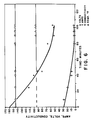
- FIGURE 6 is a graph of electrical properties versus time for an electrodialysis unit.
- the present invention is an improved method to control an aqueous salt stream to be treated in an electrodialytic water splitter.
- the present invention is an improved method to convert salt into acid and base using a combination of an electrodialytic water splitter and an electrodialysis unit.
- the function of the electrodialysis unit is to remove excess water from the overall process and to recover and return the salt to the water splitter for further conversion.
- a salt feed stream fed to the electrodialytic water splitter is controlled by combining a raw salt feed stream with an electrodialytic product salt stream from the concentration compartment of the electrodialysis unit.
- the salt feed stream concentration and optionally the pH are controlled.
- the process can be controlled to operate more efficiently and to extend membrane life in the electrodialysis unit.
- the water splitter employed in performing the electrodialytic water splitting step of the process of the present invention is a three-compartment electrodialytic water splitter.
- a three-compartment electrodialytic water splitter comprises at least one unit cell, each unit cell comprising cation membranes, means for water splitting, and anion membranes arranged in alternating fashion to define base, acid, and salt compartments.
- the means for splitting water into hydrogen and hydroxyl ions is a bipolar membrane.
- the bipolar membrane comprises a cation layer and an anion layer.
- the cation layer permits the cations to pass through, and the anion layer permits anions to pass through.
- the cation layer is a barrier to anions and the anion layer is a barrier to cations.
- Examples of bipolar membranes which are particularly useful include those described in U.S. Pat. No. 2,829,095 to Oda et al. (which has reference to water splitting generally), in U.S. Pat. No. 4,024,043 (which describes a single film bipolar membrane), and in U.S.
- Pat. No. 4,116,889 (which describes a cast bipolar membrane and is most preferred).
- any means capable of splitting water into hydrogen and hydroxyl ions may be used; for example, spaced apart anion and cation membranes having water disposed therebetween.
- the cation membranes are designed to permit hydrogen ions and metal ions (M+) to pass while preventing the passing of anions (X ⁇ ).
- the cation membranes employed in the electrodialytic water splitter may be moderately acidic (e.g. phosphonic group-containing) or strongly acidic (e.g. sulfonic group-containing) cation membranes having a low resistance at the pH at which they are employed.
- Particularly useful cation membranes are Dupont's Nafion® 110 and 324 cation membranes. More preferably, the cation membranes are of the composition and construction as disclosed in U.S Pat. No. 4,738,764 to Chlanda et al., commonly assigned.
- the anion membranes are designed to permit the passage of anions having a charge of n ⁇ , where n is an integer, to pass while preventing the passage of cations.
- the anion membranes used in the electrodialytic water splitter are strongly, mildly, or weakly basic anion membranes. Usable membranes are, for example, commercially available from Ionics, Inc., Watertown, Mass. (sold as Ionics 204-UZL-386 anion membrane), or from Asahi Glass Co. (sold under the trade name Selemion® AMV or ASV anion permselective membranes).
- FIGURE 1 schematically illustrates a typical design of a three-compartment electrodialytic water splitter employed to recover and regenerate acid and base from salt solutions.
- the three-compartment electrodialytic water splitter comprises, in series, an anode 100 (e.g. a platinum anode), and anolyte compartment, alternating base B, acid A, and salt S compartments, a catholyte compartment, and a cathode 200 (e.g. a platinum cathode).
- anode 100 e.g. a platinum anode
- anolyte compartment alternating base B, acid A, and salt S compartments
- a catholyte compartment e.g. a platinum cathode
- the base, acid and salt compartments of the three-compartment water splitter illustrated in FIGURE 1 are defined by a plurality of serially arranged membranes as follows: a cation membrane 11a, a bipolar membrane 11b, anion membrane 11c, and a cation membrane 11a'.
- FIGURE 1 shows four serially arranged membranes
- the three-compartment electrodialytic water splitters are defined by a plurality of unit cells, each unit cell UC comprising an anion membrane, a cation membrane and a bipolar membrane (or equivalent structures capable of splitting water into hydrogen and hydroxyl ions).
- the anolyte and catholyte compartments can contain a salt, base or acid solution (e.g. KOH or dilute salt), the acid A and base B compartments can initially contain a liquid comprising water, added via 13 and 17, respectively, salt S compartment can initially contain a salt solution, typically comprising a fluoride salt MF and/or a salt MX of a different (second) anion (e.g. KF and/or KNO3), added via line 10.
- a salt, base or acid solution e.g. KOH or dilute salt
- the acid A and base B compartments can initially contain a liquid comprising water, added via 13 and 17, respectively
- salt S compartment can initially contain a salt solution, typically comprising a fluoride salt MF and/or a salt MX of a different (second) anion (e.g. KF and/or KNO3), added via line 10.
- Splitting of the salt into acid and base commences by applying a direct current through the water splitter 10 from the anode
- H+ hydrogen ions
- anions designated X- in the drawings
- the reaction of the hydrogen ions with the anions yields an acid product HX.
- X- refers not only to monovalent anions but also to divalent anions, such as sulfates, and trivalent anions, such as phosphates, and mixtures thereof.
- Cations in the salt compartment S simultaneously pass through the cation membrane 11a' to the catholyte and from the anolyte to the base B compartment.
- cations (M+) migrating through the cation membrane 11a react with the hydroxyl ions (OH-) generated by the bipolar membrane 11b' to produce a basified solution.
- metal ions are added to the catholyte compartment from the salt S compartment. Accordingly, the anolyte and catholyte solutions are typically continuously recirculated from the anolyte compartment to the catholyte compartment and back (or the reverse) to maintain a substantially constant concentration of acid (or salt) in each compartment.
- the electrodialytic water splitter can be operated in a batch mode, a continuous mode, or variations thereof.
- Product solutions or portions thereof e.g. when using a feed and bleed apportionment operation
- Product solutions or portions thereof optionally can be recycled for further concentration.
- mechanisms for serial feed through similar compartments may be employed.
- the acid product from compartment A is removed via 15
- the base product from base compartment B is removed via 18
- the depleted salt solution from compartment S is removed via 12.
- the electrodialytic water splitter is ordinarily supplied with a direct current ranging from about 30 amps/ft2 ( ⁇ 300 A/m2) to about 200 amps/ft2 ( ⁇ 2000 A/m2), preferably from about 80 A/ft2 ( ⁇ 800 A/m2) to about 120 A/ft2 ( ⁇ 1200 A/m2) amps.
- the water splitter normally operates at a temperature of between about 10°C and about 80°C, with a temperature range of between about 30°C and 55°C being preferred.
- the preferred apparatus employed in performing the electrodialysis step of the process of the present invention is known in the art and is schematically illustrated in FIGURE 2.
- the electrodialysis apparatus includes at least one unit cell.
- two unit cells are illustrated, each comprising a cation exchange membrane and an anion exchange membrane (22a, 22b, and 22a', 22b', respectively).
- the unit cells are arranged to define alternating dilute compartment D and concentration compartment C.
- the cation exchange membranes employed in the electrodialysis apparatus of the present invention may be moderately acidic (e.g. phosphonic group-containing) or strongly acidic (e.g. sulfonic group-containing) cation permselective membranes or acidic fluorocarbon cation permselective membranes.
- the cation membranes are of the composition and construction disclosed in U.S. Pat. No. 4,738,764 to Chlanda et al., and commonly assigned.
- cation membranes made by Asahi Glass, Tokuyama Soda, as well as Dupont's Nafion® acidic fluorocarbon membranes, such as Nafion® 110, 901, and 324 cation membranes.
- the anion membranes used in the electrodialysis apparatus of the present invention are strongly, mildly or weakly basic anion permselective membranes.
- Useful membranes are, for example, Toyo Soda's DF43 or Asahi Glass Company's anion permselective membranes sold under the trade name Selemion AMR, ASV or, membranes made by Tokuyama Soda and sold under the trade name AM1, AM2, ACH 45T.
- the anion permselective membranes used in the present invention are the Asahi Glass AMV membranes.
- an aqueous solution preferably contains an electrolyte.
- an alkali solution such as a 2 Molar KOH is used in the electrode rinse (ER) compartment.
- the dilute salt solution from the water splitter is supplied via 23a to the concentration compartment C and optionally to diluting compartment D.
- An aqueous stream, preferably a mildly acidic dilute salt solution is fed to diluting compartment D.
- Direct current is then passed from the anode 300 to the cathode 400 causing hydrogen ions from diluting compartment D, and metal ions from compartment D and the electrode rinse ER to migrate toward the cathode.
- anions of the acid and salt migrate toward the anode 300, passing through the anion permselective membranes.
- salt and acid are formed and in the diluting compartment D a salt and acid depleted salt solution remains.
- the product produced in the concentration compartment C generally contain at least about 0.5N concentration of salt and 0.01N concentration of acid.
- the reaction product including salt and acid from the concentration compartments C is then withdrawn via 24 and is recycled to the salt compartment of the water splitter as described below.
- FIGURE 3 illustrates a prior art method to convert a salt stream feed to acid and base using an electrodialytic water splitter 33 coupled with electrodialysis unit 48.
- This approach is disclosed, for example, in U.S. Patent No. 4,740,281.
- a raw salt stream which is preferably filtered is fed via line 31 to filtrate tank 35.
- the raw salt stream from tank 35 is fed to the concentration compartment C of elejctrodialysis unit 48.
- An electrodialysis product solution is removed from concentration compartment C via electrodialysis product stream line 62.
- an aqueous solution such as water, and preferably a weak salt is supplied to base compartment B via base feed stream line 41.
- Water or a dilute acid solution is added to acid compartment A via acid feed stream line 43.
- a concentrated salt solution is fed to salt compartment S of water splitter 33.
- Acid and base are generated in acid and base compartments A and B, respectively, and are removed via acid and base stream lines 32 and 34.
- Depleted or dilute salt solution from salt compartment S is removed via dilute salt stream line 45.
- the diluted salt solution is supplied to the diluting compartment D of the electrodialysis unit 48.
- dilute salt holding tank 46 to which dilute salt stream is supplied via line 45.
- cations from the salt and hydrogen ions are transported to the concentration compartment C when current is supplied across the electrodes.
- Depleted salt stream is then withdrawn via line 59 and removed via line 63 and/or fed to the acid compartment A of water splitter 33 via line 59'.
- the present invention is an improved method to control the raw salt stream to be treated in an electrodialytic water splitter.
- the present invention overcomes electrodialytic unit membrane fouling problems and improves overall current efficiency.
- the present invention is schematically illustrated in FIGURE 4.
- a raw salt stream is fed to the salt compartment S of the three-compartment water splitter 33.
- the raw salt stream is optionally and preferably filtered by a suitable filter means (not shown).
- the filtered raw salt stream is fed via line 31 to filtrate tank 35 which is optional.
- a filtered raw feed stream is supplied from the filtrate tank 35 to the salt compartment S via raw salt stream line 37.
- an aqueous solution such as water, and preferably a weak salt is supplied to base compartment B via base feed stream line 41.
- Water or a dilute acid solution is added to acid compartment A via acid feed stream line 43.
- acid and base are generated in the water splitter from the salt in salt feed stream 37'.
- Solutions of acid and base are generated in acid and base compartments A and B, respectively, and are removed via acid and base stream lines 32 and 34.
- Depleted or dilute salt solution from salt compartment S is removed via dilute salt stream line 45.
- the diluted salt solution is supplied to the electrodialysis unit 48.
- a portion of the dilute salt stream 45 can be supplied to base compartment B via line 52.
- the dilute salt solution via dilute salt stream line 45' is supplied to the concentration compartment C of electrodialysis unit 48.
- An aqueous solution preferably an acidic solution is supplied to the dilution compartment D via diluting compartment feed stream line 57.
- the diluting compartment D feed stream is supplied with a dilute salt stream 45''.
- the dilute salt stream 45'' is preferably slightly acidic.
- the product of the diluting compartment D substantially water, is removed from the electrodialysis unit 48 via dilution compartment removal line 59 for reuse. It can optionally be used to feed acid compartment A of water splitter 33.
- the product of the concentration compartment C is an electrodialysis product stream which is a salt solution.
- the product from the concentration compartment C is supplied from the C via electrodialysis product stream 60 and combined with salt feed stream 37 through combining means (61) such as a combining tank.
- combining means (61) such as a combining tank.
- the resulting combined salt feed stream which is fed via line 37' to salt compartment S of the water splitter.
- the electrodialysis unit is used to control the concentration of the salt in the electrodialysis product stream (line 60). This product stream via line 60 is then combined with raw salt feed stream from line 37. The concentration of the combined raw feed stream being fed via line 37' to the salt compartment S of water splitter 33 is controlled by controllably combining the electrodialysis product stream (line 60) and the raw salt stream (line 37). The pH of the salt feed stream 60 can also be controlled.
- the salt concentration in the electrodialytic product stream (line 60) is maintained below the salt concentration of the raw salt stream (line 37).
- the salt concentration in feed stream 60 can thereby be controlled by a dilute salt stream (i.e. line 45).
- the ability to dilute the raw salt stream (line 37) can be used to control concentration and lengthen membrane life.
- the use of the electrodialysis unit 48 where dilute salt stream 45 is fed to the concentration compartment C enables the flow rates to be varied. Operation at higher flow rates with more dilute solutions also helps to increase efficiency and prevent fouling of the membranes in electrodialysis unit 48.
- the salt concentration of the product stream (in line 60) is preferably from 0.01 to 4.0N, more preferably from 0.4N to 0.25N, and most preferably from 0.4N to 0.8N and the salt concentration of the raw salt stream is up to below saturation and preferably from 0.5N to 5N provided that the salt concentration of the product stream is lower than the salt concentration of the raw salt stream.
- the electrodialysis product stream 60 can be acidic, neutral or basic.
- the amount of product combined with the raw salt stream 37 can be used to control the pH of the combined feed stream 37' to the salt compartment S.
- the pH of the aqueous feed stream (line 37') is controlled by controlling the flow rates of the product stream (line 60) and the raw salt stream (line 37).
- the pH of the feed stream is maintained below 7.
- the pH of the feed stream can alternatively be controlled by the relative production of acid and base in water splitter 33.
- FIGURE 5 illustrates a preferred embodiment of the present invention. Elements common to FIGURE 4 have the same reference characters. Reference is made to the above description with regard to FIGURE 4.
- FIGURE 5 schematically illustrates a process for regenerating acids from spent stainless steel pickling baths comprising nitric acid and hydrofluoric acid.
- spent stainless steel pickling liquor raw salt solution
- a precipitation chamber 106 which is initially supplied with a basified solution (e.g. KOH, NaOH, NH4OH, or mixtures thereof, preferably an alkali metal hydroxide, and most preferably KOH) through line 10.
- the precipitator 106 can optionally be supplied initially with a basic solution via 107 which reacts with the salt solution to remove heavy metals which are present in the salt solution.
- the basified solution will react to form hydroxides thereof which will precipitate out of solution.
- the resulting product (for example, a suspension) is then fed through line 111 to a filtration unit 112 (e.g. a plate and frame, filter press).
- a filtration unit 112 e.g. a plate and frame, filter press.
- the precipitate is filtered from the resulting product.
- the precipitate can be washed, for example, with water and/or with an aqueous depleted salt solution supplied via line 113 from wash tank 114.
- the precipitate is then withdrawn via dine 115 and can either be reused or disposed of.
- the aqueous filtrate of soluble salt is then fed via line 116 to the salt compartments of the three-compartment electrodialytic water splitter 33.
- the filtrate is removed via 116 and supplied to a filtrate tank 35.
- the filtrate from tank 35 is then supplied via line 37 to the salt compartment S of a three-compartment electrodialytic water splitter 33.
- a liquid comprising water or dilute acid is initially fed to the acid compartment A via line 43.
- a liquid comprising water and/or an aqueous salt solution is supplied to the base compartment B in base feed stream via line 41.
- the operation of a three-compartment electrodialytic water splitter is as described with respect to FIGURE 1 above, with an acid product stream being withdrawn via line 34 and a base product stream being withdrawn via line 32.
- Depleted salt solution in salt compartment S is removed in a dilute salt stream via line 45 and at least a portion thereof is supplied to the concentration compartment C of electrodialysis unit 48.
- the operation of unit 48 is described above with reference to FIGURE 3.
- the dilute salt stream 45 is first fed to a dilute salt holding tank 46.
- a dilute salt stream via 45' is fed from dilute salt tank 46 to electrodialysis unit 48.
- the dilute salt solution via dilute salt stream line 45' is supplied to the concentration compartment C of electrodialysis unit 48.
- An aqueous solution preferably an acidic solution can be supplied to the dilution compartment D via dilution compartment feed stream line 57.
- the dilution compartment feed stream is supplied with a dilute salt stream 45''.
- the dilute salt stream 45'' is preferably slightly acidic.
- the solution from the diluting comparment D of the electrodialysis unit 48, substantially only water, is removed via 59. A portion of the solution can be supplied via 59 to the acid compartment A of the three-compartment electrodialytic water splitter, with the remainder being supplied via 130 to a tank 114 which supplies wash solutions via 113 to the filter unit 112.
- the dilute salt stream in line 45 can be controlled to be acidic, basic, or neutral.
- An acidic solution is preferred.
- the depleted salt solution from line 45 can be split into two streams. A portion of the aqueous depleted salt can be recycled via line 45 to dilute salt tank 46 and then through line 45' to electrodialysis unit 48 while another portion can optionally be supplied to the base compartment B via line 52.
- the electrodialysis product stream which is concentrated salt stream is withdrawn via line 60 from concentration compartment C of electrodialysis unit 48.
- the stream in line 60 is combined with raw salt stream from line 37 through combining means (61) such as a combining tank to more efficiently control the operation of the water splitter 33.
- combining means (61) such as a combining tank to more efficiently control the operation of the water splitter 33.
- the use of the electrodialysis unit 48, with a controlled dilute salt stream feed via line 45' enables it to operate more efficiently with less membrane fouling.
- the base generated in the base compartment B is removed via 32 and supplied to a base holding tank 108. If necessary, additional, or make up base may be added to the base tank 108 via line 109 to insure proper concentration of base for supply to the precipitation 106. Acid generated in the acid compartment A is removed via line 34.
- the process of the present invention is capable of processing raw salt streams having a wide concentration of a variety of salts, mixtures of acids and salts, or mixtures of bases and salts.
- the salts can include inorganic and organic salts. Salts which can be treated include but are not limited to those having cations which include mono, di and trivalent metallic and non-metallic cation including ammonium.
- the anions include monovalent anions' such as halides, divalent anions such as sulfates, trivalent anions such as phosphates and mixtures thereof.
- Typical salts include inorganic and organic salts, which are water soluble and can form soluble bases and acids. Examples include but are not limited to NaCl, NaNO3, NH4Cl, NH4OAc, Na2SO4, NH4NO3, Na3PO4, KNO3, KF and mixtures thereof.
- Typical acid salt combinations which can be treated include HCl/NaCl, acetic acid/NaOAc, HCl/NH4Cl, Na2SO4/H2SO4, NaNO3/HNO3, NH4NO3/NHO3, Na3PO4/H3PO4, or HF/KF.
- Mixtures of acids may also be treated with respect to cationic impurities, e.g. HF/NO3/Ni(NO3)2 can be processed to give purified HF/HNO3.
- Typical base and salt combinations which can be treated include NaOH/NaCl, NaOH/NaOAc, NH4OH/NH4Cl, NaOH/NaNO3, NH4OH/NH4NO3, and Na3PO4/NaOH.
- the present invention is particularly useful for solutions containing sulfate, halide, nitrate salts or mixtures thereof.
- the salt concentration of the raw salt feed in line 37 is at least about 0.4 molar, and preferably at least about 1 molar. While the raw salt stream can be acidic, basic or neutral, the raw salt stream from a process such as a pickling process has been found to be basic, having a pH from 8-11.
- the concentration of salt in the product stream from unit 48, line 60 from the concentration compartment C of electrodialysis unit 48 is less than that of the raw salt stream (line 37), and preferably has a pH of less than 7 where the raw salt stream is basic.
- the free acid content of the product stream 60 to treat a pickling process raw salt stream is preferably at least 0.1 molar and preferably from 0.05 to 0.2 molar.
- the coupled use of the electrodialysis water splitter 33 and the electrodialytic unit 48 with dilute salt stream 45' fed to the concentration compartment C has several advantages. Initially, the whole system can be controlled more efficiently without having to add any additional water to water splitter 33 or electrodialysis unit 48 to attain the control of the present invention.
- the feed of the dilute salt (line 45') to the concentration compartment C preferably a slightly acid feed, enables unit 48 to operate more efficiently, to have longer membrane life and greater membrane stability. Additionally, the more dilute feed stream (37' ) to the water splitter and the lower pH enables the electrodialysis unit to operate at higher flow rates which helps keep membranes clean.
- the concentration of the salt transported in the electrodialysis unit from D to C compartments is C T .
- C T is the weight percent of salt transported from dilute compartment D to concentration compartment C.
- a key function of the electrodialysis unit is to maximize water recovery for a given flow rate. There is greater water recovery from D when the C T is higher.
- the C T is maximized by operating with the salt concentration in the concentration compartment C as low as possible.
- a commercial plant was set up with the water splitter and electrodialysis unit operating in accordance with FIGURE 3. 160 cell pairs with a 0.37 m2 (4 square foot) effective area each were installed in the electrodialysis unit.
- the cation membranes were made by Aquatech Systems according to U.S. Patent No. 4,738,764 and the anion membranes were AMV, supplied by Asahi Glass.
- Solutions were recirculated in the dilution compartment D and concentration compartment C at a linear velocity of 4 cm per second and a direct current from a 175V, 160A power supply.
- the diluting compartment D was operated in a batch mode with an initial salt conductivity of a 30 mS/cm (millisiemen/centimeter).
- the concentration compartment was fed continuously with a feed salt solution at a conductivity of 120 mS/cm and a pH of 10.5.
- the measured C T was 1.36N or approximately 7.8% KF. After 80 days of operation the cell stack performance had deteriorated significantly.
- the batch time to go from 30 mS/cm to 5 mS/cm had increased from 85 minutes to 120 minutes, indicating poor current throughput at the set voltage limit. This was indicated by the fact that the maximum current-voltage data was as follows @ 37.5 mS/cm, 110°F, 154V, maximum current was 100A. By comparison, the maximum current at the same conditions on day 0 was over 160A.
- the cell was thereafter disassembled and the membranes examined.
- the anion membranes were fouled with precipitate.
- the precipitate was characterized to be K x Na y M z F6 where M was Fe, Cr or Ni and x,y,z were 0, 1, 2 or 3.
- the anion membranes were also suspected to be porous or leaky.
- the process of the present invention according to FIGURE 4 was installed in the process shown in FIGURE 5.
- the concentration loop of the electrodialysis unit was directly coupled to the salt loop of the water splitter as set forth in the description above.
- the water splitter was set to generate a solution of 1.6N KOH and 3.0-3.2 N acid. The concentrations were such that excess acid leaked into the salt loop to maintain its pH at 5.5.
- a new electrodialysis cell stack similar to that in Comparative Example 1 was installed.
- the performance of the unit was as follows: Batch time - 82 minutes Dilute conductivity range from 48 mS/cm down to 10 mS/cm Temperature (100°F) 38°C Measured C T 1.62N (about 9.4 wt. % KF) The cell was subsequently operated for 300 days under steady performance conditions. Batch times have remained stable at 82-85 minutes. Performance of the plant is excellent.
- the combined feed stream 37' is at a concentration of from 0.5 to 5N salt.
- the dilute salt stream 45 is at a concentration of from 0.4 to 0.8N salt, with the salt concentration of stream 37 being greater than the concentration in stream 60.
- the solubility of residual metals in the feed is thereby increased so that precipitation on the membrane (i.e. fouling) is minimized.
Landscapes
- Chemical & Material Sciences (AREA)
- Engineering & Computer Science (AREA)
- Chemical Kinetics & Catalysis (AREA)
- Water Supply & Treatment (AREA)
- Metallurgy (AREA)
- Mechanical Engineering (AREA)
- Materials Engineering (AREA)
- Organic Chemistry (AREA)
- Health & Medical Sciences (AREA)
- Urology & Nephrology (AREA)
- General Chemical & Material Sciences (AREA)
- Separation Using Semi-Permeable Membranes (AREA)
- Water Treatment By Electricity Or Magnetism (AREA)
Claims (5)
- Verfahren zum Betreiben einer elektrodialytischen Wasserzersetzungsvorrichtung (33) mit Säure (A)-, Salz (S)- und Base (B)-Abteilen durch Einspeisung eines Rohsalzstromes (31, 37) in das Salzabteil und Gewinnung eines Basenstromes (32) und eines Säurestromes (34) aus den betreffenden Base- und Säureabteilen und Einspeisen eines verdünnten Salzstromes (45) aus dem Salzabteil (S) in das Konzentrierungsabteil einer Elektrodialyseeinheit (48) mit einem Konzentrierungsabteil (C) und einem Verdünnungsabteil (D), dadurch gekennzeichnet, daß ein konzentrierter Salzstrom (60) aus dem Konzentrierungsabteil (C) mit einer Salzkonzentration unterhalb der Salzkonzentration des Rohsalzstromes (37) in eine Salzstromvereinigungseinrichtung (61) eingespeist wird, in welche auch der Rohsalzstrom (31, 37) eingeführt wird, und die Salzkonzentration in dem Beschickungsstrom (37') zu dem Salzabteil (S) unter jener in dem Rohsalzstrom (37) gehalten wird, indem der Fluß von dem Rohsalzstrom (31, 37) und der konzentrierte Salzstrom (60) durch die Salzstromvereinigungseinrichtung (61) dosiert werden.
- Verfahren nach Anspruch 1, dadurch gekennzeichnet, daß der pH-Wert des Beschickungsstromes (37') durch die relative Erzeugung von Säure und Base in der Wasserzersetzungsvorrichtung (33) gesteuert wird.
- Verfahren nach Anspruch 2, dadurch gekennzeichnet, daß der pH-Wert in dem Beschickungsstrom (37') durch Abgleich der Säure- und Basekonzentrationen in der Wasserzersetzungsvorrichtung (33) derart gesteuert wird, daß es keine Nettoleckage von Säure zu der Salzschleife gibt.
- Verfahren nach Anspruch 1, dadurch gekennzeichnet, daß der pH-Wert des Beschickungsstromes (37') durch Vereinigung des Salzbeschickungsstromes (37') mit einem Strom gesteuert wird, der aus dem Säurestrom (34), dem Basestrom (32) und dem verdünnten Salzstrom (45) ausgewählt wird.
- Verfahren nach Anspruch 1, dadurch gekennzeichnet, daß ein Teil des verdünnten Salzstromes (45) in das Verdünnungsabteil (D) der Elektrodialyseeinheit (48) eingespeist wird.
Applications Claiming Priority (3)
| Application Number | Priority Date | Filing Date | Title |
|---|---|---|---|
| US07/335,171 US4995956A (en) | 1989-04-06 | 1989-04-06 | Method and apparatus to control a salt stream to be treated in an electrodialytic water splitter |
| US335171 | 1989-04-06 | ||
| PCT/US1990/001780 WO1990011819A1 (en) | 1989-04-06 | 1990-04-03 | Method and apparatus to control a salt stream to be treated in an electrodialytic water splitter |
Publications (2)
| Publication Number | Publication Date |
|---|---|
| EP0466775A1 EP0466775A1 (de) | 1992-01-22 |
| EP0466775B1 true EP0466775B1 (de) | 1995-10-25 |
Family
ID=23310593
Family Applications (1)
| Application Number | Title | Priority Date | Filing Date |
|---|---|---|---|
| EP90905973A Expired - Lifetime EP0466775B1 (de) | 1989-04-06 | 1990-04-03 | Verfahren zur steuerung eines in einem elektrodialytischen wasserzersetzer zu behandelnden salzstromes |
Country Status (7)
| Country | Link |
|---|---|
| US (1) | US4995956A (de) |
| EP (1) | EP0466775B1 (de) |
| AT (1) | ATE129429T1 (de) |
| AU (1) | AU633075B2 (de) |
| CA (1) | CA2051664A1 (de) |
| DE (1) | DE69023233T2 (de) |
| WO (1) | WO1990011819A1 (de) |
Cited By (1)
| Publication number | Priority date | Publication date | Assignee | Title |
|---|---|---|---|---|
| WO2025109132A1 (en) * | 2023-11-24 | 2025-05-30 | Basf Se | Method for splitting salts and electrodialysis cell |
Families Citing this family (22)
| Publication number | Priority date | Publication date | Assignee | Title |
|---|---|---|---|---|
| US4995956A (en) * | 1989-04-06 | 1991-02-26 | Allied-Signal Inc. | Method and apparatus to control a salt stream to be treated in an electrodialytic water splitter |
| US5248397A (en) * | 1990-02-06 | 1993-09-28 | Olin Corporation | Chlorine dioxide generation from chloric acid - alkali metal chlorate mixtures |
| US5352345A (en) * | 1991-05-07 | 1994-10-04 | Alliedsignal Inc. | Ion exchange resin regenerant waste recovery and recycling via bipolar membranes |
| FR2720061B1 (fr) * | 1994-05-20 | 1996-08-02 | Rhone Poulenc Chimie | Procédé de valorisation d'un effluent liquide acide contenant des métaux lourds. |
| US5716512A (en) * | 1995-05-10 | 1998-02-10 | Vaughan; Daniel J. | Method for manufacturing salts of metals |
| JPH10291808A (ja) * | 1997-04-16 | 1998-11-04 | Permelec Electrode Ltd | 過酸化水素水の製造方法及び装置 |
| US9908788B1 (en) | 2001-09-26 | 2018-03-06 | Wrt International Llc | Radium removal from aqueous media using zeolite materials |
| US7476311B2 (en) * | 2001-09-26 | 2009-01-13 | Wrt International Llc | Arsenic removal from aqueous media using chemically treated zeolite materials |
| US7108784B1 (en) * | 2001-09-26 | 2006-09-19 | Wrt International Llc | Apparatus for removal and destruction of ammonia from an aqueous medium |
| US7105087B2 (en) * | 2002-09-17 | 2006-09-12 | Wrt International Llc | Hexa-valent chromium removal from aqueous media using ferrous-form zeolite materials |
| US7390414B2 (en) * | 2002-09-25 | 2008-06-24 | Wrt International Llc | Regeneration of chemically treated zeolite |
| US7371229B2 (en) * | 2003-01-28 | 2008-05-13 | Felix Theeuwes | Dual electrode advanced electrochemical delivery system |
| US7326347B2 (en) * | 2003-10-29 | 2008-02-05 | Wrt International Llc | Dynamic up-flow zeolite system and method |
| US6998054B2 (en) * | 2003-12-31 | 2006-02-14 | The Boc Group, Inc. | Selective fluoride and ammonia removal by chromatographic separation of wastewater |
| US20070215552A1 (en) * | 2005-09-16 | 2007-09-20 | Wrt International Llc. | Systems and methods for removal of contaminates from an aqueous media in the absence of modified nitrate levels |
| US7520987B1 (en) | 2005-11-15 | 2009-04-21 | Wrt International Llc | System and apparatus for purging absorptive materials used in the removal of contaminates from an aqueous medium |
| US8663479B2 (en) * | 2006-11-20 | 2014-03-04 | Wrt International Llc | Method for removing cationic contaminants from water using natural zeolite underloaded with transition metal ions to limit leakage of intrinsic arsenic therefrom |
| US8535502B2 (en) * | 2008-09-08 | 2013-09-17 | Palo Alto Research Center Incorporated | System and method for recovery of CO2 by aqueous carbonate flue gas capture and high efficiency bipolar membrane electrodialysis |
| JP6139240B2 (ja) * | 2013-04-19 | 2017-05-31 | 株式会社東芝 | 洗浄用酸の再生方法及びその装置 |
| CN116669834A (zh) * | 2020-11-09 | 2023-08-29 | 加州理工学院 | 电渗析器和用于从海水中捕获co2的电渗析系统 |
| JP2024545332A (ja) * | 2021-12-22 | 2024-12-05 | ザ・リサーチ・ファウンデーション・フォー・ザ・ステイト・ユニヴァーシティ・オブ・ニューヨーク | 電気化学的海洋アルカリ度向上のためのシステム及び方法 |
| CN114409032B (zh) * | 2022-02-18 | 2023-11-03 | 自然资源部天津海水淡化与综合利用研究所 | 一种高盐污水预处理系统 |
Family Cites Families (10)
| Publication number | Priority date | Publication date | Assignee | Title |
|---|---|---|---|---|
| US4082835A (en) * | 1975-06-27 | 1978-04-04 | Allied Chemical Corporation | Removal of SO2 from gases |
| US4107015A (en) * | 1977-07-18 | 1978-08-15 | Allied Chemical Corporation | Method for removal of SO2 from gases |
| US4253928A (en) * | 1979-10-04 | 1981-03-03 | Shell Oil Company | Process for sour water treatment |
| US4775480A (en) * | 1983-10-18 | 1988-10-04 | Gnb Incorporated | Membrane processes for treatment of and recovery of components from kraft black liquors |
| EP0220202B1 (de) * | 1985-05-03 | 1990-04-11 | AlliedSignal Inc. | Gewinnung gemischter säuren aus gemischtem salz |
| GB2185248B (en) * | 1986-01-09 | 1989-10-25 | Allied Corp | Recovery of titanium dioxide from ilmenite-type ores |
| US4738764A (en) * | 1986-06-02 | 1988-04-19 | Allied Corporation | Electrodialysis membranes comprising sulfonated constituents |
| US4880513A (en) * | 1986-06-20 | 1989-11-14 | The Graver Company | Method and apparatus for generating acid and base regenerants and the use thereof to regenerate ion-exchange resins |
| US4740281A (en) * | 1986-10-14 | 1988-04-26 | Allied Corporation | Recovery of acids from materials comprising acid and salt |
| US4995956A (en) * | 1989-04-06 | 1991-02-26 | Allied-Signal Inc. | Method and apparatus to control a salt stream to be treated in an electrodialytic water splitter |
-
1989
- 1989-04-06 US US07/335,171 patent/US4995956A/en not_active Expired - Fee Related
-
1990
- 1990-04-03 DE DE69023233T patent/DE69023233T2/de not_active Expired - Fee Related
- 1990-04-03 AT AT90905973T patent/ATE129429T1/de not_active IP Right Cessation
- 1990-04-03 EP EP90905973A patent/EP0466775B1/de not_active Expired - Lifetime
- 1990-04-03 WO PCT/US1990/001780 patent/WO1990011819A1/en not_active Ceased
- 1990-04-03 CA CA002051664A patent/CA2051664A1/en not_active Abandoned
- 1990-04-03 AU AU54125/90A patent/AU633075B2/en not_active Ceased
Cited By (1)
| Publication number | Priority date | Publication date | Assignee | Title |
|---|---|---|---|---|
| WO2025109132A1 (en) * | 2023-11-24 | 2025-05-30 | Basf Se | Method for splitting salts and electrodialysis cell |
Also Published As
| Publication number | Publication date |
|---|---|
| EP0466775A1 (de) | 1992-01-22 |
| CA2051664A1 (en) | 1990-10-07 |
| AU5412590A (en) | 1990-11-05 |
| WO1990011819A1 (en) | 1990-10-18 |
| DE69023233D1 (de) | 1995-11-30 |
| DE69023233T2 (de) | 1996-04-04 |
| US4995956A (en) | 1991-02-26 |
| AU633075B2 (en) | 1993-01-21 |
| ATE129429T1 (de) | 1995-11-15 |
Similar Documents
| Publication | Publication Date | Title |
|---|---|---|
| US4995956A (en) | Method and apparatus to control a salt stream to be treated in an electrodialytic water splitter | |
| EP0327572B1 (de) | Rückgewinnung von säuren aus säure- und salzhaltigen lösungen | |
| US5162076A (en) | Method for purification of acids from materials comprising acid and salt | |
| US5200046A (en) | Apparatus and method for electrodialytic treatment of salts to produce acid and/or base of improved purity | |
| US4999095A (en) | Recovery of mixed acids from mixed salts | |
| Rao et al. | Electrodialysis in the recovery and reuse of chromium from industrial effluents | |
| US4943360A (en) | Process for recovering nitric acid and hydrofluoric acid from waste pickle liquors | |
| WO1993002227A1 (en) | Process and apparatus for treating fluoride containing acid solutions | |
| US5135626A (en) | Method for purification of bases from materials comprising base and salt | |
| EP0446296B1 (de) | Verfahren zur rückgewinnung von basen aus basen- und salzhaltigen lösungen | |
| EP0220202B1 (de) | Gewinnung gemischter säuren aus gemischtem salz | |
| JPH0533169A (ja) | フツ素及びアンモニア化合物を含むエツチング廃液の処理・回収方法 | |
| US5139632A (en) | Recovery of mixed acids from mixed salts | |
| JP2824537B2 (ja) | ヒドロキシルアミンの製造方法 | |
| EP0572389B1 (de) | Trennung/Rückgewinnung von Ammoniumsalzen mittels elektrodialytischer Wasserspaltung | |
| JP3637458B2 (ja) | アンモニア性窒素の除去方法 | |
| JPH06312120A (ja) | 酸の回収方法 | |
| JPH0829225B2 (ja) | 硝酸塩のアルカリ性廃液の再生回収処理方法 | |
| AU7318991A (en) | Separation/recovery of ammonium salts via electrodialytic water splitting |
Legal Events
| Date | Code | Title | Description |
|---|---|---|---|
| PUAI | Public reference made under article 153(3) epc to a published international application that has entered the european phase |
Free format text: ORIGINAL CODE: 0009012 |
|
| 17P | Request for examination filed |
Effective date: 19910917 |
|
| AK | Designated contracting states |
Kind code of ref document: A1 Designated state(s): AT BE CH DE DK ES FR GB IT LI LU NL SE |
|
| 17Q | First examination report despatched |
Effective date: 19921223 |
|
| RAP1 | Party data changed (applicant data changed or rights of an application transferred) |
Owner name: ALLIEDSIGNAL INC. |
|
| RTI1 | Title (correction) | ||
| RAP1 | Party data changed (applicant data changed or rights of an application transferred) |
Owner name: THE GRAVER COMPANY |
|
| GRAA | (expected) grant |
Free format text: ORIGINAL CODE: 0009210 |
|
| AK | Designated contracting states |
Kind code of ref document: B1 Designated state(s): AT BE CH DE DK ES FR GB IT LI LU NL SE |
|
| PG25 | Lapsed in a contracting state [announced via postgrant information from national office to epo] |
Ref country code: IT Free format text: LAPSE BECAUSE OF FAILURE TO SUBMIT A TRANSLATION OF THE DESCRIPTION OR TO PAY THE FEE WITHIN THE PRE;WARNING: LAPSES OF ITALIAN PATENTS WITH EFFECTIVE DATE BEFORE 2007 MAY HAVE OCCURRED AT ANY TIME BEFORE 2007. THE CORRECT EFFECTIVE DATE MAY BE DIFFERENT FROM THE ONE RECORDED.SCRIBED TIME-LIMIT Effective date: 19951025 Ref country code: AT Effective date: 19951025 Ref country code: DK Effective date: 19951025 Ref country code: ES Free format text: THE PATENT HAS BEEN ANNULLED BY A DECISION OF A NATIONAL AUTHORITY Effective date: 19951025 Ref country code: CH Effective date: 19951025 Ref country code: BE Effective date: 19951025 Ref country code: LI Effective date: 19951025 |
|
| REF | Corresponds to: |
Ref document number: 129429 Country of ref document: AT Date of ref document: 19951115 Kind code of ref document: T |
|
| ET | Fr: translation filed | ||
| REF | Corresponds to: |
Ref document number: 69023233 Country of ref document: DE Date of ref document: 19951130 |
|
| PG25 | Lapsed in a contracting state [announced via postgrant information from national office to epo] |
Ref country code: SE Effective date: 19960125 |
|
| PG25 | Lapsed in a contracting state [announced via postgrant information from national office to epo] |
Ref country code: LU Free format text: LAPSE BECAUSE OF NON-PAYMENT OF DUE FEES Effective date: 19960430 |
|
| REG | Reference to a national code |
Ref country code: CH Ref legal event code: PL |
|
| PLBE | No opposition filed within time limit |
Free format text: ORIGINAL CODE: 0009261 |
|
| STAA | Information on the status of an ep patent application or granted ep patent |
Free format text: STATUS: NO OPPOSITION FILED WITHIN TIME LIMIT |
|
| 26N | No opposition filed | ||
| REG | Reference to a national code |
Ref country code: FR Ref legal event code: CD |
|
| PGFP | Annual fee paid to national office [announced via postgrant information from national office to epo] |
Ref country code: FR Payment date: 19990317 Year of fee payment: 10 |
|
| PGFP | Annual fee paid to national office [announced via postgrant information from national office to epo] |
Ref country code: DE Payment date: 19990318 Year of fee payment: 10 Ref country code: GB Payment date: 19990318 Year of fee payment: 10 |
|
| PGFP | Annual fee paid to national office [announced via postgrant information from national office to epo] |
Ref country code: NL Payment date: 19990331 Year of fee payment: 10 |
|
| PG25 | Lapsed in a contracting state [announced via postgrant information from national office to epo] |
Ref country code: GB Free format text: LAPSE BECAUSE OF NON-PAYMENT OF DUE FEES Effective date: 20000403 |
|
| PG25 | Lapsed in a contracting state [announced via postgrant information from national office to epo] |
Ref country code: NL Free format text: LAPSE BECAUSE OF NON-PAYMENT OF DUE FEES Effective date: 20001101 |
|
| GBPC | Gb: european patent ceased through non-payment of renewal fee |
Effective date: 20000403 |
|
| PG25 | Lapsed in a contracting state [announced via postgrant information from national office to epo] |
Ref country code: FR Free format text: LAPSE BECAUSE OF NON-PAYMENT OF DUE FEES Effective date: 20001229 |
|
| NLV4 | Nl: lapsed or anulled due to non-payment of the annual fee |
Effective date: 20001101 |
|
| PG25 | Lapsed in a contracting state [announced via postgrant information from national office to epo] |
Ref country code: DE Free format text: LAPSE BECAUSE OF NON-PAYMENT OF DUE FEES Effective date: 20010201 |
|
| REG | Reference to a national code |
Ref country code: FR Ref legal event code: ST |