EP0468246B1 - Précurseur de plaque d'impression lithographique électrophotographique - Google Patents
Précurseur de plaque d'impression lithographique électrophotographique Download PDFInfo
- Publication number
- EP0468246B1 EP0468246B1 EP91111135A EP91111135A EP0468246B1 EP 0468246 B1 EP0468246 B1 EP 0468246B1 EP 91111135 A EP91111135 A EP 91111135A EP 91111135 A EP91111135 A EP 91111135A EP 0468246 B1 EP0468246 B1 EP 0468246B1
- Authority
- EP
- European Patent Office
- Prior art keywords
- group
- macromonomer
- hydrocarbon group
- printing plate
- binder resin
- Prior art date
- Legal status (The legal status is an assumption and is not a legal conclusion. Google has not performed a legal analysis and makes no representation as to the accuracy of the status listed.)
- Expired - Lifetime
Links
Classifications
-
- G—PHYSICS
- G03—PHOTOGRAPHY; CINEMATOGRAPHY; ANALOGOUS TECHNIQUES USING WAVES OTHER THAN OPTICAL WAVES; ELECTROGRAPHY; HOLOGRAPHY
- G03G—ELECTROGRAPHY; ELECTROPHOTOGRAPHY; MAGNETOGRAPHY
- G03G5/00—Recording-members for original recording by exposure, e.g. to light, to heat or to electrons; Manufacture thereof; Selection of materials therefor
- G03G5/02—Charge-receiving layers
- G03G5/04—Photoconductive layers; Charge-generation layers or charge-transporting layers; Additives therefor; Binders therefor
- G03G5/05—Organic bonding materials; Methods for coating a substrate with a photoconductive layer; Inert supplements for use in photoconductive layers
- G03G5/0528—Macromolecular bonding materials
- G03G5/0589—Macromolecular compounds characterised by specific side-chain substituents or end groups
-
- G—PHYSICS
- G03—PHOTOGRAPHY; CINEMATOGRAPHY; ANALOGOUS TECHNIQUES USING WAVES OTHER THAN OPTICAL WAVES; ELECTROGRAPHY; HOLOGRAPHY
- G03G—ELECTROGRAPHY; ELECTROPHOTOGRAPHY; MAGNETOGRAPHY
- G03G5/00—Recording-members for original recording by exposure, e.g. to light, to heat or to electrons; Manufacture thereof; Selection of materials therefor
- G03G5/02—Charge-receiving layers
- G03G5/04—Photoconductive layers; Charge-generation layers or charge-transporting layers; Additives therefor; Binders therefor
- G03G5/05—Organic bonding materials; Methods for coating a substrate with a photoconductive layer; Inert supplements for use in photoconductive layers
- G03G5/0528—Macromolecular bonding materials
- G03G5/0592—Macromolecular compounds characterised by their structure or by their chemical properties, e.g. block polymers, reticulated polymers, molecular weight, acidity
-
- Y—GENERAL TAGGING OF NEW TECHNOLOGICAL DEVELOPMENTS; GENERAL TAGGING OF CROSS-SECTIONAL TECHNOLOGIES SPANNING OVER SEVERAL SECTIONS OF THE IPC; TECHNICAL SUBJECTS COVERED BY FORMER USPC CROSS-REFERENCE ART COLLECTIONS [XRACs] AND DIGESTS
- Y10—TECHNICAL SUBJECTS COVERED BY FORMER USPC
- Y10S—TECHNICAL SUBJECTS COVERED BY FORMER USPC CROSS-REFERENCE ART COLLECTIONS [XRACs] AND DIGESTS
- Y10S430/00—Radiation imagery chemistry: process, composition, or product thereof
- Y10S430/1053—Imaging affecting physical property or radiation sensitive material, or producing nonplanar or printing surface - process, composition, or product: radiation sensitive composition or product or process of making binder containing
- Y10S430/1055—Radiation sensitive composition or product or process of making
- Y10S430/106—Binder containing
Definitions
- -COO-Z1 may be bonded via a hydrocarbon group as above, and examples of such hydrocarbon groups include a methylene group, an ethylene group, and a propylene group.
- the content of the above described polymerizable component having the polar group contained in the macromonomer (MB) is preferably from 0.5 to 50 parts by weight, and more preferably from 1 to 40 parts by weight per 100 parts by weight of the total polymerizable components.
- the components constituting the B block in the macromonomer (MC) include at least a repeating unit represented by the general formula (IX) described above.
- Preferred examples of the hydrocarbon group represented by R23 include an alkyl group having from 1 to 18 carbon atoms which may be substituted (e.g., methyl, ethyl, propyl, butyl, pentyl, hexyl, heptyl octyl, decyl, dodecyl, hexadecyl, octadecyl, 2-chloroethyl, 2-bromoethyl, 2-cyanoethyl, 2-methoxycarbonylethyl, 2-methoxyethyl, and 3-bromopropyl), an alkenyl group having from 4 to 18 carbon atoms which may be substituted (e.g., 2-methyl-1-propenyl, 2-butenyl, 2-pentenyl, 3-methyl-2-pentenyl, 1-pentenyl, 1-hexenyl, 2-hexenyl,and 4-methyl-2-hexenyl), an aral
- X11 represents -COO-, -OCO-, -CH2OCO-, -CH2COO-, -O-, -CONH-, -SO2HN- or and c11 and c12, which may be the same or different, each represents a hydrogen atom, a methyl group, -COOR24, or -CH2COOR24, wherein R24 represents an alkyl group having from 1 to 6 carbon atoms (e.g., methyl, ethyl, propyl, butyl, and hexyl). Most preferably, either one of c11 and c12 represents a hydrogen atom.
- any components copolymerizable with the repeating units of the general formula (IX) can be used.
- Suitable examples of monomers corresponding to the repeating unit copolymerizable with the polymerizable component represented by the general formula (IX), as a polymerizable component in the B block include acrylonitrile, methacrylonitrile and heterocyclic vinyl compounds (e.g., vinylpyridine, vinylimidazole, vinylpyrrolidone, vinylthiophene, vinylpyrazole, vinyldioxane, and vinyloxazine).
- Such other monomers are employed in a range of not more than 20 parts by weight per 100 parts by weight of the total polymerizable components in the B block.
- the B block does not contain the polymerizable component containing an acidic group which is a component constituting the A block.
- heat- and/or photo-curable functional group means a functional group capable of inducing curing reaction of a resin on application of at least one of heat and light.
- the monofunctional macromonomer which does not contain the polar group- or acidic group-containing component in the main chain used in the present invention can be produced by a conventionally known method such as, for example, a method by an ion polymerization method, wherein a macromonomer is produced by reacting various reagents to the terminal of a living polymer obtained by an anion polymerization or a cation polymerization, a method by a radical polymerization, wherein a macromonomer is produced by reacting various reagents with an oligomer having a reactive group such as a carboxy group, a hydroxy group, or an amino group, at the terminal thereof obtained by a radical polymerization using a polymerization initiator and/or a chain transfer agent each having the reactive group in the molecule, and a method by a polyaddition condensation method of introducing a polymerizable double bond group into an oligomer obtained by a polycondensation reaction or a polyaddition reaction, in
- the macromonomer can be synthesized by a radical polymerization method of forming the macromonomer by reacting an oligomer having a reactive group bonded to the terminal and various reagents.
- the oligomer used above can be obtained by a radical polymerization using a polymerization initiator and/or a chain transfer agent each having a reactive group such as a carboxy group, a carboxy halide group, a hydroxy group, an amino group, a halogen atom, or an epoxy group in the molecule thereof.
- the chain transfer agent which can be used for producing the oligomer includes, for example, mercapto compounds having a substituent capable of being derived into the polar group later (e.g., thioglycolic acid, thiomalic acid, thiosalicylic acid, 2-mercaptopropionic acid, 3-mercaptopropionic acid, 3-mercaptobutyric acid, N-(2-mercaptopropionyl)glycine, 2-mercaptonicotinic acid, 3-[N-(2-mercaptoethyl)carbamoyl]propionic acid, 3-[N-(2-mercaptoethyl)amino]propionic acid, N-(3-mercaptopropionyl)alanine, 2-mercaptoethanesulfonic acid, 3-mercaptopropanesulfonic acid, 4-mercaptobutanesulfonic acid, 2-mercaptoethanol, 3-mercapto-1,2-propanediol, 1-mercapto-2
- the polymerization initiator having a specific reactive group which can be used for the production of the oligomer
- Q2 represents -H or -CH3;
- Q3 represents -H, -CH3, or -CH2COOCH3;
- R41 represents -C n H 2n+1 (wherein n represents an integer of from 1 to 18), -CH2C6H5, (wherein Y1 and Y2 each represents -H, -Cl, -Br, -CH3, -COCH3, or -COOCH3),
- W1 represents -CN, -OCOCH3, -CONH2, or -C6H5;
- W2 represents -Cl, -Br, -CN, or -OCH3;
- ⁇ represents an integer of from 2 to 18;
- ⁇ represents an integer of from 2 to 12; and
- ⁇ represents an integer of from 2 to 4.
- the macromonomer (MC) used in the present invention can be produced by a conventionally known synthesis method. More specifically, it can be produced by a method comprising previously protecting the acidic group of a monomer corresponding to the polymerizable component having the specific acidic group to form a functional group, synthesizing an AB block copolymer by a so-called known living polymerization reaction, for example, an ion polymerization reaction with an organic metal compound (e.g., alkyl lithiums, lithium diisopropylamide, and alkylmagnesium halides) or a hydrogen iodide/iodine system, a photopolymerization reaction using a porphyrin metal complex as a catalyst, or a group transfer polymerization reaction, introducing a polymerizable double bond group into the terminal of the resulting living polymer by a reaction with a various kind of reagents, and then conducting a protection-removing reaction of the functional group which has been formed by protecting the acidic group by
- the graft-type copolymer for use in the present invention may contain other monomer(s) as other copolymerizable component(s) together with the above described monofunctional monomer (A) containing a hydrophilic group-forming functional group and the above described monofunctional macromonomer (M).
- the content of the polymerizable component corresponding to the monomer (A) containing a hydrophilic group-forming functional group is preferably from 30 to 90% by weight, more preferably from 40 to 80% by weight of the total polymerizable components.
- the content of the polymerizable component corresponding to the macromonomer (M) is preferably from 10 to 70% by weight, more preferably 20 to 60% by weight.
- the content of polymerizable components other than those of the monomer (A) and the macromonomer (M) is preferably at most 30% by weight.
- the content of the monomer (A) is less than 30% by weight or the content of the macromonomer (M) is more than 70% by weight, the effect for improving the water retentivity of an offset printing plate prepared from the electrophotographic lithographic printing plate precursor is reduced.
- the content of the monomer (A) is more than 90% by weight or the content of the macromonomer (M) is less than 10% by weight, the effect for improving the water retentivity may not be maintained when a large number of prints have been made.
- Preferred examples of the resins include random copolymers containing a methacrylate as a polymerizable component which are known as binder resins in electrophotographic light-sensitive materials using photoconductive zinc oxide as an inorganic photoconductive substance.
- binder resins are described, for example, in JP-B-50-242, JP-B-50-31011, JP-A-50-98324, JP-A-50-98325, JP-B-54-13977, JP-B-59-35013, JP-A-54-20735, and JP-A-57-202544.
- binder resins composed of a combination of a random copolymer having a weight average molecular weight of not more than 20,000 and comprising a methacrylate monomer and an acidic group-containing monomer with a resin having a weight average molecular weight of not less than 30,000 or a heat- and/or photocurable compound as described, for example, in JP-A-63-220148, JP-A-63-220149, JP-A-2-34860, JP-A-64-564, JP-A-1-100554, JP-A-1-211766, JP-A-2-40660, JP-A-2-53064, JP-A-2-56558, JP-A-1-102573, JP-A-2-69758, JP-A-2-68561, JP-A-2-68562, and JP-A-2-69759 can be used together with the graft-type copolymer.
- binder resins composed of a combination of a polymer having a weight average molecular weight of not more than 20,000, comprising a methacrylate component and having an acidic group at one terminal of the main chain thereof with a resin having a weight average molecular weight of not less than 30,000 or a heat- and/or photo-curable compound as described, for example, in JP-A-1-169455, JP-A-1-116643, JP-A-1-280761, JP-A-1-214865, JP-A-2-874, JP-A-2-34859, JP-A-2-96766, JP-A-2-103056, JP-A-2-167551, JP-A-2-135455, JP-A-2-135456 and JP-A-2-135457 can be used together with the graft-type copolymer.
- the ratio of the graft-type copolymer is preferably from 0.5 to 60% by weight, more preferably from 5 to 50% by weight of the total binder resin used.
- the binder resin is rendered effectively hydrophilic by the oil-desensitizing treatment owing to the concentrative existence of the graft-type copolymer which forms a hydrophilic group upon the oil-desensitization in the surface portion of the photoconductive layer while maintaining the excellent electrophotographic characteristics, and as a result, it is possible to greatly improve the image quality of prints and to prevent background stains.
- Segment A forms a hydrophilic group through decomposition, for example, by the etching treatment or the action of dampening water supplied to the printing plate during printing
- Segment B corresponding to the macromonomer (M) in the graft-type copolymer according to the present invention is relatively oleophilic and strongly interacts with zinc oxide and/or other binder resins present in the photoconductive layer. Therefore, Segment B acts as an anchor to effect the prevention from dissolving out of the graft-type copolymer. Consequently, the hydrophilic property of the non-image areas is maintained even after printing a large number of prints and good printing durability can be achieved.
- various kinds of dyes can be used as spectral sensitizers for the inorganic photoconductive substance, if desired.
- these dyes include carbonium dyes, diphenylmethane dyes, triphenylmethane dyes, xanthene dyes, phthalein dyes, polymethine dyes (e.g., oxonol dyes, merocyanine dyes, cyanine dyes, rhodacyanine dyes, and styryl dyes), and phthalocyanine dyes (which may contain metals) described in Harumi Miyamoto and Hidehiko Takei, Imaging , 1973 , (No. 8), 12, C.J.
- polymethine dyes capable of spectrally sensitizing in the wavelength region of from near infrared to infrared longer than 700 nm are those described, for example, in JP-A-47-840, JP-A-47-44180, JP-B-51-41061 JP-A-49-5034, JP-A-49-45122, JP-A-57-46245, JP-A-56-35141, JP-A-57-157254, JP-A-61-26044, JP-A-61-27551, U.S. Patents 3,619,154 and 4,175,956, and Research Disclosure , 216 , 117 to 118 (1982).
- the photoconductive layers may further contain various additives commonly employed in electrophotographic light-sensitive layer, such as chemical sensitizers.
- additives include electron-acceptive compounds (e.g., halogen, benzoquinone, chloranil, acid anhydrides, and organic carboxylic acids) as described, for example, in Imaging , 1973 , (No. 8), page 12, and polyarylalkane compounds, hindered phenol compounds, and p-phenylenediamine compounds as described in Hiroshi Kokado et al, Recent Photoconductive Materials and Development and Practical Use of Light-sensitive Materials , Chapters 4 to 6, Nippon Kagaku Joho K.K. (1986).
- electron-acceptive compounds e.g., halogen, benzoquinone, chloranil, acid anhydrides, and organic carboxylic acids
- the amount of these additives is usually from 0.0001 to 2.0 parts by weight per 100 parts by weight of the photoconductive substance.
- the thickness of the charge generating layer is from 0.01 ⁇ m to 1 ⁇ m, and preferably from 0.05 ⁇ m to 0.5 ⁇ m.
- Resins which can be used for the charge transporting layer typically include thermoplastic and thermosetting resins such as polystyrene resins, polyester resins, cellulose resins, polyether resins, vinyl chloride resins, vinyl acetate resins, vinyl chloridevinyl acetate copolymer resins, polyacryl resins, polyolefin resins, urethane resins, epoxy resins, melamine resins, and silicone resins.
- thermoplastic and thermosetting resins such as polystyrene resins, polyester resins, cellulose resins, polyether resins, vinyl chloride resins, vinyl acetate resins, vinyl chloridevinyl acetate copolymer resins, polyacryl resins, polyolefin resins, urethane resins, epoxy resins, melamine resins, and silicone resins.
- the photoconductive layer according to the present invention can be provided on a conventional support.
- the support for the electrophotographic light-sensitive material is preferably electroconductive.
- the electroconductive support there are base materials such as metals, paper, and plastic sheets rendered electroconductive by the impregnation of a low resistant substance, the base materials the back surface of which (the surface opposite to the surface of providing a photoconductive layer) is rendered electroconductive and having coated with one or more layer for preventing the occurrence of curling of the support, the above-described support having formed on the surface a water-resistant adhesive layer, the above-described support having formed on the surface at least one precoat, and a support formed by laminating on paper a plastic film rendered electroconductive by vapor depositing thereon aluminum.
- the oil-desensitizing treatment can be carried out by any of (a) a method comprising effecting Reaction A and thereafter Reaction B, (b) a method comprising effecting Reaction B and thereafter Reaction A, and (c) a method comprising effecting simultaneously Reactions A and B.
- the oil-desensitizing treatment i.e., generation of hydrophilic property
- the resin according to the present invention containing the functional groups capable of forming hydrophilic groups through decomposition can be accomplished by a method of treating with a processing solution to hydrolyze or a method of irradiating with light to decompose.
- the specific functional group present in the resin according to the present invention is decomposed upon irradiation by light
- the electrophotographic lithographic printing plate precursor which is excellent in electrostatic characteristics (particularly, dark charge retention property and photosensitivity), is capable of reproducing a faithful duplicated image to the original, forms neither overall background stains nor dotted background stains of prints, and has excellent printing durability can be obtained. Further, the printing plate precursor is suitable for use in a scanning exposure system using a semiconductor laser beam.
- a mixed solution of 95 g of methyl methacrylate, 5 g of thioglycolic acid, and 200 g of toluene was heated to 75°C with stirring under nitrogen gas stream.
- To the mixture was added 1.0 g of 2,2'-azobisisobutyronitrile (hereinafter simply referred to as AIBN) to conduct a reaction for 8 hours.
- To the reaction mixture were then added 8 g of glycidyl methacrylate, 1.0 g of N,N-dimethyldodecylamine, and 0.5 g of tert-butylhydroquinone, followed by stirring at 100°C for 12 hours.
- AIBN 2,2'-azobisisobutyronitrile
- a mixed solution of 94 g of butyl methacrylate, 6 g of 2-meracptoethanol, and 200 g of toluene was heated to 70°C under nitrogen gas stream.
- To the mixture was added 1.2 g of AIBN to conduct a reaction for 8 hours.
- reaction mixture was cooled to 20°C in a water bath, and 1.0 g of triethylamine and 21 g of methacrylic anhydride were added thereto, followed by stirring at that temperature for 1 hour and then at 60°C for 6 hours.
- a mixed solution of 97 g of propyl methacrylate, 3 g of 3-mercaptopropionic acid, and 200 g of toluene was heated to 70°C under nitrogen gas stream to prepare a uniform solution.
- To the solution was added 2.0 g of AIBN to conduct a reaction for 8 hours. After cooling, the reaction mixture was reprecipitated from 2 l of methanol, and the solvent was removed by distillation at 50°C under reduced pressure.
- the resulting viscous substance was dissolved in 200 g of toluene, and to the solution were added 16 g of glycidyl methacrylate, 1.0 g of N,N-dimethyldodecylamine, and 1.0 g of tert-butylhydroquinone, followed by stirring at 110°C for 10 hours.
- the reaction solution was again reprecipitated from 2 l of methanol to obtain Macromonomer (MA-5) having an Mw of 6.5 ⁇ 103 as a light yellow viscous substance.
- a mixed solution of 95 g of benzyl methacrylate, 5 g of thioglycolic acid, and 200 g of toluene was heated to 75°C with stirring under nitrogen gas stream, and 1.5 g of AIBN was added thereto to conduct a reaction for 8 hours. Then, the reaction mixture was cooled to 25°C, and 8 g of 2-hydroxyethyl methacrylate was added thereto.
- DCC dicyclohexylcarbodiimide
- 4-(N,N-dimethylamino)pyridine 50 g was added dropwise thereto with stirring over a period of 30 minutes, followed by reacting for 3 hours.
- To the reaction mixture was added 5 ml of formic acid, the mixture was stirred for one hour, and the insoluble substance was removed by suction filtration using celite.
- the filtrate obtained was reprecipitated from 1.5 l of hexane, and the viscous substance thus-deposited was collected by decantation and dissolved in 200 ml of tetrahydrofuran.
- a mixed solution of 40 g of methyl methacrylate, 54 g of ethyl acrylate, 6 g of 2-mercaptoethylamine, 150 g of toluene, and 50 g of tetrahydrofuran was heated to 75°C with stirring under nitrogen gas stream, and 2.0 g of AIBN was added thereto to conduct a reaction for 8 hours.
- the reaction mixture was cooled to 20°C in a water bath, and 23 g of methacrylic anhydride was added thereto dropwise in such a manner that the temperature did not exceed 25°C, followed by stirring at that temperature for 1 hour.
- a mixed solution of 95 g of methyl methacrylate, 150 g of toluene, and 50 g of ethanol was heated to 75°C under nitrogen gas stream, and 5 g of 4,4'-azobis(4-cyanovaleric acid) (hereinafter simply referred to as ACV) was added thereto to conduct a reaction for 8 hours. Then, 15 g of glycidyl acrylate, 1.0 g of N,N-dimethyldodecylamine, and 1.0 g of 2,2'-methylenebis(6-tert-butyl-p-cresol) were added thereto, followed by stirring at 100°C for 15 hours. After cooling, the reaction mixture was reprecipitated from 2 l of methanol to obtain 83 g of Macromonomer (MA-8) having an Mw of 5.3x10³ as a clear viscous substance.
- MA-8 Macromonomer having an Mw of 5.3x10³ as a clear viscous substance.
- Macromonomers (MA-9) to (MA-18) were prepared in the same manner as in Synthesis Example MA-3, except for replacing methacrylic acid chloride with each of the acid halides shown in Table A-1 below.
- An Mw of each macromonomer was in the range of from 5 ⁇ 103 to 8 ⁇ 103.
- a mixed solution of 90 g of ethyl methacrylate, 10 g of 2-hydroxyethyl methacrylate, 5 g of thioglycolic acid and 200 g of toluene was heated to 75°C with stirring under nitrogen gas stream and, after adding thereto 1.0 g of AIBN, the reaction was carried out for 8 hours. Then, to the reaction mixture were added 8 g of glycidyl methacrylate, 1.0 g of N,N-dimethyldodecylamine and 0.5 g of tert-butylhydroquninone, and the resulting mixture was stirred for 12 hours at 100°C. After cooling, the reaction mixture was reprecipitated from 2 liters of n-hexane to obtain 82 g of the desired macromonomer as a white powder. The weight average molecular weight of the macromonomer obtained was 3.8 ⁇ 103.
- a mixed solution of 90 g of butyl methacrylate, 10 g of methacrylic acid, 4 g of 2-mercaptoethanol, and 200 g of tetrahydrofuran was heated to 70°C under nitrogen gas stream and, after adding thereto 1.2 g of AIBN, the reaction was carried out for 8 hours.
- the mixture was washed twice with water and, after dissolving it in 100 ml of tetrahydrofuran, the solution was reprecipitated from 2 liter of petroleum ether.
- the precipitates thus formed were collected by decantation and dried under reduced pressure to obtain 65 g of the desired macromonomer as a viscous product.
- the weight average molecular weight of the product was 5.6 ⁇ 103.
- a mixed solution of 95 g of benzyl methacrylate, 5 g of 2-phosphonoethyl methacrylate, 4 g of 2-aminoethylmercaptan, and 200 g of tetrahydrofuran was heated to 70°C with stirring under nitrogen gas stream.
- the reaction was carried out for 4 hours and, after further adding thereto 0.5 g of AIBN, the reaction was carried out for 4 hours. Then, the reaction mixture was cooled to 20°C and, after adding thereto 10 g of acrylic anhydride, the mixture was stirred for one hour at a temperature of from 20°C to 25°C. Then, 1.0 g of tert-butylhydroquinone was added to the reaction mixture, and the resulting mixture was stirred for 4 hours at a temperature of from 50°C to 60°C. After cooling, the reaction mixture was added dropwise to one liter of water with stirring over a period of about 10 minutes followed by stirring for one hour.
- reaction mixture was added to a mixture of 3 g of p-toluenesulfonic acid and 100 ml of an aqueous solution of 90% by volume tetrahydrofuran, and the mixture was stirred for one hour at a temperature of from 30°C to 35°C.
- the reaction mixture obtained was reprecipitated from 2 liters of a mixture of water and ethanol (1/3 by volume ratio), and the precipitates thus formed were collected by decantation and dissolved in 200 ml of tetrahydrofuran.
- the solution was reprecipitated from 2 liters of n-hexane to obtain 58 g of the desired macromonomer as a powder.
- the weight average molecular weight thereof was 7.6 ⁇ 103.
- a mixture of 50 g of the powder obtained in the above step, 14 g of glycidyl methacrylate, 0.6 g of N,N,-dimethyldodecylamine, 1.0 g of tert-butylhydroquinone, and 100 g of toluene was stirred for 10 hours at 110°C. After cooling to room temperature, the reaction mixture was irradiated with a high-pressure mercury lamp of 80 watts with stirring for one hour. Thereafter, the reaction mixture was reprecipitated from one liter of methanol, and the powder formed was collected by filtration and dried under reduced pressure to obtain 34 g of the desired macromonomer. The weight average molecular weight of the product was 7.3 ⁇ 103.
- Macromonomers (MB-7) to (MB-12) were prepared in the same manner as in Synthesis Example MB-6, except for using each of the monomers shown in Table B-1 below.
- the weight average molecular weight of each macromonomer was in a range of from 6 ⁇ 103 to 8 ⁇ 103.
- a mixed solution of 10 g of triphenylmethyl methacrylate, and 100 g of toluene was sufficiently degassed under nitrogen gas stream and cooled to -20°C. Then, 0.02 g of 1,1-diphenylbutyl lithium was added to the mixture, and the reaction was conducted for 10 hours.
- a mixed solution of 90 g of ethyl methacrylate and 100 g of toluene was sufficiently degassed under nitrogen gas stream and the resulting mixed solution was added to the above described mixture, and then reaction was further conducted for 10 hours.
- the reaction mixture was adjusted to 0°C, and carbon dioxide gas was passed through the mixture at a flow rate of 60 ml/min for 30 minutes, then the polymerization reaction was terminated.
- the temperature of the reaction solution obtained was raised to 25°C under stirring, 6 g of 2-hydroxyethyl methacrylate was added thereto, then a mixed solution of 10 g of dicyclohexylcarbodiimide, 0.2 g of 4-N,N-dimethylaminopyridine and 30 g of methylene chloride was added dropwise thereto over a period of 30 minutes, and the mixture was stirred for 3 hours.
- the precipitates thus formed were collected and dried under reduced pressure to obtain 56 g of the macromonomer having an Mw of 6.5 ⁇ 103.
- a mixed solution of 5 g of benzyl methacrylate, 0.01 g of (tetraphenyl porphinate) aluminum methyl, and 60 g of methylene chloride was raised to a temperature of 30°C under nitrogen gas stream.
- the mixture was irradiated with light from a xenon lamp of 300 W at a distance of 25 cm through a glass filter, and the reaction was conducted for 12 hours.
- To the mixture was further added 45 g of butyl methacrylate, after similarly light-irradiating for 8 hours, 5 g of 4-bromomethylstyrene was added to the reaction mixture followed by stirring for 30 minutes, then the reaction was terminated. Then, Pd-C was added to the reaction mixture, and a catalytic reduction reaction was conducted for one hour at 25°C.
- reaction mixture was reprecipitated from 500 ml of petroleum ether and the precipitates thus formed were collected and dried to obtain 33 g of the macromonomer having an Mw of 7 ⁇ 103.
- a mixed solution of 15 g of triphenylmethyl acrylate and 100 g of toluene was sufficiently degassed under nitrogen gas stream and cooled to -20°C. Then, 0.1 g of sec-butyl lithium was added to the mixture, and the reaction was conducted for 10 hours.
- a mixed solution of 85 g of styrene and 100 g of toluene was sufficiently degassed under nitrogen gas stream and the resulting mixed solution was added to the above described mixture, and then reaction was further conducted for 12 hours.
- the reaction mixture was adjusted to 0°C, 8 g of benzyl bromide was added thereto, and the reaction was conducted for one hour, followed by reacting at 25°C for 2 hours.
- a mixed solution of 80 g of phenyl methacrylate and 4.8 g of benzyl N-hydroxyethyl-N-ethyldithiocarbamate was placed in a vessel under nitrogen gas stream followed by closing the vessel and heated to 60°C.
- the mixture was irradiated with light from a high-pressure mercury lamp for 400 W at a distance of 10 cm through a glass filter for 10 hours to conduct photopolymerization.
- a mixed solution of 65 g of methyl methacrylate, 35 g of methyl acrylate, 6 g of 2-carboxyethyl-N,N-diethyldithiocarbamate and 100 g of toluene was sufficiently degassed under nitrogen gas stream and heated to 40°C.
- the mixture was irradiated with light from a high-pressure mercury lamp for 400 W at a distance of 10 cm through a glass filter for 8 hours to conduct photopolymerization.
- the resulting polymer was reprecipitated from 1.5 liters of methanol, and the precipitates thus formed were collected and dried to obtain intermediate (I).
- a mixed solution of 70 g of Monomer (A-1) shown below, 30 g of Macromonomer (MA-1) and 200 g of toluene was heated to 75°C under nitrogen gas stream. Then, 1.0 g of AIBN was added to the reaction mixture, the reaction was carried out for 4 hours, and further 0.6 g of AIBN was added thereto, the reaction was carried out for 4 hours. An Mw of the resulting polymer was 4.5 ⁇ 104.
- a mixed solution of 70 g of Monomer (A-3) shown below, 30 g of Macromonomer (MA-23) and 200 g of toluene was prepared and then subjected to the polymerization reaction in the same manner as described in Synthesis Example GPA-1.
- An Mw of the resulting polymer was 5.3 ⁇ 104.
- Binder Resins (GPA-4) to (GPA-10) were prepared in the same manner as in Synthesis Example GPA-3, except for replacing 70 g of Monomer (A-3) and 30 g of Macromonomer (MA-23) with each of the compounds shown in Table A-3 below.
- An Mw of each binder resin was in a range of from 4.5 ⁇ 104 6 ⁇ 104.
- a mixed solution of 70 g of Monomer (A-1) shown below, 30 g of Macromonomer (MB-1) and 200 g of toluene was heated to 75°C under nitrogen gas stream. Then, 1.0 g of AIBN was added to the reaction mixture, the reaction was carried out for 4 hours, and further 0.6 g of AIBN was added thereto, the reaction was carried out for 4 hours. An Mw of the resulting polymer was 4.5 ⁇ 104.
- a mixed solution of 85 g of Monomer (A-2) shown below, 15 g of Macromonomer (MC-2) and 200 g of tetrahydrofuran was heated to 60°C under nitrogen gas stream. Then, 1.5 g of 2,2'-azobisvaleronitrile (hereinafter simply referred to as ABVN) was added to the reaction mixture, the reaction was carried out for 4 hours, and further 0.8 g of ABVN was added thereto, the reaction was carried out for 4 hours. An Mw of the resulting polymer was 5.0 ⁇ 104.
- ABVN 2,2'-azobisvaleronitrile
- a mixed solution of 70 g of Monomer (A-3) shown below, 30 g of Macromonomer (MC-3) and 200 g of toluene was prepared and then subjected to the polymerization reaction in the same manner as described in Synthesis Example GPC-1.
- An Mw of the resulting polymer was 5.3 ⁇ 104.
- the coating composition was coated on paper, which had been subjected to electrically conductive treatment, by a wire bar at a dry coverage of 20 g/m, followed by drying at 100°C for 3 minutes.
- the coated material was allowed to stand in a dark place at 20°C and 65% RH (relative humidity) for 24 hours to prepare an electrophotographic light-sensitive material.
- An electrophotographic light-sensitive material was prepared in the same manner as described in Example 1 except for using 5.7 g of Binder Resin (B-2) shown below and 32.3 g of Binder Resin (B-3) shown below in place of 38 g of Binder Resin (B-1).
- An electrophotographic light-sensitive material was prepared in the same manner as described in Example 1 except that 40 g of Binder Resin (B-1) described above was used as a binder resin in place of 2 g of Binder Resin (GPA-1) and 38 g of Binder Resin (B-1).
- film property surface smoothness
- electrostatic characteristics surface-forming performance
- oil-desensitivity of a photoconductive layer expressed in terms of contact angle of the photoconductive layer with water after oil-desensitizing treatment
- printing property were evaluated.
- the smoothness (sec/cc) of the light-sensitive material was measured using a Beck's smoothness test machine (manufactured by Kumagaya Riko K.K.) under an air volume condition of 1 cc.
- the light-sensitive material was charged with a corona discharge to a voltage of -6 kV for 20 seconds in a dark room at 20°C and 65% RH using a paper analyzed ("Paper Analyzer SP-428" manufactured by Kawaguchi Denki K.K.). Ten seconds after the corona discharge, the surface potential V10 was measured. The sample was allowed to stand in a dark room for an additional 60 seconds, and the potential V70 was measured.
- the surface of the light-sensitive material was charged to -400 V with a corona discharge, then irradiated by visible light of the illuminance of 2.0 lux, and the time required for decay of the surface potential V10 to one tenth was measured to obtain an exposure amount E 1/10 (lux.sec).
- the light-sensitive material and a full-automatic plate making machine (ELP-404V manufactured by Fuji Photo Film Co., Ltd.) were allowed to stand for one day under conditions of 20°C and 65% RH (Condition I), and the light-sensitive material was subjected to plate making by the full-automatic plate making machine using a developer (ELP-T manufactured by Fuji Photo Film Co., Ltd.) under the same conditions as above to prepare duplicated images. Fog and image quality of the duplicated images thus obtained were visually evaluated. In the same manner as above except for using high temperature and high humidity conditions of 30°C and 80% RH (Condition II), the plate making was conducted and the duplicated images were evaluated.
- the light-sensitive material of Comparative Example C had insufficient hydrophilic property.
- the light-sensitive material of Comparative Example D exhibited good water-retentivity, only unsatisfactory prints were obtained from the start of printing due to the poor duplicated images formed thereon by plate making.
- the coating composition was coated on paper, which had been subjected to electrically conductive treatment, by a wire bar at a dry coverage of 20 g/m, and dried for 3 minutes at 100°C. Then, the coated material was allowed to stand in a dark place for 24 hours under the conditions of 20°C and 65% RH to prepare an electrophotographic light-sensitive material.
- the light-sensitive material was subjected to plate making, immersed in a 60% aqueous solution of methyl ethyl ketone containing 0.5 moles of monoethanolamine for one minute, and then passed once through an etching machine with an aqueous solution obtained by dissolving twice an oil-desensitizing solution (ELP-EX) with distilled water to conduct the oil-desensitizing treatment.
- ELP-EX oil-desensitizing solution
- An electrophotographic light-sensitive material was prepared in the same manner as described in Example 21 except for using 5.7 g of Binder Resin (B-2) shown below and 32.3 g of Binder Resin (B-3) shown below in place of 38 g of Binder Resin (B-1).
- An electrophotographic light-sensitive material was prepared in the same manner as described in Example 21 except that 40 g of Binder Resin (B-1) described above was used as a binder resin in place of 2 g of Binder Resin (GPB-1) and 38 g of Binder Resin (B-1).
- Each light-sensitive material exhibited almost same results on the electrostatic characteristics and image-forming performance as those in Example 22.
- An electrophotographic light-sensitive material was prepared in the same manner as described in Example 32 except for using 3 g of Binder Resin (B-4) described above in place of 3 g of Binder Resin (GPA-6).
- a mixture of 4.0 g of Binder Resin (GPB-11) shown below, 6.0 g of Binder Resin (B-7) shown below, 30 g of Binder Resin (B-8) shown below, 200 g of photoconductive zinc oxide, 0.018 g of Cyanine Dye (B) shown below, and 300 g of toluene was dispersed in a ball mill for 3 hours to prepare a coating composition for a light-sensitive layer.
- the coating composition was coated on paper, which had been subjected to electrically conductive treatment, by a wire bar at a dry coverage of 20 g/m, followed by drying at 100°C for 3 minutes. The coated material was then allowed to stand in a dark place at 20°C and 65% RH for 24 hours to prepare an electrophotographic light-sensitive material.
- the light-sensitive material was subjected to plate making, allowed to stand for one minute under a high-pressure mercury lamp of 300 W at a distance of 10 cm for irradiation, and passed once through an etching machine with an aqueous solution obtained by diluting twice an oil-desensitizing solution (ELP-EX) with distilled water to prepare a printing plate.
- ELP-EX oil-desensitizing solution
- the light-sensitive materials according to the present invention exhibited the excellent electrostatic characteristics even under the high temperature and high humidity conditions of 30°C and 80% RH, as well as under the normal conditions of 20°C and 65% RH.
- the image-forming performance and water retentivity of each light-sensitive material were also good.
- each of the light-sensitive material was employed as an offset master plate, 6,000 prints of clear image having good quality without background stains were obtained.
- the light-sensitive material was subjected to plate making, immersed in a 60% aqueous solution of methyl ethyl ketone containing 0.5 moles of monoethanolamine for one minute, and then passed once through an etching machine with an aqueous solution obtained by dissolving twice an oil-desensitizing solution (ELP-EX) with distilled water to conduct the oil-desensitizing treatment.
- ELP-EX oil-desensitizing solution
- GPC-1 Binder Resin
- film property surface smoothness
- electrostatic characteristics surface-forming performance
- oil-desensitivity of a photoconductive layer expressed in terms of contact angle of the photoconductive layer with water after oil-desensitizing treatment
- printing property were evaluated.
- Each light-sensitive material exhibited almost same results on the electrostatic characteristics and image forming performance as those in Example 42.
- a mixture of 3 g of Binder Resin (GPC-5), 4.6 g of Binder Resin (B-5) shown below, 32.4 g of Binder Resin (B-6) shown below, 200 g of zinc oxide, 0.018 g of Cyanine Dye (A) shown below and 300 g of toluene was dispersed by a homogenizer at 6 ⁇ 103 r.p.m. for 10 minutes to prepare a coating composition for a light-sensitive layer.
- the coating composition was coated on paper, which had been subjected to electrically conductive treatment, by a wire bar at a dry coverage of 20 g/m, followed by drying at 100°C for 3 minutes.
- the coated material was then allowed to stand in a dark place at 20°C and 65% RH for 24 hours to prepare an electrophotographic light-sensitive material.
- An electrophotographic light-sensitive material was prepared in the same manner as described in Example 52 except for using 3 g of Binder Resin (B-4) described above in place of 3 g of Binder Resin (GPC-5).
- An electrophotographic light-sensitive material was prepared in the same manner as described in Example 52 except for using 24 g of Binder Resin (B-4) described above, 4.6 g of Binder Resin (B-5) described above and 11.4 g of Binder Resin (B-6) described above in place of 3 g of Binder Resin (GPC-5), 4.6 g of Binder Resin (B-5) and 32.4 g of Binder Resin (B-6).
- film property surface smoothness
- electrostatic characteristics surface-forming performance
- oil-desensitivity of a photoconductive layer expressed in terms of contact angle of the photoconductive layer with water after oil-desensitizing treatment
- printing property were evaluated.
- a mixture of 4.0 g of Binder Resin (GPC-11) shown below, 6.0 g of Binder Resin (B-7) shown below, 30 g of Binder Resin (B-8) shown below, 200 g of photoconductive zinc oxide, 0.018 g of Cyanine Dye (B) shown below, and 300 g of toluene was dispersed in a ball mill for 3 hours to prepare a coating composition for a light-sensitive layer.
- the coating composition was coated on paper, which had been subjected to electrically conductive treatment, by a wire bar at a dry coverage of 20 g/m, followed by drying at 100°C for 3 minutes. The coated material was then allowed to stand in a dark place at 20°C and 65% RH for 24 hours to prepare an electrophotographic light-sensitive material.
- the light-sensitive materials according to the present invention exhibited the excellent electrostatic characteristics even under the high temperature and high humidity conditions of 30°C and 80% RH, as well as under the normal conditions of 20°C and 65% RH.
- the image-forming performance and water retentivity of each light-sensitive material were also good.
- each of the light-sensitive material was employed as an offset master plate, 6,000 prints of clear image having good quality without background stains were obtained.
- a mixture of 6 g of Binder Resin (GPC-12) shown below, 34 g of Binder Resin (B-9) shown below, 200 g of photoconductive zinc oxide, 0.03 g of uranine, 0.075 g of Rose Bengale, 0.045 g of bromophenol blue, 0.1 g of phthalic anhydride, and 240 g of toluene was dispersed by a homogenizer at 1 ⁇ 104 r.p.m. for 8 minutes to prepare a coating composition for a light-sensitive layer.
- the coating composition was coated on paper, which had been subjected to electrically conductive treatment, by a wire bar at a dry coverage of 20 g/m, and dried for 3 minutes at 100°C. Then, the coated material was allowed to stand in a dark place for 24 hours under the conditions of 20°C and 65% RH to prepare an electrophotographic light-sensitive material.
- the duplicated images obtained were clear and free from the occurrence of background stains and cutting of fine lines even under the severe conditions of high temperature and high humidity, as well as under the normal conditions.
- the light-sensitive material was subjected to plate making, immersed in a 60% aqueous solution of methyl ethyl ketone containing 0.5 moles of monoethanolamine for one minute, and then passed once through an etching machine with an aqueous solution obtained by dissolving twice an oil-desensitizing solution (ELP-EX) with distilled water to conduct the oil-desensitising treatment.
- ELP-EX oil-desensitizing solution
Landscapes
- Physics & Mathematics (AREA)
- Spectroscopy & Molecular Physics (AREA)
- General Physics & Mathematics (AREA)
- Photoreceptors In Electrophotography (AREA)
- Macromonomer-Based Addition Polymer (AREA)
Claims (11)
- Précurseur de plaque d'impression lithographique électrophotographique utilisant un matériau photosensible électrophotographique comprenant un support conducteur qui porte sur lui au moins une couche photoconductrice contenant de l'oxyde de zinc photoconducteur et une résine liante, où la résine liante contient au moins un copolymère de type greffé d'au moins (1) un monomère monofonctionnel contenant un groupe fonctionnel qui a au moins un atome choisi parmi un atome de fluor et un atome de silicium qui est capable de former au moins un groupe hydrophile choisi parmi un groupe sulfo, un groupe phosphono, un groupe carboxy et un groupe hydroxy par décomposition, et (2) un macromonomère monofonctionnel qui a un poids moléculaire moyen en poids de 1x10³ à 2x10⁴, et a un groupe à double liaison polymérisable représenté par la formule générale (I) décrite ci-dessous fixé à seulement une extrémité de sa chaîne principale,


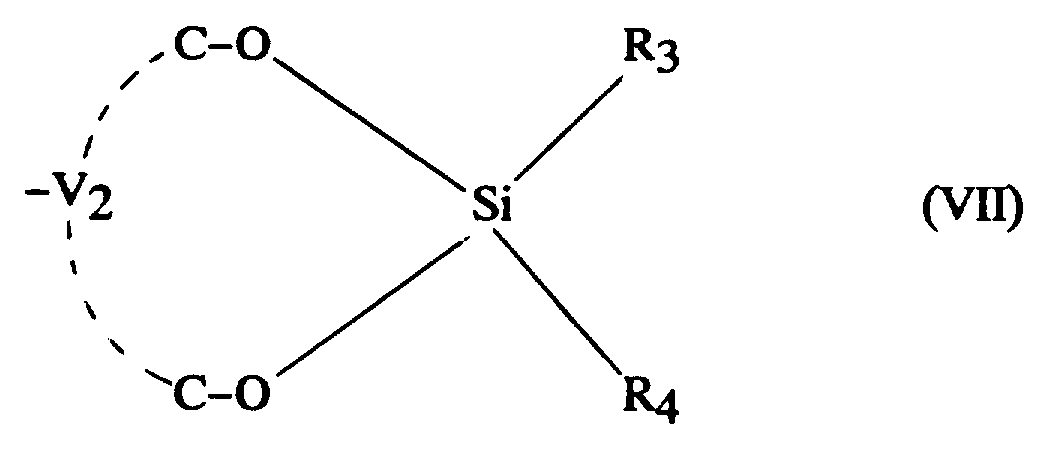
- Précurseur de plaque d'impression lithographique électrophotographique selon la revendication 1, où le groupe fonctionnel capable de former un groupe hydrophile présent dans le monomère fonctionnel est représenté par la formule générale suivante (IV), (V), (VI) ou (VII) :
-V -O - L₁ (IV)
où V représente


2 -SO₂P₈ où P₁ représente un atome d'hydrogène, -CN, -CF₃, -COR₁₁ ou -COOR₁₁, où R₁₁ représente un groupe alkyle ayant de 1 à 6 atomes de carbone qui peut être substitué, un groupe aralkyle ayant 7 à 12 atomes de carbone qui peut être substitué, un groupe aromatique, -(CH₂)n1 -(CF₂)m1 -CF₂H, où n₁ représente un entier qui est 1 ou 2 ; et m₁ représente un entier qui est 1 à 8, -(CH₂)n2 -Cm2 H2m2 +1, où m₂ représente un entier de 0 à 2; et m₂ représente un entier de 1 à 8, ou
1 -(CF₂)m1 -CF₂H, -(CH₂)n2 -Cm2 H2m2 +1 ou
- O -L₂ (V)
où L₂représente

- Précurseur de plaque d'impression lithographique électrophotographique selon la revendication 1, où le monomère fonctionnel contenant le groupe fonctionnel est représenté par la formule générale suivante (VIII) :


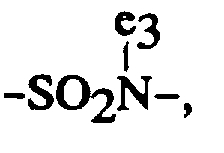

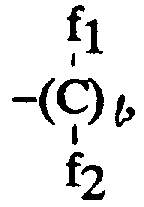
- Précurseur de plaque d'impression lithographique électrophotographique selon la revendication 1, où le macromonomère monofonctionnel comprend au moins un composant polymérisable correspondant à l'unité répétée représentée par la formule générale (IIa) ou (IIb) :


- Précurseur de plaque d'impression lithographique selon la revendication 4, où le macromonomère monofonctionnel contient en outre un composant polymérisable contenant au moins un groupe polaire choisi parmi -COOH, -PO₃H₂, -SO₃H, -OH,

- Précurseur de plaque d'impression lithographique électrophotographique selon la revendication 5, où la teneur du composant polymérisable contenant le groupe polaire dans le macromonomère est de 0,5 à 50 parties en poids pour 100 parties en poids des composants polymérisables totaux.
- Précurseur de plaque d'impression lithographique électrophotographique selon la revendication 1, où le macromonomère monofonctionnel est composé d'un copolymère séquencé AB d'une séquence A comprenant au moins un composant polymérisable contenant au moins un groupe acide choisi parmi -PO₃H₂, -COOH, -S0₃H, -OH,


- Précurseur de plaque d'impression lithographique électrophotographique selon la revendication 7, où le groupe acide est compris dans un composant constituant la séquence A du macromonomère est -COOH, -SO₃H, -OH, ou

- Précurseur de plaque d'impression lithographique électrophotographique selon l'une quelconque des revendications 1 - 8, où le macromonomère monofonctionnel contient en outre de 1 à 20 % en poids d'un composant polymérisable ayant un groupe fonctionnel thermo- et/ou photoréticulable.
- Précurseur de plaque d'impression lithographique électrophotographique selon l'une quelconque des revendications 1 - 9, où la teneur en composant polymérisable correspondant au monomère fonctionnel contenant le groupe fonctionnel représente de 30 à 90 % en poids par rapport aux composants polymérisables totaux.
- Précurseur de plaque d'impression lithographique électrophotographique selon l'une quelconque des revendications 1 - 10, où le poids moléculaire moyen en poids du copolymère de type greffé est de 1x10³ à 1x10⁶.
Applications Claiming Priority (6)
| Application Number | Priority Date | Filing Date | Title |
|---|---|---|---|
| JP17619590A JP2709414B2 (ja) | 1990-07-05 | 1990-07-05 | 電子写真式平版印刷用原版 |
| JP176195/90 | 1990-07-05 | ||
| JP307240/90 | 1990-11-15 | ||
| JP30724090A JP2684451B2 (ja) | 1990-11-15 | 1990-11-15 | 電子写真式平版印刷用原版 |
| JP311547/90 | 1990-11-19 | ||
| JP31154790A JP2715339B2 (ja) | 1990-11-19 | 1990-11-19 | 電子写真式平版印刷用原版 |
Publications (2)
| Publication Number | Publication Date |
|---|---|
| EP0468246A1 EP0468246A1 (fr) | 1992-01-29 |
| EP0468246B1 true EP0468246B1 (fr) | 1996-02-21 |
Family
ID=27324218
Family Applications (1)
| Application Number | Title | Priority Date | Filing Date |
|---|---|---|---|
| EP91111135A Expired - Lifetime EP0468246B1 (fr) | 1990-07-05 | 1991-07-04 | Précurseur de plaque d'impression lithographique électrophotographique |
Country Status (3)
| Country | Link |
|---|---|
| US (1) | US5254422A (fr) |
| EP (1) | EP0468246B1 (fr) |
| DE (1) | DE69117225T2 (fr) |
Families Citing this family (8)
| Publication number | Priority date | Publication date | Assignee | Title |
|---|---|---|---|---|
| US5395721A (en) * | 1992-03-02 | 1995-03-07 | Fuji Photo Film Co., Ltd. | Electrophotographic material for color proofing |
| US5391445A (en) * | 1992-07-01 | 1995-02-21 | Fuji Photo Film Co., Ltd. | Electrophotographic material for color proofing |
| JP4037015B2 (ja) * | 1999-09-22 | 2008-01-23 | 富士フイルム株式会社 | 光重合性組成物、画像形成材料及び平版印刷版用版材 |
| GB2359769B (en) * | 1999-12-15 | 2004-02-18 | Fuji Photo Film Co Ltd | Lithographic printing plate precursor |
| GB2359771B (en) | 2000-01-31 | 2002-04-10 | Fuji Photo Film Co Ltd | Lithographic printing plate precursor |
| US20080004410A1 (en) * | 2006-06-30 | 2008-01-03 | Yu-Chin Lai | Hydrophilic macromonomers having alpha,beta-conjugated carboxylic terminal group and medical devices incorporating same |
| US9195158B2 (en) * | 2013-06-14 | 2015-11-24 | Xerox Corporation | Carrier resins with improved RH sensitivity |
| JP7067157B2 (ja) * | 2017-03-16 | 2022-05-16 | 三菱ケミカル株式会社 | 電子写真感光体、電子写真感光体カートリッジ及び画像形成装置 |
Family Cites Families (10)
| Publication number | Priority date | Publication date | Assignee | Title |
|---|---|---|---|---|
| GB2189035B (en) * | 1986-02-24 | 1989-11-29 | Fuji Photo Film Co Ltd | Electrophotographic lithographic printing plate precursor |
| JPH0690546B2 (ja) * | 1986-03-14 | 1994-11-14 | 富士写真フイルム株式会社 | 電子写真式平版印刷用原版 |
| JPH0750338B2 (ja) * | 1986-05-02 | 1995-05-31 | 富士写真フイルム株式会社 | 電子写真式平版印刷用原版 |
| JPH0673031B2 (ja) * | 1987-09-04 | 1994-09-14 | 富士写真フイルム株式会社 | 電子写真式平版印刷用原版 |
| US4996121A (en) * | 1988-01-06 | 1991-02-26 | Fuji Photo Film Co., Ltd. | Electrophotographic lithographic printing plate precursor containing resin having hydroxy group forming functional group |
| JPH01185667A (ja) * | 1988-01-20 | 1989-07-25 | Fuji Photo Film Co Ltd | 電子写真式平版印刷用原版 |
| JP2640109B2 (ja) * | 1988-01-27 | 1997-08-13 | 富士写真フイルム株式会社 | 電子写真式平版印刷用原版 |
| EP0326169B1 (fr) * | 1988-01-28 | 1994-04-20 | Fuji Photo Film Co., Ltd. | Plaque électrophotographique précurseur d'une plaque d'impression lithographique |
| EP0363928B1 (fr) * | 1988-10-12 | 1997-01-02 | Fuji Photo Film Co., Ltd. | Photorécepteur électrophotographique |
| JP2585795B2 (ja) * | 1989-06-13 | 1997-02-26 | 富士写真フイルム株式会社 | 電子写真式平版印刷用原版 |
-
1991
- 1991-07-03 US US07/725,113 patent/US5254422A/en not_active Expired - Lifetime
- 1991-07-04 EP EP91111135A patent/EP0468246B1/fr not_active Expired - Lifetime
- 1991-07-04 DE DE69117225T patent/DE69117225T2/de not_active Expired - Fee Related
Also Published As
| Publication number | Publication date |
|---|---|
| DE69117225T2 (de) | 1996-10-17 |
| US5254422A (en) | 1993-10-19 |
| DE69117225D1 (de) | 1996-03-28 |
| EP0468246A1 (fr) | 1992-01-29 |
Similar Documents
| Publication | Publication Date | Title |
|---|---|---|
| EP0468246B1 (fr) | Précurseur de plaque d'impression lithographique électrophotographique | |
| EP0439072B1 (fr) | Matériau photosensible électrophotographique | |
| US5176975A (en) | Electrophotographic lithographic printing plate precursor | |
| JP2622772B2 (ja) | 電子写真感光体 | |
| EP0458298A1 (fr) | Produit photosensible électrophotographique | |
| JP2715329B2 (ja) | 電子写真感光体 | |
| EP0398373B1 (fr) | Matériau photosensible électrophotographique | |
| EP0410324B1 (fr) | Matériau photosensible électrophotographique | |
| EP0399469B1 (fr) | Matériau photosensible électrophotographique | |
| EP0484978A1 (fr) | Précurseur de plaque d'impression lithographique électrographique | |
| EP0405499B1 (fr) | Matériau photosensible électrophotographique | |
| JP2670884B2 (ja) | 電子写真感光体 | |
| EP0459240B1 (fr) | Matériaux photosensibles électrophotographiques | |
| EP0444653B1 (fr) | Matériau photosensible électrophotographique | |
| JP2676645B2 (ja) | 電子写真感光体 | |
| US5252419A (en) | Electrophotographic light-sensitive material comprising resin containing acidic groups at random and comb-like resin containing macromonomer comprising AB block copolymer | |
| JP2684435B2 (ja) | 電子写真感光体 | |
| EP0416591A2 (fr) | Matériau photosensible électrophotographique | |
| JP3112730B2 (ja) | 電子写真感光体 | |
| JP2722125B2 (ja) | 電子写真感光体 | |
| JP3115362B2 (ja) | 電子写真感光体 | |
| JP3112725B2 (ja) | 電子写真感光体 | |
| JP3112718B2 (ja) | 電子写真感光体 | |
| JPH04358156A (ja) | 電子写真感光体 | |
| JPH06289630A (ja) | 電子写真感光体 |
Legal Events
| Date | Code | Title | Description |
|---|---|---|---|
| PUAI | Public reference made under article 153(3) epc to a published international application that has entered the european phase |
Free format text: ORIGINAL CODE: 0009012 |
|
| AK | Designated contracting states |
Kind code of ref document: A1 Designated state(s): DE GB |
|
| 17P | Request for examination filed |
Effective date: 19920623 |
|
| 17Q | First examination report despatched |
Effective date: 19950426 |
|
| GRAA | (expected) grant |
Free format text: ORIGINAL CODE: 0009210 |
|
| AK | Designated contracting states |
Kind code of ref document: B1 Designated state(s): DE GB |
|
| REF | Corresponds to: |
Ref document number: 69117225 Country of ref document: DE Date of ref document: 19960328 |
|
| PLBE | No opposition filed within time limit |
Free format text: ORIGINAL CODE: 0009261 |
|
| STAA | Information on the status of an ep patent application or granted ep patent |
Free format text: STATUS: NO OPPOSITION FILED WITHIN TIME LIMIT |
|
| 26N | No opposition filed | ||
| REG | Reference to a national code |
Ref country code: GB Ref legal event code: IF02 |
|
| REG | Reference to a national code |
Ref country code: GB Ref legal event code: 732E |
|
| PGFP | Annual fee paid to national office [announced via postgrant information from national office to epo] |
Ref country code: DE Payment date: 20090615 Year of fee payment: 19 Ref country code: GB Payment date: 20090701 Year of fee payment: 19 |
|
| GBPC | Gb: european patent ceased through non-payment of renewal fee |
Effective date: 20100704 |
|
| PG25 | Lapsed in a contracting state [announced via postgrant information from national office to epo] |
Ref country code: DE Free format text: LAPSE BECAUSE OF NON-PAYMENT OF DUE FEES Effective date: 20110201 |
|
| REG | Reference to a national code |
Ref country code: DE Ref legal event code: R119 Ref document number: 69117225 Country of ref document: DE Effective date: 20110201 |
|
| PG25 | Lapsed in a contracting state [announced via postgrant information from national office to epo] |
Ref country code: GB Free format text: LAPSE BECAUSE OF NON-PAYMENT OF DUE FEES Effective date: 20100704 |