EP0475440A2 - Procédé de préparation de polyiloxanes ayant des groupes alkoxy supérieur - Google Patents
Procédé de préparation de polyiloxanes ayant des groupes alkoxy supérieur Download PDFInfo
- Publication number
- EP0475440A2 EP0475440A2 EP91115566A EP91115566A EP0475440A2 EP 0475440 A2 EP0475440 A2 EP 0475440A2 EP 91115566 A EP91115566 A EP 91115566A EP 91115566 A EP91115566 A EP 91115566A EP 0475440 A2 EP0475440 A2 EP 0475440A2
- Authority
- EP
- European Patent Office
- Prior art keywords
- substituted
- zero
- acid
- groups
- preparation
- Prior art date
- Legal status (The legal status is an assumption and is not a legal conclusion. Google has not performed a legal analysis and makes no representation as to the accuracy of the status listed.)
- Granted
Links
- 229920001296 polysiloxane Polymers 0.000 title claims abstract description 49
- 238000000034 method Methods 0.000 title claims abstract description 25
- 238000002360 preparation method Methods 0.000 title claims abstract description 24
- 229920006136 organohydrogenpolysiloxane Polymers 0.000 claims abstract description 27
- 125000004435 hydrogen atom Chemical group [H]* 0.000 claims abstract description 25
- 125000003545 alkoxy group Chemical group 0.000 claims abstract description 20
- 125000004432 carbon atom Chemical group C* 0.000 claims abstract description 20
- 150000007524 organic acids Chemical class 0.000 claims abstract description 20
- KRKNYBCHXYNGOX-UHFFFAOYSA-N citric acid group Chemical class C(CC(O)(C(=O)O)CC(=O)O)(=O)O KRKNYBCHXYNGOX-UHFFFAOYSA-N 0.000 claims abstract description 16
- 238000006356 dehydrogenation reaction Methods 0.000 claims abstract description 16
- DNIAPMSPPWPWGF-GSVOUGTGSA-N (R)-(-)-Propylene glycol Chemical compound C[C@@H](O)CO DNIAPMSPPWPWGF-GSVOUGTGSA-N 0.000 claims abstract description 13
- 150000003058 platinum compounds Chemical class 0.000 claims abstract description 13
- 239000000203 mixture Substances 0.000 claims abstract description 12
- XUIMIQQOPSSXEZ-UHFFFAOYSA-N Silicon Chemical group [Si] XUIMIQQOPSSXEZ-UHFFFAOYSA-N 0.000 claims abstract description 10
- 235000011054 acetic acid Nutrition 0.000 claims abstract description 9
- 238000010438 heat treatment Methods 0.000 claims abstract description 8
- 238000002156 mixing Methods 0.000 claims abstract description 7
- 229910052710 silicon Inorganic materials 0.000 claims abstract description 7
- 235000015165 citric acid Nutrition 0.000 claims abstract description 3
- 239000011541 reaction mixture Substances 0.000 claims description 27
- QTBSBXVTEAMEQO-UHFFFAOYSA-N Acetic acid Chemical compound CC(O)=O QTBSBXVTEAMEQO-UHFFFAOYSA-N 0.000 claims description 24
- 229920005645 diorganopolysiloxane polymer Polymers 0.000 claims description 11
- 125000000217 alkyl group Chemical group 0.000 claims description 8
- MUBZPKHOEPUJKR-UHFFFAOYSA-N Oxalic acid Chemical compound OC(=O)C(O)=O MUBZPKHOEPUJKR-UHFFFAOYSA-N 0.000 claims description 6
- ISWSIDIOOBJBQZ-UHFFFAOYSA-N Phenol Chemical compound OC1=CC=CC=C1 ISWSIDIOOBJBQZ-UHFFFAOYSA-N 0.000 claims description 5
- BASFCYQUMIYNBI-UHFFFAOYSA-N platinum Chemical compound [Pt] BASFCYQUMIYNBI-UHFFFAOYSA-N 0.000 claims description 5
- FERIUCNNQQJTOY-UHFFFAOYSA-N Butyric acid Chemical compound CCCC(O)=O FERIUCNNQQJTOY-UHFFFAOYSA-N 0.000 claims description 4
- WPYMKLBDIGXBTP-UHFFFAOYSA-N benzoic acid Chemical compound OC(=O)C1=CC=CC=C1 WPYMKLBDIGXBTP-UHFFFAOYSA-N 0.000 claims description 4
- XBDQKXXYIPTUBI-UHFFFAOYSA-N dimethylselenoniopropionate Natural products CCC(O)=O XBDQKXXYIPTUBI-UHFFFAOYSA-N 0.000 claims description 4
- BDAGIHXWWSANSR-UHFFFAOYSA-N methanoic acid Natural products OC=O BDAGIHXWWSANSR-UHFFFAOYSA-N 0.000 claims description 4
- OSWFIVFLDKOXQC-UHFFFAOYSA-N 4-(3-methoxyphenyl)aniline Chemical compound COC1=CC=CC(C=2C=CC(N)=CC=2)=C1 OSWFIVFLDKOXQC-UHFFFAOYSA-N 0.000 claims description 2
- 239000005711 Benzoic acid Substances 0.000 claims description 2
- 235000010233 benzoic acid Nutrition 0.000 claims description 2
- 235000019253 formic acid Nutrition 0.000 claims description 2
- 235000006408 oxalic acid Nutrition 0.000 claims description 2
- 229910052697 platinum Inorganic materials 0.000 claims description 2
- 235000019260 propionic acid Nutrition 0.000 claims description 2
- IUVKMZGDUIUOCP-BTNSXGMBSA-N quinbolone Chemical compound O([C@H]1CC[C@H]2[C@H]3[C@@H]([C@]4(C=CC(=O)C=C4CC3)C)CC[C@@]21C)C1=CCCC1 IUVKMZGDUIUOCP-BTNSXGMBSA-N 0.000 claims description 2
- 150000001735 carboxylic acids Chemical class 0.000 claims 2
- 125000001183 hydrocarbyl group Chemical group 0.000 claims 2
- 238000006243 chemical reaction Methods 0.000 abstract description 32
- LFQSCWFLJHTTHZ-UHFFFAOYSA-N Ethanol Chemical compound CCO LFQSCWFLJHTTHZ-UHFFFAOYSA-N 0.000 abstract description 15
- 239000003054 catalyst Substances 0.000 abstract description 9
- 239000003426 co-catalyst Substances 0.000 abstract description 3
- 125000000218 acetic acid group Chemical group C(C)(=O)* 0.000 abstract 1
- -1 polysiloxane Polymers 0.000 description 35
- YXFVVABEGXRONW-UHFFFAOYSA-N Toluene Chemical compound CC1=CC=CC=C1 YXFVVABEGXRONW-UHFFFAOYSA-N 0.000 description 30
- 235000019441 ethanol Nutrition 0.000 description 17
- 239000000047 product Substances 0.000 description 17
- GLDOVTGHNKAZLK-UHFFFAOYSA-N octadecan-1-ol Chemical compound CCCCCCCCCCCCCCCCCCO GLDOVTGHNKAZLK-UHFFFAOYSA-N 0.000 description 12
- 239000001257 hydrogen Substances 0.000 description 11
- 229910052739 hydrogen Inorganic materials 0.000 description 11
- 125000002496 methyl group Chemical group [H]C([H])([H])* 0.000 description 10
- 239000003960 organic solvent Substances 0.000 description 8
- 239000002537 cosmetic Substances 0.000 description 6
- GOQYKNQRPGWPLP-UHFFFAOYSA-N n-heptadecyl alcohol Natural products CCCCCCCCCCCCCCCCCO GOQYKNQRPGWPLP-UHFFFAOYSA-N 0.000 description 6
- 239000007787 solid Substances 0.000 description 6
- 125000000118 dimethyl group Chemical group [H]C([H])([H])* 0.000 description 5
- UFHFLCQGNIYNRP-UHFFFAOYSA-N Hydrogen Chemical compound [H][H] UFHFLCQGNIYNRP-UHFFFAOYSA-N 0.000 description 4
- 238000000862 absorption spectrum Methods 0.000 description 4
- 239000002253 acid Substances 0.000 description 4
- 150000001732 carboxylic acid derivatives Chemical class 0.000 description 4
- BXWNKGSJHAJOGX-UHFFFAOYSA-N hexadecan-1-ol Chemical compound CCCCCCCCCCCCCCCCO BXWNKGSJHAJOGX-UHFFFAOYSA-N 0.000 description 4
- 239000000155 melt Substances 0.000 description 4
- 238000002844 melting Methods 0.000 description 4
- 230000008018 melting Effects 0.000 description 4
- HLZKNKRTKFSKGZ-UHFFFAOYSA-N tetradecan-1-ol Chemical compound CCCCCCCCCCCCCCO HLZKNKRTKFSKGZ-UHFFFAOYSA-N 0.000 description 4
- XLYOFNOQVPJJNP-UHFFFAOYSA-N water Substances O XLYOFNOQVPJJNP-UHFFFAOYSA-N 0.000 description 4
- XEKOWRVHYACXOJ-UHFFFAOYSA-N Ethyl acetate Chemical compound CCOC(C)=O XEKOWRVHYACXOJ-UHFFFAOYSA-N 0.000 description 3
- 238000005481 NMR spectroscopy Methods 0.000 description 3
- 125000004423 acyloxy group Chemical group 0.000 description 3
- 239000000654 additive Substances 0.000 description 3
- 230000000996 additive effect Effects 0.000 description 3
- 238000001460 carbon-13 nuclear magnetic resonance spectrum Methods 0.000 description 3
- 150000001875 compounds Chemical group 0.000 description 3
- 238000006482 condensation reaction Methods 0.000 description 3
- 238000001816 cooling Methods 0.000 description 3
- 230000000694 effects Effects 0.000 description 3
- 150000002430 hydrocarbons Chemical group 0.000 description 3
- VLKZOEOYAKHREP-UHFFFAOYSA-N n-Hexane Chemical compound CCCCCC VLKZOEOYAKHREP-UHFFFAOYSA-N 0.000 description 3
- 239000003921 oil Substances 0.000 description 3
- 238000000870 ultraviolet spectroscopy Methods 0.000 description 3
- 125000000391 vinyl group Chemical group [H]C([*])=C([H])[H] 0.000 description 3
- 229920002554 vinyl polymer Polymers 0.000 description 3
- IJGRMHOSHXDMSA-UHFFFAOYSA-N Atomic nitrogen Chemical compound N#N IJGRMHOSHXDMSA-UHFFFAOYSA-N 0.000 description 2
- LRHPLDYGYMQRHN-UHFFFAOYSA-N N-Butanol Chemical compound CCCCO LRHPLDYGYMQRHN-UHFFFAOYSA-N 0.000 description 2
- IMNFDUFMRHMDMM-UHFFFAOYSA-N N-Heptane Chemical compound CCCCCCC IMNFDUFMRHMDMM-UHFFFAOYSA-N 0.000 description 2
- 239000003513 alkali Substances 0.000 description 2
- 125000003118 aryl group Chemical group 0.000 description 2
- 238000009835 boiling Methods 0.000 description 2
- 229960000541 cetyl alcohol Drugs 0.000 description 2
- 229920001577 copolymer Polymers 0.000 description 2
- 229910001873 dinitrogen Inorganic materials 0.000 description 2
- 238000004821 distillation Methods 0.000 description 2
- 238000002474 experimental method Methods 0.000 description 2
- ZSIAUFGUXNUGDI-UHFFFAOYSA-N hexan-1-ol Chemical compound CCCCCCO ZSIAUFGUXNUGDI-UHFFFAOYSA-N 0.000 description 2
- 238000005259 measurement Methods 0.000 description 2
- 229940043348 myristyl alcohol Drugs 0.000 description 2
- 238000006116 polymerization reaction Methods 0.000 description 2
- 238000010992 reflux Methods 0.000 description 2
- 239000012265 solid product Substances 0.000 description 2
- 239000002904 solvent Substances 0.000 description 2
- 125000003944 tolyl group Chemical group 0.000 description 2
- ALSTYHKOOCGGFT-KTKRTIGZSA-N (9Z)-octadecen-1-ol Chemical compound CCCCCCCC\C=C/CCCCCCCCO ALSTYHKOOCGGFT-KTKRTIGZSA-N 0.000 description 1
- UOCLXMDMGBRAIB-UHFFFAOYSA-N 1,1,1-trichloroethane Chemical compound CC(Cl)(Cl)Cl UOCLXMDMGBRAIB-UHFFFAOYSA-N 0.000 description 1
- KBPLFHHGFOOTCA-UHFFFAOYSA-N 1-Octanol Chemical compound CCCCCCCCO KBPLFHHGFOOTCA-UHFFFAOYSA-N 0.000 description 1
- DURPTKYDGMDSBL-UHFFFAOYSA-N 1-butoxybutane Chemical compound CCCCOCCCC DURPTKYDGMDSBL-UHFFFAOYSA-N 0.000 description 1
- 125000001731 2-cyanoethyl group Chemical group [H]C([H])(*)C([H])([H])C#N 0.000 description 1
- 125000003903 2-propenyl group Chemical group [H]C([*])([H])C([H])=C([H])[H] 0.000 description 1
- XMSXQFUHVRWGNA-UHFFFAOYSA-N Decamethylcyclopentasiloxane Chemical compound C[Si]1(C)O[Si](C)(C)O[Si](C)(C)O[Si](C)(C)O[Si](C)(C)O1 XMSXQFUHVRWGNA-UHFFFAOYSA-N 0.000 description 1
- CTQNGGLPUBDAKN-UHFFFAOYSA-N O-Xylene Chemical compound CC1=CC=CC=C1C CTQNGGLPUBDAKN-UHFFFAOYSA-N 0.000 description 1
- 229920003171 Poly (ethylene oxide) Polymers 0.000 description 1
- XSTXAVWGXDQKEL-UHFFFAOYSA-N Trichloroethylene Chemical group ClC=C(Cl)Cl XSTXAVWGXDQKEL-UHFFFAOYSA-N 0.000 description 1
- 125000003668 acetyloxy group Chemical group [H]C([H])([H])C(=O)O[*] 0.000 description 1
- 230000002411 adverse Effects 0.000 description 1
- 150000001338 aliphatic hydrocarbons Chemical class 0.000 description 1
- 229910052783 alkali metal Inorganic materials 0.000 description 1
- 150000008044 alkali metal hydroxides Chemical class 0.000 description 1
- 150000001336 alkenes Chemical class 0.000 description 1
- 125000003342 alkenyl group Chemical group 0.000 description 1
- 238000004458 analytical method Methods 0.000 description 1
- 229940045985 antineoplastic platinum compound Drugs 0.000 description 1
- 238000010504 bond cleavage reaction Methods 0.000 description 1
- 125000000484 butyl group Chemical group [H]C([*])([H])C([H])([H])C([H])([H])C([H])([H])[H] 0.000 description 1
- 125000003178 carboxy group Chemical group [H]OC(*)=O 0.000 description 1
- 239000007795 chemical reaction product Substances 0.000 description 1
- 150000008280 chlorinated hydrocarbons Chemical class 0.000 description 1
- 125000004218 chloromethyl group Chemical group [H]C([H])(Cl)* 0.000 description 1
- 239000006071 cream Substances 0.000 description 1
- 125000004093 cyano group Chemical group *C#N 0.000 description 1
- 125000000753 cycloalkyl group Chemical group 0.000 description 1
- 125000000113 cyclohexyl group Chemical group [H]C1([H])C([H])([H])C([H])([H])C([H])(*)C([H])([H])C1([H])[H] 0.000 description 1
- 230000003247 decreasing effect Effects 0.000 description 1
- 210000003298 dental enamel Anatomy 0.000 description 1
- 230000001627 detrimental effect Effects 0.000 description 1
- 238000010586 diagram Methods 0.000 description 1
- 238000007865 diluting Methods 0.000 description 1
- 239000004205 dimethyl polysiloxane Substances 0.000 description 1
- 235000013870 dimethyl polysiloxane Nutrition 0.000 description 1
- KPUWHANPEXNPJT-UHFFFAOYSA-N disiloxane Chemical class [SiH3]O[SiH3] KPUWHANPEXNPJT-UHFFFAOYSA-N 0.000 description 1
- 238000005886 esterification reaction Methods 0.000 description 1
- 150000002148 esters Chemical class 0.000 description 1
- 150000002170 ethers Chemical class 0.000 description 1
- 125000005909 ethyl alcohol group Chemical group 0.000 description 1
- 125000001495 ethyl group Chemical group [H]C([H])([H])C([H])([H])* 0.000 description 1
- 238000009472 formulation Methods 0.000 description 1
- 125000005843 halogen group Chemical group 0.000 description 1
- 238000006459 hydrosilylation reaction Methods 0.000 description 1
- 239000004615 ingredient Substances 0.000 description 1
- 239000012263 liquid product Substances 0.000 description 1
- 125000001421 myristyl group Chemical group [H]C([*])([H])C([H])([H])C([H])([H])C([H])([H])C([H])([H])C([H])([H])C([H])([H])C([H])([H])C([H])([H])C([H])([H])C([H])([H])C([H])([H])C([H])([H])C([H])([H])[H] 0.000 description 1
- 238000000655 nuclear magnetic resonance spectrum Methods 0.000 description 1
- HMMGMWAXVFQUOA-UHFFFAOYSA-N octamethylcyclotetrasiloxane Chemical compound C[Si]1(C)O[Si](C)(C)O[Si](C)(C)O[Si](C)(C)O1 HMMGMWAXVFQUOA-UHFFFAOYSA-N 0.000 description 1
- JRZJOMJEPLMPRA-UHFFFAOYSA-N olefin Natural products CCCCCCCC=C JRZJOMJEPLMPRA-UHFFFAOYSA-N 0.000 description 1
- 229940055577 oleyl alcohol Drugs 0.000 description 1
- XMLQWXUVTXCDDL-UHFFFAOYSA-N oleyl alcohol Natural products CCCCCCC=CCCCCCCCCCCO XMLQWXUVTXCDDL-UHFFFAOYSA-N 0.000 description 1
- 238000010915 one-step procedure Methods 0.000 description 1
- 125000000913 palmityl group Chemical group [H]C([*])([H])C([H])([H])C([H])([H])C([H])([H])C([H])([H])C([H])([H])C([H])([H])C([H])([H])C([H])([H])C([H])([H])C([H])([H])C([H])([H])C([H])([H])C([H])([H])C([H])([H])C([H])([H])[H] 0.000 description 1
- 125000001997 phenyl group Chemical group [H]C1=C([H])C([H])=C(*)C([H])=C1[H] 0.000 description 1
- 229920000435 poly(dimethylsiloxane) Polymers 0.000 description 1
- 229920001451 polypropylene glycol Polymers 0.000 description 1
- 125000001436 propyl group Chemical group [H]C([*])([H])C([H])([H])C([H])([H])[H] 0.000 description 1
- 239000000376 reactant Substances 0.000 description 1
- 230000007017 scission Effects 0.000 description 1
- 239000002453 shampoo Substances 0.000 description 1
- 238000007086 side reaction Methods 0.000 description 1
- 229920002545 silicone oil Polymers 0.000 description 1
- 239000000344 soap Substances 0.000 description 1
- 229940012831 stearyl alcohol Drugs 0.000 description 1
- 239000000126 substance Substances 0.000 description 1
- UBOXGVDOUJQMTN-UHFFFAOYSA-N trichloroethylene Natural products ClCC(Cl)Cl UBOXGVDOUJQMTN-UHFFFAOYSA-N 0.000 description 1
- 238000005406 washing Methods 0.000 description 1
- 239000008096 xylene Substances 0.000 description 1
Images
Classifications
-
- A—HUMAN NECESSITIES
- A61—MEDICAL OR VETERINARY SCIENCE; HYGIENE
- A61K—PREPARATIONS FOR MEDICAL, DENTAL OR TOILETRY PURPOSES
- A61K8/00—Cosmetics or similar toiletry preparations
- A61K8/18—Cosmetics or similar toiletry preparations characterised by the composition
- A61K8/72—Cosmetics or similar toiletry preparations characterised by the composition containing organic macromolecular compounds
- A61K8/84—Cosmetics or similar toiletry preparations characterised by the composition containing organic macromolecular compounds obtained by reactions otherwise than those involving only carbon-carbon unsaturated bonds
- A61K8/89—Polysiloxanes
- A61K8/891—Polysiloxanes saturated, e.g. dimethicone, phenyl trimethicone, C24-C28 methicone or stearyl dimethicone
- A61K8/893—Polysiloxanes saturated, e.g. dimethicone, phenyl trimethicone, C24-C28 methicone or stearyl dimethicone modified by an alkoxy or aryloxy group, e.g. behenoxy dimethicone or stearoxy dimethicone
-
- A—HUMAN NECESSITIES
- A61—MEDICAL OR VETERINARY SCIENCE; HYGIENE
- A61Q—SPECIFIC USE OF COSMETICS OR SIMILAR TOILETRY PREPARATIONS
- A61Q19/00—Preparations for care of the skin
-
- C—CHEMISTRY; METALLURGY
- C08—ORGANIC MACROMOLECULAR COMPOUNDS; THEIR PREPARATION OR CHEMICAL WORKING-UP; COMPOSITIONS BASED THEREON
- C08G—MACROMOLECULAR COMPOUNDS OBTAINED OTHERWISE THAN BY REACTIONS ONLY INVOLVING UNSATURATED CARBON-TO-CARBON BONDS
- C08G77/00—Macromolecular compounds obtained by reactions forming a linkage containing silicon with or without sulfur, nitrogen, oxygen or carbon in the main chain of the macromolecule
- C08G77/04—Polysiloxanes
- C08G77/38—Polysiloxanes modified by chemical after-treatment
Definitions
- the present invention relates to a novel method for the preparation of an organopolysiloxane compound substituted by a higher alkoxy group. More particularly, the invention relates to an efficient method for the preparation of an organopolysiloxane compound having, in a molecule, at least one alkoxy group of at least 4 carbon atoms bonded to the silicon atom.
- organopolysiloxanes or so-called silicones have excellent properties including high chemical and physical stability as well as inherent inertness to the human body so that silicones or, in particular, silicone oils are widely used as an ingredient in a wide variety of toiletry and cosmetic preparations.
- eaux de cologne, toiletry soaps, enamels for manicure and pedicure, lipsticks, lip creams, shampoos, hair rinses, eye shadows, eyeliners, mascaras, cheek rouges and the like are sometimes formulated with an organopolysiloxane such as a dimethyl polysiloxane oil, methyl phenyl polysiloxane oil, octamethyl cyclotetrasiloxane, decamethyl cyclopentasiloxane, methyl hydrogen polysiloxane oil and the like.
- organopolysiloxane such as a dimethyl polysiloxane oil, methyl phenyl polysiloxane oil, octamethyl cyclotetrasiloxane, decamethyl cyclopentasiloxane, methyl hydrogen polysiloxane oil and the like.
- Some of toiletry and cosmetic preparations are formulated with an organopolysiloxane having at least one alkoxy group bonded to the silicon atom in a molecule such as a dimethyl polysiloxane-methyl polyoxyethylene copolymer, dimethyl polysiloxane-methyl polyoxypropylene copolymer, dimethyl polysiloxane-methyl polyoxyethylenepropylene copolymer, dimethyl polysiloxane-methylcetyloxysiloxane copolymer, dimethyl polysiloxane-methylstearyloxysiloxane copolymer and the like.
- the siloxane linkages in the starting organohydrogenpolysiloxane are subject to the attack of the strong alkali used as the catalyst to cause scission so that the alkoxy group-containing organopolysiloxane obtained as the product neccessarily has a greatly decreased degree of polymerization or number of the silicon atoms in a molecule of, for example, 10 or smaller.
- organopolysiloxane having a sufficiently high degree of polymerization and containing higher alkoxy groups of, for example, at least 4 carbon atoms in order to impart toiletry and cosmetic preparations with certain advantageous properties obtained only by formulating such a silicone.
- An alternative method for the preparation of an alkoxy-substituted organopolysiloxane is the dehydrogenation condensation reaction between an organohydrogenpolysiloxane and an alcohol in the presence of a platinum compound as the catalyst.
- This platinum-catalyzed dehydrogenation reaction can proceed only when the alcohol is a lower aliphatic alcohol such as methyl and ethyl alcohols and the reaction can hardly proceed when the alcohol is a higher alcohol having, for example, 4 or more carbon atoms in a molecule.
- no efficient method is known in the prior art for the preparation of an alkoxy-substituted organopolysiloxane, especially, when the alkoxy group has a large number of carbon atoms.
- the present invention accordingly has an object to provide a novel and efficient method for the preparation of an organopolysiloxane substituted by a higher alkoxy group.
- the present invention provides a method for the preparation of a higher alkoxy-substituted diorganopolysiloxane represented by the general formula R3R22Si-O-(-SiR22-O-) p -(-SiR2R3-O-) q -SiR22R3 , (I) in which R2 is, each independently from the others, an unsubstituted or substituted monovalent hydrocarbon group having 1 to 15 carbon atoms, at least one of the groups denoted by R3 is an alkoxy group of the formula R4O, R4 being an alkyl group having 4 to 30 carbon atoms, the remainder of R3, if any, each being R2, and the subscripts p and q are each zero or a positive integer with the proviso that q is not zero when the groups R3 at the molecular chain ends are both R2, which method comprises the steps of:
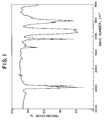
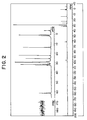
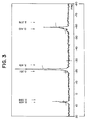
- Figure 1 is an infrared absorption spectrum of the alkoxy-substituted organopolysiloxane prepared in Example 1 and Figures 2 and 3 are each a diagram of 13C-NMR spectrum of the same.
- the present invention provides a novel and efficient method for the preparation of a higher alkoxy-substituted diorganopolysiloxane having, in a molecule, at least one alkoxy group of 4 to 30 carbon atoms as is defined by the above given general formula (I).
- Such an alkoxy-substituted diorganopolysiloxane of the general formula (I) can be readily prepared by the dehydrogenation condensation reaction according to the inventive method between an organohydrogenpolysiloxane of the general formula (II) and a higher aliphatic alcohol of the general formula (III) in the presence of a platinum compound as the catalyst and an organic acid which may serve as a co-catalyst.
- R2 is an unsubstituted or substituted monovalent hydrocarbon group of 1 to 15 carbon atoms exemplified by alkyl groups such as methyl, ethyl, propyl and butyl groups, cycloalkyl groups such as cyclohexyl group, alkenyl groups such as vinyl and allyl groups and aryl groups such as phenyl and tolyl groups as well as those substituted groups such as chloromethyl, 3,3,3-trifluoropropyl and 2-cyanoethyl groups obtained by replacing a part or all of the hydrogen atoms in the above named hydrocarbon groups with halogen atoms, cyano groups and the like.
- At least one of the groups denoted by R3 is a higher alkoxy group having 4 to 30 carbon atoms exemplified by butoxy, pentoxy, hexoxy, octoxy, myristyloxy, cetyloxy, oleyloxy and stearyloxy groups and the remainder of the groups R3, if any, are each R2.
- the subscripts p and q in the formula (I) is each zero or a positive integer. Since at least one of the groups denoted by R3 must be an alkoxy group, the subscript q cannot be equal to zero when both of the groups R3 at the molecular chain ends are simultaneously R2.
- the organohydrogenpolysiloxane as one of the starting reactants in the dehydrogenation reaction according to the inventive method is represented by the general formula (II) given above, in which the symbol R2 has the same meaning as defined above. Since the molecule of the organohydrogenpolysiloxane must have at least one hydrogen atom directly bonded to the silicon atom, at least one of the group denoted by R1 is a silicon-bonded hydrogen atom when the subscript n is zero and, on the other hand, the subscript n cannot be zero when both of the two R1 groups are simultaneously R2.
- the higher aliphatic alcohol to be reacted with the above defined organohydrogenpolysiloxane is represented by the above given general formula (III), in which R4 is an alkyl group having 4 to 30 carbon atoms.
- R4 is an alkyl group having 4 to 30 carbon atoms.
- examples of the aliphatic alcohols to be reacted with the organohydrogenpolysiloxane include butyl alcohol, hexyl alcohol, octyl alcohol, myristyl alcohol, cetyl alcohol, oleyl alcohol, stearyl alcohol and the like and the alcohol should be selected among the above depending on the particular object of application of the alkoxy-substituted organopolysiloxane.
- the alkoxy-substituted organopolysiloxane When the intended application of the alkoxy-substituted organopolysiloxane is as an additive in a toiletry or cosmetic preparation, those having a relatively large number of carbon atoms in a molecule, such as myristyl, cetyl and stearyl alcohols, are preferred in order to meet the requirements under statutory regulations for the formulation of those preparations.
- the amount of the above defined higher aliphatic alcohol to be reacted with the organohydrogenpolysiloxane should be at least equimolar to the silicon-bonded hydrogen atoms in the organohydrogenpolysiloxane.
- the amount of the alcohol is usually in the range from 1.0 to 1.3 moles per mole of the silicon-bonded hydrogen atoms in the organohydrogenpolysiloxane.
- the reaction mixture after completion of the reaction naturally contains a remaining amount of the unreacted alcohol which, however, usually is not detrimental and need not be removed from the reaction mixture at least when the intended application of the alkoxy-substituted organopolysiloxane is as an additive in toiletry or cosmetic preparations.
- the dehydrogenation reaction between the above described organohydrogenpolysiloxane and higher aliphatic alcohol is promoted by a catalyst system consisting of a platinum compound and an organic acid.
- the platinum compounds suitable for the purpose include those known ones conventionally used as a catalyst in the dehydrogenation reaction of a lower alcohol or in the hydrosilation reaction.
- chloroplatinic acid and complexes thereof with an olefin or a vinyl-containing organopolysiloxane can be used.
- the amount of the platinum compound in the reaction mixture is usually in the range from 0.0001 to 0.1 part by weight calculated as platinum metal per 100 parts by weight of the organohydrogenpolysiloxane.
- the organic acid as the co-catalyst for the platinum compound in the catalyst system can be any of those compounds having a carboxyl group or phenolic hydroxy group in a molecule exemplified by formic acid, acetic acid, propionic acid, butyric acid, oxalic acid, citric acid, benzoic acid, phenol and the like.
- the dehydrogenation reaction first takes place between the silicon-bonded hydrogen atoms and molecules of the carboxylic acid in the presence of the platinum catalyst according to the following reaction equation: ⁇ Si-H + HO-CO-R ⁇ ⁇ Si-O-CO-R + H2 to give an acyloxy-substituted organopolysiloxane which is then reacted with the higher aliphatic alcohol R4OH to cause exchange of the acyloxy group R-CO-O- with the alkoxy group R4O- according to the reaction equation: ⁇ Si-O-CO-R + R4OH ⁇ ⁇ Si-O-R4 + HO-CO-R thus to regenerate the carboxylic acid.
- organohydrogenpolysiloxane is first reacted with a carboxylic acid in an amount at least equimolar to the silicon-bonded hydrogen atoms therein to be converted into the acyloxy-substituted organopolysiloxane which is then reacted with the higher aliphatic alcohol to effect the exchange reaction of the acyloxy groups and the alkoxy groups.
- a more advantageous way is that a reaction mixture is formed by mixing the higher aliphatic alcohol, organic acid, platinum compound and, if necessary, organic solvent and then the organohydrogenpolysiloxane is added dropwise to the reaction mixture so that the dehydrogenation reaction and the exchange reaction may proceed concurrently in a one-step procedure.
- a reaction mixture is formed by mixing the organohydrogenpolysiloxane, alcohol, platinum compound and, if necessary, organic solvent and the organic acid is added thereto dropwise.
- the amount of the organic acid added to the reaction mixture is in the range from 0.01 to 3 moles per mole of the silicon-bonded hydrogen atoms in the organohydrogenpolysiloxane. Since the organic acid can be regenerated by the exchange reaction of the acyloxy groups with the alkoxy groups as is described above, however, the amount is preferably in the range from 0.1 to 1.0 mole per mole of the silicon-bonded hydrogen atoms in the organohydrogenpolysiloxane.
- the reaction can proceed without diluting the reaction mixture with an organic solvent, it is sometimes advantageous in order to ensure more smooth proceeding of the reaction that the reaction mixture is admixed with an organic solvent.
- the organic solvent when used, must be one having no active hydrogen atom in the molecule in order not to disturb the reaction.
- suitable organic solvents include aliphatic hydrocarbon solvents such as hexane and heptane, aromatic hydrocabron solvebts such as toluene and xylene, esters and ethers such as ethyl acetate and dibutyl ether and chlorinated hydrocarbon solvents such as trichloroethylene and trichloroethane.
- the dehydrogenation reaction proceeds when the reaction mixture is heated at a temperature in the range from 30 to 150 °C or, preferably, from 60 to 80 °C.
- the reaction temperature is too low, the velocity of the reaction would be too low as a matter of course taking an unduly long time for completion of the reaction.
- the reaction temperature is too high, on the other hand, undesirable side reactions, such as the esterification reaction between the alcohol and the organic acid, may take place to cause a decrease in the yield of the desired product.
- the reaction is usually complete within 10 to 20 hours when the reaction temperature is in the range from 60 to 80 °C.
- the reaction mixture is washed with water to remove the organic acid followed by stripping of the organic solvent, when used, by distillation under reduced pressure to give the desired higher alkoxy-substituted organopolysiloxane.
- the organic acid is removed by distillation under reduced pressure together with the organic solvent when the organic acid has a relatively low boiling point as acetic acid.
- the organic acid has a relatively high boiling point or is non-volatile as citric acid, removal of such an organic acid from the reaction product is in most cases not requisite since such an organic acid has no particular adverse effect on the human body when the reaction mixture obtained by the reaction is used as such as an additive in toiletry and cosmetic preparations.
- the reaction mixture in the vessel was further agitated at the same temperature for 15 hours.
- the reaction mixture was then analyzed for the residual content of the silicon-bonded hydrogen atoms in the methyl hydrogen polysiloxane by decomposing and converting the silicon-bonded hydrogen atoms into free hydrogen gas.
- the result was that the volume of the hydrogen gas evolved in the analysis was 0.2 ml/ g at N.T.P. indicating that at least 99% of the silicon-bonded hydrogen atoms in the starting methyl hydrogen polysiloxane had reacted in the dehydrogenation reaction.
- reaction mixture was washed three times each with 600 ml of water to be freed from acetic acid and further stripped at 150 °C under reduced pressure to be freed from toluene followed by cooling to give 2576 g of a greyish solid as the product corresponding to 96% of the theoretical yield.
- This product could be melted within a temperature range of which the temperature for complete melting was 44 °C.
- the melt of the product had a viscosity of 24 centistokes at 60 °C.
- This product was subjected to the measurements of the infrared absorption spectrum and 13C-NMR spectrum to give the results shown in Figure 1 for the infrared absorption spectrum and Figures 2 and 3 for the NMR spectrum.
- the reaction mixture in the vessel was further agitated at the same temperature for 10 hours to complete the reaction.
- the reaction mixture was then analyzed for the residual content of the silicon-bonded hydrogen atoms in the methyl hydrogen polysiloxane by decomposing and converting the silicon-bonded hydrogen atoms into free hydrogen gas. The result was that almost no hydrogen gas was evolved indicating that the dehydrogenation reaction was almost complete.
- reaction mixture was washed three times each with 400 ml of water to be freed from citric acid and further stripped at 150 °C under reduced pressure to be freed from toluene followed by cooling to give 3140 g of a greyish solid as the product corresponding to 95% of the theoretical yield.
- This product could be melted within a temperature range of which the temperature for complete melting was 41 °C.
- the melt of the product had a viscosity of 18 centistokes at 60 °C.
- the experimental procedure was substantially the same as in Example 1 except that the stearyl alcohol was replaced with 1331 g (5.5 moles) of cetyl alcohol to give 2340 g of a greyish solid product in a yield of 93% of the theoretical value.
- the temperature of complete melting of this solid was 37 °C and the melt of the solid had a viscosity of 19 centistokes at 60 °C.
- the experimental procedure was substantially the same as in Example 1 except that the stearyl alcohol was replaced with 1177 g (5.5 moles) of myristyl alcohol to give 2270 g of a light yellow liqid product in a yield of 96% of the theoretical value.
- This liquid product had a viscosity of 41 centistokes at 25 °C.
- the reaction mixture was further heated for 3 hours under reflux to complete the reaction.
- Test for the silicon-bonded hydrogen atoms in the methyl hydrogen polysiloxane indicated completion of the dehydrogenation reaction.
- the reaction mixture was then subjected to stripping of toluene and excess of acetic acid by heating at 150 °C under reduced pressure to give an acetoxy-substituted organopolysiloxane.
- acetoxy-substituted organopolysiloxane was admixed with 1485 g (5.5 moles) of stearyl alcohol and the mixture was heated at 80 °C for 10 hours to effect the exchange reaction of the acetoxy groups with stearyloxy groups.
- acetic acid formed by the reaction was removed from the mixture by stripping under reduced pressure followed by cooling to give 2145 g of a greyish solid in a yield of 93% based on the theoretical value.
- the temperature for complete melting of this solid product was 44 °C and a melt of the solid had a viscosity of 21 centistokes at 60 °C.
Landscapes
- Health & Medical Sciences (AREA)
- Chemical & Material Sciences (AREA)
- Life Sciences & Earth Sciences (AREA)
- Animal Behavior & Ethology (AREA)
- General Health & Medical Sciences (AREA)
- Public Health (AREA)
- Veterinary Medicine (AREA)
- Epidemiology (AREA)
- Birds (AREA)
- Dermatology (AREA)
- General Chemical & Material Sciences (AREA)
- Chemical Kinetics & Catalysis (AREA)
- Medicinal Chemistry (AREA)
- Polymers & Plastics (AREA)
- Organic Chemistry (AREA)
- Silicon Polymers (AREA)
Applications Claiming Priority (2)
| Application Number | Priority Date | Filing Date | Title |
|---|---|---|---|
| JP2245944A JP2580379B2 (ja) | 1990-09-14 | 1990-09-14 | アルコキシ変性シリコ―ンの製造方法 |
| JP245944/90 | 1990-09-14 |
Publications (3)
| Publication Number | Publication Date |
|---|---|
| EP0475440A2 true EP0475440A2 (fr) | 1992-03-18 |
| EP0475440A3 EP0475440A3 (en) | 1992-05-13 |
| EP0475440B1 EP0475440B1 (fr) | 1995-02-08 |
Family
ID=17141181
Family Applications (2)
| Application Number | Title | Priority Date | Filing Date |
|---|---|---|---|
| EP91115566A Expired - Lifetime EP0475440B1 (fr) | 1990-09-14 | 1991-09-13 | Procédé de préparation de polyiloxanes ayant des groupes alkoxy supérieur |
| EP19910115565 Withdrawn EP0475439A3 (en) | 1990-09-14 | 1991-09-13 | Higher alkoxy-substituted organopolysiloxane |
Family Applications After (1)
| Application Number | Title | Priority Date | Filing Date |
|---|---|---|---|
| EP19910115565 Withdrawn EP0475439A3 (en) | 1990-09-14 | 1991-09-13 | Higher alkoxy-substituted organopolysiloxane |
Country Status (4)
| Country | Link |
|---|---|
| US (1) | US5147965A (fr) |
| EP (2) | EP0475440B1 (fr) |
| JP (1) | JP2580379B2 (fr) |
| DE (1) | DE69107264T2 (fr) |
Cited By (16)
| Publication number | Priority date | Publication date | Assignee | Title |
|---|---|---|---|---|
| FR2727118A1 (fr) * | 1994-11-18 | 1996-05-24 | Rhone Poulenc Chimie | Polyorganosiloxanes fonctionnalises et l'un de leurs procedes de preparation |
| WO1996028497A1 (fr) * | 1995-03-15 | 1996-09-19 | Firmenich S.A. | Polysiloxanes nouveaux, leur utilisation en parfumerie et procede pour leur preparation |
| DE102007037292A1 (de) | 2007-08-07 | 2009-02-12 | Evonik Goldschmidt Gmbh | Verfahren zur Herstellung von verzweigten Polyorganosiloxanen |
| US7605284B2 (en) | 2005-10-29 | 2009-10-20 | Goldschmidt Gmbh | Process for preparing organically modified polyorganosiloxanes |
| EP2138526A1 (fr) | 2008-06-27 | 2009-12-30 | Evonik Goldschmidt GmbH | Produits d'alkoxylation comprenant des nouveaux polyéthersiloxanes par alkoxylation directe d'alpha et d'oméga-dihydroxysiloxanes organomodifiés sur des catalyseurs de cyano-métalliques doubles (DMC) et leur procédé de fabrication |
| DE102009002075A1 (de) | 2009-04-01 | 2010-10-07 | Wacker Chemie Ag | Verfahren zur Herstellung von Kohlenwasserstoffoxysiliciumverbindungen |
| WO2010147227A1 (fr) * | 2009-06-15 | 2010-12-23 | Dow Corning Toray Co., Ltd. | Procédé de production d'un organopolysiloxane modifié par polyéther |
| WO2012149019A1 (fr) * | 2011-04-26 | 2012-11-01 | Hercules Incorporated | Aide au drainage de polyéthers d'organo-polysilicone |
| WO2019219446A1 (fr) | 2018-05-17 | 2019-11-21 | Evonik Degussa Gmbh | Copolymères séquencés de polydiméthylsiloxane et de polyoxyalkylène de structure linéaire de type aba |
| WO2019219452A1 (fr) | 2018-05-17 | 2019-11-21 | Evonik Degussa Gmbh | Copolymère séquencé de polydiméthylsiloxane et de polyoxyalkylène à structure linéaire de type aba |
| EP3611217A1 (fr) | 2018-08-15 | 2020-02-19 | Evonik Operations GmbH | Copolymères bloc de polydiméthylsiloxane-polyoxyalkylène linéaires de type de structure aba |
| EP3611216A1 (fr) | 2018-08-15 | 2020-02-19 | Evonik Operations GmbH | Copolymères bloc de polydiméthylsiloxane-polyoxyalkylène linéaires de type de structure aba |
| EP3744763A1 (fr) | 2019-05-28 | 2020-12-02 | Evonik Operations GmbH | Polyethérsiloxanes à base de sioc conçus sur mesure |
| EP3744761A1 (fr) | 2019-05-28 | 2020-12-02 | Evonik Operations GmbH | Polyethérsiloxanes à base de sioc |
| EP3744762A1 (fr) | 2019-05-28 | 2020-12-02 | Evonik Operations GmbH | Procédé de fabrication de polymères séquencés de polyoxyalkylène polysiloxane |
| FR3130837A1 (fr) | 2021-12-21 | 2023-06-23 | Nyco | Utilisation d’une huile de base polyalcoxysiloxanes en tant qu’agent lubrifiant |
Families Citing this family (15)
| Publication number | Priority date | Publication date | Assignee | Title |
|---|---|---|---|---|
| US5310842A (en) * | 1990-09-14 | 1994-05-10 | Shin-Etsu Chemical Co., Ltd. | Higher alkoxy-substituted organopolysiloxane |
| US5919437A (en) * | 1996-05-24 | 1999-07-06 | Colgate-Palmolive Company | Cosmetic cream composition containing silicone gel material |
| EP0935631B1 (fr) * | 1996-10-29 | 2007-08-22 | Grant Industries, Inc. | Gel de silicone greffe du type caoutchouc possedant une meilleure compatibilite avec les huiles et procede de synthese dudit gel |
| DE502004000736D1 (de) | 2003-03-21 | 2006-07-27 | Goldschmidt Gmbh | Verfahren zur Herstellung von organisch modifizierten Polyorganosiloxanen |
| DE10312636A1 (de) * | 2003-03-21 | 2004-09-30 | Goldschmidt Ag | Verfahren zur Umsetzung von Polyorganosiloxanen |
| DE10335761A1 (de) | 2003-08-05 | 2005-03-03 | Goldschmidt Ag | Verwendung organomodifizierter Siloxane zur Oberflächenmodifizierung von Polyolefinen |
| DE102007016966A1 (de) | 2007-04-10 | 2008-10-16 | Evonik Goldschmidt Gmbh | Silicontensidzusammensetzungen und deren Verwendung zur Erzeugung von Schaum |
| DE102007046736A1 (de) | 2007-09-28 | 2009-04-02 | Evonik Goldschmidt Gmbh | Verwendung linearer Siloxane und Verfahren zu deren Herstellung |
| JP2009091318A (ja) * | 2007-10-10 | 2009-04-30 | Jgc Catalysts & Chemicals Ltd | 変性表面改質剤、その製造方法、および該改質剤による粉体の表面改質方法並びに該改質粉体を含む化粧料 |
| JP5174447B2 (ja) * | 2007-12-05 | 2013-04-03 | 日揮触媒化成株式会社 | 変性表面改質剤の製造方法、該改質剤による粉体の表面改質方法および該粉体を含む化粧料の製造方法 |
| EP2301987B1 (fr) * | 2009-09-24 | 2015-04-29 | Evonik Degussa GmbH | Polysiloxanes réticulés, procédé pour leur préparation et leur utilisation dans des systèmes émulsifiants pour des émulsions eau dans l'huile |
| DE102010062244A1 (de) * | 2010-12-01 | 2012-06-06 | Evonik Goldschmidt Gmbh | Verfahren zur Umsetzung von Hydroxy-Verbindungen mit linearen, verzweigten oder cyclischen Polyalkysiloxanen |
| DE102011005607A1 (de) | 2011-03-16 | 2012-09-20 | Evonik Goldschmidt Gmbh | Verfahren zur Herstllung von organomodifizierten Polysiloxanen |
| DE102015222139A1 (de) * | 2015-11-10 | 2017-05-11 | Wacker Chemie Ag | Verfahren zur Imprägnierung von Textilien mit Zusammensetzungen enthaltend Alkoxypolysiloxane |
| US20240052132A1 (en) * | 2022-08-12 | 2024-02-15 | Evonik Operations Gmbh | Process for producing alkoxysiloxanes from waste silicone |
Family Cites Families (8)
| Publication number | Priority date | Publication date | Assignee | Title |
|---|---|---|---|---|
| GB707587A (en) * | 1950-07-27 | 1954-04-21 | Wacker Chemie Gmbh | Manufacture of poly-alkoxy-, poly-aryloxy- or poly-acyloxy-siloxanes |
| US2967171A (en) * | 1957-06-14 | 1961-01-03 | Dow Corning | Reaction of organohydrogenosilicon compounds with hydroxy compounds |
| GB1058159A (en) * | 1964-09-14 | 1967-02-08 | Ici Ltd | Organosilicon polymers |
| US3354101A (en) * | 1964-12-29 | 1967-11-21 | Union Carbide Corp | Preparation of organosilicon compounds |
| US4049873A (en) * | 1975-01-28 | 1977-09-20 | Imperial Chemical Industries Limited | Surface treating compositions |
| DE2922376C2 (de) * | 1979-06-01 | 1983-12-08 | Chemische Fabrik Pfersee Gmbh, 8900 Augsburg | Verfahren und Mittel zum Weichmachen von Textilmaterial |
| CA1205812A (fr) * | 1982-03-26 | 1986-06-10 | Herbert E. Petty | Polyvinylalcoxysiloxanes, agents de reticulation pour d'autres polymeres |
| JPS5945330A (ja) * | 1982-09-08 | 1984-03-14 | Toshiba Silicone Co Ltd | 発泡性ポリシロキサン組成物 |
-
1990
- 1990-09-14 JP JP2245944A patent/JP2580379B2/ja not_active Expired - Lifetime
-
1991
- 1991-09-13 DE DE69107264T patent/DE69107264T2/de not_active Expired - Fee Related
- 1991-09-13 US US07/759,342 patent/US5147965A/en not_active Expired - Lifetime
- 1991-09-13 EP EP91115566A patent/EP0475440B1/fr not_active Expired - Lifetime
- 1991-09-13 EP EP19910115565 patent/EP0475439A3/en not_active Withdrawn
Cited By (36)
| Publication number | Priority date | Publication date | Assignee | Title |
|---|---|---|---|---|
| WO1996016125A1 (fr) * | 1994-11-18 | 1996-05-30 | Rhone Poulenc Chimie | Polyorganosiloxanes fonctionnalises et l'un de leurs procedes de preparation |
| AU709644B2 (en) * | 1994-11-18 | 1999-09-02 | Rhone-Poulenc Chimie | Functionalised polyorganosiloxanes and one of the processes for the preparation thereof |
| CN1083854C (zh) * | 1994-11-18 | 2002-05-01 | 罗纳布朗克化学公司 | 官能化聚硅氧烷及其制备方法与用途 |
| FR2727118A1 (fr) * | 1994-11-18 | 1996-05-24 | Rhone Poulenc Chimie | Polyorganosiloxanes fonctionnalises et l'un de leurs procedes de preparation |
| WO1996028497A1 (fr) * | 1995-03-15 | 1996-09-19 | Firmenich S.A. | Polysiloxanes nouveaux, leur utilisation en parfumerie et procede pour leur preparation |
| US7605284B2 (en) | 2005-10-29 | 2009-10-20 | Goldschmidt Gmbh | Process for preparing organically modified polyorganosiloxanes |
| EP2028213A1 (fr) | 2007-08-07 | 2009-02-25 | Evonik Goldschmidt GmbH | Procédé de fabrication de polyorganosiloxanes ramifiés |
| DE102007037292A1 (de) | 2007-08-07 | 2009-02-12 | Evonik Goldschmidt Gmbh | Verfahren zur Herstellung von verzweigten Polyorganosiloxanen |
| EP2138526A1 (fr) | 2008-06-27 | 2009-12-30 | Evonik Goldschmidt GmbH | Produits d'alkoxylation comprenant des nouveaux polyéthersiloxanes par alkoxylation directe d'alpha et d'oméga-dihydroxysiloxanes organomodifiés sur des catalyseurs de cyano-métalliques doubles (DMC) et leur procédé de fabrication |
| DE102008002713A1 (de) | 2008-06-27 | 2009-12-31 | Evonik Goldschmidt Gmbh | Neue Polyethersiloxane enthaltende Alkoxylierungsprodukte durch direkte Alkoxylierung organomodifizierter alpha, omega-Dihydroxysiloxane an Doppelmetallcyanid (DMC)-Katalysatoren, sowie Verfahren zu deren Herstellung |
| KR101335781B1 (ko) * | 2009-04-01 | 2013-12-12 | 와커 헤미 아게 | 탄화수소 옥시규소 화합물의 제조 방법 |
| DE102009002075A1 (de) | 2009-04-01 | 2010-10-07 | Wacker Chemie Ag | Verfahren zur Herstellung von Kohlenwasserstoffoxysiliciumverbindungen |
| WO2010112350A1 (fr) | 2009-04-01 | 2010-10-07 | Wacker Chemie Ag | Procédé de préparation de composés d'hydrocarboxysilicium |
| US8507709B2 (en) | 2009-04-01 | 2013-08-13 | Wacker Chemie Ag | Method for producing hydrocarbon oxysilicon compounds |
| WO2010147227A1 (fr) * | 2009-06-15 | 2010-12-23 | Dow Corning Toray Co., Ltd. | Procédé de production d'un organopolysiloxane modifié par polyéther |
| US9181398B2 (en) | 2011-04-26 | 2015-11-10 | Solenis Technologies, L.P. | Organopolysilicone polyether drainage aid |
| AU2012249826B2 (en) * | 2011-04-26 | 2015-08-27 | Solenis Technologies Cayman, L.P. | Organopolysilicone polyether drainage aid |
| WO2012149019A1 (fr) * | 2011-04-26 | 2012-11-01 | Hercules Incorporated | Aide au drainage de polyéthers d'organo-polysilicone |
| CN103492463B (zh) * | 2011-04-26 | 2016-11-09 | 索理思科技开曼公司 | 有机聚硅氧烷聚醚助滤剂 |
| RU2609260C2 (ru) * | 2011-04-26 | 2017-01-31 | Соленис Текнолоджиз Кейман,Л.П. | Средство для обезвоживания - простой эфир полиорганосиликона |
| CN103492463A (zh) * | 2011-04-26 | 2014-01-01 | 赫尔克里士公司 | 有机聚硅氧烷聚醚助滤剂 |
| US11345783B2 (en) | 2018-05-17 | 2022-05-31 | Evonik Operations Gmbh | Linear polydimethylsiloxane-polyoxyalkylene block copolymers of the structure type ABA |
| WO2019219446A1 (fr) | 2018-05-17 | 2019-11-21 | Evonik Degussa Gmbh | Copolymères séquencés de polydiméthylsiloxane et de polyoxyalkylène de structure linéaire de type aba |
| WO2019219452A1 (fr) | 2018-05-17 | 2019-11-21 | Evonik Degussa Gmbh | Copolymère séquencé de polydiméthylsiloxane et de polyoxyalkylène à structure linéaire de type aba |
| US11359056B2 (en) | 2018-05-17 | 2022-06-14 | Evonik Operations Gmbh | Linear polydimethylsiloxane-polyoxyalkylene block copolymers of the structure type ABA |
| EP3611217A1 (fr) | 2018-08-15 | 2020-02-19 | Evonik Operations GmbH | Copolymères bloc de polydiméthylsiloxane-polyoxyalkylène linéaires de type de structure aba |
| EP3611216A1 (fr) | 2018-08-15 | 2020-02-19 | Evonik Operations GmbH | Copolymères bloc de polydiméthylsiloxane-polyoxyalkylène linéaires de type de structure aba |
| EP3744761A1 (fr) | 2019-05-28 | 2020-12-02 | Evonik Operations GmbH | Polyethérsiloxanes à base de sioc |
| EP3744762A1 (fr) | 2019-05-28 | 2020-12-02 | Evonik Operations GmbH | Procédé de fabrication de polymères séquencés de polyoxyalkylène polysiloxane |
| EP3744765A1 (fr) | 2019-05-28 | 2020-12-02 | Evonik Operations GmbH | Polyethérsiloxanes à base de sioc |
| EP3744763A1 (fr) | 2019-05-28 | 2020-12-02 | Evonik Operations GmbH | Polyethérsiloxanes à base de sioc conçus sur mesure |
| US11498996B2 (en) | 2019-05-28 | 2022-11-15 | Evonik Operations Gmbh | Process for producing polyoxyalkylene polysiloxane block polymers |
| FR3130837A1 (fr) | 2021-12-21 | 2023-06-23 | Nyco | Utilisation d’une huile de base polyalcoxysiloxanes en tant qu’agent lubrifiant |
| WO2023118190A1 (fr) | 2021-12-21 | 2023-06-29 | Nyco | Utilisation d'une huile de base polyalcoxysiloxanes en tant qu'agent lubrifiant |
| DE112022006067T5 (de) | 2021-12-21 | 2024-10-02 | Nyco | Verwendung eines polyalkoxysiloxan-basisöls als schmiermittel |
| US12522778B2 (en) | 2021-12-21 | 2026-01-13 | Nyco | Use of a polyalkoxysiloxane-based oil as a lubricating agent |
Also Published As
| Publication number | Publication date |
|---|---|
| EP0475439A3 (en) | 1992-05-06 |
| US5147965A (en) | 1992-09-15 |
| DE69107264D1 (de) | 1995-03-23 |
| DE69107264T2 (de) | 1995-06-22 |
| EP0475440B1 (fr) | 1995-02-08 |
| JPH04126723A (ja) | 1992-04-27 |
| EP0475439A2 (fr) | 1992-03-18 |
| JP2580379B2 (ja) | 1997-02-12 |
| EP0475440A3 (en) | 1992-05-13 |
Similar Documents
| Publication | Publication Date | Title |
|---|---|---|
| EP0475440B1 (fr) | Procédé de préparation de polyiloxanes ayant des groupes alkoxy supérieur | |
| US4431789A (en) | Novel organopolysiloxane having alcoholic hydroxy groups and a method for the preparation thereof | |
| EP0632099B1 (fr) | Organopolysiloxan et méthode pour le préparer | |
| EP0538431B1 (fr) | Organosiloxanes utilises comme agents de protection solaire | |
| US5220033A (en) | Siloxane compounds and their preparation | |
| US5317072A (en) | Condensation process for preparation of organofunctional siloxanes | |
| EP0629648B1 (fr) | Procédé de préparation de silioxanes à fonctions carbinole | |
| JPH0623255B2 (ja) | パーフルオロアルキル基含有オルガノポリシロキサンの製造方法 | |
| US5310842A (en) | Higher alkoxy-substituted organopolysiloxane | |
| EP0465262A2 (fr) | Polysiléthylènesiloxane | |
| US5395955A (en) | Method for the preparation of carbinol group-containing organopolysiloxane | |
| US6214961B1 (en) | Method of producing branched silicone oil | |
| EP0639606B1 (fr) | Organopolysiloxane et procédé pour sa préparation | |
| US11760839B2 (en) | Processes for making polysiloxazanes and using same for producing amino-functional polyorganosiloxanes | |
| US5539137A (en) | Aryl substituted silicone fluids having high refractive indices and method for making | |
| US6228967B1 (en) | Organosilicone having a carboxyl functional group thereon | |
| EP4341326B1 (fr) | Procédés de fabrication de polysiloxazanes et leur utilisation pour la production de polyorganosiloxanes à fonction amino | |
| JP3015145B2 (ja) | オルガノポリシロキサンの製造方法 | |
| JP2715652B2 (ja) | ハイドロジェンポリシロキサンの製造方法 | |
| JP2544033B2 (ja) | カルボキシ官能性シリコ―ンの製造方法 | |
| EP0693520B1 (fr) | Méthode pour la préparation des organopolysiloxanes | |
| EP0450900A1 (fr) | Nouveaux composés siloxanes et méthode de leur préparation | |
| JPH01132634A (ja) | フタル酸エステル変性オルガノポリシロキサンおよびその製造方法 | |
| US4975490A (en) | Phthalic acid ester-modified organopolysiloxane and method for its preparation | |
| JP4362690B2 (ja) | 分岐状低分子シロキサンの製造方法 |
Legal Events
| Date | Code | Title | Description |
|---|---|---|---|
| PUAI | Public reference made under article 153(3) epc to a published international application that has entered the european phase |
Free format text: ORIGINAL CODE: 0009012 |
|
| AK | Designated contracting states |
Kind code of ref document: A2 Designated state(s): DE FR GB |
|
| PUAL | Search report despatched |
Free format text: ORIGINAL CODE: 0009013 |
|
| AK | Designated contracting states |
Kind code of ref document: A3 Designated state(s): DE FR GB |
|
| 17P | Request for examination filed |
Effective date: 19921113 |
|
| 17Q | First examination report despatched |
Effective date: 19940706 |
|
| GRAA | (expected) grant |
Free format text: ORIGINAL CODE: 0009210 |
|
| AK | Designated contracting states |
Kind code of ref document: B1 Designated state(s): DE FR GB |
|
| ET | Fr: translation filed | ||
| REF | Corresponds to: |
Ref document number: 69107264 Country of ref document: DE Date of ref document: 19950323 |
|
| PLBE | No opposition filed within time limit |
Free format text: ORIGINAL CODE: 0009261 |
|
| STAA | Information on the status of an ep patent application or granted ep patent |
Free format text: STATUS: NO OPPOSITION FILED WITHIN TIME LIMIT |
|
| 26N | No opposition filed | ||
| REG | Reference to a national code |
Ref country code: GB Ref legal event code: IF02 |
|
| PGFP | Annual fee paid to national office [announced via postgrant information from national office to epo] |
Ref country code: DE Payment date: 20060907 Year of fee payment: 16 |
|
| PGFP | Annual fee paid to national office [announced via postgrant information from national office to epo] |
Ref country code: FR Payment date: 20060908 Year of fee payment: 16 |
|
| PGFP | Annual fee paid to national office [announced via postgrant information from national office to epo] |
Ref country code: GB Payment date: 20060913 Year of fee payment: 16 |
|
| GBPC | Gb: european patent ceased through non-payment of renewal fee |
Effective date: 20070913 |
|
| PG25 | Lapsed in a contracting state [announced via postgrant information from national office to epo] |
Ref country code: DE Free format text: LAPSE BECAUSE OF NON-PAYMENT OF DUE FEES Effective date: 20080401 |
|
| REG | Reference to a national code |
Ref country code: FR Ref legal event code: ST Effective date: 20080531 |
|
| PG25 | Lapsed in a contracting state [announced via postgrant information from national office to epo] |
Ref country code: FR Free format text: LAPSE BECAUSE OF NON-PAYMENT OF DUE FEES Effective date: 20071001 |
|
| PG25 | Lapsed in a contracting state [announced via postgrant information from national office to epo] |
Ref country code: GB Free format text: LAPSE BECAUSE OF NON-PAYMENT OF DUE FEES Effective date: 20070913 |